They Say the Blind Should Not Lead the Blind. She Proves Them Wrong…..

She could not walk alone herself once. She now helps others walk. Meet Tiffany, the woman with visual disability who has a vision beyond the ordinary.

“What does it mean when people say I cannot walk by myself, I cannot travel by myself? I have a mouth to talk, I have a brain to think, I can walk, and I have a cane to find my way around. Then why can I not travel by myself? I was like a bird in a cage, not allowed to come out without an escort. But now my life has been transformed,” these words and thoughts just tumble out of an excited Tiffany Brar.

The “whys” and “why nots” that once plagued her are now helping her change the lives of other blind people. She is on a journey from complete dependency and is well on the road of independence.

Tiffany is a 26-year-old teacher, entrepreneur, motivational speaker, and she is blind. Being blind is the last piece of information you need about her because she has created many more powerful identities for herself.

Tiffany created these identities by transgressing the conventions of how the life of a blind girl should be.

Blind people walking

Earlier, she was not trusted with the ability to take care of herself and her personal needs. She never travelled by herself. She did not even know that the ‘white cane’ existed. Tiffany’s life, until she was 18, was like that of a typical, totally dependent blind person in India. But it had to change.

As far back as Tiffany can remember, she has been blind. Born into an army family, Tiffany was schooled across India — Darjeeling, Delhi, Thiruvananthapuram, and Wellington — accommodating her father’s postings. While her father, General Brar, was busy at his demanding job, it was her mother, Leslie, who was Tiffany’s backbone. She was a gentle, caring woman who strongly influenced the little girl’s early life. Leslie always felt for the poor and went out of her way to help the needy. And this gentleness is what she left with Tiffany before succumbing to a fatal illness.

Tiffany was all of 12 years when her mother passed away. Those were tough times and Tiffany had to gather her courage and learn to live life by herself. Her father was posted in Delhi but Tiffany found herself completely out of place in the big city. She loved a simple life and the high society buzz in Delhi did not settle well with her. Tiffany went back to Thiruvananthapuram, a place very close to her heart and where she lives today, to continue her schooling until 11th standard. The final year of her schooling was in Wellington, a place that gave her the strongest support in her life, Vinita Akka.

Vinita Akka was the domestic help at Tiffany’s hostel. Vinita Akka affectionately took care of Tiffany, taught her how to dress up, fold clothes, make her bed, and do all those seemingly ordinary things that we do in our daily lives.

Blind people walking

Neither the regular schools, nor the blind schools that Tiffany went to, had bothered to teach her how to handle these basic needs. She recalls that sometimes she and other blind children even wore their clothes inside out. They cared little about their physical appearance. When Vinita Akka began to take an interest in Tiffany, the seeds for change were sown. Tiffany started dressing well and began to learn to manage her day-to-day activities on her own. She persistently trained herself to change her mannerisms as well. Yet, there were many more miles to cross on the road to independence.

Tiffany could not go anywhere alone. She was always escorted by someone. The words “impossible” and “you can’t do it” continually echoed from the people around her. But Tiffany was determined that this would not continue. By the time she got a chance to break free and discover herself, she had spent 18 years of her life like this.

After completing her schooling at Wellington, Tiffany moved to Thiruvananthapuram to pursue her Bachelors in English, along with Vinita Akka who was by now like a mother to her. It was here that her life changed. Her father once took her to the Kanthari Center in Thiruvananthapuram, an organization that provides leadership training for individuals who are inclined to bring about social change. Tiffany held her father’s hand and started walking towards the Kanthari office that was under construction. That’s when Sabriye Tenberken, the co-founder of Kanthari, handed a white cane to Tiffany and urged her to walk on her own.

Her father immediately shouted, “No, you cannot walk alone here. There’s rubble and debris all around. You will fall.”

Something inside Tiffany made her push aside her father’s hand, raise her own hands and grab the white cane, unheeding of the anxious voice of her father.

She started tapping her way to the office. These taps of the white cane became the most liberating experience for Tiffany — she now knew she wanted to walk free.

Blind people walking

Picture for representation only. Source: Wikimedia

Tiffany joined Kanthari as a receptionist and went on to do an entrepreneurship course at the organization. By now she was travelling all by herself. She found her way on the public roads and transport, which she otherwise wouldn’t ever have traversed without constant help. She took buses to go around the city and uninhibitedly asked people for help to cross the roads. By now, she had many friends who she would meet on her daily commute, who looked up to her with pride.

Once Tiffany felt that she was living like any other person, she wanted many like her to experience this joy. She found the inspiration to serve in Sabriye Tenberken and her husband Paul Kronenberg, the co-founders of Kanthari. Sabriye was herself blind but had made an extraordinary effort to come out of her own limitations to help other blind people.

Sabriye and her husband founded the first blind school in Tibet and also founded Braille without Borders, an organization that helps the blind to take charge of their own lives.

Blind people walking

Braille without Borders

Source: Facebook

Tiffany recognized that, like them, she too could bring about a change in the lives of the blind.

To equip herself better, she decided to pursue a B.Ed. in Special Education from Sri Ramakrishna Mission Vidyalaya in Coimbatore. Given her own experience, she knew how other blind people were afraid to come out of their protected zones. They lacked mobility, confidence and the necessary life skills to accomplish this on their own. According to the 2001 census survey, there were 400,000 blind people in the state of Kerala.

“Where were all these blind people? Why didn’t we see them walking on our roads? I decided I must be the one to make a difference,” says Tiffany, who was, in 2012, well equipped with her education to start her project ‘Jyothirgamaya.’

Jyothirgamaya, which means ‘from darkness to light,’ is a mobile blind school that is based on the idea that if blind people cannot go to school, let the school go to the blind.

VI

Picture for representation only. Source: J P Davidson/Flickr

The idea was the brainchild of N. Krishnaswamy, a retired police officer from Tamil Nadu, and the first of its kind in the state of Kerala.

Through Jyothirgamaya, Tiffany and her team visit the homes of many blind people in Thiruvananthapuram. They teach them Braille, computers, personal grooming, and other life skills. They are taught to use the white cane and become mobile. Jyothirgamaya organizes camps across Kerala to mobilize the blind. It also organises outdoor activities, city tours and introduces new and unfamiliar activities.

Tiffany is just 26 and has a lifetime of service ahead that she’s prepared for.

“I envision a society without any physical or psychological barriers towards the blind – a barrier free environment where the blind can walk freely, can travel, can work, think for themselves, and live proud and dignified lives like other citizens. Society thinks that we can only sing sweet songs, only become teachers and telephone operators in the bank. But we can do more. We can dance, we can fire juggle, we can do martial arts, we can become managers and directors of companies. But society is constantly interpreting what we can do and what we can’t. This has to change very soon,” says a spirited Tiffany.

She is a woman with a vision beyond the ordinary.

About the author: Ranjini Sivaswamy is a freelance writer and one of the first team members of The Better India. She comes from a mass communication background and is currently a consultant with IIM Bangalore.

Source…..Ranjini Sivaswany in http://www.the betterindia.com

Natarajan

Joke for the Day…” This little boy has to answer his owner…” !!!

A boy was cycling with a basket of eggs on it. He hit a stone and fell down along with the cycle. .
.
The eggs also fell down and broke. A crowd gathered around the boy..
.
As usual free advice started flowing from the on lookers
“Couldn’t you be more careful?”
“What is this, you are cycling , casually without attention?” .
.
.
An old man approached the crowd , saw what had happened and said
“Poor fellow this boy has to answer the Owner of the shop . Ok I will help him , as much as I can”……
saying this handed over Rs10/- to the boy.
And also said “These onlookers are good people, they will not only give advice, they will help you
by giving money also, accept their help”. .
.
The onlookers, observing the sayings of the old man and his actions, gave money to the boy. .
.
The boy was very happy, since the money collected was more than the value of the eggs broken.
..
One of the onlookers asked the boy “young man if that old man was not around , I do not know
what difficulties you would have faced with your owner”
The boy smiled and replied “Sir ,that old man is the owner of the shop where I work ….!!!
Source…unknown…….input from a friend of mine
Natarajan

When Chennai Fought Back – Heart-Warming Stories of Selflessness and Courage…

Sanjeev Sekhar had some heart-warming experiences when he was in Chennai during the rains – incidents that broke several stereotypes and left a deep impression on him. Here is a look at 12 such people and events he came across, that changed his outlook forever.

The popular images of Chennai’s unity in the face of adversity, of various religious groups working together, and of volunteers wading through deep waters to rescue people, would have been imprinted in your mind by now – thanks to the media. But there were some occurrences that could not be covered by the media. They just rose to the challenge in small and big ways, and quite unintentionally, smashed many stereotypes in the process.

Here are some of those stories – incidents that I experienced, and people that I had the privilege of meeting, who left a deep impression on me:

1. Geethapriya and Sareetha – The Women Who Stood Strong in the Face of Crisis:

Geethapriya and her core team

Geethapriya and her core team

Geethapriya, a recent acquaintance, converted the parking area in her apartment into a food-making, packing and distribution centre and ran it with the efficiency of a world class manufacturing unit. It started off as a small operation with her friends Yogesh, Kavitha, Malli, Karthikeyan, Sangeetha, Uday and Satish – dispatching 500 basic food packets containing biscuits, buns and water on December 1. And the initiative grew immensely by the end of the week. On December 6 alone, she and her team that had increased to 30 members, made and dispatched close to 15,000 food packets including rice and roti meals. The final count for the week exceeded 30,000 meals.

And Geetha managed it all with a smile.

The food assembly line

The food assembly line

When they fell short of raw materials, she didn’t hesitate to use her own money to keep the supply going.


Geethapriya with the full team

Geethapriya with the full team

Another lady from my neighbourhood, Miss Sareetha, converted her apartment area into a warehouse and dispatch centre. By December 5, her apartment, H110, was the byword for emergency food supplies.

With the able assistance of her core team including Raghul, Ajay and Gokulraj, Miss Sareetha ensured that supplies were not wasted or procured by hoarders.

To give you a faint idea of their achievement, the final count for just rotis, parottas and idlis that were dispatched was 1.5 lakh, 50,000 and 2.5 lakh respectively.

cr4 (1)

The H110 team

Both these ladies and their respective teams had a formal account and audit process for all foods distributed and areas that they went to. One can only imagine the countless number of affected people who benefited from their actions.

2. The Three Guys Who Put Their Adventurous Spirit to Use:

cr5

Raghul, Ajay and Gokulraj have always embraced adventure and the great outdoors. As fitness and cycling enthusiasts, they love pushing their limits. But they never thought that their passion would be tested for a greater purpose.

On December 1, when it dawned upon them that the rains had turned into a disaster of epic proportions, they swiftly set out to rescue stranded people. Their physical prowess was aided by their native intelligence as they prepared a makeshift raft and reached stranded citizens. When searching for food sources, a Facebook post led them to apartment H110 and Miss Sareetha. The rest is history.

Over the span of that dreadful week, this untiring team coordinated rescue and relief operations from H110 using cycles, boats and old school swimming. In trying conditions, this team passed the Iron Man test with flying colours.

3. The Food-People who Thought beyond their Bottom Line:

Without thinking about their profits and losses, star rated restaurants, small scale hotels, and even road side food vendors opened their kitchens to provide tonnes of free food. Business can sometimes be about something other than profits.

4. These Two Generous Uncles:

On December 5, I was desperately running short of fuel and cash in hand. I managed to find a working ATM and stood last in a long line. Two friendly middle-aged men standing in front of me noticed the stuff in my car and asked general questions about what I was doing. I was the last to enter the ATM and was lucky enough to be able to withdraw cash. On stepping out, I found that they were still there. “In case the ATM had run out, we thought we will give you a Rs. 1,000 each. That should at least get you enough fuel to keep running,” they said. So much for the stereotypical penny-pinching middle-class uncle who cares only about his filter coffee and arm chair political analysis – they stood out like bosses that day.

5. My amazing Colleagues:

My office had a fair bit of water logging. Many computers and documents were damaged. With the worst not yet over, the whole office team turned up on December 5, and painstakingly cleaned the office to salvage the remaining computers. If it wasn’t for them, we would not have been able to resume work immediately. Some of them had been impacted directly by the rains, and I didn’t expect anyone to turn up. Yet they did. Loyalty counts for a lot more than privileged backgrounds and fancy degrees. Such stalwarts as colleagues and employees are a blessing to any organization.

6. The Selfless Givers:

cr6

Vel Arumugam, a gentleman from Erode, purchased 1,000 blankets and rode an overnight bus to Chennai, sitting in the driver’s cabin due to lack of seats. I got his contact through a relief WhatsApp group and was lucky to receive 100 blankets. I had never met this person before. Talk about trust and kindness from a total stranger.

He, along with Miss Vijayalakshmi, India’s first lady chess grandmaster, conducted relief operations in the city. The phrase ‘Young Indian’ has received a negative twist in the last few weeks due to a political scandal. Take a look at these people mentioned above – this is the ‘Young India’ we must celebrate, project and harness.

7. The Local Biker Gang That Was Full of Surprises:

The situation worsened by the morning of December 6. I stopped for a tea break at my favourite haunt – the ubiquitous Cheta Chai Shop. A bunch of burly looking guys were fervently discussing relief operations that they were planning for the day. I identified them as the local biker gang.

Over the years, I had always wondered (admittedly in a mildly condescending manner) whether they had a real job. All they ever seemed to do was go on road trips or endlessly sip tea and smoke cigarettes for hours together. Knowing that any contact could be useful at that point, I reached out to them and exchanged information.

An hour later, my car that was loaded with food, blew a tyre. And one phone call later, the very same team came to my aid, loaded their SUV with all the food and zipped off to the target area, Siruseri that was 80 km away from their planned destination. So the tough guys, Lakshminarayanan, Ajith, Bharath and Rajashekar – “jobless” or not, sure have a heart of gold. When the chips were down, these men turned out to be rebels with a cause.

8. The Actress Who Didn’t Care About Being Noticed:

Ramya, a media personality and actor, constantly worked the phones and used her contacts and popularity to collect endless food supplies and water. Was she covered by the media? No. Did she take advantage of the situation to make it a photo – op? No. She just did what she had to and truly wanted to do. No frills, no scenes.

9. Those Outside the Country & Attached to Their Roots:

An NRI friend took a day off from work to collect and filter information received through various social networks, and kept ground level volunteers posted on genuine distress calls. Another US based friend organized blankets and mosquito coils and had them dispatched to Chennai from a city in North India. Yes, they left for greener pastures. But that didn’t stop caring for their first home.

10. From Bangalore With Love:

Folks from Bangalore used their access to control rooms in Bangalore and Chennai to disseminate verified information to ground level volunteers. Is Bangalore a cooler city than Chennai? Is Karnataka selfish for its stand on the Cauvery issue? Well, I don’t know about all that. On a citizen level, our neighbours were there for us when we needed them the most.

11. The Man Who Set an Example:

cr7

Michael Hubert is an elderly man who runs an NGO for children. The flood waters inundated his house and he had to shift base to stay safe. In spite of his own situation, Mr. Hubert, who walks with the aid of crutches due to a recent spinal surgery, headed out to offer solace and relief materials to victims who had lost it all. More than the relief material itself, it was the human touch provided by a man who clearly wasn’t keeping well himself, that moved people. When it came to looking out for lesser privileged people, Mr Hubert literally walked the talk.

12. WhatsApp to the Rescue:

Finally, every WhatsApp group had turned into an info-centre. There were repetitions and outdated posts too, but these were outnumbered by the timely leads on availability of supplies and the overall result was positive. We can wish away social media for all its evils, but when tragedy struck, the memes and gossip posts gave way to conduits for a higher purpose.

I chose to highlight these incidents and people as they are from various walks of lives, professions, strata of society, geographical locations, age groups and time zones. Take these incidents and people and multiply them a few thousand folds – you will get the answer as to how Chennai fought back. It is ironical that our parliament was having a debate on the idea of India. If the Delhi-centric media had turned their cameras this way a little earlier, the visuals would’ve given that debate some answers. When the state machinery was floundering and sincere efforts were being politicized and derailed by party hoodlums, it was these citizens who gave life to that machinery. Every one of them turned into a nut, bolt, cog and gear, working synchronously to keep the machinery going.

Now that the city is limping back to normalcy, I am sure we will get back to our bickering ways, highlighting our differences and playing blame games. We are humans. And that’s just how humans are. To expect a permanent Utopian society is a foolishly romantic notion. But the events of that week hinted at the possibility of such a selfless society. For now, we can take great comfort in knowing that such a possibility exists.

Kudos to the people near and far who created this possibility.

– Sanjeev Sekhar

Source…..www.rediff.com

Natarajan

” The son of a coolie who became a doctor and delivers girl children free of cost…

Dr Ganesh Rakh has delivered 436 baby girls free of charge. The son of a coolie and housemaid, he wanted to be a wrestler as a child, but his mother encouraged him to study hard and get a proper job.

The doctor wants to change the mindset of a ‘boy-obsessed’ society. A Ganesh Nadar/Rediff.com spoke to the doctor with a heart.

When I was a child I wanted to become a wrestler. My father was a coolie and my mother used to work as a housemaid washing people’s vessels in their home.

My mother said that if I became a wrestler I would eat up all the food in the house and there would be no food left for others. She also said that I would end up as a coolie like my father. Instead I should study and get a proper job.

I studied and became a doctor.

I have been a doctor for the past 15 years. In the early days I used to treat patients in their homes in the day and work in a private hospital in the night. Even when I was in college, I used to work the night shift in hospitals.

In 2007, I started the Medicare hospital. For the last four years we have not charged a fee when a girl child is born in this hospital. We have delivered 436 girl children through this scheme.

Dr Ganesh Rakh with a new-born baby girl

When a new-born girl child needs intensive care, we provide that too without charge.

Parents are obsessed with boys. They come to me and say they want a boy. I tell them ‘God decides.’ They don’t realise that doctors cannot do anything about the sex of the baby. They go to babas (godmen).

Pregnant mothers are so tense because relatives say give us a baby boy. In the delivery room if it is a boy they forget all the pain. If it’s a girl they start crying about the pain. Relatives celebrate when it is a boy; they ignore the mother if it is a girl.

When its time to pay the hospital bill, they will happily pay if it is a boy but grumble if it’s a girl. So I decided to celebrate the girl child and not charge for the delivery.

When a girl child is born we distribute cakes and sweets to all the patients in the hospital.

Celebrating with mothers who have delivered baby girls

IMAGE: Mothers cut a cake to celebrate the birth of their daughters at Dr Rakh’s hospital. This is a ritual each time a girl child is born. Photographs: Kind courtesy Dr Ganesh Rakh

What is surprising is even when it is the first child, they want a boy. Even literate and rich people want a boy first. They feel that if they have a boy first they don’t have to worry about later children.

A few patients who deliver girls insist on paying. We tell them to give that money to other girl children born in our hospital who need the money.

A few twins have been born in our hospital. When both are girls we don’t charge anything. If one baby is a boy, we charge 50%.

We charges are Rs 10,000 for a normal delivery and Rs 25,000 for a Caesarean section.

When a girl child is born, we make the mother cut a cake. We distribute the cake and sweets to all the patients and relatives in the hospital. We also give bouquets to the mother and close relatives. We spend about Rs 2,000 per child on this.

This is a 50 bed hospital. There are 35 people working here, which includes doctors and support staff. I personally work very hard. We don’t have too much money to pay the extra staff. For the last six months, I have been doing night duty here.

I don’t know whether it is because of the free for girl child scheme or otherwise, but lots of deliveries are happening in our hospital. Sometimes 5 children are born here in one day.

When a patient asks us what baby she will deliver, we always say it will be a girl.

Save the Girl campaign

Volunteers at a campaign to save the girl child. Dr Rakh says every doctor should deliver one girl free of charge at least once a month.

I know the national sex ratio is 914 females to 1,000 males. Only if everyone starts working like me can we make a difference to this. I cannot alone make a difference.

Everyone should celebrate a girl child. Celebrate your own girl child and automatically you will respect all girls. Crime against girls will decline. Crime starts in the mind.

Several panchayat leaders call me to speak in their villages. I go there as part of our campaign to ‘Save the girl child.’

I have met many doctors and told them not to charge for the delivery of a girl child, at least one a month. I encourage them and so far 6,000 doctors have supported me.

If every doctor in the country delivers one girl child free, lakhs of baby girls will be benefited.

A UN report in 2012 says that a girl child up to 5 years is 75% more likely to die than a boy in India. I have experienced this first hand. We have a neo-natal intensive care unit for babies.

For boys the parents will tell us to save the child till the last minute. When it is a girl they prefer to take the child home after sometime. They don’t try their best.

I have never contacted the government, any institution or individual for donations. For government funds you have to prepare lots of documents, so I have never applied.

I am not an accountant, I am a doctor. I am not an expert in collecting funds. If it comes good, if not we will continue with the work we are doing now. We will be able to do more work if funds come, if not we will do what we are doing now.

I work for almost 17 hours a day. I see 50 to 100 patients in the out patients department every day. I have to earn enough to support my girl child campaign. All my staff work very hard. I also work the night shift so that I don’t have to pay another doctor salary.

I live with my parents, my two brothers and their wives. I have a nine year old girl.

When I want to relax I play with my daughter. I teach her wrestling too. Spending time with my family is the only way I like to relax. I take my family with me when I go out for the ‘Save the girl child’ campaign.

I don’t take a weekly holiday. The last time I took a vacation was four years ago. I went to Kerala for a week with my family.

I have seen that educated people are the same when it comes to wanting a male child. Literacy makes no difference. I have observed that in tribal areas the sex ratio is better. The mindset has to change.

Celebrating the girl child

Bouquets and sweets are distributed when a girl is born at the hospital each time. Dr Rakh wants other doctors to do the same.

For things to change, society must learn to celebrate the girl child. They must realise that a girl child is as good as a boy child. They must not differentiate.

The government is running many campaigns to save the girl child, but its focus is on government hospitals. Female foeticide happens in private hospitals. Private hospitals must be encouraged to join the save the girl child campaign.

Only 5% pregnant mothers go to government hospitals. 95% go to private hospitals. The focus should be on private hospitals and private doctors.

6,000 doctors have promised me that they will deliver one baby girl free. Some have promised to deliver 5 baby girls free. Whether they are going to do it once a month or once a year, I don’t know. But every little bit helps. What is important is that these doctors will never support female foeticide.

A Ganesh Nadar / Rediff.com

Source……www.rediff.com

Natarajan

The Museum of Tomorrow, Rio de Janeiro….

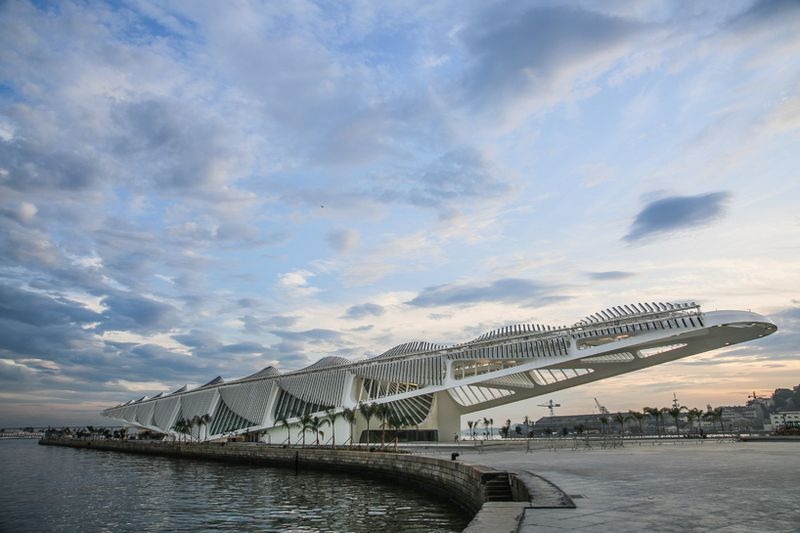
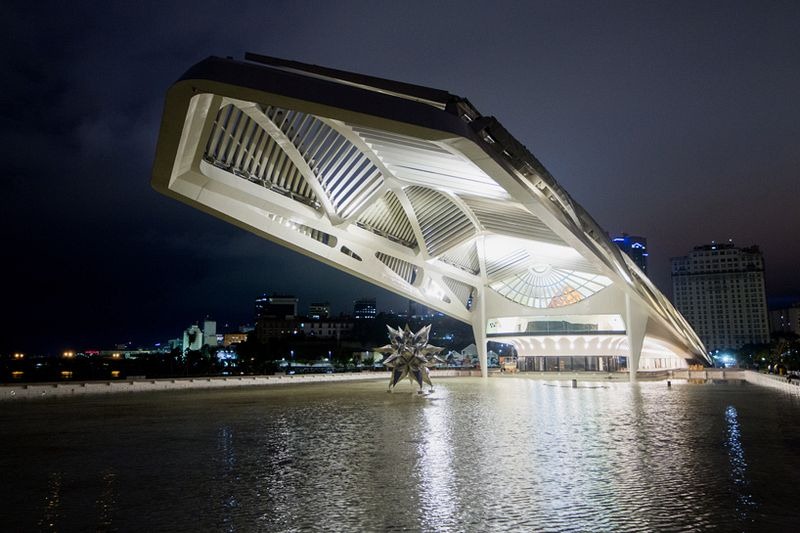
The city of Rio de Janeiro has opened a new “experimental museum” called the Museum of Tomorrow devoted to exploring the possibilities of a sustainable future through interactive artifacts that bring science, art, technology and culture together, housed in a magnificent spaceship-like building that is set to become the center-piece of a larger regeneration project of the Porto Maravilha neighborhood. The building’s most eye-catching element is the large cantilevered roof that juts diagonally into the sky from the old port near which the building sits.

Designed by Spanish architect Santiago Calatrava, who has created iconic buildings across the world, including the Athens 2004 Olympic Stadium, Museum of Tomorrow includes sustainable design initiatives, incorporating natural energy and light sources, such as using solar panels to supply power to the building, and water from the bay to regulate its internal

museum-of-tomorrow-1

Photo credit: Marcelo Sayao/EPA

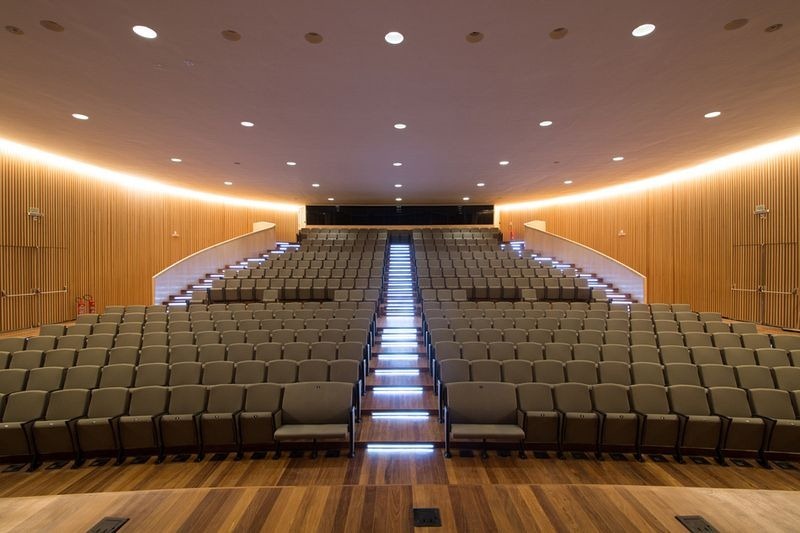
The institution encompasses 5,000 square meters of temporary and permanent exhibition space, including a 400-seat auditorium, as well as a 7,600 square meter plaza that wraps around the structure and extends along the dock. The overhanging roof is 75 meters in length and 10 meters high, and is capped with solar panels that move to follow the position of the sun. The roof is supported by curving white ribs. A half circle-shaped window tops the entrance.

The museum’s exhibits will address issues including: population growth and increased life expectancy, consumption patterns, climate change, genetic engineering and bioethics, the distribution of wealth, technological advances, and changes in biodiversity.

museum-of-tomorrow-6

Photo credit: Bernard Miranda Lessa

museum-of-tomorrow-7

Photo credit: Bernard Miranda Lessa


museum-of-tomorrow-9

Photo credit: Bernard Miranda Lessa

museum-of-tomorrow-12

Photo credit: Thales Leite


museum-of-tomorrow-3

Photo credit: Thales Leite

museum-of-tomorrow-4

Photo credit: Thales Leite

via Design Boom

Source…..www.amusingplanet.com

Natarajan

Message for the Day…” Chance, to realize God within, has been granted to you as a reward for merit acquired by you in many previous lives, so as to reach the highest goal of merging with the absolute…”

What does it mean when you say God descends as an Avatar?God out of His love, affection and compassion, comes down to the level of a human being and arouses the Divine Consciousness in humankind. When God finds that many people are desperately searching outside of themselves for God, He makes you aware of God within yourself. God is in fact the core in everyone. This chance, to realize God within, has been granted to you as a reward for merit acquired by you in many previous lives, so as to reach the highest goal of merging with the absolute. Every bird needs two wings to fly; a cart needs two wheels to be pulled along. To journey towards the highest goal, you need both faith and steadfastness – spiritual learning (vidya) and penance(tapas). Bhagavad Gita states, Knowledge of the Self (Atma Vidya) is the holiest. Knowledge (Vidya) shows the way, and the penance (tapas) makes you reach the goal. Both are necessary to attain the Ultimate.

Sathya Sai Baba

” வாரம் ஒரு கவிதை” …. ” சுடும் நினைவுகள் “….

சுடும் நினைவுகள்
…………….
…………….
தீயினால் சுட்ட புண் ஆறும் …ஆனால் ஆறாது நாவினால் சுட்ட வடு !
இது வள்ளுவன் வாக்கு !
நாவினால் சுட்ட வடு மட்டுமல்ல மறையாதது ….நம் மனசைத்  தொட்ட,
சுட்ட, சில நினைவுகளும்  அப்படித்தான் ..எப்போதும் நம்மை சுடும்
நினைவாக , ஒரு வடுவாக உருமாறும் !
நம் வாழ்வில் நாம்  சந்திக்கும் சோதனையும் பல வேதனையும்
நம்மை சுடும்
புண்ணே என்றாலும் நம்மை புடம் போட்ட தங்கமாக
மாற்றும் மருந்தும் அந்த சுடு நினைவுதான் அல்லவா !
சுட்டல்தானே பொன் சிவக்கும் … நம் வாழ்வு சிறக்க ,செழிக்க
தேவை நமக்கு ஒரு சூடு சரியான சமயத்தில் !
அது இயற்கையின் நியதியும் கூட !  இந்த நியதியை
ஒரு விதியாக விதைப்பதில் இயற்கைக்கு என்றும் இல்லை ஒரு தயக்கம்!
ஆனால் நம்மால் பிறருக்கு வரும்  சோதனையும்,  வேதனையும்
அவர்   மனத்தை முதலில் சுட்டாலும் , கட்டாயம் அவர் மீள்வார்
அந்த கட்டம் தாண்டி ….தன்   மனதில் சுட்ட புண்ணுடனும்
 சுடு நினைவுடனும் …
இதுவும் அந்த இயற்கையின் நியதியே !
பிறிதொருவர் வாழ்வில் நாம் சுட்ட புண்  நம் மனதில் ஒரு
ஆறாத , வடுவாக மாறி தினம் தினம் நம்மையே திருப்பி
சுட்டெரிக்கும் ஒரு சுடு நினைவாகும் என்பது மட்டும் உறுதி !
இது இயற்கையின் நீதி !
Credit…My Kavithai in  www.dinamani.com …Published in .Kavithai mani….on 21 dec 2015
Natarajan

5 of theWorld’s Most Festive Airports

Being in an airport during the busy holiday travel season can be stressful, but some of the biggest and best airports around the world embrace transform themselves to bring joy to your journeys.

With twinkling lights, pine-scented air, and the sound of sleigh bells, these terminals stand out with their impressive holiday cheer.

From London to Singapore, these airports outdo themselves every year with awe-inspiring displays.

No matter where you’re going this season, a trip through one of these airports is certain to put you in the holiday mood.

Los Angeles airport.JPG

5 terminals that stand out with their impressive holiday cheer.

O’Hare International Airport

O'Hare International Airport

Where: Chicago, Illinois

Expect dazzling lights and terminals filled with boughs of holly at O’Hare International Airport this season, as the airport continues its annual tradition of celebrating the holidays in style. The nation’s third-busiest airport transforms into a winter wonderland, first visible on the road leading to the terminals, where bright, LED-wrapped trees and giant stars and spheres dot the perimeter of the grounds, forming a wintry landscape. Bright wreaths are adorned on many of the overhead signs throughout the airport roads, while oversize ornaments and lights are placed throughout the arrival and departure terminals. Be sure not to miss Terminal 3, where O’Hare’s signature globe is brought to life with the help of hundreds of LED lights, garland accents, and bright doves that float overhead. Aside from the decorations, O’Hare will host school choirs, jazz and blues bands, barbershop quartets and strolling carolers on select days throughout December.

Changi Airport

Changi Airport

Where: Singapore

In addition to its normal holiday decorations, the force is strong at Changi Airport this holiday season thanks to a partnership with Disney in anticipation of Star Wars: The Force Awakens. Testing the limits of intergalactic travel, Terminal 3 welcomes a life-size X-wing Fighter, offering visitors the chance to don costumes and hop inside the iconic aircraft for a photo opportunity in the cockpit. Plan your trip accordingly: Imperial Stormtroopers and X-wing Fighter pilots make appearance at the jet Saturdays at 4 pm throughout December. Look for dozens of other fun surprises throughout the terminals, including Star Wars’ humanoid protocol droid C-3PO which teaches Star Wars phrases in ten languages, a life-sized TIE fighter, and an obstacle course for the BB-8 droid.

Heathrow Airport

Heathrow Airport]

via Fodors

Where: London, England

With an extensive roster of musicians and festive décor, Heathrow Airport welcomes visitors this holiday season with daily events that are guaranteed to spread joy. Carolers, a string quartet, and a brass band are just some of the rotating acts set to entertain travelers this season throughout the airport’s four terminals. Heathrow offers travelers the great benefit of free gift wrapping, available in all terminals. And most helpful of all, Heathrow’s friendly “gift helpers” are on hand in all terminals, expert in finding the perfect gifts for your friends and loved ones.

Zurich Airport

Zurich Airport

Where: Zürich, Switzerland

A Swiss holiday haven, Zürich Airport glistens with the glow of 510,860 LED lights and 31 Christmas trees throughout the airport this season. During the holiday season, guests are treated to a deluxe offering of events and activities in the airport which include scheduled tours of the enormous double-decker Airbus A380 operated by Singapore Airlines, an elaborate and exclusive Christmas dinner, and cookie-baking classes for kids. Pop-up stores throughout the terminals include a festive Nespresso coffee spot and fine chocolates and sweets at the Läderach pop-up.

Munich Airport

Where: Munich, Germany

Celebrating the season with the warmth and livelihood of a traditional German holiday market, the 17th Annual Winter Market returns to Munich Airport this year. Plan to spend the better part of an afternoon exploring the market’s 46 stands under the roof of the Munich Airport Center, where the sweet smell of mulled wine and roasted almonds fills the air. Arrive hungry and enjoy artisanal wurst and plenty of German beer on tap. With 450 real Christmas trees set amidst the market, the Winter Market is an ideal place to spend the most wonderful time of the year.

Source….www.businessinsider.com

Natarajan

The Rooftop Racetrack ….

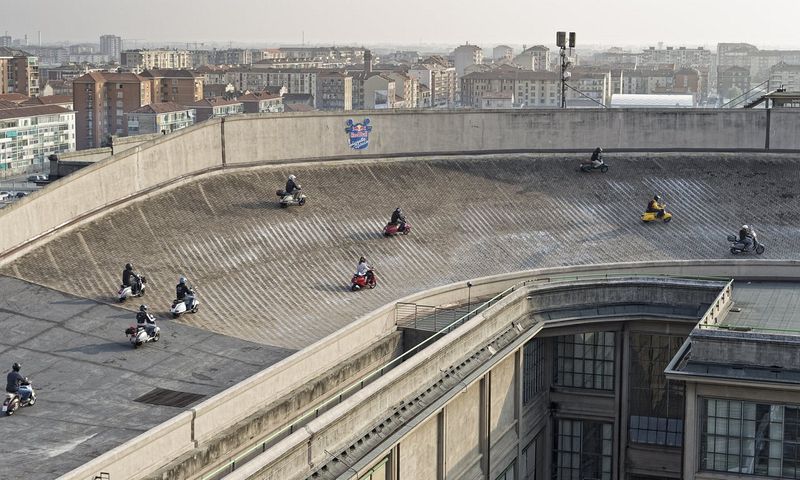
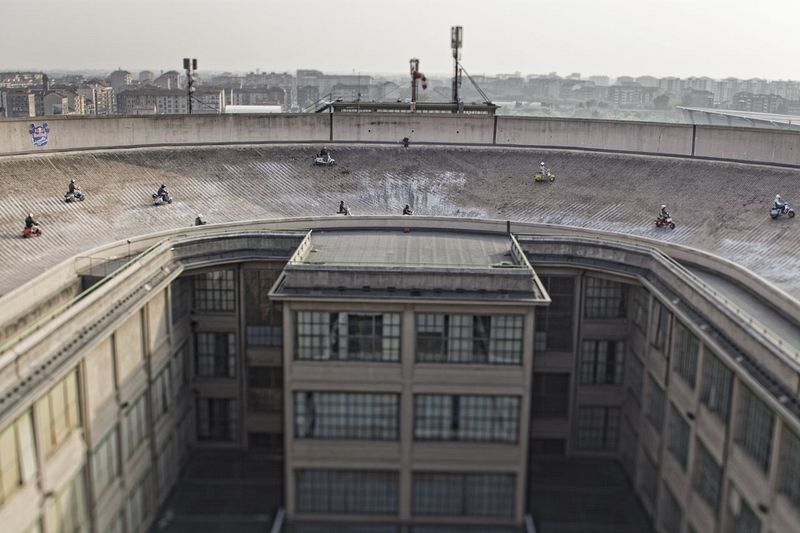
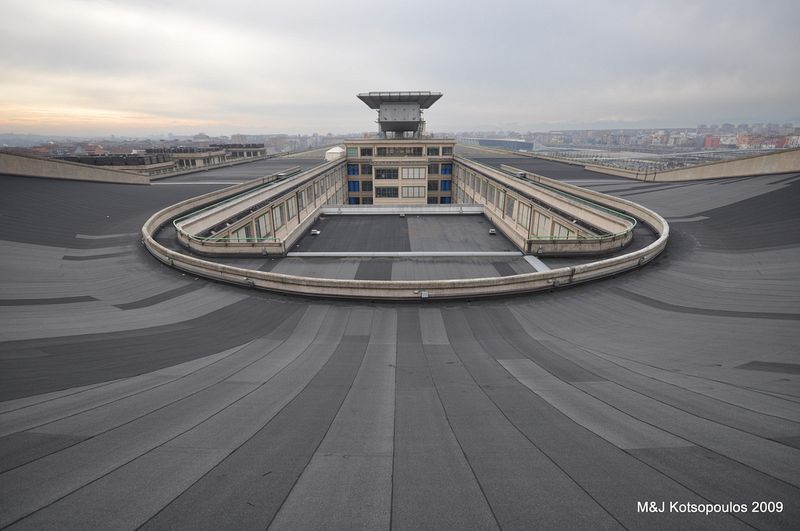
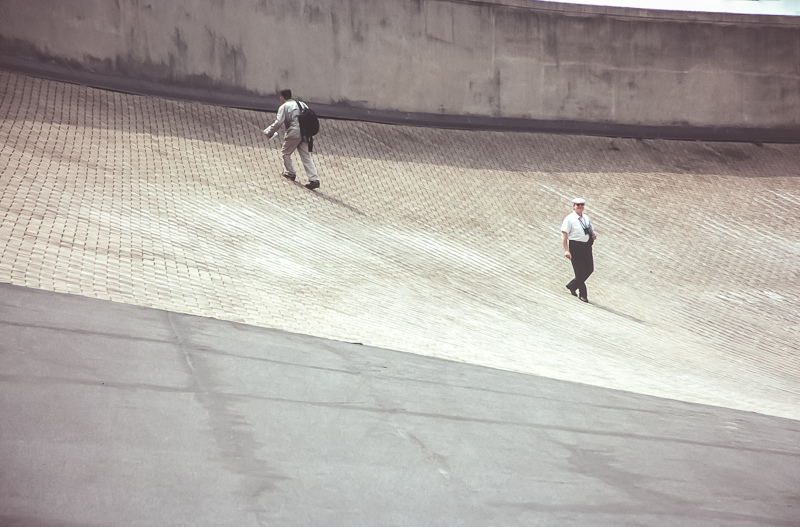
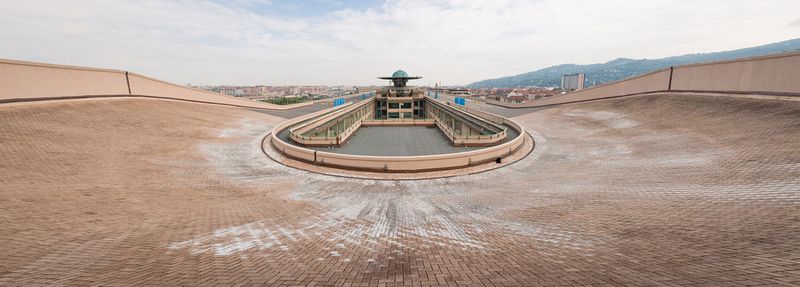
The Lingotto building in Turin, Italy, is a massive half-kilometer long reinforced concrete structure, five stories tall, that once housed the largest and most modern car manufacturing plant in Europe. Located in the heart of the city, its original owners —Fiat—made clever use of the available real estate by building a high-speed test track on the building’s unusual banked rooftop, where thousands of Fiats underwent testing once they came out at the end of the assembly line.

fiat-lingotto-factory-14

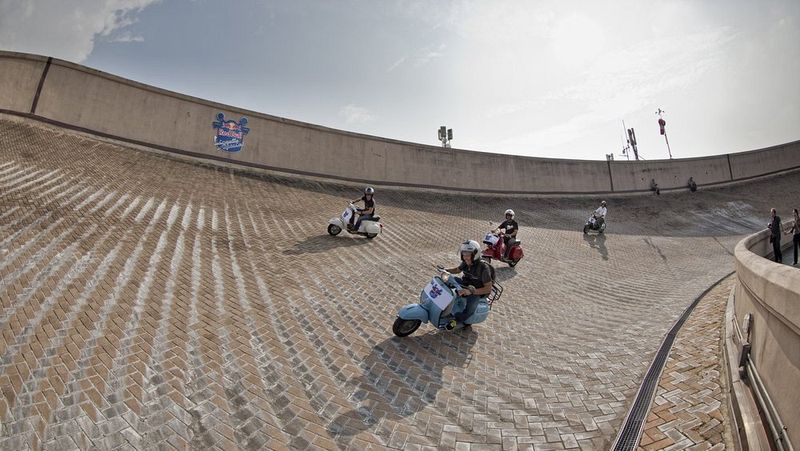
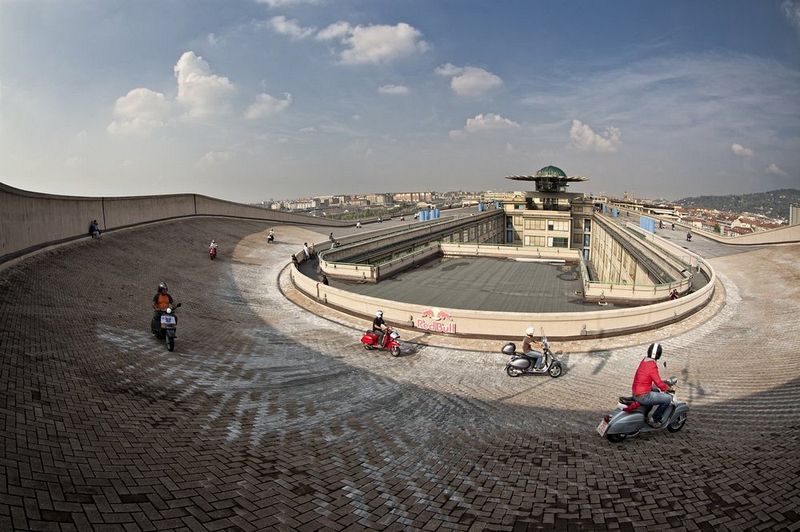
A Vespa racing event on the roof of Lingotto’s Fiat Factory, organized by Red Bull in 2011. Photo credit: www.motoblog.it

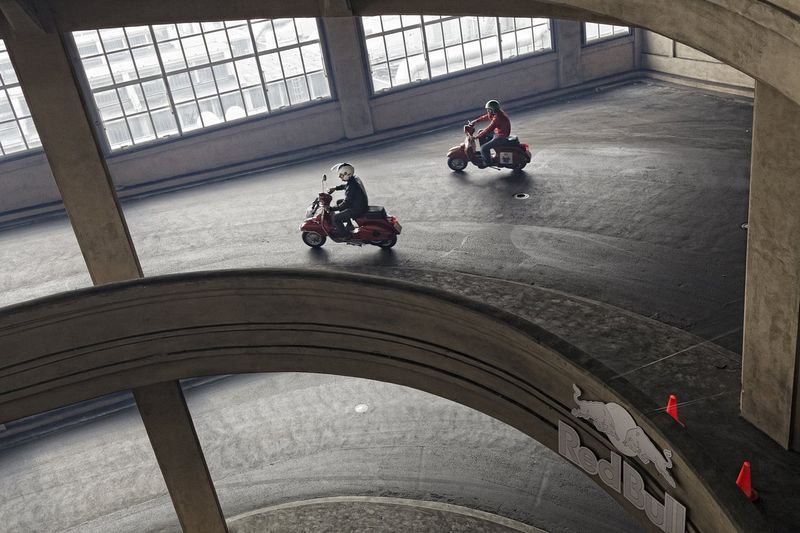
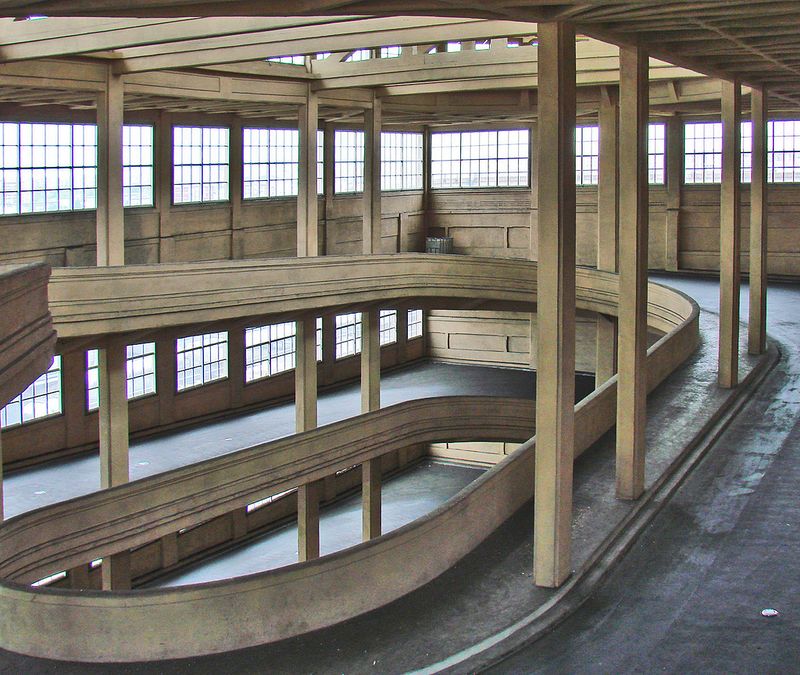
Built between 1916 and 1923, the building was the brainchild of Italian engineer Giacomo Mattè-Trucco, and was one of the first buildings of its size to rely heavily on reinforced concrete. Space constraints imposed by the railway lines nearby and the shape of the terrain, forced Giacomo Mattè-Trucco to develop a building that went vertically up and ended in a simple yet ingenious looped rooftop test track with two banked turns. The track is reached by spiral ramps at either end of the building that thread their way up through floor after floor. These ramps are braced by reinforced concrete ribs that radiate from the columns around the central well like the ribs on the underside of water-lily leaves.

The manufacturing plant’s assembly line itself was unusual, and the test track was an integral part of it. Production started at the ground floor and continued sequentially up through the upper floors. As each floor passed, the cars approached their final shape until they emerged as a finished product at the rooftop where they were ready for testing. While the banked sections are impossibly tight making high-speed testing unfeasible, rumors persist that concepts and racing engines were also tested here, including the one-off 1954 Turbina, with its projected 160mph top speed.

The Lingotto Factory produced 80 different models of car putting out an average of 200 daily from it’s opening until the 1970s, when it was eclipsed by the modern Mirafiori plant. The last Lancia Delta rolled out of the factory in 1979. Three years later, the factory was officially closed.

The Lingotto building was eventually converted into a modern complex with concert halls, theatre, a convention center, shopping arcades and a hotel. The rooftop track was retained and can still be visited today on the top floor.

fiat-lingotto-factory-15

fiat-lingotto-factory-1

A Vespa racing event on the roof of Lingotto’s Fiat Factory, organized by Red Bull in 2011. Photo credit:www.motoblog.it

fiat-lingotto-factory-2

fiat-lingotto-factory-2

A Vespa racing event on the roof of Lingotto’s Fiat Factory, organized by Red Bull in 2011. Photo credit:www.motoblog.it

fiat-lingotto-factory-21

A Vespa racing event on the roof of Lingotto’s Fiat Factory, organized by Red Bull in 2011. Photo credit:www.motoblog.it


fiat-lingotto-factory-10

Photo credit: John and Melanie/Flickr

fiat-lingotto-factory-9


fiat-lingotto-factory-19

Photo credit: Jacqueline Poggi/Flickr

fiat-lingotto-factory-12

Photo credit: Marcus Winter/Flickr

Sources: Jalopnik / BBC / Wikipedia


Source….www.amusingplanet.com

Natarajan

Image of the Day…” Blue Marble Earth Image …”

New Earthrise Image from LRO spacecraft

NASA’s Lunar Reconnaissance Orbiter (LRO) recently captured a unique view of Earth from the spacecraft’s vantage point in orbit around the moon.

“The image is simply stunning,” said Noah Petro, Deputy Project Scientist for LRO at NASA’s Goddard Space Flight Center in Greenbelt, Maryland. “The image of the Earth evokes the famous ‘Blue Marble’ image taken by Astronaut Harrison Schmitt during Apollo 17, 43 years ago, which also showed Africa prominently in the picture.”

In this composite image we see Earth appear to rise over the lunar horizon from the viewpoint of the spacecraft, with the center of the Earth just off the coast of Liberia (at 4.04 degrees North, 12.44 degrees West). The large tan area in the upper right is the Sahara Desert, and just beyond is Saudi Arabia. The Atlantic and Pacific coasts of South America are visible to the left. On the moon, we get a glimpse of the crater Compton, which is located just beyond the eastern limb of the moon, on the lunar farside.

LRO was launched on June 18, 2009, and has collected a treasure trove of data with its seven powerful instruments, making an invaluable contribution to our knowledge about the moon. LRO experiences 12 earthrises every day; however the spacecraft is almost always busy imaging the lunar surface so only rarely does an opportunity arise such that its camera instrument can capture a view of Earth. Occasionally LRO points off into space to acquire observations of the extremely thin lunar atmosphere and perform instrument calibration measurements. During these movements sometimes Earth (and other planets) pass through the camera’s field of view and dramatic images such as the one shown here are acquired.

This image was composed from a series of images taken Oct. 12, when LRO was about 83 miles (134 kilometers) above the moon’s farside crater Compton. Capturing an image of the Earth and moon with LRO’s Lunar Reconnaissance Orbiter Camera (LROC) instrument is a complicated task. First the spacecraft must be rolled to the side (in this case 67 degrees), then the spacecraft slews with the direction of travel to maximize the width of the lunar horizon in LROC’s Narrow Angle Camera image. All this takes place while LRO is traveling faster than 3,580 miles per hour (over 1,600 meters per second) relative to the lunar surface below the spacecraft!

The high-resolution Narrow Angle Camera (NAC) on LRO takes black-and-white images, while the lower resolution Wide Angle Camera (WAC) takes color images, so you might wonder how we got a high-resolution picture of the Earth in color. Since the spacecraft, Earth, and moon are all in motion, we had to do some special processing to create an image that represents the view of the Earth and moon at one particular time. The final Earth image contains both WAC and NAC information. WAC provides the color, and the NAC provides high-resolution detail.

“From the Earth, the daily moonrise and moonset are always inspiring moments,” said Mark Robinson of Arizona State University in Tempe, principal investigator for LROC. “However, lunar astronauts will see something very different: viewed from the lunar surface, the Earth never rises or sets. Since the moon is tidally locked, Earth is always in the same spot above the horizon, varying only a small amount with the slight wobble of the moon. The Earth may not move across the ‘sky’, but the view is not static. Future astronauts will see the continents rotate in and out of view and the ever-changing pattern of clouds will always catch one’s eye, at least on the nearside. The Earth is never visible from the farside; imagine a sky with no Earth or moon – what will farside explorers think with no Earth overhead?”

NASA’s first Earthrise image was taken with the Lunar Orbiter 1 spacecraft in 1966. Perhaps NASA’s most iconic Earthrise photo was taken by the crew of the Apollo 8 mission as the spacecraft entered lunar orbit on Christmas Eve Dec. 24, 1968. That evening, the astronauts — Commander Frank Borman, Command Module Pilot Jim Lovell, and Lunar Module Pilot William Anders — held a live broadcast from lunar orbit, in which they showed pictures of the Earth and moon as seen from their spacecraft. Said Lovell, “The vast loneliness is awe-inspiring and it makes you realize just what you have back there on Earth.”

Source…….www.nasa.gov

Natarajan