Where the @ Symbol Came From….?


Ubiquitous today, until its use in email addresses, the @ symbol was never really all that popular, with this very fact being one of the reasons it was chosen to be used in electronic message addresses in the first place. So where did the @ symbol come from?

The earliest known example of @ is found in the 1345 Bulgarian translation of the 12th century Manasses Chronicle, which gives a brief synopsis of the history of the world up to the end of the 11th century. In it, @ was used as the symbol for “amin” (amen).

No (presently) known surviving instance of @ occurred again for a little over two centuries.

Seemingly independently “invented,” yet another early example, this time of a proto-@ (with just the outside swoosh, but lacking a defined center a), was used on a 1448 Spanish registry, Taula de Ariza, referencing a shipment of wheat from Castile to Aragon.

The earliest example of a full @ used in such a commercial setting was discovered in 2000 in a letter written by a Florentine merchant, Francesco Lapi, on May 4, 1536. In this letter, Lapi used @ to denote a unit of measure – an amphora (clay jar) of wine, which is equivalent to about 1/13th of a barrel.See: How Large is a Barrel of Oil and Why Do We Measure It That Way?)

According to professor Giorgio Stabile of Sapienza University of Rome, the discoverer of the letter in question, the flourish around the a for amphora was just one of many examples of such embellishment of script found in Florence at the time.

From here, Dr. Stabile theorized it was Italian merchants who popularized the symbol, with it traveling along with traded goods invoices and receipts throughout Europe.

However, whether it really was the Italians who popularized the symbol isn’t clear. For instance, also during the 16th century the @ symbol in Spain had progressed beyond the aforementioned 1448 proto-@ into the fully developed one, being used as the shorthand symbol for the unit of measure called an arroba, then equivalent to about 25 pounds or 11.3 kg. (The arroba is generally thought to have derived from the Arabic الربع pronounced ar-rub, which meant “a quarter.”)

Whatever the case, from here @ evolved to mean in a commercial setting “at the price of”- i.e. 26 bags of flour @ $1 (so a total of $26 for the purchase). The symbol was also occasionally used in other contexts, such as used to signify the French à at least as early as the 17th century.

It should be noted here that before the discovery of the 1345 and 1536 instances, it was generally thought (and many still posit, including the Oxford English Dictionary) that medieval monks were the ones that invented the symbol to use in place of the Latin ad, which meant at, toward, by and about. Lacking in any hard documented evidence pre-dating the preceding instances, the idea behind this theory is that the simple expedient of combining the two letters (essentially an a with the older ∂ form of the letter d) into a single, smaller mark would have saved time and materials during a period in history where every copy of every book had to be written out by hand.
Many other such shorthand symbols were created for just this reason. For instance, the ampersand (&) is shorthand for the Latin “et,” meaning “and.”  Another such classic shorthand was using “X” for “Christ.” The “X” in this case is actually the Greek letter “Chi,” which is short for the Greek, meaning “Christ”. Scholars began using this particular shorthand about a millennium ago.

In any event, the @ symbol labored in relative obscurity for several hundred years until one fateful day in 1971. In that year, engineer Ray Tomlinson was implementing his own version of a little program called SNDMSG. SNDMSG ran on the TENEX operating system and was, essentially, just one of many flavors of single-computer email- in other words, an electronic mail system only capable of sending messages from one user to another on the same computer.
While this might seem absurdly useless given the way people often use computers today, back then programs like this were incredibly handy.  For instance, the AUTODIN system created in the early 1960s had a facility for sending messages between users and, at its peak, handled nearly 30 million electronic messages per month. MIT’s Compatible Time-Sharing System (CTSS), also created in the 1960s, had a similar system that allowed its numerous users to login from some terminal and, among other things, exchange messages stored on this single machine.

Tomlinson thought it would be interesting to improve SNDMSG such that it could not only be used for sending messages to other users who could login to the same machine, but also be used to send messages from one computer to another via the budding ARPANET. Tomlinson stated he just thought this tweak to SNDMSG “seemed like a neat idea. There was no directive to ‘go forth and invent email’. The ARPANET was a solution looking for a problem. A colleague (Jerry Burchfiel) suggested that I not tell my boss what I had done because email wasn’t in our statement of work. That was really said in jest because we were, after all, investigating ways in which to use the ARPANET.”
While writing the code for this, Tomlinson had to decide how to designate that a message should be sent to another computer on the network, rather than a local account. He fatefully settled on @, a symbol that only made it on the standard keyboard in the first place because of its usage in commerce.

Why did he choose @ over some other symbol? For starters Tomlinson stated, “I looked at the keyboard, and I thought: ‘What can I choose here that won’t be confused with a username?’ If every person had an ‘@’ sign in their name, it wouldn’t work too well. But they didn’t. They did use commas and slashes and brackets.”

That left just a few symbols to choose from that weren’t being commonly used. He noted that, at the time, “The purpose of the at sign (in English) was to indicate a unit price (for example, 10 items @ $1.95).” So,

“…it made sense. [@] didn’t appear in names so there would be no ambiguity about where the separation between login name and host name occurred… [@] also had no significance in any editors that ran on TENEX. I was later reminded that the Multics time-sharing system used [@] as its line-erase character. This caused a fair amount of grief in that community of users…”

The resulting format was loginname@host (and later loginname@host.domain once the DNS system was developed). And so it was that what is generally credited as being the first true network email, at least as we think of it, was sent in late 1971 by Tomlinson.

Of this momentous occasion, Tomlinson said, “The first message was sent between two [DEC-10] machines that were literally side by side. The only physical connection they had (aside from the floor they sat on) was through the ARPANET. I sent a number of test messages to myself from one machine to the other. The test messages were entirely forgettable and I have, therefore, forgotten them. Most likely the first message was QWERTYUIOP or something similar. (Essentially quickly randomly typing gibberish on the keyboard.) When I was satisfied that the program seemed to work, I sent a message to the rest of my group explaining how to send messages over the network. The first use of network email announced its own existence.”

And the rest, as they say, is history.

Source…..www.today i foundout.com

Natarajan


5 Things Every Indian Needs to Know about the Amar Jawan Jyoti – the Eternal Flame…..

T he India Gate, a war memorial, sits on the east end of the Rajpath in New Delhi since 1921. The memorial was built as a tribute to Indian soldiers who lost their lives in the First World War and the Third Anglo-Afghan War.

However, since 1971, after the Bangladesh Liberation War, a flame has been burning under the India Gate. This eternal flame honours every unknown soldier who sacrificed his life in the war and is aptly named the Amar Jawan Jyoti (Flame of the Immortal Soldier).

Every Republic Day, this historic monument is in the news again. Here are the things you need to know about this monument:

1. Celebrations begin with tributes paid by the Prime Minister

pm amar jawan

Photo source: Facebook

The Prime Minister of India visits the Amar Jawan Jyoti every year, before the annual parade begins. He is joined by the three heads of the Indian Armed Forces. Wreaths are placed at the monument, in honour of the soldiers.

2. It is India’s Tomb of the Unknown Soldier

4360605753_c54c728146_o

Photo source: Flickr/Vinay Bavdekar

The Amar Jawan Jyoti serves as India’s Tomb of the Unknown Soldier. It is a marble cenotaph, consisting of a rifle and a soldier’s helmet. The helmet and the rifle are said to belong to an unknown soldier who lost his life during the war.  The words Amar Jawan are inscribed on the cenotaph in golden words. Apart from the Prime Minister and the President, visiting dignitaries too pay their tributes here.

3. It is always guarded

soldier

Photo source: Flickr/Gaurav Trivedi

The Amar Jawan Jyoti is manned by soldiers drawn from the Army, Navy, and the Air Force. It is manned round the clock. The three flags of the Indian Armed Forces can be seen from it. The Chiefs of the Indian Armed Forces also pay tributes on Vijay Divas.

4. It has a rich history

indira gandhi

Photo source: Facebook

The Amar Jawan Jyoti was erected in December, 1971. It was inaugurated by then Prime Minister Indira Gandhi in1979. She paid homage to the soldiers on India’s 23rd Republic Day. Since then, it has been customary for the Prime Minister and the President to visit the structure on state occasions.

5. The flame is eternal

burning flame

Photo source: Facebook

The flame that burns at the Amar Jawan Jyoti is kept alive all year. There are four flames on each side of the cenotaph. Only one flame burns throughout the year. However, on Independence Day and Republic Day, all flames are lit. Though liquified petroleum gas was used to keep the flame alive till 2006, it is now lit using piped natural gas.

Source……..Meryl Garcia in http://www.thebetterindia.com

Natarajan

7 Incredible Submerged Forests…….!!!

Submerged forest is a term used to describe the remains of trees (especially tree stumps) which have been submerged by rising sea level. These forests have been usually buried in mud, peat or sand for several thousand years before being uncovered by sea level change and erosion. Here are 7 incredibly scenic submerged forests from around the world.

1. Lake Kaindy, Kazakhstan

kaindy (1)

Kaindy Lake is a 400 meter long lake in Kazakhstan that reaches depths near 30 meters in some areas. It is located 129 km from the city of Almaty and is 2,000 meters above sea level. It was created by the result of an enormous limestone landslide. The track to Kaindy lake has many scenic views to the Saty Gorge, the Chilik River valley and the Kaindy gorge. Dried-out trunks of submerged Picea schrenkiana trees rise above the surface.

kaindy (2)

2. Lake Bezid, Romania

bezid (2)

Lake Bezid situated in Romania’s Transylvania region was artificially created after the entire village of Bezid was flooded, leaving the houses at the bottom of the lake and only the local church tower and trees still visible, looming over the lake. Apparently, a dam was built around 25 years ago to prevent the recurrent flooding of the river valley. Needless to say, the inhabitants of the old village had to be moved away when their homes were drowned.

bezid (1)

3. Lake Periyar, India

periyar (1)

Periyar Lake in the Indian state of Kerala is another sunken cemetery for trees whose putrefying trunks rise out of the water as if clawing for divine mercy. Covering an area of a 55 km², the lake is fed by the Periyar River and in turn supplies water for the Vaigai River in Tamil Nadu via a tunnel through the Western Ghats. Still, the dead trees betray the lake’s recent past as a living forest.

periyar (2)

periyar (3)

periyar (4)

4. Udawalawe Reservoir, Sri Lanka

udawalwe (2)

The twisted, closely-packed boughs standing in Sri Lanka’s Udawalawe Reservoir are similar visual reminders of the extent of the forest cover that lay here before the construction of the dam that brought this body of water into being. The deep reservoir is constantly replenished by the never-drying Walawe river, which itself draws most of its water from wooded higher ground and plains.

udawalwe (1)

udawalwe (3)

5. Lake Volta, Ghana

volta (1)

Myriad dead trees emerge from Ghana’s Lake Volta, which has the largest surface area of any reservoir on earth. The lake was formed by the Akosomba hydroelectric Dam, which provides power for much of the country. Completed in 1965, it forced the relocation of 78,000 people to new settlements, along with 200,000 of their animals, while some 120 buildings and countless small residences were destroyed.

volta (1)

6. Lake Caddo, Texas

cado (1)

Caddo Lake is a 25,400 acre (103 km²) lake and wetland located on the border between Texas and Louisiana, in northern Harrison County and southern Marion County in Texas and western Caddo Parish in Louisiana. The magnificent canopy reflected in the still waters beneath is that of Cypress trees, for this is Lake Caddo on the Texas-Louisiana border, home to the world’s largest Cypress forest.

cado (2)

cado (3)

7. Kampong Pluk, Cambodia

kampong (1)

The water-dwelling trees of Kampong Pluk are mangroves, and their flooded jungle habitat is home to a variety of wildlife, including crab-eating macaques, as well as humans who harvest shrimp and live in houses that tower in the air atop stilts.

kampong (2)

[via Environmental Graffiti]

Source…..www.amusingplanet.com

Natarajan

10 Army Heroes and Their Extra Ordinary Tales of Bravery…..

Far from home and loved ones, these heroes sacrifice their own lives so the entire nation can sleep in peace. The stories of their courage and passion are larger than life. Read on and be inspired by 10 such army heroes – they are legends whose tales will not just make your chests swell with pride, but whose sacrifices will leave your eyes a little moist.

They are men of steel, standing tall in the harshest of conditions. They disregard freezing cold temperatures and scorching heat to always remain brave, awake and devoted towards us.

They are all heroes, each and every one of them. But there are a few whose stories have become the stuff of legends, stories that deserve to be shared and told over and over again:

1. Captain Vikram Batra

army1

Source: Wikimedia

Born in Palampur, Himachal Pradesh, Captain Vikram Batra of 13 J&K Rifles, is known as the hero of the Kargil war. He led one of the toughest war operations in Kashmir, and was also called Sher Shah (in the intercepted messages of the Pakistani army).

He was instrumental in recapturing Peak 5140, which is located at an altitude of 17,000 feet. During this mission, Batra was seriously injured but still managed to kill three enemy soldiers in close combat. After capturing Peak 5140, he went on yet another difficult mission to recapture Peak 4875 on July 7, 1999. Batra made a call to his father before he left and told him about the crucial mission. Hardly did he know that this would be his last call home.

It was one of the most difficult missions the Indian army attempted because the Pakistani forces were sitting above the peak at 16,000 feet and the climb gradient was 80 degrees. On their way up, one of Batra’s fellow officers was severely injured. Batra set out to save him. When a subedar tried to help him save the officer, Batra pushed him aside, saying, “You have children, step aside.” He saved his fellow soldier but was killed while clearing enemy positions. Batra’s last words were “Jai Mata Di.”

A famous quote by Batra is: “Either I will come back after hoisting the tricolour (Indian flag), or I will come back wrapped in it, but I will be back for sure.” He was honoured with the Param Vir Chakra.

Quick fact: The 2003 Hindi film LOC Kargil had a character based on Captain Batra, played by Abhishek Bachchan.

2. Major General Ian Cardozo

army2

Source: Facebook

Major General Ian Cardozo, who has many achievements to his name, will always be known for his immense courage in the 1971 war with Pakistan. He was, at the time, a young major with 5 Gorkha Rifles. During the war, he stepped on a landmine and severely injured his leg. When even the doctor could not cut his leg, Cardozo asked for a khukri (the Gorkha knife) and cut his own leg off, saying, “Now go and bury it!”

The incident did not deter Cardozo from going on to serve his country. Through sheer willpower and determination, he continued to perform his duties as a soldier and became the first disabled officer in the Indian Army to command an infantry battalion and a brigade. In spite of not being physically at par with other officers, he defeated many ‘two-legged’ soldiers to come first in many fitness tests during his stint in the army.

3. Brigadier Mohammad Usman

army3

Source: Facebook

Born in Bibipur, Uttar Pradesh, this man of steel joined the Indian army in 1934. During the Indo-Pakistan war of 1947/48, Brigadier Usman repulsed a fierce attack on Naushera and Jhangar, two highly strategic locations in Jammu and Kashmir, and was named by his fellow soldiers ‘The Lion of Naushera.’

At the time of the Partition, he was made the offer of becoming the Chief of the Pakistani Army but he chose to stay in India. He left the Baloch regiment of Pakistan and was inducted into the Dogra regiment in India. After the Battle of Naushera, where the Pakistanis suffered heavy casualties at his hands, the same country that had courted him to become the chief of the army, now went ahead and placed prize money of Rs. 50,000 on his head.

Brigadier Usman was not just a fierce soldier but also a compassionate man. He never got married and used to donate a large part of his salary to support poor children and pay for their education. This inspiring and exemplary officer of the Indian Army died on July 3, 1948, defending Jhangar. His last words were, “I am dying but let not the territory we were fighting for fall to the enemy.”

He was awarded the Maha Vir Chakra posthumously for his great courage and leadership.

4. Subedar Yogendra Singh Yadav

army4

Source: Wikimedia

This brave soldier has the high honour of being the youngest recipient of the Param Vir Chakra. He received this award at the age of 19 for his actions on July 4,1999, during the Kargil war. Born in 1980 in Aurangabad Ahir village, Uttar Pradesh, Yadav showed immense courage during the war in 1999. He volunteered for the task of capturing three strategic bunkers on Tiger Hill, which were situated at the top of a vertical, snow-covered, 16,500 feet high cliff face.

He was climbing the high cliff with the help of a rope when the enemy bunker started rocket fire. Yadav was hit by three bullets in his groin and shoulder. Despite being severely injured, Yadav kept climbing and finished the remaining 60 feet to reach the top of the cliff. Though in immense pain, Yadav crawled to the first enemy bunker and lobbed a grenade, which killed four Pakistani soldiers and set back the enemy fire. This gave the rest of the Indian platoon the opportunity to climb up the cliff face.

However, this was not it. Yadav continued to fight and destroyed the second bunker too with the help of two fellow soldiers. In fact, he also engaged in hand-to-hand combat with the enemy and killed four more Pakistani soldiers. By the time the rest of the Indian platoon arrived, Yadav had already neutralised the enemy attack. This gave Indian soldiers the upper hand and they managed to accomplish one of the toughest missions of the Kargil war – the capture of Tiger Hill.

During the second part of the fight, a few more bullets hit Yadav. Some say he was hit by 16 bullets, some say less, but he survived it all. Yadav’s heroic actions were portrayed in the film, Lakshya, by actor Hrithik Roshan.

5. Rifleman Jaswant Singh Rawat

army5

Source: Facebook

Words fall short when it comes to telling this brave man’s story. A hero of the 1962 Indo-China war, Rifleman Jaswant Singh Rawat of the 4th Garhwal Rifles Infantry Regiment is the only soldier in the history of the Indian Army who has risen through the ranks after his death. He was ‘promoted’ to the rank of Major General 40 years after his death, and is still believed to ‘command’ troops guarding India’s eastern frontiers with China.

During the 1962 war, soldiers were ordered to vacate their posts as soon as possible due to heavy casualties against the Chinese at the Battle of Nuranang. But Jaswant did not leave his position and continued to fight even after the other soldiers had left.

Rawat was helped by two Monpa tribal girls named Sela and Nura. The trio set up weapons at separate points and maintained a volume of fire to make the Chinese believe they were facing a huge battalion. Rawat successfully managed to fool them for three days. But the Chinese found out about the set up through a man who used to supply rations to Rawat and the two girls. At this point, Rawat chose to shoot himself rather than be captured by the Chinese forces. The Chinese were so furious on learning that they had been fighting a single soldier all this time that they cut off Rawat’s head and carried it back to China.

The post that Rawat held to repulse the Chinese troops has been renamed Jaswant Garh in recognition of his courage. A small shrine to Rawat has also come up at the battle spot. All army personnel who pass by this route make sure to pay their respects to him here.

Rifleman Jaswant Singh Rawat was awarded the Maha Vir Chakra posthumously.

6. Second Lieutenant Arun Khetarpal

army6

Source: Wikimedia

Born in Pune, 2nd Lieutenant Arun Khetarpal of the 17 Poona Horse regiment is yet another braveheart who died too young at the age of 21. He died in the Battle of Basantar during the Indo-Pakistan War of 1971, where his brave actions earned him the Param Vir Chakra posthumously.

Khetarpal showed immense courage and strong will when Pakistani armour, which was superior in strength, counterattacked at Jarpal, in the Shakargarh sector, in December, 1971. Though Khetarpal was in a different squadron, he rushed to help, moving towards the enemy, overrunning the defences with his tanks, and capturing Pakistani infantry and weapons.

When the commander of his troops was killed, Khetarpal continued to attack the enemy fiercely until the latter’s tanks started pulling back. Khetarpal even managed to destroy one of the withdrawing tanks.

But the enemy reformed their armour and prepared for a second attack. This time they targeted the sector held by Khetarpal. The attack was severe and swift. Khetarpal was wounded but managed to hit 10 enemy tanks. He was asked to abandon his tank but realised that if he left it the enemy would break through. He fought courageously and destroyed another enemy tank. But then his own tank received another hit, which resulted in the death of this courageous officer.

7. Major Somnath Sharma

army7

Source: Wikimedia

This brave soldier of Fourth Kumaon regiment sacrificed his life at the young age of 24. With his hand already in plaster from an injury sustained in a hockey game, Sharma insisted on being with his company in combat when they were airlifted to Srinagar on October 30, 1947 to fight Pakistani invaders.

On November 3, when Sharma’s company was on a patrol of Badgam village, it was approached by a tribal lashkar of 700 raiders from the direction of Gulmarg. The company was soon surrounded from three sides and endured heavy casualties from the ensuing heavy mortar bombardment. Realising that Srinagar and the airport would be vulnerable if they abandoned the battle at this point, Sharma ran from post to post, encouraging his men to fight in the face of an enemy that outnumbered them seven to one.

When heavy casualties adversely affected their firing power, Sharma, with his left hand in plaster, took to filling the magazines for the men operating light machine guns. While he was busy fighting, a mortar shell exploded on the ammunition near him, killing him instantly.

His last message to Brigade HQ, received a few moments before he was killed, was: “The enemy is only 50 yards from us. We are heavily outnumbered. We are under devastating fire. I shall not withdraw an inch but will fight to our last man and our last round.”

Major Somnath Sharma was the first recipient of the Param Vir Chakra. The citation on the award says, “His leadership, gallantry and tenacious defence were such that his men were inspired to fight the enemy by seven to one, six hours after this gallant officer had been killed.”

8. Naik Jadu Nath Singh

army8

Source: Wikimedia

Naik Jadu Nath Singh, the fourth recipient of the Param Vir Chakra, fought in Jammu and Kashmir in the Indo-Pak war of 1947/48. His presence of mind and bravery saved his post, not just once but thrice, from the enemy. On the crucial day of February 6, 1948, Singh was in command of a forward post at Taindhar. Nine men garrisoned the post.

The Pakistanis launched their attack in successive waves to take this post. At this juncture, Singh showed superb leadership and used his small force in such a manner that the enemy retreated in utter confusion. With four wounded men, he re-organised his force to face another onslaught. He did not give in despite being outnumbered.

When all his men, himself included, were wounded, he took over the Bren gun from the wounded gunner and continued to fight. The enemy were now on the walls of the post but Singh’s fire was so devastating that the post was saved for a second time.

Every one in his post was dead by now. The Pakistanis came in again for a third attack. Wounded and alone, Sharma charged out of his post with his sten gun firing, surprising the enemy and forcing it to flee back in confusion again. But two bullets caught Sharma in the head and chest and this gallant soldier died instantly.

9. Subedar Karam Singh

army9

Source: Wikimedia

Born in Sehna village in the Sangrur District of Punjab, Karam Singh was the first non-posthumous Param Vir Chakra awardee. Singh retired from the Indian Army as Honorary Captain in 1948 and died in 1993 at the age of 77. He is also the only Indian to win the highest medals of both the British and Indian governments.

Among his several brave acts, Karam Singh is best known for his courage on 13 October, 1948, when Pakistan decided to launch a brigade attack to retake Richhmar Gali in Kashmir. The firing was so furious that it destroyed almost all the bunkers in the Indian platoon. The communication with the commander was also cut off and Singh could not update his situation or ask for reinforcements.

He was left with just one choice – to fight the enemy with whatever little army and weapons he had. The attacks had left Karam Singh severely injured but nothing could deter his spirit. He refused to evacuate the post even when the enemy got very close. When enemy soldiers came even closer, Karam Singh jumped out of his trench and stabbed two intruders to death. His brave act demoralised the enemy so much that they broke off the attack.

10. Major Ramaswamy Parameswaran

army10

Source: Wikimedia

Born in Mumbai, Maharashtra, Parameswaran is yet another braveheart who died at the age of 41 in 1987, in India’s Sri Lanka operations. He was awarded the Param Vir Chakra, posthumously.

It was late night when Parameswaran was returning from search operations in Sri Lanka, when his column was suddenly attacked by a group of militants. He did not panic and showed great presence of mind by encircling the enemy from the rear and surprising them with an unexpected attack. During the hand-to-hand combat, a militant shot him in the chest. Undaunted, Major Parameswaran snatched the rifle from the militant and shot him dead.

Barely able to stand now, he continued giving orders to his men and inspired them to fight till his last breath. The Indians managed to kill five militants and recovered three rifles and two rocket launchers from the militants.

Source…..www.the betterindia.com

Natarajan

Never-Before-Seen Images Reveal How The Fukushima Exclusion Zone Was Swallowed By Nature…

Polish photographer Arkadiusz Podniesinski travelled to the site of the Fukushima nuclear disaster of March 2011  to see the location with his own eyes. When he obtained permits to enter the roughly 20km (12.5 mile) Exclusion Zone, he was confronted with a scene similar to one from a post apocalyptic film. Podniesinski previously photographed the area around the 1986 Chernobyl nuclear disaster.

“It is not earthquakes or tsunami that are to blame for the disaster at the Fukushima Daiichi nuclear power station, but humans,” writes Podniesinski on his website. He undertook the project so that he could draw his “own conclusions without being influenced by any media sensation, government propaganda, or nuclear lobbyists who are trying to play down the effects of the disaster, and pass on the information obtained to as wider a public as possible.”

More info: podniesinski.pl (h/t: designyoutrust)

Abandoned vehicles are slowly swallowed up by nature on a stretch of road near the power plant

photos-fukushima-exclusion-zone-podniesinski-45

Some of the cars have entirely disappeared in the wild grass

photos-fukushima-exclusion-zone-podniesinski-46

Podniesinski shows a radiation reading of 6.7 uSv/h

photos-fukushima-exclusion-zone-podniesinski-47

A chained-up motorcycle is slowly absorbed into the field

photos-fukushima-exclusion-zone-podniesinski-48

These contaminated televisions were collected and piled up as part of the cleaning efforts

photos-fukushima-exclusion-zone-podniesinski-49

Cobwebs hang above the scattered products in this abandoned supermarket

photos-fukushima-exclusion-zone-podniesinski-50

Another photo from within a supermarket feels eerily similar to those from post-apocalyptic movies

photos-fukushima-exclusion-zone-podniesinski-51

This abandoned computer lab covered in animal droppings is from a village near the plant

photos-fukushima-exclusion-zone-podniesinski-52

A dining table with portable cookers ready to prepare food looks like it was left in haste

photos-fukushima-exclusion-zone-podniesinski-53

These go-karts have had their last race in an entertainment park located within the 12.5mile exclusion zone

photos-fukushima-exclusion-zone-podniesinski-54

The earthquake which started the tsunami damaged buildings as well

photos-fukushima-exclusion-zone-podniesinski-56

These bicycles were left behind when residents fledphotos-fukushima-exclusion-zone-podniesinski-57

This aerial photo taken by a drone shows one of the dump sites that contain thousands of bags of contaminated soil

photos-fukushima-exclusion-zone-podniesinski-60

Bags of radioactive soil are stacked one on top of the other to save space

photos-fukushima-exclusion-zone-podniesinski-61

Landowners have been told that these contaminated bags will be disposed of, but many people remain skeptical

photos-fukushima-exclusion-zone-podniesinski-62

Cows started to get white spots on their skin soon after the accident. One farmer believes this is due to the cows eating contaminated grass

photos-fukushima-exclusion-zone-podniesinski-63

“Nuclear energy is the energy of a bright future” reads the sign

photos-fukushima-exclusion-zone-podniesinski-64

Source….www.bored panda.com

Natarajan


These Look Like Normal Photos From Afar, But They’re Very Much Alive…!

When practical photography was born in 1839, the simple act of capturing basic portraits and images of everyday objects was a feat of epic and almost unfathomable proportions. That being said, it didn’t take very long for burgeoning photographers to start experimenting with form and function.

About 80 years after the craft’s inception, Arthur Mole and John Thomas decided to develop a series that was unlike anything that had ever been done before. By organizing groups of American soldiers into iconic images that pay homage to some of their Nation’s  most influential figures, the two achieved an effect that’s beyond impressive (even by today’s standards).


Thomas was in charge of organizing the troops into recognizable images, and Mole was tasked with climbing an 80-foot viewing tower and capturing the photos.

The Human U.S. Shield (1918) — 30,000 officers and men

Mole fittingly referred to the pictures in this series as "living photographs."

Living Portrait of Woodrow Wilson (1918) — 21,000 officers and men

Human Statue of Liberty (1918) — 18,000 officers

To see more pictures from this collection, check out the rest over on the Library of Congress website.

Source……..www.amusingplanet.com

Natarajan

தெய்வத்தின் குரல் – முருகன்: பதவி பெறவே பிறவி….

ஜனனத்தை எடுத்துக் கொண்டால், ‘குமார ஸம்பவம்’ என்பதாக முருகன் ஜனனம் எடுத்ததற்கு அலாதிப் பெருமை இருக்கிறது.

வால்மீகி ராமாயணத்தில் ராம லக்ஷ்மணர்களுக்கு விசுவாமித்ரர் அந்தக் கதையைச் சொல்லி முடிக்கும்போது ‘குமார ஸம்பவம்’ என்ற வார்த்தையைப் போட்டிருக்கிறார். ஆதி கவியின் அந்த வாக்கை எடுத்துக் கொண்டுதான் மகாகவி காளிதாசரும் ‘குமார ஸம்பவம்’ என்றே தலைப்புக் கொடுத்து மகாகாவ்யம் எழுதினார்.

அந்தச் சம்பவத்திலே அதாவது ஜனனத்திலே அப்படி என்ன விசேஷம்?

மற்றவர்கள் பிறந்து, வளர்ந்து, கல்வி கேள்விகளில் தேர்ச்சி பெற்ற அப்புறம் பதவிக்கு வருவார்கள். ஆனால் மகா பெரிய பதவி, தேவர்களுடைய சேனைகளுக்கெல்லாம் அதிபதியாக இருக்கும் பதவி, இந்தக் குமாரர் சம்பவிக்க வேண்டுமென்று இவருக்காகவே காத்துக்கொண்டிருந்தது.

ஜன்மிக்கிறபோதே தேவர்களின் சேனாதிபதி. அசுரர்களிடம் அடி உதை பட்டுச் சொல்ல முடியாத கஷ்டத்திலிருந்த தேவர்கள் இவர் சம்பவித்ததால்தான் தங்களுக்கு விடிவு, விமோசனம் என்று காத்துக்கொண்டு, எதிர்பார்த்துக்கொண்டு இருந்த நிலையில் ஏற்பட்டது அவருடைய ‘ஸம்பவம்’, அதாவது தோற்றம்.

சிவனுக்கு சமானமான ஒருத்தர்தான் தங்களை வதைக்க முடியும் என்று சூரபத்மாசுரன், தாரகாசுரன் ஆகியவர்கள் அந்த சிவனிடமே வரம் வாங்கி வைத்துக்கொண்டுவிட்டார்கள். சிவனுக்கு சமானம் வேறே யார்? அவரேதான் அவருக்கு சமம். வரம் கொடுத்த அவரே வரம் வாங்கிக்கொண்டவர்களை வதம் பண்ணுவது நியாயமாகாது. அதனால்தான் இப்படி சாமர்த்தியமாக வரம் கேட்டு வாங்கிக்கொண்டு, அப்புறம் சத்ரு பயம் என்பதே இல்லாமல் அந்த அசுரர்கள் தேவர்களை இம்சித்துவந்தார்கள்.

ஆலோசித்துப் பார்த்த பிறகு இதற்கு தேவர்கள் வழி கண்டு பிடித்தார்கள். ‘ஆத்மாவை புத்ர நாமாஸி’ என்ற ச்ருதி வாக்கியப்படி ஒருத்தனுக்கு சமதையாக இருப்பது அவனுடைய புத்ரன். இவன் வீர்யத்திலே அவன் உண்டாவதால் இரண்டு பேரும் ஒன்று என்கிறது சாஸ்திரம்.

ஆகையால் தங்களையெல்லாம் அசுரர்களிடமிருந்து ரட்சிப்பதற்காக தங்களுடைய நாயகனாக, சேனா நாயகனாகப் பரமேச்வரன் ஒரு புத்ரனை உண்டு பண்ணித் தந்துவிட்டால் வழி பிறந்துவிடும், விமோசனம் கிடைத்துவிடும் என்று தேவர்கள் முடிவு பண்ணி, அதற்காகத் தபசிருந்தார்கள். சுவாமியும் தக்ஷிணாமூர்த்தியாகத் தபசிருந்த சமயம் அது. அவருக்குப் பணிவிடை செய்ய வந்த அம்பாள் பார்வதியும் தபசிருந்தாள். இப்படி ஒரே தபோமயமான புண்ய background -ல் குமார ஸம்பவம் ஏற்பட்டது. அதுதான் அதன் பெருமை.

குழந்தையாகப் பிறந்தோமே என்பதற்காக ஆறு நாள், ஆறே நாள்தான், குமாரசுவாமி பால லீலைகள் பண்ணினார். அவருக்கு எல்லாம் ஆறு. முகம் ஆறு. அவர் மந்திரத்தில் அக்ஷரம் ஆறு. அவர் பிறந்தது ஆறாம் திதியான ஷஷ்டி. அவருக்குப் பால் கொடுத்தது கிருத்திகா தேவிகள் என்று ஆறு பேர். வேடிக்கையாகச் சொல்வதுண்டு, அவர் உத்பவித்த கங்கையும் ‘ஆறு’ என்று. ‘குமாரர்’ என்றே குழந்தை பேர் வைத்துக்கொண்டிருந்தாலும் அவர் குழந்தை விளையாட்டு ஆறே நாள்தான் செய்தார். ஆறு நாளிலேயே அபரிமித லீலைகள் பண்ணினார். அப்புறம், உடனேயே, தேவ சேனாதிபத்யம் தாங்கி, சூராதி அசுரர்களை சம்காரம் பண்ணி தேவர்களையும், சர்வ லோகத்தையுமே ரக்ஷித்துவிட்டார்.

மனு, கினு போட்டு ‘அப்பாயின்ட்மென்ட்’ என்றில்லாமல் சகல தேவ சமூகத்திற்கும் ரக்ஷகனாக, ‘கமான்டர்-இன்-சீஃப்’ஆகப் பெரிய்ய்ய்ய அப்பாயின்ட்மென்ட்டோடேயே அவர் பிறந்ததுதான் குமார சம்பவத்தின் விசேஷம்.

“சரி, ஸ்வாமிகளே, இதிலே விக்நேச்வரருக்கு என்ன ‘பார்ட்?” என்றால், சிவனுக்கு சமானமானவர் சிவசுதானே என்றால், விக்நேச்வரர் சிவசுதர்தானே?அப்படியிருக்க, குமாரஸ்வாமி உண்டாகணுமென்று தேவர்கள் தபஸ் பண்ணினார்கள் என்றால் அப்போது விக்நேச்வரர் தோன்றியிருக்கவில்லையா? சுப்ரமண்யருக்கு அப்புறந்தான் அவர் தோன்றினாரா என்றால், இல்லை. இதை ‘அன்டர்லைன்’பண்ணிக் காட்டத்தான் ‘ஸ்கந்த பூர்வஜர்’ என்று அவருக்குப் பேர் சொல்லி இருக்கிறது.

‘சரி, அவர் அப்போதே இருந்தாரென்றால், அவரிருக்கும்போது இன்னொரு சிவசுதருக்காக தேவர்கள் தபஸ் செய்வானேன்? சுதராயிருந்தும் அவர் அப்பாவுக்கு சமானமாயில்லாதவர் என்று அர்த்தமா?’

அப்படியில்லை. அவர் அப்பாவுக்கு சமதை யானவர்தான். த்ரிபுர சம்ஹாரத்தின்போது அப்பாவும் தம்மைப் பூஜை பண்ணின பிறகுதான் காரியசித்தி பெற முடியும் என்று காட்டியிருக்கிறாரே.

பின்னே ஏன் இன்னொரு சிவசுதர் சம்பவிக்க வேண்டுமென்று தேவர்கள் நினைத்தார்கள்? சூரபத்மா கேட்டிருந்த வரத்தின் ஒரு நிபந்தனைதான் காரணம். தாங்கள் வரம் கேட்கிற காலத்தில் இருக்கிற எவருமே தங்களை வதம் பண்ண முடியாதபடிதான் அசுரர்கள் சாமர்த்தியமாக நிபந்தனை போடுவார்கள். அப்படித்தான் இவனும் பண்ணினான். தன்னைக் கொல்லக் கூடிய சிவஸத்ருசன் சிவனுக்கொப்பானவன், அம்பாள் சம்பந்தமில்லாமலே பிறந்தவனாயிருக்கணும் என்று அவன் கண்டிஷன் போட்டிருந்தான். சர்வ சக்தரான பிள்ளையார் தன்னை வதம் பண்ண முடியாதபடி debar பண்ணிவிட வேண்டுமென்றே இப்படி சாமர்த்தியமாகக் கேட்டிருந்தான்.

அம்பாள் சம்பந்தமில்லாமல் தன்னுடைய நேத்ரங்களிலிருந்து வெளியேவிட்ட அக்னிப் பொறிகளிலிருந்தே குமாரஸ்வாமியை உண்டு பண்ணினார். சுப்ரமண்யம் என்ற திவ்யமூர்த்தி கிடைத்தது.

பிள்ளையாருக்குக் குமார ஸம்பவத்தில் நேராகப் பங்கு இல்லாவிட்டாலும், இவர் அசுர சம்ஹாரம் செய்யவில்லை என்பதால்தான் அது ஏற்படவே செய்தது என்பதால் ‘நெகடிவ்’ சம்பந்தமிருக்கிறது. வலுவான நெகடிவ் சம்பந்தம்.

Source……..www.tamil.thehindu.com
natarajan

” ‘பீட்டா’ தோழர்களுக்கு ஓர் உள்ளூர்க்காரன் எழுதும் லெட்டர்!”

ஜல்லிக்கட்டு | கோப்புப் படம்: ஜி.மூர்த்தி

ஜல்லிக்கட்டு | கோப்புப் படம்: ஜி.மூர்த்தி

அன்புள்ள ‘பீட்டா’ தோழர்களுக்கு…

விலங்குகள் மீது நீங்கள் அன்பு செலுத்துவதாலேயே உங்கள் மீது எனக்கு அன்பு பெருக்கெடுக்கிறது. ஜல்லிக்கட்டு விளையாட்டு, ஜல்லிக்கட்டு காளைகள் வளர்ப்பு முதலான வேர்களின் ஆழம் அறியாது, போட்டி நடைபெறும் அந்த ஒற்றை தினத்தில் சில கணிப்புகளையொட்டி நீங்கள் எடுத்துவரும் முன்னெடுப்புகள் ஒருபுறம் இருக்கட்டும். உங்களிடன் எனக்குப் பகிர்வதற்கு சில சொந்த அனுபவங்கள் உள்ளன.

எனக்கும், நான் பிறந்த ஊருக்கும், வளர்ந்த ஊருக்கும் இப்போது வாழும் ஊருக்கும் ஜல்லிக்கட்டுக்கும் எந்தவிதமான தொடர்பும் கிடையாது.

பொங்கல் பண்டிகையில் 20-25 ஆண்டுகளுக்கு முன்பு சென்னம்பட்டியில் எருதாட்டம் என்ற பெயரில் வீதிகளில் கோமாளி ஒருவர் ஓட அவர் பின்னே சீற்றத்தோடு ஓடும் காளைகளை மிரட்சியோடு பார்த்ததுதான் என் ‘ஜல்லிக்கட்டு’ அல்லது ‘எருதாட்ட’ அனுபவம்

காலம் காலமாய் வளர்த்த காளைகளும், எருதுகளும் கிட்டத்தட்ட எங்கள் பகுதிகளில் அற்றுப்போன நிலையில், பாலுக்காக கலப்பின மாடுகள் பெருமளவில் நிரப்பப்பட்ட நிலையில், அறிவியல் வளர்ந்த(!) நிலையில், உலகமே உள்ளங்கைக்குள் அடங்கிவிட்ட நிலையில்…. ”போயும்.. போயும் மாட்டை விரட்டிவிட்டு அதன் மேல் கும்பலாகப் பாய்ந்து, சில நொடிகள் பிடித்து விட்டதை வீரம் என நினைத்துக்கொள்ளும்” ஜல்லிக்கட்டு தேவைதானா எனும் பெயரளவிலான அறிவார்ந்த(!) கேள்வி எனக்கும் இல்லாமல் இல்லை.

எனக்கு உண்மையில் ஜல்லிக்கட்டின் வரலாறு மற்றும் புவியியல், விலங்கு நேயர்களின் காருண்யம் குறித்தெல்லாம் பெரிய அறிவு கிடையாது.

எருமைகளின் இயல்பும், மாடுகளின் இயல்பும் பல்லாண்டுகளாக அவைகளை வளர்த்து, தீனி போட்டு, காலை நேரக் குளிரில் சாணி அள்ளி, தவிடு புண்ணாக்கு தாழிகளில் போட்டு, அவ்வப்போது பருத்திக்கொட்டை ஆட்டி ஊற்றி என பக்குவம் செய்ததோடு, அவைகளுக்கு அண்ணாங்கால் போட்டு காடு மேடுகளில் பல வருடங்கள் மேய்த்த அனுபவம் உண்டு.

பொதுவாக அவை யாவும் விலங்குகள் என்ற முறையில் மட்டும் அன்பும் அக்கறையும் செலுத்தப்பட்டதில்லை. விவசாயிகளின் குடும்பத்தில் அவையும் ஒரு அங்கம், அந்த வீட்டில் அது ஓர் உறவு. அவற்றின் பெயர்கள்கூட ஜிம்மி, பப்லு, பிங்கி, ஷங்கி என்றெல்லாம் இருக்காது. காளை (அ) மாடுகளுக்கு சின்னவன், பெரியவன், கருவாயன், வெள்ளையன், செவள என்றோ எருமைகளுக்கு கோணக்காலி, வெள்ளச்சி, பெரிய கெடா, வவுரி, சப்பக்காலி, காட்டேரி என்றோ அதனதன் இயல்புகளுக்கேற்ப, அவர்கள் புழங்கும் மொழியில் உரிமையாக, கிண்டலாகப் பெயர் சூட்டப்பட்டிருக்கும்.

ஒரு கட்டத்தில் காலம் காலமாக நாங்கள் வளர்த்த நாட்டு மாடுகள் எப்படியோ குறைந்துபோய், உயரம் குறைந்த, சற்று நீளமான, வயிறு தொங்கலான சிந்து மாடுகள் என்றொரு வகை கட்டுத்தரைகளில் வந்து இறக்குமதியாகின. நாட்டு மாடுகள் முக்கி முக்கி மூன்று படி கறந்த இடத்தில் இவை எட்டுப் படி என தாராளம் காட்டின. ஆனால் நாட்டு மாட்டுப் பாலின் ருசிக்கு பக்கத்தில்கூட சிந்து மாட்டுப் பாலின் ருசி வரவில்லை. ”பாலு என்ன பாலு, நம்ப மாடு (நாட்டு மாடு) போடற சாணி வாசத்துக்கு பக்கத்துல நிக்க முடியுமா அந்த மாடு எருவற சாணி” என்பார் எங்கள் கிராமத்தில் ஒருவர்.

ஆனாலும் கூட… ஃபேஸ்புக்கில் ஆங்க்ரிபேடு விளையாடத் தெரியாத, பாஃர்ம் வில்லாவில் விவசாயம் செய்யத் தெரியாத, உலகில் எந்த நல்ல மாற்றங்கள் நடந்தாலும் அது எவ்விதமும் தங்களை எட்டாதது குறித்து அலுப்பில்லாமல் வாழும் ஒரு கூட்டம் இருக்கின்றது. அவர்கள் இன்றும் தங்களிடம் இருக்கும் கொஞ்சம் நிலத்தை உழுவதற்காகவோ, என்னதான் ட்ராக்டரில் உழுதாலும் குட்டக் கலப்பையோ, கொத்துக் கலப்பையோ போட்டு மண்ணைக் கிளர்ந்து ஒரு உழவு ஓட்டிடனும் என கூப்பிடுவார்கள் என்ற நம்பிக்கையில் காளைகளை / எருதுகளை கொஞ்சம் நம்பிக்கையோடு வளர்த்து வருபவர்களும் இருக்கத்தான் செய்கிறார்கள்.

இதோ ஈரோடு நகரத்துக்குள் குட்டியானை எனச் சொல்லப்படும டாடா ஏஸ் வண்டிகள் வந்து குவிந்த பின்னும் கூட, இன்னும் ஜவுளிக் கடைப் பகுதிகளில் ஒற்றை மாடு பூட்டிய வண்டிகள் ஓரளவு இருக்கத்தான் செய்கின்றன.

அவசர வாழ்க்கையில் விரைகின்றவர்களுக்கு, சாலைகளில், வீதிகளில் ஆடி அசைந்து போகும் மாட்டு வண்டிகள் எரிச்சலை உண்டாக்கத்தான் செய்கின்றன. சில நேரங்களில் அவ்வண்டிகளால் போக்குவரத்து நெரிசல்கூட ஏற்படுகிறது. சாலைகளில் சாணம் போட்டுவிடுகின்றன. ”இன்னும் ஏன் தான் இவுங்க முன்னேறாம இருக்காங்களோ!? அதான் சின்னச் சின்னதா வண்டி வந்திருக்கே… வாங்கி ஓட்ட வேண்டியதுதானே… இவங்களால ட்ராபிக் ஆவுது… பெரிய இடைஞ்சலா இருக்கு” என நாட்டை எடுத்து நிமிர்த்தி வைக்க ஓடுபவர்களுக்கு ”அந்த வண்டிகள் ஒருபோதும் பெட்ரோல் பங்குகளில் வந்து டீசல் பிடிக்க நிற்பதில்லை என்பதும், டெல்லி போல ஒற்றை, இரட்டை இலக்க வாகன இயக்கப் பரிசோதனைக்குள் ஆட்பட்டு மாசுக் கட்டுப்பாட்டுக்கு முடங்க வேண்டிய அவசியமில்லை” என்பது தெரியுமா எனத் தெரியவில்லை.

ஆகவே இனியும் உழவுக்கும், பாரம் இழுக்கவும் எருதுகளே வந்துவிடும் என்றெல்லாம் சொல்ல முடியுமா எனத் தெரியவில்லை. ஆனால், எல்லாம் சுழற்சியில்தான் வருகின்றன.

ஒரு காலகட்டத்தில் காட்டில் கடலை விதைத்து, அறுவடை செய்து, உரித்து, மாடு பூட்டப்பட்ட செக்கில் கொடுத்து ஆட்டி எடுத்த கடலை எண்ணெய் தான் பயன்படுத்திக்கொண்டிருந்தோம். யாரோ எவ்விதமோ கடலை எண்ணெய் கொழுப்பு நிறைந்தது எனக் கிளப்பி விட்டார்கள். பனை எண்ணெய், சூரியகாந்தி எண்ணெய், தவிட்டு எண்ணெய் என ஏதேதோ எண்ணெய்கள் பயன்பாட்டுக்கு வந்தன. அவைகளின் வாயிலாக அவை சார்ந்த நிறுவனங்கள் கொழுத்தன. அதையனைத்தையும் தாண்டி மீண்டும் கடலை எண்ணெய்தான் வேண்டும், அதுவும் மரச்செக்கில் ஆட்டிய கடலை எண்ணெய்தான் வேண்டும், விலை கூடுதலாக இருந்தாலும் பரவாயில்லை எனக் கேட்க ஆரம்பித்திருக்கிறார்கள். இதேதான் நாட்டுக்கோழி முட்டைகளிலிருந்து பண்ணைக்கோழிக்கு மாறிவிட்டு மீண்டும் எவ்வளவு காசு ஆனாலும் நாட்டுக்கோழி முட்டை கிடைக்குமா என்பதும். இதுபோல் ஒவ்வொன்றிலும்.

சரி இந்த சுழற்சிகளுக்கும் ஜல்லிக்கட்டுக்கும் என்ன தொடர்பு என நினைக்கலாம். காலம்காலமாக மாடு கன்று ஈன்றால், அது பெண் கன்றாக இருந்தால் மகிழ்ச்சியாக வைத்துக்கொள்வார்கள். ஆண் கன்றாக இருந்தால் சிலர் காளையாக பின் காயடித்து எருதாக மாற்றி, பயன்படுத்த வைத்துக்கொள்வார்கள். இல்லாவிடில் காளைக்கன்றை விற்றுவிடுவார்கள். அப்படியாக தப்பிப்பிழைத்த காளைதான் அந்தப் பகுதியில் இருக்கும் அனைத்து பசுமாடுகளுடனும் இணை சேர்ந்து பிள்ளை வரம் கொடுக்கும். அந்தக் காளையின் பயன்பாடு பசுக்களோடு இணை சேர்வது அல்லது எருதாக உழவுக்கும், வண்டிகளிலும் பயன்படுவது.

அப்படியாக வளர்க்கப்பட்ட காளைகளைத்தான் தெற்கத்திச் சீமைகளில் விளையாட்டில் பயன்படுத்தி வந்திருக்கலாம் அல்லது வருகின்றனர். உண்மையில் பசுக்களுக்கு இணை சேர்க்காமலே செயற்கைக் கருவூட்டல் மூலம் 150 ரூபாய்க்கு ஊசி போட்டு வேறொரு இனத்தை விதைத்து கொஞ்சம் கொஞ்சமாக அதன் பரம்பரையைக் குழப்பி இப்போது என்ன வகை மாடு வளர்த்துகிறோம் என்றே தெரியாமல் வளர்த்துகிறோம். உழவுக்கும், வண்டி இழுப்பதற்கும் காளைகளைப் பயன்படுத்தாத இச்சூழலில், பாரம்பரிய இன மாடுகளை அழித்துவிடாமல் தொடர்ந்து வளர்த்துவதற்கு, அதற்காக காளைகளை வைத்து பராமரிக்க அந்தப் பகுதியில் ஜல்லிக்கட்டு அவசியமான ஒரு காரணமாக நான் எடுத்துக்கொள்கிறேன்.

யாரோ எங்கோ மாடுகளுக்கு சாராயம் புகட்டியிருக்கலாம், அடித்து கொடுமைப்படுத்தியிருக்கலாம். அதுவே பொதுவான நடைமுறையாக ஆகாது. உழவிலும், வண்டியிலும் இழுக்காத மாட்டை அடிக்கும் அதே உரிமையாளன்தான், கட்டுத்தரையில் பாராட்டிச் சீராட்டி கட்டியணைத்து நிற்பான். அடுத்து… தன் மண்ணில்… தான் ஆண்டு முழுதும் சீராட்டி, தாலாட்டி, பழக்கி வளர்த்தும் மாடுகளோடு, ஒரு நாள் ஓடவிட்டு திமில் பிடித்து சில நொடிகள் நிற்கும் விளையாட்டையெல்லாம் தடுக்க விஷமத்தனத்தோடு வருபவர்கள்…. செயற்கைக் கருவூட்டலிலியே பிறந்து, தன் வாழ்நாளில் உடலுறவின் சுகமே காணாமல், செயற்கை கருவூட்டலிலேயே கருத்தரித்து, கன்று ஈன்று, இயந்திரம் உறிந்துகொள்ள மடி கொடுத்து, எல்லாக் கொடுமைகளிலும் அமைதி காத்து, இயற்கை மேய்ச்சலை மறந்து வருடம் முழுவதும் இன்பமற்று, இலக்கற்று நிற்கும் பண்ணைகளில் விலங்குகளுக்கு நேயம் பேணிவிட்டு, தினவோடு ஆகிருதியாய் பாயும் காளைகளிடம் காருண்யம் காட்ட வரட்டும்.

இவ்வாறான ஒவ்வொரு முடக்கத்திற்குப் பின்னும், ஒவ்வொரு விரிவாக்கத்திற்குப் பின்னும், பலரின் வேர்கள் அவர்கள் அறியாமலே ஆழத்தில் மௌனமாக அறுக்கப்பட்டுவிடுகின்றன. அறுக்கப்படும் போதெல்லாம் ஏதோ ஒன்று கவர்ச்சியாகக் காட்டப்பட்டு அல்லது மிரட்டப்பட்டு ஒடுக்கிவிடுகிறார்கள்.

தன் வேர் அறுந்தது தெரியாமல் தலையாட்டிக்கொண்டே அவர்கள் கொஞ்சம் கொஞ்சமாக தம் ஜீவனை இழந்து கொண்டேயிருப்பார்கள். வேர் அறுந்த சமூகம் வீழ்ந்து தன்னை முழுவதும் இழந்தபின்பு அதே இடத்தில் வேறொரு விதை ஊன்றப்படும். அது விஷம் பரப்பும் மரமாகவும் இருக்கலாம்… ஆனால் அவ்வாறெல்லாம் தெரியா வண்ணம் அது பளபளப்பாகவும், அழகூட்டப்பட்டதாகவும், சுவையும் சுகமும் தருவதாகவும் கூட இருந்து தொலைக்கும்!

பீட்டா தோழர்களே… மீண்டும் சொல்ல விழைகிறேன்… விலங்குகள் மீது நீங்கள் அன்பு செலுத்துவதாலேயே உங்கள் மீது எனக்கு அன்பு பெருக்கெடுக்கிறது!

உங்களைப் போலவே விலங்குகளை நேசிக்கும்,

உள்ளூர்க்காரன்

| ஈரோடு கதிர் – தொடர்புக்கு kathir7@gmail.com |

Source……ஈரோடு கதிர் in http://www.tamil.thehindu.com

Natarajan

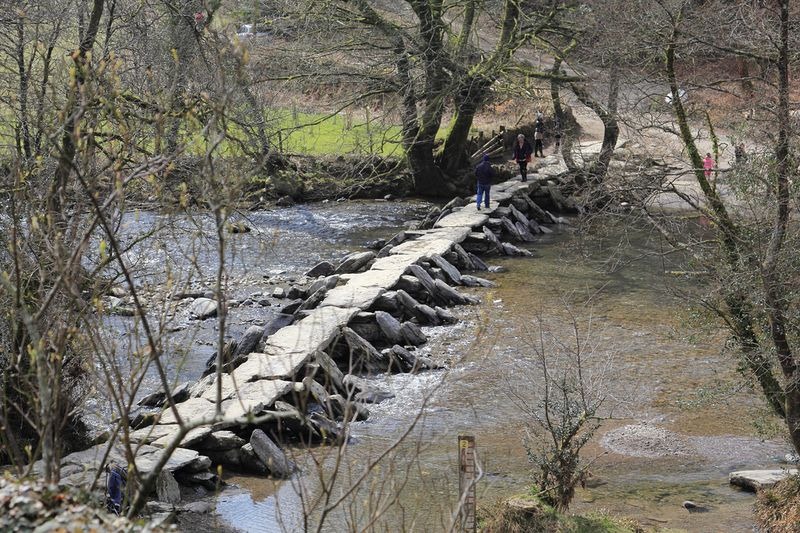
Tarr Steps: An Ancient ‘Clapper Bridge’ in Somerset…

In the lonely moors of Devon and in other upland areas of the United Kingdom, the ancient people had built stone bridges by placing large flat slabs of stones over piles of stones, without mortar or cement, to cross narrow streams. These bridges are called clapper bridges. The name is derived from the Anglo-Saxon word “cleaca” which means “bridging the stepping stones”, suggesting that the first clapper bridges might have been stone slabs laid across the top of existing stepping stones. Most clapper bridges were built during the medieval times, although some of them age much much more.

tarr-steps-3

Photo credit: j.e.mcgowan/Flickr


One of the most famous clapper bridge is Tarr Steps, located in the Exmoor National Park, in Somerset, across the River Barle. It is also the longest clapper bridge in Britain with 17 spans and measuring 55 meters in length.The bridge lies very low in the water, less than a meter over the river’s normal water level. Over the last century, the river has silted so much that during flood it often flows over the stones. Several times in recent years, the slabs of stones, which weigh up to two tons each, have been washed up to 50 meters downstream. The bridge was repaired each time.

The age of Tarr Steps is unknown with several theories claiming that it dates from the Bronze Age, but others put them around 1400 AD. According to local legend, the Devil himself built it so that he could sunbath on. A more elaborate story says that the Devil never fully completed building the bridge, because his apron strings broke and he dropped the stones he was carrying. The Devil then denounced destruction on the first creature to venture across, so the villagers sent a cat across. The poor creature was torn to pieces. The parson then crossed the bridge without harm, and traded insults with the Devil.

The Tar Steps has been a tourist attraction for at least two hundred years.

tarr-steps-1

Photo credit: James Morley/Flickr

tarr-steps-2

Photo credit: Matt Neale/Flickr

tarr-steps-4

Photo credit: Exmoor NP/Flickr

tarr-steps-8

Photo credit: lee roberts/Flickr

Sources: Wikipedia / Theaa.com / www.everythingexmoor.org.uk

Source……www.amusingplanet.com
Natarajan

“கம்பீரப் பார்வையும் சிலிர்த்து நிற்கும் திமிலும்: தமிழக மாட்டினங்களின் மரபும் பெருமையும்”

நம்ம ஊர் மாடுகள் என்ற வார்த்தையைக் கேட்டவுடன், அடுத்த கணம் நம் மனதில் தோன்றி மறைபவை துள்ளி ஓடும் காளைகளே. அவை எதுவும் சாதாரணக் காளைகள் அல்ல, கம்பீரப் பார்வையும் மேலெழுந்த திமிலுடனும் சிலிர்த்து நிற்கும் காங்கேயம் காளைகள்.

எந்தச் சந்தேகமும் இல்லாமல் காங்கேயம் காளை, நம் மண்ணின் பெருமிதம்தான். காங்கேயம் மட்டுமின்றி உம்பளச்சேரி, புளியகுளம், பர்கூர் மலை மாடு, தேனி மலை மாடு போன்றவையும் நம் மரபின் பெருமைகளைத் தூக்கிப் பிடிப்பவையே. தமிழ் மண்ணின் அடையாளமாகத் திகழ்ந்துவந்த ஆறு மரபார்ந்த மாட்டினங்களில் தர்மபுரி, ஓசூர், கிருஷ்ணகிரி பகுதிகளில் இருந்த ஆலம்பாடி வகை மட்டும் இன்றைக்கு இல்லை, அற்றுப்போய்விட்டது.

மற்ற உள்ளூர் மாட்டினங்களின் நிலையும் மகிழ்ச்சி யடைய வைக்கும் நிலையில் இல்லை. நம்முடைய மாட்டினங்கள் வேகமாக அழிந்துவருவதற்கு, அவற்றின் பெருமைகள் சரியாக உணரப்படாததே முக்கியக் காரணம். உள்ளூர் மாட்டினங்களின் இனப்பெருக்க நடைமுறைகளுள் ஒன்றான ஜல்லிக்கட்டு ஒருபுறம் கண்மூடித்தனமாக எதிர்க்கப்படுகிறது. மற்றொருபுறம் காலம்காலமாகக் கிடைத்துவந்த ஆதரவையும் பராமரிப்பையும் வேகமாக இழந்துவரும் உள்ளூர் மாட்டினங்கள் அழிவை நோக்கி நகர்ந்து வருகின்றன.

இந்தப் பின்னணியில் காங்கேயம் அருகே குட்டப்பாளையத்தில் செயல்பட்டுவரும் சேனாபதி காங்கேயம் மாடுகள் ஆராய்ச்சி அறக்கட்டளையின் நிர்வாக அறங்காவலர் கார்த்திகேய சிவசேனாபதி, நம் மாடுகளின் பெருமைகளை பகிர்ந்துகொள்கிறார்:

காங்கேயம்: கம்பீரமும் அழகும்

ஆங்கிலேய கவர்னர் ஒருவர் காங்கேயம் அருகேயுள்ள பழையக்கோட்டை கிராமத்துக்குச் சென்றிருந்தபோது, ராவ் பகதூர் சர்க்கரை மன்றாடியாரின் பண்ணையில் இருந்த காங்கேயம் காளைகளைப் பார்த்துவிட்டு, ‘அந்தப் பண்ணையின் அழகு’ (Beauty of the farm) என்று அவற்றை பெருமிதத்துடன் குறிப்பிட்டிருக்கிறார். இப்படிப் பலராலும் பாராட்டப்பட்ட காங்கேயம் மாட்டினமே, தமிழக மாட்டினங்களின் தாய் இனம்.


காங்கேயம் காளைகள் சாதாரணமாக 4,000-5,000 கிலோ வண்டிபாரத்தை இழுக்கும் திறன் கொண்டவை. எந்தக் காலநிலையையும் சமாளித்து வாழும் திறன் பெற்றவை, உள்ளூர் சூழ்நிலைக்கு ஏற்ப தகவமைத்து வாழக்கூடியவை. எல்லாம் நன்றாக இருக்கும் சூழ்நிலையில் மட்டுமல்லாமல் கடுமையான வெயில், பஞ்ச காலத்திலும் நொடித்துப் போகாமல் பனையோலை, எள்ளு சக்கை, கரும்புத் தோகை, வேப்பந்தழை எனக் கிடைப்பதைச் சாப்பிட்டு உயிர் வாழக்கூடியவை.

காங்கேயம் மாட்டினம் என்றாலே காளைகள் மட்டும்தான் என்று நம்புகிறோம். பால் கொடுக்கும் பசுக்களும் காங்கேயம் வகையில் உண்டு. இறைச்சி உண்ணும் நம்முடைய பண்பாட்டில் பாலுக்கான தேவை அதிகமாக இல்லாததால், உழைப்புக்குப் பெயர் பெற்ற காளைகளே பிரபலமடைந்தன.

நமது உள்ளூர் மாட்டினங்கள் உழைப்புக்காகவே பெரிதும் அறியப்பட்டவை. ஆனால், ‘வெள்ளைப் புரட்சி’க்குப் பிறகு உழைக்கும் காளைகளைத் தாழ்வாகப் பார்க்கும் குணம் உருவாகி, இன்றைக்கு அந்தப் பார்வை பெரிதாகப் பரவலாகிவிட்டதே உள்ளூர் மாட்டினங்களின் வீழ்ச்சிக்கு முக்கியக் காரணம்.

தமிழகத்தில் 1990-ல் 11 லட்சத்து 74 ஆயிரம் காங்கேயம் மாடுகள் இருந்தன. 2000-ல் அது நான்கு லட்சம் மாடுகளாகக் குறைந்து, 2015-ல் ஒரு லட்சம் மாடுகள்கூட இல்லை என்று சொல்லும் நிலைக்குச் சரிந்திருக்கின்றன.

தமிழக மாட்டினங்களின் தாய் இனம், காங்கேயம் என்று கூறப்படுவதற்குக் காரணம், தமிழகத்தின் பல்வேறு பகுதிகளுக்குக் கொண்டு செல்லப்பட்ட காங்கேயம் மாடுகள், அந்தந்த பகுதிக்கு ஏற்ப தகவமைத்துக்கொண்டதால் பின்னர் தனித்தனி மாட்டினங்களாகப் பரிணமித்துள்ளன.

வாழிடம்: கொங்கு, கோவை, கரூர், திண்டுக்கல், நாமக்கல், சேலம் ஆகிய பகுதிகள்.

தர்மபுரி, ஓசூர், கிருஷ்ணகிரி பகுதிகளில் இருந்த ஆலம்பாடி வகை மட்டும் இன்றைக்கு இல்லை, அற்றுப்போய்விட்டது.

உம்பளச்சேரி: உறுதிமிக்க கால்கள்

உம்பளச்சேரி மாடுகள் குட்டையானவை என்றாலும், கால்கள் மிகவும் உறுதியானவை. காவிரி பாசனப் பகுதி வயல்களில் உழ வேண்டுமென்றால், ஆழமான சேற்றில் மாடுகள் இறங்கியாக வேண்டும். அதற்கு ஏற்ப சிறந்த தகவமைப்பைப் பெற்றவை உம்பளச்சேரி மாடுகள். நன்கு உழக்கூடிய இவை, தஞ்சை டெல்டா பகுதியில் பரிணமித்தவை.

வாழிடம்: தஞ்சை, திருவாரூர், நாகை எனப்படும் பழைய தஞ்சை மாவட்டம்.

பர்கூர் மலை மாடு: கெட்டியான குளம்புகள்

இதற்கு செம்மறை என்று மற்றொரு பெயரும் உண்டு. இந்த மாட்டினத்தின் பாதங்களை வலுப்படுத்துவதற்கு லாடம் அடிக்கத் தேவையில்லை. அவற்றின் குளம்பே லாடத்தைப் போல கெட்டியாகவும் உறுதியாகவும் இருக்கும். காட்டில் அதிகம் மேயக்கூடிய மாட்டினம் இது. மத்திய அரசு கொண்டுவந்த வன உரிமைச் சட்டத்தைத் தமிழகம் உட்பட பல மாநிலங்கள் இன்னும் சட்டமாக ஏற்றுக்கொண்டு அறிவிக்காததால், இந்த மாட்டை வைத்திருக்கும் பழங்குடிகள் பெருமளவு பாதிக்கப்படுகிறார்கள். வயலில் பட்டி போடுவதற்காக இந்த மாட்டினம் அதிகம் பயன்படுத்தப்பட்டுவருகிறது.

வாழிடம்: ஈரோடு, அந்தியூர் 

புளியகுளம்: நிலம் காக்கும் பட்டி மாடு

புளியகுளம் மாட்டின் பெயரே ‘பட்டி மாடு’தான். ‘நிலம் தரிசாதல் அதிகரித்துவருகிறது என்றும், அதைத் தடுக்கும் சக்தி ஆடு-மாடு பட்டி போடுதலில் அடங்கியிருக்கிறது’ என்றும் குறிப்பிடுகிறார் ஸிம்பாப்வே சூழலியலாளர் ஆலன் சேவரி. ஒரு வயலில் ஒரு நாள் இரவு முழுக்க ஆடு அல்லது மாடுகளைப் பட்டிபோட்டுத் தங்கவைப்பதால் அவற்றின் சிறுநீர், புளுக்கை, சாணம் போன்றவை நிலத்தில் விழும்.

இயற்கையான, இந்த உடனடி உரம் மூலம் நிலம் வளமாகும். புளியகுளம் மாடு பட்டிபோட்டால் மூன்று ஆண்டுகளுக்கு உரம் தேவையில்லை என்கிறார்கள். பட்டி போடுபவருக்கு ஒரு மாட்டுக்கு ரூ. 10-ம், ஆட்டுக்கு ரூ. 5 ம் கிடைக்கிறது. கேரளப் பகுதியில் இயற்கை வேளாண் முறையில் மேற்கொள்ளப்படும் திராட்சை சாகுபடிக்குப் புளியகுளம் மாடுகளே பேருதவி புரிந்துவருகின்றன. ஜல்லிக்கட்டிலும் இந்த மாட்டினம் அதிகமாக ஈடுபடுத்தப்படுகிறது.

வாழிடம்: புளியகுளம், சிவகங்கை, பழைய மதுரை, ராமநாதபுரம், புதுக்கோட்டை ஆகிய பகுதிகள். தேனி பகுதியில் இருப்பது தேனி மலை மாடு.

காங்கேயம் பசு (பெண் மாடு) கன்றுடன் - காங்கேயம் காளையுடன் கார்த்திகேய சிவசேனாபதி

காங்கேயம் பசு (பெண் மாடு) கன்றுடன் – காங்கேயம் காளையுடன் கார்த்திகேய சிவசேனாபதி

பர்கூர் மலையினக் காளை

பர்கூர் மலையினக் காளை

கம்பீரம் நிறைந்த காங்கேயம் காளை

கம்பீரம் நிறைந்த காங்கேயம் காளை

வண்டியிழுக்கும் உம்பளச்சேரி காளைகள்

வண்டியிழுக்கும் உம்பளச்சேரி காளைகள்

புளியகுளம் மாடுகள்

புளியகுளம் மாடுகள்

தொடர்புக்கு: 04257 294234, 96295 28888
‘தி இந்து’ 2016 பொங்கல் மலரில் வெளியாகியுள்ள படத்தொகுப்பின் ஒரு பகுதி

Source……தொகுப்பு: ஆதி  in http://www.tamil.thehindu.com

Natarajan