Dare Devil Duo is the First to Scale the Niagara Falls… !!!

Last week, two daredevil Canadian climbers, Will Gadd and Sarah Hueniken, attempted the impossible: scaling Niagara’s 51m-high, frozen falls. And it only took them just under an hour to do it.

Niagara Falls, the collective term for the three waterfalls that dominate the border between New York state and Ontario, Canada, flows at a rate of up to two million litres per second. Because of that immense volume, the falls almost never stop moving. In fact, other than a 30-hour dry spell on 29 March 1848, when an ice jam in the upper river blocked the regular flow of water, it was nearly unheard of until early 2014, when the falls came to a near standstill twice during the extreme North American cold wave. (And while some would argue that the falls froze in the early 1900s, the credibility of that commonly shared photograph has beenproven questionable.)

It’s important to note that even in these three rare instances, the falls never completely froze over, making attempts to climb up the falls extremely dangerous. The water, albeit in smaller volumes, continues to flow, forming unstable layers of snow, slush and ice (see 2:08 when Gadd sinks his hooks into a piece of snow that simply crumbles away). It’s a feat we wouldn’t suggest trying at home. Still, for Gadd and Hueniken, being the first climbers to travel up Niagara Falls is a good way to go down in history. “There’s only one Mount Everest, there’s only one Niagara Falls and I feel really lucky because that ended a lot of hard work by a lot of people and I got to climb something to me that was really amazing and really beautiful and a whole lot of fun,” Gadd said in an interview with ABC.

In the winter, videos like the above are one of the only ways to get a sense of the falls’ majesty up close. Visitors have been banned from walking on the bridges formed by the ice since 1912; it’s illegal to climb the falls on either side of the border; and the boat tour on the New York side of the Falls, the Maid of the Mist, shuts down after October because of icy conditions, usually reopening in April or May.

SOURCE:::: http://www.bbc.com

Natarajan

Dubai Airport…Busiest in the World…

Dubai Airport The Emirates Terminal at Dubai International Airport.

In 2014, Dubai International took the crown of “World’s Busiest Airport” from London Heathrow International.

More than 70.4 million international passengers moved through the Dubai’s ornate concourses, terminals, and duty-free shops in 2014, up 6.1% from 2013.

Dubai’s numbers were boosted by rapid expansion and a convenient international location.

Also helping the airport’s numbers was Emirates — the world’s busiest airline by international volume — and its fleet of Airbus A380 superjumbo jets, based in Dubai.

Heathrow moved a record-setting 68.1 million international passengers for the year, but clearly couldn’t keep up with Dubai’s growth.

Officials at Heathrow blamed a stalled plan for a third runway for the title loss, according to a spokesman.

Dubai is set to open another concourse this year — and is forecasting 79 million international visitors. Dubai Airports also said it’s planning to build a $US32-billion new airport in the country within 8 years. It will have capacity for 240 million passengers, according to the Wall Street Journal.

And it will need it to match up with Emirate’s growth projections!

Check out pictures of Dubai’s beautiful airport, below.

Dubai airport Duty-free shops in Dubai International Airport.

Dubai Airport A palm-tree lined waiting room in Dubai International Airport.

Dubai Aiport A beautiful concourse at Dubai International Airport.

SOURCE::::: http://www.businessinsider.com.au

Natarajan


” Explain God … An Answer from Eight Year old Boy…” !!!

Little Boy’s Explanation of God — Fabulous!!!

(I certainly don’t think an adult could explain this more beautifully!)

THIS IS FABULOUS!!!

It was written by an 8-year-old named Danny Dutton, who lives in Chula Vista , CA . He wrote it for his third grade homework assignment, to ‘explain God.’ I wonder if any of us could have done as well ?

EXPLANATION OF GOD:

‘One of God’s main jobs is making people. He makes them to replace the ones that die, so there will be enough people to take care of things on earth. He doesn’t make grownups, just babies. I think because they are smaller and easier to make. That way he doesn’t have to take up his valuable time teaching them to talk and walk. He can just leave that to mothers and fathers.’

‘God’s second most important job is listening to prayers. An awful lot of this goes on, since some people, like preachers and things, pray at times beside bedtime. God doesn’t have time to listen to the radio or TV because of this. Because he hears everything, there must be a terrible lot of noise in his ears, unless he has thought of a way to turn it off.’

‘God sees everything and hears everything and is everywhere which keeps Him pretty busy. So you shouldn’t go wasting his time by going over your mom and dad’s head asking for something they said you couldn’t have.’

‘Atheists are people who don’t believe in God. I don’t think there are any in Chula Vista … At least there aren’t any who come to our church.’

‘Jesus is God’s Son. He used to do all the hard work, like walking on water and performing miracles and trying to teach the people who didn’t want to learn about God.. They finally got tired of him preaching to them and they crucified him But he was good and kind, like his father, and he told his father that they didn’t know what they were doing and to forgive them and God said O.K.’

‘His dad (God) appreciated everything that he had done and all his hard work on earth so he told him he didn’t have to go out on the road anymore. He could stay in heaven. So he did. And now he helps his dad out by listening to prayers and seeing things which are important for God to take care of and which ones he can take care of himself without having to bother God. Like a secretary, only more important.’

‘You can pray anytime you want and they are sure to help you because they got it worked out so one of them is on duty all the time.’

‘You should always go to church on Sunday because it makes God happy, and if there’s anybody you want to make happy, it’s God!

Don’t skip church to do something you think will be more fun like going to the beach. This is wrong. And besides the sun doesn’t come out at the beach until noon anyway.’

‘If you don’t believe in God, besides being an atheist, you will be very lonely, because your parents can’t go everywhere with you, like to camp, but God can. It is good to know He’s around you when you’re scared, in the dark or when you can’t swim and you get thrown into real deep water by big kids.’

‘But…..you shouldn’t just always think of what God can do for you. I figure God put me here and he can take me back anytime he pleases.

And…that is why I believe in God.

SOURCE:::: input from a friend of mine

Natarajan

” A day you have learned something is a day …Not Wasted …” !!!

I Never Knew These Amazing Facts

My father used to say: “A day you’ve learned something is a day not wasted.” As usual, he was right. I always feel good learning and discovering things I never knew before. Things like how amazing humans can be, how far our technology has come, how amazing our world is. Here are some facts that I hope will make your day worthwhile.

amazing facts

amazing facts

amazing facts

amazing facts

amazing facts

amazing facts

amazing facts

amazing facts

amazing facts

amazing facts

amazing facts

SOURCE::::: ba-bamail.com

Natarajan

” How to Take Astrophotos with Your Smartphone …” ?

Got a smartphone and a telescope?

It’s a sight now common at many star parties. Frequently, you see folks roaming through the darkness, illuminated smartphone aimed skyward. Certainly, the wealth of free planetarium apps has done lots to kindle a renewed interest in the night sky.

Inevitably, after peering through the eyepiece of a telescope, the question then arises:

“Can I get a picture of that with my phone?”

The short answer is yes, with a little skill and patience.

Now simply aiming a camera at the eyepiece of a telescope — known as afocal astrophotography — and shooting without removing the camera lens and physically coupling it to the telescope is a tricky balancing act. Back in the olden days, the Moon and perhaps the brighter planets were the only bright target within bounds of afocal film photographers, and only then after a lengthy set of estimations to hit the correct focal length.

The advent of digital cameras and ‘live preview’ means that you can now simply aim, shoot, and throw away or delete anything off center or out of focus. Digital “film” is cheap, and most folks simply use trial and error to get the ‘keepers’. The Moon is an especially bright and easy target for beginners to practice on.

moon with iphone

Of course, your typical smartphone, like a webcam, has an imaging chip much smaller than a DSLR. This is why astrophotographers are often tempted to take out a second mortgage (“we don’t really need that second car, do we?” is a common spousal refrain) in pursuit of excellence. Another drawback is that through a smartphone, a planet may look like an overexposed blob.

A simple but effective way to get around this is to affix a light reducing filter to the eyepiece. In fact, I’ve used a variable polarizer during live broadcasts of the Virtual Star Party to great effect. And as with webcam imaging, smartphone astrophotographers now often use automated stacking programs to clean up images and tease out detail. Being an old timer, my faves are still K3CCD Tools and Registax, though many young guns out there now use DeepSkyStacker as well.
telescope

Now, I’ll admit, I’m an “Android guy,” and I have put most of my efforts over the years into planetary imaging with a homemade webcam. We therefore sought out in-the-field expertise from someone on the forefront of iPhone astrophotography.

Andrew Symes has been taking images of the solar system and beyond with his iPhone coupled to his Celestron NexStar 8″ SE telescope for years. He also has one of the few handles on Twitter that we’re envious of, @FailedProtostar. He also ventures out into the chilly nights frequent to his native of Ottawa, Canada to practice his craft, as he observes in temperatures that would drop a Tauntaun.

We caught up with Andrew recently to ask him about some tips of the trade.

sun iphone

Universe Today: I know from doing webcam photography that acquiring, centering and focusing are often more than half the battle. Any tips for accomplishing these?

Andrew: Acquiring, centering, and focusing the objects I’m photographing is definitely the big challenge! To speed and simplify the process, I have a dedicated eyepiece that I use in association with my phone and adapter. Before even heading outside, I attach the adapter to this eyepiece, insert my phone, and hold the unit up to a light source to see if the camera lens is properly aligned with the eyepiece.

It usually takes a bit of fiddling to get things set properly because if the adapter and eyepiece are not perfectly aligned, nothing will show up on the camera screen. It’s better to get that process out of the way in a lit environment than outside in the dark.

I then set that unit aside, and use a separate “adapter-less” zoom eyepiece to locate and center the object in the telescope. Once I’ve acquired the object and am successfully tracking it, I remove my zoom eyepiece and drop in the eyepiece/adapter/phone combo. At that point, the object is usually visible on screen but out of focus since the focus required for the iPhone is different from what works for my eyes!

To ensure proper focus, I display the object on my phone’s screen using a live video app called FiLMiC Pro and adjust the focus until it is sharp. I use that app because it has a digital zoom function that lets me get a closer look at the object than the standard iPhone video camera view. Only once I’m confident that I’ve achieved good focus and am tracking the object properly, will I start to record video or shoot individual frames.

Universe Today: A question I always like to ask everyone… what was your biggest mistake? Are there any pitfalls to avoid?

Andrew: There are a few pitfalls to avoid when doing iPhone astrophotography. In the past, I would attach the adapter outside while the eyepiece was in the telescope but this caused a number of problems. Often, I would accidentally bump the object out of view while attaching and adjusting the adapter and have to align everything all over again.

The weather is also often cold here, and it’s VERY difficult to attach the adapter properly with gloves on, so I would either get really cold hands or spend a lot of unnecessary time fumbling with the adapter with gloved hands. For those reasons, I now prepare the eyepiece/adapter/phone unit indoors in advance as described above.

I also now make sure that my iPhone is fully charged before heading outdoors as I’ve found that the iPhone battery drains very quickly when the camera is running constantly — especially in cold weather. Even with an almost-full battery, there are times here in winter when the phone will simply shut down due to the low temperature so I make sure to only start capturing photos/videos once I’m completely confident in my setup.

Universe Today: You’re really pushing the envelope by doing deep sky astro-pics with an iPhone … anything else that you’re experimenting with or working on?

Andrew: My main focus is definitely still on iPhone astrophotography because I like the quick and “light” setup. I don’t need to bring a laptop outside and don’t need equipment that I wouldn’t normally have on me anyway (other than the adapter itself.)

So, I want to keep pushing the envelope with what I can capture using the phone and my goal is now is to see how far I can go with deep-sky objects. I’d really like to add the Ring and Dumbbell Nebulae to my portfolio, for example, and see if it’s possible to grab even fainter ones.

There are also some non-deep sky targets I’d like to try. I haven’t been successful at capturing a telescopic photo of the ISS, and would love to see if I can catch it transiting the Sun or Moon with my phone. I also still need to capture Uranus and Neptune to round out a solar system collage I put together in 2014!

Lastly, I’m continually experimenting with photo apps to see which are best at capturing and/or processing telescopic images, and have just started using both an iPhone 4S and iPhone 6 to take photos and video. Surprisingly, I still prefer the 4S for planetary imaging as I haven’t been able to properly capture the true colors of planets with the iPhone 6 yet.

The 6 has better camera resolution but seems to be adjusting the exposure of small, faint objects like planets differently than the 4S, so I need to change my routine and techniques to compensate. The methods I’ve become accustomed to using with the 4S don’t seem to translate directly to the 6 so I have some learning yet to do!


messier 13Andrew Symes

Amazing stuff, for sure. And to think, we were all gas-hypering film and using absurdly long focal lengths to get blurry planetary images just a few decades ago!

-Check out more of Andrew”s images, as well as read more about how he does it.


Read more: http://www.universetoday.com/118527/iphone-astrophotography-how-to-take-amazing-images-of-the-sky-with-your-smartphone-tonight/#ixzz3Qdd7YglB

SOURCE::::

Natarajan


” Brown Paper Bag ” Building @ Sydney…. !!!

A front view of the Chau Chak Wing Business School in Sydney

The Frank Gehry-designed Chau Chak Wing building is home to the UTS Business School.


Sydney has joined the list of cities with a Frank Gehry-designed building.

The Chau Chak Wing Business School building has been dubbed the “brown paper bag” by local media.

Speaking at Monday’s opening, Mr Gehry said he hoped the building would generated a “spirit of invention” in those who work and study in it.

The A$180m ($140m; £93m) building for the University of Technology, Sydney (UTS), is named after businessman and philanthropist Dr Chau Chak Wing.

It is the architect’s first design to be built in Australia.

Mr Gehry said he had designed a “flexible” building with only a few fixed parts, allowing the building to be changed over time to meet the changing needs of its users.

“People will invent ways to use it,” he said

Gehry said that five years after its conception, there were perhaps some things he would change but he was pleased with the finished result.

“I am Jewish and I feel guilty about everything,” he joked.

The building – tucked between several small streets in the inner city suburb of Ultimo in Sydney – is a key part of the university’s campus master plan. It will house 1,630 students and staff for the UTS Business School.


The Chau Chak Wing building

The Chau Chak Wing building’s facade curves and folds like fabric.


The Chau Chak Wing building

Undulating brickwork and large glass panels have created a “curtain wall”.
A staircase inside the Chau Chak Wing building
The building makes prominent use of stairways, including a polished stainless steel staircase rising up from the main lobby..
The interior of the Chau Chak Wing building
Two oval classrooms have been constructed around 150 large laminated timber beams, each weighing up to two tonnes.
 Natarajan
Feb 2 2015


” Apple iPhone’s Big Bite out of Android Smartphones…” !!!

The holidays weren’t so jolly for Android smartphones, after all.

Lollipop is just one version of Google’s Android mobile operating system.Google


Shipments of Android-running smartphones fell in the last three months of 2014 as consumers bought Apple’s iPhone 6 and iPhone 6 Plus in record-shattering numbers. This marks the first decline in Android smartphones during the all-important holiday quarter compared to the previous three months, according to industry tracker ABI Research.

The holiday quarter was the first full quarter of availability for Apple’s latest smartphones, which went on sale in late September.

Those surging iPhone shipments also pulled Apple even with Samsung, the leader among Android phone makers, in the global market for smartphones. Each company accounted for 20 percent of the market during the holiday quarter, according to Strategy Analytics.

Most smartphones shipped today run some version or another of Google’s Android mobile operating system. Shipments of Android-based smartphones actually exceeded 1 billion units in 2014, according to researcher Strategy Analytics, a testament to the number of devices and device makers that use the mobile OS. But that was for the entire year.

In the fourth quarter, Apple shipped 74.5 million iPhones, a 90 percent increase from the previous quarter, while shipments of Android-based phones slid 5 percent, to 205.56 million units. Android’s falling numbers were also affected by so-called forked Android, meaning the variations that device makers make to the operating system. In September, Google launched its Android One initiative as a way to bring affordable smartphones to emerging markets and create a consistent Android experience.

“Google’s Android is being attacked by Apple’s iOS at the high end and forked Android … at the low end in high growth emerging markets,” ABI researcher Nick Spencer said in a statement.

The shifting dynamics in the market represent “worrying times for Google’s mobile services and Android, but it presents opportunity for other service providers and even operating systems,” Spencer said.

Smartphones running Microsoft’s Windows Phone mobile operating system rose 19 percent from the third quarter to the holiday quarter of 2014, to 10.7 million units, according to ABI. Shipments for smartphones running “other” operating systems plummeted 26 percent, compared with the previous three months.

SOURCE:::: Rochelle Garner in http://www.cnet.com

Natarajan

Feb 2 2015

” These Women Made us Proud on Republic Day…”

These Women made us proud on Republic Day

Lt Haobam Bella DeviWomen officers came from different parts of this vast country to give us some of the proudest moments at this Republic Day.

Archana Masih/Rediff.com speaks to Lieutenant Haobam Bella Devi and Captain Divya Ajith, young Army officers who stole the show on Rajpath.

Under a rainy sky, just as the grand celebration of Republic Day began on Rajpath, Lieutenant Haobam Bella Devi, a 24-year-old Indian Army officer from Manipur stood near the saluting dais.

Like most Indians, she had never unfurled the Indian flag before — and here she was entrusted with that responsibility in front of the whole nation on the nation’s grandest day.

Image: Lieutenant Haobam Bella Devi unfurls the flag on Republic Day.

In the run-up to Republic Day, she and another officer had practiced the procedure. When the big moment arrived, the only thing she had ears for was the command from the commanding officer of the President’s Bodyguard.

Just as he finished giving the crisp command, Lieutenant Bella, tugged at the rope to unfurl the flag and gave it a smart salute. The rose petals wrapped within the flag lay around, while in the distance she could hear the roar of the 21-gun salute.

“There is a whole procedure and ceremony as far as the flag is concerned. How it is put up, how it is tied, how it goes up, how it is folded. I learnt everything about it,” says the officer, who was commissioned a year-and-a-half ago and is currently posted in Amritsar.

The only child of retired army officer Colonel H G Singh, the lieutenant grew up in cantonments around the country, staying in Manipur when her father was away on field postings.

“There are not many lady officers from the North-East and girls get motivated when they see me. I tell them the Army is not a profession, but a way of life,” says the lieutenant who arrived in Delhi on January 4 for Republic Day preparations.

“I hope more and more girls join the armed forces. It gives you the opportunity to grow professionally and personally.”

The Army’s marching contingent was invited for tea by the Army Chief, General Dalbir Singh, on Republic Day, while there is a ‘Bada Khana’ — a meal shared by the officers and men — on January 31.

Lt. Bella

Image: Lieutenant Bella, an officer from Manipur, seen here second from left, is a second generation Army officer.

At the tea he hosted, the Army Chief, General Dalbir Singh, not only congratulated his officers, but also gave out commendations.

One of them to receive the honour was Captain Divya Ajith, 25, the officer who led the Indian Army’s contingent of women officers. An instructor at the Officers Training Academy in Chennai, she was awarded the sword of honour as the best cadet when she graduated from the academy in 2010.

The others who received the Chief’s commendation were the contingent’s drill instructors.

“The drill instructors were a major part of how well we did,” says Captain Divya. “One important thing is that our motivation comes from them. They are the people who train us, even when we were tired, they ensured that we practiced till the time we were perfect.”

Not new to the Republic Day parade, the captain had previously represented the National Cadet Corps as a school girl at the event. Her mother, a housewife, had watched her at that parade and had hoped that one day her daughter would march down Rajpath as an officer.

When the captain commanded the contingent to a rousing reception from the audience, her mother was there once again. Her dream had finally come true.

Image: Captain Divya Ajith from Chennai received the Army Chief’s commendation for commanding the parade. Photograph: PTI.

The marching contingent comprised officers from Jammu and Kashmir to Tamil Nadu. Training began in Chennai in early December where they would march 7 to 8 kilometers every day.

Early in the mornings, practice was held at the city’s main highway where 12 files could be accommodated and which provided a longer stretch. Later in the day, marching practice took place at the drill square at the OTA.

“Selection as contingent commander was purely on how you fared at drill. The drill instructor, adjutant selected around 10 people, which was later reduced to 3 with reserves,” says Captain Divya, the first person in her family to join the Army.

Since the Republic Day parade, she has been inundated with congratulatory messages. Some of the best messages have come from her teachers at Chennai’s Good Shepherd School. Now that she has a home posting, she hopes to pay them a visit soon.

In the four years that she has been in the Army, the captain has served in Anantnag, J&K, and MHOW before being posted to Chennai six months ago. “Anantnag was a very good exposure for me. It was a field posting. I had counter intelligence duties there,” says the officer whose father is a painting contractor.

“I feel if young girls want to pursue a career in the Army,” she says, “they already have a desire to do something different. They should stick to it and be determined to achieve what they want.”

SOURCE:::: http://www.rediff.com

Natarajan

Feb 1 2015

Image of the Day…. A Galaxy Observed By NASA…

This image shows Arp 230, also known as IC 51, observed by the NASA/ESA Hubble Space Telescope.

Arp 230 is a galaxy of an uncommon or peculiar shape, and is therefore part of the Atlas of Peculiar Galaxies produced by Halton Arp. Its irregular shape is thought to be the result of a violent collision with another galaxy sometime in the past. The collision could also be held responsible for the formation of the galaxy’s polar ring.

The outer ring surrounding the galaxy consists of gas and stars and rotates over the poles of the galaxy. It is thought that the orbit of the smaller of the two galaxies that created Arp 230 was perpendicular to the disk of the second, larger galaxy when they collided. In the process of merging the smaller galaxy would have been ripped apart and may have formed the polar ring structure astronomers can observe today.

Arp 230 is quite small for a lenticular galaxy, so the two original galaxies forming it must both have been smaller than the Milky Way.  A lenticular galaxy is a galaxy with a prominent central bulge and a disk, but no clear spiral arms.  They are classified as intermediate between an elliptical galaxy and a spiral galaxy.

European Space Agency

Image Credit: ESA/Hubble & NASA, Acknowledgement: Flickr user Det58 

SOURCE:::: http://www.nasa.gov

Natarajan

Feb 1 2015

JAN 30… 1826… Day on which Construction of This Suspension Bridge was Completed…

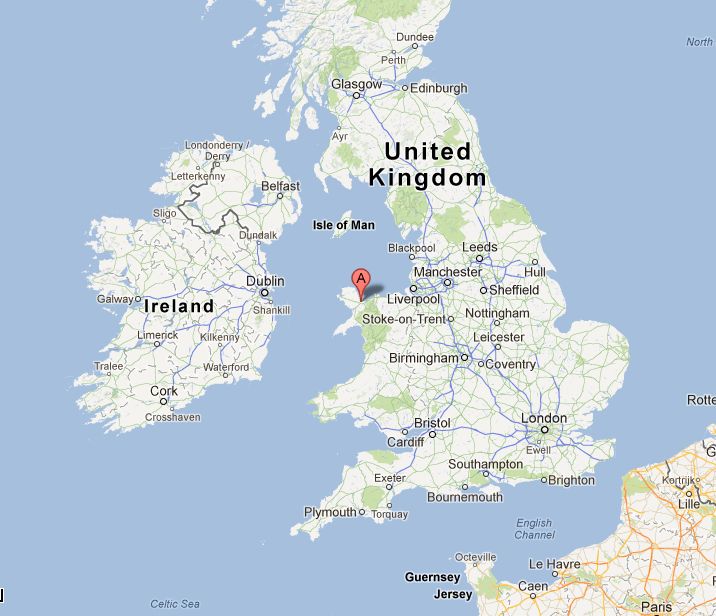
January 30, 1826. Workers completed construction of the first modern suspension bridge on this date. It was the Menai Bridge between Wales on the island of Great Britain and the smaller island of Anglesey, to the west. According to local reports about the bridge from nearly 200 years ago, travel in the strait between Wales and Anglesey was hazardous, due to shifting currents and unpredictable weather patterns. But the island of Anglesey had the Atlantic Ocean and Irish Sea to its west, and, especially after Ireland joined the United Kingdom in 1800, people increasingly wanted to use Anglesey as a jumping off point to reach the Emerald Isle by ferry boat.

A Scottish civil engineer, architect and stonemason named Thomas Telford designed the Menai Bridge. It’s a suspension bridge, with its deck (load-bearing portion) hung below suspension cables on vertical suspenders. Examples of this type of bridge were built in 15th century Tibet and Bhutan, but the Menai Bridge was heralded as the first modernsuspension bridge in the world.

The Menai Bridge reportedly stands 100 feet (about 30 meters) above the waters. It’s tall enough to allow sailing ships to pass underneath. It spans 579 feet (about 175 meters) from the Wales coast to the coast of Anglesey, and it’s supported by 16 large chains.

The chains has been changed out over the years to allow heavier truck traffic to pass through.

The Menai Bridge is still in use today.

Bottom line: On January 30, 1826, workers completed the Menai Bridge between Wales and Anglesey, the first modern suspension bridge in the world.

SOURCE::::  www.earthskynews.org

Natarajan