” சனீச்வரன் சிலை மட்டும் கொஞ்சம் உயரமா இருக்கே … ”


நகரத்தார்கள் அதிகம் வசிக்கும் ஊர ராயவரம் . அங்கே செல்வந்தர்களும் இருந்தார்கள், நடுத்தர மக்களும் இருந்தார்கள். ஆலமரத்தை போன்று பரந்து விரிந்து கிடந்த குடும்பம். அவ்வளவு வசதி என்று சொல்ல முடியாவிட்டாலும், சுமாராக வாழ்ந்து கொண்டிருந்தனர்.

எதையும் பெரிதாக செய்து முன்னுக்கு வர முடியவில்லையே என்று அவர்கள் கவலைப்பட்டது நியாயமே! தங்கள் நம்பிக்கையை கடவுள் மீது வைத்தனர். ஒரு சிவன் கோயிலை கட்டுவது என்று தீர்மானித்து, அதற்காக நிதி திரட்டி, கோயிலையும் நல்ல விதமாக கட்டி முடித்துவிட்டார்கள்.

கும்பாபிஷேகம் நடத்த முடிவு செய்து, அதற்கான பத்திரிகையை அடித்து எடுத்துக்கொண்டு முதல் அழைப்பை காஞ்சி மகானுக்கு கொடுக்க வேண்டும் என்று வந்தார்கள்.

சகல மரியாதைகளுடன் மகானிடம் அழைப்பிதழை கொடுத்தனர். அதை வாங்கி பார்த்தார் மகான்.

“கும்பாபிஷேகத்தை நடத்தணும்னா, அதுக்குள்ளே நீங்க ஒரு வேலை செஞ்சாகணும்”.

வந்திருந்தவர்கள் ஒருவரை ஒருவர் பார்த்து கொண்டனர்.

மகான் அந்த ஊர பக்கம் வந்து வெகு நாட்கள் ஆயிற்று. மேலும் இப்பொது கட்டியுள்ள சிவன் கோயிலை அவர் பார்த்ததில்லை. என்ன வேலை செய்ய சொல்கிறார் ?

“நீங்க நவகிரக சந்நிதியில் எல்லா சிலைகளையும் வெச்சிருக்கீங்க, இல்லையா?

“ஆமா”

“அதுலே இருக்கிற சனீஸ்வர சிலை மட்டும் கொஞ்சம் உயரமா இருக்கு இல்லையா?

அதிர்ச்சியோடு “ஆமாம் ” என்றார்கள்.

“மகான் பார்காமலேயே இதை சொல்கிறாரே?!”, என்று அவர்களுக்கு வியப்பு.

“நவகிரங்கல்ல ஒரு கிரகம் மட்டும் உயரமாக இருக்க கூடாது. அதை அங்கிருந்து எடுத்து வேறு பக்கமா தனியா வெச்சிட்டு, மற்ற கிரகங்கள் உயரத்திலேயே ஒரு சனிபகவானை அங்கே ஸ்தாபிதம் பண்ணிடுங்கோ”, என்றார்.

கோயிலை பார்க்காமல், அதில் உள்ள குறையை மட்டும் சுட்டி காட்டிய மகானை மனதார வணங்கிவிட்டு, அவர் சொன்ன மாறுதலை செய்தனர்.

“சனீஸ்வரன் சிலை தனியாக கிடைப்பது கஷ்டம்”, என்று வேறு சொன்னார்கள் . செய்தால், ஒன்பது கிரகங்கள் தான் செய்ய வேண்டும்.

மகானின் அருளாசி இருக்க, இவர்களுக்கு என்ன குறை?

சனீஸ்வரன் சிலை கிடைத்தது. ஸ்தாபிதமானது. அந்த உயரமான சிலையை தனியே ஒரு இடத்தில வைத்தார்கள்.

பலரும் திருப்தியடையும்படி அங்கே கும்பாபிஷேகம் நடந்தது.

முன்பே குறுப்பிட்ட அந்த குடும்பம் அன்றிலிருந்து நன்றாக செழித்து பெருக தொடங்கியது.  

source:::: http://www.periva.proboards.com

natarajan

Earth … Our Beautiful Earth !!!

In celebration of Earth Day 2014, EarthSky has brought together some of our favorite images of Earth received from friends in past years. Thank you all!


EarthSky is fortunate and grateful to have many talented friends on Facebook and Google+ who share their photos of the Earth, the sky and their surroundings. In celebration of Earth Day 2014, here are a few of our favorites from past years. We hope they help you enjoy Earth’s beauty and diversity. Our thanks to all who posted!

Glenn Miles wrote on April 22, 2014,

On Earth Day 2014, dogwood at sunrise from our friend Mike O'Neal.  Thank you, Mike.

Earth Day from East Bay of Sestri Levante, Ligurian Sea, Genoa, Italy, from Maranatha.it Photography.  Thanks, guys!  See larger photo.

Our friend Beverly Fish wishes everyone a happy Earth Day 2014 from Okinawa!  Thank you, Beverly.

Pearls of water on grass, in the morning, as captured by our friend VegaStar Carpentier.

On Earth Day 2014, our friend Theresa Lynch wrote at EarthSky Facebook:

Guy Livesay posted this photo on EarthSky's Facebook page. It’s Red-winged Blackbirds, over Mattamuskeet Lake in Hyde County, North Carolina. Thank you Guy!  More on flocking birds moving in unison here: http://earthsky.org/earth/how-do-flocking-birds-move-in-unison

View larger. | Wesley Liikane in Severn Bridge, Ontario captured these light pillars on December 23, 2013.   See more photos by Wesley at Cowboy with a Camera on Facebook.

Crepuscular rays, sometimes called sunrays, via Rick Trommater.  View larger.

During a total or nearly total solar eclipse, as mid-eclipse nears, you can look on the ground, on the walls of buildings, or under trees for tiny crescent suns.  Here's a sun crescent shining on adobe seen during the May 2012 solar eclipse, as captured by Liz Gold in Chimayo, New Mexico.

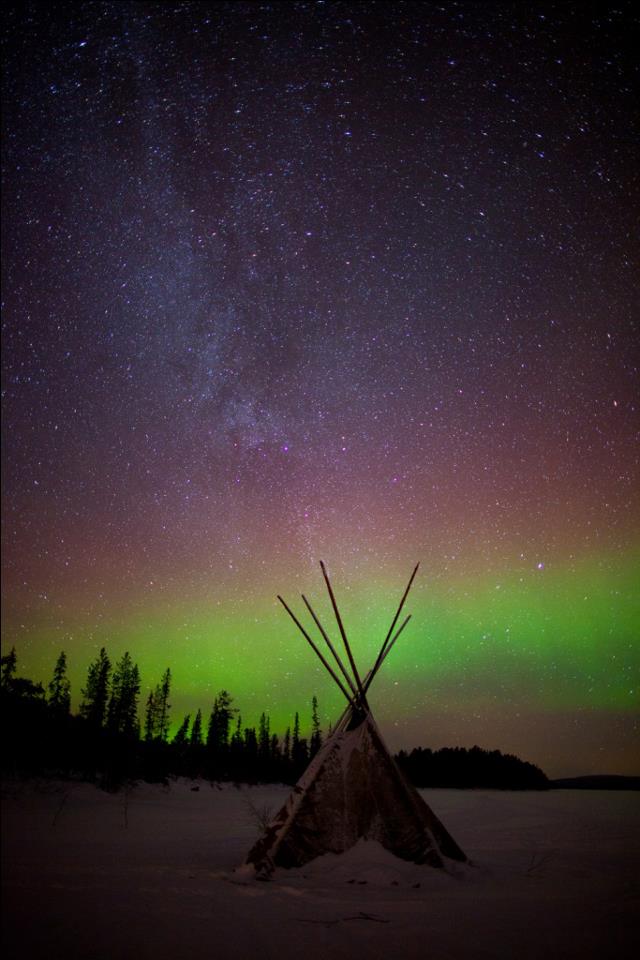
Aurora and teepee, captured November 2012 by EarthSky Facebook friend Aurora Zone.

A haboob or dust storm entering the town of Scottsdale, Arizona on July 21, 2012, as captured by our friend Ryan Behnke.

From our friend Neha Golwala in India who wrote,

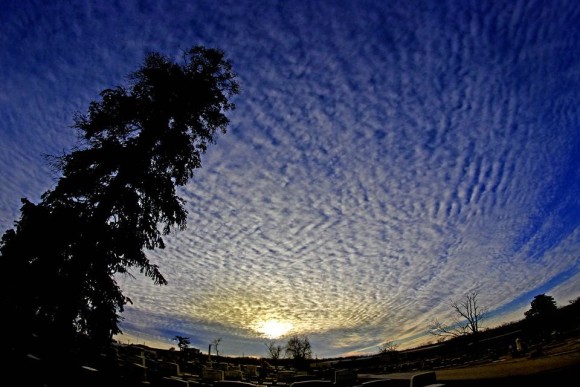
Winter clouds by our friend Duke Marsh in New Albany, Indiana.

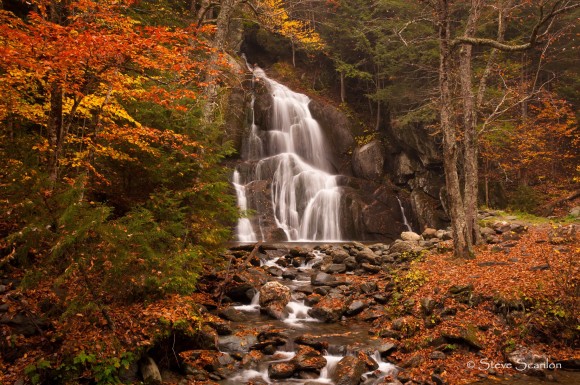
Autumn 2012 via Steve Scanlon Photogrpahy.

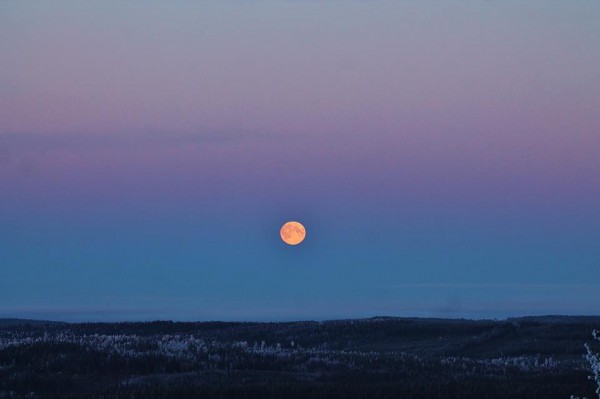
Earth's shadow, with full Hunter's Moon, on October 30, 2012.  Photo from EarthSky Facebook friend Birgit Boden in northern Sweden.

EarthSky Facebook friend Lynton Brown of Australia captured this fogbow.  Thank you, Lynton.  Click here to expand image

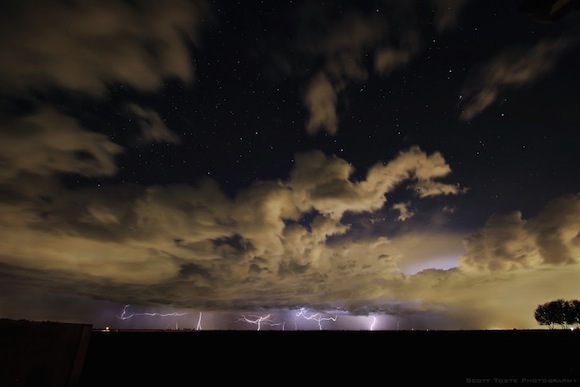
Starry skies and lightning strikes

Crepuscular rays, or sunrays, from EarthSky Facebook and G+ friend VegaStar Carpentier in Paris.

Frog eggs in springtime 2013 via our friend James Frances.  This photo was taken on Broad Mountain in Carbon County, Pennsylvania.

Lightning in Lubbock, Texas as seen by our friend Erin Shaw.  Thanks, Erin!

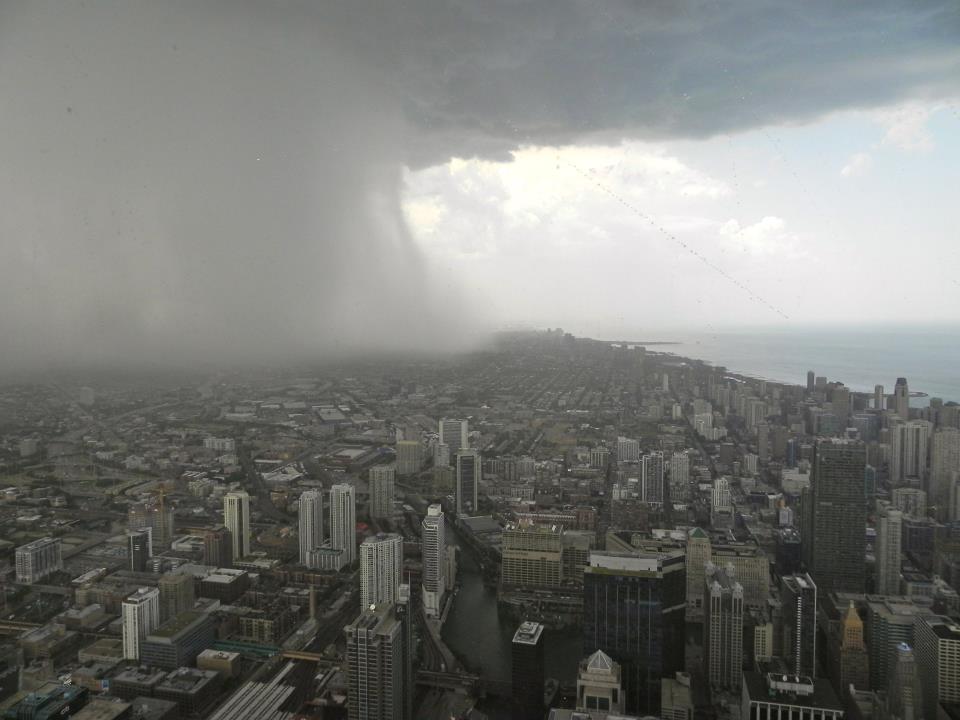
Storm coming, as seen from the Sears Tower in Chicago in July 2012, from our friend Caryn Elder.  Thank you, Caryn.

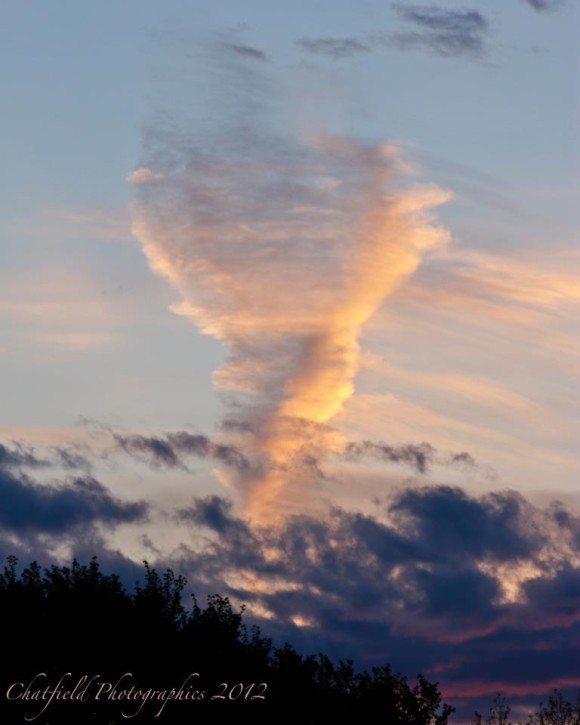
Funnel shaped cloud seen in May 2012 by our friend Colin Chatfield in Saskatoon, SK, Canada.  Thank you, Colin.

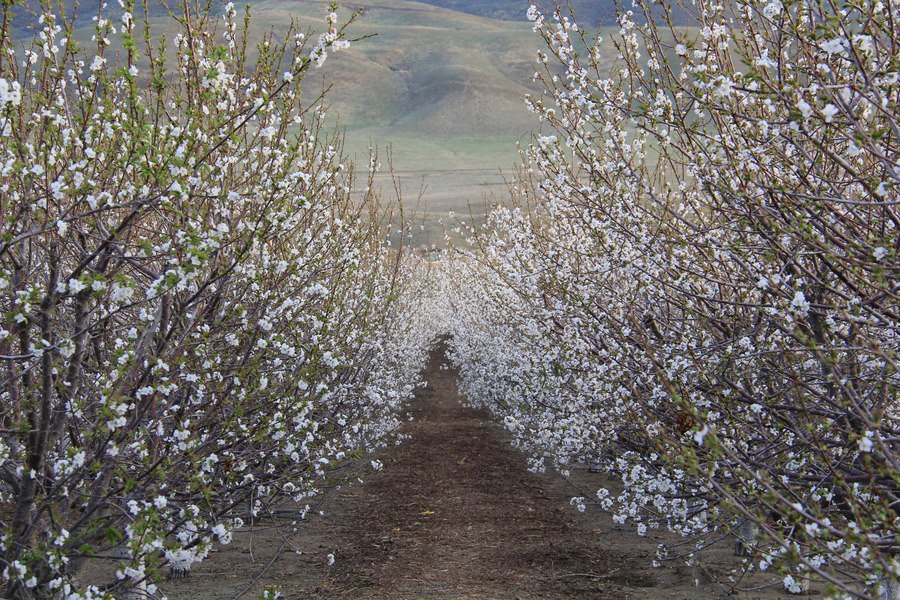
Cherry trees blooming in Antelope Valley California in spring 2013, as captured by our friend Kerri Willerford.  Thanks Kerri!

Green flash and mock mirage seen from Ocean Beach, California by our friend Jim Grant.  Thanks, Jim.

International Space Station flyover seen by EarthSky Facebook friend Lee Capps Photography.  View larger. Lee caught this photo in Whitsett, North Carolina on February 9, 2013.  Visit Lee's Facebook page here.

Cargo ship at sundown on the West Philippine Sea, as seen by our friend Jv Noriega.  Thanks, Jv.

Evening twilight in Wjitehaven, England in March 2013, as captured by our friend Adrian Strand.  Thanks, Adrian.

Bottom line: Best nature images, in celebration of Earth Day 2014.

Water Out Of Air !!!….


.


One of the biggest problems still haunting the poor regions of the world is the lack of clean drinking water. This is such a nccessaity that we take for granted, but many populations do not. Now, a new solution has arisen, one that is both simple and very promising.

In the Namib desert where rain is rare but fog common, a beetle survives by condensing water on its back until drops roll down into the insect’s mouth. Now this principle has been magnified onto a grand scale, providing a possible solution to the desperate lack of water that plagues the populations of many of the world’s dry regions.
There is no lack of solutions being experimented with for water shortages. Wellsrecycling techniques and methods for cleaning poisoned water have all attracted considerable efforts, particularly since the Bill and Melinda Gates foundation have made the issue a priority for their considerable resources.
However, many of these techniques have floundered; great on the page but unsuited to real world conditions. Those technologies that are cost effective represent only partial solutions, working well where a permanent water supply is available, but unsuited to regions where surface water vanishes in the dry season and groundwater is hard to reach. As deforestation and Global Warming expand the areas where water is scarce or erratic something else is needed.
While Warka Water to be treated with caution after so many false dawns, it has the advantage of being designed to match the conditions where most alternatives perform the worst.
The towers have a 9m tall bamboo or juncus frame holding up a plastic mesh net. As the temperature falls during the night water condenses onto the net and rolls down to a reservoir at the bottom of the tower. Where the beetle draws just a few life-giving drops from the Namib fog, the much larger surface area of the nets allows a 100l a night to collect under ideal conditions. Mesh is used, rather than a solid surface, so that air can circulate, bringing in ever more water.
As the designers Arturo Vittori and Andrea Vogler put it, “The lightweight structure is designed with parametric computing, but can be built with local skills and materials by the village inhabitants.”
The beetle has proven an inspiration to many but Warka Water claim their carefully shaped design produces much more water for less cost than previous versions.
The Warka Water tower is named after a fig tree native to Ethiopia, and depends for its success on a large temperature difference over a night. Since desert regions are notorious for huge temperature variations, particularly during the dry season, Warka towers should flourish where they are needed most.
“It’s not just illnesses that we’re trying to address,” Vittori told the Smithsonian Magazine, although with 1400 children a day dying from waterborne diseases that would be reason enough.  “Many Ethiopian children from rural villages spend several hours every day to fetch water, time they could invest for more productive activities and education,” Vittori says. “If we can give people something that lets them be more independent, they can free themselves from this cycle.”
Vittori hopes to install two Warka Towers in Ethiopia next year, and believes that, “Once locals have the necessary know-how, they will be able to teach other villages and communities to build the Warka.” Cost estimates for the remote constructions of systems are notoriously unreliable, but Vittori believes the towers can be built for $500 each, a quarter or systems that purify equivalent amounts of water. They are seeking sponsorship to bring the idea to fruition. While we suggest Warka Beer would be a great fit, anyone wanting to get behind the idea should make contact.

Read more at http://www.iflscience.com/technology/water-fresh-air#dZH7jGzDxpyLOHWB.99

In the Namib desert where rain is rare but fog common, a beetle survives by condensing water on its back until drops roll down into the insect’s mouth. Now this principle has been magnified onto a grand scale, providing a possible solution to the desperate lack of water that plagues the populations of many of the world’s dry regions.
There is no lack of solutions being experimented with for water shortages. Wellsrecycling techniques and methods for cleaning poisoned water have all attracted considerable efforts, particularly since the Bill and Melinda Gates foundation have made the issue a priority for their considerable resources.
However, many of these techniques have floundered; great on the page but unsuited to real world conditions. Those technologies that are cost effective represent only partial solutions, working well where a permanent water supply is available, but unsuited to regions where surface water vanishes in the dry season and groundwater is hard to reach. As deforestation and Global Warming expand the areas where water is scarce or erratic something else is needed.
While Warka Water to be treated with caution after so many false dawns, it has the advantage of being designed to match the conditions where most alternatives perform the worst.
The towers have a 9m tall bamboo or juncus frame holding up a plastic mesh net. As the temperature falls during the night water condenses onto the net and rolls down to a reservoir at the bottom of the tower. Where the beetle draws just a few life-giving drops from the Namib fog, the much larger surface area of the nets allows a 100l a night to collect under ideal conditions. Mesh is used, rather than a solid surface, so that air can circulate, bringing in ever more water.
As the designers Arturo Vittori and Andrea Vogler put it, “The lightweight structure is designed with parametric computing, but can be built with local skills and materials by the village inhabitants.”
The beetle has proven an inspiration to many but Warka Water claim their carefully shaped design produces much more water for less cost than previous versions.
The Warka Water tower is named after a fig tree native to Ethiopia, and depends for its success on a large temperature difference over a night. Since desert regions are notorious for huge temperature variations, particularly during the dry season, Warka towers should flourish where they are needed most.
“It’s not just illnesses that we’re trying to address,” Vittori told the Smithsonian Magazine, although with 1400 children a day dying from waterborne diseases that would be reason enough.  “Many Ethiopian children from rural villages spend several hours every day to fetch water, time they could invest for more productive activities and education,” Vittori says. “If we can give people something that lets them be more independent, they can free themselves from this cycle.”
Vittori hopes to install two Warka Towers in Ethiopia next year, and believes that, “Once locals have the necessary know-how, they will be able to teach other villages and communities to build the Warka.” Cost estimates for the remote constructions of systems are notoriously unreliable, but Vittori believes the towers can be built for $500 each, a quarter or systems that purify equivalent amounts of water. They are seeking sponsorship to bring the idea to fruition. While we suggest Warka Beer would be a great fit, anyone wanting to get behind the idea should make contact.

Read more at http://www.iflscience.com/technology/water-fresh-air#dZH7jGzDxpyLOHWB.99

water bamboo tower
It’s not that scientists haven’t tried many solutions – wells, recycling systems, cleansing poisonious or fetid water – all of those have seen a lot of money and effort put in them.

Unfortunately, many of these techniques, while looking good on page, do not stand up to real world conditions. Now comes a solution that is so simple, yet ingenious – the Warka Towers.
water bamboo tower
These towers are 9 meters tall, built on a cheap bamboo or juncus frame and holding up a fine plastic mesh net. As the temperatures drop during the night, water condenses on the net and, like the beetle’s system, the drops of water roll down the net into a reservoir at the bottom of the tower.
water bamboo tower
But while the beetle extracts only a the few drops of water it needs to survive, the much larger area surface of the nets creates about 100 litres of water every night. Since the towers use a net and not a solid surface, the air circulates through, allowing the net to capture more and more moisture.
water bamboo tower
The architect of this brilliant idea, Artuo Vittori, says that the towers can be built for only $500 a tower, and he hopes that once more are introduced to the African continent, the local population will learn to build these towers for itself, thus populating the dry regions with these towers, an elegant solution for a terrible problem!
water bamboo tower
water bamboo tower
water bamboo tower
water bamboo tower

source::::ba-ba mail site

natarajan

Lucky Escape …Teen Stowaway in Wheel !!!

Lucky escape ... the teen was found in the wheel well of a Hawaiian Airlines Boeing 767.

Lucky escape … the teen was found in the wheel well of a Hawaiian Airlines Boeing 767. Source: Supplied

A BOY stowed in the wheel well of a Boeing 767 on a flight from California to Hawaii has miraculously survived unharmed despite freezing temperatures and a lack of oxygen.

FBI officials said staff at Maui’s Kahului Airport noticed the boy on the tarmac after the Hawaiian Airlines plane landed and notified security.

TRAGIC: Stowaway found dead in Moscow

RUNAWAY: Teen faked documents to board flight

FATAL: Workers find stowaway in plane wheel

“Our primary concern now is for the well-being of the boy, who is exceptionally lucky to have survived,” Hawaiian Airlines said.

Breach ... security footage from San Jose airport showed the boy jumping a fence to get t

Breach … security footage from San Jose airport showed the boy jumping a fence to get to the plane. Source: No Source

FBI spokesman Tom Simon in Honolulu said security footage from the San Jose airport showed the boy from Santa Clara, California, hopped a fence to get to Hawaiian Airlines Flight 45 on Sunday morning.

Simon said the boy, who had run away from his family, would would not be charged and was referred to child protective services.

source::::news.com.au

natarajan


What Happens When You Try To Open the Door Of an Aircraft @ 30000 Feet !!!


What happens when you flip out on a Boeing 737 and try to open the door at 30,000 feet? 

After dousing himself in bathroom water on his Southwest flight from Chicago to Sacramento, 23-year-old Joshua Carl Lee Suggs tried to find that out. When asked to take his seat, Suggs pushed past flight attendants and attempted to open the exit hatch because he “wanted to look out the window.” A couple of good Samaritans wrestled the suicidal half-wit into submission. 

Suggs is now safe in a Nebraska jail cell after the pilot emergency landed in Omaha to boot the addled hooligan. Since Suggs never got his question answered, we continued his search for enlightenment. So we asked the experts. 

Pilot and Vietnam War veteran Pete Jordan knows exactly what happens when a pressurized cabin decompresses 30,000 feet in the air at 300 to 600 mph: “There’s no oxygen, and it gets damn cold in a hurry.” An open door would release the cabin’s ball of pressure, causing an immediate “suction explosion.” 

Jordan’s plane was shot during ‘Nam. Although terrifying, small bullet holes at low speeds and altitude gave this veteran a very different chaos than what Suggs might have caused. 

In 1988, Aloha Airlines Flight 243 lost a section of its fuselage roof at 24,000 feet due to metal fatigue. It was an 18-year-old Boeing 737. Explosive decompression removed and killed one un-harnessed flight attendant and injured 65 strapped-in passengers. There have been no other instances of similar roof removal since that tragedy. 

Chief flight instructor at the US Aviation Academy David Cruz says there’s a good reason that you never hear about the hatch opening. 

“Commercial planes have been designed to prevent in-flight exits ever since [D.B. Cooper] robbed that flight in [1971],” says Cruz. 

D.B. Cooper’s famous sting operation was in a Boeing 727, which “had a stairwell that automatically lowered in the back.” Cooper grabbed around $200,000 in cash and jumped (likely to his death) out of the rear of the plane. Modern commercial aircrafts do not allow passengers to voluntarily exit in flight no matter how badly they want to die. 

Miles Kotay of Boeing’s Aviation Safety Communications confirms it. “It’s completely impossible to open the door of any modern Boeing in flight,” he says. “The doors are locked, which doesn’t even matter, because physics prevents it anyway.” 

Boeing’s inwardly opening doors have around 1,000 lbs of suction holding them shut. 

Sorry, Suggs. Looks like you’ll just have to “look out of the window” by… looking out the window. 

Originally published at Esquire.   

source:::::www.popular mechanics.com

natarajan

NASA Announces An Earth like Planet ….


NASA and Kepler telescope researchers have just announced that they’ve discovered an Earth-sized planet, circling a dwarf star at a distance that would allow that planet to support liquid water. 

A live press conference is currently happening, which includes Douglas Hudgins of NASA’s Astrophysics Division, Elisa Quintana of the SETI Institute at NASA’s Ames Research Center, Tom Barclay of Bay Area Environmental Research Institute at Ames, and Victoria Meadows of the University of Washington and the NASA Astrobiology Institute at Ames.

You can watch live on Ustream and we’ve embedded the video below. Questions for the scientists can be submitted on Twitter using the hashtag #AskNASA.

http://www.ustream.tv/recorded/46348063
Video streaming by Ustream

The finding was also published today, April 16, in the journal Science.

The new planet, Kepler-186f, is part of a five-planet planet system that orbits a star named Kepler-186, which is cooler and about half the size and mass of our sun.

The newfound system is located about 500 light-years from Earth in the constellation Cygnus. Kepler-186f is the outermost planet and the only one circling its star at the right distance to have liquid water on it’s surface. Since liquid water is a key ingredient for life to exist, scientists call this sweet spot the “habitable zone.”

On planets that are too close to their star, liquid water boils away. Those that are too far don’t get enough energy from their star to support a climate and atmosphere similar to Earth.

The planets were discovered using the Kepler spacecraft, launched in 2009 to look for Earth-sized planets near stars like our sun. Kepler has found dozens of exoplanets in the habitable zone, but most of these are gas giants. Kepler-186f is the first confirmed Earth-sized planet potentially with an Earth-like atmosphere and water at its surface.


quintana1HR

Danielle Futselaar

The artist’s concept depicts Kepler-186f, the first validated Earth-size planet orbiting a distant star in the habitable zone.


Size and composition

Kepler-186f is less than 10% larger than Earth. Scientists confirmed the size of Kepler-186f by measuring how much light it blocks as it passed in front of its host star.

Scientists don’t yet know the mass or composition of Kepler-186f, but think it could have a rocky surface based on planets of similar size – like Earth.

“There’s a very excellent chance that it does have a rocky surface like the Earth,” co-author Stephen Kane, of San Francisco State University, said in a statement.

Here’s how the planets of our inner solar system compare to those of Kepler-186:

quintana3HR

NASA Ames/SETI Institute/JPL-CalTech

The diagram compares the planets of the inner solar system to Kepler-186, a five-planet system about 500 light-years from Earth in the constellation Cygnus.


source::::Business Insider India

natarajan


Cheetahs on the Bonnet !!!

On the plains of the Serengeti our safari columnists have an unforgettable, heart-stopping encounter with a cheetah family

Bush Telegraph Column :::: In The Telegraph UK


On the face of it you would be forgiven for thinking that the ‘bush’ is the ‘bush’ and that the places where the wild creatures of Africa still roam look much like one another. But like that evocative word ‘wilderness’, the terrain and the variety of the ecosystems involved vary hugely in terms of both geography and geology.

In southern Africa, where we have spent much of the last year, the ‘bush’ includes the shrublands, riverine forests, grasslands, floodplains and sand islands of Botswana’s Okavango Delta at one extreme and the desert mountains of Namibia with its populations of desert-adapted elephant, lion and rhino on the other. In between lies everything from the Nyika plateau in Malawi where leopards and antelope roam across a landscape that could easily be mistaken for Scotland to the fever tree forests of the northern Kruger in South Africa.

But there is nowhere that reflects the ‘Out Of Africa’ image of the popular imagination better than the hills and rolling savannah grasslands of the Serengeti in northern Tanzania alongside, of course, the game parks and reserves of Kenya itself where Karen Von Blixen’s classic was written.

Savannah grasslands have the distinct advantage that the big cats can be followed in a game vehicle and seen from afar off. Watching a kill, for example, from start to finish is a very rare event at the best of times but in dense bush it is more or less impossible. In the open savannah, however, particularly during the wildebeest migration, it is a real possibility.

While not of a kill (thankfully for us), the accompanying film demonstrates how intimate an experience an encounter with wild cats can be in the Serengeti. Cheetah, like this mother and her year-old cub, favour the wide-open spaces where they can keep an eye out for their arch enemy, lions, and use that extraordinary acceleration to get quickly out of trouble.

This particular cub, whose juvenile mane or ‘mantle’ can still be seen on his neck and down his back, will soon be leaving his mother for a solitary existence on his own and is demonstrating his adolescent bravado to the full.


Film shot on a Panasonic HC-X920


source::::Richard and Sarah Madden’  in The Telegraph UK

Natarajan

A Ring Master Who Makes You Say ” WoW ” … ” !!!

A Beautiful Optical Illusion With Rings
Lindzee is a French contact juggler who will now demontrate the ‘right ring’ technique, an optical illusion using conjoined rings that can also be used to convey a lot of beauty. This video showing his skills is set to Amelie’s “Comptine d’un Autre Ete”.


source:::::YOU TUBE  and ba-ba mail site

natarajan


Message For the Day…” Never Submit Yourself to the Evil Qualities…”


Each and every one of you is a spark of the Divine. Lord Krishna declares in Bhagavad Gita, “You are all essentially Divine, you are eternal and ancient. Do not conduct yourself as a human being nor be beastial in your attitude and behavior”. Each one of you is endowed with the sacred qualities of Truth, Righteousness, Love, Peace and Non-Violence. Hence, all of you must conduct yourself in accordance with these noble virtues. Never submit yourself to the evil qualities such as lust, greed, anger, jealousy, hatred and avarice. These do not befit the life of any human being. At times, changes in place or food habits give rise to other behavioural tendencies. Hence, be aware and take pure food and pure water regularly and in a timely manner. Lead a happy life, as a true human being, by observing all the rules and regulations.  


Sathya Sai Baba


Story Behind the Background Photograph of Windows XP !!!


One serene image has been viewed by over one billion eyes, has been seen in videos of the White House and even the Russian government–the default Windows XP computer background.

Even though Microsoft killed off support for Windows XP this week after 13 years, they decided to pay homage to the nostalgic scene.

With many wondering where the image of green grass and blue skies named ‘Bliss’ really came from, the tech company Microsoft released a video in which they interview the photographer Charles O’Rear.

Video Link :

This photo called 'Bliss' was taken by former National Geographic photographer Charles O'Rear on 1996 and was made famous by being Microsoft XP's default desktop photo

This photo called ‘Bliss’ was taken by former National Geographic photographer Charles O’Rear on 1996 and was made famous by being Microsoft XP’s default desktop photo

This is the same scene where O'Rear took his famed desktop background photo in 1996

This is the same scene where O’Rear took his famed desktop background photo in 1996


O'Rear drove from Napa Valley to Sacramento on an extremely busy and dangerous road

O’Rear drove from Napa Valley to Sacramento on an extremely busy and dangerous road

O’Rear, a former National Geographic photographer said he was driving through the Napa Valley on his way to visit his girlfriend in San Francisco when he came across a beautiful landscape with perfect grass and an almost clear sky.

In a video about the photo, O’Rear says that even though the photo appears to be taken in a calm environment, the road there is one of the most dangerous and busy roads he’s driven on.

Despite the dangerous road, the image couldn’t be more placid. He took his old film camera and snapped the famous photo in 1996.

O’Rear says by the time he took the picture there were a few clouds in the sky but when he first saw the photo worthy setting the sky was completely clear.

Several years later, Microsoft commissioned the photo for Windows XP, reports Time. They flew O’Rear out to their offices to personally deliver the photo.

‘I had no idea where it was going to go,’ ‘O’Rear said in the video.

‘Anybody now from age 15 to the rest of their life will remember this photograph.’ he said.

‘I’m thrilled to know that people have had pleasure from looking at that, from looking that a photograph that I made.’

O'Rear stopped to snap the photo as he was driving along this busy road from Napa Valley to Sacramento

O’Rear stopped to snap the photo as he was driving along this busy road from Napa Valley to Sacramento

Charles O'Rear took the photo with an old film camera back in 1996 and never knew that the picture he took on a whim would be seen by over one billion eyes

Charles O’Rear took the photo with an old film camera back in 1996 and never knew that the picture he took on a whim would be seen by over one billion eyes !!!

source:::: ALEXANDRA KLAUSNER  in  mailonline.com UK

Natarajan