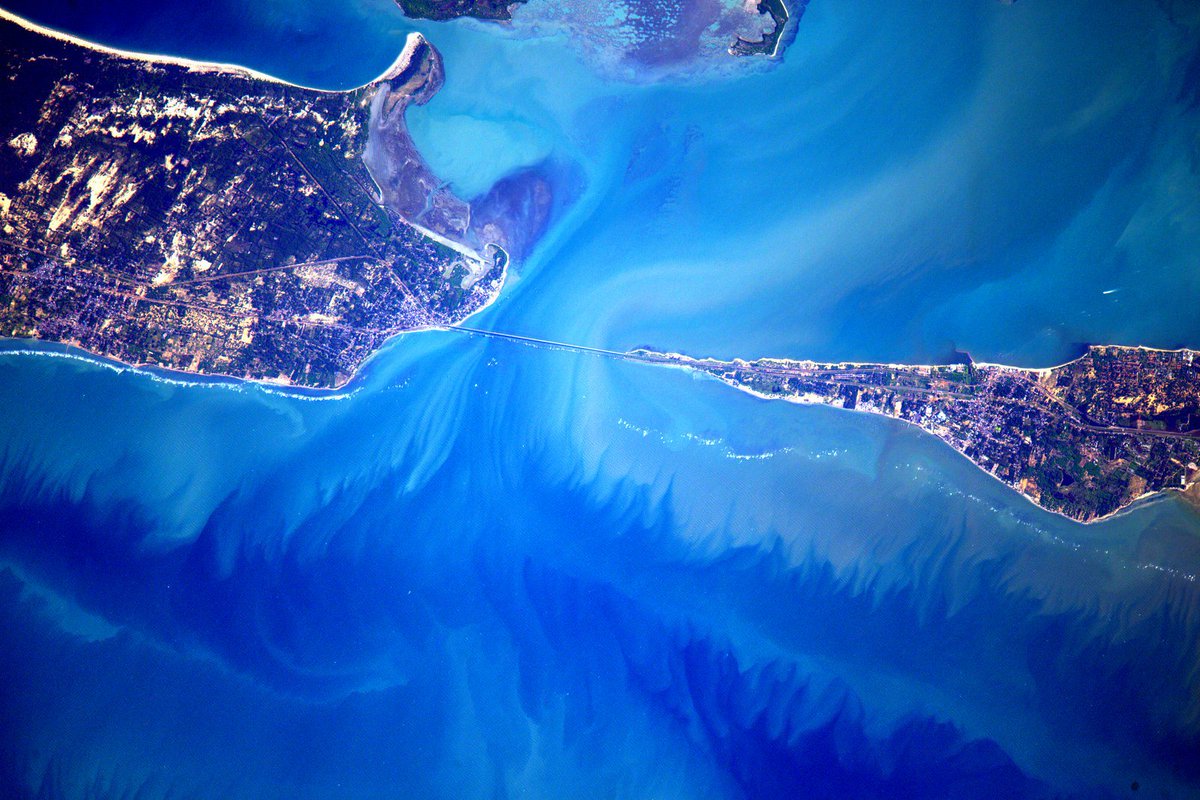
South India Looks Spectacular from Space. As Proved by These Tweets from the ISS…..

Selected specially for a year-long mission, American astronaut Scott Kelly has been on the International Space Station (ISS) since March 2015. Early this morning, as the ISS was passing above the Indian coast, he posted some mind-bendingly beautiful photos of South India.

Here it is (here’s what we look like) from space. SPACE, you guys.

A rare glimpse of beautiful South ! from

Embedded image permalink

  1. Sandy and green on the South coast.

    Embedded image permalink

    1. The Southern tip of and its blue waters.

      Embedded image permalink

      SPECTACULAR.

      Source……..www.the betterindia.com

      Natarajan

The young Indians who are shooting for the Moon….

The atmosphere at the sparkling new Axiom Research Labs facility is informal and collegial.

This is not surprising, since most of Axiom’s 80-strong workforce is just out of college.

It’s also geeky. Equations, diagrams and Star Wars references are scribbled across the many whiteboards scattered around the open-plan office, a stone’s throw from the Bengaluru-Hyderabad highway.

That’s to be expected since almost everyone on campus has a science/engineering background. It’s driven: people walk quickly, conversations are brief and pointed.

The lunar rover that will traverse across the moon’s surface. Photograph: Team Indus/ Facebook

But there’s also a sense of collective excitement and plain old-fashioned fun.

People seem to enjoy themselves. The young men and women here all opted out of safe jobs and decided to shoot for the moon instead — literally.

This makes Axiom a rarity in the aerospace business. Its flagship is Team Indus.

Some time before December 31, 2017, Team Indus aims to land a vehicle on the moon.

A rover will roll out from the lander and travel at least 500 metres “along an interesting path in a deliberate manner” across the moon’s surface. That rover will then establish a data link with Earth and transmit two HDTV video broadcasts of at least eight minutes each, covering the moon landing and movement.

The mission must also receive and retransmit other data to Earth and perform a few other tasks.

That lander and rover must be designed by Team Indus. No more than 10 per cent of the necessary financing for the moon mission can come from government sources. If Team Indus pulls this off, it will fulfil the terms of the Google Lunar XPrize, or GLX, and it would be eligible to win a share of $30 million.

A prototype rover being tested on uneven surface similar to the one’s on the moon to better gauge the vehicle’s mobility. Photograph: Team Indus/ Facebook

Team Indus is the only Indian outfit out of 20-odd competitors. It has already won a milestone award of $1 million for its lunar lander design. If Team Indus does become the first team to fulfil all mission requirements, it could win $20 million. If it’s the second team, it could win $5 million.

Nobody has ever put together a privately funded lunar lander and rover and sent it to the moon.

The prize has been hanging fire now since 2007 with the deadline being extended multiple times.

But nobody on the Axiom campus — not even the guards from the security agency — seems to have the slightest doubt that Team Indus can do this.

That certainty filters down right from the top. The company has the chutzpah to declare that its “selenographic address” (“which will be functional sometime after 2015”) is Lunar Zone: Sinus Medii (0.50N Selenographic latitude, 1.50W Selenographic longitude).

For non-geeks, it means that the landing site has already been chosen.

Indeed, the facility includes a mockup of the landing spot where the local terrain has been recreated, complete with “lunar dust”, to test the rover’s performance.

The lunar rover is everything that NASA can build and more. Photograph: Team Indus/ Facebook

It started as a madcap project back in 2010. Rahul Narayan, a 40-something entrepreneur and Indian Institute of Technology-Delhi graduate wondered if the terms of GLX could be met. He talked to many of his pals who had similar backgrounds. Every one of them was captivated by the dream of going to the moon.

They persuaded GLX to accept a late entry and put together a company.

In 2011, Narayan says, they crossed an inflection point and realised the dream could become reality.

Team Indus made a presentation to K Kasturirangan, the retired chief of the Indian Space Research Organisation, or ISRO. He approved of some of the concepts in that presentation, and disagreed with others. But he thought it was possible and he promised to put in a word where it counted.

In fact, Kasturirangan was pretty enthusiastic and said that Team Indus embodied “the spirit of modern India and a flavour of its future”. A little later, Team Indus met APJ Abdul Kalam who was also extremely encouraging. Various doors started opening at that point.

The first tranches of cash were raised by the founders coming up with some money from their personal accounts.

The first employees recruited themselves. Some college students landed up, asking to be allowed to intern with the company that was then situated in Noida. They told their friends and juniors, and a pipeline was created.

Several lunar rovers that are being tested by the teams. Photograph: Team Indus/ Facebook

Dhruv Batra is one of the old-buddy network Narayan tapped. He manages project delivery. He made alternative arrangements to run his Delhi-centric business and moved to Bengaluru when Team Indus shifted out of Noida.

Ramnath Babu, who now heads the structures team for Team Indus, was based in Mumbai from where he was running his business. He moved, first to Noida and then to Bengaluru, cajoling his brother to take over his business so that he could get involved in the mission.

Babu and Batra say that absolutely everybody has stretched selflessly to help Team Indus. Equipment that they thought would take six months to fabricate was delivered in 100 days. Teams at the Space Applications Centre, Ahmedabad, and at the National Aerospace Lab, Bengaluru, worked overtime to test equipment for Team Indus.

Sheelika Ravishankar, who handles HR and other soft functions, says she originally pitched in part-time just to help set things up.

Part-time turned into full-time and she jokes that despite being the only person in Team Indus without a science/tech background, she has ended up interviewing people for the most arcane engineering functions. Ravishankar says there’s been a steady stream of boys (and a few girls) wanting to first intern and then work when they graduate.

The base of the lunar module that will land on the moon. Photograph: Team Indus/ Facebook

Most of the younger members of Team Indus went to topnotch engineering colleges. They could have gone on to do much safer (and boring) things.

Instead, these 24-year-olds spend weekends working because they really like what they’re doing.

Vishesh Vatsal practically dances with delight as he draws a squiggly flight path to explain how the landing will take place. Suranjan Mallick turns into a muffled voice under the mock-up of the lander as he explains how the paired rockets will be vectored to ensure changes in flight directions. Guruditya Sinha waves his arms in three directions as he shows how the telemetry and telecommand system will work.

There is pride alongside the passion. Everybody is well aware that Team Indus represents India. They know that winning the GLX would be seen as another big achievement for India in space.

That passion and pride may be infectious but it also needs direction. This is where the third management layer comes in. In demographic terms, Team Indus is unusual. There are the 25-year-olds who form the bulk of the project team. There are a few people in their 40s — the founders.

The rover being tested for mobility and durability. Photograph: Team Indus/ Facebook

Up above everyone, in terms of age and experience, there is the panel of technical advisers. All of them are retired ISRO personnel. PS Nair and NC Bhat worked on the Aryabhatta Project, which launched India’s first satellite way back in 1975. RV Perumal, P Natarajan and RK Sharma are the other veterans with wide ranging expertise.

Incidentally, the internal designations draw on the Star Wars universe. The founders are Jedi Masters. The tech advisers are Jedi Commanders. There are also Troopers and Skywalkers and presumably, padawans.

The unusual dynamic works brilliantly. The ISRO veterans quickly rule out approaches that are unlikely to work. They understand processes and they know how to test equipment, for instance. They are completely familiar with the Indian space ecosystem.

The Team Indus logo adorns one of their instruments. Photograph: Team Indus/ Facebook

At the same time, the veterans seem to enjoy the fresh approach of the youngsters they interact with. For their part, the youngsters (and the founders) are all praise for the “sirs” and their ability to find rapid solutions as well as do the meticulous work of testing everything.

ISRO encouraged the creation of a space-industrial complex because it tendered out to private vendors.

Although Team Indus cannot take government financing, it is relying heavily on that ecosystem to fabricate its designs and to test.

Team Indus has hired testing facilities at the Space Applications Centre and National Aerospace Laboratories.

The lander will launch on ISRO’s trusty PSLV (Polar Satellite Launch Vehicle). Again, this is where the technical advisors have come in handy — they know everybody and have ensured complete compatibility.

Everything will be designed by Team Indus and components sourced from everywhere will finally be put together at the Axiom facility.

There are three formal partners: L&T’s heavy engineering division is helping put the lander and rover together, while Sasken Communications and Tata Communications are aiding with the communications and control systems.

An artist’s recreation of the lunar lander’s opening on the moon’s surface. Photograph: Team Indus/ Facebook

There are multiple vendors: at least 120 from all over the world. The lander’s engines and rockets, for instance, may come from Japan. The solar panels may be sourced from America and the battery could be British.

The lander, which will have the rover stored inside it, will be fitted on top of a PSLV rocket that will launch the lander into earth-orbit.

The lander will then use its own engine to match orbits with the moon. It could take nine swings or even more to rendezvous. Once that is done, it will use its eight auxiliary rockets to make course corrections and land at the designated spot.

After the lander is securely down, a panel will open and the rover will roll out. The rover will then start moving around (very slowly) and recording video.

The lander will relay that video to Earth. Everything will be monitored from the earth stations.

A prototype of the lunar capsule on display. Photograph: Team Indus/ Facebook

The engineering problems are formidable. The entire landing sequence has to be pre-programmed and autonomous.

There is a lag of almost four seconds when relaying signals to the moon and back. Unlike Chandrayaan, the lander must remain in working condition because it has to relay signals. Redundancy must be built in because component failure could otherwise jeopardise the whole mission.

The equipment within the lander must be protected, not only from the physical shocks of takeoff and landing but also from the heat generated by its rockets. On the moon, internal temperatures must be controlled, though the external temperature will vary a lot.

Before getting to the moon, the lander will pass through the Van Allen radiation belt.

All the delicate electronic equipment must be radiation-hardened to keep it from getting fried. There will be periods of eclipse, when solar panels will be ineffective. The solar panels must open correctly and be properly oriented.

The young brains seen at work on the lunar module. Photograph: Team Indus/ Facebook

Narayan guesses it could take over $30 million for the mission. Axiom has raised money several times. It started with the founders pitching in.

There was a funding round in March 2015 with investors like Nandan Nilekani and Ajai Chowdhry coming in. Another round of funding is currently in progress. There is talk of a possible round of crowd-sourced corporate funding.

There are two other concurrent projects, which should eventually pay their way.

One is satellite bus development, which involves figuring out spacecraft designs that can effectively launch multiple satellites. The other is the development of high altitude long endurance drones.

Eventually, Axiom might become a profitable aerospace company that earns its bread and butter from drones and satellite buses. But GLX will be a hard act to beat — in the public imagination at least.

Source….www.rediff.com

natarajan

” If the world looks at me and says, you can do nothing,’ I look back at the world and say ‘I can do anything’.”

Srikanth Bolla (pictured below) is standing tall living by his conviction that if the “world looks at me and says, ‘Srikanth, you can do nothing,’ I look back at the world and say ‘I can do anything’.”


Srikanth Bolla

When he was born, neighbours in the village suggested that his parents smother him.

It was better than the pain they would have to go through their lifetime, some said.

He is a “useless” baby without eyes… being born blind is a sin, others added.

Twenty-three years later, Srikanth Bolla is standing tall living by his conviction that if the “world looks at me and says, ‘Srikanth, you can do nothing,’ I look back at the world and say ‘I can do anything’.”

Srikanth is the CEO of Hyderabad-based Bollant Industries, an organisation that employs uneducated disabled employees to manufacture eco-friendly, disposable consumer packaging solutions, which is worth Rs 50 crores.

He considers himself the luckiest man alive, not because he is now a millionaire, but because his uneducated parents, who earned Rs 20,000 a year, did not heed any of the ‘advice’ they received and raised him with love and affection.

“They are the richest people I know,” says Srikanth.

Underdog success story

What is it about stories like Srikanth’s that so inspire and fill one with hope?

Could it be the multiple zeroes after a dollar sign or the belief that you and I can achieve similar success if we set our minds and hearts to it?

Underdog success stories touch a raw nerve. After all, everyone faces adversity, they dream, and they work hard.

It is another matter that only a few cross the threshold of limits set by society.

In Srikanth’s case, it is his sheer tenacity that shines through the dark clouds of his misfortune.

Being born blind was just one part of the story. He was also born poor. And you know what that means in a society like ours.

In school, he was pushed to the back bench and not allowed to play.

The little village school had no way of knowing what inclusion meant.

When he wanted to take up science after his class X, he was denied the option because of his disability.

All of 18, Srikanth not only fought the system but went on to become the first international blind student to be admitted to the prestigious Massachusetts Institute of Technology (MIT) in the US.

As author Paulo Coelho says, “We warriors of light must be prepared to have patience in difficult times and to know the Universe is conspiring in our favour, even though we may not understand how.”

Today, Srikanth has four production plants, one each in Hubli (Karnataka) and Nizamabad (Telangana), and two in Hyderabad (Telangana). Another plant, which will be one hundred percent solar

operated, is coming up in Sri City, an integrated business city in Andhra Pradesh, 55 kms from Chennai.

Angel investor Ravi Mantha, who met Srikanth about two years ago, was so impressed with his business acumen and vision for his company that he not only decided to mentor him but also invested in Srikanth’s company.

It was a small, tin-roof shack in an industrial area near Hyderabad. There were eight employees and three machines under the shed. I expected him to talk about how he wanted to make a social impact, but was surprised by the business clarity and technical knowhow in someone so young,” Ravi says.

They are raising $2-million (around Rs 13 crores) in funding and have already raised Rs 9 crores.

According to Ravi, his personal goal is to “take the company to IPO.”

A vision to build a sustainable company with a workforce comprising 70 percent people with disability is no mean task.

“Srikanth’s vision is inbuilt in the company. It is not just a lip service to CSR,” adds Ravi.

Isolation a big curse

“The isolation of differently-abled people starts at birth,” Srikanth said in his first public speech on the INKTalks stage in Mumbai last month. According to him, “Compassion is a way of showing someone to live; to give someone an opportunity to thrive and make them rich. Richness does not come from money, it comes from happiness.”

When Srikanth was growing up, his father, a farmer, would take him to the fields but the little boy couldn’t be of any help.

His father then decided that he might as well study.

“In my parent’s entrepreneurship model, I was a failure. In entrepreneurship, we have a lean business model where we evaluate an enterprise and say how quickly it fails.”

Since the nearest school in his village was five kilometres away, he had to make his way there mostly on foot. He did this for two years.

“No one acknowledged my presence. I was put in the last bench. I could not participate in the PT class.

That was the time in my life I thought I was the poorest child in the world. It was not because of lack of money but because of loneliness.”

When his father realised that the child was not learning anything, he admitted Srikanth to a special needs school in Hyderabad.

The boy thrived in the compassion he was shown there. He not only learnt to play chess and cricket but excelled in them. He topped his class, even embracing an opportunity to work with late President Dr APJ Abdul Kalam in the Lead India project.

But none of this mattered much because Srikanth was denied admission to the science stream in class XI.

He cleared the Andhra Pradesh class X state board exams with over 90 percent marks, but the board said he could only take Arts subjects after that.

“Was it because I was born blind? No. I was made blind by the perceptions of the people.”

Having been denied the opportunity, Srikanth decided to fight for it.

“I sued the government and fought for six months. In the end, I got a government order that said I could take the science subjects but at my ‘own risk’. ”

Thus not ‘risking’ anything to chance, Srikanth did whatever he could to prove them wrong.

He got all the textbooks converted to audio books, worked day and night to complete the course and managed to secure 98 percent in the XII board exams.

Fortune favours the brave

Sometimes, life mimics a steeplechase. Especially when it comes to those it has big plans for.

It did not give Srikanth enough time to bask in his victory when it threw another spanner in the works. He applied for IIT, BITSPilani, and other top engineering colleges, but did not get a hall ticket.

Instead, “I got a letter saying ‘you are blind, hence you are not allowed to apply for competitive exams.’ If IIT did not want me, I did not want IIT either. How long can you fight?”

He chose his battles carefully and did his homework searching the Internet to find the best engineering programme for someone like himself. He applied to schools in the US and got into the top four — MIT, Stanford, Berkeley, and Carnegie Mellon.

He went to MIT (with a scholarship) as the first international blind student in the school’s history.

It wasn’t easy adjusting to life there, but by and by he started to do well.

Towards the end of his bachelor’s course when the ‘what next’ question came up, it brought him back to where he had started.

“Many questions bothered me. Why should a disabled child be pushed to the back row in the class? Why should the 10 percent of the disabled population of India be left out of the Indian economy?

Why can’t they make a living like everyone else with dignity?”

He decided to give up the ‘golden’ opportunity in corporate America and came back to India in search of answers to his questions. He set up a support service platform to rehabilitate, nurture and integrate differently-abled people in society.

“We helped about 3000 students in acquiring an education and vocational rehabilitation. But then I thought what about their employment? So I built this company and now employ 150 differently-abled people.”

Good always rebounds

Entrepreneur bravehearts like the warriors of Paulo Coelho always find one unflinching support, an anchor to keep them afloat. In Srikanth’s case, it is his co-founder Swarnalatha.

“She was his special needs teacher in school. She has been his mentor and guide through all these years. She trains all the employees with disabilities at Bollant thereby creating a strong community where they feel valued,” says Ravi, adding, “Srikanth is a true source of my inspiration. He is not only my young friend and protégé but is also my mentor who teaches me daily that anything is possible if you set your mind to it.”

The boy who was born blind is today showing many the path to real happiness.

He says his three most important life lessons are: “Show compassion and make people rich. Include people in your life and remove loneliness, and lastly, do something good; it will come back to you.”

Lead image: Kind courtesy INKTalks

source….Dipti Nair in http://www.rediff.com

Natarajan”

This Man Left His Job, Sold His Car and Took a Loan – Just to Make India Clean !

This cleanliness warrior resigned from his job to take the battle against garbage to cars, autorickshaws, buses, and other vehicles. His car trash bins will give income to slum dwellers while helping keep our roads clean.

India is developing fast — roads are jammed with cars, cellphones are ubiquitous, and there is talk of smart cities emerging all over the country.

But are we behaviourally developed as a nation? We still lack civic sense and spit on walls, we don’t show up for our appointments on time, we deface our historical landmarks, we rarely stick to queues when waiting, and we litter our streets indiscriminately.

Abhishek Marwaha was one of us until three years ago when he read somewhere: ‘”A person who throws his trash actually throws his humanity.”


abhishek marwaha1

Abhishek Marwaha

He then started making a conscious effort to keep his surroundings clean. His friends made fun of him when he kept dumping used tissues in his pockets or in car back pockets while travelling, instead of throwing them outside the window.

“I used to work in a travel technology firm and travelling to different countries used to be part of my job profile. I realized that we are more conscious of our habits when abroad (like littering, spitting, honking, etc.) but we tend to be careless when we are here in India. So all we need to do is one simple thing to bring a wave of change. Let’s behave in our own country the way we behave in any other foreign country,” says Abhishek.

One day, while having lunch, he found that his lunch bag was worn and could be used as a trash bin in his car. The idea stayed with him and he began to design a trash bin that is easily accessible in a car or any vehicle, even while driving. Once the design was ready, he started making cheap trash bins in bulk and contacting vendors.

spit pouches

This mission to keep India clean has today resulted in the launch of Abhishek’s online store, ujosho.com, which sells the first ever car trash bins in India.

The word UJosho is derived from the Japanese word ‘josho,’ which means ever victorious. Abhishek added a ‘U’ to indicate that we can all be victorious in the battle against littering if we do our bit to keep the nation clean.

swach bin

Swachh bin for cars

“There are an estimated 25 million cars in any Tier 1 city in India. The problem of garbage will continue to haunt us as the trash thrown from cars chokes the roadside drains and contributes to water logging and floods during rains. There is an immediate need to educate and encourage people to use this simple trash bin in their cars so that many of these issues can be resolved without intervention of civic authorities and with proper and positive participation from each one of us,” adds Abhishek

The car trash bins that Abhishek sells are not machine made. He aims to provide earnings to slum dwellers by getting them to make these trash bins by hand in bulk.

He has also experimented with giving away these bins to beggars for free and was delighted to see them selling these to car owners at traffic signals.

beggar

“You don’t have to hold a gun at the border and save the country to be truly patriotic. You can bring about change by changing yourself, your habits and your surroundings. Even if 10% of our population shares this view, it can make a difference. Maybe what I am doing is minuscule, but it will hit the root cause of the trash problem,” Abhishek says with great zeal.

According to Abhishek, installing and using the trash bin in vehicles will be good because:

1) It will help bring about a behavioral change among adults and children with respect to cleanliness, littering and spitting.

2) It will support civic authorities in ensuring optimum use of manpower in cleaning roads.

3) Trash chokes the roadside drains and contributes to water logging and floods during rains. Car trash bins will help prevent that.

Though the car trash bin is a first-of-its-kind product, Abhishek does not want to patent the idea as he wants it to spread widely. He wants other people to replicate it and make it more cost effective if possible.

happy customers\

Happy Customers!

“We also encourage people to share their ideas about cleanliness on the ‘Idea’ section of our website. If we are able to make a product from that idea, we will then give royalty on every sale of that product,” says Abhishek

To know more about Abhishek and his products, you can visit www.ujosho.com

Source….Manabhi Katoch in http://www.the betterindia .com

Natarajan

” The Chennai Flood Happened Due to a Complete Lack of Urban Planning…”

Views of an Urban Planner and Architect  …” My View ” Column in http://www.the better india .com

Natarajan


After Chennai’s recent catastrophic floods, the one question that looms large is – ‘could proper urban planning have prevented such a disaster?’ My answer to that question is certainly ‘yes’.

The way our cities are planned has got a lot to do with inviting or avoiding such disasters. Chennai floods underline the importance of adhering to the fundamental urban planning principles, when we design our cities. Being an architect and an urban planner, I can’t over-emphasise this point enough.

Anil  Bhaskaran , Urban Planner and Architect

But before discussing about the kind of planning that should have been done in a city like Chennai, we must understand what the architecture of any ideal city should be like.

Chennai city planning

Photo Credit: ReflectedSerendipity/Flickr

Let us first look at the birth and growth pattern of a city, which is almost like a living human body. It is born, lives for a certain period of time, and then dies. Like a group of cells come together to form a human body, a group of people come together to form a city. Thus, any city must grow to its limit, attain maturity, cease to grow and eventually perish. It can function to the peak of its efficiency only for a limited period of time, after which it should be allowed to die its natural death. Adding newer parts to an old city is almost like transplanting new organs in the body of an old living organism. It distorts the fundamental body mechanism.

This leads us to the question – ‘what can we do to prevent the distortion of our cities like Chennai, and to prevent disasters like the recent floods?’ Here are three basic points that must be kept in mind:

1. A city must be designed for a specific number of people.

Chennai city planning

Photo Credit: Jared Smith/Flickr

As and when the limit is attained, newer cities should be designed and built. And this should be a continuous process. This is quite similar to the situation of a living being, who on achieving maturity, allows the next generation to come into existence through the method of reproduction.

2. We need to limit the migration from villages to cities.

Chennai city planning

Photo Credit: snotch/Flickr

Chennai is a classic example of this problem. However, the solution cannot be achieved by promulgating any law. Instead, we need to enhance the quality of life in our villages. This will require a change in the existing mindsets and policies.

3. A city should be walkable.

Chennai city planning

Photo Credit: Andrea/Flickr

On further analysis, one comes across another important element of city planning – Every city should be walkable, horizontally and vertically. This leads to the reduction in the amount of energy spent while commuting. Ideally, one should be able to walk from the outermost ring, to the centre of a city within twenty minutes.

Traditionally, cities were planned and built based on the principles mentioned above. Cities like Rome, Paris, Florence, Jaipur and Jaisalmer are all good examples of how well the city planners of the past understood these fundamentals and applied them prudently in the creation of their cities. But on comparing those with present-day cities like New York, Tokyo, Mumbai or Chennai — there is clearly a striking contrast.

But then, what is wrong with Indian cities like Chennai, which is a mix of the old and contemporary? Fundamentally, it is the unlimited growth that destroys the order in such cities beyond repair. In a human body, unlimited growth is considered cancerous. A city is no exception to this rule.

Chennai must accommodate the natural contours, slopes and drains, in its plan. One of the best ways of planning a water front city is to ensure that all the main streets are running perpendicular to the coast line. This will allow easy passage of excess rain water into the sea. A good example of such planning is the city of Minneapolis that sits on the banks of the Mississippi river.

Looking at the enormity of the problem in Chennai, the solutions have to be implemented at a large scale too! We need to take some hard steps here, such as:

Chennai city planning

1. Gravity drains should be created, taking into account the natural slopes of the terrain and quantum of water to be handled.
2. Existing natural drains and rivers should be de-silted and widened.
3. Low-lying areas should be spared of construction (have some mercy!). In some cases, dikes have to be built around them to protect such areas from flooding.

But in the end, we must remember that prevention is better than cure. We must plan, form and take care of our cities like we do our homes.

Netherlands, a country that has more than sixty percent of its land below sea level, has been taking some pioneering steps in the direction of water management and hydrology. The country has taught itself how to live with water, rather than fight it. In the recent years, it has been consistently voted as one of the top ten happiest countries in the world to live in. If they can top in happiness quotient, in spite of their problems with water management, so can we. What is needed is the will to face the challenges and solve the problems objectively and scientifically.

– Anil Bhaskaran

Anil Bhaskaran is an Urban Planner and Architect, and the MD of IDEA Centre Architects, Bangalore.

Source….www.the betterindia.com

Natarajan

5 Things You Must Know About the New ‘Shinkansen’ Bullet Trains That Japan Will Help India Build…

According to a recent deal between the two countries, Japan will help build India’s first bullet train that will run between Mumbai and Ahmedabad. Japan will provide India with a $12 billion low-cost, long-term loan, along with assistance to build the train.

The two sides have signed a MoU for introduction of Japan’s High Speed Railways (HSR) technologies — the Shinkansen system, on the Mumbai-Ahmedabad route.

“This enterprise will launch a revolution in Indian railways and speed up India’s journey into the future,” said Prime Minister Narendra Modi in a speech.

Here are some interesting facts about the Shinkansen bullet trains from Japan:

1. Shinkansen bullet trains began operating on Oct. 1, 1964:

Shinkansen3

Since then, they have carried more than 5.6 billion passengers between the cities of Tokyo and Osaka. The original Tōkaidō Shinkansen that runs between the two cities is the world’s busiest high-speed rail line. Earlier, it could travel from Tokyo to Osaka in approximately 4 hours. The time has now been reduced to 2 hours and 25 minutes.

2. These trains are very punctual:

Shinkansen4

According to 2014 report by Central Japan Railway Company, Shinkansen’s average delay from schedule per train has been 54 seconds, including the delay caused due to conditions like natural disasters.


3. Have high safety standards:

Shinkansen (Bullet Train), Tokyo station.

These bullet trains have been very safe right from the beginning. After over 50 years of operation, no passenger fatalities due to derailments or collisions have been reported in Japan.

4. Will shorten the journey between Ahmedabad and Mumbai:

Shinkansen1

According to estimates, the bullet train will shorten the time of journey between Ahmedabad and Mumbai to a mere two hours instead of the normal eight hours.


5. Are environment friendly too:

Shinkansen2

A journey from Tokyo to Osaka produces about 16% of the Carbon dioxide that a car journey in the same distance will emit. It thus saves 15,000 tons of CO2 per year.

All pictures: Wikipedia

Source……..Tanaya Singh in http://www.the betterindia .com

Natarajan

B.K.S.Iyengar…” Founder of Iyengar Yoga “… His 97th Birth Anniversary on 14 Dec 2015…

Today is the 97th birth anniversary of B.K.S. Iyengar, one of India’s most prominent Yoga teachers.

And Google is celebrating with a brilliant, animated doodle – featuring a series of Yoga positions.

google1

The founder of “Iyengar Yoga”, Bellur Krishnamachar Sundararaja Iyengar is known for popularising Yoga around the world. “Iyengar Yoga”, which is taught in more than 70 countries today, is a form of Yoga focusing on the correct alignment of the body with the help of straps, wooden blocks, etc. It is said that even at the age of 95, he could perform all the asanas – from headstands to vertical splits. He died on Aug. 20, 2014, from heart and renal failure.

Here are five things to know about this legend.

1. He was born in a very poor household:

Iyengar1

Source: Wikipedia

B.K.S. Iyengar was born in a poor family in Kolar District of Karnataka, on Dec 14, 1918. His father was a school teacher and he was the 11th of 13 children in the family. Only 10 of those children survived. Living through a very unhealthy childhood, Iyengar had to face many diseases like malaria, tuberculosis, typhoid fever, and also general malnutrition at a very young age.

2. But Yoga changed his Life:

Iyengar5

Source: www.judithjonesyoga.co.uk

He was only 15 when B.K.S. Iyengar’s brother-in-law, Tirumalai Krishnamacharya, asked him to move to Mysore to improve his health by practising Yoga. Tirumalai Krishnamacharya is often referred to as “the father of modern yoga”. That was the turning point for Iyengar, whose health steadily improved. At the age of 18, Krishnamacharya sent him to Pune to teach Yoga to people.

3. And then he went out to teach the world:

Iyengar2

Photo Credit: Wystan/Flickr

It was in Pune that the Yoga teacher met the famous violinist, Yehudi Menuhin. This meeting was the beginning of Iyengar’s journey from being an Indian yoga teacher, to an international guru. Menuhin used to complain that he was unable to sleep properly, and was suffering from muscular aches. But with the help of Yoga, he was able to overcome his health problems. Being highly impressed by the guru, Menuhin invited him to Switzerland in 1954. This was followed by Iyengar’s visits to the US and the rest of Europe as well. He came up with the idea of teaching yoga to groups, and encouraged women to take up Yoga even during pregnancy.

“The West knows yoga because of Iyengar. He developed a style of yoga for ordinary people. He introduced simple props and aids like ropes, blankets, wall to facilitate people to make it easy for the masses,” Yogi Santatmananda Saraswati of Swami Dayananda Ashram, Rishikesh, said at the time of his death.

4. And to teach many famous personalities:

Iyengar4

Photo Credit: Gaurav Mishra/Flickr

B.K.S. Iyengar is known to be the teacher of many famous people like Yehudi Menuhin, Sachin Tendulkar and Queen Elizabeth of Belgium. It is said that Queen Elizabeth of Belgium learned his trademark sirsasana headstand at the age of 80. His other devotees and students include novelist Aldous Huxley, actress Annette Bening and designer Donna Karan.

5. He collected several awards and authored many books too:

Iyengar3

Photo Credit: Chris Drumm/Flickr

He was awarded the Padma Shri in 1991, the Padma Bhushan in 2002 and the Padma Vibhushan in 2014. B.K.S. Iyengar published his first book called Light on Yoga in 1966, which became an international best-seller. He has authored a total of 14 books.

Source….Tanaya Singh in http://www.the betterindia.com

Natarajan

This “Must-Have” 2016 Calendar Will Inspire You Every Day of the Coming Year…!!!

The ‘I am Special’ calendar, , brought out by Swarga Foundation, Coimbatore, features people with neurological disorders, with the aim of spreading awareness about these disorders and sharing the stories of the special people who have overcome disabilities to live productive and fulfilling lives.

The front page of the special calendar by Swarga Foundation, Coimbatore, says it better than anything we can introduce this story with:

I am SPECIAL!
“I am not just special… I’m Limited EDITION.”

I hear my friends and my mom tell me I am special. I sometimes wonder “Is it my disability or my body?”
I know it is because of my mind, as life teaches me every minute.

The only disability in life is the absence of a positive attitude.

DISABILITY or DISEASE will not define my identity.

Swarga Foundation empathizes with special people and brings this calendar to you to create awareness about six neurological disorders: Spinal Injury, Multiple Sclerosis, Retinal Detachment, Cerebral Palsy, Autism, and Intellectual Disability.

The models showcased here are affected with one of these neurological disorders. These bravehearts are special not because they are diseased or disabled, but because of their contribution to people around them.

January-February: Anand Selvaraj

disability1

Anand Selvaraj has paraplegia. Paraplegia is usually caused by an injury to the spine or it can be a congenital condition that affects the neural elements of the spinal canal. The person usually develops loss of movement, sensation and reflexes from below where the injury has occurred.

Anand is an avid tennis player who has represented Tamil Nadu in numerous tournaments across India. Anand studied public health in the US.

“You can adapt or you can go into a cave and give up,” says Anand, who believes in being independent.

March-April: Swarnalatha J

disability2

Swarnalatha J has multiple sclerosis. This disorder of the central nervous system affects the brain and spine, which in turn leads to multiple disabilities. The symptoms range from minor visual disability to total paralysis, making even the simplest everyday task a Herculean one.

However, the ever so talented and versatile Swarnalatha is a motivational speaker, a counsellor, a singer, a puppeteer, a green crusader, a story writer, and a photographer. She converts every adversity into an opportunity.

“I believe in ‘ME’”, says Swarnalatha, who ‘moves better with support than with sympathy.’

May-June: Sabari Venkat

disability3

Sabari Venkat is affected with Retinal Detachment. When the retina is separated from its attachments to the underlying tissue within the eye, it is known as retinal detachment. This invariably leads to loss of vision. Sabari has lived with this disability all her life.

Sabari is a motivational speaker who loves to sing. She is also an ardent follower of Swami Vivekananda and has won many awards and recognition for reciting his speeches. She hopes to join the Indian Administrative Services someday, with the intention of eradicating corruption and illiteracy in India.

“The eyes are useless when the mind is blind,” says the happy-go-lucky Sabari.

July-August: Ashwathi

disability4

Ashwathi has what was once known as mental retardation and is now called Intellectual disability. This is a generalized neuro-developmental disorder that is characterized by poor intellectual and adaptive functioning. The main causes for this disability are abnormal genes, complications in pregnancy, exposure to toxins, iodine deficiency, and malnutrition.

Six-year-old Ashwathi is still learning to walk. She has no choice but to be extremely dependent upon her mother for all her needs. Her parents and teachers are helping her learn to live in this world.

Ashwathi says, “I am also a child of God. Lead me, guide me and walk beside me.”

September-October: Nishant Sriram

disability5

Nishant has autism. Autism is a developmental disorder that usually affects children in their developmental years. Due to this disorder, the individual exhibits limited social interaction, poor communication skills and restricted and repetitive behaviour.

Nishant is a very active person who loves being with nature. Trekking, cycling and many other adventure activities interest him. He is the winner of many awards for cycling in his state, as well as at the National Level Special Olympics. Nishant, who cannot speak, communicates with his keyboard.

He says, “If you don’t understand my silence, how will you understand my words?”

November-December: Dinisha

disability6

Dinisha has cerebral palsy. Poor coordination, stiff and weak muscles and tremors are the major problems faced by people with this condition. This disorder is caused by abnormal development of or damage to the brain, which results in permanent movement disorders.

Dinisha, with her infectious smile, loves dressing up well and taking part in singing and dancing activities. She may be silent but she makes friends fast and enjoys being in the company of people.

The special calendar is the brainchild of Swarnalatha, who is also featured in the calendar. She and her husband, Guruprasad, came up with this unique idea sometime in April this year and have been working on it ever since. Their organization, Swarga foundation, works with disabled persons.

The purpose of this calendar is to generate respect for people with special needs, to increase awareness about these disorders, to appreciate the outlook towards life of these wonderful people, and to celebrate their lives with them.

The foundation intends using the proceeds from the sale of these calendars to help patients affected with neurological diseases.

The calendar could not have been possible without Albi No (from That Moment Photography), who came up with the idea of also making a video of the models presented in the calendar. Suraj Kumar helped Swarnalatha with the script for the calendar as well as video. They have both done the voice-over in the video too. Sagar Morankar has sung the background score while Prasanna has played the music for the video.

Incidentally, Sagar Morankar is visually impaired. He is a classical singer from Kolkata and teaches music at ITC Music School. An athlete in his school days, Sagar was affected with muscular dystrophy at the age of 16. The doctors gave him only three years to live at that time but he beat the odds and went on to lead a happy and successful life.

For more details on what the Foundation does, visit here. You can place an order for the calendar here.

Source………Aparna menon….www.the betterindia.com  …..About the author: Aparna Menon is a freelance writer, writing for various newspapers for the past 10 years. Her main fields of interest are wildlife, heritage and history. A keen traveler, she loves to read and write and does a lot of art work too.

Natarajan

A German Lady Is Recreating the Chak De! India Dream Team with Kids in Rural Rajasthan….

Andrea Thumshirn was a national level hockey player in Germany. She came to India in 2009 and since then has been training rural Rajasthan kids in hockey. She is also sponsoring their education and teaching them English. In fact, she took five of her students all the way to Germany to train!

Andrea Thumshirn, a German Premier League hockey player came to India as a tour operator. But the visit changed her life when she not only visited a remote village in Rajasthan but decided to stay there and teach hockey to rural kids.

Andrea had been playing the sport ever since she was six. When she suffered an injury she had to quit playing professional hockey. So she started coaching kids in the sport in Germany. She brought the same passion and love of the game to India when she took on the task of training kids in Garh Himmat Singh village in Rajasthan.

When you go to a remote village in Rajasthan, school-going girls and boys playing hockey like champions is the last thing you will expect to see. Andrea made it possible in spite of facing several challenges.

Andrea (center) with the kids.

Andrea (centre) with the kids.

“I came here in 2009. My business partner belonged to this village and hence he organised the entire stay. I was so hooked that when I went back to Germany I kept thinking about the village,” she recalls.

Andrea returned in 2010 with a few hockey sticks and started training kids in hockey after school. “I thought they waste most of their time anyway, so it will be good to engage them in something productive,” she says.

It has been over four years and Andrea has never looked back. She shifted to Rajasthan permanently and started living with a local family. She also officially registered her foundation as Hockey Village India. It was all going well because she had good support from a local man who treated her like his own sister. He would introduce her to the villagers and help her get along with the locals.

Early intervention is what ANdrea believes in

Early intervention is what Andrea believes in.

But when Andrea found out that her ‘brother’ was misusing the funds of the foundation, she confronted him and they subsequently parted ways. Not ready to accept this humiliation, the man started spreading rumours about Andrea and turned the villagers against her — they stopped sending their kids to her for hockey training.

“I felt betrayed. It was such a shock and I wasn’t prepared for it. Especially when we shared a brother-sister bond. But I was determined to not give up and shifted to another village called Jatwada, which was just 9 kms away from Garh Himmat Singh,” she says.

This setback was not the only challenge that Andrea faced. Getting the kids to show up on the ground, keeping them motivated and teaching them the right techniques (as many had never even seen a hockey stick before) was a big task.

The kids are more confident now and have better attitude towards life.

The kids are more confident now.

“I even got the kids to see the Indian movie Chak De India! Initially, it was difficult to communicate with them. Many parents would not send their daughters to play with boys. Also, the girls would wear salwars and dupattas, which made it difficult for them to play,” she recalls.

She also started a primary English medium school to provide better education to the kids. Gradually, by word of mouth, her efforts began to pay off. Kids started playing in several tournaments and even won a few trophies.

Thanks to Andrea’s efforts, about 50 boys and 25 girls regularly show up on her hockey ground in Rajasthan today. She also started an initiative in Goa, where she engages with 30 boys and 30 girls.

Though getting girls on board is difficult, but Andrea managed to get 5 girls selected in State Under-19 team.

Though getting girls on board was difficult, Andrea managed to get five girls selected in the State Under-19 team.

“When things weren’t working out here in India my family asked me to come back. They asked me why I was chasing after kids who were not even interested. But I was not ready to give up. I knew I would succeed and I did. Today, the kids are amazing players,” she says.

The impact of her work is seen in the attitude of the kids. They are more confident and physically fit now. They have better communication skills and a positive attitude. When Andrea found out that some of the kids were so poor that they could not even afford a glass of milk, she bought a cow and now provides one glass of milk every day to all her students. She also provides uniforms, hockey sticks and shoes to them.

Some of the students have participated in various tournaments.

Some of the students have participated in various tournaments.

“One time, we went for a tournament and our team met a Manipuri team. They were talking in English as they could not understand Hindi. My kids communicated in fluent English with them. Even though they made grammatical mistakes, they were very good,” she says.

In 2014, she took five of her students to Germany. Here, the kids got to practise in professional playgrounds and meet other players. They also attended school there for two months. “This was huge exposure for them. Such a great opportunity to mingle with other players! I could see the happiness in their eyes,” she says.

Hockey Village India is now affiliated with the Panchayat Yuva Krida Aur Khel Abhiyan (PYKKA), a central government-sponsored scheme for the development of sports in rural areas. Five of Andrea’s girls were even selected for the state team in the Under-16 category.

Andrea has managed to bring 50 kids in rural Rajasthan to regularly practice Hockey.

Andrea has managed to get 25 girls in rural Rajasthan to regularly practice hockey.

Andrea now wants to expand her work and get more girl players to come on board. She wants to start her own sports academy where she can train young girls and boys.

Due to Andrea’s efforts, amazing hockey players have emerged from among these rural kids who were once directionless. Currently running her foundation with the help of a few sponsors from Germany, Andrea is looking for monetary support to expand her efforts.

She is also looking for volunteers who can train kids in hockey and even teach them English and other subjects. To know more about her work, check out this website.

Source……..Shreya Pareek ….www.the betterindia.com

Natarajan

” மகா கவி பாரதியார் , பாரீஸ் வெள்ளம் பற்றி எழுதிய ஒரு பதிவு “…பாரதி பிறந்த நாளில் ஒரு நினைவலை…

நன்றி: சீனி. விசுவநாதனின் “கால வரிசைப்படுத்தப்பட்ட பாரதி படைப்புகள்’ – அல்லயன்ஸ் பதிப்பகம், சென்னை – 4.

சமீபத்தில் சென்னையைத் தாக்கிய பெருமழையைவிடக் கடுமையான மழையால் 1910-இல் பிரெஞ்சு நாட்டு தலைநகர் பாரீஸ் பாதிக்கப்பட்டது. 1910 ஜனவரி, பிப்ரவரி மாதங்களில் பாரீஸை மூழ்கடித்த அந்த வெள்ளம் குறித்து, இப்போதுபோலத் தகவல் தொலைத்தொடர்பு வசதி எதுவும் இல்லாத நிலையிலும் மகாகவி பாரதியார் தனது விஜயா (14.02.1910), இந்தியா (19.02.1910) இதழ்களில்
விவரமாக எழுதியிருக்கிறார். அன்றைய மொழி நடையை மாற்றாமல், பாரதியாரின் பிறந்த தினமான இன்று அதை மறுபதிவு செய்கிறோம். நூறாண்டுகளுக்கு முன்பு பாரீஸ் எதிர்கொண்ட சோதனைகள்

பலவற்றையும் இப்போது சென்னையும் எதிர்கொண்டது என்பதுதான் வியப்பு – ஆசிரியர்.

நமக்குச் சென்ற வாரம் தபால் மூலமாகக் கிடைத்த கடிதங்களாலும் பத்திரிகைகளாலும் பாரீஸ் வெள்ளத்தைக் குறித்து, பின் எழுதும் விபரங்கள் வந்திருக்கின்றன. கொஞ்சம் கொஞ்சமாகச் சேன் நதியில் பிரவாகம் அதிகரித்துச் சுற்றுப்பக்கங்களிலெல்லாம் பரவிவந்தது. பூமிக்குள் இருப்புப்பாதை போட்டு ரயில் வண்டிகள் ஓடிக்கொண்டிருக்கும் சுரங்கவழிகளில் முதல்முதல் தண்ணீர் நிறைந்து அவ்வழியாக ரயில் வண்டிகள் ஓட்ட முடியாமல் நிறுத்தப்பட்டன.
பிறகு வெளிரோட்டுகளில் பரவி, பாரீஸில் பள்ளமாக இருக்கும் பாகங்களிலெல்லாம் நீர் தங்கிவிட்டது. குதிரை வண்டிகள் வெகு கஷ்டத்தோடு தெருக்களில் இங்குமங்குமாகப் போய் கடைசியில் தண்ணீர் அதிகரிக்கவே வண்டிகளின் நடமாட்டமேயில்லாமல் போய்விட்டது. டிராம் வண்டிகளும் மேடான தெருக்களில்தான் ஓடிக்கொண்டிருந்தன.
வரவரத் தண்ணீர் அதிகரிக்கவே அநேக தெருக்களில் டிராம் வண்டிகூடச் செல்ல முடியவில்லை. கேதோர்úஸ என்னும் பாகத்திலிருந்த ரயில்வே ஸ்டேஷன் தண்ணீரில் முக்கால் முழுகிவிட்டபடியால் அந்தப் பக்கத்து ரயில் வண்டி ஓடவே யில்லை.
எங்கெங்கு பார்த்தாலும் தெருக்களில் சுமார் 20 அடி தண்ணீர் நிறைந்திருந்தபடியால் சிறு படகு மூலமாகத்தான் ஜனங்கள் நடமாடிக் கொண்டிருந்தார்கள். வெள்ளம் அதிகமாகும் என்று நன்றாகத் தெரிந்தபொழுதே பாரீஸ் பட்டணத்து முக்கிய போலீஸ் உத்தியோகஸ்தரான (Prefect de Police) ஷெர்புர், பிரெஸ்ட், தொன் கெர்க்கலே முதலிய துறைமுகங்களுக்குத் தந்தி கொடுத்து சிறு படகுகளைத் தகுந்த மனிதர்களோடு வரவழைத்தார். பாரீஸிலுள்ள படகுகளும் இவைகளும்தான் இப்போது தெருக்களில் நடமாடுவதற்கு உபயோகப்படுகின்றன.

அநேக தெருக்களில் தண்ணீர் முதல் மாடி வரைக்கும் வந்துவிட்டிருக்கிறது. அந்த வீட்டுக்குள் செல்ல வேண்டியவர்கள் படகுகளின் மேல் மாடியிலிருக்கும் ஜன்னலண்டை போய், அதற்குள் நுழைந்து உள்ளே குதிக்க வேண்டியதாயிருக்கிறது. அநேக வீடுகளில் ஜனங்கள் ஜன்னல் வழியாக அடிக்கடி போய்வருவதற்குத் தகுந்த சாரம் கட்டி வைத்திருக்கிறார்கள். வீட்டுக்குக் கீழ்பாகத்திலிருந்த ஆடு, மாடு, குதிரை முதலிய மிருகங்கள், பக்ஷி வகைகளெல்லாம் அடியோடு நாசமாய்விட்டன. இவைகளின் சவங்கள் தண்ணீரில் மிதந்து கிடக்கின்றன.
ழார்தென் தேப்ளாந்த் என்னுமிடத்திலிருக்கும் உயிர் மிருகங்களெல்லாம் தண்ணீர் தங்குவதினால் கஷ்டப்படுகின்றன. கூண்டிலிருக்கும் பாம்புகளும் கரடிகளும் தத்தளிக்கின்றன. ஆனால், அங்கு சீக்கிரத்தில் நீர் வடிந்து விடும்.
தின்பண்டங்களின் விலை வெள்ளத்தினால் அதிகமாய் விடவில்லை. படகில் ஏறிப்போய் வீடுகளில் கொடுக்க வேண்டியிருப்பதால் ரூபாயிக்கு ஆறு காசு விகிதம் விலை உயர்த்தப்பட்டது. சில பாகங்களில் ரொட்டி சுடுபவர்கள் அடுப்புகளில் தண்ணீர் நிறைந்துவிட்டபடியால் தண்ணீர் எட்டாத இடங்களிலிருக்கும் ரொட்டிக் கிடங்குக்காரர்கள் தங்கள் அடுப்பில் ரொட்டி தட்டிக் கொள்ளும்படி இவர்களுக்கு அனுமதி கொடுத்தார்கள். வெளியில் எப்பொழுதும் பனி பெய்துகொண்டே இருந்தது.
ராணுவ உத்தியோகஸ்தர்களும், ராணுவச் சேவகர்களும் ஓச்சல் ஒழிவில்லாமல் ஜனங்களுக்கு ஓர் ஆபத்தும் நேரிடாவண்ணம் இரவும் பகலும் இங்குமங்கும் போய்க்கொண்டிருக்கிறார்கள். ஓர் ஆஸ்பத்திரியில் தண்ணீர் வரக் கண்டு அங்கிருந்த நோயாளிகளை யெல்லாம் மெதுவாக எடுத்துக்கொண்டு தகுந்த இடத்தில் கொண்டுபோய் விட்டார்கள்.
வெள்ளத்தினால் பெருத்த கஷ்டம் பாரீஸில் ஒரு பாகமாகிய ஆல்போர்வீல் என்னுமிடத்தில்தான். அங்கு தண்ணீர் சுமார் 25 அடி ஆழம் வரைக்கும் தங்கிற்று. அங்கு சுமார் 18,000 பேர்கள் தண்ணீரால் சூழப்பட்டுத் தம்தம் வீடுகளை விட்டு வெளியில் வர முடியவில்லை. இவ்விடத்தில் அநேக படகுகள் சென்று சுமார் 9,000 ஜனங்கள் வரைக்கும் மேல் ஜன்னல்கள் வழியாக இறங்கச்செய்து தப்பித்து விட்டனர். மற்றவர்கள் அங்கிருக்கும் ùஸாத்துகளைக் காக்கும் பொருட்டு வெளியில் செல்ல ஒப்புக்கொள்ளவில்லை. தங்களுக்கு என்ன கஷ்டம் நேர்ந்தாலும் தாங்கள் அங்கே யிருப்பதாகப் பிடிவாதம் செய்கிறார்கள்.

இதற்குத் தகுந்தாற்போல் இந்த ஆபத்து காலத்தில் அநேக அபாஷ் என்னும் திருடர்கள் இருட்டில் படகு போட்டுக் கொண்டு போய் காலி வீடுகளையும், கொஞ்சம் பேர்களிருக்கும் வீடுகளையும் கொள்ளையடிக்கிறார்கள்.
இந்தக் கொள்ளைக்காரர்களைப் பிடித்து நியாயஸ்தலத்தில் விசாரணைக்குக் கொண்டுவருவது இப்பொழுது அசாத்திய மாகையால், அவர்களை உடனே தண்டிக்கப் பின்வரும் விளம்பரத்தை அதிகாரிகள் செய்திருக்கிறார்கள்.
“”அனுதாபமே காட்டக்கூடாது. ஆல்போர்வீலிலும் அதைச் சுற்றியிருக்கும் வீடுகளிலும் ராணுவச் சேவகர்கள் காபந்து செய்து வருகிறார்கள். அவர்களுக்குக் கொடுத்திருக்கும் கண்டிப்பான உத்தரவானது “கொள்ளை யடிக்கும்’ அபாஷ்களை உடனே சுட்டுவிட வேண்டியது”. இவ்வளவு கண்டிப்பான உத்தரவில்லாவிட்டால் அச்சமயத்தில் பந்தோபஸ்து செய்வது கஷ்டம்.
ஷான்ஸ்எலிúஸ என்னுமிடத்திலும் சிறிது தண்ணீர் ஏறிக்கொண்டு வருகிறது. அங்கிருக்கும் ஜனங்கள் மண்ணினாலும், சிமெண்ட் சுண்ணாம்புகளினாலும் சுவர் போட்டுத் தண்ணீரைத் தடுத்துக் கொண்டு வருகிறார்கள். லூவர் என்னும் அரண்மனைக்கு ஓர் ஆபத்தும் நேரிடாவண்ணம் பாதுகாக்கப்படுகிறது.
இந்த பாரீஸ் நகரத்தார் எப்பொழுதும் தங்கள் புன்சிரிப்பை விட்டுவிடுகிறதில்லை. தெருக்களில் படகுகள் போகும்பொழுது பார்த்து சிரித்த முகத்துடன் “”இந்தக் காட்சியைக் காண நாம் வெனிஸ் நகரம் போகவேண்டுமென்றிருந்தோம்; அது இங்கேயே வந்துவிட்டபடியால் நாம் இனி அங்கு போக வேண்டியதில்லை” என்கிறார்கள்.
வெள்ளத் தண்ணீர் ஊரெல்லாம் பரவி, குடிக்கும் நீரைக் கெடுத்துவிட்டபடியால் ஜனங்களெல்லோரும் தண்ணீரைக் காய வைத்துக் குடிக்க வேண்டுமென்றும், கறிகாய்களை நன்றாக வேகவைத்துச் சாப்பிடும்படியும் அதிகாரிகள் விளம்பரம் செய்திருக்கிறார்கள். நீர் வடிந்த உடனே வீட்டுக்குள் போவதாயிருந்தால் அங்கு அடைந்திருக்கும் சேறை நன்றாக வாரிவிட்டு சுண்ணாம்பு பூசி பிறகு வாசம் செய்யும்படி கேட்டுக்கொள்ளுகிறார்கள்.

ஜனங்களுக்கு இப்பொழுது நேர்ந்திருக்கும் விபத்தில் உதவி புரியும் பொருட்டு அநேக கனவான்கள் நன்கொடை செய்திருக்கிறார்கள். பத்திராதிபர்கள் மூலமாக நன்கொடை ஜனவரி மாதம் 28-ந் தேதி வரைக்கும் சேர்த்தனுப்பியது 1036302 பிராங்குகள். நன்கொடை செய்ய வேண்டியவர்கள் கீழ்க்கண்டிருக்கும் விலாசத்திற்கு அனுப்பலாம்.
Le Syndicat, 37, Rue Chateaudun, Paris.
நேற்றைய வரையில் பாரீஸ் வெள்ளத்தைக் குறித்து வந்த தந்திகளை யெல்லாம் நமது தந்திப் பத்தியில் பிரசுரித்திருக்கிறோம். பின்னிட்டு வந்த தந்திகளால் பாரிஸின் நிலைமை மெத்தப் பயங்கரமாய் இருக்கின்றது. úஸன் ஆற்றில் இன்னும் வெள்ளம் அதிகரித்து வருகிறது. அனேக வாராவதிகளின் கைப்பிடிச் சுவர்களுக்கு மேல் சில அடி உயரம் வெள்ளம் ஓடுகிறது. மழை ஓய்ந்தபாடில்லை. இராக் காலங்களில் பனிக்கட்டிப் புசலடிக்கிறது. பகலில் அந்தப் பனிக்கட்டிகள் உருகி ஆற்றில் வெள்ளம் அதிகரிக்கிறது. இந்தப் பனிக்கட்டிக் காற்று மழையால் இங்கிலாந்திலும் பிரான்ஸிலும் பல தந்திகள் தடைபடுத்தப்பட்டிருக்கின்றன.
பிஸ்கே வளைகுடாக் கடலில் இந்தப் பனிப்புசல் அடித்ததால் ஒரு பிரெஞ்சு டார்பிடோ படகு கரையின் பேரில் மோதி விட்டது. அதிலிருந்தவர்கள் உயிர் பிழைத்தார்கள். இஸ்பானியா, பிரான்ஸு துறைமுகங்களில் பல படகுகள் முழுகிப் போய்விட்டன.
பாரீஸ் நகரத்தில் ஜனங்களுக்கு இன்றுவரையில் சுகமாகவே ஆகாரம் கிடைத்து வந்தது. உணவுகள் ரயில் மார்க்கமாயும் படகு மார்க்கமாயும் வந்து கொண்டிருந்தன. இப்பொழுது வெள்ளம் அதிகமாய் பரவிப் பூமியை மூடிவிட்டபடியால் உணவுகளைப் பாரீஸுக்குள் கொண்டுபோக அஸாத்தியமாய் விட்டது. ரூ – தே – தொமீனிக் எனும் பாரீஸ் நகரத்தின் ஒரு பாகத்தில் ஜனங்கள் சென்ற புதன்கிழமை முதல் ஆகாரமில்லாமல் வெள்ளத்தால் அடைபட்டுக் கிடக்கிறார்கள்.
ஆகார விஷயமாக முதல் கலகமும் உண்டாய் விட்டது. பவுபோர்க் டெம்பில் எனும் ஒரு பாகத்தில் உணவின் விலையை உயர்த்திய இரண்டு ரொட்டிக் கிடங்குகள் பசியால் பீடிக்கப்பட்டு நிராசையாய் இருந்த ஜனங்களால் கொள்ளை யடிக்கப்பட்டன. ஐந்து வெடிகள் கலகக்காரர்களின் பேரில் ஒரு ஜன்னல் வழியாய்ப் பிரயோகிக்கப்பட்டன. ஒரு ஸ்திரீ காயமடைந்தாள்.

உணவுப் பொருள்கள் விலை யதிகமாய் விட்டபடியால் ஊரெங்கும் குழப்பமாய் இருக்கிறது. கலகங்கள் எங்கே நடக்கிறதோ என்று அதிகாரிகள் பயப்படுகிறார்கள். úஸன் கரையோரத்தில் போட்டிருந்த ஆர்லியன்ஸ் இருப்புப் பாதை இடிந்து விழுந்து போய்விட்டது. ஜனங்களின் துக்கம் சொல்லி முடியாது.
ஆயிரக்கணக்கான ஜனங்களுக்குத் தர்ம சாப்பாடு போட்டு தர்மத்திற்கு இடம் தரப்பட்டிருக்கிறது. தொத்துக் கொள்ளை வியாதி எங்கே உண்டாய் விடுகிறதோ என்ற பயம் இன்னும் அதிகரித்து வருகிறது. சாக்கடைக ளெல்லாம் எல்லாப் பாகத்திலும் உடைத்துக் கொண்டு ஓடுகின்றன.
மழை இன்னும் விட்டபாடில்லை. வானமே ஓட்டையாய் விட்டதுபோல் பொழிந்து கொண்டே இருக்கிறது. ஒரு வியாபாரமாவது நடைபெறவே யில்லை. தங்கள் தங்கள் காரிய ஸ்தலத்திற்குப் போக ஒருவருக்கும் ஸரிப்படவே யில்லை. காரிய ஸ்தலங்களுக்குப் போகலாமென்றால் வெள்ளத்தால் தடை.
அதையும் தாண்டிக் கொண்டு போனால் எந்த நிமிஷத்தில் புசல் மழையினால் வெள்ளம் அதிகப்பட்டுவிட்டால் வீட்டிலுள்ள பெண்டு பிள்ளைகளுக்கு அபாயம் வந்து விடுகிறதோ அல்லது அவர்களை உயிர் தப்ப வைத்து அப்பால் கொண்டு போவது அஸாத்தியமாய் விடுகிறதோ என்று இதே ஸதா எல்லாருக்கும் கவலையாய் இருக்கிறது.
பாரீஸில் நடுப்பட்டணம் வெள்ளத்தில் மூழ்கி ஒரு பெரிய ஏரிபோல் காணப்படுகிறது. சரித்திரங்களிலும் தற்காலத்திலும் பிரஸித்தி பெற்ற பல கட்டிடங்களை வெள்ளம் சூழ்ந்து கொண்டு விட்டது.
பிளாஸ் தெ-லா கொன்கொர்து, ஷான்ஸ் எலிúஸ இவற்றின் கோபுர வாசல்களைப் பலமாக மண், கல் முதலியவைகள் போட்டு அடைத்து விட்டார்கள். ùஸன்த் லொஜோ எனும் பாகமானது பலமான ஒரு பகுதி சேனையாட்களால் காக்கப்பட்டு வருகிறது. சில தெருக்களில் வெள்ளம் பெருகுவதும் குறைவதுமாய் இருக்கிறது. வீடுகளெல்லாம் இடிந்து விழுந்து கொண்டும் விழுந்து விடும்போலும் இருக்கின்றன.
ஸ்ரீ மகா நெப்போலியன் சேனா வீரர்களில் காயம் பட்டவர்களுக்காகக் கட்டிவைத்த ஒத்தேல் – தெùஸன் வலித் என்னும் கட்டிடத் தருகில் தெருக்களில் ஏழடி ஜலம் நிறைந்திருக்கிறது.

கிராண்ட் விலியர்ஸ் எனும் பெரிய அணைக்கட்டு உடைத்துக் கொண்டு அந்தப் பாகமெல்லாம் அநேக மைல் விஸ்தீர்ணமுள்ள ஒரு பெரிய ஏரிபோல் காணப்படுகிறது. ஜனங்களில் பெரும்பாலர் ஓடி உயிர் தப்பி விட்டார்கள். மற்றவர்கள் வெளியே போக முடியாமல் தங்கள் வீட்டிலேயே அடைபட்டிருக்கிறார்கள்.
பிளாஸ் – தெ – லோபேராவிலும், புல்வார்ட் – தெ – காப்புஸன்னிலும் வெள்ளம் சற்று தணிந்திருக்கிறது. ஆனால் விளக்குக் கம்பங்களும் மரங்களும் சில கட்டிடங்களும் விழுந்து கொண்டே இருக்கின்றன. பிரதான நகர சுரங்கக் குழாய் இருப்புப்பாதை யுள்ளிருந்து பேரிரைச்சலுடன் ஜலம் வெளியே வந்து விழுந்து கொண்டிருக்கிறது.
இவ்வளவு நாசகரமான வெள்ளத்திற்கும் காரணம் என்னவென்றால் இதுவரையிலும் இல்லாத அவ்வளவு விசேஷமாய் பனிக்கட்டியுடன் இடைவிடாமல் மழை பெய்ததுதான்.
இந்த விபத்தால் கஷ்டப்படுகிறவர்களின் ஸஹாயத்திற்காகக் கிறிஸ்தவர்களின் பரமாசிரியரான மஹாகனம் பொருந்திய போப் என்பவர் ஒரு பெருந்தொகையான பணம் ஸஹாயம் செய்திருக்கிறார். லண்டன் மேயரும் ஒரு ஸஹாய நிதி ஏற்படுத்தி இருக்கிறார். இதற்குப் பிரிட்டிஷ் சக்கரவர்த்தி 1000 கினியும் அவருடைய பத்னி அலக்ஸாண்டிரா சக்ரவர்த்தினி 1000 பவுனும் நன்கொடையளித்தனர் என்று கேட்டு ஸந்தோஷிக்கிறோம்.
இந்தியாவிலும், வைஸிராய் முதலானவர்களும், ஸ்வதேச சிற்றரசர்களும், கனதனவான்களும் முக்கியமாய் நமது புதுவை, காரைக்கால், ஏனாம், மாஹி, சந்திரநாகூர் வாஸிகளும் ஒரு பெரிய நிதி சேர்த்து இந்தக் கஷ்ட நிலையில் பிரான்ஸு ஜனங்களுக்கு உதவி செய்தால், ரொம்ப மஹோபகாரமாய் இருக்கும். பிரான்ஸின் தலைநகரான கீர்த்தி பெற்ற பாரீஸின் பெருவெள்ள அபாய நிலைமையை இம்மட்டுடன் கருணைக் கடலான கடவுள் நிறுத்துவாராக! நமது ஆலயங்களில் இந்தக் கஷ்ட நிவாரணத்திற்காக அவரவர்கள் கடவுளைத் தொழுது பிரார்த்திப்பாராக!

Source…..www.dinamani.com

Natarajan