Look at me with undivided attention; so will I look at you. This is the only truth that my guru had taught me.
source>>>http://H.Deepa in debu7370.blogspot.com/
natarajan
1984ம் ஆண்டு.
“பாரதியார் பிறந்தநாள் வரப் போவுதே.. என்ன செய்யப் போகிறீர்கள்?’ என்று கேட்டார்கள் திருநெல்வேலி வானொலி நிலைய நண்பர்கள்.
நான் யோசித்தேன்.
“இந்த தடவை கொஞ்சம் வித்தியாசமாக ஏதாவது செய்யலாமே…’ என்று யோசனை கூறினார் ஒரு நண்பர்.
“வித்தியாசமா…ன்னா…?’
“பாரதியாரை நேரில் பார்த்தவர்கள், அவரோடு பழகியவர்கள், இப்படிப் பட்டவர்களை நேரிலே சந்தித்துப் பேசி… அதையெல்லாம் தொகுத்துக் கொடுக்கலாமே…!’
“நல்ல யோசனைதான். இருந்தாலும் பாரதியாரோடு பழகியவர்கள் இந்தக் காலத்திலே இன்னும் யார் இருக்கப் போகிறார்கள்?’
“என்ன சார் அப்படிச் சொல்லிபுட்டீங்க.. பாரதியாரின் தம்பி இருக்காரே… அவரைப் போய்ப் பார்க்கலாமே…!’ என்றார் டி.கே.ஆர். (நண்பர் தெ.கு.இராமச்சந்திரன் அப்போது எங்களோடு வானொலி நிலையத்தில் பணியாற்றிக் கொணிடருந்தார். அவரை எல்லோரும் செல்லமாக டி.கே.ஆர். என்றுதான் அழைப்பது வழக்கம்)
“பாரதியாரின் தம்பியா?’ என்றேன் ஆச்சரியத்தோடு.
“ஆமாம். சி. விஸ்வநாத ஐயர்!’ என்றார் டிகேஆர்.
“எங்கே இருக்கார்?’
“மானாமதுரையிலே இருக்கார். அந்த ஊர் பள்ளிக் கூடத்துலே தலைமை ஆசிரியரா ரொம்ப காலம் இருந்தார். இப்ப ரிட்டையர் ஆகி அந்த ஊரிலேயே தான் இருக்கார்.’
“இப்ப அவருக்கு வயது என்ன இருக்கும்?’
“அது… வந்து 88 க்கும் மேலே இருக்கும் இருந்தாலும் இந்த வயசுலேயும் நல்லா சுறுசுறுப்பாக இருக்கார்.’
இவ்வளவு விவரங்களும் தெரிந்து கொண்ட பிறகு சும்மா இருக்க முடியுமா?
அலுவலகத்தில் முறையான சம்பிரதாயங்களை முடித்துக் கொண்டு ஒலிப்பதிவுக் கருவிகளோடு நானும் நண்பர்களும் புறப்பட்டோம்.
மானாமதுரையில் எதிரே வந்த ஒருவரை நிறுத்தி வழிகேட்டோம்.
“அதோ.. அந்தப் பாலத்தை தாண்டி அடுத்த பக்கம் போங்க… வாசலிலே கம்பி போட்டிருக்கும். அந்த வீடுதான்.’
வீட்டுக்கு முன்னால் எங்கள் கார் போய் நின்றது.
வாசல்புறம் நின்றிருந்த ஒருவரிடம் நாங்க வந்திருக்கின்ற விவரத்தைச் சொன்னோம்.
உடனே அவர் எங்களை அழைத்துக் கொண்டு மரப்படிகளின் வழியாக மாடிக்குச் சென்றார்.
அங்கே அந்தப் பெரியவரை – மகாகவி பாரதியின் சகோதரரைச் சந்தித்தோம்.
அன்போடு எங்களை வரவேற்று அமரச் செய்தார். உபசரித்தார். உயரே சுவரில் பழங்காலத்துப் படங்கள் நிறைய மாட்டப்பட்டிருந்தன. அந்தக் காலத்துப் பாரதியின் படங்களை ஆவலோடு பார்த்துக் கொண்டிருந்தோம்.
கொஞ்ச நேரத்தில் பேட்டி தொடங்கியது.
வெளியுலகத்துக்குத் தெரியாத நிறைய விவரங்களை அவர் சொன்னார்.
“எங்க அப்பா சின்னசாமி ஐயர்… அவருக்கு இரண்டு மனைவிகள்…’
முதல் மனைவி லட்சுமி அம்மா… அந்த லட்சுமி அம்மாளின் மகன்தான் பாரதி.
பாரதிக்கும் அஞ்சு வயசு ஆவதற்குள்ளே தாயார் இறந்துவிட்டார்.
அதுக்கப்புறம் இரண்டரை வருஷம் கழிச்சி சின்னசாமி ஐயர் வள்ளியம்மாளைக் கல்யாணம் பண்ணிக்கிட்டார். வள்ளியம்மாளின் பிள்ளை தான் நான். அதாவது எனக்கும் பாரதிக்கும் அப்பா ஒருவர் தான் அம்மாதான் வேறு.
“உங்களுக்கு வேறு சகோதரர்கள் சகோதரிகள்…’
“எனக்கு மூத்த சகோதரி ஒருத்தர் உண்டு. லட்சுமின்னு பேரு.. எட்டு வருஷத்துக்கு முன்னாடி அவங்க இறந்து போயிட்டாங்க’
“பாரதி கூட நீங்க இருந்த நாள்கள்… இப்ப உங்களாலே ஞாபகப்படுத்திச் சொல்ல முடியுமா?’
“பாரதி சென்னையிலே இருந்தார் இல்லையா…?’
“திருவல்லிக்கேணியிலே தானே…’
“அதுக்கும் முன்னாடி மயிலாப்பூரிலே இருந்தார். சித்திரைக்குளம் கீழவீதியும் தெற்குவீதியும் சேர்ற இடம். அங்கே இருந்து தெற்கே போற ஒரு சின்ன தெரு. அங்கே ஒரு பெரிய வீட்டுலே நாங்க குடியிருந்தோம்.
அப்ப நான் மயிலாப்பூர் பி.எஸ்.ஹைஸ்கூல்லே இரண்டாவது பாரம் (ஏழாம் வகுப்பு) படிச்சிக்கிட்டிருந்தேன். அதுக்குப்புறம்தான் திருவல்லிக்கேணியில் பெரிய தெருவுக்குப் போனோம். (வீரராகவ முதலி தெரு)
அதுக்கப்புறம் நல்லதம்பி முதலி தெருவிலேயும் இருந்தோம். அந்தச் சமயம் நான் திருவல்லிக்கேணி ஹிந்து ஹைஸ்கூல்லே படிச்சேன்.
1918க்கு அப்புறம் அவர் கடையத்துலேயும் எட்டயபுரத்திலேயும் மாறி மாறி இருந்தார். அப்பல்லாம் நானும் அவர் கூடவே இருந்தேன்.’
“பாரதியார் உங்களைப் பத்தி பேசினது எழுதினது ஏதாவது ஞாபகப்படுத்திச் சொல்ல முடியுமா?’
சிறு பிள்ளைகளைப் போல ஆர்வத்தோடு அவரை விசாரித்தோம்.
“ஞானரதம்-ங்கற நூல்லே மண்ணுலகம்-ன்னு ஒரு பகுதி. அதுல எழுதியிருக்கிறதெல்லாம். நாங்க நல்லதம்பி முதலி தெரு வீட்டுலே தங்கியருந்தப்போ கிடைச்ச அனுபவங்கள். அதிலே அவர் என்னைப் பத்தி எழுதியிருக்கிறதைப் பாருங்க!’ என்று சொல்லி ஒரு வாரப் பத்திரிகையை எடுத்து எங்களிடம் கொடுத்தார். அதில் அந்தப் பகுதியை எடுத்துப் போட்டிருந்தார்கள். அதில் பாரதியார் எழுதியிருக்கிற வாசகங்கள் இவை:
“22ம் தேதி தம்பிக்குப் பாடசாலைச் சம்பளம் கொடுக்க வேண்டிய நாள். நான் காரியாலயத்திலிருந்து பணம் கொண்டு வந்து வைக்க மறந்து விட்டேன். நான் சுதேசிய விஷயத்தில் பாடுபடுவதில் பொருட்டாக என்னை எப்பொழுதும் கவனித்து வரும்படியாக ராஜாங்கத்தாரால் அனுப்பப்பட்ட ஒற்றர்கள் என் தம்பியிடம் செய்த சம்பாஷணையில் “உம்முடைய அண்ணனது சிநேகிதரான இன்னவரை ராஜாங்கத்தார் பிடிக்கப் போகிறார்கள்’ என்ற மங்கள சமாசாரம் சொல்லிவிட்டுப் போனதாகத் தம்பி சொன்னார்.’
“பாரதியார் பாடல்கள் இயற்றுவது மட்டுமல்லாமல் அவற்றைப் பாடவும் செய்வாராமே?’
“1920ல் நாங்க திருவல்லிக்கேணி துளசிங்கப் பெருமாள் கோயில் தெருவில் இருந்தப்ப வ.வே.சு. ஐயர் ஒரு நாள் வீட்டுக்கு வந்தார். அவரைப் பார்த்ததும் பாரதி “அண்ணா, இன்று ஒரு பாட்டு இயற்றியிருக்கிறேன் கேட்கிறீர்களா?”ன்னார்.
“ம்… சொல்லுங்க!’ன்னார் வ.வே.சு. ஐயர்.
உடனே பாரதி பாட ஆரம்பித்தார்.
காயிலே புளிப்பதென்ன?
கண்ணபெருமானே – நீ
கனியிலே இனிப்பதென்ன
கண்ணபெருமானே
அந்தச் சமயம் அவர் அதைக் கம்பீரமா பாடறப்போ நானும்கூட இருந்துகேட்டேன். மறக்க முடியாத அனுபவம்
“பாரதி நூற்றாண்டு விழா ரஷ்யாவுலே கொண்டாடப் போறாங்களாமே கேள்விப்பட்டீங்களா?’
“ஆமாம்… அதுலே வந்து கலந்துக்கணும்னு அந்த அரசாங்கமே என்னை அழைச்சிருக்கு.’
“போக போறீங்களா?’
“மனசுல ஆசை இருக்கு.. உடம்புல பலம் இல்லை’ என்று சொல்லி லேசாக சிரிக்கிறார்.
“அப்படின்னா…?’
“நான் வர்றதுக்கு என் உடம்பு இடம் கொடுக்காதுன்னு அவங்ககிட்டே சொல்லிட்டேன்’
நீண்ட நேரம் நிறைய விஷயங்கள் அவருடன் பேசிக் கொண்டிருந்துவிட்டு புறப்பட்டோம். தள்ளாத வயதிலும் வாசல்வரை வந்து வழியனுப்பி வைத்தார்.
அதற்கு அடுத்த வருடமே நான் சென்னை வானொலி நிலையத்துக்கு மாற்றலாகி வந்துவிட்டேன்.
இங்கு வந்த பிறகு ஒருநாள் நண்பர் ஒருவரிடம் நான் பாரதியின் தம்பியை பேட்டி கண்ட விஷயத்தைப் பற்றிப் பெருமையாகப் பேசிக் கொண்டிருந்தேன்.
“சந்தர்ப்பம் கிடைச்சா, இன்னொரு முறை மானாமதுரைக்கு போய் அந்தப் பெரியவரைப் பார்த்துட்டு வரலாம்னு நினைச்சிக்கிட்டிருக்கேன்!’ என்றேன்.
அவர் என்னை நிமிர்ந்து பார்த்து, “உனக்கு விஷயம் தெரியாதா?’ என்றார்.
“என்ன?’ என்றேன்.
“அவர் இப்போது உயிரோடு இல்லை. அவர் காலமாகி விட்டதாக உறவினர்கள் சிலர் மூலமாகக் கேள்விப்பட்டேன்’
நான் ஒரு நிமிடம் மௌனமாகி… பிறகு யோசித்தேன்.
“எத்தனை பெரியவர்கள் இந்த உலகத்தில் வருவதும் தெரியாமல், போவதும் தெரியாமல் வாழ்ந்துவிட்டுப் போய் விடுகிறார்கள்.’
– தென்கச்சி கோ. சுவாமிநாதன் in “KALAIMAGAL ” TAMIL MONTHLY
Natarajan
Dramatic scene captured at the South Luangwa National Park in Zambia….
This spring-heeled impala must be thankful for his sharp reflexes after he leapt high into the air to narrowly avoid the snapping jaws of a hungry crocodile.
The predator’s desperate lunge sent the animal high-jumping into the air, startling the yellow-billed oxpeckers that were resting on his back.
Although it was a lucky escape for the impala, one can’t help but feel pity for the crocodile – a specimen whose clumsy attempts to find a meal are a source of mirth to local guides.


Where’s everybody gone? The hungry crocodile, it turns out, is well known to local guides for being ‘useless’
The crocodile had arrived slowly, gliding across the surface of the still water, before hiding beneath at the very edge of the river bank, where it was spotted by a steely-eyed elephant.
The protective pachyderm saw that the crocodile had moved itself into an attack position and unsuccessfully tried to shepherd the impala away from the riverside – even at one point trying to stamp on the submerged predator.
But the impala failed to heed the elephant’s warning and their protector eventually lost patience and drifted away – leaving the crocodile free to make his move.
The dramatic images of his attack were captured by Kendal-based amateur photographer Rob Brookes, 64, at the South Luangwa National Park in Zambia, where he was on safari with wife Sue.
Mr Brookes said: ‘Even though I knew it was there, the expectation was tremendous as neither Sue nor myself have ever seen a croc attack and certainly not from the four metres or so we were away from this one.
‘Our guides were familiar with this croc and had very little regard for its ability, describing it as “useless”. Nonetheless I was holding my breath for longer than was healthy.’
The scene was played out on the banks of the Luangwa river which, at the very end of the dry season, had been reduced to a series of connected but quite shallow pools.
‘Rather surprisingly the impala didn’t retreat very far from the crocodile after the attack and soon returned to the river bank,’ said Mr Brookes.
‘They were however, very nervous and startled themselves with their own reflections for several minutes.
‘As soon as three or four of them had settled down and resumed drinking, the croc once again launched an attack but for some unknown reason this was completely in the wrong direction from where the impala were and served only to confirm the low opinion our guides had of him.
‘All in all I believe it managed five unsuccessful attacks during that day.’
Dressed in a reindeer costume, Prince George enjoys his first Christmas, surrounded by all four generations of the Royal Family.
As well as delighted parents William and Kate, there’s uncle Harry in the role of Santa Claus.
And the Queen, Prince Charles and the Duchess of Cornwall also make an appearance.
At first glance, you’d be forgiven for thinking you are privy to an advance sneak peek into the Royal family’s Christmas album.
But not is all as it seems. For this Sandringham scene has been created by spoof photographer Alison Jackson, using lookalikes.


source::::mailonlineuk.com
natarajan
NASA scientists have discovered the coldest place on our planet. It’s a high ridge in Antarctica on the East Antarctic Plateau. On a clear winter night, temperatures can dip below -133.6 degrees F (-92 degrees C)
The new record is several degrees colder than the previous low of minus 128.6 F (minus 89.2 C), set in 1983 at the Russian Vostok Research Station in East Antarctica. The coldest permanently inhabited place on Earth is northeastern Siberia, where temperatures dropped to a bone-chilling 90 degrees below zero F (minus 67.8 C) in the towns of Verkhoyansk (in 1892) and Oimekon (in 1933).
Scientists at the National Snow and Ice Data Center made the discovery by analyzing 32 years of data from several satellites that have mapped Antarctica’s surface temperature.
Near a high ridge that runs from Dome Arugs to Dome Fuji, the scientists found clusters of pockets that have plummeted to record low temperatures dozens of times. The lowest temperature the satellites detected was minus 136 F (minus 93.2 C), on Aug. 10, 2010.

With remote-sensing satellites, scientists have found the coldest places on Earth, just off a ridge in the East Antarctic Plateau. The coldest of the cold temperatures dropped to minus 135.8 F (minus 93.2 C) — several degrees colder than the previous record. Image Credit: Ted Scambos, National Snow and Ice Data Center
The quest to find out just how cold it can get on Earth – and why – started when the researchers were studying large snow dunes on the East Antarctic Plateau. When the scientists looked closer, they noticed cracks in the snow surface between the dunes, which were possibly created when wintertime temperatures got so low the top snow layer shrunk. This led scientists to wonder what the temperature range was, and prompted them to hunt for the coldest places using data from satellite sensors.
Video Link is given below …
Read more about how scientists found and measured Earth’s coldest place, from NASA
source::::: Earth sky News site
natarajan
THIS could be the best thing you’ll see all week. It could even make you believe in Santa again.
Pl click the link below for video and story as appeared in news .com.au on 11.12.13 !!!
Instead of hitting passengers with flight delays, lost luggage dramas or other holiday horrors, an airline has provided a different kind of Christmas travel surprise.
Many are even calling it a Christmas “miracle”.
Canadian airline WestJet asked a group of 250 passengers at Toronto and Hamilton International Airports what they had on their Christmas wishlists via an interactive Santa Claus.
Requests ranged from underwear to a big-screen TV.
When the passenger boarded their flight, airline staff took off – but they didn’t join the passengers in the air, instead they dashed to the shopping centre.
More than 150 WestJet employees played the part of Santa’s elves by purchasing personalised gifts, wrapping them and getting them to the Calgary airport before the passenger landed.
The passengers were truly surprised when they made their way through baggage claim to find their dream gifts waiting for them.
The four-month-long project was turned into an ad for the airline.
WestJet announced they will also five away holiday flights to families in need if the video exceeded 200,000 views. It has achieved well over that, and is currently at over two million hits.
source:::::news.com.au
natarajan …11.12.13
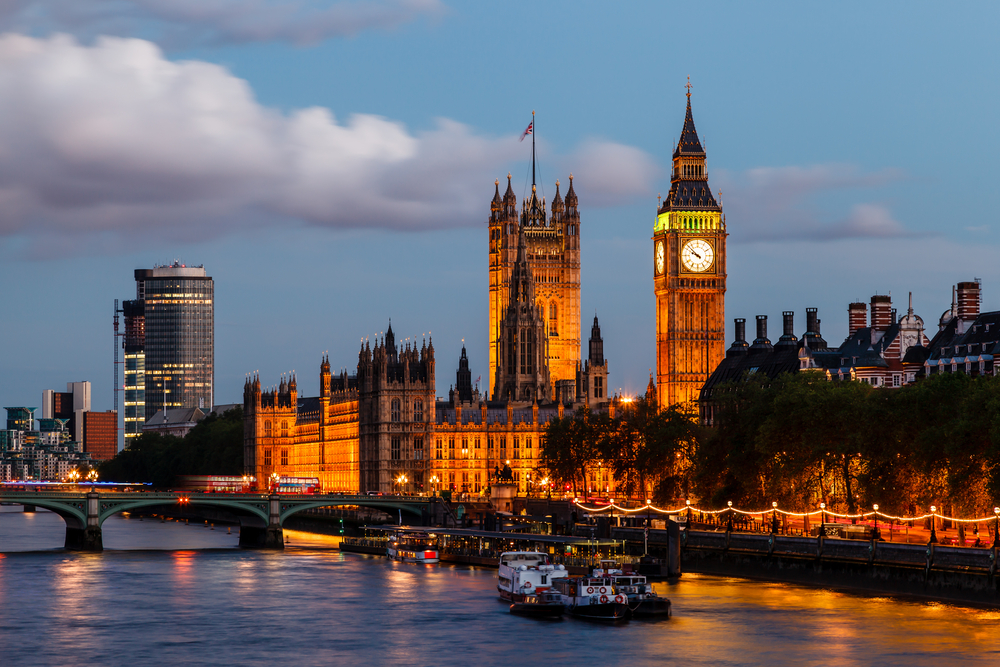
If you’ve ever been to London, or even seen a picture of London, you’ve probably seen the giant clock tower at the corner of the Palace of Westminster. This tower is one of London’s major icons, ranking right up there with red double-decker buses, the London Eye, and Platform 9 ¾.
Contrary to popular belief, the clock tower itself is not named “Big Ben”. Rather, it is named “Elizabeth Tower”, after Queen Elizabeth II; named such during her Diamond Jubilee (the 2012 60th anniversary of her accession to the throne). Before that, it was just called “Clock Tower”. So why is it so often called “Big Ben”? That is due to the great bell inside the tower that chimes the hour out and goes by that name. Over time this has morphed into many calling the clock tower itself that even today, despite the recent, very public, name change.
So how did “Big Ben”- the great bell- get its name? People seemed to be in the habit of nicknaming giant bells and Big Ben was one of the biggest in the world and the largest in the British Isles at the time of its casting, so certainly name-worthy. The origin of Big Ben’s name is probably rooted in Sir Benjamin Hall. Hall was reportedly a large man (6 ft. 4 in. or 1.93 m, with a girth to match) and was the first Commissioner of Works, affectionately known as “Big Ben.”
On the side of the great bell there was also supposedly the inscription “Sir Benjamin Hall MP Chief Commissioner of Works” in his honor, so the workers and others took to calling the bell “Big Ben”.
If you’re wondering why that text is not inscribed there anymore (if it ever truly was), it’s because the current Big Ben is not the original. The original bell actually cracked before the clock itself was even installed in the tower (more on this later). As to why the name supposedly was inscribed on the first and not the second bell, the reason often given is that Sir Hall was no longer the Chief Commissioner when the second bell was cast. In addition, different founders were used to cast the second bell, so they may not have felt inclined to put the inscription on.
As there is little documented evidence on the origin of the name “Big Ben”, we can’t say for 100% certainty that it was named after Sir Benjamin Hall. Another possibility that has been proposed is that it was named after Benjamin Caunt, a very popular heavyweight boxing champion in the 1850s, who was also nicknamed “Big Ben”.
Yet another popular theory is that it was named in 1857 during a sitting of the House of Commons. At some point someone, tired of the long meeting over the naming of the great bell, just shouted “Why not call it Big Ben?” as a joke while Sir Benjamin Hall was talking. However, if such a thing actually happened, there should be Parliament records of this, but there is not. Thus, it’s thought the original Hall inscription story is more likely; though in both that story and the Parliament story, it was named after Sir Hall who was integrally connected with the building of the tower, clock, and bells.
As to why the clock tower was built in the first place, in 1834, a fire destroyed the Palace of Westminster—then the seat of the British government—leaving only a few parts of the palace standing. The next year, with reconstruction well on its way, Parliament opted to include a clock tower in the redesign. It wasn’t the first clock tower that the parliament buildings had seen. The first one was built between 1288 and 1290 and contained a bell known as “Great Edward” or “Great Tom.” A second tower, containing the first public chiming clock in England, replaced the first in 1367. In 1707, that tower was demolished because it had fallen into disrepair. Instead of replacing the tower with another, a sundial was put up in its place.
After the fire, Sir Charles Barry’s design for the new Houses of Parliament was chosen out of 97 designs submitted for consideration- his design didn’t originally include a clock tower. He added one in 1836 and later drew up a detailed design with the help of Augustus Pugin. Pugin was never recognized by Barry for supplying the design for the clock, despite Pugin saying, “I never worked so hard in my life as for Mr. Barry for tomorrow I render all the designs for finishing his bell tower & it is beautiful…”
The tower was Pugin’s last design. In 1852, before work on the tower was completed, Pugin suffered a breakdown. He was unable to speak coherently or recognize his family, and died several months later despite attempted therapy. He was only forty years old and never knew how famous his last design would become.
Construction on the tower began September 28, 1843. It was built from the inside out so that scaffolding couldn’t be seen by passers-by.
Besides Pugin’s work, Sir Charles Barry also sought additional help when it came to the actual clock mechanism itself. He chose Benjamin Lewis Vuillamy, who was the Queen’s clockmaker, to work on a design, though other clockmakers were also brought in to give their advice and opinions. In 1846, a competition was held to see who would build the clock, but some amazingly tough standards- for the age- were set by the Astronomer Royal, Sir George Airy. Airy stated that the clock needed to strike the hour within one second’s accuracy, and the performance of the clock was to be telegraphed to the Greenwich Observatory twice daily. This harsh criteria caused seven years of delay.
When Edward John Dent was finally appointed to build the clock in 1852, he found that the tower was too small for the initial clock design. This caused further delays and alterations had to be made to the tune of £100 (adjusted for inflation by average earnings, that’s about £69,000 today). To top it all off, after finally getting construction underway, Dent died the next year and his stepson had to take over. The clock was finally finished in 1854, costing a total of £2500 to make.
The clock’s delay didn’t end up mattering very much, as the clock tower itself had suffered delays as well. The clock wasn’t actually installed until 1859. During the two-year wait, modifications were made to meet the Astronomer Royal’s standards. For instance, Edmund Beckett Denison invented a “Double Three-Legged Gravity Escapement” for the clock which made sure that the pendulum wasn’t affected by wind or other external factors putting pressure on the clock’s hands. Also known as the Grimthorpe Escapement, this revolutionary invention is still used on many clocks throughout the world today.
When the clock was finally installed in April 1859, it didn’t work. The original cast iron hands were too heavy to keep time and had to be replaced by lighter copper hands. At last, on May 31, 1859, the clock began successfully keeping time. But the tower wasn’t yet completed—it also needed a bell.
Like the rest of the features of the tower, the great bell also suffered delays. The first great bell was cast in 1856 and hung in the New Palace Yard where it was tested every day. On October 17, 1857, as mentioned previously, a crack over a metre long appeared on the bell. Fingers were pointed, but no one fessed up. Because the original bell casters—the Warners—asked for too much to replace the bell, the Whitechapel Foundry got the job for the replacement. The second bell weighed 2.5 tonnes less than the first (13.5 tons instead of 16), but it was still so large that it took thirty hours to winch it up to the belfry in the tower.
At last, on July 11, 1859, Big Ben rang out for the first time. Unfortunately, in September of that year, a crack appeared in the bell again. This time supposedly because the hammer used to strike it was approximately two times the maximum weight the original bell founder specified for the bell. This crack caused the great bell to remain silent for a few years. However, in 1863, Airy came up with a solution: turn the bell so that the hammer struck a different spot, make the hammer lighter, and cut a small square in the bell so that the crack wouldn’t spread. His solution worked, and to this day, the same cracked “Big Ben” sits in the belfry, ringing away on the hour.
source:::::today i foundout.com
natarajan