Message For The Day….Purify Your Heart with Mantras to Get God Installed inside Your Heart …

Mantra means that which saves, when meditated upon. The Name of God, any one of His countless ones, can serve the purpose. The Name is like the goad that can tame the elephant in rut, make it bend its knees and lift the log on to its tusks. Liberation (Moksha) is not a five-star hotel, or a deluxe tourist home. It is just the awareness of your reality and the rejection of all contrary conceptions. You can recognise your Self quickly and clearly, if you purify your heart with a mantra or by the singing of the glory of God. Both will grant you that boon. Sing from the heart, conscious of the layers of meaning that each word has. These are the surest ways to have God firmly installed in the throne of your hearts and it will redeem your lives.

Sathya Sai Baba

அமெரிக்காவை ஆட்டுவிக்கும் மாய சக்தி எது தெரியுமா ?

புதிய நிதிநிலை அறிக்கையை இறுதிசெய்வதில் ஏற்பட்ட சிக்கல் காரணமாக, ஒரு பகுதி அரசுத் துறை நிறுவனங்களை மூடியிருக்கிறது அமெரிக்கா. மொத்தம் உள்ள 20 லட்சம் மத்திய அரசு ஊழியர்களில் சுமார் எட்டு லட்சம் ஊழியர்கள் சம்பளம் இல்லா விடுப்பில் செல்ல அரசு உத்தரவிட்டுள்ளது. ராணுவம், சுகாதாரம் உள்ளிட்ட அதி முக்கியத் துறைகள் நீங்கலாக ஏனைய துறைகளின் செயல்பாடு முடங்கியிருக்கும். உலகெங்கும் பங்குச் சந்தைகளில் இதன் தாக்கம் எதிரொலிக்கும். இந்த முடக்கம் நீளும்போது, அமெரிக்கா பொருளாதார இழப்பை எதிர்கொள்ளும்.

ஆளும்கட்சிக்குச் சிக்கலான சூழல் ஏற்படும்போதெல்லாம் இப்படி ஒரு நடவடிக்கை எடுப்பது அமெரிக்க அரசுக்கு வழக்கம். 1977-லிருந்து இப்படி 17 முறை அரசுத் துறை நிறுவனங்களை வெள்ளை மாளிகை மூடியிருக்கிறது என்றாலும், 1995 இறுதியில் கிளின்டனின் ஆட்சியில் நடந்த வரலாற்றின் நீண்ட – 21 நாட்கள் முடக்கத்துக்குப் பின் இதுவே முதல் முறை.

ஆளும் ஜனநாயகக் கட்சிக்கும் குடியரசுக் கட்சிக்கும் இடையிலான அரசியல் சண்டையின் விளைவு இது.

தனியார் பிடியில் அமெரிக்க மருத்துவத் துறை சிக்கியிருக்கும் சூழலில், மருத்துவக் காப்பீடு இல்லாதவர்கள் அங்கு சமாளிப்பது கடினம். ஆனால், உலகை ஆளத் துடிக்கும் ‘வல்லர’சின் குடிமக்களில் பாதிக்கும் மேற்பட்டோர் இன்னமும் முழு மருத்துவக் காப்பீட்டு வசதி இல்லாத நிலையிலேயே இருக்கின்றனர். இத்தகைய சூழலில், அடுத்து வரும் தேர்தலில் ஜனநாயகக் கட்சியை முன்னகர்த்த ஒபாமா தேர்ந்தெடுத்த பகடைக்காய் மருத்துவக் காப்பீட்டுச் சீர்திருத்தத் திட்டம். நான்கு கோடி அமெரிக்கர்களை மருத்துவக் காப்பீட்டுக்குள் கொண்டுவர வழிவகுக்கும் திட்டம் இது.

பொருளாதார நெருக்கடிகளைச் சுட்டிக்காட்டி, ஏற்கெனவே அமெரிக்க அரசு செய்ய வேண்டிய செலவுகளில் சுமார் ரூ.4.81 லட்சம் கோடியை வெட்டும் திட்டத்தில் இருக்கும் எதிர்க்கட்சியான குடியரசுக் கட்சி, “இது அமெரிக்கர்கள் நலத் திட்டம் அல்ல; ஒபாமா நலத் திட்டம்” என்று திட்டத்தில் உள்ள சில குறைகளைக் கூறி முட்டுக்கட்டை போடுகிறது. நாடாளுமன்றத்தின் இரு சபைகளிலும் பெரும்பான்மை இல்லாத சூழலில், எதிர்க்கட்சியுடனான பேச்சுவார்த்தை தோற்றதால், நிதிநிலை அறிக்கையை இறுதிசெய்யாமல், அரசுத் துறைகளை முடக்கியிருக்கிறார் ஒபாமா. மக்களின் அனுதாபத்தைத் தான் பெற முடியும் என்று அவர் நம்புகிறார். ஒபாமா கணக்கே பலிக்கும் என்பது வெளிப்படை. எனினும், எப்படி இந்த அரசியலாட்டம் நடக்கிறது? பெருநிறுவனங்களின் லாபி.

இந்தியா எந்தக் கொள்கையை வாரிக்கொள்ளத் துடிக்கிறதோ, எல்லாத் துறைகளையும் யாரிடம் தாரைவார்க்கத் துடிக்கிறதோ அந்தத் தனியார்மயத்தின் கரங்களில்தான் உலகின் வல்லமை மிக்க தேசத்தை ஆட்டுவிக்கும் கயிறுகளின் முடிச்சுகள் இறுகியிருக்கின்றன!

source::::The Hindu….Tamil
natarajan

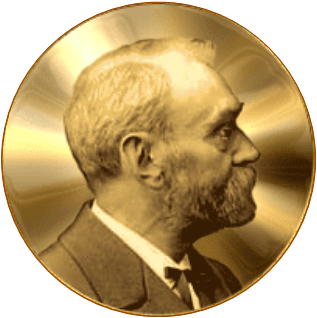
Do you know ?… Alfred Nobel Was once Nicknamed “Merchant of Death ” !!!

Today I found out Alfred Nobel, who left most of his fortune to start the Nobel Prizes, was once nicknamed “The Merchant of Death”.

The “Merchant of Death” title was given to him due to Nobel inventing, and making most of his vast fortune off of, dynamite and other types of explosives, such as “ballistite”, which was the precursor to quite a lot of military grade explosive devices.

Nobel came up with the idea of using his money for these annual prizes after his brother, Ludvig, died in 1888 and a French newspaper mistakenly thought it had been Alfred Nobel himself who died.  The newspaper published the obituary under the title: “The Merchant of Death is Dead”, going on to state: “Dr. Alfred Nobel, who became rich by finding ways to kill more people faster than ever before, died yesterday.”

When Nobel read this, he began thinking of how to improve his public image after his death and decided on leaving his enormous fortune to fund a set of prizes named after himself. The Nobel Prizes were created as awards for people who made the greatest contributions to mankind in subjects that interested Nobel, namely Physics, Chemistry, Medicine, Literature and Peace.

Nobel did a lot of his own work in Physics and Chemistry and was an enthusiast of various literature of the day.  He also saw the benefit to advancements in medicine. The “peace” prize was thought to have been suggested and promoted by his former lover and secretary Bertha Kinsky, who later won the award in 1905, just a few years after the Nobel Prizes were established.  The idea of a peace award appealed to him because of his reputation as a war monger, and the fact that a huge point to the Nobel Prizes, as stated, was to fix his reputation as a “Merchant of Death”.

Bonus Facts:

  • Alfred Nobel invented around 355 things, most notable was his invention of dynamite, in 1867, which he was originally going to call “Nobel’s Safety Powder”, as it was basically a safer version of nitroglycerin and he was attempting to improve his image as a maker of dangerous explosives. He ultimately went with “dynamite”, which was derived from the Greek for “power”.
  • All total, Nobel left 94% of his fortune to be used towards the Nobel Prizes. His total fortune, adjusted for inflation, would be worth about $250 million today.
  • Along with the group setup to select the winners of the Nobel Prizes, a separate group, The Nobel Foundation, was founded to manage Nobel’s money.  To date, along with annually bequeathing money to award winners, The Nobel Foundation has grown Nobel’s assets up to around half a billion dollars.

source:::::todayifoundout.com

natarajan

Eleven Indian Companies in FORBES FAB 50 List …

China and India dominate the Forbes 2012 list of 50 best publicly traded companies in Asia-Pacific.

China tops the list with 23 companies in the list. A slowing economy has seen the best companies emerge successful, Forbes said. 15 companies are new in the list this year.

India is ranked second with 11 Indian companies in Forbes 2012 list, up from up from seven last year. The companies were selected from a pool of 1,295 companies that had at least $3 billion in annual revenue or market cap.

1. Tata Consultancy Services
(Rank 4)

Tata Consultancy Services is an IT services, business solutions and outsourcing organisation with over 238,583 IT consultants in 42 countries.  The company was founded in 1968.


2. ITC
(Rank 5)

ITC is an Indian public conglomerate company headquartered in Kolkata, West Bengal.

Founded in 1910 as the Imperial Tobacco Company of India, today its diversified business includes Fast Moving Consumer Goods (FMCG), Hotels, Paperboards, Paper & Packaging and Agri Business.

3. HDFC Bank
(Rank 6)

Incorporated in August 1994, HDFC Bank is the fifth largest bank in India by assets. HDFC Bank has 1,986 branches and over 5,471 ATMs, in 996 cities in India.

4. Bharti Airtel
(Rank 9)

Founded in 1995, Bharti Airtel is a leading integrated telecommunications company with operations in 20 countries across Asia and Africa.

Headquartered in New Delhi, India, the company ranks amongst the top 5 mobile service providers globally in terms of subscribers.

5. Tata Motors
(Rank 16)

Founded in 1945, Tata Motors is the world’s eighteenth-largest motor vehicle manufacturing company, fourth-largest truck manufacturer and second-largest bus manufacturer by volume.

Tata Motors has produced and sold over 6.5 million vehicles in India since 1954.

6. Sun Pharmaceutical Industries
(Rank 18)

Sun Pharmaceutical Industries based in Mumbai, manufactures and sells pharmaceutical formulations and active pharmaceutical ingredients (APIs) primarily in India and the United States.

Sun Pharma was established by Dilip Shanghvi in 1983 in Kolkata.

7. Bajaj Auto
(Rank 27)

Bajaj Auto founded by Jamnalal Bajaj at Rajasthan in the 1930s is based in Pune, Maharashtra, with plants in Chakan (Pune), Waluj (near Aurangabad) and Pantnagar in Uttaranchal.

Bajaj Auto manufactures automobiles, scooters, motorcycles and the auto rickshaws. Bajaj Auto is the world’s third-largest manufacturer of motorcycles.

8. Kotak Mahindra Bank
(Rank 29)

Kotak Mahindra Bank is an Indian financial service firm established in 1985.  It was previously known as Kotak Mahindra Finance Limited, a non-banking financial company.

In February 2003, Kotak Mahindra Finance Ltd, the group’s flagship company was given the license to carry on banking business by the Reserve Bank of India (RBI).

9. HCL Technologies
(Rank 33)

HCL Technologies offers a range of outsourcing services, business process outsourcing and infrastructure services.

Founded in 1991, HCL Technologies is fourth largest IT company in India and is ranked 48 in the global list of IT services providers.

10. Titan Industries
(Rank 37)

Titan Industries is the world’s fifth largest wrist watch manufacturer and India’s leading producer of watches under the Titan, Fastrack, Sonata, Nebula, RAGA, Regalia, Octane and Xylys brand names.

Founded in 1987, it is a joint venture between the Tata Group, and the Tamil Nadu Industrial Development Corporation (TIDCO).

Its product portfolio includes watches, accessories and jewellery, in both contemporary and traditional designs.

11. Asian Paints
(Rank 41)

Founded in 1942, Asian Paints is headquartered in Mumbai.  It manufactures a wide range of paints for decorative and industrial use. Asian Paints is India’s largest and Asia’s third largest paint company.

source:::: Rediff.com

natarajan

“Innovation is Rarely Able to be Clearly Understood at the Time It “s Happening ” !!!

Today’s technology represents such a serendipitous hodgepodge that it might seem unfair to judge historical figures’ wrong-headed assumptions about the future.

But why not?

Looking back over tech history gives valuable insights into how past innovation was brought to commercial fruition.

Thus, to provide a bit of context for the following five pronouncements — which over time have proven to be woefully off the mark — Forbes.comspoke to Bruce Seely, historian of technology at Michigan Tech University and the president of the Society for the History of Technology (SHOT).

1. Martin Van Buren on the dangers of “high speed” rail travel.

“…railroad carriages are pulled at the enormous speed of fifteen miles per hour by ‘engines’ which,

in addition to endangering life and limb of passengers, roar and snort their way through the countryside. The almighty certainly never intended that people should travel at such breakneck speed.” — New York Governor Martin Van Buren, 1829.

Why was Van Buren so taken aback by railroad technology at the time?

Seely says the former New York governor and former U.S. president wasn’t the only one.

“There were even some physicians at the time who questioned whether the human body could stand a 25 mph speed,” said Seely.

And in 1829, Seely says no one really foresaw the commercial possibility that railroads presented for long haul freight. However, Seely says it’s more likely that Van Buren was simply reacting to a novel technology that he as a politician could never have anticipated.

2. William Henry Pickering’s dim view of aviation.

“…gigantic flying machines speeding across the Atlantic carrying innumerable passengers in a way analogous to our modern steam ships…such ideas are wholly visionary…” — William Henry Pickering, astronomer, 1910.

Only seven years after the Wright brothers’ first powered flight, airplanes in 1910 still remained very fragile, Seely notes.

But Pickering’s quote is particularly frustrating, Seely says, because the noted Harvard astronomer was someone that in the public mind would seem to have some special knowledge about aviation. But, in fact, Seely says Pickering had “no insights at all” about how these aircraft fly.

“the phrase — ‘such ideas are wholly visionary,’ really jumps out at me,” said Seely, “as if this is somehow a problem. Almost any large scale technical breakthrough requires a visionary to push it through because they are either going against an existing technical system or [advocating] one that is very expensive to develop.”

3. Ernest Rutherford’s atomic myopia.

“the energy produced by the breaking down of the atom is a very poor kind of thing. Anyone who expects a source of power from the transformation of these atoms is talking moonshine.” – Ernest Rutherford, physicist, 1933.

“With Rutherford, you think, ‘this is a guy involved in nuclear physics’,” said Seely. “Surely, he must have insight into what was going on.”


But by 1933, Rutherford is not necessarily at the front and center of the most exciting research, says Seely. For, as he notes, it was a time when a new generation of physicists had emerged; developing novel but controversial theories, such as quantum mechanics.

It took World War II to bring nuclear energy to term.

4. Harry Warner’s wariness of movies with sound.

“Who the hell wants to hear actors talk?” — Hollywood movie mogul Harry Warner, 1925.

Like all movie moguls of the 1920s, Seely says Harry Warner was very much worried about the technological investment of talkies, such as soundstages and cinema sound systems.

“They were concerned that the existing way their industry operated was going to overtaken by technology,” said Seely, “that it was going to be turned upside down due to tech.”

Talkies are wonderful proof that when you change one piece of a technical system, he says, the whole system changes.

Thus, the film industry was in upheaval from 1926 to the mid-1930s trying to find money to make this transition during the depression.

5. Henry David Thoreau’s misgivings about the telegraph.

Arguably, the ultimate uber hippie, Thoreau asserted a 19th century version of Springsteen’s refrain of “57 channels (and nothin’ on).”

“We are in great haste to construct a magnetic telegraph from Maine to Texas; but Maine and Texas, it may be, have nothing important to communicate.” — Henry David Thoreau, 1854.


As soon as Morse’s telegraph technology was proven, it was understood that in fact there was a lot to say from Texas to Maine and vice-versa, says Seely. The main reason the federal government put money into the telegraph, he adds, was to enable a democratic government to function on a continental scale.

The telegraph was just as useful for stock markets and newspapers also trying to function on a continental scale.

However, Thoreau was from an era of face to face or words on paper communications.

“The idea that you had an electrical medium as an intermediary took getting used to,” said Seely. “I [myself] am from a world of books and articles. Today, I can’t see that Twitter makes any sense; 140 characters aren’t enough to say anything.”

What’s the lesson in all this?

“Innovation is rarely able to be clearly understood at the time it’s happening,” said Seely, “and people who find ways to make the technology work [point it] in directions that the original innovators never imagined.”

source:::::Bruce Dorminey in Forbes.com

natarajan


How an Engineer Earned 1.25 Million Airmiles with Puddings !!!

Air Miles are awesome, they can be used to score free flights, hotel stays and if you’re really lucky, the scorn and hatred of everyone you come in contact with who has to pay full price when they travel. The king of all virtually free travelers is one David Phillips, a civil engineer who teaches at the University of California, Davis.

David came to the attention of the wider media when he managed to convert about 12,150 cups of Healthy Choice chocolate pudding into over a million Air Miles. Ever since, David and his entire family have been travelling the world for next to nothing.

So how did he do it? Well, first we need to explain the kind of man David Phillips is; he’s the kind of guy who reads every inch of the small print on things. The kind of guy who learned to count cards just so he’d never get ripped off in a casino. In fact, Phillips stated that he could have probably been a pro card player if it wasn’t for the cigarette smoke. Yes, this guy- according to him- could have been a millionaire card player, but he enjoyed fresh air more than the musky stink of success.

His most famous endevour was back in 1999 when he saw that Healthy Choice was having a promotion on their frozen entrées section. The offer was as follows: for every 10 bar codes of their product a person sent in, they’d be awarded 500 Air Miles. However, the company had an early bird stipulation that people who redeemed the offer within the first month of the competition would receive double that, meaning a person could potentially receive 1000 Air Miles for buying just 10 of their entrées.

Upon catching wind of the deal, David scoured his local supermarkets to see which, if any products offered the best potential return. After some legwork, he found what he was looking for- a discount grocery chain that was selling individual chocolate pudding cups for 25 cents each. This meant that for a measly $2.50, he could get 1000 Air Miles.

Realising the amazing return he was potentially able to receive, David set out to hit every store in the chain in one day and buy up every single Healthy Choice pudding they had.

Now, you’re probably thinking a guy walking into several stores and asking to purchase all the Healthy Choice pudding they possessed, even in the back of the store, would arouse suspicion; and if anyone cottoned on to what he was doing, they’d try to get in on it too, because, why wouldn’t they? David apparently had the same concern and while buying the pudding, he told people he was doing it because he was stocking up for Y2K, which was just around the corner.

All in all, David spent just over $3000 on pudding, which may seem like a lot, until you realise the total dollar value of the miles he was set to receive was in excess of $150,000. However, before that, he actually had to send off all of the bar codes.

According to David, his wife got blisters from peeling off hundreds of stickers and his kids and co-workers grew physically sick of the sheer amount of chocolate paste he was forcing on them. Further, it began to look doubtful they’d be able to peel off all the barcodes in time to qualify for the early bird part of the promotion.

This is when David had another idea- why did he need to have his wife and children suffer when he could get others to do the leg work for him?

David approached the local Salvation Army with an offer; if they gave him a bunch of volunteers to peel off all the bar codes on his pudding, he’d donate the pudding to them. But here’s the beautiful part, doing this counted as a considerable charitable donation, which let David claim just over $800 back in tax deductions at the end of they year.

But the benefits of David’s scheme didn’t end there. After sending off the bar codes and getting back his 1,280,000 miles, (he got a few more than just from the pudding because he also bought some soup at 90 cents a can before he realised that was the sucker’s method), he now officially had over a million miles in his frequent flyer accounts, which automatically gave him lifelong access to something called the “American Airlines AAdvantage Gold club” giving him and his family a number of awesome flying related perks for the rest of their lives.

But we haven’t even got to the best part yet. David will likely never run out of Air Miles because he’s still earning miles at about 5 times faster than he’s spending them, despite traveling quite often, thanks to various frequent flyer incentive programs he keeps an eye out for and exploits just like the pudding scheme. Today, he has over 4 million miles in his various accounts and has flown to over 20 countries and taken numerous vacations in the meantime.

In the end, for a one time cost of a little over $3000 (or a little over $2200 if you subtract the tax deduction), and a few other similar deals he’s taken advantage of to bolster his numbers, David never has to pay for a flight in his life ever again. Genius. !!!!


source::::Today I Foundout .com

natarajan

Facebook CEO Mark Zuckerberg ….With a changed Fortune in 2013 !!!

Facebook CEO Mark Zuckerberg is the sixth richest American in the tech industry.

This time last year, Facebook FB -4.03% CEO Mark Zuckerberg’s net worth was languishing. After his company’s disappointing initial public offering in May 2012, the hoodie-wearing executive was worth $9.4 billion, down about $8.1 billion in the three months following Facebook’s debut on the Nasdaq.

A lot has changed in 12 months.

On this year’s Forbes 400, Zuckerberg has a net worth of $19 billion, making him the sixth richest member to hail from the technology industry. One of the biggest dollar gainers this year, Zuckerberg is one of 48 people whose fortunes have derived largely from technology companies. On this year’s rankings of the nation’s richest people, technology is the second-highest represented industry, behind investments, with 98.

Bill Gates remains the king of tech–and everything else–with a net worth of $72 billion. He’s been the nation’s wealthiest individual since 1994, and, after adding $6 billion to his coffers in the last year, recently reclaimed the title of world’s richest from Mexican telecom mogul Carlos Slim.

Following Gates, the top five richest in tech remains unchanged. Larry Ellison takes second spot –ranked No. 3 on the list with a net worth of $41 billion –followed by Amazon CEO Jeff Bezos,who added $4 billion to his net worth in the last year, climbing to $27.2 billion. Google cofounders  Larry Page and Sergey Brin rode a strong 12 month rise in Google shares–up 28%–to place fourth and fifth among American tech billionaires.

Steve Ballmer, now worth $18 billion, benefited from the Microsoft stock bump that came after he announced he’d be stepping down as CEO of the Redmond, Wash.-based software giant. On Aug. 23, the day Ballmer announced he would be departing, Microsoft shares closed up more than 7%. That contributed to the $2.1 billion rise in Ballmer’s net worth over the past year.

Last year’s only woman among tech’s top 10, Laurene Powell Jobs, loses her top 10 perch (though remains on The Forbes 400), despite finding herself $700 million richer. Steve Jobs’ widow and Silicon Valley’s richest woman is replaced this year by Dish Network CEO Charles Ergen, who is up $3.5 billion this year to $12 billion. Dish Network’s stock is up nearly 40% in the last 12 months.

FORBES used stock prices from Aug 23, 2013 to calculate values for The Forbes 400 rankings.


source::::Forbes .com

natarajan

” Customer Is Always Right ” !!!


 Senior’s Banking… PRICELESS!!


Shown below, is an actual letter that was sent to a bank by a  Senior customer ..
The bank manager thought it amusing enough to have it published in the Times.

Dear Sir:

I am writing to thank you for bouncing my cheque with which I endeavored to pay my plumber last month.

By my calculations, three nanoseconds must have elapsed between his presenting the cheque and the arrival in my account of the funds needed to honor it.

I refer, of course, to the automatic monthly deposit of my entire pension, an arrangement which, I admit, has been in place for only eight years.

You are to be commended for seizing that brief window of opportunity, and also for debiting my account £30 by way of penalty for the inconvenience caused to your bank.

My thankfulness springs from the manner in which this incident has caused me to rethink my errant financial ways. I noticed that whereas I personally answer your telephone calls and letters, — when I try to contact you, I am confronted by the impersonal, overcharging, pre-recorded, faceless entity which your bank has become.

From now on, I, like you, choose only to deal with a flesh-and-blood person.

My mortgage and loan repayments will therefore and hereafter no longer be automatic, but will arrive at your bank, by cheque, addressed personally and confidentially to an employee at your bank whom you must nominate.

Be aware that it is an OFFENCE under the Postal Act for any other person to open such an envelope.

Please find attached an Application Contact which I require your chosen employee to complete.

I am sorry it runs to eight pages, but in order that I know as much about him or her as your bank knows about me, there is no alternative.

Please note that all copies of his or her medical history must be countersigned by a Notary Public figure, and the mandatory details of his/her financial situation (income, debts, assets and liabilities) must be accompanied by documented proof.

In due course, at MY convenience, I will issue your employee with a PIN number which he/she must quote in dealings with me.

I regret that it cannot be shorter than 28 digits but, again, I have modelled it on the number of button presses required of me to access my account balance on your phone bank service.

As they say, imitation is the sincerest form of flattery.

Let me level the playing field even further.

When you call me, press buttons as follows:

IMMEDIATELY AFTER DIALING, PRESS THE STAR (*) BUTTON FOR ENGLISH

#1. To make an appointment to see me

#2. To query a missing payment.

#3. To transfer the call to my living room in case I am there.

#4 To transfer the call to my bedroom in case I am sleeping.

#5. To transfer the call to my toilet in case I am attending to nature.

#6. To transfer the call to my mobile phone if I am not at home.

#7. To leave a message on my computer, a password to access my computer is required.

Password will be communicated to you at a later date to that Authorized Contact mentioned earlier.

#8. To return to the main menu and to listen to options 1 to 9

#9. To make a general complaint or inquiry.

The contact will then be put on hold, pending the attention of my automated answering service.

While this may, on occasion, involve a lengthy wait, uplifting music will play for the duration of the call.

Regrettably, but again following your example, I must also levy an establishment fee to cover the setting up of this new arrangement.

May I wish you a happy, if ever so slightly less prosperous New Year?

Your Humble Client

source::::: unknown…input from a friend of mine…
natarajan

Changi Airport in Singapore to get new retail and leisure complex….

An artist impression of Project Jewel at Changi Airport. Picture: Supplied

An artist impression of Project Jewel at Changi Airport.

A NEW architecturally striking shopping and leisure complex is being built at Changi Airport in Singapore. Codenamed “Project Jewel”, the complex will be built on a 3.5ha site where the carpark in front of Terminal 1 now lies.

It is expected to open in 2018.

Built to link terminals one, two and three, it is being designed by a consortium of consultants led by architect Moshe Safdie.

The complex will have a glass and steel facade with a large indoor garden and a waterfall.

A new, multi-storey basement carpark will be built as part of the redevelopment and Terminal 1 will be expanded to allow more space for the arrival hall, baggage claim areas and
taxi bays.

The improvements will increase the terminals’ passenger handling capacity to 24 million a year.
The gardens and waterfall at the complex at Changi Airport in Singapore. Picture: Supplied

The gardens and waterfall at the complex at Changi Airport in Singapore.


An artist impression of inside the complex. Picture: Supplied

An artist impression of inside the complex….