When No Taxi Took His Wife to the Hospital, This Engineer Became a Taxi Driver so He Never Said ‘No’

When Vijay Thakur, a mechanical engineer, lost his first child just because he did not get a taxi to get to the hospital on time, he left his job. To become a taxi driver who would help the needy.

Vijay Thakur was working as a mechanical engineer with Larsen and Toubro, Mumbai, in 1982. He earned a handsome salary. Once married, life became even better with his wife Saroj by his side. They soon learnt they were going to be parents too and Vijay’s joy knew no bounds.

But one night in March 1982, when Saroj was just 3 months pregnant, she had pain in her abdomen. Vijay rushed out to look for a cab to take his wife to the hospital.  It was 2 am and no taxi was ready to stop for him. He kept waving and pleading but did not get a taxi. Finally, he ran till Andheri station and brought a taxi back home by paying Rs. 300 (almost like paying Rs. 3000 in today’s money) to take Saroj to Nanavati hospital. But, unfortunately, by the time they reached the hospital Saroj had a miscarriage.

Vijay and Saroj lost their first child just because no taxi driver was willing to do his job. Vijay was thoroughly shaken up by the tragedy. He kept thinking no one should go through the same experience his wife and he did.

“I was earning quite well then and so I could afford to at least pay double and get a taxi. But I started thinking about those people who cannot even afford to hire an auto rickshaw,” says Vijay.

60VijayThakur.jpg.image.975.568

Pic source: www.theweek.in

Vijay now wanted to do something for such patients. But his long hours at work did not leave him with much time to think. He was still struggling between his career and his desire to help people when Larsen & Toubro introduced a voluntary retirement scheme in 1984. Thakur took up the offer and decided to become a taxi driver, promising himself that he would never decline a passenger. He bought a Fiat car for Rs. 66,000 and got a taxi permit.

He made himself available to passengers always.

“I don’t sleep between 2 am and 4 am because that is the time an emergency patient may need a taxi,” says Vijay.

Despite opposition from his wife and family, Vijay kept doing his work. But then, life again took a tragic turn in the year 1999 when his younger son was hit by a ball on his knees while playing cricket. Initially, his wife and he ignored the injury, thinking it was just a small cut. But within a week the knee had swollen so much that they took him to a doctor. There, the small cut was diagnosed as cancerous and the 19-year-old boy left within 16 days.

Vijay was devastated; he had spent all his savings on his son’s treatment.

“Once, I had to pay a bill for Rs. 43,000 for my son’s treatment. I was short by Rs. 10 and the cashier refused to accept my money. A stranger offered me the balance and only then did the cashier take the money and issue a receipt. This incident strengthened my resolve to help people in need,” says Vijay.

After this incident, Vijay stopped charging fares from poor patients and painted a sign to the effect on the rear window of the taxi. Anyone in Mumbai can give him a call any time and he never says ‘No.’

When asked about his most memorable experiences, he describes quite a few. One of them happened almost 15-20 years back. He was driving on the night of December 31, around 3 am, when he saw a car ramming into a tanker. When Vijay looked inside the car, there was a couple along with an 8-month-old baby girl. He rushed them to Cooper hospital immediately. Unfortunately, the mother died but the father and the child were saved because they got treatment on time. The lady was wearing jewellery worth Rs. 2 lakhs, which the doctors gave to Vijay. Once the victim’s relatives arrived at the hospital, Vijay handed over the jewellery to them and left. Later, he came to know the accident victim was film producer Sudhakar Bokade’s wife. Mr. Bokade offered him money once he was back home with his daughter but Vijay refused to take anything.

“I don’t do this for money or publicity. I don’t remember the people who I have helped once they are fine,” says Vijay.

Vijay Thakur was felicitated by Mr. Amitabh Bachchan on his show Aaj ki Raat Hai Zindagi,where he met his all time favourite star Jeetendra.

twitter

Pic source: Twitter

“It was one of the happiest moments of my life. I never ever thought I could meet Jeetu ji. I am a huge fan. I used to bunk school and watch his movies. I have watched the movie Farz some 31 times just because of Jeetendra,” says Vijay.

Screenshot_2016-02-25-11-22-26

Pic source: Hotstar

But this man, who left his lucrative career and took up the job of a taxi driver, helped more than 500 needy patients and ferried thousands  to their destinations without any complaints, needs your help now.

He is 73 years old now and was recently diagnosed with cervical spondylitis.

“The doctor said it needs to be operated on. He also said that I will either die or will be paralyzed after this operation. But people say I have so many blessings, nothing will happen. I believe them,” he says.

If you wish to help Vijay Thakur, you can call him on +91 9819001689.

Source…….Manabi Katoch in http://www.the betterindia.com

Natarajan

The Stunning Beauty of Braided Rivers….!!!

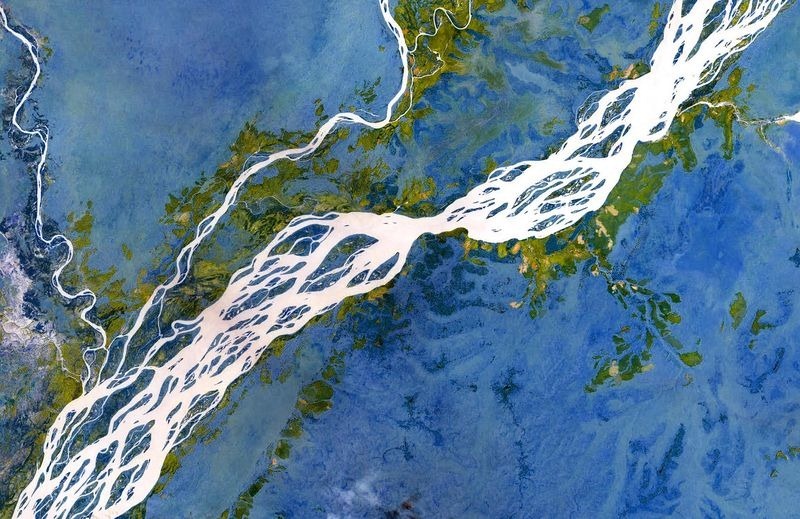
Most rivers flow in one broad channel of water, but some rivers split into lots of small channels that continually split and join each other to give a braided appearance. These are called braided rivers.

Braided rivers are usually wide but shallow. They typically form on fairly steep slopes and carry large amount of coarse-grained sediments. When the river’s flow decreases, these sediments get deposited on the river bed leaving behind small temporary islands of sands that cause the river’s channel to split. Aside from a steep gradient and abundance of sediments, a variable water discharge rate is essential to their formation. Consequently, braided rivers exist near mountainous regions, especially those with glaciers. Braided channels are also found in environments that dramatically decrease channel depth, and hence channel velocity, such as river deltas, alluvial fans and peneplains.

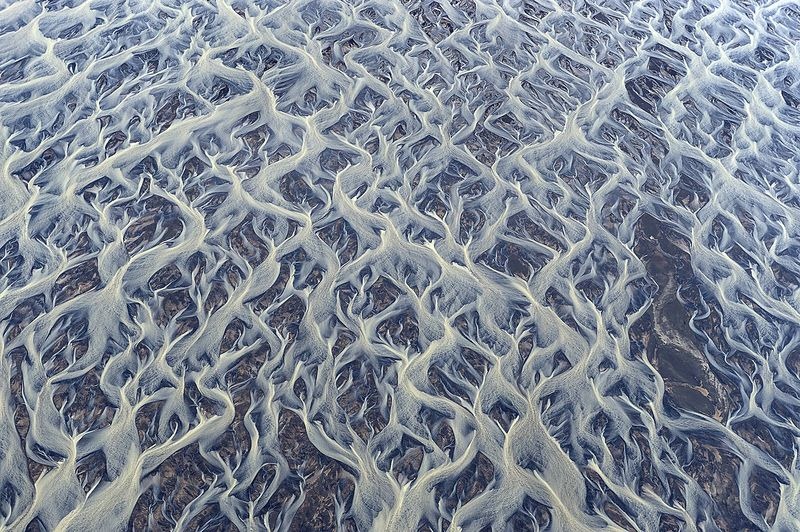
iceland-braided-river-3

A braided river in Iceland. Photo credit: Andre Ermolaev/500px

The pattern of the braided channels will change over time as the sediment islands get eroded away and deposited in new islands as the speed and amount of water in the river changes.

Rivers with braided channels look stunningly beautiful in satellite images or from airplanes. Here are some of the most beautiful examples of braided rivers.

rakaia-River

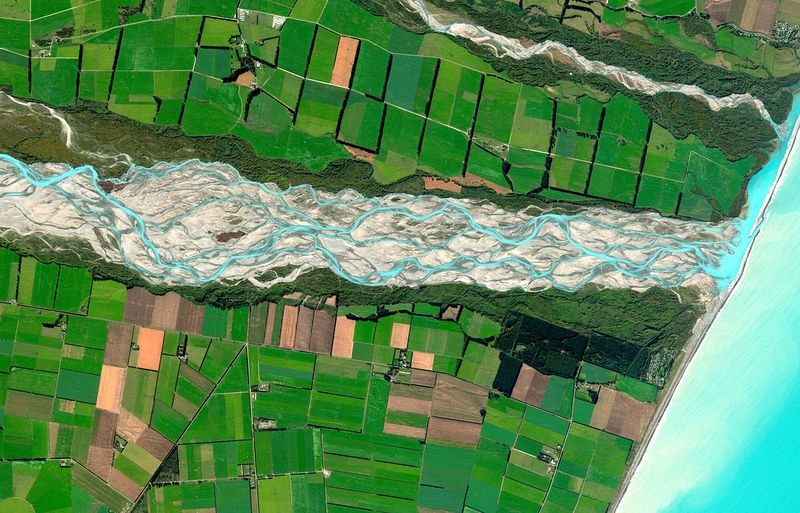
The Rakaia River in the Canterbury Plains in New Zealand’s South Island is a beautiful example of a braided river. It is one of the largest braided rivers in New Zealand. Photo credit: Andrew Cooper/Wikimedia

rakaia-river-braided-2

Rakaia River. Photo credit: www.digitalglobeblog.com

rakaia-river-braided-1

Rakaia River. Photo credit: Geoff Leeming/Flickr

brahmaputra-braided-river-1

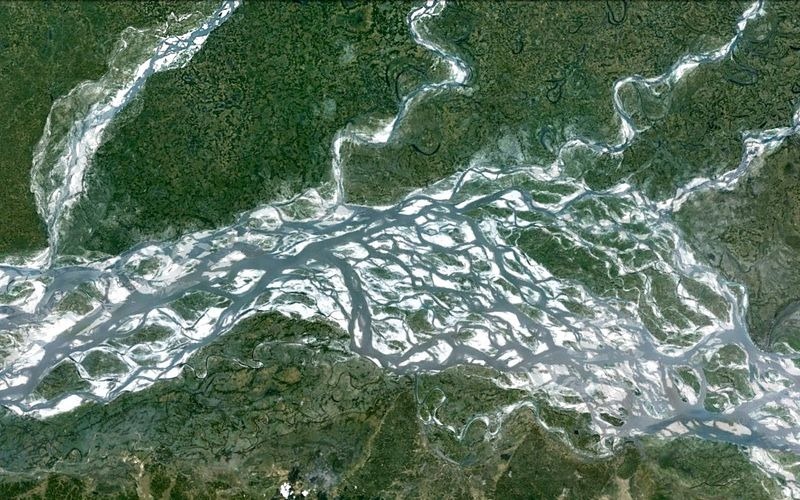
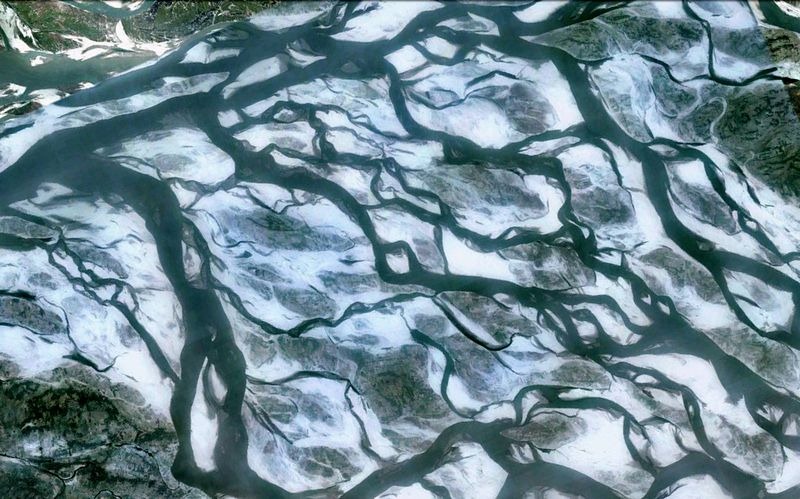
The Brahmaputra River in Tibet, India and Bangladesh is another classic example. The river originates in Tibet and enters India through the state of Arunachal Pradesh. The river gets intricately braided once it enters the state of Assam where it acquires its common name Brahmaputra. For the next 700 km of its braided course through the valley, it gets mighty big even in the dry season. During rains, its banks are more than 8 km apart. Photo credit:Google Earth/patternsofnatureblog.com

brahmaputra-braided-river-2

Brahmaputra River. Photo credit: Google Earth/patternsofnatureblog.com

waitaki-braided-river-1

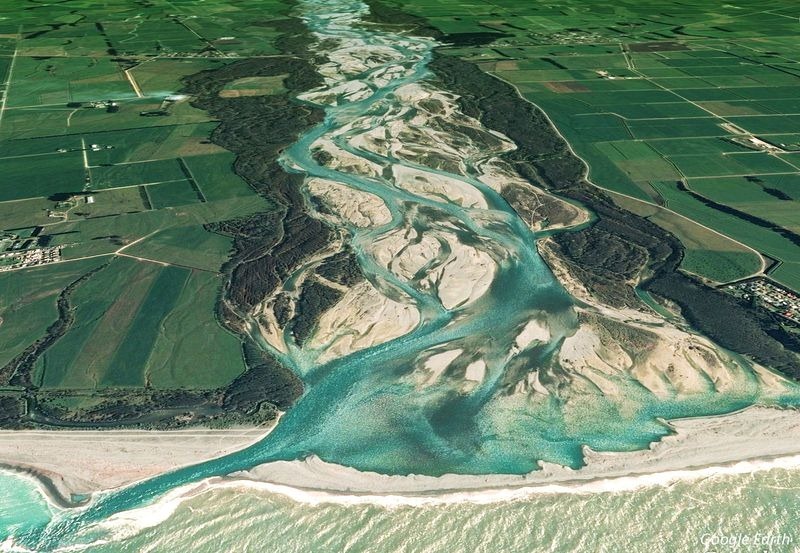
The Waitaki River is another large braided river in the South Island of New Zealand. It drains the Mackenzie Basin and runs some 110 kilometers south-east to enter the Pacific Ocean between Timaru and Oamaru. Photo credit: Google Earth

tagliamento

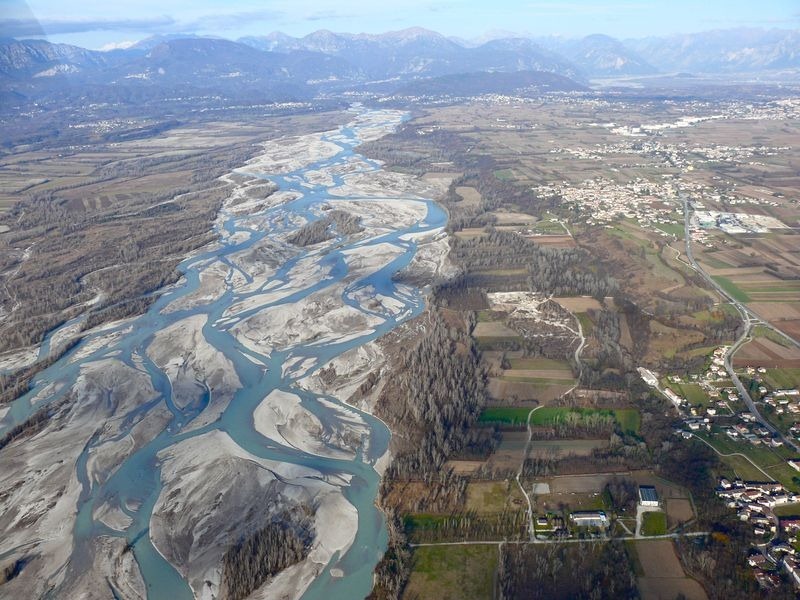
The Tagliamento River in north-east Italy is braided as it flows from the Alps to the Adriatic Sea. Photo credit:www.udine20.it

waimakariri-braided

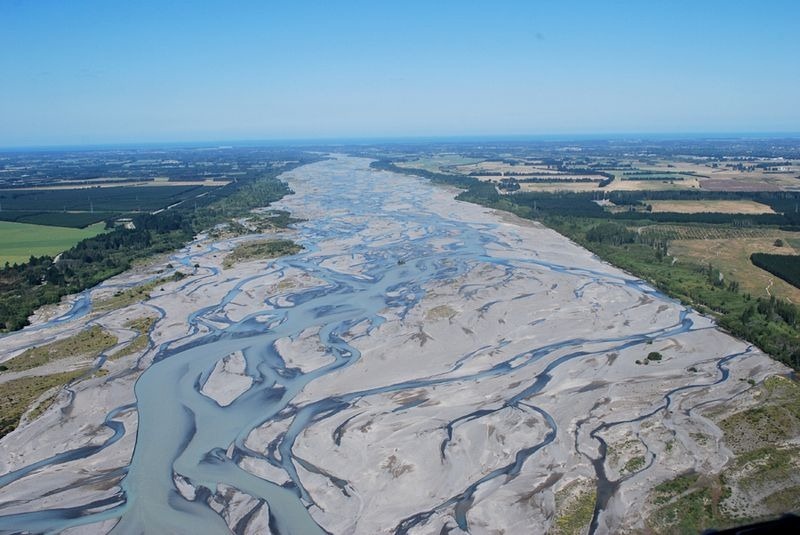
The Waimakariri River in the South Island of New Zealand, is a braided river, about a kilometer wide with many changing channels cutting through the shingle. Photo credit: unknown/spacebattles.com

waimakariri-river-braided-1

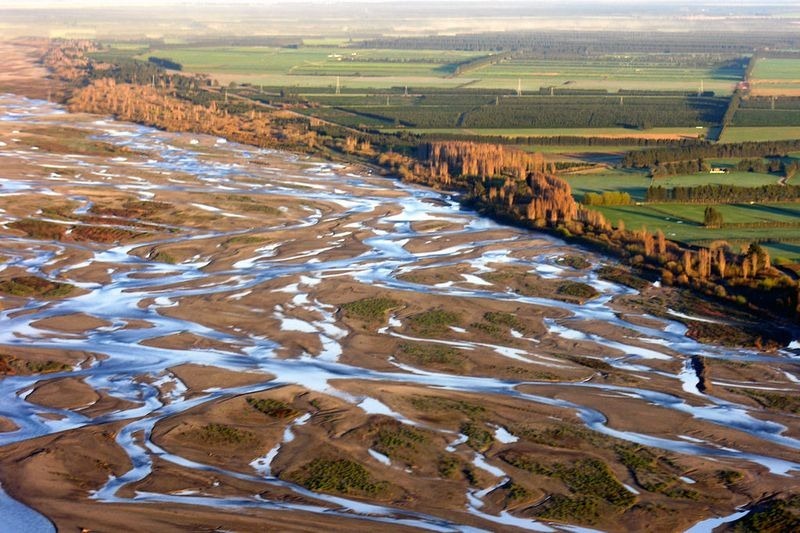
The Waimakariri River. Photo credit: Philip Capper/Flickr

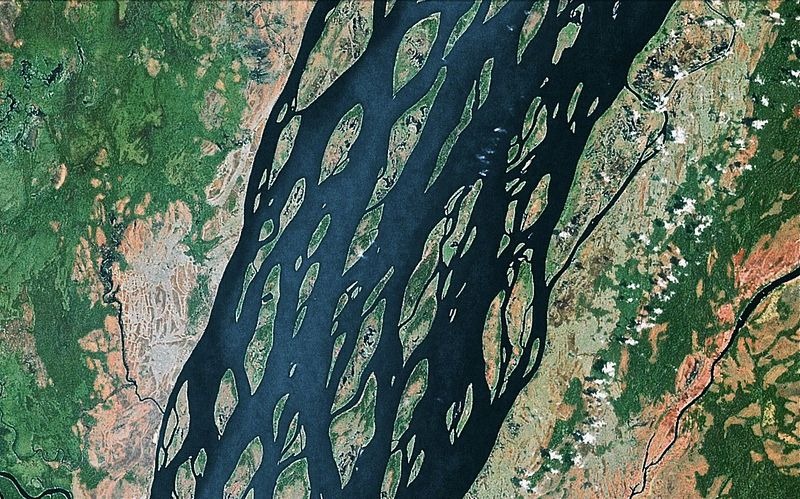
congo-braided-river-1

A Landsat image of a braided section of the Congo River. Photo credit: Wired

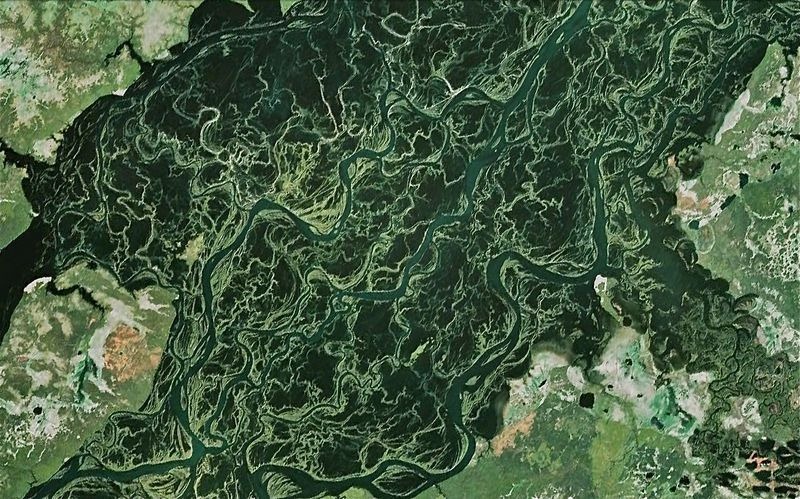
congo-braided-river-2

The Congo River. Photo credit: Google Earth/patternsofnatureblog.com

ob-river-braided-1

The Ob River in western Siberia, Russia, is the world’s seventh longest river. Photo credit: Google Earth/patternsofnatureblog.com

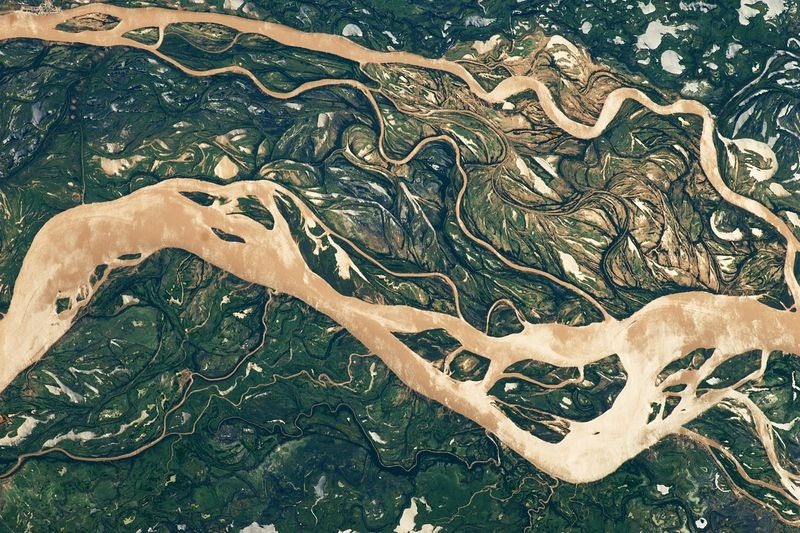
parana-river-braided-1

The Paraná River in South America. This photograph shows a 29-kilometer stretch of the Paraná, downstream of the small city of Goya, Argentina. Photo credit: NASA

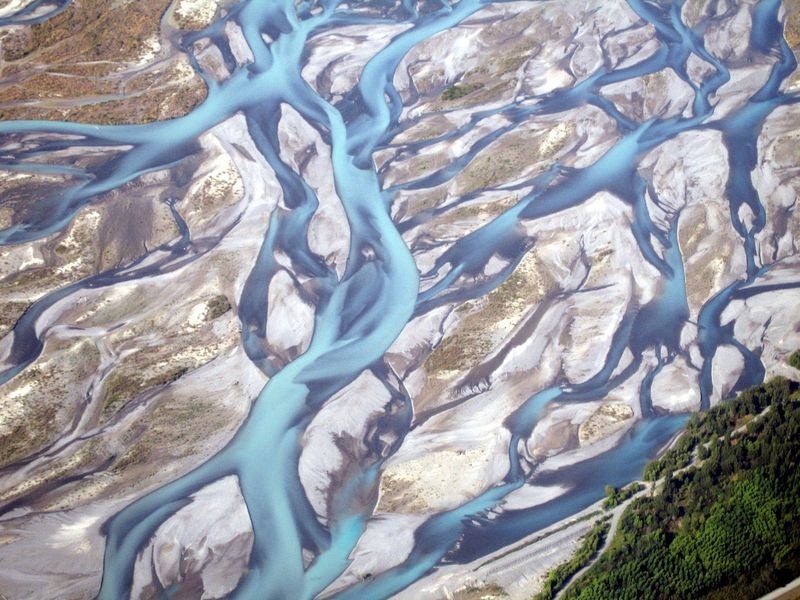
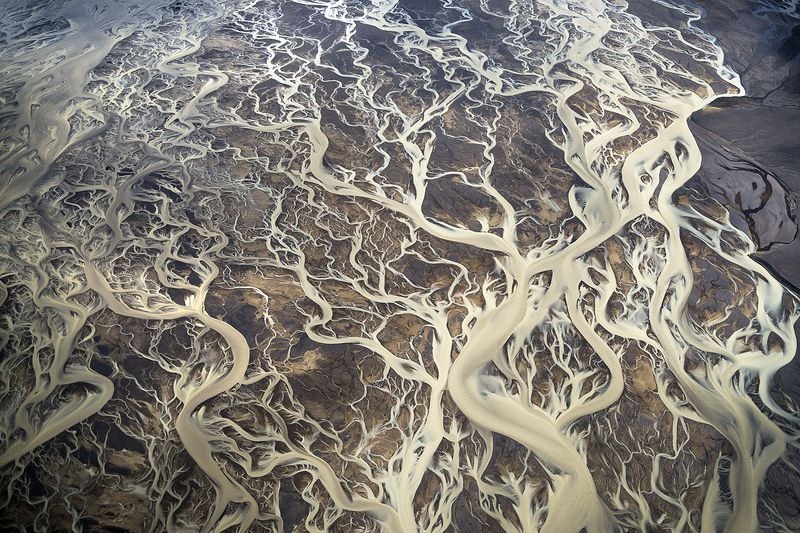
iceland-braided-river-1

A braided river in Iceland. Photo credit: Andre Ermolaev/500px

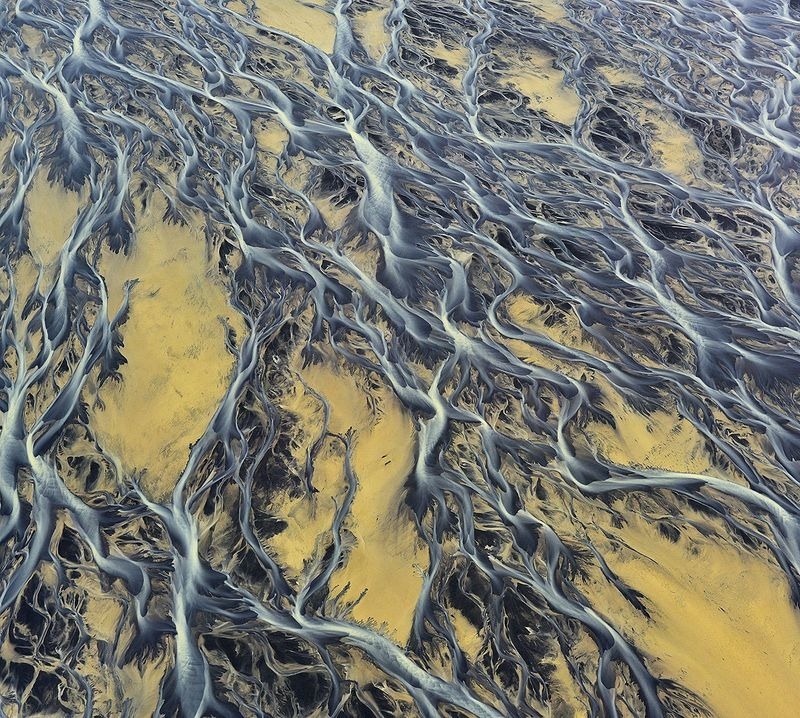
iceland-braided-river-2

A braided river in Iceland. Photo credit: Andre Ermolaev/500px

Source….www.amusingplanet.com

Natarajan

A Man with Dwarfism Heard about a Woman with Polio Crossing the English Channel. Then He Did This….

He is 44, was born with dwarfism, is 4 feet 2 inches tall, and is super passionate about sports. This is the inspiring story of K Y Venkatesh, a para-sportsman from Bengaluru, whose short stature never disheartened him from moving forward in life.

Meet K Y Venkatesh, a 44-year-old para-sportsman who did not let his disability come in the way of his dream to make a mark in the field of sports. Venkatesh has achondroplasia, a condition that leads to dwarfism.

“I never faced many problems when I was growing up. The only challenge was that whenever I used to go to a new place or my native village, strangers would often stare at me and talk about my height behind my back. But my family always supported me and that helped me in keeping myself motivated,” he recounts.

Today Venkatesh has his name in the Limca Book of Records for winning the highest number of medals in the World Dwarf Games, 2005.

Para sports

He made himself proud with a successful career and is still working hard to promote different sports among people with disabilities.

Born and brought up in Bengaluru, Venkatesh started his career in 1994:

“This was after I heard about C.N Janaki, a woman who was afflicted with polio since the age of two. She swam across the English Channel in 1992 and her victory motivated me a lot. That was where this spirit and love for sports arose in me. I thought if she can do something like this without having any mobility in her legs, why can’t I try? I took that spirit and built my sports career on it,” he says.

Venkatesh represented India at the first International Paralympic Committee (IPC) Athletics World Championships held in Berlin, Germany in 1994.

“I felt extremely proud while entering the stadium in which the Indian hockey team had won gold,” he says.

Para sports

Venkatesh never looked back after that day. He is interested in multiple games and has achieved excellence in athletics, badminton, basketball, hockey, soccer, and volleyball. In 1999, he won his first international gold medal for shotput in a multi disability championship held in Australia. “It was like a dream come true. I could not express my feelings. It was my first international medal and that too gold. My family was exhilarated. It was like my parents saw a dream and it turned into reality,” he smiles. Since he was new to the field of sports, people around Venkatesh used to help and guide him a lot during coaching sessions.

In 2005, Venkatesh became the first Indian athlete to represent India at the fourth World Dwarf Games. It was here that he won six medals – two gold, one silver and three bronze. These were for athletics and badminton events (singles and doubles). The World Dwarf Games are similar to the Paralympics, where people with dwarfism compete at an international level. The Games are held every four years at locations around the world.

Recently, the Limca Book of Records honoured Venkatesh with the People of the Year award for his achievements.

Para sports

“The experience of playing at the World Dwarf Games was really unique. So many people from other countries come in and we have a really good time. India is slowly gaining awareness about these games and the sportspersons are being recognised. We had to arrange for funds ourselves to participate in the games because the government didn’t sponsor us that time. So we also had to worry about finding sponsors and that was one of the major troubles for us. People from other countries did not have to worry about those things,” he says.

While Venkatesh stopped playing after 2012, he is contributing largely to the administration, development, and promotion of different sports among people with disabilities. He is the secretary of the Karnataka Badminton Association for the Disabled that conducts national badminton tournaments every year. “First we identify the people, bring them to the national level, and if they are very good, then we prepare them for the international games. Recently, two people from the Association won medals in world championships. This way, I am trying to encourage talented players,” he says. Later, he attended the IPC accredited coaching, technical and classification course in wheelchair basketball to promote the sport in India.

Seeing his contribution to sports for people with disabilities, the Government of India sent Venkatesh as the team escort for many international level sports meets to help wheelchair bound players.

Para sports

He also played a key role in getting the international affiliation for India from the International Wheelchair Basketball Federation (IWBF), Canada; International Para Equestrian Committee (IPEC), Switzerland; and International Dwarf Sports Federation (IDSF), UK.

Venkatesh was the youngest kid in his family with an elder brother and four sisters. His father was a government ayurveda doctor who played a huge role in developing Venkatesh’s interest in sports. He used to coach him in chess when he was in high school, giving young Venkatesh a chance to participate in several interschool championships.

“My family has always supported me. Nobody in my family has reached such heights in sports, and they are very happy about my achievements. They keep searching on Google and show me the different places where my photos come up,” he says.

Venkatesh completed his graduation from MES College of Arts, Science and Commerce, Bengaluru.

Para sports

“Seeing other people who are living with more severe disabilities but are moving forward in life, I always think that when they can achieve so much, we can too. That is what I tell people. We should not be restricted by our disabilities but move ahead, contributing to the country’s success as well,” he concludes.

Source….Tanaya Singh in http://www.the betterindia.com

Natarajan


These 7 Photos by Indians Just Got Shortlisted in the World’s Biggest Photography Contest…

Six Indian photographers have been shortlisted for the Sony World Photography Awards, 2016. Their photographs made it to the top 115 from about 2,30,103 entries that came from 186 countries around the world.

The Sony World Photography Awards competition began in 2007 and has emerged as the biggest photography competition in the world. , and the winners will share the prize money of $30,000. Their photographs will also be displayed at the World Photography Awards exhibition (April–May), other than being featured in the 2016 edition of the Awards book.

Here is a look at the work of six shortlisted photographers:

1. Prakash Singh, Professional Landscape Category

photography1

photography2

Prakash, who currently lives in Dubai, took up photography as a profession in 2012. Two of his photographs have been shortlisted under the Landscape Category.

2. Nikunj Rathod, Open People Category

photography3

Nikunj is a 28-year-old film director and photographer from Mumbai, and his picture, Bird Hunter, has been shortlisted. He is interested in capturing life on streets.

3. Jaydip Bhattacharya, Open Smile Category

photography4

A high school teacher in Kolkata, Jaydip loves to take pictures of faces, people, etc. His shortlisted picture is named Joys of learning.

4. Abhijeet Banerjee, Open Travel Category

photography5

Abhijeet Banerjee’s picture Gangasagar Fair shows India’s second largest fair which takes place every year in January.

5. Anasuya Mandal, Open Travel Category

photography6

Anasuya Mandal, who is pursuing her PhD at the Massachusetts Institute of Technology, began travel photography three years ago. The image captures the Bryce Amphitheater in Utah.

6. Sanghamitra Sarkar, Open Low Light Category

All souls day #

An amateur photographer from Kalyani, West Bengal, Sanghamitra Sarkar, likes to document different festivals in India and abroad. This image – All souls day, was shot in Puruliya village.

All pictures: Sony World Photography Awards

Source…….Tanaya Singh in http://www.the betterindia.com

Natarajan

Image of the Day…. Robin in the backdrop of Moon !!!

First robin of the year

On Saturday, our friend Suzanne Murphy got her first robin sighting of the year yesterday in southern Wisconsin. Spring is coming!

Photo credit: Suzanne Murphy

Photo credit: Suzanne Murphy

Suzanne Murphy got a sign of spring on Saturday (February 20, 2016). She reported:

I was shooting a photo of the moon above this tree and a robin flew into my photo! This is my first Robin sighting of the year here in southern Wisconsin.

Photo credit: Suzanne Murphy

Photo credit: Suzanne Murphy

Source….www.earthsky.org

Natarajan

Here’s what the ‘i’ in iPhone means…..

42-30016373

Apple CEO Steve Jobs is pictured during the presentation of the iPhone in Berlin, 19 September 2007.

IMAGE: PEER GRIMM/DPA/CORBIS
We’ve been seeing it for years. The iMac, iPod, iTunes, iPhone, iPad — the omnipresent “i” prefix has marked most Apple products since the release of the iMac in 1998. But why? What does it mean?

The Internet has been abuzz recently with remembering exactly what Apple’s “i” stands for. At an Apple event in 1998, Steve Jobs introduced the iMac, explaining the link between “i” and “Mac.”

“iMac comes from the marriage of the excitement of the Internet with the simplicity of Macintosh,” he said. “We are targeting this for the no. 1 use that consumers tell us they want a computer for, which is to get on the Internet simply and fast.”

In 1998, the “i” in iMac stood for Internet. Jobs followed these statements with a slide that expanded upon what else the “i” means to Apple:

iAppleSlide

At an Apple event in 1998, Steve Jobs breaks down what the “i” in iMac stands for.

VIDEO: YOUTUBE, EVERYSTEVEJOBSVIDEO

Besides Internet, Apple’s prefix also stood for individual, instruct, inform and inspire.

Since then, the “i” has moved beyond its Internet-centric meaning; Apple probably didn’t have the Internet in mind when naming the original iPod.

When the iPhone was announced in 2007, one of its three key ingredients was Internet communication, bringing the “i” back to its original intended meaning of Internet. (The other two fundamentals were music and phone calls.)

Since then, nearly every device has had some form of Internet connectivity built in, and the “i” has lost its association with that specific meaning and has come to represent the Apple brand.

But as Apple continues to grow into other markets, including smartwatches and TV boxes, its famous prefix seems to be falling to the wayside. Instead of iWatch and iTV, we have Apple Watch and Apple TV. Perhaps this is because we no longer need to know our devices connect to the Internet — it’s something we’ve come to expect.

Source…..www.stumbleupon.com

Story Credit from….

Kellen Beck

Tech news reporter intern at Mashable and senior journalism major at Ithaca College. Computer lover and aspiring professional wrestler. Follow me at https://twitter.com/Kellenbeck
Natarajan
 

This date in science: John Glenn first American to orbit Earth….

On February 20, 1962, John Glenn became the first American to orbit the Earth. He made three turns around the planet before returning safely.

John Glenn and Friendship 7

February 20, 1962. John Glenn became the first American to orbit the Earth on this date. He made three turns around the planet before returning safely in his space capsule, which was called Friendship 7. He followed two Russian cosmonauts in making this early orbit of our planet: Yuri Gagarin ( April 1961) and Gherman Titov (August 1961).

While Glenn was in orbit, NASA controllers received an indication that the heat shield on his craft had come loose. They instructed Glenn not to jettison the rockets underneath the heat shield during re-entry, because the rockets might be able to hold the shield in place. Fortunately, the indication turned out to be a false alarm.

Glenn returned to space at age 77 aboard the space shuttle Discovery in 1995, making him the oldest person to fly in space. His mission’s primary scientific aim at that time was to study the effects of spaceflight on seniors.

John Glenn climbs into the Friendship 7 spacecraft just before making his first trip into space on February 20, 1962. Photo via NASA

John Glenn and Friendship 7

John Glenn and Friendship 7

Here's What John Glenn saw on February 20, 1962.  Just 5 minutes and 44 seconds after launch, Glenn offered his first words about the view from his porthole: “This is Friendship 7. Can see clear back; a big cloud pattern way back across towards the Cape. Beautiful sight.” Three hours later, at the beginning of his third orbit, Glenn photographed this panoramic view of Florida from the Georgia border (right, under clouds) to just north of Cape Canaveral. His American homeland was 162 miles (260 kilometers) below. “I have the Cape in sight down there,” he noted to mission controllers. “It looks real fine from up here. I can see the whole state of Florida just laid out like on a map. Beautiful.”  Image via NASA

Here’s what John Glenn saw on February 20, 1962. Just 5 minutes and 44 seconds after launch, Glenn offered his first words about the view from his porthole: “This is Friendship 7. Can see clear back; a big cloud pattern way back across towards the Cape. Beautiful sight.” Three hours later, at the beginning of his third orbit, Glenn photographed this panoramic view of Florida from the Georgia border (right, under clouds) to just north of Cape Canaveral. His American homeland was 162 miles (260 kilometers) below. “I have the Cape in sight down there,” he noted to mission controllers. “It looks real fine from up here. I can see the whole state of Florida just laid out like on a map. Beautiful.” Image via NASA

Bottom line: John Glenn became the first American to orbit Earth on February 20, 1962. His space capsule was called Friendship 7.

Source……www.earthsky.org

Natarajan

This Teacher in India Has Just Been Nominated for the $1 Million Global Teacher Prize 2016…

Robin Chaurasiya is one of the co-founders of Kranti, an NGO that empowers girls from Mumbai’s red-light areas to become agents of social change. She has been shortlisted for the $1 million Global Teacher Prize 2016. She will compete with teachers from the UK, US, Kenya, Palestine, Japan, Finland, Australia, and Pakistan.

Names of the 10 shortlisted teachers were announced by renowned scientist Stephen Hawking in London.

“I wasn’t the easiest person to teach. I was slow to learn to read and my handwriting was untidy. But, at the age of 14, my teacher, Dikran Tahta, showed me how to harness my energy and encouraged me to think creatively about maths. He made me wonder. He made me curious. He opened up new worlds to me. That is what a great teacher can do,” Hawking said during theannouncement.

Robin, who refers to her students as krantikaris (revolutionaries), runs a school for daughters of sex workers and victims of human trafficking in Mumbai.

robin2

Source: YouTube

The students are between the ages of 12 and 20 and the curriculum includes English, computers, dance therapy, meditation, photography, theatre, field trips, education through music, and more. The students are encouraged to become peer teachers and community leaders.

30-year-old Robin was born in Los Angeles and served with the US Air Force for many years. She co-founded Kranti in 2011 and volunteered with an anti-trafficking NGO in Uganda.

The Global Teacher Prize was created last year by entrepreneur Sunny Varkey of UK-based Varkey Foundation. It is an annual award given to an exceptional teacher who has made an outstanding contribution to the profession, and is widely referred to as the Nobel Prize for teachers. The top 10 have been shortlisted from 8,000 nominations and applications received from 148 countries around the world. This award celebrates the exceptional work of teachers around the world who inspire their students. The finalist will be announced on March 13 in a ceremony in Dubai.

“I hope her story will inspire those looking to enter the teaching profession and also shine a powerful spotlight on the incredible work teachers do all over India and throughout the world every day,” Sunny Varkey said while talking about Robin.

According to their website, the Global Teacher Prize Judging Academy includes public officials, head teachers, academics, journalists, entrepreneurs, company directors, scientists, and entertainment industry personalities from around the world.

You can show your support for Robin by sharing her work on social media with #teachersmatter. Watch her talk about Kranti here:

This video was originally published here.
Source………Tanaya Singh in http://www.the betterindia.com
Natarajan
This Engineer Earns for finding faults from Software Bugs in Facebook, Twitter & Zomato !!!

From hacking into the social media accounts of his friends, to finding more than 90 security flaws for Facebook – Anand Prakash has come a long way with his love for technology and interest in ethical hacking. This is his story.

It was while preparing for his engineering entrance exams in Kota, Rajasthan that Anand Prakash first became interested in hacking. “I had a smartphone and Internet packs were very costly at that time. I came across some kind of proxy setting and figured out a way to use the Internet for free,” he says. The service provider rectified the loophole after some time when many users came to know about it. But for Anand, it was the beginning of a very eventful journey towards building a career in the field of hacking – the kind that’s ethical.

“What I do now is called security research, not hacking,” he is quick to correct.

Today, the 23-year-old is a security engineer with Flipkart, uses the Internet in a more responsible manner, and has been rewarded by many organizations for finding flaws in their software or technology setups.

ethical hacking

Anand Prakash

Anand, who is from the town of Bhadra in Rajasthan, was always interested in computers.

“It was always the same with me. I used to score better in technical subjects, but when it came to subjects like geography, environmental studies, etc., I used to face a lot of problems,” he recalls.

As a student, Anand strengthened his newly acquired knowledge of hacking by experimenting among friends.

“I used to practice phishing on my friends’ accounts with their permission. It is the most basic process in hacking. It involves extracting information like usernames, passwords, etc., by sending out emails to the victims in a way that they will trust them enough to open the links,” he says. Getting access to the password of a friend’s Orkut account was Anand’s first hack.

After Kota, he joined Vellore Institute of Technology to pursue a course in computer science engineering. Anand continued to polish his knowledge about ethical hacking and different programming languages in college, and practiced whatever he learned among friends.

“Up till then, I only knew about hacking processes that involved using some automated tools. And that did not interest me after a point. Finding security flaws in systems is completely different from what I was doing then,” he says.

In the third year of college, Anand came to know about Facebook’s Bug Bounty Program. It offers recognition and compensation to security researchers who find vulnerabilities in Facebook and report them according to the organization’s responsible disclosure policy.

By then, Anand was well-versed in languages like PHP, JavaScript, etc.

“I liked to analyse codes. And when I learnt that Facebook has given monetary compensation to someone for finding a bug in their technology, I thought of giving it a try,” he says.

He utilised the Open Web Application Security Project (OWASP), which is an initiative by OWASP Foundation for the improvement of software security in different organizations around the world. The project provides users with open source study materials to understand application security over the Internet.

“I started learning with the help of OWASP, followed experts on Twitter, and read up a lot about security research. Fortunately, I found a bug on Facebook in just a month. It was a loophole that enabled me to find people online even if they had turned off their chat,” he says. Anand received his first bounty of USD 500 for reporting this issue.

Then he learned that many such organizations welcome people who find security vulnerabilities for them. And the work turned out to be so interesting that there was no turning back for the technology enthusiast. To date, he has found about 90 bugs for Facebook, and ranks fourth in the Facebook wall of fame 2015.

The highest bounty Anand received from Facebook was a sum of USD 12,500 for finding a major security flaw because of which a user could post anything on his/her profile using someone else’s account. “For example, I could post a picture, a video, or text, and it would be visible on my Facebook wall as a post from your side,” he explains.

After college, he did an internship with the Cyber Police Investigation Branch of Gurgaon Police. There he worked on finding the different strategies used by cyber criminals.

ethical hacking

After the internship

He has also reported issues to companies like Twitter and Google and has earned Rs. 1.2 crore in the process. He was able to hack into the systems of the restaurant discovery and search application Zomato to gain access to the accounts of their 62 million users. He disclosed this issue to the company and they fixed it in two day, appreciating his efforts.

“I always first report the issue to the organization without exposing it elsewhere. It is called responsible disclosure. Then I take permission from them and post about it on my personal blog if they allow it.”

But Anand is not very happy about the way many Indian companies treat security researchers:

Some companies are very responsive. They fix the bugs immediately and also give monetary compensation without much delay. But if you report bugs to many companies in India, they reply saying they will take legal action against you. The condition is very bad in terms of security here. But it is changing slowly. I have come across some companies that are now open to security research.”

With new technologies coming up every day, Anand’s hunger for learning keeps developing. His advice to those who want to pursue a career in security research: “Try and report bugs to companies in a responsible manner. And do not disclose the issue unless you have permission. Security research is a great thing if done ethically.”

Find out more about how he finds different bugs, here.

Source……Tanaya Singh in http://www.the betterindia.com

Natarajan


Images for the Day….

A picture might be worth a thousand words but National Geographic photographs leaves us speechless. Known for their captivating daily pictures, they also offer an opportunity to dive into the archives of previously unpublished or forgotten images.

The project called Found was established in 2013 to honor NatGeo’s 125th anniversary. The project’s team says that their mission is to bring the pictures back to life by sharing them to new audiences. And even some of the dates or locations are missing, the images capture perfect moments making them timeless.

The photographs are dug up by Guardian of the Collection William Bonner, who still finds them highly inspiring even after years spent in the archives. Together with editor Janna Dotschkal’s love for aesthetics, they make the vintage material shine as new.

More info: NatGeo Found (h/t: DeMilked)

A White Fallow Stag Stands In A Forest In Switzerland, 1973

A White Fallow Stag Stands In A Forest In Switzerland, 1973

Loggers And The Giant Mark Twain Redwood Cut Down In California, 1892

Loggers And The Giant Mark Twain Redwood Cut Down In California, 1892


Boys Dressed Up In School Uniforms Pose With King Penguins At The London Zoo, 1953

Boys Dressed Up In School Uniforms Pose With King Penguins At The London Zoo, 1953

A Man Stands Dwarfed Under The Ape-ape Leaves Of Puohokamoa Gulch In Maui, Hawaii, 1924

 A Man Stands Dwarfed Under The Ape-ape Leaves Of Puohokamoa Gulch In Maui, Hawaii, 1924

Source……www.boredpanda.com

Natarajan