These 6 Indian Americans to Receive One of the Highest Scientific Honours in US from Obama…

US President Barack Obama has decided to honour a group of 106 people with the Presidential Early Career Awards for Scientists and Engineers. Six Indian Americans too will be the recipients of the US government’s highest honour for young independent researchers. The awards were established by Bill Clinton in 1996.

According to NDTV, President Obama said, “These early-career scientists are leading the way in our efforts to confront and understand challenges from climate change to our health and wellness. We congratulate these accomplished individuals and encourage them to continue to serve as an example of the incredible promise and ingenuity of the American people.”

He will present these awards during a ceremony at Washington D.C. this spring.

The Indian Americans selected for the award are:

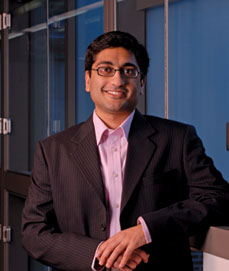
Milind Kulkarni

milind kulkarni\

Photo source: engineering.purdue.edu

Milind Kulkarni is an associate professor with the School of Electrical and Computer Engineering at Purdue University. His research focuses on Programming Languages and Compilers. He graduated with a B.S. in Computer Science and Computer Engineering from North Carolina State University.

Kiran Musunuru

kiran

Photo source: news.harvard.edu

Kiran Musunuru is an Assistant Professor of Stem Cell and Regenerative Biology at Harvard University, and Associate Physician at Brigham and Women’s Hospital. He has developed a ‘genome editing’ approach to permanently reduce cholesterol levels.

Sachin Patel

sachin patel

Photo source: medschool.vanderbilt.edu

Sachin Patel is an assistant professor of psychiatry, molecular physiology, and biophysics at Vanderbilt University Medical Centre. His research is to understand the intricate role of brain function in psychological disorders. He did his B.S. at the University of California.

Vikram Shyam

vik

Vikram Shyam works at NASA’s Glenn Research Centre. He is a member of the Turbo-Machinery and Heat Transfer Branch.  His research includes computational and experimental analysis of  biomimetics, energy harvesting, engine flow physics, flow visualisation, and water purification.

Shwetak Patel

ShwetakPatel

Photo source: Wikipedia

Shwetak N. Patel is a Professor in Computer Science and Engineering and Electrical Engineering at the University of Washington. His work includes developing new sensor systems and new interaction technologies. He is also a member of  World Economic Forum’s Global Shapers Community – a group of high achievers.

Rahul Mangharam

mangha

Photo source: seas.upenn.edu

Rahul Mangharam is an Associate Professor in the Department of Electrical and Systems Engineering at the University of Pennsylvania. His interests are in real-time scheduling algorithms for networked embedded systems. He received his Ph.D. in Electrical & Computer Engineering from Carnegie Mellon University.

Source……Meryl Garcia in http://www.the betterindia.com

Natarajan

India-born judge Srikanth Srinivasan favourite for elevation as Judge Supreme Court USA…

In this September 27, 2013 photo, Sri Srinivasan takes oath as a judge of the United States Court of Appeals for the District of Columbia Circuit.

PTI

In this September 27, 2013 photo, Sri Srinivasan takes oath as a judge of the United States Court of Appeals for the District of Columbia Circuit.


U.S. Deputy Solicitor General Sri Srinivasan is pictured in this undated file photo courtesy of the United States Department of Justice. Srinivasan is among President Barack Obama’s likely options as he looks for a nominee to the U.S. Supreme Court to replace Justice Antonin Scalia, who died on Saturday.

U.S. Deputy Solicitor General Sri Srinivasan is pictured in this undated file photo courtesy of the United States Department of Justice. Srinivasan is among President Barack Obama’s likely options as he looks for a nominee to the U.S. Supreme Court to replace Justice Antonin Scalia, who died on Saturday.

He was Mr. Obama’s principal deputy solicitor general, most notably working on the successful fight against the Defence of Marriage Act.

Death of a serving judge of the U.S. Supreme Court has set off acrimonious exchanges between the Democrats and the Republicans on whether President Barack Obama should nominate a new judge in the last year of his presidency. Mr Obama has declared that he would nominate a replacement for Antonin Scalia who died on Saturday at 79, ending a controversial tenure through which he steered the court towards right with a series of pronouncements.

India-born Srikanth Srinivasan whose family came to the U.S from a village in Tirunelveli in Tamil Nadu figures as the most probable choice to succeed Scalia, according to media reports. Forty-nine year old Srinivasan is currently U.S. Circuit Judge of the U.S. Court of Appeals for the District of Columbia, which served as a stepping-stone for at least three judges of the SC. Scalia too was in the Court of Appeals for DC before President Ronald Reagan nominated him to the Supreme Court.

Judge Srinivasan’s appointment was confirmed by the Senate unanimously in 2013, a rare event given the Republican majority in the chamber. His bipartisan acceptability is among the reasons cited by a lot of U.S. commentators who believe President Obama could pick him for the post. Judge Srinivasan graduated from Stanford University in 1989 and Stanford Law School and Stanford Graduate School of Business in 1995. From 2011 to until his judicial appointment, Judge Srinivasan served as the Principal Deputy Solicitor General of the United States. He has also taught at Harvard Law School.

U.S. Supreme Court has eight judges other than the chief justice and on several sensitive issues the judges have split 5-4, with conservative views maintaining a lead of one vote. For instance, the Supreme Court, through a 5-4 vote settled in 2010 a judgment that allowed unlimited spending by corporations in election campaigns. Campaign financing is a hot topic of debate in the current election season. With the passing of Scalia, the U.S. Supreme Court is evenly split and the stakes are high for both the conservative and progressive camps, in selecting the next judge. Judges of the Supreme Court are appointed for their lifetime. The President nominates the judges and the Senate must confirm them.

Two of the remaining eight judges are in their late seventies and one is 82. The fact that the next President may likely nominate several Supreme Court judges has been a recurring talking point on both sides of the American political divide. The sudden death of Scalia allows Mr. Obama the opportunity to nominate one more before his term ends. He has nominated two already.

“I plan to fulfill my Constitutional responsibilities to nominate a successor (to Scalia) in due time….There will be plenty of time for me to do so and for the Senate to fulfill its responsibility to give that person a fair hearing and a timely vote,” Mr. Obama said.

But the Republican presidential candidates and Senate Majority Leader Mitch McConnell declared that they would not cooperate with the President. “The American people should have a voice in the selection of their next Supreme Court Justice. Therefore, this vacancy should not be filled until we have a new President,” Mr. McConnell said. Senator Ted Cruz said during the Republican presidential debate on Saturday that the President should not be allowed to nominate a liberal to the Supreme Court. “The Senate should not abdicate its constitutional responsibilities for partisan political reasons,” said Democratic presidential hopeful Hillary Clinton.

Pointing out that the Supreme Court has before it cases affecting women’s health, immigration, workers’ rights, and other important issues, Neera Tanden, president of the Centre for American Progress, said the President and the Senate must move forward without delay, “to ensure a full court makes these critical decisions.” “Seventeen Supreme Court justices have been confirmed during presidential election years,” she said.

Keywords: Indian-AmericanSri SrinivasanBarack Obama“Supreme Court nominee in waiting”Justice Antonin ScaliaU.S. Supreme Court

Source……..Varghese K.George in http://www.the hindu.com

natarajan

The Stopping of Niagara Falls in 1969…!!!

Endeavor to change the course of history, has always been a primary motive of human civilization, through several centuries. It has been observed throughout history, that several times people have tried to undertake a feat which brings them in direct face-off with nature. May it be the intent to master the air by inventing airplanes, building mega-structures such as pyramids, or even stopping the flow of one of the world’s largest water resources, “The Niagara Falls”.

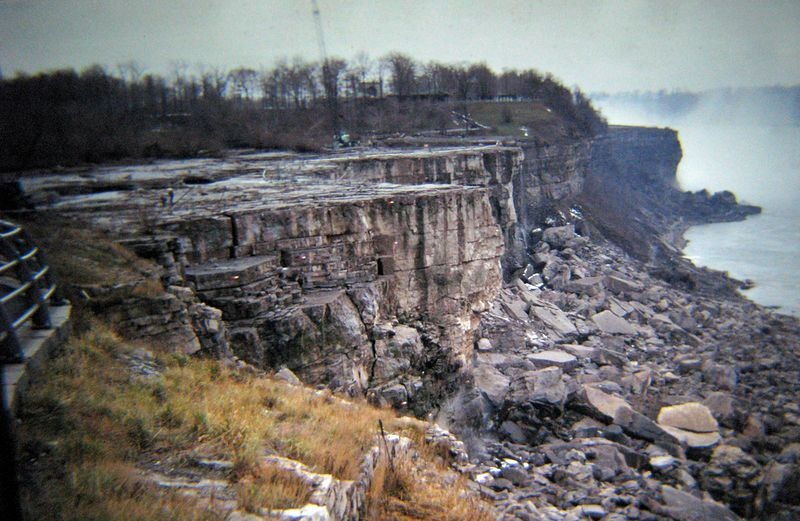
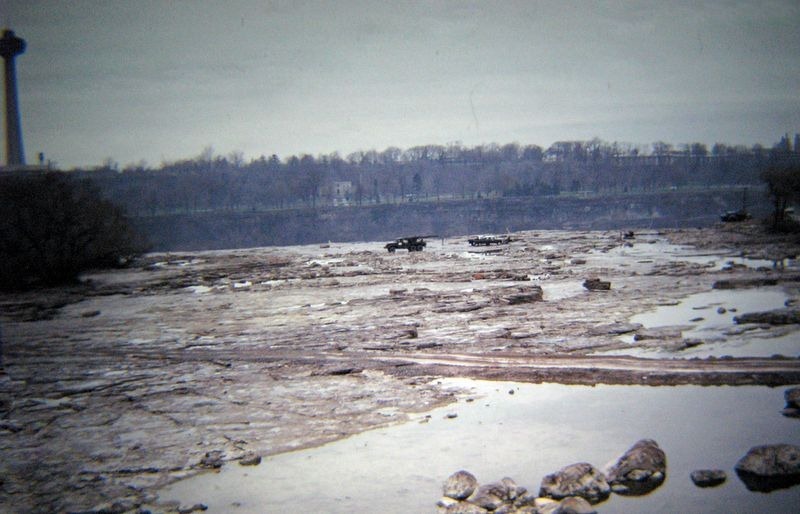
Niagara Falls consists of Horseshoe Falls and the American Falls. Due to several years of rocks falling in, between the year 1931 and 1954, the American Falls faced erosion, which if not prevented would have resulted in the permanent extinction of the American Falls. With resulting public outcry and protests to save the American Falls, the United States Army Corps of Engineers (USACE) – Buffalo district was encumbered with the immense responsibility of dewatering the American Falls for repairs. Taking up this historic challenge, a cofferdam was constructed, that took 3 days after working in two 11-hour shifts, resulting in cutting off of the flow of the Falls from 60,000 gallons per second to one-fourth of its capacity of 15,000 gallons per second.

niagara-falls-turned-off-1969-5

Photo credit: Russ Glasson/Flickr

This gigantic effort, comprising 1,264 truck loads, carrying 27,800 tons of sand and earth, was carried out to fill the cofferdam. Another minor discovery, which emerged from the De-watering Project, was that of a dead-body of a woman, which would never have been possible if the American Falls had been in full-flow. The woman was wearing a gold band, with the tragic inscription ‘forget me not’ on the inside.

Rochester Shale, a type of rock, which started crumbling due to the de-watering project, was a major concern for the geologists who wanted to carry out tests. Pipes totaling 800 feet of length and approximately six inch diameter were laid to moisten the shale.

The motive behind the endeavor to pull off such a huge feat was to conduct tests to prevent further erosion and test the structural integrity of the American Falls. Having planned through all the tests, and having implemented their staggering efforts, USACE estimated that the work will be completed by 1972. A battery of tests consisting of chemical analysis of the rocks, microscopic inspections, and several other tests were conducted accumulating large amounts of engineering, geological, and other data.

After an effort of more than 5 years, the International Joint Commission in 1975 concluded that 385,000 tons of Talus had accumulated at the base of American Falls, and had resulted in reduction of waterfall from 100 feet to 45 feet, while the depth of the Talus ranged from 25 feet to 50 feet.

As per the consensus taken from the public, there was to be no noticeable change in the appearance of American falls. But, it was accepted that there would always be some risk involved in the viewing of falls owing to continued erosion around the Falls.

The important lesson that the effort taught the engineers, and which is also a lesson for all humanity, is that everything has a life span and nothing escapes mortality. May it be flesh and blood humans, or even a stupendous spectacle for humanity such as the Niagara Falls. As is well said, that change is inevitable, and so is the mere existence of everything. It is an important question to be asked that whether something is too big to fall such as the American Falls, or something is too small to rise, like the Talus which over the years caused near extinction of American falls. The dewatering of Niagara Falls in 1969 is abject lesson in the Power of Human effort as compared to the might of Powerful Nature.

niagara-falls-turned-off-1969-1

Photo credit: Russ Glasson/Flickr

niagara-falls-turned-off-1969-6

Photo credit: Russ Glasson/Flickr

niagara-falls-turned-off-1969-7

Photo credit: unknown

niagara-falls-turned-off-1969-8

niagara-falls-turned-off-1969-2

Photo credit: Russ Glasson/Flickr

niagara-falls-turned-off-1969-4

Photo credit: Russ Glasson/Flickr

Source………www.amusingplanet.com

Natarajan

Zika Virus – All You Need to Know…

The ongoing Zika virus outbreak has created fear and uncertainty throughout the world because no-one knows how to contain it or cure it as yet. With that being said, I figured that the best way to protect myself from infection was to inform myself. Here are the five W’s of the Zika virus, and how to protect yourself from contracting it:

Who discovered the Zika virus?

Image Source

Zika was first discovered by scientists in 1947, when a rhesus monkey (pictured) living in Uganda’s Zika forest developed an unknown febrile illness. They were able to isolate a new transmissible agent from the sick monkey, and, in 1952, named it Zika after the forest in which it was discovered.

The first recording of human infection was also made in 1954 after a serological (the study of bodily fluids) survey was conducted on people in Uganda and neighboring Nigeria. Some 50 out of 84 people tested were found to have developed antibodies.

Another study conducted in India around the same time showed that a significant number of the people tested had developed Zika-specific antibodies, indicating the likelihood that the virus has long been present in various human populations.

What is the Zika virus?

The Zika virus is a virus that’s spread by daytime-active mosquitoes that are part of the Aedes genus. They originated in tropical and subtropical zones, however they have now spread around the world. The only place they cannot be found is in Antarctica. Human activity has been in part to blame for the spread of Aedes mosquitoes. An example of this can be seen in how the Asian tiger mosquito made it to the Americas thanks to the used tire trade.

Some 1 in 5 people that are infected with the Zika virus through a mosquito bite actually become ill, and the symptoms they exhibit include fevers, rashes, joint pains, conjunctivitis (redness in the eye), muscle pain and headaches.

The incubation period for the virus is unknown, however it is believed to range from a few days to one week. Its symptoms usually last for the same period. People do not usually get sick enough to go to hospital if infected with the Zika virus, and it is very rare to hear of a death from the virus too.

Zika is related to dengue and yellow fevers, as well as the Japanese encephalitis (inflammation of the brain) and West Nile viruses. It is diagnosed with a specialized blood test, however there is no known cure or vaccine. There have been some media reports of the virus being transmitted sexually, however more evidence is needed to confirm whether this is a cause for widespread concern. Even if it is, the likelihood of this taking place remains very low.

Where did the current Zika virus outbreak start?

While Zika spread through equatorial Africa and Asia between 1951 and 1981, a bona-fide Zika outbreak wasn’t reported until 2007. That took place on the Pacific island of Yap, and thus remained relatively contained.

The current Zika outbreak first began last year in Brazil. Researchers suggested that the virus arrived in the country from French Polynesia sometime during 2014. In May 2015, a dengue-like disease outbreak took hold in northern, northeastern and southeastern Brazil. Many patients were exhibiting flu-like symptoms, followed by rashes and joint pain.

The outbreak reached Colombia by October 2015, before reaching other South American countries, as well as the Caribbean in November and December. At the time of writing, there were also confirmed cases in Central America, the United States, Australia and Europe. In fact, the World Health Organization has said that it expects Zika to spread throughout the entire Americas in the coming weeks.

When should you be concerned about the Zika infection?

Zika is said to have the most severe effects on pregnant women and children, however anyone is vulnerable to infection. If you have visited one of the affected countries and are exhibiting any of the symptoms mentioned in this article, see a doctor as soon as possible. He or she may prescribe blood tests to conduct further investigations should there be suspicion of you having contracted the virus.


Why has Zika become an international health concern?


As aforementioned, the ongoing Zika outbreak commenced in Brazil in May 2015. The main cause for concern over the virus is the fact that there has been a huge spike in births of babies with microcephaly in the affected regions of that country. That is why the virus’ movement is being tracked and reported on all over the world.

Microcephaly is a condition where a baby’s head is much smaller than expected. It occurs because a baby’s brain has not developed properly during pregnancy, or because it stops growing after birth, resulting in a smaller head size. While it can be an isolated birth defect, it can also occur in combination with other major defects, such as developmental delay, intellectual disability and proneness to seizures.

In a nutshell, the World Health Organization is doing what it can to halt Zika’s progress in order to protect unborn children. Currently the biggest fear is that there will be an explosion of microcephaly cases around the world.

How to Protect Yourself From Contracting Zika


– Avoid traveling to countries where the virus has been confirmed.

– If you must, wear long-sleeved shirts and pants.

– Stay somewhere air-conditioned or use windows and door screens to keep any mosquitoes outside.

– Sleep under a mosquito bed net if possible.

– Use insect repellent.

– If you have a child, dress in clothing that covers the arms and legs and use mosquito netting to cover cribs or strollers.

– Treat your clothing with permethrin (a synthetic insecticide), or purchase permethrin-treated items.

–  Use protection if you intend to sleep with someone who has just returned from traveling in a Zika-affected region.

Source……….www.ba-bamail.com

Natarajan

So, Who is the Mom ….? !!!

A mother and her twin daughters have sent the internet into a tizzy and how!

On January 28, Kaylan Mahomes, a resident of Indianapolis, US, posted a selfie of her twin and her mom in a car. The caption read, “Mom, twin and me.”

However, the photograph left everyone scratching their heads as all three women share a youthful glow and look like sisters, rather than mom and daughters.

The internet simply couldn’t figure out of the three women in the photo, which one was the mom.

The photo since then has been notching up serious viewership with the current count being 19,000 retweets and 30,000 likes. Some Twitter users have also shared it along with the hashtag #blackdontcrack, an expression that refers to African-Americans whose smooth skin makes them look younger than their age.

But the big question remains: Which young-looking lady is the mom?

For those who can’t figure it out, this video (external link), might give you a clue.

So, go ahead, …….. who’s the mom?

Photograph: @kaylan_17/Twitter

Source……..www.rediff.com

Natarajan

The Gold Mines of Serra Pelada…….!!!

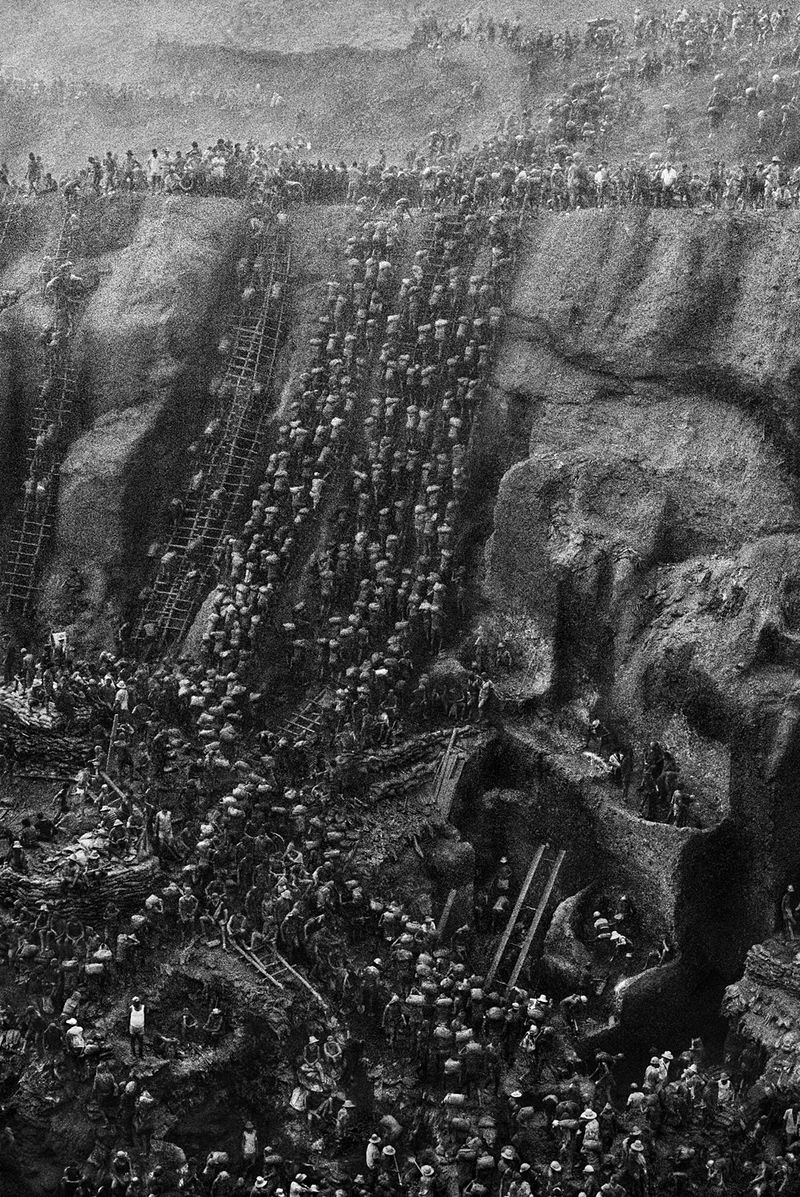
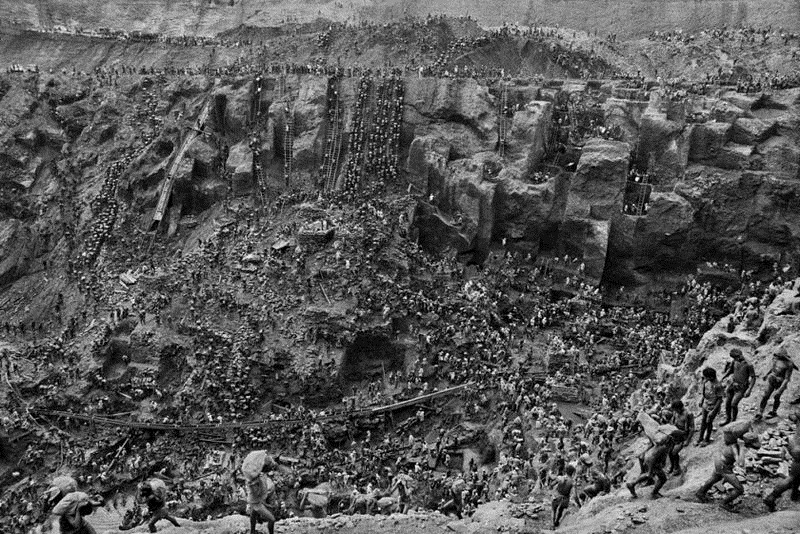
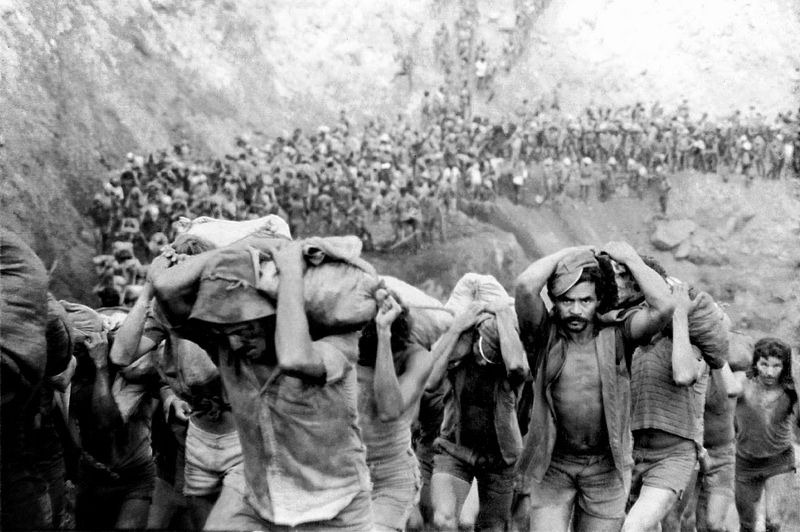
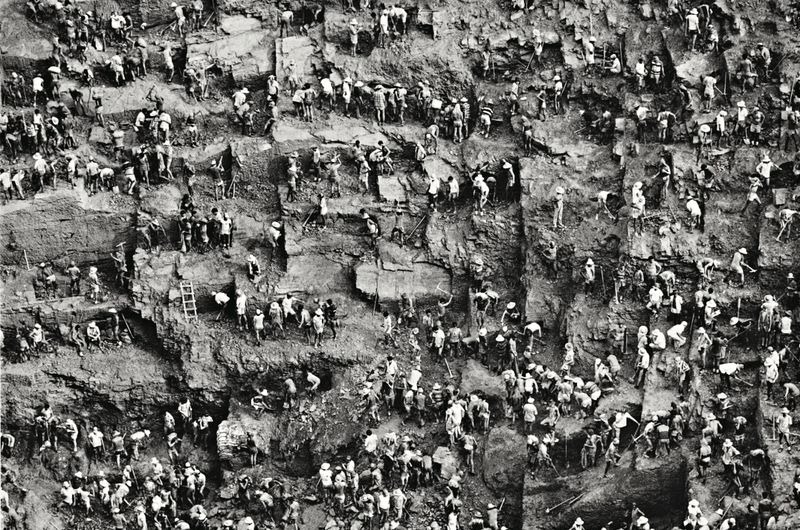
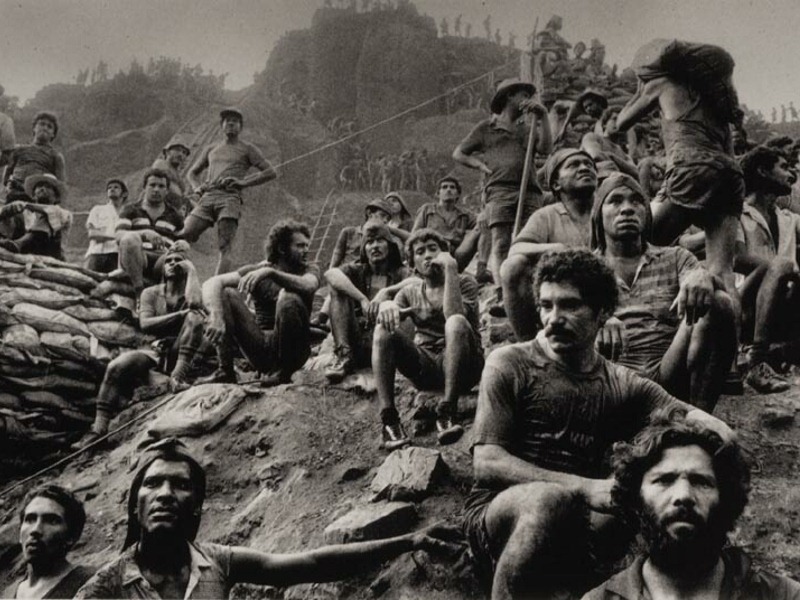
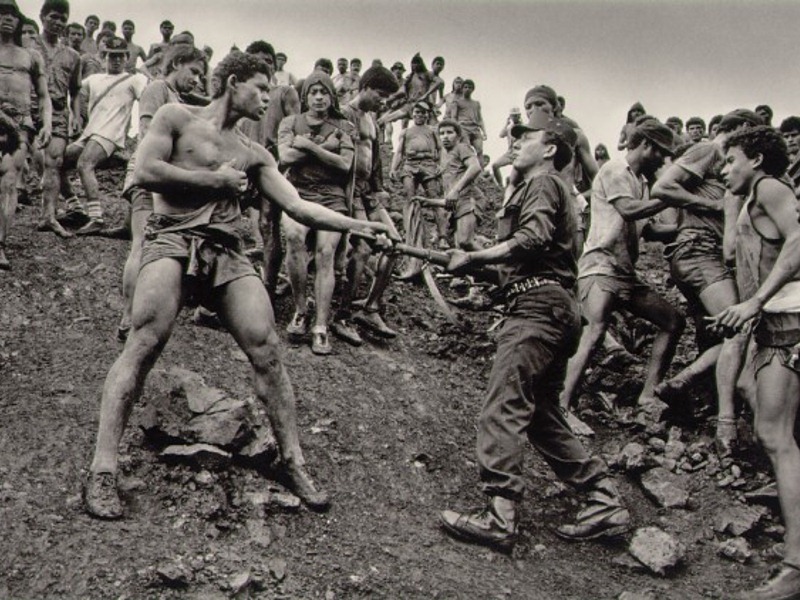
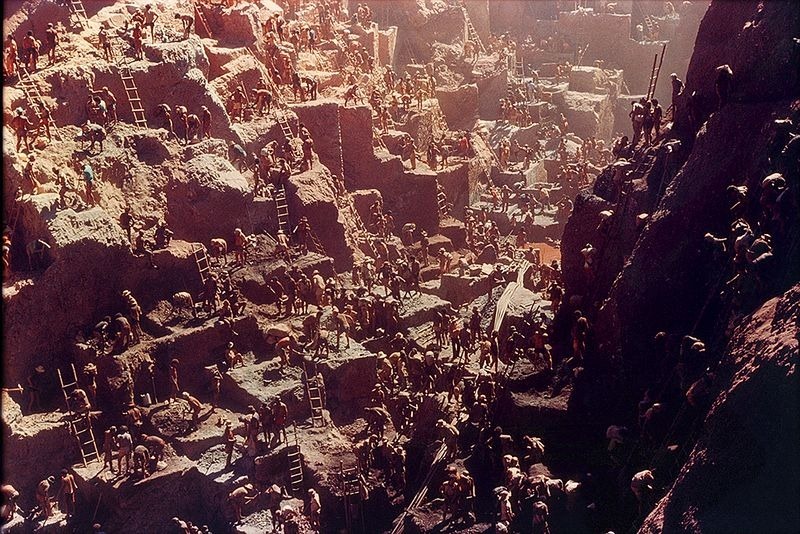
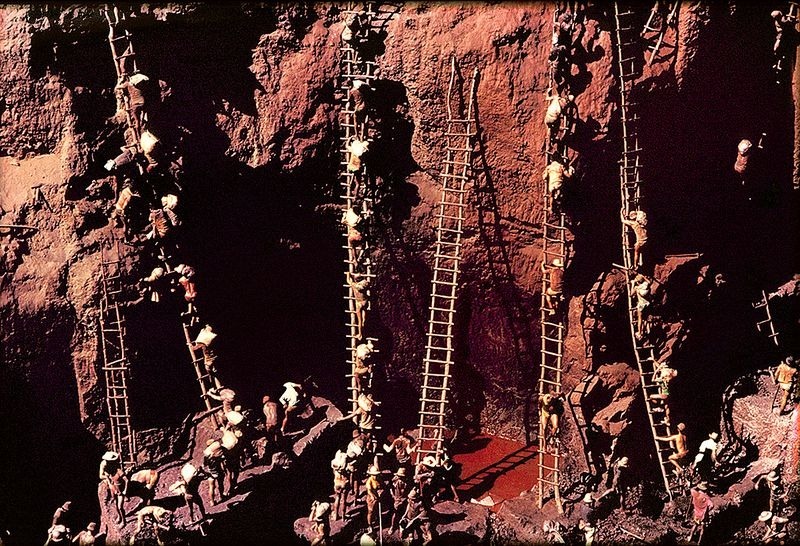
In the early 1980s, Brazilian photographer Sebastião Salgado travelled to the mines of Serra Pelada, some 430 kilometers south of the mouth of the Amazon River, where a notorious gold rush was in progress. A few years earlier, a child had found a 6-grams nugget of gold in the banks of a local river, triggering one of the biggest race for gold in modern history. Motivated by the dream of getting rich quickly, tens of thousands of miners descended into the site swarming like ants in the vast open-air pit they had carved into the landscape. Salgado took some of the most haunting pictures of the workers there, highlighting the hazardous conditions in which they worked and the sheer madness and chaos of the operation.

serra-pelada-1

Photo credit: Sebastião Salgado

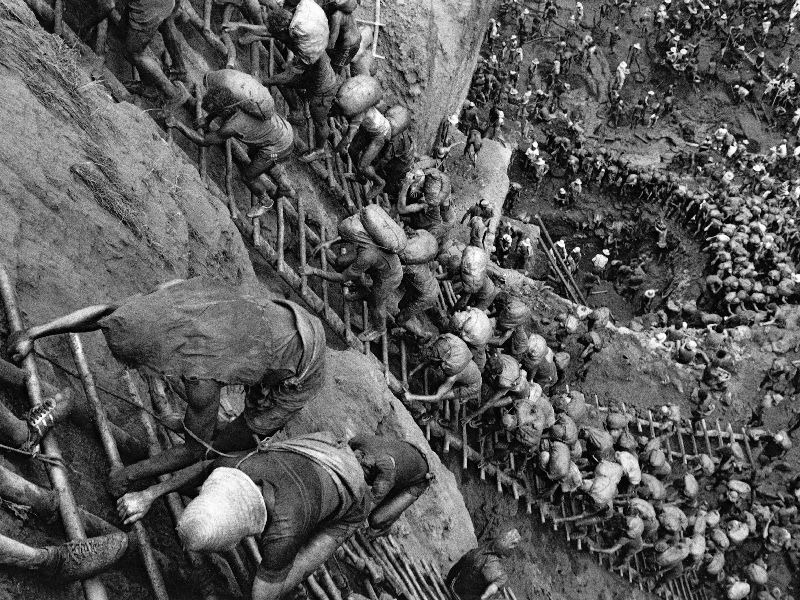
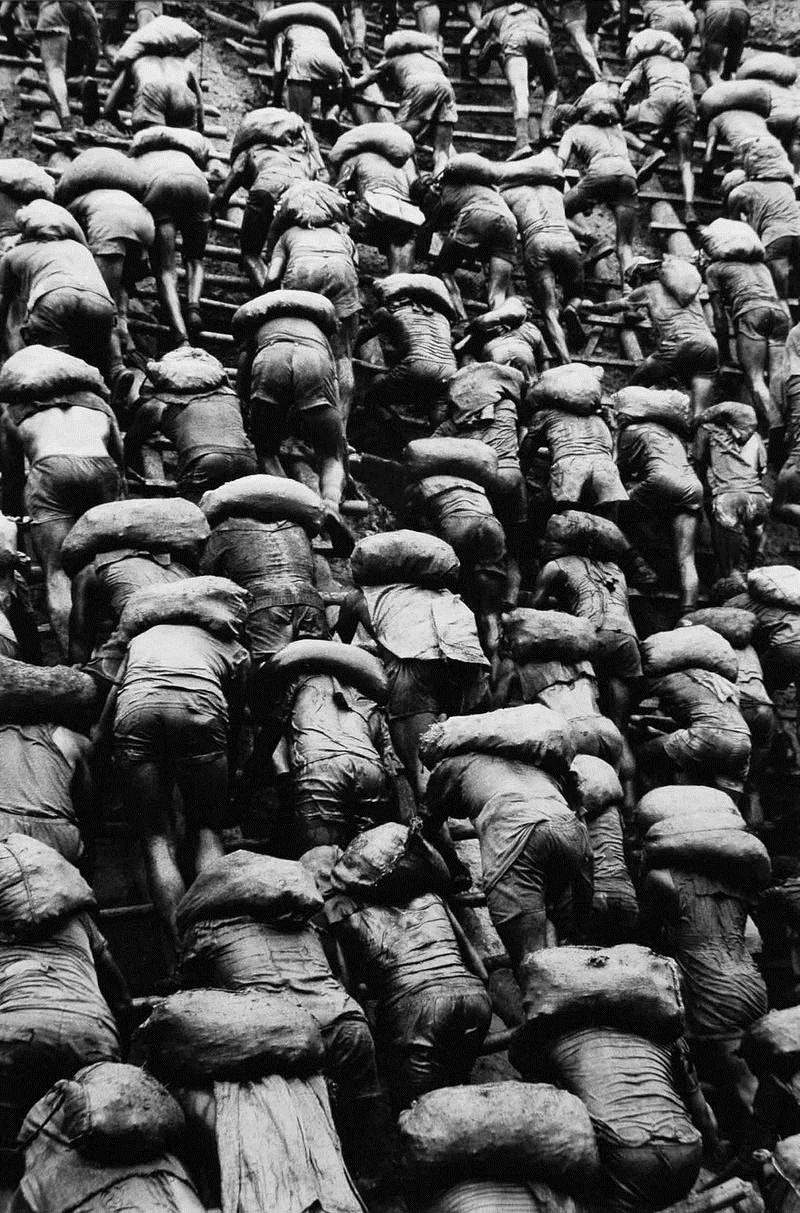
One of the most vertigo-inducing photograph of the series showed hundreds of workers swarming up tall ladders, scaling the cliff-like sides of a hellish hole. Later, when talking about the captivating images, Sebastião Salgado had said: “Every hair on my body stood on edge. The Pyramids, the history of mankind unfolded. I had travelled to the dawn of time.”

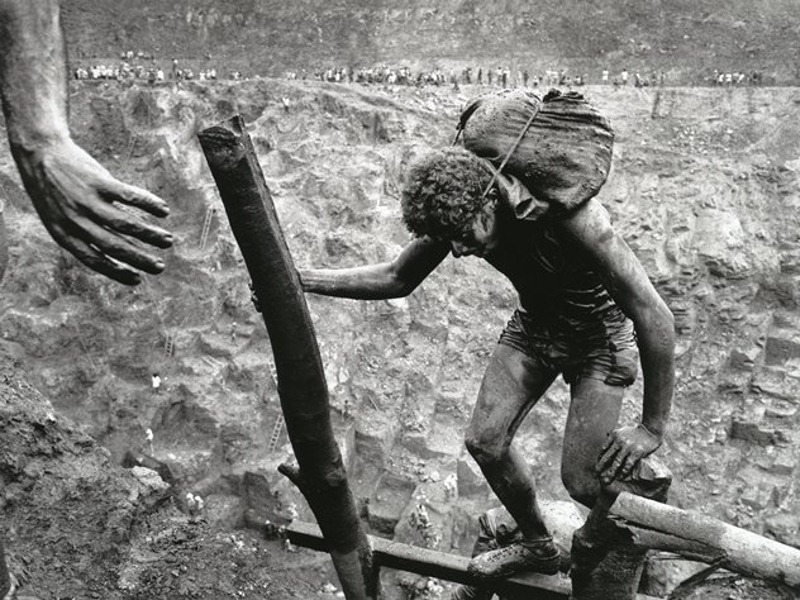
During its peak, the Serra Pelada mine employed some 100,000 diggers or garimpeiros in appalling conditions, where violence, death and prostitution was rampant. The diggers scratched through the soil at the bottom of the open pit, filled it into sacks each weighing between 30 to 60 kilograms, and then carried the heavy sacks up some 400 meters of wood and rope ladders to the top of the mine, where it is sifted for gold. On average, workers were paid 20 cents for digging and carrying each sack, with a bonus if gold was discovered. Thousands of underage girls sold their bodies for a few gold flakes while around 60–80 unsolved murders occurred in the nearby town, where the workers lived, every month.

Three months after the gold’s discovery, the Brazilian military took over operations to prevent exploitation of the workers and conflict between miners and owners. The government agreed to buy all the gold the garimpeiros found for 75 percent of the London Metal Exchange price. Officially just under 45 tons of gold was identified, but it is estimated that as much as 90 percent of all the gold found at Serra Pelada was smuggled away.

Mining had to be abandoned when the pit became flooded preventing further exploration. Geological surveys estimate that there could still be 20 to 50 tons of gold buried under the muddy lake, which the pit has now become.

In 2012, after remaining largely untouched for the last 20 years, a Brazilian cooperative company was granted an exploration license for the property in a bid to develop Serra Pelada.

serra-pelada-11

Photo credit: Sebastião Salgado

serra-pelada-12

Photo credit: Sebastião Salgado

sebastiao-salgado-serra-pelada-6

Photo credit: Sebastião Salgado

sebastiao-salgado-serra-pelada-8

Photo credit: Sebastião Salgado

serra-pelada-14

Photo credit: Sebastião Salgado

sebastiao-salgado-serra-pelada-4

Photo credit: Sebastião Salgado

sebastiao-salgado-serra-pelada-5

Photo credit: Sebastião Salgado

serra-pelada-9

Photo credit: Sebastião Salgado

serra-pelada-2

Photo credit: Rudi Böhm

serra-pelada-3

Photo credit: Rudi Böhm

Sources: Aljazeera / www.beetlesandhuxley.com / Buried in Mud, Digging for Gold / Wikipedia

Source………www.amusingplanet.com

Natarajan

Hyderabad Lab Claims It Has Made World’s First Zika Virus Vaccine…

Bharat Biotech, a Hyderabad based vaccines and bio-therapeutic manufacturer, claims it has made a breakthrough in developing the world’s first vaccine against the dreaded mosquito-borne Zika virus.

The World Health Organization recently announced that Zika, which causes serious birth defects in children, is now present in 23 countries. Brazil has the maximum number of cases (3,530) and the United States too announced its first case yesterday.

There is concern that the virus could soon spread to Asia and Africa as well. India too is not as safe as hoped, although the virus was last seen here over 60 years ago.

1

Pic Source


The virus causes only a mild illness in most people. However, in pregnant women it is linked to abnormally small heads in their babies, a birth defect called microcephaly.

Bharat Biotech International Limited in Hyderabad told NDTV that they have patented the vaccine.

“On Zika, we are probably the first vaccine company in the world to file a vaccine candidate patent about nine months ago,” said Dr Krishna Ella, Chairman and Managing Director, Bharat Biotech Ltd.

The company used a live Zika virus, imported officially, to develop not one but two candidate vaccines.

Dr. Ella says the company has sought help from the Indian Council of Medical Research (ICMR) to get this vaccine out to the world as soon as possible.

“We have just been informed about the Zika vaccine candidate that Bharat Biotech has. We will examine it from the scientific point of view and see the feasibility of taking it forward. It is a good example of a Make in India product,” said Dr. Soumya Swaminathan, pediatrician and Director General, ICMR.

Dr. Ella is also seeking the help of Prime Minister Modi in fast tracking the development and delivery of the vaccine to those parts of the world where it is needed most.

The company says it can make one million doses of the vaccine in four months.

Source…….Nishi Malhotra in http://www.the betterindia.com

Natarajan

Image of the Day….” View from space…”

View from space: Mississippi River flooding

Two satellite images show the contrast between the flooded Mississippi River this month and the same area last year. Check out the difference!

View larger. | January 11, 2016. Image credit: NASA

View larger. | January 11, 2016. Image credit: NASA

In early January 2016, communities along the southern reaches of the Mississippi River faced severe flooding from rains that fell weeks earlier and well to the north. These two NASA satellite images show the Mississippi River as it runs through southern Mississippi and Louisiana. The above image was acquired on January 11, 2016. The image below shows the river at a normal level last January (January 24, 2015.)

View larger. | January 24, 2015. Image credit: NASa

View larger. | January 24, 2015. Image credit: NASa

Heavy rains in December 2015 drenched parts of Missouri and Illinois, and the pulse of fresh water has finally reached Louisiana and Mississippi. On January 11, the U.S. Army Corps of Engineers opened the Bonnet Carré Spillway near New Orleans in preparation for the southward-moving pulse of flood water.

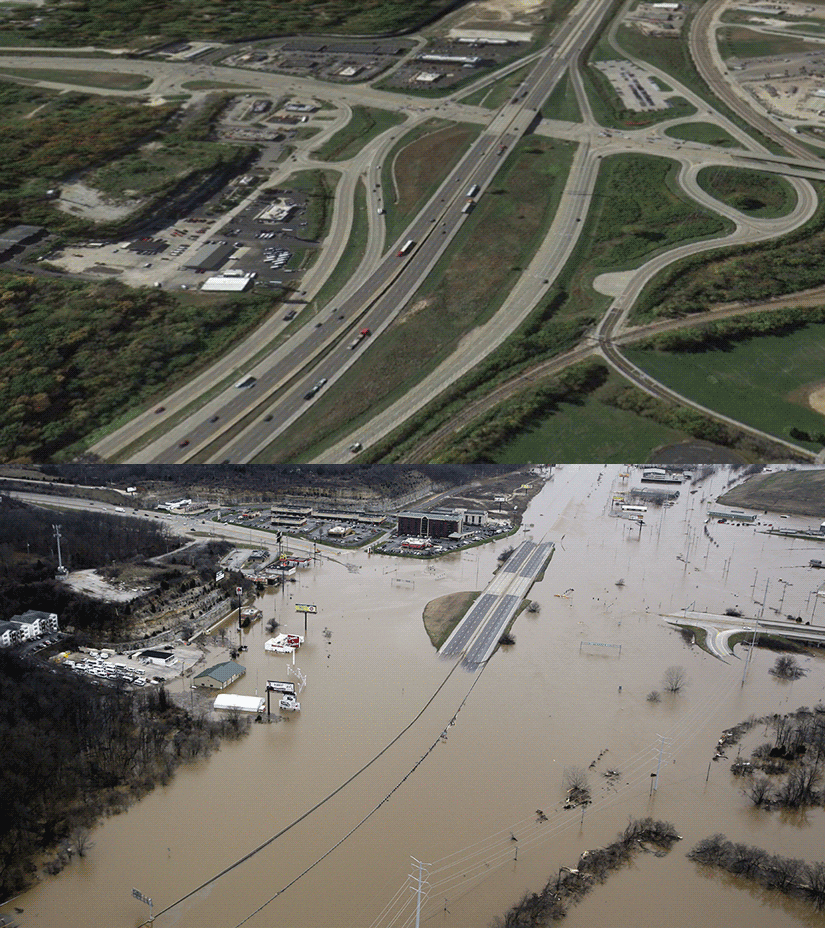
Substantial flooding is unusual on the Mississippi River in winter. As reported by Weather Underground, this event was only the second time that a winter flood has made the top-40 list of flood crests at St. Louis in more than 200 years of records. (The other flood occurred in December 1982 during a major El Niño.)

Before/after images of Interstate 44 flooded in Valley Park, Missouri.  Credit: AP Photo/Jeff Roberson and Google Earth

According to John Kimball, a hydrology, ecology, and remote sensing expert at the University of Montana, the soil within the upper Missouri basin remained largely frozen. There was no rapid thaw or snowmelt that helped raise the river’s level. But elsewhere in the Mississippi Basin, precipitation that might typically fall as snow in December and January instead fell as rain. Kimball said:

There has been much higher than normal rainfall over the southern and central portion of the Mississippi basin this winter, attributed to the strong El Niño. This led to soil saturation and more rapid and abundant runoff than in a normal winter.

The saturated ground set the stage for the central and southern Mississippi basin to feel the effects of the approaching flood water.

Over the course of a few weeks, the excess water (with contributions from the Ohio and Missouri rivers) made its way south. When the top image was acquired on January 11, river gauge observations and forecasts for the Mississippi River in Natchez, Mississippi, showed that the river stood at about 16.5 meters (54 feet)—about 2 meters above flood stage—and still rising.

Farther south in Louisiana, the Bonnet Carré Spillway was opened for the 11th time in its history to reduce pressure on levees in southeast Louisiana. The spillway was erected in 1931 to control flooding in the Lower Mississippi Valley by diverting water to Lake Pontchartrain. According to Richard Kesel of Louisiana State University, the Morganza Spillway to the north had not been opened—indicative that flooding was not anticipated to be a huge problem.

Bottom line: Two satellite images show the contrast between the flooded Mississippi River in January, 2016 and the same area last year, when the river was at a normal level.

Source…….www.earthsky.org

Natarajan

Obama to Present National Medal of Science to Indian-American Scientist… …

Dr. Rakesh K. Jain, an Indian-American professor at Harvard Medical School, will receive the prestigious National Medal of Science from US President Barack Obama, for his remarkable contribution to the field of science. He is one of the 17 scientists, engineers, mathematicians, and innovators who will be awarded by President Obama during a ceremony at the White House on January 22.

The National Medal of Science is awarded every year to recognise individuals who have made outstanding contributions in the field of science, engineering, and mathematics. The award was created in 1959 and is administered for the White House by the National Science Foundation – a United States government agency.

Here are five things to know about Dr. Jain:

1. Dr. Rakesh K. Jain is an IIT-Kanpur alumnus. He received his bachelor’s degree in chemical engineering in 1972.

Later, he did his masters and PhD from the University of Delaware.

jain1

Source: cbe.buffalo.edu

2. Currently, he is the professor of Tumour Biology at Massachusetts General Hospital in the Harvard Medical School.

He has received more than 75 awards, from engineering and medical professional societies and institutions, for his work in the field of tumour biology.

3. Dr. Jain is considered to be a pioneer in the field of tumour micro-environment.

jain2

Source: brain.mgh.harvard.edu

He is working on developing new strategies to control the micro-environment of tumours and use them for early cancer detection, prevention, and treatment. He is recognised for his discoveries in tumour biology, drug delivery, bioengineering, and more. His research includes finding out about the barriers in the delivery of molecular and nano-medicines in tumours, and discovering new ways of overcoming these barriers. He is well known for proposing a new principle for treatment of malignant and non-malignant diseases characterised by abnormal vessels, and his research on improving the effects of chemotherapy and radiation treatment.

4. He is a member of all three branches of the US National Academies – the National Academy of Medicine, the National Academy of Engineering, and the National Academy of Sciences.

He is also a member of the American Academy of Arts and Sciences.

jain3

Source: Wikimedia

5. In 2014, he was chosen as one of the 50 Oncology Luminaries on the 50th anniversary of the American Society of Clinical Oncology.

In 2015, Jain received honorary doctorates from Duke University, Katholieke Universiteit Leuven, and IIT-Kanpur.

Source……..Tanaya Singh in http://www.the betterindia.com

Natarajan

These Look Like Normal Photos From Afar, But They’re Very Much Alive…!

When practical photography was born in 1839, the simple act of capturing basic portraits and images of everyday objects was a feat of epic and almost unfathomable proportions. That being said, it didn’t take very long for burgeoning photographers to start experimenting with form and function.

About 80 years after the craft’s inception, Arthur Mole and John Thomas decided to develop a series that was unlike anything that had ever been done before. By organizing groups of American soldiers into iconic images that pay homage to some of their Nation’s  most influential figures, the two achieved an effect that’s beyond impressive (even by today’s standards).


Thomas was in charge of organizing the troops into recognizable images, and Mole was tasked with climbing an 80-foot viewing tower and capturing the photos.

The Human U.S. Shield (1918) — 30,000 officers and men

Mole fittingly referred to the pictures in this series as "living photographs."

Living Portrait of Woodrow Wilson (1918) — 21,000 officers and men

Human Statue of Liberty (1918) — 18,000 officers

To see more pictures from this collection, check out the rest over on the Library of Congress website.

Source……..www.amusingplanet.com

Natarajan