The Terrifying Phenomenon of Spider Rain….

The Terrifying Phenomenon of Spider Rain

Worryingly described by entomologists and arachnologists as a “not uncommon” occurrence in certain parts of the globe, spider rain can see anywhere from a few thousand to several million spiders tumble from the sky in a given area, seemingly out of nowhere.

So what causes it? This is thanks to a rather interesting behaviour exhibited by spiders known as ballooning, which essentially involves an individual spider climbing to a high point and then firing strands of silk into the air, with the result being the spider being carried away by the wind, sometimes for many hundreds of miles.

Arachnologists are quick to point out that countless spiders are probably flying around over head at any particular time and that they usually land without much fanfare and go about their way. Sometimes, though, many thousands or millions of spiders will decide to balloon at the exact same time, either because they’re a single colony or because weather conditions force them to. In regards to the latter, on rare occasions certain weather patterns can see the millions of spiders floating through the air at any given time being thrown to Earth simultaneously at the same location.

Other known causes of spider rain are floods and wildfires, which can prompt spiders to flee en masse to escape what would otherwise be their own demise, concerningly illustrating that the age old “kill it with fire” way of getting rid of spiders isn’t fool-proof.

As an example of the former flood trigger phenomenon, in Pakistan following devastating floods throughout the country in 2010, millions of spiders noped out of there in a hurry via mass ballooning. While you’d expect the people of Pakistan to be unhappy about having to deal with both millions of spiders raining from the sky and floods, the spiders were seen as a good thing by most citizens because they ate all the mosquitoes.

On that note, in addition to ensuring the skies remain free of disease carrying insects, wandering clouds of spiders also provide ample food for birds and other creatures- a fact that combined with spiders often being amongst the first creatures to return to land devastated by flood and fire (via ballooning and landing back in the area), means that spider rain is generally seen as being an overall beneficial thing for nature via allowing these staples of the food chain to quickly and widely disperse themselves.

While you can observe individual spiders floating about in most regions of the Earth, if you’re wanting so see the specific phenomenon of spider rain, where millions of spiders fall from above en masse, your best bet is to live in certain regions of Australia (because, of course it’s Australia where this is most common). As New South Wales resident Keith Basterfield states, “They fly through the sky and then we see these falls of spiderwebs that look almost as if it’s snowing.” (You can see something of this effect here in a video shot in Texas.)

Luckily for arachnophobes, mass ballooning is a behaviour near exclusively observed in smaller species of spider or ones that were born very recently, as larger spiders are simply too heavy to be carried along by typical winds. As a result, if you’re currently imagining endless waves of tarantulas raining from the sky, you can rest assured that if you ever witness spider rain firsthand, at least you won’t be dealing with big spiders, just the little ones that can crawl around on you without you even noticing they’re there… This is also significant because most small spiders don’t posses the ability to penetrate human skin with their bites, even if they are otherwise highly venomous.

Thus, for the most part, spider rain is harmless (to humans). However, the phenomenon can potentially damage crops when millions of spiders all land in the same location, with their subsequent webs cutting the plants off from enough sunlight. (See a picture of this here.)

But I think the main point we want to drive home to arachnophobes is that some spiders can fly, and at any given time they may just fall from the sky on top of your head…

Source….www.today i found out .com

Natarajan

Inside Sealand, Perhaps The Smallest Country In The World….

From its origins to the present day, discover the strange story of Sealand, believed by some to be the smallest country in the world.


The Principality of Sealand, believed by some to be the smallest country in the world.

In the North Sea off the coast of Suffolk, England lies Sealand, which some people believe to be the smallest country in the world.

The story of Sealand began when former army major Paddy Roy Bates took his family to HM Fort Roughs, an abandoned fort seven miles offshore and roughly the size of a tennis court, on Christmas Eve in 1966. Bates was a radio pirate that is and he wanted to continue broadcasting his pirate radio signals without the interference of the British government.

At the time, the BBC controlled British radio and TV. Bates took issue with this, and the 46-year-old drew on his military experience to move his family away from the influence of British laws without moving too far away. Because it was actually in international waters, the sturdy steel and concrete platform of HM Fort Roughs fit the bill.

When it was built in 1943, during World War II, the platform was to defend shipping lanes against German incursions by sea and air. After the war, however, Britain had no use for the small fort and abandoned it.

This meant that Britain no longer had control over the abandoned structure. It also meant Bates could do as he pleased.

Rather than just use his newfound territory as a broadcast point, Bates got creative. He made the platform into his own country and there was nothing Britain could do about it.

On Sept. 2, 1967, Bates, along with his wife Joan and two teenage children, declared independence for their sovereign state of Sealand. Bates got rid of the other pirate broadcasters using his platform and dubbed his wife Princess Joan as a birthday present. Ironically, Bates never restarted his radio signals after this point. He was too busy running a country.

In 1968, the British Royal Navy destroyed three nearby platforms, all within sight of Sealand, in an attempt to prevent more pirates from taking hold. It was too late to stop Bates, however. Despite being arrested for firing warning shots at navy ships and facing a coup of armed mercenaries in 1978, the Principality of Sealand endured.

Britain extended its sea territory to 12 nautical miles in the early 1980s, which then placed Sealand in British territorial waters and not international waters. The British government then declared that the Principality of Sealand was not a country because it fell under the sovereign rights of Great Britain. The government further declared that Sealand could not be its own country because it did not have any physical land.

Nevertheless, Bates and his family continued to run Sealand as if it was an independent state, the self-proclaimed smallest country in the world.

Even though Britain has sovereign rights over the platform, the Bates family still claims Sealand as its own to this day. It’s as if both sides tolerate each other from a distance, so long as neither Britain or the Bates family interferes with each other’s operations.

For Sealand, those operations include bestowing titles of royalty for those who apply and pay the application fees (the government has to have a revenue stream, of course). You can even obtain citizenship and a passport. The self-proclaimed country also has its own currency, which depicts Princess Joan, as well as postage stamps and a national soccer team.

However, Sealand now also faces an uncertain future. Prince Roy died in 2012 and Princess Joan followed in 2016. That leaves their son, Prince Michael, and his two sons in charge of the island territory.

In addition to the royal family as well as friends and relatives who make up Sealand’s several dozen citizens, a rotating group of caretakers oversee the platform. Meanwhile, Sealand’s online presence is helping to expand the country’s virtual populace, but is it enough to sustain Sealand?

Prince Michael Bates hopes so.

He maintains that Sealand’s sovereignty is serious business. However, the prince manages the country’s affairs from the offices of his fishing business in Essex, England.

Based on the mainland, the country’s shop sells various goods (including T-shirts and jerseys of the national soccer team) as well as citizenship, royal titles, passports, and the like. Prince Michael has even said that he’s thinking of selling the platform. His family invested more than $1.4 million into their rusted island paradise, but he says he has grandchildren to think about.

Sealand was for sale in 2007 for $977 million, but there were no takers. Prince Michael says he would sell for the right price. The aging prince says the platform is bigger than it looks for anyone interested in owning their own sovereign territory. Living quarters are in the two concrete legs. You can swim, scuba dive and maintain tourism while owning your own little slice of heaven.

Just don’t expect anyone else to recognize your sovereign state. In 1994, the United Nations passed a resolution stating that sea-based platforms are not considered a nation.

But as the story of Sealand shows, you can still deem yourself a head of state, at least in your own imagination and for the right price.

Source….www.all that is interesting.com

natarajan

Which is the ‘Best Police Station’ in India? This Coimbatore Station Bagged the Award!

The New Year brings with it new beginnings and felicitations of various kinds – best movies of the year gone by, television series, best designers etc.

Now here is an award with a difference – Tamil Nadu’s RS Puram police station, in Coimbatore city, won the award for the ‘Best Police Station’ in the country in the category of SMART Police Stations, an initiative by the Ministry of Home Affairs.

SMART Police (S-Sensitive and Strict; M-Modern with mobility; A- Alert and Accountable; R- Reliable and Responsive; T- Trained and Techno-savvy) was a concept that was introduced by Prime Minister Modi at the 49th annual conference Directors General/Inspectors General held in Guwahati in November 2014.

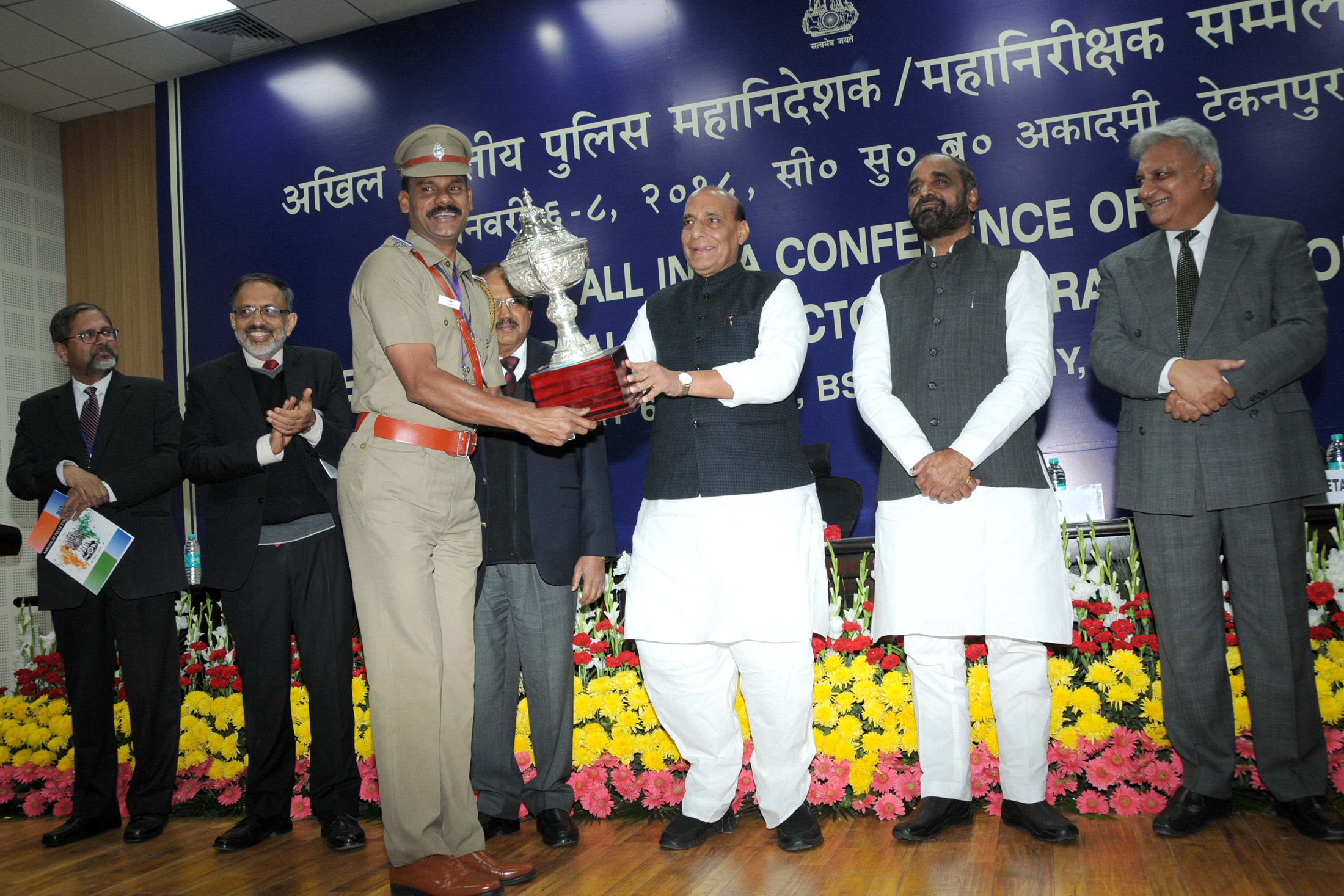
Station House Officer T Jothi, Inspector (law and order), received the award from Union Home Minister Rajnath Singh at the All India Conference of Director Generals/Inspector Generals of Police held at BSF Academy Tekanpur in Madhya Pradesh.

The Union Home Minister, Shri Rajnath Singh presenting the medals and trophies after inaugurating the three-day All-India Conference of Director Generals / Inspector Generals of Police, 2017, at the BSF Academy, in Tekanpur near Gwalior, Madhya Pradesh on January 06, 2018.
The Minister of State for Home Affairs, Shri Hansraj Gangaram Ahir, the National Security Advisor, Shri Ajit Doval the Union Home Secretary, Shri Rajiv Gauba and other Senior Officers are also seen.


This is yet another feather in the station’s cap, the RS Puram station has an exclusive room for visitors, a waiting hall, investigation room, a receptionist cabin, treated drinking water and a ramp for the disabled. The all-woman police (east) has set up a crèche for the kids accompanying petitioners.

Station House Officer Jothi attributed the station winning the award to the teamwork of Tamil Nadu police. “No single person was responsible for the award. It is a team from the top to the constable level,” he said. “The station has been chosen as the best in the nation based on 80 parameters including basic amenities, crime detection, property recovery, cleanliness and citizen-friendly,” he said, as per a report in DNA.

The Hindu reported, following instructions from the State police headquarters, the Coimbatore City Police sent a file containing the initiatives it had taken in the past for effective and friendly policing. Based on the proposal a Home Ministry team visited the city and interacted with people who fell under the police jurisdiction limits.

Some of the parameters considered for the assessment include the rate of crime detection, execution of warrants, recovery of properties, enforcement of local laws and special acts, preventive arrests and detention under Goondas Act.

Here are the other stations that made it to the top 10 list released by the Ministry:

1. R.S.Puram PS, Coimbatore
2. Panjagutta, Hyderabad
3. Gudamba, Lucknow
4. Dhupguri, Jalpaiguri
5. K4 PS, Anna Nagar, Chennai
6. Banbhoolpara, Nainital
7. Ghiror, Mainpuri
8. Rishikesh, Dehradun
9. Valapattanam, Kannur
10. Kirti Nagar, Delhi

Source….Vidya Raja in  http://www.thebetterindia.com

Natarajan

தலையாட்டி பொம்மையும், தஞ்சை பெரிய கோவிலும்!

தஞ்சாவூரில் தயாரிக்கப்படும் தலையாட்டி பொம்மைக்கும், தஞ்சை பெரிய கோவிலுக்கும் என்ன சம்பந்தம் இருக்க முடியும் என்று தானே நினைக்கிறீர்கள்…
இந்த சாதாரண தலையாட்டி பொம்மைக்குள் தான், மிகப் பெரிய தத்துவத்தையே ஒளித்து வைத்துள்ளனர், நம் முன்னோர்.
கொட்டாங்கச்சி எனப்படும் தேங்காய் சிரட்டையில் பாதியை எடுத்து, அதில், களி மண்ணை அடைத்து, தலையாட்டி பொம்மைகள் செய்யப்படுகிறது. அந்தப் பொம்மையை தரையில் வைத்து, எந்த பக்கம் சாய்த்தாலும், அது, ஆடி ஆடி கடைசியாக நேராக நின்று விடும்.
சமீபத்தில், தஞ்சை பெரிய கோவில் வளாகத்தில், தண்ணீர் பற்றாக்குறை காரணமாக, ‘போர்’ போடுவதற்காக, ஆழ்துளை கிணறு தோண்டியுள்ளனர். அப்போது, களிமண்ணோ, செம்மண்ணோ வரவில்லை; வேறு ஒரு வகை மணல் வெளிப்பட்டிருக்கிறது.
அது, காட்டாறுகளில் காணப்படக் கூடிய மணல். சாதாரண ஆற்று மணலுக்கும், காட்டாறு மணலுக்கும் வித்தியாசம் உண்டு. சாதாரண ஆற்று மணலை விட, காட்டாறுகளில் காணப்படும் மணலில், பாறைத் துகள்கள் அதிகம் காணப்படும். மேலும், சாதாரண மணலை காட்டிலும் கடினமானது. கோவிலை கட்டுவதற்கு முன், அந்த மணலை அடியில் நிரப்பியுள்ளனர்.
இத்தகவலை அறிந்த, தஞ்சை பெரிய கோவில் மீட்புக் குழுவினரின் முயற்சியால், போர் போடும் வேலை உடனடியாக தடுத்து நிறுத்தப்பட்டது.
ஏனென்றால், ஆயிரம் ஆண்டுகளாக இந்த பூமியில் ஏற்படும் அழுத்தங்களையும், நிலநடுக்கங்களையும் தாங்கி, நான்குபுறமும் அகழிகளால் சூழப்பட்டு, கம்பீரமாக காட்சியளிக்கும் இந்த உலக அதிசயத்தின் அஸ்திவாரமே அந்த மணல் தான்!
இவ்ளோ பெரிய கோவிலுக்கு, மணலை கொண்டு அஸ்திவாரம் அமைக்க, சோழ தேச பொறியாளர்கள் என்ன முட்டாள்களா!
கோவிலின் அதி அற்புத தத்துவமும், சோழர்களின் அறிவின் உச்சமும் அங்குதான் வெளிப்படுகிறது.
அகழிகளால் சூழப்பட்டுள்ள தீவு போன்ற அமைப்பில், காட்டாற்று மணலால் கோவிலுக்கு அஸ்திவாரம் அமைக்கப்பட்டுள்ளது. தலையாட்டி பொம்மையை சாய்த்தால், எப்படி கீழே உள்ள கனமான அடிப்பரப்பில் ஆடி ஆடி நேராக நின்று விடுகிறதோ, அதேபோல், பெரிய கோவிலும் எத்தகைய பூகம்பம் வந்து அசைய நேரிட்டாலும், அசைந்து, தானாகவே சம நிலைக்கு வந்து விடும்.
சோழ தேச பொறியாளர்களின் அறிவிற்கு, உலகில் வேறு எவரும் ஈடாகார் என்பதற்கு இது ஒன்றே சான்று!


Source….Pushpa in http://www.dinamalar.com dated 7th Jan 2018

Natarajan


வாரம் ஒரு கவிதை ….” வீணையின் நாதம் “


A Briefcase….Lost and Found ….!

The rigmarole involving a lost piece of luggage

I went to Kolkata with an upset tummy and returned with an upset husband. He had been very cheerful while we boarded the flight and the plane began to taxi. The air hostess started her routine, giving seat belt instructions and survival tips if the plane decided to take a dip into the ocean. My husband took a dip into his book when I asked him, “Where’s your briefcase?” I just remembered it wasn’t part of the hand luggage we had shoved into the overhead compartment.

He answered airily, “We checked it in,” and returned to his reading when what I said next made him forget his book for a long time. And that was some achievement. “We didn’t,” I persisted. “It was your carry-on baggage. Remember you left it unlocked because it would be with you?”

He turned ashen, clapped a hand to his mouth and jerked forward, straining his fastened seat belt and crashing back into his seat. “Oh no! I’ve left it behind! Where?” As he tried to figure that out, the plane accelerated and took off leaving his briefcase behind in Kolkata. “At the security check!” My husband exclaimed, looking aghast as he recalled his memory lapse.

He had forgotten to take it after the security check, having been pleased to collect his sling bag into which he had deposited his wallet, phone, pens and a notebook with a spiral spine, all guaranteed to beep if on his person. In fact, at the security check on our way to Kolkata, his pocket had behaved so much like an impromptu orchestra that on the return he had hit upon the idea of emptying his pockets into his shoulder bag before it was screened and, cock-a-hoop with its success, had completely forgotten his briefcase.

“What next?,” I asked. “No point informing the crew; no plane is going back for a briefcase unless it contained state secrets. And what’s in it?”

We racked our brains to recall the contents. Luckily my husband had emptied the case to accommodate the last minute shopping of the previous evening. So it didn’t have any important documents or cards. But it contained new silk saris, dress material, T shirts and a few knick knacks.

“So if we don’t recover it, we only lose these,” said my husband, looking relieved. “The saris!,” I cried in anguish.

During the flight we discussed the next course of action. I believed we would recover the case since my husband had chosen the best place in the airport to leave something behind – at the security check. Then I recalled that any abandoned piece of baggage is viewed with suspicion. “What if they immerse the case in water? Or something else?,” I was alarmed. “The saris!,” I cried out again. “They’ll be ruined.”

“Can you think only of saris?,” my husband snapped. The tension was getting to him. “One of them is your gift to me, that’s why,” I said and that mollified him.

We had more than five hours in Chennai before boarding the flight to Thiruvananthapuram. Earlier we had wondered how we would spend the time, but my husband’s ingenious briefcase plot took care of that. We explored the length and breadth of the airport putting in a few kilometres of brisk walking-cum hops, skips and jumps before learning what to do.

The airport manager, seeing my husband’s anxious face, reassured him, “Don’t look so worried, sir, you’ll get it back. Such things happen all the time.”

“‘Really?” Now my husband beamed, grateful he didn’t hold exclusive copyright for losing baggage.

The Lost and Found Department at Kolkata airport whom we called were close-lipped about the whereabouts of the briefcase but gave instructions on the procedure to follow in Thiruvananthapuram.

Once home, we revived our letter-writing skills what with the never-ending letters and e-mails we had to send to various addresses, describing the briefcase and its contents, all with scanned copies of the boarding pass and ID proof attached.

We also had endless calls to make and everyone wanted details. I was most relieved we had decent items inside the case and lauded my husband’s uncanny foresight that had made him remove his innerwear from it.

Lost and found

After many twists and turns in the plot in the next few days that would have done Jeffrey Archer proud, the briefcase, decorated all over with the Lost Property number, returned home. Bringing it in, my husband declared he wouldn’t leave the corporation limits again. Ignoring his loaded statement, I asked anxiously, “Are the saris intact?”

A fortnightly column by the city-based writer, academic and author of the Butterfingers series. She can be contacted at khyrubutter@yahoo.com

Source….Khyrunnisa . A

http://www.thehindu.com

Natarajan

Akademgorodok: Siberia’s Silicon Valley….

Tucked away in a remote forest of birch and pine in the heart of Siberia, 3,000 km away from Moscow, at a place where winters are six months long with temperatures dropping to minus 40 degree Celsius and summers are swaddled with mosquitos, is a city built for scientists and researchers. This frozen wasteland is more suited for polar bears than scientific endeavors, but Nikita Khrushchev felt the distance from Moscow was necessary so that the country’s sharpest scientific minds could work together on fundamental research away from the prying eyes of bureaucracy. This is Akademgorodok, or “Academic Town”—the Soviet Union’s answer to America’s Silicon Valley.                                                   

The Academpark Technopark at Akademgorodok. Photo credit: gelio.livejournal.com

Akademgorodok is situated in the middle of a forest 30 km south of Novosibirsk city. It is one of several Akademgorodoks built between the late 1950s and mid-1970s in Siberia; the Akademgorodok outside Novosibirsk is the most successful one. Located within Akademgorodok is Novosibirsk State University, 35 research institutes, a medical academy, apartment buildings and houses, and a variety of community amenities including stores, hotels, hospitals, restaurants and cafes, cinemas, clubs and libraries. Less than two kilometer away is an artificial beach created by dumping hundreds of tons of sand along the edge of the Ob reservoir.

At its peak, Akademgorodok was home to 65,000 scientists and their families. It was a privilege to live there, and many scholars in the 60s escaped to the frozen hinterland as a sort of voluntary exile in order to be far from the totalitarian rule of the Soviet capital, and lured by the promise of new housing and professional advancement.

Residents enjoyed great levels of freedom and indulged in activities unheard of in any other corner of the Soviet empire. They discussed the foundations of Marxist theory and about economic reforms, read books, listen to poets and singers not approved by the regime. Scientific research in areas dismissed as dangerous pseudoscience in Moscow, such as cybernetics and genetics, flourished.


Living standards in Akademgorodok were also higher than in the rest of the country. Shops were stocked with subsidized foodstuffs not easily obtainable elsewhere, and apartments were well-furnished. Those who obtained a doctorate were given a special food delivery service, which provided them a wider selection of groceries than the general population could avail. Members of the Academy of Sciences had access to even higher level of services and were allotted single-family residences rather than apartments.

But the utopian vision of no bureaucratic interference proved impossible in the Soviet Union. Freedoms got severely curtailed in the 1970s during the rule of Leonid Brezhnev. Then when the Soviet Union collapsed in the 1990s, many of the former communist nation’s best minds fled to the west. But economic reforms brought about by the end of communism saw the beginning of private investment and venture funding in Akademgorodok. From USD 10 million in 1997, this rose to USD 1 billion by 2015. There are some 300 companies operating at Akademgorodok today dabbling on everything from nano-ceramics to motion graphics for the American entertainment industry. Its current population stands at over 100,000.

While the figures pale in comparison to that of other countries and even elsewhere in Russia—Skolkovo, an emerging tech hub on the outskirts of Moscow, for example, has over 1,100 startups generating over USD 1 billion in revenue alone at the end of 2014—Akademgorodok will remain as Russia’s original Silicon Valley.

Photo credit: gelio.livejournal.com

Source….Kaushik in http://www.amusingplanet.com

Natarajan