One of the Biggest Mysteries Yet to be Solved…

The real identity of Benjamin Kyle

Who do you think you are?

Who do you think you are? Source: Supplied

In 2004, A man that would soon adopt the name Benjaman Kyle woke up outside of a Burger King in Georgia without any clothes, any ID, or any memories.

He was diagnosed with retrograde amnesia, unable to remember who he was, and with no identification, unable to find out. Now, if this was like any other story about amnesia, it would have probably resolved itself soon afterwards. But the trouble was, authorities couldn’t identify him either.

Local and state police failed to discover him in any known records despite an exhaustive search. And then in 2007, the FBI became involved, but were also unable to identify him, making him the only US citizen in history listed as missing despite his whereabouts being known.

One particularly unfortunate side effect of not having your own identity is that, without a social security number, he is unable to obtain full-time employment, and without memory of any past skills or disciplines, the problem is only amplified.

After a student documentary was created about Benjaman, news media picked up the story, which attracted the attention of local business owners.

One of the owners OFFERED him a job washing dishes, a job which he is still working today. This enabled him to move out of the woods where he was sleeping, and into an air-conditioned shed, where he now stays. But his true identity and past remain a mystery to this day.


Source::::: news.com.au

Natarajan

Message For the Day…”Direct Your Desire Towards God…”

Desire (kama) must be got rid of by Tyaga (sacrifice) and Yoga (communion) to secure God (Rama). Desire discolours the intelligence, perverts judgment, and sharpens the appetites of the senses. It lends a false lure to the objective world. When desire is directed to God, the self-luminous intelligence within shines in its pristine splendour, and reveals God within and without, and you attain Self-Realisation (Atma Sakshatkara). I bless all of you to succeed in your Sadhana (spiritual efforts)! If you have not been practicing sincerely until now, take up the simple practice of remembrance of the Divine (Namasmarana), along with reverence towards parents, teachers and elders, and service to the poor and needy. See everyone as your lshtadhevata (Beloved Lord). That will fill your heart with Love and give you stability of mind and peace.

Sathya Sai Baba

Joke of the Day…” Thank God …”

Mr. Marlow was strolling through the country when he saw a stable with the most beautiful horse he ever laid eyes on. It was seventeen hands high and white, with rippling muscles and a fine, flowing mane. Mr. Marlow struck a deal to buy it from the owner who did, however, pass on one key piece of information.

“We are a religious family, Mr.Marlow, and we’ve instilled those values in our horse. To get him to gallop you must say ‘Thanks God’ to get him to stop you must say ‘Our Father Who Art in Heaven,”

Settling into the saddle, Marlow said ” Thanks God,” and the animal took off. They rode for miles; suddenly they were coming up to a cliff. Unfortunately, Marlow couldn’t remember the phrase to make the animal stop and tried every Biblical passage he could think of until, just a few feet from the edge of the cliff, he shouted, ” Our Father Who Art in Heaven! The animal stopped instantly. Shaking and perspiring, Marlow reached into his pocket and pulled out a handkerchief. “Thanks God,” he said as he mopped his brow…

Source::::joke a day.com

Natarajan

” Who is Real Guru…” ?

“Once Sri Chandrasekhara Saraswati Swami of Kanchi Mutt (Sri Periva) had camped in North India. The then Prime Minister, Smt. Indira Gandhi, came to have His darshan.

The Prime Minister of India placed a similar question in front of Sri Periva, “If you would pinpoint the persons who, in the name of spirituality, lead the people in a wrong way I will take action against them.”

Sri Periva laughed and said, “No! It should not be handled in this manner. Those who approach such fake swamis will themselves, after a time, understand their standard of maturity.”

Sri Periva knew that this reply did not satisfy Smt. Indira Gandhi. Someone had OFFERED a basket full of mangoes to Periva. It contained many unripe and a few ripe fruits.

Many devotees waited outside for Sri Periva’s darshan. Sri Periva instructed the attendants to bring a child from amongst these devotees. A child of about 5 years was brought to Him. Pointing to the basket Periva smilingly said to the child, “Take whatever you want.” After a search the child picked up a ripe fruit.

Sri Periva pointed out to Smt.Indira Gandhi who was watching this, “Just as the way a child knows what is ripe and what is unripe, so too would those who go out in search of Truth recognize a true Mahan at some point of their life.”

Source: blog.periva.org

Natarajan

Read more: http://www.periva.proboards.com/thread/3014#ixzz3CMEQ84Xt

Airline Pax is Lucky to be Alive After Suffering a Mid-Air Heart Attack…

An airline passenger is lucky to be alive after he suffered a mid-air heart attack during a long-haul flight and was saved by three fellow travellers.

The man was midway through a flight from Canada to Hong Kong when he complained of chest pains and his heart suddenly stopped beating.

Luckily, a doctor, a pharmacist and a policeman trained in first aid were all on board and, with the help of crew, kept him alive.

A man suffered a heart attack while flying from Canada to Hong Kong last month, but his life was saved by a doctor, a pharmacist and a policeman who were on board

A man suffered a heart attack while flying from Canada to Hong Kong last month, but his life was saved by a doctor, a pharmacist and a policeman who were on board

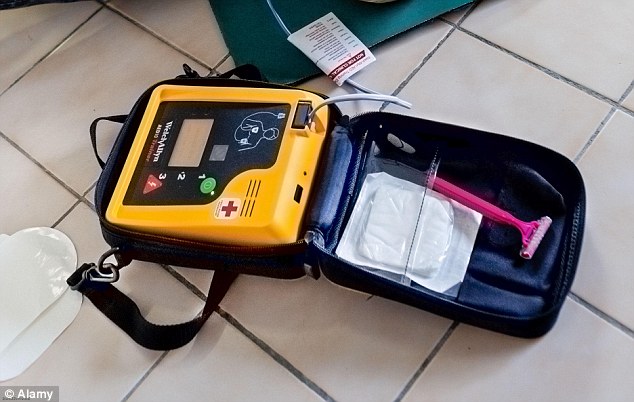
He has now made a full recovery in a case which is being used as an example of why portable defibrillators should be carried on all flights.

The dramatic incident, which happened last month, came to light after the doctor involved reported it to the British Medical Journal, which called the episode ‘a remarkable story of survival against all the odds’.

Dr Dave Monks, an anaesthesiologist who has worked at the Royal Free Hospital in London, said the man was taken ill hundreds of miles from the nearest airport in some of the most remote airspace on earth.

Dr Monks said the man told him of striking pains moving from his chest to his head.

The passenger then lost consciousness and had no pulse, causing Dr Monks to ask other passengers for help.

Luckily, a pharmacist who had worked in an intensive care unit and a trained policeman came forward and, using a portable defibrillator, they gave the man an electric shock to get his heart pumping again.

The doctor involved said the incident highlighted the importance of having defibrillators on flights and in training as many people as possible in how to use them

The doctor involved said the incident highlighted the importance of having defibrillators on flights and in training as many people as possible in how to use them

When the man’s health again deteriorated, the brave trio kept him alive using adrenaline from the plane’s medical kit.

The pilot of the aircraft then landed in Beijing, China and the man was rushed to a nearby hospital. Remarkably, he was discharged 10 days later having made a complete recovery.

Dr Monks told Live Science: ‘This guy was extremely fortunate to have this team there.

‘These guys just happened to be on the plane and even with the [basic medical skills] they had, they were able to perform a quite dramatic and sophisticated critical care resuscitation.’

He said the episode shows the importance of keeping defibrillators on passenger planes and training people in first aid.

He cited research that shows people are more likely to have heart attacks on flights due to stress, disturbed sleep patterns and lower levels of oxygen.

One study suggests about 1,000 passengers per year experience sudden cardiac arrest while on flights.

SOURCE:::::mailonline.com

Natarajan

Read more: http://www.dailymail.co.uk/news/article-2743043/Aircraft-passenger-having-heart-attack-flight-saved-doctor-policeman-pharmacist-board.html#ixzz3CLZNuKWD
Follow us: @MailOnline on Twitter | DailyMail on Facebook

Do You Know How ” Dry Cleaning ” Process Works ? …

How Dry Cleaning Works and Who Invented It

dry-cleaningWhat happens to clothes after being dropped off at the dry cleaners is a mystery to most. We know that our clothes come back a whole lot cleaner than when we dropped them off, but how? And who first got the bright idea to clean clothing without water?

The earliest records of professional dry cleaning go all the way back to the Ancient Romans.  For instance, dry cleaning shops were discovered in the ruins of Pompeii, a Roman city buried by the eruption of Mount Vesuvius in 79 AD. Those cleaners, known as fullers, used a type of clay known as fuller’s earth along with lye and ammonia (derived from urine) in order to remove stains such as dirt and sweat from clothing. That process proved pretty effective for any fabric too delicate for normal washing or stains that refused to budge. (In fact, the industry was so prominent that there were taxes on collecting urine.  Fullers generally used animal urine and would also maintain urine collecting pots at public bathrooms.)

As for more modern methods, the biggest revolution in dry cleaning came around in the early 19th century.  Traditionally, Jean Baptiste Jolly of France is generally named the father of modern dry cleaning. The story goes that in 1825, a careless maid knocked over a lamp and spilled turpentine on a dirty tablecloth. Jolly noticed that once the turpentine dried, the stains that had marred the fabric were gone. He conducted an experiment where he bathed the entire tablecloth in a bathtub filled with turpentine and found that it came clean once it dried. Whether a maid and an accident really had anything to do with it or not, Jolly used this method when he opened the often claimed first modern dry cleaning shop, “Teinturerier Jolly Belin”, in Paris.

However a patent for a process called “dry scouring” was filed with the U.S. Patent Office in 1821, four years before Jolly’s discovery. A man by the name of Thomas Jennings was a clothier and a tailor in New York, and soon the first African American to be granted a patent in the United States. (Previous to this, it was ruled that slave owners were the rightful owner of any inventions made by their slaves and could then patent those inventions under their own names.  Jennings, however, was a free man.)

So while working as a clothier, he, like so many others in his profession, was familiar with the age old customer complaint that they could not clean their more delicate clothes once they’d become stained because the fabric wouldn’t hold up to traditional washing and scrubbing. Jennings, thus, began experimenting with different cleaning solutions and processes before discovering the process he named “dry scouring.” His method was a hit and not only made him extremely wealthy, but allowed him to buy his wife and children out of slavery, as well as fund numerous abolitionist efforts.

As for the exact method he used, this has been lost to history as his patent (U.S. Patent 3306x) was destroyed in an 1836 fire. What we do know is that after Jennings, other dry cleaners during the 19th century used things like turpentine, benzene, kerosene, gasoline, and petrol as solvents in the process of dry cleaning clothes. These solvents made dry cleaning a dangerous business. Turpentine caused clothes to smell even after being cleaned, and benzene could be toxic to dry cleaners or customers if left on the clothes. But all of these solvents posed the bigger problem of being highly flammable. The danger of clothes and even the building catching fire was so great that most cities refused to allow dry cleaning to occur in the business districts. In the United Kingdom, for example, dry cleaners had smaller satellite stores in the city where they took in customers’ clothes and then those clothes were transported to a “factory” outside of the city limits where the dry cleaning took place.

The major risk of clothes and buildings catching on fire because of the flammable solvents led to dry cleaners searching for a safer alternative. Chlorinated solvents gained popularity in the early 20th century, quickly leaving the flammable solvents in the dust. They removed stains just as well as petroleum-based cleaners without the risk of causing the clothes or factories to catch fire. That also meant dry cleaners could move their cleaning facilities back into cities and eliminated the need to transport clothes back and forth between two locations.

A chlorine-based solvent with the chemical name tetrachloroethylene, or sometimes called perchloroethylene, became the go-to solvent for dry cleaners in the 1930s. Originally discovered in 1821 by Michael Faraday, “perc” could not only be used in relatively compact dry cleaning machines, but also did a better job of cleaning than any of the other solvents of the day; it’s still the chemical of choice for most dry cleaners today.

While perc is considered much safer than most solvents used by dry cleaners in the past, the Environmental Protection Agency (EPA) in the United States is working to phase the solvent out of the industry. The EPA claims that while wearing clothes treated with perc does not appear to be dangerous, perc can be dangerous if accidentally released into the environment as it’s toxic to plants and animals. Additionally, the EPA also notes that sustained exposure to perc, such as by workers in the industry, can cause health issues with the nervous system, including potentially drastically increased chances of developing Parkinson’s Disease. There are also studies done by the EPA that indicate perc may be a carcinogen. The International Agency for Research on Cancer also classifies the chemical as a “Group 2A carcinogen,” meaning in their opinion, it’s probably carcinogenic.

So how exactly is this chemical used to dry clean clothes? The process of dry cleaning fabric can vary between dry cleaning companies; however, the general method is as so: before placing the clothing item in the machines, workers pre-treat stains by hand, as well as remove any materials that aren’t suitable for dry cleaning (for instance buttons made of materials that may dissolve in perc are removed). The machine works in a similar fashion to normal, in-home washing machines. It agitates the garments and adds in the solvents as it goes, cycling the solution through the machine and a filter as the clothing is agitated.  Temperature is also typically controlled at around 86 degrees Fahrenheit.

Next, the garments are either dried in the same machine or workers move them to a separate machine. During the drying cycle, the temperature is raised to about 140 degrees Fahrenheit, which helps the chemicals evaporate off the clothes faster, while still being low enough not to damage the clothing.  In the end, approximately 99.9% of the chemicals used are removed from the dry cleaned item and recycled for use again in cleaning.

Once the clothes are dry, workers press the clothes, potentially stitch back on any items that had to be taken off, and put the clothing into plastic bags for customer pick-up.

SOURCE:::: Today i foundout.com

Natarajan

Need For Better Teachers …Points to Ponder on Teachers Day…

The most recent reports including the UNESCO-Education for All 2014 and ASER have all painted a grim picture of the state of primary education in the country. Among the many reasons cited, the lack of well trained and motivated teachers seems to be the most critical to the dismal education scene in India.

Akshara Foundation reached out to 10 people from all walks of life who gave 10 reasons on why we need to elevate the status of the teaching profession in India.

1. Ashwini Ponnappa

1-Ashwin

Indian shuttler and silver winner at the Commonwealth Games 2014 in Glasgow.


2. Usha Vishwanath

2-Usha

At the age of 80, Usha is an active social worker


3. Vasundhara Das

3-Vasundhara

Vasundhara is an Indian singer, actress, composer, entrepreneur, speaker, songwriter and environmental activist.


4. Saad Khan

4-Saad

Saad is an Indian film director, screenwriter and acting teacher.


5. Vikram  Nalagampalli

5-Vikram

Vikram founded a portal that bridges the gap between voters and electoral candidates.


6. MJ Pijosh

6-Pijosh

Music Jockey from Radio One.


7. Amin

7-Amin

Amin is a student at Seva Bharat Trust Govt Schools, Vivek Nagar and recently participated in the All India Robot Olympiad.


8. Aarti Mohan

8-Aarti

Aarti is the Chief Editor at an online magazine in India.


9. Chef Manu Chandra

9-Manu

Partner at The Fatty Bao & Monkey Bar and Executive Chef Olive Beach.


10. Bhavana Rajendran

10-Bhavana

Bhavana  is a social development researcher and an exceptional theatre artiste.

Each of these pithily drafted points pay a humble tribute to the spirit of pedagogy, to the warrior who fights the societal battle all alone in a classroom with bare walls, rickety benches, chipped blackboards and children who have little but a spirit to break through the innumerable barriers.

A good teacher is like a candle – it consumes itself to light the way for others ~Mustafa   

SOURCE::::Storypick

Natarajan