Message For the Day….” Follow Sabari’s Example , who always thought of Rama and His happiness…”

Follow at least one of the nine modes of devotion (Sravanam, kirtanam, etc.). It doesn’t matter how wealthy or learned you are; God is concerned only with the sincerity and purity of your mind and heart and the wholeheartedness and genuine nature of your love. Valmiki was a hunter. Nandanar was of a low caste. Kuchela was a poor man. Dhruva and Prahlada were five-year-old lads. Sabari was a tribal woman, illiterate and uncivilized. But all of them won God’s Grace in abundance, because of their wholehearted devotion, love and surrender. Follow Sabari’s example, who always thought of Sri Rama and His happiness, and dedicated all her thoughts, words, and deeds to Him alone, such that her every action was transformed and sublimated into the highest penance (tapas).Meditation does not mean sitting idle in a particular posture, like posing for a photograph.  Like Sabari’s life, your life must become a continuous meditation wherever you are, and whatever you do.


Sathya Sai Baba

Message for the Day…” “Do you require light inside the house as well as outside? If yes, then place the lamp on the doorstep!” So too, if you desire to experience the illumination of peace (shanti) “

Temple worship, company of sages, adoration of the Lord and recital of His name – these are external sources of light. Meditation, austerity and reflection (dhyana, tapas andmanana) — these are sources of inner illumination. Devoid of both, how can you experience the vision of divine glory? Once Tulsidas Goswami declared, “Do you require light inside the house as well as outside? If yes, then place the lamp on the doorstep!” So too, if you desire to experience the illumination of peace (shanti) within you and also spread it out, then place the name of the Lord on the tongue, which is the doorstep of your personality! The lamp on the tongue will not flicker, fade, or be put out by any storm. It will confer peace on you as well as on all whom you meet – in fact, the entire world.” Therefore, for your salvation, evoke the vision of the form with the Lord’s name on your tongue.

Sathya Sai Baba

This is Egypt’s Only Waterfalls, And its Man-Made…

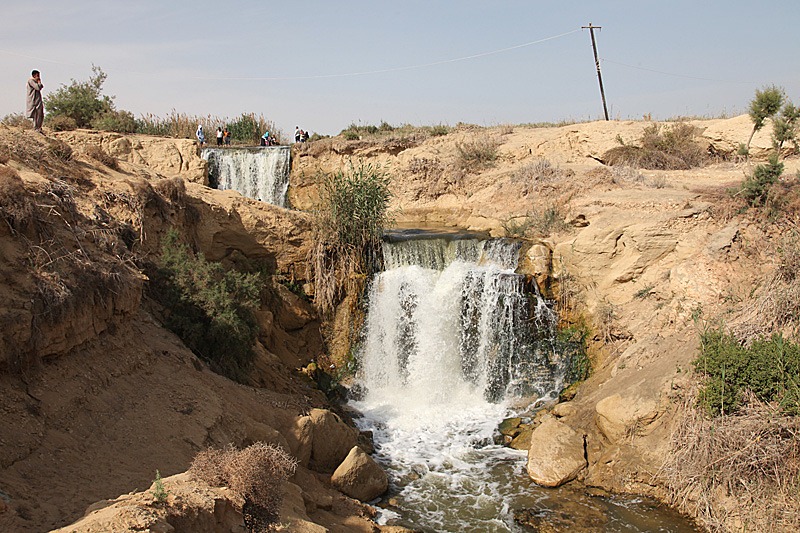
The valley of Wadi El-Rayan, 65 km southwest of Fayoum city, in Egypt, is home to two large artificial lakes created to divert excess agricultural drainage water from Fayoum oasis. It is also home to the country’s only waterfalls.

The Fayoum oasis originally drained into Lake Qarun in the north. But the lake can take only a certain volume of drainage water. Anything over this capacity and the lake level would rise and flood the surrounding land, often doing irreparable damage because of the waters high salt content. This means that the amount of water that can be used in the Fayoum is limited by the region’s maximum drainage capacity. Consequently, until recently water-intensive crops such as rice and reeds could be grown only in very small quantities. Furthermore, no new land could be reclaimed without causing swamping of existing farmland near Lake Qarun. There was a pressing need to find an alternative drainage basin, and the large depression of Wadi El Rayan was found to be suitable.

wadi-el-rayan-waterfalls-6

Photo credit: Roland Unger/Wikimedia

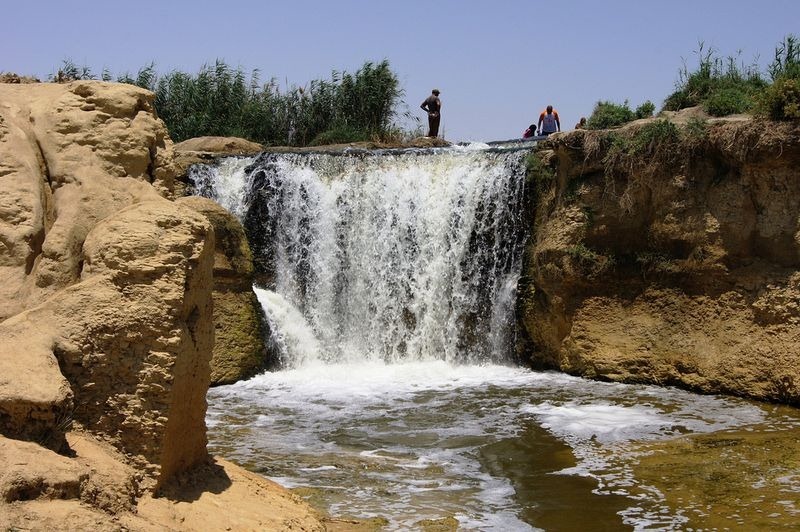
In 1974, a 9-kilometers open channel and an 8-kilometers tunnel were cut through the desert from the western side of the Fayoum depression to the large, dry depression of Wadi El Rayan. Drainage water now flows into Wadi El Rayan forming two large lakes. Water first reaches the northern lake and when it’s overwhelmed, a stream flows towards a deeper part of the depression, where another lake is formed. As the course of the stream was eroded, natural rocks were exposed and waterfalls formed over them.

There are several cascades on the stream, none of them taller than 2 to 4 meters. Yet, they have attracted considerable attention among the local Egyptians, as many have never seen waterfalls before. The waterfalls have also been featured in many Egyptian pop videos and films. The falls, however, will not last for ever as the level of the lower lake is continually rising and the falls will exist only until the expanding surface area allows a rate of evaporation equal to the amount of water flowing into it.

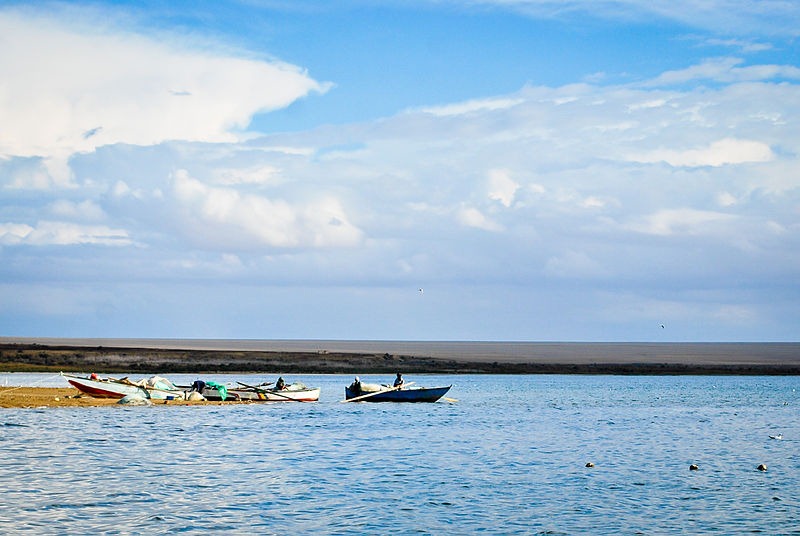
The shorelines of the lakes are densely vegetated making them perfect wintering habitats for migrating birds and breeding spot for many fishes. The area is now a nature reserve and is home to the world’s sole population of Slender-horned Gazelles, as well as 8 other mammal species and 13 species of bird.

wadi-el-rayan-lake

Wadi El-Rayan Lake. Photo credit: Mohammed Moussa/Wikimedia


wadi-el-rayan-waterfalls-3

wadi-el-rayan-waterfalls-1

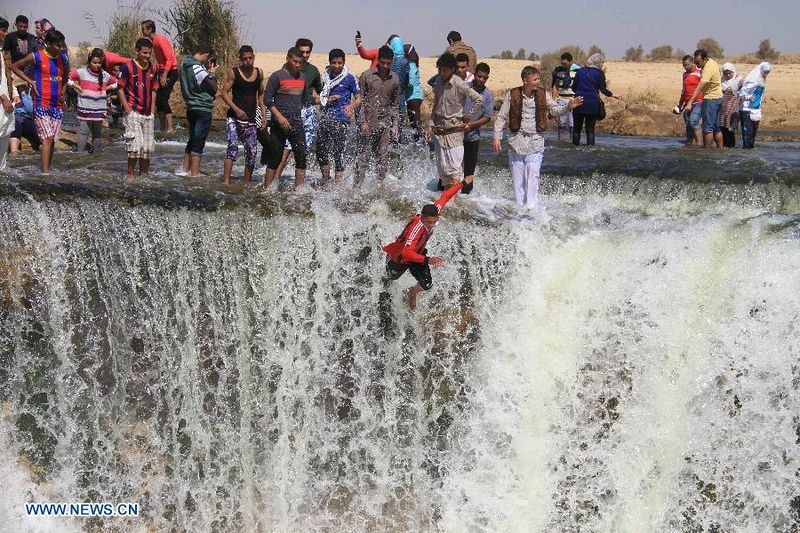
An Egyptian man jumps in the water of Wadi El-Rayan Waterfalls in Fayoum, Egypt, on March 6, 2015. Photo credit: Xinhua/Ahmed Gomaa

Source…..www.amusing planet.com

natarajan

Message for the Day..” Art of Spiritual Discipline….”

The attitude of the worshiper and the worshiped is the seed of devotion (bhakthi). First, the worshiper’s mind is attracted by the special qualities of the object of worship. The worshiper tries to acquire these special qualities. This is spiritual discipline (sadhana). In the early stages of spiritual discipline, the distinction between worshiper and worshiped is full, but as the spiritual discipline progresses, this feeling diminishes and, when attainment is reached, there is no distinction whatsoever. Irrespective of the object of worship one has grasped, loved and sought by spiritual discipline, one should have firm faith that the individual self(jivatma) is the supreme Lord (Paramatma). There is only one wish fit to be entertained by the aspirant: the realisation of the Lord (Iswara Sakshatkara). There is no room in the mind for any other wish.

Sathya Sai Baba

This Man Left His Job, Sold His Car and Took a Loan – Just to Make India Clean !

This cleanliness warrior resigned from his job to take the battle against garbage to cars, autorickshaws, buses, and other vehicles. His car trash bins will give income to slum dwellers while helping keep our roads clean.

India is developing fast — roads are jammed with cars, cellphones are ubiquitous, and there is talk of smart cities emerging all over the country.

But are we behaviourally developed as a nation? We still lack civic sense and spit on walls, we don’t show up for our appointments on time, we deface our historical landmarks, we rarely stick to queues when waiting, and we litter our streets indiscriminately.

Abhishek Marwaha was one of us until three years ago when he read somewhere: ‘”A person who throws his trash actually throws his humanity.”


abhishek marwaha1

Abhishek Marwaha

He then started making a conscious effort to keep his surroundings clean. His friends made fun of him when he kept dumping used tissues in his pockets or in car back pockets while travelling, instead of throwing them outside the window.

“I used to work in a travel technology firm and travelling to different countries used to be part of my job profile. I realized that we are more conscious of our habits when abroad (like littering, spitting, honking, etc.) but we tend to be careless when we are here in India. So all we need to do is one simple thing to bring a wave of change. Let’s behave in our own country the way we behave in any other foreign country,” says Abhishek.

One day, while having lunch, he found that his lunch bag was worn and could be used as a trash bin in his car. The idea stayed with him and he began to design a trash bin that is easily accessible in a car or any vehicle, even while driving. Once the design was ready, he started making cheap trash bins in bulk and contacting vendors.

spit pouches

This mission to keep India clean has today resulted in the launch of Abhishek’s online store, ujosho.com, which sells the first ever car trash bins in India.

The word UJosho is derived from the Japanese word ‘josho,’ which means ever victorious. Abhishek added a ‘U’ to indicate that we can all be victorious in the battle against littering if we do our bit to keep the nation clean.

swach bin

Swachh bin for cars

“There are an estimated 25 million cars in any Tier 1 city in India. The problem of garbage will continue to haunt us as the trash thrown from cars chokes the roadside drains and contributes to water logging and floods during rains. There is an immediate need to educate and encourage people to use this simple trash bin in their cars so that many of these issues can be resolved without intervention of civic authorities and with proper and positive participation from each one of us,” adds Abhishek

The car trash bins that Abhishek sells are not machine made. He aims to provide earnings to slum dwellers by getting them to make these trash bins by hand in bulk.

He has also experimented with giving away these bins to beggars for free and was delighted to see them selling these to car owners at traffic signals.

beggar

“You don’t have to hold a gun at the border and save the country to be truly patriotic. You can bring about change by changing yourself, your habits and your surroundings. Even if 10% of our population shares this view, it can make a difference. Maybe what I am doing is minuscule, but it will hit the root cause of the trash problem,” Abhishek says with great zeal.

According to Abhishek, installing and using the trash bin in vehicles will be good because:

1) It will help bring about a behavioral change among adults and children with respect to cleanliness, littering and spitting.

2) It will support civic authorities in ensuring optimum use of manpower in cleaning roads.

3) Trash chokes the roadside drains and contributes to water logging and floods during rains. Car trash bins will help prevent that.

Though the car trash bin is a first-of-its-kind product, Abhishek does not want to patent the idea as he wants it to spread widely. He wants other people to replicate it and make it more cost effective if possible.

happy customers\

Happy Customers!

“We also encourage people to share their ideas about cleanliness on the ‘Idea’ section of our website. If we are able to make a product from that idea, we will then give royalty on every sale of that product,” says Abhishek

To know more about Abhishek and his products, you can visit www.ujosho.com

Source….Manabhi Katoch in http://www.the betterindia .com

Natarajan

” The Man who led Chennai’s Rescue Effort …”

Soldiers join the resuce operations in Chennai

IMAGE: Soldiers join the rescue efforts in Chennai. Photograph: MoD/Twitter

‘Coordination between our 50 teams, each with a strength of 45 men, played a key role in rescuing flood-affected people in Chennai. In all, we succeeded in rescuing over 20,000 people.’

‘The NDRF, an exclusive dedicated standalone multi-disciplinary disaster response force, is the only one of its kind in the world.’

NDRF chief O P Singh on how his organisation helped rescue and relief in flood-ravaged Chennai.

NDRF chief O P Singh

National Disaster Response Force Director General O P Singh refuses to be drawn into any controversy regarding the unprecedented release of over 29,000 cusecs of water from the Chembarambakkam reservoir on the night of December 1, without having alerting the state government, the police or the power utility services.

Water experts believe this release was the main reason for the floods that devastated Chennai with the situation being made worse by the heavy rainfall.

Singh,  is a 1983 cadre Indian Police Service officer. As head of the NDRF he was responsible for the rescue of nearly 50,000 civilians during the disastrous flooding of Sringar in September last year. His organisation’s work during the Nepal earthquake earlier this year was much appreciated by the governments of Nepal and India. The NDRF was formed by an Act of Parliament in September 2014.

He spoke exclusively to Rashme Sehgal for Rediff.com

You had 50 NDRF teams working night and day to rescue people through this crisis. What has the NDRF learning curve been from this?

What we witnessed in Chennai is the phenomenon of urban flooding. It is very different from rural floods or floods in semi-urban areas. Its special feature is that as water levels start to rise, the water begins to flow in a very swift manner. This kind of urban flooding we are witness to can be described as a very recent phenomena.

We witnessed it in Mumbai ten years ago. Jammu and Kashmir was our first experience of intense urban flooding.

How did you go about tackling the situation in flood-hit Chennai?

We are the only official disaster response team in the country. We have a strength of 12 batallions of 15,000 men drawn from the Central Reserve Police Force, the Indo-Tibetan Border Police, the Border Security Force and the Central Industrial Security Force who join us for a period of deputation lasting five years.

The first two years are spent providing them very intensive and highly professional training in how to handle disaster situations in different areas, whether it be the collapse of structures, search and rescue, deep underwater diving, underwater communication, medical first responder and also how to deal with biological, radiological and nuclear emergencies.

Coordination between our 50 teams, each with a strength of 45 men, played a key role in rescuing the flood-affected people in Chennai.

In all, we succeeded in rescuing over 20,000 people.

If you spend two years training them, then why should they revert back to their earlier cadre three years later? Doesn’t all this intensive training go waste by this kind of reversion?

That is a very valid question. If you permanently keep them (in the NDRF) then they might lose their motivation. We are thinking of keeping them for a longer period and are considering the possibility of extending their deputation from five to ten years.

We are also looking at a possibility of allowing 12 per cent of our force to be kept in the NDRF on a permanent basis.

You need to remember that this is an exclusive dedicated standalone multi-disciplinary disaster response force. It is the only one of its kind in the world. They focus only on disasters and nothing else.

When there are no disasters, we spend our time trying to empower the community because the community is the first responder to a disaster. We also interact closely with the police, the fire brigade and also provide training to organisations like the NCC (National Cadet Corps), the National Service Scheme and the home guards. We are capable of reaching a disaster within 20 minutes.

Were you able to reach Chennai within 20 minutes of the flood occurring?

In Chennai, our 50 teams flew in from Bhatinda, Guwahati, Patna and Pune. We had already pre-positioned some teams around Chennai and were receiving regular reports from the Indian Meteorological Department.

You had pre-positioned your teams around Chennai prior to the massive flooding?

We had four teams that had been pre-positioned. We had teams in Cuddalore and Kanchipuram and had two teams in Puducherry. Within two to three hours of being informed about the heavy rainfall and about the release of water from the reservoir, our local battalion stationed in Ernakulam was there.

What were the immediate steps you took?

Our first steps were on how to evacuate the people who were marooned. We had to put them in boats and take them to a safer location. For that we needed divers, life jackets and boats.

In some areas there was eight to nine feet of water. Chennai airport was submerged in eight to nine feet of water. Several localities were completely submerged.

The second major problem we faced was the breakdown of power resulting in a major communication failure. People’s mobile phones had gone dead. There was also the apprehension was of people getting electrocuted.

The other problem we faced that even though people were marooned, they were not willing to leave their homes.

Why was that? Did people feel that in their absence, their homes would get looted?

People living in ground floor houses agreed to get evacuated, but those living on the first floor moved to the second floor and then onto the roof.

The settlements along the banks of the river Adyar which were all low lying areas, saw huge amounts of water collect there. Our teams found it very difficult to navigate these areas.

More than 300 people died in these floods.

A large number of these deaths took place in some hospitals because of the power failure. The ICU units in the hospitals were affected because of the lack of power.

Our 50 teams were using Quick Deployable Antennae (for satellite communications) which is a portable system and can be used both in the digital and analogue mode. But this QDA is an internal system that can be used only by us.

But on our helpline, we were getting information via SMS, e-mails and Whatsapp, and also from television channels. I was stationed in Chennai and constantly telling my response team to reach the area from where the alert had been sounded. I was acting as a link between the victim and the parent or others.

Obviously, during the flood, people were on edge, they had become nervous and very jittery. I had to keep assuring the public. It was a huge challenge to communicate and reach out to the people especially since the power facilities were down.

But our men were working round the clock. I would like to cite the example of one rescue mission that my men undertook of a woman called Deepthi who was in her final stages of pregnancy and living in the Ramapuram area. Two NDRF sub-inspectors Bijumon and Satish reached out to her in a boat, but could not load her onto a boat.

She had to finally be rescued by a chopper. The two jawans helped her climb onto a water tank from where they helped her climb her onto an IAF helicopter being flown by a team led by Wing Commander Simon and Squadron Leader Venkatraman.

The lady gave birth the next day to two twin girls and her father Mohan Raj sent me a letter commending the work done by the NDRF and hoping his twin grand-daughters would join the NDRF one day.

The NDRF received praise in Chennai, but the NDRF received criticism for its rescue operation work during the floods that hit Kashmir last year.

No, I don’t think so. The terrain of Srinagar is completely different from the terrain of Chennai. Srinagar is an extremely mountainous area. The Jhelum river had spilled over and mixed with the Dal Lake and the entire area looked like a vast sea.

The current there was very sharp and we had to use choppers. The flood water ended up dividing the old Srinagar city from the Dal Lake area. Our teams ended up rescuing 50,000 people in the operation.

Chennai used to be a dry city. But the incessant rain, unregulated construction and the release of a huge amount of water from the Chembarambakkam reservoir caused this deluge.

To go back to my earlier question, what is your learning from this deluge?

I believe we have to strengthen our response measures to meet disasters. But the long-term strategies would be to pay much greater attention to prevention and mitigation strategies. These will involve flood mapping and satellite imagery. But most important, we need to pay much greater attention to regulate development in our cities.

To take the example of Chennai, which as a city can be divided into three parts. No new construction must be allowed in the vulnerable parts of the city. The state government must take strong measures in this. I believe after witnessing two major floods that all urban construction must be regulated.

In terms of mitigation strategies, we need to construct water channels to drain out the water. More important, we need to revive the water channels that have been destroyed. We need to take very strong steps on this score.

Cities must develop resilience to face heavy rain and for that we need to take institutional measures to ensure that there can be no encroachment on marshlands, our traditional tanks and lakes that have shrunk must be restored and all the waterways that had been constructed to drain excess water must also be restored to ward off future threats.

Source…….Rashme Sehgal in http://www.rediff.com

Natarajan

Message for the Day……” For the tasks of spiritual discipline, there is no yesterday and no tomorrow. This very moment is the moment…”

 Sathya Sai Baba

Lord of Death (Yama) is as omnipresent as Lord Siva! Yama is associated with the body (deha); He cannot affect the individual soul (jiva). Siva is associated with the individual soul, but He won’t allow the body to subsist for any length of time. The body is the essential vehicle for the individual soul to understand its real nature. Still who knows when the body may become the target for the attention of Yama? The individual soul, burdened with this destructible body, must grasp the above-mentioned caution and be all-eager to merge in Siva! No single moment that is passed by can be turned back. People usually delay doing some things; yesterday’s till today and today’s till tomorrow. For the tasks of spiritual discipline, there is no yesterday and no tomorrow. This very moment is the moment! The minute that just elapsed is beyond your grasp; so too, the approaching minute is not yours! Only those who have this understanding engraved in their heart can merge in Siva.


Places Where Three Time Zones Meet……..

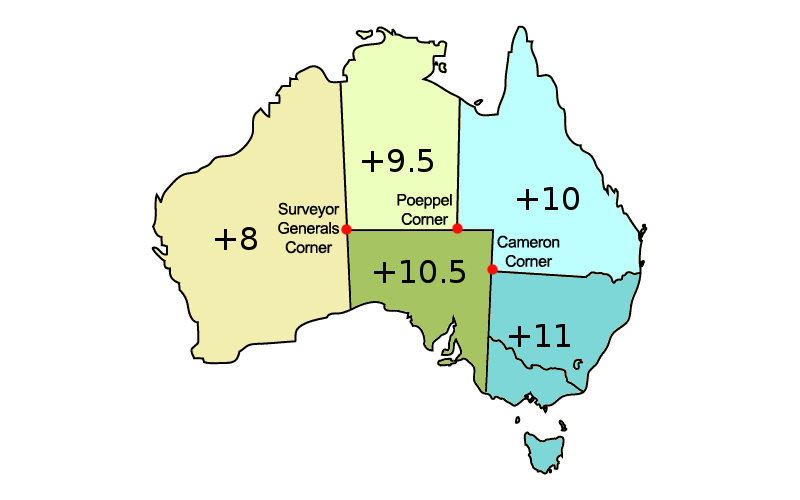
When Italian mathematician Quirico Filopanti first sounded the idea of time zones in his book Miranda! published in 1858, he proposed that the world be divided longitudinally into 24 equal time zones, where each zone differs from the last by one hour. But the real world is rarely that simple. Influenced by political, geographical and social changes, the world adopted a much more complicated system where time zones differed by three-quarter, half and even quarter of an hour. Today there are as many as 40 different time zones.

With so many different time zones around it’s imperative that some of them would meet at more than one point. There are exactly twenty-two places, according to various sources, where more than three time zones meet. Some of them are obvious, such as tri-point boundaries between nations observing different time zones. The strangest ones are located in Australia because the way the country’s different states follow time.


australia-tri-points

The time zones of Australia and the three state corners where three time zones meet.

Australia has three time zones, but from spring until autumn when New South Wales and South Australia adjust their clocks for daylight-savings, two additional time zones appear that horizontally break up the country’s two easternmost time zones into four. These time zones, which differ from each other by 30-minutes, meet at three different places. The most popular of them is Cameron Corner in the outback of eastern Australia, where the boundaries of states of Queensland, South Australia, and New South Wales meet. The other ones are Poeppel Corner (located at the corner of Queensland, South Australia and the Northern Territory) and Surveyor Generals Corner (located at the corner of South Australia, Western Australia and the Northern Territory). Standing at any one these locations allows any person to be at three different points of time at the same time. To take advantage of this anomaly, more than a thousand people descended on the tiny settlement of Cameron Corner on December 31, 1999, so they could celebrate the arrival of the new millennium three separate times.

cameron-corner-1

Marker at Cameron Corner. Photo credit: Kris H/Flickr


cameron-corner-2

Marker at Cameron Corner. Photo credit: Geoffrey Rhodes/Flickr


poeppel-corner

Marker at Poeppel Corner. Photo credit: Mark161/Panoramio

surveyor-generals-corner

Marker at Surveyor Generals Corner. Photo credit: jeza1/Panoramio

Another interesting place where a bunch of time zones meet is Antarctica. Being located on the South Pole, where every line of longitude meet, you might be tempted to think that all time zones meet here, but this is not the case, as time zones rarely adhere to geographical divisions. Because of the extreme day-night cycles near the times of the June and December solstices in Antarctica it is difficult to determine which time zone would be appropriate. Instead, researchers working on various stations in the Antarctic Circle observe time zones of the country the station is owned by, or the time zone of their supply base. For example, McMurdo Station and Amundsen–Scott South Pole Station use New Zealand time due to their main supply base being Christchurch, New Zealand. Many areas —those labeled in red in the map below— have no time zone at all, and follow Universal Time, by default.

antarctica-time-zones

Photo credit: Phoenix B 1of3/Wikimedia

Sources: CN Traveler / iO9

Story credit….www.amusingplanet.com
Natarajan

” Do Walking Palm Trees Really Walk…” ?

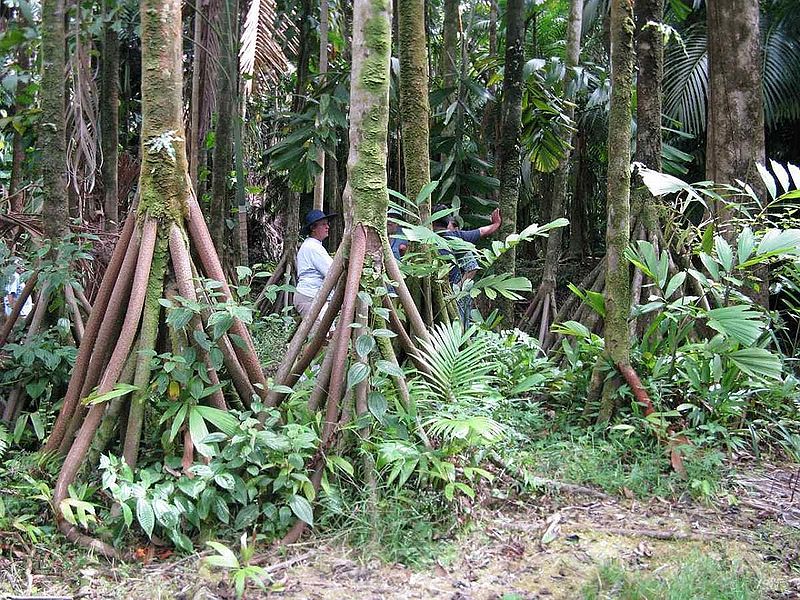
A recently published article on BBC’s website mentions a certain palm tree that has allegedly developed a rather unique ability unbecoming of a plant —the ability to walk. The palm in question is Socratea exorrhiza, also nicknamed the “Walking Palm”. The bizarre idea stems from the fact that scientists are unable to explain the tree’s strange stilt-like roots. Found in tropical rainforests of Central and South America, the Socratea exorrhiza develops long and sturdy roots that grow outwards from the base of the tree, several feet off the ground, and take root in the soil around, giving it the appearance of multiple legs. It wasn’t long before people started to believe that these roots actually act like legs enabling the palm tree to literally walk in the forest.

socratea-exorrhiza-walking-palms-6

Photo credit: www.palmpedia.net


The amazing story of the walking palm tree has been told by rainforest guides to tourists for years, and appears in many sources both in print and on the web. It is said that the tree “walks” from shade to sunlight by growing roots in the direction it wants to travel, and then allowing the old roots to slowly lift into the air and die. This allows the tree to slowly move towards the side where the new roots are growing. The process is said to take a couple of years, while one palaeobiologist suggesting the tree moves two or three centimeters per day.

It’s such a fascinating story that many tend to believe it, like our palaeobiologist from the Earth Science Institute in Bratislava. Unfortunately, the walking tree is a myth.

The idea of the walking tree was first suggested by John H. Bodley in 1980 who thought that such an ability allows the palm to “walk away” from the point of germination if another tree falls on the seedling and knocks it over. This way, the tree can move away from obstacles that are major hazards for immature palms.

Biologist Gerardo Avalos, director of the Center for Sustainable Development Studies in Atenas, Costa Rica, and —according to LiveScience.com— one of the world’s top experts on the Socratea exorrhiza, published a detailed study of the palm and its root in 2005 where he observed that the walking tree can’t walk because its roots don’t move. A few roots on one side or another may die off, but the trunk itself remains rooted to the spot.

Some people want to see the Socratea exorrhiza walking. Alas, no such time lapse movie exist.

“My paper proves that the belief of the walking palm is just a myth,” Avalos told Life’s Little Mysteries.”Thinking that a palm tree could actually track canopy light changes by moving slowly over the forest floor … is a myth that tourist guides find amusing to tell visitors to the rainforest.”

The myth was also debunked in the December 2009 issue of Skeptical Inquirer. “As interesting as it would be to think that when no one is around trees walk the rainforest floor, it is a mere myth,” it read. The article also cited two detailed studies that came to this conclusion.

Researchers are still unsure what role these unique stilt roots play. Some suggest that the multiple roots allow the tree to be more stable in swampy areas, or when there is too much debris in the ground as they can avoid it by moving their roots. It has been suggested that stilt roots allow the palm to grow taller to reach light without having to increase the diameter of the stem, thus investing in less biomass in underground roots than other palms. Of course, none of these theories have ever been confirmed. More importantly, nobody has seen these palm trees walk.

socratea-exorrhiza-walking-palms-2

Photo credit: Sandor Weisz/Flickr

socratea-exorrhiza-walking-palms-3

socratea-exorrhiza-walking-palms-5

Photo credit: www.palmpedia.net

Source……www.amusingplanet.com
Natarajan


Image of the Day….” Rare Sunset …”

A photo of rare sunset, only seen when the sun is low in the sky and likely a result of reflection by ice crystals.

Photo taken December 11, 2015 by Peter Lowenstein in Mutare, Zimbabwe.

Photo by Peter Lowenstein in Mutare, Zimbabwe.

On December 11, 2015, Zimbabwe was still experiencing an intense heatwave with almost clear skies and very little rain. While the sun was setting behind a lone small cumulus cloud, a diffuse duplicate appeared above it in a thin veil of more distant high cloud.

This spectacle lasted for just over a minute before the second sun faded away.

The photo was taken between using a hand-held Panasonic Lumix DMC-TZ60 compact camera in intelligent auto mode.

I asked Jim Foster of the Earth Science Picture of the Day what might have caused this phenomenon. He worked as a research scientist at NASA’s Goddard Space Flight Center for more than 37 years before retiring in 2014. He replied that a double sun is:

… only seen when the sun is low in the sky and likely a result of reflection by ice crystals.

The Earth Science Picture of the Day on Facebook also published this photo on December 14, 2015.

Bottom line: Apparently double sunset – likely due to reflection by ice crystals – seen in Zimbabwe on December 11, 2015.

Source…. Posted by http://www.earthsky.org


natarajan