The Pigeons who took Photos ….

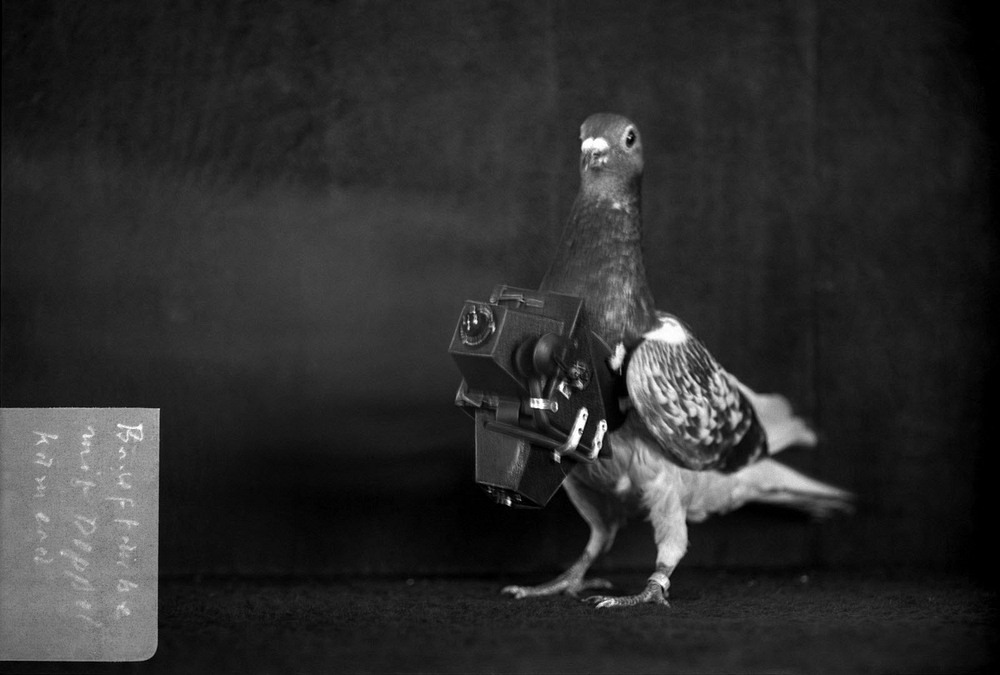
At the turn of the last century, when aviation was still in its infancy, a German named Julius Neubronner submitted a patent for a new invention—a miniature camera that could be strapped to the breast of a pigeon so that the bird could take flight and snap pictures from the air.

Julius Neubronner was an apothecary who employed pigeons to deliver medications to a sanatorium located near his hometown Kronberg, near Frankfurt. An apothecary is one who makes medicines. A pharmacist is a more modern word, but in many German speaking countries, such as Germany, Austria and Switzerland, pharmacies are still called apothecaries.                                                                                                                                   


Apothecary was Julius Neubronner’s family profession. His father was an apothecary, and so was his grandfather. In those days, homing pigeons were used extensively to carry messages and small supplies. It was Julius’s father’s idea to use pigeons to receive prescriptions from the sanatorium and send out medicinal supplies in a hurry—a practice that continued for more than half a century until the sanatorium closed.

One day, Neubronner let out a pigeon on an urgent errand but it didn’t return. When several days passed and there was still no sign of the bird, Neubronner assumed the pigeon was lost, or it got caught and killed by predators. A month later, the lost messenger showed up unexpectedly at Neubronner’s place. The bird appeared well fed, which got Neubronner into thinking. Where had he gone? Who had fed him?

Neubronner decided that he would start tracking his pigeons’ future travels.


Julius Neubronner with one of his pigeons.

Being a passionate do-it-yourself amateur photographer, it didn’t take long for Neubronner to fashion a miniature wooden camera which he fitted to the pigeon’s breast by means of a harness and an aluminum cuirass. A pneumatic system in the camera opened the shutter at predetermined intervals and the roll of film, which moved along with the shutter, took as many as thirty exposures in a single flight. The entire rig weighed no more than 75 grams—the maximum load the pigeons were trained to carry.

The pictures turned out so good that Neubronner started making different models. One system, for instance, was fitted with two lenses pointing in opposite directions. Another one took stereoscopic images. Eventually, Neubronner applied for a patent, but the patent office threw out his application citing that such a device was impossible as they believed a pigeon could not carry the weight of a camera. But when Neubronner presented photographs taken by his pigeons, the patent was granted in 1908.


Aerial photograph of Frankfurt.

Neubronner exhibited his photographs in several international photographic exhibition gaining him accolades. In one such exhibition in Dresden, spectators watched as the camera-equipped carrier pigeons arrived at the venue, and the photos were immediately developed and turned into postcards which they could purchase.

The technology was soon adapted for use during the First World War, despite the availability of surveillance aircraft then. Pigeons drew less attention, could photograph enemy locations from a lower height, and were visibly indifferent to explosions on a battlefield.

Neubronner’s avian technology saw use in the Second World War too. The German army developed a pigeon camera capable of taking 200 exposures per flight. The French too claimed they had cameras for pigeons and a method to deploy them behind enemy lines by trained dogs. Around this time, Swiss clockmaker Christian Adrian Michel perfected a panoramic camera and an improved mechanism to control the shutter. Pigeon photography was in use as late as the 1970s, when the CIA developed a battery-powered pigeon camera, though the details of the camera’s use are still classified.

Today, aerial photography has been replaced by aircrafts, satellites, and more recently, by affordable drones. But the legacy of Julius Neubronner’s pigeon photography lives on in these images which are among the very early photos taken of Earth from above.

Bonus fact: So what happened to Neubronner’s pigeon who stayed away from the owner for a month and returned fattened up? It had flown away to Wiesbaden, some twenty kilometers away, and was taken care of by a restaurant chef.


Source…..Kaushik in http://www.amusingplanet .com

Natarajan


The Theater That Shakespeare Stole ….!!!

On a cold, snowy December night in 1598, about a dozen men armed with swords, daggers and axes quietly broke into a recently vacated theater in Shoreditch, located just outside the city of London. With the aid of what modest light their lanterns could throw, the men worked tirelessly all throughout the night, dismantling the theater beam by beam and nail by nail, and loading the stripped timber onto wagons. By the time the darkness of the night gave way to the first light of dawn, the theater was gone.

The vandals in question were the Lord Chamberlain’s Men, the theatrical troupe to which William Shakespeare belonged. For the past several years, the Chamberlain’s Men had been playing at Shoreditch’s Theatre. This theater, built in 1576, was the second permanent theater ever built in England, and the first successful one to be built for the sole purpose of theatrical productions.


Shakespeare’s Globe theater in London. Photo credit: Diego Delso/Wikimedia

The Lord Chamberlain’s Men was founded in 1594, and within a short period of time it became one of the leading theatrical companies in London. Shoreditch’s Theatre was their home, and over the years, the Chamberlain’s Men played many of Shakespeare’s most famous plays on this stage.

In 1596 the lease for the property on which the Theatre was built expired, and the Chamberlain’s Men tried hard to negotiate an extension with the stubborn owner, Giles Allen. Not only Allen refused to renew the lease, he threatened to take possession of the theater as well. The dispute dragged on for two years, during which time the company performed at the nearby Curtain playhouse. It was at Curtain Theatre that Shakespeare debuted what is arguably his most famous play, Romeo and Juliet.


The Theatre of Shoreditch, the one that Shakespeare’s men dismantled.

When it became clear that Giles Allen wasn’t going to give back the land, the Chamberlain’s Men leased a new plot by the Thames, and on 28 December 1598, while Allen was celebrating Christmas at his country home, the men stole into the Theatre and carefully tore it down. A talented carpenter named Peter Street, who would later build another historic London theater named Fortune Playhouse, recycled the old pieces of wood into an astonishing new theatre—the Globe, capable of holding up to 3,000 spectators.

The romanticized version of the story holds that the Theatre was dismantled during the course of a single night, but historians believe the job could not have been completed in such a short time. Also, there is no proof that Shakespeare was present during the night, although he most certainly would have been following the proceedings closely, for he did have a tremendous interest in having this job done right.

Initially the timber was stored in a warehouse near Bridewell, until the following spring, when the materials were ferried over the Thames and used to construct the much larger Globe.


Reconstruction of the Globe theatre based on archeological and documentary evidence.

The Globe was up and running by early 1599, and for the next 14 years it presented many of Shakespeare’s greatest plays. In 1613, during a performance of Henry VIII, a misfired stage cannon ignited the thatched roof and the theatre burned to the ground. Although the theatre was quickly rebuilt, Shakespeare probably never wrote for the second Globe. Eventually, like all the other theaters in London, the Globe was closed down by the Puritans in 1642.

A modern reconstruction of the Globe, named “Shakespeare’s Globe”, now stands on the Thames approximately 750 feet from the site of the original theater. It was built in 1997, based on an approximation of the original design, but with only half the capacity.

The new theater was designed to be as authentic as possible to Shakespeare’s 16th century theater. The structure is made of timber alone without any steel support, and it is the only building in London with a thatched roof, since that material was banned after the Great Fire of 1666. Seats are simple benches, although spectators can request cushions during shows. No spotlights, microphones or any kind of modern audio equipment are used. All music is performed live, most often on period instruments, just like it was in the 16th century. Only recently, the Globe began experimenting with lighting and sound rig.

Source….. Kaushik in http://www.amusingplanet.com

Natarajan


From China to Chennai, meet three generations of dentists who are as Tamil as Chinese…

Their families moved to Chennai from Hubei province and set-up dental clinics in the Evening Bazaar in the 1930s.


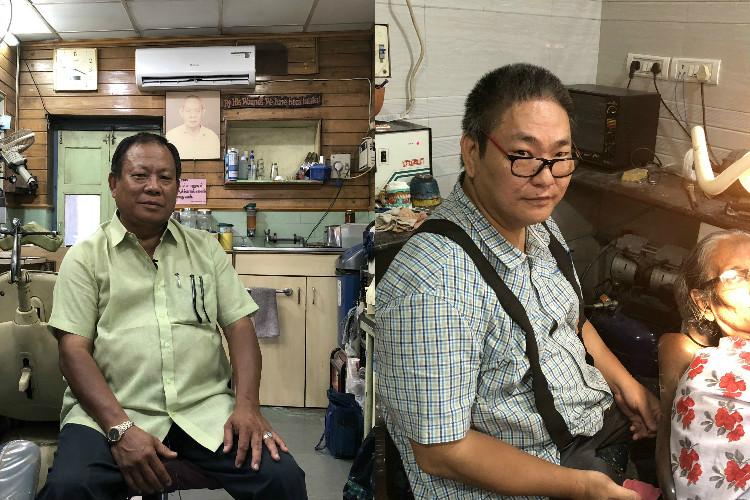
The glass doors of the tiny dental clinic swing open to green tiles, wooden panels, lots of dental instruments and neatly stacked bottles and medicine packs. Dr Shieh Hung Sen is inside, dressed in a green linen shirt, attending to a patient with practised deftness, while directing his assistant Nila in flawless Chennai Tamil.

Dr Shieh, who is better known by his Christian name Albert Shieh, is a second-generation Chennaite of Chinese origin. He runs Dr Shieh’s Bright Smile, a 75-year-old clinic, the oldest among the 8 such compact Chinese dental studios dotting the sides of Evening Bazaar Road, Park Town.

“My parents moved from Hubei province in China to Madas some time before the World War II. The Chinese communists were forcibly recruiting people to the army. It was either abscond or die. So my parents along with 8 other families left in the cover of the night to Burma, from where they came to Chennai in boats,” says Albert.

His father, Saw Ma Seng, among others who fled the country, were traditional Chinese dentists who established their business in Park Town in the 1930s. Now, their children and grandchildren are running the operations.

“Dental colleges started in the city only around the 1950s. Yet, our fathers had set up thriving businesses way back in the ’30s and we sons took over when they passed on,” says Albert, who went on to a acquire degree in dentistry from Annamalai University, after finishing his schooling in Bishop Corrie School, Parrys.

Growing up in Chennai

As he reminisces of the Chennai of his youth, Albert, who specialises in denture making, prods open his patient’s mouth and fixes a perfect set of lower front dentures on his gums.

“The best days of my life in Chennai were my school days. We used to play cricket in the Park Town grounds until late evenings. I spoke English and Tamil with my friends group and at home we spoke Mandarin (Hubei dialect),” smiles Albert, who can also read and write Tamil. Albert also understands Malayalam, Telugu and Hindi, and even attempts speaking them occasionally.

“Today is Tamil New Year. You must be celebrating Vishu since you are a Malayali, right?” he asks this reporter with a smile.

Now married with two children, a son and a daughter, Albert reveals that his family speaks Tamil, Chinese and English at home.

“I got married to my wife, Hu Yu Kwan, who is from one of the families in the community itself. However, now the community is not as close-knit as we were, with the older generation passing on,” he says.

In his childhood, the families would get together every Chinese New Year and feast.

“The Chinese New Year’s Eve is a special day for us and the entire community gathers for a feast, which is a grand affair with Wuhan (Hubei cuisine) delicacies of Changyu fish and Sou Chin (stir fry) Chicken. It’s nothing like what you get in the Chinese restaurants in the city,” says Albert, who shares an equal and impartial love for south Indian cuisine too.

“Ïdly, dosa, sambhar and all other dishes I relish. My wife makes the best rasam and kaara kolambu, I feel. In fact, my son’s friends used to ask him if his mum was Tamilian or Chinese after tasting the lunches she used to pack for his school,” he adds with a shy smile.

Albert’s son, Joshua, is a practicing dentist in Canada and, interestingly, is married to a Tamil woman.

“When I was a kid, my mother used to threaten me that if I married outside of the community she would disown me. When I got married, I had a traditional two-day Chinese wedding and a church wedding. Now, times have changed; my daughter-in-law is Tamil and we had a register marriage along with a reception here in Chennai,” says Albert.

The family members are practicing Seventh Day Adventists who had earlier adopted Roman Catholicism. Over the years, many from the community have diverged to different denominations within Christianity.

In the next clinic, David Ma, also known as You Chang Ma, Albert’s nephew, is a Jehovah’s Witness and runs Venfa, a clinic started by his father. Unlike Albert, David belongs to the third generation of the Chinese diaspora settled in the city.

“I don’t have many ties to Hubei. All my life I have known this city. My favourite food is the karuvattu kolambu or the dried fish that you get here. I’m married to an Indian girl, who is from Sikkim. In fact, I had an arranged marriage and went all the way to Sikkim to find my wife, since they look similar to us,” David says with a chuckle.

From Kung fu to Kollywood

Emphasising that they don’t watch Chinese films but for the occasional Jackie Chan Kung fu movie that is released in Chennai, Albert and David reveal that they enjoy Tamil cinema, especially the songs.

“I love old Tamil songs. There are some beautiful songs from Mudhal Mariyathai,” says David as he hums ‘Poongatre’ from the Sivaji Ganesan-starrer.

While David had no qualms about breaking into song, his uncle is more of a closet musician.

“He is usually singing all the time. He loves SPB and sings very well,” his assistant Nila tells TNM.

Albert is a fan of Suriya too and says he is excited about Kamal Haasan’s entry into politics. Apart from this, the dentist also boasts of a few famous friends from the industry.

“Prabhu, Sarathkumar and drummer Sivamani are all my close friends. I became close Prabhu and Sarathkumar as an athlete in school when we met at an inter-school sports competition. We meet once in a while when I am in town,” says Albert, who migrated to Canada with his wife a few months ago and shuttles between Chennai and Ontario.

The future

The Chinese clinics like Albert’s and David’s cater to the local population in Park Town.

“We have a thriving business and clients who have been consulting us and our fathers before us. They trust us and we have sort of established a brand here in Chennai,” says David.

Although many of their relatives have migrated to the US, Canada and other parts of the world, David and Albert remain rooted to the city.

“Although I keep going to Canada, I can’t let go of my business here and most of the year I’m in Chennai,” says Albert.

And despite this mass migration to several parts of the world, none of the Chinese in Chennai have returned to their home province of Hubei.

“I once visited China on a packaged tour with my wife. We couldn’t visit our native place as we couldn’t break away from the others.I have a few cousins there and I hope to visit them once in my lifetime,” says Albert.

However, Chennai remains in their hearts even as they search for better prospects elsewhere.

“I have never felt like an outsider. Chennai has and will always remain one of the most welcoming cities here. My sentiments for this city, in IPL language would be Namma Chennai-ku oru whistle podu,” David concludes with a grin.

Source…… https://www.thenewsminute.com

Natarajan


The Secret of Boxing icon…Mary Kom”s Success….

‘If I am super fit till 2020, I will compete but if I am not fit I will not.’                               

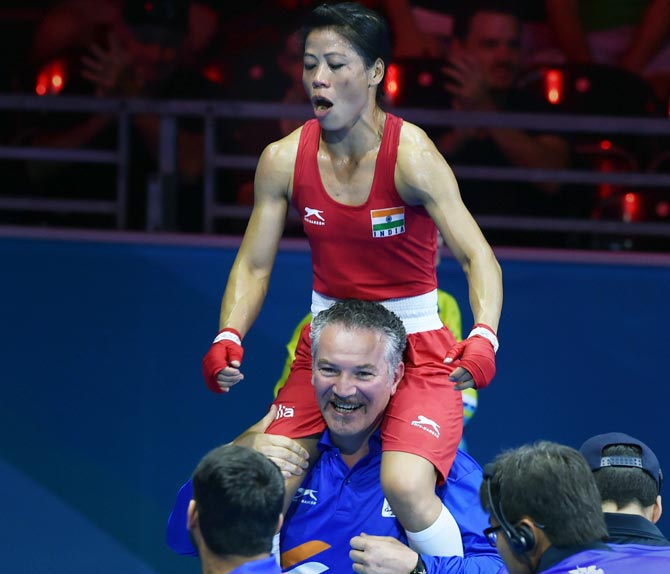
IMAGE: MC Mary Kom celebrates with her coaching staff after winning the Commonwealth Games gold medal. Photograph: PTI

Almost every medal that is there to be taken is in her kitty but M C Mary Kom says she still trains like a maniac, the latest result of the regimen being a gold on debut at the Commonwealth Games in Gold Coast on Saturday.

The 35-year-old mother-of-three, who has five world titles and an Olympic bronze medal, is seen as a sporting icon not just in India but also in other countries.

Crowned Asian champion just months ago, Mary Kom added the light flyweight (48kg) Commonwealth crown to her tally.

“The secret to my success is my fitness and I am very quick. I plan well before bouts. I am lucky that I can catch my opponents within seconds, I am able to read them very quickly,” a giggling Mary Kom said at the end of her CWG campaign.

“I don’t have injuries, all I have is minor issues like cramps sometime,” she added.

And the secret to her fitness levels and to an extent her calm demeanour in the ring is a training regimen that she refuses to let go even one day.

“When I decide something with my head and heart than even my husband cannot stop me. He sometimes tells me to take it easy after competition but I can’t help it,” she said.

“I have to train to keep myself calm. It’s a a strong urge, it’s a habit and training makes me happy. When I don’t train I feel sick sometimes,” she added.

But despite the high fitness levels, she wouldn’t commit on whether the outlandish possibility of a 2020 Olympic appearance is on her mind.

“2020 is difficult to say, but I will try my best. 48kg is not there and I will have to put on weight to be in 51kg which is never easy. If I am super fit till 2020, I will compete but if I am not fit I will not,” said the accomplished boxer.

Elated at being India’s first woman boxer to claim a Commonwealth Games gold, Mary Kom said scripting history makes her happy.

“I have won everything and all of my medals are very important. Do I need to say more? Which other boxer can claim that, now I would not be scared of anyone. I am very happy that I created history. I have got everything,” she said.

“I still think about Olympics gold but other than that I have got everything. Even in Olympics, I do have a medal. I haven’t left out anything,” she signed off.

Source……..www.rediff.com

natarajan


Meet Gururaja…CWG 2018 Medallist…

‘His victory is our victory,” said his family as they watched him bag the silver medal in weightlifting, in Australia.


At 7.30 am on Thursday morning all eyes in the Poojary household in Vanse, a tiny village near Kundapur in Karnataka, were glued to the television.

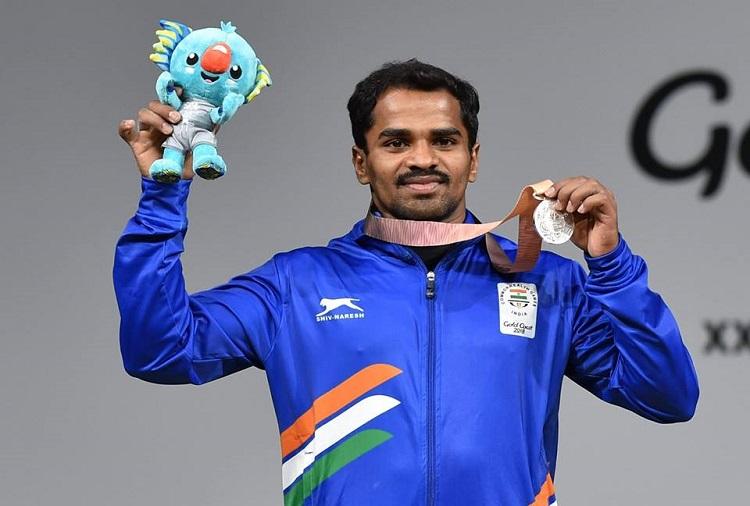
One of their own, Gururaja Poojary, was taking part in the men’s 56-kg weightlifting competition in the 2018 Commonwealth Games in Australia. After failing to lift the weight of 138 kg in his first two attempts, it appeared as if Gururaja’s medal prospects were slipping away

The 25-year old weightlifter, however, was the very picture of strength in his final attempt to take his final tally to 249 kg and clinch the silver medal.

This medal in the Gold Coast is not only Gururaja’s first taste of success on the international stage right on his debut, but is also the product of a journey where he overcame poverty and personal setbacks to reach where he is.

But for his family members, it came as no surprise.

He comes from a sporting family – all five of his brothers dabbled in Kabaddi and were athletes. “But it was Gururaj who was always going to achieve his dream,” says Manohar Poojary, Gururaja’s elder brother.

Gururaja’s father, Mahabala Poojary, is a goods-truck driver, who struggled to make ends meet to take care of his six sons. “Poverty is something we have lived in all our life. If we were a little bit well-off financially or received the necessary support and encouragement, maybe all of my sons could have made our country proud,” says Mahabala, speaking after his son’s success in Australia.

But due to poverty and unforeseen circumstances at home, Gururaja’s older brothers – Mohan, Manohar, Udaya and Rajendra – had to drop out of school and, with that, from sports. Only Gururaja and his youngest brother, Rajesh, completed their studies amongst the six sons.

His mother, Padhu Poojarthi, is a homemaker.

But his family was not willing to let Gururaja tread the same path. “Our father worked extra hard to ensure that Gururaja strove to achieve his dream. Seeing my father’s and brother’s struggles, even we chipped-in, taking on extra work to help in whatever way we could. Today, his victory is as much our victory,” says Manohar.

While studying at Sri Dharmastala Manjunatheshwara (SDM) College in Ujire, in Dakshina Kannada, Gururaja was looking for a wrestling coach rather than a weightlifting one. This was around the time Sushil Kumar had won his first Olympic medal in wrestling in 2008. While his search for a wrestling coach proved to be fruitless, he met powerlifters at the local gym and was soon representing his college in powerlifting.

It was here he met his coach Rajendra Prasad, who gave him his first lessons in weightlifting.”I still remember, in 2011, Gururaja was a young boy who had just joined a graduation course. He was a Kabaddi player and a wrestler, and did not have any idea about powerlifting. We selected him for the club and, seeing his talent, guided him in powerlifting,” says Rajendra Prasad, who works as a coach at the SDM Sports Club.

He added that Gururaja was proficient at the University level and even broke a record set by him in 1999 by lifting 193 kg (total in snatch and knee jerk) in 2012. He improved to 243 kg in 2015, a record which still stands to this day.

It was only in 2013 that he became a national-level athlete and in 2014, after a gold medal at the national-level, he started becoming a serious contender for a Commonwealth Games berth.

With his superlative rise in the sport, Gururaja also enrolled in the Indian Air Force three years ago, after which the Air Force took care of all the training expenses. “Until then, it was the family, college-mates and generous philanthropists who gave wings to his dream, hoping he would bring glory to the region,” says Manohar.

By the time the financial strain on his family was eased, 25-year-old Gururaja was ready to take on the world stage.

With the win in Australia, he has now vaulted straight into the national limelight and Pramod Madhwaraj, Karnataka Minister for Youth, Fisheries and Sport, who also hails from Udupi, said that Gururaja is likely to get a government job as a group-B officer and also a cash prize for his achievements.

When TNM caught up with Gururaja, he was, understandably, elated. “I am very happy that I have represented India in the Commonwealth Games and won the first silver medal for India (this year). This is my first Commonwealth Games and I want to thank my parents, family, my weightlifting coach Rajendra Prasad, SDM institution and everyone from my village who supported me,” he says.

His family members, who were nervously watching from home, was over the moon. Although his mother says she doesn’t quite understand the world of sport, she adds she is overwhelmed by the media visits.

But Gururaja’s family was quick to add that the journey is still not over. “We want him to make our country proud. Our biggest dream is that he participates and wins in the Olympics,” says Mahabala.

There is still some way to go before Gururaja can qualify for the Olympics. His final tally of 249 kgs will have to improve closer to 300 kgs. But throughout his journey, he has broken barriers and after his latest success in Australia, Gururaja will no doubt be willing to go the mile to chase his Olympic dream.

Source…….Harsha Raja Gatty and Prajwal Bhat in https://www.thenewsminute.com

Natarajan

THE ANCIENT STONE IN LONDON THAT IS SUPPOSED TO BE IMPORTANT BUT NO ONE REMEMBERS WHY…!!!

Sitting in the heart of London since long before anyone can remember, theories regarding the London Stone range from Roman ruin, to Druidic icon to a talisman of good fortune.

Although many point to John Stow’s Survey of London(1598), where he sets the 10th century as the first mention of the stone in print (he claims he found a mention of the stone in a document from the 900s AD), others feel more comfortable citing a list of Canterbury Cathedral’s properties from somewhere around the turn of the 12th centuries, where it lists Eadwaker æt lundene stane.

Regardless, by medieval times, the London Stone was a fixture in the city, so much so that residents even incorporated it into their names, such as Ailwin of London Stone. Clearly important, by the 15th century the landmark was seen as a symbol for London, and perhaps England; this helps explain why, when Jack Cade led a rebellion against Henry VI in 1450, he reportedly struck the London Stone with his sword in claiming the city for himself, as immortalized by Shakespeare in King Henry VI, Part II, Act IV, Scene VI.

In the 16th century, one popular theory for the stone’s origins was that it had been used by the Roman’s during their occupation (approximately 43 AD – 410 AD) as a millarium or central milestone from which all distances were measured. Charles Dickens even cited this explanation in his Dictionary of London (1879).

During the 18th century, some were speculating that the stone was used in worship by the Druids, although there is no evidence to support it.

In the 19th century, as interest in spiritualism became more widespread, some theorized that the London Stone was a Palladium or talisman dating back to Roman times and Britain’s legendary founder. It was during this time that the now well-known saying appeared: “So long as the Stone of Brutus is safe, so long shall London flourish.”

By the 20th century, serious archaeologists began digging into the London Stone’s origins, and some found that it is situated at the center, or at the gate, of where a large Roman structure, sometimes identified as a Governor’s palace or pretorium, had been.

Today, those who believe in ley lines, straight “lines” that connect sites of historical or geographical significance, claim that the London Stone is transected by several of these lines, while others have posited that the stone was set in the center of the old Roman city, in homage to Jupiter.


Source….www.today i foundout.com

Natarajan


Unlike the Super-Rich defauters ,this Ex-PM”s familyHonoured their loan liability ….

These are not good times for the Punjab National Bank, which is embroiled in an 11,400 crore-scam allegedly perpetrated by diamond mogul Nirav Modi and his maternal uncle, Mehul Choksi.

For the average citizen, this is yet another instance of a wealthy man swindling public money through dubious loans issued by these banks, and leaving the country without paying back his dues.

Unlike Nirav Modi and Vijay Mallya, the PNB, which is India’s second largest public-sector bank, also had famous personalities and their families as customers who have honoured their loans.

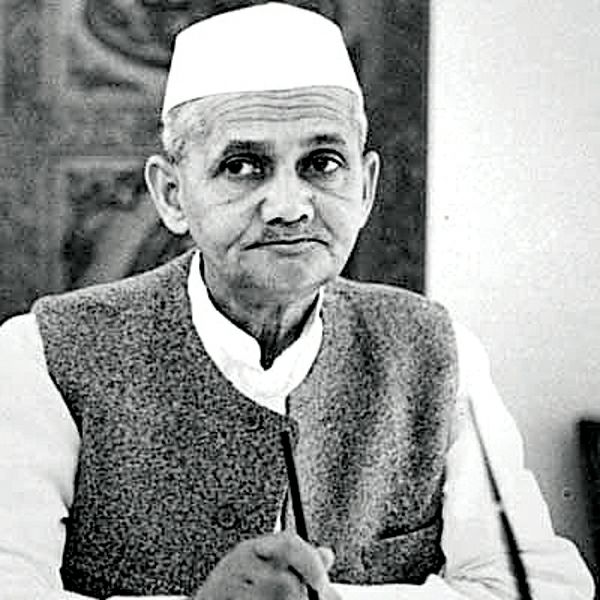
Former Prime Minister Lal Bahadur Shastri had taken a car loan of Rs 5,000 from PNB. After his sudden demise on January 11, 1966, the former prime minister’s widow Lalitha paid back the loan from the pension she received, reported Times of India.

“We went to St Columba’s School on a tonga. Once in a while, we used the office car, but my father did not allow us to use it regularly for any kind of private work. There was a demand at home that we should buy a car,” said Anil Shastri, his son and senior Congress politician, to the publication.

In response to his family’s demands, Shastri approached a senior official from the PMO and discovered that a new Fiat would cost Rs 12,000. Since the family had only Rs 7,000 in the bank, the prime minister decided to apply for a Rs 5,000 loan which the bank sanctioned that very day.

When the prime minister passed away in Tashkent, where he had gone to sign the declaration of peace between India and Pakistan after the 1965 war, the loan remained unpaid. “It was repaid by my mother from the pension she received after my father’s death,” said Anil Shastri.                                                                                                                         


This 1964-model Fiat with the plate number DLE 6 is today exhibited at the Lal Bahadur Shastri Memorial in the national capital.

Source….www.thebetterindia.com

Natarajan