|
God is not a separate entity. Man is the image of God. Scriptures declare that God appears in human form (Daivam maanusha rupena). Though God has no separate form, Avatars descend from time to time to show how human lives can be divinised. I have often declared that God does not come down as Avatar to relieve individuals of their troubles and sorrow and to confer joy and happiness on them. Difficulties, troubles and worries come in the natural course as a consequence of your past actions. The Gita declares: Human beings are bound by merits and demerits (Karma) from previous lives (Karmaanubandheeni manushya loke). As is your action, so is the reaction. When you stand before a mirror and offer salutations, the salutation is reflected by the image. If you scowl at the mirror, the harshness is reflected back at you.
|
message for the day

Message For the Day…” One Must Pay Due Care to Understand the Teachings of Great Avatars…”
There may be a few statements in Bhagavad Gita or other scriptures that might appear to contradict each other. For instance, in the Gita at one place, Lord Krishna stresses the need for action, at another the adherence to Dharma, and in another place commends renunciation of all Dharma and urges complete surrender to the Lord. These apparent contradictions are not contradictions. The teaching varies according to the state of spiritual development of the person concerned and the situation in which one is placed. The lesson here is one must pay due care and attention to understanding completely the inner significance of the great teachings of the Avatars and sages before any criticism is attempted.

Meet Mr. Arvind Subramanian … Chief Economic Adviser to Govt. Of India…
After his candidacy first emerged in August, US based economist Arvind Subramanian has finally been selected as chief economic adviser by the Indian government.

This announcement came at a newsconference in New Delhi where Subramanian was present. He is a development economist who worked closely with Reserve Bank of India (RBI) Governor Raghuram Rajan when both were at the International Monetary Fund (IMF).
According to analysts, one of the prime factors that tipped scales in favour of Arvind Subramanian was his proximity to RBI governor Raghuram Rajan. Narendra Modi personally handpicked Arvind to be his chief economic adviser.
Confirming his appointment in an impromptu news conference outside the Finance Ministry, Mr Subramanian said: “It is a great honour… to serve in a government that has a mandate for reform and change.” He said macro-economic stability and creating favourable conditions for investment will be priorities.
Traditionally, the chief economic adviser is responsible for producing the annual Economic Survey – a document on the state of economy that underpins the drafting of the Budget – and a mid-year economic update that is presented to Parliament.
Recently, Mr Subramanian criticised the Indian government’s decision to derail a WTO deal struck last year to streamline trade procedures by tying it to a separate controversy over food subsidies.
He also criticised Mr Jaitley’s maiden budget in July for being too optimistic in its revenue forecasts.
Mr Subramanian was educated in India and Britain and went on to serve at the IMF and at the forerunner to the World Trade Organization, before taking senior academic posts at Harvard and Johns Hopkins universities in the United States.
In 2011, Foreign Policy magazine has named him as one of the world’s top 100 global thinkers. He obtained his undergraduate degree from St. Stephens College, Delhi; his MBA from the Indian Institute of Management at Ahmedabad, India; and his M.Phil and D.Phil from the University of Oxford, UK.
Below is a small bio of Arvind Subramanian (Courtesy- Peterson Institute of International economics)
Arvind Subramanian is the Dennis Weatherstone Senior Fellow at the Peterson Institute for International Economics and senior fellow at the Center for Global Development. His book Eclipse: Living in the Shadow of China’s Economic Dominance was published in September 2011, and he is coauthor of Who Needs to Open the Capital Account? (2012). Foreign Policy magazine has named him as one of the world’s top 100 global thinkers in 2011.
He was assistant director in the Research Department of the International Monetary Fund. He served at the GATT (1988–92) during the Uruguay Round of trade negotiations and taught at Harvard University’s Kennedy School of Government (1999–2000) and at Johns Hopkins’ School for Advanced International Studies (2008–10).
He has written on growth, trade, development, institutions, aid, oil, India, Africa, and the World Trade Organization. He has published widely in academic and other journals, including the American Economic Review (Papers and Proceedings), Review of Economics and Statistics, Journal of International Economics, Journal of Monetary Economics, Journal of Public Economics, Journal of Economic Growth, Journal of Development Economics, Brookings Papers on Economic Activity, Oxford Review of Economic Policy, International Monetary Fund Staff Papers, Foreign Affairs, World Economy, and Economic and Political Weekly.
He has also published or been cited in leading magazines and newspapers, including the Economist, Financial Times, Washington Post, New York Times, Wall Street Journal, Newsweek, and New York Review of Books. He contributes frequently to the Financial Times and is a columnist in India’s leading financial daily, Business Standard.
He advises the Indian government in different capacities, including as a member of the Finance Minister’s Expert Group on the G-20. His book India’s Turn: Understanding the Economic Transformation was published in 2008 by Oxford University Press.
With agency inputs
Source::::www.dnaindia.com
Natarajan
” Being Kind is More Important than Being Right …” !!!
Story: Great Justice!
An Indonesian judge by the name of Marzuki was sitting in judgment of an old lady who pleaded guilty of stealing some tapioca from a plantation.
In her defense, the old lady admitted to the Judge that she was indeed guilty of the crime because she was poor and her son was sick while her grandchild was hungry.
The plantation manager insisted that she be punished as a deterrent to others.
The judge going through the documents then looked up and said to the old lady, “I’m sorry but I cannot make any exception to the Law and you must be punished accordingly”.
The old lady was fined Rp.1 million (USD 100) and if she could not pay the fine then she will be jailed for 2 1/2 years as demanded by the Law.
She wept as she could not pay the fine.
The Judge then took her hat and put in Rp.100,000 into the hat and said, “In the name of justice, I fine all present in the Court @ Rp.50,000 (USD 5.50) each as dwellers of this City for letting a child starve until her grandmother is compelled to steal to feed her grandchild. The Registrar will now collect the fines from all present.”
The Court managed to collect Rp 3.5 million (USD 350) including the fine collected from the plantation manager, whereby the fine was paid off and the rest was given to the old lady!
SOURCE:::: UNKNOWN…input from a friend of mine
Natarajan
World”s Most Influential Teens Named By TIME …
Nobel Peace prize winner Malala Yousafzai, Obama’s daughters and Joshua Wong, the face of the Hong Kong protests against China have been named by Time magazine among its list of the 25 most influential teenagers of 2014.

Pakistani schoolgirl Malala Yousafzai, the joint winner of the Nobel Peace Prize, waves after speaking at Birmingham library in Birmingham, central England. Photographs: Darren Staples/Reuters
“Teens today might have a mixed reputation, but there’s no denying of their influence. They command millions of fans on Twitter and Vine, start companies with funds they raised on Kickstarter, steal scenes on TV’s most popular shows, lead protests with global ramifications, and even win Nobel Peace Prizes,” Time said as it analysed factors like social-media followings, cultural accolades and business acumen to compile the list.

Mid-Atlantic Region pitcher Mo’ne Davis (3) throws a pitch in the first inning against the West Region at Lamade Stadium. Photographs: Reuters
The youngest on the list is 13-year-old Mo’ne Davis of Pennsylvania, a female baseball player who appeared on the cover of Sports Illustrated.
Obama’s daughters Sasha, 13, and Malia, 16, are also on the list.
“A lot of dads get squeamish about their daughter’s first prom, but only Malia Obama’s date status could be called “classified information”, as the President joked,” on TV earlier this year.
Time said the elder Obama sibling has “emerged as a figure of national interest” and her appearance at Chicago’s Lollapalooza Music Festival caused almost as much of a stir as the musicians themselves.

U.S. President Barack Obama and his daughters, Malia (C) and Sasha (L), depart the White House for the presidential retreat Camp David in Maryland. Photographs: Larry Downing/Reuters
While Malia’s name has “spiked in popularity” after her father’s election, Sasha has become an icon in her own right.
Wong, 18 has become the face of the Hong Kong protests, a civil disobedience movement demanding that China stages unfettered elections for Hong Kong’s top political position.

Joshua Wong, leader of the student movement take a pause after delivering a speech to protesters outside of Hong Kong’s Chief Executive Leung Chun-ying offices in Hong Kong. Photographs: Carlos Barria/Reuters
“To some, he’s a symbol of hope — a youth rallying his peers to fight for a cause they believe in. In mainland China, however, many argue Wong is an extremist and an emblem against China’s storied national order,” Time said.
Jazz Jennings, 14, has been lauded by Time for her support towards transgender rights. Jennings started living as a girl at the age of 5.

Transgender teen Jazz Jennings arrives at the 24th Annual GLAAD Media Awards at JW Marriott Los Angeles at L.A. LIVE in Los Angeles, California. Photographs: Jonathan Alcorn/Reuters
She co-wrote a children’s book, “I Am Jazz”, loosely based on her life that aims to help other kids understand what the term ‘transgender’ means.
Yousafzai, 17, became the youngest-ever recipient of the Nobel Peace Prize two years after Taliban gunmen shot her in the head while she was riding to school.
“The accolade caps an impressive — albeit early — career for Yousafzai, who has used her organisation, the Malala Fund, as a platform to promote girls’ education, help Syrian refugee children and demand the return of the Nigerian girls kidnapped by Boko Haram, among other things,” Time said.
In April, she received an honorary doctorate in civil law from the University of King’s College in Canada.
“Malala is a testament that women everywhere will not be intimidated into silence,” former Arizona Congresswoman Gabrielle Giffords, who also survived a shooting incident, wrote of Yousafzai in this year’s Time 100.
“We will speak, no matter how hard it is to do so.”
The list also includes 15-year-old Flynn McGarry, who has emerged as a chef in the culinary industry and 15-year-old Erik Finman, founder of a website that offers tutoring over video chat for teens.
The other names in the list include actor Will Smith’s 16-year-old-son Jaden Smith, 17-year-old Lydia Ko, who ranks third among women golfers in the world and 17-year-old Salma Kakar, the lead rider on the co-ed Afghan National Cycling Team.

Actor Jaden Smith attends a hand and footprint ceremony for actor Jackie Chan at the TCL Chinese Theatre in Hollywood, California. Photographs: Jonathan Alcorn/Reuters
Kakar’s dream is to “wave the flag of Afghanistan at the Olympics one day, and to show the world how far Afghan women have come.”
Ciara Judge, 16, Emer Hickey, 17, and Sophie Healy-Thow, 17, from Ireland also made it to the list because they took home the grand prize at the Google Science Fair after wowing the judges with their discovery ‘Diazotroph’, a bacteria that sucks nitrogen from the atmosphere into soil, speeding up the germination of cereal crops and increasing their yield.
SOURCE::::Rediff.com
Natarajan
Message For the Day…” What is Non-Violence …” ?
The observance of non-violence has been described as the highest form ofDharma. All the violence in the world today is due to the fact that people do not lead righteous lives. It has been said that the body has been given essentially to pursue Dharma. Among the teachings of the Buddha, the foremost was Ahimsa (not causing harm to anyone). Non-violence is not merely refraining from inflicting injuries on others with one’s limbs or weapons. Non-violence has to be practised with Thrikarana Shuddhi (purity of thought, word and deed). There should be no ill-feelings, which is itself a form of violence. To cause harm to others through one’s body is himsa(violence). No one should be harmed even by speech; our words should be sweet, pleasing and wholesome. All actions should be helpful to others

” பிள்ளையார் இங்கே தும்பிக்கை ஆழ்வார்…” !!!
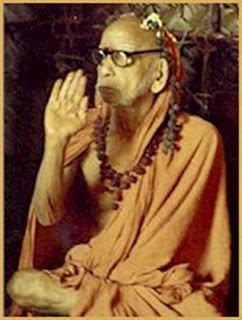
”மகா பெரியவா தனக்கு நெருக்கமா இருக்கறவாகிட்டயும், தன்னைச் சுத்தி இருக்கறவாகிட்டேயும்தான் கருணை காட்டுவார்னு நினைச்சா, அது தப்பு. அவருக்கு எப்பவுமே ஜனங்கமேல அபரிமிதமான அன்பு உண்டு. அவங்க கஷ்டப்படறதைப் பொறுத்துக்கவே மாட்டார். அவரால அதை சகிச்சுண்டு இருக்கமுடியாது!” என்ற பீடிகையுடன், பல வருடங்களுக்கு முன்னால் நடந்த நிகழ்ச்சி ஒன்றை விவரித்தார் பட்டு சாஸ்திரிகள்.
”திருமழிசைஆழ்வார் பிறந்த க்ஷேத்திரம் திருமழிசை. அந்த ஊருக்குப் பக்கத்திலேயே நூம்பல்னு ஒரு கிராமம் இருக்கு. இங்கே, மகா பெரியவா ஒருமுறை முகாமிட்டிருந்தார்.
ஒருநாள்… திருக்குளத்துல ஸ்நானம் பண்ணிட்டு, பக்கத்திலேயே இருக்கிற பெருமாள் கோயிலுக்கு வந்தார் பெரியவா. அப்போ மணி 11 இருக்கும்; சுள்ளுனு வெயில் அடிச்சிண்டிருந்தது. சூடுன்னா அப்படியொரு சூடு!
கோயில் வாசல்ல பெரிய கதவும், அதுலேயே சின்னதா ஒரு கதவும் இருக்கும். அதைத் திட்டிவாசல்னு சொல்லுவா! அந்த வழியா உள்ளே போன பெரியவா, மதிலை ஒட்டி கொஞ்சம் நிழல் இருந்த இடத்துல போய் அப்படியே சாய்ஞ்சு உட்கார்ந்துட்டார். அவருக்கு எதிரே அடியேன்; பெரியவா கேக்கறதுக்கு எல்லாம் பதில் சொல்லிண்டு இருந்தேன்.
வெயில் நெருப்பா கொதிச்சிண்டு இருந்த இடத்துல நின்னுண்டிருந்தேன். இன்னும் கொஞ்ச நேரம் அப்படியே நின்னுண்டிருந்தா, காலே பொசுங்கிடும்போல இருந்துது. அப்படியரு சூடு! பெரியவாகிட்டே பேசிண்டிருந்த அதே நேரம், தரையோட சூடு பொறுக்கற வரைக்கும் ஒரு கால், அப்புறம் சட்டுன்னு அடுத்த கால்… இப்படியே கால்களை மாத்தி மாத்தி வெச்சு நின்னு சமாளிச்சுண்டிருந்தேன்!
மகா பெரியவா, நம்மோட மனசுல என்ன இருக்குங்கறதையே தெரிஞ்சுக்கற மகான். எதிர்ல நிக்கற என்னோட நிலைமை அவருக்குத் தெரியாம இருக்குமா? சட்டுன்னு பேச்சை நிறுத்தின பெரியவா, ”வெளியில என்னவோ பேச்சு சத்தம் கேக்கற மாதிரி இருக்கு. என்னன்னு போய்ப் பார்த்துட்டு வந்து சொல்லு!”ன்னார்.
விறுவிறுன்னு வெளியே வந்தேன். வாசல்ல நின்னு எட்டிப் பார்த்தேன். அங்கே ஒரு நூத்தம்பது, இருநூறு பேர் நின்னுண்டிருந்தா. எல்லாரும் மகா பெரியவாளை தரிசிக்கிறதுக்காகத்தான் நிக்கறாங்கன்னு தோணுச்சு. பெரியவாகிட்ட வந்து விவரத்தைச் சொன்னேன்.
ஆனா மகா பெரியவாளோ, ”அவா எதுக்கு வந்திருக்கா? ஸ்வாமி தரிசனத்துக்குதானே வந்திருக்கா?! சரியா கேட்டுண்டு வா!”ன்னு மறுபடியும் என்னை அனுப்பினார்.
‘அடடா… பெரியவா சொல்றதுபோல, வெளியில நிக்கறவா எல்லாரும் ஸ்வாமி தரிசனத்துக்கு வந்திருக்கலாம், இல்லையா? நமக்குத் தோணாம போச்சே! பெரியவாளை தரிசனம் பண்ணத்தான் வந்திருக்கானு நானாவே எப்படி நினைச்சுக்கலாம்?’ என்று யோசிச்சபடி, வாசல் பக்கம் நகர்ந்தேன்.
”அப்படியே கையோட, அவாள்லாம் வெயில்ல நிக்கறாளா, நிழல்ல நிக்கறாளானு பார்த்துண்டு வா”ன்னார் பெரியவா.
‘நீ மட்டும்தான் கால் சூட்டோட என்கிட்ட பேசிண்டு நிக்கறதா நினைக்கறியோ?! உன்னைப்போல எத்தனை பேரு வெயில்ல கால்கடுக்க நின்னுண்டிருக்கானு உனக்குத் தெரியவேணாமா?’ன்னுதான், மகா பெரியவா என்னை அனுப்பிவைச்ச மாதிரி தோணிச்சு எனக்கு.
ஜனங்க கூட்டமா நின்னுண்டிருந்த இடத்துக்கு வந்தேன். ”எல்லாரும் கோயிலுக்கு ஸ்வாமி தரிசனத்துக்கு வந்திருக்கேளா… இல்ல, மகா பெரியவாளை தரிசிக்க வந்திருக்கேளா?”ன்னு கேட்டேன்.
”பெரியவாளை தரிசனம் பண்ணி, ஆசீர்வாதம் வாங்குறதுக்குதான் வந்திருக்கோம்”னு கோரஸா பதில் சொன்னா. ஓடி வந்து பெரியவாகிட்ட விஷயத்தைச் சொன்னேன்.
அவர் உடனே எல்லாரையும் உள்ளே அனுப்பிவைக்கச் சொன்னார். ”இங்கே மதிலோட நிழல் விழறது. எல்லாரும் அப்படியே நிழல்ல உட்கார்ந்துக்குங்கோ”ன்னார்.
வெயிலின் உக்கிரத்தைத் தாங்கமுடியாம தவிச்ச என்னோட நிலைமையைக் கவனிச்ச அதே நேரம், வெளியே ஜனங்க நின்னுட்டிருக் கிறதையும், அவங்களும் வெயில்ல கஷ்டப் படுவாங்களேங்கிறதையும் பெரியவா யோசிச்சு, அவங்களை உடனே உள்ளே அனுப்பச் சொன்னார் பாருங்கோ, அதான் பெரியவாளோட பெருங்கருணை.
இதைக் கேட்கறதுக்கு ரொம்பச் சின்ன விஷயம்போலத் தெரியலாம். ஆனா, எந்த ஒரு சின்ன விஷயத்துலேயும் நுணுக்கமான பார்வையோடு, ஜனங்க மேல மகா பெரியவா காட்டின அன்பையும் அக்கறையையும்தான் நாம இங்கே முக்கியமா கவனிக்கணும்.
கூட்டத்தோடு பேசிண்டிருந்த நேரத்துல, ”நீ போய் கோயிலைச் சுத்திப் பார்த்துட்டு வா”ன்னு என்னை அனுப்பினார். பெரியவா உத்தரவு ஒவ்வொண்ணுக்கும் ஏதாவது உள் அர்த்தம் ஒண்ணு இருக்கும்.
நான் பிராகாரத்தை வலம் வந்தப்ப, அங்கே பிள்ளையார் சந்நிதியைப் பார்த்தேன். ஆச்சரியமும் குழப்பமுமா இருந்தது. தென்கலை நாமத்தோட காட்சி தந்தார் பிள்ளையார். பெருமாள் கோயில்ல பிள்ளையார் எப்படி? தலையைப் பிய்ச்சுண்டேன். யோசிக்க யோசிக்க, பதிலே கிடைக்கலை.
கோயிலைச் சுத்தி முடிச்சு, மகா பெரியவா எதிரே வந்து நின்னேன். என்னை ஒருகணம் உத்துப் பார்த்தார்.
”என்ன… தென்கலை நாமம் போட்ட பிள்ளையார் இருக்காரேனு பிரமிச்சுட்டியோ? வைஷ்ணவ சம்பிரதாயப்படி அவரை ‘தும்பிக்கை ஆழ்வார்‘னு சொல்லுவா!”னு விளக்கம் சொல்லிட்டுச் சிரிச்சார் பெரியவா.
SOURCE::::www.periva.proboards.com
Natarajan
Read more: http://periva.proboards.com/thread/3023/thumbikkai-aazhwar#ixzz3GCEjiAW2
Happy Birthday ‘ People’s President ‘… DR. Abdul Kalam Turns 83 Today !!!

Indians, let’s wish ‘happy birthday’ to one of the most popular Rashtrapati the country every had – Dr APJ Abdul Kalam ! Kalam, also known as ‘missile man of India’, is celebrating his 83rd birthday today. He assumed the office as India’s 11th president in 2002. During his tenure, he made the highest office in India accessible to the common man in the country and was affectionately called ‘people’s president’. Kalam was a gentle, amiable, approachable president, known for his simplicity. Before his term as the country’s Rashtapati, Kalam worked as an aerospace engineer with Defence Research and Development Organisation (DRDO) and Indian Space Research Organisation (ISRO). Kalam was born into a family of Tamil Muslims in Rameswaram, a small temple town located in the southern most edge of India in 1931. A brilliant student, Kalam graduated from Madras Institute of Technology and joined DRDO and later, ISRO. “After observing my teacher teaching me how birds fly…I aimed something to fly…Then I pursued my studies in Physics and aerospace,” he said recently at an event attended by students. There are many missions to the credit of this ‘missile man’. Kalam is well-known for his work on the development of ballistic missile and launch vehicle technology and he played a pivotal role in India’s Pokhran-II nuclear tests in 1998, the first since the original nuclear test by India in 1974. Kalam was the project director of India’s first indigenous Satellite Launch Vehicle (SLV-III) which successfully deployed the Rohini satellite in earth’s orbit in July 1980. In a poll conducted by news channel CNN-IBN, he was selected as India’s Best President. The country has conferred on him the prestigious Bharat Ratna, Padma Vibhushan and Padma Bhushan. During his term as Rashtrapati, Kalam visited universities and schools across the country, interacted with children. No wonder, his 79th birthday was recognised as World Student’s Day by United Nations. Kalam has also received honorary doctoral degrees from 36 unversities and institutions worldwide. Kalam has penned a number of books including ‘The Wings of Fire’, his autobiography, which has been translated and published in 13 languages so far. His books are largely popular among the student community in the country. “For the last one decade when I became President and after it, I had one dream and that was when can I in my lifetime see smile on a billion faces,” he recently told a boy who asked him what kept him motivated all the time. More power to this great visionary !
SOURCE::::news.oneindia.in
Natarajan
Read more at: http://news.oneindia.in/india/happy-birthday-people-s-president-apj-abdul-kalam-tur-1540924.html
Message For the Day…” Why Lord Krishna told Arjuna ‘ You are My Devotee and My Friend ‘ …” ?
Krishna told Arjuna, “You are My devotee and My friend.” Neither Arjuna declared himself as a devotee nor Krishna remained content with just declaring Arjuna to be His devotee. Why did Krishna say: “You are My friend?” This declaration has a profound spiritual significance. This will be clear only when we practice the spiritual life. If merely the Lord were to call Arjuna, “My friend” his ego could get inflated and he could take undue liberties with Krishna. If He were to say, “My dear, you are My devotee,” he could become extremely submissive and maybe even develop fear towards the Lord. Fear should not be instilled; nor should he be encouraged to take excessive liberties. Hence the terms devotee and friend, were used by Krishna. “You are My friend. You may be free with Me up to a point. You are My devotee. So observe certain restraints. Exercise control over yourself in your devotion.”

Message For the Day…” What is the Meaning of BABA …” ?
Fix your faith firmly in the Lord and not on the things of the world. When you have strong faith in the Lord, your discrimination will be perfect. You will be guided by your Conscience, which will always lead you properly. In vedantic parlance, the Conscience is called‘Chit’. God is ‘Sat-Chit-Ananda’. Sat means Being, Chit means Awareness. When and where these two are combined, there is Bliss. This is the meaning of the divine name, BABA – Being +Awareness Bliss + Atma. All of you are aspirants of bliss. You must enjoy uninterrupted bliss. To attain that Ananda (Bliss), you must combine Sat (Being) and Chit (Awareness). Without Divinity, there is no bliss or joy. Hence always think of Him, Live in His presence.


