10 home remedies for diabetes that really work…

Diabetes is one of the fast growing lifestyle disorder that can be effectively managed with few lifestyle modifications and eating a healthy diet. Characterized by high blood sugar levels in the body, this condition affects the body’s ability to either produce insulin or to use insulin effectively. Although there are numerous treatment options available to keep your blood sugar levels in control, home remedies can work wonders in achieving this task. Here are top 10 effective home remedies to maintain your blood sugar levels and lead a healthy life with diabetes.

#1 Holy Basil (tulsi) leaves

The leaves of holy basil are packed with antioxidants and essential oils that produce eugenol, methyl eugenol and caryophyllene. Collectively these compounds help the pancreatic beta cells (cells that store and release insulin) to function properly and increase sensitivity to insulin. An added advantage is that the antioxidants present in the leaves help beat the ill effects of oxidative stress.

Tip: Consume two to three tulsi leaves whole or about one tablespoon full of its juice on an empty stomach to lower the blood sugar levels. Here are top 10 health benefits of tulsi

#2 Flax seeds (Alsi)

Due to their high fibre content flaxseeds help digestion and aid in the proper absorption of fats and sugars. Consuming flax seed helps reduce a diabetic’s postprandial sugar level by almost 28 per cent.

Tip: Consume one tablespoon of ground flaxseed powder every morning on an empty stomach with a glass of warm water. However, do not have more than 2 tablespoons per day, as it can be detrimental to your health. Here are 11 ways to include flaxseeds in your diet.

#3 Leaves of bilberry (neelabadari) plant

The leaves of bilberry have been used in Ayurveda for many centuries to control diabetes. Recently, the Journal of Nutrition stated that the leaves of the Bilberry plant contain high amounts of anthocyanidin, which enhance the action of various proteins involved in glucose transportation and fat metabolism. Due to this unique property, bilberry leaves are a great way to lower one’s blood sugar levels.

Tip: Crush bilberry leaves in a mortar and pestle and consume 100 milligrams of this extract everyday on an empty stomach.

#4 Cinnamon (dalchini)

Also known as dalchini, it improves insulin sensitivity and lower blood glucose levels. Having as little as ½ teaspoon of cinnamon per day can improve one’s insulin sensitivity and help controlling weight, thereby decreasing one’s risk for heart disease.

Tip: Include about 1 gram of dalchini into your daily diet for about a month to help lower blood sugar levels. Read more health benefits of cinnamon.

#5 Green Tea

Unlike other tea leaves, green tea is unfermented and is high in polyphenol content. Polyphenol is a strong antioxidant and hypo-glycaemic compound that helps control the release of blood sugars and helps the body use insulin better. Read more 10 types of flavoured green tea that have 20 health benefits.

Tip: Steep a bag of green tea in hot water for 2-3 minutes. Remove the bag and drink a cup of this tea in the morning or before your meals.

#6 Drumstick leaves

Also called moringa, the leaves of this plant are best known for their ability to boost one’s energy. In the case of diabetics, the moringa leaf increases satiety and slows the breakdown of food and lowerblood pressure.

Tip: Take a few drumstick leaves, wash and crush them to extract their juice. Now take about 1/4th cup of this juice and drink it on an empty stomach, every morning to keep your sugar levels under control.

#7 Psyllium husk (Isabgol)

Also known as psyllium husk is often used as a laxative. When isabgol comes in contact with water, it swells to form a gel-like substance. This slows the breakdown and absorption of blood glucose. Isabgol also protects the stomach lining from ulcers and acidity.

Tip: Cosume isabgol after every meal, ideally with milk or water. Avoid having it with curd as it can lead to constipation. Read in detail about 8 health benefits of isabgol or psyllium husk you didn’t know.

#8 Bitter gourd (Karela)

Rich in plant insulin-polypeptide-P, a bio-chemical that mimics the insulin produced by the humanpancreas and thus, reduces sugar levels in the body. You may like to read about home remedies for diabetes. It is also known to be highly beneficial for diabetics owing to the two very essential compounds called charatin and momordicin, which are the key compounds in lowering one’s blood sugar levels.

Tip: Consume karela at least once a week either as a subzi or in a curry. If you want quick results, try having a glass of karela juice on an empty stomach once in three days. Read more about 8 healthy reasons to drink bittergourd or karela juice!

#9 Neem

Found abundantly in India, the bitter leaf has a number of amazing medicinal properties. Neemenhances insulin receptor sensitivity, helps improve blood circulation by dilating the blood vessels, lowers blood glucose levels and reduces one’s dependence on hypoglycaemic drugs.  Here are more health benefits of neem.

Tip: Drink the juice of the tender shoot of neem leaves on an empty stomach for best results.

#10 Indian blackberry (Jamun)

A glycoside present in the seeds of Indian blackberry prevents the conversion of starch to sugar. It lowers blood sugar and helps prevent insulin spikes. Jambul also has properties that can protect you from heart diseases and other vascular disorders.

Tip: Eat around 5 – 6 jamuns in the morning to control your blood sugar levels. Alternatively, you can also add a spoonful of jamun seeds powder to a glass of warm water or milk and drink this daily for better control of diabetes.

SOURCE:::: https://in.lifestyle.yahoo.com/

Natarajan


Diapers Help Your Plants Grow … !!!

Why Do Gardeners Buy Adult Diapers?

When you hear about “adult diapers”, your first thoughts usually have nothing to do with gardening. While this is understandable, after watching this video, you will very likely change the way you think of them.

In this video you’ll see how to use new, or “gently used”, diapers to;

– Make a “super gel” for better gardening
– Cut your watering schedule in half
– Help fresh cut flowers last longer and look awesome
– Start growing seeds the lazy way
– Protect your plants from overwatering and under watering

WARNING: The results, depictions and claims portrayed in this video are based on the limited experiences I had to test the claims prior to production. All information is believed to be true and correct at time of publication, and no information or results have been found to indicate otherwise. Individual results may vary depending on location and application. Use of video content is at own risk.

Find me on FB: https://www.facebook.com/thekingofran…

GRAND THOMPSON …. ” THE KING OF RANDOM”

Special thanks to my friends Scott & Brendo for letting me use their song (“Photographs” – Instrumental). If you like their music, you can download it here: http://bit.ly/ScottBrendoiTunes

Project inspired by: Kipkay (Crazy Diaper Gag!): http://youtu.be/Sk8r8Vo4U_M
and Steve Spangler (The Baby Diaper Secret – Sick Science! #018): http://youtu.be/VTU3JNAlOG8

I love the idea that simple resources can be utilized to help meet our basic survival needs, or help optimize systems with just a shift in thinking, and repurposing our trash. Water and time are both very important resources, and when both can be conserved with very little effort, it’s a major win.

The next time you have a damaged or defected diaper that you’re just going to throw away, why not rip it apart and try some of these experiments for yourself? Just make sure it hasn’t been used for it’s original intended purpose first!

SOURCE:::: http://www.ba-bamail.com and You Tube

Natarajan

All you need to know about World Cup 2015…

Factbox on the 11th edition of the cricket World Cup, which will be co-hosted by Australia and New Zealand from Feb. 14-March 29.

KEY FACTS

The coveted trophy.The coveted trophy.* The first men’s cricket World Cup was held in England in 1975, four years after the first recognised one-day international had been played in 1971, on the fifth day of a washed out test between Australia and England in Melbourne.

* West Indies won the first two tournaments, beating Australia in 1975 and England in 1979 and then lost the 1983 final to India, but have not reached another final since.

* Allan Border’s Australia won the first of their four titles in 1987, sparking a period of dominance by the side in both one-day and test cricket for the next 20 years.

* India also won the 2011 tournament. Pakistan (1992) and Sri Lanka (1996) are the only other winners.

* New Zealand and Australia will host 21 pool matches each, amongst 14 venues, seven in each country. It is the second time the two countries have co-hosted the tournament, having previously done so in 1992.

* Afghanistan will make their World Cup debut, having played three World Twenty20 tournaments.

* There are two groups of seven teams playing a round robin format, with the top four in each pool making the quarter-finals, which will be straight knockouts.

* New Zealand will host one quarter-final in Wellington and one semi-final in Auckland.

* They can possibly reach the final in Melbourne without having played any of their games in Australia. The two co-hosts are in the same pool and play that match on Feb. 28 in Auckland.

* The final will be at the Melbourne Cricket Ground, only the second venue after Lord’s in London, to host more than one final.

RECORDS

* India’s Sachin Tendulkar is the leading run scorer with 2,278 runs in 45 matches and has scored the most centuries (six). He also holds the record for most runs in one tournament, 673 from 11 matches in 2003.

* Australia’s Glenn McGrath has the most wickets, 71 in 39 matches. McGrath also has the best bowling figures of 7-15 against Namibia in 2003.

* South Africa’s Gary Kirsten has the highest score in a World Cup match, making 188 not out against UAE in 1996.

* The highest score in a World Cup match is 413-5 by India against Bermuda in 2007, while the lowest is 36 by Canada against Sri Lanka in 2003.

* Australian wicketkeeper Adam Gilchrist has the most dismissals, 52 from 31 matches (45 catches, seven stumpings), though he could be overtaken by Sri Lanka’s Kumar Sangakkara (46) in this tournament.

* Australia’s Ricky Ponting has taken 28 catches, the most by a non-wicketkeeper.

(Compiled by Greg Stutchbury; Editing by Sudipto Ganguly)

SOURCE:::: www. cricket.yahoo.com

Natarajan


This Boy’s Space Idea Takes him to NASA…

City boy’s space idea takes him to NASA
Sanjay Lakshminarayana
Sanjay will present a paper with a set of plans to explore the outer solar system and beyond

A 20-year-old Bengaluru boy is on his way to Texas to present a paper at the prestigious National Aeronautics and Space Administration (NASA). Sanjay Lakshminarayana, a mechanical engineering student, has been selected to present his ideas and attend conventions. These will study important observations made by recent planetary missions and emerging nuclear technologies for space exploration and travel.

The youngster, who has been interested in space since childhood, will present a set of plans to explore the outer solar system and beyond. The ideas will have a significant focus on nuclear systems as enabling technologies.

Sanjay said he would use this opportunity to discuss the knowledge gaps in exploration of extra-terrestrial environments and the most recent discoveries in this area.

The youngster, who also has an interest in car designing, told BM that his background in mechanical engineering provided a base for his interest in space exploration and his consistent research in the area.

Unexpected invite

The meetings on Sanjay’s agenda have been sponsored by NASA and the American Nuclear Society. Speaking on the unexpected invite, Sanjay said, “It was at a meeting in Russia, that a professor from NASA noticed my interest and sent me an invite for this year”.

Commenting on what this opportunity meant for him, he said, “I want to learn a lot about the latest developments and share my ideas with scientists from across the world. I am looking to gain immense knowledge, a sense of direction and meet people who will be able to help me in my research. ”

The meetings are scheduled between February 3 and March 16. These will be held at various locations including the Lunar Planetary Institute in Houston. Sanjay has also been invited to present his paper titled “The Magneto-Confined Fusion Ion Thruster” at the 2015 Nuclear and Emerging Technologies for Space (NETS-2015) conference to be held in Albuquerque.

Sanjay’s schedule

1. 2015 Nuclear and Emerging Technologies for Space (NETS-2015) conference, March 23rd-26th, Albuquerque

2.Workshop on Early Solar System Impact Bombardment III, February 4th-6th, Lunar and Planetary Institute in Houston.

SOURCE:::: Apurva Venkat, Bangalore Mirror Bureau  in http://www.bangaloremirror.com
Natarajan

Dubai Airport…Busiest in the World…

Dubai Airport The Emirates Terminal at Dubai International Airport.

In 2014, Dubai International took the crown of “World’s Busiest Airport” from London Heathrow International.

More than 70.4 million international passengers moved through the Dubai’s ornate concourses, terminals, and duty-free shops in 2014, up 6.1% from 2013.

Dubai’s numbers were boosted by rapid expansion and a convenient international location.

Also helping the airport’s numbers was Emirates — the world’s busiest airline by international volume — and its fleet of Airbus A380 superjumbo jets, based in Dubai.

Heathrow moved a record-setting 68.1 million international passengers for the year, but clearly couldn’t keep up with Dubai’s growth.

Officials at Heathrow blamed a stalled plan for a third runway for the title loss, according to a spokesman.

Dubai is set to open another concourse this year — and is forecasting 79 million international visitors. Dubai Airports also said it’s planning to build a $US32-billion new airport in the country within 8 years. It will have capacity for 240 million passengers, according to the Wall Street Journal.

And it will need it to match up with Emirate’s growth projections!

Check out pictures of Dubai’s beautiful airport, below.

Dubai airport Duty-free shops in Dubai International Airport.

Dubai Airport A palm-tree lined waiting room in Dubai International Airport.

Dubai Aiport A beautiful concourse at Dubai International Airport.

SOURCE::::: http://www.businessinsider.com.au

Natarajan


” Explain God … An Answer from Eight Year old Boy…” !!!

Little Boy’s Explanation of God — Fabulous!!!

(I certainly don’t think an adult could explain this more beautifully!)

THIS IS FABULOUS!!!

It was written by an 8-year-old named Danny Dutton, who lives in Chula Vista , CA . He wrote it for his third grade homework assignment, to ‘explain God.’ I wonder if any of us could have done as well ?

EXPLANATION OF GOD:

‘One of God’s main jobs is making people. He makes them to replace the ones that die, so there will be enough people to take care of things on earth. He doesn’t make grownups, just babies. I think because they are smaller and easier to make. That way he doesn’t have to take up his valuable time teaching them to talk and walk. He can just leave that to mothers and fathers.’

‘God’s second most important job is listening to prayers. An awful lot of this goes on, since some people, like preachers and things, pray at times beside bedtime. God doesn’t have time to listen to the radio or TV because of this. Because he hears everything, there must be a terrible lot of noise in his ears, unless he has thought of a way to turn it off.’

‘God sees everything and hears everything and is everywhere which keeps Him pretty busy. So you shouldn’t go wasting his time by going over your mom and dad’s head asking for something they said you couldn’t have.’

‘Atheists are people who don’t believe in God. I don’t think there are any in Chula Vista … At least there aren’t any who come to our church.’

‘Jesus is God’s Son. He used to do all the hard work, like walking on water and performing miracles and trying to teach the people who didn’t want to learn about God.. They finally got tired of him preaching to them and they crucified him But he was good and kind, like his father, and he told his father that they didn’t know what they were doing and to forgive them and God said O.K.’

‘His dad (God) appreciated everything that he had done and all his hard work on earth so he told him he didn’t have to go out on the road anymore. He could stay in heaven. So he did. And now he helps his dad out by listening to prayers and seeing things which are important for God to take care of and which ones he can take care of himself without having to bother God. Like a secretary, only more important.’

‘You can pray anytime you want and they are sure to help you because they got it worked out so one of them is on duty all the time.’

‘You should always go to church on Sunday because it makes God happy, and if there’s anybody you want to make happy, it’s God!

Don’t skip church to do something you think will be more fun like going to the beach. This is wrong. And besides the sun doesn’t come out at the beach until noon anyway.’

‘If you don’t believe in God, besides being an atheist, you will be very lonely, because your parents can’t go everywhere with you, like to camp, but God can. It is good to know He’s around you when you’re scared, in the dark or when you can’t swim and you get thrown into real deep water by big kids.’

‘But…..you shouldn’t just always think of what God can do for you. I figure God put me here and he can take me back anytime he pleases.

And…that is why I believe in God.

SOURCE:::: input from a friend of mine

Natarajan

” A day you have learned something is a day …Not Wasted …” !!!

I Never Knew These Amazing Facts

My father used to say: “A day you’ve learned something is a day not wasted.” As usual, he was right. I always feel good learning and discovering things I never knew before. Things like how amazing humans can be, how far our technology has come, how amazing our world is. Here are some facts that I hope will make your day worthwhile.

amazing facts

amazing facts

amazing facts

amazing facts

amazing facts

amazing facts

amazing facts

amazing facts

amazing facts

amazing facts

amazing facts

SOURCE::::: ba-bamail.com

Natarajan

” How to Take Astrophotos with Your Smartphone …” ?

Got a smartphone and a telescope?

It’s a sight now common at many star parties. Frequently, you see folks roaming through the darkness, illuminated smartphone aimed skyward. Certainly, the wealth of free planetarium apps has done lots to kindle a renewed interest in the night sky.

Inevitably, after peering through the eyepiece of a telescope, the question then arises:

“Can I get a picture of that with my phone?”

The short answer is yes, with a little skill and patience.

Now simply aiming a camera at the eyepiece of a telescope — known as afocal astrophotography — and shooting without removing the camera lens and physically coupling it to the telescope is a tricky balancing act. Back in the olden days, the Moon and perhaps the brighter planets were the only bright target within bounds of afocal film photographers, and only then after a lengthy set of estimations to hit the correct focal length.

The advent of digital cameras and ‘live preview’ means that you can now simply aim, shoot, and throw away or delete anything off center or out of focus. Digital “film” is cheap, and most folks simply use trial and error to get the ‘keepers’. The Moon is an especially bright and easy target for beginners to practice on.

moon with iphone

Of course, your typical smartphone, like a webcam, has an imaging chip much smaller than a DSLR. This is why astrophotographers are often tempted to take out a second mortgage (“we don’t really need that second car, do we?” is a common spousal refrain) in pursuit of excellence. Another drawback is that through a smartphone, a planet may look like an overexposed blob.

A simple but effective way to get around this is to affix a light reducing filter to the eyepiece. In fact, I’ve used a variable polarizer during live broadcasts of the Virtual Star Party to great effect. And as with webcam imaging, smartphone astrophotographers now often use automated stacking programs to clean up images and tease out detail. Being an old timer, my faves are still K3CCD Tools and Registax, though many young guns out there now use DeepSkyStacker as well.
telescope

Now, I’ll admit, I’m an “Android guy,” and I have put most of my efforts over the years into planetary imaging with a homemade webcam. We therefore sought out in-the-field expertise from someone on the forefront of iPhone astrophotography.

Andrew Symes has been taking images of the solar system and beyond with his iPhone coupled to his Celestron NexStar 8″ SE telescope for years. He also has one of the few handles on Twitter that we’re envious of, @FailedProtostar. He also ventures out into the chilly nights frequent to his native of Ottawa, Canada to practice his craft, as he observes in temperatures that would drop a Tauntaun.

We caught up with Andrew recently to ask him about some tips of the trade.

sun iphone

Universe Today: I know from doing webcam photography that acquiring, centering and focusing are often more than half the battle. Any tips for accomplishing these?

Andrew: Acquiring, centering, and focusing the objects I’m photographing is definitely the big challenge! To speed and simplify the process, I have a dedicated eyepiece that I use in association with my phone and adapter. Before even heading outside, I attach the adapter to this eyepiece, insert my phone, and hold the unit up to a light source to see if the camera lens is properly aligned with the eyepiece.

It usually takes a bit of fiddling to get things set properly because if the adapter and eyepiece are not perfectly aligned, nothing will show up on the camera screen. It’s better to get that process out of the way in a lit environment than outside in the dark.

I then set that unit aside, and use a separate “adapter-less” zoom eyepiece to locate and center the object in the telescope. Once I’ve acquired the object and am successfully tracking it, I remove my zoom eyepiece and drop in the eyepiece/adapter/phone combo. At that point, the object is usually visible on screen but out of focus since the focus required for the iPhone is different from what works for my eyes!

To ensure proper focus, I display the object on my phone’s screen using a live video app called FiLMiC Pro and adjust the focus until it is sharp. I use that app because it has a digital zoom function that lets me get a closer look at the object than the standard iPhone video camera view. Only once I’m confident that I’ve achieved good focus and am tracking the object properly, will I start to record video or shoot individual frames.

Universe Today: A question I always like to ask everyone… what was your biggest mistake? Are there any pitfalls to avoid?

Andrew: There are a few pitfalls to avoid when doing iPhone astrophotography. In the past, I would attach the adapter outside while the eyepiece was in the telescope but this caused a number of problems. Often, I would accidentally bump the object out of view while attaching and adjusting the adapter and have to align everything all over again.

The weather is also often cold here, and it’s VERY difficult to attach the adapter properly with gloves on, so I would either get really cold hands or spend a lot of unnecessary time fumbling with the adapter with gloved hands. For those reasons, I now prepare the eyepiece/adapter/phone unit indoors in advance as described above.

I also now make sure that my iPhone is fully charged before heading outdoors as I’ve found that the iPhone battery drains very quickly when the camera is running constantly — especially in cold weather. Even with an almost-full battery, there are times here in winter when the phone will simply shut down due to the low temperature so I make sure to only start capturing photos/videos once I’m completely confident in my setup.

Universe Today: You’re really pushing the envelope by doing deep sky astro-pics with an iPhone … anything else that you’re experimenting with or working on?

Andrew: My main focus is definitely still on iPhone astrophotography because I like the quick and “light” setup. I don’t need to bring a laptop outside and don’t need equipment that I wouldn’t normally have on me anyway (other than the adapter itself.)

So, I want to keep pushing the envelope with what I can capture using the phone and my goal is now is to see how far I can go with deep-sky objects. I’d really like to add the Ring and Dumbbell Nebulae to my portfolio, for example, and see if it’s possible to grab even fainter ones.

There are also some non-deep sky targets I’d like to try. I haven’t been successful at capturing a telescopic photo of the ISS, and would love to see if I can catch it transiting the Sun or Moon with my phone. I also still need to capture Uranus and Neptune to round out a solar system collage I put together in 2014!

Lastly, I’m continually experimenting with photo apps to see which are best at capturing and/or processing telescopic images, and have just started using both an iPhone 4S and iPhone 6 to take photos and video. Surprisingly, I still prefer the 4S for planetary imaging as I haven’t been able to properly capture the true colors of planets with the iPhone 6 yet.

The 6 has better camera resolution but seems to be adjusting the exposure of small, faint objects like planets differently than the 4S, so I need to change my routine and techniques to compensate. The methods I’ve become accustomed to using with the 4S don’t seem to translate directly to the 6 so I have some learning yet to do!


messier 13Andrew Symes

Amazing stuff, for sure. And to think, we were all gas-hypering film and using absurdly long focal lengths to get blurry planetary images just a few decades ago!

-Check out more of Andrew”s images, as well as read more about how he does it.


Read more: http://www.universetoday.com/118527/iphone-astrophotography-how-to-take-amazing-images-of-the-sky-with-your-smartphone-tonight/#ixzz3Qdd7YglB

SOURCE::::

Natarajan


Image of the Day…. A Galaxy Observed By NASA…

This image shows Arp 230, also known as IC 51, observed by the NASA/ESA Hubble Space Telescope.

Arp 230 is a galaxy of an uncommon or peculiar shape, and is therefore part of the Atlas of Peculiar Galaxies produced by Halton Arp. Its irregular shape is thought to be the result of a violent collision with another galaxy sometime in the past. The collision could also be held responsible for the formation of the galaxy’s polar ring.

The outer ring surrounding the galaxy consists of gas and stars and rotates over the poles of the galaxy. It is thought that the orbit of the smaller of the two galaxies that created Arp 230 was perpendicular to the disk of the second, larger galaxy when they collided. In the process of merging the smaller galaxy would have been ripped apart and may have formed the polar ring structure astronomers can observe today.

Arp 230 is quite small for a lenticular galaxy, so the two original galaxies forming it must both have been smaller than the Milky Way.  A lenticular galaxy is a galaxy with a prominent central bulge and a disk, but no clear spiral arms.  They are classified as intermediate between an elliptical galaxy and a spiral galaxy.

European Space Agency

Image Credit: ESA/Hubble & NASA, Acknowledgement: Flickr user Det58 

SOURCE:::: http://www.nasa.gov

Natarajan

Feb 1 2015

JAN 30… 1826… Day on which Construction of This Suspension Bridge was Completed…

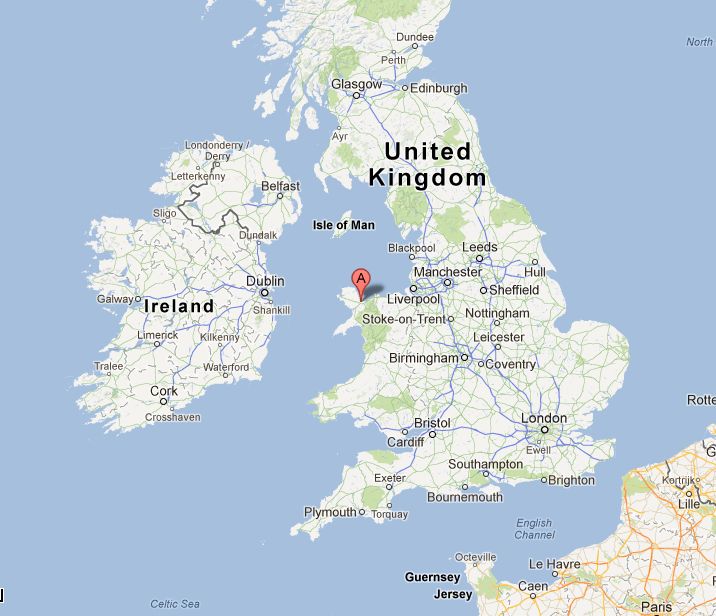
January 30, 1826. Workers completed construction of the first modern suspension bridge on this date. It was the Menai Bridge between Wales on the island of Great Britain and the smaller island of Anglesey, to the west. According to local reports about the bridge from nearly 200 years ago, travel in the strait between Wales and Anglesey was hazardous, due to shifting currents and unpredictable weather patterns. But the island of Anglesey had the Atlantic Ocean and Irish Sea to its west, and, especially after Ireland joined the United Kingdom in 1800, people increasingly wanted to use Anglesey as a jumping off point to reach the Emerald Isle by ferry boat.

A Scottish civil engineer, architect and stonemason named Thomas Telford designed the Menai Bridge. It’s a suspension bridge, with its deck (load-bearing portion) hung below suspension cables on vertical suspenders. Examples of this type of bridge were built in 15th century Tibet and Bhutan, but the Menai Bridge was heralded as the first modernsuspension bridge in the world.

The Menai Bridge reportedly stands 100 feet (about 30 meters) above the waters. It’s tall enough to allow sailing ships to pass underneath. It spans 579 feet (about 175 meters) from the Wales coast to the coast of Anglesey, and it’s supported by 16 large chains.

The chains has been changed out over the years to allow heavier truck traffic to pass through.

The Menai Bridge is still in use today.

Bottom line: On January 30, 1826, workers completed the Menai Bridge between Wales and Anglesey, the first modern suspension bridge in the world.

SOURCE::::  www.earthskynews.org

Natarajan