Best Graduation Speech of the Year…Inspiring One !!!

Source:::: Bill Murphy Jr in http://www.inc.com

Natarajan


Sure, you could have a politician, an entertainer, or some other big name give the graduation speech at your college. But can you beat the advice you’d get from the Navy SEAL who commanded the raid that got bin Laden?

There have been some interesting graduation speaker choices this year: President Obama at the University of California, Irvine; actor Ed Helms at Cornell University, former New York Times editor Jill Abramson at Wake Forest University.

However, I’ve had several people from very different backgrounds recommend one speaker’s remarks in particular, especially when it comes to learning leadershipAdmiral William McRaven, a Navy SEAL who commanded the operation to get Osama bin Laden.

McRaven was the speaker at the University of Texas at Austin, and he focused on the 10 most important lessons that stuck with him as a result of getting through the notoriously difficult SEAL training program. Here are the key takeaways from his remarks.

1. Start the day by making your bed.

Is it surprising that a four-star admiral known as the world’s deadliest man begins by telling you the same thing that your mom probably got after you to do as a little kid?

Start every day making your bed, McRaven advised, which was the first task of the day at SEAL training. If you do so, it will mean that the first thing you do in the morning is to accomplish something, which sets the tone for the day, encourages you to accomplish more, and reinforces that little things in life matter.

“And, if by chance you have a miserable day, you will come home to a bed that is made–that you made,” McRaven said, “and a made bed gives you encouragement that tomorrow will be better.”

2. Find the right people to help you.

Each day at SEAL training, the volunteers had to paddle several miles down the San Diego coast in heavy surf, using small rubber boats. Everyone had to paddle together, he said–on a synchronized count and with similar strength–otherwise the boats would “turn against the wave and be unceremoniously tossed back on the beach.”

That metaphor carries over into life, McRaven said.

“For the boat to make it to its destination, everyone must paddle. You can’t change the world alone–you will need some help– and to truly get from your starting point to your destination takes friends, colleagues, the good will of strangers and a strong coxswain to guide them.”

3. Attitude and heart can outweigh other advantages.

One of the toughest groups of guys at SEAL training was a boat crew of six men, none of whom was more than five feet five inches tall, McRaven said. The bigger students referred to them as “the munchkin crew.”

Simply enduring the training was proof of toughness–the munchkin crew was among just 35 men in the original class of 150 who stuck around–but McRaven said these smaller guys “out paddled, out-ran, and out swam all the other boat crews.”

The lesson? “SEAL training was a great equalizer. Nothing mattered but your will to succeed. Not your color, not your ethnic background, not your education and not your social status. … If you want to change the world, measure a person by the size of their heart, not the size of their flippers.

4. Keep moving forward.

Some of the most uncomfortable moments during SEAL training came when the students were punished for small infractions–having a smudge on a belt buckle during uniform inspections, for example.

“For failing the uniform inspection, the student had to run, fully clothed into the surf zone and then, wet from head to toe, roll around on the beach until every part of your body was covered with sand,” McRaven recalled. “The effect was known as a ‘sugar cookie.’ You stayed in that uniform the rest of the day–cold, wet and sandy.”

Many students couldn’t endure the pain, but the key to succeeding was to accept that sometimes, life just sucks. But you have to move forward.

5. Don’t be afraid of the circuses.

The “circuses” during SEAL training referred to remedial physical training–an extra two hours of calisthenics for failing to meet a standard during the day. Circuses were “designed to wear you down, to break your spirit, to force you to quit.”

Nobody wanted to fail at anything; nobody wanted to have to go to the circus at the end of the day, when they were already exhausted from training. As painful as it was, however, McRaven said the extra two hours of working out started to pay off. The students who were “constantly on the list … got stronger and stronger.”

Pain builds strength and resiliency, McRaven said, both in training and the real world. Don’t be afraid of it.

6. Be resourceful and innovative.

It probably won’t surprise you to learn that SEAL training included an obstacle course. One of the obstacles was called the “slide for life,” and consisted of a 200-foot rope stretched between a 30-foot high tower and a 10-foot high tower.

The record for completing the obstacle course had stood for years by the time McRaven went through. He recalled that another student in his class shattered the record, in part by racing down the slide for life head-first, instead of the slower, safer method that everyone else used.

Taking risks and being innovative often pays off.

7. Don’t back down from the sharks.

I have to admit that the idea of volunteering for something like SEAL training never would have appealed to me, and by this point in McRaven’s description of the course, I’m confident that I made the right life choice. The next training exercise he described in his speech is the “night swim,” in which students have to swim through shark-infested waters.

“They assure you … that no student has ever been eaten by a shark–at least not recently,” McRaven said. “But, you are also taught that if a shark begins to circle your position–stand your ground. Do not swim away. Do not act afraid. And if the shark, hungry for a midnight snack, darts towards you … punch him in the snout and he will turn and swim away.”

If you can face a shark alone in the Pacific Ocean, you can probably face most of life’s other sharks. Don’t be afraid of them.

8. Be your very best in your darkest moments.

Among the many missions Navy SEALs tackle is to conduct underwater attacks against enemy shipping. This involves a pair of SEAL divers swimming two miles underwater, “using nothing but a depth gauge and a compass to get to their target.”

Most of the way during the swim, at least some light can reach the depths at which the SEALs are swimming. Close to the target, however, the shadow of the ship itself blocks all the light, and the SEALs find themselves working in pitch dark, McRaven said.

“Every SEAL knows that under the keel, at the darkest moment of the mission–is the time when you must be calm, composed–when all your tactical skills, your physical power and all your inner strength must be brought to bear.”

9. Sing when you’re up to your neck in mud.

“Hell Week” is the ninth week of SEAL training. It involves six days of almost no sleep and constant physical challenges. Part of this takes place at a swampy area between San Diego and Tijuana known as the Mud Flats.

At one point in McRaven’s Hell Week, the instructors ordered the class into the freezing mud for hours, which “consumed each man till there was nothing visible but our heads. The instructors told us we could leave the mud if … five men would quit.”

Instead, one man in the group started singing. Another joined in, and then another. The instructors threatened them, but they kept singing–which made the whole exercise just bearable enough to finish.

10. Never quit. (Never “ring the bell.”)

In SEAL training, students can quit anytime–and many ultimately do. There is a brass bell at the center of the training compound, and if you decide you want out of the course, all you have to do is go up to it and ring it.

“Ring the bell, and you no longer have to wake up at 5 o’clock,” McRaven said. “Ring the bell and you no longer have to do the freezing cold swims. Ring the bell and you no longer have to do the runs, the obstacle course, the PT–and you no longer have to endure the hardships of training. Just ring the bell.”

The ultimate key to success, McRaven said, is never to ring the bell.

வாழ்த்த்துவோம் வாங்க சஞ்சய் குமாரை !!!

சிறுகச் சிறுக சேமித்து ஏழைகளின் சிகிச்சைக்கு பணம் அனுப்பும் மாணவன்:

பெற்றோருடன் சஞ்சய்குமார்

பெற்றோருடன் சஞ்சய்குமார்

எத்தனையோ நல்ல உள்ளங்கள் ஏழைகளின் உயிர் காக்கும் மருத்துவ சேவைக்காக ஓடோடி வந்து உதவுகின்றனர். சஞ்சய்குமாரின் சேவை சற்றே வித்தியாசமானது.

சென்னை ரெட்ஹில்ஸ் பகுதியை சேர்ந்தவர் வேணுகோபால். வட்டார போக்குவரத்து அலுவல கம் தொடர்பான ஆலோசகராக இருக்கிறார். இவரது மகன் சஞ்சய்குமார். பிளஸ் 1 வகுப்பில் அடியெடுத்து வைத்திருக்கும் இவன் இதுவரை 210 ஏழைகளின் உயிர்காக்க உதவி செய்திருக்கிறான். எப்படி? விவரிக்கிறார் வேணுகோபால்..

11 ஆண்டாக தீபாவளி கொண்டாடுவது இல்லை

சஞ்சய்க்கு அப்போ அஞ்சு வயசு இருக்கும். பேப்பர் படிச்சுட்டு இருந்தேன். அதுல, ஒரு சின்னப் பொண்ணுக்கு இதய அறுவை சிகிச்சைக்கு உதவி கேட்டு போட்டோவுடன் விளம்பரம் வெளியாகி இருந்துச்சு. அதை பார்த்த சஞ்சய், ‘பேப்பர்ல எதுக்குப்பா இந்த அக்கா படத்தைப் போட்டிருக்காங்க?’ன்னு கேட்டான். ‘இந்த அக்காவோட இதயத்துல கோளாறுப்பா. அறுவை சிகிச்சைக்கு உதவி கேக்குறாங்க’ன்னு சொன்னேன். ‘நாம ஏதாச்சும் உதவி பண்ணலாமே’ன்னான். ‘அதுக் கேத்த வருமானம் நமக்கு இல்லியே’ என்றேன். அவங்க அம்மாகிட்டப் போயி ஏதோ பேசிட்டு அஞ்சு நிமிஷம் கழிச்சு வந்தான்.

‘ஏம்பா.. எனக்கு தீபாவளிக்குப் பட்டாசு, புதுத் துணி எடுக்க எவ்வளவு செலவு பண்ணுவே?’ன்னான். ‘2 ஆயிரம் ஆகும்’னு சொன்னேன். ‘அப்படின்னா.. இந்த வருஷம் எனக்கு பட்டாசும் வேண்டாம், புதுத் துணியும் வேண்டாம். அதுக்கு செலவு செய்யுற பணத்தை இந்த அக்காவுக்கு அனுப்பி வைச்சிருப்பா’ன்னு சொல்லிட்டு பதிலுக்குக்கூட காத்திருக்காம வெளிய ஓடிட்டான். அவன் சொன்ன மாதிரியே அந்தப் பொண்ணோட அறுவை சிகிச்சைக்கு 2 ஆயிரம் ரூபாய் அனுப்பி வைச்சோம்.

அந்த வருஷத்துலருந்து சஞ்சய் தீபாவளிக்கு பட்டாசு வெடிக்கிறதில்லை. புதுத் துணி போடுறது இல்லை. அதுக்கு செலவாகும் பணத்தை கணக்குப் பண்ணி கேட்டு வாங்கி வச்சுக்குவான். அவங்க சித்தி பட்டாசு வாங்கித் தர்றேன்னு சொல்லுவாங்க. அவங்கட்டயும் ரூபாயைக் கேட்டு வாங்கிருவான். சஞ்சய் இந்த முடிவு எடுத்துட்டதால நாங்களும் பதினோரு வருஷமா தீபாவளியை ஏறக்கட்டி வைச்சிட்டோம்.

8 விருதுகள் பெற்ற சஞ்சய்

பிறந்த நாளுக்கு புது டிரெஸ் போடுறதோ, கேக் வெட்டிக் கொண்டாடுறதோ இவனுக்குப் பிடிக்காது. அதுக்குப் பதிலா, இவன் படிக்கிற வேலம்மாள் பள்ளியில ஒவ்வொரு வருஷமும் இவனோட வயதின் எண்ணிக்கைக்கு ஏற்ப மரக்கன்றுகள் நடுவான். இவனது சேவையைப் பாராட்டி இதுவரை 8 விருதுகள் கொடுத்திருக்கிறார்கள்.

இவ்வாறு கூறினார் வேணுகோபால்.

அப்பாவின் தோளைப் பிடித்துத் தொங்கியபடி அருகில் நின்று கொண்டிருந்த சஞ்சய்குமார் நம்மிடம் சொன்னான்..

210 பேருக்கு உதவி

யாருக்காச்சும் உயிர்காக்கும் சிகிச்சைக்கு உதவணும்னு பேப்பர்ல விளம்பரம் பார்த்தேன்னா அப்போதைக்கு என் சேமிப்புல எவ்வளவு பணம் இருக்கோ அதை எடுத்து அனுப்பி வைச்சிருவேன். ரூ.500 முதல் ரூ.2 ஆயிரம் வரை என இதுவரை 210 பேருக்கு ஏதோ என்னால் முடிஞ்ச சிறு உதவியைச் செஞ்சிருக்கிறேன்.

டீச்சர் தரும் டியூஷன் ஃபீஸ்

இப்பகூட 2 ஆயிரம் ரூபாய் சேமிச்சு வைச்சிருக்கேன். நாலாம் வகுப்புலருந்து மஞ்சுளா டீச்சர்கிட்ட டியூஷன் படிக்கிறேன். நான் இந்த மாதிரி உதவி செய்றேன்னு தெரிஞ்சு, ‘எனக்கு டீயூஷன் ஃபீஸ் வேண்டாம் சஞ்சய்.. அந்த பணத்தையும் உன் பணத்தோட சேர்த்து, கஷ்டப் படுறவங்க சிகிச்சைக்கு அனுப்பி வைச்சிரு’ன்னு சொல்லிட்டாங்க. அவங்களுக்கு நல்ல மனசு.

மருத்துவ உதவிக்காக நான் அனுப்பிய பணம் கிடைச்சதும், அவங்க எல்லாரும் மறக்காம எனக்கு நன்றி தெரிவிச்சு கடிதம் போடுவாங்க. அதையெல்லாம் பத்திரப்படுத்தி வச்சிருக்கேன். ‘எங்களைப் போன்ற ஏழைகளுக்கு உதவுவதற்காக இந்த தம்பி நல்லா படிச்சு டாக்டரா வரணும். அதுக்காக தினமும் கடவுளிடம் பிரார்த்தனை செய்கிறோம்’ என்றுகூட சிலர் எழுதி இருக் கிறார்கள்.

ஆனால், ஐ.ஏ.எஸ். படிச்சு கலெக்டராகி ஏழைகளுக்குச் சேவை செய்யணும்கிறதுதான் என் விருப்பம், கனவு, ஆசை, லட்சியம் எல்லாம்!

உறுதிபடச் சொன்னான் சஞ்சய்குமார். வாழ்த்திவிட்டு விடைபெற்றோம்.

Message For the Day…” Which is the Right Path … ” ?

One’s selfish needs have to be sacrificed. There must be constant efforts to do good to others. Your desire should be to establish the welfare of the world. With all these feelings at heart, you must meditate on the Lord. This is the right path. If great men and those in authority are thus engaged in the service of humanity and in promoting the welfare of the world, the thieves of passion, hatred, pride, jealousy, envy and conceit will not invade the minds of common people; the values such as Right Conduct, Mercy, Truth, Love, Knowledge and Wisdom will be safe from harm. The six internal foes called the Arishadvargas can be uprooted only by the teachings of great souls, love for God, knowledge of the Lord and the company of the holy and the great.


Sai

Message For the Day…” Be a Ship and Not a Sheep ‘…

One should realise the infinite powers latent in oneself. It is these powers which have enabled mankind to invent the most wonderful kinds of machinery. Humans are, therefore, more valuable than the most precious things in the world. It is human beings who imparts value to things by the changes they make in them, as in the case of diamonds or a work of art. In the spiritual field, humans are enjoined at the very outset to know oneself. One should not be a slave of the senses. Nor should one follow others like sheep. ‘Be a ship and not sheep.’ A ship serves to carry others and cross the Ocean. The one who pursues the spiritual path not only benefits himself but promotes the well-being of others. Consider the body as a vessel, wisdom as a rope ‘and use the vessel to draw the nectar of Divinity from the well of spirituality. Not otherwise can immortality be attained.


Sathya Sai Baba

Message For the Day…” Virtues are the Backbones of Life …”

In the world today, knowledge falls into three categories. (1) In terms of daily life, there is factual knowledge based on perception. To treat facts as truth and fiction as untruth is practical knowledge. (2) In the second category are those who regard the phenomenal world as real and treat all that cannot be seen or heard as unreal or non-existent. They regard Nature as real and God as non-existent. (3) The third category consists of those who make no distinction between one thing and another and hold the view that the whole universe is a projection of the Divine and is permeated by the Divine. This is spiritual knowledge. Doubtless, knowledge of the phenomenal world is necessary. But one should go beyond it to know the Eternal and Unchanging Reality. Education is not the be-all and end-all of life; tt is only a part of it. Virtues are the backbone of life and spiritual path is the only means of cultivating it.


Sathya Sai Baba

Why Don’t Commercial Airplanes Have Parachutes for Passengers? ….


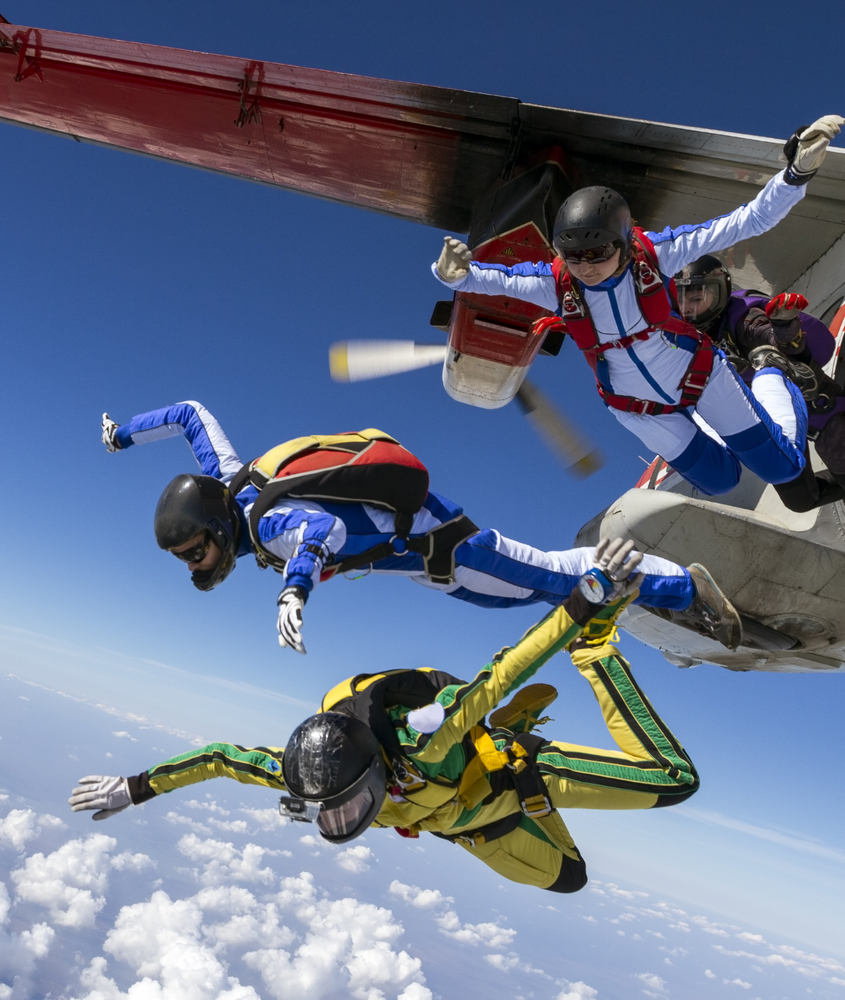
parachuteSeatbelts and airbags in cars save passengers lives. Parachutes save people who, for a variety of reasons, exit a plane in mid-flight. So why aren’t parachutes provided to passengers on commercial airline flights, in case of emergencies?

Because they almost certainly would not save anyone’s life.

Parachuting Basics

When your average daredevil skydives for fun, the plane is typically travelling at between 80 and 110 mph when the skydiver jumps.Tandem and accelerated free fall (AFF) jumps occur between 10,000 and 13,000 feet, while static jumps can be as low as 3,500 feet.

Student divers choosing the easiest, tandem jump, where the newbie is physically and securely attached to an experienced instructor, are still required to undergo “a half hour of basic ground instruction.”

Braver neophytes who wish to fly untethered will have to endure:

Four to five hours of intense ground instruction, including learning body flight maneuvers and hand signals that instructors use to coach the student as they fly alongside.

For an AFF jump, although not harnessed together, freshman flyers are accompanied by two instructors who “hold onto the student’s harness until” it’s deployed.

Those who choose a static line jump also have to take four + hours of training prior to the jump, although the parachute is deployed as the rookie flyer leaves the aircraft.

When skydivers leave a plane, they do it alone or in small groups. When successive groups will be jumping, they try to keep separated by anywhere between 500 and 1500 feet; this is often accomplished by waiting until the preceding group is “back under the tail to 45 degrees behind the airplane” or several seconds in between groups.

Experienced skydivers can make even riskier jumps, although when descents begin at higher than 15,000 feet, “the risk of hypoxia and being significantly affected by altitude” increases dramatically and divers are less able “to make effective safe decisions at critical times.” Therefore, divers who jump from 15,000 feet or higher carry supplemental oxygen.

Further, each parachute weighs around 40 pounds and the equipment is expensive. To be fully outfitted with “rig, main, reserve, ADD, altimeter, jumpsuit, helmet [and] goggles” can run between $5,900 and $9,000.

Commercial Airplane Basics

Perhaps the most popular commercial jetliner is the Boeing 737 family. Its 737-800 can carry nearly 200 people (including the crew).

Although speeds can vary slightly, the 737-800 travels at approximately 600 mph when at its cruising altitude of 35,000 feet. Cruising altitudes are assigned by air traffic controllers and are usually up to 39,000 feet, except for longer flights that may fly higher.

Individual Parachutes Won’t Improve Passenger Safety

Doing the math . . .

Passenger Training

Since four hours of training just to board a plane is unrealistic, passengers would have to read and execute detailed skydiving instructions including how to properly strap the chute on in order to benefit from the parachute. Not everyone is good at following detailed, technical instructions even when time and stress aren’t a factor.  In a situation where the plane is going down and one has only a moment to get the parachute properly strapped on (likely while keeping an oxygen mask firmly attached and perhaps also needing to keep the seat belt on to keep from being thrown about in the cabin), it’s unlikely most would be able to even get this far.

Every Man for Himself

Unless passengers wanted to fly suited up and tethered for a static jump, parachuting from a commercial airplane will be an AFF jump; however, unlike the conditions that students get – training and trained instructors to assist, commercial passengers will just have to learn as they go.

In addition, they will have to keep calm and proceed in an orderly fashion, which will require most to patiently wait their turn to exit. This is not likely to happen.

Parachuting Equipment is Bulky

Adding just parachutes (not counting helmets, altimeters, etc.) for each passenger would add another 8,000 pounds or so to the flight’s weight. In addition, that equipment would take up space, that is already at a premium.

Parachuting Only Makes Sense if Something Happens in Mid-Flight

The only feasible time for people to jump from the plane is while it’s cruising. However, most fatal airline accidents occur on airplanes during takeoff and landing.

Consider that between 2003 and 2012, only 9% of all fatal accidents on commercial flights, seven total, occurred while the plane was cruising; moreover, at least one of those accidents happened as a result of wind shear or thunderstorm. This is a situation where parachuting is extremely dangerous even if you’re an expert.

So even if parachuting were feasible from a jetliner, the conditions in which parachutes could theoretically save lives are almost never apparent in fatal commercial accidents. But even if they were, it still wouldn’t be a good idea.

Jetliners Cruise Very High and Very Fast

At 35,000 feet (three times higher than a typical jump) every passenger would need high altitude equipment (HALO) that includes an oxygen tank, mask and regulator, flight suit, ballistic helmet and altimeter just to manage the thin air. Or they could just pass out from hypoxia and wake up later, hopefully when the parachute automatically deployed at under 15,000-20,000 feet.

Of course, none of this would matter since the plane is moving so fast (600 mph), and it is so large, that many passengers would almost certainly smash into it and suffer debilitating if not fatal injuries.

Whole Plane Parachutes May Save Lives

There is hope, however. Over the past few years, many small planes have been equipped with whole-plane parachutes that slow the craft’s descent. As of late 2013, the largest planes equipped with these safety devices carry five people, but plans are in the works for putting them on larger crafts. As one manufacturer said, “There is no doubt that big commercial airlines of the future will be equipped with some kind of parachute recovery system.”

source:::: Today i foundout.com

natarajan

Bermuda Triangle ….What is the Truth About it ?


bermuda-triangle

The Bermuda Triangle is a large area of ocean between Florida, Puerto Rico, and Bermuda. Over the last few centuries, it’s thought that dozens of ships and planes have disappeared under mysterious circumstances in the area, earning it the nickname “The Devil’s Triangle.” People have even gone so far as to speculate that it’s an area of extra-terrestrial activity or that there is some bizarre natural scientific cause for the region to be hazardous; but most likely, it’s simply an area in which people have experienced a lot of bad luck—the idea of it being a “vortex of doom” is no more real than Bigfoot or the Loch Ness Monster (see The Origin of the Bigfoot Legend and The Origin of the Loch Ness Monster).

The Bermuda Triangle’s bad reputation started with Christopher Columbus. According to his log, on October 8, 1492, Columbus looked down at his compass and noticed that it was giving weird readings. He didn’t alert his crew at first, because having a compass that didn’t point to magnetic north may have sent the already on edge crew into a panic. This was probably a good decision considering three days later when Columbus simply spotted a strange light, the crew threatened to return to Spain.

This and other reported compass issues in the region gave rise to the myth that compasses will all be off in the Triangle, which isn’t correct, or at least is an exaggeration of what is actually happening as you’ll see.  Despite this, in 1970 the U.S. Coast Guard, attempting to explain the reasons for disappearances in the Triangle, stated:

First, the “Devil’s Triangle” is one of the two places on earth that a magnetic compass does point towards true north. Normally it points toward magnetic north. The difference between the two is known as compass variation. The amount of variation changes by as much as 20 degrees as one circumnavigates the earth. If this compass variation or error is not compensated for, a navigator could find himself far off course and in deep trouble.

Of course, despite this now being repeated as an explanation for disappearances in the Triangle on numerous documentaries and articles since then, it turns out magnetic variation is something ship captains (and other explorers) have known about and had to deal with pretty much as long as there have been ships and compasses. Dealing with magnetic declination is really just “Navigation by Compass” 101 and nothing to be concerned about, nor anything that would seriously throw off any experienced navigator.

In 2005, the Coast Guard revisited the issue after a TV producer in London inquired about it for a program he was working on.  In this case, they correctly changed their tune about the magnetic field bit stating,

Many explanations have cited unusual magnetic properties within the boundaries of the Triangle. Although the world’s magnetic fields are in constant flux, the “Bermuda Triangle” has remained relatively undisturbed.  It is true that some exceptional magnetic values have been reported within the Triangle, but none to make the Triangle more unusual than any other place on Earth.

The modern Bermuda Triangle legend didn’t get started until 1950 when an article written by Edward Van Winkle Jones was published by the Associated Press. Jones reported several incidences of disappearing ships and planes in the Bermuda Triangle, including five US Navy torpedo bombers that vanished on December 5, 1945, and the commercial airliners “Star Tiger” and “Star Ariel” which disappeared on January 30, 1948 and January 17, 1949 respectively. All told, about 135 individuals were unaccounted for, and they all went missing around the Bermuda Triangle. As Jones said, “they were swallowed without a trace.”

It was a 1955 book, The Case for the UFO, by M. K. Jessup that started pointing fingers at alien life forms. After all, no bodies or wreckage had yet been discovered. By 1964, Vincent H. Gaddis—who coined the term “Bermuda Triangle”—wrote an article saying over 1000 lives had been claimed by the area. He also agreed that it was a “pattern of strange events.” The Bermuda Triangle obsession hit its peak in the early 1970s with the publication of several paperback books about the topic, including the bestseller by Charles Berlitz, The Bermuda Triangle.

However, critic Larry Kusche, who published The Bermuda Triangle Mystery: Solved in 1975, argued that other authors had exaggerated their numbers and hadn’t done any proper research. They presented some disappearance cases as “mysteries” when they weren’t mysteries at all, and some reported cases hadn’t even happened within the Bermuda Triangle.

After extensively researching the issue, Kusche concluded that the number of disappearances that occurred within the Bermuda Triangle wasn’t actually greater than in any other similarly trafficked area of the ocean, and that other writers presented misinformation—such as not reporting storms that occurred on the same day as disappearances, and sometimes even making it seem as though the conditions had been calm for the purposes of creating a sensational story. In short: previous Bermuda Triangle authors didn’t do their research and either knowingly or unintentionally “made it up.”

The book did such a thorough job of debunking the myth that it effectively ended most of the Bermuda Triangle hype. When authors like Berlitz and others were unable to refute Kusche’s findings, even the most steadfast of believers had difficulty remaining confident in the sensationalized Bermuda Triangle narrative. Nevertheless, many magazine articles, TV shows, and movies have continued to feature the Bermuda Triangle.

Because the number of disappearances in the Bermuda Triangle is no greater than any other similarly trafficked area of the world’s oceans, they don’t really need an explanation. But if you’re still convinced that the Triangle is a ship graveyard, relative to other regions that get around the same number of travelers, here are some natural explanations from the Coast Guard to combat some of the “alien” and other fantastical theories.

The majority of disappearances can be attributed to the area’s unique features. The Gulf Stream, a warm ocean current flowing from the Gulf of Mexico around the Florida Straits northeastward toward Europe, is extremely swift and turbulent. It can quickly erase any evidence of a disaster.

The unpredictable Caribbean-Atlantic storms that give birth to waves of great size as well as waterspouts often spell disaster for pilots and mariners. (Not to mention that the area is in “hurricane alley.”) The topography of the ocean floor varies from extensive shoals to some of the deepest marine trenches in the world. With the interaction of strong currents over reefs, the topography is in a constant state of flux and breeds development of new navigational hazards.

Not to be underestimated is the human factor. A large number of pleasure boats travel the water between Florida’s Gold Coast (the most densely populated area in the world) and the Bahamas. All to often, crossings are attempted with too small a boat, insufficient knowledge of the area’s hazards and lack of good seamanship.

source:::: Today i foundout .com

natarajan

Message For the Day…” Which is Your True Freedom…”

Youngsters feel that they need more freedom, and they dislike sense control. They think that they should be able to go where they like and live as they please, without any restrictions. Birds and animals enjoy such freedom. There is no rule whatsoever for monkeys and dogs. They wander where they want and do what they please whenever they wish. What is the specialty of human beings? A human being is one who understands what ‘Sveccha’ truly means (generally translated as ‘One’s will’). Sva (Self) + Ichcha (Desires or thoughts) = Sveccha. Living with thoughts relating to the Divine Self (Atma) is Sweccha. Following the demands of the body is not Sweccha. After discriminating good and bad, and right and wrong, you must exercise control over the body, observe the thoughts entertained by the mind and follow that which gives satisfaction to your Divine Nature. That is true freedom.


Sathya Sai Baba

Painting by An Elephant… See It To Believe It !!!


pl click the embedded link below for viewing the video.


<div id=”fb-root”></div> <script>(function(d, s, id) { var js, fjs = d.getElementsByTagName(s)[0]; if (d.getElementById(id)) return; js = d.createElement(s); js.id = id; js.src = “//connect.facebook.net/en_US/all.js#xfbml=1″; fjs.parentNode.insertBefore(js, fjs); }(document, ‘script’, ‘facebook-jssdk’));</script>
<div class=”fb-post” data-href=”https://www.facebook.com/photo.php?v=566075863484336″ data-width=”466″><div class=”fb-xfbml-parse-ignore”><a href=”https://www.facebook.com/photo.php?v=566075863484336″>Post</a> by <a href=”https://www.facebook.com/lei.hunga”>Sheikh Nasr</a>.</div></div>


·· 

This is Suda, a 4-year-old elephant from Thailand. Elephants are one of the few species on this planet that are sentient (can perceive feeling; feel emotions), self-aware (conscious of themselves as individuals, i.e. they recognise themselves in a mirror, rather than thinking their reflection is another elephant), and significantly intelligent. These are the three main traits we as humans posses, and they lead us to believe that we are separate from animals; better; more advanced. In reality, we are really not that different from them. It’s such a shame that these beautiful animals are subjected to such cruelty and suffering at the hands of trophy hunters and circus masters, when they are so similar to us.


SOURCE ::::: Sheikh Nasr  in Face Book ….A woderful Post

Natarajan