Chennai floods have passed, but this city crew continues its clean up …

Image: Chennai Trekking Club volunteers

More than 30 young people were assembled on the banks of the Adyar River next to Surya Nagar in Kotturpuram early in the morning on March 2. Armed with orange gloves and white rags, they were on a cleaning mission as part of the Chennai Trekking Club’s efforts to clear the area of all non-biodegradable waste.

According to Peter Van Geit (44), the founder of the Chennai Trekking Club, “This is the 14th session of the cleanliness drive that we are carrying out in the city. The waste that is seen on these banks has not been dumped by the locals but has been washed in during the floods. There were thick layers of garbage here but now it has reduced as we have been cleaning this place for the past two weeks.”

On the other side of the river, heaps of garbage still dot the bank, and the river runs an alarming black colour. “We can reach the other side of the river but the land is too steep for us to clean it up. The water is black in color as many illegal sewage connections are connected to the river,” said Peter.

Most of the waste that can be seen on the slope consist of cloth, glass bottles, plastic bags and other household trash. Peter and his team of volunteers have been gathering together all the non-biodegradable waste for transportation to the common dumping ground in Pallikaranai by trucks of the Chennai Corporation. –

The Chennai Trekking Club began the cleaning drive in the city two months ago, in the aftermath of the Chennai floods. “We started the relief work in different places like Cuddalore and Pulicat. Many slums were in a very bad condition and all the drainage water was inside their homes. We were helping them out in Cuddalore and Pulicat. Later, we decided to start cleaning near the Adyar and Cooum rivers in Chennai.”

The cleaning drive came about as a result of a shared passion among the club’s members for the environment, says Peter. “The Chennai Trekking club carries out trekking trips to beautiful natural locations like virgin forests, mountain ranges, rivers or lakes. Nature is very close to our hearts. So that’s where we started. It also helps to create awareness and reach out to thousands of people and sensitizing people about the issues.”

Building awareness, Peter feels, is an urgent task, as waste disposal is a crucial problem for Chennai. “There are 6000 tonnes of garbage which leaves the city every single day. Most of it ends up in water bodies, rivers and the ocean, which are our lifelines. Chennai has the highest per capita waste generation in the country. There is no segregation of waste in the city and all of it is accumulated in Pallikaranai, one of the few wetlands remaining in India. 90% of our garbage footprint can be reduced immediately by segregating dry (recyclable) and wet (compostable) waste at our home.” –

For the volunteers, many different reasons have drawn them to the initiative. Roopa, a doctor said, “I joined this initiative to help people in cleaning the place but it has changed many things for me. Now, I go home and try keeping the place clean and segregate the waste.”

Bensh, an engineer, said that he comes from an agriculture background and was drawn to an earlier tree plantation initiative. He later joined the cleanliness drive as he thinks it is the social responsibility of the people to do such things. For Mohan, it is about making new friends and enjoying time spent usefully in cleaning such places.

In the past, the group has carried out cleanliness drives in Chitra Nagar, Thiruvanmiyur, Pallaikarnai and few tree parks.

Peter Van Geit began the Chennai Trekking Club about eight years ago. “I’m a very active person in sports. I wanted a platform to connect. I set up a website and started sharing stories and images of trips and in some time people started joining me for cycling, swimming, running and trekking trips.” Now, the Chennai Trekking Club has more than 27000 members.

Besides their current cleanliness drives, the Club also carries out tree-planting initiatives, an annual coastal clean-up drive, workshops on nature, restoration of historical sites and organic farming. It also organizes trekking trips on weekends, swimming classes, triathlons and marathons.

Inspired by their example? Surely a task as large as cleaning up the city could use many more volunteers.

Source…..www.thenewsminute.com

Natarajan


” One-Year Crew Returns to Earth…”

Soyuz capsule with parachute deployed descends through clouds on the way to landing

The Soyuz TMA-18M spacecraft is seen as it lands with Expedition 46 Commander Scott Kelly of NASA and Russian cosmonauts Mikhail Kornienko and Sergey Volkov of Roscosmos near the town of Zhezkazgan, Kazakhstan on Wednesday, March 2, 2016 (Kazakh time). Kelly and Kornienko completed an International Space Station record year-long mission to collect valuable data on the effect of long duration weightlessness on the human body that will be used to formulate a human mission to Mars. Volkov returned after spending six months on the station.

Photo Credit: (NASA/Bill Ingalls)

Source….www.nasa.gov

natarajan

Message for the Day…” Need for experiencing the Holy Essence and Bliss …”

Kind-hearted doctors run medical institutions here and there, serve the diseased and cure the afflicted. Similarly if we had ashrams here and there of holy personages who were experts in the treatment and cure of the ‘birth-and-death disease’, then people could be cured of the afflictions of ignorance, untruth, immorality, and self-aggrandisement. Ignorance produces wickedness, and it can be cured only by the medicine of the knowledge of Brahman (Brahma-jnana), with supplementary doses of the drugs like peacefulness, fortitude, self-control (santhi, sama, dama), etc. Instead, the ‘great men’ of today, for the sake of name and fame, give those who approach them the medicines they demand and the drugs their patients relish! The so-called ‘great’, on account of their weakness and foolishness, fall into perdition even before they taste the spiritual bliss themselves! The holy essence has to be experienced and realised. One’s selfish needs have to be sacrificed.

Sathya Sai Baba

Message for the Day…” Understand the Real Meaning of Mankind and Humanity…”

It is said, “The proper study of mankind is man”. You should cultivate the qualities of kindness and compassion. Only then does one deserve the title of human. You are not only people, but humanity! Today people use the word mankind or humanity without understanding its real meaning. One can rise to the level of the divine only if you develop virtues. God is not somewhere else, you are God. You are not different from God if you have a pure heart. God is the eternal charioteer, who is always present in your heart. He is only a charioteer and not the owner; you are the owner. Lord Krishna is called Parthasarathi because He became the charioteer (Sarathi) of Arjuna (Partha).Similarly, when you develop purity of heart and sacred feelings, God will be your charioteer and take you on the right path. Therefore choose God as your charioteer and lead an ideal life.

Sathya Sai Baba

A Government Programme in Kerala Is Turning Women into Agripreneurs…

Kudumbashree’s holistic approach towards financial empowerment has worked wonders in Kerala.

The ‘Naivedyam’, or food offering, made during different prayers and rituals for Lord Krishna at the world famous Guruvayur temple in Thrissur district of Kerala, includes about 1,200 bananas of a rare variety called ‘Pooja Kadali’. Earlier, to give this daily offering, the temple was dependent on supply from Tamil Nadu, as this special variety was on the verge of extinction in Kerala. However, now, women agriculturists are growing these bananas on 47 acres, under seven panchayats of Kodakara block, and supplying them to the temple, ensuring a taste of homegrown plantain for the revered deity.

“I am part of a five-member Joint Liability Group and we cultivate bananas, vegetables, and paddy on about 15 acres of land. We supply the fruit to the Labour Cooperative Society, which has a deal with the Guruvayur Devaswom Board, under the auspices of the State government’s ‘Kudumbashree’ programme. Around 750 women in 150 groups are cultivating bananas in our block,” says 54-year-old Shobhana Krishnamurthy of Muttathoor panchayat.

Kudumbashree, the Kerala government’s poverty alleviation programme launched in 1998, has brought about a green revolution in the state today.

newseq

Photo source: newseq.blogspot.com

It has done this solely by tapping into women’s potential for farming and entrepreneurship.

“The Guruvayur temple only accepts ‘Pooja Kadali’ of a stipulated size (7000 apex.), so those bunches that don’t meet the criteria are then utilised for making ‘Rasayanam’, an ayurvedic preparation, in collaboration with an Ayurvedic pharmaceutical company. About 20,000 bottles of ‘Rasayanam’ are being made in our block every month,” adds Krishnamurthy.

Farming has taken off in a big way among women under Kudumbashree’s collective farming and ‘Samagra’ projects, implemented with active participation from Panchayati Raj Institutions (PRIs) and supported by a farming subsidy. Not only has the project increased agricultural production, it has also brought considerable fallow land back under cultivation and financially empowered thousands of women.

Joint Liability Groups (JLGs), structured under the National Bank for Agriculture and Rural Development (NABARD) guidelines, have been formed to ensure agricultural credit from banks for women cultivators. The JLGs come under the interest subsidy scheme of Kudumbashree, when they avail agricultural loans from banks – the state government provides a subsidy of five per cent on the seven per cent interest of agricultural loan. So far, around 10,543 JLGs have availed of loans amounting to over Rs. 123 crore under the project.

“In Muttathoor panchayat alone, 504.85 acres are being cultivated under Kudumbashree’s collective farming and Samagra projects,” shares Dhanya Vijayan, 30, Community Development Society Accountant, Muttathoor panchayat.

Data collected in 2013-14 indicates that 47,611 JLGs are cultivating on 40,218 hectares, growing paddy, fruits such as pineapple, bananas; vegetables like bitter gourd, amaranthus, snake gourd, cowpea, watermelon, bottle gourd, ginger, tapioca, ridge gourd, lady’s finger, brinjal, and chilli. Coconut and cashew are popular crops as well.

“We have debunked the theory that agriculture is not profitable. Our group ‘Aishwarya’ took a bank loan of Rs. 60,000 for cultivating the ‘Nendran’ variety of bananas on 75 cents of land, which had been lying bare. We paid off the loan in just six months. The subsidy was a big help. We made a profit of one lakh in one season,” says 39-year-old Bina Pradeep of Vallachira village.

As the women have discovered, the trick to making things work in their favour is by putting in their own labour.

“Hiring workers is expensive in Kerala as daily wages are Rs. 700-750. That is why big landlords don’t make profit. We have leased land from landowners and are still able to turn in a profit because we put in the labour ourselves,” elaborates 35-year-old Surabhi Sivan, whose five-member JLG ‘Jeeva’ leased a two-acre plot to cultivate bananas.

“We paid Rs. 54,000 for the lease, gave back the bank’s one lakh rupees loan in six months and still made a profit,” she says proudly.

Across Kerala, there are many such success stories.

INDp203b

Leela C.K. and Omana C.C. with the tiller machine at their paddy field. The duo attended the panchayat’s training courses and can confidently work the machines. (Credit: Ajitha Menon\WFS)

Kudumbashree lists the collective farming venture at Kaipram under Perambra panchayat in Kozhikode district at the top. Here, 170 acres of fallow land was recovered and put under paddy cultivation with the efforts of 256 women belonging to 53 groups. While the seeds were procured from Krishi Bhavan, the manure was provided by the gram panchayat, which gave Rs. 1,80,000 for equipment. The women have turned an overall profit of Rs. 20 lakh.

In another case, 30,000 women banana cultivators belonging to 6,000 JLGs pushed up banana production in Thiruvananthapuram district from 8 to 20 metric tonnes per hectare. The phenomenal change was brought about under the guidance of the Kerala Agricultural University.

Additionally, facilitated by Kudumbashree, the women executed a buy back arrangement on the produce with a private company. The JLGs leased the farming land, conducted comprehensive soil surveys, set up demonstration plots and carried out integrated pest management practices, to make the venture a model project.

Ensuring a profit has been the underlining factor in Kudumbashree’s agriculture revolution.

Towards this, gram panchayats across the state train women in using farming equipment and machinery, creating Kudumbashree’s own ‘Vanitha Karma Sena’ or Green Army.

“Money is lost if you have to pay the coconut tree climber, the tiller machine operator or the sowing machine operator. We have trained the women to operate different agriculture related machines themselves and with loans and support available to buy equipment, most groups now own and operate their machines, saving considerable amount of money,” explains Bindu Shivdasan, 40, President, Muttathoor panchyat.

There are nine women coconut tree climbers in her panchayat and several women are operating tiller and sowing machines.

Leela C.K., 60, of Palliparam village under Paralam panchayat in Thrissur district, is a case in point.

INDp203a

Leela C.K. of Palliparam village may be 60 years old,  but she tirelessly works on the land and even operates heavy machines with ease. (Credit: Ajitha Menon\WFS)

Her group cultivates paddy on her three-acre plot once a year. She operates her own agriculture machines. “I attended the panchayat’s training courses and can confidently work the machines, as does my friend Omana C.C., who is 60 as well. Age is no factor and this saves the group a lot of money in wages,” remarks Leela.

Apart from their regular production, the women nurture a kitchen garden on ten cents of land, producing different leafy vegetables, brinjal, lady’s finger, beans and chilli. “We share the produce and use the vegetables ourselves. This ensures a steady supply of cost-effective nutrition for our families as the labour is ours and seeds are available free from Krishi Bhavan,” says Omana.

Bad weather can ruin the crops sometimes, as experienced by Surabhi Shivan and her group ‘Jeeva’ last year.

However, Kudumbashree’s holistic approach towards financial empowerment worked wonders.

“The micro-credit facility available under Kudumbashree allowed us to take another loan to make up the loss and this year we are sure to make a good profit,” says Shivan.

Kudumbashree has provided the wherewithal, but it is the sheer hard work, entrepreneurship and sincerity towards commitments like repaying bank loans that has seen the women in Kerala surmount challenges and hurdles such as the lack of land and finances, natural calamities and labour issues to lead a green revolution in their state. This has made them the cornerstone of the food security movement – that too in a notoriously consumer state!

Written by Ajitha Menon for Women’s Feature Service (WFS) and republished here in arrangement with WFS.

Source…. Ajitha Menon… in http://www.the betterindia.com

Natarajan
Message for the Day… ” Take all worldly losses, sufferings , and worries as merely temporal and transitory…’

Irrespective of whatever inconveniences you may encounter, you must continue your spiritual practices with the same discipline. The smarana (remembrance) of the Name of the Lord you cherish should go on. Your chosen Name must not give you the slightest feeling of dislike or apathy. If the Name is changed frequently, concentration is impossible, and your mind will not attain one-pointedness, which is the goal of all spiritual disciplines. Avoid constant adoption and rejection of Lord’s Names. Be convinced that all Names and Forms are the same name and form that you adore. Take all worldly losses, sufferings, and worries as merely temporal and transitory, and realise that repetition of the Name and meditation is only to overcome such grief. You must understand that loss, suffering, and worry are external, they belong to this world, while repetition of the Name and meditation are internal, they belong to the realm of the love for the Lord.

Sathya Sai Baba

The Extraordinary Story of Janarthanan, a Mouth Painter Who Exemplifies Grit and Determination…

Janarthanan is a 24-year-old mouth artist. He lost both his hands in a devastating accident at the age of eight and has been facing each day like a challenge since then. He has won more than 150 prizes in painting competitions since 2003, including two national awards. This is his story of determination and grit, narrated with his beautiful art.

“People always feel that they can’t do something or the other because they concentrate on a lot of negativity. But remember how we used to play many different games as children? We would focus on something – a puzzle to solve or a game to finish, and be completely positive that we will be able to achieve success. If we could think that way as kids, why can’t we have the same attitude as adults? One just has to feel positive,” says Janarthanan, a young man who lost both his hands and a leg after an accident when he was 8 years old.

Today, this Chennai resident is an accomplished mouth painter and has won over 150 prizes at different painting competitions

Mouth Painting

Janarthanan

It was March 4, 2000 – just another day for young Janarthanan who returned home after school and went to the terrace to play with his friends.

“I found a seven feet long iron rod on the terrace and started playing with it. I was spinning it while standing near the edge of the terrace and didn’t notice a high tension electric line adjacent to the building. The rod suddenly came in contact with the line,” recounts Janarthanan.

He fainted due to the electric shock and the nearest transformer burst into flames. Hearing the noise, his parents and neighbours rushed to the spot to find the little boy burnt and unconscious. He was immediately taken to a nearby private hospital but the doctors there had never seen such a case. Janarthanan had suffered 99% burns and they didn’t know how to treat him. So his father was advised to take him to the Government Stanley Hospital. A group of 13 doctors, headed by a child specialist named Dr. Seeniraj, treated Janarthanan.

As the injuries were very deep, they had to amputate his right hand up to his shoulders, left hand up to the elbow, his left leg till the knee, and the toes of his right foot.

Mouth Painting

His family

“I was cured after eight months and eight operations. Dr. Seeniraj told my father that this child has got a second chance and it means that he will achieve something great in life. It gave my parents a lot of hope,” smiles Janarthanan.

He asked his doctor a simple question during the recovery period – “How will I go to school after all this? How will I go normally, like I used to go earlier?” And the even simpler answer to this question changed his life.

“The doctor just told me that he knows many people who write with their mouth, and I should also try. I started trying that evening only. And kept practicing for days till I finally succeeded,” he says.

Mouth Painting

After his treatment, Janarthanan went to the Government Institute of Rehabilitation Medicine in Chennai to get a prosthetic leg. His family had spent a lot of money on his treatment by then, and this was the maximum they could afford. Soon, he started walking, after fighting immense pain with his unbeatable determination during the practice sessions.

All this while, Janarthanan also continued to practice writing with his mouth. One day, he saw his mother drawing some flowers in a notebook. It struck him then that he could try drawing and painting as well. So he did.

And after several days of hard work, he succeeded at that too – painting with poster and water colours.

Mouth Painting

This was when some people at the rehabilitation centre advised him that he should participate in painting competitions because his work was so impressive.

Mouth Painting

He writes, draws and paints with his mouth

“Earlier, I used to feel very shy and bad about going out. But when I did finally participate in one competition, I ended up winning the first prize. It really encouraged me. Everyone was talking about my victory and there were posters about my recovery at the hospital to encourage other patients like me. Every time I saw those posters, I used to get motivated to participate in more competitions,” says Janarthanan.

He practiced his art himself and never joined any training centre to learn painting or drawing. Since his first victory, he has participated in many big and small events, winning in most of them.

Mouth Painting

The first time he participated in a national level competition was in 2005, through Bal Bhawan in Chennai. The competition was held at three levels – zonal, district and state.

Janarthanan went on qualifying at each level to finally reach the finals, which were organized in Delhi.

Mouth Painting

“I didn’t participate with children with physical disabilities. The competition was for everyone, and it was really tough. A few months after the event they sent me a letter saying that I was selected for the National Award and had to go to the Rashtrapati Bhavan to receive it. I didn’t expect anything like that, and it was a priceless moment. I met Dr. APJ Abdul Kalam. ‘You should be a role model for others,’ he told me. I am still living by his words,” the artist remembers.

He has won more than 150 awards since 2003, and received a recent one from musician A. R. Rahman.

Mouth Painting

Receiving an award from A.R. Rahman

Janarthanan wrote all his exams with his mouth, including his class 10 board exams for which he was granted some extra time.

Mouth Painting

With his desire to become a computer graphics designer, Janarthanan did a course in multimedia, followed by a visual effects course from Loyola College.

After that, he joined a media channel and worked there for three years.

Mouth Painting

With Dr. APJ Abdul Kalam

Currently, 24-year-old Janarthanan is working as a freelancer in the field of film editing and is concentrating on learning more about film direction.

Mouth Painting

He is exploring the filed of film direction

“I face each day like a challenge, and without the support of my parents and sister, I would not have reached so far. I just want to continue being positive and do what I love,” he concludes.

Janarthanan, you really are an inspiration for many. Here’s wishing you the very best for all your future projects.

Source….Tanaya singh in http://www.the betterindia.com

Natarajan
The Stunning Beauty of Braided Rivers….!!!

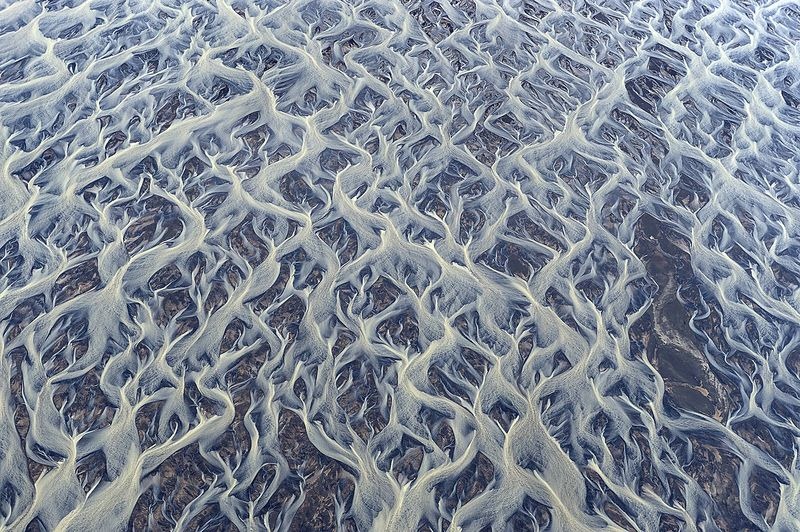
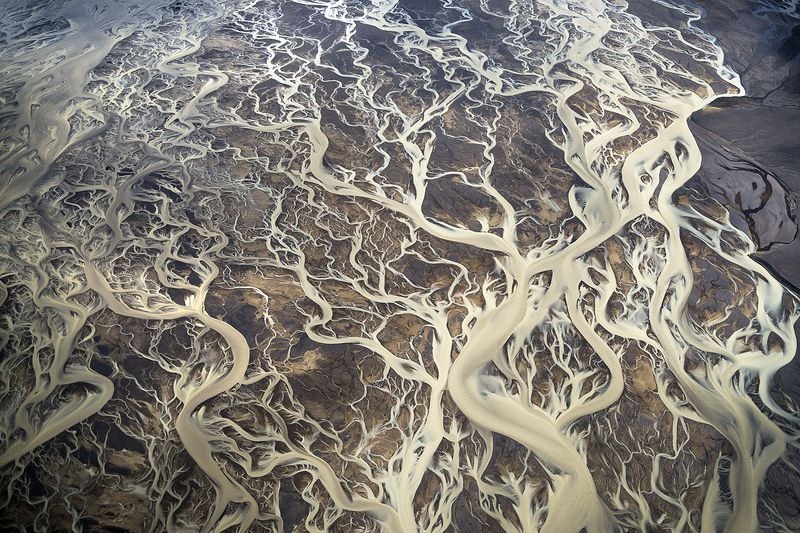
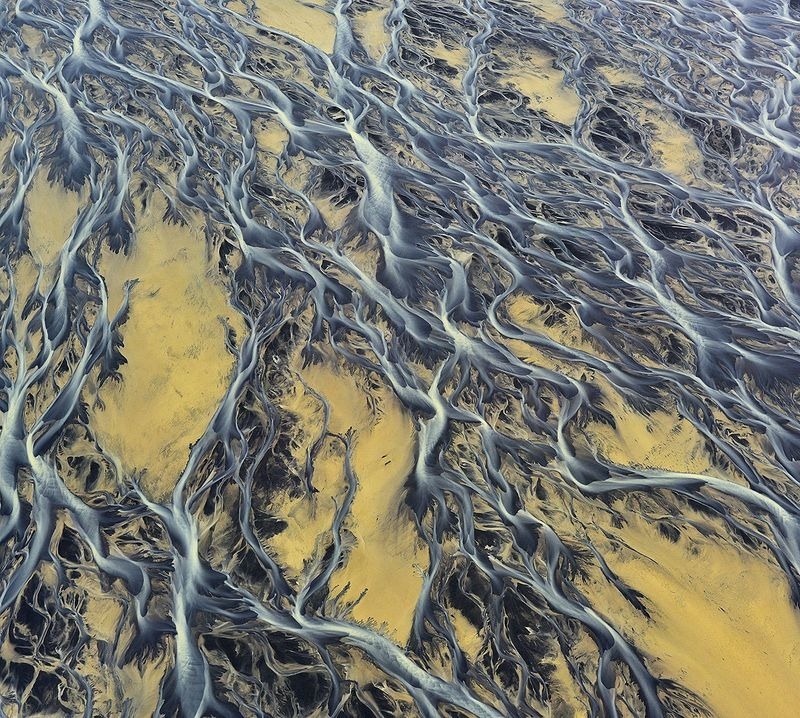
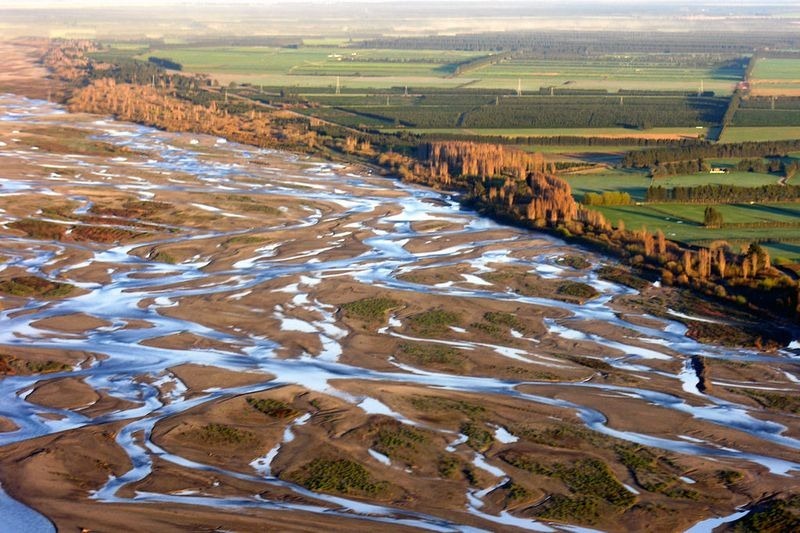
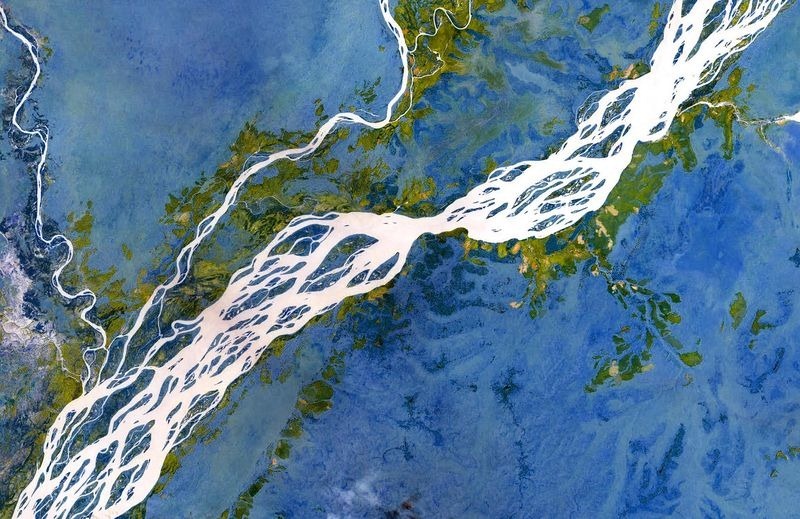
Most rivers flow in one broad channel of water, but some rivers split into lots of small channels that continually split and join each other to give a braided appearance. These are called braided rivers.

Braided rivers are usually wide but shallow. They typically form on fairly steep slopes and carry large amount of coarse-grained sediments. When the river’s flow decreases, these sediments get deposited on the river bed leaving behind small temporary islands of sands that cause the river’s channel to split. Aside from a steep gradient and abundance of sediments, a variable water discharge rate is essential to their formation. Consequently, braided rivers exist near mountainous regions, especially those with glaciers. Braided channels are also found in environments that dramatically decrease channel depth, and hence channel velocity, such as river deltas, alluvial fans and peneplains.

iceland-braided-river-3

A braided river in Iceland. Photo credit: Andre Ermolaev/500px

The pattern of the braided channels will change over time as the sediment islands get eroded away and deposited in new islands as the speed and amount of water in the river changes.

Rivers with braided channels look stunningly beautiful in satellite images or from airplanes. Here are some of the most beautiful examples of braided rivers.

rakaia-River

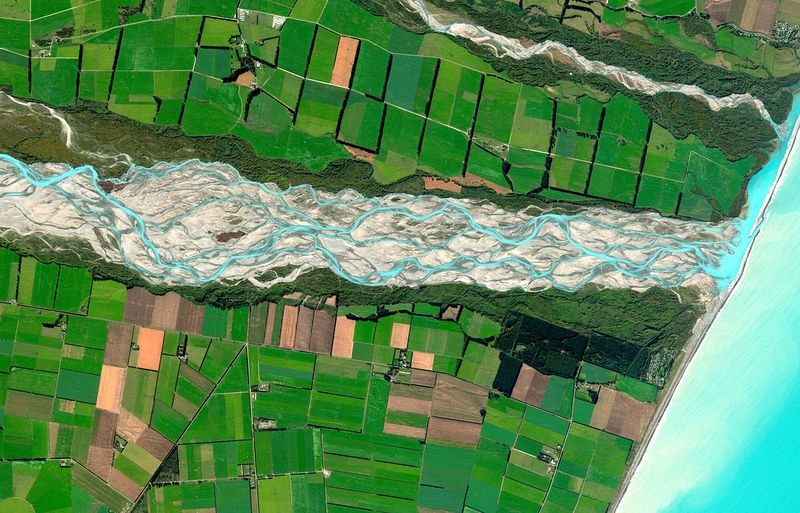
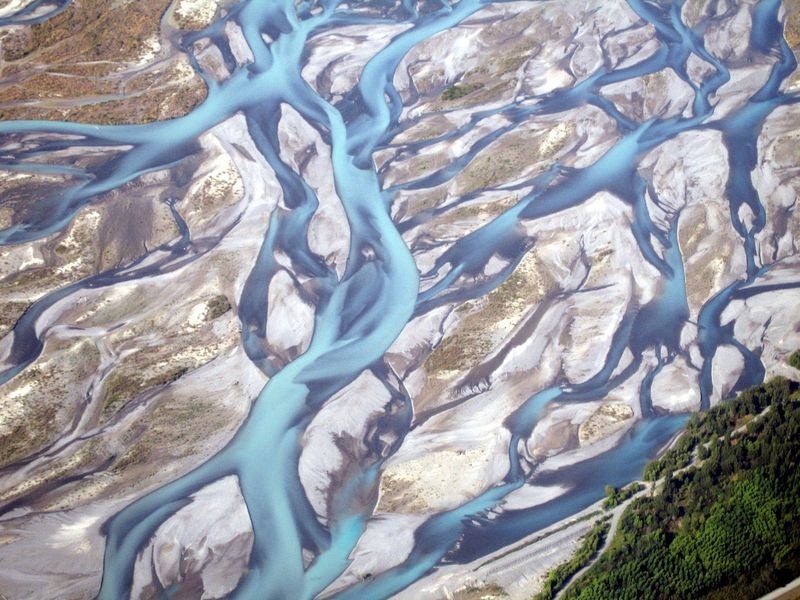
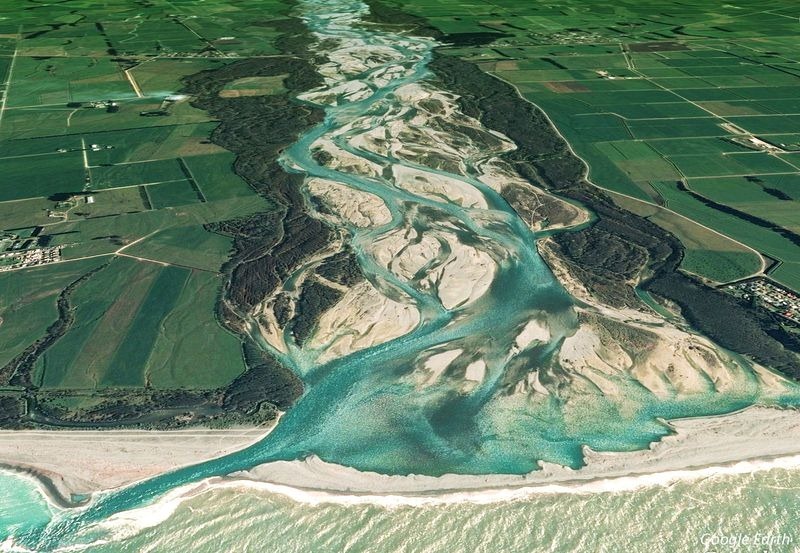
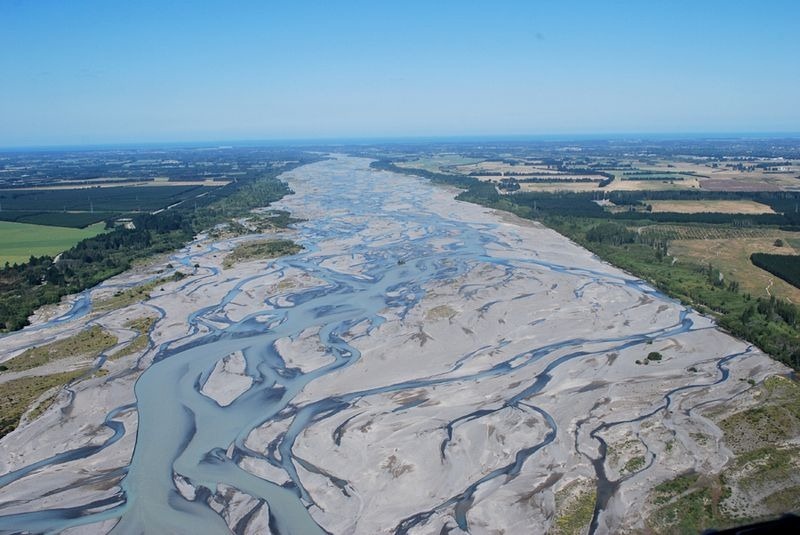
The Rakaia River in the Canterbury Plains in New Zealand’s South Island is a beautiful example of a braided river. It is one of the largest braided rivers in New Zealand. Photo credit: Andrew Cooper/Wikimedia

rakaia-river-braided-2

Rakaia River. Photo credit: www.digitalglobeblog.com

rakaia-river-braided-1

Rakaia River. Photo credit: Geoff Leeming/Flickr

brahmaputra-braided-river-1

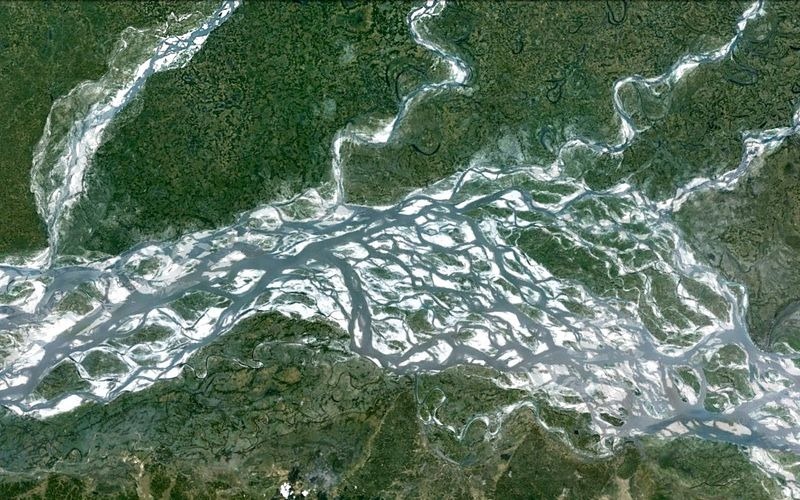
The Brahmaputra River in Tibet, India and Bangladesh is another classic example. The river originates in Tibet and enters India through the state of Arunachal Pradesh. The river gets intricately braided once it enters the state of Assam where it acquires its common name Brahmaputra. For the next 700 km of its braided course through the valley, it gets mighty big even in the dry season. During rains, its banks are more than 8 km apart. Photo credit:Google Earth/patternsofnatureblog.com

brahmaputra-braided-river-2

Brahmaputra River. Photo credit: Google Earth/patternsofnatureblog.com

waitaki-braided-river-1

The Waitaki River is another large braided river in the South Island of New Zealand. It drains the Mackenzie Basin and runs some 110 kilometers south-east to enter the Pacific Ocean between Timaru and Oamaru. Photo credit: Google Earth

tagliamento

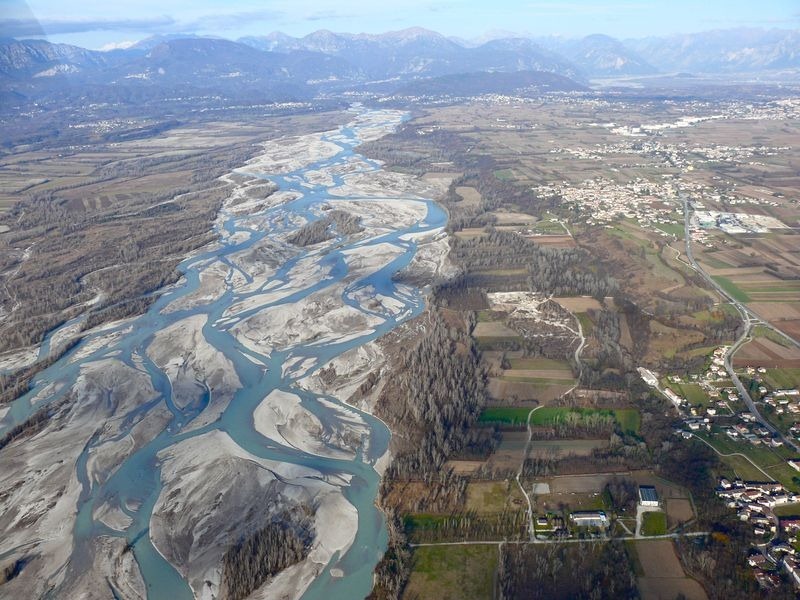
The Tagliamento River in north-east Italy is braided as it flows from the Alps to the Adriatic Sea. Photo credit:www.udine20.it

waimakariri-braided

The Waimakariri River in the South Island of New Zealand, is a braided river, about a kilometer wide with many changing channels cutting through the shingle. Photo credit: unknown/spacebattles.com

waimakariri-river-braided-1

The Waimakariri River. Photo credit: Philip Capper/Flickr

congo-braided-river-1

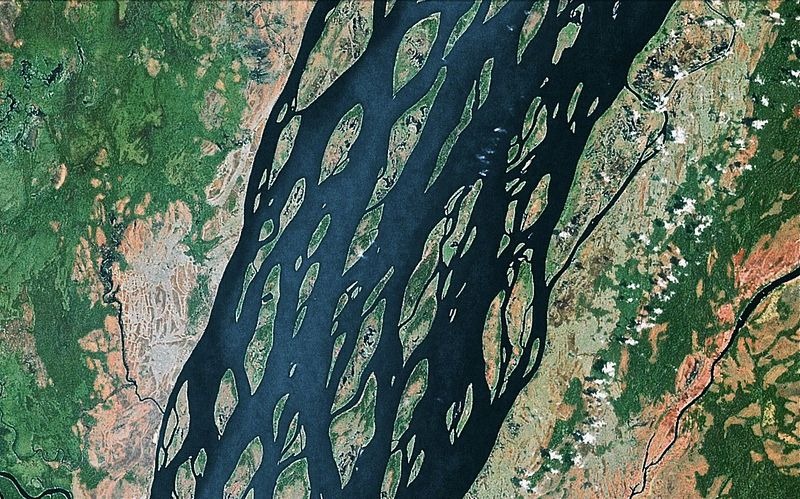
A Landsat image of a braided section of the Congo River. Photo credit: Wired

congo-braided-river-2

The Congo River. Photo credit: Google Earth/patternsofnatureblog.com

ob-river-braided-1

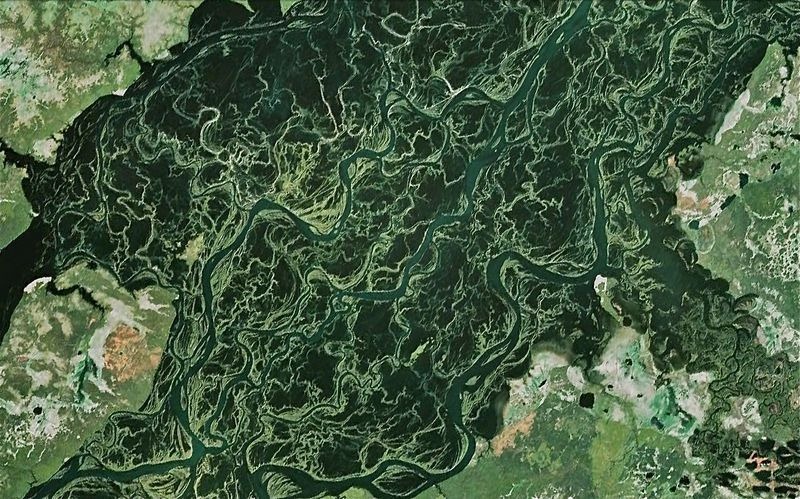
The Ob River in western Siberia, Russia, is the world’s seventh longest river. Photo credit: Google Earth/patternsofnatureblog.com

parana-river-braided-1

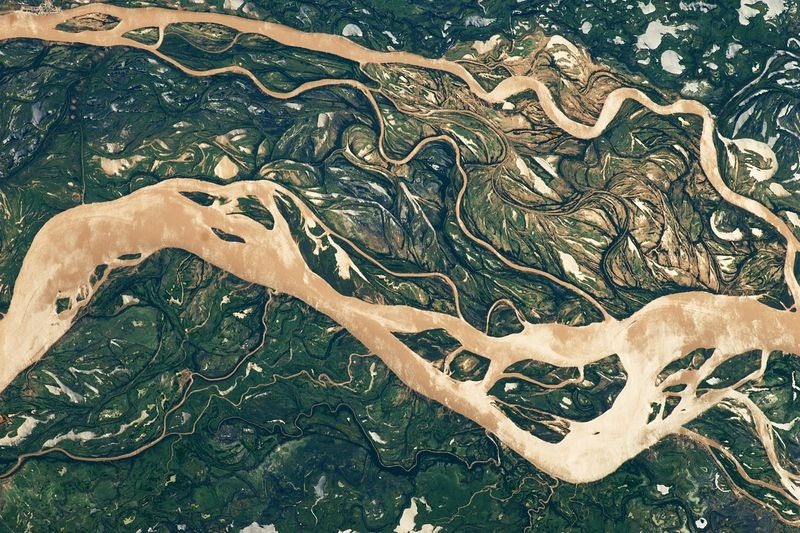
The Paraná River in South America. This photograph shows a 29-kilometer stretch of the Paraná, downstream of the small city of Goya, Argentina. Photo credit: NASA

iceland-braided-river-1

A braided river in Iceland. Photo credit: Andre Ermolaev/500px

iceland-braided-river-2

A braided river in Iceland. Photo credit: Andre Ermolaev/500px

Source….www.amusingplanet.com

Natarajan
These 7 Photos by Indians Just Got Shortlisted in the World’s Biggest Photography Contest…

Six Indian photographers have been shortlisted for the Sony World Photography Awards, 2016. Their photographs made it to the top 115 from about 2,30,103 entries that came from 186 countries around the world.

The Sony World Photography Awards competition began in 2007 and has emerged as the biggest photography competition in the world. , and the winners will share the prize money of $30,000. Their photographs will also be displayed at the World Photography Awards exhibition (April–May), other than being featured in the 2016 edition of the Awards book.

Here is a look at the work of six shortlisted photographers:

1. Prakash Singh, Professional Landscape Category

photography1

photography2

Prakash, who currently lives in Dubai, took up photography as a profession in 2012. Two of his photographs have been shortlisted under the Landscape Category.

2. Nikunj Rathod, Open People Category

photography3

Nikunj is a 28-year-old film director and photographer from Mumbai, and his picture, Bird Hunter, has been shortlisted. He is interested in capturing life on streets.

3. Jaydip Bhattacharya, Open Smile Category

photography4

A high school teacher in Kolkata, Jaydip loves to take pictures of faces, people, etc. His shortlisted picture is named Joys of learning.

4. Abhijeet Banerjee, Open Travel Category

photography5

Abhijeet Banerjee’s picture Gangasagar Fair shows India’s second largest fair which takes place every year in January.

5. Anasuya Mandal, Open Travel Category

photography6

Anasuya Mandal, who is pursuing her PhD at the Massachusetts Institute of Technology, began travel photography three years ago. The image captures the Bryce Amphitheater in Utah.

6. Sanghamitra Sarkar, Open Low Light Category

All souls day #

An amateur photographer from Kalyani, West Bengal, Sanghamitra Sarkar, likes to document different festivals in India and abroad. This image – All souls day, was shot in Puruliya village.

All pictures: Sony World Photography Awards

Source…….Tanaya Singh in http://www.the betterindia.com

Natarajan
Message for the Day….” Everlasting happiness can be obtained only from God…”

In this vast world, every living being desires happiness that is eternal. Where can we attain this happiness from? Beauty is happiness, and happiness is the nectarous essence of life. Which objects are beautiful in this world? A number of objects attract people in various ways. You think it is the beauty of the objects that attracts. But beauty is temporary, whether it is in human beings, birds, animals, or things. For example, this is a rose. It looks so beautiful. Its beauty gives happiness. But how long will its beauty last? It may be there till today or tomorrow. Thereafter all its petals will fall down and it will lose its shine. When it loses its beauty, it will no longer give you happiness. Thus in this world, you cannot find permanent beauty and permanent happiness. Only God is permanent in this world; the rest is temporary like passing clouds. Everlasting happiness can be attained only from God.

Sathya Sai Baba