How One Device Can Reduce the Number of Deaths Due to Road Accidents in India….

With Raksha SafeDrive, a device placed inside your vehicle, you don’t need to worry about calling for help in case of an accident or road emergency. The device will do it for you. This is how.

The year was 2013. Prasad Pillai was back in Trivandrum, his hometown, after living in the US for 15 years. One day, while travelling on a highway, his wife and he narrowly escaped an accident. The brakes of their car snapped when their driver tried to slow down to let a lorry coming from the opposite direction pass. It was then that Prasad realized how different the situation on the roads between the US and India was. While no one was hurt, it was extremely difficult for them to get aid in the face of this crisis here.

They were stranded on the highway without help.

Prasad Pillai

Prasad Pillai

“We came across a pedestrian but he did not know whom to call and how to assist us…We were just going around trying to find a place to get the car repaired. After being unable to find any immediate help, we took some other means of transport, went home and sent someone back to pick up the car. There was a lot of confusion,” says Prasad.

Motivated to help others who might find themselves in similar or even worse conditions, he brought together a team of six people to set up eLsys Intelligent Devices Pvt Ltd, with his friend Jayanth Jagadeesh.

Today, his organization has developed Raksha SafeDrive – a device meant to reduce the time in which help reaches road accident victims, or those stuck in some kind of road emergency.

SD2

Jayanth Jagadeesh (L) and Prasad Pillai

“India sees a large number of accidents every year. We have simply accepted this hard reality and are moving on with it. But things have to change,” says Prasad.

Raksha SafeDrive is a dedicated Internet of Things (IoT) device that is kept inside the car as an accident management system.

SD4

IoT is basically a network of physical objects embedded with electronics, software, sensors, and network connectivity. The network enables these objects to collect and exchange data.

Raksha SafeDrive can be used in all kinds of vehicles, like cars, auto rickshaws, bikes, trucks, etc. Here are some of its important features:

SD3

The team

1. Advanced crash sensors:

Crash Detection (GIF)

With its crash detection technology, Raksha SafeDrive ensures that help will reach when needed without any unnecessary delay. The device automatically detects crashes and uses its cellular connectivity – a SIM card that makes it operate like a phone — to contact help. In the case of a crash, the device automatically alerts local emergency responders like friends, family, police officials, and hospitals, even if the driver and other people are unable to do so. The team is currently working on developing a safety platform called Raksha. This will be the base (a call centre) where people will automatically receive a call from the device in case of an emergency. So, no one needs to report an accident as such.

Up to five primary contacts can be configured by the user and the device will keep calling until someone picks up.

Instant Notification

The device uses an algorithm to find out the severity of the accident. The sensors also distinguish between potholes, road bumps, and sudden braking to avoid false alarms.

2. GPS tracker:

GPS Tracking (GIF)


With the help of a GPS tracker placed inside the device, call centre executives and all emergency contacts will know where the accident took place.

3. Panic Button:

Smart Panic Button (GIF)

In case of an accident or roadside emergency like a flat tyre in the middle of nowhere, the panic button on the device can be pressed and it opens a two-way voice call communication channel between the user and the call centre. The call centre is a 24×7 support centre, which is able to help via the phone, providing information on how to deal with a particular situation.

4. Driver performance:

SafeDrive Installation (GIF)

The device also tells users how well their driver is driving. It analyses the speed of the vehicle and other parameters to let the passengers know if they need to caution the driver. This could be helpful for people who have employed a new driver or in monitoring public vehicles.

“Many people die on Indian roads because they don’t get immediate help. The onlookers are not well equipped with the required information to help accident victims. But we can avoid such chaotic situations. We don’t need to wait for people to call someone,” says Prasad.

“Our aim is to give people peace of mind when people are travelling. We think that this is something India deserves. Roads in the country are getting better. Our cars are also getting better. So why is the rate of death due to accidents not coming down? It’s because emergency services are not as structured as they should be and we are trying to change that,” adds Prasad’s partner, Jayanth.

The duo set up an online campaign to collect funds to start this project and also to make people aware about the existence of such a device.

A prototype of Raksha SafeDrive is now ready and is being tested by the team.

Working Model - SafeDrive

They are working on setting up the backend support and the call centre. The device will be available in the market by February 2016, at a cost of Rs. 10,000. This includes one year service cost, after which users will need to pay a yearly fee of about Rs. 1,000, depending on the services they want to avail.

Source…….Tanaya Singh in http://www.the betterindia.com

Natarajan

How an Anonymous Group of People Came Together to Paint over 250 Flyover Pillars in Bengaluru…

The Ugly Indian, the anonymous collective that is working a slow revolution in Indian streets (and mindsets), has done it again.

After cleaning up the streets of Bangalore with a vengeance, they have found their next target: flyover pillars. These massive structures are common targets for promotional posters and the accumulated dust and filth on our streets, and can (and do) easily become public eyesores.

The Ugly Indian has till date cleaned and painted over 250 of these pillars.


ugly indian

Their latest target was area under the flyover (what is called the UFO area) of the Bhadrappa Layout flyover in Bangalore. Over a 100 civic-minded citizen volunteers and BBMP personnel came together to reclaim this public space. The drive saw people of all ages turn up and work, from young children to senior citizens.

They didn’t just paint the pillars, either; they also fixed up walls, footpaths, and road medians in the area.

ugly indian

The local government is clearly thrilled with these enthusiastic and dedicated workers — since BBMP personnel work along with them, this is, in a way, a public-private partnership.

There may be something to what they’re painting onto the pillars too. The 3-D pyramid design seems to work wonders at dissuading advertisers from using them as notice boards.

In contrast to their previous bedraggled condition, the painted pillars remain spotless. It’s clear that a single move in the right direction can lead to sustained positive change.


ugly indian

Clean, beautiful public spaces can make even the make living in cities a joy. The Ugly Indian, whose motto is “kaam chalu, mooh bandh” (“stop talking, start doing”), is showing us that moralising, debating, and blaming will lead us nowhere till we pick up broomsticks and paintbrushes in our own hands — and get to work.

Because our cities belong to us.


ugly indian

All photos from The Ugly Indian’s Facebook page.

Source…….Vandita Kapoor in http://www.the betterindia.com

natarajan

This Mumbai-Born Girl Living in the UK May Just Be Smarter than Einstein…!!!

Kashmea Wahi, an 11-year-old Indian-origin girl living in the UK, has achieved the highest possible score of 162 on a Mensa IQ test.

Kashmea, who was born in Mumbai, now lives in London. Her parents Vikas and Pooja Wahi are IT management consultants at Deutsche Bank. She took the test to prove a point to them — she wanted to convince them that she didn’t need to spend all her time studying (something that they were insisting she do).

This score puts her among the top 1 percent of people in the world for IQ.

The IQ of geniuses such as Albert Einstein and Stephen Hawking, who have changed our perception of the world, is estimated to be 160.

Source: Wikimedia

“It’s overwhelming to be compared with the likes of Stephen Hawking and Albert Einstein, the comparison is implausible and I believe it would take loads of achievements for anyone like myself to be able to get into the league of such legends. Anyways, I am buzzing with excitement,” Kashmea said.

Her parents are also thrilled at this news. They say that while they always knew she was smart, this further confirmation has made them hopeful that she will do “something wonderful” in the future.

Kashmea is a member of school’s maths team. She also takes part in chess tournaments — she has won a number of awards — and plays net ball and lawn tennis.

Mensa is the largest and oldest high-IQ society in the world. Membership is open to anyone whose IQ is in the top 2 percent of the population. A Mensa spokesperson has confirmed that Wahi is among the youngest people ever to have received a score of 162.

Featured image source: Twitter (left); Wikimedia (right)

Source…….vandita kapoor in http://www.the betterindia .com

Natarajan

Mango Phone: Here’s an iPhone killer….?

Apple’s iPhone will soon have an interesting competitor in smartphone markets around the globe with the launch of MPhone — the Mango Phone.

Mango Phone

Not very surprisingly, the company has also decided on a mango as their logo. The new handset is expected to hit Indian markets by the end of this month.

The company, reportedly helmed by group of Malayalis, was founded on an initial investment of Rs 3500 crore. In what could be more interesting to prospective buyers, a fresh handset also packs a bluetooth headset, wireless charger, power bank and a selfie stick!

The handset will be brought to the markets by MPhone Electronics and Technologies Limited with 4G and 3D technology assistance from Korea. MPhone Electronics and Technologies Limited is learnt to be partnered by Anto Augustine, Roy Augustine and Josekutty Augustine from the Wayanad district of Kerala.

It is also learnt that the handset employs a 6050 mah battery that assures three days charge life for a fully charged handset. Shock resistant Gorilla screen glass, 23 MP primary and 8 MP secondary camera are other major attractions of the upcoming competitor of the iPhone. Reportedly, the handset will be providing an internal memory of 32 GB, which can be extended up to 128 GB. A 3 GB RAM module will speed up the handset.

As per unofficial reports, the MPhone will be priced around Rs 35,000. While it may not be wise to compare apples to oranges mangoes, it will certainly make for some interesting competition in this space!

Deepu

Natarajan

வாரம் ஒரு கவிதை ….” இனி ஒரு விதி செய்வோம் ” !

“இனி ஒரு விதி செய்வோம் “
……………………..
எம்மதமும் எமக்கு சம்மதமே என எல்லா மதமும் சொன்னாலும்
மதம் பிடித்த களிறு போல் வெறியாட்டம் ஆடுது ஒரு
உன்மத்தக் கூட்டம் …அவர் வைக்கும் வாதம் விதண்டாவாதம்
அது தீவிர வாதம் … நம் ஒற்றுமைக்கு உலை வைக்கும்
பயங்கர வாதம் …அதன் சிறகொடித்து   வேரறுக்க வேண்டாமா நாம் ?
வாள் எடுக்க வேண்டாம் நாம் அவர் சிறகொடிக்க …
தாள் பணியவும் தேவையில்லை நாம் அவர் முன்னால் ! இந்த
நாள் ஒரு புது விதி செய்வோம்  நாம் !…சாதி  மத இன
பேதம் யாவும் நாம் மறந்து, துறந்து, வாழ்ந்து காட்டுவோம் ஒரு
இந்தியனாக !  இப்படி சாதிப்போம்
 சமத்துவம் , சகோதரத்துவம் , மனித நேயம் ! மறக்காமல்
போதிப்போம் நம் இளைய தலை முறைக்கும்  …
“உன் தாய்   பாரதம் , உன் மதம் பாரதம் , உன் மொழி பாரதம்
உன் இனம் பாரதம் …நீயே  பாரதம் ” !
வித்தாக நாம் விதைக்கும் இப்புது விதியால்  தப்பாமல்
பிறக்கும் ஒரு முத்தான ஒளிமிகு புதிய பாரதம் !
Source…..MY Kavithai Published in http://www.dinamani.com….kavithaimani on 11 jan 2016
Natarajan

Anamorphic Art by István Orosz………

István Orosz was born in 1951 and after training as a graphic designer, he first gained recognition as a stage designer and for his work in animated film as animator and director. His posters and graphic art have featured in countless international design exhibitions, and he is well-known as a printmaker and illustrator too. He is perhaps best known for his renewal of the technique of anamorphosis.

Anamorphosis is an art of distorted projection or perspective requiring the viewer to use special devices or occupy a specific vantage point to reconstitute the image. The art of Anamorphosis was invented in China and brought to Italy in the 16th century, about the time Renaissance artists like Leonardo da Vinci were mastering 3-D and discovering slant anamorphosis.

István Orosz specializes in mirror anamorphosis, where a conical or cylindrical mirror is placed on the drawing to transform a flat distorted image into a three dimensional picture that can be viewed from many angles. He also does slant anamorphosis.

István Orosz’s best creation is probably the one called Mysterious Island. It’s a sketch of a seashore with a sail pushed along by the wind, and two men trekking.


verne

But if a cylindrical mirror is placed over the circular sun, a portrait of Jules Verne emerges.

verne2

His other works

orosz (1)

orosz (2)

orosz (3)

orosz (5)

orosz (9)

orosz

orosz (13)

orosz

Source…..www.amusingplanet.com

Natarajan
9 of the Most Remote Inhabited Islands in the World…!!!

I can’t get my head around how far away the inhabitants of these islands live from civilization! They are hundreds, if not thousands, of miles from the nearest continental land mass – it’s truly astonishing to think they’re even inhabited at all. Would you dare to visit somewhere so remote? These are 9 of the world’s most remote inhabited islands:
Saint Helena 

The Most Remoted Inhabited Islands in the World

Image Source

Distance from Civilization: 1,200 miles from Angolan coast


Saint Helena is widely believed to have been discovered by the Portuguese at the turn of the 15th Century. Various European powers staked different claims to the island during the 17th Century. It’s probably most well-known as the place that Napoleon Bonaparte was exiled to, following his defeat by the British. It is home to 4,255 people.

Ascension Island

The Most Remoted Inhabited Islands in the World

Distance from Civilization: 1,000 miles from African coast


Located in the South Atlantic Ocean, Ascension Island is home to approximately 880 people. It is not thought to have had an indigenous population, and it was first settled in 1815. Prior to that, it was sporadically used as an open prison. Its principle settlement and capital city is Georgetown.

Easter Island

The Most Remoted Inhabited Islands in the World

Distance from Civilization: 2,000 miles from Chilean coast


Easter Island is instantly recognizable due to the Moai, or giant statues, which dot the island. They were carved by the native Rapa Nui people between the 13th and 16th Centuries. In the present day, the island is populated by a little over 6,000 people. It’s said to overwhelm first-time visitors with the sheer sense of isolation they feel upon arrival.

Tristan da Cunha

The Most Remoted Inhabited Islands in the World

Image Source

Distance from Civilization: 1,750 miles from South African coast


Lying all alone in the middle of the South Atlantic Ocean, Tristan da Cunha was first inhabited in 1816. Its main settlement, Edinburgh of the Seven Seas, is widely considered to be the most remote permanent settlement on earth.

Pitcairn Island

The Most Remoted Inhabited Islands in the World

Image Source

Distance from Civilization: 1,800 miles from New Zealand


Most of the 56 people that currently live on Pitcairn Island descended from the Bounty mutineers and the Tahitians that accompanied them. The island is the least populous natural jurisdiction in the world.

South Keeling/Cocos Islands

The Most Remoted Inhabited Islands in the World

Distance from Civilization: 620 miles from Java, Indonesia


This island chain consists of two atolls and 27 coral islands. Just two of the latter are inhabited. West Island is home to approximately 120 people, while Home Island is home to about 500 people. The islands are a territory of Australia.

Floreana

The Most Remoted Inhabited Islands in the World

Distance from Civilization: 620 miles from Ecuador


Taking its name from the first president of Ecuador, Floreana is part of the Galapagos Islands. While it’s true that there are some 26,000 people living throughout this archipelago in the present day, Floreana is the most remote island within it. It’s home to just 100 people.

Niue

Image Source

Distance from Civilization: 1,500 miles from New Zealand


Although Niue is an independent island country, it is in free association with New Zealand, which conducts diplomatic affairs on its behalf. It was the first nation in the world to provide free WiFi to all of its 1,600 citizens.

St. George’s Island

The Most Remoted Inhabited Islands in the World

Distance from Civilization: Approx. 500 miles from Alaska

Located in the frigid Bering Sea between Russia to the west and Alaska to the east, St. George’s Island features one settlement that encompasses the entire 35 square miles of the island. Just 100 people live on the island.

Written by: Jake Schembri

Source……www.ba-bamail.com

Natarajan
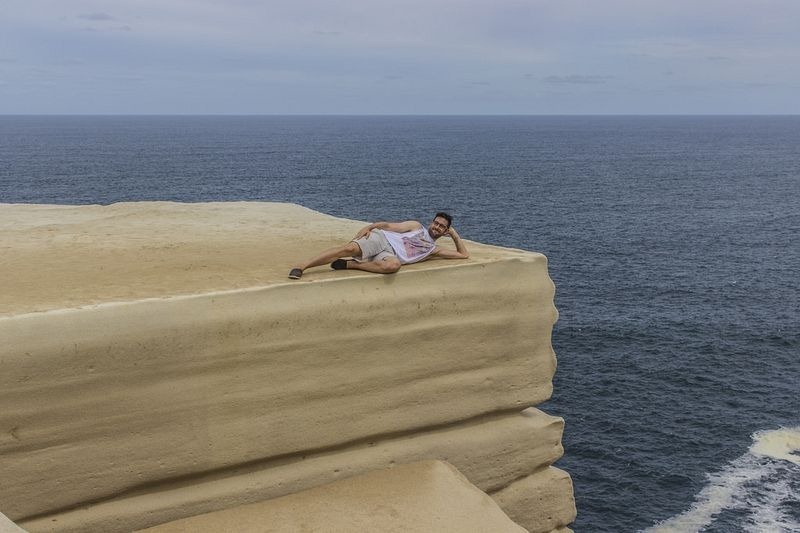
The Wedding Cake Rock, Australia…

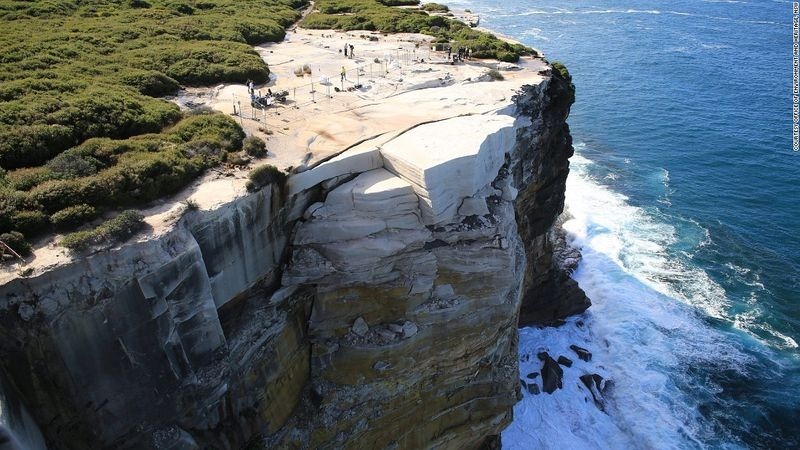
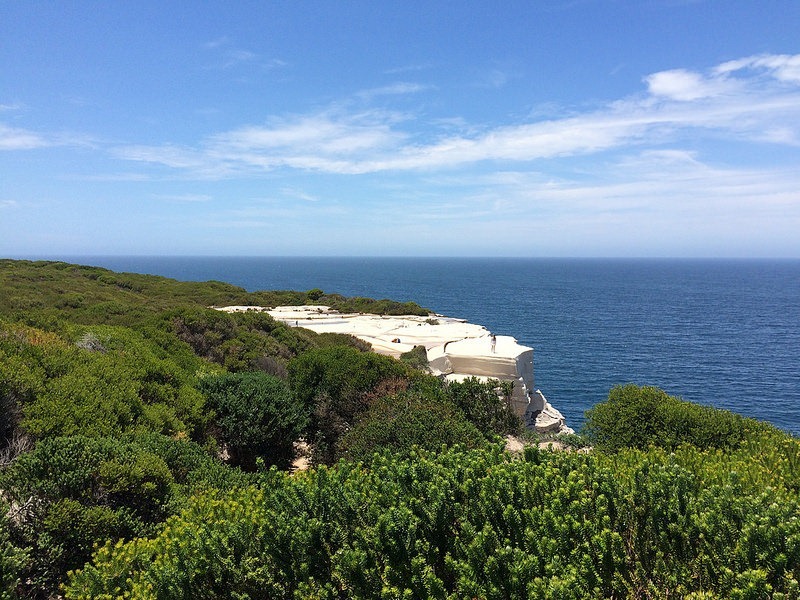
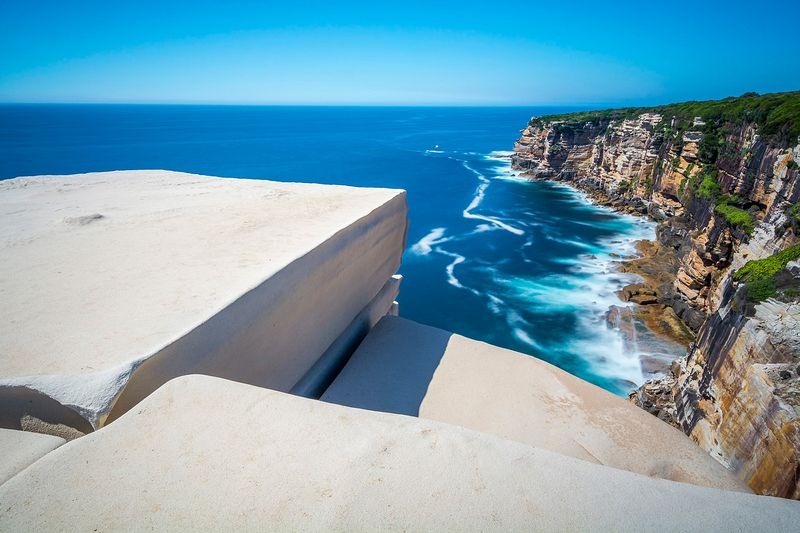
The Wedding Cake Rock is an unusual geological formation located just north of Marley Beach near Bundeena within the Royal National Park, in New South Wales. The dazzling white sandstone rock has a perfect 90° corner and a flat top, as if it has been curved by a knife. Some say, it resembles a sliced wedding cake. Others see a block of tofu or cheese.

The Wedding Cake Rock is one of many limestone formations along the Royal Coastal Walk track —a 26km long track along the cliffs of the Royal National Park from Bundeena to Otford. The landscape consist of steep valleys, ridges and rocky outcrops with panoramic views of the ocean stretching for miles around. Along the way you’ll encounter streams, waterfalls and pools. Wedding Cake Rock is situated 5.1 kilometers from the start of the trail at Bundeena.

wedding-cake-rock-1

Photo credit: photographyhotspots.com.au


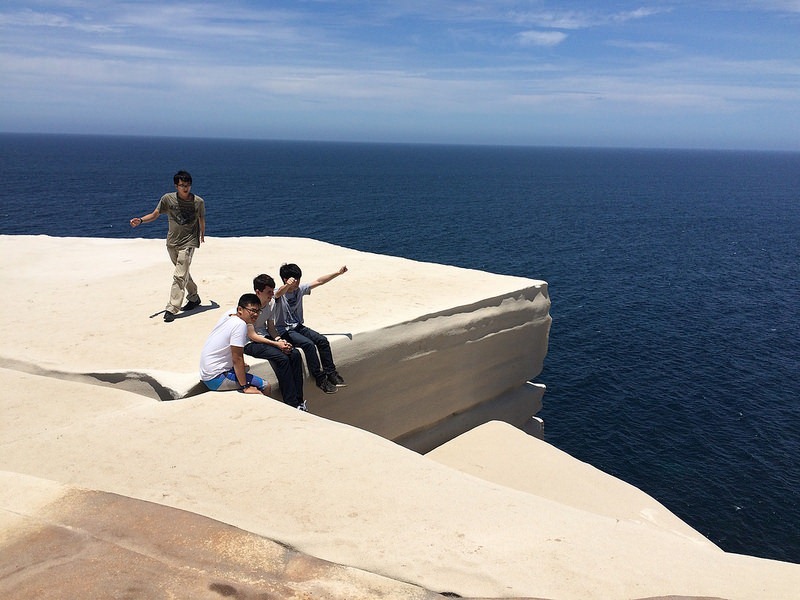
In early 2015, Wedding Cake Rock saw a sharp increase in popularity. The New South Wales National Parks and Wildlife Service reported that the number of visitors per month on the Royal National Park Coast Track rose from the average of 2,000 per month to over 10,000. This turned out not to be good thing. These visitors had come after they saw pictures of the rock on the social media site Instagram. They sat on the rock or dangled from it, and took selfies while performing dangerous stunts. And worse — some vandals wrote over the perfectly white formation with chalk.

Park officials became concerned, not only for the safety of the visitors, but for the safety of the rock itself. They feared that the weight of 30 or 40 people standing on the rock might damage it or tip the rock to one side. The site was eventually closed off in May 2015. A subsequent evaluation of the rock revealed, to the Park’s surprise, that the formation was not only unstable, but was certain to collapse at anytime within the next ten years. The study found that the entire structure was precariously balancing on the edge of the cliff, and severely undercut. The rock is now permanently cordoned off to the public.

wedding-cake-rock-2

Photo credit: Danijel James/Flickr

wedding-cake-rock-4

Photo credit: CNN

wedding-cake-rock-5

Photo credit: Philip Terry Graham/Flickr

wedding-cake-rock-6

Photo credit: Philip Terry Graham/Flickr

Sources: Wikipedia / Weekend Notes

Source….www.amusingplanet.com

natarajan

9 personal finance mistakes to avoid….

All of us have made these mistakes, so let’s begin by seeing how many of them we can avoid/minimise…

I am normally a person who likes to say ‘be careful’ rather than say ‘do not break it’. The mind always sticks to the most important word — so the ‘break’ sticks in our head. However there are a few mistakes that I have been seeing and hearing from IFAs, websites, etc. and think it is necessary to summarise them in one place.

1. Optimism

This is a lovely thing to have, except when it comes to investing. When people invest in equities they have some outlandish expectation — say 28 per cent CAGR (compounded annual growth rate) or 17 per cent CAGR. No clue who gives them such ‘lofty’ expectations. Yes, some of us have got it in the past, but hey we have perhaps just been lucky.

A Rakesh Jhunjhunwala or a Vallabh Bhansali have got much higher returns, but you have no clue about the efforts and team work that has gone behind all this. A Naren Sankaran (Of ICICI) or a Motilal Oswal is perhaps capable of getting far better returns, but their risk taking capacity and sheer size of funds managed puts a huge limitation to the returns.

So please temper your expectations.

Just because you expect less it does not mean you will not get it. Keep your expectations at a far more realistic 20-25 per cent OVER PPF returns — so if you get 8 per cent in PPF, expect to earn about 10-11 per cent over a long period of time, tax free. It can do magic to your portfolio over say 50 years like it has done for some of us early starters.

2. Risk and return

The fact that you take more risks DOES NOT MEAN YOU HAVE TO GET greater returns. It is not your RIGHT; it is just that the odds favour you. If it were so certain, there would be no risk at all. Long term can mean really long term — say 13 years and you may have just lost patience after 12 years and 5 months.

Be very clear that for goals that are 7-8 years away equity is a good investment, but you will need a back up plan just in case it backfires.

3. Consumerism

Buying every shiny thing on the store shelf or on Amazon and Flipkart are not the way to create wealth. When you feel like buying something, wait. Think of the last 5 items that you bought and what you did with that. Clearly the manufacturer and the shop keeper want you to buy all that is made and displayed. It is up to you not to do so.

Investing more and for a longer period is the only route to a great portfolio.

4. Complications

Planners love to complicate things, ignore complex plans. Simpler plans are far superior.

5. Inertia

Good and noble intentions will not protect your family or create wealth for you. So get off your backside and get that term insurance, medical insurance, provident fund nomination form, …NOW and start your investing programme, NOW.

If you do not believe this, see the amount of money lying in bank deposits, savings banks, post offices around the country!

Even better see your own savings bank account and see how much of interest has been credited. Kickass start.

6. Impulsive actions…

…while in spending, investing, saving, eating and health issues only lead to pain later on. Learn some meditation and act in leisure. Relax, do not get bullied by bankers, contractors, salesmen, cousins, friends, television experts — by anybody.

Collect all the data, and then sleep over it for a day. Take a decision after a few hours, preferably 24 hours. Do not believe the agent who says “this scheme is closing…” Some agents have been using it for the past X number of years and doing it very successfully. When you have the money, a new scheme is born every day. Usually in a better form.

7. Ask

Ask the people who know before you invest. Parachutes are to be on your back BEFORE you eject from the plane, it cannot be sent to you mid air…

8. Greed

If you have invested in 50,000 shares of a company at Rs 30 a share and the price goes up to Rs 50 in two weeks time, great. Partial booking — of say 1000 shares every time a share jumps an X per cent is not a bad idea at all.

It is only the owners who can ride a share from its start to eternity — like a Premji or a Narayana Moorthy can/ will do. Yes there are many theories here, but hey, greed kills more than it makes you go. Be careful.

9. Mess

Do you have 40 items in a portfolio worth Rs 1 crore? You are a mess. You need to have no more than five. Okay make it 8, but not more. So please prune the mess, and clean it up.

Source………P V Subramanyam in www. rediff.com

Natarajan