Europe’s First Underwater Sculpture Museum…!!!

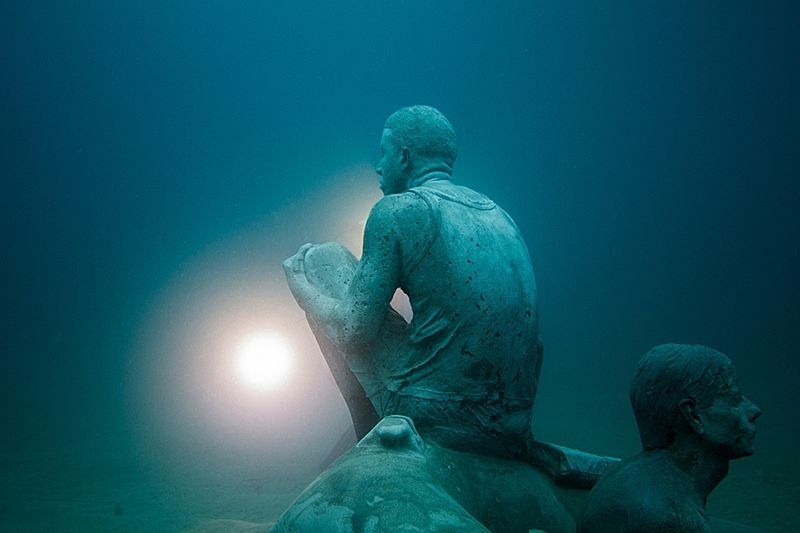
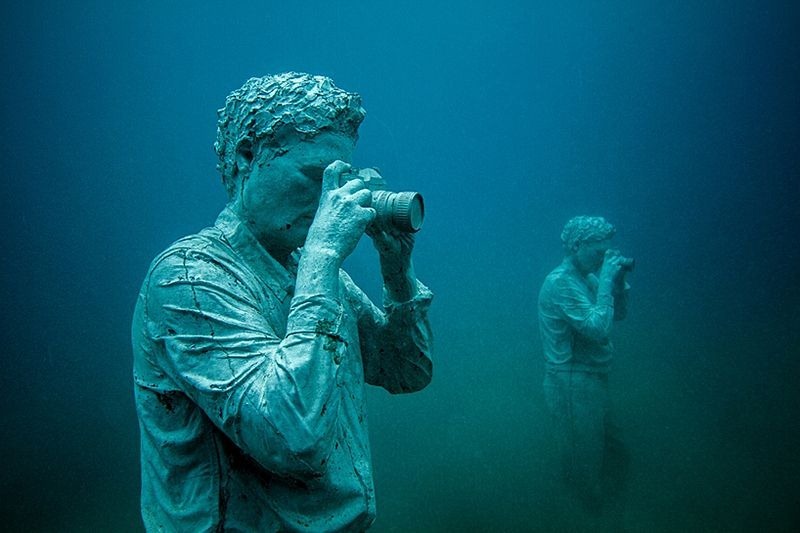
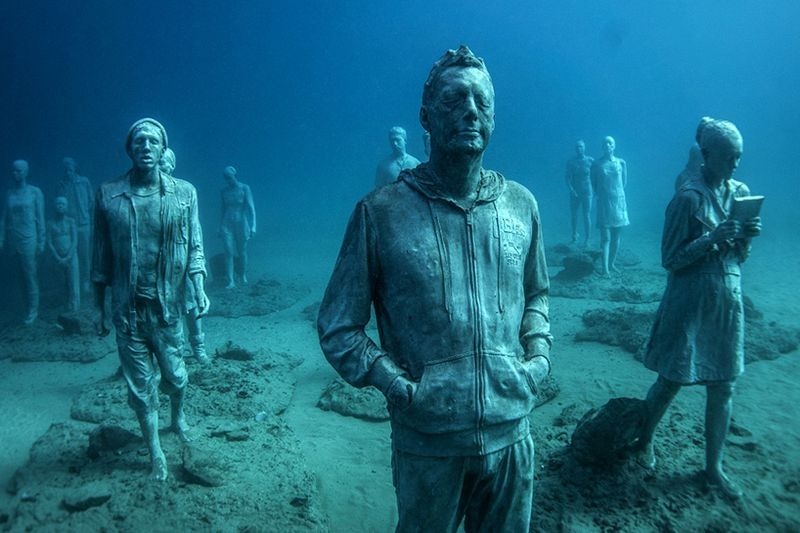
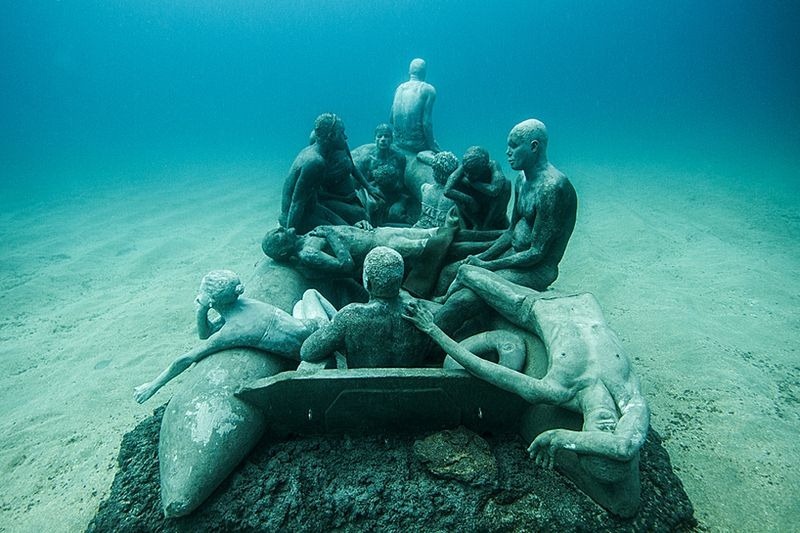
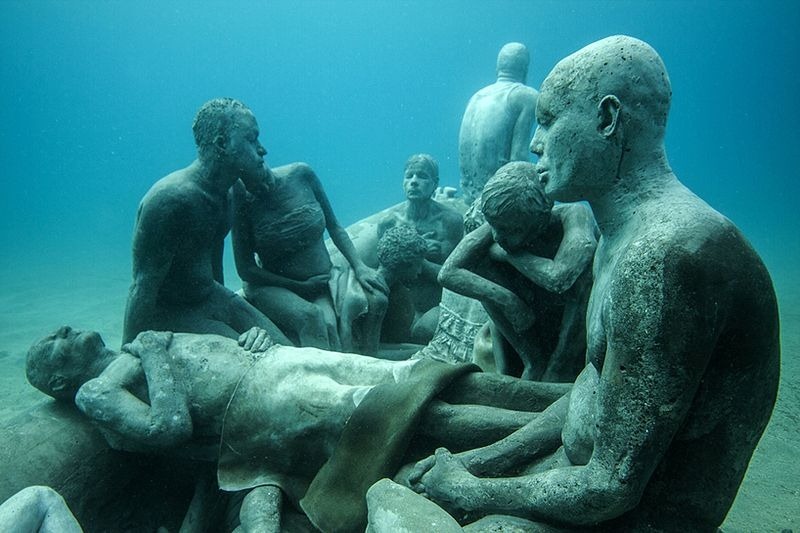
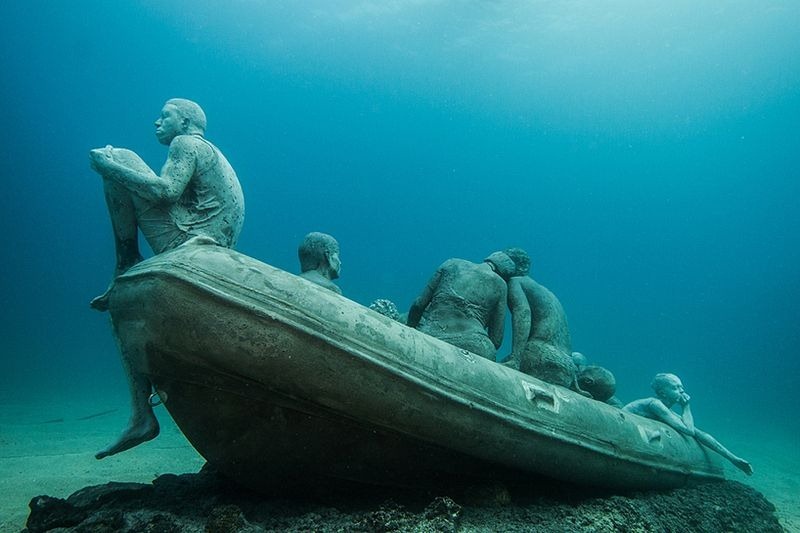
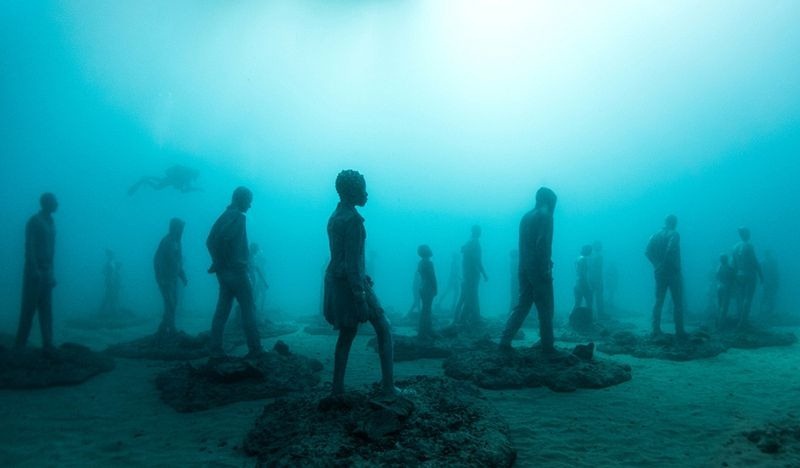
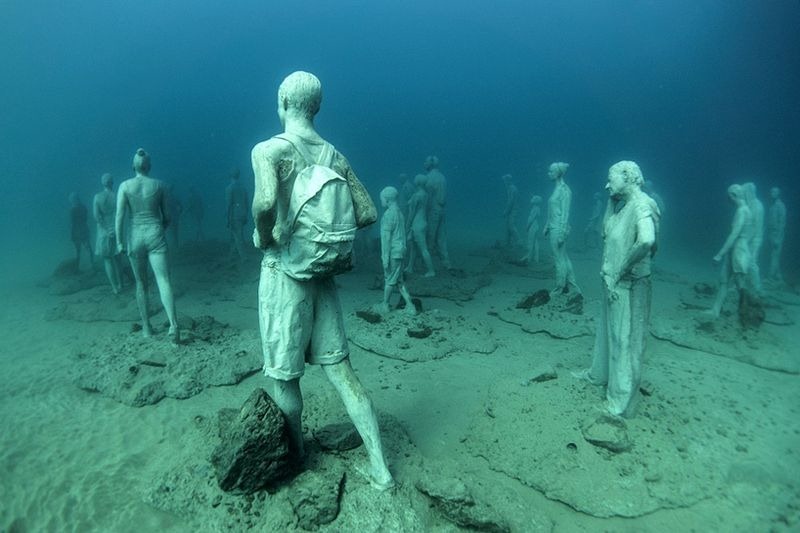
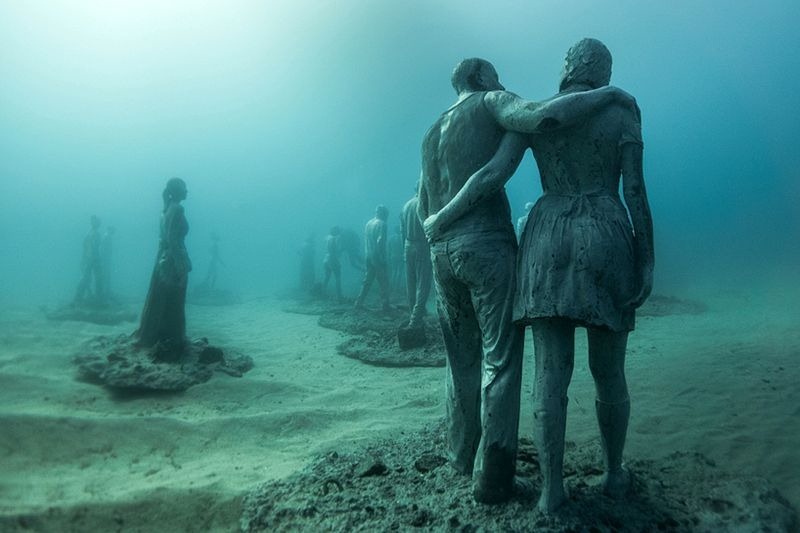
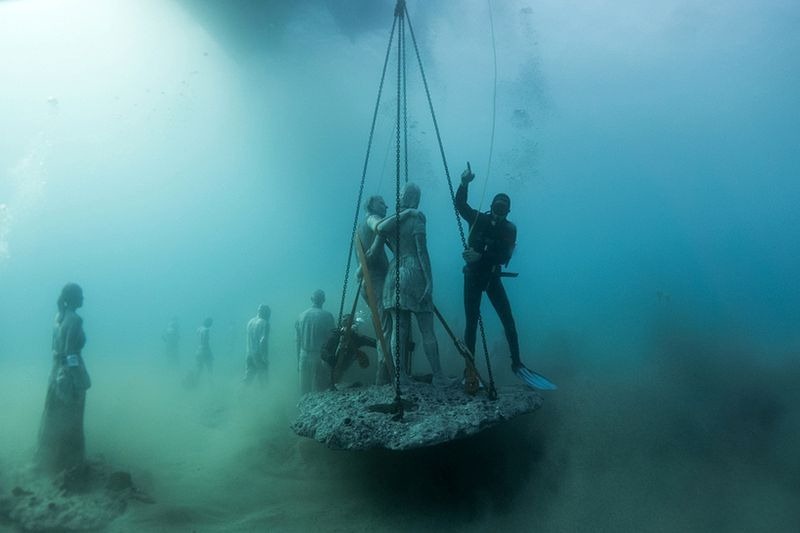
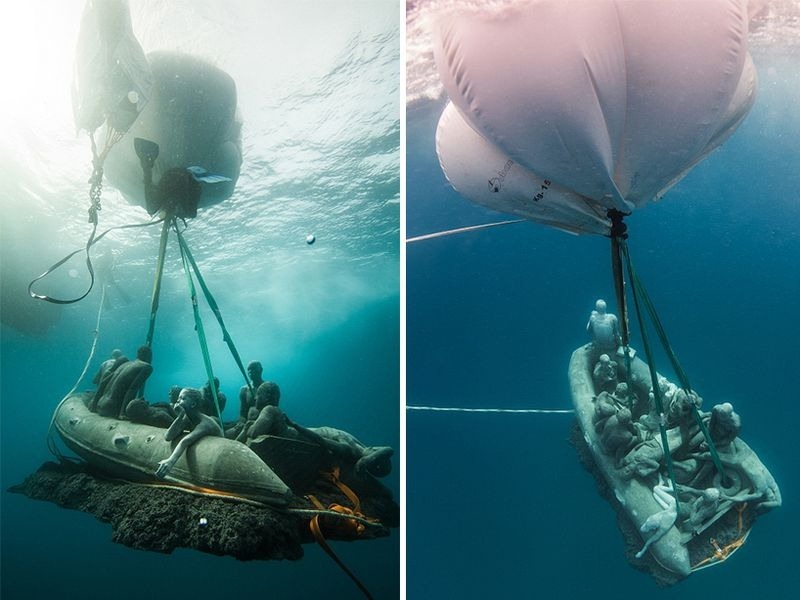
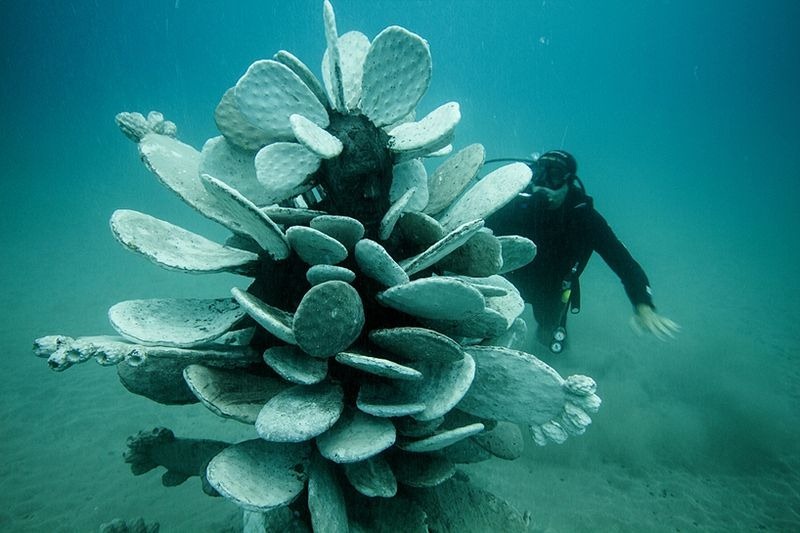
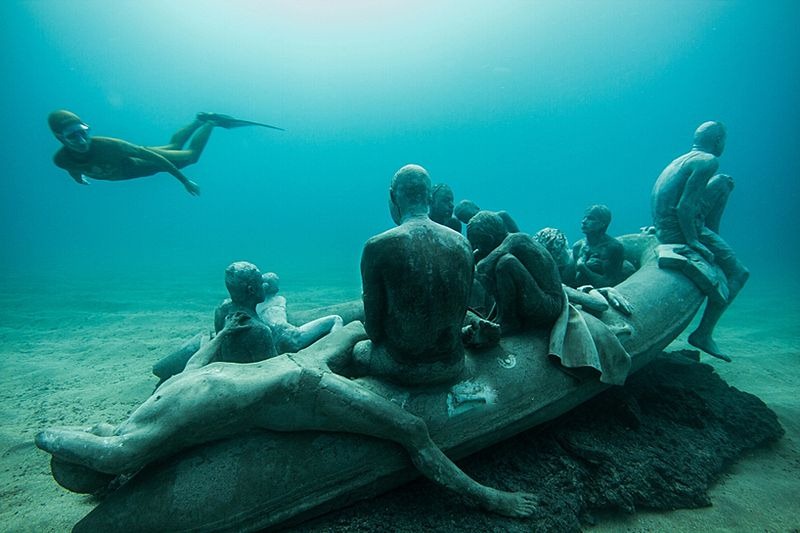
The island of Lanzarote in the Canary Islands, Spain, has set up of the first set of sculptures in what will be the first completely underwater museum in Europe. The museum is located off the coast of Lanzarote at a depth of 12-14 meters and features the works of British artistJason deCaires Taylor, who has created similar works in both Cancun, Mexico and Grenada in the West Indies. The sculptures on display include several human figures representing people engaging in mobile phones, walking, taking pictures and selfies. Another installation titled ‘the raft of lampedusa’ depicts a boat of figures desperately waiting for treatment and aid, representing the ongoing refugee crisis. The underwater sculptures will eventually attract and promote growth of plant and animal life, symbolizing the symbiotic relationship humans have with nature.

jason-decaires-taylor-lanzarote-6

A lot of marine life seek for shelter from predators, so they naturally gravitate toward submerged objects. As a diver, Taylor knows that if you place any object underwater they’re very quickly colonized.

Taylor’s team only chooses sites he describes as “barren and desolate.” Sometimes he positions the sculptures as a diversion from areas that gets lot of tourists so as to lure them away from the fragile and dangerous area.

The sculptures are made from a very inert type of marine cement designed to last for hundreds of years. He avoids using metals because they are corrosive and pollute the environment.

“The longer they are underwater the more the layers of calcium deposit will start to form, so they’ll start to get more and more unrecognizable over time,” Taylor told Good. “That’s one of the reasons I start out with a simple image or quite often a human figure, because I know however much you disfigure the human body you can still recognize some part of it as some identifying feature you can relate to.”

jason-decaires-taylor-lanzarote-1

jason-decaires-taylor-lanzarote-2

jason-decaires-taylor-lanzarote-4

jason-decaires-taylor-lanzarote-7

jason-decaires-taylor-lanzarote-8

jason-decaires-taylor-lanzarote-9

jason-decaires-taylor-lanzarote-11

jason-decaires-taylor-lanzarote-13

jason-decaires-taylor-lanzarote-14

jason-decaires-taylor-lanzarote-15


jason-decaires-taylor-lanzarote-16

jason-decaires-taylor-lanzarote-17

via Design Boom

 source……..www.amusingplanet.com
Natarajan

Who is Amit Singhal? 10 facts about the IITian who redeveloped and ran Google Search for 15 years ….

Last night Amit Singhal announced that he was retiring from Google. Amit Singhal who? Well, those who keep an eye on Google know him fairly well. Although, he is not as well-known as Larry Page, Sergey Brin, and  Sundar Pichai, he is probably the single-most important person inside Google.

The reason why he is such a big deal in Google is because he runs the company’s core search operations. This means, if you use Google Search, whether on the web or on mobile, you use the ideas and features implemented, maintained and conceived by Singhal’s team. He is the man, who for the last 15 years, has kept Google the best damn search engine in the world.

Want to know more about him? Here you go:

1- Amit Singhal is so important to Google that when he retired last night, Danny Sullivan, a long-time Google watcher and founder of Search Engine Blog, compared it to Jony Ive leaving Apple. Now we all know how important Jony Ive is for Apple.

2- Amit Singhal was born in Jhansi. He still visits his family, friends and relatives in India.

3- According to Singhal, he spent “most of my boyhood in the foothills of the Himalayas”.

4- Singhal finished his BS in computer sciences from IIT Roorkee in 1989. He then went to the US.

5- In the US, Singhal studied computer science at University of Minnesota before completing his PhD in computer science from Cornell University.

6- At Cornell, Singhal studied with Prof Gerard Salton. Singhal describes him as “one of the founders of the field of IR (information retrieval).

7- Singhal worked at AT&T’s Bell Labs before he was persuaded to join Google by his friend Krishna Bharat. He joined Google in 2000. Incidentally, Bharat was the person behind Google News.

8- Singhal famously re-wrote the original Google algorithm that was created earlier by Larry Page. He reportedly changed it completely to suit the existing challenges. This apparently impressed Larry Page so much that Singhal was put in charge of Google’s secret sauce — its search algorithm — and was tasked to keep it fresh and relevant.

9- Singhal is a big fan of Star Trek universe and wants to build technologies, such as virtual assistant that understands voice commands, used in the USS Enterprise.

10- When mobile phones started becoming popular, Singhal conceived and developed the idea of “search without searching”. This formed the core of Google Now, a feature on Android phones that provides information to users even before they search for it.

Source……www.indiatoday.intoday.in
Natarajan

How a school dropout built a Rs 60 crore business…? …An Inspiring Story !!!

From extreme poverty to building a company worth Rs 60 crore, Raja Nayak’s incredible rags-to-riches story is an inspiration.

Raja Nayak

At 17, Raja Nayak ran away from home.

Like millions before him, he wanted to escape the punishing life that poverty inflicts on its victims.

“I knew I had to earn money. I wanted to earn big money. That was my only focus then,” Raja Nayak, 54, tells me as we settle down in his plush new office in Bengaluru for the interview.

“I had realised as a young boy that it was very hard for my parents to send me and my four siblings to school. My father did not have a steady income and my mother had little to make ends meet often pawning whatever little valuables she had,” he says.

The penny dropped when Raja was loitering with his neighbourhood friends and was persuaded to watch a Hindi movie.

It was the 1978 film, ‘Trishul’, where a penniless Amitabh Bachchan eventually goes on to become a real estate baron.

Those three hours in the dark theatre ignited Raja’s mind and future path as it were.

“I was really taken up by the story. It felt so real to me. Suddenly, I believed that it was possible to make my dreams come true. I wanted to be a real estate baron too,” Raja says with a smile, quickly brushing off the source of his inspiration.

Riding on this belief, he escaped to Mumbai (Bombay then).

But it wasn’t going to be that easy, was it?

He returned home heartbroken, but his mind was constantly engaged in finding the right break.

Today, Raja has a total turnover of Rs 60 crore from his various enterprises that include MCS Logistics, a company he established in 1998 in international shipping and logistics, Akshay Enterprises that’s into corrugated packaging, Jala Beverages that manufactures packaged drinking water, Purple Haze that is in the wellness space with three beauty salon-and-spa centres in Bengaluru.

Nutri Planet (with three other directors and partners) that is working with Central Food Technological Research Institute (CFTRI) to bring products like energy bars and oil made out of Chia rice.

Besides these, he also runs schools and a college under the banner of Kalaniketan Educational Society for the underprivileged and disadvantaged sections of society.

Raja is also the President of the Karnataka chapter of Dalit Indian Chamber of Commerce and Industries (DICCI), where he says, they are inspiring the disadvantaged sections of society to dream big.

“We are making them aware of the opportunities available to make their dreams come true,” he says.

The first take: Small but sure

Son of Dalit migrants from a village in Karnataka, Raja was born in Bengaluru (Bangalore then) and spent the first 17 years of his life in the city without much exposure to the life outside.

Back then in the late 70s and 80s, Bangalore was a sleepy town. But I had this Punjabi friend, Deepak (who is no more), who had seen many more places than I because his father had a transferable government job. We lived in the same locality and I would end up spending most of my time with him.”

Raja gave up studies while he was in first pre-university course (PUC), and with Deepak as his partner, decided to sell shirts on the footpath.

“I had seen people selling wares on the footpath and some traders had even offered us money to sell it for them. We realized if they could make a good business out of this, why not us?” recalls Raja, who was quick to grasp this as an exciting opportunity.

Between them, the two friends collected Rs 10,000 and set out for Tiruppur in Tamil Nadu, a major garment and textile hub.

“My mother would sometimes hide some money in kitchen containers, and because I was her favourite she gave it to me.”

In Tiruppur, they bought export reject surplus shirts for Rs 50 each. They bundled them in a state road transport bus and came back to Bangalore, setting up ‘shop’ on the footpath outside the Bosch office.

“We had seen hawkers outside their gate before and thought it would be a good place to start, more so because it was near our neighbourhood,” says Raja.

It was a perfect plan. Most of the shirts that they had bought were either shades of blue or white.

The male employees of Bosch have a blue shirt as their uniform.

During the hour-long lunch break, Raja and his friend had sold all the shirts at Rs 100 each, making a tidy profit of Rs 5000.

“I had never seen so much money in my life. I was ecstatic,” Raja tells me, reliving that fantastic moment from his past.

Intoxicated by this early success, the two friends reinvested the amount and included more items to sell, going from one place to another to procure them.

“It was like we had wheels on our feet. This was just the beginning. We were not resting till we had made lots of money,” he says smiling.

They would buy cotton hosiery items and inner wear in kilos and set up stalls at large exhibitions employing a few boys to manage them. Whatever was left over, they would hawk them on footpaths.

In three years, they had set up a well-oiled business.

The two friends diversified into Kolhapuri chappals and footwear.

“Till now, no one had asked me which caste I belonged to. Most often people associate cobblers with the Dalit community, and it was here that I would be asked about my caste,” says Raja, replying to my earlier question if his caste ever came in the way of his business.

The bold scene: Take risks

According to Raja, “In all our businesses, we never lost any money.”

However, his friend had to move out of Bangalore, leaving Raja to continue the business on his own.

Around 1991, in the post liberalisation era, Raja started a corrugated packaging business, Akshay Enterprises, with another partner who had the knowhow of this market.

He says, “Wherever there was an opportunity, I encashed it.”

Real estate was also booming around this time, and Raja invested in property, making and reinvesting neat sums along the way.

So you see the pattern? He wanted to make money like everyone else, but what separated him from others was that instead of just wishing or whining, he kept his ear to the ground for any opportunity and never shied away from hard work.

“Like many people, I have also faced hurdles, but fortunately, the risks I took in business paid off,” says Raja.

It is in his personal associations and interactions that, he says, he was cheated by many people but refuses to elaborate.

“I often say this to people and students when I am invited to address them. Do not take my life as an example. It was all luck.”

But seriously, was it just luck?

If so, may be then fortune favours the brave. Because as Raja believes, taking risks is important if you want your dreams to come true.

“My neighbours and friends who I grew up with are still where they were — either employed in some company as clerks or as labour. Sometimes they come to me asking for money which I give. But those days, their condition was better than mine. Their father had a job, they went to school. I could not. But today, I share the dais with the VIPs of India. It is not only because of money. It is because of all the hard work and status I have built over the past 35 years,” he says, emphasising how the risks he took paid off.

The silent, angry young man Raja claims that he never faced discrimination based on his caste. Perhaps, he is being politically correct.

But sometimes silence speaks more than words.

Consider this — In the same lane where Raja and his family lived in Bengaluru in a house smaller than his new office where we are meeting (it is the latest Purple Haze outlet which was inaugurated earlier in the morning), Raja went on to build a four-storey building that houses his office on the top floor and his school below.

The school was started because not only was he unable to complete his education, but his sister was also denied admission.

“When I had some money, I rented a small house, hired a few teachers and started a nursery school for underprivileged children,” he informs me.

Clearly, the soft-spoken, suave entrepreneur I am talking to was an angry young man once.

There’s also this prejudice in society about not eating or drinking water from a low caste person.

So Raja decided to venture into the food business.

Though the eatery he started has shut down, the bottled drinking water venture, Jala Beverages, is doing well in the market.

The romantic interlude

The other driving force behind Raja’s multiple business ventures was his life partner, his wife Anita. “I kept diversifying because I knew there was someone to look after these businesses,” he says.

Anita came to Raja’s school looking for a job when she was around 16.

She is also a school dropout from a poor Dalit home. Her father was an autorickshaw driver.

Anita started helping around the school and later learned the administrative ropes.

“We actually eloped and got married in a temple. The only witness was one of the school staff,” reveals Raja, adding, that till today they do not have a formal marriage certificate.

A happy end

A lot has been written and debated about the suicide of a promising Dalit student in Hyderabad University recently, but stories like Raja’s give hope to the millions who feel oppressed because of a discriminating society like ours.

“I did not climb up using any reservation provisions. Nor have my children studied under any reservation quota (he has three sons). I put them in my school because I believe you do not need a fancy building to learn better. For me, a good school was where good English was taught.”

Raja says that it is not concessions, but connections that he seeks as a Dalit.


“Unfortunately, people from my community are only after government jobs. They do not look at self-employment favourably. At DICCI, we are trying to make them aware of the opportunities available to them. We want to have job creators rather than job seekers,” he says.

Though it took Raja a lot more than three hours to turn his life into a miracle that he witnessed on the silver screen as a teenager, he still has one big dream. “I want to be in the Rs 100-crore club. There are some companies there. Toh unse bhi milenge (I shall rub shoulders with them too).”

Yeah, that’s a great leveler.

For as Raja says, when it comes to business only money talks.

Source……….Dipti Nair Mumbai  in www. rediff.com

Natarajan
The Mystery of the Margate Shell Grotto….!!!

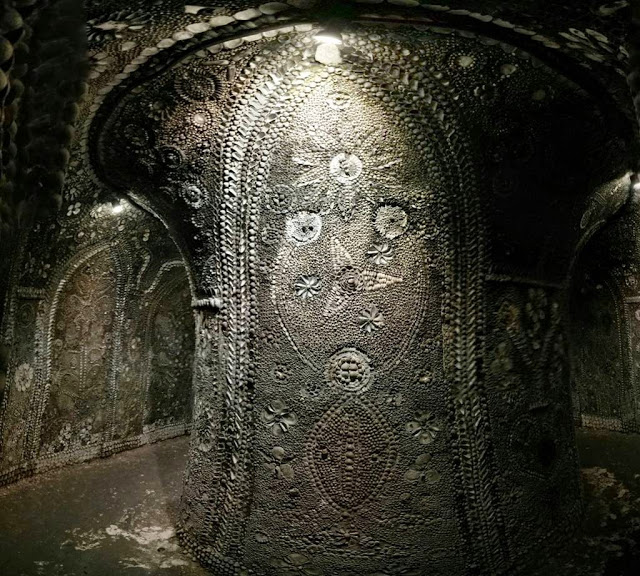
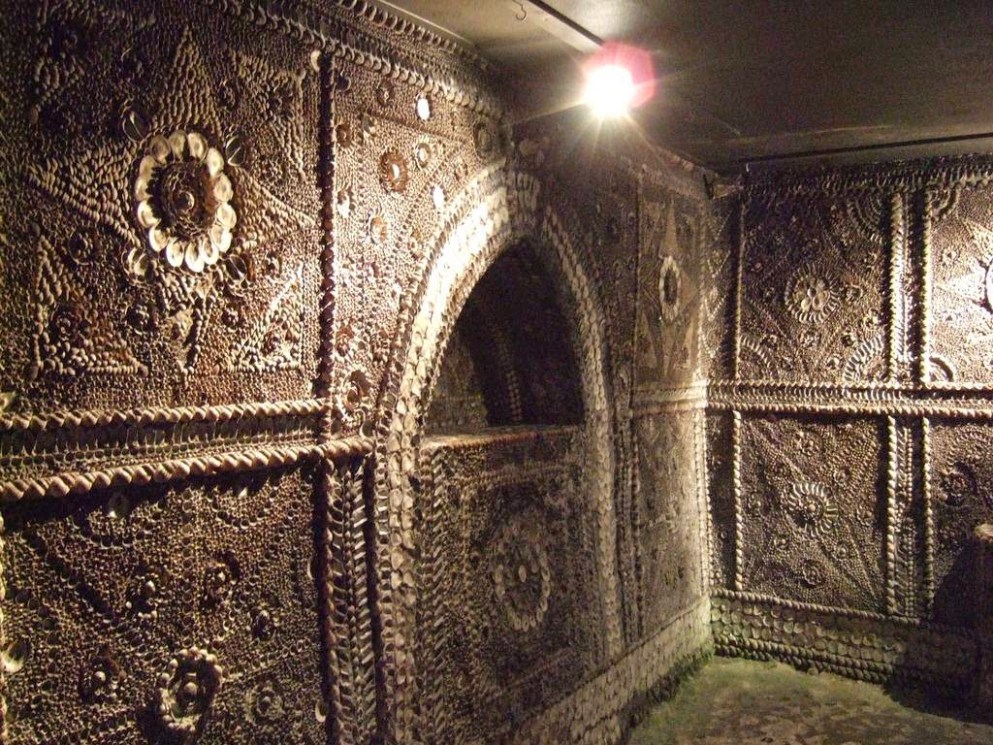
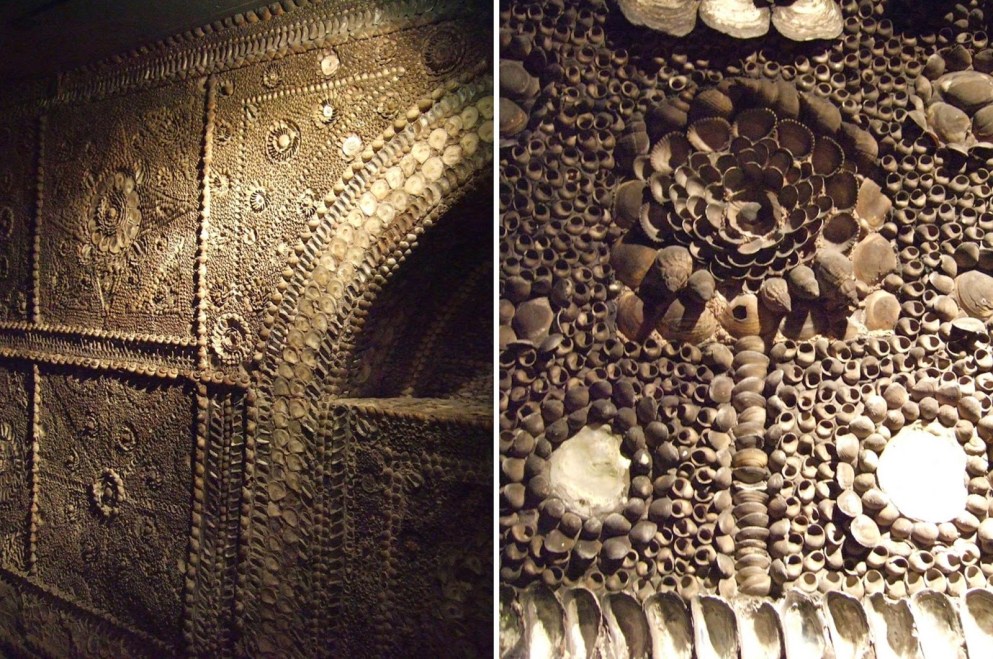
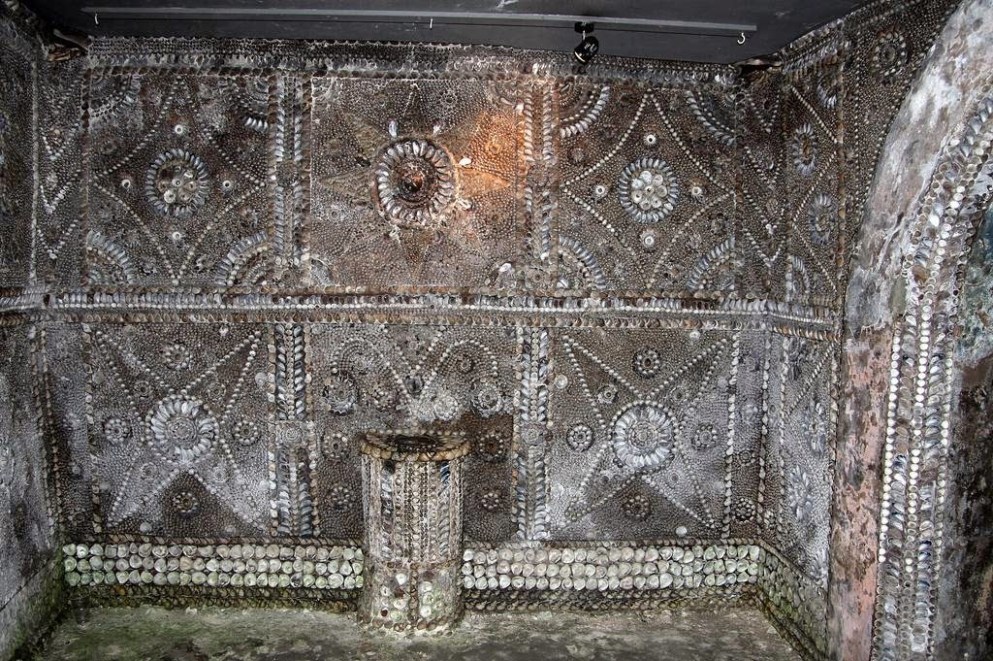
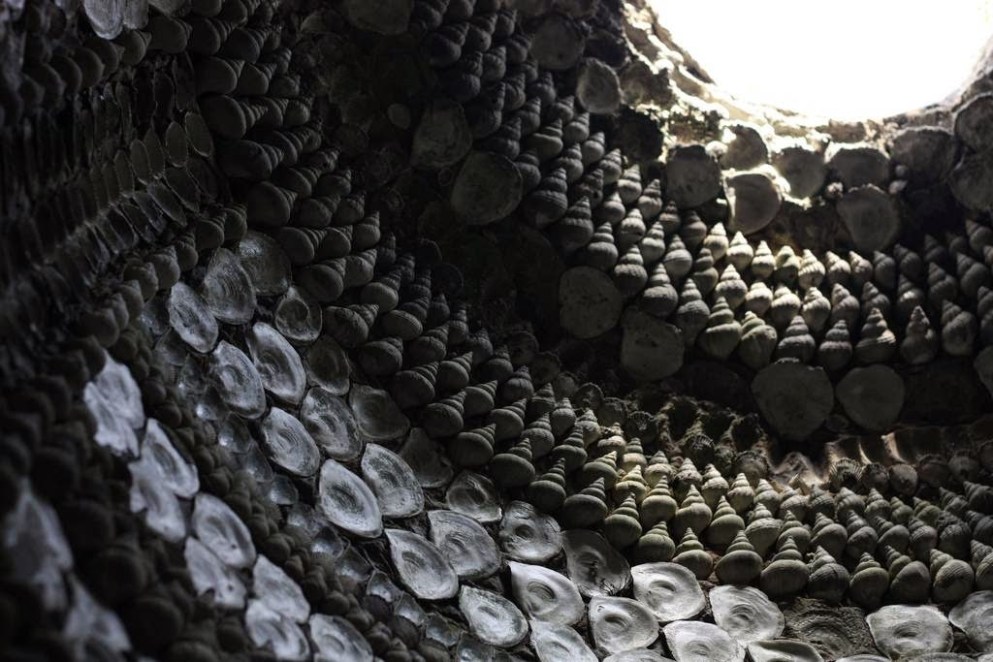
In 1835 a labourer was digging a field just outside the English seaside town of Margate.  His work was interrupted when he thrust his spade in to the soil and it simply vanished in to the ground.  The master of the nearby Dane House School, James Newlove, was made aware of this strange disappearance.  He volunteered his young son, Joshua, for the task of being lowered, candle in hand, in to the void via a length of rope

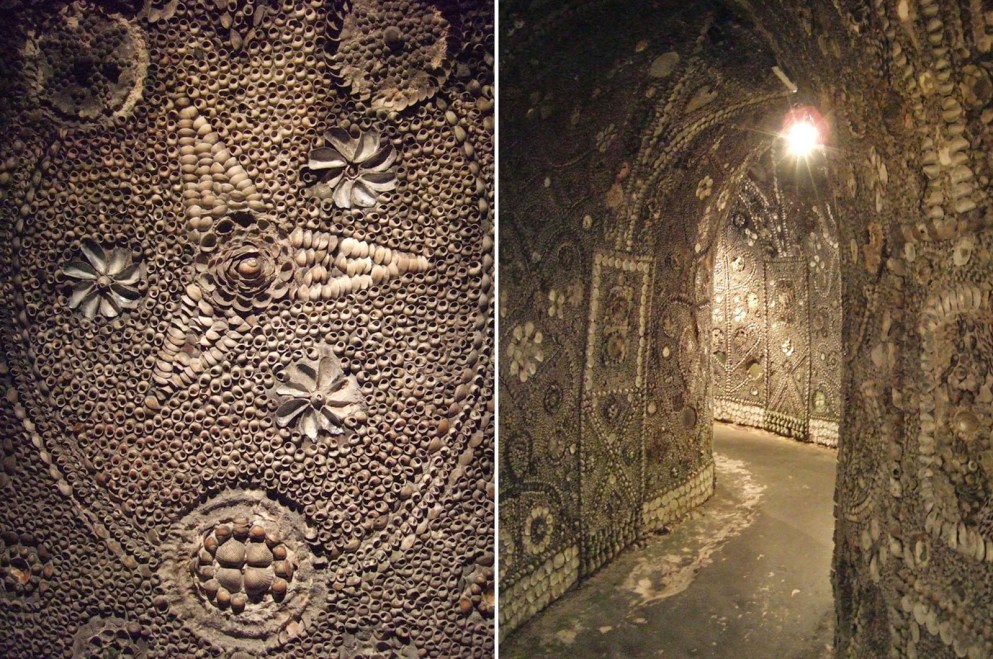
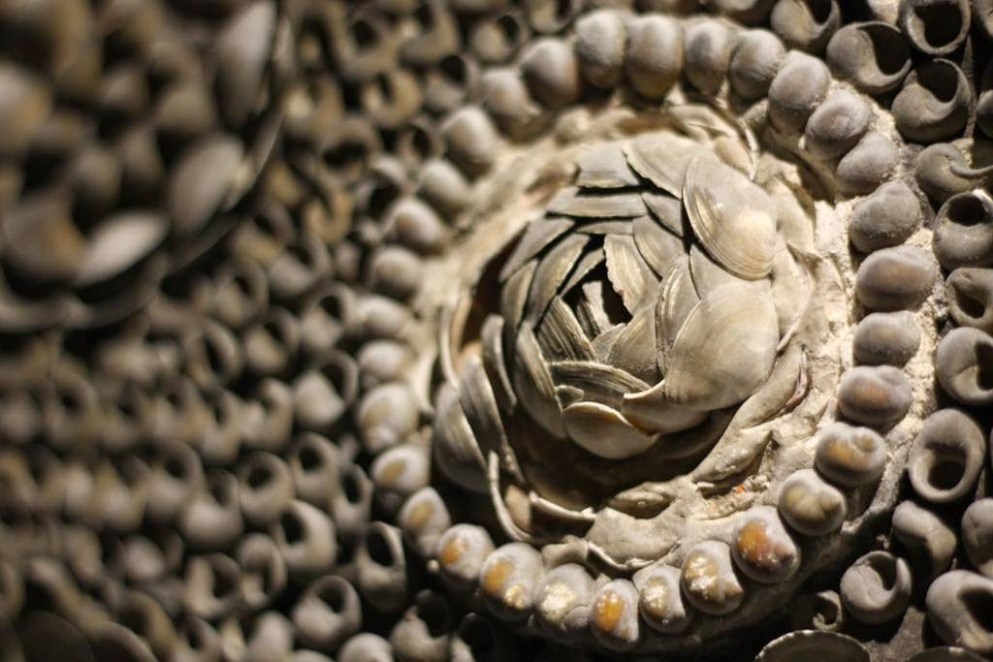
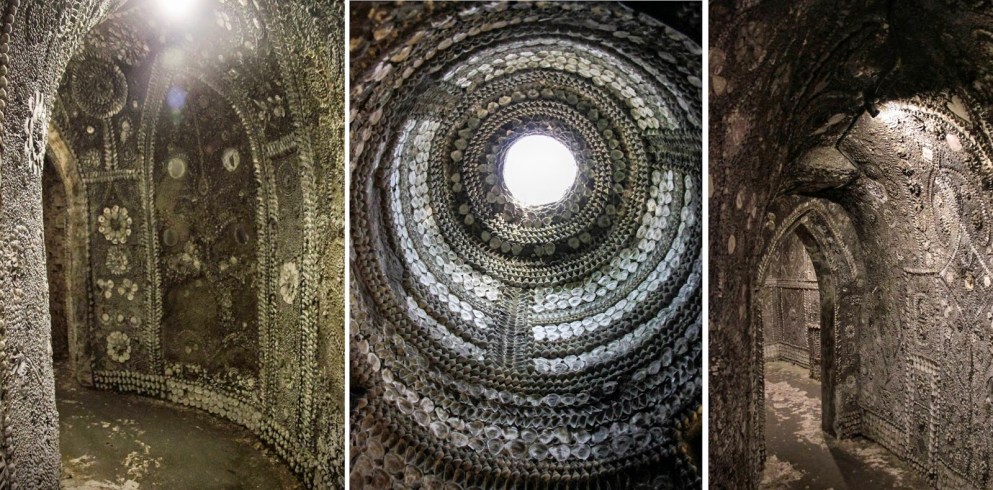
Regardless of our modern sensibilities about the health and safety of children, when Joshua was pulled back to the surface his wide-eyed tale astonished everyone. He told of a magical temple adorned in shells, hundreds, thousands… millions of them.  All told, 4.6 million.

Image Credit DeadManJones

Image Credit Krondol
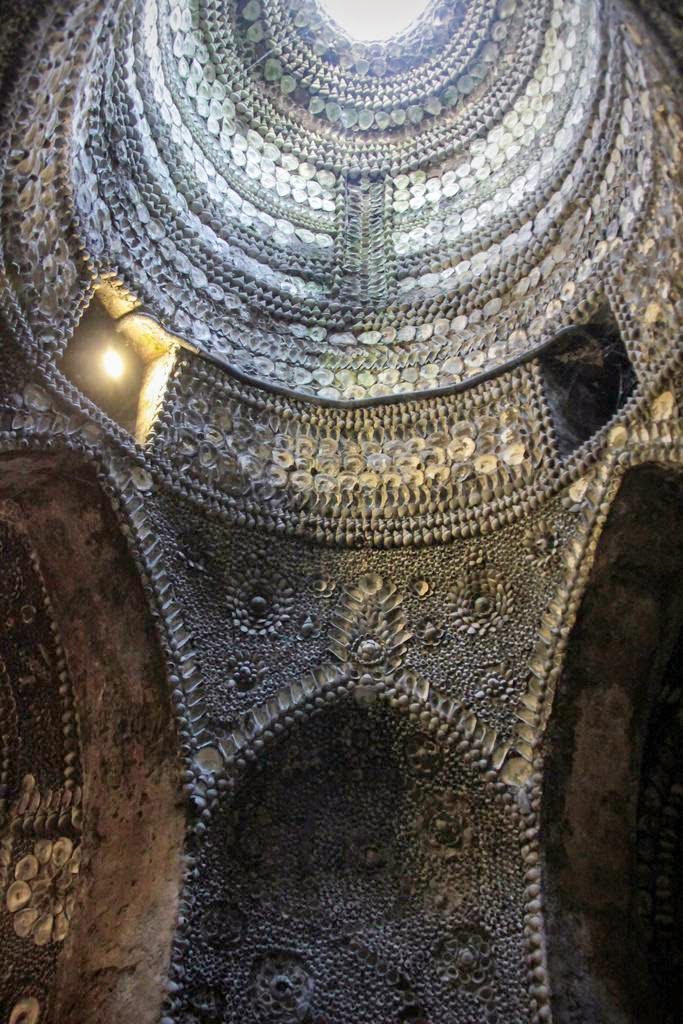
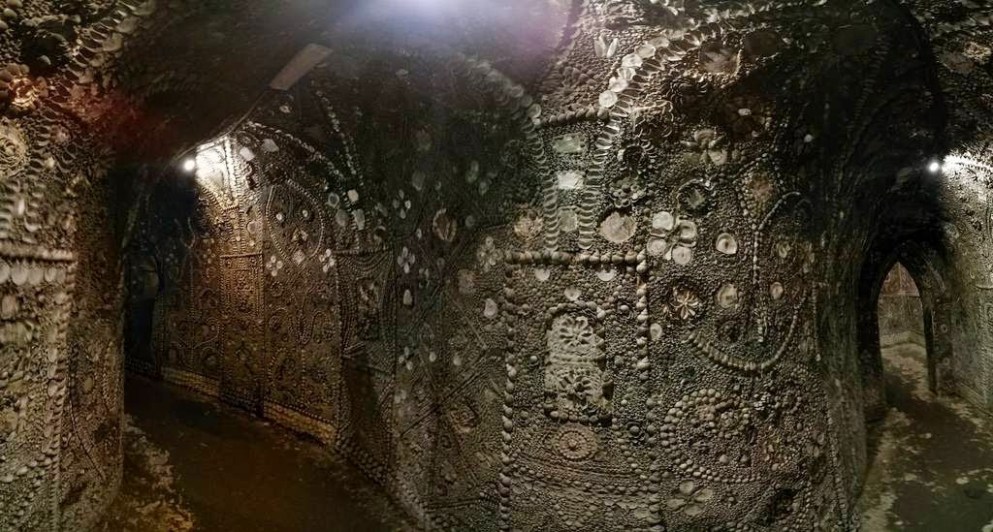
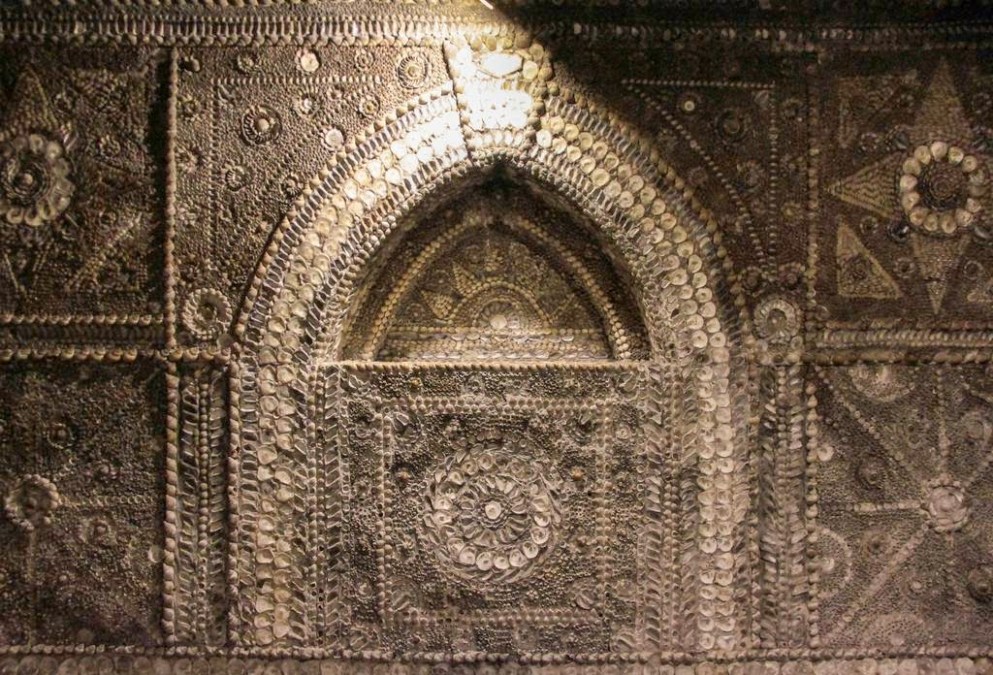
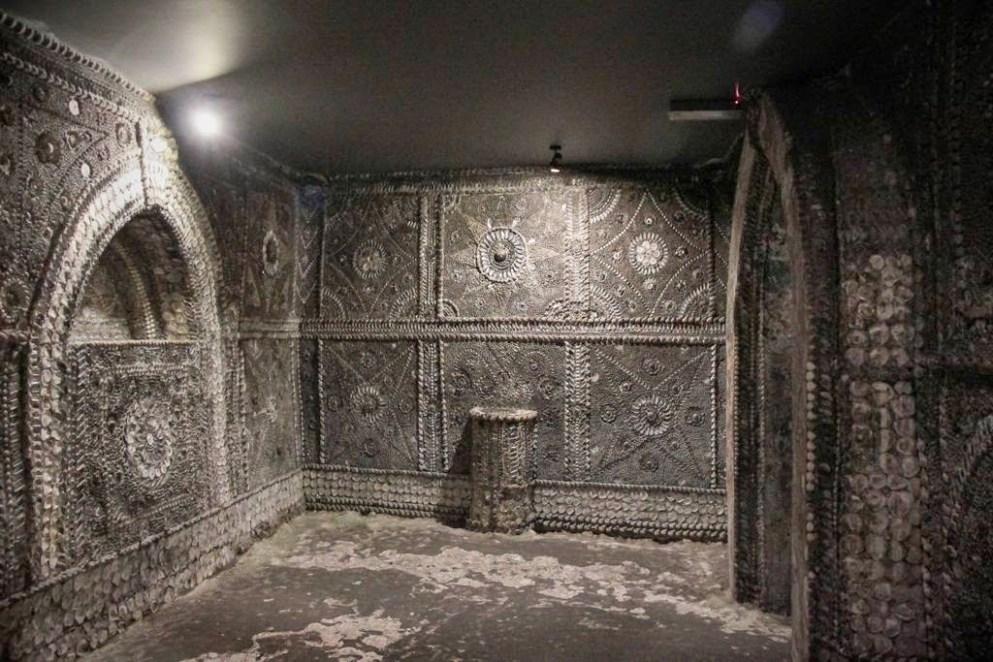
Joshua’s tale was nowhere near as tall as people may have at first imagined.  When the hole was widened enough for adults to enter they too witnessed the wondrous contents of the winding subterranean passageway, complete with an altar chamber and rotunda.  Newlove senior, a canny schoolmaster if ever there was one, was first to consider the financial benefits such a discovery might reap.  He hurriedly purchased the land above the mysterious chamber and began to adapt it so that visitors might enter – for a small charge of course. In 1837, just two years after its discovery, the grotto opened to a curious public.  Yet to this day debate rages (in a very English way, of course, involving polite discussion over tea and cucumber sandwiches) about it origins.

Image Credit Ben Sutherland
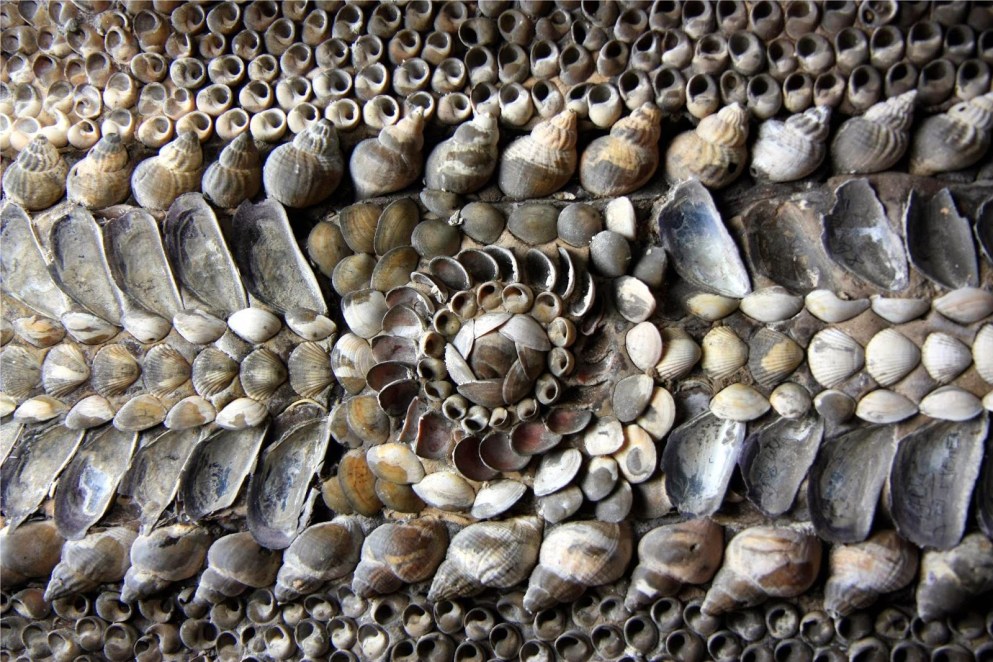
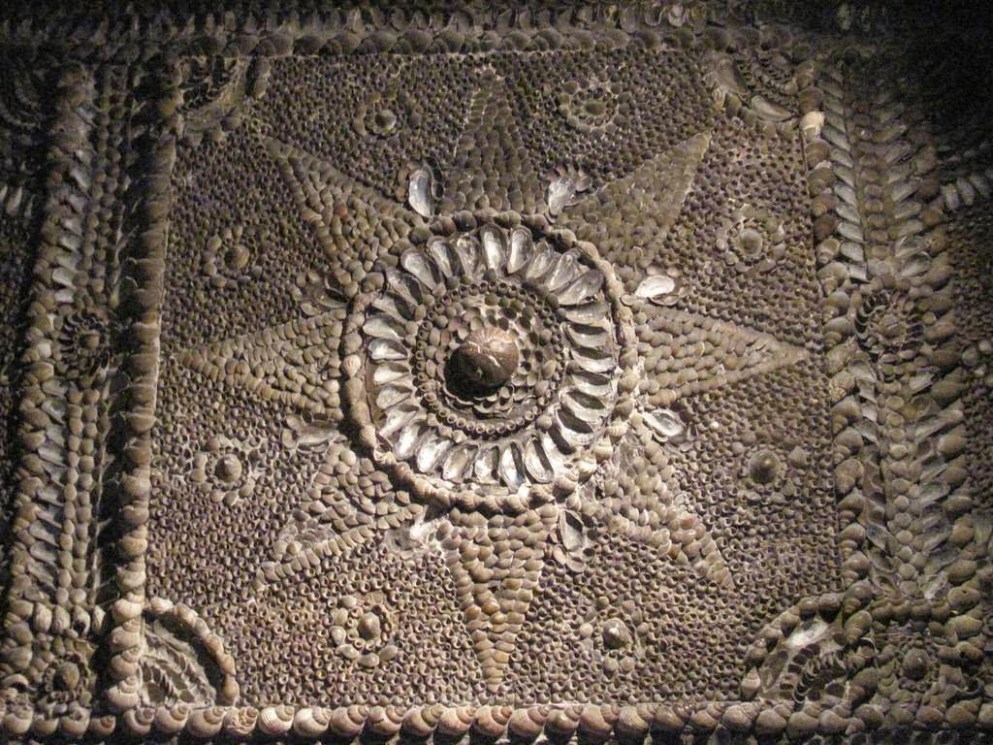
How it came to be originally built remains unexplained.  However, the 2000 square feet of mosaics, created from mussel, cockle, whelk and oyster shells have provoked a multitude of explanations none of which have been confirmed with any total surety.

Image Credut Ben Sutherland
Shell grottoes of this type were extremely popular in the Europe of the 1700s. Many suppose that this was the result of a local bigwig embarking on the Grand Tour and returning with a desire to recreate a highlight of his or her European expedition.  Yet although this is not without the realms of possibility, the land above the grotto never formed part of any large estate, which is where you would expect such an extravagance to be positioned – close enough to the big house to easily chaperone curious guests to its confines. These visitors would be impressed both by the owner’s wealth and aesthetics because, frankly, this kind of thing was built to do both.

Image Credit Kotomi

Image Credit Simon Lee
Moreover, had the grotto been built in the 1700s then there would have been some vestigial local memory (or legend) of its construction.  In order to get millions of shells in to this underground passage many local people would have to have been involved in their transport.  Yet the discovery in 1835 was a surprise to all – no one stepped forward with any explanation.

Image Credit Ben Sutherland
It has been suggested that the grotto was a smuggler’s cave – almost all the shells are British and so it could have been a hideaway made by locals for stolen and contraband goods.  Yet this idea doesn’t hold much water either. Although near to the sea, the waves remain stubbornly a number of miles away and there are no tunnels from coast to ‘cave’. Plus with a distinct lack of an escape route any smuggler would have been mad to hide their booty here – not to mention the fact that they would have had to spend more of their time decorating the place than doing any actual smuggling. So, it’s a no to that theory as well.

Image Credit Krondol

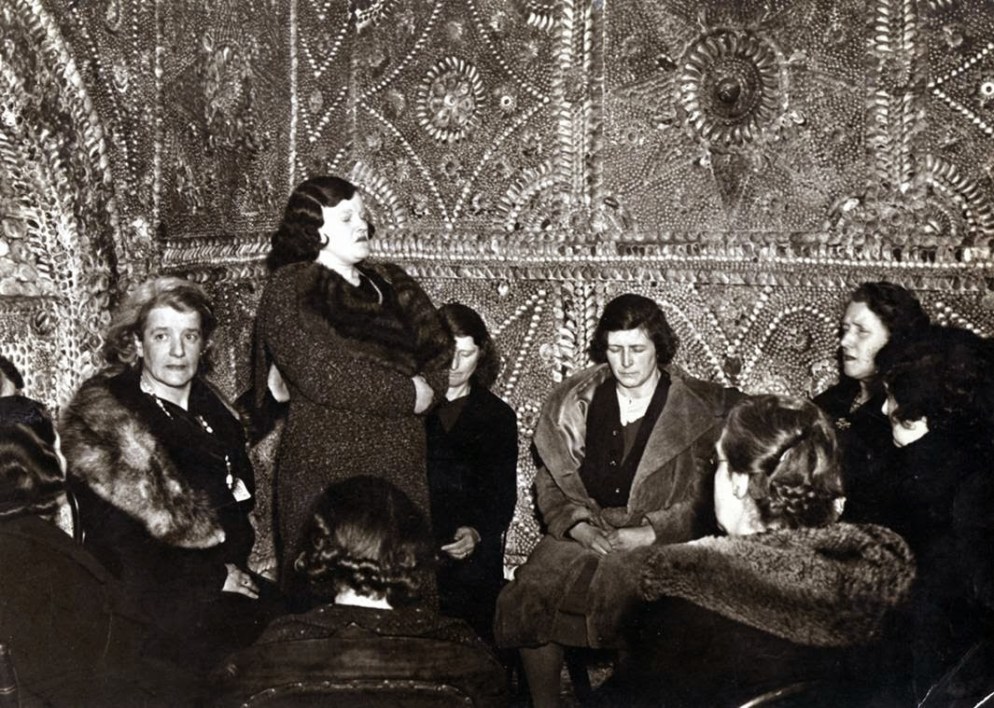
Could it be a Roman temple?  A remnant of dark-age rituals?  A prehistoric astronomical calendar? Make up a theory and it could well be feasible – and many have.  There have even been séances held in the grotto to try and contact the spirits of the builders, such as the one from the 1930s above.

Image Credit John C Bullas

Image Credit Feribrulu
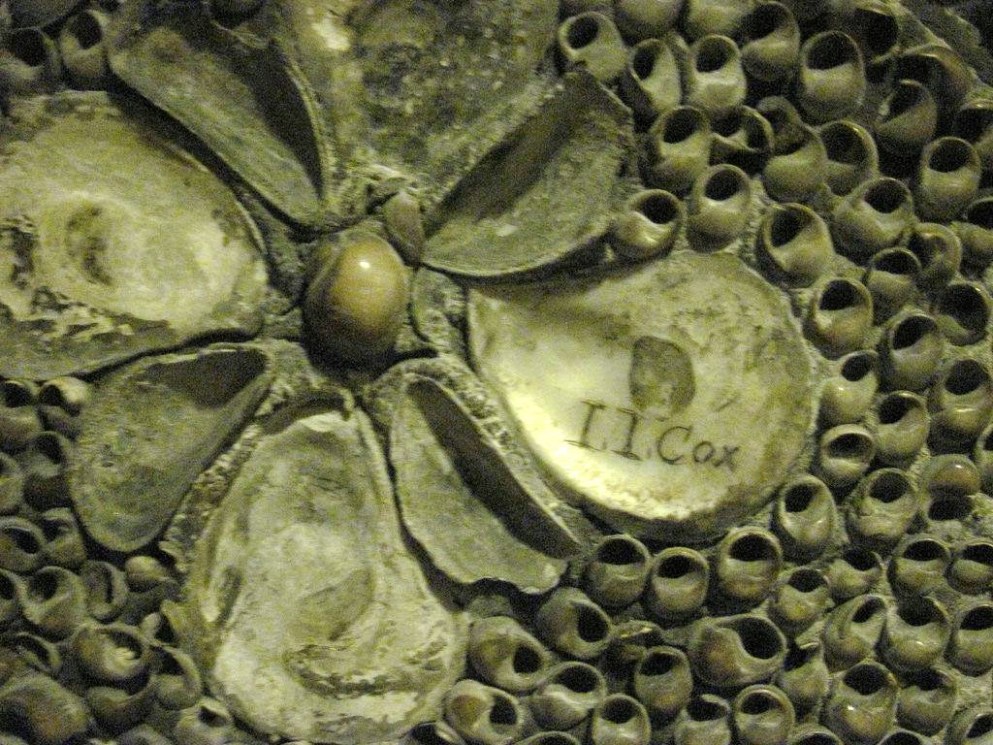
A number of the shells have been vandalised over the years by visitors.  Even though this is difficult to condone it adds an extra layer of history to the place.

Image Credit Kotomi

 
Image Credit Mr Moss
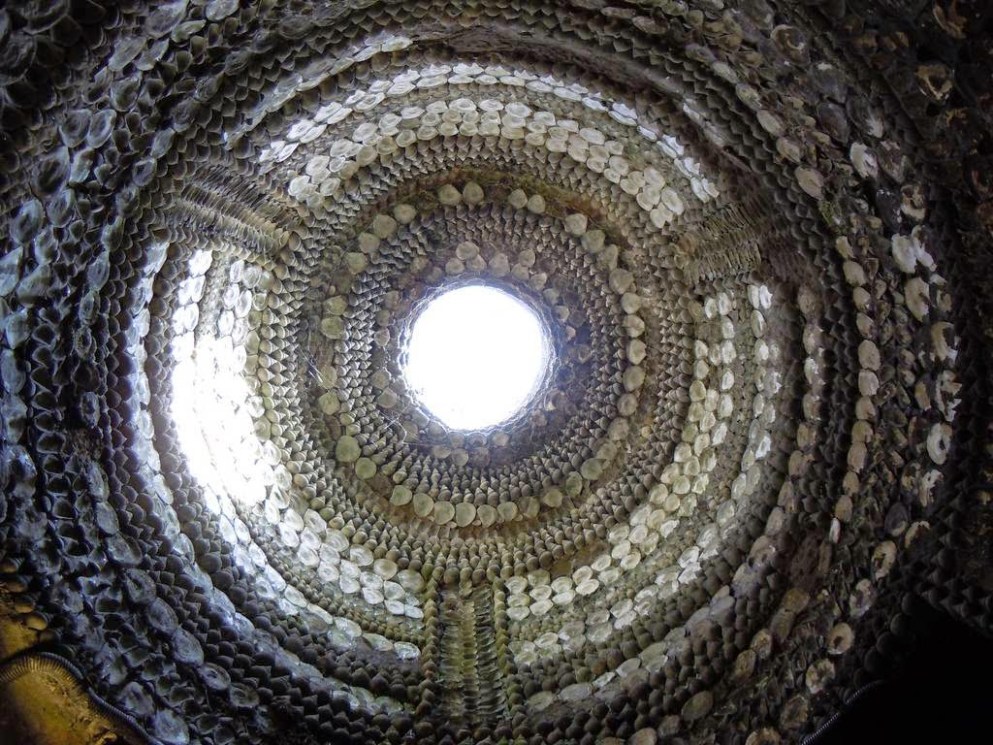
The latest research which took place in 2006 points towards an explanation which might please Indiana Jones fans.  Mick Twyman of the Margate Historical Society put forward the suggestion that the grotto was built by the Knights Templar or their associates sometime in the middle 1100s.  He has suggested this after a painstaking measurement of angles inside the grotto (a temple now, perhaps?) and the way that the sunlight is projected in to the inside of the dome.   The altar chamber certainly looks the part of an early temple for masonic rituals. Yet this kind of theory, unlike its scientific namesake, isn’t proof – just conjecture however sensible and enlightened.

Image Credit Simon Lee
Why not get the shells carbon-dated?  This is certainly a possibility for the current owner (the grotto has always been in private hands although recent restoration work has been done in partnership with English Heritage, the charity that looks after the National Heritage Collection of the country).  However, this has been advised against for a number of reasons.  First and foremost quite a number of shell samples would be needed to ensure that dating caught the earliest shells and not just those used in previous (unknown) restoration work over the centuries.  Secondly it’s expensive and money needs to be more urgently spent on conservation rather than speculative investigation, however scientific and potentially illuminating.

Image Credit Feribrilu

Image Credit Kotomi
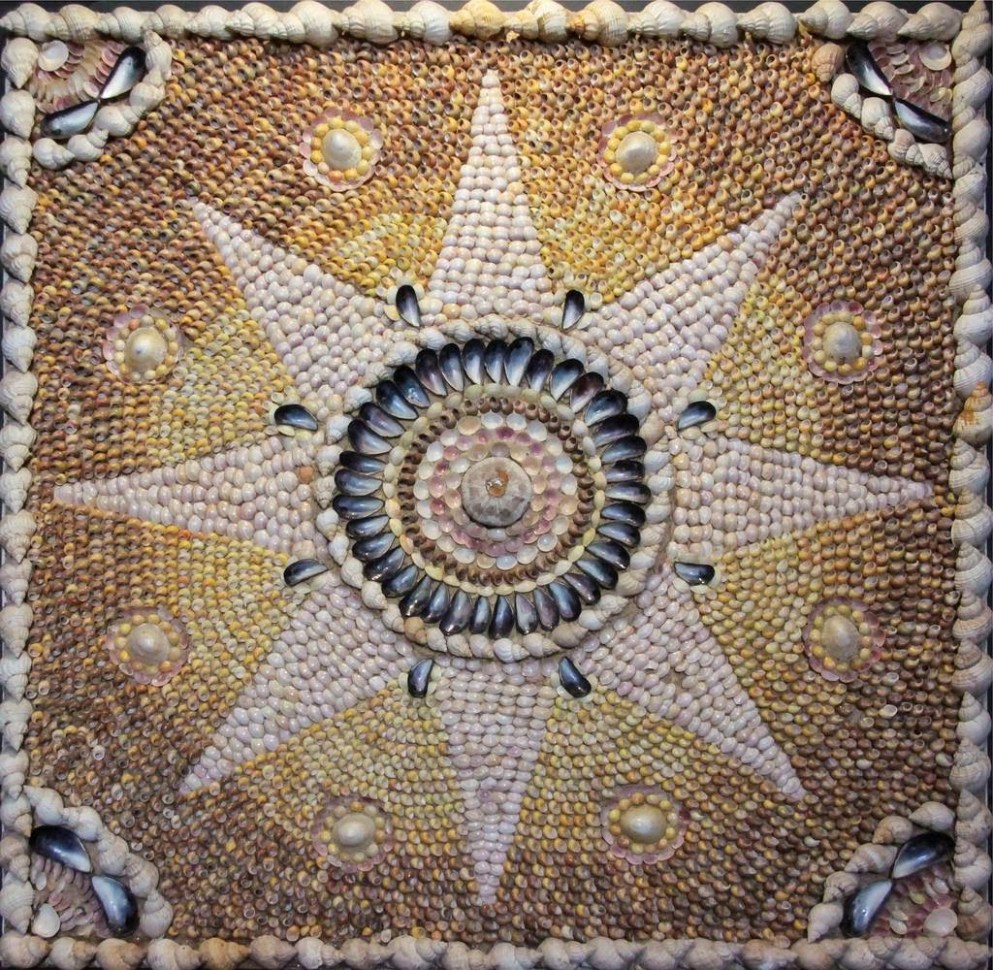
How did the shells look before the decades of gas-lit exhibition and when water damage had not bleached them? A modern recreation of a panel from the grotto shows how it must have dazzled visitors in its heyday.

Image Credit Kotomi
Yet, perhaps it is best to leave well alone in terms of a definitive origin story.  After all, even a secure dating of the oldest shells in the grotto would only establish their age – it would hardly go any further in discovering who built the grotto and why.  Sometimes it’s simply best to allow imagination to flourish and allow visitors to create their own history for this amazing place.

If you want to visit the Margate Shell Grotto, please check out its website for opening times.

Source…….www.kuriositas.com
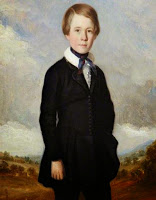
The picture of the c1835 schoolboy is by William McTaggart
First Image Credit DeadManJones


Natarajan

Roads Made of Plastic Waste in India? Yes! Meet the Professor Who Pioneered the Technique….

A Government order in November 2015 has made it mandatory for all road developers in the country to use waste plastic, along with bituminous mixes, for road construction. This is to help overcome the growing problem of plastic waste disposal in India. The technology for this was developed by the ‘Plastic Man’ of India, Prof Rajagopalan Vasudevan, Professor of Chemistry at Thiagarajar College of Engineering, Madurai.

Plastic has slowly became an integral part of all human requirements. Plastic carry bags, packaging material, bottles, cups, and various other items have slowly replaced everything made of other material due to the advantages of plastic. Plastic is durable, easy to produce, lightweight, unbreakable, odourless, and chemical resistant.

But plastic does not decompose. This is its biggest drawback.

Meet the Plastic Man of India

Photo source: http://www.changebhai.in

Plastic garbage is commonly seen around the country and has started causing several problems. Plastic waste clogs drains, causing floods. It chokes animals who eat plastic bags, etc. Plastics found in fields blocks germination and prevent rainwater absorption.

Recycling plastic can be done only 3-4 times and melting the plastic for recycling releases highly toxic fumes.

By the turn of the century, a lot of noise was being made to reduce the use of plastic and control the waste it was generating. It was during this time when, one evening, Prof. Vasudevan saw a doctor on a TV program saying that plastic ‘dissolved’ in water bodies caused pollution.

“This set me thinking. Since plastic is a product of petroleum this theory of the doctor had to be false. There was a lot of serious talk about banning plastics all over the country and finding solutions to the waste plastic strewn all over.  I decided to take up the challenge to experiment with waste plastics and see if I could find a solution,” he says.

Laboratory results of mixing waste plastic with heated bitumen and coating the mixture over stone proved positive. He implemented the use of plastic waste on a road constructed inside the premises of his college in 2002.

“To date, this stretch of road is still going strong,” he says.

In 2006, the Thiagarajar College of Engineering received the patent for this technology.

The plastic waste items that can be used for road construction are various items like plastic carrybags, plastic cups, plastic packaging for potato chips, biscuits, chocolates, etc.

a wish for all plastic bags

Photo source: Thiagarajar College of Engineering

The entire process is very simple. The plastic waste material is first shredded to a particular size using a shredding machine. The aggregate mix is heated at 165°c and transferred to the mixing chamber, and the bitumen is heated to 160°c to result in good binding. It is important to monitor the temperature during heating.

The shredded plastic waste is then added to the aggregate.  It gets coated uniformly over the aggregate within 30 to 60 seconds, giving an oily look. The plastic waste coated aggregate is mixed with hot bitumen and the resulting mix is used for road construction. The road laying temperature is between 110°c to 120°c. The roller used has a capacity of 8 tons.

“The advantages of using waste plastics for road construction are many. The process is easy and does not need any new machinery. For every kilo of stone, 50 gms of bitumen is used and 1/10th of this is plastic waste; this reduces the amount of bitumen being used.  Plastic increases the aggregate impact value and improves the quality of flexible pavements.  Wear and tear of the roads has decreased to a large extent,” explains the proud Plastic Man of India.

This road construction process is extremely eco-friendly, with no toxic gases being released.

A road made of waste plastic

Photo Source: walkabilityasia.org

This process has generated an additional job for rag pickers.

Plastic waste helps increase the strength of the road, reducing road fatigue. These roads have better resistance towards rain water and cold weather. Since a large amount of plastic waste is required for a small stretch of road, the amount of waste plastic strewn around will definitely reduce.

Prof R Vasudevan’s inclination to keep experimenting led to another innovation. He decided to try creating a stone block with plastic coating and, in 2012, ‘plastone’ took birth. A plastone block is made from a mixture of waste plastic and stone. It has been found to withstand more pressure and it resists water percolation. In the professor’s department of chemistry they have made plastone blocks using granite and ceramic waste, along with plastic waste.

Each plastone block consumes 300 plastic carry bags and around six PET bottles.

“It is an easier way of disposing off plastic bottles which are found scattered all over,” points out Dr. Vasudevan.

Almost 10% of  solid waste consists of used materials that can be broken into pieces and used in the making of plastone. Industrial slug can also be used in the process. One of the foremost advantages of plastone is its non-porous nature and the ability to prevent water penetration.

The professor with his best creation, yet!!

Photo Source: http://www.thealternative.in/

Plastone can be used for flooring, especially outdoors. It can be a cheap and strong substitute for cement blocks, which have a tendency to wither away in constant rain. It can be an effective liner for water bodies, especially canals, preventing water seepage. It can also be used to raise compound walls. A coat of emulsion can be provided to make it colourful and attractive.

The college, and the professor in particular, have been receiving many queries from various countries in Europe and the Americas for this technology.

“Swacch Bharat is our first priority,” says the professor. “We will first help India dispose of its waste material by spreading the message about the use of plastic waste in road construction and usage of plastone. Once we have made headway in almost every part of our country, we will share this technology with other countries.”

About the author: Aparna Menon is a freelance writer, writing for various newspapers for the past 10 years. Her main fields of interest are wildlife, heritage and history. A keen traveler, she loves to read and write and does a lot of art work too.
Source……..Aparna Menon in www. the betterindia.com
Natarajan
Nature Soundmap: Listen to the Sound of Nature…!!!

You’ll probably agree with me that one of the best ways to experience nature is to be able to listen to its magnificent sounds. There’s something particularly enlivening about being fully aware of the beauty and diversity of our world. Our planet boasts a wealth of inspiring places that give us this perspective, and they are spread all over the globe for us to enjoy. However, if getting to these places poses a challenge to you, there’s another thing you can do to experience them – all you have to do is visit naturesoundmap!
Nature Soundmap is a project funded by Wild Ambience, which has gathered a collection of about 400 high-quality natural soundscapes from all over the world. Over 90 nature sound recordists have visited the locations to make this collection possible, so you can virtually experience their sounds from the website itself. The equipment used for these recordings allows users to enjoy sensational 360-degreesounds of the locations that are so vivid, it will almost feel like you’re actually there.

Nature Soundmap’s website allows you to view an interactive map of the world that displays the particular locations the recordists have visited. By clicking on these locations, you will be able to listen to the corresponding sounds. Listen to anything from a monsoon in Borneo’s tropical forest, to the erupting Piton de le Fournaise volcano in the Indian Ocean, frogs and crickets in the Amazon rainforest at night, kangaroos jumping in Australia, and a Great Blue Turaco singing in Uganda.
The website is incredibly easy to use, and it’s also free (although donations are welcome from those who would like to support the fantastic work put into the project).


Click here to visit Nature Soundmap!

Listen to the Wonderful Sounds of Nature with a Click of a Mouse

Here’s a guide that will help take you through the website’s main features:

  • Visit naturesoundmap
  • You will see a world map on your screen. Click and drag on the map to browse through it. Hover over the different locations marked in green to view more details about the sound subject and the location where it was recorded. By using the scroll button on your mouse, or the +/- buttons at the bottom-left of your screen, you can zoom in and out of the map (zooming in will allow you to see more location names).

Listen to the Wonderful Sounds of Nature with a Click of a Mouse

  • Click on the desired location and a pop-up box will appear on your screen. This includes an image of the environment or animal the website features the sound of, as well as details about the recordist, location, habitat, and a more detailed description of the sound. Click on ‘More info’ / ‘Read more’ to read further about the location or sound (a new tab will be opened). Click on ‘Listen’ in the pop-up box to play the sound. Change to a random sound by clicking on one of the arrows on each side of the pop-up box.
  • A player will appear at the bottom of your screen, displaying what you’re listening to. Click on the “pause” symbol to pause the sound (or re-click on the ‘Listen’ button in the pop-up box). To change sounds, you may click on another location and repeat, or simply click on the “next” symbol in the player to go to another random location.
  • You may even create your own little “playlist” of your favorite natural sounds by clicking on ‘Add to Playlist’ in the pop-up box. This action will send the sound to the player. To expand the player and access your sounds, click on the Playlist button on the right-hand side of the player. From here, you can click and drag to change the order of the sounds, or click on the ‘X’ to remove any of them from your list. Clicking on the Shuffle button, found abovethe Playlist button, will allow you to randomize the order of your sounds. Collapse the player by clicking on the Playlist button again.
  • Share your favorite sounds with your social media friends by clicking on ‘Share on Facebook’ or ‘Share on Twitter’  at the bottom of the player.

For the ultimate listening experience, Nature Soundmap suggests that you use headphones or decent speakers (good quality is recommended) to further the authenticity of your experience. If some sounds are quite loud, turn the volume down to a more reasonable level.

To immerse yourself even further into the experience, just close your eyes, picture your surroundings and take in all the aspects and dimensions of the sounds, including foreground and background noise. It’s a truly remarkable and almost surreal experience that sucks you out of reality for a little while and draws you closer to nature.


Try Nature Soundmap now!

Source…..www.ba-bamail.com

Natarajan

The Carved Stone Balls of Scotland…. !!!

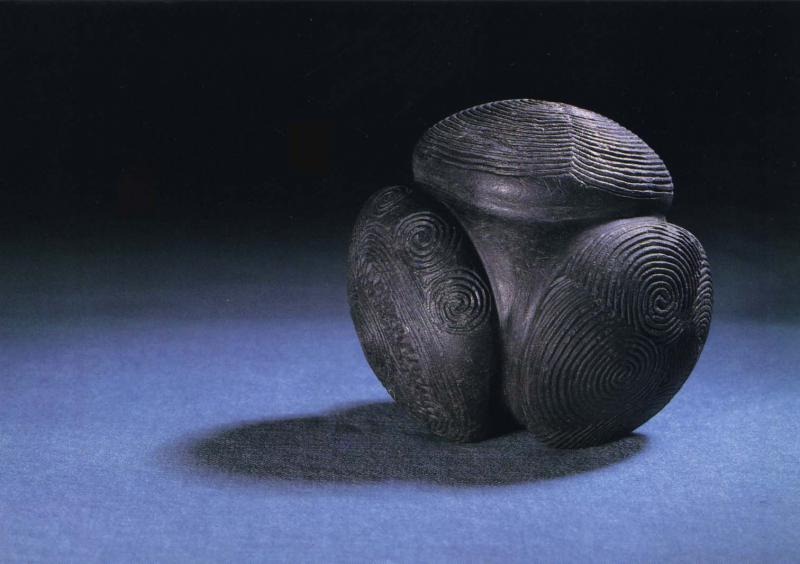
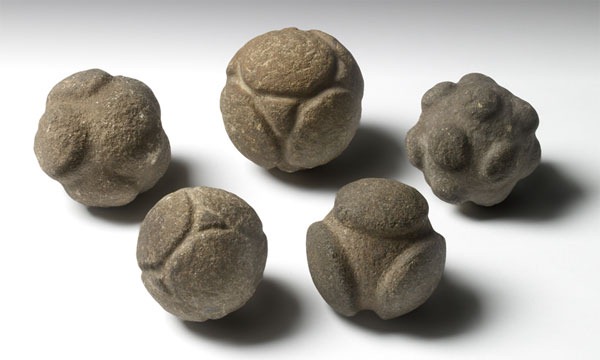
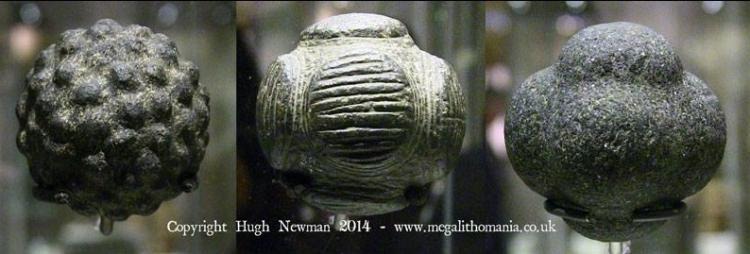
For the last 150 years archeologists have been digging up a peculiar class of objects in north-east Scotland. They are small carved stone balls of a relative similar size and decorated with carved evenly-spaced patterns of circular bosses or knobs around the surface of the sphere. Some balls have as few as three knobs, while some have up to one hundred-sixty, but mostly they have six knobs. Some of the knobs are further decorated with spirals or concentric circles and some have patterns of straight incised lines and hatchings.

The absence of damage or any sign of use on these carved balls or the context in which they have been found have been baffling archeologists because they are unable to tie these objects to a specific function. Some believe these carved balls served simply as totems of power and prestige, yet their precise symmetrical form cannot be ignored. So far over 400 stone balls have been discovered and nearly all of them conform to a type of geometrical form known as Platonic solid, suggesting that the knowledge of geometry prevailed as early as the Neolithic age.

carved-stone-balls-scotland-8

The Towie ball.

The Platonic solids are prominent in the philosophy of Plato. He taught that these five solids were the core patterns of physical creation, associating each form to the four classical elements (earth, air, water, and fire), while the fifth one was held to be the building block of heaven itself. Examples of Platonic solids in nature are plenty —crystal structures, many viruses, and the arrangement of atoms in a molecule.

One of the most outstanding specimen is the so called “Towie ball”, so named because it was found in Towie, in Aberdeenshire. It is believed to date from about 2500 BC. This carved stone ball is about three inch in diameter and has four knobs, three of them decorated with spirals or dots and rings. The designs closely resemble those pecked into the stones of the passage mound at Newgrange in Ireland.

“In my view, these Neolithic people were experimenting with solid geometry and making wonderful finds,” writes Ian Begg, a retired Scottish architect, who is currently designing a planetarium whose structure will be based on these mysterious carved stones.

“These stone balls are very important and shows what we’ve seen demonstrated by Pythagorus nearly 2,000 years after the Scots,” he said.

Not everyone believes the stones were created specifically to study geometry. Some say the balls were used as bolas —a kind of trap made of weights on the ends of interconnected cords, designed to capture animals by entangling their legs, while others suggest they served as movable poises on a primitive weighing machine, or in the working of hides.

The purpose of the balls are still a mystery.

carved-stone-balls-scotland-3

carved-stone-balls-scotland-5

Sources: www.ashmolean.org / Ancient Wisdom / www.ianbeggarchitect.co.uk / Wikipedia

http://www.amusingplanet.com

Natarajan
India Exports the First Six ‘Made in India’ Metro Coaches to Australia…

Six metro coaches made in the Bombardier Transportation Plant located in Savli, Vadodara, were shipped to Australia from Mumbai port on Friday. According to plan, 450 such coaches will be exported to Australia over a period of two and a half years.

Each coach is 75 feet long and weighs 46 tonnes. This is the first-of-its-kind export from India since the launch of the ‘Make in India’ campaign.

railcoach

Picture for representation only. Source: Wikimedia

According to a statement by Ministry of Shipping, loading these coached for export requires high degree of precision. “The entire stevedoring operation (loading into ship) of these prestigious over-sized metro coaches has been done in-house by Mumbai Port Trust unlike any other port in India where private operators carry out such operations,” the statement said.

The total value of the contract signed for the project with the Canadian firm, Bombardier Transportation, is approximately USD 4.1 billion. And Bombardier’s share is valued at approximately USD 2.7 billion. The project will be executed in the company’s Vadodara facility, which has been developed for export-oriented activities.

Source…….Tanaya Singh in http://www.the betterindia.com

Natarajan
Kolkata Girl Makes It to Forbes 30 Under 30 List for Developing Pathbreaking Underwater Drones…

28-year-old Sampriti Bhattacharyya, a PhD scholar from Massachusetts Institute of Technology, has designed an underwater drone that can map ocean floors at places where GPS does not work. She is the founder of Hydroswarm – a startup that designs and markets small, autonomous drones for ocean exploration and maritime big data. These drones are shaped like an egg and are roughly the size of a football.

Sampriti, who hails from Kolkata, has been featured among Forbes’ top 30 most powerful young change agents of the world.


drone

She pursued engineering from St. Thomas’ College of Engineering & Technology in Kolkata and then went to Ohio State University to study aerospace engineering. She later switched to robotics at MIT.

The absence of any easy way to study ocean floors inspired her to create an underwater robot. As of now, remotely operated autonomous underwater vehicles (AUV) are used to explore the deep sea. They are deployed for missions like studying oil spills, environmental monitoring, search operations, etc. But AUVs are very costly and mission-oriented. They are not used to study the ocean on a day-to-day basis to understand the underwater environment better.

This is what Sampriti wants to change with Hydroswarm, by developing drones that can roam the oceans and collect data all the time.

drone1

“Underwater navigation has been a reality for many years but for advanced searches you need maps that are as refined as, say, the Google map. This is where my drone comes in. It can map the ocean, sitting on its bed, and you can zero in on the minutest objects, living or non-living. You can even map underwater pollution with the help of his drone,” she told The Times of India when she was in Kolkata for some time recently.

These drones can withstand the immense pressure in deep oceans, can cover up to 100 square meters in one hour, and can swim across the ocean floors mapping the topography, studying aquatic life, etc.

To commercialize her drone by starting a company, Sampriti joined a business programme at Harvard Business School. She was one of the top eight contenders to reach the finals of MIT $100K Entrepreneurship Competition, winning $15,000.

All pictures: Twitter

Source……..Tanaya Singh in http://www.the betterindia.com

Natarajan