Don’t Know What to Do with Your Old Tyres? This 16-Year-Old Has a Brilliant Answer….!!!

With an aim to safely dispose end-of-life tyres, Anubhav Wadhwa is a 16-year-old on a mission.

It all started when 16-year-old Anubhav saw someone setting fire to a couple of tyres. It got him thinking about what happens to tyres that have served their time. After a quick Google check, Anubhav realised that burning tyres, an act that releases a cocktail of toxic gases, is a huge environmental hazard.

On the face of it, Anubhav may seem like any other teenager. But this extraordinary student of Pathways World School, Aravali, launched his first venture, a software product development company called TechAPTO, at the age of 12. Later, he launched Trends on Internet, an analytical company.

With a determination to act on the issue of safe disposal of tyres, Anubhav founded Tyreslessly, an aggregator of used tyres, in December, 2015.

Through its website, which was launched a couple of days ago, anyone can request a pickup of end-of-life tyres.

Anubhav Wadhwa

“Once the tyre is picked up, it is sent to a recycling plant and will undergo pyrolysis – an extraction process which can help convert tyres into usable by-products like fuel oils, steel etc.,” says Anubhav.

So what happens to such tyres usually? Anubhav says that these are carelessly burned and used to produce heat, especially for use in sugarcane industries.

“A majority of these industries burn tyres in a manner that is hazardous to the environment. The only way forward is to embrace pyrolysis,” he maintains.

He believes this process of recycling end-of-life tyres will, over the years, help in saving a lot of landfill space in the country.

“There are a lot of pyrolysis plants across India. But right now, the challenge is to get the used tyres to them.”

Tyrelessly currently operates only in the Delhi/NCR region. But the company plans to expand it’s services to all major cities by February. As of now the service is free of cost. However, Anubhav plans to generate revenue from advertisements on the website and later on from the sale of the recycled byproducts themselves.

Tyrelessly has been funded from the internal accruals of TechAPTO.

tyres lying around

Photo source: Flickr/Anjan Chatterjee

Anubhav is a firm believer in the power of communities and aims to increase tyre recycling rates in India with the help of student and local communities. It is his dream to create such communities across the country.

“Right now we are educating people about the dangers of tyre burning and with the help of these communities, we are procuring more such tyres,” says Anubhav.

Tyrelessly, that has just begun it’s collection process, hopes to achieve it’s first target of collecting at least 1,000 tyres by the end of February.

This super kid is definitely doing something right.

When asked about how he has achieved so much in such a short period of time, Anubhav says he owes it to his alma mater for recognising and channeling his talents.

anubuv

Juggling his school work as well as these three companies doesn’t seem to be too much of a task for him. Anubhav starts his day as early as 6.30 a.m. He attends school, where apart from his academic responsibilities, including being a member of the student council, Anubhav also assists his teachers in preparing visual display material as well as projects. He gets back home around 5 p.m. and starts work then.

“Being a part of Pathways World School has been the most rewarding experiential learning for me. I feel that this has helped me evolve into a good human being.”

He feels that the two most important traits he developed and has held him in good stead are dedication and commitment.

After graduating as an IB scholar, Anubhav wants to be a barrister. His commitment towards achieving this goal is evident from his academic accomplishments and a keen sense of community service.

The world has taken note of this enthusiastic teenager.

ProSieben, a German TV channel that is aired in over 12 countries, featured Anubhav as part of a documentary for its show called Galelio.

As part of his vision towards ensuring sustainable development, Anubhav is working towards building strong relationships with governments and other key stakeholders. For now, Anubhav wants to just keep doing what he does best and spread the message of disposing tyres in a safe manner.

To learn more about Tyrelessly, please visit its website.

Source……..Meryl Garcia….in http://www.the betterindia.com

Natarajan
World’s Largest Railway Model is Now on Google “Mini” Street View…..

Google’s Street View, that lets you explore the world through the virtual eyes of street level cameras, has now shrunk itself to the size of a thumb, so that you can experience the world’s largest miniature model railway as if it has been blown to real size.

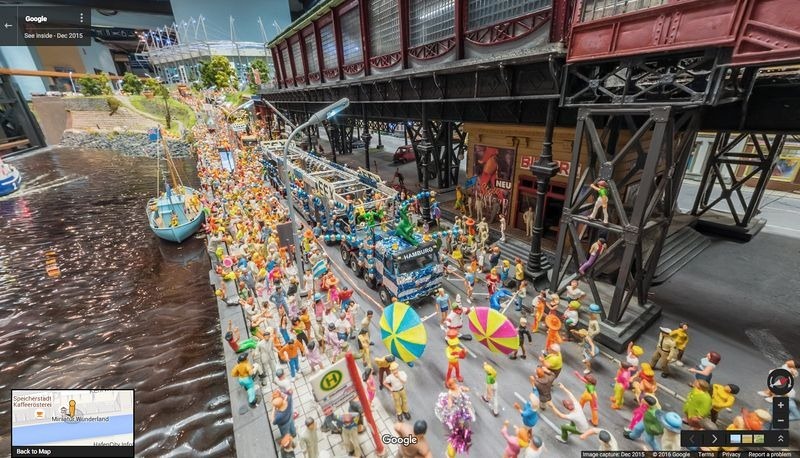
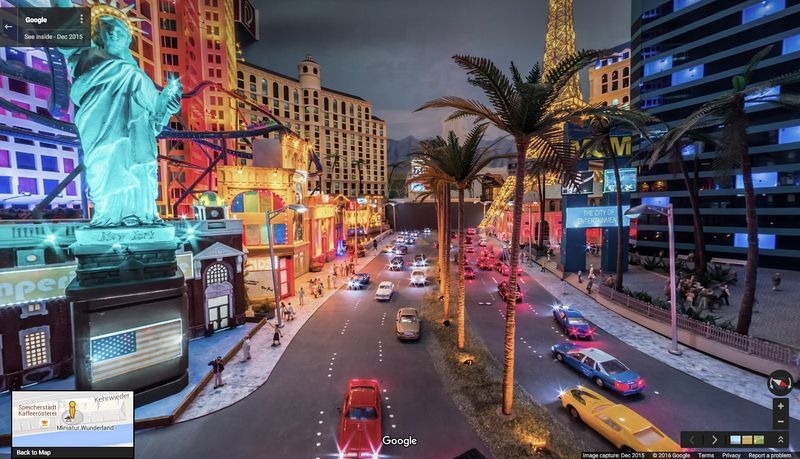
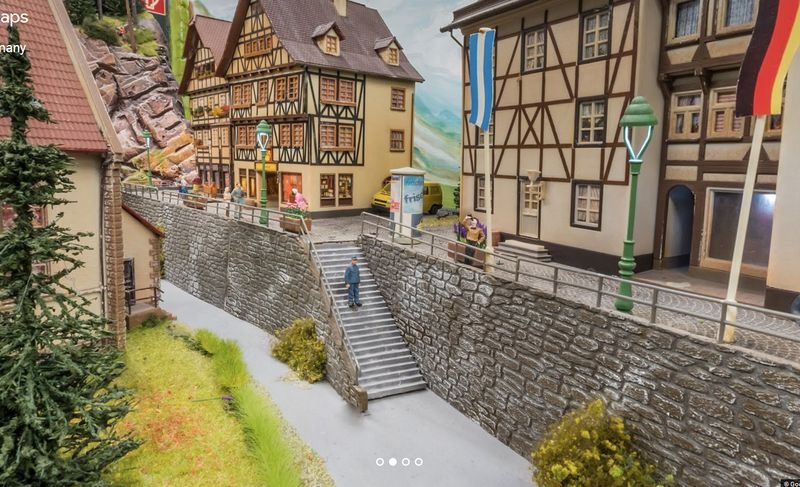
“Miniatur Wunderland” in Hamburg, Germany boasts of 13,000 kilometers of track and more than 200,000 tiny citizens, featuring tiny replicas of German provinces, famous places in the U.S. and even a fully-functioning airport, which itself is the largest miniature airport in the world.

miniatur-wunderland-street-view-10

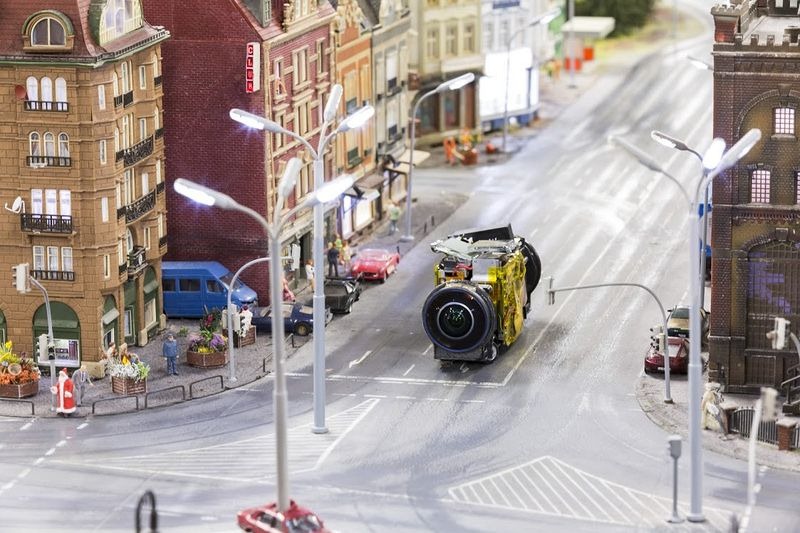
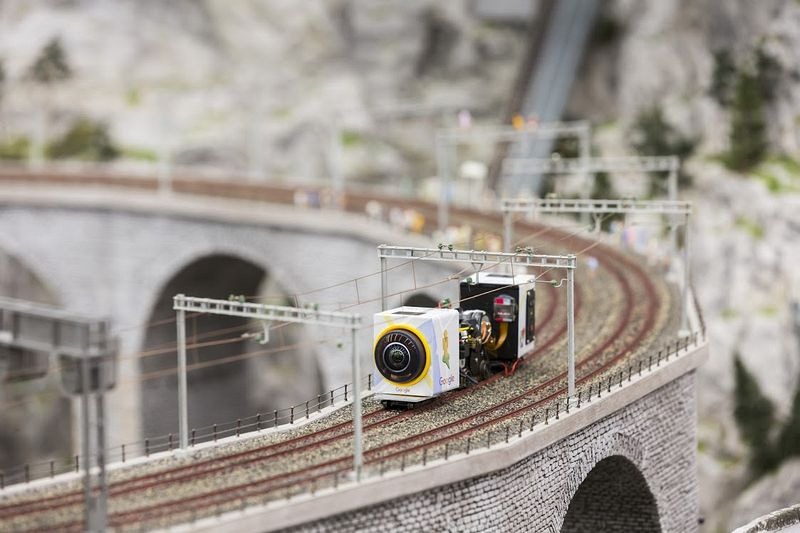
To capture the nooks and crannies in Miniatur Wunderland, Google mounted tiny cameras on top of tiny vehicles that were driven through the roads and over the train tracks, “weaving through the Wunderland’s little worlds to capture their hidden treasures,” wrote Sven Tresp, Street View Program Manager, in the official announcement.

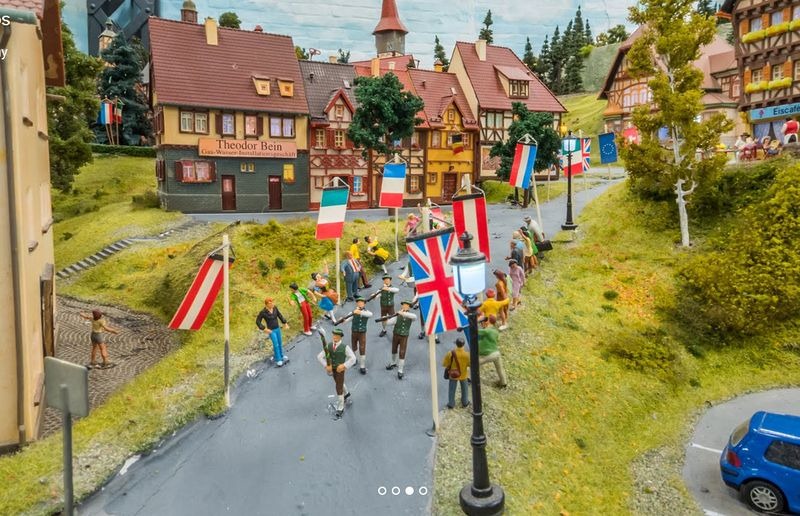
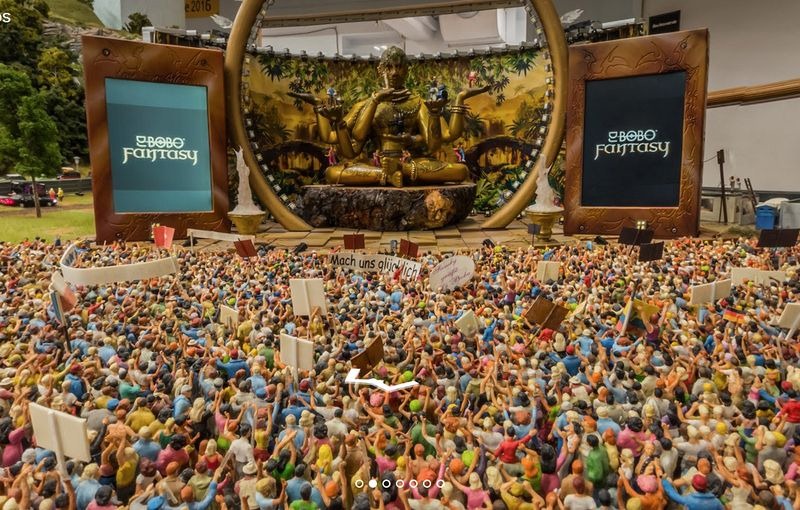
Among the sights available for view include a soccer match in Hamburg’s stadium, a traditional town center in central Germany, a rowdy Oktoberfest celebration, a replica of the famous Neuschwanstein Castle in Bavaria, a music concert, and even the ski slopes of Austria, among others. A short hop from the fictional town of Knuffingen, one can “zoom through the valleys of the Grand Canyon, gambol down the strip in Las Vegas, and even stop by Mount Rushmore to salute past U.S. Presidents.”

Because the imagery were captured at “street level” within the Wunderland, you can observe many tiny details in Street View that are not visible even to visitors to the museum, such as deep sea divers at a county fair, farmers riding a broomstick, a newly-married couple on the steps of the courthouse and the dancing crowds at an outdoor concert.

Visit Miniatur Wunderland on Google Street View.

miniatur-wunderland-street-view

miniatur-wunderland-street-view-14

miniatur-wunderland-street-view-11

miniatur-wunderland-street-view-12

miniatur-wunderland-street-view-8

Google Maps’ miniature Street View devices cruising the railways and streets of Miniatur Wunderland

miniatur-wunderland-street-view-9

Google Maps’ miniature Street View devices cruising the railways and streets of Miniatur Wunderland

miniatur-wunderland-street-view-5

miniatur-wunderland-street-view-6

miniatur-wunderland-street-view-7

Source……..www.amusingplanet.com

Natarajan

Photos Showing Some Amazing Stories…..!

As the world keeps spinning, more and more exciting occurrences can be found. It never ceases to amaze me how many incredible discoveries and sights the world offers us on a daily basis. Here are few photos that lend support to the fact that Earth, with its inhabitants, can be a fascinating place!
Blue ice, the stunning result of snow falling on a glacier and becoming compressed.

Amazing aspects of the world

That’s not a branch: a mammoth tusk is unearthed from the ground.

Amazing aspects of the world

Source
Not Legoland: a housing complex in San Buenaventura, Mexico.

Amazing aspects of the world

Source
This looks like a piece of art, but it’s a honeycomb.

Amazing aspects of the world

Source
An infrared photo of a garden. This is how a bee sees.

Amazing aspects of the world

Source
This giant cactus , Pachycereus weberi, is native to Mexico and southern Arizona.

Amazing aspects of the world

Source
The Iraqi Marshes: an aquatic landscape in a desert climate. 

Amazing aspects of the world


Source
A 27,000 year-old hand print, discovered on the rocks of an Indonesian island

Amazing aspects of the world

Bangladeshis get creative: a floating bridge made out of dinghies. 

Amazing aspects of the world

Source
What a difference a century makes: the daily commute, then and now.

Amazing aspects of the world

Source
Like ebony and ivory, lavender and wheat fields grow side by side in perfect harmony.

Amazing aspects of the world

Source
This is the barely-seen ili pika, a shy mountain animal from China, who was recently spotted for the first time in 20 years.

A rare sight: a sunset and eclipse at the same time.

Amazing aspects of the world

Source
A cloud formation above the sea, in Holland State Park, Michigan.

Amazing aspects of the world

Source
A bird’s eye view of Dubai.

Amazing aspects of the world

Source…www.ba-bamail.com

natarajan


How One Device Can Reduce the Number of Deaths Due to Road Accidents in India….

With Raksha SafeDrive, a device placed inside your vehicle, you don’t need to worry about calling for help in case of an accident or road emergency. The device will do it for you. This is how.

The year was 2013. Prasad Pillai was back in Trivandrum, his hometown, after living in the US for 15 years. One day, while travelling on a highway, his wife and he narrowly escaped an accident. The brakes of their car snapped when their driver tried to slow down to let a lorry coming from the opposite direction pass. It was then that Prasad realized how different the situation on the roads between the US and India was. While no one was hurt, it was extremely difficult for them to get aid in the face of this crisis here.

They were stranded on the highway without help.

Prasad Pillai

Prasad Pillai

“We came across a pedestrian but he did not know whom to call and how to assist us…We were just going around trying to find a place to get the car repaired. After being unable to find any immediate help, we took some other means of transport, went home and sent someone back to pick up the car. There was a lot of confusion,” says Prasad.

Motivated to help others who might find themselves in similar or even worse conditions, he brought together a team of six people to set up eLsys Intelligent Devices Pvt Ltd, with his friend Jayanth Jagadeesh.

Today, his organization has developed Raksha SafeDrive – a device meant to reduce the time in which help reaches road accident victims, or those stuck in some kind of road emergency.

SD2

Jayanth Jagadeesh (L) and Prasad Pillai

“India sees a large number of accidents every year. We have simply accepted this hard reality and are moving on with it. But things have to change,” says Prasad.

Raksha SafeDrive is a dedicated Internet of Things (IoT) device that is kept inside the car as an accident management system.

SD4

IoT is basically a network of physical objects embedded with electronics, software, sensors, and network connectivity. The network enables these objects to collect and exchange data.

Raksha SafeDrive can be used in all kinds of vehicles, like cars, auto rickshaws, bikes, trucks, etc. Here are some of its important features:

SD3

The team

1. Advanced crash sensors:

Crash Detection (GIF)

With its crash detection technology, Raksha SafeDrive ensures that help will reach when needed without any unnecessary delay. The device automatically detects crashes and uses its cellular connectivity – a SIM card that makes it operate like a phone — to contact help. In the case of a crash, the device automatically alerts local emergency responders like friends, family, police officials, and hospitals, even if the driver and other people are unable to do so. The team is currently working on developing a safety platform called Raksha. This will be the base (a call centre) where people will automatically receive a call from the device in case of an emergency. So, no one needs to report an accident as such.

Up to five primary contacts can be configured by the user and the device will keep calling until someone picks up.

Instant Notification

The device uses an algorithm to find out the severity of the accident. The sensors also distinguish between potholes, road bumps, and sudden braking to avoid false alarms.

2. GPS tracker:

GPS Tracking (GIF)


With the help of a GPS tracker placed inside the device, call centre executives and all emergency contacts will know where the accident took place.

3. Panic Button:

Smart Panic Button (GIF)

In case of an accident or roadside emergency like a flat tyre in the middle of nowhere, the panic button on the device can be pressed and it opens a two-way voice call communication channel between the user and the call centre. The call centre is a 24×7 support centre, which is able to help via the phone, providing information on how to deal with a particular situation.

4. Driver performance:

SafeDrive Installation (GIF)

The device also tells users how well their driver is driving. It analyses the speed of the vehicle and other parameters to let the passengers know if they need to caution the driver. This could be helpful for people who have employed a new driver or in monitoring public vehicles.

“Many people die on Indian roads because they don’t get immediate help. The onlookers are not well equipped with the required information to help accident victims. But we can avoid such chaotic situations. We don’t need to wait for people to call someone,” says Prasad.

“Our aim is to give people peace of mind when people are travelling. We think that this is something India deserves. Roads in the country are getting better. Our cars are also getting better. So why is the rate of death due to accidents not coming down? It’s because emergency services are not as structured as they should be and we are trying to change that,” adds Prasad’s partner, Jayanth.

The duo set up an online campaign to collect funds to start this project and also to make people aware about the existence of such a device.

A prototype of Raksha SafeDrive is now ready and is being tested by the team.

Working Model - SafeDrive

They are working on setting up the backend support and the call centre. The device will be available in the market by February 2016, at a cost of Rs. 10,000. This includes one year service cost, after which users will need to pay a yearly fee of about Rs. 1,000, depending on the services they want to avail.

Source…….Tanaya Singh in http://www.the betterindia.com

Natarajan

This Guy Spent 4 Years Growing A Church From Trees…!!!

The enchantingly beautiful live-tree church in New Zealander Brian Cox’s backyard is already impressive enough, but it’s even more amazing when you learn that it took him only 4 years to create!

Cox carefully selected from a wide variety of trees for his beautiful church. Some have stone-colored trunks, while, others, with sparse foliage, ensure that his church will always be illuminated by sunlight. His secret is that he owns a gardening company called Treelocations, which replants whole, live trees using enormous mechanized spades. This allowed him to plant live trees in any way he wanted, completing this church (and the iron frame supporting it) in only 4 years.

Cox was inspired by the years he spent traveling abroad and observing churches around the world; “I walked out my back door one day and thought, ‘That space needs a church’ – and so it began. I cleared the area in April 2011 and made the iron frame, drawing on all the research I had done over the years of studying churches,” he told stuff.co.nz.

tree-church-nature-installation-barry-cox-new-zealand-12

tree-church-nature-installation-barry-cox-new-zealand-1

tree-church-nature-installation-barry-cox-new-zealand-3

tree-church-nature-installation-barry-cox-new-zealand-8

tree-church-nature-installation-barry-cox-new-zealand-7

Image credits: Sally Tagg

tree-church-nature-installation-barry-cox-new-zealand-6

tree-church-nature-installation-barry-cox-new-zealand-10

tree-church-nature-installation-barry-cox-new-zealand-2tree-church-nature-installation-barry-cox-new-zealand-4

Source…….www.boredpanda.com

Natarajan

The Corn Palace of South Dakota………

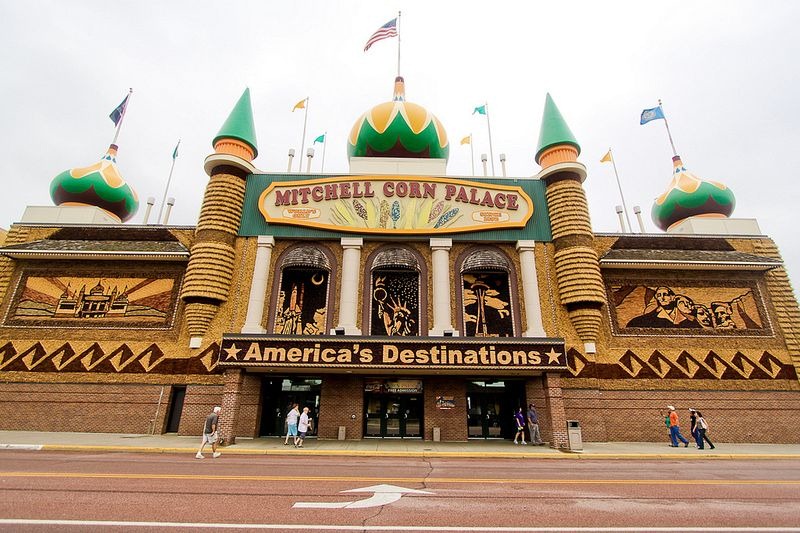
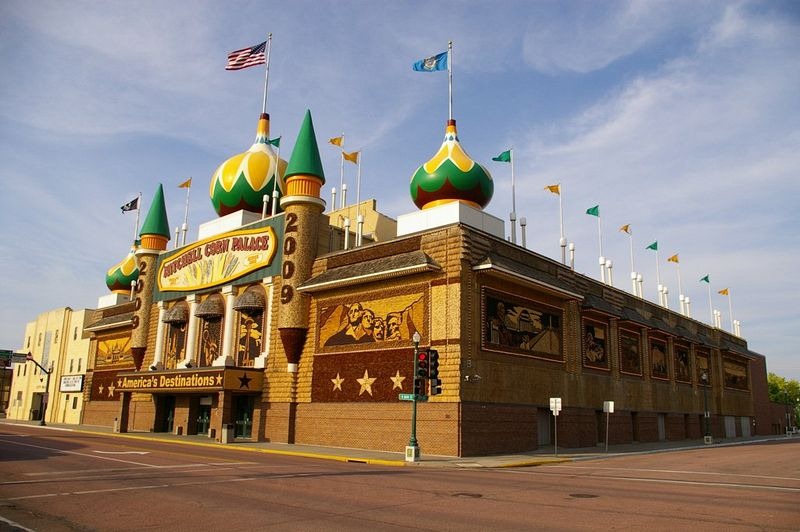
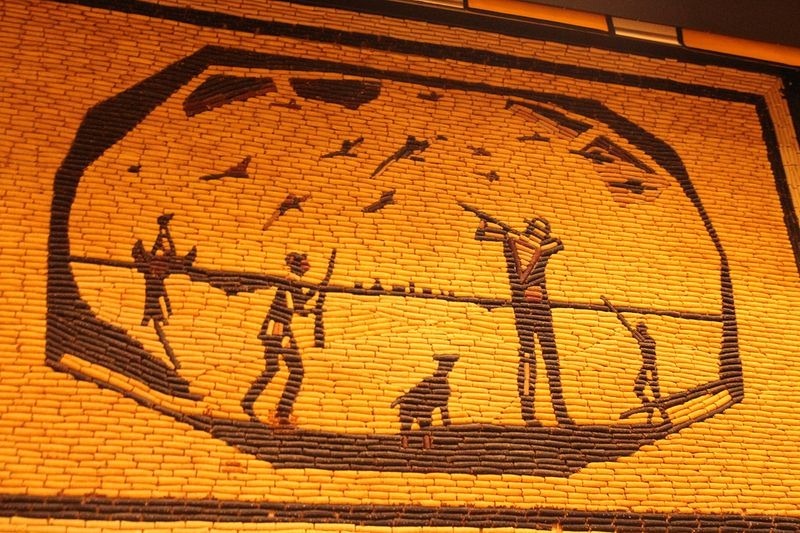
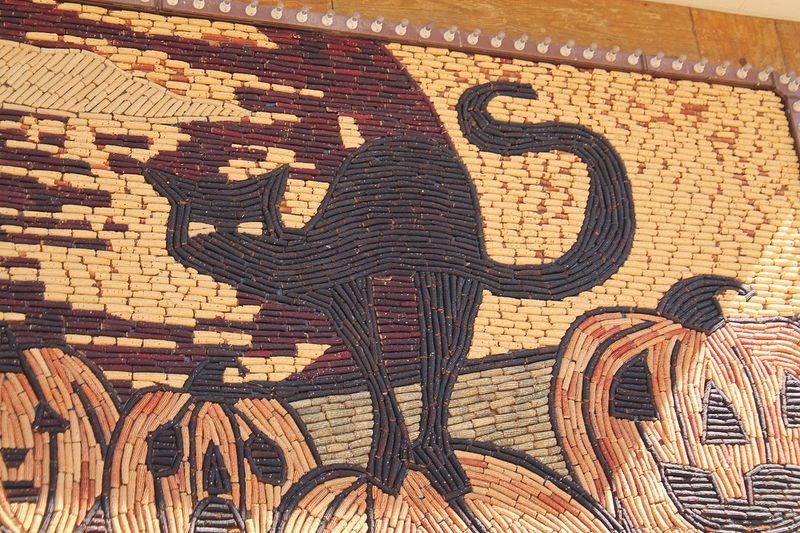
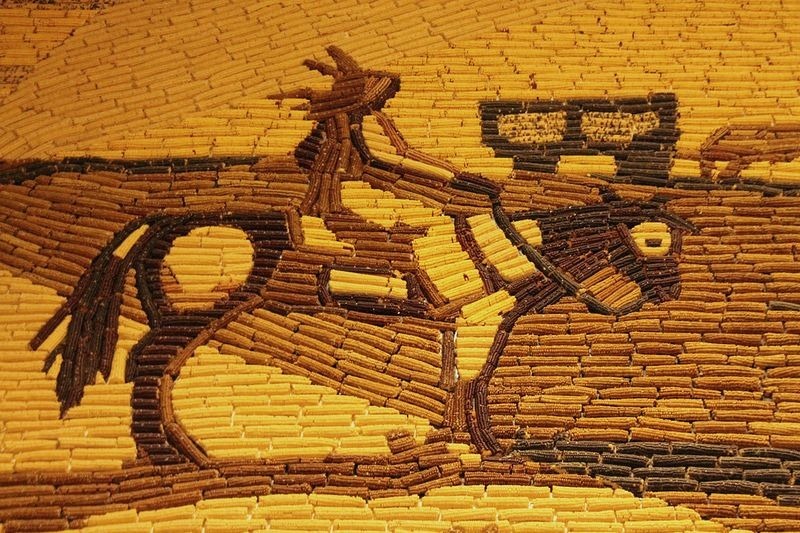
The Corn Palace in Mitchell, South Dakota, is one of America’s corniest attraction. The palace is a regular building built of out of reinforced concrete and bricks, but every spring, during the time of harvest, its exterior is completely covered with thousands of bushels of native South Dakota corn, grain and grasses that are arranged into large murals. Each year there is a different theme, and the palace is decorated accordingly. Hundreds of thousands of tourists come to see the crop art every year.

At other times of the year, to sustain the flow of tourist and revenue, “the World’s Only Corn Palace” —as it likes to call itself, hold popular events such as the Corn Palace Stampede Rodeo in July, the Corn Palace Festival in August and the Corn Palace Polka Festival in September. The Corn Palace also has an auditorium for touring celebrities and a sports arena for various school and college basketball teams.

corn-palace-mitchell-8

Photo credit: Matt Hintsa/Flickr

The original Corn Palace was built in 1892 as part of a six-day festival at the height of harvest season. It was a wooden castle structure built on donated land on Mitchell’s Main Street, whose exterior was decorated with corn. The idea was to showcase the rich soil of South Dakota and encourage people to settle in the area. The success of the Corn Palace and the annual festival encouraged the townsfolk to invest in a better building in 1905, but soon this building became too small for Mitchell’s growing population. A more permanent structure, replacing a second corn palace, was erected and opened in time for the 1921 festival. This is the present Corn Palace, but the Russian-style onion domes and Moorish minarets were added later in 1937.

Every year, local artists redecorate the Palace with naturally colored corn and other grains and native grasses such as flax, rye, wheat, oats, and millet as well as bromegrass, bluegrass, and straw. Thirteen different colors or shades of corn are available for artists to work on.

Besides the annual corn festival, the palace building is used for various events including exhibits, dances, stage shows, meetings, banquets, proms, graduations arena for Mitchell High School and Dakota Wesleyan University as well as district, regional and state basketball tournaments.

corn-palace-mitchell-3

Photo credit: Mike Ault/Flickr

corn-palace-mitchell-1


Photo credit: Scott Robinson/Flickr

corn-palace-mitchell-4

Photo credit: Mike Ault/Flickr

corn-palace-mitchell-15

Photo credit: Robin Zebrowski/Flickr

corn-palace-mitchell-10

Photo credit: Robin Zebrowski/Flickr

corn-palace-mitchell-11

Photo credit: Robin Zebrowski/Flickr

corn-palace-mitchell-12

Photo credit: Robin Zebrowski/Flickr

corn-palace-mitchell-13

Photo credit: josephbergen/Flickr

Source……..www.amusingplanet.com

Natarajan

This Mumbai-Born Girl Living in the UK May Just Be Smarter than Einstein…!!!

Kashmea Wahi, an 11-year-old Indian-origin girl living in the UK, has achieved the highest possible score of 162 on a Mensa IQ test.

Kashmea, who was born in Mumbai, now lives in London. Her parents Vikas and Pooja Wahi are IT management consultants at Deutsche Bank. She took the test to prove a point to them — she wanted to convince them that she didn’t need to spend all her time studying (something that they were insisting she do).

This score puts her among the top 1 percent of people in the world for IQ.

The IQ of geniuses such as Albert Einstein and Stephen Hawking, who have changed our perception of the world, is estimated to be 160.

Source: Wikimedia

“It’s overwhelming to be compared with the likes of Stephen Hawking and Albert Einstein, the comparison is implausible and I believe it would take loads of achievements for anyone like myself to be able to get into the league of such legends. Anyways, I am buzzing with excitement,” Kashmea said.

Her parents are also thrilled at this news. They say that while they always knew she was smart, this further confirmation has made them hopeful that she will do “something wonderful” in the future.

Kashmea is a member of school’s maths team. She also takes part in chess tournaments — she has won a number of awards — and plays net ball and lawn tennis.

Mensa is the largest and oldest high-IQ society in the world. Membership is open to anyone whose IQ is in the top 2 percent of the population. A Mensa spokesperson has confirmed that Wahi is among the youngest people ever to have received a score of 162.

Featured image source: Twitter (left); Wikimedia (right)

Source…….vandita kapoor in http://www.the betterindia .com

Natarajan

Mango Phone: Here’s an iPhone killer….?

Apple’s iPhone will soon have an interesting competitor in smartphone markets around the globe with the launch of MPhone — the Mango Phone.

Mango Phone

Not very surprisingly, the company has also decided on a mango as their logo. The new handset is expected to hit Indian markets by the end of this month.

The company, reportedly helmed by group of Malayalis, was founded on an initial investment of Rs 3500 crore. In what could be more interesting to prospective buyers, a fresh handset also packs a bluetooth headset, wireless charger, power bank and a selfie stick!

The handset will be brought to the markets by MPhone Electronics and Technologies Limited with 4G and 3D technology assistance from Korea. MPhone Electronics and Technologies Limited is learnt to be partnered by Anto Augustine, Roy Augustine and Josekutty Augustine from the Wayanad district of Kerala.

It is also learnt that the handset employs a 6050 mah battery that assures three days charge life for a fully charged handset. Shock resistant Gorilla screen glass, 23 MP primary and 8 MP secondary camera are other major attractions of the upcoming competitor of the iPhone. Reportedly, the handset will be providing an internal memory of 32 GB, which can be extended up to 128 GB. A 3 GB RAM module will speed up the handset.

As per unofficial reports, the MPhone will be priced around Rs 35,000. While it may not be wise to compare apples to oranges mangoes, it will certainly make for some interesting competition in this space!

Deepu

Natarajan

Anamorphic Art by István Orosz………

István Orosz was born in 1951 and after training as a graphic designer, he first gained recognition as a stage designer and for his work in animated film as animator and director. His posters and graphic art have featured in countless international design exhibitions, and he is well-known as a printmaker and illustrator too. He is perhaps best known for his renewal of the technique of anamorphosis.

Anamorphosis is an art of distorted projection or perspective requiring the viewer to use special devices or occupy a specific vantage point to reconstitute the image. The art of Anamorphosis was invented in China and brought to Italy in the 16th century, about the time Renaissance artists like Leonardo da Vinci were mastering 3-D and discovering slant anamorphosis.

István Orosz specializes in mirror anamorphosis, where a conical or cylindrical mirror is placed on the drawing to transform a flat distorted image into a three dimensional picture that can be viewed from many angles. He also does slant anamorphosis.

István Orosz’s best creation is probably the one called Mysterious Island. It’s a sketch of a seashore with a sail pushed along by the wind, and two men trekking.


verne

But if a cylindrical mirror is placed over the circular sun, a portrait of Jules Verne emerges.

verne2

His other works

orosz (1)

orosz (2)

orosz (3)

orosz (5)

orosz (9)

orosz

orosz (13)

orosz

Source…..www.amusingplanet.com

Natarajan

9 of the Most Remote Inhabited Islands in the World…!!!

I can’t get my head around how far away the inhabitants of these islands live from civilization! They are hundreds, if not thousands, of miles from the nearest continental land mass – it’s truly astonishing to think they’re even inhabited at all. Would you dare to visit somewhere so remote? These are 9 of the world’s most remote inhabited islands:
Saint Helena 

The Most Remoted Inhabited Islands in the World

Image Source

Distance from Civilization: 1,200 miles from Angolan coast


Saint Helena is widely believed to have been discovered by the Portuguese at the turn of the 15th Century. Various European powers staked different claims to the island during the 17th Century. It’s probably most well-known as the place that Napoleon Bonaparte was exiled to, following his defeat by the British. It is home to 4,255 people.

Ascension Island

The Most Remoted Inhabited Islands in the World

Distance from Civilization: 1,000 miles from African coast


Located in the South Atlantic Ocean, Ascension Island is home to approximately 880 people. It is not thought to have had an indigenous population, and it was first settled in 1815. Prior to that, it was sporadically used as an open prison. Its principle settlement and capital city is Georgetown.

Easter Island

The Most Remoted Inhabited Islands in the World

Distance from Civilization: 2,000 miles from Chilean coast


Easter Island is instantly recognizable due to the Moai, or giant statues, which dot the island. They were carved by the native Rapa Nui people between the 13th and 16th Centuries. In the present day, the island is populated by a little over 6,000 people. It’s said to overwhelm first-time visitors with the sheer sense of isolation they feel upon arrival.

Tristan da Cunha

The Most Remoted Inhabited Islands in the World

Image Source

Distance from Civilization: 1,750 miles from South African coast


Lying all alone in the middle of the South Atlantic Ocean, Tristan da Cunha was first inhabited in 1816. Its main settlement, Edinburgh of the Seven Seas, is widely considered to be the most remote permanent settlement on earth.

Pitcairn Island

The Most Remoted Inhabited Islands in the World

Image Source

Distance from Civilization: 1,800 miles from New Zealand


Most of the 56 people that currently live on Pitcairn Island descended from the Bounty mutineers and the Tahitians that accompanied them. The island is the least populous natural jurisdiction in the world.

South Keeling/Cocos Islands

The Most Remoted Inhabited Islands in the World

Distance from Civilization: 620 miles from Java, Indonesia


This island chain consists of two atolls and 27 coral islands. Just two of the latter are inhabited. West Island is home to approximately 120 people, while Home Island is home to about 500 people. The islands are a territory of Australia.

Floreana

The Most Remoted Inhabited Islands in the World

Distance from Civilization: 620 miles from Ecuador


Taking its name from the first president of Ecuador, Floreana is part of the Galapagos Islands. While it’s true that there are some 26,000 people living throughout this archipelago in the present day, Floreana is the most remote island within it. It’s home to just 100 people.

Niue

Image Source

Distance from Civilization: 1,500 miles from New Zealand


Although Niue is an independent island country, it is in free association with New Zealand, which conducts diplomatic affairs on its behalf. It was the first nation in the world to provide free WiFi to all of its 1,600 citizens.

St. George’s Island

The Most Remoted Inhabited Islands in the World

Distance from Civilization: Approx. 500 miles from Alaska

Located in the frigid Bering Sea between Russia to the west and Alaska to the east, St. George’s Island features one settlement that encompasses the entire 35 square miles of the island. Just 100 people live on the island.

Written by: Jake Schembri

Source……www.ba-bamail.com

Natarajan