Ladakh’s First and Only All-Women Travel Company and the Woman Who Started it All…

How many women does it take to start an all-women travel company, set up a women’s welfare network for women in distress, write tirelessly on social and environmental issues, win a bronze at the National Ice Hockey Championship, and keep training an ever-growing number of women to be professional trekking guides in the harsh terrain of Ladakh? Just one, if that woman happens to be Thinlas Chorol.

Back in 2009, Thinlas Chorol set up the Ladakhi Women’s Travel Company, which has the distinction of being Ladakh’s first travel company completely owned and operated by women. It is also known for promoting ecotourism.

Thinlas’ foray into the mountains began as a five-year-old accompanying her father on long treks through the mountains with their goats and sheep.

Thinlas Chorol

Thinlas Chorol

Having lost her mother when she was a baby, her father was all Thinlas had. Scared that “something might happen” to him if he were to venture into the mountains alone, she went with him. Today, as one of Ladakh’s best trekking guides, she looks back on that incomparable training fondly, as “the bliss of my childhood.”

Her Journey

What was far from bliss was the assortment of obstacles Thinlas encountered on her way to becoming the pioneering and inspirational woman she is today. Societal restrictions, taboos and narrow mindsets had to be countered for her to become a professional trekking guide at a time when female trekking guides were unheard of.

Despite her trekking competence, many travel companies refused to hire her as a guide, solely on account of her being a woman.

2

Most men, on the other hand, were hired as trekking guides even without any professional training or knowledge of trekking routes or awareness of environmental impact. She was repeatedly told that a Ladakhi woman going into the mountains with a group of foreigners would be frowned upon by society. But she didn’t let the rejections and social taboos stop her.

Thinlas had met a few female travellers who had been harassed by their male trekking guides and were keen on trekking with a female guide they could trust. With the encouragement she received at SECMOL (Students Education and Culture Movement of Ladakh, an organization that helps educate children from remote regions of Ladakh) and the support of her American English teacher, Thinlas went on to gain some commendable professional expertise. She attended a mountaineering course at the Nehru Institute of Mountaineering (Uttarkashi) and spent a semester at the National Outdoor Leadership School (NOLS) in Ranikhet, Uttarakhand, where she picked up wilderness and leadership skills. She even worked as an instructional aide at NOLS and was the first Ladakhi to do so.

Thinlas started the Ladakhi Women’s Travel Company (LWTC) in 2009 at the age of 29.

Trekkers with the Ladakhi Women's Travel Company

Trekkers with the Ladakhi Women’s Travel Company

Since then, many Ladakhi women have approached her to train them as trekking guides and, today, the company has 8 guides, 4 trainees and 20 employees in all. It takes a minimum of one year with the company to become a trekking guide. Thinlas also co-founded the Ladakhi Women’s Welfare Network in late 2013, which helps women report crimes against them and works towards their general welfare.

Responsible Travel and Ecotourism

Given Thinlas’ deep sense of connection with the land, responsible travel is a huge part of LWTC’s work. Having seen a lot of garbage dumped on the mountains by irresponsible campers and tourists, the women at LWTC ensure that the ‘leave no trace’ rule is respected on their treks and the environmental impact minimized.

Trekkers make halts at homestays run by rural women and learn from Ladakhis about their way of life. Clients are told to avoid plastic bottles and instead refill water bottles at the homestays. Thinlas says that since homestays are unprofitable for travel agencies many of them don’t offer this option to clients unless the latter specifically insist on them. As LWTC’s website states, homestays help rural women achieve the same status as their men who are out earning for their families. Homestays also encourage people to remain in their villages instead of seeking jobs in cities.

Homestays are the most eco-friendly way to discover Ladakh as they also put minimal pressure on natural resources, unlike camping, which requires ponies and donkeys that deprive the local wildlife of its share of the sparse grass on the mountains.

1

The women of LWTC are also highly knowledgeable about the local culture, history, flora and fauna and are glad to share that knowledge with the trekkers. A trek with them can give a city dweller an experience of the real Ladakh more than any typical ‘touristy’ visit could.

The Challenges

The main challenge for LWTC is the seasonal nature of their work, with the season being barely four months from June to September. LWTC has to stretch out the income made in these few months for the rest of the year. In the winter, LWTC offers snow leopard treks but, because this is the off-season, there aren’t many takers. The team also looks forward to more people volunteering to teach English to the Ladakhi women training with the company.

The Vision

In empowering herself, Thinlas has empowered a host of other women as well.

In her own words: “Women should think for themselves and not depend on their families. If they believe in themselves, they can achieve what they want. Women should not listen to what society is saying. They should listen to their own ability to work. Then, definitely, they will succeed if they work hard.”

Her vision for LWTC is to see her trekking guides spread their wings across the globe and, in turn, inspire many others to actualize their dreams.

If you’d like to help, please donate to the Ladakhi Women’s Welfare Network (LWWN). It is not affiliated with any religious or political institution and works independently for the welfare of the women of Ladakh.

Source…..Namita Kulkarni in http://www.thebetterindia.com

Natarajan

Hearing Impaired and Autistic Persons Can Also Play Music Easily with This Unique ‘Music Chakra’…

Ramesh, a graduate of IIT Madras, has designed an innovative Music Chakra to help anyone, with or without music knowledge, to very easily learn and play music – be it Carnatic, Hindustani or Western music.

Listening to music is something almost everyone likes to do, but being able to play a musical instrument is a talent that is inborn or has to be developed. Studies have proved that playing music helps in total brain development.

To simplify the process of learning music, LS Ramesh, after six years of intensive research, came up with the Sri Saraswati Music Chakra.

The unique music chakra.

The unique music chakra.

There are many similarities in the notes played in all forms of classical music around the world. In Indian classical music, a raaga refers to a series of musical notes on which every melody is constructed. Though there are differences in the raagas of the Carnatic style of music and the Hindustani style of music, many musicians have pointed out that some raagas are common to both styles of music and they find similar counterparts in western classical music too.

Carnatic classical music is based on 72 parent (melakarta) raagas. To help simplify the process of understanding the basics of this style of music, Ramesh has developed a chakra chart. There are two circular diagrams on both sides of the chart, with the main keys of 36 raagas marked on each side.

To make it easy on the eyes of the learner, each circular diagram is divided into 12 different segments and 6 different colors are used to highlight the segments.

The music chakra with veteran Carnatic musician Dr. M Balamuralikrishna

The music chakra with veteran Carnatic musician Dr. M Balamuralikrishna

music chakra

With Dr. S. P. Balasubramanyam

Specific keys have to be played for each raaga. Therefore, in the sub segment pertaining to a particular raaga, the specific keys to be played are drawn like how one would see them on a piano – they are marked with dots, making it easy for even a person with no knowledge of music to follow without any difficulty.

“To play music, one must know the basics. The 72 melakarta scheme is the foundation of not only Carnatic music but of any music the world over. The Melakarta Chakra visually helps in laying a strong music foundation. Once introduced to music through the chakra, children generally get over their fear to play music,” says Ramesh.

Ramesh feels that when children learn music following a visual tool they tend to remember more than when they learn music only by listening to tunes.

Ramesh did six years of research before launching the chakra.

Ramesh did six years of research before launching the chakra.

When a child follows this chakra, his/her doubts about stringing together the right keys to play the right raaga are allayed and the child becomes confident of not making mistakes.

Ramesh and his wife Sridevi grew up following the Sanskrit saying Manava Seva, Madhava Seva. They have always been involved in being of service to orphans and after marriage it just became easier to do this work as they had the same interests in life.

FACES, an organization to support orphans, was started by them just after they tied the knot. The FACES programme is simple — newspapers are collected from various places and the sale proceeds are used for Food, medical Aid, new Clothes, Education material and Shelter (FACES) for underprivileged children.

They have been supporting a few orphanages in Warangal and Telangana, the place where Sridevi grew up. The Manovikas Kendra in Warangal is an establishment that not only helps orphans but also children with autism, Down’s Syndrome, and speech and hearing challenged children. Ramesh and Sridevi have been involved with this organization for many years now and so it was no surprise that they decided to try the Music Chakra on the children here.

“The Music Chakra is rather interesting. It keeps the children engrossed. With the intervention of music, especially with the ability to play music, maturity levels and confidence levels, especially among the deaf and dumb children, are very visible,” says Mahateja, the music teacher at Manovikas Kendra.

According to Mahateja, when he plays the keys following the chakra, the hearing impaired children watch his fingers intently and when they get a chance to try their hands on the keyboards, they end up playing the right tunes.

The chakra improves the confidence in children to play the musical instrument.

The chakra improves the confidence in children to play the musical instrument.

The smiles and applause of the people around make them very happy and make them want to play more music.

Playing music is very therapeutic for persons with autism. Autistic people are very good at visual tasks, especially when they are associated with perception and pattern recognition. Many children with autism respond very well to music, which can be easily used to improve communication skills and helps in dealing with sensory issues too.

Anxiety is one of the biggest challenges facing individuals in the autistic spectrum. Music helps to calm and relax them. Classical music especially helps to reduce stress, ease frustrations, reduce muscle tension, slow down the heart rate and, in turn, open the mind to learning and communicating with others,” says Ramesh, who has seen how the autistic children at Manovikas Kendra have shown improvement after this unique Music Chakra was introduced for teaching music.

The proceeds from the sale of the Music Chakra are used to fund the FACES initiative, which is very close to the hearts of this couple.

Another very interesting initiative taken on by Ramesh and Sridevi is the 25 year calendar designed on a single sheet of paper. The motto here is: Save a Tree, Help an Orphan.

Ramesh and Sridevi showing the 25-year calender to Kamal Hassan

Ramesh and Sridevi showing the 25-year calender to Kamal Hassan

The couple also donates trees and asks students to plant it to fulfill late Dr. Kalam's dream.

The couple also donates trees and asks students to plant it to fulfill late Dr. Kalam’s dream.

“Dr Abdul Kalam has given the FACES programme a target of planting at least 10 lakh trees in the country, involving only students. For every 15 kg of newspaper brought in by a class of students to support the FACES program, the calendar is donated to the classroom. This calendar reminds the children to bring in newspapers the following month too. Along with the calendar, a tree sapling also is gifted to the students for them to plant within their school premises,” says Sridevi.

However, they do sell the calendar in many other schools, as well as to corporate houses. With more newspapers being donated to them, more orphanages can be helped, more trees can be saved and more trees will be planted. “The calendar just reminds people about the promise made to Dr Abdul Kalam. Through this method, more people will be involved in making his dream come true,” she concludes.

For more information, log onto www.faces108.com

Source……..Aparna Menon in http://www.the betterindia.com

Natarajan


” மனிதநேயத்தை மதிப்பிட எங்களிடம் கருவி இல்லை: ஒரு ஹோட்டல் பில் சொல்லும் செய்தி”


சாப்பிட்ட உணவுக்கான கட்டணத்துடன் கூடுதலாக அந்த வரி இந்த வரி என்று பில் போடும் ஹோட்டல் உரிமையாளர்களிடம் இருந்து மாறுபட்டு மனிதநேயத்தோடு நடந்து கொண்டவருக்கு அதே மனிதநேயத்தைக் காட்டிய கேரள ஹோட்டல் உரிமையாளரைப் பற்றிய செய்தி இது.

கேரள மாநிலம் மலப்புரத்தில் உள்ள ஹோட்டல் ஒன்றுக்குள், பெயர் குறிப்பிடாத ஒரு நபர் நுழைகிறார். அன்றைய நாளின் பணிச் சுமையால் சற்று தளர்வாக ஹோட்டலுக்குள் சென்று சாப்பிட உணவை ஆர்டர் கொடுத்துவிட்டு ஜன்னல் பக்கம் திரும்புகிறார்.

அங்கு இரண்டு சின்னஞ்சிறு குழந்தைகள் ஹோட்டலில் உள்ள மேஜைகள் மீது பரிமாறப்பட்டிருக்கும் உணவுகளை ஏக்கத்தோடு பார்த்துக் கொண்டிருந்ததை கவனித்த அந்த நபர், குழந்தைகளிடம் உங்களுக்கு என்ன வேண்டும் என்று கேட்க, அவர்கள் மேஜை மீதிருக்கும் உணவுகளைச் சுட்டிக்காட்டுகின்றனர்.

அவர்களை உள்ளே அழைத்து, அவர்களுக்கான உணவுகளையும் சேர்த்து ஆர்டர் கொடுத்து, அவர்களை கைகழுவ வைத்து, அவர்களை சாப்பிட வைத்தார். அண்ணன், தங்கைகள் இருவருமே ஒருவரை ஒருவர் பார்த்து புன்னகைத்துவிட்டு சாப்பிட்டு முடித்தனர். ஆனால், தனக்கான உணவை சாப்பிடாமலேயே சாப்பிட்ட முழு திருப்தியை அடைந்த அந்த நபர், உணவுக்கான பில்லைக் கேட்கிறார்.

அந்த பில்லில் 100, 200 என எண்ணிக்கைகள் இல்லாமல், மலையாள எழுத்துக்கள் மணிமணியாக கோர்க்கப்பட்டிருந்தது.

அந்த பில்லில் கூறப்பட்டிருந்தது இதுதான்,”மனிதநேயத்தைக் கணக்கிட எங்களிடம் எந்த கருவியும் இல்லை. ஒரு நல்ல விஷயம் உங்கள் மூலமாக நடந்துள்ளது.”

இந்த தகவல், பில்லின் புகைப்படத்துடன் சமூக வலைதளமான பேஸ்புக்கில் அதிக நபர்களால் பகிரப்பட்டுள்ளது.

Source……..www.dinamani.com

Natarajan

Obama to Present National Medal of Science to Indian-American Scientist… …

Dr. Rakesh K. Jain, an Indian-American professor at Harvard Medical School, will receive the prestigious National Medal of Science from US President Barack Obama, for his remarkable contribution to the field of science. He is one of the 17 scientists, engineers, mathematicians, and innovators who will be awarded by President Obama during a ceremony at the White House on January 22.

The National Medal of Science is awarded every year to recognise individuals who have made outstanding contributions in the field of science, engineering, and mathematics. The award was created in 1959 and is administered for the White House by the National Science Foundation – a United States government agency.

Here are five things to know about Dr. Jain:

1. Dr. Rakesh K. Jain is an IIT-Kanpur alumnus. He received his bachelor’s degree in chemical engineering in 1972.

Later, he did his masters and PhD from the University of Delaware.

jain1

Source: cbe.buffalo.edu

2. Currently, he is the professor of Tumour Biology at Massachusetts General Hospital in the Harvard Medical School.

He has received more than 75 awards, from engineering and medical professional societies and institutions, for his work in the field of tumour biology.

3. Dr. Jain is considered to be a pioneer in the field of tumour micro-environment.

jain2

Source: brain.mgh.harvard.edu

He is working on developing new strategies to control the micro-environment of tumours and use them for early cancer detection, prevention, and treatment. He is recognised for his discoveries in tumour biology, drug delivery, bioengineering, and more. His research includes finding out about the barriers in the delivery of molecular and nano-medicines in tumours, and discovering new ways of overcoming these barriers. He is well known for proposing a new principle for treatment of malignant and non-malignant diseases characterised by abnormal vessels, and his research on improving the effects of chemotherapy and radiation treatment.

4. He is a member of all three branches of the US National Academies – the National Academy of Medicine, the National Academy of Engineering, and the National Academy of Sciences.

He is also a member of the American Academy of Arts and Sciences.

jain3

Source: Wikimedia

5. In 2014, he was chosen as one of the 50 Oncology Luminaries on the 50th anniversary of the American Society of Clinical Oncology.

In 2015, Jain received honorary doctorates from Duke University, Katholieke Universiteit Leuven, and IIT-Kanpur.

Source……..Tanaya Singh in http://www.the betterindia.com

Natarajan

Don’t Know What to Do with Your Old Tyres? This 16-Year-Old Has a Brilliant Answer….!!!

With an aim to safely dispose end-of-life tyres, Anubhav Wadhwa is a 16-year-old on a mission.

It all started when 16-year-old Anubhav saw someone setting fire to a couple of tyres. It got him thinking about what happens to tyres that have served their time. After a quick Google check, Anubhav realised that burning tyres, an act that releases a cocktail of toxic gases, is a huge environmental hazard.

On the face of it, Anubhav may seem like any other teenager. But this extraordinary student of Pathways World School, Aravali, launched his first venture, a software product development company called TechAPTO, at the age of 12. Later, he launched Trends on Internet, an analytical company.

With a determination to act on the issue of safe disposal of tyres, Anubhav founded Tyreslessly, an aggregator of used tyres, in December, 2015.

Through its website, which was launched a couple of days ago, anyone can request a pickup of end-of-life tyres.

Anubhav Wadhwa

“Once the tyre is picked up, it is sent to a recycling plant and will undergo pyrolysis – an extraction process which can help convert tyres into usable by-products like fuel oils, steel etc.,” says Anubhav.

So what happens to such tyres usually? Anubhav says that these are carelessly burned and used to produce heat, especially for use in sugarcane industries.

“A majority of these industries burn tyres in a manner that is hazardous to the environment. The only way forward is to embrace pyrolysis,” he maintains.

He believes this process of recycling end-of-life tyres will, over the years, help in saving a lot of landfill space in the country.

“There are a lot of pyrolysis plants across India. But right now, the challenge is to get the used tyres to them.”

Tyrelessly currently operates only in the Delhi/NCR region. But the company plans to expand it’s services to all major cities by February. As of now the service is free of cost. However, Anubhav plans to generate revenue from advertisements on the website and later on from the sale of the recycled byproducts themselves.

Tyrelessly has been funded from the internal accruals of TechAPTO.

tyres lying around

Photo source: Flickr/Anjan Chatterjee

Anubhav is a firm believer in the power of communities and aims to increase tyre recycling rates in India with the help of student and local communities. It is his dream to create such communities across the country.

“Right now we are educating people about the dangers of tyre burning and with the help of these communities, we are procuring more such tyres,” says Anubhav.

Tyrelessly, that has just begun it’s collection process, hopes to achieve it’s first target of collecting at least 1,000 tyres by the end of February.

This super kid is definitely doing something right.

When asked about how he has achieved so much in such a short period of time, Anubhav says he owes it to his alma mater for recognising and channeling his talents.

anubuv

Juggling his school work as well as these three companies doesn’t seem to be too much of a task for him. Anubhav starts his day as early as 6.30 a.m. He attends school, where apart from his academic responsibilities, including being a member of the student council, Anubhav also assists his teachers in preparing visual display material as well as projects. He gets back home around 5 p.m. and starts work then.

“Being a part of Pathways World School has been the most rewarding experiential learning for me. I feel that this has helped me evolve into a good human being.”

He feels that the two most important traits he developed and has held him in good stead are dedication and commitment.

After graduating as an IB scholar, Anubhav wants to be a barrister. His commitment towards achieving this goal is evident from his academic accomplishments and a keen sense of community service.

The world has taken note of this enthusiastic teenager.

ProSieben, a German TV channel that is aired in over 12 countries, featured Anubhav as part of a documentary for its show called Galelio.

As part of his vision towards ensuring sustainable development, Anubhav is working towards building strong relationships with governments and other key stakeholders. For now, Anubhav wants to just keep doing what he does best and spread the message of disposing tyres in a safe manner.

To learn more about Tyrelessly, please visit its website.

Source……..Meryl Garcia….in http://www.the betterindia.com

Natarajan

Photos Showing Some Amazing Stories…..!

As the world keeps spinning, more and more exciting occurrences can be found. It never ceases to amaze me how many incredible discoveries and sights the world offers us on a daily basis. Here are few photos that lend support to the fact that Earth, with its inhabitants, can be a fascinating place!
Blue ice, the stunning result of snow falling on a glacier and becoming compressed.

Amazing aspects of the world

That’s not a branch: a mammoth tusk is unearthed from the ground.

Amazing aspects of the world

Source
Not Legoland: a housing complex in San Buenaventura, Mexico.

Amazing aspects of the world

Source
This looks like a piece of art, but it’s a honeycomb.

Amazing aspects of the world

Source
An infrared photo of a garden. This is how a bee sees.

Amazing aspects of the world

Source
This giant cactus , Pachycereus weberi, is native to Mexico and southern Arizona.

Amazing aspects of the world

Source
The Iraqi Marshes: an aquatic landscape in a desert climate. 

Amazing aspects of the world


Source
A 27,000 year-old hand print, discovered on the rocks of an Indonesian island

Amazing aspects of the world

Bangladeshis get creative: a floating bridge made out of dinghies. 

Amazing aspects of the world

Source
What a difference a century makes: the daily commute, then and now.

Amazing aspects of the world

Source
Like ebony and ivory, lavender and wheat fields grow side by side in perfect harmony.

Amazing aspects of the world

Source
This is the barely-seen ili pika, a shy mountain animal from China, who was recently spotted for the first time in 20 years.

A rare sight: a sunset and eclipse at the same time.

Amazing aspects of the world

Source
A cloud formation above the sea, in Holland State Park, Michigan.

Amazing aspects of the world

Source
A bird’s eye view of Dubai.

Amazing aspects of the world

Source…www.ba-bamail.com

natarajan


A Hearty Home Prayer to Thank GOD …….

Having a roof to live under is a luxury. Having ample food on your table every day is luck. And above all, having a family to care for you is a blessing. The unconditional love of a family is something we should all be thankful for, notwithstanding the messes we make, the chores we complain about, the heartbreak we experience, and the distances that separate us. Let us all express our gratitude to the Lord, for having given us a comfortable house for us to live in and a warm family that makes it a home.

thank you lord

Lord, thank you for this sink of dirty dishes;
      we have plenty of food to eat.


Thank you for this pile of dirty, stinky laundry;
      we have plenty of nice clothes to wear.


And I would like to thank you, Lord, for those unmade beds;
      they were so warm and comfortable last night.
      I know that many have no bed…


My thanks to you, Lord, for this bathroom,
      complete with all the splattered mirrors,
      soggy, grimy towels and dirty lavatory;
      they are so convenient.

family prayer

Thank you for this finger-smudged refrigerator
      that needs cleaning.
     It has served us faithfully for many years.


Thank you, Lord, for this oven that absolutely
       must be cleaned today;
      It has baked so many things over the years.


The whole family is grateful for that tall grass
      that we all enjoy in the yard.
     My kids are healthy and able to run and play.


Lord, the presence of all these chores awaiting me says
      You have richly blessed my family.
      I shall do them cheerfully and I shall do them gratefully.

family prayer

Even though I clutch my blanket and growl
      when the alarm rings,
     Thank you, Lord, that I can hear.

      There are many who are deaf.


Even though I keep my eyes closed from the morning light
      as long as possible,
     Thank you, Lord, that I can see. Many are blind.


Even though I huddle in my bed and put off rising,
     Thank you, Lord, that I have the strength to rise.
     There are many who are bedridden.


Even though the first hour of my day is hectic,
     when socks are lost, toast is burned and tempers are short,
     my children are so loud,
     Thank you, Lord, for my family.

There are many who are lonely.

Even though our breakfast table never looks like
      the pictures in magazines
     and the menu is at times not balanced,
     There are many who are hungry.


Even though the routine of my job is often monotonous,
     Thank you, Lord, for the opportunity to work.
     There are many who have no job.


Even though I grumble and bemoan my fate from day to day
     and wish my circumstances were not so modest,

     Thank you, Lord, for life.

Share this sweet message with anyone who means family to you…


Source……..www.ba-bamail.com

Natarajan


The Corn Palace of South Dakota………

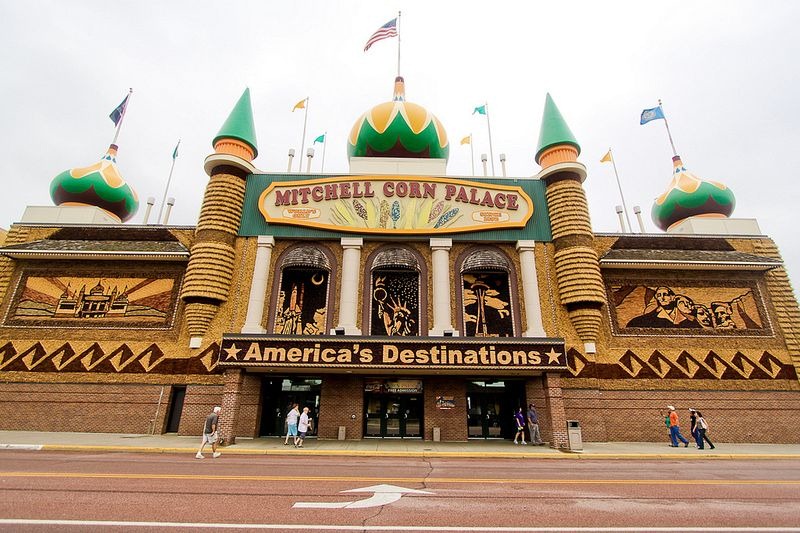
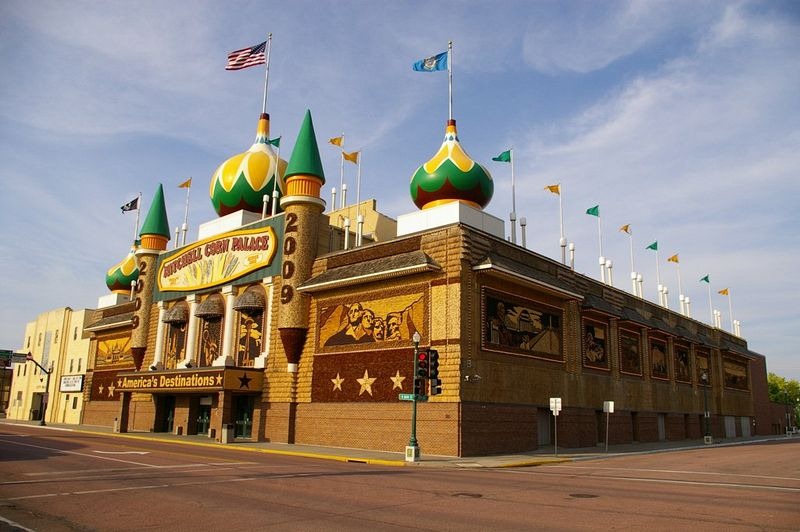
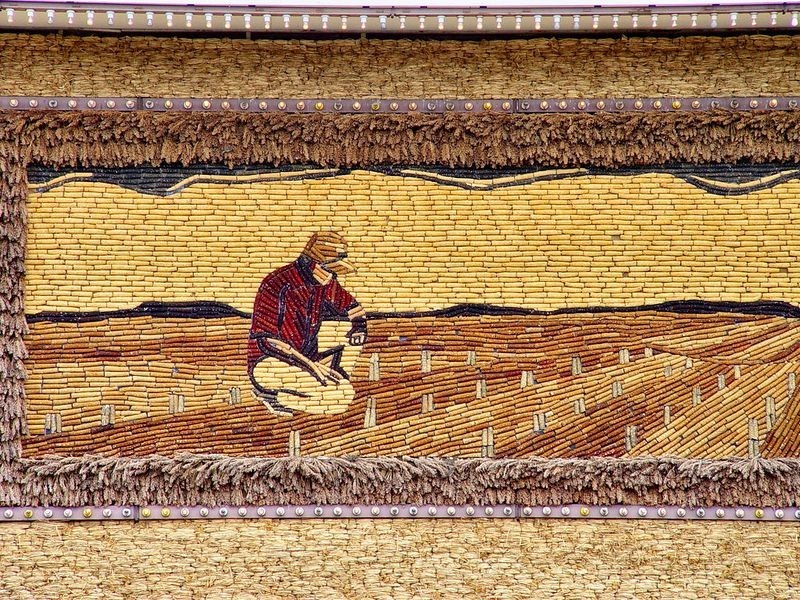
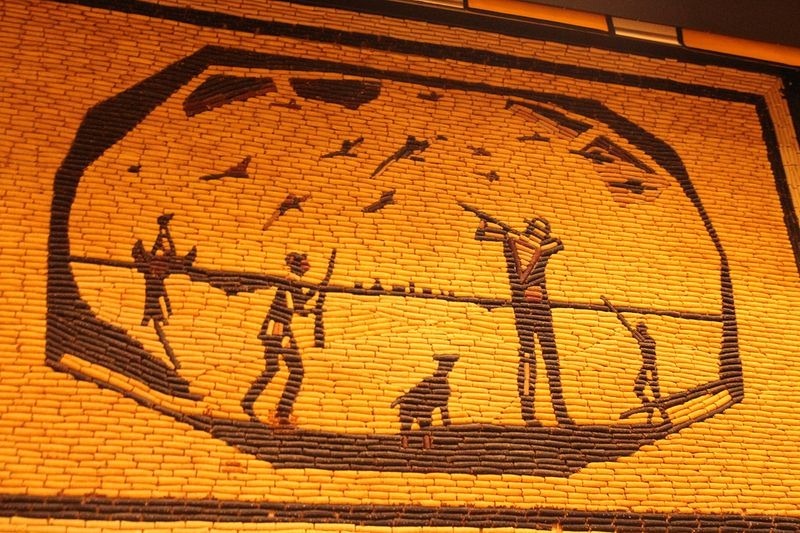
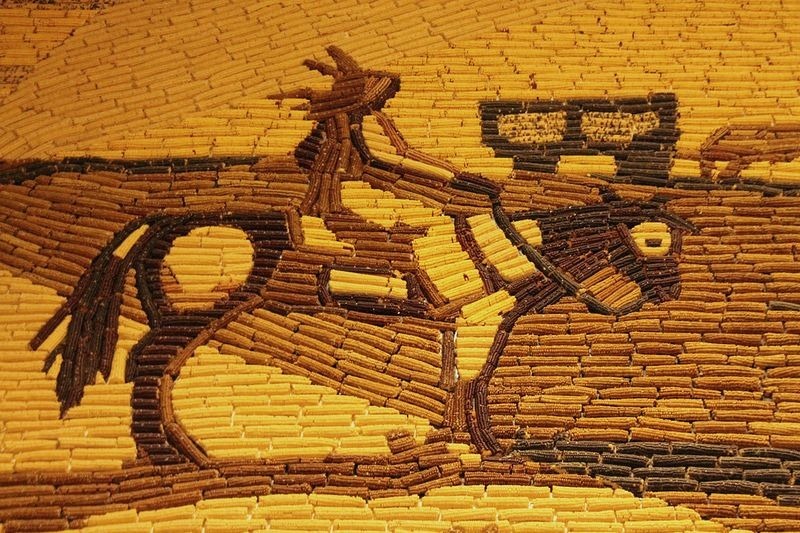
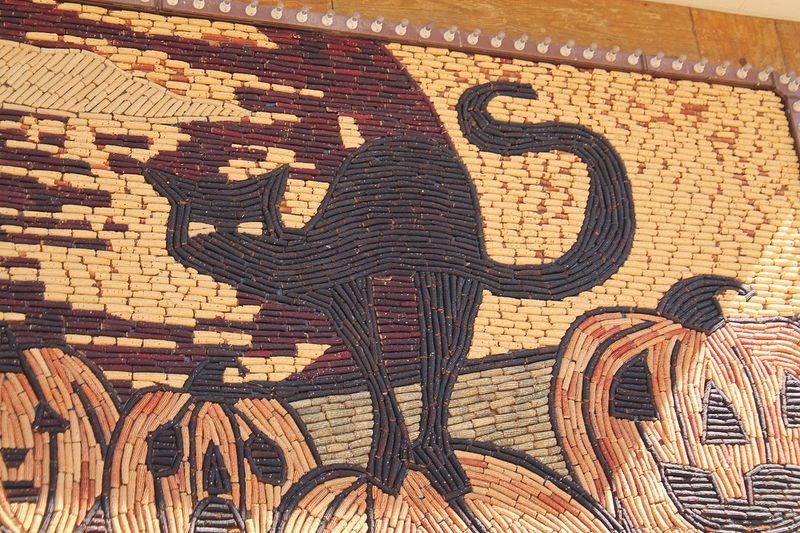
The Corn Palace in Mitchell, South Dakota, is one of America’s corniest attraction. The palace is a regular building built of out of reinforced concrete and bricks, but every spring, during the time of harvest, its exterior is completely covered with thousands of bushels of native South Dakota corn, grain and grasses that are arranged into large murals. Each year there is a different theme, and the palace is decorated accordingly. Hundreds of thousands of tourists come to see the crop art every year.

At other times of the year, to sustain the flow of tourist and revenue, “the World’s Only Corn Palace” —as it likes to call itself, hold popular events such as the Corn Palace Stampede Rodeo in July, the Corn Palace Festival in August and the Corn Palace Polka Festival in September. The Corn Palace also has an auditorium for touring celebrities and a sports arena for various school and college basketball teams.

corn-palace-mitchell-8

Photo credit: Matt Hintsa/Flickr

The original Corn Palace was built in 1892 as part of a six-day festival at the height of harvest season. It was a wooden castle structure built on donated land on Mitchell’s Main Street, whose exterior was decorated with corn. The idea was to showcase the rich soil of South Dakota and encourage people to settle in the area. The success of the Corn Palace and the annual festival encouraged the townsfolk to invest in a better building in 1905, but soon this building became too small for Mitchell’s growing population. A more permanent structure, replacing a second corn palace, was erected and opened in time for the 1921 festival. This is the present Corn Palace, but the Russian-style onion domes and Moorish minarets were added later in 1937.

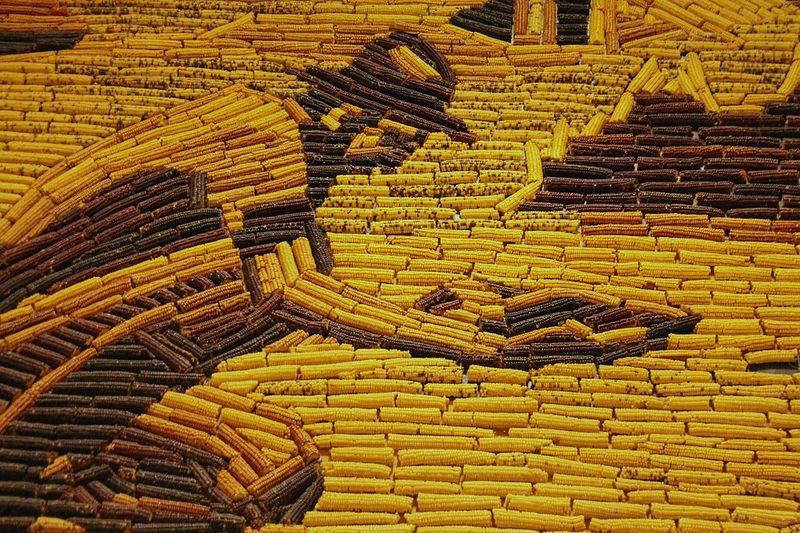
Every year, local artists redecorate the Palace with naturally colored corn and other grains and native grasses such as flax, rye, wheat, oats, and millet as well as bromegrass, bluegrass, and straw. Thirteen different colors or shades of corn are available for artists to work on.

Besides the annual corn festival, the palace building is used for various events including exhibits, dances, stage shows, meetings, banquets, proms, graduations arena for Mitchell High School and Dakota Wesleyan University as well as district, regional and state basketball tournaments.

corn-palace-mitchell-3

Photo credit: Mike Ault/Flickr

corn-palace-mitchell-1


Photo credit: Scott Robinson/Flickr

corn-palace-mitchell-4

Photo credit: Mike Ault/Flickr

corn-palace-mitchell-15

Photo credit: Robin Zebrowski/Flickr

corn-palace-mitchell-10

Photo credit: Robin Zebrowski/Flickr

corn-palace-mitchell-11

Photo credit: Robin Zebrowski/Flickr

corn-palace-mitchell-12

Photo credit: Robin Zebrowski/Flickr

corn-palace-mitchell-13

Photo credit: josephbergen/Flickr

Source……..www.amusingplanet.com

Natarajan

Tarr Steps: An Ancient ‘Clapper Bridge’ in Somerset…

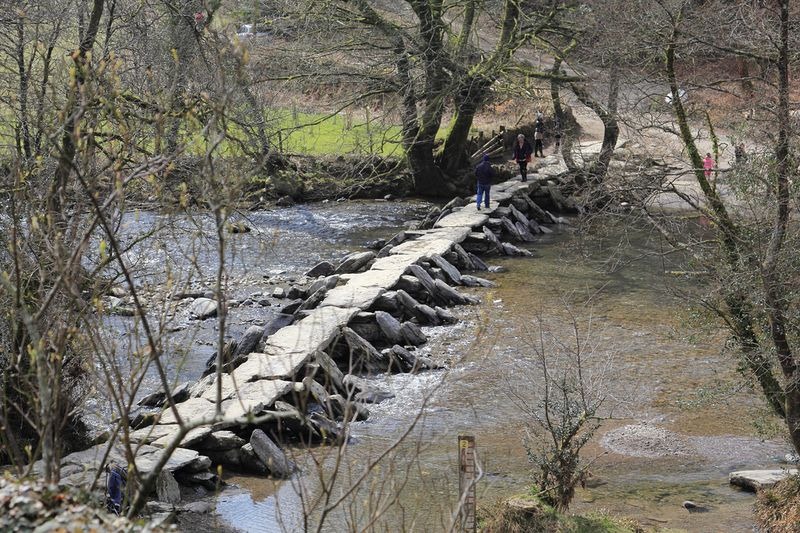
In the lonely moors of Devon and in other upland areas of the United Kingdom, the ancient people had built stone bridges by placing large flat slabs of stones over piles of stones, without mortar or cement, to cross narrow streams. These bridges are called clapper bridges. The name is derived from the Anglo-Saxon word “cleaca” which means “bridging the stepping stones”, suggesting that the first clapper bridges might have been stone slabs laid across the top of existing stepping stones. Most clapper bridges were built during the medieval times, although some of them age much much more.

tarr-steps-3

Photo credit: j.e.mcgowan/Flickr


One of the most famous clapper bridge is Tarr Steps, located in the Exmoor National Park, in Somerset, across the River Barle. It is also the longest clapper bridge in Britain with 17 spans and measuring 55 meters in length.The bridge lies very low in the water, less than a meter over the river’s normal water level. Over the last century, the river has silted so much that during flood it often flows over the stones. Several times in recent years, the slabs of stones, which weigh up to two tons each, have been washed up to 50 meters downstream. The bridge was repaired each time.

The age of Tarr Steps is unknown with several theories claiming that it dates from the Bronze Age, but others put them around 1400 AD. According to local legend, the Devil himself built it so that he could sunbath on. A more elaborate story says that the Devil never fully completed building the bridge, because his apron strings broke and he dropped the stones he was carrying. The Devil then denounced destruction on the first creature to venture across, so the villagers sent a cat across. The poor creature was torn to pieces. The parson then crossed the bridge without harm, and traded insults with the Devil.

The Tar Steps has been a tourist attraction for at least two hundred years.

tarr-steps-1

Photo credit: James Morley/Flickr

tarr-steps-2

Photo credit: Matt Neale/Flickr

tarr-steps-4

Photo credit: Exmoor NP/Flickr

tarr-steps-8

Photo credit: lee roberts/Flickr

Sources: Wikipedia / Theaa.com / www.everythingexmoor.org.uk

Source……www.amusingplanet.com
Natarajan

Image of the Day….Double rainbow !!!

Double rainbow, Brooklyn Bridge, NYC
EarthSky community member Jennifer Khordi caught this spectacular double rainbow on Sunday, after storms passed over Manhattan.

View larger. | Photo taken January 10, 2016 by Jennifer Khordi of Matawan, New Jersey. Visit Jennifer’s Facebook page.

Source….www.earthsky.org

Natarajan