Things We all Did as Indian Kids …!!!

Read on to know what we all did as Indian kids.

1. Rolled on the playground, got dirty in the mud

1st-Get-dirty-in-mud

Cuz mitti mein nai khela toh kya khela.


2. Played hopscotch, chupa chupi

2nd-play-hopscotch


3. We had no prom nights but we had some awesome times dancing in sarvajanik Ganpati and Durga pooja utsav

3rd-sarvajanik-dance


4. Played galli cricket

4th-galli-cricket

Cuz galli was our cricket stadium


5. Watched Shaktiman with all the neighborhood kids on Sundays

5th-Shaktiman

and hoped to become Shaktiman as a grown up or meet him some day.


6. Saw Aahat and almost peed in our pants, but saw it anyway

6th-Aahat


7. Made paper balls and played cricket during recess hours in school

7th-paper-balls


8. Ate baraf ka gola on the last day of the school to welcome summer holidays

8th-baraf-ka-gola


9. Played popular pop songs like Made in India and Dooba Dooba rehta hoon loudly

9th-Pop-songs


10. Fixed our chappal by tucking in the strap with the help of a twig; every time we played outdoor games

10th-chappal


11. Saw “Jalebbiiii” ad and instantly demanded for hot and delicious jalebi

11th-jalebi-add

Image source


12. Katti toh katti barah baje batti tu kha matti mein khau ice cream

12th-katti

Say this as soon as you’re angry or annoyed with your friend. And no there was nothing like pinky promise, the above sign meant katti.


13. Rasna rozana utsav was your favorite ad and drink, especially during summer vacation

13th-rasna-rozana-utsav


14. Got excited when the door bell rang so you could open the door like Sweety from Hum Paanch

14th-Hum-Paanch


15. Put those brown covers just a day before the first day of school

15th-brown-cover

To let the feeling sink in. Yes school is starting tomorrow.


16. When electricity went off after sunset, gather around with friends and enjoy the dark time with ghost stories or chupa chupi

16th-playing-in-the-dark

These are the things we all did as Indian kids and man how we loved every single minute of it.
Cheers to those times :)

SOURCE:::: http://www.storypick.com

Natarajan

What is the Lake-Effect Snow ?

Image Credit: pmarkham


What is lake-effect snow? If you live on the downwind side of a large lake, you’re probably all too familiar with this weather phenomenon. It happens when cold winter air moves over a relatively warm body of water. What you get are small-scale but intense snowstorms. A powerful lake-effect snow storm hit the Buffalo, New York area this week, and is continuing through Friday, November 21, 2014. See pictures and read more about the effects of the November 2014 lake-effect snow storm.

This article,  is  based on a 2011 interview with Tom Niziol, longtime meteorologist-in-charge of the National Weather Service in Buffalo, New York and who joined the Weather Channel in early 2012. He told EarthSky that accurate forecsting of lake-effect snow is a challenge cause:

[Lake-effect snow] occurs on such a small scale, almost on the scale of a summertime thunderstorm. One portion of a neighborhood or city might be under heavy snow, where a few miles away you may be under sunny skies.


Photo credit: Square Foot Staffing
He said Buffalo, New York on the eastern shore of Lake Erie, is notorious for its lake-effect snowstorms. Niziol said cold air moving in from Canada triggers the snowfall.

As that air moves across the warm water of the Great Lakes, heat and moisture from the lake rises up into that air mass. That moisture eventually condenses out into snowflakes. And when we get to the downwind shores, we end up with lake-effect snow.

Niziol said similar snowstorms happen around the globe. The coasts of the United Kingdom, France, Japan, and Korea, for example, get what’s called ocean-effect snow, from cold air moving across warm seas.

So at a whole range of latitudes in the Northern Hemisphere, right around the globe, we see the same activity.

Niziol gave an earlier example of how dramatic lake effect snow can be.

In early December, 2010, in the western New York area around the city of Buffalo, one of these snow bands set up off Lake Erie. The band was about 8-10 miles wide. The northern portion of Buffalo had green grass throughout most of this event. The southern portion of Buffalo, however, only about 10-12 miles away, picked up 40 inches of snowfall.

He said that lake-effect snow can begin in early fall and continue throughout the winter months.

Early in the fall, we see the same type of activity – cold air moving across a warm body of water – but it’s actually warm enough that we see lake effect rainshowers occur. As we get into November to early December, the air is cold enough to turn that into snow.

But if the lake freezes over, it can bring a halt to these seasonal snowstorms.

Lake Erie is a very shallow lake. In January it develops a significant amount of ice cover. The ice cover acts as a cap, in a simple way, to limit the amount of heat and moisture that can come through that ice and then modify that air mass.

Niziol said that the most important thing for people who experience lake effect snow to know is how to be prepared for an unexpected snowstorm.

Be prepared for winter weather conditions. Have extra clothes in your car, make sure your cellphone is charged, have a shovel in the car, some water, granola bars, extra food as well. Because you never know when you leave the house, even if you have a forecast with you, what it will be like when you drive through one of these snow bands.

Lake-effect snow belts may include portions of the Upper Peninsula of Michigan, northern and western portions of the Lower Peninsula of Michigan, northern Indiana, northeastern Ohio, northwestern Pennsylvania and western New York state.

Bottom line: Lake-effect snow happens when cold winter air moves over a relatively warm body of water. What you get are small-scale but intense snowstorms.

SOURCE::::www.earthsky.org

Natarajan

Bright and Beautiful…Blooming Home with Colorful Flowers !!!

This is the blooming marvellous sight of a house completely covered in a rainbow of summer flowers – and it’s been a labour of love for 26 years.

Anne and Robin Strange, who devote every spare hour to their luscious house-garden, say they are still adding to the display almost three decades after they began.

The pair spend hundreds of pounds every year on seeds and plants, nurturing them inside a greenhouse before putting them on display in mid-June.
Flowers

Colourful: Anne Strange amongst the thousands of rainbow coloured blooms almost covering her house in North Yorkshire

Mrs Strange, 65, said: ‘We were in York one day looking at all the beautiful hanging baskets and we were inspired to create our own.

We have been planting more and more flowers ever since.’

The couple, of Coniston Cold, North Yorkshire, have had an amazing response from motorists who drive past their multicoloured home.

Flowers Inspired: Motorists adore looking at the couple’s home

Flowers Flowers  Bright and beautiful: Even back in 1988, left, and in 1980, right, the Strange’s house looked stunning but over the years it’s become even more beautiful

One woman even sends them a gift voucher every Christmas to express her appreciation of the spectacle.

Mrs Strange added: ‘People think its great, we get cards from people we have never even met.’

Mr Strange, 65, who works for Tree Tops Forestry, spends every weekend and evening seeing to the garden.
Flowers

Dedication: Mr and Mrs Strange spend hundreds of pounds every year planting seeds and nurturing the blooms inside a greenhouse

Mrs Strange said: ‘I dread to think how much money goes on the garden, but it definitely all adds up.

‘It is worth it though, we are both very pleased with what we have created.’


Source:::: EMILY ALLEN in  www.dailymail.co.uk

Natarajan

Read more: http://www.dailymail.co.uk/news/article-2188277/Blooming-beautiful-Couple-spend-evening-weekend-TWENTY-SIX-YEARS-covering-house-flowers.html#ixzz3JbRWZ9mS

Mosquito Repelling Plants For Home ….

 Mosquito-Repelling Plants You Can Grow at Home

Mosquitoes are a serious nuisance; from that terrible buzz near your ear when you’re trying to sleep, to the itchy, swollen bumps they leave after biting you. If you didn’t know, it’s only the females of the specie who bite us. Male mosquitos prefer to feed on nectar, generally avoiding humans.

Mosquitos can also be a health-risk – they can transmit diseases through their bite (including Malaria, Yellow Fever, West-Nile Fever, and more). In-fact, mosquitos are responsible for more human deaths than all wars, combined.

You can buy gadgets and products that repel these nasty bugs, but they’re all temporary and can be irritating or dangerous. Instead, you can grow certain plants that repel mosquitos naturally:
Lemon Verbena: This lovely plant has a light citrus scent and can be added to tea for both flavor and it’s calming effect on the digestive system. You can plant it in the ground or in a deep pot and let it scare away those nasty bugs. Make sure it has a good supply of water and sunlight. Mosquito Repellants
Cloves: Cloves are the flower buds of the Syzygium aromaticum plant. You can plant it around the yard to enjoy its mosquito-repelling properties, as well as use the cloves to spice up food. Mosquito Repellants
Mint: Most common as an added flavor for tea, mint also has powerful mosquito-repelling properties. All species of mint are useful repellants. Mint needs sunlight and plenty of water to grow. You can plant it in your garden or in pots. If you choose to put it in your garden, be aware that it likes to spread, and can sometimes take over and kill weaker plants. Mosquito Repellants
Rosemary: A favorite herb for savory dishes, it’s also a potent repellent. Plant it in your garden or in deep planters and let this lovely bush grow and take care of your mosquito problem. Mosquito Repellants
Lemon Thyme: A natural mosquito repellent, lemon thyme is also a great herb for seasoning dishes. Plant it in pots to get lovely little plants around the house, or in your garden to control mosquito population. Mosquito Repellants
Lavender: The scent of lavender is often a favorite for many people, and it’s commonly used in aromatherapy for its soothing properties. For mosquitos, however, it’s a very strong repellent. Plant them in your garden or in pots in your house and enjoy the scent of the beautiful purple flowers. Mosquito Repellants
Floss Flower: These lovely tiny flowers are superb at repelling mosquitos. Make sure you only grow them in a pot, as they tend to overgrow in the soil and take over the entire garden. Make sure they’re out of reach of children and animals, as they can be toxic. Mosquito Repellants
Pitcher Plant: These carnivorous plants grow natural pitchers, filled with appealing-scented nectar to lure bugs in. Once the bugs get inside the pitcher, they can’t get out again and are digested by the plant. Plant them in planters by window sill and enjoy their mosquito-capturing properties. Mosquito Repellants


Cadaga Tree: (AKA  “Cadagi”, oreucalyptus torelliana) – These beautiful trees are natural barriers for mosquitos, who hate their scent. Plant a few of these in your garden and let nature free you of those pesky biters.                                 Mosquito Repellants


SOURCE::::ba-ba mail site

Natarajan

Message For the Day…” What is Liberation ?..Help Ever , Hurt Never … “

Do not find faults with others. If you point an accusing finger at someone, remember three fingers are pointing to you. Wear the ornament of Truth to adorn your neck (Sathyam Kantasya Bhushanam). Charity is the true ornament that make your hands beautiful and elegant (Hasthasya Bhushanam Dhanam). Thus you must sanctify each limb of your body by engaging in sacred activities. Your eyes should look at only sacred things. Do you know what an enormous power is latent in your eyes? There are crores of light rays in them. In olden days, people used to invoke the grace of Sun God to have a better vision. When you performSurya-namaskar (worship of Sun God) and invoke His grace, the light rays in your eyes will become more effulgent and inspire you. People aspire to attain liberation. What is liberation? Help ever, hurt never – that is true liberation. To get rid of attachment (moha) is true liberation (moksha).

Sathya Sai Baba

World”s Largest Swimming Pool…1KM Length Covering 20 Acres !!!

San Alfonso Del Mar Pool   The Worlds Largest Swimming Pool

San Alfonso del Mar Pool with its length of 1 km and a coverage of almost 20 acres is registered in the Guinness Book of Records as the world’s largest swimming pool. This amazing swimming pool seems to cover the same amount of water as 6000 regular swimming pools and visitors can enjoy in many different activities besides swimming, such as sailing, kayaking, scuba diving and paragliding.

This great man-made lagoon is part of the San Alfonso del Mar resort, located in the city Algarrobo, Chile. It was opened in 2006 and since then attracts an increasing number of tourists. This pool was made by collecting and filtering water from the ocean, while the sun warms it up to 9 degrees higher than the the ocean water. This technology was founded by Fernando Fischmann and the aim is to allow for ‘lagoons of unlimited size’ with crystal clear water and reduced costs to typical pools.

San Alfonso Del Mar Pool   The Worlds Largest Swimming Pool

Photo via: sanalfonso.cl

San Alfonso Del Mar Pool   The Worlds Largest Swimming Pool

Photo via: taringa.net

San Alfonso Del Mar Pool   The Worlds Largest Swimming Pool

San Alfonso Del Mar Pool   The Worlds Largest Swimming Pool

San Alfonso Del Mar Pool   The Worlds Largest Swimming Pool

San Alfonso Del Mar Pool   The Worlds Largest Swimming Pool

San Alfonso Del Mar Pool   The Worlds Largest Swimming Pool

San Alfonso Del Mar Pool   The Worlds Largest Swimming Pool

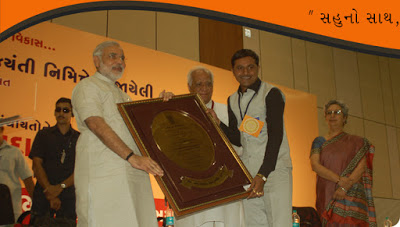
How One Man….Himanshu Patel…Transformed a Gujarat Village …!!!

Punsari village, barely 100 km from Ahmedabad, could be a textbook case of development. Closed-circuit cameras, water purifying plants, air-conditioned schools, Wi-Fi, biometric machines – the village has it all. And all of it was done in a matter of eight years, at a cost of a mere Rs. 16 crore.

The man behind the transformation is its young sarpanch – 31-year-old Himanshu Patel. A graduate from North Gujarat University, Mr Patel had won the panchayat polls in 2006, at the age of 23.

Back then, the village didn’t even have proper roads, power or water. The panchayat funds were in deficit. Mr Patel found though money come aplenty, it was the utilisation that’s at fault.

Over the next eight years, together with the district administration, he stitched up funds from under various heads – the District Planning Commission, Backward Regional Grant Fund, 12th Finance Commission, and those under Self Help Group Yojnas – and began the development of the village.

The results are obvious. Recently, a team from the Central ministries of rural and urban development had come to study the “Punsari model”.

But the young sarpanch is already onto his next projects – a unit producing electricity out of plastic waste and e-rickshaws for garbage collection. “The state government has already sanctioned Rs. 52 lakh,” he said.

Understanding the importance of education, Mr Patel has earmarked a chunk for the village school. From 300 students in 2006, the number has now doubled to over 600. The classrooms are not just air-conditioned but also have computers and projectors.

“We have managed to attract more children,” said teacher Narendra Jhala.  Vidya Patel, a student of Class 7, thinks learning is fun. “The audio visual presentations make it easier to remember our lessons,” she said.

Interestingly, Mr Patel has not asked for a penny from the MLA fund, and over the last eight years, the village has just got Rs. 1 lakh from the MP fund.

“We didn’t feel the need, since there is enough from various budgetary grants of the state and Centre. If you utilise it properly, you can work wonders,” said Mr Patel.

“The village has demonstrated how understanding various schemes available and leveraging them properly can bring about a qualitative change,” said Himmatnagar collector Banchha Nidhi Pani.

SOURCE::::www.ndtv.com and nidhi-bansal.blogspot.in

Natarajan


” Saying Good Bye to The Famous DoorMan who Worked For 72 Years …!!!”

In this photograph taken on February 6, 2010, Sri Lanka's legendary doorman, Kottarapattu Chattu Kuttan holds his palms in a traditional greeting, outside the island's historic 146-year-old Galle Face Hotel in Colombo.Kottarappu Chattu Kuttan

A doorman who worked for 72 years at the most famous hotel in the Sri Lankan capital, Colombo, has died aged 94.

Kottarappu Chattu Kuttan, who had started as a waiter, never retired from his job at the Galle Face Hotel.

Guests would be greeted at the grand seafront entrance by the diminutive Mr Kuttan with his palms pressed together in the traditional greeting.

White-haired with a handlebar moustache, the diminutive figure also sported badges from all over the world.

Mr Kuttan had emigrated from his native Kerala in southern India aged 18 in 1938 after the death of his parents.

Looking for work, he crossed to what was then Ceylon by boat, starting in domestic employment in Colombo and joining the Galle Face in 1942.

The 150-year-old hotel is renowned for its illustrious list of past guests, and Mr Kuttan met many of them.

“Ceylon… was a different country then. Famous people like Emperor Hirohito, Richard Nixon, Sir Laurence Olivier and George Bernard Shaw came and stayed with us,” he told Agence France-Presse in 2010.

 In this photograph taken on February 6, 2010, Sri Lanka's legendary doorman, Kottarapattu Chattu Kuttan holds his palms in a traditional greeting, outside the island's historic 146-year-old Galle Face Hotel in Colombo.Mr Kuttan carried on greeting guests almost until his death

He also met Lord Mountbatten and Jawaharlal Nehru, the then Princess Elizabeth – and the Bond girl, Ursula Andress. And he saw a Japanese fighter-plane crash-land in the grounds during World War Two.

‘People would notice him’

Sanjeev Gardiner, the hotel’s chairman, told the BBC it was a “truly sad day”.

He said the employee had almost retired after finishing as a waiter in the 1980s but was kept on at the front entrance where he “found his true calling”.

“People would notice him,” said Mr Gardiner.

He recalled the company suggesting, and funding, a trip back to Kerala for his employee, many decades after he had last seen India. Mr Kuttan still had family there including two sisters.

“If they treat me nicely I’ll stay, otherwise I’m coming back tomorrow,” he recalled Mr Kuttan as saying. In the event he stayed 10 days.

Mr Gardiner says that after his father and predecessor as chairman, Cyril Gardiner, died in 1996, Mr Kuttan came to the funeral and to every subsequent memorial service, once a year.

“That says a lot about his character.”

Mr Kuttan’s Sri Lankan wife, who was a Christian, died some years ago and in latter years a grand-daughter looked after him.

He had been ill for his final months but remained on the Galle Face Hotel staff.

The hotel held a minute’s silence as a tribute to Mr Kuttan,….

SOURCE:::: 

Natarajan