The Origin of the Phrase” jump on the Bandwagon…” !!!

Today I found out the origin of the phrase “jump on the bandwagon.”

bandwagon

For those not familiar, when you jump on the bandwagon, it means you begin supporting a hobby, idea, person, etc. after it has become popular or successful.

The word “bandwagon” is the rather unimaginative name for a wagon that carried a circus band. It first appeared in print in the equally unimaginatively titled book The Life of P.T. Barnum, Written by Himself, which was published in 1855:

At Vicksburg we sold all our land conveyances excepting our horses and the ‘band wagon.’

P.T. Barnum is the famous circus owner and showman Phineas T. Barnum. Back then, circuses were known for their showy parades through town before they set up. These parades attracted villagers’ attention and acted as an easy marketing ploy to get people to go to the circus. Bandwagons were part of those parades. Bright and ornamental, they were impossible to miss.

Toward the end of the 1800s, people had caught on to the fact that bandwagons snared an audience’s attention. Politicians started to use bandwagons in parades through towns on their campaign trails. It’s believed that Dan Rice, a famous circus clown, was the first to rent out his bandwagon to a political campaign.

As a campaign became more and more successful, other people and politicians sought to rent seats on the bandwagon and ride it through town. In doing so, they received face time with the public and believed that the success of the original campaign would rub off on them.

There are records of the phrase used in political speeches throughout the 1890s, usually in the form of warning potential voters not to “jump on the opponent’s bandwagon in haste.” Because of the negative connotations associated with the phrase, many didn’t admit to having a bandwagon of their own despite it becoming common.

Over time, the phrase stopped meaning the literal riding of a bandwagon and started to refer to jumping into anything that was popular. It’s unclear exactly when this transition occurred, but Teddy Roosevelt made a reference to it in Letters, 1899, (later published in 1951):

When I once became sure of one majority they tumbled over each other to get aboard the band wagon.

SOURCE:::: http://www.today i foundout.com

Natarajan

This Date in Science…13 March…Discovery Of Uranus…Completely By Accident !!!

March 13, 1781. The 7th planet – Uranus – was discovered on this date, completely by accident. British astronomer William Herschel was performing a survey of all the stars that were of magnitude 8 – in other words, too faint to see with the eye – or brighter. That’s when he noticed an object that moved in front of the star background over time, clearly demonstrating it was closer to us than the distant stars. At first he thought he had found a comet, but later realized this object was a new planet in orbit around our sun – the first discovered since ancient times.

Later, it turned out, astronomers learned they had observed Uranus as far back as 1690. But it was Herschel who first realized the true nature of this distant light in our sky.

William Herschel's famous 40-foot telescope,  constructed between 1785 and 1789 at Observatory House in Slough, England. It was the largest telescope in the world for 50 years.   Image via Wikimedia Commons.

William Herschel’s famous 40-foot telescope, constructed between 1785 and 1789 at Observatory House in Slough, England. It was the largest telescope in the world for 50 years. Image via Wikimedia Commons.

Herschel proposed to name the object Georgium Sidus, after King George III, but those outside of Britain weren’t pleased with the idea. Instead, on the suggestion of astronomer Johann Elert Bode, astronomers decided to follow the convention of naming planets for the ancient gods. Uranus – an ancient sky god, and one of the earliest gods in Greek mythology – was sometimes called Father Sky and was considered to be the son and husband of Gaia, or Mother Earth.

King George III was still pleased, however. As a result of Herschel’s discovery, the king knighted him and appointed him to the position of court astronomer. The pension attached let Herschel quit his day job as a musician and focus his full attention on observing the heavens. He went on to discover several moons around other gas giant planets. He also compiled a catalog of 2,500 celestial objects that’s still in use today.

Voyager 2 gave us our first close-up image of the planet Uranus in 1986.  Its images showed a featureless gas giant world.

Voyager 2 gave us our first close-up image of the planet Uranus in 1986. Its images showed a featureless gas giant world.

In 1977, astronomers using the Kuiper Airborne Observatory made another serendipitous discovery – of rings around the planet Uranus. That discovery made Uranus the second known ringed planet in our solar system.

The closest we humans have come to Uranus was in 1986, when the Voyager 2 spacecraft swung by the planet. At its closest, the spacecraft came within 81,500 kilometers (50,600 miles) of Uranus’s cloudtops on Jan. 24, 1986. Voyager 2 radioed thousands of images and voluminous amounts of other scientific data on the planet, its moons, rings, atmosphere, interior and the magnetic environment surrounding Uranus.

Bottom line: British astronomer William Herschel discovered the planet Uranus – first planet to be discovered since ancient times – on March 13, 1781.

source::::: http://www.earthskynews.org

Natarajan

Why 21 Gun Salute …?

The 21-gun salute that we know today has its roots in the ancient tradition of warriors demonstrating their peaceful intentions by resting the point of their weapons on the ground.

The notion of making a soldier’s weapons useless to show that he came in peace continued even as warfare changed over the centuries. Gunpowder and cannons became commonplace among militaries and private forces, both on land and at sea around the 14th century. In order for a ship entering a foreign port to show those on shore that they came in peace, the captain would have his crew fire the guns. This rendered the weapons inoperable for a period of time, with early guns only being capable of firing a single shot before crews needed to reload them.

Traditionally when a British ship entered into a foreign port, it would fire its guns seven times. The reason for the seven shots is widely debated to this day. One theory states that the majority of the British ships at this point only carried seven guns and so firing seven shots became the standard to signal those on shore that the ship was now unarmed. Ships carried enough gunpowder and ammunition to reload multiple times, but beyond symbolism, the idea here was that the lengthy process of reloading would allow the soldiers onshore more than enough time to disable the ship with their own weapons if needs be.

Another proposed theory for the number seven relates to the Bible. After creating the world, the Bible states that God rested on the seventh day (or for the seventh “event”- there is some debate over the “day” vs. “event” translation). So it has been theorized that the number could have been chosen in reference to its Biblical significance, perhaps of resting with the ship coming to port after a long journey. Yet another theory stems from the pervasive superstitious nature of sailors combined with the historic notion in certain regions that the number 7 is sacred, and that odd numbers are lucky and even unlucky. In fact, for a time it was common to use an even number of shots to signify the death of a ship captain when returning from the voyage the death occurred on.

Whatever the underlying reason, the guns onshore would return fire as a form of welcome once the incoming ship finished firing the seven rounds. However, the shore bound guns fired three rounds for every one fired by the incoming ships, putting the total number of shots fired at twenty-one in these cases. As with the “7” number, it’s not known precisely why in the regions that used this number scheme that they chose a 3 to 1 ratio.  What is known is that as time went on where this was practiced, it became traditional for the ships themselves to start firing off 21 shots as well, perhaps due to the ships becoming larger and being equipped with more guns, with the captains ostensibly preferring a 1 to 1 salute.

This then brings us to when firing the 21 shots became considered a type of official salute, rather than a symbolic way to indicate peaceful intentions.  This seems to have started around 1730 when it became a recognized salute to British government officials. Specifically, the British Navy allowed its ships and captains the option to perform the 21-gun salute as a way to honor members of the British Royal Family during select anniversaries. About eighty years later, in 1808, the 21-gun salute officially became the standard salute to honor British Royalty.

While the British Navy adopted the 21-gun salute in 1808 as the standard, other nations, such as the United States, didn’t adopt it until much later. In fact, the United States War Department decided in 1810 to define the “national salute” as having the same number of shots as there were states in the nation. That number grew every year that a new state joined the Union.  Needless to say, this quickly became a cumbersome way to salute the United States and its dignitaries.

That said, the United States did make the “Presidential Salute” a 21-gun salute in 1842, and in 1890 officially accepted the 21-gun salute as the “national salute.” This followed the 1875 British proposal to the United States of a “Gun for Gun Salute” of 21-guns to honor visiting dignitaries.  Essentially, the British and French, among other nations, at this point were all using 21 guns for their salutes, but the U.S. system required many more shots for their dignitaries.  Besides needing to fire off more cannons, this also potentially signified greater honor to the U.S. dignitaries than to those of other nations. Thus, the British proposed a 1 for 1 shot, with 21 being the number, which was accepted by the U.S. on August 18, 1875.

The 21-gun salute still represents a significant honor today. In the United States, the 21-gun salute occurs to honor a President, former president, or the head of foreign state. It can also be fired in order to honor the United States Flag. The salute also occurs at noon on the day of the funeral of a President, former President, or President-elect along with on Memorial Day.

You may have noticed that there’s no mention of the 21-gun salute occurring during military funerals and that’s a common misconception. Known as the “3 Volleys,” the salute that occurs during soldiers’ funerals follows a battlefield tradition where both sides stopped fighting so that they could remove their dead from the field. The series of three shots, or volleys, let the other side know that the dead had been taken care of and that that battle could resume. Therefore the number of volleys is more important than the actual number of shots. Even the United States Army Manuel’s section on the Ceremonial Firing Party at a funeral named the number of riflemen as between five and eight, rather than an exact number.

SOURCE:::: http://www.today i foundout.com

Natarajan

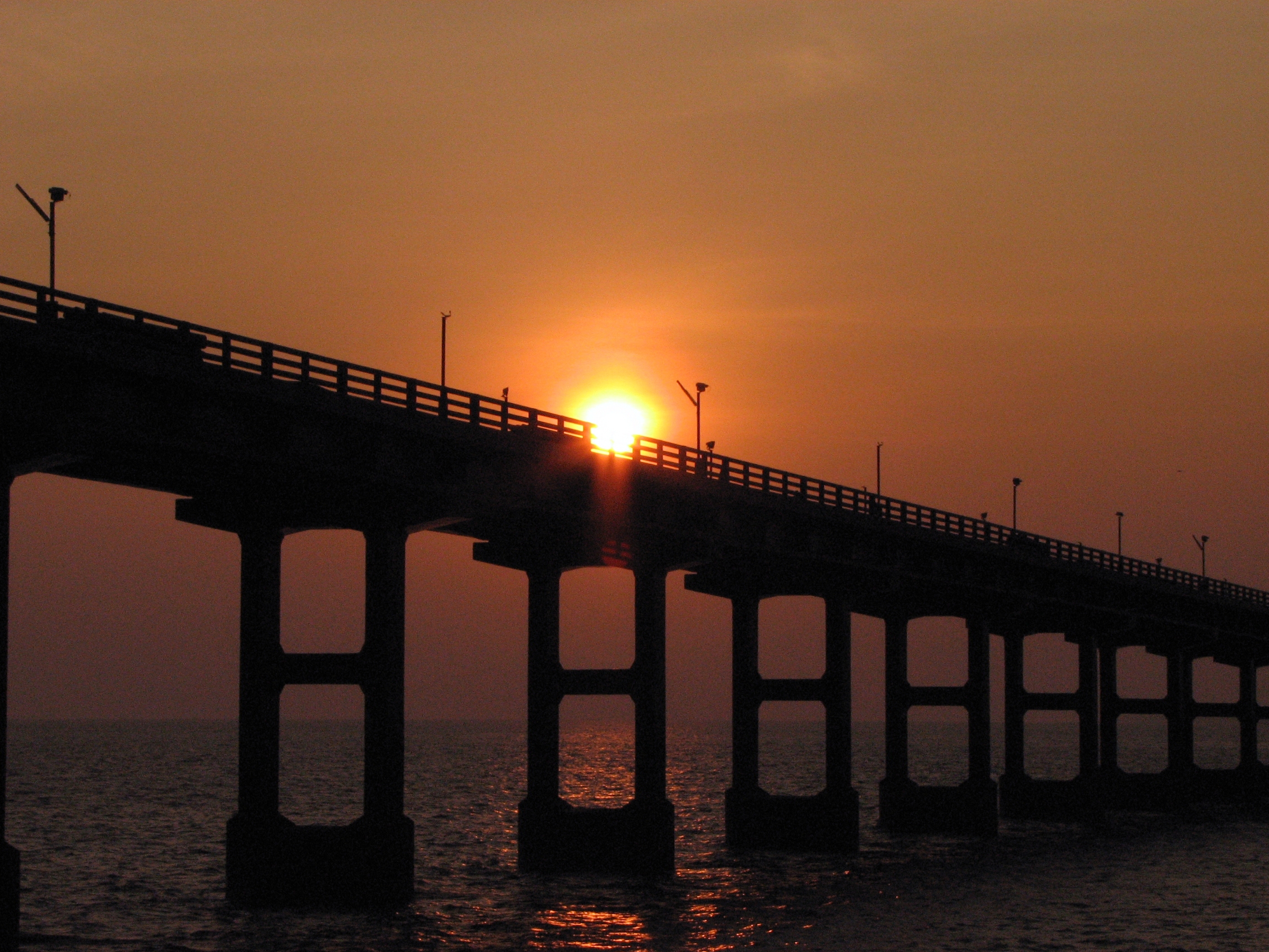
Pamban Bridge… A Fascinating One !!!


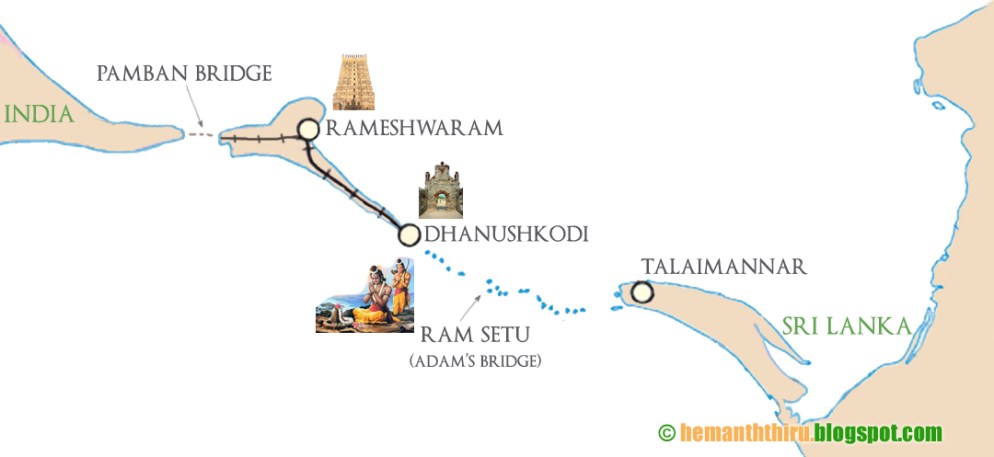
Pamban Bridge (named after the place at one end) lies between Indian main land
and Rameswaram island. It was the longest sea bridge for almost a century in India
(built in 1914) until Worli – Bandra sea bridge was built in Mumbai a few years ago.
Now it is the second.

Besides this, it is also a cantilever bridge that opens up in the middle to allow
ships to pass by like the Tower Bridge in London.

It was damaged in a cyclone in 1964 and was restored in just 46 days by E Sreedharan
the father of Delhi Metro.That cyclone had however damaged the link from Pamban to
Dhanuskodi town that vanished in the cyclone, thereby cutting the rail link between India
and Sri Lanka. Along with it went away the name Boat Mail for Madras – Dhanuskodi train.
Boat mail ? yes, because from Dhanuskodi, the passengers used to take a ferry to
Thalaimannar in Sri Lanka and continued their onward train journey all the way to Colombo.
Since the Madras train connected to a boat at the end of the journey, it was called
Boat Mail. This train was also known as Indo Ceylon Express in very early days.
https://i0.wp.com/static.panoramio.com/photos/large/41963310.jpg
https://i0.wp.com/i1.trekearth.com/photos/18313/img_2671.jpg
https://i0.wp.com/www.ramnad.tn.nic.in/images/Final_Scissors%20Bridge%20001.jpg
SOURCE:::: iNPUT FROM A FRIEND OF MINE
Natarajan

” In our days, Hardware was Found in Hardware Shop and name of Software was Never Heard … ” !!!!

The Best Answer an Older Person Can Give

Some time ago, a loving gradnson was talking to his grandmother about modern life. He asked for her opinion on everything that has been going on in the last few years. His grandmother gave him a long look and said: “Well, let me see…
I was born before:
* penicillin
* television

old lady

* frozen foods
* Xerox
* contact lenses
* Frisbees and
* the pill
There were no:
* credit cards
* laser beams or
* ball-point pens
Man had not yet invented:
* pantyhose
* dishwashers
* clothes dryers
* and the clothes were hung out to dry in the fresh air and
Nor has man walked on the moon yet.
Your Grandfather didn*t live together until we got married. There were very few single mothers.
Until I was 25, I called every man older than me, “Sir.”
And after I turned 25, I still called policemen and every man with a title, “Sir.”
We were before gay-rights, computer-dating, dual careers, daycare centers, and group therapy.
Our lives were governed by the Ten Commandments, good judgment, and common sense.
We were taught to know the difference between right and wrong and to stand up and take responsibility for our actions.
Serving your country was a privilege; living in this country was a bigger privilege.
We thought fast food was what people ate during Lent.
Having a meaningful relationship meant getting along with your cousins.
Draft dodgers were those who closed front doors as the evening breeze started.
Time-sharing meant time the family spent together in the evenings and weekends, not purchasing condominiums.
We never heard of FM radios, tape decks, CD*s, electric typewriters, yogurt, or guys wearing earrings.
We listened to Big Bands, Jack Benny, and the President*s speeches on our radios.
If you saw anything with *Made in Japan * on it, it was junk.
The term *making out* referred to how you did on your school exam.
Pizza Hut, McDonald*s, and instant coffee were unheard of. We had 5 & 10-cent (5 and dime) stores
where you could actually buy things for 5 and 10 cents.
Ice-cream cones, phone calls, rides on a streetcar, and a Pepsi were all a nickel.
And if you didn*t want to splurge, you could spend your nickel on enough stamps to mail 1 letter and 2 postcards.
You could buy a new Ford Coupe for $600, but who could afford one? Too bad, because gas was 11 cents a gallon.
In my day:
* “grass” was mowed,
* “coke” was a cold drink,
* “pot” was something your mother cooked in and
* “rock music” was your grandmother*s lullaby.
* “Aids” were helpers in the Principal*s office,
* “chip” meant a piece of wood,
* “hardware” was found in a hardware store and.
* “software” wasn*t even a word.
We volunteered to protect our precious country.
No wonder people call us “old and confused” and say there is a generation gap.
How old do you think I am?
Read on to see… Are you ready??
*
*
*
*
*
*
*
*
*
*
*
*
*
*
*
*
*
*
*
*
*
*
*
*
This woman would be only 65 years old.

old lady

She would have been born in late 1950.
Gives you something to think about, doesn’t it?
So much has changed in one lifetime. !!!
Natarajan

68 வருடம் சேவை … ஒரே அலுவலகம் … 95 வயதில் ஓய்வு…!!!..

சிறந்த அலுவலகமாக தேர்வு செய்யப்பட்ட செண்பகனூர் கிளை அஞ்சல் அலுவலகம். (உள்படம்) கே.வி.பீட்டர்.

சிறந்த அலுவலகமாக தேர்வு செய்யப்பட்ட செண்பகனூர் கிளை அஞ்சல் அலுவலகம். (உள்படம்) கே.வி.பீட்டர்.

கடந்த கால் நூற்றாண்டுக்கு முன்பு வரை தபால்காரர் என்பவர் எல்லோராலும் ஆவலுடன் எதிர்பார்க்கப்பட்ட கதாநாயகர்.

இவை எல்லாம் மறக்க முடியாத சிறந்த காலக்கட்டம் அது. அப்போது இந்தியாவின் சிறந்த அஞ்சல் அலுவலகமாக கொடைக்கானல் அருகேயுள்ள செண்பகனூர் கிளை அஞ்சல் அலுவலகம் தேர்ந்தெடுக்கப்பட்டது. இதற்குக் காரணம், அந்த அலுவலகத்தில் பணியாற்றிய போஸ்ட் மாஸ்டர் (கிளை அஞ்சலக அதிகாரி) கே.வி. பீட்டர்.

தொடக்கத்தில், கொடைக்கானல் மலைவாழ் மக்களிடையே கிறிஸ்தவ மத போதகராகத்தான் வாழ்க்கையைத் தொடங்கினார் கே.வி.பீட்டர். அடர்ந்த மலைப் பகுதியான செண்பகனூர் அஞ்சல் அலுவலகத்துக்கு போஸ்ட்மாஸ்டராக பணிபுரிய யாருமே முன்வராதபோது, 1913-ல் தனது 27-வது வயதில் சேவை அடிப்படையில் பணியில் சேர்ந்தார் கே.வி.பீட்டர். அந்த ஒரே அலுவலகத்தில் 95 வயது வரை அதாவது 68 ஆண்டுகள் தொடர்ந்து பணிபுரிந்தார்.

இதுகுறித்து தேசிய விருது பெற்ற முன்னாள் அஞ்சல் அலுவலர் கோவை என். ஹரிஹரன் ‘தி இந்து’ விடம் கூறும்போது, ‘பேருக்குத்தான் கே.வி.பீட்டர் செண்பகனூர் அஞ்சல் அதிகாரி. ஆனால், அங்கு அவர்தான் போஸ்ட் மாஸ்டர், தபால்காரர், அலுவலக எழுத்தர், விற்பனையாளர் என எல்லாம். இப்போதுதான் கொடைக்கானல் சர்வதேச கோடைவாசஸ்தலம்.

அப்போது, கொடைக்கானல், செண்பகனூர் பகுதிகள் மக்கள் நடமாட்டமே இல்லாத அடர்ந்த மலைப்பிரதேசமாக இருந்தன. கரடுமுரடான மலைப் பாதையில் நடந்துதான் அலுவலகத்துக்கு வர வேண்டும். நடந்து சென்றுதான் தபால்களை பட்டுவாடா செய்ய வேண்டும். அப்போது, கொடைக்கானல் செண்பகனூர் பகுதியில் ஆங்கிலேய அரசின் உயர் அதிகாரிகள், வெளிநாட்டு சுற்றுலாப் பயணிகள் நிரந்தரமாகவும், மாதக்கணக்கிலும் தங்கியிருப்பர். ஆங்கிலேயருக்கு ஏராளமான தபால்கள் வரும். அவர்களும் தபால், மணியார்டர்களை வெளியூர்களுக்கு அனுப்புவர்.

கே.வி.பீட்டர் தனி ஆளாக, தனது முழு சக்தியையும் அஞ்சல் துறைக்காகவே செலவிட்டார். தபால்களை அவரே பிரிப்பார்; பட்டுவாடா செய்வார்.

நேரம், காலம் பாராமல் திருமணம் செய்து கொள்ளாமலே அஞ்சல் அலுவலகத்தையே வாழ்க்கையாக நினைத்தார். அன்றைய காலக்கட்டத் தில் ஓராண்டில் 16 ஆயிரம் ரூபாய்க்கு தபால்தலைகளை விற்று சாதனை படைத்தார் (கிளை அஞ்சல் அலுவலக வரலாற்றில் அப்போதைய சாதனை). அதனால், செண்பகனூர் அஞ்சல் அலுவலகத்தை 1983-ல் இந்தியா வின் சிறந்த அஞ்சல் அலுவலகமாக மத்திய அரசு அறிவித்தது.

இதற்கு காரணமான கே.வி.பீட்டருக்கு மத்திய அரசு பத்ம விருது வழங்கி கவுரவித்தது. ஓய்வே இல்லாமல் பணிபுரிந்த அவருக்கு, அவரது 62-வது வயதில் 62 நாட்கள் முழு ஊதியத்துடன் அஞ்சல் துறை விடுமுறை வழங்கியது. அஞ்சல் துறை மீது அவருக்கு இருந்த ஈடுபாட்டை பாராட்டி, ஆயுட்காலம் வரை அங்கேயே பணிபுரிய கே.வி.பீட்டருக்கு மத்திய அரசு சிறப்பு அனுமதி வழங்கி உத்தரவிட்டது.

அதனால், 95 வயது வரை அங்கேயே பணிபுரிந்த அவர், முதுமை காரணமாக ஓய்வு பெற்றார்.

10 ரூபாய்க்கு பணியில் சேர்ந்த கே.வி.பீட்டர், 210 ரூபாய் ஊதியம் வாங்கும்போது ஓய்வுபெற்றார். ஆனாலும், 105-வது வயதில் தான் இறக்கும்வரை செண்பகனூர் அஞ்சல் அலுவலகத்தை தன் கண்காணிப்பிலேயே வைத்திருந் தார். சமூக அமைப்புகள் உதவிய தால், கே.வி.பீட்டர் ஊதியத்தை எதிர்பார்க்காமல் வாழ்நாள் முழுவ தும் கடைசி மூச்சு வரை தபால் துறைக்காக வாழ்ந்தார்’’ என்றார்.

சிறந்த அலுவலகமாக தேர்வு செய்யப்பட்ட செண்பகனூர் கிளை அஞ்சல் அலுவலகம். (உள்படம்) கே.வி.பீட்டர்.

இந்திரா காந்தியின் பாராட்டுக் கடிதம்

இந்திரா காந்தி பிரதமராக இருந்தபோது அவரது உதவியாளர் மூலம் கே.வி.பீட்டருக்கு அனுப்பிய பாராட்டுக் கடிதத்தில், ‘சாதாரண பணியிலும் ஒருவரால் திறம்படச் செயல்பட முடியும் என்பதற்கு உதாரணமாகத் திகழ்கிறீர்கள்’ என்று குறிப்பிடப்பட்டிருந்தது. 1946-ல் தகவல் தொடர்புத் துறை அரசு செயலராக இருந்த கிருஷ்ணபிரசாத், கே.வி.பீட்டரின் சேவையைப் பாராட்டி தங்க கைகடிகாரத்தை பரிசாக வழங்கினார்.

கொடைக்கானலுக்கு சுற்றுலா செல்பவர்கள், அலுவல் நிமித்தமாக கொடைக்கானல் செல்லும் அஞ்சலக அதிகாரிகள், இன்றும் செண்பகனூர் அஞ்சல் அலுவலகத்தை சுற்றுலாத் தலம்போல பார்வையிட்டுச் செல்கின்றனர்.

SOURCE:::::ஒய்.ஆண்டனி செல்வராஜ்  in http://www.tamil.the hindu.com
Natarajan

Lesser Known Facts about Taj Mahal ….

What don’t you know about the Taj Mahal?

What don’t you know about the Taj Mahal? Source: Getty Images

IT’S no secret that the Taj Mahal is a monument of love, built by a Mogul emperor as the final resting place for his beloved queen who died giving birth to their 14th child in 1631.

What’s less known is that the white-marbled tomb was not her first resting place after death.

Queen Mumtaz Mahal in fact died some 900 kilometres away in central India’s Burhanpur town and was buried there, in a rose-tinted sandstone pavilion in her favourite deer park. The once opulent and richly decorated pavilion is now a sad, crumbling ruin, thanks to neglect and apathy by authorities and Burhanpur’s own 200,000 residents.

And it’s not the only gem in the treasure chest of this town, which even most Indians could not identify on a map.

Behind its dirty, unpaved streets and open garbage dumps, Burhanpur hides an abundance of magnificent Islamic monuments dating back to 15th century. Once an important trading and military outpost, Burhanpur slipped into margins of history in less than two centuries and is now nowhere to be found in any tourist advertisement.

On a recent trip, we found in Burhanpur the ruins of a riverside palace; airy pavilions with intricately carved pillars; grand stone mausoleums with latticed windows that throw filtered beams of dusty light on the graves inside; a royal bath house with cheerful paintings of birds and flowers; austere and imposing mosques with incredibly fine calligraphy, and a fort on a cliff with a mind-boggling view of the undulating plains below.

Each one of the town’s treasures is a reminder of India’s rich multicultural history and the contribution that about 800 years of Muslim rule made to the predominantly Hindu country’s heritage.

Mogul Queen Mumtaz Mahal's first resting place.

Mogul Queen Mumtaz Mahal’s first resting place. Source: AP

Many of the monuments in the town are in utter neglect. Infrastructure as basic as toilets and roads to the sites is missing. Open drains run along some important tombs, which are ravaged by overgrown shrubs. Mountains of garbage greet visitors.

“Every monument here tells a story. Every stone here says ‘come to me and listen to what I have to say’ but there is nobody to listen or to take care of them,” lamented Hoshang Havaldar, 60, who has lived all his life in Burhanpur, and runs one of only two decent hotels in the town.

Burhanpur was ruled by the founding Faruqi dynasty from 1400 to 1599 and by the fabled Moguls from 1600, when Emperor Akbar conquered it. His grandson, Emperor Shah Jahan, ran his military campaigns against southern kingdoms from Burhanpur, accompanied by his wife Mumtaz.

Emperor Shah Jahan had originally planned to build the Taj Mahal in Burhanpur.

Emperor Shah Jahan had originally planned to build the Taj Mahal in Burhanpur. Source: AP

She died while giving birth to their 14th child and was buried in a pavilion facing a small palace in a deer park.

Today, the Ahukhana, as the park was called, and its two buildings are one of the most dilapidated among Burhanpur’s treasures.

The sprawling park is locked up with no caretaker. Its rusty metal gates are tied by a chain loose enough to leave enough space for humans or animals to slip through. The grounds are overgrown with shrubs and weeds. Wild goats and cows roam freely. All that remain of the one-story pavilion are pillars and walls, some art work on them still visible. Its ceiling is no more.

For about six months, Mumtaz’s body remained in the pavilion while Shah Jahan made plans to build the Taj Mahal on the banks of the nearby River Tapti.

But unfortunately Burhanpur’s geography, geology and hydrology conspired against his plans.

According to historians, Shah Jahan wanted the monument to be of white marble, which was only available in the faraway Markana, making transportation difficult. River Tapti’s breadth was a little narrow where he envisaged the mausoleum — meaning it would not be reflected fully in the water on moonlit nights. Finally, the rock-bed just wasn’t right to hold up a building of that mass. As it turned out, Agra on the banks of majestically wide River Yamuna and not too far from Markana, was the perfect choice.

Mumtaz’s body was disinterred and taken to Agra, then the imperial capital of the Mogul empire that ruled India from 15th to 19th centuries. And so Burhanpur faded away.

One of the most beautiful monuments in Burhanpur is the tomb of Bilquis Jahan, the wife of Shah Jahan’s son. It is known as the Kharboozi Gumbaz, or Melon Dome, because of its distinctive dome and bulging walls that look like the fruit. An unimposing structure, it nevertheless stands out because of its shape and stunning interior — every corner of its walls and roof is decorated with murals in floral pattern, its colours as fresh as they were centuries ago.

But to get there we had to walk through a graveyard, where a horse lay dying in a ditch while little boys played nearby.

This is the real resting place.

This is the real resting place. Source: AP 

If you go

Burhanpur: Located in Madhya Pradesh state, about 180km from Indore, the city with the nearest airport. The drive from Indore takes about four hours. Madhya Pradesh State Tourism runs a hotel, Tapti Retreat,

SOURCE:::: http://www.news.com.au   Travel Column

Natarajan..

The Gift of Maria Montessori….

Maria Montessori

Maria Montessori

From a humble beginning, a great movement was born

As I write about one of the greatest educators of our times, Maria Montessori, my first question to myself is: “Why is a Waldorf teacher writing about Montessori”. Then I ask myself – why not? I think the first question comes from my conventional education and dogmatic beliefs. The second – from my unlearning over the years and becoming a free human being. To belong in one ideology or school of thought does not mean you can not see beauty in the other. So here is a Waldorf teacher from a completely different tradition, writing about Maria Montessori, not as a Montessorian but as someone deeply interested in learning how different educators used different lenses to view children and in doing so, how each one had a gift to give to them.

In early 1900, there existed in Rome a slum known as the San Lorenzo Quarter. Two buildings there housed the poorest class. During the day, the adults living at San Lorenzo would go off to work, the older children would be sent to school and the younger children between the ages of three and six began to vandalise the buildings, with no one to care for them. The governing body decided it would be less expensive to set aside one room for these kids and an adult as a caregiver than to continue to repair and repaint the whole building being damaged by these children. And, as history would have it, that caregiver was Dr. Maria Montessori. It was here in this Roman slum with those 60 children where she made discoveries that would direct her life’s work.

The news of her unprecedented success in Casa Dei Bambini or House of Children in San Lorenzo soon spread. Soon, Montessori was invited by several countries to set up centres for children. Alexander Graham Bell and Thomas Edison invited her to USA to give talks about her methods that gained immense popularity all over the world.

So what was it that was so special about her methods? Maria Montessori strongly believed that education is not what the teacher gives; education is a natural process spontaneously carried out by the human individual and is acquired not by listening to words but by experiences upon the environment. She writes about it: “Supposing I said there was a planet without schools or teachers, study was unknown, and yet the inhabitants – doing nothing but living and walking about – came to know all things, to carry in their minds the whole of learning , would you not think I was romancing? Well, just this, which seems so fanciful, is a reality. It is the child’s way of learning. This is the path he follows. He learns everything without knowing he is learning it, and in doing so passes little from the unconscious to the conscious, treading always in the paths of joy and love.’

Maria Montessori received a doctor of Medicine degree in 1896, the first woman in Italy to achieve this status. She campaigned vigorously on women’s rights. She wrote and spoke on the need for greater opportunities for women and was recognised in Italy and beyond as a leading feminist voice. It was this outspokenness and leadership in thinking that landed her in trouble. She was also vociferous about her anti-fascist views and was forced to go into exile.

And, the country that became her home in exile was India. The Theosophical Society invited her to in 1939 and she made Adyar, Chennai her home for eight years. It was here that she developed her work ‘Education for peace’. And she was nominated twice for the Nobel Peace Prize.

Today, most Montessori teachers use the materials used in Montessori classrooms – called the Didactic Apparatus, which was her discovery. But it would be a shame to reduce Montessori and her teachings to the mere apparatus. She and the children whom she crusaded for are much larger than that.

(Santhya is an educator and founder of Yellow Train) 

SOURCE:::::  Santhya Vikram in http://www.the hindu.com

Natarajan

Mummified Monk Inside Buddha Statue …. ?

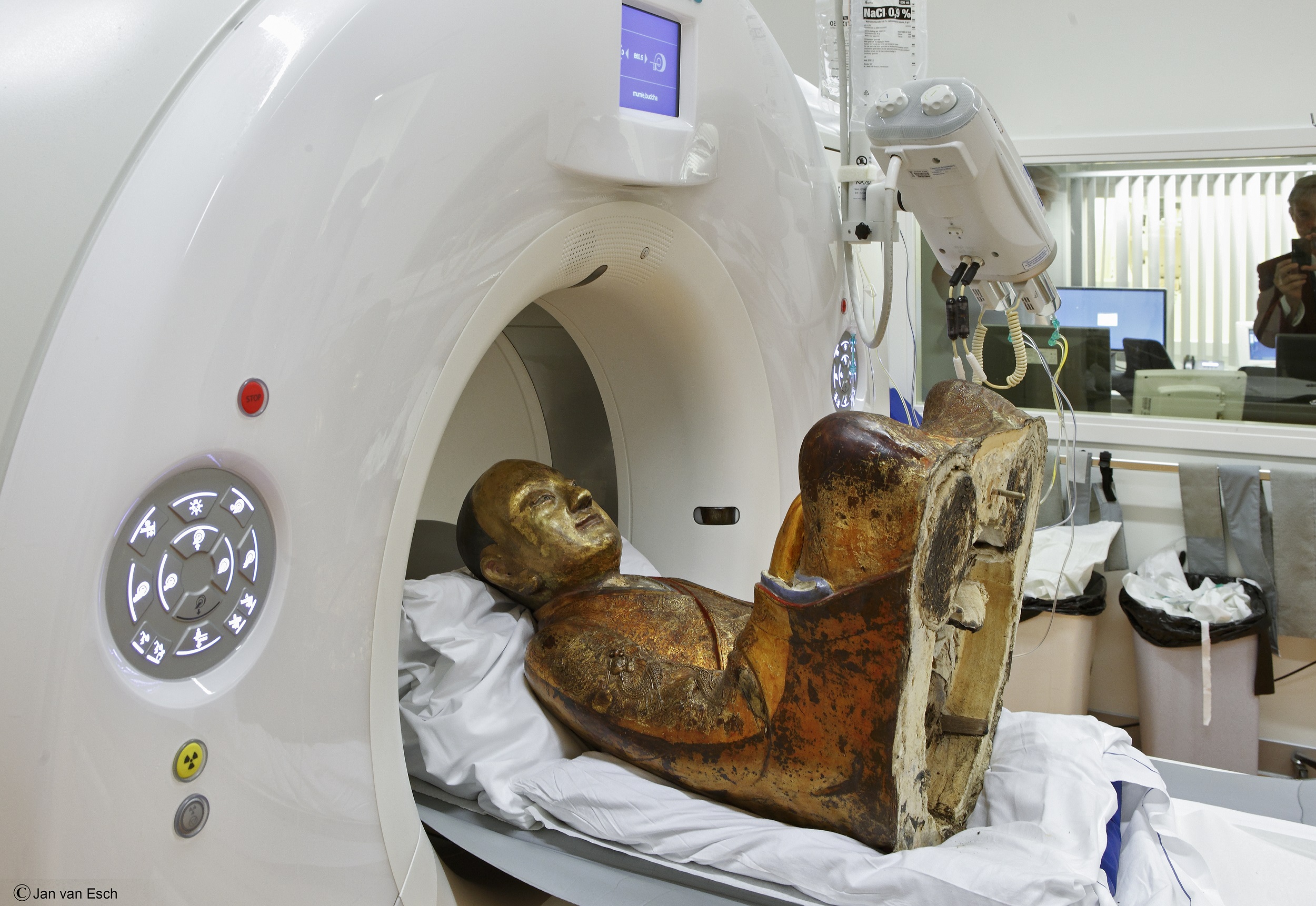
The mummified remains of a monk have been revealed inside a nearly 1,000-year old Chinese statue of a Buddha.

635603189441117628-mummy-buddha

The mummy inside the gold-painted papier-mâché statue is believed to be that of Liuquan, a Buddhist master of the Chinese Meditation School who died around the year 1100, researchers said. It’s the only Chinese Buddhist mummy to undergo scientific research in the West.

The statue was on display last year at the Drents Museum as part of an exhibit on mummies. It was an cited as an example of self-mummification, an excruciating, years-long process of meditation, starvation, dehydration and poisoning that some Buddhist monks undertook to achieve enlightenment and veneration.

When the exhibit ended in August, a CT scan at the Meander Medical Center in the Netherlands revealed the seated skeleton. Samples taken from organ cavities provided one big surprise: paper scraps printed with ancient Chinese characters indicating the high-status monk may have been worshiped as a Buddha.

A CT scan has revealed a mummified Chinese monk inside a Buddha statue. The remains date back about 1,000 years. Video provided by Newsy Newslook

The finding was first reported in December but did not get wide notice. Irish Archaeology carried a report over the weekend, which apparently started the news ball rolling.

But the revelation is not, as some reports claim, “a shocking discovery,” The History Blog notes: “It was known to be inside the statue all along … that’s why it was sent to the Drents Museum in the first place as part of the Mummies exhibition.”

The mummy’s existence was discovered in 1996 when the statue was being restored in the Netherlands, Live Science writes, explaining what was found, how its age was determined and when the first detailed skeletal imaging was performed.

DNA tests were conducted on bone samples, and the Dutch team plans to publish its finding in a forthcoming monograph.

Researchers still have not determined whether the monk mummified himself, a practice that was also widespread in Japan and that was outlawed in the 19th century. If he did, the process was gruesome, asAncient Origins explains:

For the first 1,000 days, the monks ceased all food except nuts, seeds, fruits and berries and they engaged in extensive physical activity to strip themselves of all body fat. For the next one thousand days, their diet was restricted to just bark and roots. Near the end of this period, they would drink poisonous tea made from the sap of the Urushi tree, which caused vomiting and a rapid loss of body fluids. It also acted as a preservative and killed off maggots and bacteria that would cause the body to decay after death.

In the final stage, after more than six years of torturous preparation, the monk would lock himself in a stone tomb barely larger than his body, where he would go into a state of meditation. He was seated in the lotus position, a position he would not move from until he died. A small air tube provided oxygen to the tomb. Each day, the monk rang a bell to let the outside world know he was still alive. When the bell stopped ringing, the tube was removed and the tomb sealed for the final thousand day period of the ritual.

At the end of this period, the tomb would be opened to see if the monk was successful in mummifying himself. If the body was found in a preserved state, the monk was raised to the status of Buddha, his body was removed from the tomb and he was placed in a temple where he was worshiped and revered. If the body had decomposed, the monk was resealed in his tomb and respected for his endurance, but not worshiped

If you find yourself in Budapest before May, the Buddha mummy statue is on display at the Hungarian Natural History Museum.

SOURCE::::: Michael Winter, USA TODAY …www.usatoday.com

Natarajan

Joke of the Day… ‘ If i were a Millionaire …” !!!

The teacher said; “Take a pencil and paper, and write an essay with the title ‘If I Were a Millionaire.'”

Everyone but Joe, who leaned back with arms folded, began to write feverishly.

“What’s the matter,” the teacher asked. “Why don’t you begin?”

“I’m waiting for my secretary,” Joe replied.

SOURCE::::www.joke a day.com

Natarajan