Earthquake-Resistant Houses? These Residents of Uttarakhand Had Cracked It 900 Years Ago! ….

Despite being located in an earthquake-prone region, residents of Uttarkashi do not hesitate in constructing multi-storey houses. These elaborate buildings in Rajgarhi area of Uttarkashi district of Uttarakhand are perfect examples of splendid architecture as well as earthquake-resistant engineering.

Called Koti Banal, these buildings have been named after a village in the district and have successfully survived many minor and major earthquakes in the past ten centuries.

Screen Shot 2015-11-03 at 1.42.28 pm

Screen Shot 2015-11-03 at 1.42.16 pm

Even the extremely disastrous earthquakes, in recent times the 1991 and the 1999 ones that killed thousands of people and caused immense damage to property including many concrete structures in the state, could not move these buildings. One such building in Guna has been standing tall for more than 728 years now.

Koti Banal style came into existence about 900 years ago and is hailed as one of the finest specimens of architecture as well as of earthquake-resistant design. The houses are built using locally available materials like stone-filled solid platforms and there is an extensive use of wood, which offer special advantages over other materials during earthquakes.

Screen Shot 2015-11-03 at 1.41.59 pm

The height of these houses is usually 7 to 12 metres above the base. The traditional houses usually have five storeys. Some of the key features of these houses include a simple layout of the structure; construction on an elaborate, solid and raised platform; incorporation of wooden beams all through the height of the building at regular intervals; small openings and shear walls.

Extensive use of locally available wood was made in these homes since wood is an elasto-plastic material with the ability to absorb the brunt of an earthquake.

The sole objective behind the construction of these houses was safety and not much attention was paid to the comfort of the inhabitants. This reason has led to many such dwellings being abandoned in recent times.

Screen Shot 2015-11-03 at 1.41.48 pm

People have also started destroying these structures in order to use the building material for the construction of new and modern houses. Lack of awareness is further causing the slow death of these traditional houses which represent a strong cultural heritage.

Photos and inputs from : Dr. Piyoosh Rautela and Girish Chandra Joshi. Check out their full report on these extra ordinary structures.

Watch the video that explains more about the technique – –

Featured image: www.worldfpa.org]

source….Shreya Pareek

http://www.the betterindia.com

Natarajan


Sai Bakery: A Mother’s Sweet Gift to Her Autistic Son and His Differently Abled Friends….

Visit Sai Bakery in Thiruvanmiyur, Chennai, and you will find more than just the wonderful aroma of freshly baked goods wafting out of it. You’ll sense the pride with which it is run and the confidence and self-esteem it provides to many of its employees who are adults with special needs.

Pista muffins, mango blondies, cheese wraps, and wheat bread are just some of the mouth-watering treats being produced at this neighbourhood initiative that gives adults with special needs an opportunity to harness their skills, socialise with each other and the community at large, and feel like they are productive members of society.

When we talk about people with special needs, there are many organizations that provide early intervention and cater to the needs of learning-disabled children. But what happens after these children are grown adults?

This is where Sai Bakery comes into the picture. It is not just a regular bakery but it’s a place where adults with learning disabilities can come, work, learn, and spend a respectable and productive day.

The team at SAI bakery does much more than just making amazing products.

Sai Bakery employs adults with developmental disabilities (cerebal palsy, mental retardation, autism and multiple disabilities). Each special person’s skills are assessed and the jobs distributed accordingly. Training is provided in the areas of baking and packaging and marketing.

“As a child with special needs grows, his or her family too is growing old. The parents have less stamina to take care of the growing child/adult. There are very few organisations that are working with adults with special needs,” says Sumithra Prasad, founder of Sai Bakery.

The idea about starting a bakery came from Sumithra’s son Srinivasan who has Asperger’s syndrome. After he finished Class 12, he just went to Sumithra and said, “I want to bake. I want to start a bakery. I will get my friends and we’ll do it together.”

Sumithra welcomed her son’s idea and enthusiasm to do something. She helped him get some training to learn the basics of running a bakery. And, in September 2013, Sai Bakery opened its doors.

Adults with special needs are also engaged in terrace gardening.

Sai Bakery, which works with the support of the DORAI (Development Opportunities Resources Access Insight) Foundation, not only engages adults in baking but also provides them access to various activities like music, yoga, terrace gardening, etc. The products from the bakery are also delivered to corporate events in bulk.

“We are not a regular bakery. We make products when we get orders and deliver them fresh. Our aim is not to earn profits but to empower and give a sense of respect and individuality to these adults who have been often ignored even by their own families,” says Sumithra.

Sumithra has personally witnessed the impact on some of the lives of these adults with special needs working at the bakery.

Earlier, Shameena would not even go to the toilet alone; she was always accompanied by her mother. Today, she travels all by herself from her house to the bakery everyday, an incredible and positive achievement. She has taken over the packing of pastries in their boxes.

Once a shy boy, Anand would barely speak to anyone. But today, he sings and dances with his friends from the bakery. Similarly, there is Srinivasan who has become good at mixing and blending the dough.

The bakery helps the adults spend their time in productive activities.

Though a monthly stipend is given to these adults for coming to the bakery, it is the emotional and psychological support they get that matters.

“Many times, even families don’t take these adults seriously. Someone once said about their disabled daughter, ‘What will happen even if we teach her? She is not going to work anyway.’ This attitude needs to be changed. Respect and individuality are very important,” says Sumithra.

Sumithra adds that the attitude of parents towards their own children with disabilities has been the biggest challenge she has had to overcome. Sometimes, the families are not even ready to pay for the transport of their children, even though all the other facilities at Sai Bakery are free.

The bakery has inspired four more such bakeries across India.

But thanks to Sumithra’s determination, she has been able to create ripples of change in the lives of many such adults. She has also inspired four to five similar bakery initiatives in different parts of the country.

In the future, Sumithra wants to reach out to more people who are willing to start similar initiatives and enable more people with learning disabilities to become empowered. Even if there are three people with disabilities who need help, she says, Sai Bakery will help them set up the entire system.

Here is a heart-touching video on the unique bakery produced by The Better India Talkies:

To order tasty treats from the bakery or to know more about their work, contact Sumithra Prasad at –  doraifoundation@gmail.com and check out their Facebook page.

Source…..Shreya Pareek… http://www.the betterindia.com

Natarajan


At the age of 11, this ” chota masterji” Teaches Kids from Slum…

“His clothes were tattered, and we wanted to help him with some money to buy new clothes, but he denied our charity.

“After we persisted, the boy asked us for books for his education, which we bought for him from a nearby shop. Inspired by a boy of his age, Anand’s life changed.”

Today Anand Kumar Mishra, a Class 6 student is educating and empowering hundreds of slum kids in and around Lucknow.

A story worth sharing!

At an age when most of his classmates spend their time watching cartoons, playing video games, and preparing for exams, 11-year-old Anand Krishna Mishra is busy teaching underprivileged kids.

Currently studying in Class 6 in Lucknow, this ‘chhota masterji’ has reached out to children from slums and over 125 villages around the city and organised his ‘Bal Choupals’.

His Bal Choupals started in the year 2012, when Anand had the opportunity to spend time with a few children living in a slum.

He was sharing with them all that he learnt at school.

Soon this initiative took the shape of a gathering, where he started educating these children.

Taking an hour out of his daily schedule and sharing his bit is just one side of the coin, but it was his vision and sheer consistency which has today started taking shape as a larger-than-life movement.

Today, he teaches mathematics, computers and English to these children, and has inspired over 700 children to get enrolled in schools.

In the process of teaching poor children, Anand gets the opportunity to dig deeper into their lives, and takes help from his parents to make their families aware of the need to educate their children.

Anand’s parents Anoop and Rina Mishra are both employed in the UP police and are supportive of the mission Anand has taken up.

The popularity they garnered also helped them organise sessions on environmental awareness, where people come together and organise afforestation drives.

How did it all start?

Anand Krishna Mishra

Anoop tells us, “When Anand was in class 4, we had visited Maharashtra during his holidays and saw a kid sitting in a corner and studying.

“Every time the prayers started in the temple, he ran inside and led the singing group.

“After the prayers ended, he went back to his place under the dim lights and continued with his reading.

“His clothes were tattered, and we wanted to help him with some money to buy new clothes, but he denied our charity.

“After we persisted, the boy asked us for books for his education, which we bought for him from a nearby shop. Inspired by a boy of his age, Anand’s life changed.”

After coming back from the trip, Anand’s parents took him to villages around Lucknow.

They saw many kids who are devoid of education and spending their time doing household chores or working as child labourers.

They were able to convince some kids to study with Anand.

Gradually with time, these kids started bringing their friends along. Bal Choupal was formed.

Method of teaching

Anand studies in City Montessori School in Lucknow. After coming back from his school every day, he takes some time to rest in the afternoon.

At five in the evening, he goes for his Bal Choupal.

When asked about his methods of teaching, Anand says, “I try to teach my friends in a friendly manner. Sharing interesting stories and organising games for them are some of the ways to make learning fun.

“I try to make sure that they don’t get bored. Some of these kids don’t like the way they are taught in school just because it is boring. This is also the reason some, even after being enrolled, don’t go to school regularly.”

The learning imparted by Anand in his Bal Choupal is not just restricted to books. He gives them lessons on morality too.

Anand says, “The sessions at Bal Choupal begin with singing ‘Hum Honge Kaamyaab’ (We shall overcome) and ends with singing the National Anthem. I believe that this helps my friends become aware of their social and national responsibilities and they grow up to become responsible citizens of our country.”

Plans to start a library

Anand has received many awards for the work he has been doing, including Satyapath Bal Ratan award and Seva Ratna award.

With help from local people, Anand has been trying to start local libraries at different places in and around the city.

He has been successful in starting a few libraries in nearby villages.

Anand is trying to get help from other privileged and educated children to join the cause and help the students of Bal Choupal.

Anand teaches 100 kids daily who come to his gathering from their villages and slums.

His efforts suffer during exams, but his friends pitch in for help.

Anand is proud that his friends never disappoint him and their Bal Choupal continues to grow.

This year, during Teachers Day, Anand and his parents have started a ‘Chalo Padho Abhiyan’ where they are inviting the educated members of the society to support the education of at least one child.

Along similar lines, they have also started a programme ‘Chalo Bahan, School Chalo’ (Come sister, let’s go to school) which is specifically for girls from poor families.

The programme has been launched on the event of Navratri.

This little boy smiles with confidence when he says that with small steps like these, India will soon become an educated and prosperous country.

Photographs: Bal Choupal/Facebook

Source….Sourav Roy in http://www.rediff.com

Natarajan

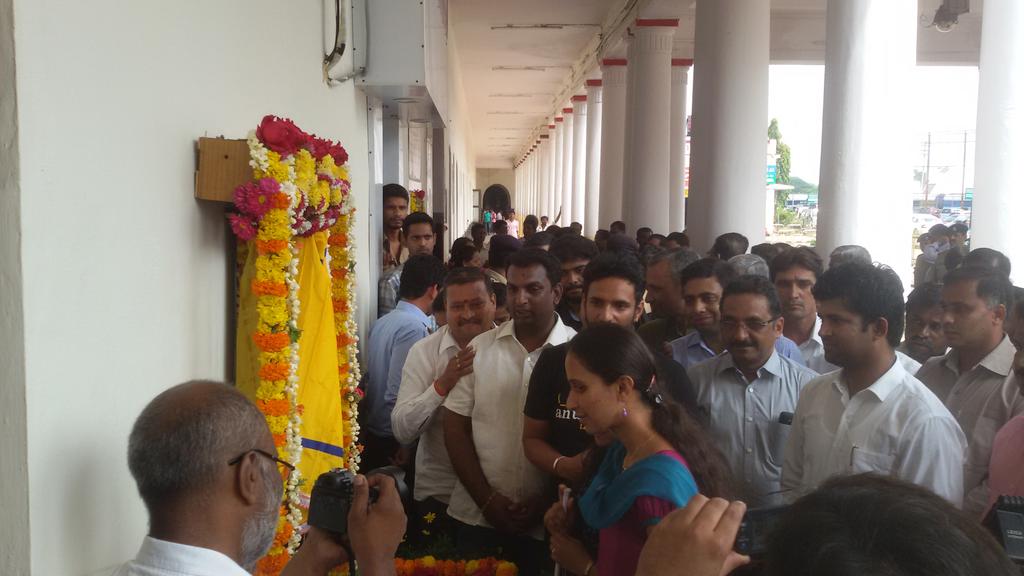
Mysore Gets India’s First Visually -Handicapped Friendly Railway Station …

Mysuru Railway Station has become the first railway station in India to be visually impaired friendly.

With the aim of helping visually impaired passengers travel independently, features like tactile maps and train schedules in Braille were unveiled at the station.

mysuru1

Source: Twitter

Anuprayaas, a non-government organization working for the welfare of visually challenged persons, along with south-western railway officials, started working on this project about a month ago. The first phase was inaugurated on November 3, and two more phases are being planned. The installations at the station include the following:

  • Tactile maps to give people an idea about the physical layout of the station. It is basically a map with raised surfaces that describes the distance and location of the entrance, platforms, counters, washrooms etc. The map informs people where they are, which side to turn and how many steps to take to reach a help desk.
  • Train itinerary sign board that provides train names their schedules in Braille. These are fixed signboards and do not provide real time information like electronic boards.
  • 400 metallic Braille signs have been installed at about ten places on each platform. Placed along the railing of the staircase leading to various platforms, they provide directions and platform information.
  • Restaurants, canteens and food plazas in the railways station will not have Braille menu cards too.

27-year-old Pancham Cajla is the founder of Anuprayaas, and he started working on this project along with five of his friends. Mysuru MP, Pratap Simha, inaugurated the facility.

“As a part of the railway department, I went to organizations and met blind people. We asked them about what they would expect from a blind-friendly railway station,” Arun Kumar Singh, Telecom engineer with the South-Western Railways who helped in the execution of the project, told The News Minute.

During the testing period, the NGO brought many visually impaired people to check the features. Until people became aware of this facility, volunteers from the NGO will help the passengers. Anuprayaas is planning to go digital, improve the tactile maps, and introduce more disabled friendly battery cars in the second phase.

Embedded image permalink

Sowmya visually challenged girl inaugurating tactile map of mysuru station with all utilities & train time table

https://twitter.com/DrmMys

Source…. Tanaya Singh ….www.the better india .com

Natarajan

This Kerala Man Built an Aircraft. He Now Wants a Job….

This Kerala Man Built an Aircraft. He Now Wants a Job

Saji Thomas has studied only till class 7 and has always been hooked on to electrical gadgets and their repairs

THIRUVANANTHAPURAM:  After five years of painstaking efforts, Saji Thomas has built a small aircraft – all on his own – but now this 45-year-old from Kerala, who is speech and hearing challenged, yearns for a full-time job.

His wife Maria said that they have been married for 14 years and since then, all that she saw was her husband busy tinkering with small motors and machines she didn’t have a clue about.

“Initially I tried my best to dissuade him to get work as an electrician, but when I found all my efforts were in vain, I decided to support him in all his endeavours. Today the entire village (near Thodupuzha in Idukki district) is steadfastly behind him as he built a twin-seater ultralight aircraft, which has been filmed by the Discovery Channel,” Maria told IANS.

Mr Saji has studied only till class 7 and has always been hooked on to electrical gadgets and their repairs.

“The first thing he built was the frame of an helicopter. He got in touch with (former prime minister) Rajiv Gandhi, seeking money to buy an engine for it. It did not materialise because Rajiv Gandhi was assassinated (In May 1991). Then his interest shifted to building an aircraft and after five years of hard work, he fitted the small aircraft with the engine of a two-wheeler. Later it was given to a college nearby and they still use it to teach their students,” the proud wife said.

She said he then began work on this now successful two-seater and sourced all the materials from Bangalore.

“After a marathon five years of work, last year in April, it was taken to a private airline academy in Ambasamudram near Madurai. Since this aircraft has no licence nor does Saji have a licence to fly aircraft, he could fly it for a few minutes there. Later the chief instructor, a retired air force officer, also flew it for a few minutes. The aircraft flew only at a height of 20 feet as the rules are very strict,” added Maria.

Today the couple, who has a 13-year-old son Joshua, is still hoping for the government support.

“We see the present programme of Discovery Channel which has filmed his efforts as an eye-opener and it is expected to be aired soon. Our only wish is my husband gets a stable monthly job as by now he has sold a portion of our land to complete this aircraft. We live in a small two-room home built with the help of the local village council in 2001,” Maria said.

In all, Saji has spent Rs.25 lakh for his expensive hobby in the past more than 15 years.

Source….www.ndtv.com
Natarajan

Potholes Could Soon Be a Thing of the Past….Thanks to Thermocol….!!!

Potholes on the streets of almost all cities in India don’t just make our rides uncomfortable, but also cause fatal accidents. According to the Road Accident Report (2014) published by the Road Transport and Highways Ministry, 6,672 people lost their lives due to potholes and badly designed speed breakers last year.

However, if the ministry goes ahead with its latest proposal of using thermocol fill in place of soil as the base for construction, pothole complaints can soon be resolved.

Photo Credit: Flickr

In a meeting headed by Union Minister Nitin Gadkari last month, the ministry asked some consultancy firms to submit cost analysis report of the use of Geofoam for construction on highways, in comparison with the conventional soil fills. An expert committee was constituted earlier this year to recommend new materials for construction of highways.

Geofoam is primarily used to provide lightweight void fill on highways, during road constructions, for building embankments, parking lots constructions, etc. It is basically expanded polystyrene (EPS) or extruded polystyrene (XPS) manufactured into large lightweight blocks. Polystyrene is one of the most widely used plastics around the world. And EPS is a rigid closed-cell foam structure made of pre-expanded polystyrene beads. It is widely used for manufacturing daily utility goods like plates, boxes, bowls, packaging material, etc. XPS also consists of closed cells, and it provides higher stiffness to materials it is used in, like craft and architectural models.

Countries like Europe, Japan, and the US have been using Geofoam for road construction. In India, the Border Road Organization has been using it for constructing roads on difficult terrains. Geofoam requires less manpower as it is all about lifting the sheets and placing them at the required spot. It is approximately 1% the weight of soil and less than 10% the weight of other lightweight fill alternatives. Because of being so light, Geofoam also reduces the weight applied on the underlying soil or solid structure. It can also be easily cut and shaped as per the requirement giving engineers the freedom to be more specific about the design. Additionally, it is very durable and does not break down. So the material does not spread to the surrounding soil thereby keeping a check on pollution.

Keeping these advantages in mind, the ministry has issued an order that project reports for all future road construction projects should consider alternative design combinations. With the use of thermocol, a brand of Geofoam, the cost of road repairs can be reduced by 30 percent, and the time required can also be significantly decreased.


“The best part is that Geofoam is 100 times lighter than the soil and does not expand or contract with changing temperatures like extreme winter or heat. It does not get washed away by floods or landslides. We are using large amounts of healthy soil for road construction, which could be avoided if we use Geofoam,” a senior ministry official told The Indian Express. –

Source…….Tanaya Singh…www.the betterindia.com

natarajan

Once a Fruit Vendor, This 63-Year-Old Will Now Travel Across India in His Self-Designed Solar Car…….

I have no special talents. I am only passionately curious.” – Albert Einstein.

63-year-old Syed Sajjad Ahmed is a perfect example of how passion can drive people to do things that might be difficult to achieve. At an age when many would hesitate before trying something new, this enthusiastic man has started a journey across India to spread the message of a pollution free country. And he is doing this on a solar powered car that has been designed by him.

About 15 years ago, Syed came to Bengaluru from Kolar and started working as a fruit vendor. He then opened a small shop where he used to repair televisions and radio sets. He had a passion for innovation that slowly developed and he started making television antennas on his own. He even designed a two-wheeler for people with disabilities.

In 2004, Syed decided to take his ideas to the next level, and designed a solar-powered car.

Screen Shot 2015-11-02 at 12.49.36 pm

Photo: spinningthegreenwheel.wordpress.com

Now, with his solar car, this innovator has kick-started a campaign against pollution and corruption in India. He started on a journey from Raj Bhavan in Bengaluru on Nov. 1, 2015, and will cover a distance of 1,740 kilometres to reach the Rashtrapati Bhavan in Delhi. On his special car, which runs at a speed of 100 kms per hour, he will drive through Hindupur, Ananthpur, Kurnool, Mahaboobnagar, Hyderabad, Bhopal, Itarsi, Jhansi and Agra. His plan is to reach Delhi in a month and to participate in the India International Science Fair in the first week of December.

Syed says that he has dedicated this trip to Late APJ Abdul Kalam who has been his inspiration to make his dream a reality.

A school dropout, Syed spends one fourth of his earnings to design energy sufficient devices and another 25 percent on social service. Earlier, he had spent about four years and Rs. 10 lakh to develop electric two-wheelers and three- wheelers for differently-abled people, before making this solar-powered four-wheeler worth Rs. 50,000.

Back in 2012, Syed had travelled 1,000 kms in South India to spread awareness about a corruption-free India. “I want to further modify this car, refine and improvise it before I set out on my longest journey to cover more miles,” he had said at that time.

Source…..Shreya Pareek….www.the betterindia.com

Natarajan


“ஒரு சாப்பாட்டு ராமனுக்கு உபதேசம்” ….

periyava_vikatan_cover_73.jpg
(மோர் நிலையை அடைந்த பிறகு அதிலிருந்து எதையும் எடுக்கவும் முடியாது-கலக்கவும் முடியாது.அதுவே முடிவான நிலை.வெள்ளையாக இருக்கும்.சத்துவ மயமான பரமாத்மாவைக் கலந்த பிறகு மேலே தொடர எதுவுமில்லை.)

கட்டுரையாளர்-கணேச சர்மா

தட்டச்சு-வரகூரான் நாராயணன்.

ஃபேஸ்புக் மலரும் நினைவுகள் 29-10-2012

“எல்லோரும் ‘ஈகோ’வுடன் பிறக்கிறார்கள்.அதுதான் ஆரம்பம் அதையே முதலில் சாப்பிடும் ‘தானோடு’சேர்ந்த குழம்பு காட்டுகிறது.பலவிதமாகக் குழம்புவதால் பிடிக்காமல் போகும் வாழ்க்கையே மனசு தெளிந்து விட்டால்,பிடித்துப் போகிறது. ரசமாகி இருக்கிறது. அதனால் பிறக்கும் ஆனந்தம்-இனிமை இவைதான் பாயசம்,பட்சணம். இனிமையையே அனுபவித்துக் கொண்டிருந்தால் திகட்டிவிடுமே! அதற்கு மேல் போய் பிரும்மானந்தத்துடன் லயிக்க வேண்டாமா?

அதுதான் ‘மோர்’ அந்த நிலை சாஸ்வதமானது.

பாலை எடுத்துக் கொண்டால் அதிலிருந்து தயிர்,வெண்ணெய், நெய் என்று ஏதாவது மாறுதல் வந்து கொண்டே இருக்கிறது.

ஆனால், மோர் நிலையை அடைந்த பிறகு அதிலிருந்து எதையும் எடுக்கவும் முடியாது-கலக்கவும் முடியாது.அதுவே முடிவான நிலை.வெள்ளையாக இருக்கும்.சத்துவ மயமான பரமாத்மாவைக் கலந்த பிறகுமேலே தொடர எதுவுமில்லை.

மோர் சாதம் முடிந்த பின் இலையை எடுத்துவிட்டு எழுந்திருக்க வேண்டியதுதான்!”

இப்படியாக மிகப் பெரிய விஷயத்தை ஒரு சாப்பாட்டு ராமனுக்கு மிக எளிமையாக உபதேசித்துவிடுகிறார் மகா பெரியவர்.

Read more: http://periva.proboards.com/thread/10459#ixzz3qBb7H9Lc

Source…..www.periva.proboards.com

natarajan

One Doctor’s Fight Against a System Where Cancer Patients Die for Lack of Money …

“Aai, I will become a doctor when I grow up and cure people without money,” promised 8-year-old Swapnil Mane to his mother, as he helplessly watched his poor neighbour die of cancer. Twenty years later, this oncosurgeon and his wife have helped thousands of cancer sufferers in 52 villages in Maharashtra and have operated on 550 patients for free.

Twenty years ago, an 8-year-old boy tugged at his mother:

“Aai (Mother), I want to help Godse Kaka!”

“But how can we help Swapnil? Baba (Father) does not earn so much that we can help him monetarily, or else we would have.”

“But Aai…Why don’t the doctors help him and cure him?”

“Doctors cure only those who have money, Swapnil.”

The last line uttered by Swapnil Mane’s mother gave him his mission in life.

Dr. Mane Medical Foundation and Research Centre, Rahuri, Ahmednagar, Maharashtra

Dr. Mane Medical Foundation and Research Centre, Rahuri, Ahmednagar, Maharashtra

He was watching Godse Kaka die every day. He was watching Godse Kaku cry every day. Godse Kaka was Swapnil’s neighbour. He was a daily-wage worker at a farm. He earned about Rs. 50 to Rs. 60 per day. And now, not even that, due to his disease.

Aai, I will become a doctor when I grow up and cure people without money too!” Swapnil promised his mother.

Swapnil eventually came to know that Godse Kaka was suffering from lung cancer, and just because he did not have Rs. 50, 000, he had to die. So now, Swapnil was determined to become a cancer specialist and fight against cancer.

According to data from the National Cancer Registry Programme of the Indian Council of Medical Research (ICMR), the estimated mortality rate due to cancer saw an increase of approximately 6 percent between 2012 and 2014. There were close to 5 lakh deaths due to cancer in the country in 2014. Every year, 50,000 women die due to cervical cancer. Every day, 1300 people die due to cancer in India.

On May 1, 2011, Dr. Swapnil Mane (MBBS, MD, DGO, FCPS, MD—Oncosurgeon) started the journey towards fulfilling his dream of making cancer treatment affordable and even free if necessary for the needy in India. He inaugurated the Dr. Mane Medical Foundation and Research Centre, a national, social, secular NGO which stands committed to cancer control, at village Rahuri, district Ahmednagar, Maharashtra. The Foundation is one of the few medical foundations in India, which has been recognized by the Scientific and Industrial Research Organization (SIRO), Department of Science and Technology.

Doctor Mane, along with his team of 13 doctors and 6 paramedical staff, has so far conducted free cancer check-ups and medicine distribution camps in 52 villages of Maharashtra, under a community-based cancer project. –

Dr. Swapnil Mane with his team. (From left to right: Dr. Pramod Nishigandha, Dr. Yele, Dr. Anant Shekokar, Dr. Bharat Temak, Dr. Swapnil Mane, Dr. Mahesh Kadam, Mr. Yogesh Sajgure)

Dr. Swapnil Mane with his team. (From left to right: Dr. Pramod Nishigandha, Dr. Yele, Dr. Anant Shekokar, Dr. Bharat Temak, Dr. Swapnil Mane, Dr. Mahesh Kadam, Mr. Yogesh Sajgure)

The Foundation adopted two remote villages, Mhaisgaon and Taharabad, for this community-based cervical cancer project, and made them free of cervical cancer in just two years. The team has operated on 550 patients free of cost and has undertaken 106 cancer awareness sessions.

“Prevention is an essential part of our mission. Through public education, clinical preventive services and research, we strive to reduce the incidence of cancer and serve people who may never be our patients,” says Dr. Mane

However, all that glitters today was not gold always. Not being financially very sound, Dr. Swapnil Mane joined the Tata Memorial Hospital at Mumbai (the same place from where he had graduated), as a fellow in gynaecological oncology. He started his career with a vision to just cure the patients without looking at their financial status. But, one day, Dr. Swapnil met a patient in the lobby of the hospital. He looked pale and worried. When Dr. Swapnil asked him the reason for his sadness, he said that he was a cancer patient and only had money to come to Mumbai. Now he did not know how he would be able to pay the hospital bills and go back to his village.

“I gave the patient some money and also found an NGO to sponsor his fees. Once his treatment was done I gave him money to go back home. He was happy; however this was the moment when I decided to practice in a village rather than in a metropolis like Mumbai,” recalls Dr. Mane.

He was pained to see patients who came from villages sleeping on the footpaths of Mumbai just because they did not have money to rent a place in the city till their treatment was done. –

dr. Mane2

He then started his research and found out that his own town, Rahuri, had no tertiary health centre available in and around 50 km. He was shocked to know that the doctor ratio in this area is 1:50,00 (the national average doctor-population ratio is 1:1,700). Also, there was no medical institution or health centre that had a diagnostic facility for cervical cancer, in spite of the fact that one in every 100 women in the area was affected by cervical cancer.

The main occupation of people in Rahuri tehsil is farming. Most of the population is landless and survives on daily wages by working on the farms. They generally live hand to mouth. Treating one of the family members for cancer or even going for an early diagnosis is, financially, next to impossible for them.

After his initial research, Dr. Mane decided to start practising in Rahuri, and that too at half the cost compared to other doctors. As a result, patients started flooding into Dr. Mane’s clinic. This became, however, a matter of worry for other doctors at Rahuri. The doctors association there generated a notice against Dr. Mane to stop his charitable work. But, in spite of all the objections, Dr. Mane was determined to help the people in this area. His wife, Dr. Sonali Mane, stood steadily by his side in this difficult time and they both continued to diagnose and treat patients, taking negligible fees. Slowly, even the few doctors who were opposing the couple, joined them instead. These doctors then started their project in a rented building, and thus the Dr. Mane Medical Foundation and Research Centre was formed.

I was not sure, when I got married to him, if what my husband was doing was right. But his dedication and selfless work were a motivation for me to join him in this noble journey. I still remember one of our cancer detection camps at Wambori. A lady was trying to come forward for a check-up. But she was stinking so badly that people did not let her come near the camp. When we came to know about her, we checked her immediately and found out that there was pus secretion from her vagina that had been going on for months. The pus had a pungent smell and she was in deep pain. Due to financial constraints, she never went to a doctor for all these years. We operated her on a priority basis and removed her uterus, which was affected by fourth stage cancer. She visits us regularly now and keeps thanking us on each visit. These thank yous cannot match any amount of money in the world,” says Dr. Sonali Mane.

The Dr. Mane Medical Foundation and Research Centre is constantly researching and innovating to help cancer patients (Read more about their research here).

On extreme left, Dr. Sonali Mane and on extreme right, Dr. Swapnil Mane with a patient’s family

On extreme left, Dr. Sonali Mane and on extreme right, Dr. Swapnil Mane with a patient’s family

Novel instrument belt to lift patient from operation table to shifting trolley CBR No17524 dated 22/11/2013 (One of the patents filed by Dr. Mane)

Novel instrument belt to lift patient from operation table to shifting trolley CBR No17524 dated 22/11/2013 (One of the patents filed by Dr. Mane) –

However, carrying on all this work in a rented place was difficult and hence, on August 8, 2015, the Dr. Mane Medical Foundation and Research Centre started its own charitable hospital called Saidham.

Through their research, Dr. Mane’s team also recognized that there are some remedies that can help reduce the pain of cancer patients without any side effects. In this regard, they worked with one of the trustees of the foundation, Mr. Shishir Mandya, who has done extensive research on mucco-polysaccharides present in aloe vera and is a business development professional with 40 years of experience in Ayurveda.

He helps patients with aloe vera treatment. He also accompanies the team in the camps and spreads awareness about the importance of aloe vera in cancer treatment.

Mr. Shishir Mandya, delivering a lecture on the role of aloe vera in cancer management, at Larsen & Toubro Infotech, Ahmednagar.

Mr. Shishir Mandya, delivering a lecture on the role of aloe vera in cancer management, at Larsen & Toubro Infotech, Ahmednagar. –

“There is clear scientific evidence that, in vitro, aloe vera will suppress cancer tumour growth, stimulate immune system response, raise tumour necrosis levels, and promote healthy tissue growth. Studies have been published on this subject. For the past thirty years, researchers have known that there is significant evidence that aloe vera is highly effective in fighting cancer. Some experts have used aloe vera in the treatment of benign and malignant tumours also,” says Shishir Mandya.

The next big challenge in the case of cancer patients is ‘depression and negativity’. Cancer and cancer treatment can impact patient’s physical abilities, posture, balance, speech, and/or bodily and reproductive functions. It can be difficult to adjust to changes in the way one’s body looks, feels, and performs. Hence, it becomes essential to help the patients maintain their mental and emotional well-being too.

Mr. Ashish Kalawar, another trustee of the Dr. Mane Medical Foundation and Research Centre, who is an electronics engineer and meditation trainer, takes care of this aspect of the treatment.

Mr. Ashish Kalawar taking a meditation session with the cancer patients in a village.

“As human beings, we are a mixture of physical body and subtle (aura) body. Subtle body is the energy field in terms of thoughts. More negative thoughts deposit negative energy from the subtle body to the physical body. In meditation, we clear our subtle body, that is, we clear our negativity by taking cosmic energy. This aura protects our physical body from every disease. Meditate and get rid of every problem,” suggests Ashish Kalawar.

According to the World Health Organization, cervical cancer is one of the most common cancers among women worldwide. However, early detection, appropriate intervention, and adequate follow-up treatment make cervical cancer one of the most preventable diseases. Therefore, Dr. Mane Medical Foundation and Research Centre’s main objective is early detection and prevention of this disease, which is done through a unique holistic program that includes diagnosis, yoga and Ayurveda.

A 15-year-old unmarried girl, Sonali Kolpe from Kolpewadi village (25 km from Rahuri), came with an enlarged abdomen to Dr. Mane’s OPD. She seemed to be 8 months pregnant. Dr. Mane examined her and found that she had ovarian tumour. He was really angry at the father and asked him for the reason for this delay in her treatment. The father told him that he could not afford the cost of operation. He had been going to various hospitals in Pune and Ahmednagar district for the past four months. Every hospital demanded Rs. 50,000 to Rs. 1 lakh to treat her.

“I was shocked to hear this. I investigated her and carried out the operation free of cost. It was a 5 kg ovarian tumour. Malignancy of ovary was found on pathological examination. I fail to understand how doctors can be so blind towards the pain of a patient? After all, we are not money making machines, we are not trained to earn money; we doctors are trained to treat a wound,” says Dr. Mane

His hospital, Saidham, will be the leading regional cancer centre and will provide world-class research in prevention, detection and treatment of cancer patients in rural India.

Mrs. Baby Salve thanking Dr. Mane and staff after her free treatment


“We need your support to conduct free medical camps in rural areas and mobilize poor and needy patients for free surgeries at Saidham hospital; to increase the use of health services by hard-to-reach populations in those communities; to reduce the number of women who, after learning about their abnormal Papanicolaou test (PAP) results, do not return for follow up; to increase sensitivity toward the problem of cancer and to encourage participation in project Saidham. We appeal to likeminded people to join us in this noble cause with a positive and humanitarian outlook toward a ‘Cancer Free India Mission.’”

To know more about the Dr. Mane Medical Foundation and Research Centre, or to donate for the charitable hospital, Saidham, you can visit here.

Source…..Manabi Katoch ….www.the betterindia.com

Natarajan


The world’s most polluted city is a ‘toxic pollutant punchbowl with myriad ingredients’….Delhi…

Delhi is the world’s most polluted city because it is a “toxic pollutant punchbowl” with a wide variety of factors giving it its notorious title, a study has found.

By assessing the megacity’s landscape, weather, growing population and energy consumption, scientists were able to work out how and why Delhi is so polluted.

The team, from the University of Surrey, found a combination of factors combined to cause elevated levels of air pollutants – leading to the death of thousands of people every year.

New delhi

A man carries goods in New Delhi, India.

Study author Prashant Kumar said: “Whilst it might be easy to blame this on increased use of vehicles, industrial production or a growing population, the truth is that Delhi is a toxic pollutant punchbowl with myriad ingredients, all which need addressing in the round.”

“Air pollution has been placed in the top ten health risks faced by human beings globally. Delhi has the dubious accolade of being regularly cited as the most polluted city in the world, with air pollution causing thousands of excess deaths in a year in this growing megacity.”

In the study, which has been accepted for publication in the journal Atmospheric Environment, the researchers note that Delhi has a population of around 25.8 million – a figure that is continuing to grow. Energy consumption in the city rose by 57% between 2001 and 2011.

Vendors selling drinks stand beside vehicles near the India Gate war memorial on a smoggy day in New Delhi February 1, 2013. REUTERS/Adnan Abidi

Vendors selling drinks stand beside vehicles near the India Gate war memorial on a smoggy day in New Delhi


The growing population is expected to bring with it an increase in road vehicles – experts are predicting it will rise from 4.7 million seen in 2010 to 26 million in the next 15 years.

But it is not just cars that is causing the rise. Chennai has 10-times more cars, but pollution rates are 10-times lower. Other factors at play cause the extreme pollution, the authors say.

Because the city is landlocked, there are few ways to get rid of polluted air. For example, coastal cities like Mumbai are refreshed by sea breezes. But Delhi’s surrounding industrial regions are often more polluted by the city itself.

Its densely packed architecture, varying building heights and weather conditions also affect its ability to get fresh air – decreasing temperatures draws outside polluted air into the city, while hot windy and dusty summer conditions worsen the problem. Add to this the use of low-quality fuels like raw wood, diesel generators and cow dung, air pollution becomes inevitable.

“The picture of Delhi’s pollution problem is complicated and is aggravated by some factors that are out of human control,” Kumar said. “However, in this growing city it is important that the population is protected in whatever ways they can be from health-endangering pollutants.”

He said putting artificial or natural grass on unpaved roadsides might help to limit the course of dust particles during windy seasons, while investment in wetlands and trees would also go some way to limiting pollution.

Indian prime minister Narendra Modi has made a number of commitments to tackle air pollution in the country. In April he launched the country’s first air quality index and environment minister Prakash Javadekar said the move “may prove to be a major impetus to improving air quality in urban areas, as it will improve public awareness in cities to take steps for air pollution mitigation”.

Kumar said the cultural context is vital to reduce air pollution: “Even the best science and technology will not succeed in reducing emissions and improving air quality if it is not considered in a broader framework of economic development of the country, rising awareness of public health risks and a change in attitudes and regulation towards poor quality fuels.

It is a complicated, pick-and-mix of problems that will prove difficult to combat without innovative, encompassing and quick action.”

Read the original article on IB Times UK. Copyright 2015. Follow IB Times UK on Twitter.

Source…..