” You Think Our City Roads are More Congested ? … Watch this Video clip !!!”


Both Europe 24 and North Atlantic Skies were designed to give an overview of the daily complexity and volumes of air traffic across the UK and Europe and to do so in a way that was cinematic and exciting to watch. I think we were able to do that to great effect, but we now want to take you a little deeper.

We are therefore very excited to publish UK 24 – your guided tour to some of what makes UK aviation work.

Our airspace is busy, complex and there is a lot going on. Each year we manage around 2.2 million movements, peaking at over 8,000 a day (although there are around 7,000 on this particular day), with only 5.5 seconds delay per flight attributable to NATS. Obviously there are the flows of large aircraft from the airports into and out of the UK, but there is also a lot of activity outside controlled airspace. UK 24 is designed to help visualise the breadth and depth of UK aviation and why airspace is such an important asset.

The day starts with the bow wave of transatlantic traffic heading towards the UK on their organised and separated tracks. This is quickly joined by traffic from Europe and the first waves of departures from UK airports. Over a short period of time the traffic levels grow to show the main trunk roads of airspace as well as the hubs around London, Manchester and central Scotland.

We then move to give a unique view of the holding stacks over London and how they are a fundamental part of the Heathrow operation, providing the constant flow of traffic that makes it the world’s busiest dual runway airport with 1,350 movements a day.

Our tour then take us around the UK, including the other major airports, our two control centres in Swanwick and Prestwick, some general aviation traffic and examples of military training off the east coast of England and near to North Wales. We then dwell on the spider’s web of helicopter tracks that originate from Aberdeen, taking people and vital supplies to and from the North Sea oil and gas rigs.

We hope you enjoy this insight into the complexity and beauty of a day of UK air traffic and the value of airspace as the invisible infrastructure that makes it all work.

Value of aviation to the UK economy

The aviation sector and its supply chain generates over £20bn per year in economic output and directly employs circa 220,000 people. At Heathrow alone, goods worth £133 billion were shipped in and out last year, more than the combined value of goods transiting through the UK’s two largest ports, Felixstowe and Southampton.

Aviation is on average a much more productive sector than the rest of the economy; each pound spent on upgrading our aviation infrastructure is expected to generate over £5 in return. In addition aviation is a significant growth sector within key regions for UK trade, for example China, the Middle East and Turkey have ambitious plans to more than double their capacity.

Without additional capacity in the UK, we risk the rapid growth in traffic and its associated commerce being focused elsewhere.

SOURCE:::: Brendan Kelly in http://www.nats.aero.blog

Natarajan Continue reading

Flying Mega -Yacht …. Nicest Plane Ever !!!

(Photo: Greenpoint)(Photo: Greenpoint)

TSA guards with cold hands who insist on patting you down. Babies who spend the entire flight screaming in a piercing five-octave range. Flight delays so long you actually could have saved time walking.

All of those indignities we would happily bear, if only we could take all of our flights on this plane.

A ridiculously tricked-out Boeing 747-8, whose interior was refurbished by Washington-based Greenpoint Technologies, has just been delivered to an unidentified private owner. According to the Robb Report, it’s the first Boeing 747-8 (which is Boeing’s largest passenger jet) to receive Greenpoint’s VIP treatment.  And it is stunningly luxurious.


While Greenpoint hasn’t released many details about what Luxury Launches calls a “flying mega-yacht,” its website is full of digital art that give a hint as to what you’ll find aboard. It includes:

A conference room from which you and your enforcers can plot world domination:

(Photo: Greenpoint)(Photo: Greenpoint)

A luxurious office from which you can call everyone you’ve ever known and brag about your new plane:

(Photo: Greenpoint)(Photo: Greenpoint)

A master bedroom so large that allows you to scoff at the lie-flat first class seats in which “the paupers” are forced to recline:

(Photo: Greenpoint)(Photo: Greenpoint)

A pair of airy and spacious lounge areas in which to sit down with a drink and contemplate how awesome your life is that you can fly on a plane like this:

(Photo: Greenpoint)(Photo: Greenpoint)

How much does a flying palace like this cost? No one’s saying. But the Boeing 747-8, the world’s largest passenger jet, goes for about $350 million and the price tag for this VIP customization has been ball-parked at an additional $250 million

But if you have the means, this is just the plane to make you love flying again — where the worst part of the flight would be having to land.

SOURCE:::::  www.in.news.yahoo.com

Natarajan

3 Indian Airports Among the World’s Best….

Three airports from India have bagged the Airports Council International’s Airport Service Quality Awards.

Photograph, courtesy: Ramesh NG/Wikimedia Commons

The Indira Gandhi International Airport has been ranked as the best airport in the world in the 25-40 million passengers per annum category.

The survey rates each airport’s performance in 34 key service areas under eight major categories including access, check-in, security, airport facilities, food and beverage providers.

Seoul’s Incheon airport is ranked as the world’s best airport in the above 40 million passengers’ category.

Two Indian airports won the award in the 25-40 million passengers’ category, while one bagged the third place in the 5-15 million category…

Take a look at the world’s best airports…

Photograph, courtesy: Krokodyl/ Wikimedia Commons

Indira Gandhi International Airport, New Delhi

Rank: 1

Indira Gandhi International Airport is the busiest airport in India.

The airport is managed by Delhi International Airport Limited (DIAL), a joint venture between the AAI and GMR Group-led consortium.

“The journey was never easy especially after holding the No 2 mark for last three years. We can now justifiably claim to be the world’s best,” Prabhakara Rao, chief executive, DIAL said in a statement.

With the new Terminal 3, the Delhi international airport has become South Asia’s largest aviation hub.

Photograph, courtesy: Kaichinshih/Wikimedia Commons

Taipei Taoyuan, Taiwan

Rank: 2

One of five airports in the country, Taipei Taoyuan is the largest airport in Taiwan.

Last year also, it bagged the world’s second best airport award from ACI.

“Airports are more than simply points of departure and arrival. At the end of the day, good business acumen comes down to a simple equation: better service, improved traffic and a healthier bottom line,” said Angela Gittens, Director General, ACI World.

Photograph, courtesy: Chongqing Jiangbei International Airport

Chongqing Jiangbei International Airport, China

Rank: 3

One of the busiest airports in the world, Chongqing Jiangbei International Airport has been regularly winning award for its best services.

Photograph, courtesy: Baycrest/ Wikimedia Commons

Shanghai Hongqiao International Airport, China

Rank: 4 

Shanghai Hongqiao International Airport is a hub for China Eastern Airlines, Shanghai Airlines, Juneyao Airlines and Spring Airlines.

It is one of the busiest airports in China.

Photograph: Rajesh Karkera/Rediff.com

Chhatrapati Shivaji International Airport, Mumbai

Rank: 5

It is the second busiest airport in India, after Delhi airport.

The airport has five operating terminals spread over an operational area of 8 square kilometers.

A world class terminal T2 was recently opened last year for international operations at the Mumbai airport.

The airport is run by Mumbai International Airport Limited (MIAL), a joint venture between the AAI and GVK group-led consortium.

Rajiv Gandhi International Airport, Hyderabad

The Rajiv Gandhi International Airport (RGIA) in Hyderabad has bagged the third position in the 5-15 million passengers per annum category.

The Hyderabad airport was ranked as the best airport in 2009 and 2010, third-best in 2011, and second-best in 2012.

Natarajan


Rahul Bhatia…A down-to-earth- Airline Success Story…

Over the past decade and a half, India has seen the business community grow at a rapid pace. Fronting this growth have been a few names who have left an indelible mark on the way we do business in this country. These are people who have shaped the Indian economy. These are people who have changed our lives. These are the Indian Business Icons. 

Rahul BhatiaRahul Bhatia

These are not salad days for the Indian airline industry. With aviation fuel prices soaring, and the rupee dropping, airlines have been seeing a drastic reversal of all the gains made in the growth in city-to-city air travel in the past decade. While the most dramatic casualty was Kingfisher Airlines, SpiceJet and Jet, long industry leaders, are facing losses and decreasing market shares. Emerging as the winner in the airline sweepstakes is IndiGo, founded in 2006 and now the fastest-growing, biggest airline in the country. It has been an eventful journey of rapid growth, overtaking established players and cornering what, in 2014, amounted to a 36.1% market share.

SOURCE:::: http://www.infinance.yahoo.com

Natarajan

All you need to know about World Cup 2015…

Factbox on the 11th edition of the cricket World Cup, which will be co-hosted by Australia and New Zealand from Feb. 14-March 29.

KEY FACTS

The coveted trophy.The coveted trophy.* The first men’s cricket World Cup was held in England in 1975, four years after the first recognised one-day international had been played in 1971, on the fifth day of a washed out test between Australia and England in Melbourne.

* West Indies won the first two tournaments, beating Australia in 1975 and England in 1979 and then lost the 1983 final to India, but have not reached another final since.

* Allan Border’s Australia won the first of their four titles in 1987, sparking a period of dominance by the side in both one-day and test cricket for the next 20 years.

* India also won the 2011 tournament. Pakistan (1992) and Sri Lanka (1996) are the only other winners.

* New Zealand and Australia will host 21 pool matches each, amongst 14 venues, seven in each country. It is the second time the two countries have co-hosted the tournament, having previously done so in 1992.

* Afghanistan will make their World Cup debut, having played three World Twenty20 tournaments.

* There are two groups of seven teams playing a round robin format, with the top four in each pool making the quarter-finals, which will be straight knockouts.

* New Zealand will host one quarter-final in Wellington and one semi-final in Auckland.

* They can possibly reach the final in Melbourne without having played any of their games in Australia. The two co-hosts are in the same pool and play that match on Feb. 28 in Auckland.

* The final will be at the Melbourne Cricket Ground, only the second venue after Lord’s in London, to host more than one final.

RECORDS

* India’s Sachin Tendulkar is the leading run scorer with 2,278 runs in 45 matches and has scored the most centuries (six). He also holds the record for most runs in one tournament, 673 from 11 matches in 2003.

* Australia’s Glenn McGrath has the most wickets, 71 in 39 matches. McGrath also has the best bowling figures of 7-15 against Namibia in 2003.

* South Africa’s Gary Kirsten has the highest score in a World Cup match, making 188 not out against UAE in 1996.

* The highest score in a World Cup match is 413-5 by India against Bermuda in 2007, while the lowest is 36 by Canada against Sri Lanka in 2003.

* Australian wicketkeeper Adam Gilchrist has the most dismissals, 52 from 31 matches (45 catches, seven stumpings), though he could be overtaken by Sri Lanka’s Kumar Sangakkara (46) in this tournament.

* Australia’s Ricky Ponting has taken 28 catches, the most by a non-wicketkeeper.

(Compiled by Greg Stutchbury; Editing by Sudipto Ganguly)

SOURCE:::: www. cricket.yahoo.com

Natarajan


Dubai Airport…Busiest in the World…

Dubai Airport The Emirates Terminal at Dubai International Airport.

In 2014, Dubai International took the crown of “World’s Busiest Airport” from London Heathrow International.

More than 70.4 million international passengers moved through the Dubai’s ornate concourses, terminals, and duty-free shops in 2014, up 6.1% from 2013.

Dubai’s numbers were boosted by rapid expansion and a convenient international location.

Also helping the airport’s numbers was Emirates — the world’s busiest airline by international volume — and its fleet of Airbus A380 superjumbo jets, based in Dubai.

Heathrow moved a record-setting 68.1 million international passengers for the year, but clearly couldn’t keep up with Dubai’s growth.

Officials at Heathrow blamed a stalled plan for a third runway for the title loss, according to a spokesman.

Dubai is set to open another concourse this year — and is forecasting 79 million international visitors. Dubai Airports also said it’s planning to build a $US32-billion new airport in the country within 8 years. It will have capacity for 240 million passengers, according to the Wall Street Journal.

And it will need it to match up with Emirate’s growth projections!

Check out pictures of Dubai’s beautiful airport, below.

Dubai airport Duty-free shops in Dubai International Airport.

Dubai Airport A palm-tree lined waiting room in Dubai International Airport.

Dubai Aiport A beautiful concourse at Dubai International Airport.

SOURCE::::: http://www.businessinsider.com.au

Natarajan


” Brown Paper Bag ” Building @ Sydney…. !!!

A front view of the Chau Chak Wing Business School in Sydney

The Frank Gehry-designed Chau Chak Wing building is home to the UTS Business School.


Sydney has joined the list of cities with a Frank Gehry-designed building.

The Chau Chak Wing Business School building has been dubbed the “brown paper bag” by local media.

Speaking at Monday’s opening, Mr Gehry said he hoped the building would generated a “spirit of invention” in those who work and study in it.

The A$180m ($140m; £93m) building for the University of Technology, Sydney (UTS), is named after businessman and philanthropist Dr Chau Chak Wing.

It is the architect’s first design to be built in Australia.

Mr Gehry said he had designed a “flexible” building with only a few fixed parts, allowing the building to be changed over time to meet the changing needs of its users.

“People will invent ways to use it,” he said

Gehry said that five years after its conception, there were perhaps some things he would change but he was pleased with the finished result.

“I am Jewish and I feel guilty about everything,” he joked.

The building – tucked between several small streets in the inner city suburb of Ultimo in Sydney – is a key part of the university’s campus master plan. It will house 1,630 students and staff for the UTS Business School.


The Chau Chak Wing building

The Chau Chak Wing building’s facade curves and folds like fabric.


The Chau Chak Wing building

Undulating brickwork and large glass panels have created a “curtain wall”.
A staircase inside the Chau Chak Wing building
The building makes prominent use of stairways, including a polished stainless steel staircase rising up from the main lobby..
The interior of the Chau Chak Wing building
Two oval classrooms have been constructed around 150 large laminated timber beams, each weighing up to two tonnes.
 Natarajan
Feb 2 2015


” Apple iPhone’s Big Bite out of Android Smartphones…” !!!

The holidays weren’t so jolly for Android smartphones, after all.

Lollipop is just one version of Google’s Android mobile operating system.Google


Shipments of Android-running smartphones fell in the last three months of 2014 as consumers bought Apple’s iPhone 6 and iPhone 6 Plus in record-shattering numbers. This marks the first decline in Android smartphones during the all-important holiday quarter compared to the previous three months, according to industry tracker ABI Research.

The holiday quarter was the first full quarter of availability for Apple’s latest smartphones, which went on sale in late September.

Those surging iPhone shipments also pulled Apple even with Samsung, the leader among Android phone makers, in the global market for smartphones. Each company accounted for 20 percent of the market during the holiday quarter, according to Strategy Analytics.

Most smartphones shipped today run some version or another of Google’s Android mobile operating system. Shipments of Android-based smartphones actually exceeded 1 billion units in 2014, according to researcher Strategy Analytics, a testament to the number of devices and device makers that use the mobile OS. But that was for the entire year.

In the fourth quarter, Apple shipped 74.5 million iPhones, a 90 percent increase from the previous quarter, while shipments of Android-based phones slid 5 percent, to 205.56 million units. Android’s falling numbers were also affected by so-called forked Android, meaning the variations that device makers make to the operating system. In September, Google launched its Android One initiative as a way to bring affordable smartphones to emerging markets and create a consistent Android experience.

“Google’s Android is being attacked by Apple’s iOS at the high end and forked Android … at the low end in high growth emerging markets,” ABI researcher Nick Spencer said in a statement.

The shifting dynamics in the market represent “worrying times for Google’s mobile services and Android, but it presents opportunity for other service providers and even operating systems,” Spencer said.

Smartphones running Microsoft’s Windows Phone mobile operating system rose 19 percent from the third quarter to the holiday quarter of 2014, to 10.7 million units, according to ABI. Shipments for smartphones running “other” operating systems plummeted 26 percent, compared with the previous three months.

SOURCE:::: Rochelle Garner in http://www.cnet.com

Natarajan

Feb 2 2015

JAN 30… 1826… Day on which Construction of This Suspension Bridge was Completed…

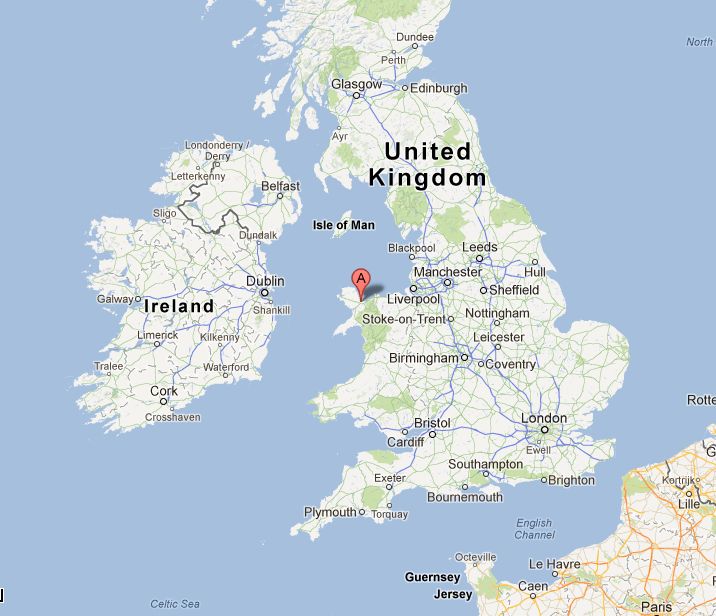
January 30, 1826. Workers completed construction of the first modern suspension bridge on this date. It was the Menai Bridge between Wales on the island of Great Britain and the smaller island of Anglesey, to the west. According to local reports about the bridge from nearly 200 years ago, travel in the strait between Wales and Anglesey was hazardous, due to shifting currents and unpredictable weather patterns. But the island of Anglesey had the Atlantic Ocean and Irish Sea to its west, and, especially after Ireland joined the United Kingdom in 1800, people increasingly wanted to use Anglesey as a jumping off point to reach the Emerald Isle by ferry boat.

A Scottish civil engineer, architect and stonemason named Thomas Telford designed the Menai Bridge. It’s a suspension bridge, with its deck (load-bearing portion) hung below suspension cables on vertical suspenders. Examples of this type of bridge were built in 15th century Tibet and Bhutan, but the Menai Bridge was heralded as the first modernsuspension bridge in the world.

The Menai Bridge reportedly stands 100 feet (about 30 meters) above the waters. It’s tall enough to allow sailing ships to pass underneath. It spans 579 feet (about 175 meters) from the Wales coast to the coast of Anglesey, and it’s supported by 16 large chains.

The chains has been changed out over the years to allow heavier truck traffic to pass through.

The Menai Bridge is still in use today.

Bottom line: On January 30, 1826, workers completed the Menai Bridge between Wales and Anglesey, the first modern suspension bridge in the world.

SOURCE::::  www.earthskynews.org

Natarajan