Japan’s Atlantis? The unsolved underwater mystery….

The Yonaguna monument. Picture: Robert Schoch

WHEN scuba diving instructor Kihachiro Aratake plunged into the water off the coast of the Japanese island of Yonaguni in 1986, he discovered an incredible sight.

Six metres below the surface lay a series of monoliths that he described as appearing to be “terraced into the side of a mountain”. The huge rectangular formations had strikingly perfect 90 degree angles, including straight walls, steps and columns.

Over the following years experts descended upon the site in a bid to determine whether the structure was natural or man-made. Yet to this day, it remains a great unsolved mystery.

Initially it was proposed that the Yonaguni Monument was built when the area was above sea level some 10,000 years ago. So could ‘Japan’s Atlantis’ be a remnant of a preglacial civilisation that was eventually inundated?

Or could it be the result of an earthquake, putting it at 2000-3000 years old? Experts disagree.

As the structure was mapped out over the following years, more details came to light. Divers found what appeared to be a huge arch, as well as temples, carvings, paved streets and a large pyramid-like structure measuring 76 metres long at its base.

Masaaki Kimura, a marine geologist at the University of the Ryukyus in Japan who has dived at the site more than 100 times over the past 20 years to measure its formations, is convinced they are the remains of a city that sunk due to seismic events.

He has identified 10 structures off Yonaguni and a further five related structures off the main island of Okinawa, with the ruins spanning an area of 300 metres x 150 metres.

“I think it’s very difficult to explain away their origin as being purely natural, because of the vast amount of evidence of man’s influence on the structures,” he said.

The monoliths. Picture: Robert Schoch

The monoliths. Picture: Robert SchochSource:

“The largest structure looks like a complicated, monolithic, stepped pyramid that rises from a depth of 25 meters.

“The characters and animal monuments in the water, which I have been able to partially recover in my laboratory, suggest the culture comes from the Asian continent. One example I have described as an underwater sphinx resembles a Chinese or ancient Okinawan king.”

Other evidence that experts believe confirms it’s man-made include two round holes and a row of straight, smaller holes, which are interpreted as an attempt to split off a section of the rock.

However, the Morien Institute, an archaeological non-profit research group, conducted an expedition there in 1997 led by Dr Robert M. Schoch, a professor of science and mathematics from Boston University.

Dr Schoch, who has also conducted field research at sites in Pakistan, Egypt and the Canadian High Arctic, argues that it’s primarily a natural rock formation.

“I’m not convinced that any of the major features or structures are man-made steps or terraces, but that they’re all natural,” he wrote in his book Voices of the Rocks.

“It’s basic geology and classic stratigraphy for sandstones, which tend to break along planes and give you these very straight edges, particularly in an area with lots of faults and tectonic activity.

‘The Turtle’ formation at Yonagumi. Picture: Masahiro Kaji, Wikicommons
‘The Turtle’ formation at Yonagumi. Picture: Masahiro Kaji, WikicommonsSource:

“…The structure is, as far as I could determine, composed entirely of solid ‘living’ bedrock. No part of the monument is constructed of separate blocks of rock that have been placed into position.

“This is an important point, for carved and arranged rock blocks would definitively indicate a man-made origin for the structure — yet I could find no such evidence.”

He said it was possible that humans had since made modifications to the formations.

“We should also consider the possibility that the Yonaguni Monument is fundamentally a natural structure that was used, enhanced, and modified by humans in ancient times.”

Patrick D. Nunn, Professor of Oceanic Geoscience at the University of the South Pacific, has studied these structures extensively and also believed they were natural, saying: “There seems no reason to suppose that they are artificial.”

This was backed up by archeologist Richard J. Pearson, who argued that while stone tools and small camps were found at Yonaguni possibly from the 2500 BCE, they were small communities who were “not likely to have had extra energy for building stone monuments”.

Will we ever know for sure?

Source….www.news.com.au

Natarajan

In Pictures….Hiroshima on 6 Aug 1945…

Hiroshima mushroom cloud after the first atomic bomb was dropped by a US Air Force B-29

The first atomic bomb was dropped by a United States aircraft on the Japanese city of Hiroshima on 6 August 1945.

Photo from the US Army Signal Corps showing the devastation left after the first atomic bomb was dropped on Hiroshima. No precise date given for the photo which was taken some time not long after the explosion.

US President Harry S Truman, who announced the news from the cruiser USS Augusta in the mid-Atlantic, said the device was more than 2,000 times more powerful than the largest conventional bomb previously used.

The atomic bombing of Hiroshima - Aerial view after the bomb

The Hiroshima bomb, known as “Little Boy”, contained the equivalent of between 12 and 15,000 tons of TNT and devastated an area of 13 square kilometres (five square miles).

The Boeing B-29 Superfortress Enola Gay landing on the Marianas Island after the atomic bombing mission on Hiroshima, Japan.

The bomb was dropped at 0815 local time from an American B-29 Superfortress, known as Enola Gay, seen here returning to the Marianas Island.

Firestorms after the explosion of the atom bomb in August 1945, Hiroshima, Japan

The plane’s crew say they saw a column of smoke rising and intense fires springing up.

Devastation at Hiroshima, after the atomic bomb was dropped. The building on the right was preserved as the Hiroshima Peace Memorial, Atomic Bomb Dome or Genbaku Dome, 1 September 1945.

More than 60% of the buildings in the city were destroyed.

The patient's skin is burned in a pattern corresponding to the dark portions of a kimono worn at the time of the explosion

No-one is sure how many died on that first day. Estimates start at 70,000 but later estimates suggest the final toll was far higher, about 140,000, of Hiroshima’s 350,000 population. This person’s skin was burned in a pattern corresponding to the dark portions of a kimono worn at the time of the explosion.

Hiroshima bombing - The landscape after the bombing

The US President said the atomic bomb heralded the “harnessing of the basic power of the universe”. It also marked a victory over the Germans in the race to be first to develop a weapon using atomic energy.

The Roman Catholic Church of Urakami standing over the burn-razed cityscape of Nagasaki, southern Japan, after the second atomic bomb ever used in warfare was dropped by the US over the Japanese industrial centre.

Another atomic bomb dropped three days later over the Japanese city of Nagasaki killed at least 74,000 people by the end of year.

A Photograph of a Soldier at Hiroshima after the Blast in Japan, August 1945.

The bombings brought about an abrupt end to the war in Asia – but critics said Japan had already been on the brink of surrender. The two atomic bombs, with the Soviet declaration of war against Japan on 8 August 1945, finally left the Japanese no choice. Japan surrendered to the Allies on 14 August 1945.

Source….www.bbc.com

Natarajan

Advice From 104 Years Old Doctor ….” Energy Comes From Feeling Good, Not from Eating Well…”

Advice From a 104 year  Old Doctor….!!!

Dr. Shigeaki Hinohara, Japan,
As a 97 year old Doctor, he was interviewed, and gave his advice for a long and healthy life… Born in 1911 he is now 104 years old …
 
Shigeaki Hinohara is one of the world’s longest-serving physicians and educators. Hinohara’s magic touch is legendary: Since 1941 he has been healing patients at St. Luke’s International Hospital in Tokyo and teaching at St. Luke’s College of Nursing.
He has published around 15 books since his 75th birthday, including one “Living Long, Living Good” that has sold more than 1.2 million copies. As the founder of the New Elderly Movement, Hinohara encourages others to live a long and happy life, a quest in which no role model is better than the doctor himself.
Doctor Shigeaki Hinohara’s main points for a long and happy life: 
* Energy comes from feeling good, not from eating well or sleeping a lot.We all remember how as children, when we were having fun, we often forgot to eat or sleep. I believe that we can keep that attitude as adults, too. It’s best not to tire the body with too many rules such as lunchtime and bedtime.
All people who live long regardless of nationality, race or gender share one thing in common:None are overweight. For breakfast I drink coffee, a glass of milk and some orange juice with a tablespoon of olive oil in it. Olive oil is great for the arteries and keeps my skin healthy. Lunch is milk and a few cookies, or nothing when I am too busy to eat. I never get hungry because I focus on my work. Dinner is veggies, a bit of fish and rice, and, twice a week, 100 grams of lean meat.
Always plan ahead. My schedule book is already full until 2014, with lectures and my usual hospital work.
There is no need to ever retire, but if one must, it should be a lot later than 65. The current retirement age was set at 65 half a century ago, when the average life-expectancy in Japan was 68 years and only 125 Japanese were over 100 years old. Today, Japanese women live to be around 86 and men 80, and we have 36,000 centenarians in our country. In 20 years we will have about 50,000 people over the age of 100…
Share what you know. I give 150 lectures a year, some for 100 elementary-school children, others for 4,500 business people. I usually speak for 60 to 90 minutes, standing, to stay strong.
When a doctor recommends you take a test or have some surgery, ask whether the doctor would suggest that his or her spouse or children go through such a procedure. Contrary to popular belief, doctors can’t cure everyone. So why cause unnecessary pain with surgery I think music and animal therapy can help more than most doctors imagine.
To stay healthy, always take the stairs and carry your own stuff. I take two stairs at a time, to get my muscles moving.
My inspiration is Robert Browning’s poem “Abt Vogler.” My father used to read it to me. It encourages us to make big art, not small scribbles. It says to try to draw a circle so huge that there is no way we can finish it while we are alive. All we see is an arch; the rest is beyond our vision but it is there in the distance.
Pain is mysterious, and having fun is the best way to forget it. If a child has a toothache, and you start playing a game together, he or she immediately forgets the pain. Hospitals must cater to the basic need of patients: We all want to have fun. At St. Luke’s we have music and animal therapies, and art classes.
* Don’t be crazy about amassing material things. Remember: You don’t know when your number is up, and you can’t take it with you to the next place.
Hospitals must be designed and prepared for major disasters, and they must accept every patient who appears at their doors. We designed St. Luke’s so we can operate anywhere: in the basement, in the corridors, in the chapel. Most people thought I was crazy to prepare for a catastrophe, but on March 20, 1995, I was unfortunately proven right when members of the Aum Shinrikyu religious cult launched a terrorist attack in the Tokyo subway. We accepted 740 victims and in two hours figured out that it was sarin gas that had hit them. Sadly we lost one person, but we saved 739 lives.
Science alone can’t cure or help people. Science lumps us all together, but illness is individual. Each person is unique, and diseases are connected to their hearts. To know the illness and help people, we need liberal and visual arts, not just medical ones.
Life is filled with incidents. On March 31, 1970, when I was 59 years old, I boarded the Yodogo, a flight from Tokyo to Fukuoka. It was a beautiful sunny morning, and as Mount Fuji came into sight, the plane was hijacked by the Japanese Communist League-Red Army Faction. I spent the next four days handcuffed to my seat in 40-degree heat. As a doctor, I looked at it all as an experiment and was amazed at how the body slowed down in a crisis.
Find a role model and aim to achieve even more than they could ever do. My father went to the United States in 1900 to study at Duke University in North Carolina. He was a pioneer and one of my heroes. Later I found a few more life guides, and when I am stuck, I ask myself how they would deal with the problem.
It’s wonderful to live long. Until one is 60 years old, it is easy to work for one’s family and to achieve one’s goals. But in our later years, we should strive to contribute to society. Since the age of 65, I have worked as a volunteer. I still put in 18 hours seven days a week and love every minute of it.
Source….www.ba-bamail.com
Natarajan

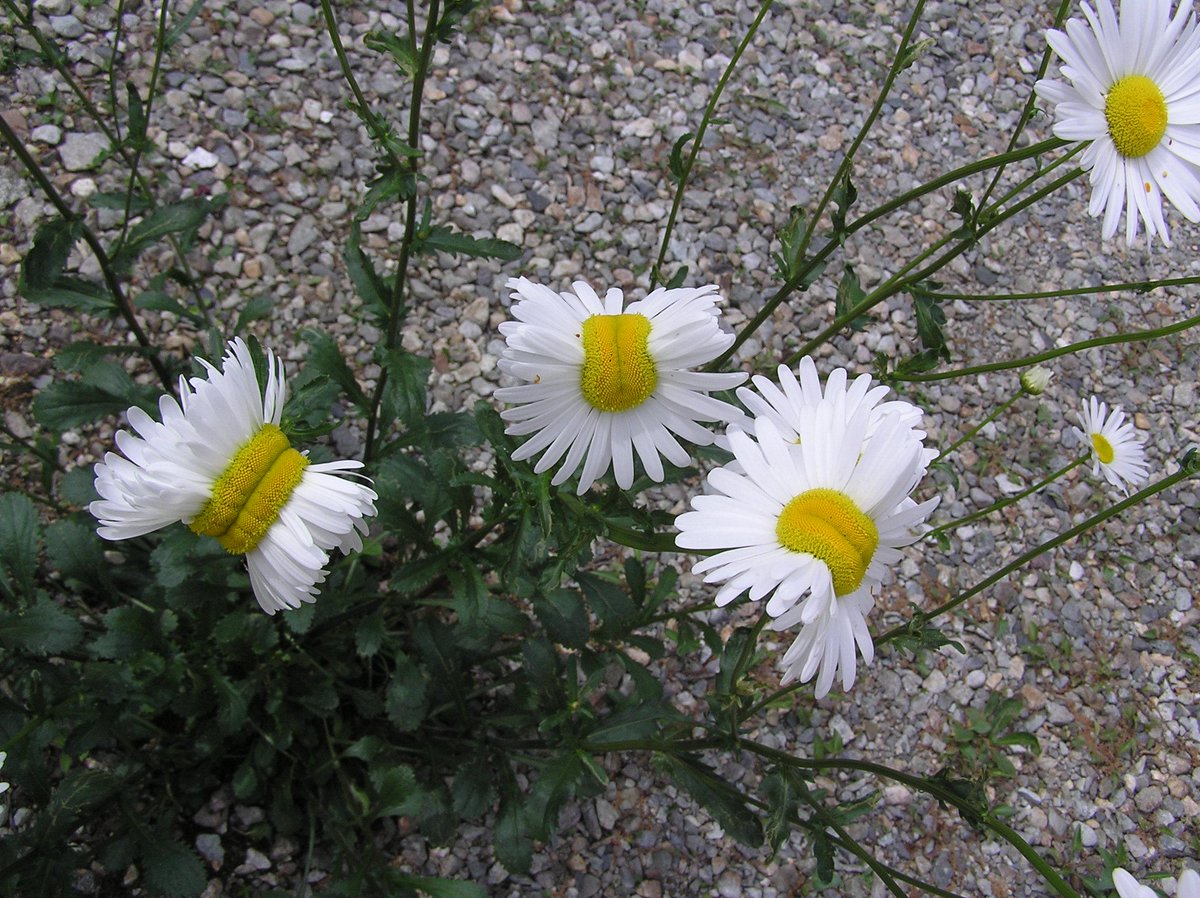
These deformed Daisies from Fukushima are blowing up the Internet….

A small patch of deformed daisies near the 2011 Fukushima disaster site have attracted global intrigue, after Japanese Twitter user @san_kaido posted a photo of the plant mutation in May

Embedded image permalink

The discovery of the freaky-looking flowers comes four years after the Fukushima Daichii Nuclear Power Plant meltdown in 2011. The plant went into a meltdown after a magnitude-9 earthquake shook northeastern Japan, unleashing a savage tsunami.

The daisies aren’t the first thing in Japan which people think may have been affected by the nuclear power plant’s failure. Mutant rabbits and twisted vegetables have all had their moment in the social media spotlight.

What has been confirmed, in July 2013, was that about 300 tons of radioactive water continues to leak from the plant every day into the Pacific Ocean. Read more about the serious biological effects on the ecosystem here.

Read the original article on Business Insider Australia. Copyright 2015.

Source::::www.businessinsider.com

Natarajan

“Bonsai”…The Story Behind this Name !!!

Bonsai!

Long before the bonsai art form of creating miniature trees came to Japan, the wealthy in China were perfecting their craft known as “penzai” and “penjing.” The former means “tray plant” and the latter “tray scenery.” It is from the Japanese pronunciation of “penzai” that the word “bonzai” ultimately derives- “bon” meaning “tray-like” and “sai” meaning “planting.”  (The Japanese equivalent of penjing is bonkei, meaning “tray landscape.”)

In the earliest form of penjing, first emerging as a developed art form around 600-700 AD in China, people would collect native trees and grow them in small containers as a part of elaborate miniaturized landscapes. Those tiny landscapes were often given as gifts among China’s elite.

While Buddhist monks and delegations sent from Japan to China had been bringing back to Japan miniaturized crafted landscapes as souvenirs starting not that long after the art of penjing had been established in China, it wasn’t until the Kamakura period in Japan (1192-1333 AD) that the Japanese seem to have adopted this craft. The catalyst for this widespread adoption was the introduction of Zen Buddhism to Japan. Around the same time in Japan, penjing was distilled down to single, miniature trees, rather than miniature landscapes being the focus, with famed Zen master Kokan Shiren being particularly influential in the spread of Zen Buddhism and defining bonsai as an art form.

Besides not strictly being “invented” in Japan, another common misconception about bonsai trees is that they are genetically dwarfed. Instead, they are regular tree and shrub species, traditionally pine, maples, and azaleas, which are manipulated using pruning techniques, including extensive root pruning, to dwarf and shape the plants.

While there are many different styles of bonsai, keeping everything balanced is key for whatever type and shape of bonsai tree that is grown, hence Mr. Miyagi’s lessons to Daniel-san about balance in The Karate Kid:

Miyagi: Go, find balance.
Miyagi: Bansai, Daniel-san.
Daniel: Hey, bansai!
Miyagi: Bansai!

For instance, if a leaf or a branch is disproportionately large given the size of the tree, throwing the whole thing out of balance, it should be removed.  One should also hide any signs of pruning, so that the resulting tree looks just like it was naturally grown that way and a perfect, to scale, miniature of what the full size version of the tree would look like if it had the same shape.

Once Japan adopted the craft from China, it began to spread among all classes of Japanese society. According to bonsai historian Robert Baran, by the late 18th century a show for “traditional pine dwarf potted trees” was held annually in Kyoto where, ”Connoisseurs from five provinces and the neighboring areas would bring one or two plants each to the show in order to submit them to the visitors for ranking or judging.”

After Japan ended its over two centuries of isolation in the 19th century, the bonsai tree would be popularized outside of the country at fairs and expos around the world, including the Paris Expositions (1878, 1889) and the St. Louis World’s Fair (1904).

WWII proved both a blessing and a curse to the growth of the bonsai art form.  On the major downside, many growers did not continue in this line of work after the war and numerous extremely old bonsai trees were destroyed. Some effort was given to preserving them, however, such as workers at the Tokyo Imperial Palace continually pouring water over and ultimately rescuing some of the remarkable Imperial Collection as the Palace was burning around them after the allied bombing of Tokyo on May 25, 1945.

On the positive side, at least in terms of helping to continue the popularization of the bonsai tree outside of Japan, many Allied troops occupying Japan admired the art form and even took classes in it, bringing it back with them to their respective homes.

More recently, the art form has been popularized in cinema with, of course, The Karate Kid leading the way.

oldest-bonsai-treeToday, there is a World Bonsai convention that takes place every four years to showcase the best bonsai masters and their work internationally. Washington D.C. also houses the National Bonsai & Penjing Museumdedicated to the miniaturized trees and landscapes.  And if you visit the Tokyo Imperial Palace and tour their bonsai collection, you can spy some of the finest specimens in the world, including one of the oldest known bonsai trees, the Third Shogun (pictured right), which is a five-needle pine that has been steadfastly maintained for an astounding five and a half centuries.

Source….www.today i foundout.com

Natarajan

” Octopus Opens Jar From Inside …”!!! Watch this Video Clip …


In this video from Japan’s Enoshima Aquarium, an octopus unscrews the lid of a jar … from the inside. Afterwards, the octopus stays in the jar, and who can blame him (her)?

The folks at Enoshima Aquarium in Fujisawa, Japan have some other wonderful videos, by the way, including these transparent eel larvae. To see more, visit the websiteTheKidShouldSeeThis.com, and search for the words “Enoshima Aquarium.”

Octopuses are very intelligent, amazing creatures.

Source….www.earthsky.org and http://www.youtube.com

Natarajan


” The War and Beyond… Aviation History Month …. November ” ….

Aviation History Month is still underway, and this week we’re looking at airlines from 1940 – 1960. Despite World War II ongoing during the first quarter of the period, aviation still saw a great deal of progression and many new airlines commenced operation.

The War and Beyond - Aviation History Month

July 1940 saw the first operational flight of the Boeing Stratoliner which became the first aircraft to fly with a pressurised cabin. The aircraft flew up to 20,000 feet avoiding turbulence, from Miami, Florida to Latin America.

The Gloster ‘Whittle’ E28/39 first flew on May 15 1941 as the first successful jet aircraft, with the engine designed by Frank Whittle.

April 1947 saw United Airlines introducing the Douglas DC-6 aircraft, the first commercial postwar aircraft to feature full-cabin pressurisation.

In March 1949, Luck Lady II made the first non-stop flight around the world. The Boeing B-50A was in the air for 94 hours and one minute, was refuelled four times by strategically positioned B-29s before touching down.

But to continue our theme, Routesonline have taken a look at some of the airlines that began operation between the periods of 1940 – 1960.

SAS Scandinavian Airlines

Scandinavian Airlines System, as it was originally named, was founded in 1946 and is now the flag carrier of Denmark, Norway and Sweden. It was created after three airlines from Sweden, Denmark and Norway formed a partnership to handle the intercontinental air traffic. By the end of 1947, Scandinavian Airlines had carried more than 18,000 passengers over the Atlantic. This figure was far beyond the 3675 passengers SAS had forecasted for the time.

SAS Saab 90A-2 Scandia, Arne Viking SE-BSK, ready for takeoff [Image by SAS]

Japan Airlines

The national flag carrier commenced operations in 1951, and in the October of the same year launched the first private domestic airline service in Japan during the postwar period with Northwest Airlines in charge of flight operations. The Martin 202 “Mokusei” was the first aircraft to enter service, but in 1952, it crashed on Mt. Mihara in Izu Oshima, killing all 37 passengers on board.

Japan Airlines launches a Boeing 747 jumbo jet (1970) [Image by The Guardian]

Lufthansa

Although the airline originally traces its history to 1926 as the airline ‘Deutsche Luft Hansa A.G’, it was suspended in 1945 following the defeat of Germany in WWII. In order to create a new national airline, a company called Aktiengesellschaft für Luftverkehrsbedarf (Luftag) founded a new airline in 1953, using many of the staff that worked at the defunct national flag carrier. On 6 August 1954, Luftag acquired the name and logo from the liquidated Deutsche Lufthansa.

The flagship of the Lufthansa fleet: the Lockheed L-1049 Super Constellation. Their characteristic vertical stabilizers made these aircraft unmistakable. [Image by Lufthansa]

Austrian Airlines

When Austria regained sovereignty over its airspace in 1955 with the signature of the State Treaty, two separate carriers were founded, Air Austria and Austrian Airways. On 4 April 1957, the two companies finally merged to form a single airline, Austrian Airlines.The airline began operations in 1958 with its first service from Vienna – London with one of four chartered Vickers Viscount 779 aircraft.

Austrian Airlines Douglas DC9-MD81 [Image by Austrian Airlines]

You can follow the hashtag #AviationHistoryMonth on Twitter to see what else is going on in the world of aviation history, and follow us at @Routesonline

SOURCE::::

Poppy Marello, IN http://www.routesonline.com
Natarajan