” How to Take Astrophotos with Your Smartphone …” ?

Got a smartphone and a telescope?

It’s a sight now common at many star parties. Frequently, you see folks roaming through the darkness, illuminated smartphone aimed skyward. Certainly, the wealth of free planetarium apps has done lots to kindle a renewed interest in the night sky.

Inevitably, after peering through the eyepiece of a telescope, the question then arises:

“Can I get a picture of that with my phone?”

The short answer is yes, with a little skill and patience.

Now simply aiming a camera at the eyepiece of a telescope — known as afocal astrophotography — and shooting without removing the camera lens and physically coupling it to the telescope is a tricky balancing act. Back in the olden days, the Moon and perhaps the brighter planets were the only bright target within bounds of afocal film photographers, and only then after a lengthy set of estimations to hit the correct focal length.

The advent of digital cameras and ‘live preview’ means that you can now simply aim, shoot, and throw away or delete anything off center or out of focus. Digital “film” is cheap, and most folks simply use trial and error to get the ‘keepers’. The Moon is an especially bright and easy target for beginners to practice on.

moon with iphone

Of course, your typical smartphone, like a webcam, has an imaging chip much smaller than a DSLR. This is why astrophotographers are often tempted to take out a second mortgage (“we don’t really need that second car, do we?” is a common spousal refrain) in pursuit of excellence. Another drawback is that through a smartphone, a planet may look like an overexposed blob.

A simple but effective way to get around this is to affix a light reducing filter to the eyepiece. In fact, I’ve used a variable polarizer during live broadcasts of the Virtual Star Party to great effect. And as with webcam imaging, smartphone astrophotographers now often use automated stacking programs to clean up images and tease out detail. Being an old timer, my faves are still K3CCD Tools and Registax, though many young guns out there now use DeepSkyStacker as well.
telescope

Now, I’ll admit, I’m an “Android guy,” and I have put most of my efforts over the years into planetary imaging with a homemade webcam. We therefore sought out in-the-field expertise from someone on the forefront of iPhone astrophotography.

Andrew Symes has been taking images of the solar system and beyond with his iPhone coupled to his Celestron NexStar 8″ SE telescope for years. He also has one of the few handles on Twitter that we’re envious of, @FailedProtostar. He also ventures out into the chilly nights frequent to his native of Ottawa, Canada to practice his craft, as he observes in temperatures that would drop a Tauntaun.

We caught up with Andrew recently to ask him about some tips of the trade.

sun iphone

Universe Today: I know from doing webcam photography that acquiring, centering and focusing are often more than half the battle. Any tips for accomplishing these?

Andrew: Acquiring, centering, and focusing the objects I’m photographing is definitely the big challenge! To speed and simplify the process, I have a dedicated eyepiece that I use in association with my phone and adapter. Before even heading outside, I attach the adapter to this eyepiece, insert my phone, and hold the unit up to a light source to see if the camera lens is properly aligned with the eyepiece.

It usually takes a bit of fiddling to get things set properly because if the adapter and eyepiece are not perfectly aligned, nothing will show up on the camera screen. It’s better to get that process out of the way in a lit environment than outside in the dark.

I then set that unit aside, and use a separate “adapter-less” zoom eyepiece to locate and center the object in the telescope. Once I’ve acquired the object and am successfully tracking it, I remove my zoom eyepiece and drop in the eyepiece/adapter/phone combo. At that point, the object is usually visible on screen but out of focus since the focus required for the iPhone is different from what works for my eyes!

To ensure proper focus, I display the object on my phone’s screen using a live video app called FiLMiC Pro and adjust the focus until it is sharp. I use that app because it has a digital zoom function that lets me get a closer look at the object than the standard iPhone video camera view. Only once I’m confident that I’ve achieved good focus and am tracking the object properly, will I start to record video or shoot individual frames.

Universe Today: A question I always like to ask everyone… what was your biggest mistake? Are there any pitfalls to avoid?

Andrew: There are a few pitfalls to avoid when doing iPhone astrophotography. In the past, I would attach the adapter outside while the eyepiece was in the telescope but this caused a number of problems. Often, I would accidentally bump the object out of view while attaching and adjusting the adapter and have to align everything all over again.

The weather is also often cold here, and it’s VERY difficult to attach the adapter properly with gloves on, so I would either get really cold hands or spend a lot of unnecessary time fumbling with the adapter with gloved hands. For those reasons, I now prepare the eyepiece/adapter/phone unit indoors in advance as described above.

I also now make sure that my iPhone is fully charged before heading outdoors as I’ve found that the iPhone battery drains very quickly when the camera is running constantly — especially in cold weather. Even with an almost-full battery, there are times here in winter when the phone will simply shut down due to the low temperature so I make sure to only start capturing photos/videos once I’m completely confident in my setup.

Universe Today: You’re really pushing the envelope by doing deep sky astro-pics with an iPhone … anything else that you’re experimenting with or working on?

Andrew: My main focus is definitely still on iPhone astrophotography because I like the quick and “light” setup. I don’t need to bring a laptop outside and don’t need equipment that I wouldn’t normally have on me anyway (other than the adapter itself.)

So, I want to keep pushing the envelope with what I can capture using the phone and my goal is now is to see how far I can go with deep-sky objects. I’d really like to add the Ring and Dumbbell Nebulae to my portfolio, for example, and see if it’s possible to grab even fainter ones.

There are also some non-deep sky targets I’d like to try. I haven’t been successful at capturing a telescopic photo of the ISS, and would love to see if I can catch it transiting the Sun or Moon with my phone. I also still need to capture Uranus and Neptune to round out a solar system collage I put together in 2014!

Lastly, I’m continually experimenting with photo apps to see which are best at capturing and/or processing telescopic images, and have just started using both an iPhone 4S and iPhone 6 to take photos and video. Surprisingly, I still prefer the 4S for planetary imaging as I haven’t been able to properly capture the true colors of planets with the iPhone 6 yet.

The 6 has better camera resolution but seems to be adjusting the exposure of small, faint objects like planets differently than the 4S, so I need to change my routine and techniques to compensate. The methods I’ve become accustomed to using with the 4S don’t seem to translate directly to the 6 so I have some learning yet to do!


messier 13Andrew Symes

Amazing stuff, for sure. And to think, we were all gas-hypering film and using absurdly long focal lengths to get blurry planetary images just a few decades ago!

-Check out more of Andrew”s images, as well as read more about how he does it.


Read more: http://www.universetoday.com/118527/iphone-astrophotography-how-to-take-amazing-images-of-the-sky-with-your-smartphone-tonight/#ixzz3Qdd7YglB

SOURCE::::

Natarajan


” Brown Paper Bag ” Building @ Sydney…. !!!

A front view of the Chau Chak Wing Business School in Sydney

The Frank Gehry-designed Chau Chak Wing building is home to the UTS Business School.


Sydney has joined the list of cities with a Frank Gehry-designed building.

The Chau Chak Wing Business School building has been dubbed the “brown paper bag” by local media.

Speaking at Monday’s opening, Mr Gehry said he hoped the building would generated a “spirit of invention” in those who work and study in it.

The A$180m ($140m; £93m) building for the University of Technology, Sydney (UTS), is named after businessman and philanthropist Dr Chau Chak Wing.

It is the architect’s first design to be built in Australia.

Mr Gehry said he had designed a “flexible” building with only a few fixed parts, allowing the building to be changed over time to meet the changing needs of its users.

“People will invent ways to use it,” he said

Gehry said that five years after its conception, there were perhaps some things he would change but he was pleased with the finished result.

“I am Jewish and I feel guilty about everything,” he joked.

The building – tucked between several small streets in the inner city suburb of Ultimo in Sydney – is a key part of the university’s campus master plan. It will house 1,630 students and staff for the UTS Business School.


The Chau Chak Wing building

The Chau Chak Wing building’s facade curves and folds like fabric.


The Chau Chak Wing building

Undulating brickwork and large glass panels have created a “curtain wall”.
A staircase inside the Chau Chak Wing building
The building makes prominent use of stairways, including a polished stainless steel staircase rising up from the main lobby..
The interior of the Chau Chak Wing building
Two oval classrooms have been constructed around 150 large laminated timber beams, each weighing up to two tonnes.
 Natarajan
Feb 2 2015


Message For the Day… ” Prepare and Plant Healthy and Pure Seeds in your Heart…”

When some friends, well-wishers or relatives place a gift-article in our hands which does not please us, we accept it gladly only because our acceptance pleases them. When the gift pleases us, our reaction is hearty. We treasure it and are filled with it. Know that God too reacts in the same way to what man offers Him. When the offering is tainted, He may accept it in order to satisfy the longing of the devotee (sadhak).But when the offering pleases Him by its purity and sincerity, He welcomes it and His joy translates itself as abundant Grace. So, one has to discover and decide on the offering that gives Him delight and receive the blessing of Grace. Discriminate, prepare and plant healthy and potent seeds in the inner field of your hearts, so that you reap a plentiful harvest of Grace.

Sathya Sai Baba

” These Women Made us Proud on Republic Day…”

These Women made us proud on Republic Day

Lt Haobam Bella DeviWomen officers came from different parts of this vast country to give us some of the proudest moments at this Republic Day.

Archana Masih/Rediff.com speaks to Lieutenant Haobam Bella Devi and Captain Divya Ajith, young Army officers who stole the show on Rajpath.

Under a rainy sky, just as the grand celebration of Republic Day began on Rajpath, Lieutenant Haobam Bella Devi, a 24-year-old Indian Army officer from Manipur stood near the saluting dais.

Like most Indians, she had never unfurled the Indian flag before — and here she was entrusted with that responsibility in front of the whole nation on the nation’s grandest day.

Image: Lieutenant Haobam Bella Devi unfurls the flag on Republic Day.

In the run-up to Republic Day, she and another officer had practiced the procedure. When the big moment arrived, the only thing she had ears for was the command from the commanding officer of the President’s Bodyguard.

Just as he finished giving the crisp command, Lieutenant Bella, tugged at the rope to unfurl the flag and gave it a smart salute. The rose petals wrapped within the flag lay around, while in the distance she could hear the roar of the 21-gun salute.

“There is a whole procedure and ceremony as far as the flag is concerned. How it is put up, how it is tied, how it goes up, how it is folded. I learnt everything about it,” says the officer, who was commissioned a year-and-a-half ago and is currently posted in Amritsar.

The only child of retired army officer Colonel H G Singh, the lieutenant grew up in cantonments around the country, staying in Manipur when her father was away on field postings.

“There are not many lady officers from the North-East and girls get motivated when they see me. I tell them the Army is not a profession, but a way of life,” says the lieutenant who arrived in Delhi on January 4 for Republic Day preparations.

“I hope more and more girls join the armed forces. It gives you the opportunity to grow professionally and personally.”

The Army’s marching contingent was invited for tea by the Army Chief, General Dalbir Singh, on Republic Day, while there is a ‘Bada Khana’ — a meal shared by the officers and men — on January 31.

Lt. Bella

Image: Lieutenant Bella, an officer from Manipur, seen here second from left, is a second generation Army officer.

At the tea he hosted, the Army Chief, General Dalbir Singh, not only congratulated his officers, but also gave out commendations.

One of them to receive the honour was Captain Divya Ajith, 25, the officer who led the Indian Army’s contingent of women officers. An instructor at the Officers Training Academy in Chennai, she was awarded the sword of honour as the best cadet when she graduated from the academy in 2010.

The others who received the Chief’s commendation were the contingent’s drill instructors.

“The drill instructors were a major part of how well we did,” says Captain Divya. “One important thing is that our motivation comes from them. They are the people who train us, even when we were tired, they ensured that we practiced till the time we were perfect.”

Not new to the Republic Day parade, the captain had previously represented the National Cadet Corps as a school girl at the event. Her mother, a housewife, had watched her at that parade and had hoped that one day her daughter would march down Rajpath as an officer.

When the captain commanded the contingent to a rousing reception from the audience, her mother was there once again. Her dream had finally come true.

Image: Captain Divya Ajith from Chennai received the Army Chief’s commendation for commanding the parade. Photograph: PTI.

The marching contingent comprised officers from Jammu and Kashmir to Tamil Nadu. Training began in Chennai in early December where they would march 7 to 8 kilometers every day.

Early in the mornings, practice was held at the city’s main highway where 12 files could be accommodated and which provided a longer stretch. Later in the day, marching practice took place at the drill square at the OTA.

“Selection as contingent commander was purely on how you fared at drill. The drill instructor, adjutant selected around 10 people, which was later reduced to 3 with reserves,” says Captain Divya, the first person in her family to join the Army.

Since the Republic Day parade, she has been inundated with congratulatory messages. Some of the best messages have come from her teachers at Chennai’s Good Shepherd School. Now that she has a home posting, she hopes to pay them a visit soon.

In the four years that she has been in the Army, the captain has served in Anantnag, J&K, and MHOW before being posted to Chennai six months ago. “Anantnag was a very good exposure for me. It was a field posting. I had counter intelligence duties there,” says the officer whose father is a painting contractor.

“I feel if young girls want to pursue a career in the Army,” she says, “they already have a desire to do something different. They should stick to it and be determined to achieve what they want.”

SOURCE:::: http://www.rediff.com

Natarajan

Feb 1 2015

JAN 30… 1826… Day on which Construction of This Suspension Bridge was Completed…

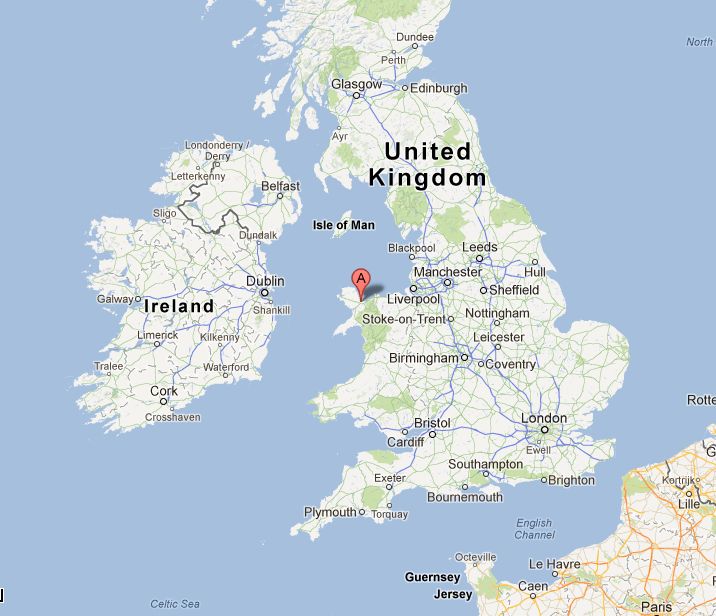
January 30, 1826. Workers completed construction of the first modern suspension bridge on this date. It was the Menai Bridge between Wales on the island of Great Britain and the smaller island of Anglesey, to the west. According to local reports about the bridge from nearly 200 years ago, travel in the strait between Wales and Anglesey was hazardous, due to shifting currents and unpredictable weather patterns. But the island of Anglesey had the Atlantic Ocean and Irish Sea to its west, and, especially after Ireland joined the United Kingdom in 1800, people increasingly wanted to use Anglesey as a jumping off point to reach the Emerald Isle by ferry boat.

A Scottish civil engineer, architect and stonemason named Thomas Telford designed the Menai Bridge. It’s a suspension bridge, with its deck (load-bearing portion) hung below suspension cables on vertical suspenders. Examples of this type of bridge were built in 15th century Tibet and Bhutan, but the Menai Bridge was heralded as the first modernsuspension bridge in the world.

The Menai Bridge reportedly stands 100 feet (about 30 meters) above the waters. It’s tall enough to allow sailing ships to pass underneath. It spans 579 feet (about 175 meters) from the Wales coast to the coast of Anglesey, and it’s supported by 16 large chains.

The chains has been changed out over the years to allow heavier truck traffic to pass through.

The Menai Bridge is still in use today.

Bottom line: On January 30, 1826, workers completed the Menai Bridge between Wales and Anglesey, the first modern suspension bridge in the world.

SOURCE::::  www.earthskynews.org

Natarajan

Message For the Day…” Once you evolve yourself to a higher state Everything will look smooth , small and even…’

If you stand at the same level as the ocean and look at it, it will appear as a vast sheet of water. On the other hand, if you look at the same ocean from a height, it will appear like a lake. Similarly, since the rishis(sages) were on a higher level in spiritual knowledge and away from the world, they could recognise this vast world as a very small and insignificant entity. When at a lower level, one thinks that the world is big, important and manifold. The diversity and the differences will be seen more clearly. But when one evolves to a higher state, everything will look smooth, small and even. When we have a narrow vision, our country, our people, our languages will all appear as full of problems and differences. If you can go to a high place and look at the world, it will appear in one unified aspect and all the people and all languages will appear as one.

Sathya Sai Baba

Message For the Day…” Never Break the Vow of Truth …”

The Gita advises everyone to adopt ‘inoffensive speech, which is truthful, pleasant and beneficial.’ During the practice of the Sadhana of truth, at times, it may become necessary to reveal an unpleasant truth. At those moments, you must soften and sweeten its impact by consciously charging it with love, sympathy, and understanding. Help ever hurt never – that is the maxim. Revere truth as your very breath. Your promises are sacred bonds. Never break the vow of truth. The only obstruction to practicing truth anyone will face, is selfishness. Give up selfishness, adhere to truth and selfless love, let your heart be attuned to truth and the mind saturated with love. The triple purity – speech free from the pollution of falsehood, mind free from the taint of passionate desire or hatred, and the body free from the poison of violence – must be taken up by everyone as ideals and lived in accordance with.

Sathya Sai Baba

” Coconut Fights Fat !!!…” Read More on Natural Sources of Medicines….

Natural Remedies From Around the World

Natural remedies are the healthiest way to treat your ailments, but where do they come from? Here are 15 common natural remedies from around the world that you may or may not have heard of. This is necessary information for any health buff!   

Coconuts Fight Fat – Sri Lanka 

natural remedies

You may have heard that coconut oil is a great way to slim your waist. Well the people of Sri Lanka figured this one out way before the rest of the world. It is reported that the average Sri Lankan eats about 116 coconuts per year, and they are half as likely as the average American to pack on the pounds. The reason is that coconut oil is packed with medium-chain fatty acids (MCFAs) that stimulate the liver to burn fat 50 percent faster than normal. Try having about two tablespoons of coconut oil daily (in your cooking) and you could shed up to three pounds a month!

Yoga Treats Insomnia – Austria 

natural remedies

Although yoga is practiced all over the world, in Austria it is used solely as a stress-buster and quick treatment for insomnia. Austrians like to go all out and go on yoga retreats and holidays for up to a week, but according to research from the University of Pennsylvania, practicing yoga for just 20 minutes a day could get rid of your insomnia. The research also found that practicing yoga is just as effective, if not more, than taking a sleeping pill and it also will rid you of anxiety, stress and depression.

Ginger Controls Triglycerides – Indonesia 

Indonesia is the world’s largest grower and consumer of ginger and ginger products, with locals using it in their cooking, teas, candies and breads. Their tradition has long pointed to ginger as an effective treatment for the heart, and there are studies to back them up. Triglycerides are fats that clog your arteries, and according to Stanford researchers, a daily dose of ginger could cut the production of these fats by 27 percent. Ginger is also twice as effective as aspirin at preventing blood clots and preventing inflammation.natural remedies

Turmeric Steadies Blood Sugar – India 


natural remedies

Turmeric is a flavorful yellow spice used in rice and meat dishes and even deserts, but it also has outstanding medicinal properties. Indians use turmeric to treat high blood sugar levels, a practice that has been scientifically confirmed by research at Gujarat University. They confirmed that the  active ingredient in turmeric, called curcumin, switches on the genes that keep blood glucose levels stable. The compound can also help the pancreas make insulin when it is low. In order to see the benefits of turmeric, start taking about half a teaspoon daily either directly or in your cooking.


Mushrooms Fight Cholesterol – Japan  

natural remedies

Mushrooms are a popular food and medicine in Japan, with the average Japanese woman consuming about 8 pounds of mushrooms a year. According to research from Penn State University, adding about a half a cup of mushrooms to your daily diet could cut cholesterol levels by nearly 30 percent. This is because mushrooms are packed with antioxidants that prevent the liver’s production of artery-clogging fats


Mustard Baths Calm Muscle Pain – England 

natural remedies Ever heard of a mustard bath? While it may sound like a hoax, mustard baths are used heavily in England to quell tight and achy muscles. Mustard has healing plant compounds that draw out toxins through the pores to improve circulation, relax tight muscles and speed the healing of damaged tissue.

For your own mustard bath, mix 2 cups of Epsom salts, 1/4 cup baking soda, 1/4 cup dry mustard in a jar. Pour only 1/4 of this mixture into a warm bath, mix the water before getting in, soak for 20 minutes and rinse.


Chamomile Tea Beats Off Bloating – Germany 

natural remedies

What began as a simple German folk remedy has now been proven as a scientifically effective method for fighting off bloating. A study conducted at Stanford University found that sipping two cups of chamomile tea daily could help ease bloating and belly pain within just 24 hours. This is because chamomile calms the adrenals and the production of a stress hormone called cortisol that can interfere with digestion and produces painful gas and belly spasms. Not only does chamomile tea soothe the stomach, it also causes the brain to produce more enkephalins, or painkilling hormones that will help fight off depression and negative thoughts.


Garlic Fights Off Viruses – Russia 

natural remedies

While garlic is used the world over to add flavor to food, in Russia they use this herb to get rid of colds, the flu or any other viral infection. It has recently been proven that this pungent natural medicine is seriously effective. At the University of Florida in Gainesville, it was shown that adding one clove of garlic to your daily diet could cut your risk of viral infections by almost 43 percent! This is because garlic is full of allicin, an immunity boosting sulfur compound that fights off the growth and spread of germs.


Acupuncture to Treat Headaches – China 

natural remedies

Acupuncture has been used for centuries in Eastern and Chinese medicine, but now more than 80 million Chinese use this therapy to treat chronic headaches. At Taiwan’s Kaohsiung  Medical University it was found that daily acupuncture treatments work much better than prescription muscle relaxants. This is because acupuncture prompts the release of powerful painkilling hormones called endorphins and relaxes the scalp muscles to soothe the overactive pain nerves.


Coffee Gets Rid of Depression – Finland 

natural remedies

This cold Scandinavian country is actually the world’s largest consumer of coffee, drinking on average about 1,640 cups per year. Indeed, coffee was originally sold in pharmacies in Finland in the 18th century has a treatment for depression. Now research from Harvard backs up coffee’s use as an anti-depressant, finding that drinking 2 cups a day of caffeinated coffee could reduce your risk of depression by 34 percent, and if you drink 3 cups, by 42 percent. The mix of caffeine and antioxidants in coffee stimulates the brain to produce more powerful antidepressant hormones like serotonin and dopamine


Coriander Rids of Food Poisoning – Egypt   

natural remedies

One of the world’s oldest spices and a popular Egyptian remedy for stomach pain, new research proves the powerful effects of this ancient spice. The research suggests that coriander seeds can speed up recovery from full-blown intestinal infections by destroying dangerous bacteria like E. coli and Salmonella. This is because coriander punches holes in the bacteria’s’ protective outer membranes, effectively destroying them for good.

Next time you are having tummy troubles, try adding 1 teaspoon of ground coriander to one cup of boiling water. Drink up to three cups of this mixture daily until the bug is gone.

Honey Treats Sinus Infections – New Zealand 

natural remedies

Unpasteurized honey is one of the top treatments used in New Zealand to treat sinus and throat infections. According to research at the University of Illinois and the University of Amsterdam, the natural antibiotics and enzymes in unpasteurized honey can destroy nearly 100 percent of bacteria and viruses on contact! This includes the bugs that cause painful sinus and throat infections.

For an effective remedy, mix two tablespoons of unpasteurized honey into your coffee or tea to prevent painful infections. Use darker honeys like buckwheat or wildflower for the best results.


Aloe Vera to Treat Skin Rash – Mexico 

natural remedies

Where the sun is hot and always shining, aloe vera is used to treat rashes and other skin problems. Researchers at the University of Texas found that aloe vera reduce redness, speeds healing, increases the skin’s moisture levels and strengthens resistance to irritants. They also discovered that aloe vera not only treats the current outbreak, but prevents further outbreaks in the same area. Other research from Malmo University Hospital in Sweden found that aloe vera cream can treat psoriasis in 83 percent of cases.


Kefir Treats Irritable Bowel Syndrome – Russia 

natural remedies

Irritable bowel syndrome is an uncomfortable and serious condition in which the bowels do not perform as they should. However in Russia they use a tart and tangy yogurt called kefir to treat the condition with healthy probiotic bacteria and yeast. Kefir is an effective treatment for IBS because it contains five time more healthy, intestine-soothing probiotics than most regular yogurts. In a study conducted by the University of Madrid, it was found that having just a half-cup serving of kefir daily could trigger a ten-fold increase of healing probiotic bacteria in the digestive tract.


Arnica to Prevent Bruises – Greece  

natural remedies

A herb that grows in the mountainous regions of Greece, arnica has been a go-to remedy since ancient times for nasty bruising and closed wounds. It has become the most popular homeopathic remedy worldwide due to its power of healing and treating the most serious of bruises. This is because arnica is a plant rich in compounds that reduce swelling by as much as 30 percent, improves circulation in damaged tissues, boosts the flow of nutrients and flushes out the blood from the wound. You and find arnica gel at your local health store or in some pharmacies. This is definitely a tube to have in your medicine cabinet!


SOURCE::::www.ba-bamail.com

Natarajan

Jan 30 2015


Why Pencil Lead is callled ” Lead ” ?

Why Pencil Lead is Called “Lead”

In the 16th century, a large deposit of pure, solid graphite was discovered in Borrowdale, England.  This was the first time in recorded history that high quality, solid graphite had been found.  When metallurgists first encountered this substance, they thought it was some sort of black lead, rather than a form of carbon.  Thus, they called it “plumbago”, which is derived from “plumbum”, which is Latin for “lead”.

It didn’t take people long to realize that solid sticks of high quality graphite were good for marking things. At that point, this newly discovered substance from the mines of Borrowdale became extremely valuable.  So much so that guards were eventually posted at the entrance to the mine and laws were passed to stop people from stealing the solid graphite.  In addition, once a sufficient stock of the graphite was mined, the mine itself would be flooded until more graphite was needed.

Of course, sticks of pure graphite are fairly brittle, so people started embedding them in various things such as hollowed out pieces of wood and also simply wrapped tightly in sheep skin.  Thus, the pencil was officially born with a core of solid graphite, which was known then as black lead.  The tradition of calling sticks of graphite “lead” has endured to this day.

Bonus Facts:

  • English speakers aren’t the only ones who still follow this misnomer.  The German word for “pencil” is actually “bleistifit”, which literally means “lead stick”.
  • Roman StylusThere was a form of writing instrument before the pencil called a stylus that sometimes was made of lead.  The stylus was a thin rod used originally by the Ancient Romans, and later by many others, for writing without ink.  The stylus was made with a very sharp point and could be used to write on wax tablets.  This was also a reusable form of writing in two ways.  First, each stylus generally had a blunt end for rubbing out some bit of writing on the wax.  Second, the entire wax tabled could be “erased” by simply warming up the wax sufficiently until the writing disappeared.  These stylus, which were occasionally made of lead due to its cheapness and how easy it is to work with, are sometimes said to be why we call pencil cores lead.  In fact, though, it is as stated above-  simply that people mistook graphite for a form of lead.
  • “Pencil” comes from the Latin “pencillus”, meaning “little tail”.
  • Graphite deposits have been found elsewhere, but nothing close to the purity and quality of the English find. Due to the impurities in these other deposits, the graphite from these must be crushed into a powder to filter out the unwanted bits.  Eventually, a method was found to use this powder in pencil form, by using clay as a binding agent.  But before then, England had a monopoly on the world’s pencil supplies because only their graphite deposit could be cut and made into high quality pencil form, without any other processing needed.
  • The method for being able to use graphite powder for use in pencils was independently discovered by both Frenchman Nicholas Jacques Conté, in 1795, and Austrian Joseph Hardtmuth, around 1790.   During the Napoleonic Wars, France wasn’t able to import pencils from Great Britain, which had the only supply of pure solid graphite in the world.  Nicholas Jacques Conté, who was an officer in the army, discovered that if you mix the graphite powder with clay, you can then form this mixture into sticks and fire this substance in a kiln.  You also can vary the clay/graphite ratio to achieve different levels of hardness and darkness.  This is more or less exactly how pencil cores are made to this day.
  • Conté was also the one that came up with the system to use numbers to signify the grade of the pencil, in terms of the hardness/darkness of the core.  This system was later adopted in the United States and is known as the Conté/Thoreau system (John Thoreau being the one who helped introduce it to the U.S.).  This system, translated to the European system, is as follows: #1 = B; #2 = HB; #2.5 = F; #3 = H; #4 = 2H.
  • The tradition to paint pencils yellow was started in 1890 by the L. & C. Hardtmuth Company of Austria-Hungary.  In 1890, they introduced the Koh-I-Noor brand of pencil, which was a top-tier pencil.  The name itself was after the famed diamond.  This pencil was extremely popular, due to its high quality. Thus, many other manufacturers copied the color to make their pencils look like  Koh-I-Noor brand pencils. Today, yellow is the most popular outer pencil color in the United States and various other countries.  However, in Germany and Brazil, green is the most popular color.  In Australia and India, red with black bands at one end wins out.
  • A certain type of lead (tetraethyl lead) was once commonly used in gasoline in order to reduce engine knocking (For more on this, see: Why Was Lead Added to Gasoline).  However, this had the negative side effect of releasing massive amounts of lead into the air, which is of course toxic to humans and to the environment in general.  So “Regular” gasoline has been phased out in most of the world in favor of “Unleaded”.


SOURCE:::: http://www.todayifoundout.com

Natarajan

Jan 29 2015