படித்து நெகிழ்ந்தது …” மே /பா காமராஜர் தலைவர் சத்திய மூர்த்தி பவன் “

எட்டயாபுரம், பா.நா.கணபதி எழுதிய, ‘நினைவுகள்’ நூலிலிருந்து:

ஒரு முதிய காங்கிரஸ் தியாகி, சென்னை அரசு மருத்துவமனையில் சிகிச்சைக்காக சேரும்போது, தன் பெயருடன், மே/பா. காமராஜர், தலைவர், சத்தியமூர்த்திபவன், சென்னை என, பதிவேட்டில் எழுதி கொள்ளும்படி கூறினார்.
ஒருநாள், அம்முதியவர் திடீரென்று இறந்து விட்டார். அவர் தந்த முகவரிப்படி காமராஜருக்கு தகவல் தரப்பட்டது. அதைக் கேட்டு அதிர்ந்து போனார் காமராஜர். ஏன் என்றால், இறந்தவர் யார் என்றே அவருக்கு தெரியாது.
‘இறந்தவர் காங்கிரஸ் தியாகி; என் முகவரியை தந்திருக்கிறார். அவருக்கு என்னிடம் அவ்வளவு நம்பிக்கை! தியாகியின் இறுதி சடங்கை நல்ல முறையில் செய்ய வேண்டும்…’ என்ற கடமையுணர்வு அவரது உள்ளத்தில் மேலிட்டது.
மருத்துவமனை சென்று, இறந்தவரின் உடலை பெற்று, நல்லடக்கம் செய்யும்படி, செயலர் வி.எஸ். வெங்கட்ராமனிடம் தெரிவித்தார். அன்று, தன் வழக்கமான நிகழ்ச்சிகளை ரத்து செய்தவர், செயலற்றவராக, ஈஸி சேரில் சாய்ந்து விட்டார்.
சடலம், மூலகொத்தளம் சென்றடைந்து, எரியூட்டும் சமயம் அங்கு சென்ற காமராஜர், ‘இந்த தியாகி யாரோ… வீடு, வாசல், மனைவி, மக்கள் எல்லாவற்றையும் துறந்து, காங்கிரசில் சேர்ந்து பல அவஸ்தைகள் பட்டும் கூட, அக்கட்சியிடம் நம்பிக்கை இழக்காத இவர், மரணம் அடையும் முன், காங்., அலுவலக விலாசமே தந்துள்ளார். இவருக்கு நாம் எல்லாருமே கொள்ளி போடுவோம்…’ என்று, நா தழுதழுக்க கூறிய வார்த்தைகள், அனைவரையும் கண்ணீர் விட செய்தன.
ஒரு எளிய தியாகிக்காக, தியாக சீலரான காமராஜர் சிந்திய கண்ணீர், தூய்மையான அன்பின் வெளிப்பாடாக விளங்கியது.

Source….www.dinamalar.com

Natarajan


படித்து ரசித்தது …”ஆசிரியர் , மாணவர் …ஒரு உதாரணம் …”!

‘பெரியோர்கள் வாழ்விலே’ நூலிலிருந்து: கல்வி வள்ளல் அழகப்ப செட்டியார், ஒருமுறை கேரளாவுக்கு செல்லும் போது, வழியில், கோவையில், சர்.ஆர்.கே. சண்முகம் செட்டியார் இல்லத்தில் தங்கினார். அப்போது, தன் தமிழ் ஆசிரியரான பலராம ஐயர், அவ்வூரில் வாழ்ந்து வரும் தகவலை அறிந்தார்.
உடனே, ஆசிரியரை சந்திக்க விரும்பி, கைப்பட கடிதம் எழுதி, தன் ஊழியரிடம் கொடுத்து, அவரை அழைத்து வரச் சொல்லி, தன் காரை அவர் இல்லத்திற்கு அனுப்பி வைத்தார்.
கடிதத்தை வாங்கி படித்த ஆசிரியர், உடனே பதில் கடிதம் தந்தார். அதில், தன் மாணவன் இன்று நல்ல நிலையில் இருப்பதற்கு தன் மகிழ்ச்சியையும், வாழ்த்தையும் தெரிவித்து, மூன்று காரணங்களால், அவரை சந்திக்க வருவது, சாத்தியமில்லை என்று குறிப்பிட்டிருந்தார். அது, ‘முதலாவதாக, நான் வயோதிகன்; நீ இளைஞன். இரண்டாவதாக, நான் ஆசிரியன்; நீ மாணவன். மூன்றாவதாக, நான் வறியவன்; நீ செல்வந்தன். எனவே, நான் வந்து உன்னை பார்ப்பது பெருமையல்ல…’ என்ற, பொருள்பட ஆசிரியரின் கடிதம் இருந்தது.
அதைப் பார்த்ததும், பதறி, ஆசிரியரை பார்க்க, தானே அவர் இல்லத்திற்கு புறப்பட்டார் அழகப்ப செட்டியார்.
பூ மற்றும் பழங்கள் வாங்கி சென்ற அழகப்பர், கையில் தயாராக வைத்திருந்த மாலையை ஆசிரியருக்கு அணிவித்து வணங்கி, ‘இங்கிதம் அறியாமல், தங்களை அழைத்து வருமாறு கூறி விட்டேன்…’ என்று வருத்தம் தெரிவித்தார். ஆசிரியரும் மனம் நெகிழ்ந்து, தன் மாணவரோடு மனம் விட்டு அளவளாவினார்.
அழகப்பர் விடை பெறும்போது, ஒரு வெள்ளி தட்டில், 100 ரூபாய் கட்டுகளை வைத்து, அதை ஏற்று கொள்ளுமாறு ஆசிரியர் முன் சமர்ப்பித்தார்.
ஆசிரியரோ, புன்சிரிப்பை உதிர்த்து, ‘உன் அன்புக்கு மிக்க மகிழ்ச்சி; ஆனால், இந்த பணத்தால், பலனடையும் வயதை தாண்டி விட்டேன். எனவே, என்னை வற்புறுத்தாமல் நீயே இதை எடுத்துக் கொள்…’ என்றார்.
ஆசிரியருக்கு அவரும், மாணவருக்கு இவரும் உதாரணம்!

Source…….www.dinamalar.com

Natarajan

Origins of currencies: from jagged edges to flowers……

A fistful of dollars

The dollar is one of the most common currencies in the world used by the US, Australia, Canada, Fiji, New Zealand, and Singapore to name a few. The origin of the dollar, also the Slovenian tolar, is from a coin called the Joachimsthaler, shortened to Thaler (or daler in early Flemish or Low German), named after the valley in which the silver it was made from was mined, the Joachimsthal, literally ‘Joachim’s valley’. The term began to be used in other languages, especially Dutch, and was later applied to the most widely used coin in the American colonies. In 1792, it was adopted as the name of the US monetary unit.

All that glitters is not gold

Many countries use the dinar, which comes from the Latin denarius, an ancient Roman silver coin: Jordanian dinar, Algerian dinar, Serbian dinar, and Kuwaiti dinar among others. The Indian and Pakistani rupee derives from the Sanskrit rupya meaning ‘wrought silver’,which is also the origin of the Indonesian rupiah.

The South African rand is named after the Witwatersrand, the area  around Johannesburg known for its gold deposits, while Poland uses the zloty which means ‘golden’ in Polish. The Hungarian forint comes from the Italian fiorino, originally the name of a gold coin from Florence, Italy with a flower (Italian fiore) stamped on it. The British coin the florin (used until 1971) has the same origin.

Serrated edges on coins became popular when coins were made of precious metals like gold and silver because the ridges made it harder for people to scrape off metal and devalue the coins. The Malaysian ringgit is from the Malay for ‘jagged’ and refers to the serrated edges of the Spanish silver dollars used as currency in Malaysia before the ringgit was introduced.

Doing the rounds

Chinese yuan 元, Japanese yen 円, and Korean won 원, all originate from the Chinese character 圓 meaning ‘round’  or ‘round coin’. Although in English, we speak about the Hong Kong dollar or the New Taiwan dollar, in Chinese these are referred to as yuán 圓. Likewise, in Chinese, ‘dollar’ is translated as ‘yuan’, so the US dollar or měiyuán 美元 is literally ‘American yuan’ in Chinese.

Royal crown

Many Scandinavian countries use currency whose name is ultimately derived from the Latincorona meaning ‘crown’: Swedish krona, Norwegian krone, Danish krone, Icelandic krónaas well as the Estonian kroon (now replaced by the Euro) and the Czech koruna. The Spanish real, a former currency of Spain derived from the Latin regalis meaning ‘royal’ which is the origin of a number of Middle Eastern currencies such as the Omani and Iranianrial, and the Qatari, Saudi, and Yemeni riyal.

A weighty subject

Although the Germans and the Finns use the Euro now, their former currencies the Germanmark and the Finnish markka, both have their origin in units of weight. While the Spanishpeso meaning ‘weight’ in Spanish, is also no longer used in Spain, it lives on as the currency of Mexico, Argentina, the Philippines, Chile, Uruguay, the Dominican Republic, Cuba, and Colombia. The Russian ruble or рубль, also used in Belarus, was originally a measure of weight used for silver. The British pound (or pound sterling) comes from the Latin pondus ‘weight’ (sterling probably originally from Middle English meaning ‘little star’ because there was a star on early Norman coins). The Italian and Turkish lira also have their origins in units of weight from the Latin libra meaning ‘pound’.

Source…..www.blog.oxforddictionaries.com

Natarajan

How One Man Is Making Indian Museums Fun, Interactive and Inclusive…..!!!

The dismal and decrepit state of most Indian museums is no secret. But architect and designer Abhishek Ray and his team are trying to change the experience of museum visits by creating spaces with appropriate exhibition displays, good lighting and graphics, and interactive audio visual systems that keep visitors engaged.

Antiques trafficking, damage from seepage and other maintenance issues,  lack of qualified staff – Indian museums suffer from many woes. A 2011 UNESCO report on Indian museums was also scathing in pointing out a long list of deficiencies, among them poor lighting and maintenance, incorrect signage and lax security. In 2012, a parliamentary committee report said, “Our museums are in a bad shape. Only 10% of the acquisitions are put on display and those are not even rotated regularly. Museum stores and galleries are in poor condition.”

Meet the man who is trying to address at least some of these issues. Abhishek Ray, an architect and designer, wants to make Indian museums more fun, interactive and inclusive.

“I want to change the way museums are perceived today. Museums tell a story and it should be an interesting one,” he says.

Abhishek Ray

Abhishek Ray

Abhishek is the principal architect at Matrika Design Collaborative. Over the last decade, Abhishek and his team have been working on museum development projects from their inception to their execution.  With comprehensive services – ranging from historical and art research to creating spaces using appropriate exhibition displays, lighting and graphics accentuated with interactive audio visual systems to keep visitors engaged in learning about our cultural heritage of India – the team has been changing the experience of a museum visit.

The team closely works on each museum.

The team works on providing better lighting and displays

“We noticed that museums have not changed at all since decades in India. I have no living memory of visiting museums in my childhood and today we need to engage children with our museums and cultural spaces at a very early age. We work with the government and non governmental organisations to redesign existing cultural spaces and to develop new ones in order to conserve our heritage,” he says.

Matrika Design Collaborative is now developing one of the first dedicated textile museums that showcases the history and conservation of embroidery from the western region of Kutch, Gujarat at Bhuj.

The museum is a part of the Living and Learning Design Centre for local embroiderers and craftspeople, where visitors will gain extensive understanding of the rich heritage of embroidery from the communities themselves.

Innovation, says Abhishek, comes through engaging the community in the development of the museum or cultural space.

“If we intend to showcase their culture and traditions it is imperative for us to involve them at various stages of inception. A classic example is how the LLDC museum in Kutch has been developing around documenting the lives of embroiderers by recording their oral histories, their art and lifestyles,” he says.

They convert a museum from a boring place to an interactive place.

Abhishek and his team convert a museum from a static space to an interactive one.

They also recently commissioned a small exhibition for Godrej Industries, wherein they designed a humble exhibition focused on the pioneering work carried out by Shri Ardershir Godrej in developing India’s first safe, which, till today, is one of the mainstays of the products rolled out by the industrial giant. Coupled with a trivia based display on the events around the year 1914 (the year when the first safe was fabricated in India), they put together a host of rare documents that profiled the story of safe-making at Godrej.

Overall, by using presentations, online art guides, mobile apps, and making the places more comfortable for people with special needs, Abhishek and his team are making museums both physically and intellectually inclusive.

The USP lies in the design of the museum which is also a challenge.

Their USP lies in museum design

They are currently developing a unique outreach programme, a Museum on Wheels for the Chhatrapati Shivaji Maharaj Vastu Sangrahalaya, Mumbai (formerly Prince of Wales Museum), where the self contained museum bus would travel to urban, peri-urban and rural areas of Maharashtra to spread education by means of an interactive mobile museum.

The bus is fitted with exhibition cases, audio video hardware, etc. It will cater to municipal schools, adult education camps and artists’ conclaves in rural districts of India.

From improving the look of existing locations to coming up with new museums, the team has been preserving Indian heritage in amazing ways.

From improving existing museums to coming up with new ones, the team has been preserving Indian heritage in amazing ways.

The development of the Shastra Museum (Museum on Arms and Armory of the Sikhs) in Amritsar, alongside the Toshakhana (Royal Treasury), is a project that Abhishek and his team are proud of. It holds some of the most exquisite weapons used by the Sikh armies under the leadership of Maharaja Ranjit Singh.

The narrative here builds around the development of traditional weapons and their transition to mechanised weapons and modern artillery in the late 19th Century.

“We have designed unique solutions where children are given an understanding of the science behind weapons and fortification systems, categorically ruling out their association with violence and war,” says Abhishek.

Innovation has found a new meaning through inclusion of children and people with special needs at the New Shri Pratap Singh Musuem in Srinagar, Jammu and Kashmir.

The team has dedicated a complete gallery to children’s activities. The 100,000 square feet museum is also completely accessible to people with special needs.

Abhishek is now working on coming up with more such interesting exhibition and museum ideas.

Abhishek and his team are now working on more innovative ideas.

The challenge for the future, says Abhishek, lies in demystifying the realm of heritage and culture for people at large. Implementation of unique ideas and changing mindsets of people who sit at the helm of affairs is going to be a big challenge.

“We need to redefine the experience of the cultural space by reinventing the narrative and this can be achieved when policy makers, curators, archivists, designers, and users come together in a collaborative format to work out the best ways to tell the story of our culture and heritage through tangible and intangible ways,” he concludes. 

To know more about the team’s work check out their website – www.matrika.in

Source…..Shreya Pareek in http://www.the betterindia.com

Natarajan

This date in science: Yuri Gagarin’s birthday….9th March

He was a Russian Soviet pilot and the first human to travel to space, in 1961. Later, he became one of the world’s true heroes …


“Let’s go! (Poyekhali!)” Image via ESA.

March 9, 2016. Yuri Alekseyevitch Gagarin (1934 – 1968) would have been 82 today. He became the first human ever to travel into space on April 12, 1961, flying into orbit around Earth for 89.1 minutes in Russia’s Vostok 1 spacecraft. He circled the Earth once and flew as high as 200 miles (327 km). The entire mission, from launching to landing lasted 108 minutes.

Yuri was born on a small farm west of Moscow. His father was a bricklayer, a carpenter, and a farmer. His mother was a milkmaid. He was the third in a family of four children.

During the Second World War, the Gagarin family was broken apart as two of Yuri’s older sisters were taken into labor camps by the Nazis. The Gagarins were forced out of their house, and dug a hideout in the ground, where they stayed until the end of the war. After the war, the family moved to Gziatsk.

Gagarin was inspired to become a pilot while still a teenager. When a Russian Yak fighter plane was forced to land in a field near his home, the praise those pilots received left a mark on the young Gagarin. He wanted to be like them.

He studied to become a foundryman (a foundry is a factory that melts metals in special furnaces and pours the molten metal into molds for making products). He was singled out for his skillfulness to further his studies in the Saratov Technical School.

Vostok 1 via Wikimedia Commons.

Vostok 1 via Wikimedia Commons.

There, his dream to become a pilot took root, as during his 4th and last year at Saratov, he had the chance to join a local flying club. He learned to operate a plane, and flew by himself for the first time in 1955.

That same year, he also graduated from school, and was recruited by the Soviet Army.

At the advice of his flying mentor, he joined the Soviet Air Force, and went on studying at the Orenburg School of Aviation. There, he was taught to fly MIGs.

During his studies at Orenburg, he also met his future wife, Valentina Ivanova Goryacheva, who was a nursing student at the time.

In November, 1957, when Gagarin was 23, he graduated from Orenburg with honors and married Valentina. Later, the couple had two girls, Yelena, and Galina.

In 1959, after the Russians succeeded at photographing the far side of the moon for the first time with Luna 3, many – including Yuri – felt it was about time for the first man to be sent to space. He and a few other men were accepted for cosmonaut training in 1960 after a lot of selection.

The selected candidates underwent not only physical training, but also mental and psychological training.

Gagarin was known for his good humour, perseverance, and calm.

On April 12, 1961, the Russians amazed the world by launching Vostok 3KA-3 (Vostok 1) from the Baikonur Cosmodrome with Yuri Gagarin aboard. Vostok means East in Russian.

East for sunrise, and for the rise of the Space Age.

Hear a recording of Yuri Gagarin saying “poyekhali” (“let’s go”) before the launch.

Yuri  Gagarin in Warsaw in 1961.  Image via Wikimedia Commons.

Yuri Gagarin in Warsaw in 1961. Image via Wikimedia Commons.

Gagarin on a visit to Sweden, 1964.  Image via Wikimedia Commons.

Gagarin in Sweden in 1964. Image via Wikimedia Commons.

After coming back from space, Gagarin became an international celebrity. Khrushchev awarded him with the title of Hero of the Soviet Union.

His dream had come true.

Gagarin and his wife began touring the world, where Yuri was decorated for his legendary accomplishment. It’s rumored that Gagarin didn’t handle his fame very well, however.

In 1962, he was appointed as a deputy of the Soviet Union, and he was elected to the Central Committee of the Young Communist League. But Gagarin was not entirely happy. He felt he didn’t train to fly only once. He wanted to fly more, but – according to the stories about him – those around him tried to stop him for fear of losing the great Soviet hero.

In 1963, Gagarin later became deputy training director of the Cosmonaut Training Center outside Moscow. Later, the training center was named for him.

The following year he started extensive training to become a fighter pilot. He died on March 27, 1968, at the age of 34 due to the crash of a MiG – 15UTI that he and colleague Vladimir Seryogin were flying from the Chkalovski Air Base.

Their bodies were collected near the small town of Khirzach, and were cremated. Their ashes are a part of the Kremlin Building in the Red Square, in Moscow.

Yuri's plaque at the Kremlin in Moscow, via Wikimedia Commons.

Yuri’s plaque at the Kremlin in Moscow, via Wikimedia Commons.

Bottom line: Born on March 9, 1934, Yuri Alekseyevitch Gagarin (1934 – 1968) was the first human being ever to travel into space. His historic flight took place on on April 12, 1961, when he orbited Earth for 89.1 minutes in Russia’s Vostok 1 spacecraft.

Source……www.earthsky.org

Natarajan

The Mysterious Caves of Mustang, Nepal……

The Kingdom of Mustang, bordering the Tibetan plateau, is one of the most remote and isolated region of Nepalese Himalaya. Once an independent Buddhist kingdom, Mustang was annexed by Nepal at the end of the 18th century, but retained its status as a separate principality until the 1950’s when the area was more closely consolidated into Nepal. Because of its sensitive border location, Mustang was off-limits to foreigners until 1992. The relative isolation of the region from the outside world has helped Mustang preserve its ancient culture which is more closely tied to Tibet than to Nepal.

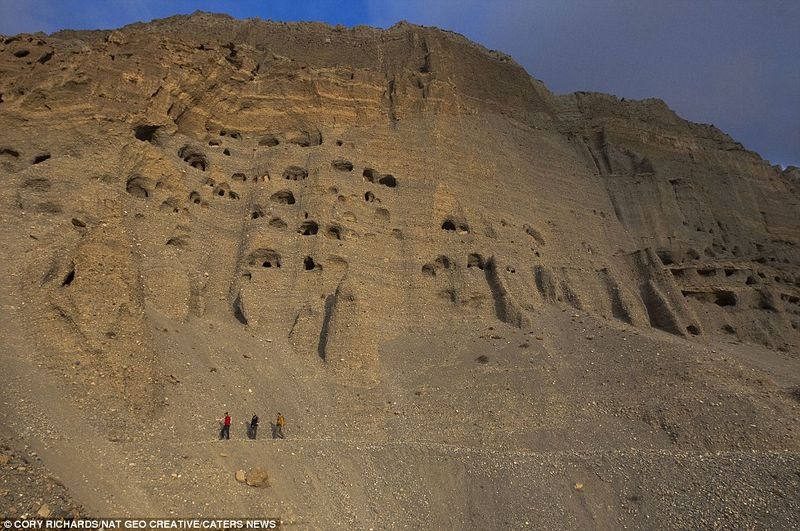
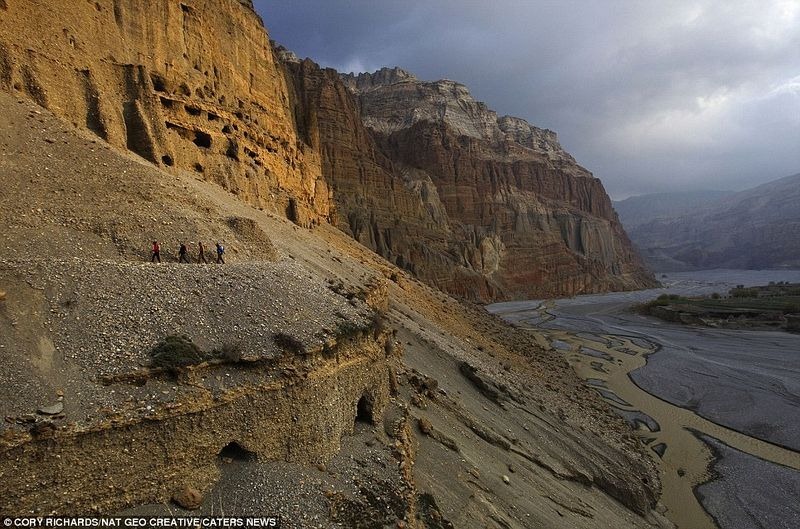
The landscape is also unlike anything that is to be found anywhere else in Nepal —deep gorges carved by the Kali Gandaki River, and strangely sculptured rock formations. The cliffs’ face are pitted with an estimated 10,000 ancient cave dwellings, some of which are perched more than 150 feet above the valley floor. No one knows who dug them, or how people even scaled the near vertical rock face to access them. Some of the caves appear almost impossible to reach even to experienced climbers.

mustang-caves-4

Photo credit: National Geographic

Most of the caves are now empty, but others show signs of domestic habitation —hearths, grain-storage bins, and sleeping spaces. Some caves were apparently used as burial chambers. The several dozen bodies that were found in these caves were all more than 2,000 years old. They lay on wooden beds and decorated with copper jewelry and glass beads.

In other caves, skeletons dating from the 3rd to the 8th centuries, before Buddhism came to Mustang, had cut marks on the bones that may have been inflicted during the practice of sky burial, where the body’s flesh is sliced into small pieces and left to be eaten by vultures. Sky burial is still practiced in many remote regions in the Himalaya.

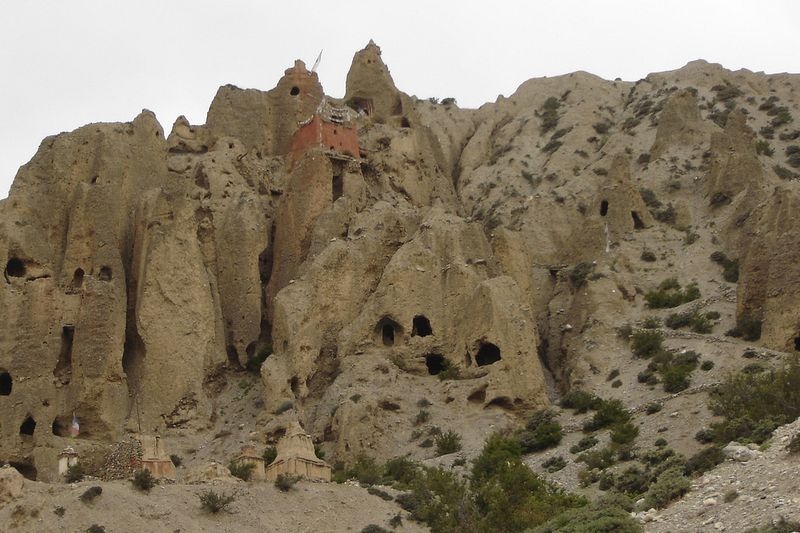
Archeologists believe that the caves in Mustang were used in three general periods. They were first used some 3,000 years ago as burial chambers. Then around 1,000 years ago, they became primarily living quarters, perhaps to escape battles and intruders into the valley. Finally, by the 1400s, most people had moved into traditional villages and the caves became places of meditation. Some of these caves were turned into monasteries such as the Luri Gompa, the Chungsi Cave monastery and the Nyiphuk Cave Monastery, all of which were built around and inside the caves.

Luri Gompa is one of the most famous in Mustang. The monastery is set on a ledge, at least a hundred meter high from the ground, in one of the many natural pillar like sandstone structures. A winding footpath climbs all the way from the bottom of the valley to a single entrance door that leads into two interconnecting chambers. The outer chamber contains a shrine, while the inner chamber —the main treasure of Luri Gompa— is beautifully decorated with a series of paintings depicting Indian Mahasiddhas — saints who were said to have achieved siddhi, or extraordinary powers by meditation. No documentation pertaining to this mysterious gompa or monastery has been found, but the wall paintings appear to be have been made in the 14th century or even earlier.

mustang-caves-1

Photo credit: National Geographic

mustang-caves-3

Photo credit: National Geographic

mustang-caves-5

Photo credit: National Geographic

mustang-caves-6

mustang-caves-7

Photo credit: nepaladvisor.com

mustang-caves-8

Photo credit: David Rengel/Washington Post

luri-gompa-2

Luri Gompa. Photo credit: Bob Witlox/Flickr

luri-gompa-3

luri-gompa-4

Frescos in the ceilings of Luri Gompa. Photo credit: library.brown.edu

Sources: Nat Geo / library.brown.edu / www.oneworldtrekking.com

Source……..www.amusingplanet.com

Natarajan

” I Survived the Pan Am Hijack During Which Neerja Bhanot Lost Her Life…”

Musician Nayan Pancholi recounts how he lost his eye but survived the Pan Am flight hijack in 1986.

It was September 5, 1986. Our tickets got confirmed at the last moment on Pan-Am Flight-73, which was headed from Mumbai to New York, via Karachi and Frankfurt. We were a group of singers and music composers from Ahmedabad, who were going to perform in different cities of USA. At that time, I was just 21 years old. Our flight took off from Mumbai and landed in Karachi around 4.30 a.m. There were some passengers who got off at Karachi. Cleaners entered the aircraft and were just about the leave. This is when four armed men in airport security clothes entered the aircraft from the business class side. We were seated in economy class at the rear of the plane.

Suddenly, there were screams and three or four shots were fired in the air. One terrorist had a machine gun in his hand, another had grenades and a belt full of bullets, while the other two had many guns and grenades with them.

Everyone was told to have their hands locked above their heads. I just can’t forget that sight. Two terrorists were standing in the front and the other two were standing near the rear. In no time, Neerja Bhanot, the senior flight purser, informed the captain and the other crew members in the cockpit to flee the aircraft.

The captain, the co-pilot, and the cockpit crew had left the aircraft. Except Neerja, all other flight attendants were tied up with ropes. The terrorists used Neerja to communicate with the airline.

There were more than 350 passengers in the plane. To scare us, they even killed a person named Rakesh Kumar and threw him out of the plane.

Then, they started collecting our passports. Somehow, Neerja hid some passports of American citizens under the seats. They kept on shouting and screaming at us in Arabic and continued firing shots in the air. After some time, in the afternoon, they offered us sandwiches. But who on earth can eat food in such a difficult situation?

In the evening, they allowed everyone to go to the toilet, one after the other, by crawling on the floor with our hands locked over our heads.

I still remember, exactly after 17 hours of them hijacking the flight, the fuel ran out. Due to this, the generator of the plane went off, leading to darkness. After the lights went off, the terrorists panicked and started firing aggressively at us. They also started throwing grenades.

I saw many people die in front of my eyes.

Nayan Pancholi was just 21 years old, when the Pan Am flight was hijacked in Karachi.

Nayan Pancholi was just 21 years old when the Pan Am flight was hijacked in Karachi.

My own group director and another girl from the group were shot dead.

I was seated near the emergency exit. I tried to open the emergency exit door, but couldn’t do it. After giving it a second try, it opened, but at the same time a grenade hit me in the left eye. And in a moment, I was down on the ground.

After that, I was taken to the terminal by the army and was later shifted to the hospital. I was given treatment at a hospital in Karachi. After 48 hours, the Indian Airlines flight took all the Indians back home. I was then taken to Jaslok Hospital in Mumbai. But, my eye couldn’t be treated there. So, I was taken to Chicago in the US for treatment, but the doctors there too couldn’t save my left eye.

This incident has had a deep impact on me. It was a very bad day for humanity. That day, nobody saw religion, caste, or creed in each other. That day we saw each other as humans and wanted to help and save each other. It’s as simple as that in end.

This article has been shared via Humans of Amdavad.

About the author: Nayan Pancholi is a singer and composer based in Ahmedabad. He is one of the survivors of the Pan Am plane hijack in 1986.
Source…..www.the betterindia.com
Natarajan

This date in science: John Glenn first American to orbit Earth….

On February 20, 1962, John Glenn became the first American to orbit the Earth. He made three turns around the planet before returning safely.

John Glenn and Friendship 7

February 20, 1962. John Glenn became the first American to orbit the Earth on this date. He made three turns around the planet before returning safely in his space capsule, which was called Friendship 7. He followed two Russian cosmonauts in making this early orbit of our planet: Yuri Gagarin ( April 1961) and Gherman Titov (August 1961).

While Glenn was in orbit, NASA controllers received an indication that the heat shield on his craft had come loose. They instructed Glenn not to jettison the rockets underneath the heat shield during re-entry, because the rockets might be able to hold the shield in place. Fortunately, the indication turned out to be a false alarm.

Glenn returned to space at age 77 aboard the space shuttle Discovery in 1995, making him the oldest person to fly in space. His mission’s primary scientific aim at that time was to study the effects of spaceflight on seniors.

John Glenn climbs into the Friendship 7 spacecraft just before making his first trip into space on February 20, 1962. Photo via NASA

John Glenn and Friendship 7

John Glenn and Friendship 7

Here's What John Glenn saw on February 20, 1962.  Just 5 minutes and 44 seconds after launch, Glenn offered his first words about the view from his porthole: “This is Friendship 7. Can see clear back; a big cloud pattern way back across towards the Cape. Beautiful sight.” Three hours later, at the beginning of his third orbit, Glenn photographed this panoramic view of Florida from the Georgia border (right, under clouds) to just north of Cape Canaveral. His American homeland was 162 miles (260 kilometers) below. “I have the Cape in sight down there,” he noted to mission controllers. “It looks real fine from up here. I can see the whole state of Florida just laid out like on a map. Beautiful.”  Image via NASA

Here’s what John Glenn saw on February 20, 1962. Just 5 minutes and 44 seconds after launch, Glenn offered his first words about the view from his porthole: “This is Friendship 7. Can see clear back; a big cloud pattern way back across towards the Cape. Beautiful sight.” Three hours later, at the beginning of his third orbit, Glenn photographed this panoramic view of Florida from the Georgia border (right, under clouds) to just north of Cape Canaveral. His American homeland was 162 miles (260 kilometers) below. “I have the Cape in sight down there,” he noted to mission controllers. “It looks real fine from up here. I can see the whole state of Florida just laid out like on a map. Beautiful.” Image via NASA

Bottom line: John Glenn became the first American to orbit Earth on February 20, 1962. His space capsule was called Friendship 7.

Source……www.earthsky.org

Natarajan

Images for the Day….

A picture might be worth a thousand words but National Geographic photographs leaves us speechless. Known for their captivating daily pictures, they also offer an opportunity to dive into the archives of previously unpublished or forgotten images.

The project called Found was established in 2013 to honor NatGeo’s 125th anniversary. The project’s team says that their mission is to bring the pictures back to life by sharing them to new audiences. And even some of the dates or locations are missing, the images capture perfect moments making them timeless.

The photographs are dug up by Guardian of the Collection William Bonner, who still finds them highly inspiring even after years spent in the archives. Together with editor Janna Dotschkal’s love for aesthetics, they make the vintage material shine as new.

More info: NatGeo Found (h/t: DeMilked)

A White Fallow Stag Stands In A Forest In Switzerland, 1973

A White Fallow Stag Stands In A Forest In Switzerland, 1973

Loggers And The Giant Mark Twain Redwood Cut Down In California, 1892

Loggers And The Giant Mark Twain Redwood Cut Down In California, 1892


Boys Dressed Up In School Uniforms Pose With King Penguins At The London Zoo, 1953

Boys Dressed Up In School Uniforms Pose With King Penguins At The London Zoo, 1953

A Man Stands Dwarfed Under The Ape-ape Leaves Of Puohokamoa Gulch In Maui, Hawaii, 1924

 A Man Stands Dwarfed Under The Ape-ape Leaves Of Puohokamoa Gulch In Maui, Hawaii, 1924

Source……www.boredpanda.com

Natarajan


கதை கதையாம் காரணமாம்……!!!

முக்கடலும் சங்கமிக்கும் கன்னியாகுமரிக்குச் செல்லும் போதெல்லாம், பெரும்பாறை ஒன்றின் மீது குறைந்த விளக்கொளியின் பரவலில் கம்பீரமாய் எழுந்து நிற்கும் சுவாமி விவேகானந்தர் மண்டபத்தைப் பார்க்கும் போதெல்லாம் ‘எப்படி சாத்தியமானது?’ என்ற கேள்வி என்னுள் எழுந்து நிற்கும்.இன்று, கரைக்கும் மண்டபத்திற்குமான துாரம் குறைந்து விட்டது. கடலில் மூன்றில் ஒரு பகுதி நடந்து செல்லும் பாதையாகி விட்டது. மீதப்பகுதியை சிறிய கப்பல் போன்ற படகில் பாதுகாப்பு உபகரணங்கள் அணிந்து ஐந்து நிமிடத்திற்குள் கடந்து விடலாம். ஆனால் பயணம் செய்யும் அந்த சின்னப் பொழுதில், கடல் அலைகளின் எழுச்சியும், காற்றின் வீச்சும் நம்மைப் பயமுறுத்தத்தான் செய்கிறது.
ஆனால் 113 வருடங்களுக்கு முன்னால், அதிக ஆள் அரவமற்ற இந்தக் கடற்கரையில், இருள் கவிழும் பொழுதில், ஆரவாரத்துடன் அலைகள் எழுந்து குமுறும் கடலில், இக்கரையில் இருந்து அப்பால் உள்ள பாறைக்கு சுவாமி விவேகானந்தர் தன்னந்தனியாக நீந்திச் சென்றிருக்கிறார்!
வானமே கூரையாக அமைந்த அப்பாறை மீது மூன்று நாட்கள் தனிமையில் அமர்ந்து, தாகத்திற்கும் பசிக்கும் ஆதாரமின்றி, தன்னைப் பிழிந்த தவத்தால் ஞான வெளிச்சம் பெற்றிருக்கிறார்! மீண்டும் இக்கரைக்கு நீந்தி வந்திருக்கிறார். இது எப்படி சாத்தியமானது?
இதற்கான வீரமும் துணிச்சலும் அவருக்கு எப்படி கிடைத்தது?
கதைகள் தந்த வீரம்!
சுவாமி விவேகானந்தரின் பால்ய பருவம். நரேந்திரனாய் ஓடியாடி விளையாடிய சின்ன வயசு. நரேந்திரனுக்கு தாய் புவனேஸ்வரியிடம் கதை கேட்பதில் அதிக ஆர்வம். புராண, இதிகாச கதைகளையே தாய் அதிகம் கூறுவார். மகாபாரத பீமன், ராமாயண அனுமன் இருவரது பராக்கிரமங்களைக் கூறும்போது நரேந்திரன் அதிக ஆர்வமாகி விடுவான். திரும்பத் திரும்ப பீமனையும், அனுமனையும் அவனுக்குச் சொல்லியாக வேண்டும்.
பள்ளி வளாகத்தில் பிள்ளைகள் விளையாடிக் கொண்டிருப்பர். ஆனால் நரேந்திரனோ பெரிய மரத்தில் ஏறி, அதன் கிளையில் தலைகீழாகத் தொங்கிக் கொண்டிருப்பான். எச்சரிப்பவர்களிடம், “நான் அனுமனாகப் போகிறேன்” என்பான்.

வருங்காலத்தில் நீ என்னவாகப் போகிறாய்?” என்று யாராவது கேட்டால், “நான் பீமன் ஆகப்போகிறேன்! பயில்வானாகப் போகிறேன்!” என்று நெஞ்சை நிமிர்த்தியவாறு பதில் சொல்லி இருக்கிறான். தீரத்தோடு அவர் தனிமையில் குமரி கடலில் நீந்தியதற்கு காரணம், சின்ன வயதில் தாயிடம் கதை கேட்டு வளர்ந்த அனுபவம் வளர்த்த துணிச்சல்!
கதை சொல்லிகள்!
தாத்தா, பாட்டி, அப்பா, அம்மா, மூத்தோர் என வீடுகளில், வீட்டுத் திண்ணைகளில் அன்று நிறைய கதை சொல்லிகள் இருந்தனர். படிப்பு, விளையாட்டு என ஓடியாடி ஓய்ந்த பொழுதுகளில் குழந்தைகளை அவர்கள் கதை உலகத்திற்குள் அழைத்துச் சென்றனர்.
கதைகள் மூலம் குழந்தைகளுக்கு புராண, இதிகாசங்கள் அறிமுகமாயின. ராஜாக்களும், வீரர்களும் வீரம் தந்தனர். வள்ளல்களும், நல்லவர்களும் மனவிலாசம் தந்தனர். நீதிகளும், நல்ல விஷயங்களும் இளம் சிந்தை வயலில் விதைகளாயின.
அதுமட்டுமல்ல, மூத்த தலைமுறை மூலம்தான் வளரும் தலைமுறைக்கு ஊர்ப் பெருமைகளும், குடும்பப் பாரம்பரியமும், உறவின் உன்னதங்களும் போய்ச் சேர்ந்தது. ஆனால் இன்று வீடுகளில் கதை சொல்லிகள் இல்லை. முதியோர் இருந்தாலும் அவர்களோடு ஒட்ட, உறவாட பிள்ளைகளுக்கு நேரமில்லை. நேரமிருந்தால், தாத்தா பாட்டிகளும், பேரக் குழந்தைகளும் தொலைக்காட்சி முன் கிடக்கிறார்கள்.
முன்பெல்லாம் தொடக்க வகுப்புகளில் ஆசிரியர்கள் நிறைய கதை சொல்வார்கள். ஓவிய ஆசிரியர், தையல் ஆசிரியை வகுப்புகளில் கலையோடு கதைகளும் நிறைந்திருக்கும். ஆனால் இன்று எல்.கே.ஜி. படிக்கும் குழந்தையின் முதுகில் 10 கே.ஜி! படிப்பு, மதிப்பெண், ரேங்க் என்ற ஓட்டத்தில் வகுப்பறைகளிலும் கதைகள் காணாமல் போயின. இதில் பெரிய இழப்பு எதுவென்றால், கலை இலக்கியப் படைப்பாளிகள் குறைந்து வருவதுதான். கதை கேட்கும் போது கற்பனைத் திறன் அதிகரிக்கும். இந்தக் கற்பனைத் திறன்தான் படைப்பாற்றலை வளர்க்கும்.
பால்ய கதைகள்.  என் பால்ய வயதில் எங்கள் வீட்டுக்கு (கன்னியாகுமரி மாவட்டம், தெற்கு சூரன்குடி கிராமம்) ஒரு பாட்டி வருவார்.வீட்டு வாசலுக்கு வரும்போதே “வெத்தல தட்ட எடுத்துட்டு வாங்க மக்களே!” என்று அறிவிப்பு. பாட்டியின் குரல் சின்னப்பிள்ளைகளான எங்களைப் பரவசப்படுத்தும். காரணம், பாட்டி அற்புதமாகக் கதை சொல்வாள்.

வெற்றிலையை மென்றவாறு பாட்டி கதையை ஆரம்பிப்பாள். ”ஒரு ஊர்ல ஒரு மகாராசா இருந்தாரா! அந்த மகாராசாவுக்கு வடிவான ஒரு பொண்ணு… அந்தப் பொண்ணுக்கு கல்யாணம். மகாராசா வீட்டுக் கல்யாணமாச்சே! அதனால, ஏழு ஊருக்கு பந்தல் போட்டு, பெரிய விருந்து வைக்கணும். விருந்து சமைக்க விறகு சேகரிக்க ரெண்டாயிரம் மாட்டு வண்டிகளை மந்திரி அனுப்புனாரு. அந்த வண்டிக ரெண்டு ஊரு நீளத்துக்கு ஜல்ஜல்லுணு ஊர்வலமா போச்சு…” என்று பாட்டியின் கதை நீளும்.
அந்த பாட்டி காவிப் பற்கள் தெரிய வாய்விட்டுச் சிரிக்க… நாங்களும் ஓ.. என்று கத்தியவாறு சிரிக்க…. அங்கு மகிழ்ச்சி சூழும். இன்பம் நிறையும். ஒற்றுமையுணர்வு ஓங்கும்.
கற்பனை வளர்த்த கதை உலகம் பாட்டி சொன்னது வெறும் கதையா? இல்லை! கதை சொல்லியான அந்த பாட்டி, எங்கள் கைகளைப் பிடித்துக் கொண்டு ஒரு கற்பனை உலகத்துக்கு அழைத்துச் சென்றாள்.
‘ஜல் ஜல் என்ற மணி ஓசையுடன் இரண்டாயிரம் மாட்டு வண்டிகளின் அணிவகுப்பு’- எங்கள் கற்பனைக் காட்சியில் விரிந்தது. ‘வெள்ளை வெளேர்னு யானை போன்ற குச்சிவீட்டுப் பூனை’- என்று அவர் சொன்னது எங்கள் கற்பனைக்குள் எழுந்து வியப்பைத் தந்தது. கதையின் பூதங்கள் எங்கள் கற்பனையில் தோன்றி மிரட்டியது. இந்த கற்பனை உருவாக்கம்தான் கதை கேட்டல் ஏற்படுத்தும் மகத்துவம்.
இன்று டைனோசர், பூதம் எல்லாவற்றையும் கார்ட்டூன் சேனல்களில், திரைப்படங்களில் கிராபிக்சில் கொண்டு வந்து காட்டி, குழந்தைகள் கற்பனை செய்து பார்ப்பதற்கு வாய்ப்பு தராமல் செய்து
விடுகின்றனர்.கதை கேட்கும் போது குழந்தைகளிடம் ஏற்படும் கற்பனைச் சித்திரங்களும், மனம் உருவகிக்கும் காட்சிகளும் தான் பிற்காலத்தில் அவர்களை ஒரு ஓவியனாகவோ, கலைஞனாகவோ,
கவிஞனாகவோ, கதை ஆசிரியனாகவோ உருவாக்குகிறது. கதைகள் உருவாக்கும் படைப்பாற்றல், குழந்தைகளிடம் புதியன உருவாக்குவதற்கான சிந்தனைப் புலத்தை வளர்க்கிறது.
எனவே பெற்றோர்களே! பிள்ளைகளுக்கு நிறைய கதைகளைச் சொல்லுங்கள். தாத்தா, பாட்டிகளுடன் நேரம் செலவிட பிள்ளைகளை அனுமதியுங்கள். அவர்களிடம் கதைகள் கேட்கும் சுந்தரப் பொழுதுகளை தொலைகாட்சி உலகமும், ஆன்ட்ராய்டு உலகமும் அபகரித்துக் கொள்ளாமல் பார்த்துக் கொள்ளுங்கள். உங்கள் வீட்டில் ஒரு படைப்பாளி
உருவாகட்டும்

முனைவர்.மு.அப்துல் சமது,தமிழ்த்துறைப் பேராசிரியர்ஹாஜி கருத்த ராவுத்தர் ஹவுதியா கல்லூரி,உத்தமபாளையம்

Source…….www.dinamalar.com

Natarajan