How Barefoot College Trained 700 Rural Grandmothers to Be Solar Engineers & Electrified 20000 Homes…?

A vocational training college in Rajasthan, started by well known educator and activist Sanjit Bunker Roy, is responsible for lighting up the homes of thousands of poor villagers across the world.

Tilonia is a small village in Rajasthan’s Ajmer district. On the face of it, Tilonia is like any other village in India. One can see large tracts of semi-arid land, flocks of sheep on the roads, and women whose heads are covered with the pallus of brightly coloured sarees.

However, what sets Tilonia apart is that it is home to the Social Work and Research Centre, popularly known as Barefoot College. This institute is known all over the world for training rural people in vocational skills.

In the 1970s, Sanjit Bunker Roy, an educator and social activist decided to give something back to society and set up Barefoot College in Tilonia.

bunker roy

Photo source: Youtube

The college is spread over eight acres and runs completely on solar energy.

Bunker, who studied at Delhi University, says: “My elitist education almost destroyed me. In fact, the biggest reasons why the poor will always remain poor are the literate man and woman — products of the formal education system. This system makes you look down on villages.”

According to him, the formal system of education demeans and devalues the traditional knowledge and practical wisdom that the poor value. He says his real education started during his initial years in Tilonia when he was working as an unskilled labourer — blasting wells for water.

“I lived with very poor and ordinary people under the stars and heard the simple stories they had to tell of their skills, knowledge, and wisdom that books and university education can never teach you. My real education started when I saw amazing people – water diviners, traditional bonesetters and midwives – at work. That was the humble beginning of the Barefoot College,” he adds.

Though the college started with the aim of providing solutions to the water problems of rural India, its mission soon changed to sustainable development and empowerment of the marginalised. In fact, the courses offered at the institute are rooted in the Gandhian philosophy of making villages self-reliant.

“But it was not Gandhi or Marx who inspired the work of the college, but very ordinary people with grit, determination, and the amazing ability to survive with almost nothing,” says Bunker.

Students, primarily women, are selected from the poorest of villages and are taught vocational skills in different areas like solar energy, healthcare, education, handicrafts, and so on. The college provides basic health services to the villages through a team of doctors, midwives, and dentists.

It imparts education to women and children by keeping their different needs in mind. There are crèches for small children whose mothers work all day. There are night schools for children who help in the fields or tend to animals during the day. And bridge courses for those among them who wish to join day school. There is an emphasis on hands-on learning. Even the lessons offered are practical in nature. The children are taught about how democracy works, how to take care of a sick animal, how land is measured, etc.

Barefoot College is probably best known for producing hundreds of ‘barefoot’ solar engineers.

The Better India (4)

In 2003, the college decided to train illiterate rural women as solar engineers. The biggest challenge at the time was to convince donors, policy makers, as well as the male members of the community to accept the ‘impossibility’ that these women could be trained.

“Do you know why we insisted on women? Because training men is pointless. They will grow restless and go to big cities in search of jobs. Women have more patience to learn the skill. And especially since they are from poor families, they will stay back home and prove their worth to their communities,” says Bunker.

This training of women — to teach them how to install, repair, and maintain solar lighting units — did not stop in Rajasthan. Today, the institute trains women from countries like Afghanistan, Bhutan, Sierra Leone, Mozambique, Fiji, etc. It boasts of having over 700 solar ‘mamas’ in 70 of the least developed countries in the world. These women, from isolated and non-electrified villages, congregate in Rajasthan for a few months. To overcome the language barrier, they are taught through sign language.

They memorise the permutations and combinations of wires through colour codes.

The Better India (3)

Barefoot College brought three women from Afghanistan to Tilonia and trained them. After they went back, their village became the first ever solar-electrified village in the country. These women went on to train 27 others and now there are over a 100 solar-electrified villages in Afghanistan.

The College also trained grandmothers from Sierra Leone. They lit up the first village in the country with the sun’s energy.

The idea caught on and now there is a Barefoot Vocational Training Centre in Sierra Leone.

Under the India Technical Economic Cooperation Programme of the Ministry of External Affairs, the Barefoot College has trained nearly 700 rural grandmothers to be solar engineers and electrify over 20,000 houses in different countries.

Barefoot College is funded by various organisations and grants. Barefoot College applied for the HCL Grant and through this grant, it wanted to implement the Barefoot model of alternate community-based education and skill development in the five districts of Rajasthan, by empowering and educating children, women, and youth and setting up 25 crèches and 50 bridge schools in these districts. To know more about Barefoot College, contact the team on their website.

About HCL Grant

There are about 3.3 million NGOs in India doing commendable work in various areas aimed at inclusion and development. The HCL Grant has been launched to support the institutionalization of the Fifth Estate comprising individuals and institutions formed and led by the citizens of the country through the creation of strong governance frameworks and management capabilities. An endeavour of the HCL Foundation, HCL Grant envisions to build sustainable communities by supporting NGOs and individuals who are doing path-breaking work towards high impact transformation in rural India. In the first year, HCL Grant has identified the best NGOs in the area of rural education. To know more about the HCL Grant: http://www.hcl.com/hcl-grant

source……..Meryl Garcia in http://www.the betterindia.com

Natarajan

The Story of the Wise Old Man…..Inspiring Story !!!

Everyone has their own personal outlook on life. Many of us don’t choose it – we just follow our feelings, shaped by circumstance and experience. Others decide to choose what their outlook will be, and follow their minds instead. The old man in this story shows us that it takes some wisdom to be able to live happily…

A 92-year-old man, short, very well-presented, who takes great care of his appearance, is moving into an old people’s home today.

His wife of 70 years has recently died, and he is obliged to leave his home.

After waiting several hours in the retirement home lobby, he gently smiles as he is told that his room is ready. 

 As he slowly walks to the elevator, using his cane, I describe his small room to him, including the sheet hung at the window, which serves as a curtain.

 “I like it very much”, he says, with the enthusiasm of an 8-year-old boy who has just been given a new puppy. 

“Sir, you haven’t even seen the room yet. Hang on a moment, we are almost there.”

This Story Will Inspire You: The Wise Old Man

“That has nothing to do with it,” he replies. 

“Happiness is something I choose in advance.  Whether or not I like the room does not depend on the furniture, or the decor – rather it depends on how I decide to see it. 

“It is already decided in my mind that I like my room.  It is a decision I make every morning when I wake up. 

“I can choose.  I can spend my day in bed enumerating all the difficulties that I have with the parts of my body that no longer work very well, or I can get up and give thanks to heaven for those parts that are still in working order. 

“Every day is a gift, and as long as I can open my eyes, I will focus on the new day, and all the happy memories that I have made during my life. 

“Old age is like a bank account.  You withdraw in later life what you have deposited along the way. “

This Story Will Inspire You: The Wise Old Man

For a moment, I thought about the old man’s words, and it all made sense.

He made me realize that in life, we have to deposit all the happiness we can in our bank account of memories. Like this, we will always have a trove of them to cherish.

Source………….www.ba-bamail.com

Natarajan

Rio Celeste, The Blue River…!!!

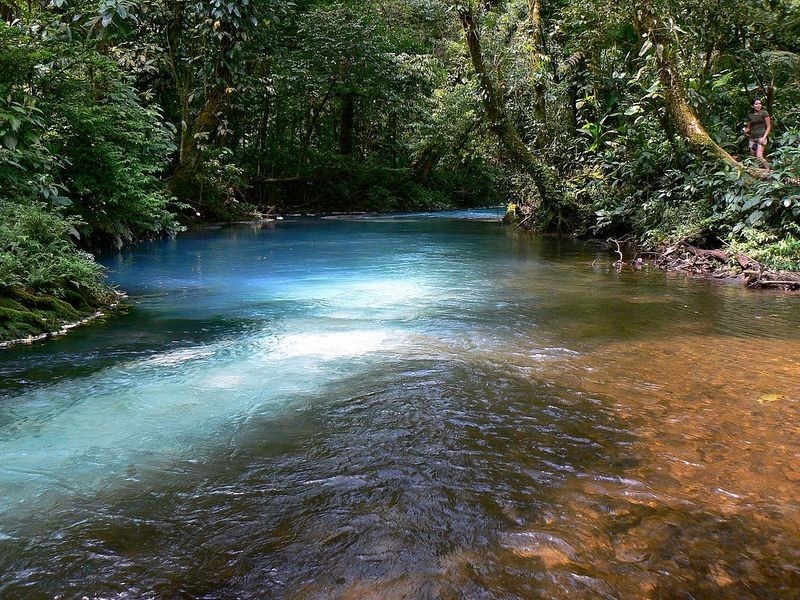
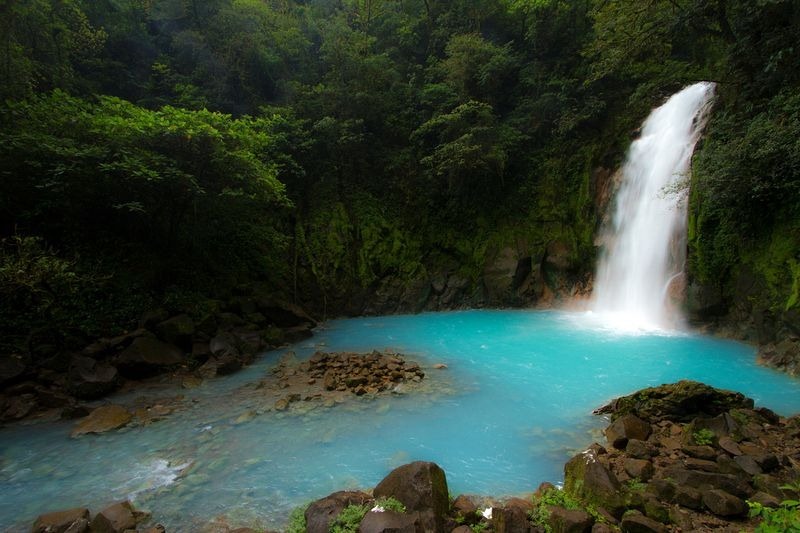
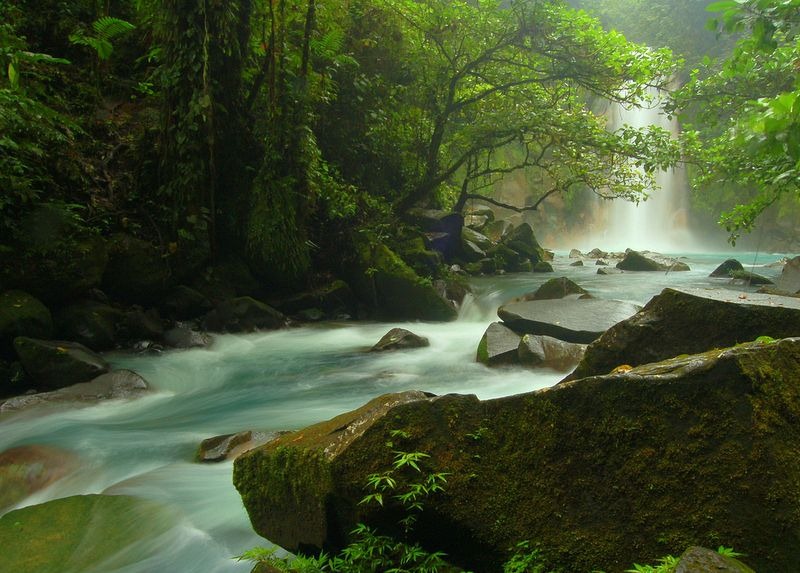
Winding through the verdant rainforest of Tenorio Volcano National Park of Costa Rica, is a bright blue river called Rio Celeste. The river is formed by the confluence of two smaller rivers called the Sour Creek and the Good View River. At precisely the point where the waters of the two completely transparent rivers meet, that the blue color starts. For that reason, this point is known as El Teñidor, which means “The Dyer” in English.

Until very recently, scientist were unable to fully explain why Río Celeste has such a distinctive turquoise coloration. Many hypotheses were put forward such as the water contained copper or calcium carbonate and sulfur, or that the river’s proximity to the Tenorio Volcano caused it have the blue color. It is now known that the blue color arises due to a physical phenomenon known as Mie scattering triggered by the presence of certain minerals in the river’s water that causes sunlight to reflect in such a manner that it gives the water its incredible hue.

rio-celeste-3

Photo credit: The Rohit/Flickr

As already mentioned, Río Celeste is fed by two rivers — Sour Creek and Good View River. The Good View River carries significant quantities of a type of whitish mineral known as aluminosilicate, that is composed of aluminum, silicon and oxygen. This is the mineral that is responsible for reflecting the blue color in sunlight. But if the mineral is also contained in the Good View River, why doesn’t it appear blue like Río Celeste? The answer lies in the size of the particles.

Researchers found that Good View River particles have a size of 184 nanometers, while in the Río Celeste the particles are much larger at 566 nm.

“This increase in size is what causes the scattering of sunlight, such that it occurs principally in the blue region of the visible spectrum. So that’s why we have that spectacular light blue color of the Rio Celeste” said Dr. Max Chavarría Vargas, lead investigator.

But why are the aluminosilicate particles in Río Celeste bigger than those in Good View River, when the particles itself came from the Good View River? It so happens that Sour Creek, the second river to join Good View River, is highly acidity due to volcanic activity (which is why it’s called Sour Creek). When these two streams mix to form Río Celeste, the drop in pH causes the aluminosilicate particles to aggregate and enlarge producing Mie scattering which gives the river a strong turquoise color.

“It’s one of those quirks of nature where one of the rivers provides mineral material with one size and the other river provides the acidic environment so that those particles grow,” said Dr. Max Chavarría Vargas.

rio-celeste-7

Photo credit: Steve Corey/Flickr

rio-celeste-5

Photo credit: The Rohit/Flickr

rio-celeste-2

Photo credit: Efrain Gonzalez Buitrago/Flickr

rio-celeste-4

Photo credit: The Rohit/Flickr

rio-celeste-1

Photo credit: Bruce Thomson/Flickr

Sources: The Costa Rica Star / Wikipedia

Source…….www.amusingplanet.com

Natarajan

Rare White Giraffe Spotted In Tanzania…!!!

This stunning giraffe has not been photoshopped, she’s real! Omo, the 15-month-old beauty whose skin looks as if it was bleached, is suffering from leucism. It’s a condition that results in a partial loss of pigmentation.

She was spotted in Tarangire National Park in Tanzania by Dr Derek Lee, founder and scientist at the Wild Nature Institute. “Omo appears to get along with the other giraffes, she has always been seen with a large group of normally coloured giraffe – they don’t seem to mind her different colouring,” he explained.

“We and our partners are working on giraffe conservation and anti-poaching to help give Omo and her relatives a better chance of survival. We hope that she lives a long life and that some day she has calves of her own.”

More info: wildnatureinstitute.org

“Omo is the only pale giraffe we are currently aware of,” said Dr Derek Lee

white-giraffe-leucism-albino-rare-animals-omo-tanzania-7

“Omo appears to get along with the other giraffes…they don’t seem to mind her different colouring”

white-giraffe-leucism-albino-rare-animals-omo-tanzania-8

“Adult giraffes are regularly poached for bush meat, and her colouration might make her a target”

white-giraffe-leucism-albino-rare-animals-omo-tanzania-9

“We and our partners are working on giraffe conservation and anti-poaching to help give Omo and her relatives a better chance of survival”

white-giraffe-leucism-albino-rare-animals-omo-tanzania-12

“We hope that she lives a long life and that some day she has calves of her own”

white-giraffe-leucism-albino-rare-animals-omo-tanzania-11

Source………www.boredpanda.com

Natarajan

Image of the Day…Space Station Flyover of the Mediterranean…

Nighttime photograph from low Earth orbit of Mediterranean showing clouds and city lights

Expedition 46 flight engineer Tim Peake of the European Space Agency (ESA) shared this stunning nighttime photograph with his social media followers on Jan. 25, 2016, writing, “Beautiful night pass over Italy, Alps and Mediterranean.”

Image Credit: ESA/NASA

Source…….www.nasa.gov

Natarajan

Neft Dasları: A City Built On Oil Platforms…!!!

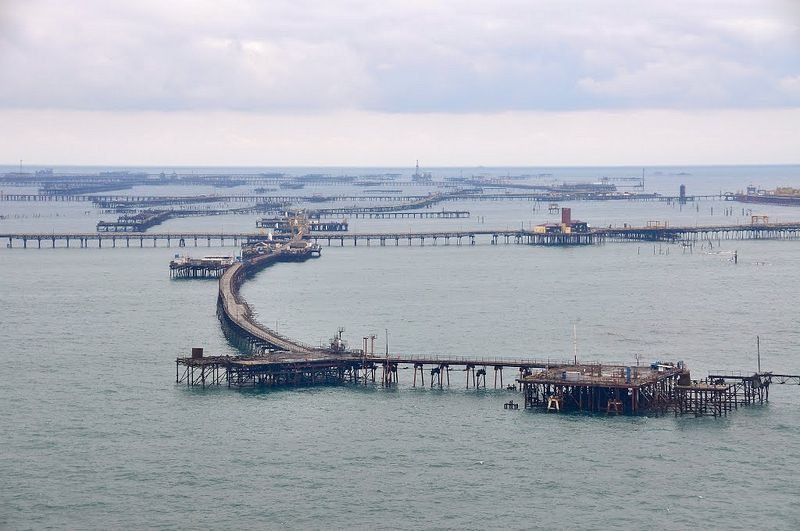
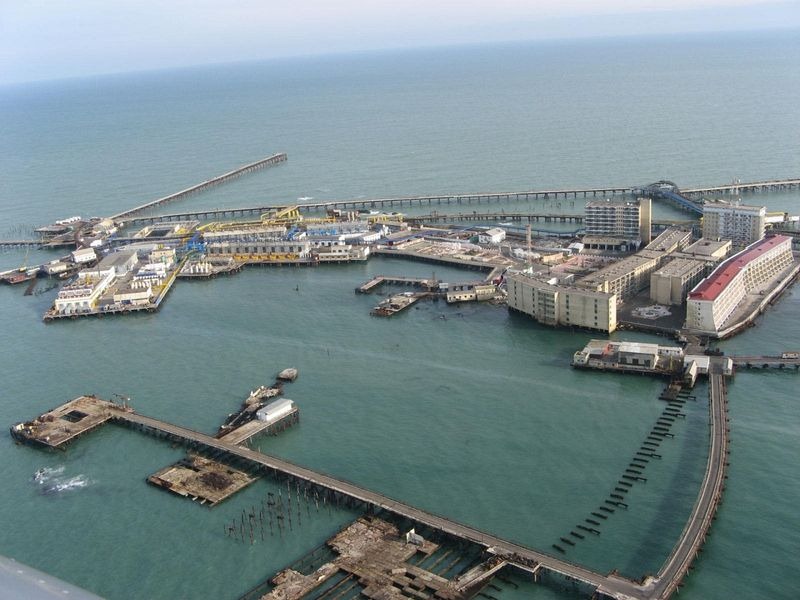
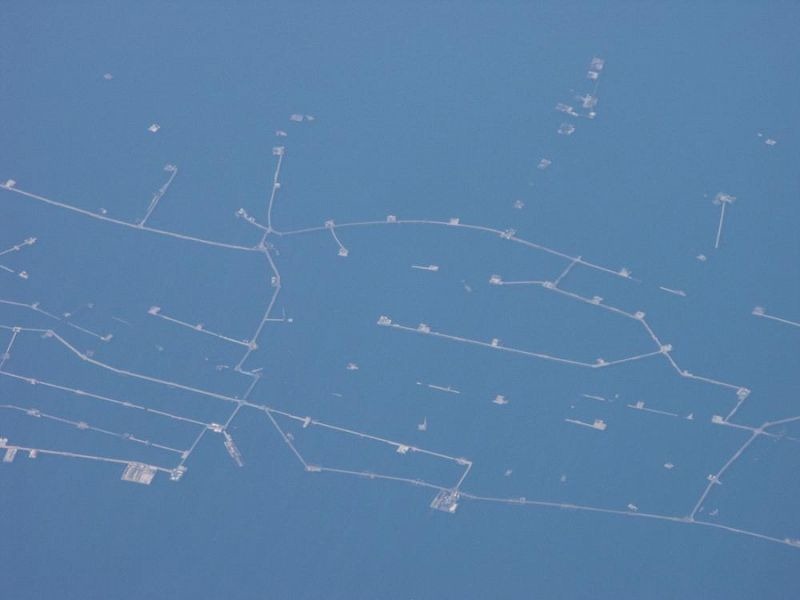
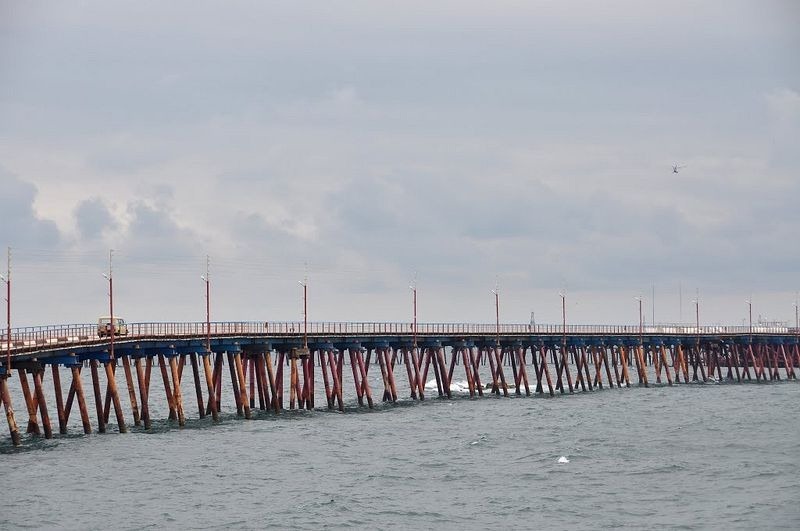
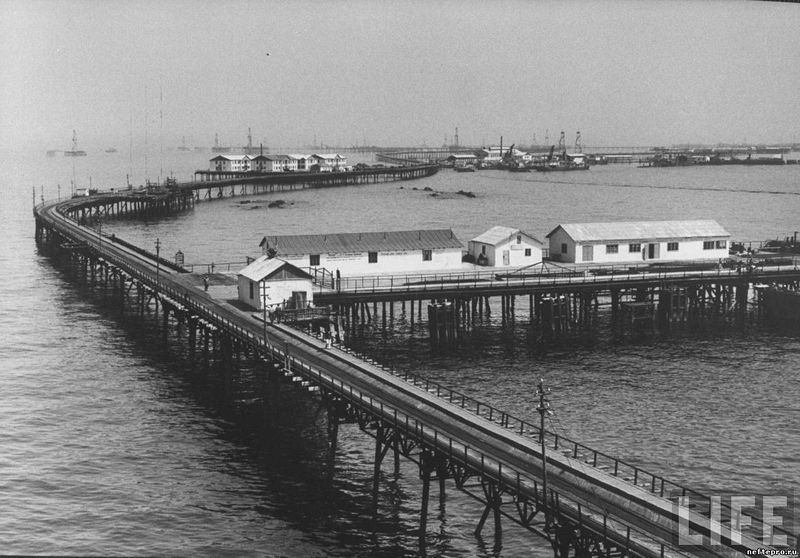
Far out into the Caspian Sea, a hundred kilometers away from the Azerbaijani capital Baku, lies one of the most incredible settlements in the world. A fully functional city of 3,000 living in a network of oil platforms and artificial islands connected by 300 km of trestle bridges. This is Neft Daslari, also known as Oil Rocks, and it lies fully within the world’s largest lake at an incredible distance of 55 km from the lake’s shore.

Azerbaijan has been famed for its rich oil resources since ancient times. There is evidence of oil drilling and actual trade in petroleum as early as the 3rd and 4th centuries. Historical accounts of the area’s oil and natural gas seepage can be found in old Arabic and Persian manuscripts, as well as in the writings of famous travellers such as Marco Polo. The Persians called the area the “Land of Fire”.

neft-dasları-18

Photo credit: geozet.ru


Modern drilling began in 1870 after Russia conquered the territory. By the start of the First World War, Azerbaijan’s oil wells were already supplying 175 million barrels of crude oil a year, or 75 percent of the country’s entire oil production. After the war, while exploring for oil in the Caspian Sea, Soviet engineers struck top-quality oil at a depth of 1,100 meters below the seabed. Shortly thereafter, the world’s first offshore oil platform was built at the spot, and Neft Daslari was born.

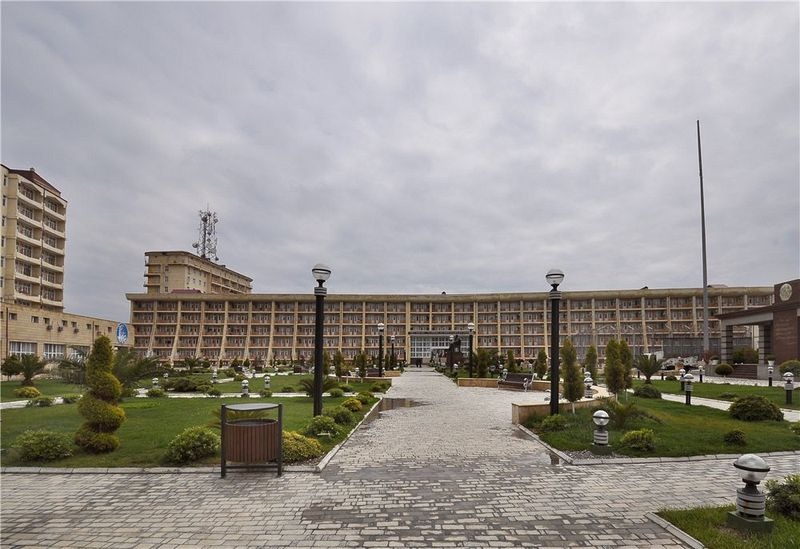
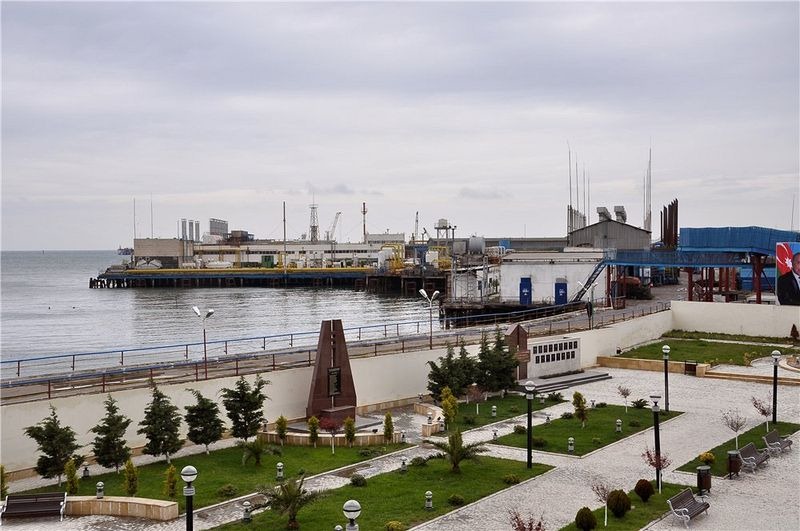
The original foundation of Neft Daslari consisted of seven sunken ships including the world’s first oil tanker. Over the decades this grew to some 2,000 drilling platforms spread in a 30-kilometer circle, joined by a network of bridge viaducts spanning 300 kilometers. Over these platforms, workers built eight-story apartment blocks, a beverage factory, soccer pitch, library, bakery, laundry, 300-seat cinema, bathhouse, vegetable garden and even a tree-lined park for which the soil was brought from the mainland. During its heydays, some 5,000 workers lived here.

Neft Daslari’s decline began with the collapse of the Soviet Union and the discovery of new oilfields elsewhere. The workforce was reduced and many oil rigs were abandoned. Neglect and lack of maintenance caused many of them to collapse into the sea. Others are in the process of crumbling. Out of the 300 kilometers of roads, only 45 kilometers remain usable, and even they have fallen into disrepair. To the government, however, the place is still the proud, closely-guarded secret it was in Soviet times. It is still very hard for foreigners to gain access to the city. You can’t even zoom into it on Google Maps.

neft-dasları-5

Photo credit: IPAAT/Panoramio

neft-dasları-6

neft-dasları-17

Photo credit: infoglaz.ru

neft-dasları-21

neft-dasları-1

Photo credit: infoglaz.ru

neft-dasları-19

Photo credit: infoglaz.ru

neft-dasları-7

Photo credit: IPAAT/Panoramio

neft-dasları-13

neft-dasları-15

neft-dasları-8

neft-dasları-11

neft-dasları-12

neft-dasları-20\

neft-dasları-3

Photo credit: geozet.ru

Sources: Spiegel / Wikipedia

Source……www.amusingplanet.com

Natarajan
Images of the Day…Animals on safari !!!

Africa promises one of the best safari experiences in the world, enabling you to see the five big wild animal groups: the lion, the leopard, the elephant, the rhino and the buffalo. Capturing a good photo of these beautiful animals is not always easy, and very often, it comes down to being at the right place at the right time. But, the pictures below are pretty incredible. So, get ready to enjoy some animal watching with this great photo series!

safari animals

Male lion ignoring a group of Thomson’s Gazelles.


safari animals

‘One day I’ll be tall like mommy’.


safari animals

Young male leopard watching the setting sun.

safari animals

Black-face Vervet monkeys as seen on safari in Tanzania

safari animals

The ‘painted wolf’, also known as the African wild dog, is Africa’s most endangered predator.


safari animals

Two male lions relaxing in the sun.

safari animals

Elephants playing in the red soil. Taken at Sheldrick Elephant Orphanage in Nairobi National Park in Kenya, Africa.


safari animals

A male lion getting some sun at the Serengeti National Park in Tanzania, Africa. This may be the best wildlife reserve in all of Africa, renowned for the variety and number of animals living in it, both predator and prey.

safari animals

A beautiful shot of two elephants at the Kruger National Park, another of Africa’s large game reserves, which covers 18,989 square kilometers (7,332 square miles), and is 360 kilometers (220 miles) long.

safari animals

Another resident of Kruger National Park slowing down traffic for a while.

Source………www.ba-bamail.com

natarajan

We Must Salute this Hero …

The terrorists were armed with AK-47s, grenades, pistols, knives, many rounds of ammunition.

Sepoy Jagdish Chand’s weapons were his bare hands and enormous courage. He died, but not before he had felled one of India’s enemies.

Archana Masih/Rediff.com speaks to the family of Sepoy Jagdish Chand, one of the 7 soldiers martyred in the terrorist attack on the Pathankot Air Force Station, who was awarded the Kirti Chakra posthumously for his courage on Republic Day.

Martyred soldier Sepoy Jagdish Chand

Martyred soldier Jagdish Chand in a photograph taken when he was posted in Kashmir. Photographs: Kind courtesy: Kiran Bala.

Last week Snehalata returned to her home in Basa village in Himachal Pradesh’s Chamba district after immersing her martyred husband’s ashes in the Ganga in Haridwar.

Sepoy Jagdish Chand, 48, died battling terrorists at the Indian Air Force base in Pathankot on January 2. He was in the cookhouse when terrorists launched an attack and killed three of his mates.

Unarmed, the trooper ran after one of the terrorists and wrestled him to the ground. The terrorist was armed with an AK-47, grenades, knives, many rounds of ammunition. Sepoy Jagdish Chand’s weapons were his bare hands and enormous courage. He turned the terrorist’s own rifle on him and shot him dead. Tragically, he was felled by another terrorist’s bullet.

Sepoy Jagdish Chand had served 25 years in the Indian Army’s 7 Dogra Regiment and was re-employed by the Defence Security Corps after retirement from the army. He had served in Srinagar, Leh and with the Indian Peace Keeping Force in Sri Lanka, where he had won two medals for duty, says his family.

Martyred soldier Sepoy Jagdish Chand

IMAGE: Martyred soldier Sepoy Jagdish Chand served in the Indian Army for two-and-a-half decades and served in Indian Peace Keeping Mission in Sri Lanka.


The family in Basa received the news of his passing at 10.30 the following morning. They had seen him just a couple of days ago when he had stopped en route to Pathankot where he had been posted from Leh in Jammu and Kashmir.

“He was very particular about his attendance and very proud of the fauj,” says his daughter Kiran Bala on the telephone.

“He spent that day going to the post office, transferred some money into our account and in the evening called some relatives over for a meal. He loved his food and enjoyed inviting our relatives who lived nearby,” says Kiran who is doing an MA in Economics.

At 6 the next morning, the soldier bade his family goodbye. His wife quickly packed his tiffin and he was off with another fauji friend who was also returning to base.

In less than 48 hours Sepoy Jagdish Chand was dead. The news of the Pathankot siege had started coming on television and the worried family called his mobile phone several times only to find it switched off.

As a trooper for the Defence Security Corps, which is entrusted to guard military installations, he was stationed at the Pathankot airbase, one of India’s frontline airbases. He was posted at the DSC mess when the terrorists opened fire.

As his family followed the news, their hearts raced in anxiety. His phone went unanswered repeatedly. “We called his friend there and were told that he was alright. So we thought of nothing untoward,” says daughter Kiran.

“On the first day the press was reporting the names of two other soldiers who had been martyred. My father’s name was not among them,” she adds.

The next day someone called from the Pathankot Air Force Station and when she answered the phone, the caller asked for a male member of the family. The girl called a cousin who was given the sad news.

Martyred soldier Sepoy Jagdish Chand

IMAGE: Martyred soldier Sepoy Jagdish Chand had visited his family a couple of days before his death.

Two jawans killed in the Pathankot attack were from Himachal Pradesh. Last year, seven of the state’s soldiers from the 6 Dogra Regiment were among the 18 killed in a terrorist ambush in Manipur.

Himachal Pradesh has had a long tradition of sending its men to the armed forces. Three Param Vir Chakra awardees, including the first Param Vir Chakra recipient Major Somnath Sharma, hail from the state. Fifty-two soldiers from Himachal Pradesh died in the Kargil War of 1999.

“Three generations of my family have been in the army. My grandfather, father and now us — among we four brothers, three joined the army,” says retired soldier Piar Singh, 58, Sepoy Jagdish Chand’s elder brother.

One brother is still serving in the Indian Army.

In every other house in the village, he says, resides a retired soldier. At one time every house sent a soldier or two to the armed forces. “There are only a few serving jawans in the fauj now. Nowadays our boys are not able to qualify in the selection process and are getting rejected,” says Piar Singh.

Martyr Sepoy Jagdish Chand's son immerses his ashes in the Ganga

IMAGE: Son Rajat and wife Snehalata immerse Martyr Sepoy Jagdish Chand’s ashes in the Ganga.

Sepoy Jagdish Chand’s son Rajat, 21, had tried getting recruited into the army, but was unsuccessful.

Kiran says she is encouraging her younger sister to try for the armed forces.

The family has received Rs 20 lakhs (Rs 2 million) in two cheques and a cash amount of Rs 45,000 so far. Since the death will be treated as a battle casualty, his family will continue to receive the pay he drew. Sepoy Jagdish Chand’s funeral was attended by state ministers, officials, defence personnel and many locals.

Kiran, the oldest of the martyr’s children, has been told by many to be strong. ‘You are the eldest; you have to be a source of strength to your mother and siblings,’ she was counselled by those who came for the funeral.

She does not remember much of what happened that day. It is a haze of permanent grief.

“It’s a day we never want to remember. It’s the day the world ended for us.”

Source……….Archana Masih / Rediff.com  in http://www.rediff.com

Natarajan
11 Tales of Valour….We Must Know and share…

As India celebrates its 67th Republic Day, Rediff.com takes a look at some brave men who stood their ground to protect their country from those who sought to bleed it.


Lance Naik Mohan Nath Goswami (ASHOK CHAKRA – POSTHUMOUS)

Honoured For: On the intervening night of September 2-3, 2015, Lance Naik Mohan Nath Goswami was part of an ambush in Haphruda forest at Kupwara district of Jammu & Kashmir.

At about 2015 hours, there was a fierce encounter with four terrorists wherein two of his comrades were injured and pinned down.

Lance Naik Mohan along with his buddy dashed forward to rescue their injured colleagues, knowing well the risks to their own lives.

He first assisted in eliminating one terrorist. Sensing grave danger to three of his wounded colleagues, Lance Naik Mohan with utter disregard to his own personal safety, charged at the remaining terrorists drawing intense fire from them.

He was hit in the thigh. Unmindful, he closed in and eliminated one terrorist, injured another and was again shot in the abdomen.

Undeterred by his injuries, he hurled himself on the last terrorist and killed him at point blank range before succumbing to his wounds. Lance Naik Mohan not only killed two terrorists, but also assisted in neutralizing the other two and save the lives of three of his wounded colleagues.

Subedar Mahendra Singh, Sena Medal (KIRTI CHAKRA)

Honoured For: Subedar Mahendra Singh was a veteran of numerous firefights, where, time and again his inspiring leadership, resilience and courage resulted in outstanding successes.

He had been awarded Sena Medal on the Line of Control for exemplary courage and initiative wherein he shot dead a Pakistan Regular Army in 2013.

On September 2, 2015 at 2015 hours, contact was established with terrorists in Darel forest at Kupwara district of Jammu and Kashmir resulting in multiple splinter injuries to two comrades.

Displaying exemplary leadership, the JCO moved with Lance Naik Mohan Nath Goswami to evacuate his comrades, drawing heavy fire in the process. Sensing the danger to his men, Subedar Mahendra immediately returned fire and displaying raw aggression charged and eliminated one terrorist at close quarters.

His audaciousness startled the other terrorist who opened indiscriminate fire at him. Undeterred, he closed in with the terrorists when one terrorist rushed out firing and grievously wounded Subedar Mahendra in the abdomen.

Despite his injury which paralysed him below the waist, he shot dead the terrorist at point blank range. Heedless of the threat posed by the terrorist fire and his incapacitating wound, he, in order to prevent any further casualties, forbade all attempts to evacuate him and endured tremendous pain to extricate himself.

Sepoy Jagdish Chand (KIRTI CHAKRA – POSTHUMOUS)

Honoured For: Sepoy Jagdish Chand was posted with 546 Defence Service Platoon attached with 18 Wing Air Force.

On the night of January 01/02 2016 at 0330 hours, while working on bonafide military duty at Defence Service Corps lines, five to six heavily armed terrorists entered the lines and opened indiscriminate fire on the troops working in the said location.

The heavy firing resulted in two of his colleagues being fatally wounded.

Showing presence of mind and conspicuous bravery Sepoy Jagdish Chand unmindful of his own safety ran after the closest terrorist, chased and overpowered him. Sepoy Jagdish Chand snatched the terrorist’s weapon to shoot him dead.

In the process two more terrorists in vicinity opened fire on SepoyJagdish Chand killing him on the spot.

The great presence of mind, unmatched bravery and valour by Sepoy Jagdish Chand minimized further loss of lives and gave time for the quick reaction teams in the vicinity to react. Sepoy Jagdish Chand’s actions was also a setback to the terrorists.

Colonel Santosh Yashwant Mahadik (SHAURYA CHAKRA – POSTHUMOUS)

Honoured For: Colonel Santosh Yashwant Mahadik, — a dynamic officer from the Parachute Regiment (Special Forces) — was commanding 41 Rashtriya Rifles from July 2014.

Col Santosh with his inspirational leadership and humane skills and altered the narrative of kupwara town through successful Operation Sadbhavana initiatives in education, sports and health care.

Colonel Santosh was leading a search operation based on specific input about the likely presence of terrorists in general area Manigah Forest of Kupwara district of Jammu and Kashmir on November 17, 2015.

At about 1215 hours, he received an input about the likely movement of terrorists in the forested area near Kashmiri Manigah.
Always having led from the front, Colonel Santosh alongwith his Quick Reaction Team expeditiously moved to the suspected site. As the team was deploying, they came under heavy and effective fire of terrorists hiding in the forest.

Pinned down by the terrorists fire in the open, he immediately maneuvered to outflank the terrorists and engaged them from an advantageous position.

Undeterred by the heavy volume of terrorists fire, Colonel Santosh provided his troops an opportunity to take cover. In the fire fight however, he suffered multiple gunshot wounds. Unmindful of his grievous injuries, Colonel Santosh kept the terrorists pinned down till he was evacuated. He later succumbed to his injuries and attained martyrdom.


Major Praphul Kumar Bhardwaj (SHAURYA CHAKRA)

Honoured For: Major Praphul Kumar Bhardwaj launched a special operation in Awankhu village in Phek district of Nagaland, 120 km from the closest existing Assam Rifles post on the night of July 13, 2015.

Negotiating thick forests and treacherous slopes in extreme and inclement weather, Major Praphul’s party reached the target at 2300 hours, July 15, 2015.

At 2345 hours, on observing some movement around a hut, Major Praphul along with a buddy pair closed in to ascertain the movement upon which they drew heavy volume of fire.

Sensing danger to his party, in the absence of any cover and accurate incoming fire, Major Praphul charged onto the hut and neutralized one terrorist at point blank range.

During this action, he sustained gun shot wound in his right elbow as also his weapon was hit by a bullet, thereby jamming it. Despite profusely bleeding, with his weapon now non functional and his party pinned down, Major Praphul crawled and lobbed two grenades in the hut and neutralized the second terrorist.

Major Anurag Kumar (SHAURYA CHAKRA)

Honoured For: Major Anurag Kumar was leading a helicopter inserted 9 PARA (Special Forces) team in search and destroy operations at Lidder Panzal in Baramulla district of Jammu and Kashmir on August 26/27, 2015.

Post insertion, Major Anurag led his squads to the location where terrorists were last seen and organized the search.

At 1400 hours on August 26, 2015, the officer observed suspicious movement behind boulders and deployed his squads before shouting a challenge which drew indiscriminate terrorist fire.

Realising the grave threat to his men from the ricocheting bullets, the officer risked his safety and under covering fire of Havildar Virender Singh and Naik Javid Ahmad Chopan closed in with and eliminated one terrorist.

Major Anurag then established a cordon to cut off escape of remaining terrorists.

At 1100 hours on August 27, 2015, a terrorist attempting to break the cordon rushed out firing indiscriminately. Unmindful of the heavy fire, Major Anurag engaged and shot dead the terrorist at close quarters. He further engaged one trapped terrorist in a conversation thereby assisting Naik Chopan in his apprehension.

Major Sandip Yadav (SHAURYA CHAKRA)

Honoured For: Major Sandip has been operating in Pulwama since July 2013 and his flair for generating intelligence and conduct of operations is exemplary.

On August 10, information was received about the presence of terrorists in village Ratanpur at Pulwama district of Jammu and Kashmir.

Major Sandip while moving cross country noticed a suspicious movement in a paddy field. The two terrorists immediately opened indiscriminate fire at the officer.

Major Sandip stood his ground and retaliated the fire which pinned down the terrorists. Undeterred by heavy fire and showing exceptional presence of mind, the officer redeployed his team which prevented the escape of terrorists.

On August 11, after a grueling eighteen hours of firefight, Major Sandip decided to crawl close to the terrorists in an open area without any cover. As he was doing so, he came under heavy fire. Unmindful of the grave danger, he crawled close and eliminated both the terrorists. The bold action not only ensured elimination of two Lashker terrorists but also prevented collateral damage.


Lieutenant Harjinder Singh (SHAURYA CHAKRA)

Honoured For: On June 5, 2015, Lieutenant Harjinder Singh was the commander of an ambush point in Jammu and Kashmir.

At 2230 hours, a group of three terrorists was spotted.

Lieutenant Harjinder Singh continuously tracked the movement of the terrorists and immediately assessed the situation and engaged the infiltrators.

The effective fire forced the terrorists to move along the anti-infiltration obstacle system to a higher ground. The terrorists split into two groups to divert attention and escape.

At 0500 hours the officer moved to engage the terrorists. Displaying exemplary courage, he accurately fired the Multi Grenade Launcher and neutralized the first terrorist. In the meantime, the second terrorist opened with automatic fire.

Undeterred by the terrorist fire, the officer closed in with the terrorist and neutralized him at close quarters. Despite grave danger to him, the officer continuously maintained contact with the terrorists and eliminated them in a surgical manner.

Naik Satish Kumar (SHAURYA CHAKRA – POSTHUMOUS)

Honoured For: Naik Satish Kumar had been serving with the 21 Rashtriya Rifles since April 7, 2015.

On December 4, 2015, he was commanding a small team as part of search and destroyed operation in Boban Wastar Forest.

Observing speed and stealth, he led his small team to the likely target area, searching the forest cautiously.

At 1305 hours, Naik Anil was suddenly fired upon by terrorists injuring him.

Realising Naik Anil being hit, Naik Satish Kumar crawled ahead to a fallen tree, engaged and eliminated one terrorist at close range. He then provided Naik Anil first aid and ensured his timely evacuation.

Simultaneously, the second hidden terrorist opened fire injuring him on his right leg. Unmindful of his injury, Naik Satish engaged this terrorist and despite profuse bleeding closed in, lobbing two hand grenade towards the terrorist who was still firing and killed him.

However, during his assault towards the terrorist he suffered another gunshot wound and attained martyrdom.


Naik Kheem Singh Mehra (SHAURYA CHAKRA)

Honoured For: On the night of August 8, 2015, three terrorists attempted infiltration in Lara locality along Jumagund Nar on the Line of Control at Jammu and Kashmir. Naik Kheem Singh Mehra was deployed as a part of an ambush to prevent their escape.

At 0530 hours, the terrorist group was spotted by Naik Kheem Singh moving in the jungle across Jumagund Nar towards Line of Control. Displaying tenacity, grit and total audacity, Naik Kheem Singh advanced across the Nala, climbed on the opposite spur and engaged the terrorists at close range killing one terrorist on the spot and preventing their escape.

Heavy exchange of fire commenced between the terrorists, Naik Kheem Singh’s ambush party. Taking cover of boulder and trees, the terrorists maneuvered to flank the main ambush party. Sensing imminent danger to own party, Naik Kheem Singh with utter disregard to personal safety, broke cover and charged the terrorists killing another terrorist in close quarter fire fight.


Sepoy Dharma Ram (SHAURYA CHAKRA – POSTHUMOUS)

Honoured For: On May 25, 2015 Sepoy Dharma Ram was part of a patrol launched by Major Kobitirha Sanyal towards village Kanjikul at Kulgam district of Jammu and Kashmir.

At 1300 hours the patrol came under sudden heavy volume of fire from a nearby house. Sepoy Dharma Ram exhibited exemplary presence of mind to warn his team of the direction of fire and encountered the terrorist fearlessly in a direct firefight.

He selflessly put himself in the face of terrorist fire and fought with nerves of steel to prevent any team member from getting injured.

During the firefight, the individual sustained two bullet wounds on his back and thigh. Unmindful and undeterred from the grave injury and although bleeding profusely the individual exhibited exemplary field craft to crawl to an appropriate position from where he brought accurate fire on the terrorist and injured him gravely. The terrorist was thus neutralised and identified as Lashkar-e-Tayiba District Commander.

Source……..www.rediff.com

Natarajan

This 81-Year-Old Has Walked over 5,70,000 Km to Spread Awareness Against Tobacco & Alcohol…

At an age when many people want to relax and lead a peaceful life, 81-year-old Bagicha Singh is on a unique mission. He has been walking since the last 23 years and has covered the length and breadth of India more than 21 times. His aim? To spread awareness against tobacco and alcohol consumption, child labour, corruption, and other such social issues.

He has covered over 5,70,000 km till now, and won’t stop as long as he has the strength to serve the nation.

bagicha singh

Source: Facebook

A resident of Panipat, Bagicha Singh started his non-stop journey from Jammu to Kanyakumari on February 22, 1993. After his Class 12 exam, he told his parents that he will never get married because he wants to dedicate his life to the country. He carries a 90 kg backpack with two Indian flags waving on 18 feet long poles.

Throughout his journey, Bagicha Singh met many people including politicians and celebrities. And he has several interesting stories to share:

“On my way from Tezpur to Guwahati in Assam, I had to cross a forest… One has to carry dozens of bananas to cross the forest, as herds of elephants stop their human counterparts and don’t let them go unless they are given their ‘tax’. I carried six kilo bananas, and indulged the elephants. Not far ahead on this journey, I was surrounded by a group of Naga tribesmen…They demanded that I hand over all my belongings…That’s when the elephants came to my rescue! The biggest one among them ran towards the group. The men panicked and fled. The elephant then picked up my bag with its trunk and the whole herd walked with me. Once we reached the road, I was given my bag and the herd walked back in,” he told The Time of India in November 2015, when he was on a break in Hyderabad during his 22nd trip.

After waking up at 5:00 each morning, he walks till 12:00 noon, rests for an hour, and again walks till 7:00 pm. Freedom fighters like Subhash Chandra Bose, Chandra Shekhar Azad and Bhagat Singh inspire this octogenarian, who takes a new route in every trip.

Bagicha Singh hopes that the country’s youth will slowly understand the ill effects of tobacco and alcohol. Watch him talk about his journey here:

Source…..Tanaya  singh in http://www.the better india .com

Natarajan