On Diwali Day Think of Young Kids of Sivakasi who Swelter in the Heat to Make Your Diwali Sparkle!!!!

Reblogged from my earlier Post dated  12 Nov2012

Diwali: Spare a thought for children of Sivakasi

source:::::: Article by Sriram Balasubramaniam in IBN lIVE Blog…

Natarajan

One of the first things that we would be looking in a yearly calendar is the day Diwali would be celebrated. The Indians living in India would be itching to celebrate while the Indians living abroad would make sure their Indian holiday plans are in sync with Diwali time. Joy derived from triumph of good over evil is the hallmark of Diwali. However, there are certain sections of people who need to be remembered, the same people who are the catalyst for making your Diwali as colourful as you want to be.

Every year, 90 per cent of the crackers for Diwali are made from a small place called Sivakasi in South India. This is the capital of the fireworks industry in India and one of the leading centers across the world. After Lui Yang, the Chinese city which is leader in the world production of crackers, Sivakasi is the next hub for global fireworks industries. This is something that we should be proud about, however, this empire has been built on a model of extreme low wages and high casualty rates. According to the Tamil Nadu Fireworks and Amorces Manufacturers Association (TNFAMA), 237 lives have been lost over the last 12 years in fireworks manufacturing plants. In September this year, 39 people lost their lives in a fire at Om Shakti Fireworks in Sivakasi due to lack of adherence to safety norms and regulations in the town. The flouting of safety norms is a norm rather than an aberration in the fireworks industry especially amidst the unorganized and small companies operating across the sector. Even though there has been widespread condemnation by civil society over the state of affairs in Sivakasi, year after year you see a similar situation unfolding. While accidents could happen in any city which produces firecrackers, it rarely happens with the sheer consistency and magnitude of Sivakasi in recent times. Besides the issue of safety, the issue of child labour has plagued the industry for long.

Lets come to terms with this fact; most of the crackers that you are bursting today have had involvement of child labour at some level or the other. Though this is alarming, it is not surprising considering the magnitude of child labour in the fireworks industry across the country. Child labour is regrettably rampant as much in many other industries but the exploitation of children to make crackers that are dangerous is simply unacceptable. According to a UN study published in the mid 1990’s there were 30,000 people employed in the match industry and 3,000 people employed in the fireworks industry in Sivakasi; all in between the age of 6-14. Some estimates suggest that the daily wage for these workers is less than 150 Rupees a day; an abysmal reality that makes it almost on par with the minimum wage for workers in the fireworks industry which has been set at Rs 99.98 per day. Besides the economics, the question is why should the children be doing what they are doing? Shouldn’t they be taken care of by the society and the state? What happened to the self acclaimed goal of education to all? All of these questions point to a greater role needed to be played by both the state and the society at large.

There has to be a systematic response from the government in terms of legislation that tightens the safety norms and action on the ground with more investment in safety monitoring systems. A report from the BBC states that Petroleum and Explosives Safety Organisation (PESO) had just 4 officers overseeing over 1,000 companies and factories in Sivakasi over the last year. Is this good enough? There has to be an increase in manpower in monitoring mechanisms and enhanced law and order which cracks down vehemently on the firecracker owners who are flouting rules. Though there have been raids on companies flouting the law, the issue requires more investment and action. Legislation such as the Child Labour (Prohibition and Regulation) Act of 1986 could be revamped to discourage children from working in family owned businesses etc. In addition, there has to be a sustained effort to educate the public, especially the people in the rural areas, on the impact of this on the children’s future in the years to come.

Society needs to stand up and address these concerns. I am not suggesting we boycott crackers but why not contribute to the upliftment of communities in the Sivakasi belt in the form of public private partnership? Why not work on evolving the best practices that the world’s leading fireworks manufacturing city Lui Yang has? Why not try and provide education tools to these young kids who are sweltering in the heat with their lives on the line? Why not just think about all that we could do to mobilize non governmental resources for this cause? Why not start thinking about all this during an auspicious day such as Diwali?

As you celebrate this Diwali, spare a thought for the people of Sivakasi; after all, they are the ones who make your Diwali sparkle

Wish you a very Happy Diwali!!

 source:::::: Article by Sriram Balasubramaniam in IBN lIVE Blog…
 Natarajan
25th OCT 2016

வாரம் ஒரு கவிதை….” ஜன்னல் நிலா ” !!!


My Tamil Kavithai in Dinamani Kavithaimani  on 24th oct 2016
 

Daniel The Emotional Support Duck Takes His First Plane Ride, Soars In Popularity…!!!


Daniel The Emotional Support Duck

Daniel The Emotional Support Duck Takes His First Plane Ride, Soars In Popularity

Daniel, an emotional-support duck, on board a recent American Airlines flight.

Mark Essig was settling into his puddle-jumper flight from Charlotte to Asheville, N.C., on Monday when he noticed an unusual passenger boarding the plane.

It was a duck. Making his way down the aisle.

Wearing red shoes. And a Captain America diaper.

The duck’s human introduced him to their fellow, now-amused passengers: This was Daniel Turducken Stinkerbutt, or Daniel for short. He is a 4 1/2-year-old Indian Runner duck and is her emotional support animal, she explained.

“I heard a few maybe semi-critical mutterings, like, ‘Now I’ve seen everything,’ ” Essig told The Washington Post. “But most everybody was delighted to have a duck on a plane. As they should be.”

Like many other passengers, Essig snapped a few photos while Daniel and his human were boarding. After takeoff, Essig tried to concentrate on light reading during the flight, but he kept inadvertently glancing toward the duck, just a row ahead and to the right of him.

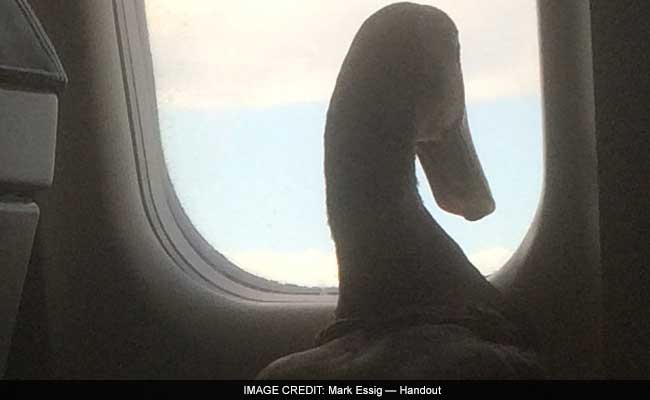
When he saw the duck staring out the window, he couldn’t resist taking one more picture.

daniel-duck-wp_650x400_81477014972

After the flight, Essig posted his photos on Twitter.

“My seatmate, [from] CLT [to] AVL, is this handsome duck named Daniel,” Essig tweeted first. “His gentle quacking eases the sadness of leaving #SFA16,” the Southern Foodways Alliance conference in Mississippi.

Daniel the emotional-support duck looking out the window during his flight.

“I was expecting that this might amuse a couple of my friends,” he said. What he didn’t anticipate was that the photos would go viral.

It turned out that a duck wearing shoes and a diaper on a plane was too much for the Internet to handle.

Essig posted two more photos and a video: one of Daniel in his full red-shoed, diapered glory, and another of the duck wagging his tail while his owner explains that it means that Daniel is happy. Both tweets were shared thousands of times.

The most popular one, however, was a picture of Daniel as the duck seemed to stare forlornly out the airplane window: “Daniel, the duck on my flight, likes to look at the clouds,” Essig stated simply. That photo had more than 5,000 retweets and more than 11,000 likes.

“A duck head is a very recognizable shape, and the shape of an airline window is a very recognizable shape, too,” Essig said. “So you’ve got two very recognizable shapes that don’t normally go together . . . it caught people’s eye.”

The encounter amused Essig but also piqued his curiosity about ducks as support animals — he happens to be the author of “Lesser Beasts,” a book about humans’ complicated relationship with pigs. After the flight, he looked up Daniel’s breed and discovered that Indian Runner ducks do not fly.

“My guess was that he was gazing out the window, looking at the clouds, and the sight triggered a deep ancestral memory of what it was like to fly himself,” Essig said, laughing. “I’m almost certain that’s [what] he was thinking.”

Within two days of Essig’s tweets, Daniel had become an Internet sensation, getting featured on BuzzFeed, ABC News and Cosmopolitan, among many other sites.

The attention surprised Daniel’s owner, Carla Fitzgerald of Wisconsin, “because to me, having an emotional support duck is normal – it’s my new normal.”

Fitzgerald adopted Daniel in 2012, when he was two days old, she told The Post in a phone interview Wednesday. Less than a year later, Fitzgerald, a former horse-and-carriage driver in Milwaukee, was involved in a serious accident.

“Someone who was paying more attention to the phone than the road hit me from behind, with enough force to bust up the carriage,” she said. Her horse was badly injured, and the crash sent Fitzgerald hurtling toward a metal-grated drawbridge. For months, she was immobile.

“It took them four months to teach me how to walk again,” Fitzgerald said. Along with the physical pain, she suffered post-traumatic stress disorder, something she describes as “hell.”

After the accident, Daniel knew things were different – and responded without ever having been trained.

“He would notice something wrong, whether it be my pain or my PTSD,” Fitzgerald said. “He would come and lay on me and [give me] lots of hugging and lots of kisses. And if he notices that I’m going to have a panic attack, he would give me a cue to lay down by trying to climb me.”

At home, Fitzgerald says Daniel communicates with her in other ways: If he needs a new diaper, he walks to his changing table. If he wants food, he walks to the refrigerator or to his feed bowl. Outside of bedtime, he always wears shoes and a diaper, she said, because he is so used to carpet and linoleum.

He apparently enjoys movies, but only “super G-rated” ones. (Daniel responded well to “The Peanuts Movie” but got upset during a chase scene in “The Good Dinosaur,” Fitzgerald said.)

“He doesn’t identify with other ducks because he’s imprinted on humans,” Fitzgerald said. “As far as he’s concerned, he thinks he’s people with feathers.”

Her living room is full of toddler toys that Daniel enjoys, particularly anything that has a button to push or makes a sound, such as keyboards and music boxes.

“And God forbid one of the batteries runs out,” Fitzgerald said. “He stomps his feet, he raises his hackles, he huffs and he gives you stink-eye. And if you don’t change those batteries right now, he gets snippy. He can also tell you when he needs a new diaper.”

Since the accident, Daniel has accompanied Fitzgerald everywhere, mostly car rides. Monday had been Daniel’s first time flying on a plane (or flying, period). She provided a note to the airline from her doctor, who has said it is in Fitzgerald’s best interest to have Daniel around for support, but otherwise had a smooth trip.
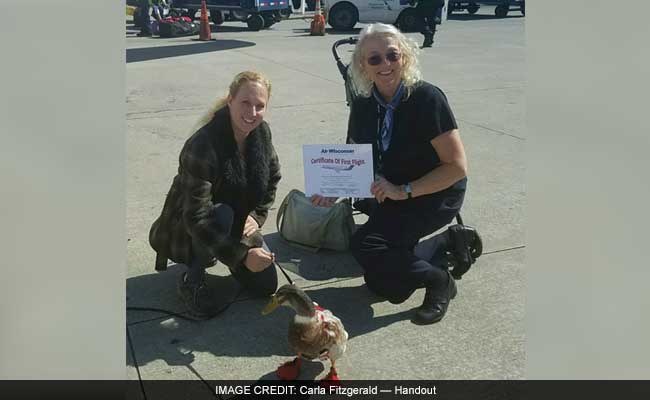
The crew on their first leg, before their connecting flight to Asheville, even insisted on posing for pictures with Daniel and presenting him with a “Certificate of First Flight.”
daniel-duck-wp_650x400_51477015109
The Transportation Department is debating new rules regarding accommodations for disabled people on airplanes, including reviewing rules for emotional-support animals, USA Today reported. The department began allowing emotional-support animals on planes, but the practice of bringing them on board has offended some passengers.”Here’s the thing. Who are we to say what is and what isn’t an emotional support animal or what can and cannot be a pet?” Fitzgerald said. “Or what they can do for people who have PTSD like I do? Having it is hell.”

For the time being, Fitzgerald does not have any other immediate travel plans but said that Daniel will no doubt accompany her on her next trip. She said she thinks that people responded positively to Daniel because he’s unique – but also because he keeps to himself.

“He is obedient and he wears a diaper harness, ” she said. ” I make sure before he goes in public that he has a shower, so there’s no smell to him. When he’s in public, he behaves. He’s not flapping and running around and chasing people.”

However, Fitzgerald might be a little more prepared next time since, as her friends put it, “Daniel broke the Internet” after his first plane ride.

“I didn’t know that a little Indian Runner duck who weighs six pounds could cause such an uproar,” she said.

Source…..www.ndtv.com
Natarajan

பெர்முடா முக்கோண மர்மம்… இதுதான் காரணமா?…


பெர்முடா முக்கோண மர்மம்… இதுதான் காரணமா?

  bermuda-triangle_15463


யற்கை மனிதகுலத்திற்குப் பல ஆச்சர்யங்களை தன்னுள் வைத்திருக்கிறது. ஆச்சர்யங்கள் அனைத்தையும் மனிதனால் ஒரே மூச்சில் கண்டுபிடிக்க முடியாவிட்டாலும், தொடர்ந்து பல ஆண்டுகள் ஆராய்ச்சியின் மூலம் அதைக் கண்டுபிடிக்கும் வண்ணம் தொழில்நுட்பம் வளர்ந்துவிட்டது. பூமியில் இன்னமும் தீர்க்கப்படாத சில சிக்கல்கள் இருக்கின்றன. அதில் முக்கியமானது ‘பெர்முடா முக்கோணம்’. அதை வைத்து எடுக்கப்பட்ட திரைப்படங்களும், புத்தகங்களும் கோடிக்கணக்கான வருவாயை அள்ளித் தந்துள்ளன. ஆனால், பெர்முடா முக்கோணத்தின் மர்மம் மட்டும் மர்மமாகவே இருந்தது.

பெர்முடா முக்கோணம் என்றால் என்ன ?

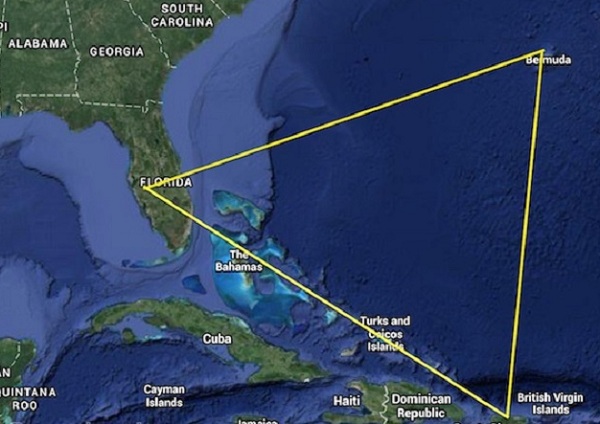
வடக்கு அமெரிக்காவுக்கு கிழக்கே, பனாமா கால்வாய்க்கு அருகில் அமைந்துள்ளது பெர்முடா தீவு. அதை ஒட்டி இருக்கும் மர்மமான பிரதேசத்துக்கு வைக்கப்பட்ட பெயர் தான் பெர்முடா முக்கோணம். இதை சாத்தானின் முக்கோணம் என்றும் மக்கள் அழைக்கிறார்கள். அதற்குக் காரணம், அந்தக் கடல் பகுதியில் செல்லும் விமானங்கள், கப்பல்கள் எல்லாம் மாயமாய் மறைந்து போவதுதான். பெர்முடா முக்கோணத்தின் அருகே செல்லும் போது திசை காட்டிகள் செயலிழக்கின்றன என்று முதன் முறையாகக் கண்டறிந்து கூறியவர் கொலம்பஸ். அந்தப் பகுதியில் வானத்தில் ஓர் எரிப்பந்தைக் கண்டதாகவும் அவர் கூறியிருக்கிறார். அதன்பின் 1872-ம் ஆண்டு ‘மேரி செலஸ்டி’என்கிற கப்பலும், 1918-ம் ஆண்டு ‘யு.எஸ்.எஸ் சைக்ளோப்ஸ்’ என்கிற கப்பலும் சில நூறு பயணிகளுடன் காணாமல் போனது.
1945-ம் ஆண்டு பிளைட் 19 வகையைச் சேர்ந்த 5 ராணுவ விமானங்கள் அந்தப் பகுதியில் பறக்கும்போது காணாமல் போயின. 1949-ல் ஜமைக்கா நாட்டுக்குச் சொந்தமான பயணிகள் விமானம் 39 பயணிகளுடன் மாயமானது. இப்படி நூற்றுக்கும் மேற்பட்ட சம்பவங்கள் அந்தப் பகுதியில் நிகழ்ந்ததாகப் பதிவாகி இருப்பதால், அது மர்மப் பிரதேசமாகவே திகழ்கிறது.

விமானியின் அனுபவம் 

இதுவரை அந்தப் பகுதியில் காணாமல் போன விமானங்களோ, கப்பல்களோ கண்டுபிடிக்கப்படவில்லை. ஆயிரத்துக்கும் மேற்பட்ட மனித உயிர்கள் பலியாகி இருக்கின்றன. அந்தப்பகுதியில் இருந்து தப்பி வந்த புரூஸ் ஹெனன் என்கிற விமானி சொன்ன அனுபவம் தான் பெர்முடா முக்கோணம் பற்றிய ஆராய்ச்சிக்கு விதையாக அமைந்தது. அவர் ஒருமுறை மியாமியிலிருந்து பனாமா கால்வாய் வழியாகத் திரும்பிக் கொண்டு இருந்தார். அப்போது தீடீரென்று அவரைச் சுற்றி கருமேகங்கள் சூழ்ந்தது, திசைகாட்டும் கருவி விடாமல் சுற்றிக் கொண்டே இருந்தது. அவரால் திசையைத் தீர்மானிக்க முடியவில்லை. இருப்பினும் தொடர்ந்து விமானத்தை இயக்கியவர், மேகக்கூட்டங்களுக்கு நடுவே ஒரு குகை போன்ற வழியைக் கண்டார். 16 கிலோமீட்டர் நீளமான அந்தக்குகை போன்ற மேகக்கூட்டத்தை 20 நொடிகளில் கடந்ததாக தனது புத்தகத்தில் குறிப்பிட்டு இருக்கிறார். அதுதான் ஆராய்ச்சியாளர்களை மேலும் சிந்திக்க வைத்தது.

காரணம் கண்டுபிடிப்பு

சமீபத்தில் பெர்முடா முக்கோணத்துக்குப் பின்னால் இருக்கும் மர்மத்தைக் கண்டுபிடித்து விட்டதாகச் சொல்லி இருக்கிறார்கள் ஆராய்ச்சியாளர்கள். ஒரு புதிய தியரியை வெளியிட்டு இருக்கிறார்கள். அதன்படி, அந்தப் பகுதியில் நீடிக்கும் அதிகப்படியான காற்றும், பருவநிலை மாற்றங்கள் ஏற்படுத்தும் அழுத்தமும், அறுங்கோண வடிவில் சுழலும் மேகங்கள் 170 மைல் வேகத்தில் ஏற்படுத்தும் காற்று அழுத்தமும்தான் அதற்குக் காரணம் என்று சொல்லி இருக்கிறார்கள். அந்தக் காற்றுப்படிமங்கள் கப்பல்களையும், விமானங்களையும் உள்ளிழுத்துக் கொள்ளும் சக்திவாய்ந்ததாக இருப்பதாகக் கண்டுபிடித்து இருக்கிறார்கள்.

இதுகுறித்து, வானியல் ஆராய்ச்சியாளர் ராண்டி சேர்வெனி குறிப்பிடும்போது, ‘செயற்கைக்கோள்கள் மூலம் எடுக்கப்பட்ட புகைப்படங்களில், இந்தக் காற்று வடிவங்கள் மிகவும் வினோதமான வடிவில் இருக்கின்றன. இவை ஏற்படுத்தும் வெடிப்புதான் அழுத்தத்துக்குக் காரணம் என்பது தெளிவாகத் தெரிகிறது’ என்றிருக்கிறார்

எப்படியோ இத்தனை ஆண்டு கால மர்மம் ஒருவழியாகத் தெளிவாகி இருக்கிறது.

Source…..மா.அ.மோகன் பிரபாகரன் in http://www.vikatan.com

Natarajan


வாரம் ஒரு கவிதை … “மனம் என்னும் மாயப் பேய் !!!”


மனம் என்னும் மாயப் பேய் !!!
……………………
மனம் ஒரு குரங்குதான் …இல்லை என்று சொல்லவில்லை  நான் !
இங்கும்  அங்கும் அலையும் மனக் குரங்கை அடக்கி வைக்கும் ஒரு
குரங்காட்டியாக  நீ இருக்கலாம்… தவறில்லை !
மனக் குரங்கு தறி கெட்டு நெறி தவறி அடங்கா குரங்காட்டம்
போடும் நேரம் உன் மனமே ஒரு பேயாக மாறும் ,உன்னை தன்
மாய வலையில்  சிக்கவைத்து ..! உன்னையும்  மாற்றும்
அந்த மாயப் பேய்  தன் கூட்டத்தின்  ஒரு அங்கமாக !
சிக்கவும்   வேண்டாம் அந்த  மாய வலையில் …மாயாவியாக
நீ மாறவும் வேண்டாம் !…  ஒரு நல்ல குரங்காட்டியாக மட்டும்
நீ இருந்தால்!   உன் மனக் குரங்கும்  ஒரு குரங்காக மட்டுமே
அலையும்  என்றைக்கும்…  நீ போடும் “கோட்டை”  தாண்டாமல் !
நல்லன ஏற்று  அல்லன ஒதுக்கி உன் மன சிற்பம்  நீ செதுக்கினால்
அல்லல் என்றும் இல்லை உனக்கு  தம்பி !  உன்
மனம் என்றும் நல்ல மனமாக மணக்கும் …உன் வாழ்வும் இனிக்கும் !
இந்த ஊரும்  நாடும் உன்னைப்  போற்றி  வணங்கும் !
Natarajan
http://www.dinamani.com  on 17th oct 2016

A train journey and two names to remember….


Of two co-travellers who surprised the writer with their graciousness, 24 years ago

It was the summer of 1990. As Indian Railway (Traffic) Service probationers, my friend and I travelled by train from Lucknow to Delhi. Two MPs were also travelling in the same bogie. That was fine, but the behaviour of some 12 people who were travelling with them without reservation was terrifying. They forced us to vacate our reserved berths and sit on the luggage, and passed obscene and abusive comments. We cowered in fright and squirmed with rage. It was a harrowing night in the company of an unruly battalion; we were on edge, on the thin line between honour and dishonour. All other passengers seemed to have vanished, along with the Travelling Ticket Examiner.

We reached Delhi the next morning without being physically harmed by the goons, though we were emotionally wrecked. My friend was so traumatised she decided to skip the next phase of training in Ahmedabad and stayed back in Delhi. I decided to carry on since another batchmate was joining me. (She is Utpalparna Hazarika, now Executive Director, Railway Board.) We boarded an overnight train to Gujarat’s capital, this time without reservations as there wasn’t enough time to arrange for them. We had been wait-listed.

We met the TTE of the first class bogie, and told him how we had to get to Ahmedabad. The train was heavily booked, but he politely led us to a coupe to sit as he tried to help us. I looked at the two potential co-travellers, two politicians, as could be discerned from their white khadi attire, and panicked. “They’re decent people, regular travellers on this route, nothing to worry,” the TTE assured us. One of them was in his mid-forties with a normal, affectionate face, and the other in his late-thirties with a warm but somewhat impervious expression. They readily made space for us by almost squeezing themselves to one corner.

They introduced themselves: two BJP leaders from Gujarat. The names were told but quickly forgotten as names of co-passengers were inconsequential at that moment. We also introduced ourselves, two Railway service probationers from Assam. The conversation turned to different topics, particularly in the areas of History and the Polity. My friend, a post-graduate in History from Delhi University and very intelligent, took part. I too chipped in. The discussion veered around to the formation of the Hindu Mahasabha and the Muslim League.

The senior one was an enthusiastic participant. The younger one mostly remained quiet, but his body language conveyed his total mental involvement in what was being discussed, though he hardly contributed. Then I mentioned Syama Prasad Mookerjee’s death, why it was still considered a mystery by many. He suddenly asked: “How do you know about Syama Prasad Mookerjee?” I had to tell him that when my father was a post-graduate student in Calcutta University, as its Vice-Chancellor he had arranged a scholarship for the young man from Assam. My father often reminisced about that and regretted his untimely death [in June 1953 at the age of 51].

The younger man then almost looked away and spoke in a hushed tone almost to himself: “It’s good they know so many things …”

Suddenly the senior man proposed: “Why don’t you join our party in Gujarat?” We both laughed it off, saying we were not from Gujarat. The younger man then forcefully interjected: “So what? We don’t have any problem on that. We welcome talent in our State.” I could see a sudden spark in his calm demeanour.

The food arrived, four vegetarian thalis. We ate in silence. When the pantry-car manager came to take the payment, the younger man paid for all of us. I muttered a feeble ‘thank you’, but he almost dismissed that as something utterly trivial. I observed at that moment that he had a different kind of glow in his eyes, which one could hardly miss. He rarely spoke, mostly listened.

The TTE then came and informed us the train was packed and he couldn’t arrange berths for us. Both men immediately stood up and said: “It’s okay, we’ll manage.” They swiftly spread a cloth on the floor and went to sleep, while we occupied the berths.

What a contrast! The previous night we had felt very insecure travelling with a bunch of politicians, and here we were travelling with two politicians in a coupe, with no fear.

The next morning, when the train neared Ahmedabad, both of them asked us about our lodging arrangements in the city. The senior one told us that in case of any problem, the doors of his house were open for us. There was some kind of genuine concern in the voice or the facial contours of the otherwise apparently inscrutable younger one, and he told us: “I’m like a nomad, I don’t have a proper home to invite you but you can accept his offer of safe shelter in this new place.”

We thanked them for that invitation and assured them that accommodation was not going to be a problem for us.

Before the train came to a stop, I pulled out my diary and asked them for their names again. I didn’t want to forget the names of two large-hearted fellow passengers who almost forced me to revise my opinion about politicians in general. I scribbled down the names quickly as the train was about to stop:Shankersinh Vaghela and Narendra Modi.

I wrote on this episode in an Assamese newspaper in 1995. It was a tribute to two unknown politicians from Gujarat for giving up their comfort ungrudgingly for the sake of two bens from Assam. When I wrote that, I didn’t have the faintest idea that these two people were going to become so prominent, or that I would hear more about them later. When Mr. Vaghela became Chief Minister of Gujarat in 1996, I was glad. When Mr. Modi took office as Chief Minister in 2001, I felt elated. (A few months later, another Assamese daily reproduced my 1995 piece.) And now, he is the Prime Minister of India.

Every time I see him on TV, I remember that warm meal, that gentle courtesy, caring and sense of security that we got that night far from home in a train, and bow my head.

(The author is General Manager of the Centre for Railway Information System, Indian Railways, New Delhi. leenasarma@rediffmail.com)

A Priceless Lesson From A.P.J. Abdul Kalam On The Power Of Change…


Excerpted from a book by A.P.J Abdul Kalam:

Dear friends, I strongly feel that no youth today needs to fear about the future. Why? The ignited mind of the youth is the most powerful resource on the Earth.

Let me give you some examples of those who made a change in their lives and became true ignited minds.
A unique experience happened when I went to Madurai to inaugurate the Paediatric Oncology Cancer unit at Meenakshi Mission Hospital on 7 January 2011. After I completed the task, suddenly one person from the audience approached me and his face looked familiar. When he came closer, I found out that he was once my driver when I was the Director of Defence Research and Development Lab (DRDL) at Hyderabad in 1982–92. His name is V. Kathiresan, and he had worked with me day and night for those ten years. During that time, I noticed, he was always reading some books, newspapers and journals during his waiting time in the car. That dedication had attracted me and I asked him a question. ‘Why do you read during your leisure time?’ He replied that his children used to ask him lot of questions. Since he didn’t always know the answer, he would study whenever time permitted in order to give them the best answers. The spirit of learning in him impressed me and I told him to study formally through distance education and gave him some free time to attend the course and complete his 10+2 and then to apply for higher education. He took that as a challenge and kept on studying and upgraded his educational qualifications. He did B.A. (History), then he did M.A. (History) and then he did M.A. (Political Science) and completed his B.Ed and then M.Ed and he worked with me up to 1992. Thereafter he registered for his doctoral studies and got his PhD in 2001. He joined the Education Department of Tamil Nadu government and served there for a number of years. In 2010, he became an assistant professor in the Government Arts College at Mellur near Madurai.

When I was invited to address the students of UPMS School, Kovilpatti, I again met Professor Kathiresan who was sitting on the dais. I introduced Professor Kathiresan to the gathering and brought out how he, a native of that same town, has transformed himself, earned a doctorate and was teaching in a college after two decades of hard work. This incident cheered the entire young audience.

Friends, I visualize a scene. A school having about 50 teachers and 750 students. It is a place of beauty and for fostering creativity and learning. How is it possible? It is because the school management and the Principal selected the teachers who love teaching, who treat the students as their children or grandchildren. The children see the teachers as role models not only in teaching but how they conduct their lives. Above all, I see an environment in which there is nothing like a good student, average student or poor student. The whole school and teacher system is involved in generating students who perform to their best. And above all, what should be the traits the teacher should possess based on teachers’ life both inside the class room and outside the school? When good teachers walk among them, the students should feel the heat of knowledge and the purity of their lives radiate from them. This race of teachers should multiply.

As a child moves towards teenage and then adulthood, his carefree attitude is slowly taken over by many pressures. What will I do after my education? Will I get a proper employment?

Teachers and parents should preserve the happy smiles on the faces of their children even when they complete their school education. The student should feel confident that ‘I can do it’. He or she should have the self-esteem and the capability to become an employment generator. This transformation can only be brought about by a teacher who has the vision to transform.

I have always liked to sit in a class. When I visit schools and colleges in India and abroad, I like to see how teachers teach and students interact in the classroom. Recently, I was in Andhra Pradesh, in a one-teacher school classroom. The school had classes only up to the fifth grade. I was with the students and the teacher was teaching. How happy were the children? The teacher was telling the young students, ‘Dear children, you see the full moon, the beautiful scene in the sky brings smiles and cheers. Remember, as you smile the family also smiles. How many of you keep your parents happy?’ The whole class lifted their hands. They said, they would do it. I also lifted my hand along with the students.

Another experience was during my visit to UAE. I inaugurated an Indian school in Dubai. When the preparation was going on for the inaugural function, I was moving from place to place in the school. I visited classrooms where students from class five and six were being taught. As soon as the teacher saw me, she asked me to take the class. So I started interacting with the students. Instead of loading them with the lessons. I asked them how many planets does our sun have? Many hands went up. One girl said, there are nine planets and some students said, there are eight planets. I said the right answer is eight planets, since the ninth planet Pluto has been removed from the list of planets, because it does not meet the criteria of a planet, in size, weight and orbital motion. I asked, ‘Tell me, which is our planet?’ There was a chorus in reply, ‘Earth’. Then I asked, ‘Who will talk about the Earth?’ One sixth class student got up and said, ‘Our Earth rotates on its own axis.’ Many students said, ‘It takes 24 hours for one orbit that’s how we get day and night.’ I was very pleased with the knowledge of the young on the solar system. Then I asked the class, what does the Earth do, there was pin drop silence. Again a fifth class student said, ‘Earth orbits around the sun.’ How much time it takes to complete the one orbit? Many hands went up, they said 365 days. Our sun belongs to which galaxy? Only one boy responded, ‘Milky Way’. How much time our sun takes for one orbit of our galaxy? No response. Of course, it is difficult. I gave the answer: 200 million years. The children had a great surprise. I was impressed with the class and greeted them and left.

I am giving you these examples to illustrate, how students can be encouraged to build their self-confidence. I am sure teachers may adopt several methods to make the class dynamic and creative for promoting sustained interest among the students.

(From Address at Villa Nazreth English Medium School and other schools, Aryanad, Thiruvananthapuram, 22 February 2015 and Address and interaction with the students of CRPF Public School, Hakimpet, Telangana, 20 March 2015)


Source….http://www.youthkiawaaz.com/2016/10/apj-abdul-kalam-life-lessons-for-youth/

Natarajan

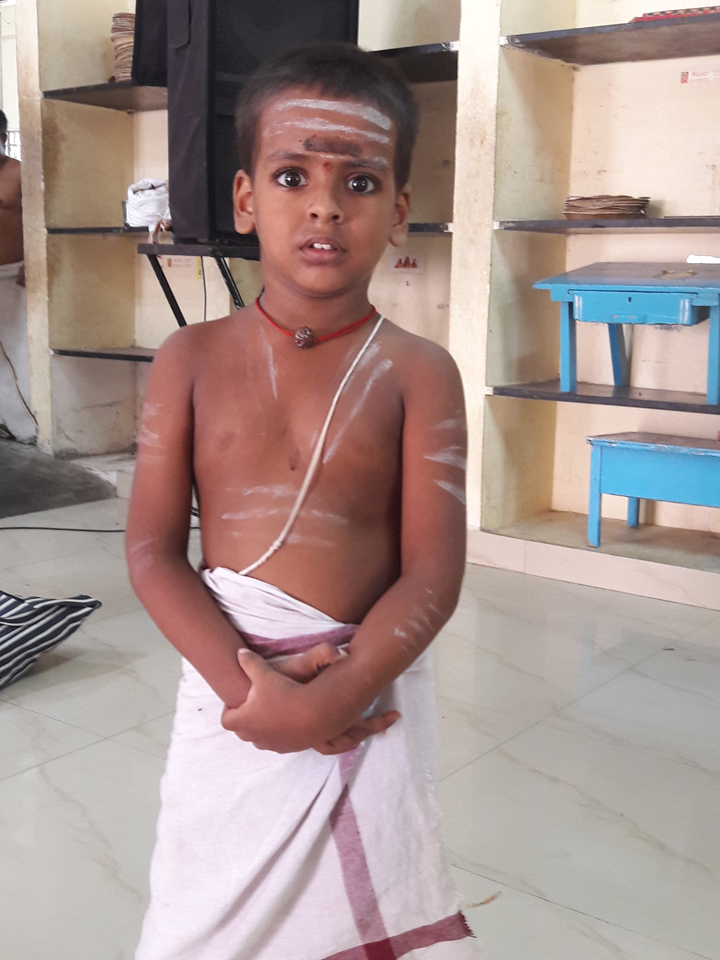
படித்து மனம் நெகிழ்ந்தது …வேதம் படிக்கும் குழந்தை …!

padasala-3-fb

Source….Input from my friend Shri Swaminathan thro mail
Natarajan

2 lakh to 3300 crore: The BYJU’s Classes success story…Meet Byju Raveendran!


‘A business cannot be driven by the passion to make money, the passion to change society is far more important.’
‘After a certain point, what value has money to a person?’

30byjus-classes-2

A son of teachers, teaching never fascinated Byju Raveendran when he was young. His passion was sports.

After working for a couple of years as a globetrotting service engineer for a shipping firm, Byju became a teacher by accident.

On holiday, he helped some friends pass the Common Aptitude Test entrance examination.

From then on, requests started pouring in from friends of friends, and their friends. In no time, ‘Byju’s classes’ became so popular that he quit his job and flying from one city to another to take classes.

His classrooms grew from a single room, to a hall, and then an auditorium and at one point even a stadium!

He launched the BYJU’s Learning App for school students in 2015. The learning app also coaches for CAT, the civil services examination, the Joint Entrance Examination (JEE), the National Eligibility and Entrance Test (NEET), the Graduate Record Examination (GRE) and the Graduate Management Admission Test (GMAT).

The idea appealed to many investors and in 2016 alone, venture capital firm Sequoia Capital and Belgian investment firm Sofina invested $75 million (approximately Rs 500 crore/Rs 5 billion) into the firm. This was the largest fundraising in the education start-up segment in India.

The latest investment into Byju’s firm (September 2016) is the $50 million (Rs 332 crore/Rs 3.32 billion) from the Chan Zuckerberg Initiative, the philanthropic organisation created by Facebook founder Mark Zuckerberg and his wife Dr Priscilla Chan in 2015.

Byju spoke with Rediff.com‘s Shobha Warrier about his wonderful journey from mechanical engineer to successful entrepreneur.

Growing up in a village in Kerala

I grew up in Azhikode, a small village in Kannur, Kerala, the bastion of Communism.

I do not know whether it was the influence of Communism or the face of any typical village, the social fabric was very closely knit and people were politically and socially active.

Both my parents were teachers at the school I studied. My father Raveendran was a physics teacher and my mother Shobhanavalli taught maths. I grew up in a joint family where my father’s brother and sister and their children also lived.

Normally, children of teachers are pressured to concentrate on academics, but my parents were so open minded that they let me participate and excel in sports which was my major passion as a student.

Other than life skills, they never gave me any coaching in any subject. Though some of my teachers used to complain to my parents that I was missing a lot of classes due to my sports activities, they supported me to pursue what I liked.

In Kannur, football is a passion for everyone, but I played almost every sport available when in school, and football, cricket and table tennis at the university level.

‘I had my education in a Malayalam medium school and I learnt English on my own, mainly by listening to cricket commentary.’

It was quite common that many students who studied in Malayalam medium schools felt inferior in front of those who studied in English medium schools while in college.

My father’s influence was tremendous in my life as he let me be free of the confinement of classrooms and I feel you learn a lot more outside the classrooms than inside.

The biggest lessons I learnt from my sporting days were how to lead a team, teamwork, and how to perform under pressure. All these helped me immensely when I became an entrepreneur.

In addition, I learnt the value of controlled aggression, how to be extremely positive and that losing and winning are both part of the game.

We played games for fun and not in the structured way most kids play these days. Unlike children who play video games inside their homes, those who run around and played outdoor games learn a lot more life skills.

There is no substitute for playing outdoor games with other children.

Though I played sports well, I did not have any ambition to be a cricketer or a football player. I played games because I enjoyed playing them. In fact, I enjoy every moment of my life; I do not do anything expecting anything in return. Maybe I inherited this attitude from my father who is super cool about everything in life.

The choices in front of all the students at that time were either be an engineer or a doctor, and I chose to study engineering. One reason why I chose engineering was I knew I would get more time to play as medicine students hardly got time to play sports.

From a village in Kerala to travelling around the world

After studying mechanical engineering, I got a job in a multinational shipping firm and started travelling all around the world as a service engineer.

It was a very challenging and exciting job and as I travelled to new places, I became more and more aspirational.

If anyone had asked me at that time whether I would be an entrepreneur in the future, I would have said, no. The desire to be an entrepreneur never even crossed my mind.

After two years of working, I was on holiday in Bangalore, where many of friends worked. It so happened that they were preparing for the CAT exam then and as I was good at maths, they asked for my help.

While I helped them prepare, I also wrote the exam just for fun and see how I fared. To my surprise, I scored in the 100th percentile, but I had no plans to do an MBA in an IIM. My friends also did well and some of them even got admission at the IIMs.

I was back in India again in 2005 on holiday. This time, more friends of my friends came to me for help to prepare for the CAT exams. I was in Bangalore for six weeks and I might have trained more than 1,000 students during the period.

‘As the numbers grew, the venue moved from the terrace of a friend’s house to a classroom, and then to an auditorium.’

The initial workshops were free and students paid for advanced workshops once they liked it.

Because of the enormous response to my teaching, I didn’t go back to my job after that.

Once I started teaching, I realised that I enjoyed teaching tremendously which I was not aware of till then.

Becoming a full time teacher

When I decided to resign from my highly paid job and start teaching, my parents supported me. Never once did they question me. They supported all the decisions I took, like not joining an IIM, quitting my job to start teaching while there were many people who questioned my parents’ indulgence of me.

In those days, I taught CAT aspirants on weekends while I prepared myself on weekdays by trying to come up with innovative ways to solve problems.

I travelled to Pune, Delhi, Chennai and Mumbai during the weekends and in no time I had to add five more cities on weekdays due to constant demand.

Wherever I went, I addressed packed auditoriums; a few times, I ran classes in a stadium. As time passed by, I even took maths workshops for 20,000 students at one time.

I became a popular teacher and I was doing this all by myself. It was an overwhelming experience when thousands of students wait eagerly in various cities for your classes.

Sometimes I wondered whether I deserved the kind of respect and importance they gave me.

Funnily, a person who had never addressed any group of even ten during my school or college days was taking classes to thousands of them in auditoriums.

‘When you take classes in stadiums, teaching gets elevated to become almost like a performance art.’

Soon I started making lots of money, much more than I ever thought I would make as a teacher. As I was a one-man army then, I didn’t have to spend any money on anything except my own efforts.

In 2009, I made videos of my lectures and used V-SAT to beam them to students in 45 cities where I could not travel to.

Byju’s Classes becomes a brand

My classes were referred to as Byju’s Classes from the time my classes became popular.

In 2007, without me knowing, the brand name Byju’s Classes was created by my students and I decided to capitalise on the brand name later. I didn’t want to lose the popularity and the good name the brand had achieved.

In 2011, the idea to form a team came from some of my students who contacted me after finishing their courses at various IIMs. We started the company Think and Learn with 25 to 30 people, but the team grew in numbers every month to more than 1,000 today.

The product our company planned to create was content for school students and the decision to move from CAT to creating content for school students came from my observation of the students I taught.

I felt that most of the students lacked conceptual clarity and a proper foundation. I found that there was a huge gap in how the subjects could be learnt and how they were taught. That is why I wanted to create something that could fill the gap.

Looking back, I feel I excelled in exams because I wrote exams for fun, the same way I played games.

‘Exams never intimidated me. There was no stress or pressure to perform well in the exams. I looked at exams as a part of the learning process.’

Instead of memorising stuff, I used to learn the concepts well, something I found was lacking in many of my students. So, I decided to target the crucial years in a student’s life from the 8th to the 12th standard.

Today, my classes begin for 4th standard children; they are in maths, physics, chemistry and biology.

Maths and science are two subjects for which I had special attitude and I enjoyed both, especially solving maths problems. I never learnt maths and science to write exams. I loved learning on my own and understanding the concepts.

I noticed then and even now that majority of the students learn a subject to score good marks. You lose the pleasure you derive from solving, say a maths problem, by studying for the exam. These students don’t realise the fun they are losing out on by studying only to score high marks.

I was a Maths Olympiad winner in school only because I enjoyed solving maths problems.

The problem with our education system is that it gives more importance to breadth than depth.

We tend to create many generalists and very few specialists.

They tell you to work hard on your weaknesses.

On the contrary, I would argue that you should also build on your strengths!

Asking questions is the key to a student’s success. You see 2-3-year-olds learning things by asking questions all the time, but as they grow, adults discourage them from asking questions.

‘I feel all schools should encourage students to ask questions. Your thought process is alive only when you ask the right questions.’

I love maths and sports equally and it’s tough for me to choose one. My love for maths has helped me a lot in life. For example, I used my strength in solving maths problems to start my own company, attract investors and on a lighter note, even impress the girl I loved to become my wife.

From 2011 to 2015, we immersed ourselves in creating content mainly for school students from classes 6 to 12.

Our content is very contextual and visual. Instead of focusing on the whats of learning, we pay attention to the whys and hows as well.

We created each chapter in a subject like a movie. And it’s not just me; a lot more teachers take classes these days.

We have a 150 strong content team, a 200 member media team to make it into interesting videos and a technology team of 150 to personalise it. In all, we are a 500-member product development team now.

By August 2015, Byju’s Learning App was ready to be launched, and in one year, we have had 5.5 million downloads with 250,000 plus students using it on an annual subscription basis.

We have also found that students spend an average of 40 minutes per session and more than 90 per cent of the students who came on board last year renewed their subscription, acknowledging the fact that they benefited from the learning programme.

Investment over the years


We didn’t invest much initially; the Rs 2 lakh (Rs 200,000) I invested first came from what I made from my classes.

The first investment came in 2013 when Mohandas Pai and Ranjan Pai decided to invest Rs 50 crore (Rs 500 million) in Byju’s Classes.

It was after Ranjan Pai saw how students at the Manipal Institute of Technology attended our video classes in large numbers. We used the money to scale up the team and accelerate product development.

The latest and the most publicised investment was the $50 million invested by the Chan Zuckerberg Initiative. I do not know how we came on to their radar. I assume it must be through some reference.

Two things got them excited in our company: The first was how we use technology to personalise learning and the second was the impact our app has had on students not just in cities, but also in small towns.

Naturally, I was very excited to be noticed by one of the world’s most dynamic young entrepreneurs.

Social impact

With a father who is a Communist, and having grown up in a village in Kannur, money is not really important to me. I am more concerned and interested in seeing our app make a strong social impact.

I didn’t have any drive or passion to start a business, but when I started teaching, I realised that it was my passion and it gave me a lot of satisfaction and enjoyment.

When my classes started creating an impact, it became a business proposition.

‘In the sector that we are in, the real fun is not in creating a billion dollar company but changing the way millions of students learn.’

The most satisfying aspect for me is that we are able to reach out to tens of thousands of students.

I always say I am a teacher by choice and an entrepreneur by chance.

Making money has never been a priority for me, but giving something back to society is. That’s why I take care of the education and healthcare of the underprivileged in my village.

I grew up there and I feel it is my duty to help others come up in life.

I am of the opinion that a business cannot be driven by the passion to make money. The passion to change society is far more important.

After a certain point, what value has money to a person?

Shobha Warrier / Rediff.com

Natarajan


வாரம் ஒரு கவிதை …” எழுத்து “…!


எழுத்து
……….
எண்ணங்களின் பிரதி பலிப்பே
ஒருவன்  எழுதும் கவிதையும்  , கதையும் !
உறங்கும் மக்களையும்  நாட்டையும் உலுக்கி
அவர்தம்  உரிமைக்கு குரல் கொடுக்க வைப்பதும்
அந்த  எழுத்தின் சக்தியே !
ஒருவன் தலை எழுத்தை மாற்றும் சக்தியும் உண்டு
அந்த எண்ணுக்கும் எழுத்துக்கும் !
ஒரு கையெழுத்தின் மதிப்பைக் கூட்டுவதும்
அதே எண் , எழுத்தின் சக்திதான் !
எழுத்தாணி காலம் முதல் இன்றைய மின்னஞ்சல்
யுகம் வரை எண்ணும்  எழுத்தும், இமையும்
விழியுமே  ஒரு  மனிதனுக்கு !
Natarajan  in http://www.dinamani.com dated 3rd Oct 2016
Natarajan