Message for the Day….” Don’t search for faults in others and hide your own …”

Sathya Sai Baba

It is not the nature of a spiritual aspirant to search for faults in others and hide their own. If your faults are pointed out to you by someone, don’t argue and try to prove that you were right, and don’t bear a grudge against them for it. Reason out within yourself how it is a fault and set right your own behaviour. Rationalising it for your own satisfaction or wreaking vengeance on the person who pointed it out —these should not be the traits of a spiritual aspirant or devotee. The spiritual aspirant must always seek the truthful and joyful, and must avoid all thoughts of the untrue, sad and depressing. Depression, doubt, conceit — these are as detrimental as Rahuand Kethu (evil planetary influences) to the spiritual aspirant. They will harm one’s spiritual practice. When your devotion is well established, these can be easily discarded if they appear. Above all, you must be joyful, smiling, and enthusiastic under all circumstances.

Message for the Day…” All the human beings you see are forms of the Divine…”

Love is Divine. Love all, impart your love even to those who lack love. Love is like a mariner’s compass. Wherever you may keep it, it points the way to God. In every action in daily life manifest your love. Divinity will emerge from that love. This is the easiest path to God-realization. But why aren’t people taking to it? This is because they are obsessed with misconception relating to the means of experiencing God. They regard God as some remote entity attainable only by arduous spiritual practices. God is everywhere. There is no need to search for God. All that you see is a manifestation of the Divine. All the human beings you see are forms of the Divine. Correct your defective vision and you will experience God in all things. Speak lovingly, act lovingly, think with love and do every action with a love-filled heart.

Sathya Sai Baba

Image of the Day…. Robin in the backdrop of Moon !!!

First robin of the year

On Saturday, our friend Suzanne Murphy got her first robin sighting of the year yesterday in southern Wisconsin. Spring is coming!

Photo credit: Suzanne Murphy

Photo credit: Suzanne Murphy

Suzanne Murphy got a sign of spring on Saturday (February 20, 2016). She reported:

I was shooting a photo of the moon above this tree and a robin flew into my photo! This is my first Robin sighting of the year here in southern Wisconsin.

Photo credit: Suzanne Murphy

Photo credit: Suzanne Murphy

Source….www.earthsky.org

Natarajan

” I Survived the Pan Am Hijack During Which Neerja Bhanot Lost Her Life…”

Musician Nayan Pancholi recounts how he lost his eye but survived the Pan Am flight hijack in 1986.

It was September 5, 1986. Our tickets got confirmed at the last moment on Pan-Am Flight-73, which was headed from Mumbai to New York, via Karachi and Frankfurt. We were a group of singers and music composers from Ahmedabad, who were going to perform in different cities of USA. At that time, I was just 21 years old. Our flight took off from Mumbai and landed in Karachi around 4.30 a.m. There were some passengers who got off at Karachi. Cleaners entered the aircraft and were just about the leave. This is when four armed men in airport security clothes entered the aircraft from the business class side. We were seated in economy class at the rear of the plane.

Suddenly, there were screams and three or four shots were fired in the air. One terrorist had a machine gun in his hand, another had grenades and a belt full of bullets, while the other two had many guns and grenades with them.

Everyone was told to have their hands locked above their heads. I just can’t forget that sight. Two terrorists were standing in the front and the other two were standing near the rear. In no time, Neerja Bhanot, the senior flight purser, informed the captain and the other crew members in the cockpit to flee the aircraft.

The captain, the co-pilot, and the cockpit crew had left the aircraft. Except Neerja, all other flight attendants were tied up with ropes. The terrorists used Neerja to communicate with the airline.

There were more than 350 passengers in the plane. To scare us, they even killed a person named Rakesh Kumar and threw him out of the plane.

Then, they started collecting our passports. Somehow, Neerja hid some passports of American citizens under the seats. They kept on shouting and screaming at us in Arabic and continued firing shots in the air. After some time, in the afternoon, they offered us sandwiches. But who on earth can eat food in such a difficult situation?

In the evening, they allowed everyone to go to the toilet, one after the other, by crawling on the floor with our hands locked over our heads.

I still remember, exactly after 17 hours of them hijacking the flight, the fuel ran out. Due to this, the generator of the plane went off, leading to darkness. After the lights went off, the terrorists panicked and started firing aggressively at us. They also started throwing grenades.

I saw many people die in front of my eyes.

Nayan Pancholi was just 21 years old, when the Pan Am flight was hijacked in Karachi.

Nayan Pancholi was just 21 years old when the Pan Am flight was hijacked in Karachi.

My own group director and another girl from the group were shot dead.

I was seated near the emergency exit. I tried to open the emergency exit door, but couldn’t do it. After giving it a second try, it opened, but at the same time a grenade hit me in the left eye. And in a moment, I was down on the ground.

After that, I was taken to the terminal by the army and was later shifted to the hospital. I was given treatment at a hospital in Karachi. After 48 hours, the Indian Airlines flight took all the Indians back home. I was then taken to Jaslok Hospital in Mumbai. But, my eye couldn’t be treated there. So, I was taken to Chicago in the US for treatment, but the doctors there too couldn’t save my left eye.

This incident has had a deep impact on me. It was a very bad day for humanity. That day, nobody saw religion, caste, or creed in each other. That day we saw each other as humans and wanted to help and save each other. It’s as simple as that in end.

This article has been shared via Humans of Amdavad.

About the author: Nayan Pancholi is a singer and composer based in Ahmedabad. He is one of the survivors of the Pan Am plane hijack in 1986.
Source…..www.the betterindia.com
Natarajan

Message for the Day…” Think over the Consequences of whatever you do, talk or execute…”

Every person is liable to commit mistakes without being aware of it. However bright the fire or light, some smoke will emanate from it. So also, whatever good deed a person might do, mixed with it will be a minute trace of evil. But efforts should be made to ensure that the evil is minimised, that the good is more and the bad is less. Naturally in the present atmosphere, you may not succeed in the very first attempt. You must carefully think over the consequences of whatever you do, talk, or execute. In whatever way you want others to honour you, or to love you, or to behave with you, in the same way you should first behave with others, and love and honour them. Then only will those honour you. Instead without yourself honouring and loving others, if you complain that they are not treating you properly, it is surely a wrong conclusion.

Sathya Sai Baba

Here’s what the ‘i’ in iPhone means…..

42-30016373

Apple CEO Steve Jobs is pictured during the presentation of the iPhone in Berlin, 19 September 2007.

IMAGE: PEER GRIMM/DPA/CORBIS
We’ve been seeing it for years. The iMac, iPod, iTunes, iPhone, iPad — the omnipresent “i” prefix has marked most Apple products since the release of the iMac in 1998. But why? What does it mean?

The Internet has been abuzz recently with remembering exactly what Apple’s “i” stands for. At an Apple event in 1998, Steve Jobs introduced the iMac, explaining the link between “i” and “Mac.”

“iMac comes from the marriage of the excitement of the Internet with the simplicity of Macintosh,” he said. “We are targeting this for the no. 1 use that consumers tell us they want a computer for, which is to get on the Internet simply and fast.”

In 1998, the “i” in iMac stood for Internet. Jobs followed these statements with a slide that expanded upon what else the “i” means to Apple:

iAppleSlide

At an Apple event in 1998, Steve Jobs breaks down what the “i” in iMac stands for.

VIDEO: YOUTUBE, EVERYSTEVEJOBSVIDEO

Besides Internet, Apple’s prefix also stood for individual, instruct, inform and inspire.

Since then, the “i” has moved beyond its Internet-centric meaning; Apple probably didn’t have the Internet in mind when naming the original iPod.

When the iPhone was announced in 2007, one of its three key ingredients was Internet communication, bringing the “i” back to its original intended meaning of Internet. (The other two fundamentals were music and phone calls.)

Since then, nearly every device has had some form of Internet connectivity built in, and the “i” has lost its association with that specific meaning and has come to represent the Apple brand.

But as Apple continues to grow into other markets, including smartwatches and TV boxes, its famous prefix seems to be falling to the wayside. Instead of iWatch and iTV, we have Apple Watch and Apple TV. Perhaps this is because we no longer need to know our devices connect to the Internet — it’s something we’ve come to expect.

Source…..www.stumbleupon.com

Story Credit from….

Kellen Beck

Tech news reporter intern at Mashable and senior journalism major at Ithaca College. Computer lover and aspiring professional wrestler. Follow me at https://twitter.com/Kellenbeck
Natarajan
 

Here’s How the Tricolour Is Helping Women in Jharkand Prepare Nutritious Meals!….

Orange, white and green don’t just represent the Indian national flag. These colours also signify quality nutrition and good health.

Mention the word ‘tiranga’ or tricolour to Sheela Devi, a resident of Kasudih village in Jharkhand’s Deoghar district, and her face lights up with a smile.

To her the these colours don’t just represent the Indian national flag – they are also the ones that signify quality nutrition and good health.

Sheela has taken to including all the three colours of the flag – orange, white, and green – in her family’s daily diet.

Women across 50 villages in Deoghar district of Jharkhand are cooking up the ‘tiranga bhojan’ or tricolour meal. (Credit: Saadia Azim\WFS)

Women across 50 villages in Deoghar district of Jharkhand are cooking up the ‘tiranga bhojan’ or tricolour meal. (Credit: Saadia Azim\WFS)

The orange comes from the lentils, the green from leafy vegetables, and white from rice and milk. There was a time when she, along with other women in the region, used to serve up unbalanced, carbohydrate-rich meals of rice, potatoes and, occasionally, lentils.

But ever since the ‘tiranga bhojan’, or tricolour meal approach, initiated by a local NGO  has laid emphasis on the quality and not just the quantity of food eaten, afflictions like severe malnutrition and anaemia in the district have been curtailed considerably.

In 2013, when several incidents of infant deaths were reported from Deoghar district and attributed to chronic, neonatal and pregnancy-related complications, they brought into sharp focus the problem of malnutrition that the region was facing.

This was when the Centre for World Solidarity (CWS), which is involved in activities to combat under-nutrition in the area, decided to do the hunger mapping exercise here, randomly picking 50 villages in Devipur block for the survey. The findings that emerged certainly proved to be an eye-opener.

Of the total population surveyed, 14.6% reported to be chronically ill, 20.5% was malnourished and 64.9% had some kind of disease.

Analysis of the dietary intake provided further clarity. While 90% of households mainly ate starchy foods, protein consumption was found to be low in 60% of the population. Other nutrients like iron, potassium and calcium were rarely present in the average meal. Ironically, although vegetable production was good in the area, most of produce was sent off to the markets to be sold.

Rajesh Jha of the CWS, points out, “The reality was that people were not aware of the need to have an adequate and balanced diet. When we conducted a study on nutrition security in rural Jharkhand, what came to our notice was that people just liked to eat rice and potato.”

Talking about the food she usually cooks, Sangita Devi, 30, a mother of four growing children in Daranga Panchayat, only confirms Jha’s observations.

She says, “Like any other tribal household, we have boiled rice and potatoes three times a day. That’s our staple meal. In fact, my children relish potato curry. We do grow vegetables at home and in the nearby fields, but they are seen as stock to be sold off.”

The hunger mapping clearly pointed to the fact that even though their diet gave the locals high levels of energy to work tirelessly in the fields, it was also one of the reasons behind the moderate to severe malnutrition and anaemia prevalent among the children and women. The survey disclosed that 9% women were severely malnourished, while 40% pregnant women showed signs of severe anaemia, with pale lower eyelids and nails.

Additionally, more than 15% of them complained of oedema or swelling. Besides irregular eating patterns, there were other factors that contributed to the dismal health scenario. Bad sanitation practices meant women, especially, developed worm infestations, which, in turn, meant low appetite and lethargy.

Additionally, only 55.3% of pregnant women were registered with the government’s Integrated Child Development Scheme (ICDS). Most of them were availing of the free or subsidised support services, only once, during their entire pregnancy.

Armed with this information, Jha and his team realised that by simply motivating women to add variety to their daily meals, they could improve the health of the community. To ensure this positive behavioural change, they introduced the tricolour meal approach in 50 villages in the block.

When activists and nutritionists of the CWS first came to Parmila Hembram, a resident of Siri village in Deoghar, to talk to her about including all the three colours of the national flag in the family meals, she was confused. What was the need to alter their age-old food habits? And what had these colours got to do with their health? That’s when she was told that her son, Pramod, would end up weak and ill, just like many of the neighbourhood children, if she did not keep a check on what he was eating. That information had her hooked.

“They told me that besides rice and potato, we need vegetables and milk to develop immunity and make the bones strong,” she says.

 Today, Pramila, who is a mother of two, is conscious of what she eats and makes it a point to incorporate food rich in iron and calcium in every meal.

This is Pramod Majhi, whose mother Pramila ensures that she gives him ‘tiranga bhojan’ for every meal. Thanks to the sustained balanced input he has grown taller, his skin is clearer and his hair is black and thick. (Credit: Saadia Azim\WFS)

This is Pramod Majhi, whose mother Pramila ensures that she gives him ‘tiranga bhojan’ for every meal. (Credit: Saadia Azim\WFS)

Money is a constraint of course, because her husband, Nirmal Majhi, a daily wage labourer, only periodically manages to find employment at the government work sites. But that has not stopped her from being innovative and resourceful.

She elaborates, “I know I need to eat ‘tiranga bhojan’ in order to be a healthy mother. I ensure that the tricolour content is present in all our meals. I have seen the difference it has made to my son. He has definitely grown taller. His skin is clearer and his hair is black and thick.”

For a steady supply of greens and other vegetables in her kitchen, Pramila has created a small food garden. The leafy pumpkin and gourd creepers hang temptingly from her rooftop. And whatever is surplus, she sells in the weekly village market to make some quick money.

According to the CWS team’s observations, none of the elements of the ‘tiranga bhojan’ are difficult to source or cultivate locally. Produce such as jackfruit, fenugreek, spinach, ‘bathua’ (wild spinach), red spinach, and a variety of beans, grow easily within a span of two months and provide the much-needed iron.

Yet, it wasn’t easy to get the women to make the switch. There were even cultural practices to contend with. In some pockets, tribal customs banned the intake of certain nutrition-rich foods like soyabean and mushrooms.

What did help, however, was the intervention of local health volunteers like Sweta Devi, 26, who, incidentally, is a graduate in Rural Development.

 Sweta Devi, (fifth from left) a graduate in Rural Development, takes her role as a health volunteer very seriously. (Credit: Saadia Azim\WFS)

Sweta Devi, (fifth from left) a graduate in Rural Development, takes her role as a health volunteer very seriously. (Credit: Saadia Azim\WFS)

“I know how difficult it sometimes can be to put food on the table in these parts. During the monsoon season, in particular, villages here become inaccessible and we have seen severe food scarcity in many households. So we try to tell everyone to utilise what is locally available and is good for health,” she says.

She finds that with the ‘tiranga bhojan’ approach – where people are instructed not only to eat the right kinds of food but to cultivate their own small garden patches – things have become better. “Women know it’s prudent to forage or grow tricolour foods than look for a competent doctor later on,” she adds.

In Kasudih village these days, Sheela Devi is religiously practicing ‘circle garden farming’ to cook up a ‘tiranga bhojan’

 In Kasudih village, which is part of the Tatkiyo panchayat, Sheela Devi has taken to cooking ‘tiranga bhojan’ to ensure proper nutrition for the family. (Credit: Saadia Azim\WFS)

In Kasudih village, which is part of the Tatkiyo panchayat, Sheela Devi has taken to cooking ‘tiranga bhojan’ to ensure proper nutrition for the family. (Credit: Saadia Azim\WFS)

“Unlike in Siri village where irrigation is not a problem, in Kasudih, water is scarce. So I recycle the waste water from household chores and irrigate my garden, where I grow local varieties of vegetable. Not only are we eating better, but our income has increased too,” she says.

Featured image source: Flickr/pee vee

Source……Saadia  Azim in http://www.the betterindia.com

Natarajan

Message for the Day….” What is the true “naivedyam” to God …? “

Young age is like a delicious fruit. You should offer this sweet and delicious fruit to God. It is not possible to begin worshipping God after retirement in old age, when your body becomes weak, the sense organs lose their power, and the mind becomes feeble. Start early, drive slowly and reach safely. Start praying to God right from an early age. If you do not undertake sacred actions when your physical and mental faculties are strong, then when will you perform them? What can you do when the sense organs have lost all their power? Hence practice offering the fragrant flowers of your mind and heart to God with total faith from a young age. This is true naivedyam (food offering). Many people today do not make such offerings. When their senses become weak after indulging in all sorts of sensual pleasures, they think of offering them to God, akin to offering leftover food.

Sathya Sai Baba

The Boiling River….!!!

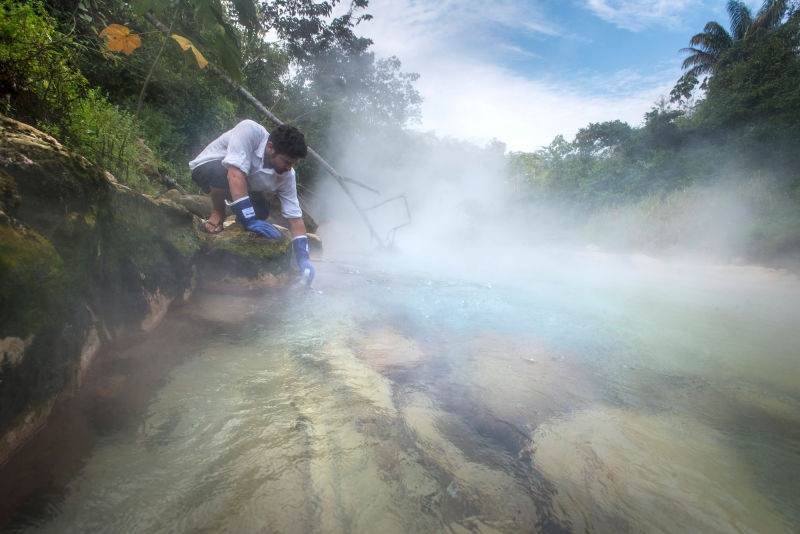
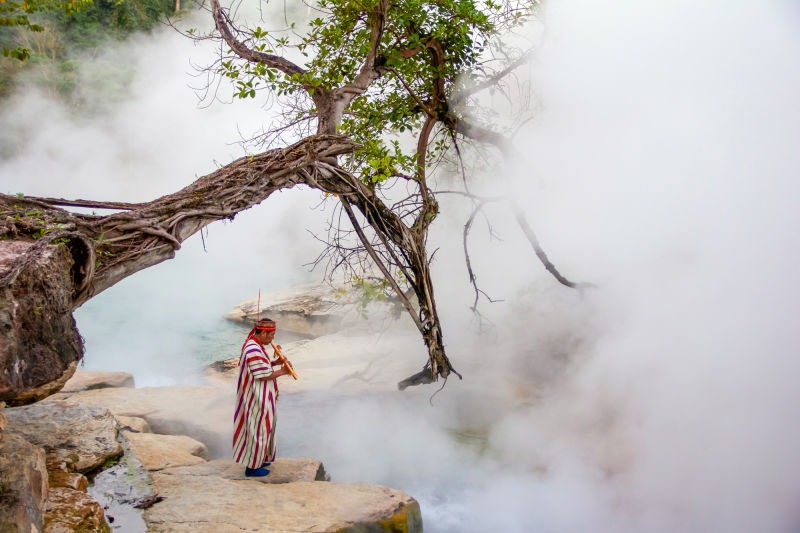
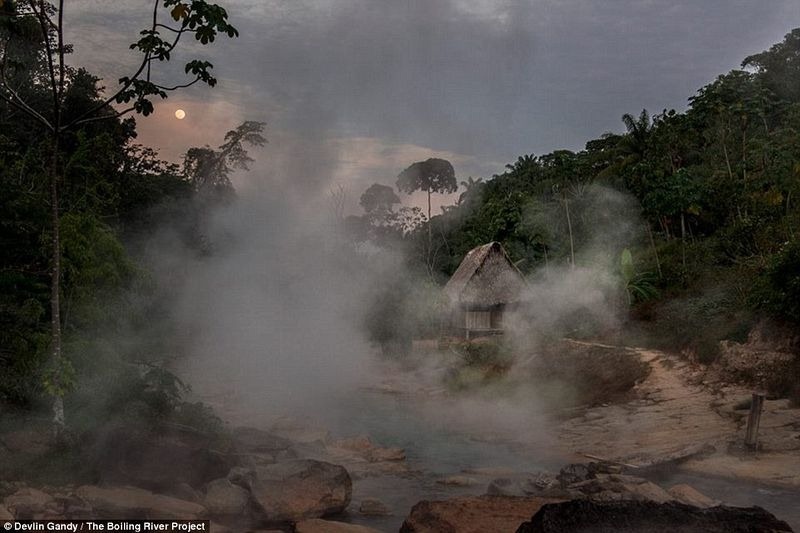
Deep in the Amazon rainforest, in Mayantuyacu, Peru, flows a river so hot its water actually boils. The locals call it “Shanay-timpishka” which loosely translates to “boiled with the heat of the sun.” They believe that the hot water is released by a giant serpent called Yacumama, “Mother of the Waters,” who is represented by a large serpent head-shaped boulder at the river’s headwaters.

The river is about 25 meters wide and 6 meters deep, but only 6.4 km long. The water temperature ranges between 50 and 90 degree centigrade, with small portions touching 100 degrees, hot enough to cause third-degree burns within seconds. Many unfortunate animals have fallen into the river and got killed. While there are documented hot springs in the Amazon, nothing is as large as Shanay-timpishka.

mayantuyacu-boiling-river-6

Photo credit: Devlin Gandy

Each year, a handful of tourists visit Mayantuyacu to experience the traditional medicinal practices of the Asháninka people. But aside from a few obscure references in petroleum journals from the 1930s, scientific documentation of the river is non-existent. Somehow, this natural wonder has managed to elude widespread notice for over seventy five years. For most Peruvians, the river is only a legend. Geologists dismissed it because they argued that it would take a tremendous amount of geothermal heat to boil even a small section of a river, and the Amazon basin lies 400 miles from the nearest active volcano.

Andrés Ruzo, a geothermal scientist at the Southern Methodist University, had no reason to believe the river exists, but the stories intrigued him. Ruzo first heard about the river from his grandfather when he was twelve years old. According to the story he was told, the river was discovered by Spanish conquistadors when they headed deep into the rainforest in search of gold. Some of the men who returned spoke about a dangerous land filled with poisoned water, man-eating snakes, starvation, disease, and a river that boils from below.

Twenty years after his grandfather told him about the river, Ruzo finally found someone who had actually seen the river —his own aunt.

Ruzo has now written a book on the phenomenon, The Boiling River: Adventure and Discovery in the Amazon. He is also conducting detailed geothermal studies of the boiling river, and collaborating with microbial ecologists to investigate the extremophile organisms living in its scalding waters. Ruzo hopes that his book will bring attention to this natural wonder and the increasing threat it has been facing from illegal loggers.

“In the middle of my PhD, I realized, this river is a natural wonder,” Ruzo said. “And it’s not going to be around unless we do something about it.”

mayantuyacu-boiling-river-5

mayantuyacu-boiling-river-4

Photo credit: Sofia Ruzo

mayantuyacu-boiling-river-1

Photo credit: Devlin Gandy

mayantuyacu-boiling-river-3

Photo credit: Devlin Gandy

Sources: Gizmodo / National Geographic via Presurfer

Source…..www.amusing planet.com

Natarajan

This date in science: John Glenn first American to orbit Earth….

On February 20, 1962, John Glenn became the first American to orbit the Earth. He made three turns around the planet before returning safely.

John Glenn and Friendship 7

February 20, 1962. John Glenn became the first American to orbit the Earth on this date. He made three turns around the planet before returning safely in his space capsule, which was called Friendship 7. He followed two Russian cosmonauts in making this early orbit of our planet: Yuri Gagarin ( April 1961) and Gherman Titov (August 1961).

While Glenn was in orbit, NASA controllers received an indication that the heat shield on his craft had come loose. They instructed Glenn not to jettison the rockets underneath the heat shield during re-entry, because the rockets might be able to hold the shield in place. Fortunately, the indication turned out to be a false alarm.

Glenn returned to space at age 77 aboard the space shuttle Discovery in 1995, making him the oldest person to fly in space. His mission’s primary scientific aim at that time was to study the effects of spaceflight on seniors.

John Glenn climbs into the Friendship 7 spacecraft just before making his first trip into space on February 20, 1962. Photo via NASA

John Glenn and Friendship 7

John Glenn and Friendship 7

Here's What John Glenn saw on February 20, 1962.  Just 5 minutes and 44 seconds after launch, Glenn offered his first words about the view from his porthole: “This is Friendship 7. Can see clear back; a big cloud pattern way back across towards the Cape. Beautiful sight.” Three hours later, at the beginning of his third orbit, Glenn photographed this panoramic view of Florida from the Georgia border (right, under clouds) to just north of Cape Canaveral. His American homeland was 162 miles (260 kilometers) below. “I have the Cape in sight down there,” he noted to mission controllers. “It looks real fine from up here. I can see the whole state of Florida just laid out like on a map. Beautiful.”  Image via NASA

Here’s what John Glenn saw on February 20, 1962. Just 5 minutes and 44 seconds after launch, Glenn offered his first words about the view from his porthole: “This is Friendship 7. Can see clear back; a big cloud pattern way back across towards the Cape. Beautiful sight.” Three hours later, at the beginning of his third orbit, Glenn photographed this panoramic view of Florida from the Georgia border (right, under clouds) to just north of Cape Canaveral. His American homeland was 162 miles (260 kilometers) below. “I have the Cape in sight down there,” he noted to mission controllers. “It looks real fine from up here. I can see the whole state of Florida just laid out like on a map. Beautiful.” Image via NASA

Bottom line: John Glenn became the first American to orbit Earth on February 20, 1962. His space capsule was called Friendship 7.

Source……www.earthsky.org

Natarajan