Malala Yousafzai Invites PMs Of India and Pakistan to Award Ceremony…

Nobel Peace Prize winner Malala Yousafzai invites PMs of India, Pak to

award ceremony

Nobel Peace Prize winner Malala Yousafzai invites PMs of India, Pak to award ceremony

Zee Media Bureau/Hemant Abhishek

Seventeen-year-old Nobel Peace Prize winner Malala Yousafzai on Friday said she was in her Chemistry classes when the teacher informed her of the award and she has since felt “honoured” to be the first Pakistani and the youngest person to be given the award.

Malala dedicated the award to the “voiceless” children and said this was a message to kids all around the world that they should stand up for their rights. “This award is for all those children who are voiceless, whose voices need to be heard,” she said.

The award, she said, was not just a medal for her but an encouragement as well. “This is a message that people are standing with me in my fight,” she added.

Malala shares her award with 60-year-old Indian child rights activist Kailash Satyarthi who has freed over 80,000 children from various forms of servitude and helped in their reintegration, rehabilitation and education. The Pakistani teenager said that sharing the honours with Satyarthi signified a lot for her, and averred, “It gives a message to people of love between Pakistan and India, and of different religions.”

Malala expressed her happiness at being chosen for the award alongwith Satyarthi, and vouched to work with him in the future. “I talked over the phone with him and we both decided that we’ll work together for the rights of children,” she said.

Although ‘honoured’ to be sharing the medal with an Indian, Malala expressed her sadness at the state of ties between the two neighbouring countries.

“We know that there are tensions on the Indo-Pak border – it is disappointing and saddening.

I want India and Pakistan to have a dialogue, to think about peace and development, education and progress,” she said.

And with an aim to contribute her bit to bettering Indo-Pak relations, she invited Indian Prime Minister Narendra Modi and his Pakistani counterpart Mian Nawaz Sharif to attend the award ceremony in December.

Malala has been a staunch campaigner for girls’ education – an initiative that wasn’t much-liked by hardliners in Pakistan. She was shot in the head in 2012 in Mingora town of northwest Swat region by Pakistani Taliban militants who opposed education of girls.

The young crusader, who had earlier expressed her desire to become a doctor, said she now wants to become a politician, and summed up saying, “I only had two choices — to not speak up and be killed. And to speak and be killed. I chose the latter.”

SOURCE:::: ZEENEWSINDIA.COM

Natarajan

India”s Kailash Satyarthi Shares Nobel Prize for Peace with Pakistan’s Malala Yousufzai !!!

All about Kailash Satyarthi, India’s Peace Nobel winner

Indian child rights activist Kailash Satyarthi shared the Nobel Peace Prize with Pakistani

teenager Malala Yousufzai who stood up to the Taliban and survived a near-fatal shooting.


NEW DELHI: Possibly India’s best known face against child labour, Kailash Satyarthi shares this year’s Nobel Peace Prize with Pakistani child rights activist Malala. He and his organisation, Bachpan Bachao Andolan (BBA) – the Save Childhood Movement, have single-handedly brought to centre-stage the debate on child rights in India.

“Child slavery is a crime against humanity. Humanity itself is at stake here. A lot of work still remains but I will see the end of child labor in my lifetime,” Satyarthi told The Associated Press at his office in New Delhi. “If any child is a child slave in any part of the world, it is a blot on humanity. It is a disgrace.”

The Nobel committee said: ‘Satyarthi, 60, has maintained the tradition of Mahatma Gandhi and headed various forms of peaceful protests, “focusing on the grave exploitation of children for financial gain.’

Here’s all that you need to know about Kailash Satyarthi:

#1 A human rights activist, Kailash Satyarthi has been at the forefront of a movement in India to end child slavery and exploitative child labour since 1980. Satyarthi has helped free children from slave-labor conditions and advocated for reforms, as director of the South Asia Coalition on Child Servitude and leader of Bachpan Bachao Andolan. In 1994, he founded a group now known as Goodweave, which certifies child-labor-free rugs and provides assistance to rescued and at-risk children.

#2 Kailash Satyarthi has headed various forms of peaceful protests and demonstrations, focusing on the exploitation of children for financial gain.

#3 In 1980, Kailash Satyarthi gave up his job as an electrical engineer to begin the crusade to end exploitation of children in India. As a grassroots activist, he rescued of over 78,500 children who were employed as child labours and developed a successful model for their education and rehabilitation.

#4 He was instrumental in making the problem of child labour in India as a human rights issue. He has established that child labor is responsible for the perpetuation of poverty, unemployment, illiteracy, population explosion and many other social evils.

#5 Satyarthi has also played an important role in linking the fight against child labor with the efforts for achieving ‘Education for All’.

#6 The Nobel Laureate is a member of a high level group formed by UNESCO on Education for all comprising of select Presidents, Prime Ministers and UN Agency Heads.

#7 Kailash Satyarthi has survived numerous attacks on his life during his crusade to end child labour, the most recent being the attack on him and his colleagues while rescuing child slaves from garment sweatshops in Delhi on 17 March 2011.

#8 In 2004 while rescuing children from a local circus mafia, Kailash Satyarthi and his colleagues were brutally attacked. Despite of these attacks and his office being ransacked a number of times his commitment for the cause has been unwavering.

#9 Satyarthi has been honoured by the Former US President Bill Clinton in Washington for featuring in Kerry Kennedy’s Book ‘Speak Truth to Power’, where his life and work featured among the top 50 human rights defenders in the world.

#10 Wikipedia states that Satyarthi has been the subject of a number of documentaries, television series, talk shows, advocacy and awareness films.

He has also won many international awards, including:

·       2014: Nobel Peace Prize, shared with Malala Yousafzai

·       2009: Defenders of Democracy Award (US)

·       2008: Alfonso Comin International Award (Spain)

·       2007: Medal of the Italian Senate (2007)

·       2007: recognized in the list of “Heroes Acting to End Modern Day Slavery” by the US State Department[3]

·       2006: Freedom Award (US)

·       2002: Wallenberg Medal, awarded by the University of Michigan[4]

·       1999: Friedrich Ebert Stiftung Award (Germany)[5]

·       1995: Robert F. Kennedy Human Rights Award (US)[6]

·       1985: The Trumpeter Award (US)

·       1984: The Aachener International Peace Award (Germany)


In his first reaction after the Nobel prize committee in Oslo announced Satyarthi and Pakistani teenager Malala Yousafzai as the joint winners of this year’s Peace Nobel, the 60-year-old head of the Bachpan Bachao Andolan thanked the committee for recognising the plight of millions of children and said the award will help bring global focus on the issue.

What did Kailash Satyarthi say after winning the Nobel Peace prize?

“I am thankful to the Nobel committee for recognising the plight of millions of children who are suffering in this modern age. It is a huge honour for me,” said Satyarthi, who became the second Indian to win the award after Mother Teresa who won it in 1979.

Satyarthi, who is an avid follower of Gandhian philosophy, however, said he would have been happier if the award had gone to the Father of the Nation.

“I was born after the death of Mahatma Gandhi. If the prize had gone to Mahatma Gandhi before me, I would have been more honoured. I am really honoured. This award is for all the citizens of the country,” he said.

Satyarthi, whose organisation has been in the forefront of rescuing children from forced labour and trafficking, said he was happy that the issue has received global attention.

“This is not about simply poverty and rights of children. It is more than that. The fight has to continue. We are happy that the issue has been recognised globally now. I will continue my work,” he said.

The Bachpan Bachao Andolan, established in 1983, is credited with freeing over 80,000 child labourers across India. “We are very humbly fighting for child rights and the award has put more responsibility on me to work towards welfare of children. This is a major issue in India as well as in many other countries,” he said.

A former electrical engineer, Satyarthi has been involved in various global campaigns against exploitation of children which include Global March Against Child Labour, the International Center on Child Labor and Education and the Global Campaign for Education.

Source::::yahoo india.com and Indiatoday .intoday.in

தமிழகம் மறந்த தலைவர் பக்தவத்சலம் ….

பக்தவத்சலம் பிறந்த நாள்: 09.10.1897

மிகவும் தவறாகப் புரிந்துகொள்ளப்பட்ட தலைவர்களுள் பக்தவத்சலமும் ஒருவர்.

தமிழகத்தின் முன்னாள் முதல்வர் எம். பக்தவத்சலம் பிறந்தது புரட்டாசி உத்திரட்டாதியில். 90 ஆண்டுகள் வாழ்ந்தவரோடு இறுதி 13 ஆண்டுகள் எனக்குப் பழக்கமுண்டு. அது எனக்கு மீண்டும் ஒரு பல்கலைக்கழகத்தில் படித்தது போலாயிற்று. அன்றைய தலைவர்களோடு இன்றைய தலைவர்களை வைத்துப் பார்த்தால், பகல் சுருங்கி இரவு கவிந்ததாகத் தெரியும்.

பக்தவத்சலம் தமிழ், ஆங்கிலம் இரு மொழிகளிலுமே நல்ல புலமையையும் தத்துவத்தில் ஆழ்ந்த ஈடுபாட்டை யும் கொண்டிருந்தார். “எனது தமிழாசிரியர் உ. வே. சாமிநாத ஐயர். ஆங்கில ஆசிரியர் ஹென்றி ஸ்டோன். சர்வபள்ளி ராதாகிருஷ்ணன் எனது தர்க்கப் பேராசிரியர்” என்பார்.

மிகவும் தவறாகப் புரிந்துகொள்ளப்பட்டவர்

முன்னாள் மத்திய அமைச்சர் ஓ.வி. அளகேசன் 1978-ல் பக்தவத்சலத்துக்குப் பிறந்த நாள் வாழ்த்துச் செய்தி ஒன்று அனுப்பியிருந்தார். அந்தச் செய்தியில், “பொதுவாழ்விலும் இருந்துகொண்டு தூய்மையாகவும் இருக்க முடியும் என்னும் உண்மையை வாழ்ந்து காட்டுபவர் பக்தவத்சலம்” என்று சொல்லியிருந்தார் அளகேசன்.

சென்னை ராஜாஜி மண்டபத்தில் 1987 மார்ச் 13-ம் நாள் பக்தவத்சலத்துக்கு நினைவுக் கூட்டம் நடந்தது. கூட்டத்தில் பேசும்போது, “மிகவும் தவறாகப் புரிந்து கொள்ளப்பட்ட மனிதர். ஆனால், விமர்சனம் அவரை வருத்தாது” என்றார் கேரளத்தின் முன்னாள் ஆளுநர் பா. ராமச்சந்திரன். பக்தவத்சலத்தின் ஒட்டுமொத்த அரசியல் வாழ்க்கையையும் சுருக்கமாகச் சொல்லிவிடக் கூடிய இரு குறிப்புகளாக இவற்றைச் சொல்லலாம்.

சட்டமன்றத்தில் எப்படி நடந்துகொள்வது என்பதற்கு பக்தவத்சலம்தான் இலக்கணம். எதிராளிகளின் மனம் புண்படாமல் தனது கருத்தைச் சொல்வதில் பக்தவத்சலம் வல்லவர் என்றும் சொல்வார்கள். கேள்வி களுக்குச் சட்டமன்றத்தில் ராஜாஜி பதில் சொல்ல இயலாத சூழ்நிலை ஏற்பட்டால், பதில் சொல்லும்படி தன்னைத்தான் அவர் தூண்டுவார் என்று சொல்லி, ராஜாஜி தன்மேல் வைத்த நம்பிக்கையைக் குறித்து பக்தவத்சலம் பெருமைப்பட்டுக்கொள்வார்.

மாற்றுக் கட்சியானாலும் நண்பர்தான்

அந்நாட்களில் பக்தவத்சலத்தின் பிறந்த நாளன்று காலையிலேயே வீட்டுக்கு வந்து, அவருக்கு நேரில் வாழ்த்து சொல்பவர்கள் பட்டியல் கட்சி எல்லைகளுக்கு அப்பாற்பட்டது. அந்தப் பட்டியலில் முக்கியமானவர் திமுக தலைவர் கருணாநிதி. அப்படி வருபவரை அங்கு கூடியிருக்கும் பக்தவத்சலத்தின் நண்பர்கள் சற்று நேரம் உரையாற்றச் சொல்லி அவர் பேசுவதை ஆர்வமாகக் கேட்பார்கள். சொந்த ஊரிலிருந்த தனது பூர்வீக வீட்டை ஒரு நூலகமாக மாற்ற கருணாநிதி முடிவெடுத்தபோது, அதைத் திறந்துவைக்க அவர் அழைத்ததும் பக்தவத் சலத்தைத்தான். பக்தவத்சலம் சந்தோஷமாகச் சென்று திறந்துவைத்தார். பக்தவத்சலத்தின் கடைசிக் காலத்தில், மதுரையில் கருணாநிதியின் பிறந்த நாள் விழாவுக்கு அழைத்தார் பி.டி.ராஜன். “இந்தத் தள்ளாத வயதில், உடல் நலமும் சரியில்லாத நிலையில், மதுரைக்குச் செல்ல வேண்டாம்” என்று எவ்வளவோ கூறினார்கள் பக்தவத்சலத்தின் உடனிருந்தோர். எதையும் பொருட்படுத்தாமல், இந்தி எதிர்ப்புப் போராட்டத்தின்போது தனக்குச் சிம்ம சொப்பனமாக இருந்தவரின் பிறந்த நாள் விழாவுக்கு காரிலேயே சென்று, விழாவில் உரையாற்றிவிட்டுத் திரும்பினார் பக்தவத்சலம்.

ஐந்து லட்சம் கொடுத்தால் கல்லூரி

ஐந்து லட்சம் கொடுத்தால் கொடுப்பவர் பெயரால் கல்லூரி ஆரம்பிக்கப்படும் என்று பக்தவத்சலம் காலத் தில் ஒரு திட்டம் இருந்தது. பெரியார் பார்த்தார், “இது நல்ல திட்டம். ஆனால், பணத்துக்கு நான் எங்கே போவேன்? திருச்சியில் எனக்கு இருக்கும் நிலத்தைத் தருகிறேன். ஒரு கல்லூரி தொடங்குங்கள்” என்று கொடுத்தார். அப்படிப் பிறந்த கல்லூரிதான் திருச்சி ஈ.வெ.ரா. அரசுக் கலைக் கல்லூரி.

தன்னிடம் வரும் எந்தக் கோப்பிலும், அதற்கான முடிவைத் தானே எடுத்து, குறிப்பு அனுப்புவது பக்தவத்சலத்தின் வழக்கம். “ஐரோப்பிய ஐ.சி.எஸ். அதிகாரிகள் நிறைய பேர் என்னிடம் பணியாற்றியிருக் கிறார்கள்; ஆனால், நான் ஒருபோதும் என்ன செய்யலாம் என்கிற முடிவை அவர்களிடம் கேட்டதில்லை” என்று பக்தவத்சலம் ஒருமுறை என்னிடம் கூறினார். கக்கனும் அப்படித்தான். “கக்கனிடமிருந்து ஏதேனும் வந்தால் நாங்கள் என்ன செய்ய வேண்டும் என்று தெளிவாகக் குறிப்பிட்டிருக்கும்; எங்களுக்குச் சங்கடம் ஏதும் இருக்காது” என்று முன்னாள் தலைமைச் செயலர் கார்த்திகேயன் சொல்வதுண்டு. ‘பரிசீலித்துப் பார்வைக்கு வைக்கவும்’ என்று மட்டுமே அமைச்சர்கள் குறித்து வைப்பதைத்தானே பின்னாட்களில் பார்க்கிறோம்?

பக்தி பழமைவாதியாக்கிவிடவில்லை

இறைப்பற்றாளர் பக்தவத்சலம். ஆனாலும், பக்தியை எங்கே நிறுத்திவைக்க வேண்டும் என்பதை நாம் அவரிடமிருந்து கற்றுக்கொள்ள வேண்டும். இந்திய அரசு கடுமையான பொருளாதார நெருக்கடியில் சிக்கிய நாட்களில், “கோயிலில் இருக்கும் தங்கக் குடங்களை நாட்டுக்குத் தரக் கூடாதா?” என்று கேட்டவர் அவர். கோயில்களுக்கு நிலச்சொத்து ஒத்துவராது. குத்தகை, பண்ணைச் சாகுபடியெல்லாம் பார்த்தாகிவிட்டது. பலனில்லை. காணி நிலத்துக்கு பாரதியார் ஏங்கவில்லையா? ஆண்டவனுக்கே நிவேதனம் என்ப தெல்லாம் அகம்பாவம். எனவே, நான்கு லட்சம் ஏக்கர் கோயில் நிலத்தை வைத்திருப்பவர்களிடமே விற்று முதலீடு செய்து, வட்டிப் பணத்தில் கோயில் களைப் பராமரிக்கலாம் என்பது 1976-ல் அவரது திட்டம். அதற்கு எழுந்த எதிர்ப்புக்கு, மயிலாப்பூர் அகாடமி கூட்டத்தில் பதில் சொன்னார், “நானேதான் நில உச்சவரம்புச் சட்டத்திலிருந்து கோயில்களுக்கு விலக்களித்தேன். நானேதான் கோயில்களுக்கு நிலச் சொத்து சரிவராது என்றும் சொல்கிறேன்.”

துணியின் இழைகளைப் பிரிக்கலாமா?

இந்திய ஓர்மையில் தளராத நம்பிக்கையுள்ளவர் பக்தவத்சலம். இனவழி அரசியலைக் குறிப்பிட்டு “வடக்கத்தியர் எல்லோரும் ஆரியர்களா? அல்லது பிராமணர்கள் அல்லாத எல்லோரும் திராவிடர்களா? இனங்களும் பண்பாடுகளும் மதங்களும் சாதி களும்கூட கலந்து, நெருக்கி நெய்த துணியாக இந்தியா உருவாகியுள்ளது. இதன் இழைகளைப் பிரித்துக் குலைக்க வேண்டாம்” என்றார். “புஷ்கரம், பிருந்தாவனத்தில் உள்ள கோயில்களும் வழிபாடும் காஞ்சிபுரத்தில் உள்ளதுபோல் இருக்கும். ராஜஸ்தானில் நம்மைப் போன்றே பொங்கல் கொண்டாடுவார்கள். முற்கால வரலாற்றில் இந்தப் பிரிவுகள் இருந்திருக்கலாம். பின்னர் எல்லாம் ஒன்றாகிப்போனதும் வரலாறுதானே?” இப்படியெல்லாம் இந்திய ஒற்றுமையை விளக்குவார்.

நான் தனியாக நின்றேன்

காங்கிரஸ் வழியிலான அவரது மொழிக் கொள்கை, 1965-ல் நடந்த இந்தி எதிர்ப்புப் போராட்டத்தை அவர் கையாண்ட விதம், இவை இரண்டையும் குறைகூறுவார்கள். 1965 முதலாகவே மாறிவந்த அரசியல் சூழலை பக்தவத்சலம் கவனமாகப் புரிந்து கொள்ளவில்லை என்றும் சொல்வார்கள். இந்த விமர் சனங்களுக்கு அவர் பதில் என்னவாக இருந்திருக்கும்?

1950 முதல் 15 ஆண்டுகளுக்கு இந்தியோடு ஆங்கிலமும் தொடர்வதை அரசியல் சாசனம் உறுதி செய்தது. அந்த ஏற்பாடு தற்போது காலவரையின்றி நீட்டிக்கப்பட்டுள்ளது. தமிழகத்திலேயே இருப்பவர்கள் இந்தியில் ஒரு அட்சரம்கூடக் கற்க வேண்டிய கட்டாயம் இல்லை. தமிழகத்தின் இருமொழிக் கொள்கை என்பது மூன்றாவதாக ஒரு மொழியையும் கற்கக் கூடாது என்பதல்ல. 1937-ல் நடந்ததைப் பார்த்திருந்ததால் இங்கே இந்திக்கு மாணவரிடையே ஒரு ஒவ்வாமை இருப்பது தெரிந்தது. எனவே, விரும்பினால் அந்த மொழியைக் கற்கலாம் என்பதாக மட்டுமே இருந்தது. எதற்கும் வழுக்கலாகப் பதில் சொல்லி அறியாத பக்தவத்சலத்தின் பதில் இதுவேதான்.

தன் கட்சிக்காரர்களே குறை சொல்வதைப் பற்றிக் கேட்டால், “இந்தி எதிர்ப்புப் போராட்டம் நடந்தபோது இவர்கள் என்ன செய்தார்கள்? சூழ்நிலையை நான் சந்திக்க வேண்டியிருந்தது. நான் தனியாக நின்றேன்” என்பார். சரியா, தவறா என்பதெல்லாம் வரலாற்றுப் பொருளாக விவாதிக்கப்படும். ஆனால், இவர் கட்சியைக் கைவிட மறுத்தார், கட்சி இவரைக் கை விட்டது என்றுதான் எனக்குத் தோன்றியது.

– தங்க. ஜெயராமன்,  in The Hindu…Tamil

ஆங்கிலப் பேராசிரியர், மொழிபெயர்ப்பாளர்,

தொடர்புக்கு: profjayaraman@gmail.com

Natarajan

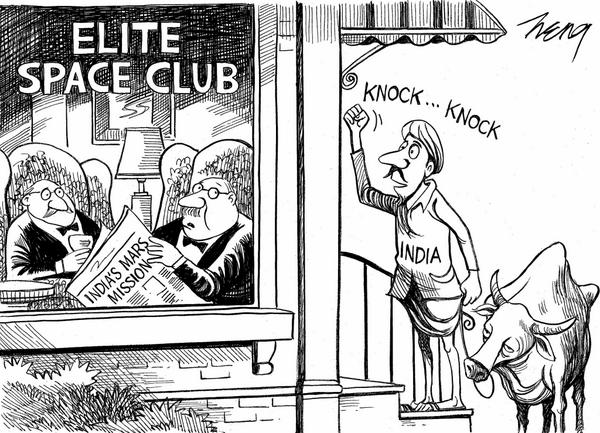
” New York Times Apologises for the Offensive Cartoon on MANGALYAAN …”

Days after The New York Times published an offensive cartoon mocking India’s successful Mars mission, the leading US daily today apologised following readers’ complaints.

The cartoon showed a farmer with a cow knocking at the door of a room marked ‘Elite Space Club’ where two men sit reading a newspaper on India’s feat. On September 24, India made history by successfully placing its spacecraft in orbit around Mars, becoming the first country in the world to succeed in such an inter-planetary mission in the maiden attempt itself.

At just USD 74 million, the mission less than the estimated 100 million USD budget of the sci-fi blockbuster “Gravity”. Only the US, Russia and Europe have previously sent missions to Mars.

Andrew Rosenthal, editorial page editor of the New York Times, wrote in a Facebook post that a “large number of readers” had complained about the cartoon. “The intent of the cartoonist, Heng Kim Song, was to highlight how space exploration is no longer the exclusive domain of rich, Western countries,” Rosenthal said.

“Mr Heng, who is based in Singapore, uses images and text – often in a provocative way – to make observations about international affairs. We apologise to readers who were offended by the choice of images in this cartoon.” Rosenthal said Heng “was in no way trying to impugn India, its government or its citizens”.

“We appreciate that readers have shared their feedback, which we welcome,” he said.

After India’s successful arrival at the Red Planet with the low-cost Mars Orbiter Mission(MOM), US space agency NASA has lauded it. “It was an impressive engineering feat, and we welcome India to the family of nations studying another facet of the Red Planet. We look forward to MOM adding to the knowledge the international community is gathering with the other spacecraft at Mars,” NASA Administrator Charles Bolden said.

Source:::: http://www.dndindia.com

Natarajan


Kindly CLICK the following link wherein I have published a Blog on the subject on Sep 30 …

Natarajan

” No Need for India to Knock at the Doors of Elite Space Club …” !!!


அலுவலகத்தைப் பெருக்கி சுத்தம் செய்யும் ஐ.ஏ.எஸ். அதிகாரி !!!

ஐ.ஏ.எஸ். அதிகாரி அஜய் சங்கர் பாண்டே | படம்: சிறப்பு ஏற்பாடு.

ஐ.ஏ.எஸ். அதிகாரி அஜய் சங்கர் பாண்டே | படம்: சிறப்பு ஏற்பாடு.

சுத்தம், சுகாதாரம் இவை ஒரு முறை பிரச்சாரத்தோடு நிறுத்திக் கொள்ளப்பட வேண்டியது அல்ல. இந்த கொள்கையைக் கொண்ட ஐ.ஏ.எஸ். அதிகாரி அஜய் சங்கர் பாண்டே கடந்த 4 ஆண்டுகளாக அவரது அலுவலகத்தை அவரே பெருக்கி சுத்தம் செய்து வருகிறார்.

டாக்டர் அஜய் சங்கர் பாண்டேவின் அலுவலகத்தின் வெளியில் ஒரு பதாகை தொங்கவிடப்பட்டிருக்கிறது. அதில், ‘இந்த அறை என்னால் சுத்தப்படுத்தப் படுகிறது. இவ்விடத்தை அசுத்தம் செய்து என் பணிச்சுமையை அதிகரிக்காதீர்கள்’ என எழுதப்பட்டிருக்கிறது.

பிரதமர் நரேந்திர மோடி கடந்த வியாழக்கிழமை ‘தூய்மை இந்தியா’ திட்டத்தை துவக்கி வைத்தார். இத்திட்டம் நாடு முழுவதும் பரவலாக பேசப்பட்டு வரும் நிலையில், அஜய் சங்கர் பாண்டே போன்றவர்களின் அறிமுகம் நம் சுற்றுப்புறத்தை தூய்மையாக வைத்துக் கொள்வதில் நமது பங்கு என்ன என்பதை நன்கு உணர்த்துகிறது என்றே சொல்ல வேண்டும்.

உத்தரப் பிரதேசத்தின் மீரட் நகரில் கூடுதல் ஆணையராக இருக்கும் டாக்டர் அஜய் சங்கர் பாண்டே ஐ.ஏ.எஸ், ஒவ்வொரு நாளும் தனது அலுவலகத்திற்கு குறித்த நேரத்தைவிட சற்று முன்னதாகவே வந்துவிடுகிறார். தனது அறையை அவரே சுத்தம் செய்கிறார்.

இது குறித்து அவர் நம்மிடம் கூறுகையில்: சுத்தம் என்பது நமது தினசரி கடமை. இன்று அனைவரும் ஸ்வச் பாரத் (தூய்மை இந்தியா) திட்டத்தில் தங்களை இணைத்துக் கொள்கின்றனர். இந்த வேளையில், சுத்தம், சுகாதாரம் என்பன ஒரு பழக்கம், அதை தினசரி கடைபிடிக்க வேண்டும். நாம் வசிக்கும் பகுதியை சுத்தமாக வைத்துக் கொள்வது நமது கடமை. சுத்தம் செய்வது என்பது குறிப்பிட்ட சிலரின் வேலை என்ற பார்வை இந்தியர்கள் மத்தியில் மேலோங்கிக் காணப்படுகிறது. நம் குடும்பத்துக்குள்ளேயும்கூட வீட்டுப் பெண்கள் சுத்தம் செய்யும் பணியில் ஈடுபடும்போது நாம் அதற்கும் நமக்கும் எந்த சம்பந்தமுமே இல்லை என்பது போல் இருக்கின்றோம். இந்த எண்ணம் மாற வேண்டும்” என்றார்.

படிக்கும் காலத்தில் இருந்தே தான் இருக்கும் இடத்தை தானே சுத்தம் செய்யும் பழக்கத்தை பாண்டே கொண்டிருக்கிறார்.

சுத்தம் செய்ய தயக்கம் வேண்டாம்:

நமது பகுதியை சுத்தமாக வைத்துக் கொள்ள நாம் எப்போதும் தயங்கக் கூடாது என கூறிய பாண்டே தனது அனுபவத்தை எடுத்துரைத்தார். அவர் கூறியதாவது: “ஆக்ராவில், பணியாற்றிக் கொண்டிருந்த போது அப்பகுதியில் துப்புரவுத் தொழிலாளர்கள் வேலை நிறுத்தத்தில் ஈடுபட்டிருந்தனர். அப்பகுதி மக்கள் பலரும் என்னிடம் வந்து புகார் மனு அளித்தனர். ஆனால், துப்புரவுத் தொழிலாளர்கள் வைத்திருந்த கோரிக்கையோ உடனடியாக நிறைவேற்றக் கூடியதாக இல்லை. எனவே, அந்தப் பகுதியை சுத்தம் செய்ய நான் தயாராக இருப்பதாகக் கூறினேன். உடனே துடைப்பத்தை எடுத்துக் கொண்டு புறப்பட்டேன். எனக்கு ஆதரவாக பொதுமக்களும் இணைந்தனர். அந்தப் பகுதியே சுத்தமானது. எனது செய்கையைப் பார்த்து துப்புரவுத் தொழிலாளர்கள் போராட்டத்தைக் கைவிட்டு திரும்பினர்” என்றார்.

சுத்தம், சுகாதாரம் இவை ஒரு முறை பிரச்சாரத்தோடு நிறுத்திக் கொள்ளப்பட வேண்டியது அல்ல என்பது எப்போதுமே அவரது கொள்கையாக இருக்கிறது.

-தமிழில் பாரதி ஆனந்த்

Source:::: The Hindu…Tamil
Natarajan

OCT. 2 … Perfect Day to Start ” Clean India ” Mission…A Fitting Tribute To Mahatma

Mahatma Gandhi, the father of the nation, was not an outspoken leader in his school days. In his The Story of My Experiments with Truth, Gandhi says that he would often run home from school as he could not “bear to talk to anybody.”


Gandhi’s marathon walk from his ashram to the sea at Dandi (241 miles) at the age of 60 during the Salt march in 1930 is well documented. It is believed that he enjoyed long walks in high school. In London, Gandhi as a law student used to walk as many as eight to ten miles a day, which saved him ample money.


During a radio broadcast for the United States from England, Gandhi’s first words heard were, “Do I have to speak into this thing?”


Gandhi was named as the Man of the Year in 1930 by Time Magazine


. Gandhi used to regularly correspond with Russian novelist Leo Tolstoy, whose ideals of nonviolent resistance had a profound impact on the Indian leader.


It is believed that Gandhi’s income as a lawyer in South Africa touched fifteen thousand dollars a year.


In his experiment to live modestly, Gandhi used to experiment on his diets. He started to live on fruits and goat’s milk.


Despite his dislike for photographs, Gandhi was the hugely photographed in those days.


The United Nations announced October 2 as the day of international day of ‘Ahimsa’


Despite studying law in England, Gandhi found it difficult to get a job in India which propelled him to travel to South Africa, where an Indian firm gave him a year-long contract to do legal work


Generations to come, it may well be, will scarce believe that such a man as this

one ever in flesh and blood walked upon this Earth – Albert Einstein

SOURCE:::: Yahooindia.com

Natarajan

” No Need for India to Knock at the Doors of Elite Space Club …” !!!

The ‘New York Times’ Publishes Racist Comic About India’s Space

Mission

Last week, India became the first Asian nation to reach Mars, and the first in the world to do so on its first attempt.

The spacecraft called Mars Orbiter Mission (MOM) in English and “Mangalyaan” or “mars craft” in Hindi was launched in November and reached the orbit on Wednesday, to much jubilation from the public.

India’s first interplanetary mission is all the more creditable because, at $72 million, Mangalyaan cost just a fraction of NASA’s $670 million Maven, and $2 billion Curiosity Rover. It also cost less than to produce the film Gravity, and at Rs.7 or 11 cents, per kilometer, cost less than the per-kilometer cost of commuting by autorickshaw in most Indian cities.

So yesterday’s New York Times’ comic by Heng, titled “India’s budget mission to Mars” seems in poor taste.

2014-09-29-racistcomic.jpg

The comic depicts a poor Indian farmer in traditional garb, accompanied by a bored-looking cow, eagerly knocking on the door of “Elite Space Club”. The two people in the elite space club drinking wine and reading about India’s mission in the papers look perturbed and hesitant to open the door. It is also worth noting that the members of the elite space club are male, white, elderly and look wealthy. Whether meant to be funny or ironic, the racial, national and classist stereotyping is apparent.

In reaching Mars, the Indian Space Research Organization (ISRO) joins the ranks of Soviet space program, NASA and European Space Agency. It not only did so on a budget, but also battling “brain drain“. It’s a commonly lamented problem that many of the country’s brightest scientists and engineers end up working internationally, and tend to shy away from research in India, especially an area like space research, because it’s not as lucrative.

The comic strip comes at the time of Indian Prime Minister, Narendra Modi’s maiden visit to the United States. Addressing a 20,000 strong crowd at Manhattan’s iconic Madison Square Garden yesterday, he emphasized India’s new role on the world stage and its growing economic clout. “When people ask if we still play with snakes in our country, I tell them that now we play with the mouse,” Mr Modi said, drawing attention to the changing stereotype of India from a nation of snake charmers to one of technical prowess.

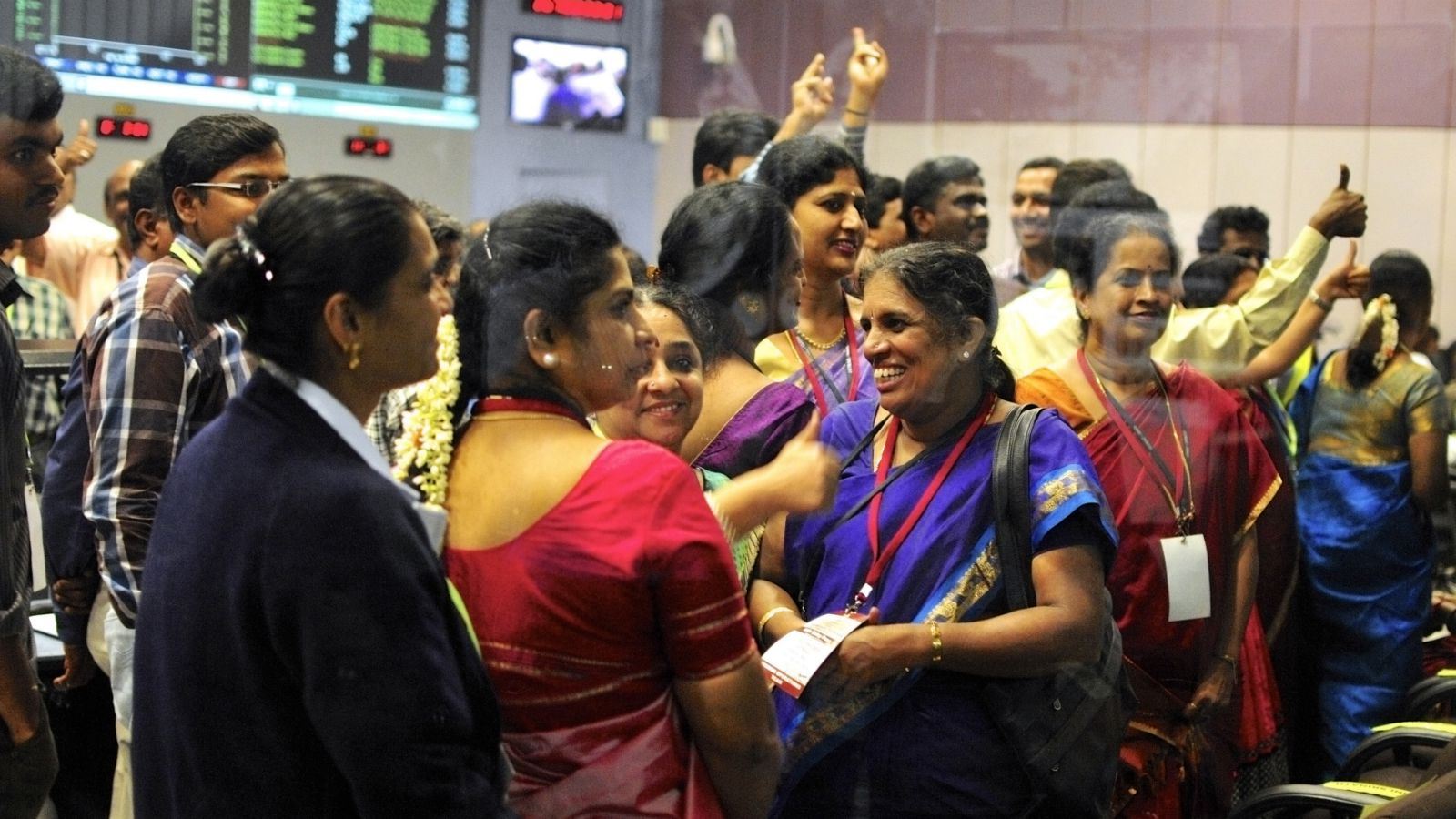
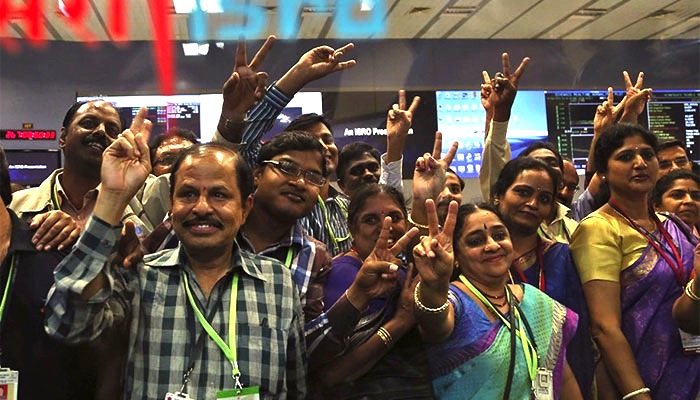
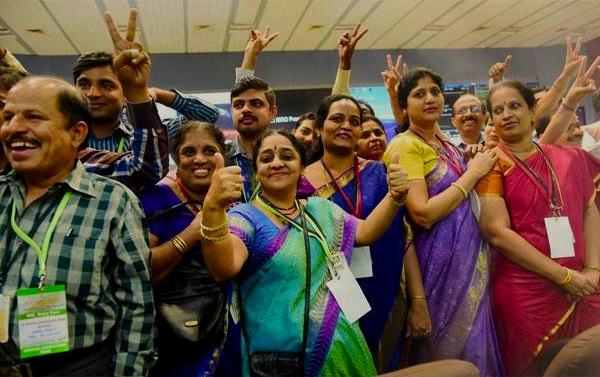
In case the Times is wondering what interplanetary-mission-heading Indian scientists look like then here you go, this is what they look like:

2014-09-29-isroscientists.jpg

And this:

2014-09-29-isro2.jpg

And this:

2014-09-29-isro3.jpg

The male engineers are wearing Western gear, while some of the female engineers are rocking traditional silk saris, the kind usually worn on special occasions, and jasmine flowers in their hair. On regular days, they work in full suits. There are no farm animals in sight at the ISRO office. And they certainly don’t look desperate for membership into some secret elite club. In fact, their jubilance says it all.

See, there are lots of socially and economically elite people in the world — being elite is like winning the lottery. But only a handful of human beings in history can claim to have sent a spaceship to another planet. That is brilliance and merit. That is actualizing human potential and literally moving humanity forward — like inventing the wheel, or, you know, sending a spaceship to Mars. One doesn’t have to be a rocket scientist to understand that.

SOURCE::::   IN  http://www.huffingtonpost.com/  

NATARAJAN

Management Lessons From India’s MANGALYAAN …

Management lessons from Isro’s Mangalyaan

India’s Polar Satellite Launch Vehicle, carrying the Mars orbiter, takes off from Sriharikota. Photo: Reuters/Isro

The resounding success of India’s Mars mission holds many lessons. Experts discuss the learning from the way the Indian Space Research Organisation (Isro) put its craft in the Mars orbit. Make a quality product R.D. Chandak, managing director and chief executive officer, KEC International The successful Mars Orbiter Mission, or the Mangalyaan, by Isro has many lessons for Indian manufacturers, says Chandak. The mission has shown that Indian companies can make a quality product at a competitive price, he says. To make India a manufacturing hub, Indian companies will have to make quality products on time, manage the logistics and produce at a very competitive cost, adds Chandak. Building the right team to deliver such projects is important. “Selecting the right team just doesn’t mean selecting the most qualified people; it also means selecting highly committed people,” he says. Teams also need to be empowered so that they can take critical decisions and ensure timely delivery of the project, he adds. Innovation is another major learning from the Mars mission. “Innovations need not be big advances in technology, but many small ones such as those that help reduce costs are important for corporates,” says Chandak. Every project has a certain amount of risk involved, and identifying the risks and managing them is important, he says. Time management, which is of paramount importance when executing such a project, is another lesson. “India wanted to send the Mars orbiter before China could. Having achieved the mission in a very strict time frame, it is a big example for Indian corporates in project management,” adds Chandak. It is also important for companies to learn not only from their own mistakes, but also from the mistakes of others, he says. Encourage team work Vinamra Shastri, partner, Grant Thornton India The scope of what a firm’s management can learn from the Mangalyaan project is very vast, says Shastri. However, there are a few takeaways that stand out. The mission became successful due to the collective effort and intelligence of stakeholders, not their individual genius, he says. Similarly, companies should consider encouraging teamwork and collaboration rather than pursuing individuals. “Every organization has people with different aptitude and skills. It is the responsibility of the senior leadership to ensure that they identify competencies and encourage teamwork,” says Shastri, adding the management should focus not only on the high performers, as different perspectives will only lead to more informed decision-making, resulting in better chances of success. Having a higher purpose for being in business is yet another key element, differentiating companies. Organizational goals should have a “higher purpose”—something which is unique and relevant, with which every stakeholder can relate to and have an emotional connect. A great example, he says, is the Tata group that has achieved more than its business goals. It stands for trust and responsibility. Similarly, the Mangalyaan project was launched not just to put India ahead of others in space research. Again, while Indian culture is appreciated on a personal or family level, the culture followed by Indian firms is often criticized by many. Mangalyaan could not be managed so efficiently within the specified time frame if the Indian Space Research Organisation did not have the right work culture, says Shastri. “(Management guru) Peter Drucker has said culture eats strategy for breakfast. Strategies formulated can only be executed when the work culture is conducive,” he adds. Plan for success, not failure K.G. Vishwanath, independent consultant The first lesson for Indian companies from the Mangalyaan Mars orbiter is to plan for success, not failure, says K.G. Vishwanath, an independent consultant and former Jet Airways (India) Ltd vice-president (investor relations). Vishwanath was part of the Jet Airways team that struck a deal to sell a 24% stake in the airline to Etihad Airways PJSC for $379 million. “Secondly, Isro had planned its production units across the country meticulously and tapped the best talent accompanied by the best planning tools,” he says. “They were not ready for taking any chances. They were planning not to fail. This is an inspiring lesson for any company and their boards.” Vishwanath says the third key lesson was about teamwork while handling egos. “Isro put all the team into one with a single objective. When a company stands together as one to achieve an objective, nothing can stop them and Mangalyaan proves that,” he says. He observes that choosing a team was purely based on merits irrespective of gender differences. “They just stood as one to accomplish the objectives,” he adds. “The last lesson is about passion. If you are doing anything, do it with passion. There are several examples of companies that have succeeded in the toughest MARKET conditions by showing inimitable passion,” he says. “Not to forget, Mangalyaan was accomplished with the lowest cost. It proves that while focusing on cheap cost, quality can still be maintained. Indigenous manufacturing means superior quality. That’s what we need now at a time when the nation is building a manufacturing base competing with China,” Vishwanath adds.

Read more at: http://www.livemint.com/Specials/3Y72VG1WlFbM5lBv7N1hSJ/Management-lessons-from-Isros-Mangalyaan.html?utm_source=copy

Source:::: Livemint.com

NATARAJAN

Image of the Day…. Images of MARS sent by India”s MOM …

Mars and its atmosphere, seen by MOM spacecraft

Two early images from India’s MOM spacecraft. One shows an edge of Mars, with the planet’s tenuous atmosphere above. The other shows the whole planet. Beautiful!

India's Mars Orbiter Mission (MOM) captured this image of the

The world applauded India last week as its maiden interplanetary spacecraft – the Mars Orbiter Mission, or MOM – achieved orbit around the Red Planet. Here are some of the first images transmitted from MOM. At top, a gorgeous shot of the limb, or edge, of Mars with the tenuous Martian atmosphere silhouetted against the blackness of space. The Indian Space Research Organization (ISRO), India’s space agency, released this image on September 25, 2014, about a day after MOM arrived.

ISRO announced that MOM successfully entered into an orbit around planet Mars on September 24, 2014 at 7:30 a.m. India Standard Time (02:00 UTC; 20:00 EDT in the U.S. on September 23). MOM carries five instrument suite whose mission is to study the surface and atmosphere of Mars with a particular emphasis on measuring the methane in the Martian atmosphere: a key indicator of microbial life.

Image via Mars Orbiter Mission

Above is another beauty from MOM, acquired on September 28, 2014.

The Schiaparelli Basin (460 kilometers / 286 miles wide) is visible just below right, of dead center. To the left is the Meridiani Terra with Meridiani Planum where NASA’s Opportunity rover is still operating almost flawlessly after 10 years on Mars.

Oxia Palus is clearly visible as is Chryse Planitia where the Viking 1 lander touched down in July 1976 and also the Ares Vallis, where the Mars Pathfinder successfully landed in July 1997.

Syrtis Major is visible towards the right limb.

Bottom line: Here are some early images from India’s MOM spacecraft. One shows the limb of Mars, with its tenuous atmosphere above. The other shows the whole planet, with a dust storm visible in the planet’s northern hemisphere. Beautiful!

SOURCE:::: earth sky news

Natarajan