Image of the Day…. Vanguard satellite…

One of the Vanguard satellites is checked out at Cape Canaveral, Florida in 1958. Vanguard 1, the world’s first solar-powered satellite, launched on St. Patrick’s Day (March 17) 1958. It was designed to test the launch capabilities of a three-stage launch vehicle and the effects of the environment on a satellite and its systems in Earth orbit. Vanguard 1 was the second U.S. satellite in orbit, following Explorer 1, and remains the oldest artificial object orbiting Earth to this day. Vanguard began as a program at the Naval Research Laboratory in Washington and transferred over to NASA (along with many of its personnel) after the agency was founded by the National Aeronautics and Space Act of 1958.

Image Credit: NASA 

SOURCE::::: http://www.nasa.gov

Natarajan

“This Guy is Wheely Brave…Riding Bike Over a 65ft. High Cliff…” !!!

A road bike freestyler risked life and limb while traversing a railing over a 65-ft high cliff for a TV programme that is trying to find the world’s most talented person.

Vittorio Brumotti, who is representing Italy in the interactive talent show, ‘World’s Most Talented’, fought the wind on the seafront during his challenge before safely completing it.

Watched by David Brain, one of the show’s presenters, who filmed the feat on a tablet, the fearless cyclist skilfully jumps onto the top of a wall to begin the stunt

Vittorio Brumotti fought the wind on the seafront during his challenge before safely completing it

Vittorio Brumotti fought the wind on the seafront during his challenge before safely completing it

The extreme cyclist put his life on the line and displayed incredible concentration during the stunt 

The extreme cyclist put his life on the line and displayed incredible concentration during the stunt

Approaching the railing, the road bike freestyler steadies himself and gets into position with a series of small bunny hops.

As Vittorio, 34, cycles along the narrow railing with one leg in the air for balance, footage from his helmet camera shows the drop to the sea to his right and the jagged rocks that stick out from the wall.

 Vittorio Brumotti moved slowly along the railing with one leg in the air for balance

Vittorio Brumotti moved slowly along the railing with one leg in the air for balance

Vittorio Brumotti, from Italy, holds a total of 10 Guinness World Records for his extreme talent

Vittorio Brumotti, from Italy, holds a total of 10 Guinness World Records for his extreme talent

Finally the road bike freestyler reaches the end of the railing and after putting two feet back on the pedals jumps down onto the path safely.

The video concludes with the crowd of observers clapping while David bows and laughs in disbelief at what he has just witnessed.

David said: ‘Going along the edge of a building, that’s not just physical, that’s mental. That blew me away.’

After the stunt Vittorio, a former bike trial world champion, reflected on the dangers involved.

Vittorio Brumotti once climbed the Burj Khalifa, the world's tallest tower, by hopping up the steps on his bike

Beachgoers and a film crew looked on in suspense as the 34-year-old completed the stunt

Beachgoers and a film crew looked on in suspense as the 34-year-old completed the stunt

He said: ‘I think about my mum, because it is important to me to come back to my mum. It’s important to have fear, because without fear, you go down.’

Vittorio holds a total of 10 Guinness World Records for his extreme talent and claims to have always enjoyed riding bikes. He once climbed Dubai’s Burj Khalifa, the world’s tallest tower, by hopping up the stairs on his bicycle.

He said: ‘I started when I was eleven years old, my father and mother bought me the first bike and it was magic, this is my dream.’

SOURCE::::::www.dailymail.co.uk

Natarajan

Secrets of the Success of Warren Buffett…He Does not Owe His Fortune to Magic !!!

If you’re interested in finance, trying to crack the secret of Warren Buffett’s success is as entertaining as it is maddening — an enticing Rubik’s cube for anyone looking to get rich.

Buffett’s success is so elusive — and so far, unreplicated — that it took a team of Yale academics to determine the Oracle of Omaha does not owe his $73 billion fortune to magic.

“Buffett’s returns appear to be neither luck nor magic,” found a 2013 research paper published on Yale’s website, which boiled down Buffett’s actual secret sauce to “reward for use of leverage combined with a focus on cheap, safe, quality stocks.” (Not-so-secret, really: Buffett admitted to this strategy more than 30 years ago.)

Still, if asked to explain the source of his “alpha,” Buffett is as divided as his devotees — at times shmaltzy (“I found what I love to do very early”), other times coy (“You can’t produce a baby in one month by getting nine women pregnant”) and more often than not, completely blunt: “‘Price is what you pay; value is what you get.’ Whether we’re talking about socks or stocks, I like buying quality merchandise when it is marked down.”

Warren Buffett

Berkshire Hathaway chairman Warren Buffett gestures at the start of a 5km race.

We interviewed some of America’s biggest money experts, and threw them a gauntlet: Tell us the secret to Warren Buffett’s success.

Here’s how they explained the Oracle’s track record.

1. His No. 1 focus is growing his wealth.

According to Brandon Turner, real estate investor and co-host of “BiggerPockets Podcast,” Buffett has a single-track mind — and that’s worked well for him.

“I think Warren Buffett succeeded because he focused 100% on growing wealth above all other things,” Turner said. “He made it a point to continue his education his entire life and stick to sound business principles.”

2. He invests in businesses that aren’t competitive.

“Warren Buffett identifies companies that generally don’t face an enormous amount of competition, and holds them for years — or forever,” said Clark Howard, a consumer expert and host of “The Clark Howard Show.” “His failures have tended to be in businesses that were too competitive.”

3. He doesn’t scare easy.

Andrew Horowitz, CFP, author and host of “The Disciplined Investor,” told us Buffett owes his wealth to one factor: “Time. He has a holding period that appears to be infinite so he does not get spooked by market moves. He also knows that the best time to buy is when everyone else is selling.”

4. He doesn’t let his ego get in the way.

Journalist Emma Johnson, host of “Like a Mother with Emma Johnson,” mentioned Buffett’s famous penchant for value investing — but said his real X-factor was his personality.

“As an investor, Buffett’s success is well-documented — he buys easy-to-understand companies with reasonable management and an intrinsic value. So easy, anyone can understand it,” Johnson said. “But Buffett’s success as a beloved public character is the real magic. We can attribute that to his humble persona: We love him for his habits that include banjo-playing, cheeseburger devotion, and that he has lived in the same, relatively modest house in not-so-glamorous Omaha for 55 years. That he is self-made and earned 99% of his wealth after age 50 inspires us to believe that success is possible for all of us, and his adherence to a modest life of family and charity are great lessons on wealth that apply to us all. He’s both fabulous and accessible, and we love him for it.”

5. He takes advantage of a simple and age-old combination.

Buffett uses a straightforward formula that pays off for anyone who gives it the time, said John Lee Dumas, founder and host of the podcast “Entrepreneur On Fire”: “Compound interest plus patience​.”

6. He sticks to what he knows.

“I don’t know much about Warren Buffett other than I’ve heard that he invests in what he ‘knows‘ and/or has ‘learned,'” said Matt Theriault, host of the podcast “Epic Real Estate Investing.” “In my experience, with the right education and information backing investment decisions, most people would be a success.”

7. He’s aggressively anti-stupid.

According to Stephen Dubner, co-author of the best-selling “Freakonomics” series and host of “Freakonomics Radio,” Buffett has an unerring sense for what is just plain dumb.

“I have no idea how much of his success is due to smarts versus luck and all the additional advantages that are conferred on someone who becomes successful. (Those are important and should never be discounted).” Dubner told us. “But one thing that always impresses me about him is how aggressively anti-stupid he is. It’s not that he’s not willing to take risks; it’s just that he has a great sense of behaviors that are, whether in the moment or in retrospect, plainly stupid — and yet many people are willing to engage in patently stupid behavior because they’ve somehow convinced themselves it’s not stupid.”

8. He tries to be the best at one thing.

Buffett focuses all his energy in one place, according to Laura Adams, a personal finance expert and host of “Money Girl.”

“Buffet’s success seems to come from passion for his work, good mentors early in his career, and striving to be the best at one thing — his consistent knack for identifying undervalued companies to invest in,” she said.

warren buffett most powerful women summit

9. He thinks years in the future.

Most investors are too short-sighted, Chris Hill, host of “Motley Fool Money,” told us.

“While many on Wall Street are thinking about the next quarter, Warren Buffett is thinking about the next five, ten, and twenty years,” he said. “That may seem like a small thing, but it is a radical departure from the short-term mindset that drives so much trading activity. It’s also why Buffett is the greatest investor we will ever see in our lifetimes.”

10. His investments are diversified and long-term.

“He has said it many times: He invests only in things he understands (relying on his common sense, which we all have), he doesn’t put too much of his money into any one investment (called diversification), and his holding period is “forever” (called a long-term approach),” said Ric Edelman, chairman and CEO of Edelman Financial Services, and host of “The Truth About Money with Ric Edelman.” “The best part is that anyone can replicate the strategy used by Warren — and since it made him the world’s most successful investor, we all can become financially successful, too!”

11. He plays the number 1 game for investors.

When Robert Kiyosaki — inveterate investor and founder of “Rich Dad Radio Show” — was young, he learned about business and money by playing Monopoly.

Apparently, the Oracle of Omaha invests like he’s played the game a couple times himself. “He, too, plays the game of Monopoly in real life,” Kiyosaki told us.

12. He’s a ‘go-giver.’

Farnoosh Torabi, financial strategist, author, and host of “So Money with Farnoosh Torabi,” told us Buffett’s truly outstanding factor is his largesse.

“He’s a go-giver,” she said. “He’s incredibly philanthropic and I’ve discovered from countless interviews with some of the most successful people on the planet that being a giving person with your money, time, ideas yields abundance in your life. Warren, consistently ranked as one of the world’s wealthiest individuals, has pledged to give away 99% of his fortune. That’s outstanding.”

SOURCE::::: http://www.businessinsider.com

Natarajan

Image of the Day… ” Return of Expedition 42 to Earth ” …

The Soyuz TMA-14M spacecraft is seen as it lands with International Space Station Expedition 42 commander Barry Wilmore of NASA, Alexander Samokutyaev of the Russian Federal Space Agency (Roscosmos) and Elena Serova of Roscosmos near the town of Zhezkazgan, Kazakhstan. The landing took place on the evening of Wednesday, March 11 in the U.S, and early in the morning on Thursday, March 12, in Kazakhstan.

The three crew members returned to Earth after a 167-day mission on the orbital outpost that included hundreds of scientific experiments and several spacewalks to prepare the orbiting laboratory for future arrivals by U.S. commercial crew spacecraft.

SOURCE:::: http://www.nasa.gov

Natarajan


How a Team of 70 is Helping People to Find Jobs …An Inspiring Story of “Mera Job “

Pallav Sinha and Girish Phansalkar of MeraJob

A team of 70 based out of Delhi is helping nearly 4 lakh job seekers find their careers across sectors. This is their story. 

Every year, thousands of people move from India’s villages and towns to its cities looking for employment opportunities.

They pack their bags and bid their families goodbye with no idea how their life will shape up in a city which is already crowded with people competing for every job opportunity.

On the other hand, there are companies that fall short of manpower because they struggle to find the right match.

When the supply is huge, why do companies still struggle to fill lower end white collar and skilled blue collar vacancies?

This is exactly the question Pallav Sinha, Founder and CEO of Mera Job, asked himself.

“I moved to India in 2008 and soon realised the challenge of hiring good resources. I knew from my past experience in building teams that there was plenty of talent available in the country but it missed the employer’s attention due to lack of right exposure,” shares Sinha.

He saw that no one was focusing on the mass recruitment segment and decided to tap this enormous potential and Mera Job was founded in 2012.

Mera Job is a hybrid talent acquisition startup that strikes a balance between offline and online hiring.

It offers a marketplace for lower end white collar jobs like telemarketing and sales executives, receptionist etc. and even skilled blue collar workers like drivers and delivery boys.

How is it different from similar players in the market?

Mera Job has a unique pre-screening process for jobseekers where they verify and match the skill set of the candidate with the employer’s requirement.

Jobseekers have an option to either get pre-screened online or call the tele-recruitment centre to go through the quick test.

The company plans to rely on its technology platform to gather unique data about registered candidates to analyse future behaviour.

“Once we know (through our data analysis) that a candidate is not looking for say a banking job and would prefer a company located in Ghaziabad we make a note of these preferences.

We don’t send a job recommendation to the candidate that doesn’t match his liking. This not only saves the jobseeker’s time but also helps employers screen candidate without arranging a telephonic or personal interview,” explains Girish.

Pallav, 51, co-founded Fullerton securities (now Dunia Finance) before Mera Job.

He met his co-founders Girish Phansalkar and Raman Thiagarajan at McKinsey, where the two were consulting Pallav on a project at Fullerton.

“I never thought that I would become an entrepreneur. I still feel that I might be the oldest in the startup lot in the country,” giggles Sinha with the enthusiasm of a 23 year old. Girish, in his self-assured and pragmatic style, shares the story of the bonding the founding team shares.

“Pallav, is the ‘ideas man’ in the team. He has vast understanding of consumer markets and Raman brings in high problem solving ability with global experience. I am a techie with years of technology and operational experience,” says Phansalkar, the IIM-A and IIT-B alumnus.

The MeraJob team

The initial idea of Mera Job was to make a repository of around two million profiles which can be accessed by employers through a subscription. But the team soon realised that with this model they would only burn resources in achieving scale without connecting with the employers.

They quickly pivoted and designed a systematic pre-screening process. They will soon be launching their mobile app.

During the discussion Pallav shared a very interesting trivia which changed my assumption about this market.

As many as 80 per cent of job seekers in the mass market own a smart phone.

When they come to the city they do not have a social circle hence they buy a smart phone which is their only source of entertainment.

With a team of 70 people, 400,000 job seekers, and operations in 12 cities, Mera Job raised its initial investment of $ 3 million from private investors and is looking for a series A funding by end of this year.

Their current revenues come from B2B transactions and all services for job seekers are free.

“We feel that skill development of the job seekers will become our focus in the coming months. We have sealed a partnership with NSDC and plan to add counselling and language training to our services portfolio,” adds Pallav. However, sourcing right candidates at the right time stays their biggest challenge.

Like any other businesses, managing efficiency throughout the value chain is critical to their operation.

Pallav feels that the work pressure you feel as an entrepreneur is a positive one as it helps you and your company evolve.

Girish however fears failure for a reason.

“I had an unsuccessful business before Mera Job. At that time failure did not matter much because I was bootstrapping. It was my own money at stake. Now I dread failure because my investors’ money and employees’ careers are at stake.”

The recruitment market in India is worth about $800 million and is growing at 20 per cent annually, according to data by Matrix partners.

We are seeing a second wave of online hiring firms post the Naukri, Monster era.

The new entrants in the market are targeting specific problems that exist in acquiring talent at different levels.

The Indian start-up ecosystem itself is predicted to create 300,000 new jobs in the next few years.

The recruiters however still struggle with piles of unsuitable resumes, long recruitment cycles and fleeting employee loyalties.

Ensuring retention of selected candidates in the lower end job segment is even more challenging as a hike of even a few thousand rupees leads to attrition.

Companies like Mera Job have to fight against the legends of the online hiring industry and find inventive ways of partnering with offline consultants who serve as industry insiders. But with clear focus and 40 years of collective core team experience, Mera Job has already bagged clients like HDFC Bank, Yatra, Britannia and JLL.

source::::: Reema Sathe  in http://www.rediff.com

Natarajan

Solar-Powered Plane on Its First ” Round-The-World ” Flight !!!!

Solar-powered plane begins first round-the-world flight

Swiss plane Solar Impulse 2 landed Monday in Muscat, Oman, the first stopover in the attempt to fly around the world powered by the sun alone. Follow the flight.

Image credit: solarimpulse.com

Image credit: solarimpulse.com

A Swiss plane called Solar Impulse 2 took off from Abu Dhabi, United Arab Emirates Monday morning (March 9, 2015) and later landed at its first stopover in Muscat, Oman. Solar Impulse 2 is the first plane to attempt to fly around the world without a drop of fuel, powered by the sun alone.

Solar Impulse founder Andre Borschberg was the pilot Monday morning at take-off. Borschberg will trade piloting with Solar Impulse co-founder Bertrand Piccard during stop-overs on the months-long journey, expected to end in late July or early August.

You can track the plane’s progress on the Solar Impulse website.

You can also follow Solar Impulse on Twitter or FlightRadar 24.


The solar-powered plane Solar Impluse 2 lands at the Al-Bateen airport in Emirati capital Abu Dhabi on March 2, 2015.

The solar-powered plane Solar Impluse 2 lands at the Al-Bateen airport in Emirati capital Abu Dhabi on March 2, 2015.

The Solar Impulse 2 is made of carbon fiber and has 17,248 solar cells built into the plane’s 236-foot (72-meter) wingspan. The solar cells recharge four lithium polymer batteries. Solar Impulse’s wingspan is larger than that of the Boeing 747, but the plane weighs only around 5,070 pounds (2300 kg) – about as much as a minivan.

On Tuesday, the plane will head for Ahmedabad, India, and after India, to China and Myanmar. The next leg is across the Pacific to land in Hawaii. Then it will head to Phoenix, Arizona, and New York City. The path across the Atlantic will depend on the weather and could include a stop in southern Europe or Morocco before ending in Abu Dhabi.

SOURCE::::: http://www.earthskynews.org

Natarajan

Pamban Bridge… A Fascinating One !!!


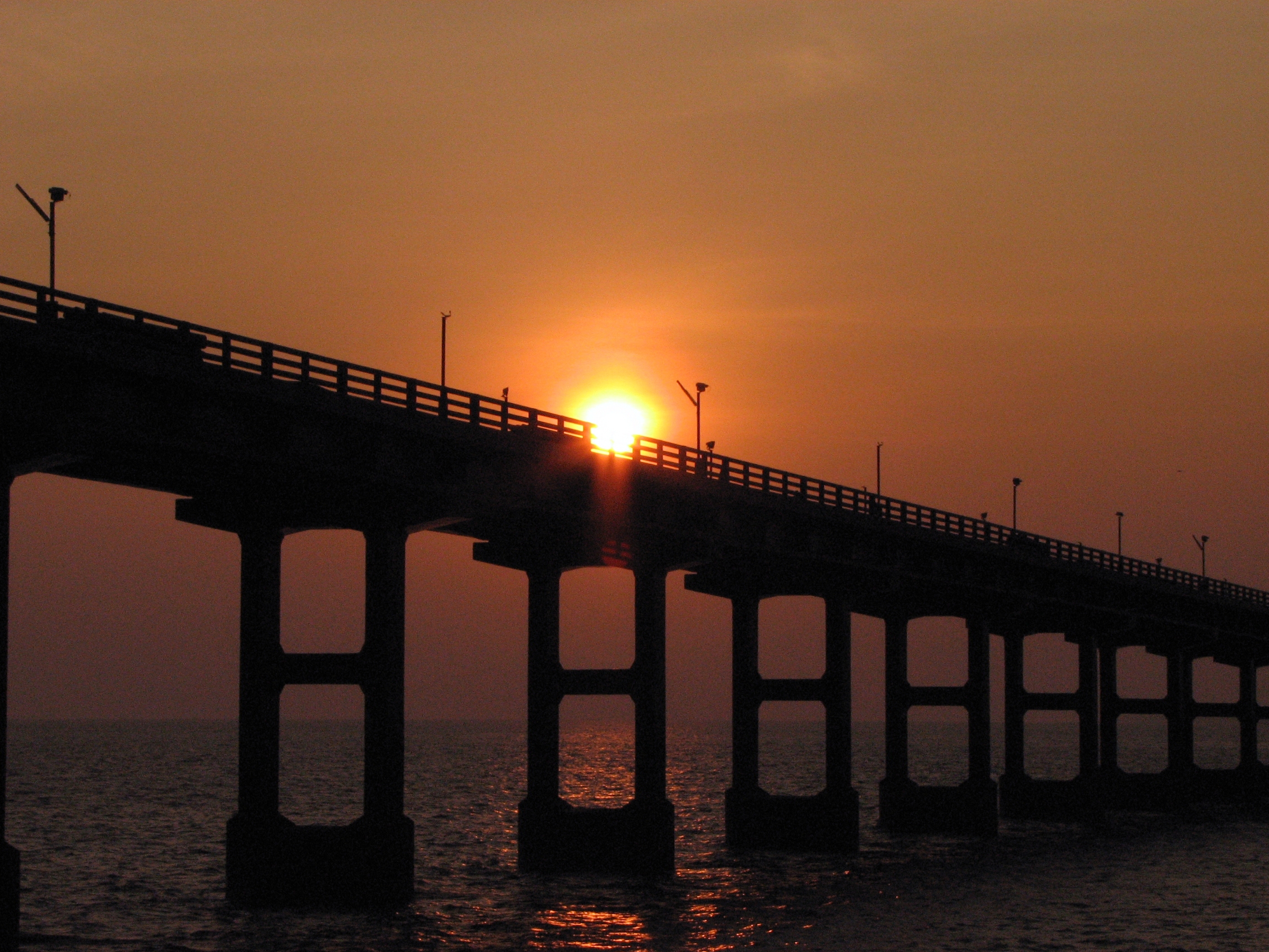
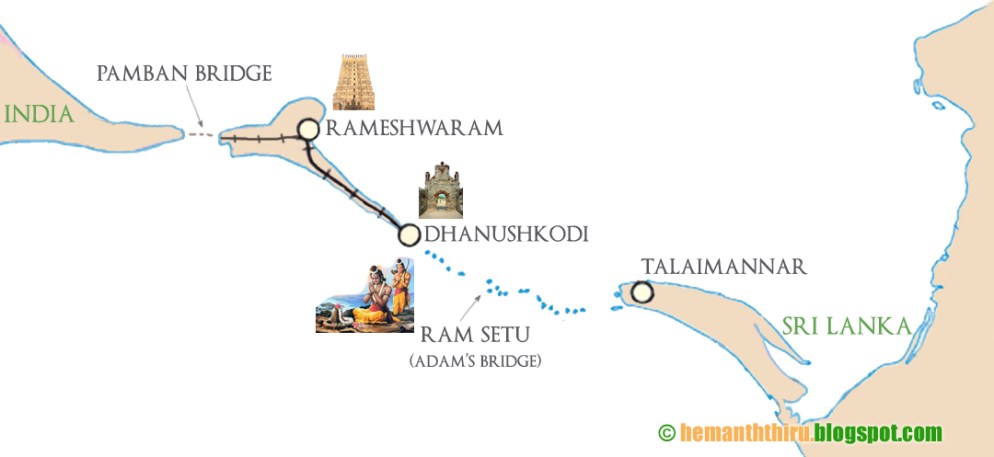
Pamban Bridge (named after the place at one end) lies between Indian main land
and Rameswaram island. It was the longest sea bridge for almost a century in India
(built in 1914) until Worli – Bandra sea bridge was built in Mumbai a few years ago.
Now it is the second.

Besides this, it is also a cantilever bridge that opens up in the middle to allow
ships to pass by like the Tower Bridge in London.

It was damaged in a cyclone in 1964 and was restored in just 46 days by E Sreedharan
the father of Delhi Metro.That cyclone had however damaged the link from Pamban to
Dhanuskodi town that vanished in the cyclone, thereby cutting the rail link between India
and Sri Lanka. Along with it went away the name Boat Mail for Madras – Dhanuskodi train.
Boat mail ? yes, because from Dhanuskodi, the passengers used to take a ferry to
Thalaimannar in Sri Lanka and continued their onward train journey all the way to Colombo.
Since the Madras train connected to a boat at the end of the journey, it was called
Boat Mail. This train was also known as Indo Ceylon Express in very early days.
https://i0.wp.com/static.panoramio.com/photos/large/41963310.jpg
https://i0.wp.com/i1.trekearth.com/photos/18313/img_2671.jpg
https://i0.wp.com/www.ramnad.tn.nic.in/images/Final_Scissors%20Bridge%20001.jpg
SOURCE:::: iNPUT FROM A FRIEND OF MINE
Natarajan

” This All Women Team Took a Road Trip To INSPIRE other Women …” Also Spreading the Message of Women Empowerment…

A group of seven women embarked on a road trip in January 2015

In January 2015, a group of women travelled 5000 kilometres in India over eight cities in 28 days to spread the message of women’s empowerment and safety while on the road.

This is the first hand experience of the journey from Vidula who led the initiative. Read on!    I had always wanted to drive a car along the coast of the Indian Peninsula.

The maps were the first thing I worked on. Mahindra agreed to sponsor the Scorpio Adventure 4×4 vehicle.

Eventually, we had a real team of seven women raring to go.

The budget was Rs 1500 per head per day for food, fuel and accommodation.

We attended a first aid workshop with Anish Menon from Pune while Mahindra conducted a car maintenance workshop for us where we learned how to change the stepney.

The event was flagged off on the January 4, 2015.

On days one and two, we witnessed the beautiful Konkan coast, blue skies, lovely people and delectable food.

As the roads were badly maintained we ended up driving nine hours on these two days.

We decided then to stick to the national highways.

That sort of eased the pressure and we were able to stop by and see some places.

Malvan was the next stop where we swam in the sea at night.

Day three was Agonda in Goa!

Food was the highlight — delicious pancakes and chicken cafereal, a famous Goan dish.

We interviewed Belinda Mueller, who is a psychiatrist by profession and a long distance cyclist.

One of the girls got a haircut at a local barber shop and she let go of all her long lovely curls.

The Karnataka stretch was pretty, lined with rivers, bridges, seas, coconut trees, tiny villages and fields.

We stopped for some gajras (flower necklaces) that we wore on our hands and necks.

We stopped at a local shack.

There was an amma who was really keen to speak to us but didn’t know our language and we didn’t know hers.

Very affectionately she served us everything.

She smiled and laughed at everything we said.

We then went to Mirjan Fort which is a 16th century fort, built during the reign of Adil Shah.

Enroute, we stopped at Murudeshwar where the big Shiva statue was the highlight.

Back in the car, we read out loud some poetry by Pablo Neruda, and had some good laughs recording the poetry session.

In Udupi, we tried every local dish that we could get our hands on.

In Kerala, whenever we called the hotels for directions, all we would get was, “Please give the phone to the driver.”

They assumed that the driver would always be the stereotypical male.

After telling them that we women were driving ourselves, they meekly gave us directions.

In Kozhikode, for breakfast, the lady of the homestay made us some local puttu that we had with bananas.

Kochi biennale was going on and we got to see some art at a café.

The following day we stayed at the Kovalam beach.

It was much quieter after sunset, and spent the evening talking at a restaurant.

It was time for a rest day when one of the girls decided to go bald and felt liberated.

Kanyakumari was at the tip of the peninsula. The roads were far better on the east coast than the west.

The following day, on our way to Rameshwaram, we saw some beautiful sunflower fields.

Another day gone by and we saw ourselves make our way to Velankanni, which turned out to be a pretty little, clean town.

Next, we left for Puducherry. Enroute was Tranqeubar.

We stopped for a snack at the ‘Bungalow on the beach’.

There is an old Dutch fortress from the 1600s that stands on the shore.

We partied in Puducherry.

Two of the girls had emergencies back home and had to leave the trip midway.

It was down to two of us for the next couple of days.

We decided to continue nevertheless as we were going to pick up the last participant of the drive.

Close to Sullurupeta is the Pulicat lake and bird sanctuary which is the second largest brackish water lake in India.

We saw in the distance pink flamingoes, the exotic side of nature.

We drove from Nellore to Vijayawada to pick up our final companion and interview Mythri.

We reached Kakinada and then Vishakapatnam where the submarine museum was shut for renovation because a cyclone called HudHud had devastated it.

In Odisha, the first halt was at Gopalpur, a small village we had never heard of.

We then made our way to Puri.

We interviewed Claire Prest, the Co-founder of Grass Route Journeys.

We saw the Jagannath Puri temple where non-Hindus were not allowed, the women ululated, the men threw their hands up in the air with cries of joy and the deity was colourful and beautiful.

We hired a boat on Chilika Lake and saw some exotic birds. We visited the Konark Temple which is magnificent.

We also went to Raghurajpur where everyone from different families worked towards a common cause — art.

Chandipur beach which was our last stop in Odisha is also called the vanishing beach because twice in a day water recedes for 3 kms as this is an elevated beach. It was beautiful and there weren’t too many people on the beach.

We handed over the car to Mahindra in Kolkata and the road trip had come to an end.

We spent three days here, walking around and clicking random street pictures.

We visited the 100-year-old, India Coffee House and saw the Rabindranath Tagore museum in old Kolkata.

We interviewed musician Anushree Gupta in Kolkata.

The whole drive was about women’s empowerment.

It is about putting thoughts into action.

We were more careful and cautious on the east coast than the west.

Each one of us had a bottle of pepper spray.

Women are not expected to drive.

Belinda Mueller, the first Goan woman, whom we interviewed said, “Don’t let fear restrict you. But don’t do anything silly and stupid.”

The whole drive was about staying safe and common sense is what it took us to stay safe.

Men have to be more accepting of women. We wanted to be the seeds of change.

We had done that!

Source:::::  Vidula in http://www.rediff.com

Natarajan


Watch Sunday Spacewalk on March 1…

NASA astronaut Terry, Virts Flight Engineer of Expedition 42 is seen working to complete a cable routing task while near the forward facing port of the Harmony module on the International Space Station. February 21, 2015. Image credit: NASA

NASA astronaut Terry, Virts Flight Engineer of Expedition 42 is seen working to complete a cable routing task while near the forward facing port of the Harmony module on the International Space Station. February 21, 2015. Image credit: NASA

On Sunday (March 1, 2015) two NASA astronauts aboard the International Space Station (ISS) will perform the last of Expedition 42’s scheduled spacewalks. The spacewalk will begin around 6:10 a.m. Central Time and is expected to last about 6 hours, 45 minutes. NASA Television coverage on Sunday will begin at 5 a.m. Central time. Watch here

NASA astronauts Barry Wilmore and Terry Virts completed the first spacewalk on February 21 and the second on Wednesday (February 25.)

The spacewalks are designed to prepare the orbiting laboratory for future arrivals by U.S. commercial crew spacecraft. The astronauts are laying cables along the forward end of the U.S. segment to bring power and communication to two International Docking Adapters slated to arrive later this year. The new docking ports will welcome U.S. commercial spacecraft launching from Florida beginning in 2017, permitting the standard station crew size to grow from six to seven and potentially double the amount of crew time devoted to research.

When astronaut Terry Virts returned the airlock after Wednesday’s spacewalk, he reported a minor seepage of water in his helmet. The Mission Management Team reviewed the status of spacewalk preparations as well as an analysis of the minor seepage of water and on Friday morning, the team expressed a high degree of confidence was that the suit’s systems are all in good shape and gave approval to proceed with Sunday’s spacewalk as planned.

Spacewalk specialists reported that Virts’ suit — serial number 3005 — has a history of what is called “sublimator water carryover”, a small amount of residual water in the sublimator cooling component that can condense once the environment around the suit is re-pressurized following its exposure to vacuum during a spacewalk, resulting in a tiny amount of water pushing into the helmet.

Spacewalkers Terry Virts and Barry Wilmore work outside Pressurized Mating Adapter-2. Image credit: NASA TV

Spacewalkers Terry Virts and Barry Wilmore work outside Pressurized Mating Adapter-2. Image credit: NASA TV

NASA astronaut Barry Wilmore works outside the International Space Station on the first of three spacewalks preparing the station for future arrivals by U.S. commercial crew spacecraft, Saturday, February 21, 2015. Fellow spacewalker Terry Virts, seen reflected in the visor, shared this photograph on social media.  View larger. \  Image credit; NASA

NASA astronaut Barry Wilmore works outside the International Space Station on the first of three spacewalks preparing the station for future arrivals by U.S. commercial crew spacecraft, Saturday, February 21, 2015. Fellow spacewalker Terry Virts, seen reflected in the visor, shared this photograph on social media.
View larger. | Image credit: NASA

During Sunday’s spacewalk, Virts and Expedition 42 Commander Barry Wilmore will deploy 400 feet of cable along the truss of the station and install antennas as part of the new Common Communications for Visiting Vehicles (C2V2) system that will provide rendezvous and navigational data to visiting vehicles approaching the station, including the new U.S. commercial crew vehicles

NASA astronaut Terry Virts Flight Engineer of Expedition 42 on the International Space Station is seen working to complete a cable routing task while the sun begins to peak over the Earth’s horizon on February 21 2015. Image credit: NASA

NASA astronaut Terry Virts Flight Engineer of Expedition 42 on the International Space Station is seen working to complete a cable routing task while the sun begins to peak over the Earth’s horizon on February 21 2015. Image credit: NASA

All three spacewalks are in support of the long-planned ISS reconfiguration from its current configuration, which was designed to support visiting Space Shuttles, to its new configuration optimived for future visiting commercial crew and cargo vehicles.

While cargo vehicles attach to the ISS using the process of berthing, whereby they are captured with the station’s robotic arm and positioned below a berthing port prior to being bolted into place, commercial crew vehicles will not use this method.

This is because the process of un-berthing takes a long time to complete, since cables and ducting between the visiting spacecraft and the ISS must first be manually disconnected, control boxes installed, hatches closed, and then the visiting spacecraft must be maneuvered away from the station with the robotic arm.

This means that berthing ports cannot support a rapid evacuation of crew from the ISS should it ever be necessary, which will be one of the primary roles of the commercial crew vehicles as they serve as “lifeboats” during their crew’s stay at the ISS.

Instead, crewed vehicles will attach to the ISS via a process of docking, whereby the visiting spacecraft flies itself all the way into its docking port and attaches via a capture ring striking a corresponding attachment mechanism..

The leading end effector of the Canadarm2 (bottom foreground) will be lubricated Wednesday when astronauts Barry Wilmore conduct their second spacewalk.  Imge credit: NASA TV

The leading end effector of the Canadarm2 (bottom foreground) will be lubricated Wednesday when astronauts Barry Wilmore conduct their second spacewalk. Image credit: NASA TV

Bottom line: NASA astronauts Barry Wilmore and Terry Virts aboard the International Space Station (ISS) completed the first of three spacewalk on February 21, 2105 and the second on February. On Sunday (March 1, 2015) they will perform the last of Expedition 42’s scheduled spacewalks. The astronauts are securing cables to prepare the orbiting laboratory for future arrivals by U.S. commercial crew.

SOURCE::::www.earthsky.org

Natarajan

” Your Plane Could Be Operated by Remote Control , if the Latest Trial in Sweden Takes off …” !!!

The technology means air traffic controllers can work from anywhere. Picture: Saab

The technology means air traffic controllers can work from anywhere. Picture: Saab Source: YouTube

YOUR plane could soon be operated by remote control if the latest trial in Sweden takes off.

Örnsköldsvik airport in the northeast of Sweden has ditched its control tower and is now landing planes via remote control from an airport sitting 100km away. And there are plans for a similar system to come to Australia.

Air traffic controllers for Örnsköldsvik now sit in a computer simulated room at the larger Sundsvall airport surrounded by giant television screens beaming footage to them of Örnsköldsvik’s incoming planes.

Air traffic controllers sit in a room hundreds of kilometres away where they are beamed f

Air traffic controllers sit in a room hundreds of kilometres away where they are beamed footage of incoming planes. Picture: Saab. Source: YouTube

The only airport in the world to be managed by remote control, it is called the Remote Tower System (RTS) and is being trialled in Sweden as a way of improving accuracy and cutting costs.

It works by streaming high definition images of incoming planes at Örnsköldsvik to a Remote Tower Control room based in Sundsvall. Using high tech cameras, sensors and microphones — the RTS collects data about the plane to provide a simulated digital visual to the controllers as well as surround sound audio of the incoming plane.

The technology has been designed by Saab, the Swedish defence and security company, who says it provides “enhanced situational awareness” for air traffic controllers.

New features include object tracking and alerting, night vision, image enhancement, onscreen display of plane statistics, runway incursion warnings and options for zooming and switching to infra-red view in thick fog and darkness.

The system will use real time object tracking. Picture: Saab.

The system will use real time object tracking. Picture: Saab. Source: YouTube

Mikael Henriksson, the project manager of the RTS in Sundsvall, told NPR it’s a “paradigm shift” for the industry. “For the air traffic controller, this is like airline pilots going from propeller to jet,” he said.

NPR spoke to Erik Backman who runs the RTS in Sundsvall, who says he was dubious when he first saw the mock-up technology in 2004. However a decade later he says they’ve been landing planes remotely for months without any major problems.

The use of remote control towers has been explored by the aviation industry as a way of cutting costs at airports too quiet to warrant full time air traffic controllers.

Later this year a US airport, Leesburg Executive Airport in Virginia, will be installing the RTC, making it the first remote-controlled operated airport in the country.

This airport is operated by remote control... really?

Saab believes regional airports can be operated by remote towers. Picture: Saab. Source: YouTube

Australia is also considering installing the technology with plans to control planes at Adelaide airport by air traffic controllers sitting in Melbourne, 700km away.

Rob Walker, spokesman for Airservices Australia, told the Adelaide Advertiser that the increase in air traffic across Australia requires an upgraded and centralised air traffic system.

He said this system would allow controllers monitoring aircraft in Adelaide to be based in Melbourne and aircraft in Cairns to be monitored from Brisbane.

“There is no change in the number of controllers but only where the service is delivered from … and safety is not an issue,’’ he said. Changes will not be made until 2017.

SOURCE::::: http://www.news.com.au

Natarajan