The 10 best airports in Asia….Singapore’s Changi Airport is again Number One !!!


Leading consumer aviation website Skytrax has published its latest annual World Airport Awards, and for the third consecutive year, Singapore’s Changi International Airport took the crown as the world’s best airport. However, Changi isn’t the only world class facility of its kind in Asia — which is why Skytrax has released its list of the 10 best airports in Asia.

The Skytrax annual rankings are based on the impressions of over 13 million flyers from 106 countries. More than 550 airports were included in the survey, which covers 39 service and performance parameters, including facility comfort, location of bathrooms, and the language skills of the airport staff.

10. Kuala Lumpur International Airport (KUL)

Yearly passengers: 47.5 million

Previous rank:10

Why it’s awesome: Kuala Lumpur International is one of southeast Asia’s busiest airports and serves as home base to both AirAsia and Malaysia Airlines.

The airport is located just 35 miles south of the Malaysian capital and is easily accessible by road and rail. KL International is home to one of the most unique features in all of aviation, an in-airport jungle, complete with waterfall. Called the KLIA Jungle Boardwalk, the nature area is located in the airport’s Satellite Terminal.

Source: Skytrax World Airport Awards. Yearly passenger figure is for 2013, provided by Airports Council International.

9. Taiwan Taoyuan international Airport (TPE)

Yearly passengers: 34 million

Previous rank: 9

Why it’s awesome: Located just outside of the Taiwanese capital of Taipei, Taoyuan International is the largest airport in Taiwan. The airport is the home base for both China Airlines and EVA Air.

Skytrax reviewers praised the airport for its polite service, clean environment, and speedy immigration lines. Taoyuan was also once home to Taiwan’s aviation museum, but the museum was shut down earlier this year to make way for further airport expansion.

Source: Skytrax World Airport Awards. Yearly passenger figure is for 2014, provided byTaoyuan International Airport.

8. Beijing Capital International Airport (PEK)

Yearly passengers: 83.7 million

Previous rank: 6

Why it’s awesome: As the second-busiest airport in the world, Beijing’s Capital Airport has played a major role in the Chinese capital’s explosive growth.

With this growth, the airport has built new facilities and upgraded its infrastructure. Capital’s Terminal 3 was rated as the 10th-best terminal in the world.

Source: Skytrax World Airport Awards. Yearly passenger figure is for 2013, provided by Airports Council International.

7. Tokyo Narita International Airport (NRT)

Yearly passengers: 35.6 million

Previous rank: 8

Why it’s awesome: Narita is the first of the two Tokyo airports to appear on the list. Located 35 miles outside of Japanese capital, Narita handles the majority of the international traffic going in and out of the city. The airport serves as a major hub for ANA, Japan Airlines, Delta, and United.

Skytrax reviewers lauded the airport for its efficient and friendly staff, clean facilities, and abundant dining options.

Source: Skytrax World Airport Awards. Yearly passenger figure is for 2014, provided byNarita International Airport.

6. Kansai International Airport (KIX)

Yearly passengers: 20 million

Previous rank: 7

Why it’s awesome: Located on an artificial island in the Osaka Bay, Kansai International is a major hub for ANA and Japan Airlines.

Reviewers on Skytrax praised Kansai for its modern architecture, spotless facilities, and helpful staff. The airport also boasts a Sky View observation deck that affords passengers spectacular views of incoming and outgoing flights.

Source: Skytrax World Airport Awards. Yearly passenger figure is for 2014, provided byNew Kansai International Airport.

5. Central Japan International Airport (NGO

Yearly passengers: 9.8 million

Previous rank: 5

Why it’s awesome: Built on an artificial island in the middle of Ise Bay near the city of Nagoya, Central Japan International — also known as Centrair — serves as a hub for Japan Airlines and ANA.

Centrair holds the distinction as the best regional airport in the world.

It has a 1,000-foot-long sky deck where passengers can watch ships sail into Nagoya Port. There’s also a traditional Japanese bathhouse where you can have a relaxing soak while watching the sunset over the bay.

Source: Skytrax World Airport Awards. Yearly passenger figure is for 2014, provided by Skytrax.

4. Hong Kong International Airport (HKG)

Yearly passengers: 63.1 million

Previous rank: 3

Why it’s awesome: Built on an artificial island off the coast of Hong Kong, HKG has become one of the most popular facilities in the world since it opened in 1998.

One of the busiest airports in Asia, Hong Kong International serves as the home to Cathay Pacific, Hong Kong Airlines, and Dragonair.

Be sure to play a round at the SkyCity Nine Eagles golf course near Terminal 2.

Source: Skytrax World Airport Awards. Yearly passenger figure is for 2014, provided by Airports Council International.

3. Tokyo Haneda International Airport (HND)

Yearly passengers: 72.8 million

Previous rank: 4

Why it’s awesome: Haneda is one of two major international airports that serve the Tokyo area. Located a few miles away from the heart of the Japanese capital, Haneda has proved to be a popular port of entry for business travelers and tourists.

The world’s fourth-busiest airport, Haneda is know for its service efficiency, cleanliness, and shopping.

Source: Skytrax World Airport Awards. Yearly passenger figure is for 2014, provided by Airports Council International.

2. Incheon International Airport (ICN)

Yearly passengers: 41.7 million

Previous rank: 2

Why it’s awesome: Once again, Incheon is the world’s second best airport. Located on an island just outside of the South Korean capital, Incheon is home base to Korean Air and is the 24th-busiest airport in the world. It opened in 2001.

Incheon’s highly regarded facilities feature an array of shopping and dining options, in addition to a bevy of cultural performances. The airport even has a Korean culture museum.

Source: Skytrax World Airport Awards. Yearly passenger figure is for 2013, provided by Airports Council International

1. Singapore Changi International Airport (SIN)

Photo courtesy of Singapore Changi Airport

Yearly passengers: 54 million

Previous rank: 1

Why it’s awesome: For the fourth year in a row, Changi takes the crown as the world’s best airport. Changi serves as home to Singapore Airlines, Silkair, and Tigerair and is the 16th busiest airport in the world.

The Singaporean airport has received praise from flyers for its beautiful architecture, efficient operation, luxurious amenities, and broad offering of dining and shopping options.

Flyers passing through are treated to movie theaters, a multimedia entertainment deck, spas, and a wild corkscrew slide.

Source: Skytrax World Airport Awards. Yearly passenger figure is for 2014, provided by Airports Council International.

Source….www.businessinsider.com

natarjan
Life Lessons We Can Learn from Children….!!!


Children seem to know something that adults have forgotten. They appear more confident, more courageous and enjoy life more intensely than we adults do. I often look back at my childhood years and cannot help but think of them as the best years of my life. I was a carefree spirit; I lived in the present moment; I had no anxieties and I had no fears. I often wish that I could return to the innocence and zest for life I once had when I was a child. I believe that we can all learn something from our younger selves to bring more clarity and joy into adulthood.

1. They see each day as a new beginning

When you are young, a day can feel like an eternity. Yet with each new day we are aware of the new prospects and new opportunities to make new friends, explore new adventures and learn new things. Every day is an opportunity to start afresh. And, unlike adults, children do not carry baggage from one day to the next.
2. They are fearless
Children are more willing to explore and try new things. They are unaware of the consequences and are more willing to try something new. If they injure themselves they use it as an opportunity to learn from their mistakes. As adults, we often hold ourselves back, predominantly because of fear. We stop ourselves from taking chances and seeing what happens. Successful people tend to be those that step out of their boundaries and take risks.
3. They lose themselves in creative projects
A child can often be seen getting lost in a creative project for hours at a time, be it drawing, playing with clay, building a sand castle, and so on. Yet, as we get older, we stop seeing creative activities as worthwhile. How many adults do you know (aside from artists) who spend their free time drawing, playing with clay or finger painting?
4. They find joy in most things and laugh every day


Children have a beautiful ability to find joy all around them. They see silliness everywhere.


5. They cry if they feel like it

Crying is not often an emotion that adults feel comfortable expressing, yet children do so all the time. Crying helps release our emotions in a normal, healthy way. Yet, instead, we always make it a point to keep it in check. Consequently, we end up keeping our emotions to ourselves. At times, it’s okay for us to be a little more open and vulnerable with people we feel comfortable around.

6. Children are active

Thinking back to my younger years, it was a joy to play outside, running around until I was out of breath and my cheeks were rosy. I never thought of being active as exercise or daily fitness, for me, I was just playing and it was fun.

7. They are more willing to try new things

Children will attempt to play a sport that they have never tried before. They are more willing to jump on a trampoline or dive into a pool, or ski down a mountain, even if they have never done so before. Adults tend to have a fear of the unknown and prefer to stay in their comfort zone, rarely venturing out. Adventure though can make us feel exhilarated and awakened.

8. They are enthusiastic

Children often tend to have so much enthusiasm. They feel lots of excitement, and are hopeful and optimistic. We too should learn to approach life in a more optimistic way. As adults, we often tend to dwell on the negative

9. They nurture friendships

Observe children playing with their friends, they often find pure joy in doing so and are always keen to make new ones. Children tend to enjoy their many activities too – they join soccer teams, go to birthday parties and enjoy quite a number of after school activities too.

10. They notice the little things

The simple things that we often take for granted tend to bring incredible joy and profound inspiration to children. They notice the tiny miracles that surround them each day. How much more beautiful life could be if we noticed the same things they do?


Source….www.ba-bamail.com

Natarajan


The 21-year-old who beat Michael Phelps first met him as a kid in 2008….!!!

joseph schooling

Joseph Schooling

Michael Phelps might still be snagging gold medals, but a lot has changed since 2008.

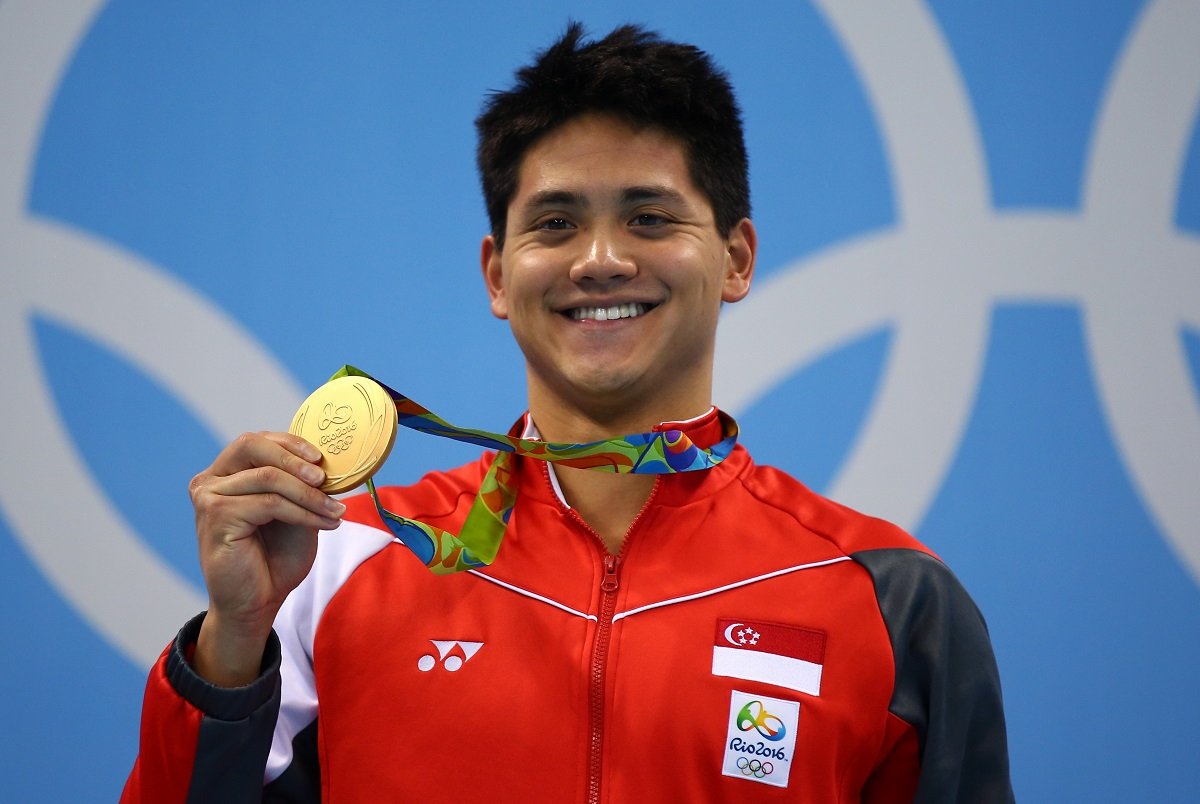
Michael Phelps’ only silver medal of the Rio Olympics came at the hands of 21-year-old Singaporean swimmer Joseph Schooling. Schooling beat Phelps in the 100-meter butterfly, claiming his and Singapore’s first gold medal in Olympic history.

During the victory lap after the race, Schooling turned to Phelps and said, “Dude this is crazy, out of this world, I don’t know how to feel right now,” according to The Guardian. Phelps smiled and simply replied, “I know.”

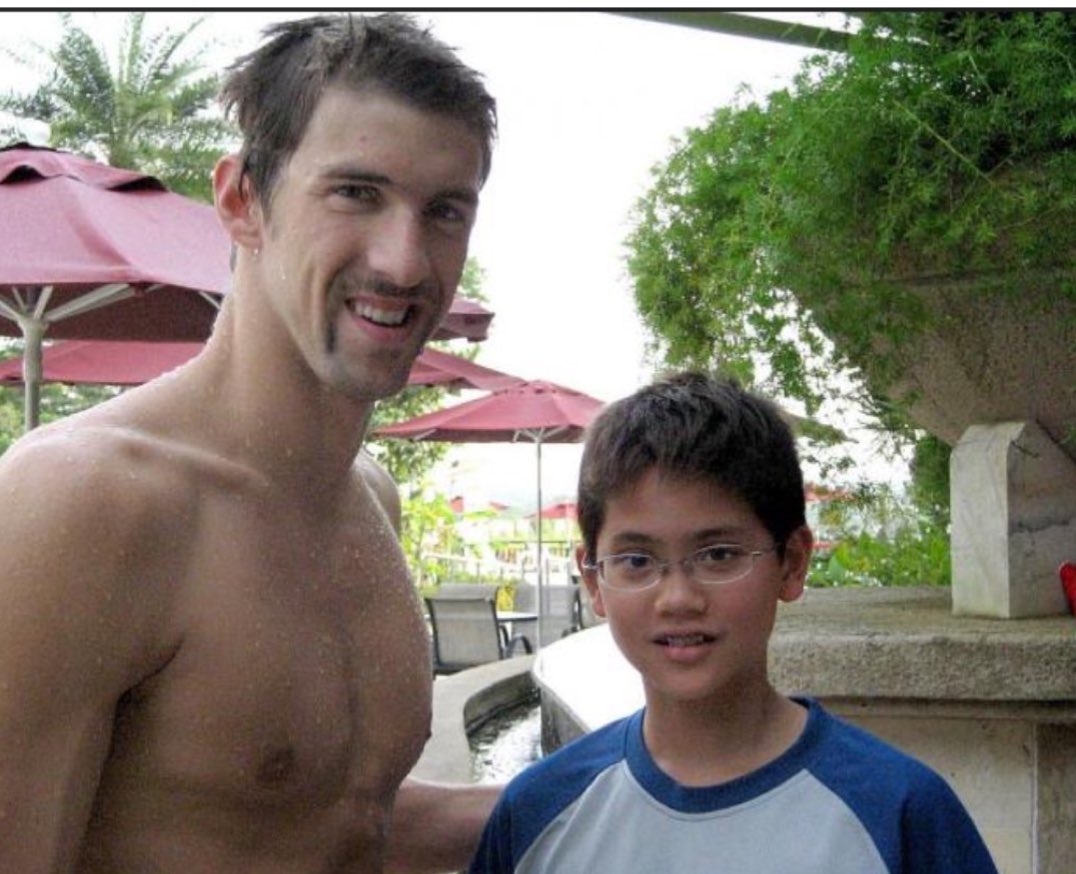
For Schooling, beating Phelps also meant beating his swimming idol. Phelps and Schooling met for the first time in 2008. Here is a picture that has been circulating on social media that puts that meeting into perspective:

Cps6iiuWAAAKEW5

“They came to the country club that I trained at,” Schooling told The Guardian. “Everyone just rushed up and was like “it’s Michael Phelps! It’s Michael Phelps!’ and I really wanted a picture … It was very early in the morning and I was so shell shocked, I couldn’t really open my mouth.”

Now it’s Phelps’ turn to be shell shocked, as Schooling put him in a position he’s not used to: second.

And the gold medal isn’t the only thing Schooling will take away from these Olympics. He also just became a millionaire. Singapore tops the rest of the world in prize money for winning a gold medal. According to Fox Sports Australia, athletes who win Olympic gold medals get paid 1 million Singapore dollars for their achievements (roughly $983,000 American).

Source…..www.businessinsider.com.in

Natarajan

“Did You Know, Dr APJ Abdul Kalam’s Best Friend Was 110 Years Old…? “


Meeting Arjuna, Dr APJ Abdul Kalam’s 110-year-old best friend who was a permanent fixture at the former President’s residence, 10 Rajaji Marg, in a book excerpt.
July 27, 2016 marked the first death anniversary of the nation’s best loved president, a teacher par excellence and a human being worthy of being called one of the most humble people in the current times: Dr APJ Abdul Kalam.

Srijan Pal Singh, a close associate of Dr Kalam as well as his student, has chosen to pay tribute to the People’s President through the book ‘What Can I Give: Life Lessons from my Teacher APJ Abdul Kalam.’ The book reveals to readers rare, personal and unheard of anecdotes as well as unseen pictures from Dr Kalam’s life. It also offers one a peek into his daily routine, travels and reflections on various issues.

Below is an excerpt from the book

The people who visited 10, Rajaji Marg to meet Dr Kalam were inevitably asked one question: ‘Have you met my friend Arjuna? Let me introduce you to him. He is a wonderful fellow.’

Then he would escort the guest to the front garden, where Arjuna stood—tall and majestic like the warrior he had been named after, the long years proudly etched on his body.

Dr Kalam would then say, ‘This fellow is very old. Hundred and-ten years old. He must have seen so much, imagine− Gandhiji, Nehru, the freedom wars and India’s rising story. He holds an entire section of history his heart. He is my best friend.’

Arjuna would wave back at Dr Kalam gently, its large branches swaying gracefully. The people who have seen it have always been tempted to take a selfie with it. Arjuna was almost three decades older than Dr Kalam. He was the most special occupant of 10, Rajaji Marg, loved and respected by the owner of the house.

Dr Kalam would walk up to him every day and they would exchange their thoughts silently. No one knew what they communicated, in what language, but we all knew that they made each other wiser. Dr Kalam would often thank Arjuna for taking care of 10, Rajaji Marg through the ages and for helping so many flowers and plants grow under his care. Arjuna was also the official bee-keeper of the house.

One day in 2012, while Dr Kalam and I were in the garden, I asked him, ‘What is so special about Arjuna? Why do you admire him so much?’ He looked at me, puzzled.

Then he said, ‘Because Arjuna lives to give and anyone who lives to give needs to be venerated. Arjuna’s mission in life has been “What can I give, what can I give, what can I give?” That is why he is standing so proudly and happily at such an age.’

I could feel Arjuna, the 110 year-old Terminalia tree, smile behind us.

The conversation did not stop there. Dr Kalam gave me a task one day. ‘Can you determine how many lives Arjuna supports?’ he asked. I was puzzled. It was an unexpected challenge. ‘Go ahead, find out,’ he said.

So I walked up to the giant tree and counted the thick rings of runners around the trunk. Runners are smaller plants that cannot support themselves and so spread themselves around the trunks of large and stronger trees like Arjuna.
One, two, three . . . eleven. Bingo. Eleven rings. I came back with my answer. ‘Sir, it supports eleven rings and of course, it gives out oxygen.’

‘Oh. You missed the nests. Look again.’

So I went back to Arjuna. This task was difficult because the tree was heavy with foliage, which carefully shielded its inner branches. I managed to count about twelve nests. I went back. ‘Sir, it supports eleven rings, twelve nests, and gives oxygen.’

‘You missed something again. Come with me.’

This time he walked back towards Arjuna with me. Pointing down at the base of the trunk, he said, ‘You missed this. Didn’t you?’ There it was. Hidden in the dense bushes, growing around the base of the trunk was a peacock’s nest, and a beautiful peahen was laying her eggs in there.

‘Yes, I missed it.’

You know why? Because we often look for solutions that are above us and that makes the solutions look more magnificent. Our mind points us that way. Thus we ignore the inspiration that comes from below, from the ground level. You missed, the largest nest, with the prettiest birds in it, because it was lying on the ground—at the base, around the roots. Diamonds are found in the depths of the earth, and not at the height of the sky.’

A few weeks later, the nest became alive with the chirping of five little chicks. Dr Kalam asked me if I knew what a baby peacock was called. And before I could Google it, he gave them a name—‘Pea-children’.

The pea-children became a part of the 10, Rajaji Marg family. Dr Kalam would regularly ensure that they were fed in the courtyard, which was near the dining room. While we had lunch at the table, he would get birdfeed laid out at the courtyard for the pea-children. And the pea-children would flock to it hungrily.

‘We have more guests for lunch. Now they will always come here for their lunch happily, even when we are not there. You just keep watching; they will come, and come just on time, regardless of anything,’ he would say.
Of course, soon the pea-children were joined by many other birds—pigeons, parrots and crows. This established a tradition which continued for years to come. Even when Dr Kalam went out of town, those birds were served their food. He would remind his staff to feed them whenever he was gone for a long time. And he made it a point to check on them whenever he returned from his trip.

When I returned to 10, Rajaji Marg after Dr Kalam’s death, the fact that he would never again eat in that dining room across the courtyard sunk in. But the birds are still fed, like they used to be in his time. The birds will always be fed, in his honour.

www. the betterindia.com

Natarajan

Two tales of struggle and answering the call of the Olympic dream…


Indian Judoka, Avtar Singh’s parents take maiden flight to cheer son, who will go up against Pople Misenga from the Olympic Refugee Team.  Read on about the intense and interesting story of both Judokas

They once cashed their fixed deposits to realise Avtar Singh’s Olympic dream and the Indian judoka’s parents are now in Rio de Janeiro to support him when he begins his Rio 2016 Olympic campaign at the Carioca Arena 2 in Barra da Tijuca on Wednesday.

A Class-4 employee in the health department, Avtar’s dad Shingara Singh encashed a fixed deposit of Rs 4 lakh saved over 21 years to book Avtar’s tickets to the Samsun Grand Prix in Turkey in April.

Avtar became the first Indian judoka to qualify for the Olympics since the 2004 Athens Games after the International Judo Federation confirmed his entry in the men’s 90kg category as one of the two Asian judokas under the continental quota.

Four months later, thanks to sponsors, Shingara and wife Sukhvinder Kaur, who hail from Gurdaspur, Punjab, boarded their maiden International flight spanning more than 20 hours.

“It’s a dream come true. To have my parents watch me from the hall would be the best thing I wanted. I will give my best and make my parents, country proud,” Avtar told PTI ahead of his bout against Pople Misenga.

Misenga, originally from the Democratic Republic of Congo, one of the worst areas affected by the civil war from 1998-2003, has made Brazil his home and represents the debutant Refugee Olympic Team.

Misenga is ranked way below the 71-ranked Indian, but the latter’s coach sees a tough bout for the assistant sub-inspector of Punjab Police.

“After moving to Brazil, Misenga has been training in Brazil with Olympic medallist judokas for more than three years. So it will be a tough challenge but Avtar is ready,” coach Yashpal Solanki said at the GamesVillage.

“We will give our best, no excuse,” Yashpal said, adding that Avtar was really moved by the pep-talk given by goodwill ambassador Sachin Tendulkar on Sunday.

“He is a motivation for others. He told him to give your best don’t think about medals. Everybody talks about medals but Sachin did not, which was exceptional,” he said showing their photo with the Indian cricket icon.

Misenga has already become a much talked about judoka after overcoming the odds in Congo.     “I wondered sometimes how to live when so many people were dying. Even in Kinshasa, the military of our country comes to do only one thing — kill. I have seen too much war, too much death. I do not want to get into that. I want to stay clean so I can do my sport.”

The 24-year-old lost his parents as a child and managed to board a truck to Kinshasa and that’s where he learnt judo and became champion in Dakar and other places in Africa.

“I tried to get away and now I have a chance to be a part of the Rio games and I am very happy, I’m going to fight for a medal.”

On what Brazil means to him, he said, “I am living in Brazil. Brazil is my home. I have children here, a son and daughter. The people here in Brazil helped me. The people introduced me to a place for training judo because I had stopped.

“I didn’t know where there was a gym for judo. Then I found the institute. I was happy. I learnt Portuguese. They gave me a chance to reach an Olympic Games and I am ready. I will demonstrate what I learnt there and that moment is coming.”

Source…..www.rediff.com

Natarajan

THE OLYMPIC SWIMMER WHO HAD NEVER BEEN IN A POOL UNTIL A FEW MONTHS BEFORE COMPETING IN THE OLYMPICS….!!!


The man was Eric Moussambani Malonga, later nicknamed “Eric the Eel”.  Moussambani is from Equatorial Guinea in Africa and only managed to get into the Olympics at all because of a wildcard drawing system put in place by the International Olympic Committee, designed to try to encourage developing countries to participate in various Olympic events.

Thanks to this drawing, Equatorial Guinea decided to send a swim team to the 2000 Olympics in Sydney, Australia.  They put out an advertisement on the radio a few months before the Games to try to get people to come and tryout for the country’s new national swim team which would be going to the Olympics.  Those who wished to tryout were to show up at the Hotel Ureca in Malabo, Equatorial Guinea. At the time, this hotel was the only place in the country that had a swimming pool (only 12 meters long).

Two people showed up, one woman, Paula Barila Bolopa (who was a grocery store cashier at the time), and one man, Eric Moussambani.  Because of the lack of competition, the only thing the two had to do to get on the team was to demonstrate that they could in fact swim.

Previous to this, Moussambani didn’t know much about swimming, but contrary to what is often reported, he did know how to swim.  Said Moussambani:

The first time I swam in the sea, I was 12 years old and was on vacation in my mother’s village. My first time in a swimming pool was on May 6, 2000 in the Hotel Ureca swimming pool…

They just told me to get my passport and a picture ready so they could send me to the Olympics. They said to me, ‘Keep on training.’ I asked them, ‘With who? I don’t have a trainer.’  They said: ‘Do what you can. Keep training because you are going to the Olympics.’

My preparation was very poor…  I was training by myself, in the river and the sea. My country did not have a competition swimming pool, and I was only training at the weekends, for two hours at a time. I didn’t have any experience in crawl, breaststroke, or butterfly. I didn’t know how to swim competitively.

The Olympic Games was something unknown for me.  I was just happy that I was going to travel abroad and represent my country. It was new for me. It was very far from Africa.

Just three months after hearing the advertisement and then getting selected to represent his country, Moussambani was on his way to the Olympics.  He took a somewhat roundabout flight to Libreville (Gabon), then to Paris, then to Hong Kong, and finally to Sydney, a trip that took nearly three days to complete.  Along with accommodations, he had £50 of spending money while at the games and an Equatorial Guinea flag for use in the opening ceremony.

Once at the Olympics, he got his first glimpse of an Olympic size swimming pool,

When I arrived, I just went to the swimming pool to see how it is. I was very surprised, I did not imagine that it would be so big…

My training schedule there was with the American swimmers. I was going to the pool and watching them, how they trained and how they dived because I didn’t have any idea. I copied them. I had to know how to dive, how to move my legs, how to move my hands… I learned everything in Sydney.

What makes Moussambani’s story even more compelling is that he would go on to win his heat in the 100m freestyle, albeit in a pretty unorthodox way.  You see, at the time, he was to compete against just two other people in the qualifiers, Karim Bare from Niger and Farkhod Oripov from Tajikistan.  Both of these two ended up getting disqualified for false starts, leaving just Moussambani, who at the time thought he had been disqualified, before it was explained to him that his competitors were the ones out and that he’d be swimming the heat alone in front of 17,000 spectators.

In order to qualify for the next round, he needed to beat 1 minute and 10 seconds… He didn’t quite manage that.  However, for someone with such limited training and technique, he actually didn’t do too bad at the very beginning, even executing an OK dive and looking pretty fast for the first 10 or 15 seconds or so, then quickly faded.   As he said,

The first 50 meters were OK, but in the second 50 meters I got a bit worried and thought I wasn’t going to make it… I felt that [it] was important [to finish] because I was representing my country… I remember that when I was swimming, I could hear the crowd, and that gave me strength to continue and complete the 100 meters, but I was already tired. It was my first time in an Olympic swimming pool.

He finished with a time of 1 minute 52.72 seconds (40.97 seconds at the halfway mark), which was about 43 seconds off the qualifying time. This was, of course, a new Equatorial Guinea swimming record, but also unfortunately was the slowest 100m freestyle swim pace in Olympic history.  For his efforts, he was immediately a media darling, with fans and some other athletes loving his story.  However, many felt that his being allowed to participate was embarrassing, as he had not a hope in the world of actually winning anything, and it was unfair to athletes in more privileged countries that could swim circles around Moussambani, but who weren’t given a chance to compete because lesser swimmers from developing countries were being included. The International Olympic Committee’s president, Jacques Rogge, was one of those, saying he would work to get rid of the wild card system and stated, “We want to avoid what happened in the swimming in Sydney; the public loved it, but I did not like it.”

Of course, the “father” of the modern Olympic Games, Baron Pierre de Coubertin, likely wouldn’t have agreed with this negative sentiment at all, as he wanted all countries to compete in the Games. He also once criticized English rowing competitions for not including working-class athletes.  He further developed the Olympic motto (Citius, Altrius, Fortius- Faster, Higher, Stronger) after a portion of a sermon given by Bishop Ethelbert Talbo, which de Coubertin was fond of quoting

The most important thing in the Olympic Games is not to win but to take part, just as the most important thing in life is not the triumph but the struggle. The essential thing is not to have conquered but to have fought well.

Certainly Moussambani exemplifies that sentiment.

Bonus Facts:

  • Since 2012 Moussambani has been the coach of the Equatorial Guinea swim team, when he’s not working his day job as an IT engineer. They actually have a real, competitive team now comprising 36 swimmers, so the Olympic wild card system paid off in that respect.  They also have an Olympic size swimming pool to practice in now.
  • Moussambani has gotten a lot better at competitive swimming. By 2004, he got his 100m free style time down to 57 seconds, which would have been good enough for him to qualify in the 2004 Olympics, but a visa mistake ended up costing him a trip to that year’s Games. Some have speculated the visa mishap was intentional in order to stop him from competing.  The gist of it was that when he submitted his application, his passport photo was somehow lost by the Malabo officials processing it. Some highly placed government officials in his country had previously expressed anger at how he’d embarrassed their country in 2000 and were not enthusiastic about him going to the Athens games. Whatever the case, due to the loss of the photo, his application was denied.
  • Moussambani recently started training again along with coaching and he posted his best swim time in 2012 at the age of 34, having it down to 55 seconds in the 100m freestyle, just under 8 seconds off the current Olympic record. As such, he’s decided to come out of semi-retirement from professional swimming to try out for the 2016 games.  “I still have a dream. I want to show people that my times have improved, that we have swimming pools in my country now and that I can now swim a hundred meters.”
  • Moussambani’s current training routine for the 2016 Olympics is to wake up at 5am and run for 3 km.  He then gets ready for work and spends 8am to 5pm there.  On Tuesday, Thursday, Friday, and Saturday he heads down to the pool where he meets his team and trains from 6pm-10pm.
  • The 100m freestyle gold medalist (Pieter Van den Hoogenband) in the 2000 Olympics finished with a time of 48.3 seconds, which was a new world record.
  • The current world record for the men’s 100m freestyle (long course: 50m pool) is 46.91 seconds, set by Cesar Cielo of Brazil in the 2009 World Championships in Rome.
  • The current Olympic record is 47.05 seconds, set by Eamon Sullivan of Australia in the 2008 games.
  • Equatorial Guinea’s other swimmer in the 2000 Olympics, Paula Barilia Bolopa, also struggled to finish her heat, this time in the 50m freestyle, finishing with a time of 1:03.97.  While it was a new record for the 50m freestyle for Equatorial Guinea, it was also, like Moussambani’s time, a new slowest time record in Olympic history for the 50m freestyle.

Source….www.today i foundout.com

Natarajan

From Golconda to Kandahar to London: The Journey of the Fabled Kohinoor Diamond…!!!


Described by the Mughal Emperor Babur as ‘Worth the value of one day’s food for all the people in the world‘, Kohinoor is one of the most coveted and valuable diamonds of all times. This dazzlingly beautiful rare jewel has been in the eye of the storm ever since it left the hands of its original owners, the Kakatiyas of Warangal. Never bought or sold, the fabled diamond changed many hands as it traveled through several dynasties that included the Khiljis, the Mughals, the Persians, the Afghans and the British before ending up at the Tower of London.

kohinoor_diamond1

This is the intriguing story of its eventful journey.

Photo Source

The Kohinoor has a complex history that goes back to the 13th century. A large colourless diamond that weighed around 793 carats, Kohinoor originated in India’s Golconda mines when they were under the rule of the Kakatiya dynasty.

Legend has it that it was used as an eye of the deity in a Kakatiya temple in Warangal in 1310.

In the early 14th century, Alauddin Khilji, second ruler of the Khilji dynasty of the Delhi Sultanate, and his army began looting the kingdoms of southern India. During a raid on Warangal, Malik Kafur (Khilji’s general) acquired the priceless diamond for the Khilji dynasty. It was then passed on to the succeeding dynasties of the Delhi Sultanate.

In 1526, Babur handed a resounding defeat to Ibrahim Lodi at the Battle of Panipat. The victorious Babur received reports that the Fort of Agra housed an immense treasure, which included a diamond that defied all description. Enraptured by the jewel on its acquisition, Babur called it the ‘Diamond of Babur’ and even mentioned it in his memoir, the Baburnama.

After Babur’s death, the precious stone was inherited by his son Humayun from whom it passed on to successive generations of Mughal rulers, including Shah Jahan, who set the priceless gem in his legendary Peacock throne.

Later, when he was imprisoned in the Agra Fort by his son Aurangzeb, Shah Jahan used to see the reflection of the Taj Mahal in the glittering jewel, placed near a window.

It was in Aurangzeb’s reign that Tavernier, an enterprising French traveller and gem connoisseur, visited India in the search of rare and wonderful gems. Having been shown the diamond by Aurangzeb, Tavernier made the first sketch of Kohinoor in history.

Aurangzeb also entrusted the work of cutting and enhancing the diamond to Hortenso Borgia, a Venetian lapidary (gem artist) so clumsy that he reduced the weight of the stone from 793 carats to 186 carats. So enraged was Aurangzeb at the carelessness and stupidity of the lapidary, that not only did he refuse to compensate him for his labour, but he also confiscated all of Borgia’s worldly possessions.

During the rule of Aurangzeb’s grand son Muhammad Shah in 1739, Delhi was invaded by Nadir Shah, the Shah of Persia. His army looted all the jewels in the royal Mughal treasury, which also included the famous Peacock Throne, and Daria-i-noor, the sister diamond of the Kohinoor. However, the Kohinoor was nowhere to be seen. How Nadir Shah acquired the Kohinoor is a very interesting story.

Muhammad Shah used to carry the prized diamond with him hidden in the folds of his turban, a secret known only to a selected few, including a eunuch in the harem of the Emperor. Hoping to win the favor of the victorious Nadir Shah, the disloyal eunuch whispered the emperor’s secret into his ears. Devising a plan to deprive Muhammad Shah of his prized possession., Nadir Shah ordered a grand feast to coincide with the restoration of Muhammad Shah to his throne.

During the feast, Nadir Shah proposed an exchange of turbans as a gesture of eternal friendship and Muhammad Shah, unable to refuse the gesture, had to hand over his turban. After the ceremony, Nadir Shah returned to his private chambers where he eagerly unfolded the turban to find the diamond concealed within. Dazzled by its beauty, he exclaimed ‘Koh-i-noor‘, which in Persian means mountain of light. One of Nadir Shah’s consort, wonder struck by the Kohinoor, had said,

“If a strong man were to throw four stones, one north, one south, one east, one west, and a fifth stone up into the air, and if the space between them were to be filled with gold, all would not equal the value of the Kohinoor.”

Nadir Shah was assassinated soon after he returned to Persia and the diamond fell into the hands of Ahmad Shah Abdali, one of his ablest generals, who later became the Emir of Afghanistan.

A descendant of Abdali, Shah Shuja Durrani brought the Kohinoor back to India in 1813 and gave it to Ranjit Singh,the ruler of Lahore, in exchange for his help in winning back the throne of Afghanistan.

Ranjit Singh , the founder of the Sikh empire, had the prized jewel sewn into an armlet, which he wore on all the important state occasions. It remained with him for the next twenty years. Ranjit Singh had willed the diamond to the temple of Jagannath in Puri, in modern-day Odisha, but after his death in 1839, the East India Company did not comply with the terms of his will.

His son, Duleep Singh lost the second Anglo-Sikh War leading to the annexation of the Punjab by the British. Under the aegis of Lord Dalhousie, the Last Treaty of Lahore was signed, officially ceding the Kohinoor to Queen Victoria along with the Maharaja’s other assets. The treaty specified,

“The gem called Kohinoor which was taken from Shah Shuja-ul-Malik by Maharaja Ranjit Singh shall be surrendered by the Maharajah of Lahore to the Queen of England.”

On 6 April 1850, the Kohinoor left the shores of India on board of the HMS Medea. So shrouded in mystery was its departure that even the Captain of the ship did not know the priceless cargo his ship carried.

n a grand event organized in Hyde Park in London, the Kohinoor was formally handed over to Queen Victoria by the officials of the East India Company.

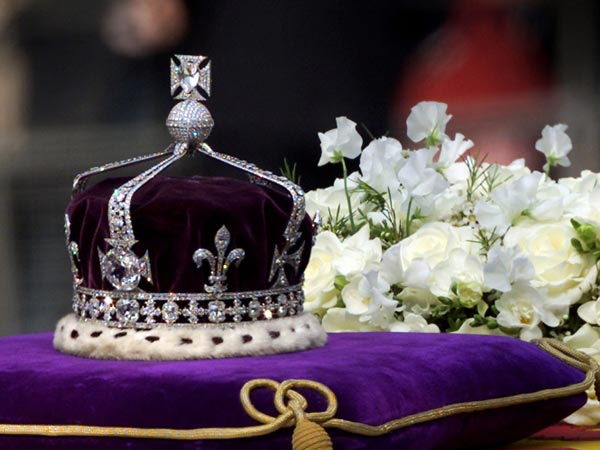
Disappointed by its Mughal-style cut, the Queen, along with Prince Albert and others in the court, decided to refashion the diamond to enhance its brilliance. The re-cutting of the Kohinoor, that took a mere 38 days and costed £8000, resulted in an oval brilliant that weighed 108.93 carat. Despite the efforts of the Dutch jeweler, Mr Cantor, the results reduced the diamond drastically in weight. In 1853, it was mounted on a magnificent tiara for the Queen that contained over two thousand diamonds.

Queen Victoria wore the diamond frequently afterwards and left it in her will that the Kohinoor should only be worn by a queen of the royal family. This was due to rumour of an ancient curse associated with the Kohinoor that said,

“He who owns this diamond will own the world, but will also know all its misfortunes. Only God, or a woman, can wear it with impunity.”

As a result, the diamond is worn only by the female members of the British Royal Family. Since getting into British hands, the Kohinoor was been worn by Queen Victoria, Queen Alexandra, Queen Mary and Queen Elizabeth.

It is now displayed along with the other British crown jewels in the Tower of London. Crystal replicas of the diamond set in the oldest crowns as well as the original bracelet given to Queen Victoria can also be seen at the Tower’s Jewel House.

During the Second World War, the Crown Jewels were moved from their home at the Tower of London to a secret location. The biography of the French army general, Jean de Lattre de Tassigny, by his widow Simonne says that George VI hid the Kohinoor at the bottom of a lake near Windsor Castle where it remained until after the war. The only people who knew of the hiding place were the king and his librarian, who apparently revealed the secret to the general and his wife on their visit to England in 1949.

The subject of bitter battles and court intrigues, today Kohinoor casts its brilliance on the millions of tourists who, for the most part, are unaware of its long history in shaping the destinies of men.

Source…..www.the betterindia.com

natarajan

A Syrian refugee who was swimming across borders a year ago is now in the Olympics…


One year ago, Syrian refugee Yusra Mardini was swimming for her life as she fled Damascus, Syria with her older sister. Today, she is a member of the Olympic refugee team competing in Rio.

The 18-year-old is one of ten athletes competing for the Refugee Olympic Athletes in three sports.

Below, read about Mardini’s tenacious and heroic journey, via Alexander Hassenstein of Getty.

Before that, Mardini and her sister have been swimmers for many years. They were known as shining stars at their swimming club in Syria, until the war disrupted their training.

Their parents tried their hardest to keep them away from the intense war zones — they moved multiple times to avoid the conflict, but the war shortly became too dangerous. They decided to pick up and move all together after their house was destroyed.

Mardini and her sister left Damascus, Syria in early August. They boarded an inflatable boat in Turkey that was headed for the Greek island of Lesbos, alongside 20 other refugees.

Not too long into their journey, the motor on the boat broke down. Mardini and her sister were the only two swimmers on the boat, so they jumped into the water to swim the boat to shore.

They swam while helping the boat stay above water for three and a half hours, saving everyone on the boat.

After swimming all of the passengers to safety, the sisters continued their journey to make it to Germany.

They then travelled through five more countries, on land.

They faced many problems — they were arrested at borders, lost money, and had many items stolen from them. Despite all of these problems, the sisters remained strong. They were not going to give up.

After 35 days of fleeing, the sisters finally made it to Germany.

Now, they are safe with their parents in Berlin.

Shortly after their arrival in Berlin, they were introduced to a swimming coach at a local swimming club.

Mardini’s goal was originally to make it to the 2020 Olympics in Tokyo, but her coach said she had progressed so well that there was a good chance that she could qualify for the International Olympic Committee’s (IOC) refugee team for the 2016 Olympics in August.

Since she lost everything and faced a treacherous journey, she was given a IOC Olympic Solidarity scholarship — a scholarship to help athletes qualify for the Olympics.

Her daily schedule leading up to the Olympics involved school and intensive training.

Mardini hopes to encourage refugees and make them proud of her.

In the meantime, she seems to be having the time of her life in Rio.

Source…www.businessinsider.com.au

Natarajan

This is how much time it should take to escape a crashed airliner….


A Emirates Boeing 777-300 crashed landed and burst into flames at Dubai International Airport on Wednesday.

Fortunately, the airline has confirmed that all 300 passengers and crew on board the flight made it to safety before the aircraft became engulfed in flames.

Which leads us to the question, how long does it take to evacuate a crashed airliner?

Believe it or not, federal regulations dictate that all modern airliners capable of carrying more than 44 passengers must be able to be fully evacuated in less than 90 seconds.

In addition, in order to be certified to fly, new airliners or even new derivatives of existing airliners must pass an evacuation test. The tests involve simulated emergency situations in which all passengers and crew must exit the aircraft in pitch-black darkness using only half of the available emergency escapes.

In 2006, the Airbus A380 superjumbo managed to pass the test by evacuating 853 passengers, 18 crew, and two pilots in just 78 seconds, Flight Global reported.  The Boeing 777-200 passed the evacuation test in 1994 in 84 seconds, Quartz reported. The aircraft involved in the Emirates crash is an elongated 777-300. According to the AP, the aircraft was not subject to its own evacuation test. Instead, it was certified by extrapolating the test results of the 777-200 with the addition of two emergency exits.

These tests are generally conducted using the aircraft type’s maximum passenger capacity which means that aircraft in service are equipped with far fewer seats. For instance, the A380 was evacuation tested with 853 passengers. In operation these days, most of the superjumbos fly with around 500 seats.

However, it should also be noted that these test are also conducted in a laboratory conditions that are calm and organised. The hectic nature of an actual emergency evacuation may slow down the time it takes to empty an aircraft.

As a result, experts recommend that passengers select seats within three rows of an emergency exit. In addition, passengers should be aware of the location of the nearest emergency exit at all times.

Here’s a video of the Airbus A380 evacuation test:

Source….www.businessinsider.com.au

Natarajan

Avoid These Actions to Live Regret-Free ….


The phrase “if only…” is normally one associated with deep regret, and that’s why it’s incredibly sad when we feel compelled to say it. To avoid having to utter those fateful words, I’ve made a list of 10 bad life choices that ultimately lead to this phrase of regret, as well as how to avoid them:

1. Wearing a mask in front of others

It’s a big mistake to always think about other people’s perceptions of you and trying to play up to them, as opposed to just being yourself. If you continuously focus on this, rather than being who you really are, the end result will be that one fine day, you will forget who you are beneath the mask you always try to uphold. Forget about who people want you to be, or how they see you – impress them and inspire them with how you deal with your imperfections instead.
2. Letting others create your dreams

Although the greatest life challenge is the sound discovery of who you really are, the second greatest is finding happiness and peace with yourself. You should always stay true to your own goals and dreams to find happiness and peace. If people disagree with you, it isn’t necessarily a bad thing – it just means you’re standing your own ground and finding you own way. Don’t worry about whether people think you’re doing something crazy. When you find yourself excitedly losing track of time, you’ll know in your heart that you’re on the right path.

3. Keeping the company of negative people

Negative people are best avoided, because they can foist their bad attitudes on you, and even get to you. Remember that keeping the company of negative people is a choice, not an obligation. Once you realize this and begin to keep it in mind, you will open up your world to compassion over anger, generosity over greed, and patience over anxiety.

Although the greatest life challenge is the sound discovery of who you really are, the second greatest is finding happiness and peace with yourself. You should always stay true to your own goals and dreams to find happiness and peace. If people disagree with you, it isn’t necessarily a bad thing – it just means you’re standing your own ground and finding you own way. Don’t worry about whether people think you’re doing something crazy. When you find yourself excitedly losing track of time, you’ll know in your heart that you’re on the right path.
4. Falling into selfishness and egotism

A life that revolves around selfish pursuits and egotism is not a life well-lived. You will be remembered by what you have done for others and the world at large, rather than what you have done for yourself. Be selfless, compassionate and try and give back whenever and wherever you can.

5. Avoidance of change and growth

If you want to know why your life is the way it is, take a look at your past. If you want to know how your future’s going to be, take a look at your actions in the present. You should always leave room in your life for the old to make way for the new. As much as we all like to hold on to that which we know, the truth is that the old is gone, and isn’t coming back. Accepting this fundamental reality and embracing change as it comes will set you up for lasting success.

6. Giving up during tough times

Whenever we fail in life, we should take is as a blessing. This is because failures act as indicators that we need to try something else. What failures do not indicate is the necessity to give up on what we’re setting out to achieve. Learn what you can from a failure and move on. One baby step at a time is what will get you ahead in life. Eventually, these baby steps build on top of each other and lead to our most glorious and defining moments.

7. Attempting to micro-manage everything                       

There’s plenty of truth to the notion of creating your own destiny, however this doesn’t mean that you incessantly have to worry about and control everything. Letting go a little will allow you to gain perspective. Once you can see the forest for the trees again, it’s time to take the next step forward. Remember that you don’t always have to be certain that you’re headed somewhere great. Occurrences in life happen in perfect order, regardless of whether you understand that or not. As time goes by in our lives, we all come to understand this principle and see how all the dots are connected.

8. Settling for less than you are deserving of

You should always make it a priority in life to let go of what no longer serves you. Sometimes we need to be floored by a bad relationship or other situation, as hitting rock bottom can actually be the springboard we need for us to stand taller than we ever did before. The tears we cry can sometimes clear our eyes so we can see the possibilities that lie in front of us. Remember not to settle for anything less than you deserve.

9. Forever waiting for tomorrow

We all know life is short, but it’s actually even shorter than you think. If you’re forever waiting for tomorrow, the window for you to do all the things you’ve always wanted to do will silently close, and by the time you realize it has, it will be too late. The choice is yours – do you want to look back on what you’ve achieved with pride, or do you want to make a whole myriad of excuses for the things you haven’t?

10. Not being assertive and waiting for things to happen

For whatever reason, you may feel hard done by due to the hand of cards that life has dealt you, but that doesn’t mean that you are owed anything – by anyone. Focus on developing a backbone, rather than a wishbone. It’s up to you to take responsibility for what transpires in your life. You are equally important to and just as needed as everyone else in this world. Don’t sit around waiting for things to happen, because they just won’t. Your day is now, it’s here. Seize it and go and create the world you want for yourself.
Content Source: Brightside   thro http://www.ba-bamail.com

Natarajan