The Strange Story of the First Olympian Disqualified for Doping….


Olympians have been bending (and occasionally breaking) the rules in an effort to give themselves an edge over the competition since the games began. Despite this, the International Olympic Committee (IOC) only started testing for performance enhancing substances in 1968, and only seem to have really started taking the issue seriously in the 1990s. As for the 1968 Games, despite that a large percentage of Olympians are thought to have been using performance enhancing drugs, they only managed to catch and disqualify one guy. What dangerous substance did he take to get himself disqualified? He drank two beers before an event, resulting in him becoming the first person to be disqualified for “doping”.

To really drive home how ingrained using performance enhancers is in Olympic culture, and to highlight how endemic is was before the IOC began to crack down on it recently, ancient Olympians were known to drink “potions” containing mysterious, often exotic herbs, or even ground up animal testicles, in the belief that doing so would give them an edge. Much like the athletes that wear colored tape (see: Why Do Olympians Wear Colored Tape?) or more recently the use of cupping therapy, it didn’t really matter if the thing actually helped them- only that they thought it did.

Although there were no specific rules against using performance enhancing substances back then, there were rules in place against the use of magic to “curse” or otherwise unnerve an opponent. In other words- in the ancient Olympics, you were free to use anything you wished to improve your own performance, but you weren’t allowed to try and negatively impact the performance of others. As far as we can tell, this didn’t actually stop people from doing such things.

When the Olympic Games were revived in the 19th century, athletes were similarly open to having various substances put into their bodies if it had even a small chance at giving them the ability to perform citius, altius, fortius.

For example, Thomas Hicks, the winner of the 1904 Olympic Marathon was givendoses of strychnine and shots of brandy in the middle of the race by his trainers in full view of gathered crowds and officials.

At the time, strychnine was used in small doses as a performance enhancing drug. Anything but small doses would, of course, kill the athlete via asphyxiation due to paralysis of the respiratory muscles.  However, if the dose wasn’t too large, strychnine was believed to provide a performance boost via the muscle spasms it relatively quickly induces. They gave Hicks three doses during the race… This was only part of the way in which his trainers almost killed him.

You see, while his trainers were willing to give him, essentially, rat poison and brandy, they refused to give him any water despite the sweltering Missouri summer heat. By the end of the race, Hicks was delusional and had to more or less be carried to and over the finish line as he was too weak to remain upright on his own. He immediately passed out upon finishing and the doctor was unable to revive him for almost a full hour. Despite not being able to finish the race without help, he was nevertheless declared the victor. (See: The Trials and Tribulations of 1904 Olympic Marathon Runners)

And if you thought that being carried over the finish line made for a questionable victory, Hicks only won after it emerged that the first person to finish, Fred Lorz, had traversed most of the course by car. You see, due to the amazingly bad conditions in the race, Lorz decided to quit and hitched a ride back to the starting point. When he exited the car and subsequently jogged back into view of the spectators, everyone just assumed he’d ran the whole thing, so he went along with it. Eventually his automotive adventure came to light, at which point he claimed his pretending he ran had all been a joke.

Back to doping in the Olympics. The IOC didn’t officially ban certain dangerous performance enhancing substances until the late 1960s, and even then, it took the death of an athlete to jar them into taking a stand. That athlete was a cyclist competing in the 1960 games on behalf of Denmark called Knud Enemark Jensen. He collapsed and subsequently died in the middle of a race, with it widely reported that the cause of his collapse was that he’d been given a cocktail of drugs, including Roniacol, by his trainer beforehand.

Of course, it should also be noted that at the time it was 108° F (42° C) out and what actually happened was that Jensen succumbed to heat stroke and then fractured his skull after falling off his bike- the official cause of death was brain injury resultant from his fractured skull. Although it was ultimately determined that drugs probably didn’t have anything to do with Jensen’s death, the IOC was shaken enough by the media backlash to decide to ban, at least officially (more on this in a bit), certain substances starting in the 1968 Games.

Although testing was in effect during the 1968 Winter Olympics in Grenoble, France, no athlete is known to have been caught with a performance enhancing drug in their system.

The same couldn’t be said for that year’s summer games. (At the time the Winter and Summer Olympics occurred in the same year) During those Olympics, as mentioned, Swedish athlete Hans-Gunnar Liljenwall was found to have alcohol in his system.

Though alcohol may seem like the exact opposite of a dangerous performance enhancing drug given that it dulls the senses, clouds judgement, and is otherwise pretty safe in moderation, in the right quantities, there was, and still is, a popular idea that it gives one an advantage.  How?

The hypothesis goes that in skill based games that rely more on muscle memory than things like reaction times- games like darts, billiards and even target shooting- alcohol could, perhaps, potentially improve performance in individuals prone to stress or “overthinking“. Whether actually helpful or not, in Liljenwall’s case, he was trying to use the alcohol for this very purpose and so drank two beers before a shooting event to steady his nerves, and hopefully hands.

After his urine was found to contain alcohol, Liljenwall was disqualified and was ordered to return the bronze pentathlon medal he’d won while under the influence. Not stopping there, the rest of Sweden’s pentathletes were also forced to hand back their medals for Liljenwall’s mistake.

What makes Liljenwall’s disqualification even more bizarre is that, seemingly, little was actually being done to stop anyone else from using performance enhancing drugs.

You see, they only used urine tests during the 1968 games out of fear that blood tests could potentially spread infection or cause some sort of injury to the athletes. Although today urine tests are fairly comprehensive and accurate for many things, back then the science was still in its infancy and the chemists performing the tests were only looking for a very specific set of substances, mostly “hard drugs” like cocaine and heroin, but not steroids.

In fact, in 1969, an American weightlifter responded to being asked about the recent ban on amphetamine use by defiantly saying, “What ban?” He went on to explain that he and his fellow athletes had all used a new drug recently developed in West Germany that couldn’t be detected during the previous Olympic games, openly bragging: “When they get a test for that one, we’ll find something else. It’s like cops and robbers.

Beyond some using undetectable drugs, others would use a catheter to fill their bladder with someone else’s urine directly before testing. Women had another trick up their, well… not sleeves… in the use of a condom filled with clean urine cleverly hidden inside the vagina.

Because the IOC was only testing urine and the tests were fairly inaccurate and not very sensitive on the whole, more low-tech methods of avoiding detection included drinking a lot of water to dilute results beyond the capabilities of the testing of the age to detect anything in, or simply rejecting the test results for various reasons.

For instance, in a non-Olympic event at the 1970 Weightlifting World Championship in Ohio, all three medalists were found to have banned substances in their urine. Despite this, they were allowed to keep their winning medals. Why? Due to systemic issues with testing procedures, with some athletes even managing to get around being tested at all, including the guys who came in fourth, fifth and sixth place at this event, there was no way to ensure the medals would definitely go to someone who hadn’t cheated. Given that the orginisation knew well that pretty much all of the top lifters were using drugs, they reasoned the winner should probably just be the best of the cheaters.

This same problem plagued the Olympics as well. Dr. Robert Voy, formerly in charge of drug testing for the U.S. Olympic Committee, noted that, beyond inherent problems with the accuracy of the tests, complete lack of quality control in the samples, and inconsistent procedures from test to test, because the tests were so easily fooled, those in charge of the drug testing resorted to “a less libelous approach to testing called ‘sink testing,’ used to prevent false positive reporting and legal challenges. This now nonexistent method meant all samples were collected but either were not tested or were simply poured down the drain.”

Dr. Voy went on to state, “The athletes knew better than anyone that the drug testing posed little threat to them.  They scoffed at testing notices and went right on with their routine drug use with little fear of detection.”

In fact, one survey of track and field athletes from seven different nations in the 1972 Olympics revealed that a whopping 61% of them admitted to using steroids before those games. The actual number of track athletes using is thought to have been higher as presumably not everyone taking steroids would be so keen on admitting it, even in an informal survey.

The reason they could be so flippant, particularly about using steroids was that, while drugs like alcohol, heroin, and cocaine were being tested for, as previously mentioned, at this points steroids were not.

On top of that, even if they tested positive for substances that were being tested for, they could simply say their sample wasn’t handled or tested right, which may well have been true. Other excuses included things like- if they’d been using heroin, they could say they’d been eating poppy seed muffins, and even could be publicly seen doing so to back their story. (And yes, that is really a thing, even today- see: Can Eating Poppy Seeds Really Cause You to Fail a Drug Test?)

It would not be until the late 1980s when Canadian sprinter Ben Johnson stunned the world by setting a new world record- 9.79 seconds- in the 100m sprint, and subsequently had his medal stripped three days later after testing positive forstanozolol, that the public began to wake up to the problem.

Beyond Johnson, there was evidence that six of the eight sprinters in that race were likely using steroids. This was a problem in the sport that famed Olympian Carl Lewis (who finished 9.92 seconds in that sprint) raged against in the media before the 1988 games, noting “There are gold medalists at this meet who are on drugs, that [100 metres] race will be looked at for many years, for more reasons than one.”

Funny enough, Johnson’s trainer, Charlie Francis, would later come out and say the fact that Johnson tested positive for stanozolol just showed the flaws in the Olympic testing procedures.  You see, Johnson was actually taking the steroid furazabol, as he didn’t like the way stanozolol made him feel.  Francis also claimed that at the time all the top athletes in the sport were taking steroids.

In support of Francis’ assertions, in a recent CBC documentary, Ben Johnson: A Hero Disgraced, a former IOC official revealed that approximately 80% of the track and field athletes in the 1988 Games showed significant signs of long-term steroid abuse. Not only that, but 20 actually tested positive but were nevertheless cleared for the Games by the IOC. It has been claimed that the reason the IOC was so keen on allowing these athletes to compete was due to pressure from NBC who didn’t want the games to “collapse in scandal”. They were also supposedly refusing to pay the IOC owed funds and threatening to withdraw broadcasting the Olympics that year if such a thing happened before the Games.

The media frenzy that surrounded Johnson’s rapid downfall, along with the public becoming aware of the widespread use of steroids in the Olympics, resulted in the IOC finally putting significant effort into ending performance enhancing drug use among Olympics athletes.

Source…..www.today i found out .com

Natarajan
Joke of the Day…” Way to cut cost …” !!!


Once upon a time the government had a vast scrap yard in the middle of a desert.

Congress said, “Someone may steal from it at night.” So they created a night watchman position and hired a person for the job.

Then Congress said, “How does the watchman do his job without instruction?” So they created a planning department and hired two people, one person to write the instructions, and one person to do time studies.


Then Congress said, “How will we know the night watchman is doing his tasks correctly?” So they created the Quality Control Department and hired two people. One to do the studies and one to write the reports.

Then Congress said, “How are these people going to get paid?” So they created a time keeper and a payroll officer position, then hired two people for the roles.

Then Congress said, “Who will be accountable for all of these people?” So they created an administrative section and hired three people: An Administrative Officer, Assistant Administrative Officer, and a Legal Secretary.

Then Congress said, “We have had this command in operation for one year and we are $18,000 over budget, we must cutback overall cost.”

So they laid off the night watchman.!!!


Source….www.ba-bamail.com

Natarajan


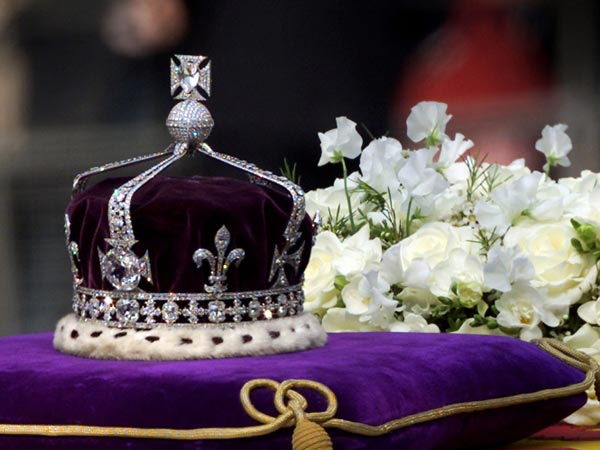
From Golconda to Kandahar to London: The Journey of the Fabled Kohinoor Diamond…!!!


Described by the Mughal Emperor Babur as ‘Worth the value of one day’s food for all the people in the world‘, Kohinoor is one of the most coveted and valuable diamonds of all times. This dazzlingly beautiful rare jewel has been in the eye of the storm ever since it left the hands of its original owners, the Kakatiyas of Warangal. Never bought or sold, the fabled diamond changed many hands as it traveled through several dynasties that included the Khiljis, the Mughals, the Persians, the Afghans and the British before ending up at the Tower of London.

kohinoor_diamond1

This is the intriguing story of its eventful journey.

Photo Source

The Kohinoor has a complex history that goes back to the 13th century. A large colourless diamond that weighed around 793 carats, Kohinoor originated in India’s Golconda mines when they were under the rule of the Kakatiya dynasty.

Legend has it that it was used as an eye of the deity in a Kakatiya temple in Warangal in 1310.

In the early 14th century, Alauddin Khilji, second ruler of the Khilji dynasty of the Delhi Sultanate, and his army began looting the kingdoms of southern India. During a raid on Warangal, Malik Kafur (Khilji’s general) acquired the priceless diamond for the Khilji dynasty. It was then passed on to the succeeding dynasties of the Delhi Sultanate.

In 1526, Babur handed a resounding defeat to Ibrahim Lodi at the Battle of Panipat. The victorious Babur received reports that the Fort of Agra housed an immense treasure, which included a diamond that defied all description. Enraptured by the jewel on its acquisition, Babur called it the ‘Diamond of Babur’ and even mentioned it in his memoir, the Baburnama.

After Babur’s death, the precious stone was inherited by his son Humayun from whom it passed on to successive generations of Mughal rulers, including Shah Jahan, who set the priceless gem in his legendary Peacock throne.

Later, when he was imprisoned in the Agra Fort by his son Aurangzeb, Shah Jahan used to see the reflection of the Taj Mahal in the glittering jewel, placed near a window.

It was in Aurangzeb’s reign that Tavernier, an enterprising French traveller and gem connoisseur, visited India in the search of rare and wonderful gems. Having been shown the diamond by Aurangzeb, Tavernier made the first sketch of Kohinoor in history.

Aurangzeb also entrusted the work of cutting and enhancing the diamond to Hortenso Borgia, a Venetian lapidary (gem artist) so clumsy that he reduced the weight of the stone from 793 carats to 186 carats. So enraged was Aurangzeb at the carelessness and stupidity of the lapidary, that not only did he refuse to compensate him for his labour, but he also confiscated all of Borgia’s worldly possessions.

During the rule of Aurangzeb’s grand son Muhammad Shah in 1739, Delhi was invaded by Nadir Shah, the Shah of Persia. His army looted all the jewels in the royal Mughal treasury, which also included the famous Peacock Throne, and Daria-i-noor, the sister diamond of the Kohinoor. However, the Kohinoor was nowhere to be seen. How Nadir Shah acquired the Kohinoor is a very interesting story.

Muhammad Shah used to carry the prized diamond with him hidden in the folds of his turban, a secret known only to a selected few, including a eunuch in the harem of the Emperor. Hoping to win the favor of the victorious Nadir Shah, the disloyal eunuch whispered the emperor’s secret into his ears. Devising a plan to deprive Muhammad Shah of his prized possession., Nadir Shah ordered a grand feast to coincide with the restoration of Muhammad Shah to his throne.

During the feast, Nadir Shah proposed an exchange of turbans as a gesture of eternal friendship and Muhammad Shah, unable to refuse the gesture, had to hand over his turban. After the ceremony, Nadir Shah returned to his private chambers where he eagerly unfolded the turban to find the diamond concealed within. Dazzled by its beauty, he exclaimed ‘Koh-i-noor‘, which in Persian means mountain of light. One of Nadir Shah’s consort, wonder struck by the Kohinoor, had said,

“If a strong man were to throw four stones, one north, one south, one east, one west, and a fifth stone up into the air, and if the space between them were to be filled with gold, all would not equal the value of the Kohinoor.”

Nadir Shah was assassinated soon after he returned to Persia and the diamond fell into the hands of Ahmad Shah Abdali, one of his ablest generals, who later became the Emir of Afghanistan.

A descendant of Abdali, Shah Shuja Durrani brought the Kohinoor back to India in 1813 and gave it to Ranjit Singh,the ruler of Lahore, in exchange for his help in winning back the throne of Afghanistan.

Ranjit Singh , the founder of the Sikh empire, had the prized jewel sewn into an armlet, which he wore on all the important state occasions. It remained with him for the next twenty years. Ranjit Singh had willed the diamond to the temple of Jagannath in Puri, in modern-day Odisha, but after his death in 1839, the East India Company did not comply with the terms of his will.

His son, Duleep Singh lost the second Anglo-Sikh War leading to the annexation of the Punjab by the British. Under the aegis of Lord Dalhousie, the Last Treaty of Lahore was signed, officially ceding the Kohinoor to Queen Victoria along with the Maharaja’s other assets. The treaty specified,

“The gem called Kohinoor which was taken from Shah Shuja-ul-Malik by Maharaja Ranjit Singh shall be surrendered by the Maharajah of Lahore to the Queen of England.”

On 6 April 1850, the Kohinoor left the shores of India on board of the HMS Medea. So shrouded in mystery was its departure that even the Captain of the ship did not know the priceless cargo his ship carried.

n a grand event organized in Hyde Park in London, the Kohinoor was formally handed over to Queen Victoria by the officials of the East India Company.

Disappointed by its Mughal-style cut, the Queen, along with Prince Albert and others in the court, decided to refashion the diamond to enhance its brilliance. The re-cutting of the Kohinoor, that took a mere 38 days and costed £8000, resulted in an oval brilliant that weighed 108.93 carat. Despite the efforts of the Dutch jeweler, Mr Cantor, the results reduced the diamond drastically in weight. In 1853, it was mounted on a magnificent tiara for the Queen that contained over two thousand diamonds.

Queen Victoria wore the diamond frequently afterwards and left it in her will that the Kohinoor should only be worn by a queen of the royal family. This was due to rumour of an ancient curse associated with the Kohinoor that said,

“He who owns this diamond will own the world, but will also know all its misfortunes. Only God, or a woman, can wear it with impunity.”

As a result, the diamond is worn only by the female members of the British Royal Family. Since getting into British hands, the Kohinoor was been worn by Queen Victoria, Queen Alexandra, Queen Mary and Queen Elizabeth.

It is now displayed along with the other British crown jewels in the Tower of London. Crystal replicas of the diamond set in the oldest crowns as well as the original bracelet given to Queen Victoria can also be seen at the Tower’s Jewel House.

During the Second World War, the Crown Jewels were moved from their home at the Tower of London to a secret location. The biography of the French army general, Jean de Lattre de Tassigny, by his widow Simonne says that George VI hid the Kohinoor at the bottom of a lake near Windsor Castle where it remained until after the war. The only people who knew of the hiding place were the king and his librarian, who apparently revealed the secret to the general and his wife on their visit to England in 1949.

The subject of bitter battles and court intrigues, today Kohinoor casts its brilliance on the millions of tourists who, for the most part, are unaware of its long history in shaping the destinies of men.

Source…..www.the betterindia.com

natarajan

A Syrian refugee who was swimming across borders a year ago is now in the Olympics…


One year ago, Syrian refugee Yusra Mardini was swimming for her life as she fled Damascus, Syria with her older sister. Today, she is a member of the Olympic refugee team competing in Rio.

The 18-year-old is one of ten athletes competing for the Refugee Olympic Athletes in three sports.

Below, read about Mardini’s tenacious and heroic journey, via Alexander Hassenstein of Getty.

Before that, Mardini and her sister have been swimmers for many years. They were known as shining stars at their swimming club in Syria, until the war disrupted their training.

Their parents tried their hardest to keep them away from the intense war zones — they moved multiple times to avoid the conflict, but the war shortly became too dangerous. They decided to pick up and move all together after their house was destroyed.

Mardini and her sister left Damascus, Syria in early August. They boarded an inflatable boat in Turkey that was headed for the Greek island of Lesbos, alongside 20 other refugees.

Not too long into their journey, the motor on the boat broke down. Mardini and her sister were the only two swimmers on the boat, so they jumped into the water to swim the boat to shore.

They swam while helping the boat stay above water for three and a half hours, saving everyone on the boat.

After swimming all of the passengers to safety, the sisters continued their journey to make it to Germany.

They then travelled through five more countries, on land.

They faced many problems — they were arrested at borders, lost money, and had many items stolen from them. Despite all of these problems, the sisters remained strong. They were not going to give up.

After 35 days of fleeing, the sisters finally made it to Germany.

Now, they are safe with their parents in Berlin.

Shortly after their arrival in Berlin, they were introduced to a swimming coach at a local swimming club.

Mardini’s goal was originally to make it to the 2020 Olympics in Tokyo, but her coach said she had progressed so well that there was a good chance that she could qualify for the International Olympic Committee’s (IOC) refugee team for the 2016 Olympics in August.

Since she lost everything and faced a treacherous journey, she was given a IOC Olympic Solidarity scholarship — a scholarship to help athletes qualify for the Olympics.

Her daily schedule leading up to the Olympics involved school and intensive training.

Mardini hopes to encourage refugees and make them proud of her.

In the meantime, she seems to be having the time of her life in Rio.

Source…www.businessinsider.com.au

Natarajan

படித்து ரசித்த கவிதை…” புறங்கூற்று ” !

புறங்கூற்று…

………………….
* குற்றம் சொல்லவும்
குறைகள் பேசவும்
முற்றம் தேவையில்லை
இவர்களுக்கு!

* வென்றவனைக் கண்டால்
அதிர்ஷ்டம் என்று
அலட்டிக் கொள்வர்!

* தோற்றவனை கண்டால்
தேவை தானா என்று
எகத்தாளம் பேசுவர்!

* உள்ளவனைக் கண்டால்
கொள்ளை அடித்த பணமென்று
குற்றம் சொல்வர்!

* இல்லாதவனைக் கண்டால்
பிழைக்க தெரியாதவனென்று
இகழ்ந்து பேசுவர்!
* தப்பு செய்தவன்
தண்டனை பெற்றால்
சட்டம் சரியில்லை என்பர்!

* தப்பு செய்யாதவன்
தண்டனை பெற்றால்
சரியான நீதி என்பர்!

* பிழைப்பு தேடி
பிற நாடு சென்றால்
பேராசை பிடித்தவன்
என்று பிதற்றுவர்!

* உழைப்பு தேடி
உள்நாட்டில் உலவினால்
ஊர் சுற்றியென்று
உதாசினம் செய்வர்!

* ஊருக்கு உதவினால்
ஊர்கழுதை என்று
பட்டம் சூட்டுவர்!

* சும்மா சுற்றினால்
சோம்பேறி என்று
முத்திரை குத்துவர்!

* மற்றவர் குறைகளை
மணிக்கணக்கில் பேசும்
இவர்களுக்கு
ஒரு நிமிஷம் கூட
கிடைப்பதில்லை
தம் குறைகளை
நினைத்துப் பார்க்க!
க.அழகர்சாமி,
கொச்சி. in http://www.dinamalar.com

Natarajan


How Much are Olympic Gold Medals Worth….?


As far as the value of the raw materials in them, this varies from Olympiad to Olympiad.  For the recent 2012 Olympics in London, the medals were the largest of any in Summer Olympic history up to that point, weighing in at 400g for the gold medal.  Of this 400g, 394g was sterling silver (364.45g silver / 29.55g copper) with 6g of 24 karat gold plating.  At the price of gold and silver when these medals were won by various Olympians, this means a gold medal in the London Olympics was worth about $624, with $304 of the value coming from the gold plating and about $320 coming from the sterling silver. Since then, the price of gold has dropped about 18% and the price of silver has dropped about 39%.

For the current 2016 Rio Olympics, the gold medals are one-upping the London Games, weighing in at a a half a kilogram, with about 462g of it silver, 6g gold, and the rest copper.  So by current gold and silver prices as of July 13, 2016, these medals are worth about $561 total, with approximately $301 of the value from silver and $260 from gold. So, despite being 1/5 more massive than the London Games Olympics medals, and having the same amount of gold and much more silver, due to the significant drop in gold and silver prices since 2012, the Rio gold medals are worth less at their awarding than the London Games medals were worth when they were awarded.

Of course, athletes can often get much more than this selling the medals on the open market, particularly for momentous medals, like the “Miracle on Ice” 1980 men’s U.S. hockey team gold medal.  Mark Wells, a member of that team, auctioned his medal off in 2012 and received $310,700 for it, which he needed to help pay for medical treatment.
Most auctioned medals don’t go for nearly this much, though.  For instance, Anthony Ervin’s 50 meter freestyle gold medal won in 2000, even with all proceeds going to the victims of the Indian Ocean tsunami, only sold for $17,100.  John Konrads’ 1500 meter freestyle gold medal won in 1960 only sold for $11,250 in 2011.  This is a great return in terms of what the raw value of the materials are worth, but certainly nowhere close to Mark Wells’ medal.

Gold medals in the Olympics weren’t always made mostly of silver.  Before the 1912 Olympics, they were made of solid gold.  However, they tended to be much smaller than modern medals.  For instance, the 1900 Paris gold medals were only 3.2 mm thick, with a 59 mm diameter, weighing just 53g.  For perspective, the London 2012 medals were 7 mm thick, with a diameter of 85 mm and, as mentioned, weighed 400g.  The 1900 Paris gold medals at today’s value of gold are worth about $2300.  For the 1912 games in Stockholm, the last year the gold medals were made of solid gold, the value of the gold medals at current prices of gold would be around $870.

If the current 2016 Olympic gold medals were made out of solid gold, they’d be worth about $21,625 each.  This may seem feasible, considering how much money the Olympics brings in, until you consider just how many medals are awarded during each summer Olympics.  For instance, in these 2016 Olympics, about 2,488 medals have been produced, including 812 gold medals. At $21,625 each, that would be just shy of $18 million dollars for the gold medal materials alone.

As it is, with the current gold medals having about $561 worth of materials, then $305 for the silver medals, and about $5 for the bronze (which are mostly made of copper, with a very small amount of zinc and tin), about $708,000 is still being spent on the raw materials alone for these medals, not to mention the cost of having them minted.

Source……..www.today i foundout.com

Natarajan

Joke of the Day …” Old people are not Stupid ” !!!


This is how much time it should take to escape a crashed airliner….


A Emirates Boeing 777-300 crashed landed and burst into flames at Dubai International Airport on Wednesday.

Fortunately, the airline has confirmed that all 300 passengers and crew on board the flight made it to safety before the aircraft became engulfed in flames.

Which leads us to the question, how long does it take to evacuate a crashed airliner?

Believe it or not, federal regulations dictate that all modern airliners capable of carrying more than 44 passengers must be able to be fully evacuated in less than 90 seconds.

In addition, in order to be certified to fly, new airliners or even new derivatives of existing airliners must pass an evacuation test. The tests involve simulated emergency situations in which all passengers and crew must exit the aircraft in pitch-black darkness using only half of the available emergency escapes.

In 2006, the Airbus A380 superjumbo managed to pass the test by evacuating 853 passengers, 18 crew, and two pilots in just 78 seconds, Flight Global reported.  The Boeing 777-200 passed the evacuation test in 1994 in 84 seconds, Quartz reported. The aircraft involved in the Emirates crash is an elongated 777-300. According to the AP, the aircraft was not subject to its own evacuation test. Instead, it was certified by extrapolating the test results of the 777-200 with the addition of two emergency exits.

These tests are generally conducted using the aircraft type’s maximum passenger capacity which means that aircraft in service are equipped with far fewer seats. For instance, the A380 was evacuation tested with 853 passengers. In operation these days, most of the superjumbos fly with around 500 seats.

However, it should also be noted that these test are also conducted in a laboratory conditions that are calm and organised. The hectic nature of an actual emergency evacuation may slow down the time it takes to empty an aircraft.

As a result, experts recommend that passengers select seats within three rows of an emergency exit. In addition, passengers should be aware of the location of the nearest emergency exit at all times.

Here’s a video of the Airbus A380 evacuation test:

Source….www.businessinsider.com.au

Natarajan

Joke of the Day…” Best Business Plan ….” !!!


As a boat docked into a tiny seaside village, a visiting businessman complimented the local fisherman on the quality of his fish and asked how long it took him to catch them.

“Not very long,” answered the fisherman.

“But then, why didn’t you stay out longer and catch more?” asked the businessman. The fisherman explained that his small catch was sufficient to meet his needs and those of his family.
The businessman asked, “But what do you do with the rest of your time?”

“I sleep late, fish a little, play with my children, and take a siesta with my wife. In the evenings, I go into the village to see my friends, play the guitar, and sing a few songs… I have a full life.”

The businessman interrupted, “I have an MBA from Harvard, and I can help you! You should start by fishing longer every day. You can then sell the extra fish you catch. With the extra revenue, you can buy a bigger boat.”

“And after that?” asked the fisherman.

“With the extra money the larger boat will bring, you can buy a second one and a third one and so on until you have an entire fleet of trawlers. Instead of selling your fish to a middle man, you can then negotiate directly with the processing plants and maybe even open your own plant. You can then leave this little village and move to the city, Los Angeles, or even New York City! From there you can direct your huge new enterprise.

How long would that take?” asked the fisherman.

“Twenty, perhaps twenty-five years,” replied the businessman.
“And after that?”

“Afterwards? Well my Friend, That’s when it gets really interesting,” answered the businessman, laughing. “When your business gets really big, you can start selling stocks and make millions!”

“Millions? Really? And after that?” said the fisherman.

After that you’ll be able to retire, live in a tiny village near the coast, sleep late, play with your children, catch a few fish, take a siesta with your wife and spend your evenings doing what you like and enjoying your friends.

Source…….www.ba-bamail.com

Natarajan

வாரம் ஒரு கவிதை…” காகிதங்கள் ” !!!


காகிதங்கள்
………..
Natarajan….My Kavithai in http://www.dinamani.com ….published on 1st August 2016