Message for the Day…”Develop attachment for the Lord, who will be with you wherever you go. Only the years that you have lived with the Lord have to be counted as life, the rest are all out of count.”

Source….http://media.radiosai.org

The eagle is pestered by crows so long as it has a fish in its beak. They swish past it to steal the fish out of its mouth. They pursue the bird wherever it sits for a little rest. At last, it gives up the attachment to the fish and drops it from its beak; the crows fly behind it and leave the eagle free. So leave off sense pleasures and the crows of pride, envy, malice, and hatred will fly away. Practise renunciation from now on so that you may set out on the journey when the call comes. No one knows when that will happen. Else, at that moment, you will be in tears, when you think of the house you have built, the property you have accumulated, the fame you have amassed, the trifles you have won, and so on. Know that all this is for the fleeting moment. Develop attachment for the Lord, who will be with you wherever you go. Only the years that you have lived with the Lord have to be counted as life, the rest are all out of count.

Joe Reginella’s Memorials to Disasters That Never Happened…!!!


Most remember October 29th, 1929—also known as Black Tuesday—as the day when the New York stock market crashed. However, it was also the day when one of the most horrific tragedy involving human-animal conflict happened at the Brooklyn Bridge.

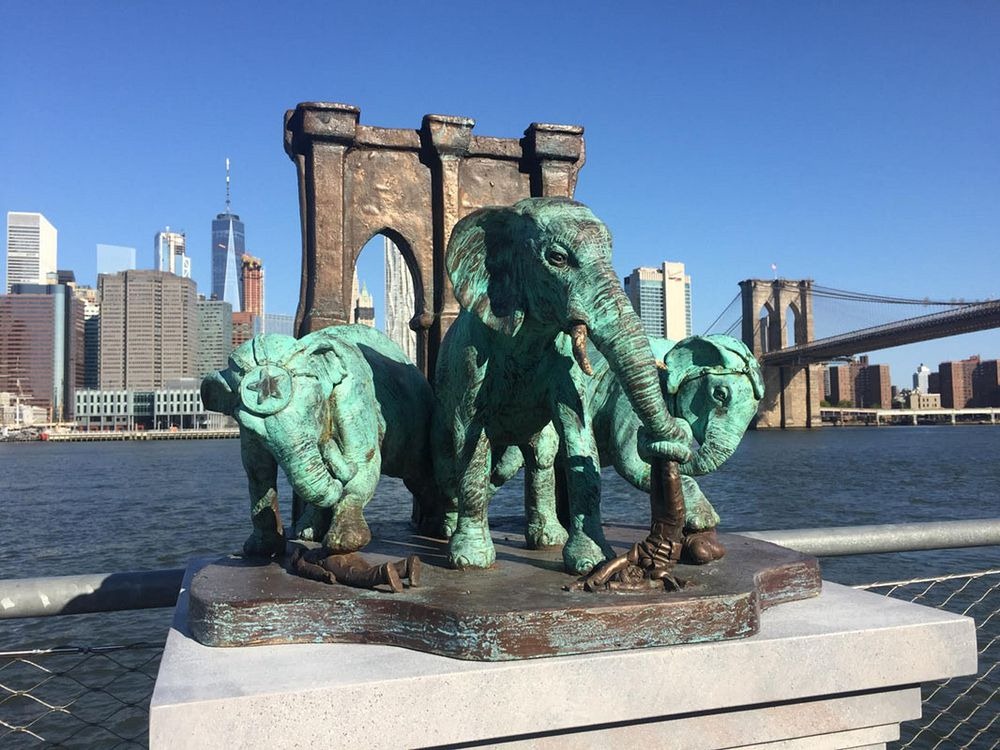
On that awful day a trio of three circus elephants, including the star attraction—a thirteen-foot-tall African elephant named Jumbo, was to cross the Brooklyn Bridge and into New York. The event was greatly publicized and crowds of people came from miles around to see Jumbo. While crossing the bridge, something caused the animals to panic and what was to be a slow and deliberate cross suddenly became a deadly stampede as the three elephants charged into the cheering crowd. Aside from scores of human casualty, two of the elephants died in the stampede, while Jumbo escaped to freedom through the Holland Tunnel and lived out his days at an elephant sanctuary.

 The memorial to the 1929 Brooklyn Bridge Elephant Stampede. Photo credit: Joe Reginella

When a new bronze memorial to the tragedy was unveiled at the Brooklyn Bridge Park last month, it left visitors scratching their heads because no one ever remembered hearing or reading about the Brooklyn Bridge Elephant Stampede of 1929. That’s because the tragedy never happened. It’s a satirical piece of art by sculptor Joe Reginella.

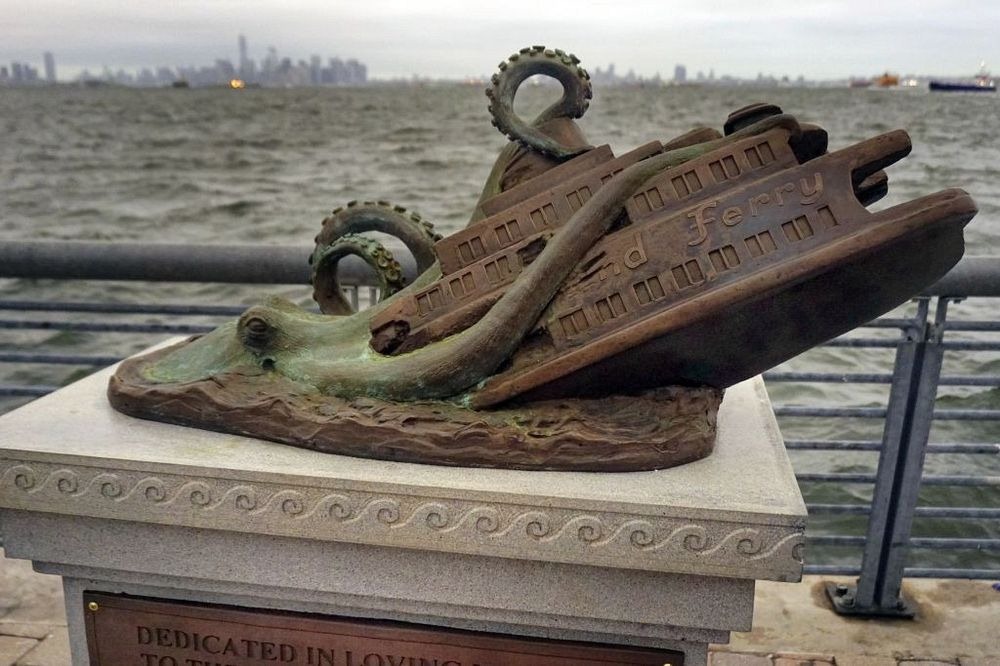
Last year, the prankster-artist erected another memorial to yet another fabricated tragedy—the so-called Staten Island Ferry Disaster—in Battery Park. The story goes, that on November 2nd, 1963, a Staten Island Ferry with over 400 people onboard was attacked by a giant octopus and was pulled beneath the water resulting in the death of all passengers. According to Reginella, the disaster went almost completely unnoticed by the public because it was overshadowed by another more “newsworthy” tragedy that occurred that day—the assassination of President John F. Kennedy.

As part of the hoax, Reginella created a fake documentary, fabricated newspaper articles and distributed flyers to puzzled tourists sending them to a nonexistent museum on Staten Island.


The memorial to the 1963 Staten Island Ferry Disaster. Photo credit: Ula Ilnytzky

The idea for the hoax came to him when Reginella was taking his 11-year-old nephew on the ferry between Manhattan and Staten Island. To satisfy the kid’s curious questions, such as if the waters were infested with shark, Reginella fabricated the story of a giant octopus attack.

“The story just rolled off the top of my head,” he told The Guardian, and it evolved to become “a multimedia art project and social experience – not maliciously – about how gullible people are”.

In the early few days after the memorial was unveiled, Reginella sat close by with a fishing pole pretending to fish so that he could eavesdrop on the conversations. Sometimes he overheard people wondering why nobody ever heard of it. Others simply stared out at the water and walked away.

While the Staten Island Ferry Disaster never happened, there is actually a bit of interesting history behind Reginella’s latest hoax—the Brooklyn Bridge Elephant Stampede. Elephants belonging to the Barnum and Bailey’s Circus did actually cross the Brooklyn Bridge in 1884, when the circus came to town. One of the elephants, a thirteen-foot and seven-ton African, was actually named Jumbo. He was accompanied by twenty other elephants, seven camels and ten dromedaries in what was known as Barnum’s legendary “elephant walk.”

Neither memorials are permanent, and are displayed only on specific days and times. Consult the memorials’ websites for timing before you decide to visit.

www.sioctopusdisaster.com
www.bbelephantstampede.com

Source….Kaushik in http://www.amusingplanet.com

Natarajan


India”s Most unusual Post Offices….Our Country Celebrates National Postal Day today…

E-mails may have overshadowed the concept of snail mail, yet post offices still hold a special place in the Indian way of life. Having long had a presence in local communities, they have served as exchange posts for news, gossip and much more.

As the country celebrates the National Postal Day today, here’s a look at three of India’s most unusual post offices.

Send a postcard from any of these unique spots, and you are sure to score some travel bragging rights!

1. The Post Office at Hikkim


Perched at 15,500 ft above sea level in Himachal Pradesh’s strikingly beautiful Spiti Valley, the hamlet of Hikkim is reputedly home to the world’s highest post office.

A small hut with whitewashed walls and a red postbox hanging outside, the quaint post office is 23 km from the town of Kaza and has been functioning since November 5, 1983. With no internet and patchy cell phone signal, the facility is the only conduit to the world for Hikkim’s residents.

This inconspicuous little post office is single-handedly managed by Rinchen Chhering, who has been the branch postmaster for over 20 years. He was chosen for the post when he was just 22 because he could run fast and owned a bicycle!

Every day, two runners take turns hiking to Kaza on foot to deliver mail that is then taken by bus to Reckong Peo, onward to Shimla, further by train to Kalka, from where it is taken to Delhi and sent to its final destination. In winter, everything in the valley freezes – the rivers, the lakes, the mountains. As the snow cover cuts off Hikkim from the rest of the world, the village’s post office also shuts down for six months.

2. The Post Office at Antarctica

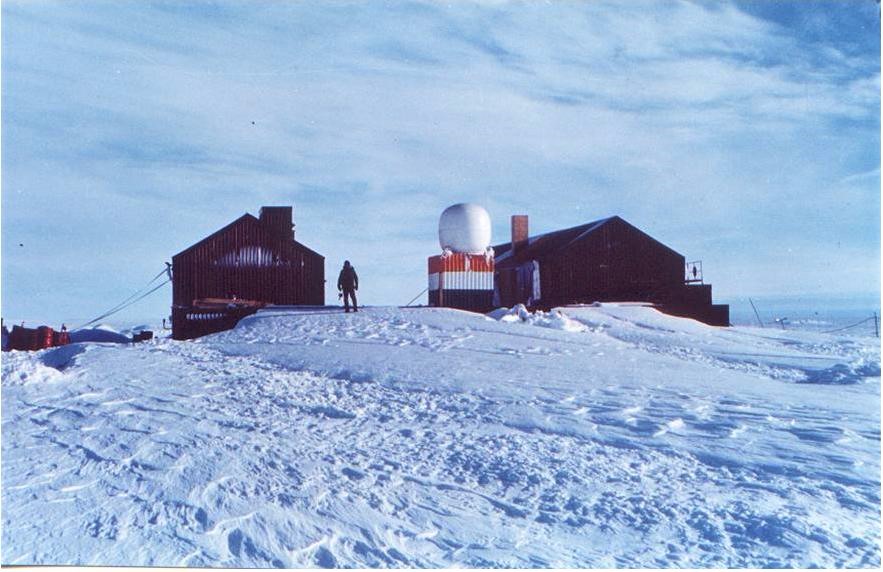
Dakshin Gangotri Station                                                                                                                                                           


Located in Dakshin Gangotri, India’s first scientific base in Antarctica, this post office first became operational on February 24, 1984, after it was established during the third Indian expedition to the frigid ‘White Continent.’ It was a part of the base’s multi-support systems that also included including ice-melting plants, laboratories, storage and recreational facilities.

The Dakshin Gangotri PO was brought under the Department of Post at Goa on January 26, 1988. Scientist G. Sudhakar Rao, who went to Antarctica as a member of the Seventh Indian Scientific Expedition in 1987, was appointed as its first honorary postmaster. Interestingly, in its first year of establishment, nearly 10000 letters were posted and cancelled at this post office.

However, in 1990, Dakshin Gangotri PO in Antarctica was decommissioned after it got half buried in ice. The post office was then shifted to the new permanent research base, Maitri.

Over the years, the unusual spot has become a favourite stop-off for tourists from cruise ships who came to explore the frozen continent and learn about its unique ecosystem. They send out postcards and letters that take between two and six weeks to reach their destinations via Hobart (in Australia).

3. The Post Office on Dal Lake


Built on an intricately carved houseboat, the Srinagar’s Floating Post Office claims to be the only one of its kind in the world. Here you can avail all regular postal services while being afloat on the Dal Lake. A heritage post office that has existed since colonial times, it was called Nehru Park post office before it was renamed by the then chief postmaster John Samuel in 2011.

After a pretty little philately museum and souvenir shop were added to it, the Floating Post Office was formally relaunched in August 2011. Interestingly, the seal used on everything posted from the this is unique, and tourist-friendly post office bears a special design — of a boatman rowing a shikara on the Dal Lake — along with the date and address.

While enthusiastic tourists row to the post office every day to send postcards back home, for the locals, the post office is more than an object of fascination. The islets in Dal Lake are home to over 50000 people (farmers, labourers, artisans and shikaraowners) for whom this state-run facility is the nearest source of postal and banking services.

Source…SanchariPal in http://www.thebetterindia.com

Natarajan


Message for the Day…”Recognising the truth that God is present in the form of Atma in all living beings, being compassionate to all is what God expects from you everyday.”

Source: http://media.radiosai.org/

The flower of ‘compassion to all living beings’ (Sarvabhute Daya Pushpam) is very dear to God. From the seed of Divinity grows the tree of creation. In this tree, the fruits are human beings who are Jeevatma. In each of these human fruits, Divinity is present as a seed. In Bhagavad Gita, Lord Krishna said, “Beejam Maam Sarva Bhutanam” (I am the seed in all living beings in the form of Atma, the soul). Recognising the truth that God is present in the form of Atma in all living beings, being compassionate to all is what God expects from you everyday. God loves the flower of forbearance (Kshama) very much. It is truly the highest quality of a human being. Often you develop narrow ideas, thinking of ‘I’, ‘my family’, and treat others as different from ‘me’. When you truly love, you develop patience and forbearance. Expand your love to encompass all living beings, that will fructify as forbearance.

“காலையில் இரண்டு நிமிஷம் ராமா , ராமா ..சொல்லுங்கோ …”


_மஹா *பெரியவாளின் கருணை* கலந்த ஹாஸ்யம்_ !!

காஞ்சி மடத்தில் ஒருநாள் மதியம் மஹா பெரியவா சாப்பிட்டுக் கொண்டிருந்தார். அவரை யாரோ குறுகுறுவென பார்ப்பது போலிருக்க நிமிர்ந்தார். ஜன்னலைப் பிடித்தவாறே குட்டிக் குரங்கு ஒன்று நின்று இருந்தது. அதற்கு வாழைப்பழம் தருமாறு பணித்தார். ஆனால், வாங்க மறுத்துவிட்டது. அதற்கு கொஞ்சம் சாதம் கொடுக்க ஏற்பாடு செய்தார். கண் மூடி திறப்பதற்குள் வேகமாக சாப்பிட்டு விட்டு, மரத்தில் ஏறி மறைந்தது.

அதன்பிறகு, இதுவே தினமும் வாடிக்கையாகி விட்டது. அதற்கு “கோவிந்தா’ என்று பெயரிட்டு அழைத்தார் மஹா பெரியவா.

ஒருநாள் அந்த குரங்கு நீண்டநேரமாகியும் சாப்பிட வரவில்லை. சாப்பிட மனமின்றி, மஹா பெரியவா காத்திருந்தார். அன்று, மடம் அருகில் இருந்த நாராயண அய்யர் வீட்டிற்குள் குரங்கு நுழைந்திருக்கிறது. அதைக் கவனிக்காத அய்யர், கதவைப் பூட்டி விட்டு மடத்திற்கு வந்து விட்டார்.

தான் புதிதாக வாங்கிய நிலத்தின் பத்திரத்தை, பெரியவாளிடம் கொடுத்து ஆசி பெறுவது அவரின் நோக்கம். பெரியவாளிடம் பத்திரத்தைக் கொடுப்பதற்காக பைக்குள் கையை விட்டார் நாராயண அய்யர்.

ஆனால், பத்திரத்தைக் காணவில்லை. அவர் திகைத்தார்.
“”நாராயண அய்யரே! என்ன தேடறீர்…. நான் குரங்கைத் தேடறேன். நீர் பத்திரத்தைத் தேடறீரோ…. என்ற பெரியவா,” “போங்கோ… போங்கோ…. ஆத்துல போய் தேடிப் பாருங்கோ…. நான் தேடுறது மட்டுமில்லாமல், நீங்க தேடுறதும் கெடைக்கும்….” என்றார்.

விறுவிறு என வீட்டுக்கு வந்த அய்யர் கதவைத் திறக்க, சரலேன குரங்கு ஒரு பையுடன் ஓடுவதைக் கண்டார். அந்த பையைப் பார்த்ததும் தான், அதில் பத்திரத்தை வைத்தது நினைவிற்கு வந்தது. குரங்கைத் துரத்தியபடி அவரும் பின்தொடர்ந்தார்.

தெருவிலுள்ள எல்லாரும் வேடிக்கை பார்த்தனர்.
ஓடிய குரங்கு மடத்திற்குள் நுழைந்தது.

பெரியவா அதனிடம் அன்புடன், “”கோவிந்தா ….. உனக்கு பசிக்கலையா… எங்கே போயிட்ட….” என்று கேட்க, அய்யரும் “”ஐயோ குரங்கு … பத்திரம்…. பத்திரம்….” என பதட்டத்துடன் ஓடி வந்தார்.

மஹா பெரியவா அவரிடம்,””பயப்படாதீங்கோ…. குரங்கும் பத்திரமா இருக்கு! அதன் கையில் பத்திரமும் பத்திரமாத் தான் இருக்கு” என்று சொல்ல அங்கே ஒரே சிரிப்பு வெடி… அதன் பின், தன் முன் குரங்கு போட்ட பத்திரத்தை எடுத்த மஹா பெரியவா, அய்யரிடம் வழங்கி ஆசியளித்தார். பெரியவா சரணம்.

“குரங்குகள் போன்ற மிருகங்களுக்கு கூட ஒரு discipline இருக்கு! லீடர் குரங்கு சொல்கிறபடி நடக்கின்றன”

பெரியவாள் பக்தர்களுக்கு தரிசனம் கொடுத்துக் கொண்டிருந்தார்கள்.

எதிரே, ஒரு பெரிய மரம். தடினமான குரங்கு ஒன்று வந்து மரத்தில் ஏறியது. பின், இருபது – முப்பது குரங்குகள் அந்த லீடர் குரங்கை தொடர்ந்து மரத்தில் ஏறின.

பெரியவாள், ஒரு கூடை மாம்பழத்தை மரத்தடியில் போட சொன்னார்கள்.

லீடர் குரங்கு என்ன உத்தரவு எப்படி போட்டதோ தெரியவில்லை! ஆனால், மற்ற குரங்குகள் ஒவ்வொன்றாக வந்து பழத்தை எடுத்து கொண்டு மேலே சென்றன. லீடர் குரங்கு மட்டும் ஒரு பழத்தை கூட தொடவில்லை!

பெரியவாள் சொன்னார்கள்:
“குரங்குகள் போன்ற மிருகங்களுக்கு கூட ஒரு discipline இருக்கு! லீடர் குரங்கு சொல்கிறபடி நடக்கின்றன.”

“காட்டில், யானைகளுக்கு ஒரு தலைமை யானை இருக்கும். அந்த லீடர் யானையை follow பண்ணித்தான் மற்ற யானைகள் செல்லும்.”

“ஒரு கட்டெறும்பு செத்துபோனால், மற்ற கட்டெறும்புகள் அதை இழுத்துச் செல்லும்.”

“ஒரு காக்கை இறந்து போனால், மற்ற காக்கைகள் மரத்தில் உட்கார்ந்துகொண்டு துக்கமாய் கதறும்.”

“ஆனால், ஆறறிவு படைத்த மனிதர்கள் தான் குரு சொல்கிறபடி நடப்பதில்லை. என்னை பார்த்து, நீங்களெல்லாம் ஆசார்யாள். பெரியவாள் என்றெல்லாம் சொல்கிறீர்கள். ஆனால், நான் சொல்வதை உங்களால் செய்ய முடிகிறதில்லை!”

கவனமாக கேட்டு கொண்டிருந்த பக்தர்கள், ஒரே குரலாக, “பெரியவா என்ன உத்தரவு போட்டாலும் செய்கிறோம்” என்று பக்தியோடு பதிலளித்தார்கள்.

“சரி, காலையில் இரண்டு நிமிஷம், சாயங்காலம் இரண்டு நிமிஷம், எனக்காக ஒதுக்குங்கள். இருபத்திநான்கு மணி நேரத்தில், நாலு நிமிஷம் தான் கேட்கிறேன்.”

“காலையில், இரண்டு நிமிஷம் “ராம, ராம” என்று சொலுங்கோ; சாயங்காலம் இரண்டு நிமிஷம் “சிவ, சிவ”ன்னு சொலுங்கோ…”

“அப்படியே செய்கிறோம்” என்று சுமார் நூறு பேர்கள் தெரிவித்து கொண்டார்கள்.

அமளி அடங்கியதும், பெரியவாள் அருகிலிருந்த தொண்டர்களிடம், “பத்து பன்னிரண்டு பேர்களாவது, சொன்ன சொல்லை காப்பாத்துவா” என்றார்கள்.

அந்த, யாரோ பத்து பன்னிரண்டு புண்ணியாத்மாக்களை உருவாக்குவதற்காகத்தான், ஆழமான கருத்துடன், அரைமணி lecture!

குரங்கு, காட்டு யானை, கட்டெறும்பு, காக்கை – நமக்கு நல்ல வழிகாட்டிகள்; “ஆச்சார்யர்கள்”.

அவர்களை (அவைகளை) யாவது follow பண்ணலாம் தானே?

ஹர ஹர சங்கர ஜெய ஜெய சங்கர !!

Source….Read in facebook page  of forum for world”s brahmin unity and welfare

Natarajan


Joke of the Day…”You are not the Flight instructor ….? ” !!!

A photographer from a well know national magazine was assigned to cover the fires at Yellowstone National Park. The magazine wanted to show the heroic work of the fire fighters as they battled the blaze.

When the photographer arrived, he realized that the smoke was so thick that it would seriously impede or make it impossible for him to photograph anything from ground level.

He requested permission to rent a plane and take photos from the air. His request was approved and arrangements were made. He was told to report to a nearby airport where a plane would be waiting for him.

He arrived at the airport and saw a plane warming up near the gate. He jumped in with his bag and shouted, “Let’s go!” The pilot swung the little plane into the wind, and within minutes they were in the air.

The photographer said, “Fly over the park and make two or three low passes so I can take some pictures.”

“Why?” asked the pilot. “Because I am a photographer,” he responded, “and photographers take photographs.”

The pilot was silent for a moment; finally he stammered, “You mean you’re not the flight instructor?”

Source….www.ba-bamail.com

natarajan

Message for the Day…”You cannot achieve liberation by merely going to sacred places, or seeing, touching and conversing with great souls. You must put in your full and complete effort to follow the instructions and their directions.”

Source….http://media.radiosai.org

When you go to a temple, you see the idol, and very soon, your thoughts are with your footwear you left outside at the gate! This simple thought reveals the depth of concentration you have achieved. Unless you take care of every single aspect, you cannot experience the benefits from your spiritual practices (sadhana)! A water-filled-pot with one, a few or many holes is useless for carrying or storing water, isn’t it? Hence, you cannot achieve liberation by merely going to sacred places, or seeing, touching and conversing with great souls. You must put in your full and complete effort to follow the instructions and their directions. Following the path of Radha, Meera, Gouranga and Thukaram, you must feel an inseparable affinity with the Lord, as inseparable as the sea and the wave. Remember, you are really of the same essence, the same taste, the same quality as the sea, though you have the name and form of the wave.

Alexander Graham Bell’s Tetrahedral Kites…


Alexander Graham Bell is best remembered for inventing the telephone, but the great Scottish inventor’s interests weren’t limited to just one field. Aside from his priceless contributions in the field of acoustics and telegraphy, Bell is also credited with the invention of the metal detector, the audiometer (an instrument used to detect hearing problems), and a device to locate icebergs. Bell and his associates investigated the possibility of impressing a magnetic field on a physical device as a means of recording sound—the basic principle behind tape recorder and hard disc—but could not develop a workable prototype. Bell also had a great passion for aeronautics.

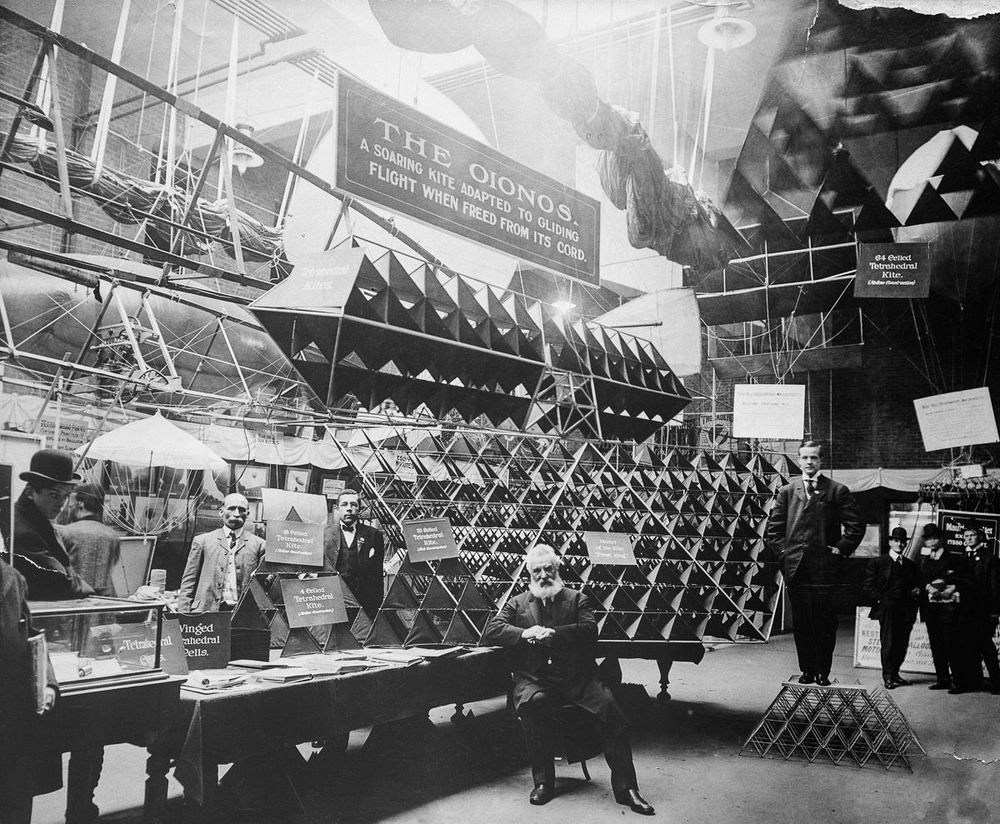
Bell became obsessed with flight and began studying the possibility of building a kite large and stable enough to carry a man. His first innovation was the box kite, which he built by joining the sides of several triangular kites together to create a box-like structure. Bell realized that by sharing joints and spars, he was able to greatly increase the surface area of his kites with little increase in weight. Then he combined several box-like cells to create large pyramidal structure with three triangular sides and a triangular base. This geometric form, known as a tetrahedral, is one of nature’s most stable structures. Although it looks pretty complicated, tetrahedral kites are very easy to fly.

Bell believed that the future of flight lied in kites and not in airplanes, which the Wright brothers had demonstrated. He was convinced that his tetrahedral cell structure was more stable than the Wright brothers’ machine.

In 1907, Bell collected a group of a young men interested in aviation and established the Aerial Experimental Association (AEA), whose purpose was to build a practical powered airplane. The same year, the AEA built the largest tetrahedral kite, named the Cygnet, meaning “little swan” in French. It was composed of over 3,393 cells, was 40 feet long and weighed 91 kg. It successfully flew carrying a human passenger 168 feet above water when towed behind a steamship. Unfortunately, it crashed and tore to pieces on landing.

In the meantime, Bell’s own colleagues—the other members of the AEA— became more interested in producing conventional aircraft, and subsequently a series of airplanes were designed. One of these planes, named the “June Bug”, won the Scientific American Trophy in an exhibition in 1908. Its pilot, Glenn Curtiss, who would later  establish a large and successful aeronautical manufacturing company, flew 5,360 feet in just under 2 minutes. By the end of that year, the AEA flew over 150 flights without mishap.

The AEA was financed entirely by Alexander Graham Bell’s wife, Mabel Bell. When the funds ran out, the association was disbanded. In less than two years of its existence, the AEA made many innovative contribution to airplane design such as cockpit enclosures and tail rudders. One of Bell’s invention was the aileron, that is now a standard component on all aircraft.

Despite the gradual disinterest in kites and the growing success of the American brothers’ airplanes, Bell made two more massive tetrahedral kites, named Cygnet II, and III, but neither one was successful. His Cygnet III with a 70-horsepower motor was reported to have flown only one foot. Bell eventually abandoned his experiments in 1912.

1904. Bell poses with some of his tetrahedral kites.

Source….Kaushik in http://www.amusingplanet.com

Natarajan

Message for the Day…”You should recognise the truth that your life should consist of making the journey from the position of ‘I’ to the position of ‘We’. If all the time you simply stay in the place of ‘I’, you will remain where you are.”

Source: http://media.radiosai.org

Broadening your heart and making it bigger and bigger, you should make it as big as God Himself. A balloon, in its initial stage, is tiny. If you go on blowing air into it, it becomes bigger and bigger and later explodes. Though beginning with the ideas of ‘I’ and ‘mine’, if you ultimately move on to the place that, “all are mine and all are one”, gradually you will become broader in your vision, and then you burst and merge into God who is omnipresent. You should recognise the truth that your life should consist of making the journey from the position of ‘I’ to the position of ‘We’. If all the time you simply stay in the place of ‘I’, you will remain where you are. This creation is like the bridge which connects man with God. ‘I’ is one hill. ‘God’ is another hill. The bridge between the two is the aspect of creation. If you break and destroy the bridge, you can never reach the destination. I am hoping that you plunge into society and do service, and thereby use the bridge to reach God.