Grounded…An Angry Passenger Stands on the Runway Infront of Plane … !!!

One angry passenger managed to delay flights out of a Nigerian airport after stepping out on the runway in front of a plane.

After finding out his flight from Abuja’s Nnamdi Azikiwe Airport was cancelled, the flustered passenger decided to take his frustrations out by taking his luggage and entering the runway.

Passengers on board an Arik flight to Lagos were forced to disembark after the man refused to move, with one eyewitness saying security failed to show up and it took the pilot to plead with the man before the plane could take off.

The man was angry that his flight to Sokoto was cancelled, and so entered the runway

At least two flights out of the Nigerian airport, one to Calabar and one to Lagos, were delayed by two hours by the man’s actions.

Passenger Cedar Chinwuba, who was on the flight to Lagos, posted a series of photos on Twitter as the scene played out.

Speaking to MailOnline Travel, Mr Chinwuba said: ‘It was very terrible. What came to my mind was that Nigeria Airport Authority needs to step up.

‘For two hours, no security agent showed up. It got to the point the pilot announced that he had placed a call to Arik airline to send the Nigeria police but had no response.

The man's actions caused panic among passengers on a flight bound for Lagos, who were forced to disembark onto the tarmac
The man’s actions caused panic among passengers on a flight bound for Lagos, who were forced to disembark onto the tarmac

‘An announcement was made by the pilot that we couldn’t take off due to some disgruntled passengers blocking the plane and he has tried to reach the airport security but no response.

‘After a few minutes, he requested that due to security reasons those who wish to disembark from the trip should do so.

‘Only in Nigeria issues like this happen and they never get penalised.

One eyewitness said security failed to arrive for more than two hours after the pilot had radioed through

One of the angry passenger I had a chat with stated that all they wanted was a senior officer of Arik coming to the tarmac to address the issue.

‘It worries me as an airport user.’

He explained that along with all the other passengers on the Lagos flight were told to get off the plane and that ‘no Arik flight was leaving Abuja.’

MailOnline Travel have contacted Arik Air, and are awaiting comment. The flight is believed to have taken off at 5.15pm local time, two hours behind schedule.

SOURCE:::: http://www.dailymail.co.uk


Natarajan


Solar-Powered Plane on Its First ” Round-The-World ” Flight !!!!

Solar-powered plane begins first round-the-world flight

Swiss plane Solar Impulse 2 landed Monday in Muscat, Oman, the first stopover in the attempt to fly around the world powered by the sun alone. Follow the flight.

Image credit: solarimpulse.com

Image credit: solarimpulse.com

A Swiss plane called Solar Impulse 2 took off from Abu Dhabi, United Arab Emirates Monday morning (March 9, 2015) and later landed at its first stopover in Muscat, Oman. Solar Impulse 2 is the first plane to attempt to fly around the world without a drop of fuel, powered by the sun alone.

Solar Impulse founder Andre Borschberg was the pilot Monday morning at take-off. Borschberg will trade piloting with Solar Impulse co-founder Bertrand Piccard during stop-overs on the months-long journey, expected to end in late July or early August.

You can track the plane’s progress on the Solar Impulse website.

You can also follow Solar Impulse on Twitter or FlightRadar 24.


The solar-powered plane Solar Impluse 2 lands at the Al-Bateen airport in Emirati capital Abu Dhabi on March 2, 2015.

The solar-powered plane Solar Impluse 2 lands at the Al-Bateen airport in Emirati capital Abu Dhabi on March 2, 2015.

The Solar Impulse 2 is made of carbon fiber and has 17,248 solar cells built into the plane’s 236-foot (72-meter) wingspan. The solar cells recharge four lithium polymer batteries. Solar Impulse’s wingspan is larger than that of the Boeing 747, but the plane weighs only around 5,070 pounds (2300 kg) – about as much as a minivan.

On Tuesday, the plane will head for Ahmedabad, India, and after India, to China and Myanmar. The next leg is across the Pacific to land in Hawaii. Then it will head to Phoenix, Arizona, and New York City. The path across the Atlantic will depend on the weather and could include a stop in southern Europe or Morocco before ending in Abu Dhabi.

SOURCE::::: http://www.earthskynews.org

Natarajan

Meet The Man Who Posted Himself From London to Perth in a Wooden Box…!!!

When Australian Reg Spiers found himself penniless in London without enough money for a plane ticket home to Adelaide, he decided to post himself back in a wooden box.

Spiers, now 73, lives in Adelaide with his new partner and he remains close friends with the McSorley family

Spiers, now 73, lives in Adelaide with his new partner and two dogs and he remains close friends with the McSorley family.

It was 1964, and the 22-year-old champion javelin thrower was in Britain, desperate to get back to Australia for his daughter’s birthday and to see his wife.

He showed up out of the blue at the East London flat of his close friend – English javelin thrower John McSorley – and presented him with his problem.

Too impatient to work and save up the money for a plane ticket, together Spiers and McSorley hatched a harebrained scheme to build a timber box and send Spiers back to his home country via air freight.


Reg Spiers (left, in the 1960s) posted himself from London to Perth in a wooden box (replica pictured right)

Miraculously he survived the 63-hour journey across three continents inside the 1.52m by 91cm by 76 cm box

Miraculously he survived the 63-hour journey across three continents inside the 1.52m by 91cm by 76 cm box

What followed was a nightmarish 63-hour journey across three continents in which he was delayed in fog for 24 hours, dropped from a forklift and almost suffered dehydration after being left on a scorching tarmac in Bombay, India.

But Spiers survived, and went on to live an extraordinary life in which he travelled the world with his lover, assumed false identities and smuggled narcotics for international drug syndicates.

His sensational life has been documented in a book by McSorley’s wife and son, Julie and Marcus McSorley, titled Out Of The Box: The Highs And Lows Of A Champion Smuggler.

The specifics of Spiers’ crazy plan to post himself from London to Perth were decided over drinks at Twickenham’s Crown pub in October 1964.

The largest box they were allowed to send measured five feet by three feet by two feet six inches (1.52m by 91cm by 76 cm).

They decided they would label the box ‘plastic emulsion’, to be sent from a fake British chemical company to a fake shoe company in Perth.

A ‘Mr Graham’ was listed as the cash-on-delivery recipient – but because no one would ever collect it the money would never be paid and Spiers’ trip would be free.

McSorley built the box inside his flat over a series of late nights, with a number of specifications including side straps and a belt to hold Spiers in place when the box was loaded onto aircraft.

The timber box also opened at both ends, so Spiers could get out and walk around the cargo once the plane was in the air.

Spiers had worked in a cargo shipping section of an airport, so had some inside knowledge about what could be shipped without drawing undue notice from customs and other officials.

He was also incredibly lucky. By the 1960s, the cargo holds of many commercial airliners were pressurised and heated, to protect goods being shipped. This meant Spiers was able to breathe inside the plane while the air outside became too thin as the plane gained altitude, and he did not freeze to death.

Spiers didn’t eat for a week in preparation for his journey, in order to slow his bodily functions down.

He packed a small bag with essential belongings such as his passport, and food and drink including a bottle of fruit juice, two tins of spaghetti, a packet of biscuits, a bar of chocolate and a tube of fruit gums.

On Saturday October 17 1964, McSorley and two friends loaded the box containing Spiers onto a van and drove it to the terminal at Heathrow Airport.

A clerk weighed the box and McSorley handed him his freight forms, before giving the box a quick pat and disappearing into the airport crowd hoping for the best.

Unfortunately for Spiers the journey did not begin well. A thick fog descended on the airport delaying all flights for more than 24 hours.

According to the watch he kept with him it was more than 28 hours before his box was transported to an airplane for the first leg of the trip – a short flight to Paris.

The timber box also opened at both ends, so Spiers could get out and walk around the cargo once the plane was in the air

The timber box also opened at both ends, so Spiers could get out and walk around the cargo once the plane was in the air

Spiers survived the first part of his journey relatively easily – he managed to eat some food and relieve himself in a spare plastic bottle he had brought with him.

The second leg of the journey was from Paris to Bombay.

He was able to get out of the box and move around, but sleeping inside the crate was problematic.

Spiers could only stretch his legs if he was sitting up straight, and could only lie down if his legs were bent.

About 37 hours since he was first dropped off at Heathrow, the plane made its descent into Bombay.

The Indian airport staff that unloaded the aircraft upended his crate as they placed it on the tarmac leaving him dangling upside down from the box’s straps.

He was also precariously balancing a spaghetti can filled with urine, which he had been forced to use after filling the only plastic bottle he packed.

Spiers was left on the scorching tarmac for hours while the Indian ground staff ate their lunch and did other jobs.

He was able to unhook himself from his straps and sit upright in the box, but sunlight streaming through cracks in the wood turned the box into a sauna, and before long he was forced to strip off all his sweat-drenched clothes.

The story was the subject of a media circus after Spiers forgot to contact his friend McSorley back in London to let him know he arrived in Australia safely. Pictured is a cameraman with the box Spiers travelled in


Nearing dehydration, Spiers contemplated turning himself in, wary that the press would ‘have a field day’ if a mysterious naked man emerged from a wooden box on the tarmac in Bombay.

But after a number of hours relief came for Spiers when a vehicle arrived to move his box, driving him out of direct sunlight and onto the aircraft that would take him on the final leg of his journey.

The flight was supposed to travel directly from Bombay to Perth but made a fuel stop in Singapore

It continued on its journey and after 63 hours and almost 21,000 km Spiers arrived exhausted – but miraculously alive – at Perth Airport.

His box was offloaded into a freight shed and he managed to escape when airport workers left to take a smoke break.

He sneaked along a series of warehouses towards the airport terminal, before blending in with a group of passengers disembarking an Ansett plane that had just touched down.

Spiers used his passport to clear immigration and walk out of the airport like a regular traveller.

From Perth he hitchhiked his way across the Nullarbor before meeting a priest who shouted him a train trip to Adelaide.

The story was the subject of a media circus after Spiers forgot to contact his friend McSorley back in London to let him know he arrived in Australia safely.

Panicked, McSorley called a journalist he knew at a British newspaper asking for help to track him down.

The journalist called a correspondent based in Adelaide, and from there the story was picked up by media all over the world – so much so that the airline Spiers had sneaked onto was pressured into allowing Spiers to fly for free.

McSorley’s son Marcus McSorley – who co-wrote the book detailing his extraordinary feat – said the journey was ‘just the beginning’ of Spiers’ sensational life.

‘After the box incident Reg went on to smuggle a different kind of substance,’ Mr McSorley told Daily Mail Australia.

‘He went onto assume three different identities, was wanted in three different continents, he went on the run with his lover and was sentenced to death in Sri Lanka as a Frenchman.

‘The guy’s lived quite a life.’

In 1981 Spiers and his lover – known under the pseudonym ‘Annie’ in the book – were among a syndicate to be arrested and charged in Australia over a plot to smuggle $1.2 million worth of hashish into the country from India.

But while out on bail the couple fled to India.

They lived very much a Bonnie and Clyde lifestyle,’ Mr McSorley said.

‘On the run there they had to make money somehow and Reg was caught again in Bombay in 1983.’

Police in India alleged he and Annie tried to smuggle hashish back to Australia by attaching it to the bottom of a boat.

The couple spent time in separate Bombay prisons, but when they were out on bail they fled the country.

Spiers was arrested for drug smuggling a third time in Sri Lanka in 1984, over a plot to smuggle heroin to Amsterdam. At the time he was travelling using a French passport.

He was sentenced to death, but had his conviction overturned.

In 1987 he was transported back to Adelaide by Australian authorities where he served more than three years in Yatala, Mobilong, and Cadell prisons for the offences he was charged with back in 1981.

In 1994, Annie turned herself into an Australian embassy in Germany and was extradited home.

She was sentenced to six months in jail after a judge found that she committed her crimes due to ‘an infatuation, bordering on obsession,’ for Spiers.

Annie visited him in Adelaide after she was released, but after almost nine years apart the pair did not rekindle their romance.

Spiers and his first wife stayed married for several years after he risked his life to get back to her in the air freight box in 1964, but they separated after having a second daughter.

In 2012, Spiers appeared in court charged with cultivating and trafficking a commercial quantity of cannabis and illegal possession of a revolver.

In 2013, all charges against him were dropped in the Port Adelaide Magistrates Court after prosecutors tendered no evidence.

‘Reg has such charisma and an aura about him whereby he can make anything happen,’ Mr McSorley said.

‘He makes you feel totally alive when you’re around him.

‘Given all he’s done he’s got a lot of great attributes.’

For more details on Spiers’ extraordinary life, read Out Of The Box: The Highs And Lows Of A Champion Smuggler.

Spiers, now 73, lives in Adelaide with his new partner and he remains close friends with the McSorley family

TIMELINE OF REG SPIERS’ EXTRAORDINARY  LIFE

1964: Spiers travels from London to Perth in a wooden air freight box via Paris, Bombay and Singapore.

1981: Spiers is arrested in Australia over a plot to smuggle $1.2 million worth of hashish into the country from India.

He and his ‘lover’ Annie flee the country to India while out on bail.

1983: Spiers is arrested in Bombay and accused of trying to smuggle hashish back to Australia by attaching it to the bottom of a boat.

The couple flee the country again while out on bail.

1984: Spiers is arrested for drug smuggling in Sri Lanka, over a plot to smuggle heroin to Amsterdam. At the time he was travelling using a French passport.

He was sentenced to death, but had his conviction overturned.

1987: Spiers is transported back to Adelaide by Australian authorities. He serves more than three years in Yatala, Mobilong, and Cadell prisons for the offences he was charged with back in 1981.

1994: Annie turns herself into an Australian embassy in Germany and is extradited home.

She serves a six-month prison sentence.

2012: Spiers appears in an Adelaide court charged with cultivating and trafficking a commercial quantity of cannabis and illegal possession of a revolver.

2013: All charges against Spiers are dropped in the Port Adelaide Magistrates Court after prosecutors tender no evidence.

Read more: http://www.dailymail.co.uk/news/article-2987568/The-man-posted-London-Perth-wooden-BOX-went-escape-death-sentence-Sri-Lanka-smuggling-heroin-lives-quiet-life-Adelaide-two-dogs.html#ixzz3TyvBN6tt

SOURCE:::: SARAH MICHAEL in www. dailymail.co.uk

Natarajan

One Year on, This Chennai Family Waits for MH 370 Passenger… Whole World Still Looking For Clues…


Chandrika Sharma(L)was one of the 239 people on board the ill-fated MH370 flight that disappeared while on its way to Beijing on March 8, 2014. In this photograph, she is seen with her daughter Meghna and husband Narendran.

KS Narendran, Chandrika Sharma’s husband, is a shattered man. His wife was one of the 239 people on board the ill-fated MH370 flight that disappeared while on its way to Beijing, one year ago on March 8, 2014.

Sharma had taken the flight on her way to Ulan Bator to participate in a Food and Agriculture Organisation conference to represent the NGO she worked for. Narendran, a management consultant, is a quiet man and has since chosen to keep to himself.

A colleague of Sharma at the NGO she worked at, International Collective in Support of Fishworkers (ICSF), said Narendran did not want to be disturbed. “Till date he has not received any death certificate,” the colleague added

https://i0.wp.com/www.hindustantimes.com/Images/popup/2015/3/08-03-pg21a.jpg

The couple’s only daughter is studying in a Delhi college and is currently preparing for her annual examinations.

On Friday, Narendran was present at a workshop organised by the NGO where Sharma’s co-workers and government officials paid tribute and spoke about her commitment to the cause and dedicated service to the people.

A stoic Narendran looked on as speaker after speaker narrated their own experiences at the NGO and shared their thoughts about Chandrika Sharma.  The ICSF in its website homepage has a section titled “Waiting for Chandrika Sharma”.

If the massive undersea search for Malaysia Airlines Flight 370 turns up nothing by the end of May, the three countries leading the effort will go “back to the drawing board,” Malaysia’s transport minister said on Saturday.

Liow Tiong Lai told a small group of foreign reporters on the eve of the anniversary of the plane’s disappearance that he remains cautiously optimistic the Boeing 777 is in the area of the southern Indian Ocean where the search is ongoing.

Despite the exhaustive search for the plane, which disappeared last March 8 during a flight from Kuala Lumpur to Beijing, no trace of the jet has been found. Malaysia’s government on January 29 formally declared the incident an accident and said all 239 people on board were presumed dead.

“By the end of May, if we still can’t find the plane, then we will have to go back to the drawing board,” Liow said.

Asked if Malaysia might stop the search if there are no new leads by the end of May, when bad weather usually sets in, Liow said it was “too early to pre-empt anything now,” and that the government would continue to rely on the group of experts leading the hunt.

“We stand guided by the expert team,” he said.

“I am cautiously optimistic it should be in this area,” he said, adding that “we need directions, we need plans, we need to review all the data that we have.”

Ships looking for debris from the plane on the ocean floor off the coast of western Australia have so far scoured 44 percent of the 60,000-square-kilometer (23,166-square-mile) area the search has been focused on, Liow said. In the latest report he received Friday, he said the search team had identified 10 hard objects that still need to be analysed.

Such findings, which often include trash and cargo containers from passing ships, have been common during the search, and so far no trace of wreckage has been located.

Liow said that Australia, Malaysia and China would meet next month to discuss the next steps in the search. Most of the plane’s passengers were Chinese.

Australian transport minister Warren Truss said last week that if the plane isn’t found by May, one option is to expand the hunt beyond the current search zone to a wider surrounding area.

Australian Prime Minister Tony Abbott said on Thursday, “I can’t promise that the search will go on at this intensity forever,” but added that “we will continue our very best efforts to resolve this mystery and provide some answers.”

Liow said an interim report on the investigation – a requirement under international civil aviation regulations – would be presented to the Malaysian government on Saturday and released to the public on Sunday. He didn’t comment on it.

But he outlined measures his government has already undertaken, including plans to upgrade radar systems to cope with bigger traffic volume and a new tracking system on Malaysia Airlines flights that sends aircraft data every 15 minutes, instead of the previous 30 to 40 minutes.

Liow said the government has allocated 700 million ringgit ($190 million) for the improved radar.

He said that the radar upgrade had been in the works even before Flight 370 disappeared. The plane dropped off civilian radar when its transponder and other equipment were switched off shortly after takeoff from Kuala Lumpur, but was tracked for some time by Malaysia’s military radar as it headed south across the country toward the Indian Ocean.

SOURCE:::: http://www.hindustantimes.com

Natarajan

“Harrison Ford is Not Only a Reel Hero… But A Real Hero …” !!!

Harrison Ford showed he takes flying as seriously as acting when he crashed

Officials examine Harrison Ford's vintage airplane on the Penmar Golf Course in Los Angeles, where he crash-landed it on Thursday.

DAMIAN DOVARGANES / THE ASSOCIATED PRESS

Officials examine Harrison Ford’s vintage airplane on the Penmar Golf Course in Los Angeles, where he crash-landed it on Thursday.

Harrison Ford is a hero.

Harrison Fords Jules Verne Award (cropped).JPG

If you said this to his face, of course, he’d scowl. He’d tap his Breitling Aerospace watch and give you 30 seconds to explain. Then you’d back up two steps and nervously recallhis brush with death on Thursday.

“Well, Mr. Ford, when the engine in your Ryan Aeronautical ST3KR conked out after takeoff from Santa Monica Airport, you made an emergency landing on a golf course. You steered away from houses and roadways. You were as cool as Han Solo, as focused as Indiana Jones. Strapped inside that vintage two-seater, you glided to safety without killing yourself or anyone on the ground. Just imagine if . . . ”

“. . . What’s your point?” Ford would cut you off, sounding a bit like his villainous character Dr. Norman Spencer in What Lies Beneath. “I’m no hero. I just take flying very seriously.”

The post-shock reaction to the crash, in which Ford was injured but is expected to fully recover, was predictable. There were stories suggesting the 72-year-old is a real lifedaredevil. There were headlines that wondered if the actor had “the experience to pilot the vintage WWII plane that crashed.”

This is what we do when a celebrity crashes. We theorize, speculate, inculpate, deconstruct and ask pointed questions. The exercise gets foggy and more feverish when those accidents are fatal. In 1997, John Denver was killed after crashing his experimental Rutan Long-EZ plane in Monterey Bay. Two years later, John F. Kennedy Jr., his wife Carolyn Bessette and her sister Lauren died when the Piper Saratoga he was piloting went down in the Atlantic.

We know travelling on a commercial airliner is now safer than at any time since the dawn of powered flight. An MIT study in 2013 concluded a person could fly every day for 123,000 years before getting into a fatal crash. But fear is not rational. And statistics are of cold comfort when we see footage of mishaps, as on Thursday morning when Delta Flight 1086 skidded off an icy runway at LaGuardia Airport.

Meanwhile, Sunday marks a grim anniversary: it has been one year since Malaysia Airlines Flight 370 vanished without a trace.

Accidents happen. Conditions in the sky and on the ground can be unpredictable. Pilots are not immune to error. There can be deadly mechanical failures, especially in aircraft not equipped with the automated systems and safety redundancies and sophisticated navigation computers found in commercial fleets.

Five years ago, a pilot died after his Cessna crashed eerily close to where Ford touched down near the eighth hole at Penmar Golf Course. Santa Monica Airport, where celebrities such as Tom Cruise and Arnold Schwarzenegger keep their planes, has been the point of departure or arrival for at least a dozen crashes since 1989.

So why is Ford a hero? Because during a terrifying few seconds, when everything could have gone terribly wrong, he calmly did everything right. He was flying a plane that was built in the same year he was born.

But as it turns out, Ford is a great pilot for the same reason he’s a great actor: he takes it seriously.

He immerses himself in the process. He masters the small details. He is respectful of the machines he controls and the physical laws he cannot. As he observed in a non-daredevil way in 1998: “Flying attracted me as a chance to develop a skill, build a body of knowledge, not as a way to seek danger. I try to observe a distinction between exciting and scary.”

That distinction has revealed itself in previous close calls.

In 1999, a number of experts were stunned when Ford walked away unscathed after crash-landing his helicopter during a training exercise in California. The next year, he made an emergency landing at Lincoln Municipal Airport in Nebraska due to wind shear. One official who witnessed Ford’s deft handling of the twin-engine Beechcraft Bonanza said: “He’s either very experienced or darn lucky.”

But this isn’t a binary equation. Ford is now both. And that he’s used his love of flying to help others — including rescuing a hiker in Idaho in 2000 and, the following year,finding a missing a Boy Scout in Yellowstone National Park — is proof Hollywood is not just a toxic sinkhole of ego and greed and narcissism.

Hidden behind the fame, lurking behind some of the most memorable characters of our time, stand real heroes.

vmenon@thestar.ca 

SOURCE::::: vinay menon , columnist in http://www.the star.com and http://www.you tube.com

Natarajan

Look Where This Aircraft Stopped … !!!

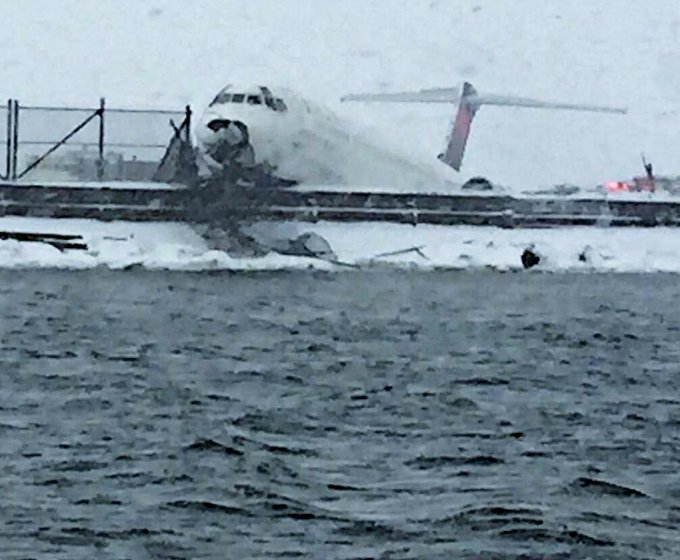
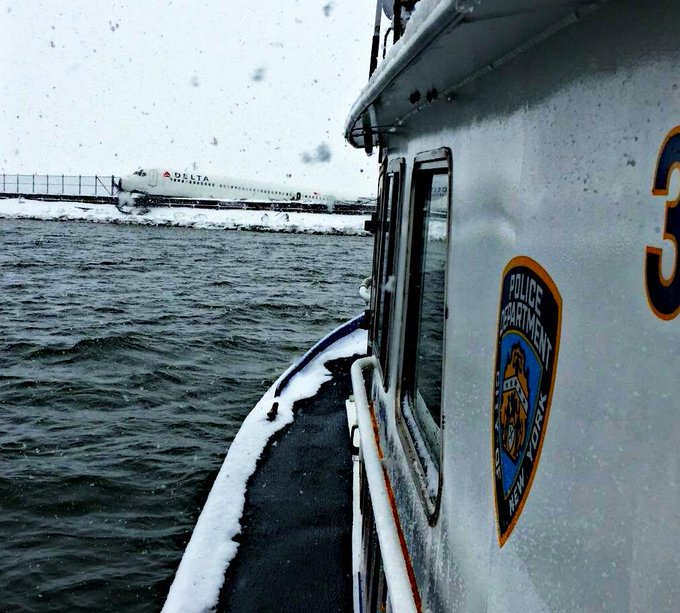
A PLANE has skidded off a snowy runway at New York’s LaGuardia Airport​, crashing through a seawall fence​ before stopping just metres from the water’s edge.

None of the 125 passengers and five crew members on board was seriously hurt, but six people suffered minor injuries, sources told The New York Post.

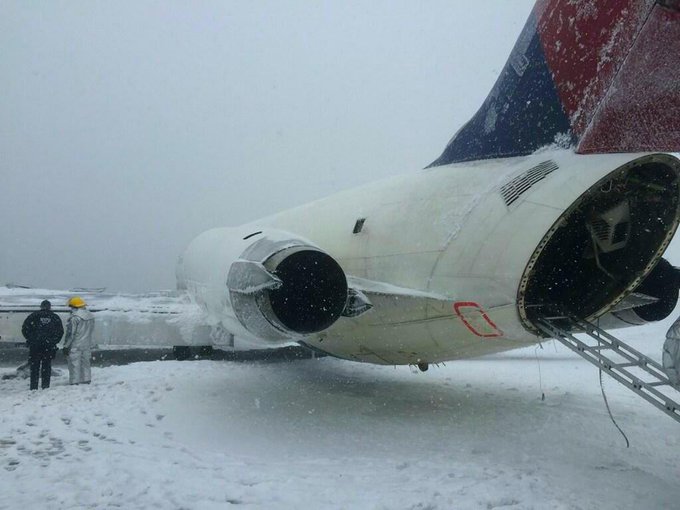
Fuel was leaking from the MD-88 jet and emergency responders were spraying foam to prevent a potential fire after the wing was shorn off.

Sources said Delta Flight 1086 from Atlanta was landing during a snowstorm when it slid off the side of Runway 13 and crashed into a Flushing Bay seawall around 11am Thursday (3am Friday AEDT.

Supplied Editorial DELTA SKID LGA

View image on Twitter

Frightening … a Delta passenger plane has skidded on the runway at LaGuardia Airport. Picture: Instagram/veeestchicSource: Supplied 

Delta Airlines said in a statement: “Customers deplaned via aircraft slides and have moved to the terminal on buses. Our priority is ensuring our customers and crew members are safe.

“Delta will work with all authorities and stakeholders to look into what happened in this incident.”

Passenger Sam Stern, 64, of Sarasota, Florida, was seated with his wife in an emergency-exit row and had to yank out the window so everyone could escape.

“We came in for landing, the plane hit the ground. As it started to apply the brakes, it started skidding. It didn’t spin around or anything,” he said. “It ended up hitting the embankment. The wing broke off.”

“I’m fine, I hurt my back. Everybody was shaken up, but everyone remained calm and was very caring about everybody else,” he added.

View image on Twitter View image on Twitter

A first responder on the ground was also heard asking if the controller was in touch with the Flight 1086 pilot.

“I’m calling up … no response,” the controller said.

“OK, sir, he is leaking fuel on the left side of his aircraft … heavily. His wing is ruptured,” the responder said.

The incident marked Delta’s first mishap since December 5, 2013, when a 767 returned to land at Madrid-Barajas Airport in Spain after a tire failure at takeoff, according to the Aviation Safety Network.

This story originally appeared in The New York Post.

SOURCE:::: http://www.news.com.au

Natarajan

” Passengers Found Themselves in a Close Call after their Flight Flew into a Hailstorm “…

Damaged: A shock flight for passengers on Brazilian TAM Airlines Flight JJ 3307.

Damaged: A shock flight for passengers on Brazilian TAM Airlines Flight JJ 3307. Source: Supplied 

PASSENGERS on a Brazilian Airlines flight found themselves in a close call earlier this month after one of its jets unknowingly flew into a destructive hailstorm.

Brazilian TAM Airlines Flight JJ 3307 took off in Rio de Janeiro en route to the Brazilian city of Natal on February 9 and climbed to approximately 18,000 feet when the flight entered what has been described as a “cloud of hail”.

Local media Odia suggest lightning damaged the flight’s weather radar, steering the flight into dangerous territory and leaving its pilots powerless to know what lay ahead.

Reports indicate that as the plane was turning back, a hail strike hit, cracking the plane’s three-layered windscreen and crushing its nose. Pictures reveal the sheer power of the thunderstorm.

Despite the drama, the flight was able to make it to land safely within forty minutes.

No injuries were reported.

“In the path (the air) passed through a turbulent area and hail damage was not detected by radar,” TAM said in a statement.

“The landing was carried out at the Galeão International Airport, with complete safety for the passengers and crew.”

SOURCE::::: http://www.news.com.au

Natarajan

” Your Plane Could Be Operated by Remote Control , if the Latest Trial in Sweden Takes off …” !!!

The technology means air traffic controllers can work from anywhere. Picture: Saab

The technology means air traffic controllers can work from anywhere. Picture: Saab Source: YouTube

YOUR plane could soon be operated by remote control if the latest trial in Sweden takes off.

Örnsköldsvik airport in the northeast of Sweden has ditched its control tower and is now landing planes via remote control from an airport sitting 100km away. And there are plans for a similar system to come to Australia.

Air traffic controllers for Örnsköldsvik now sit in a computer simulated room at the larger Sundsvall airport surrounded by giant television screens beaming footage to them of Örnsköldsvik’s incoming planes.

Air traffic controllers sit in a room hundreds of kilometres away where they are beamed f

Air traffic controllers sit in a room hundreds of kilometres away where they are beamed footage of incoming planes. Picture: Saab. Source: YouTube

The only airport in the world to be managed by remote control, it is called the Remote Tower System (RTS) and is being trialled in Sweden as a way of improving accuracy and cutting costs.

It works by streaming high definition images of incoming planes at Örnsköldsvik to a Remote Tower Control room based in Sundsvall. Using high tech cameras, sensors and microphones — the RTS collects data about the plane to provide a simulated digital visual to the controllers as well as surround sound audio of the incoming plane.

The technology has been designed by Saab, the Swedish defence and security company, who says it provides “enhanced situational awareness” for air traffic controllers.

New features include object tracking and alerting, night vision, image enhancement, onscreen display of plane statistics, runway incursion warnings and options for zooming and switching to infra-red view in thick fog and darkness.

The system will use real time object tracking. Picture: Saab.

The system will use real time object tracking. Picture: Saab. Source: YouTube

Mikael Henriksson, the project manager of the RTS in Sundsvall, told NPR it’s a “paradigm shift” for the industry. “For the air traffic controller, this is like airline pilots going from propeller to jet,” he said.

NPR spoke to Erik Backman who runs the RTS in Sundsvall, who says he was dubious when he first saw the mock-up technology in 2004. However a decade later he says they’ve been landing planes remotely for months without any major problems.

The use of remote control towers has been explored by the aviation industry as a way of cutting costs at airports too quiet to warrant full time air traffic controllers.

Later this year a US airport, Leesburg Executive Airport in Virginia, will be installing the RTC, making it the first remote-controlled operated airport in the country.

This airport is operated by remote control... really?

Saab believes regional airports can be operated by remote towers. Picture: Saab. Source: YouTube

Australia is also considering installing the technology with plans to control planes at Adelaide airport by air traffic controllers sitting in Melbourne, 700km away.

Rob Walker, spokesman for Airservices Australia, told the Adelaide Advertiser that the increase in air traffic across Australia requires an upgraded and centralised air traffic system.

He said this system would allow controllers monitoring aircraft in Adelaide to be based in Melbourne and aircraft in Cairns to be monitored from Brisbane.

“There is no change in the number of controllers but only where the service is delivered from … and safety is not an issue,’’ he said. Changes will not be made until 2017.

SOURCE::::: http://www.news.com.au

Natarajan

” You Think Our City Roads are More Congested ? … Watch this Video clip !!!”


Both Europe 24 and North Atlantic Skies were designed to give an overview of the daily complexity and volumes of air traffic across the UK and Europe and to do so in a way that was cinematic and exciting to watch. I think we were able to do that to great effect, but we now want to take you a little deeper.

We are therefore very excited to publish UK 24 – your guided tour to some of what makes UK aviation work.

Our airspace is busy, complex and there is a lot going on. Each year we manage around 2.2 million movements, peaking at over 8,000 a day (although there are around 7,000 on this particular day), with only 5.5 seconds delay per flight attributable to NATS. Obviously there are the flows of large aircraft from the airports into and out of the UK, but there is also a lot of activity outside controlled airspace. UK 24 is designed to help visualise the breadth and depth of UK aviation and why airspace is such an important asset.

The day starts with the bow wave of transatlantic traffic heading towards the UK on their organised and separated tracks. This is quickly joined by traffic from Europe and the first waves of departures from UK airports. Over a short period of time the traffic levels grow to show the main trunk roads of airspace as well as the hubs around London, Manchester and central Scotland.

We then move to give a unique view of the holding stacks over London and how they are a fundamental part of the Heathrow operation, providing the constant flow of traffic that makes it the world’s busiest dual runway airport with 1,350 movements a day.

Our tour then take us around the UK, including the other major airports, our two control centres in Swanwick and Prestwick, some general aviation traffic and examples of military training off the east coast of England and near to North Wales. We then dwell on the spider’s web of helicopter tracks that originate from Aberdeen, taking people and vital supplies to and from the North Sea oil and gas rigs.

We hope you enjoy this insight into the complexity and beauty of a day of UK air traffic and the value of airspace as the invisible infrastructure that makes it all work.

Value of aviation to the UK economy

The aviation sector and its supply chain generates over £20bn per year in economic output and directly employs circa 220,000 people. At Heathrow alone, goods worth £133 billion were shipped in and out last year, more than the combined value of goods transiting through the UK’s two largest ports, Felixstowe and Southampton.

Aviation is on average a much more productive sector than the rest of the economy; each pound spent on upgrading our aviation infrastructure is expected to generate over £5 in return. In addition aviation is a significant growth sector within key regions for UK trade, for example China, the Middle East and Turkey have ambitious plans to more than double their capacity.

Without additional capacity in the UK, we risk the rapid growth in traffic and its associated commerce being focused elsewhere.

SOURCE:::: Brendan Kelly in http://www.nats.aero.blog

Natarajan Continue reading

Winner Airports For Airport Service Quality Awards ….

Awards recognise airports with the best passenger service

Incheon International Airport won best airport for the Asia-Pacific region and best airpo

Incheon International Airport won best airport for the Asia-Pacific region and best airport by size. Source: Getty Images

BALLOTS have been cast and the results are in. After surveying more than 550,000 passengers, the Airports Council International (ACI) has announced the winners of the 2014 Airport Service Quality (ASQ) Awards.

Reported in FlyerTalk, the trade group’s annual awards recognise the best of the best in airport passenger service, measuring 34 key service indicators.

“Airports are more than simply points of departure and arrival,” said Angela Gittens, director general of ACI World. “They are complex businesses in their own right. As such, a focus on serving the passenger has become increasingly important to ensuring success.”

Gittens noted there were many repeat airports on the list of winners, as well as many “new faces” that suggest promising changes.

Incheon International Airport in South Korea.

Incheon International Airport in South Korea won for the Asia-Pacific region. Source: Supplied

First-place winners by category are as follows:

Best Airport by Region

Africa — Sir Seewoosagur Ramgoolam International Airport (MRU)

Asia-Pacific — Incheon International Airport (ICN)

Europe — Keflavík International Airport (KEF)

Latin America-Caribbean — José Joaquín de Olmedo International Airport (GYE)

Middle East — Queen Alia International Airport (AMM)

North America — Indianapolis International Airport (IND)

Keflavík International Airport was voted the best airport in the European region. Picture

Keflavík International Airport was voted the best airport in the European region. Picture: Super Jet International. Source:Flickr

Best Airport by Size (Passengers per Year)

2 to 5 Million — José Joaquín de Olmedo International Airport (GYE)

5 to 15 Million — Haikou Meilan International Airport (HAK)

15 to 25 Million — Gimpo International Airport (GMP)

25 to 40 Million — Indira Gandhi International Airport (DEL)

Over 40 Million — Incheon International Airport (ICN)

Indira Gandhi International Airport made the cut for the best airport by size. AFP PHOTO/

Indira Gandhi International Airport made the cut for the best airport by size. AFP PHOTO/RAVEENDRAN Source: AFP

Best Small Airport (Fewer Than 2 Million Passengers) by Region

Africa — Upington Airport (UTN)

Asia-Pacific — Langkawi International Airport (LGK)

Europe — Murcia-San Javier Airport (MJV)

Latin America-Caribbean — Bachigualato Federal International Airport (CUL)

North America — Victoria International Airport (YYJ)

Victoria International Airport was the best small airport in North America. Picture: Andy

Victoria International Airport was the best small airport in North America. Picture: Andy M. Smith. Source: Flickr

Best Improvement by Region

Africa — Sir Seewoosagur Ramgoolam International Airport (MRU)

Asia-Pacific — Netaji Subhas Chandra Bose International Airport (CCU)

Europe — Pulkovo International Airport (LED)

Latin America-Caribbean — Las Américas International Airport (SDQ)

North America — San Antonio International Airport (SAT)

A new passenger terminal building of Pulkovo International Airport made it best airport b

A new passenger terminal building of Pulkovo International Airport made it best airport by improvement for the Europe region. Source: Getty Images 

SOURCE:::: news.com.au

Natarajan