Message for the Day…” All the human beings you see are forms of the Divine…”

Love is Divine. Love all, impart your love even to those who lack love. Love is like a mariner’s compass. Wherever you may keep it, it points the way to God. In every action in daily life manifest your love. Divinity will emerge from that love. This is the easiest path to God-realization. But why aren’t people taking to it? This is because they are obsessed with misconception relating to the means of experiencing God. They regard God as some remote entity attainable only by arduous spiritual practices. God is everywhere. There is no need to search for God. All that you see is a manifestation of the Divine. All the human beings you see are forms of the Divine. Correct your defective vision and you will experience God in all things. Speak lovingly, act lovingly, think with love and do every action with a love-filled heart.

Sathya Sai Baba

” I Survived the Pan Am Hijack During Which Neerja Bhanot Lost Her Life…”

Musician Nayan Pancholi recounts how he lost his eye but survived the Pan Am flight hijack in 1986.

It was September 5, 1986. Our tickets got confirmed at the last moment on Pan-Am Flight-73, which was headed from Mumbai to New York, via Karachi and Frankfurt. We were a group of singers and music composers from Ahmedabad, who were going to perform in different cities of USA. At that time, I was just 21 years old. Our flight took off from Mumbai and landed in Karachi around 4.30 a.m. There were some passengers who got off at Karachi. Cleaners entered the aircraft and were just about the leave. This is when four armed men in airport security clothes entered the aircraft from the business class side. We were seated in economy class at the rear of the plane.

Suddenly, there were screams and three or four shots were fired in the air. One terrorist had a machine gun in his hand, another had grenades and a belt full of bullets, while the other two had many guns and grenades with them.

Everyone was told to have their hands locked above their heads. I just can’t forget that sight. Two terrorists were standing in the front and the other two were standing near the rear. In no time, Neerja Bhanot, the senior flight purser, informed the captain and the other crew members in the cockpit to flee the aircraft.

The captain, the co-pilot, and the cockpit crew had left the aircraft. Except Neerja, all other flight attendants were tied up with ropes. The terrorists used Neerja to communicate with the airline.

There were more than 350 passengers in the plane. To scare us, they even killed a person named Rakesh Kumar and threw him out of the plane.

Then, they started collecting our passports. Somehow, Neerja hid some passports of American citizens under the seats. They kept on shouting and screaming at us in Arabic and continued firing shots in the air. After some time, in the afternoon, they offered us sandwiches. But who on earth can eat food in such a difficult situation?

In the evening, they allowed everyone to go to the toilet, one after the other, by crawling on the floor with our hands locked over our heads.

I still remember, exactly after 17 hours of them hijacking the flight, the fuel ran out. Due to this, the generator of the plane went off, leading to darkness. After the lights went off, the terrorists panicked and started firing aggressively at us. They also started throwing grenades.

I saw many people die in front of my eyes.

Nayan Pancholi was just 21 years old, when the Pan Am flight was hijacked in Karachi.

Nayan Pancholi was just 21 years old when the Pan Am flight was hijacked in Karachi.

My own group director and another girl from the group were shot dead.

I was seated near the emergency exit. I tried to open the emergency exit door, but couldn’t do it. After giving it a second try, it opened, but at the same time a grenade hit me in the left eye. And in a moment, I was down on the ground.

After that, I was taken to the terminal by the army and was later shifted to the hospital. I was given treatment at a hospital in Karachi. After 48 hours, the Indian Airlines flight took all the Indians back home. I was then taken to Jaslok Hospital in Mumbai. But, my eye couldn’t be treated there. So, I was taken to Chicago in the US for treatment, but the doctors there too couldn’t save my left eye.

This incident has had a deep impact on me. It was a very bad day for humanity. That day, nobody saw religion, caste, or creed in each other. That day we saw each other as humans and wanted to help and save each other. It’s as simple as that in end.

This article has been shared via Humans of Amdavad.

About the author: Nayan Pancholi is a singer and composer based in Ahmedabad. He is one of the survivors of the Pan Am plane hijack in 1986.
Source…..www.the betterindia.com
Natarajan

Message for the Day…” Think over the Consequences of whatever you do, talk or execute…”

Every person is liable to commit mistakes without being aware of it. However bright the fire or light, some smoke will emanate from it. So also, whatever good deed a person might do, mixed with it will be a minute trace of evil. But efforts should be made to ensure that the evil is minimised, that the good is more and the bad is less. Naturally in the present atmosphere, you may not succeed in the very first attempt. You must carefully think over the consequences of whatever you do, talk, or execute. In whatever way you want others to honour you, or to love you, or to behave with you, in the same way you should first behave with others, and love and honour them. Then only will those honour you. Instead without yourself honouring and loving others, if you complain that they are not treating you properly, it is surely a wrong conclusion.

Sathya Sai Baba

Here’s what the ‘i’ in iPhone means…..

42-30016373

Apple CEO Steve Jobs is pictured during the presentation of the iPhone in Berlin, 19 September 2007.

IMAGE: PEER GRIMM/DPA/CORBIS
We’ve been seeing it for years. The iMac, iPod, iTunes, iPhone, iPad — the omnipresent “i” prefix has marked most Apple products since the release of the iMac in 1998. But why? What does it mean?

The Internet has been abuzz recently with remembering exactly what Apple’s “i” stands for. At an Apple event in 1998, Steve Jobs introduced the iMac, explaining the link between “i” and “Mac.”

“iMac comes from the marriage of the excitement of the Internet with the simplicity of Macintosh,” he said. “We are targeting this for the no. 1 use that consumers tell us they want a computer for, which is to get on the Internet simply and fast.”

In 1998, the “i” in iMac stood for Internet. Jobs followed these statements with a slide that expanded upon what else the “i” means to Apple:

iAppleSlide

At an Apple event in 1998, Steve Jobs breaks down what the “i” in iMac stands for.

VIDEO: YOUTUBE, EVERYSTEVEJOBSVIDEO

Besides Internet, Apple’s prefix also stood for individual, instruct, inform and inspire.

Since then, the “i” has moved beyond its Internet-centric meaning; Apple probably didn’t have the Internet in mind when naming the original iPod.

When the iPhone was announced in 2007, one of its three key ingredients was Internet communication, bringing the “i” back to its original intended meaning of Internet. (The other two fundamentals were music and phone calls.)

Since then, nearly every device has had some form of Internet connectivity built in, and the “i” has lost its association with that specific meaning and has come to represent the Apple brand.

But as Apple continues to grow into other markets, including smartwatches and TV boxes, its famous prefix seems to be falling to the wayside. Instead of iWatch and iTV, we have Apple Watch and Apple TV. Perhaps this is because we no longer need to know our devices connect to the Internet — it’s something we’ve come to expect.

Source…..www.stumbleupon.com

Story Credit from….

Kellen Beck

Tech news reporter intern at Mashable and senior journalism major at Ithaca College. Computer lover and aspiring professional wrestler. Follow me at https://twitter.com/Kellenbeck
Natarajan
 

Message for the Day….” What is the true “naivedyam” to God …? “

Young age is like a delicious fruit. You should offer this sweet and delicious fruit to God. It is not possible to begin worshipping God after retirement in old age, when your body becomes weak, the sense organs lose their power, and the mind becomes feeble. Start early, drive slowly and reach safely. Start praying to God right from an early age. If you do not undertake sacred actions when your physical and mental faculties are strong, then when will you perform them? What can you do when the sense organs have lost all their power? Hence practice offering the fragrant flowers of your mind and heart to God with total faith from a young age. This is true naivedyam (food offering). Many people today do not make such offerings. When their senses become weak after indulging in all sorts of sensual pleasures, they think of offering them to God, akin to offering leftover food.

Sathya Sai Baba

Facts About Indian Languages. How Many Do You Know?…

No country in the world comes close to matching the linguistic diversity of India — just the number of ‘mother tongues’ in the country, as listed  in the 1961 Census, is 1652!

The Constitution of India does not give any language the status of national language. The official language of the Union Government of the Republic of India is Hindi. The Eighth Schedule of the Indian Constitution lists 22 languages, which have been referred to as scheduled languages and given recognition, status and official encouragement.

In addition, the Government of India has awarded the distinction of classical language to Tamil, Sanskrit, Kannada, Telugu, Malayalam, and Odia due to their long history of 1500-2000 years. All Indian languages fall into one of these 4 groups: Indo-Aryan, Dravidian, Sino-Tibetan and Afro-Asiatic. The extinct and endangered languages of the Andaman islands form a fifth family.

Here are 10 facts about Indian languages that you may not know about:

1. Hindi is the 2nd most spoken language in the world (ahead of English and Spanish), Bengali the 7th most and Punjabi the 10th most.

1

Pic Source: www.visualnews.com

Over 970 million people in the world speak Hindi. Bengali and Punjabi have about 250 million and 120 million speakers respectively worldwide, ahead of popular languages like German and French.

2. Hindi was known by different names at different stages of its evolution in different eras. It was known as Apabhramsa at its earliest stage.

1

Modern Hindi alphabet

Pic Source

Kalidas, a renowned Sanskrit scholar and literary playwright in ancient India, composed a romantic play titledVikramorvashiyam in Apabhramsa in 400 AD.

3. Did you know that Malayalam, the language spoken in the southern Indian state of Kerala, is the longest palindrome (a word that reads the same backwards and forwards) in the English language?

1]

Pic Source: nagfa.blogspot.com

4. In Mumbai, there is a Gujarati family, that speaks only in Sanskrit. In Mattur village in Karnataka, people speak in Sanskrit to each other.

1

Villagers in Mattur village in Karnataka only converse in Sanskrit

Pic Source: www.topentity.com

Here are 6 more amazing facts about Sanskrit, one of the oldest languages known to mankind:

  • NASA scientist Rick Briggs once said that Sanskrit is the only unambiguous language in existence.
  • Sanskrit is the most computer friendly language.
  • 14 universities in Germany offer Sanskrit as a subject.
  • Sanskrit uses many synonyms for each subject. For instance, there are 100 synonyms for the word ‘elephant.’
  • Sanskrit is the state language of Uttarakhand
  • Sanskrit is supposed to belong to the same family as Latin. That is why there are many words ending in ‘um’ in both languages.

5. Brahui is a Dravidian language, with its roots in India, spoken by approximately 1 million people in Pakistan and Afghanistan.

Most Dravidian languages are spoken in South India, with the exception of Brahui, which is spoken in Pakistan.

Most Dravidian languages are spoken in South India, with the exception of Brahui, which is spoken in Pakistan.

Pic Source

Dravidian languages, a family of about 23 languages that includes languages like Tamil, Telugu and Kannada, are unrelated to any other known language family and are spoken mostly in South India.

6.  In 1999, UNESCO declared February 21 as International Mother Language Day to commemorate the Bengali Language Movement in 1952.

1

The Bengali Language Movement in 1952

Pic Source: abac.bd.com

The Bengali Language Movement was a political movement in former East Bengal (today Bangladesh), advocating the recognition of the Bengali language as an official language of the then Dominion of Pakistan in order to allow its use in government and education.

7.  Did you know around 99% of Urdu verbs have their roots in Sanskrit and Prakrit?

1

Urdu alphabet

Pic Source: urdu007.blogspot.com

Although Urdu is the national language of Pakistan, it is also one of India’s official languages. Urdu, like Hindi, is a form of Hindustani.

8. George Bush, former President of the USA, had allocated a budget of $114 million for teaching Hindi in the US.

Indian Americans comprise 3.1 million people, representing around 1% of the U.S. population as of 2013]

Indian Americans comprise 3.1 million people, representing around 1% of the U.S. population as of 2013

Pic Source: www.livemint.com

Hindi was to be a part of the curriculum from kindergarten to the graduate level, considering the importance of Hindi as a common native language of Indian Americans. However, the plan was not carried through once Obama became President.

9.  All Indian scripts come from the same script – Brahmi. Writing came much later to India than to other parts of the world. Hence, both Tamil and Sanskrit have extremely strong oral traditions.

Brahmi inscription in Samath

Brahmi inscription in Samath

Pic Source

10. Kannada language has the second oldest written tradition of all vernacular languages of India. More than a thousand notable writers have contributed to the wealth of the language.

1

Basavpurana manuscript in Kannada

Pic Source: oocities.org

Current estimates of the total number of epigraphs written in Kannada range from 25,000 by the scholar Sheldon Pollock to over 30,000 by the Sahitya Akademi, making Karnataka state “one of the most densely inscribed pieces of real estate in the world.”

Source….Nishi Malhotra in http://www.the betterindia.com

Natarajan

These 6 Indian Americans to Receive One of the Highest Scientific Honours in US from Obama…

US President Barack Obama has decided to honour a group of 106 people with the Presidential Early Career Awards for Scientists and Engineers. Six Indian Americans too will be the recipients of the US government’s highest honour for young independent researchers. The awards were established by Bill Clinton in 1996.

According to NDTV, President Obama said, “These early-career scientists are leading the way in our efforts to confront and understand challenges from climate change to our health and wellness. We congratulate these accomplished individuals and encourage them to continue to serve as an example of the incredible promise and ingenuity of the American people.”

He will present these awards during a ceremony at Washington D.C. this spring.

The Indian Americans selected for the award are:

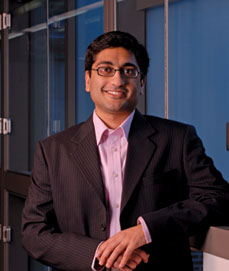
Milind Kulkarni

milind kulkarni\

Photo source: engineering.purdue.edu

Milind Kulkarni is an associate professor with the School of Electrical and Computer Engineering at Purdue University. His research focuses on Programming Languages and Compilers. He graduated with a B.S. in Computer Science and Computer Engineering from North Carolina State University.

Kiran Musunuru

kiran

Photo source: news.harvard.edu

Kiran Musunuru is an Assistant Professor of Stem Cell and Regenerative Biology at Harvard University, and Associate Physician at Brigham and Women’s Hospital. He has developed a ‘genome editing’ approach to permanently reduce cholesterol levels.

Sachin Patel

sachin patel

Photo source: medschool.vanderbilt.edu

Sachin Patel is an assistant professor of psychiatry, molecular physiology, and biophysics at Vanderbilt University Medical Centre. His research is to understand the intricate role of brain function in psychological disorders. He did his B.S. at the University of California.

Vikram Shyam

vik

Vikram Shyam works at NASA’s Glenn Research Centre. He is a member of the Turbo-Machinery and Heat Transfer Branch.  His research includes computational and experimental analysis of  biomimetics, energy harvesting, engine flow physics, flow visualisation, and water purification.

Shwetak Patel

ShwetakPatel

Photo source: Wikipedia

Shwetak N. Patel is a Professor in Computer Science and Engineering and Electrical Engineering at the University of Washington. His work includes developing new sensor systems and new interaction technologies. He is also a member of  World Economic Forum’s Global Shapers Community – a group of high achievers.

Rahul Mangharam

mangha

Photo source: seas.upenn.edu

Rahul Mangharam is an Associate Professor in the Department of Electrical and Systems Engineering at the University of Pennsylvania. His interests are in real-time scheduling algorithms for networked embedded systems. He received his Ph.D. in Electrical & Computer Engineering from Carnegie Mellon University.

Source……Meryl Garcia in http://www.the betterindia.com

Natarajan

This Teacher in India Has Just Been Nominated for the $1 Million Global Teacher Prize 2016…

Robin Chaurasiya is one of the co-founders of Kranti, an NGO that empowers girls from Mumbai’s red-light areas to become agents of social change. She has been shortlisted for the $1 million Global Teacher Prize 2016. She will compete with teachers from the UK, US, Kenya, Palestine, Japan, Finland, Australia, and Pakistan.

Names of the 10 shortlisted teachers were announced by renowned scientist Stephen Hawking in London.

“I wasn’t the easiest person to teach. I was slow to learn to read and my handwriting was untidy. But, at the age of 14, my teacher, Dikran Tahta, showed me how to harness my energy and encouraged me to think creatively about maths. He made me wonder. He made me curious. He opened up new worlds to me. That is what a great teacher can do,” Hawking said during theannouncement.

Robin, who refers to her students as krantikaris (revolutionaries), runs a school for daughters of sex workers and victims of human trafficking in Mumbai.

robin2

Source: YouTube

The students are between the ages of 12 and 20 and the curriculum includes English, computers, dance therapy, meditation, photography, theatre, field trips, education through music, and more. The students are encouraged to become peer teachers and community leaders.

30-year-old Robin was born in Los Angeles and served with the US Air Force for many years. She co-founded Kranti in 2011 and volunteered with an anti-trafficking NGO in Uganda.

The Global Teacher Prize was created last year by entrepreneur Sunny Varkey of UK-based Varkey Foundation. It is an annual award given to an exceptional teacher who has made an outstanding contribution to the profession, and is widely referred to as the Nobel Prize for teachers. The top 10 have been shortlisted from 8,000 nominations and applications received from 148 countries around the world. This award celebrates the exceptional work of teachers around the world who inspire their students. The finalist will be announced on March 13 in a ceremony in Dubai.

“I hope her story will inspire those looking to enter the teaching profession and also shine a powerful spotlight on the incredible work teachers do all over India and throughout the world every day,” Sunny Varkey said while talking about Robin.

According to their website, the Global Teacher Prize Judging Academy includes public officials, head teachers, academics, journalists, entrepreneurs, company directors, scientists, and entertainment industry personalities from around the world.

You can show your support for Robin by sharing her work on social media with #teachersmatter. Watch her talk about Kranti here:

This video was originally published here.
Source………Tanaya Singh in http://www.the betterindia.com
Natarajan

This Engineer Earns for finding faults from Software Bugs in Facebook, Twitter & Zomato !!!

From hacking into the social media accounts of his friends, to finding more than 90 security flaws for Facebook – Anand Prakash has come a long way with his love for technology and interest in ethical hacking. This is his story.

It was while preparing for his engineering entrance exams in Kota, Rajasthan that Anand Prakash first became interested in hacking. “I had a smartphone and Internet packs were very costly at that time. I came across some kind of proxy setting and figured out a way to use the Internet for free,” he says. The service provider rectified the loophole after some time when many users came to know about it. But for Anand, it was the beginning of a very eventful journey towards building a career in the field of hacking – the kind that’s ethical.

“What I do now is called security research, not hacking,” he is quick to correct.

Today, the 23-year-old is a security engineer with Flipkart, uses the Internet in a more responsible manner, and has been rewarded by many organizations for finding flaws in their software or technology setups.

ethical hacking

Anand Prakash

Anand, who is from the town of Bhadra in Rajasthan, was always interested in computers.

“It was always the same with me. I used to score better in technical subjects, but when it came to subjects like geography, environmental studies, etc., I used to face a lot of problems,” he recalls.

As a student, Anand strengthened his newly acquired knowledge of hacking by experimenting among friends.

“I used to practice phishing on my friends’ accounts with their permission. It is the most basic process in hacking. It involves extracting information like usernames, passwords, etc., by sending out emails to the victims in a way that they will trust them enough to open the links,” he says. Getting access to the password of a friend’s Orkut account was Anand’s first hack.

After Kota, he joined Vellore Institute of Technology to pursue a course in computer science engineering. Anand continued to polish his knowledge about ethical hacking and different programming languages in college, and practiced whatever he learned among friends.

“Up till then, I only knew about hacking processes that involved using some automated tools. And that did not interest me after a point. Finding security flaws in systems is completely different from what I was doing then,” he says.

In the third year of college, Anand came to know about Facebook’s Bug Bounty Program. It offers recognition and compensation to security researchers who find vulnerabilities in Facebook and report them according to the organization’s responsible disclosure policy.

By then, Anand was well-versed in languages like PHP, JavaScript, etc.

“I liked to analyse codes. And when I learnt that Facebook has given monetary compensation to someone for finding a bug in their technology, I thought of giving it a try,” he says.

He utilised the Open Web Application Security Project (OWASP), which is an initiative by OWASP Foundation for the improvement of software security in different organizations around the world. The project provides users with open source study materials to understand application security over the Internet.

“I started learning with the help of OWASP, followed experts on Twitter, and read up a lot about security research. Fortunately, I found a bug on Facebook in just a month. It was a loophole that enabled me to find people online even if they had turned off their chat,” he says. Anand received his first bounty of USD 500 for reporting this issue.

Then he learned that many such organizations welcome people who find security vulnerabilities for them. And the work turned out to be so interesting that there was no turning back for the technology enthusiast. To date, he has found about 90 bugs for Facebook, and ranks fourth in the Facebook wall of fame 2015.

The highest bounty Anand received from Facebook was a sum of USD 12,500 for finding a major security flaw because of which a user could post anything on his/her profile using someone else’s account. “For example, I could post a picture, a video, or text, and it would be visible on my Facebook wall as a post from your side,” he explains.

After college, he did an internship with the Cyber Police Investigation Branch of Gurgaon Police. There he worked on finding the different strategies used by cyber criminals.

ethical hacking

After the internship

He has also reported issues to companies like Twitter and Google and has earned Rs. 1.2 crore in the process. He was able to hack into the systems of the restaurant discovery and search application Zomato to gain access to the accounts of their 62 million users. He disclosed this issue to the company and they fixed it in two day, appreciating his efforts.

“I always first report the issue to the organization without exposing it elsewhere. It is called responsible disclosure. Then I take permission from them and post about it on my personal blog if they allow it.”

But Anand is not very happy about the way many Indian companies treat security researchers:

Some companies are very responsive. They fix the bugs immediately and also give monetary compensation without much delay. But if you report bugs to many companies in India, they reply saying they will take legal action against you. The condition is very bad in terms of security here. But it is changing slowly. I have come across some companies that are now open to security research.”

With new technologies coming up every day, Anand’s hunger for learning keeps developing. His advice to those who want to pursue a career in security research: “Try and report bugs to companies in a responsible manner. And do not disclose the issue unless you have permission. Security research is a great thing if done ethically.”

Find out more about how he finds different bugs, here.

Source……Tanaya Singh in http://www.the betterindia.com

Natarajan


Message for the Day….” The human body is a plantain leaf, your heart is a sacred vessel and and the sacred food items are the virtues and acts of good conduct.”

Before offering to God, it is food. Once it is offered to God, it becomes free from all impurities and gets transformed into prasadam. By eating such sacred food, one will not acquire any mental impurities. We offer food to God on a clean plantain leaf. The human body is a plantain leaf, your heart is a sacred vessel and and the sacred food items are the virtues and acts of good conduct. Today to whom are you offering food? Your sacred food offering is to demons of wicked feelings such as anger, hatred, and jealousy. The left over is being offered to God. That is why you are victims of restlessness, difficulties, sorrows, and misery. Get rid of your evil qualities and offer your virtues to God with the prayer: ‘Oh God, You are the resident of my heart and You are the embodiment of love, kindness, and compassion.

Sathya Sai Baba