Best Cities to Live in The World ….

Some cities are just easier to live in than others.

Global consulting firm ECA International came out with a list of the most livable cities around the world for North Americans.

The ranking objectively evaluates a bunch of factors that contribute to the overall quality of living, including climate, availability of health services, housing and utilities, isolation, access to social network and leisure facilities, personal safety, air quality, infrastructure, and political tensions.

So if you’re thinking about moving somewhere, may we recommend that you check out the following cities. Canada, Northern Europe, and the United States dominated the list.

1. Toronto, Canada

‘Good air quality, solid infrastructure, decent medical facilities, low crime and health risks have contributed to Toronto topping the global ranking for quality of living for American assignees,’ said Michael Witkowski, vice president of ECA International.

Toronto has a huge services industry, including law, accounting and advertising. Over 56% of employees in Toronto’s multifaceted economy have post-secondary degrees or certificates. It’s also the major design center of Canada’s design economy, and has a ‘fast-moving‘ fashion industry, which has contributed to the 550% increase of Canadian apparel exports since 1994.

The longest street in the world — Yonge Street — runs through Toronto.

Toronto

Toronto is a delightful place to live.


2. Dublin, Ireland

In the past, Dublin was a major food processing and manufacturing city, but it has attracted major global pharma and tech companies, including Microsoft, Google, Amazon, and Yahoo!.

Guinness originated in Dublin, and is still brewed there.


3. Copenhagen, Denmark (tied)

Copenhagen is a business, finance and commercial center in Scandinavia. Big industries includepharma, biotech, computer science, and telecommunications.

One of the most popular tourist attractions in Copenhagen is a bronze statue of the little mermaid, based on the Hans Christian Anderson fairy tale.
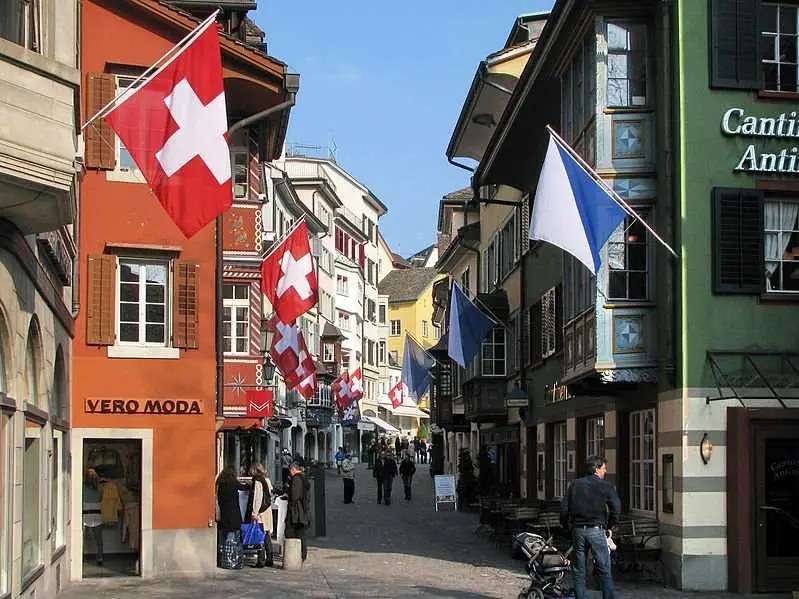
 

3. Zurich, Switzerland (tied)

Zurich is another financial hub in Europe — about a quarter of the jobs in the city are finance related. Biotech and life sciences are also big industries, while the small aerospace and automotive supplier industries are rapidly expanding.

Zurich’s St. Peter Church has the largest clock face in Europe (not Big Ben, like most people think.)


3. Ottowa, Canada (tied)

Ottawa’s economy centres around two major sectors: technology and the federal government. The two sectors account for 37% of the city’s GDP.

There is a 30-foot-high spider sculpture called ‘Maman‘ in Ottowa’s National Gallery of Canada.


Vancouver, Canada (tied)

Vancouver has one of the most active startup scenes, and it was ranked ninth in the world on the Startup Ecosystem Report 2012. Both HootSuite and Avigilon have their headquarters in the city.

Vancouver also has the third-largest film industry in North America.
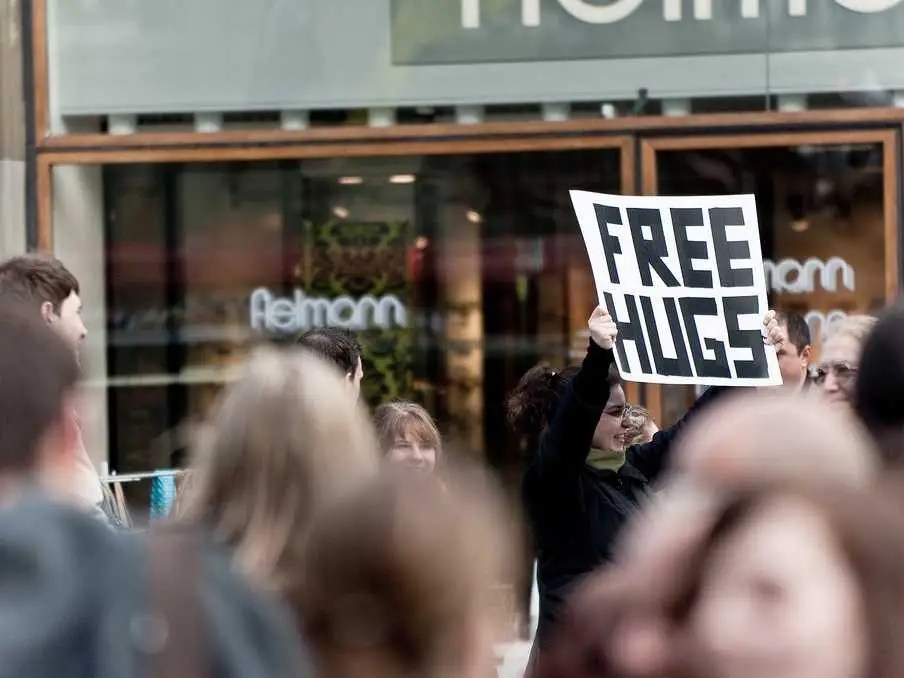
 

Bern, Switzerland (tied)

The service sector is Bern’s major industry, but tourism is also a driver of the city’s economy.

Watch giant Swatch is headquartered in Bern.


Stockholm, Sweden (tied)

Stockholm is Sweden’s major industrial center, including metal and machine manufacturing, as well as paper, printing and chemicals.

Stockholm became the capital of Sweden in 1436.


Seattle, Washington, US (tied)

Seattle’s major industries include aerospace, information and communications technology and healthcare. Additionally, tech and clean energy are increasingly becoming more dominant industries.

Microsoft founder Bill Gates was born in Seattle.


Boston, Massachusetts, US (tied)

Boston is a major intellectual center in the US, housing numerous universities and medical centres. Other major industries include the financial services, creative industries, and renewable energy.

The Boston Red Sox sold out a record 820 consecutive games in a row.


Greenwich, Connecticut, US

Greenwich has a large community of financiers. The city houses hedge funds, as well as Wall Streeters and their families.

Greenwich is one of the wealthiest areas in the US, but is also part of the most unequal place in the country.


Geneva, Switzerland (tied)

The headquarters for the UN, the Red Cross, and the World Health Organisation are all located in Geneva (not to mention other international organisations such as the WTO and WEF). And the city’s also known as a major financial hub.

The uber-luxury watch company Patek Philippe was founded in Geneva in 1852.


The Hague, The Netherlands (tied)

The Hague is a major international city, with over 150 international organisations located there. Notably, it houses the International Criminal Court and the International Court of Justice.

Everyone’s always buzzing over Amsterdam, but you can legally smoke weed in The Hague, too


Stavanger, Norway (tied)

Stavanger is the center of the oil and gas industry in Norway, and one of the biggest energy hubs in Europe. Half of the people living in Norway who work in energy are located in Stavanger.

Every May, Stavanger hosts a huge international jazz festival called MaiJazz.


Gothenburg, Sweden (tied)

Major sectors in Gothenburg include technology, engineering, and several industrial companies. Additionally, the city serves as a major port.

In August, you can go to a three-day musical festival in the city called Way Out West.


Basel, Switzerland (tied)

Carnival of Basel.UBS and the Bank for International Settlements are headquartered in Basel. The city also has a large watch-making industry, as well as pharmaceuticals, biotech, and nanotechnology.

Basel in a major cultural center in Europe, and houses a huge art collection in the Kuntsmuseum Basel.


Vienna, Austria (tied)

A large proportion of workers in Vienna are white-collar workers, public employees, and civil servants — and that percentage continues to grow. Over half of the employees in Austria’s service industry live in Vienna. Overall, Austria’s most important and fastest-growing industry istourism.

Vienna is known for its famous sachertorte, a thick chocolate cake with a thin layer of apricot jam.


Berlin, Germany (tied)

Berlin houses big names like Borsig, AEG, and Siemens, but is always advancing in the sciences and academics. Additionally, the city has established a major film industry, and tourism has skyrocketed in recent years.

A three day international beer festival with over 300 breweries and 2,000 sorts of beers takes place in Berlin. Oh, and it’s held in a 1.4-mile-long beer garden — the longest in the world.


Luxembourg City, Luxembourg (tied)

Luxembourg’s economy runs on the steel, banking, and industrial industries. In fact, the largest steel company in the world, ArcelorMittal, is based in Luxembourg City.

Although Luxembourg has three official languages: French, German, and Lëtzebuergesch (‘Luxembourgish.’)


Eindhoven, Netherlands (tied)

Although it’s not a particularly large city, Eindhoven has grown into one a leading city in the 21st century by getting ahead in both technological innovation and design. Additionally, it’s a university city with a number of undergraduate schools.

In 2011, the city was named the most intelligent community by the Intelligent Community Forum.


Montreal, Canada (tied)

Montreal’s economy is extremely diversified. Major industries include aerospace, electronic goods, pharmaceuticals, engineering, finance, and research and development.

Montreal also happens to have the second largest French-speaking population in the world (it’s behind only Paris).


SOURCE::::  ELENA HOLODNY  in  www.businessinsider.com.au

Natarajan

Jan 23 2015

” What the Customer Wants …. Customer Gets … ” !!!

Airbus A380 Emirates

Emirates is not only the A380′s biggest customer, it can be argued that the airline is the superjumbo’s only customer that matters.

And what the customer wants, the customer gets. At least that’s what Emirates is hoping for.

Emirates wants an A380 “neo” — a superjumbo with newer, more fuel-efficient engines.

(“Neo” is the designation that Airbus gives to aircraft models that have had their engines and aerodynamics upgraded.)

As Business Insider reported last September, Emirates’ CEO Tim Clark said the airline could order another 60-70 non-neo superjumbos, valued at a whopping $US29 billion.

This figure seems to have changed.

This week at the World Economic Forum in Davos, Switzerland, the outspoken airline boss said that his company would up the potential order to 100 additional A380s, if a new engine option becomes available, Bloomberg reported.

In an interview with Bloomberg TV, Clark essentially told Airbus that “if you build it, we will buy it.”

The total value of those 100 superjumbos? $US43 billion.

Although some airlines have had a hard time filling the seats on the massive double-decker plane, Emirates doesn’t seem to be one of them.

According to Bloomberg, flights on the airline’s fleet of A380s are putting money in the bank. Routes to popular destinations, such as London, are operating at 90% capacity. Emirates is also increasing A380 flights on its US and South Asia routes.

Clark believes upgraded engines could save his airline 10-13% in costs.

This latest development should comes as welcome news to the Airbus superjumbo program.

In short, the A380 is struggling.

Airbus didn’t sell a single superjumbo to an airline in 2014. And Amedeo, the leasing company that did buy 20 A380s in 2014, can’t seem to find anybody to rent them to.

Emirates Airline's Airbus A380

Fortunately, Airbus has Emirates. Of the 317 A380s ever ordered, 140 of them have been by the official airline of Dubai.

And of the 152 aircraft that have actually been delivered, 57 have gone to Emirates. The airline has even agreed to take delivery of its A380s early, in order to give Amedeo more time to find customers willing to lease the superjumbo.

Which makes Emirates a critical partner in the future of the A380. If Airbus wants to keep its superjumbo program going, it’s going to need Emirates.

And what about that $US43 billion price tag?

That’s just the sticker price. With Emirates quite literally flying the plane on the deal, don’t expect Tim Clark’s airline to pay anything more than $US30 billion.

Under the circumstances, that would be a great outcome for both parties.

SOURCE:::: BENJAMIN ZHANG   in  www.businessinsider.com

Natarajan

Jan 23 2015

Image For the Day… Astronaut Buzz Aldrin in the Apollo 11 Lunar Module !!!

 Astronaut Buzz Aldrin in the Apollo 11 Lunar Module

This July 20, 1969 photograph of the interior view of the Apollo 11 Lunar Module shows astronaut Edwin E. “Buzz” Aldrin, Jr. during the lunar landing mission. The picture was taken by astronaut Neil A. Armstrong, commander, prior to the landing.

Buzz Aldrin was born in Montclair, New Jersey, on Jan. 20, 1930. Aldrin became an astronaut during the selection of the third group by NASA in October 1963. On Nov. 11, 1966 he orbited aboard the Gemini XII spacecraft, a 4-day 59-revolution flight that successfully ended the Gemini program. During Project Gemini, Aldrin became one of the key figures working on the problem of rendezvous of spacecraft in Earth or lunar orbit, and docking them together for spaceflight. Aldrin was chosen as a member of the three-person Apollo 11 crew that landed on the moon on July 20, 1969, fulfilling the mandate of President John F. Kennedy to send Americans to the moon before the end of the decade. Aldrin was the second American to set foot on the lunar surface.

Image Credit: NASA 

SOURCE::::: http://www.nasa.gov

Natarajan

Jan 22 2015


Image of the Day…Largest Picture Ever Taken … !!!


Did you see the largest picture ever taken, released on January 5? The picture has a staggering 1.5 billion pixels, so you’d need 600 HD television screens to display it. It shows the neighboring Andromeda galaxy, closest spiral galaxy to our Milky Way. Now daveachuk on YouTube has created this wonderful fly-through video, showing detail in the gigantic Andromeda pic. Enjoy feeling small! And remember … each one of those white dots? Each one is a sun, much like the sun that powers all life on Earth.

Enjoy the video! And be sure to watch until the end!

The NASA/ESA Hubble Space Telescope captured the full image, which is made up of 411 Hubble images, takes you through a 100 million stars and travels over more than 40,000 light years. Our thanks to Alex Grossman on G+ for sharing! As he said:
Wow. Just wow.

Bottom line: Fly-through video of the largest image ever taken, of the Andromeda galaxy, nearest spiral galaxy to our Milky Way. Prepare to feel small!

SOURCE:::: www. earthskynews.org and You Tube

Natarajan

Jan 22 2015


World”s Most Spectacular New Airports …

Changi airport, Singapore (opening 2018)

Architect Moshe Safdie – who designed the iconic Habitat 67 housing complex in Montreal – began construction on a new development at Singapore’s Changi airport in December 2014. Featuring a ‘Forest Valley’, ‘Jewel Gardens’ and a 130ft-high (40m) waterfall called a ‘Rain Vortex’, it looks more like the Land of Oz than an air hub; trees, palms and ferns are enclosed within a 134,000sq m glass dome. Scheduled for completion in 2018, the Jewel complex will be linked by pedestrian bridges to existing terminals, offering space for shops and restaurants alongside the foliage. Safdie has said that the project is “the prototype of a new kind of urban place”. (Safdie Architects)


Mexico City international airport, Mexico (opening 2018)

In September 2014, British architecture firm Foster and Partners won a competition to design what will be one of the world’s largest airports when it is completed in 2018. Working with Mexican firm Fernando Romero Enterprise, Foster and Partners unveiled plans for a 555,000 sq m terminal enclosed within a lightweight shell. The new international airport for Mexico City has been designed to accommodate increasing passenger numbers and has echoes of Foster’s plans for the world’s first private spaceport in New Mexico. The structure is pre-fabricated, allowing for rapid construction without scaffolding. The new building will harness the sun’s energy as well as collecting rainwater and maintaining interior temperatures using natural ventilation. (Foster and Partners/Fernando Romero Enterprise)


Mumbai’s Chhatrapati Shivaji international airport, India (opened 2014)

Designed to reference the feathers in a peacock’s tail – and mirror traditional Indian open-air pavilions – the concrete canopy on this new terminal is part of a wider trend to reflect local architecture within airports. This addition to Mumbai airport was opened in February 2014 and is the vision of US firm SOM, whose website says that “just as the terminal celebrates a new global, high-tech identity for Mumbai, the structure is imbued with responses to the local setting, history, and culture”. (Robert Polidori/SOM)


Shenzhen Bao’an international airport, China (opened end of 2013)

Covered with a honeycomb pattern and a whopping 1.5km (0.9 miles) long, the new terminal at Shenzhen Bao’an was designed to evoke the shape of a manta ray, according to its architects Studio Fuksas. The architects rather poetically describe it as “a fish that breathes and changes its own shape, undergoes variations, turns into a bird to celebrate the emotion and fantasy of a flight”. The design continues into the interiors, its hexagonal skylights allowing natural light in with a dappled effect. (Archivio Fuksas)


Chongqing Jiangbei international airport, China (opening 2015)

Architects ADPI continue the trend towards green space in airports in their plans for a new terminal at Chongqing Jiangbei. With two wings referencing Chongqing’s two rivers, the structure is set within a park: once completed, the terminal will be able to handle 55m passengers a year, ranking the airport among the world’s 15 largest. (ADPI)


Pulkovo International Airport, Russia (opened 2014)

Designed by Grimshaw architects to work with the extremes of climate in St Petersburg, the new terminal at Pulkovo airport features monumental folded ceilings clad in metal panels that recall the gilded spires of churches in the city. A series of linked zones is intended to reflect St Petersburg’s landscape of islands and bridges. Opening in February 2014, the building has a large flat roof with folded structures beneath that distribute weight away from the middle to offer support during heavy snowfall. Once construction on a second and final phase of the project is completed in 2015, the airport will cater for 17m passengers a year. (Grimshaw)


Istanbul New Airport, Turkey (opening 2019)

Grimshaw is also in charge of a team designing a new six-runway airport in Istanbul which aims to accommodate 90m passengers a year once it opens in 2019, before increasing its capacity to 150m after completion. Featuring a vaulted canopy, the airport’s Terminal One will cover a site of nearly 100 hectares (0.4 sq miles) – the architects say it will become the “world’s largest airport terminal under one roof” once finished. “We were inspired by the local use of colours and patterns, the quality of light and how it penetrates buildings, as well as by traditional architecture such as the Süleymaniye Mosque,” claims Tomas Stokke, the director of Haptic, which is collaborating with Grimshaw and Nordic Office of Architecture on the project. (Grimshaw/Nordic Office of Architecture/Haptic) 


Mount Fuji Shizuoka airport, Japan

Pritzker Prize-winner Shigeru Ban is designing a terminal for the airport at the base of Mount Fuji. Inspired by the tea plantations surrounding the mountain, his plans include green barrel vaults. Inside, natural light is diffused by a roof canopy made out of twisted laminated wood – latticing being a signature style of the Japanese architect. (Shigeru Ban)

SOURCE::::


Amazing Paintings…Something Different !!!

The Unreal Paintings of Robert Gonsalves

Canadian artist Robert Gonsalves creates beautiful paintings. However, his paintings go a step further than beautiful, they each play with the border between reality and the surreal. his work has also been influenced by Salvador Dali and Rene Magritte, who he had the pleasure of meeting.
A quick glance at one of his paintings will never do, because there is always more than one image on the canvas, depending on how you look at it. This is among my favorite types of creative art, the kind that unfolds in both meaning and beauty.
rob gonsalves surreal

rob gonsalves surreal

rob gonsalves surreal

rob gonsalves surreal

rob gonsalves surreal

rob gonsalves surreal

rob gonsalves surreal

rob gonsalves surreal

rob gonsalves surreal

rob gonsalves surreal

SOURCE:::: http://www.ba-bamail.com

Natarajan

Jan 21 2015

Image of the Day…” Sunset Over The Atlantic…”

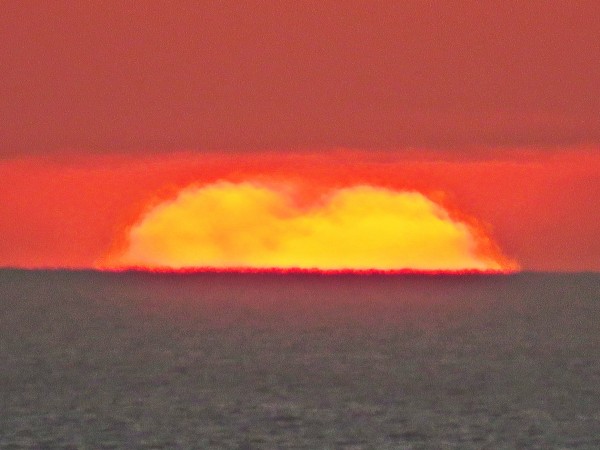
Dramatic sunset over the Atlantic, seen near Rio

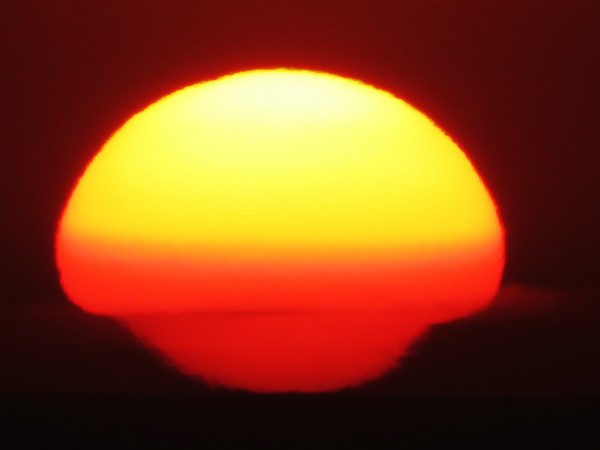
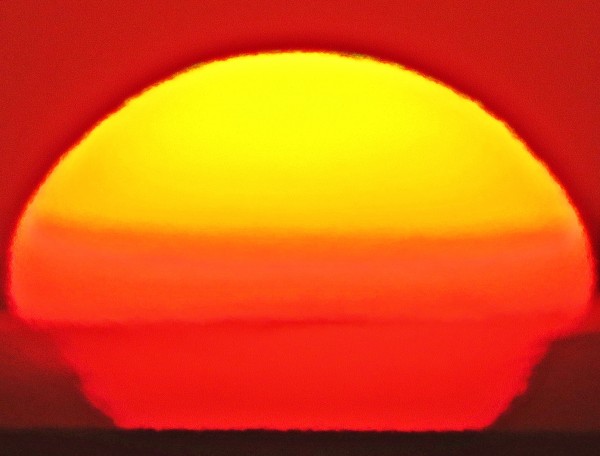
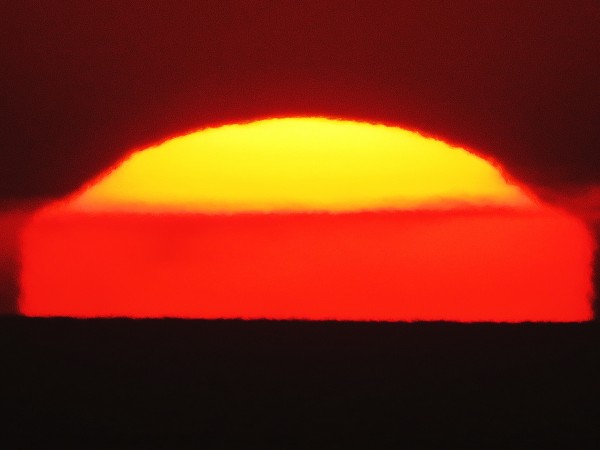
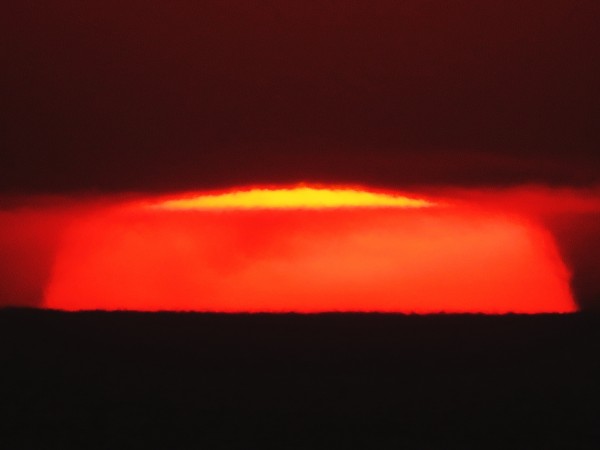
Cool air on the sea surface strongly refracted the setting sun, seen Saturday night from a small town near Rio de Janeiro, Brazil. Cool series of images!

January 17 sunset by Helio de Carvalho Vital.  Shot 1 of 6.

Helio de Carvalho Vital wrote:

That the strong refraction next to the horizon flattens the image of the setting sun is no surprise to anyone. But what if the sun suddenly becomes shaped like a mushroom? Saturday evening [January 17, 2015], I took some photos of the sun setting over the Atlantic Ocean from Saquarema, a small city 100 km east of downtown Rio de Janeiro.

The local air temperature was 34°C but the seawater was only 21°C. Thus a layer of cooler air formed on the surface of the sea.

As sunlight crossed that layer to reach my camera, it underwent a complex series of refractions and reflections that severely distorted the image of the sun, making it acquire very unusual shapes.

A Canon Powershot SX60 HS was used for all the shots, taken at 21:39-41 UTC.

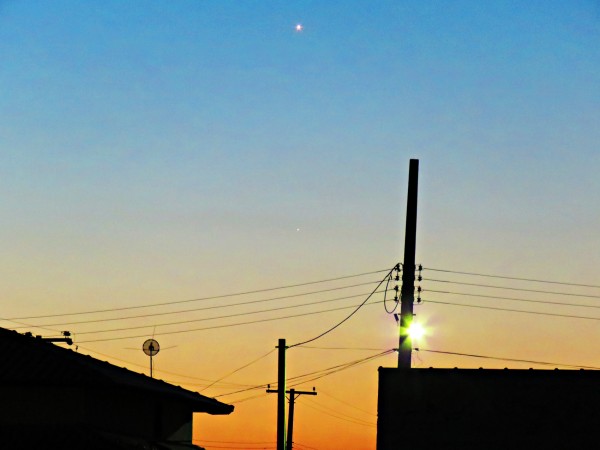
After sunset that same evening, Venus and Mercury appeared!

January 17 sunset by Helio de Carvalho Vital.  Shot 2 of 6.

January 17 sunset by Helio de Carvalho Vital.  Shot 3 of 6.

January 17, 2015 sunset by Helio de Carvalho Vital.  Shot 4 of 6.

January 17, 2015 sunset by Helio de Carvalho Vital.  Shot 5 of 6.

After sunset on January 17, as the sky began to darken, Venus and Mercury popped into view in the western sky.  Photo by Helio de Carvalho Vital.

Bottom line: Series of images of Saturday night’s amazing sunset, seen over the Atlantic from a small town near Rio de Janeiro, Brazil.

SOURCE::: http://www.earthskynews.org

Natarajan

Jan 21 2015

Message For the Day…’ Benefit of Listening to Guru…”

Do not look at the world with a worldly eye. Look upon it with the eye of the Soul (Atma), as the projection of the Supreme Self (Paramatma). Then you can cross the horizon of dualities into the region of the Oneness. The One is experienced as many because of the forms and names people have imposed on it. That is the result of the mind playing its game. Withdrawal from sensory objects promotes inner exploration (nivritti), not outer inquiry and activity (pravritti). Along inner exploration lies the path of intellectual inquiry (jnana). The sacred activities like rituals and sacrifices laid down in the Scriptures help only to cleanse the consciousness. The freedom that makes one aware of the truth, is gained only by listening to the Guru, ruminating over what has been listened to, and meditating on its validity and significance. Only those who have detached their minds from desire can benefit from the Guru 

Sathya Sai Baba