Startup Lessons from Mahabharata….


The world is witnessing a startup revival, with many young entrepreneurs coming up with ideas and establishing themselves slowly in the business forum. Some of these startup initiatives are thriving, while others are failing and having to be shut down. This article is going to look at some startup strategies from one of the oldest books in India, which holds key to the belief of the Hindu society, the Mahabharata.

A short peek into the book, the Mahabharata is written around the battle between the Kauravs and the Pandvas. Now the Kauravs were the superior ones with a huge kingdom and an expansive army, whereas the Pandvas were without a kingdom to rule. As the story goes the five brothers defeat the Kauravs and go on to conquer the kingdom of the Kauravs.

So how was it done and how can it be applied to modern day startup initiatives in business? This we shall see by outlining certain principles followed by the Pandvas that the Kauravs forgot or were negligent about.

Strategy 1: Turn inevitable weaknesses to strength: Every human being has a weakness and this is a fact that can’t be ignored because it is bound to surface along the way. From the book of “Mahabharata”, the Pandvas understood each other’s weakness; they were able to support that weakness through their strength. They had a less superior army, no fort to hide behind, no king, and no home. So the Pandvas would be any startup initiates in modern day business.

Understand the fact that you have shortage of money, resource, and contacts. So work out a way to save and spend cost effectively, build contacts at every given opportunity and use the resources best available to you. The other advantage is that since experience is something you don’t possess at the start, learning will be very vital.
Strategy 2: Choose the right team: When we look at the administrative composition of the two parties, we find that one was united and the other had individual agenda. The Kauravs were split in their camp, with no common goal. Some of them secretly helped the Pandvas, others didn’t want to kill them but just capture them whereas Karna, who is believed to be a brother of the Pandvas only wanted to kill Arjuna out of hate and jealousy.

On the other hand, Pandvas were united from the start with utter respect for one another and one ultimate goal—to get their kingdom back.

When this is applied to startup enthusiasts, make sure that the team you choose has an ultimate goal. Choose people whom you trust, who are responsible and especially those who are not secretly plotting to destroy you.

As a leader do not dictate, give your team freedom to explore and innovate, and above never ever criticize their mistakes, and instead show them how to rectify it. Make sure that the whole team is doing what they love because this will drive them and remember that businesses don’t fail but people fail.
Strategy 3: Draw a battle plan through experience: The Pandvas were preparing for a battle that could be the end of their clan. . Instead each of them went out in search of a way to strengthen their battle plans individually at the start and then collectively after having been influenced by Krishna for Arjuna, Hanuman for Bheema, and Yudhistira learned from wise Rishis. Later they shared their strengths and had a concrete plan.

Ego is a very powerful weapon for self destruction. The Kauravs had a huge one and that backfired on them.

So in a startup, take the advice given to you by successful entrepreneurs. Learn from their mistakes lest you make bigger ones yourself. It is understood that the company is yours but build it with the foundation of wisdom and knowledge of elders and build on it with the creative, innovative and aggressive idea of yours. Think of what can go wrong at the start so that you can alter that on coming mistake.
Strategy 4: Take smart risks and exploit weaknesses of the enemy: Before the war, there is a small portion where Yudhishtira is seen venturing into the enemy camp to talk to the elders of the Kauravs. He eventually learns of the battle plans and also takes the time to give the people the chance to shift sides. This was a dangerous move to have gone alone in to enemy territory and to make public his presence. Yet it was a risk he was willing to take.

How does this apply to modern day startup businesses? Well firstly know when and how much of a risk to take. Don’t be a fool and take unreasonable risks because it’s not yourself you are harming alone but those who have trusted you with their life.

Be the inspiration for those that you are responsible over, counsel and teach them. Be a source of strength for them and learn to exploit your enemy’s weakness. Businesses today are much like war; the ones who are willing to risk and commit to it fully will win.

No businesses thrived from half hearted commitments and self gains. Remember that when competitions become unwise and personal, it becomes politics and most of the time it is negative.


Strategy 5: Women Are Integral, Empower Them: The kauravs had no women in their camp that they listened to. Even karna when meeting his mother was not willing to listen to what she had to say. Gandhari, Drona or any other women were included in the decision making process. On the other hand the Pandvas respected the women in their lives and took heed to what they have to say. Kunti was their supreme leader, and the men respected the influence of their mothers who had borne and raised them up.

Now how does this apply to startup companies? Well let us look at the characteristics of men; we are aggressive, dominant and competitive. These qualities are good but only to an extent. This is why you need the harmonious, calm and calculative qualities of women.

Is it that women should lead your team and you follow? No, but give them the space to have a say with how the business runs because they are better with looking at things more practically and decisively. They will stop you when you are hasty. They bring balance to the team that will be evident in the end.

Source::::silicon india  site

Natarajan

Message For the Day…” Chanting the Name of the Lord is the Means to Liberation in this Kali Yuga…”

Just as all rivers merge in the ocean, all branches of education end in spiritual education. You must experience that kind of totality and merge with Divinity. Traditions and truths are being separated into various groups and the vicious syndrome of dislike for one person towards the other has come into existence. However, not just in the past, even in the present, there are quite a few people who conduct themselves as per the traditional rules and guidelines with purity to attain the ultimate goal in life. The means to liberation, in Krita Yuga was Meditation (Dhyanam), in Tretha Yuga was performing ritualistic worship (Yagna), in Dwapara Yuga it was worship (Archana), and in the present Kali Yuga, it is chanting the Name of the Lord (Namasmarana). Any or all of these methods, when followed with utmost sincerity and devotion, will help one achieve the ultimate goal of life which is Liberation (Moksha).


Sathya Sai Baba

Know the Science and Reasons Behind Our Traditions …

———-  Science Behind  the Traditions

> Traditions
> in Hinduism were considered mainly as superstitions,
> but
> with the advent of science,
> it is becoming evident that these
> traditions
> are based on some scientific knowledge and moved from
> generations to generations as
> traditions.
> Though the common people did
> not know
> science in it, they were following it very faithfully
> over
> the years.
> This blog is an attempt to bring forward the science
> involved
> in these traditions and rituals…
>
> 1.
> Throwing Coins into a River: The general reasoning given for
> this
> act is that it brings Good
> Luck. However, scientifically speaking, in
> the ancient times, most of
> the currency used was made of copper unlike
> the
> stainless steel coins of today. Copper is a vital metal
> very
> useful to
> the human body. Throwing coins in the river was one way
> our
> fore-fathers
> ensured we intake sufficient copper
> as part of the water
> as rivers
> were the only source of drinking water. Making it a
> custom
> ensured
> that all of us follow the practice.
>
> 2. Joining
> Both Palms together to Greet: In Hindu culture,
> people
> greet each
> other by joining their palms – termed as “Namaskar.”
> The
> general
> reason behind this tradition is that greeting by joining
> both
> the palms
> means respect. However, scientifically speaking,
> joining
> both hands
> ensures joining the tips of all the fingers together;
> which
> are
> denoted to the pressure points of eyes, ears, and mind.
> Pressing
> them
> together is said to activate the pressure points which helps
> us
> remember
> that person for a long time. And, no germs since we
> don’t
> make any
> physical contact!
>
> 3. Why do
> Indian Women wear Toe Ring: Wearing toe rings is not
> just
> the
> significance of married women but there is science behind
> it.
> Normally
> toe rings are worn on the second toe. A particular nerve
> from
> the second
> toe connects the uterus and passes to heart. Wearing
> toe
> ring on
> this finger strengthens the uterus. It will keep it healthy
> by
> regulating
> the blood flow to it and menstrual cycle will be
> regularized.
> As Silver is a good conductor, it also absorbs polar
> energies
> from the earth and passes it to the body.
>
> 4.
> Applying
> Tilak on the Forehead: On the forehead, between the
> two
> eyebrows,
> is a spot that is considered as a major nerve point in
> human
> body since
> ancient times. The Tilak is believed to prevent the loss
> of
> “energy”,
> the red ‘kumkum’ between the eyebrows is said to
> retain
> energy in
> the human body and control the various levels of
> concentration.
> While applying kumkum the points on the mid-brow
> region
> and
> Adnya-chakra are automatically pressed. This also
> facilitates the
> blood
> supply to the face muscles.
>
> 5.
> Why do Temples have Bells: People who are visiting the
> temple
> should and
> will Ring the bell before entering the
> inner sanctum
> (Garbhagudi
> or Garbha Gruha or womb-chamber) where the main idol
> is
> placed.
> According to Agama Sastra, the bell is used to give sound
> for
> keeping
> evil forces away and the ring of the bell is pleasant to
> God.
> However,
> the scientific reason behind bells is that their ring
> clears
> our mind
> and helps us stay sharp and keep our full concentration
> on
> devotional
> purpose. These bells
> are made in such a way that when they
> produce a
> sound it creates a unity in the Left and Right parts of
> our
> brains.
> The moment we ring the bell, it produces a sharp and
> enduring
> sound
> which lasts for minimum of 7 seconds in echo mode. The
> duration
> of echo is
> good enough to activate all the seven healing centres
> in
> our body.
> This results in emptying our brain from all negative
> thoughts.
>
> 6. Why do
> we have Navratras: Our living style has drastically
> changed
> if we
> compare it to the society hundreds & thousands of years
> ago. The
> traditions
> which we follow in present are not establishments of
> today
> but of the
> past. Ever thought, why do we have Navratras twice a
> year
> unlike
> other festivals like Deepawali or Holi? Well, both these
> months
> are the
> months of changing seasons and the eating habits of both
> the
> seasons
> are quite different from each other. Navratras give
> enough
> time to
> the body to adjust and prepare itself for to the
> changing
> season.
> These nine days were marked as a period when people
> would
> clean
> their body system by keeping fasts by avoiding excessive
> salt
> and sugar,
> meditate, gain a lot of positive energy, gain a lot of
> self
> confidence
> & increase the self determination power (fasts are a
> medium
> to
> improve our will power and self determination) and finally
> get
> ready for
> the challenges of the changed season.
>
> 7. Why do
> we worship Tulsi Plant: Hindu religion has bestowed
> ‘Tulsi’,
> with the
> status of mother. Also known as ‘Sacred or Holy
> Basil’,
> Tulsi, has
> been recognized as a religious and
> spiritual devout in many
> parts of
> the world. The vedic sages knew the benefits of Tulsi
> and
> that is
> why they personified it as a Goddess and gave a clear
> message
> to the
> entire community that it needs to be taken care of by
> the
> people,
> literate or illiterate. We try to protect it because it
> is
> like
> Sanjeevani for the mankind. Tulsi has great medicinal
> properties.
> It is a
> remarkable
> antibiotic. Taking Tulsi everyday in tea or
> otherwise
> increases immunity and help the drinker prevent
> diseases,
> stabilize
> his or her health condition, balance his or her body
> system
> and most
> important of all, prolong his or her life. Keeping
> Tulsi
> plant at
> home prevents insects and mosquitoes from entering the
> house.
> It is
> said that snakes do not dare to go near a Tulsi plant.
> Maybe
> that
> is why ancient people would grow lots of Tulsi near their
> houses.
>
> 8. Why do
> we worship Peepal Tree: ‘Peepal’ tree is almost useless
> for
> an
> ordinary person, except for its shadow. ‘Peepal’ does
> not a have a
> delicious
> fruit, its wood is not strong enough for any purpose
> then
> why should
> a common villager or person worship it or even care for
> it?
> Our
> ancestors knew that ‘Peepal’ is one of the very few trees
> (or
> probably
> the only tree) which produces oxygen even at
> night. So
> in
> order to
> save this tree because of its unique property they related
> it
> to
> God/religion.
>
> 9. Start
> with Spice & End with Sweet: Our ancestors have stressed
> on
> the fact
> that our meals should be started off with something spicy
> and
> sweet
> dishes should be taken towards the end. The significance of
> this
> eating
> practice is
> that while spicy things activate the digestive
> juices and
> acids and ensure that the digestion process goes on
> smoothly
> and efficiently, sweets or carbohydrates pulls down
> the
> digestive
> process. Hence, sweets were always recommended to be
> taken
> as a last
> item.
>
> 10. Choti
> on the Male Head: Sushrut rishi, the foremost surgeon
> of
> Ayurveda,
> describes the master sensitive spot on the head as
> Adhipati
> Marma,
> where there is a nexus of all nerves. The shikha protects
> this
> spot.
> Below, in the brain, occurs the Brahmarandhra, where
> the
> sushumnã
> (nerve) arrives from the lower part of the body. In
> Yog,
> Brahmarandhra
> is the highest, seventh chakra, with the
> thousand-petalled
> lotus. It is the centre of wisdom. The knotted
> shikhã
> helps boost this centre and conserve its subtle energy known
> as
> ojas.
>
> 11.
> Applying Mehendi/Henna on the Hand: Besides lending color to
> the
> hands,
> mehndi is a very powerful medicinal herb. Weddings
> are
> stressful,
> and often, the stress causes headaches and fevers. As
> the
> wedding
> day approaches, the excitement mixed with nervous
> anticipation
> can take
> its toll on the bride and groom. Application of mehndi
> can
> prevent
> too much
> stress because it cools the body and keeps the
> nerves
> from
> becoming tense. This is the reason why mehndi is applied on
> the
> hands and
> feet, which house nerve endings in the body.
>
> 12.
> Celebration & Cleaning During Diwali: Diwali usually
> falls in
> October or
> November which marks the start of winter season and end
> of
> rainy
> season. Rainy season wasn’t a good time for everyone
> back then;
> many homes
> needed repair and renovation after a heavy fall. That
> is
> why time
> before diwali was considered the period during which
> everyone
> can
> indulge in cleaning and beautification of
> their home. And also
> take out
> their winter clothes and pack the summer ones.
>
> 13.
> Sitting on the Floor & Eating: This tradition is not
> just about
> sitting on
> floor and eating, it is regarding sitting in the
> “Sukhasan”
> position
> and then eating. Sukhasan is the position we normally use
> for
> Yoga
> asanas. Sitting in this position while eating helps in
> improving
> digestion
> as the circulatory system can focus solely upon
> digestion
> and not on
> our legs dangling from a chair or supporting us while
> we
> are
> standing.
>
> 14. Why
> not to sleep with Your Head towards North: Myth is that
> it
> invites
> ghost or death but science says that it is because human
> body
> has its
> own magnetic field (Also known as hearts magnetic
> field,
> because
> the flow of blood) and Earth is a giant magnet. When we
> sleep
> with head
> towards north, our body’s magnetic field become
> completely
> asymmetrical
> to the Earth’s Magnetic field. That cause
> problems
> related to
> blood pressure and our heart needs to work harder in
> order
> to
> overcome this asymmetry of Magnetic fields. Apart from this
> another
> reason is
> that Our body have significant amount of iron in our
> blood.
> When we
> sleep in this position, iron from the whole body starts
> to
> congregate
> in brain. This can cause headache, Alzheimer’s
> Disease,
> Cognitive
> Decline, Parkinson disease and brain degeneration.
>
> 15. Surya
> Namaskar: Hindus have a tradition of paying regards to
> Sun
> God early
> in the morning by their water offering ritual. It was
> mainly
> because
> looking at Sun rays through water or
> directly at that time of
> the day is
> good for eyes and also by waking up to follow this
> routine,
> we become
> prone to a morning lifestyle and mornings are proven to
> be
> the most
> effective part of the day.
>
> 16. Ear
> Piercing in Children: Piercing the ears has a great
> importance
> in Indian
> ethos. Indian physicians and philosophers believe
> that
> piercing
> the ears
> helps in the development of intellect, power of
> thinking
> and decision making faculties. Talkativeness fritters
> away
> life
> energy. Ear piercing helps in speech-restraint. It helps
> to
> reduce
> impertinent behaviour and the ear-channels become free
> from
> disorders.
> This idea appeals to the Western world as well, and so
> they
> are
> getting their ears pierced to wear fancy earrings as a mark
> of
> fashion.
>
> 17.
> Application of Sindoor or Vermillion: It is interesting to
> note
> that that
> the application of sindoor by married women carries a
> physiological
> significance. This is so because Sindoor is prepared
> by
> mixing
> turmeric-lime and the metal mercury. Due to its
> intrinsic
> properties,
> mercury, besides controlling blood pressure also
> activates
> sexual
> drive. This also explains why Sindoor is prohibited for
> the
> widows.
> For best results, Sindoor should be applied right upto
> the
> pituitary
> gland where all our feelings are centered. Mercury is
> also
> known for
> removing stress and strain.
>
> 18. The
> scientific explanation of ouching Feet(charan
> sparsh):
> Usually,
> the person of whose feet you are touching is either old
> or
> pious.
> When they accept your respect which came from your reduced
> ego
> (and is
> called your shraddha) their hearts emit positive thoughts
> and
> energy
> (which is called their karuna) which reaches you through
> their
> hands and
> toes. In essence, the completed circuit enables flow
> of
> energy and
> increases cosmic energy, switching on a quick connect
> between
> two minds and hearts. To an extent, the same is
> achieved
> through
> handshakes and hugs. The nerves that start from our
> brain
> spread
> across all your body. These nerves or wires end in
> the
> fingertips
> of your hand and feet. When you join the fingertips of
> your
> hand to
> those of their opposite feet, a circuit is immediately
> formed
> and the
> energies of two bodies are connected. Your fingers and
> palms
> become the
> ‘receptor’ of energy and the feet of other person
> become
> the
> ‘giver’ of energy.
>
> 19. Why do
> we Fast: The underlying principle behind fasting is to
> be
> found in
> Ayurveda. This ancient Indian medical system sees the
> basic
> cause of
> many diseases as the accumulation of toxic materials in
> the
> digestive
> system. Regular cleansing of toxic materials keeps
> one
> healthy.
> By fasting, the digestive organs get rest
> and all body
> mechanisms
> are cleansed and corrected. A complete fast is good
> for
> heath, and
> the occasional intake of warm lemon juice during the
> period
> of fasting
> prevents the flatulence. Since the human body, as
> explained
> by
> Ayurveda, is composed of 80% liquid and 20% solid, like the
> earth,
> the
> gravitational force of the moon affects the fluid contents
> of the
> body. It
> causes emotional
> imbalances in the body, making some people
> tense,
> irritable and violent. Fasting acts as antidote, for it
> lowers
> the acid
> content in the body which helps people to retain
> their
> sanity.
> Research suggests there are major health benefits to
> caloric
> restriction
> like reduced risks of cancer, cardiovascular
> diseases,
> diabetes,
> immune disorders etc.
>
> 20. Why
> Idol
> Worship: Hinduism propagates idol worship more than
> any
> other
> religion. Researchers say that this was initiated for
> the
> purpose of
> increasing concentration during prayers. According to
> psychiatrists,
> a man will shape his thoughts as per what he sees. If
> you have 3
> different objects in front of you, your thinking will
> change
> according to the object you are viewing. Similarly, in
> ancient
> India,
> idol worship was established so that when people view idols
> it
> is easy for
> them to concentrate to gain spiritual energy and
> meditate
> without
> mental diversion.
>
> 21. Why do
> Indian Women wear Bangles: Normally the wrist portion is
> in
> constant
> activation on any human. Also the pulse beat in this
> portion
> is mostly
> checked for all sorts of ailments. The Bangles used by
> women
> are
> normally in the wrist part of ones hand and its constant
> friction
> increases
> the blood circulation level. Further more the
> electricity
> passing out
> through outer skin is again reverted to one’s own
> body
> because of the ring shaped
> bangles, which has no ends to pass the
> energy outside but to send it back to
> the body.

Source:::: Unknown…. Input from a friend of mine

Natarajan

Message For the Day…”Truth is Precious Gift from God to You …”

Many of you do not consider the sacred values of Sathya, Dharma, Shanthi, Prema and Ahimsa as inner current that are present within you. In fact, they form the basic foundation of human life. Without the basic fundamentals, the more knowledge you acquire, the greater and longer you continue to be a fool, if you do not invest effort to realize your true nature. Truth is present and latent within everyone. It is a precious gift from God. Whether you recognize these facts or not, and even if you consider them as irrelevant, these facts remain. Hence now onwards, you must install Truth deeply in your heart. Love is the natural fruit of developing Truth. If you grow in truthfulness, then as a result, Love blossoms from within. Along with Sathya and Prema, comes Ahimsa. Truth sustains Ahimsa or Non-Violence. You will find that the value of Non-violence is often absent, in every person, wherever and whenever Love is absent.

Sathya Sai Baba

Message for the Day….” Fill Every word of Yours with Love … “

Love (Prema) cannot be affected or modified by considerations of caste or creed or religion; it cannot be tarnished by envy, malice or hate. Preserve Love from being poisoned by these evils; endeavor to cultivate hatred-lessness and distinction-free feelings. The root of all religions, the substance of all scriptures, the rendezvous of all roads, the inspiration of all individuals is the Principle of Love (Prema). It is the firmest foundation for every human being’s mission of Life. It is the Light that ensures world peace and prosperity. Fill every word of yours with Love. The word that emerges from your tongue should not stab like the knife, nor wound like an arrow, or hit like the hammer. It has to be a foundation of sweet nectar, a counsel of consoling spiritual wisdom (Vedantic), and a soft path of blossoms; it must shower peace and joy.

Sathya Sai Baba

” உன் ரெண்டாவது மகன் தில்லியிலா வேலை பாக்கறான் …? “

ஆகாயத்தில் ஆரத்தி காட்டி……

அஞ்சலை துப்புறவு தொழில் செய்பவள். அவளை வறுமை கடுமையாக வாட்டியது. அவளுக்கு இரண்டு செல்வங்கள். 1984ம் வருடம், நடமாடும் தெய்வமாம் காஞ்சி மஹான் பாரதமெங்கும் தமது புனித யாத்திரையை மேற்கொண்ட போது இந்தப் பெண் வசிக்கும் கிராமத்திற்கும் விஜயம் செய்தருளினார்.

மஹானைப் பற்றி தெரிந்து கொள்ளும் சூழ்நிலையில் அவள் இருக்கவில்லை. ”நம்ம ஊருக்கு ஒரு சாமியார் வந்து தங்கி இருக்காரே, அவரைப் பார்த்துவிட்டு வரலாம்” என்று நடமாடும் தெய்வம் முகாமிட்டு இருந்த இடத்திற்கு வந்தாள்.

தன்னுடன், தன் இரு பாலகர்களையும் அழைத்துச் சென்றிருந்தாள்.

பக்தை என்று குறிப்பட முடியாத அந்த நிலையில் ஏதோ பார்வையாளராய் வந்தவள், மஹானைப் பார்த்து வணங்கிவிட்டு தன் பிள்ளைகளோடு நகர எத்தனித்தாள். “பேர் என்ன கேளு” மஹான் உத்தரவு. “அஞ்சலைங்க” என்று சொன்ன அவள், தான் செய்யும் தொழிலையும் சொல்லி, தனக்கு இரு பிள்ளைகள் என்று ஒப்புவித்து விட்டு நகரும் நிலையில்தான் அப்போதும் அவள் மனநிலை இருந்தது.

“அவளைக் கூப்பிடு” சென்றவளை தெய்வம் அழைத்தது. அவள் வந்தாள் – பயம் ஒரு பக்கம்.

“உன் பேரு அஞ்சலைன்னு சொன்னியே……. நீ எதுக்கும் பயப்படமாட்டாயோ?” என்று அன்பும் குறும்பும் கலந்து காருண்ய மூர்த்தியின் வினா எழுந்தது.

அஞ்சலை மஹானின் தீட்சண்ய பார்வையால் ஆட் கொள்ளப்பட்டு அப்போது பரம பக்தையின் நிலைக்குத் தள்ளப்பட்டாள்.

விளையாட்டாக மஹான் இன்னொரு கேள்வியைக் கேட்க பக்தைக்கு வறுமையின் வேதனையிலும் சிரிப்புதான் வந்தது.

அந்தக் கேள்வி..

“உன் இரண்டாவது மகன் டில்லியிலா வேலை பார்க்கறதா சொன்னே?”

அந்த இரண்டாவது பையன், அஞ்சலையின் பக்கத்தில் புடைவைத் தலைப்பை விடாமல் பிடித்தபடி கிழிந்த நிக்கரும், அழுக்கான சட்டையும் மூக்கில் ஒழுகலுமாக பாலகனாகக் காட்சி தந்து கொண்டிருந்தான்.

இந்தக் கேள்வியைக் கேட்டு அஞ்சலை பதில் சொல்ல முடியாமல் நின்றாள்.

மஹான் அவளுக்குப் பூரண அனுக்கிரகம் பொழிந்து அனுப்பினார்.

அப்போதே மஹானை மனதில் இருத்திக் கொண்ட அந்த பக்தை, தன் இரண்டாவது பிள்ளையைப் பற்றிக் கேட்பதன் உட்பொருள் என்னவாக இருக்கும் என்கிற சிந்தனை துளியும் இல்லாமல் ‘மஹா பெரியவா பக்தி’ என்னும் அருள் மட்டுமே அவளுக்குப் பெரிதாகத் தெரிந்தது.

தினமும் குளித்து முடித்துவிட்டு கற்பூரத்தை வெளியே சூரியனுக்குக் காட்டுவாள். மனம் நிறைய மஹான் இடம் பெற்றிருந்தார். அவர் படம் கூட அவள் வீட்டில் இல்லை. தனக்கு அந்த அருகதை இல்லை என்று தன்னை சமாதானம் செய்து கொண்ட அவள், எந்த பக்தருக்கும் தோன்றாத எண்ணமாய் எங்கும் வியாபித்திருக்கும் மஹானை, ஆகாயத்தில் ஆரத்தி காட்டி ஆராதிக்கும் மனப் பக்குவத்தில் இருந்தாள்.

வாழ்க்கையில் படிப்படியாக வந்த சிரமங்களை பயமில்லாமல் எதிர்கொண்ட அஞ்சலை, சுமார் 25 வருடங்களுக்குப் பிறகு 2008-ஆம் ஆண்டு திரும்பவும் அந்த ஊருக்கு ரதயாத்திரையாக மஹானின் உற்சவ மூர்த்தி வந்தடைந்தபோது பேரானந்தம் அடைந்தாள்.

“பெரியவர் நம்மை விட்டுப் போகவே இல்லை; அப்படி நினைக்கிறவங்க அந்த தெய்வத்தைப் புரியாதவங்க. இந்த ரதத்திலே மெய்யாலுமே அவரு வந்திருக்காருன்னு நான் நிச்சயமா சொல்வேன்” என்று ரதயாத்திரையோடு சென்றவர்களிடம் தனது பக்தியை அஞ்சலை சொன்னாள்.

அவளுக்குப் பக்கத்தில் இருபத்தியேழு வயது நிரம்பிய அவளது இளைய மகன் – கிராமத்திற்கு வந்திருக்கிறான் – மஹான் ஆசி வழங்கிய பாலகன் இவன் தான். மஹான் சொன்னபடி அவன் தலைநகர் தில்லியில் மனிதவள மேம்பாட்டுத்துறை அமைச்சகத்தில் அதிகாரியாக இருக்கிறான். இப்போது அவனது மகனுக்கு முடி இறக்க கிராமத்திற்கு வந்திருக்கிறான். இதை அவள் விபரமாகச் சொன்னபோது அன்றே அவன் டெல்லியில் வேலை பார்ப்பதாகச் சொன்ன மஹானின் அருளாசியை நினைத்து ஊர்வலத்தில் சென்ற பக்தர்கள் பரவசமடைந்தனர்.

மஹானே நேரில் வந்துவிட்டார் என்று ரதத்தை நோக்கிக் கை கூப்பிய அஞ்சலையைக் கண்டு பக்தர்கள் மெய்சிலிர்த்தார்கள். இன்று இந்த அஞ்சலையைப் போன்ற பக்தர்கள் உலகமெங்கும் இருக்கிறார்கள் என்பதை நம்மால் மறுக்க முடியாது.

ஜய ஜய சங்கர! ஹர ஹர சங்கர!!

sOURCE:::: http://www.periva.proboards.com

Natarajan
Read more: http://periva.proboards.com/thread/7573/sarvajna-sarva-vyapi-mahaperiyavaa-venkatasaamy#ixzz37UAL20Hi

Message For the Day…” Four Directives for Sanctifying Your Lives…”

Let God be your Guru, your path, your Lord. Adore Him, obey His commands, offer Him your grateful homage, and hold Him fast in your memory. This is the one and only way, and the easiest way to realize Him as your own reality. This reality is cognisable everywhere. It is evident within yourself, when you earnestly seek it. You can experience it, even while performing selflessly your duty to yourself and others. I shall indicate to you today, four directives for sanctifying your lives and purifying your mind, so that you can contact the God within you. They are: Give up the company of the wicked (Tyaja durjana samsargam); Welcome the chance to be among the good (Bhaja Sadhu Samagamam); Do good deeds both day and night (Kuru punyam ahoraatram); Remember and discriminate which is lasting or otherwise (Smara nitya-anityatam).

Sathya Sai Baba

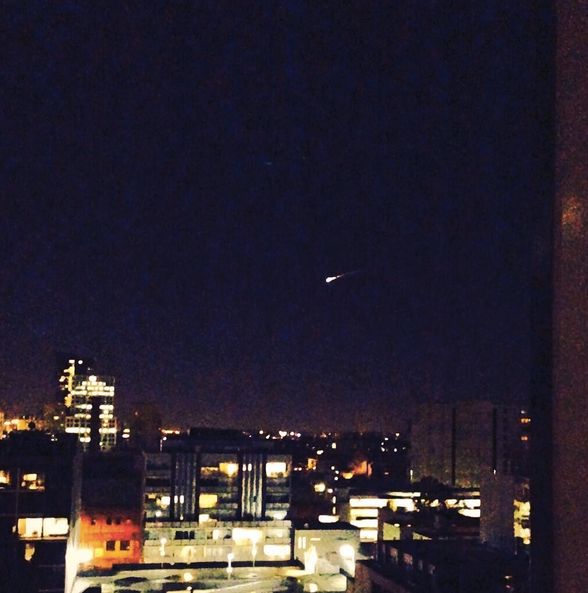
Image of the Day…A Rocket Reentry over the Skies of Australia…


Bright meteor over Australia on July 10 was a rocket reentry

That bright meteor over Australia – seen by many – was likely the reentry of the upper state of a Soyuz rocket, launched two days earlier. over

Bright meteor over the city of Melbourne, Australia on July 10, 2014 via Nathalie J. Berger (@najube).

UPDATE JULY 10 AT 1815 UTC (1:15 P.M. CDT). Experts are now reporting that today’s bright meteor – widely reported over southeastern Australia today (July 10, 2014) – was not a piece of natural space debris, but instead was the reentry of the upper state of a Soyuz rocket, launched on July 8. It seems the meteor was part of the vehicle used to launch Russia’s second Meteor-M weather satellite. Jonathan McDowell (@planet4589), an astronomer at the Harvard-Smithsonian Center for Astrophysics, tweeted that the Australian meteor was:

… Object 40077, 3rd stage from Meteor-M launch, reentered over Australia at about 1145 UTC Jul 10

Daniel Fischer (@cosmos4u) pointed out that time and location of the Australian meteor event appear to match the last TIP (Tracking and Impact Prediction) message for the reentry. And, as Fischer pointed out on Twitter just now:

He’s talking about the video below, caught by in Australia via mobile phone. You can see that the meteor does take awhile to streak across the sky, and, indeed, in verbal reports of the meteor from earlier today, people were commenting on how slow it was.


Thursday night in Australia, reports of a very bright and slow-moving shooting star flooded into the Brisbane Times, which covers the widely populated states of Victoria and New South Wales in southeastern Australia. People in the city of Melbourne, Australia’s second-largest city, also reported a bright object streaking through the sky. The Sun Herald in Melbourne reported:

Social media lit up when the unusual spectacle was seen at around 10pm.

The object – described by witnesses as like a flame – was reported to be flying rapidly.

Charmaine Harris from Thornbury said it lasted more than a minute.

The Australia Bureau of Meteorology, which received reports of the July 10 meteor around 10 p.m., at first said it could be natural debris from space or artificial space junk. Now, it appears it was space junk.

Aviation Week reported on the launch of a Russian Soyuz-2.1b rocket with a Fregat upper stage – carrying a Russian weather satellite and six small spacecraft to orbit on July 8. According to Aviation Week, liftoff took place at 9:58 p.m. local time from the Baikonur Cosmodrome in Kazakhstan.

They said this satellite – Russia’s second Meteor-M weather satellite – is designed to monitor global hydrometeorological data for weather forecasting and to gather data on the ozone and radiation environment in near-Earth space. It will also measure sea-surface temperature, monitoring icy conditions at the poles for navigation. The satellite itself, presumably still safely in orbit, has a design life of five years.

Bottom line: A bright meteor was seen by many in Australia around 10 p.m. local time on July 10, 2014. Experts are now reporting that the meteor was not a piece of natural space debris, but instead was the reentry of the upper state of a Soyuz rocket, launched on july8.

Source:::: Earth sky news

Natarajan

“வேதத்துக்கு நிகரான மந்திரம் …”

வேதத்திற்கு நிகரான மந்திரம்

திருமூலர் திருமந்திரம்

யாவர்க்குமாம் இறைவற்கொரு பச்சிலை
யாவர்க்குமாம் பசுவுக்கொரு வாயுறை
யாவர்க்குமாம் உண்ணும் போதொரு கைப்பிடி
யாவர்க்குமாம் பிறர்க்கு இன்னுரைதானே

இந்த மந்திரம் வேதத்திற்கு சமமானதாகும்.
எளிமையான ஆனால் வலிமையான பதப்பிரயோகம் இதில் உபதேசிக்கப்பட்ட தர்மங்களை யாரும் எவ்வித கஷ்டமும் இல்லாமல் எப்போதும் செய்யலாம்.
பகவான் பக்தியைத் தான் பார்க்கிறார். பக்தன் என்னை கொண்டு வந்திருக்கிறான் என்று பார்ப்பதில்லை. சில பச்சிலைகளைப் போட்டால் பரமேஸ்வரன் திருப்தி அடைந்து விடுகிறார்.
இதை யாரும் செய்யலாம். ஒரு பிடி புல்லை கோமாதாவான பசுவுக்கு ஊட்டலாம். இதில் முப்பத்து முக்கோடி தேவதைகளும் திருப்தி அடைந்து விடுகிறார்கள். இதையும் யாரும் எளிதில் செய்யலாம்.
தான் சாப்பிடும் ஆகாரத்தில் ஒரு கைப்பிடி ஒரே ஒரு கைப்பிடி அடுத்தவனுக்கு வழங்கலாம். இதுவும் யாரும் செய்யக் கூடிய எளிமையானதே.
இவைகளில் எதையும் செய்ய முடியவில்லையா பரவாயில்லை. அடுத்தவனோடு பேசும் போது கடுப்படிக்காதே. இதமாகப் பேசு. பதமாகப் பேசு. இல்லையென்று சொன்னாலும் அதையும் இனிமையாகச் சொல். இதையாவது செய்யலாமே.
நாம் மூச்சடக்க வேண்டாம். பேச்சடக்க வேண்டாம். நம்மை கடைத்தேற்றக் கூடிய எளிமையான அறங்கள் இவைகளில் எந்த ஒன்றையாவது செய்து பார்க்கலாமே.
ஒரு கை புல், ஒரு கை பொரி அன்போடு படைத்தால் விநாயகர் வசப்பட்டு விடுவார்.
சில துளசி இலைகளில் மகா விஷ்ணு வசப்பட்டு விடுவார்.
சில துளி கங்கா தீர்த்தம் பரமேஸ்வரன் உச்சி குளிர்ந்து விடுகிறார்.
சின்னச் சின்ன அகல் விளக்குகளில் மகாலட்சுமி பிரசன்னமாகி விடுகிறாள்.
இப்படி அன்போடு செய்யப்படும் பக்தியால் இறைவனை அடையலாம். ஆன்மீகம் என்றால் அன்புதான்.

Source:::: Input from a friend of mine

Natarajan

He has Done it again …. Kudos to Auto Annadurai !!!


‘Auto Anna’ Annadurai has upped the ante this football season. By streaming the FIFA World Cup live in his auto, he has managed to douse many Chennaiites’ angst against auto-drivers! Photos: Vikas Vasu

Annadurai, a share auto driver on the Thiruvanmiyur-Sholinganallur route, live streams the FIFA World Cup for his customers.
With the FIFA fever catching up with him as well, the innovative auto driver from Thanjavur district says, “I support Argentina and I love Messi!”
Apart from the FIFA live streaming, Annadurai also live streamed the Lok Sabha Election results and all IPL matches (he has subscribed to Sony Six).
The posters on his auto are too catchy to miss. His ‘Amazing Auto’ offers live streaming of the FIFA World Cup and also asks customers to ‘like’ him in his facebook page.
Pl also see the following link ….
Source::::The Hindu
Natarajan