வாரம் ஒரு கவிதை ….” வாக்கு உன் செல்வாக்கு ” !

வாக்கு  உன்  செல்வாக்கு !
…………………..
உன் கையில் தான் இருக்கு தம்பி இந்த
நாட்டின் நம்பிக்கை …
வாக்குறுதி   பல கொடுத்து பல  பேர் வாக்கு கேட்டாலும்
யாரும் அரியணை ஏற முடியுமா உன் செல்வாக்கு இல்லாமல் ?
பலர் சொல்லும் வாக்கை மட்டும் நம்பி உன் வாக்கை ஒரு செல்லாத வாக்கு
ஆக்கிவிடாதே  தம்பி …ஒன்று மட்டும் உறுதி தம்பி !
உன் செல்வாக்கின் முன் மற்றெல்லாம் ஒரு செல்லா காசுதான் !
இதோ வந்து விட்டது தருணம் ..உன் செல்வாக்கை மற்றவர்
தெரிந்து கொள்ள …புரிந்து கொள்ள !
மறக்காமல் பறை சாற்று உன் செல்வாக்கு  என்னவென்று !
Natarajan
5 april 2016

The Black Dot: A Beautiful and Inspiring Story…!!!

This beautiful story has a simple, yet important message. I hope as many people as possible give it a read. I know I am happy I read it, as it gave me a few things to think about in my own life. Sometimes it is the simplest of stories that make us ponder the most.

the black dot

the black dot

the black dot

the black dot

the black dot

the black dot

the black dot

the black dot

the black dot

the black dot

the black dot

Source…..www.ba-bamail.com

Natarajan

Message for the Day…” Your heart is the lock and your mind is the key …”

Sathya Sai BabaThough it is hard to restrain the mind, it can be diverted. When the mind steeped in the secular world is diverted toward Divinity, it gains in moral strength. The mind steeped in the worldly matters makes you a prisoner of the world, whereas a mind steeped in God secures liberation for you. Your heart is the lock and your mind is the key. When you turn the key to the left, it locks. But if you turn the key to the right, it unlocks. It is the turning of the key that makes the difference. Hence the mind is the cause for your liberation as well as bondage. What then is liberation (Moksha)? It is not an air-conditioned mansion, but a state devoid of delusion (Moha). Majesty and morality lie in diverting the mind from the world to God. It is this simple and powerful concept that really contributes to your progress and prosperity.

Secret Rooms Inside Abandoned Sewers….!!!

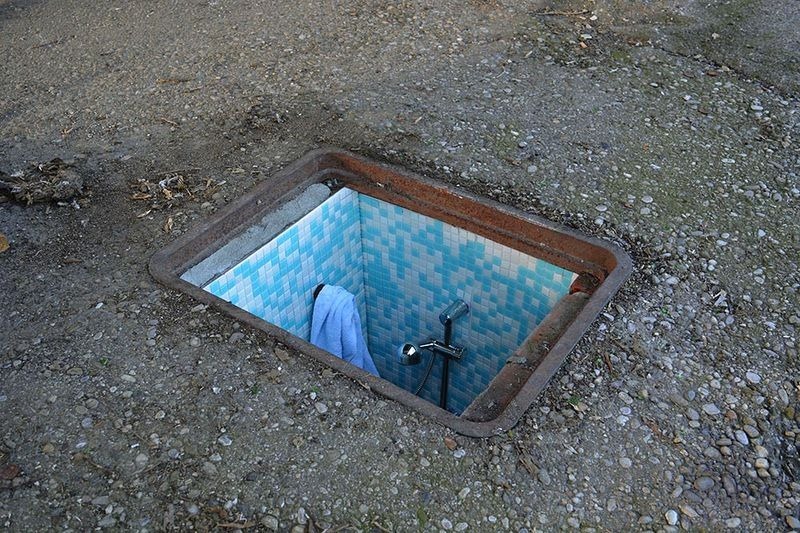
Italian street artist Biancoshock has just finished installing a couple of secret, miniature rooms, hidden under manhole covers, inside an abandoned sewer somewhere in the streets of Milan. This satiric “intervention” —a word that the artist uses for all his artworks— was inspired by the hundreds of people who are forced to live in extreme conditions, such as inside sewers, as in Bucharest where some 600 people live underground. Biancoshock calls this tiny project “Borderlife”.

If some problems can not be avoided, make them comfortable. -Biancoshock

biancoshock-borderlife-1


biancoshock-borderlife-3

biancoshock-borderlife-2

via Colossal

Source…..www.amusingplanet.com

Natarajan

He is 24, blind, and CEO of a Rs 10-crore company…Meet Srikanth Bolla !

Srikanth Bolla, CEO of Bollant Industries, has set his sights on changing lives

Get rid of him. That was the first thing that neighbours told Srikanth Bolla’s parents when they came to see him soon after his birth in a remote village in the east coast of Andhra Pradesh 24 years ago. Bolla was born sightless.

That’s what, he says, scores of parents ordinarily did and still do – abandon babies born with disabilities. Instead, Bolla’s parents, who owned a small piece of land in the village and earned only about Rs 20,000 a year, chose to give him an education.

Today, Bolla is the CEO of Hyderabad-based Bollant Industries, a company with a turnover of around Rs 10 crore that employs uneducated and physically challenged people to manufacture eco-friendly, disposable consumer packaging solutions out of natural leaf and recycled paper.

Recently, Ratan Tata invested an undisclosed amount in the company. Other investors include Srini Raju of Peepul Capital, Satish Reddy of Dr Reddy’s Laboratories and Ravi Mantha, one of India’s more prolific angel investors.

Bolla started out by accompanying his father to the farm but found he could not be of much help. So his father decided to send him to school, which was some 5 km away from home. For two years, he says, nobody acknowledged his presence in school and he was made to sit on the last bench. Fellow students did not accept him during physical training periods.

For the first time in his life, he says, he felt he was the poorest child in the world because he was so lonely.

His father then moved him to a school for special children in Hyderabad, where he started topping his class and also played chess and cricket. Later, he worked with former president APJ Abdul Kalam on the Lead India project, a movement to empower the youth through value-based education.

However, despite scoring 90 per cent in Class X, he was not allowed to take up the science stream because, he claims, he was blind. “I was made blind by the perception of people,” he says. With the option of science refused to him, everybody thought he would settle for the commerce stream. Instead, Bolla sued the state government. “Moving away from the problem is not in my blood,” he says.

After six months of fighting it out, he was allowed to take up science with the rider that he was doing so “at his own risk”. By this time, half of the academic year was over and Bolla did not have books or any other study material.

A mentor at the college he joined converted all lessons into audio books. Bolla passed with 98 per cent. But another hurdle followed. He says he was not allowed to apply for competitive exams because he was blind.

So, he started applying to universities in the United States and got admission in four of them, including the Massachusetts Institute of Technology (MIT) and Stanford University. He opted for MIT and was its first international blind student.

In 2012, after graduating from MIT, he launched Bollant Industries. The company now has around 450 employees, 60 per cent of whom are differently-abled.

The company, with five plants in Andhra Pradesh, Telangana and Karnataka, has started work to set up a larger facility at Sri City in Andhra Pradesh with an investment of Rs 10-15 crore. It currently exports 10-15 per cent of its produce to the US, Australia and Germany.

Life, he says, has taught him many lessons. Compassion is one of them. “Compassion,” he says, “is not about giving a coin to a beggar at the traffic signal. It’s showing somebody the way to live and giving them the opportunity to thrive.”

The world looked at him and said you can do nothing, says Bolla. “But I look up at the world and say I can do anything.”

Photograph, kind courtesy: Massachusetts Institute of Technology

Source…..www.rediff.com

Natarajan

How one story of the betterindia.com generated impacts all around …Read This One ..

Every time our readers like and share TBI stories they are not just spreading positivity and hope, they are also creating an impact that may not at first be visible. Here’s one such story, of a young adoptive parent to a special child, which went viral and created ripples greater than we had imagined.

On January 1, 2016, Aditya Tiwari became the youngest single adoptive parent in India by legally adopting a special child Binny. He named him Avnish.

Aditya fought a 2-year-long battle against the system and society to become a single father.

1

On January 12, 2016, we wrote about ‘How Aditya Fought All Odds to Become India’s Youngest Single Parent to Adopt a Special Child’ and, like always, our readers helped us spread this positive story like wildfire. The article got lakhs of views and 33,000+ shares too (so far).

Avnish turned two on March 16, 2016. On this occasion, his father Aditya could not thank you all more for the huge impact you created simply by clicking ‘share’ on his story.

Here are some of the things that have happened in his life since the story was published on TBI:

1. Parents of children with Down’s Syndrome reached out to him for inspiration and help.

2. Aditya benefitted too. NGOs and physiotherapists reached out to support him.

AT1

The NGOs that had special kids helped him learn more about the disability and ways to deal with it, whereas many physiotherapists offered to treat Avnish for free.

“Ms. Rekha Ramchandran from Down Syndrome Federation of India called me after reading your article. Since then she is supporting me in any way possible to nurture Avnish,” Aditya informed The Better India.

3. The legal struggle and victories inspired many citizens.

In our previous article we had explained how Aditya had to fight a legal battle because the age bar for single adoptive parents in India was 30 and he was just 27 when he decided to adopt Avnish. He kept fighting the system until the age limit was reduced to 25.

“Atul Vidyalaya, Valsad, Gujarat, invited me as a chief guest on January 26, 2016. I was surprised by this and asked them why I was selected, as I had done nothing other than just adopting a child. The Principal replied that it was not just an adoption but it was a trend-setting decision and the struggle behind it makes me a hero. He said he would like the children of his school to become like me. That was the biggest compliment I could ever get,” says Aditya.

4. Thirty other children like Avnish, who were at the same orphanage as him, were also impacted.

During his struggle to adopt Avnish, Aditya came to know about 30 other kids who were illegally being sent to foreign countries. The adoption agency was reported and its licence was cancelled.

These 30 kids are legally registered now and a few of them have also been adopted.

5. HIV positive children will also have a home now.

bennie5

After word spread, an NGO called Palawi from Pandharpur, Maharashtra, which had 98 HIV positive children, called Aditya. They told him these kids were not allowed to go to regular schools and were not accepted by society either, so the NGO had an in-house school and orphanage for them. However, these kids also long to have families but the NGO does not have permission to give them for adoption. Aditya, who is well-versed with adoption proceedings and laws by now, asked them to send all the documents immediately. He then forwarded them to CARA and the Central Government. Aditya is now fighting for the rights of these kids.

“It used to be that previously, if a child was born to an HIV positive mother, he/she used to be infected too. But now, with proper medication and good care, these babies become negative within 18 months. There are many parents who are ready to adopt these kids but we do not have the permission to give them for adoption. Being in a remote area, we explained our concern to the local authorities but did not know any other further procedures. My mother read the article about the legal battle that Aditya Ji fought for Avnish. So we called him to seek help. And he has been a great support since then,” says Dimple Ghadge of Palawi.

6. Law students got to learn a lot.

bennie3

Aditya’s story became an interesting project for law students, who found an opportunity to learn about the adoption law through him. A few documentaries have already been made by law students on Aditya and Avnish – among these are two by LLM Pune University and Jai Hind College, Mumbai. Bhopal Jagran Lake City University is also making a film on them.

7. Foreign nationals sought help for adoption.

IMG-20160319-WA0007

Friday magazine- UAE

Aditya’s story reached foreign shores, and was also published in several magazines of UK and U.A.E, after which many foreign nationals called him to seek help with the adoption procedure in India. Aditya was more than happy to help them.

8. Aditya was the first man to be presented the ‘Real Life Hero’ award by his company, Barclays, on Women’s Day recently. Aditya takes pride in telling this to us.

FB_IMG_1458292057610

9. Film makers have started contacting Aditya.

You might soon watch a film based on the life of Aditya and Avnish – a well-known Bollywood production house and a regional production house too have contacted him for the same.

10. The most wonderful impact.

binny

Binny, who is Aditya’s son Avnish Tiwari now, has shown tremendous improvement since he became a part of Aditya’s family.

“I met the parents of a 10-year-old child with Down’s Syndrome before I adopted Avnish. They told me how difficult it is to raise such children. Avnish had 70-80% Down’s Syndrome. The doctors told me that he would never be able to walk in his life. But in just three months it seems his Down’s Syndrome is just 15-20%. He can hold and stand and tries to stand without support too sometimes. The parents of the 10-year-old child were surprised to see this and have invited me home to help them. My son has set an example for everyone,” says Aditya with a smile.

Source….Manabi Katoch in http://www.the betterindia.com

Natarajan

Message for the Day…”What is the best way parents can show their love for their children…”?

What is the origin of pride? Is it knowledge? No! It is ignorance. What is the cause of ignorance? It is the feeling of duality. Where did duality originate? From attachment and hatred (Raga and Dwesha). What is the origin of these two? They are the products of circumstances. How did circumstances come about? ThroughKarma (past deeds). What is the cause of Karma? Birth! Thus be clear that birth is the cause of all sorrow. Only by seeking freedom from birth that you can free oneself from sorrow. The opportunity of a human birth must be used for realising this supreme goal. The duty of parents is to set children on the right path from their early years. They should not hesitate to correct them and even punish them when the children take to wrong ways. The best way parents can show their love for their children is to do everything necessary to lead them on the righteous path.

Sathya Sai Baba

From Desk Jobs to Blue Skies and Brown Earth: How 6 People Quit Their Jobs to Take up Farming

Whether it’s organic farming, livestock rearing or dairy farming, these people quit their comfortable, high paying jobs to go back to their roots and take up farming.

Many dream of quitting their jobs or taking a sabbatical to find a new calling, see the world, indulge in art or pass time with nature. To some, the practice of farming involves all of those and more. The smell of Earth, the moo of cows, the open skies, the excitement of the first rain, the delight in the first sprout – there lies a simple joy in farming. Here are a few stories of people who took the plunge and never regretted it:

The Milk Farming Collective that’s Not Amul

farming

Akshayakalp head G N S Reddy

Source: Facebook

In Bengaluru, Shashi Kumar, Ranjith Mukundan, Venkatesh Sesasaye and Praveen Nale, all employed as software engineers, decided to quit their jobs in 2011. They teamed up with a group of dairy farming enthusiasts to form the Akshayakalpa Farms and Food Ltd, headed by G N S Reddy. At this farm, located in Hassan in Karnataka, the health of cows is of primary concern. Their health is electronically monitored daily, along with the milk production capability. Besides this, about 500 farmers have employment with a sure-shot chance of getting monetarily rewarded. The farm sells 4000 litres of milk daily, and has expanded to a farm in Mysore.

The Sabbatical that Got Them Closer to Nature

Slogging it out in the IT industry for nearly a decade had burnt out Santosh Singh. While he went on a sabbatical for two years, his brothers Rajesh and Sathish joined him. On their three-acre ancestral land in Haalenahalli, about 40 kilometres from Bengaluru, they set up Amrutha Dairy Farms with just three cows. In a short time, the farm expanded to accommodate 100 cows, backed by NABARD. Even though there was a drought that led to lower milk production, they stayed. Soon, they started rearing heifer (cows that haven’t borne calves) and launched the production of paneer and cheese in 2014.

Organic Farming for Healthier Living

farming

Rajendra (left) and Rego (right), the organic farmers at Green Souls

Source: Facebook

Mumbai-based Sabita Rajendran and Julius Rego are part of a new breed of urban farmers who have taken up growing organic food as their true calling. In 2011, Rajendran quit her job in advertising, while Rego moved out of furniture dealership. Their need to avoid eating pesticide-laden food and chemically soiled water inspired them to start Green Souls in 2012, with an initial investment of just Rs 20,000. Along with vegetables and fruits, they also cultivate medicinal herbs and flowering plants, which they donate to the Tata Memorial Hospital.

Leading by Example

Instead of being an armchair critic and sympathiser, Anand from Mysore gave up his position as a software engineer and set up a farm where he practices organic farming. Besides his passion for all things green and healthy, he also felt deeply about making farmers live sustainably through farming. He purchased six acres of land in Shadanahalli, Mysore, and started organic farming. He then created various groups for farmers, and invited them to explore how and why it would be feasible to take up organic farming. Helping not just himself but also a large collective of organic farmers, he tries to open the market up to organic products.

The Tree Farming Couple

farming

Nikki and Gaurav Chaudhary; Nikki was appreciated by World Congress on Agroforestry recently

Source: Facebook

Gaurav and Nikki Chaudhary realised that they earned more money and peace of mind through agroforestry than they would have in their corporate jobs. Gaurav is an economics post-graduate from Delhi School of Economics, and Nikki studied business economics from London. They were inspired by Gaurav’s father, Chaudhary Veerpal Singh, a farmer who toiled the Earth for many years to give his son an education. Gaurav, who had thought of going back to farming when he was in high school, raises poplar, eucalyptus and other plantations with his wife in Pilibhit, Uttar Pradesh. They also run the Progressive Dairy Farmers Association. Nikki recently got appreciated by the World Congress on Agroforestry for her blog post that detailed their journey. They believe that farming needs intelligence and professionalism to get successful.

The Cattle Farmer

T. Arumugam from Chennai worked with an NGO and was the first graduate in his family with five siblings. When he decided to get into the agriculture sector, everyone in his family had major misgivings, except his mother. To prove that he could make good out of it, he took up studying and attending training programmes first. He learnt the ropes from workshops and short courses provided by the MS Swaminathan Research Foundation (MSSRF) and the Tamil Nadu Agricultural University (TNAU). According to him, Indian youth should go back to farming, being a largely agrarian economy. That’s what drove him to take up rearing livestock and wheat farming.

Source……Neeti Vijaykumar in http://www.the betterindia.com

Natarajan


Captain of India’s Blind Cricket Team on His Love for the Game, His Team and More…

For these men in blue, vision impairment could never act as a hurdle in their path towards fulfilling their dreams – their inspiring passion for the game of cricket and their desire to be a part of it. The Indian Blind Cricket team has been making the country proud for years now.

The team won the Blind World Cup in 2014 by beating Pakistan in the finals. In 2012, India won the first T20 world cup in Bengaluru, and is the only blind team in the world to have won all three championships – T20, ODI and Asian championship.

cricket1

Formed in 1998, it is managed by the Cricket Association for the Blind in India (CABI), which is associated with the World Blind Council. Here, Captain Ajay Kumar Reddy talks about his love for cricket, his team, and how ordinary citizens can help them in their game:

Q: Tell us about how you developed a love for cricket and how you started playing the game?

cricket6

Ajay Kumar Reddy

A: I used to enjoy cricket and had the desire to play as well. But it was not possible because of my vision. When I joined blind school, I came to know that cricket is played by the visually impaired too. Soon, I developed my skills with the desire to play at a higher level. After watching my performance, the sports teacher encouraged me to train and also coached me. I concentrated on my performance thereafter.

Q: How does the team come together and train? How often do you train?

A: Every player practices in his own state and they come together for a coaching camp at a particular venue only before an international match.

Q: Which match has been your most memorable one?

cricket2

A: The ODI final at Cape Town in December 2014. India needed 141 runs in 11 overs against Pakistan in the finals. After the loss of five wickets, Prakash and I formed a partnership, ending the match in a win.

Q: Can you share some interesting anecdotes about any of your team members?

cricket5

A: The vice-captain, Prakash Jayaramaiah sits on my shoulders in sheer joy when we get a wicket – so we do have a bit of fun in those terms.

Q: Are there are any special requirements for training or preparing for the matches?

cricket3

A: We need a turf wicket and a ground covered with grass which is not always available. Training kits are also required.

Q: If a visually impaired person wants to pursue cricket, how should she/he go about doing so?

cricket4

A: They should start from the grass root level, which is at school or district levels, and thereafter state and zonal levels. This is easier if they study in schools for the blind where they can showcase their talent to reach the higher league. There are associations in each and every state as well, which can be approached if they wish to play cricket.

Q: How do you think ordinary citizens can help the team, besides just supporting it in matches?

A: They can act as volunteers, help with providing cricketing gear, or through individual donations.

Source….www.thebetterindia.com

Natarajan

At 57, Asia’s First Woman Bus Driver Still Works Routes in Chennai Out of Passion for Driving…

Vasanthakumari has been driving buses for 23 years now, making her Asia’s first woman bus driver. While she started it because that was the only way to make money, she also had a passion for driving.

Her story begins at the Southern-most tip of India, Kanyakumari, where she was born. When she was very young, her mother died and her father remarried. At 19, she got married to a man with four daughters, and later had two children of her own, in Chennai. Her husband worked as a construction labourer, while she took care of the children and also was the secretary at the Mahalir Mandram, a women’s group.

When the going got tough and there wasn’t enough money to support the family, she agreed to become a bus driver. Soon it became a passion.

women bus driver

Vasanthakumaru, Asia’s first woman bus driver

Source: YouTube

“But when I applied for the government job, the officials told me there were hardly any women bus drivers in the world, and asked me how I would manage in a profession where men struggled,” said Vasanthakumari to Times of India. Nevertheless, she got herself a license in heavy vehicle driving.

But she didn’t get an opportunity to even have her skills tested. After repeated requests, she was called for a test.

Recollecting those early tests, the 57-year-old says, “During one test, they asked me to drive along the figure eight formation. When I started, all the officials ran to safety thinking I may drive in a haphazard manner.”

In March 1993, she joined the crew at the Tamil Nadu State Transport Corporation as the first woman bus driver. She was not given any special concessions, either. For instance, she still drives on the Nagercoil-Thiruvananthapuram route regularly, ending her shift at 10 PM.

“When I began working, I did single duty and used to report by 6 AM and end the shift around 2 PM,” she said, adding that she would leave her children with her neighbours.

She says that the job is highly stressful, which is why many women who join as drivers end up switching to desk jobs later on.

“Everyone asks me what challenges I faced as a woman driver. I tell that everything seems difficult but it is the way we deal with it that is important.”

The winner of the recent Raindropss Women Achiever Award will be retiring in April 2017. Her plans after that include starting a driving school dedicated to women. “Or else, I can always get a job as a driver in college campuses,” she said. Whatever it is, she does not want to stop driving in life, she adds.

Source….Neeti Vijaykumar in http://www.the betterindia.com

Natarajan