Education

Academic, Teacher, Inventor – This Man Suffering from Cerebral Palsy Plays Many Roles to Perfection
A fulfilling life is within everyone’s reach – regardless of the abilities and challenges they face. Riitesh Sinha, who suffers from spastic cerebral palsy, is living proof of this.
Consummate student. Creative innovator. Attentive teacher. Model employee. Recipient of Cavinkare Ability Award. Limca Book Record holder. Honorary Doctorate holder. Many achievements, one name – Riitesh Sinha.
Dr Riitesh Sinha hails from Karnal. The 43 year old’s list of achievements is awe-inspiring, particularly
in light of the fact that he suffers from spastic cerebral palsy.
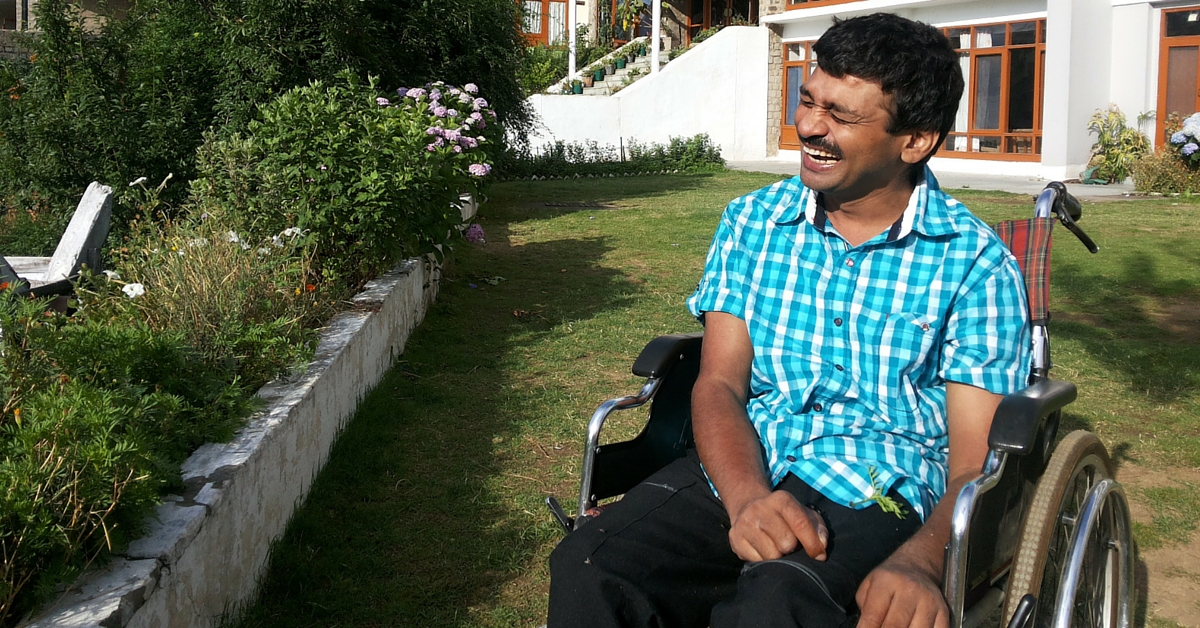
Cerebral palsy is a group of permanent movement disorders that appear in early childhood. They result in poor motor skills, stiff or weak muscles and tremors, making simple movement painful and simple tasks time-consuming.
Yet, Riitesh was never one to be cowed down by circumstances. He had just passed with flying colours from his CBSE school (securing 75% in his board exams) when his quest for independence led to him invent his own ‘trike.’
Read also: Watching This Man’s Achievements Will Make You Rethink The Word ‘Disability’
“Throughout my school life, my parents had to take me to school and other places. I was entirely dependent on them,” recounts Riitesh. It was when he was watching a video on science that the idea of making a trike struck him:
“After two years of research and with very little expertise available in a small place like Karnal, I got modifications done on a normal cycle. I added a foot pedal that helped me steer the cycle and balance myself. The trike is affordable and very convenient to use.”
Soon Riitesh was using the trike to get around town, often going as far as 10 km all on his own – a noteworthy achievement and freeing experience for someone who was forced to depend on others to get around earlier. Teaching in nearby villages as a part of literacy campaigns became easier with the trike, as did attending his B.Sc classes in Kurukshetra University. Says Riitesh, “The trike gave me wings! And I was glad that this was my own innovation.”
“It even helped me bunk classes,” he jokes. “After all, bunking classes is a part of leading a fulfilling college life!”
With the help of supportive teachers and friends – “All my classes were arranged on the ground floor. I never once had problems of accessibility” – Riitesh completed his B.Sc. That, however, was only the beginning of his academic journey. He went on to do a Post-Graduate Diploma in Computer Application, a Certificate in Computing from IGNOU, a Masters in Technology from Manipal Academy of Higher Education, and a Diploma in Naturopathy from Nature Care Institute, Nashik.
Next, Riitesh opened a computer centre that was affiliated with the National Institute of Open Schooling. Here, he taught children – and some interested adults – the basics of computers.
Over a period of ten years, he introduced more than a 1000 students to the world of computers.
In 2011, Riitesh landed a job at the Districts & Sessions Court in Karnal. “But after a few months, I was ousted from the job on the grounds of my disability,” he recounts. “I then approached the High Court with my case. The Court asked me to submit to an ability test. I did and I won the case. The Court quashed my termination order.”
“Since it was the first time in the history of the High Court that a physically challenged person was asked to undergo an ability test, my name is in the Limca Book of Records,” says Riitesh.
His win went on to positively influence several other cases as well.
Today, he works with the Karnal District & Sessions court and is responsible for maintaining digitised records.
Riitesh also runs a blog called ‘Riitesh’s Mudraa.’
“I was reading a story about a yogi and how he benefitted from the practice of yoga. I started practicing it myself and found great relief…my body stiffness went away. I decided to help others discover this too,” Riitesh says. The blog lists mudraas and practices that can provide relief to people suffering from cerebral palsy and Parkinsons.
Ask him about the greatest struggle physically challenged people in India face and pat comes the reply: “Social stigma.”
“In India, our society thinks that physically challenged people are useless. We are not even treated as proper human beings. There are easily 25 lakh Indians who suffer from cerebral palsy, and yet, very few of them get jobs. I believe that if we remove this social stigma, more than 80% of physically challenged people can lead more fulfilling lives,” Riitesh explains.
“People refer to cerebral palsy as ‘CP’. I believe that CP stands for ‘Capable Person’ – we can do anything that others can,” says Riitesh.
As his sister Anila says, “For a man who finds it difficult to hold a pen, who finds it difficult to wear clothes, who sometimes takes as long as two hours to brush his teeth… the fact that such a man has achieved so much is truly inspirational.”
source…Anandita Jumde in http://www.the betterindia.com
Natarajan
Message for the Day…”Need for harmony between thoughts, words, and deeds…”
A person’s life depends upon three essential things – thoughts, words and deeds. When desires arise, one immediately takes it to their mind. For any thought, mind is the basis. The thought that comes to your mind will be exposed to the world as a word from your mouth, and once you utter those words, then, to put it into practice, you take action. When you are able to apply these three—thought, word, and action along the right path, you earn merit (punya); but if you apply them along the wrong path, you earn sin. Thus for good and bad, you need thoughts, words, and deeds. Only when there is harmony between thoughts, words, and actions; you will be able to recognise your own true nature. To keep them pure and in harmony, you must undertake some kind of sadhana(spiritual practice). This is of utmost need today.
The Rock Garden of Chandigarh….
It took years of planning and millions of Rupees to design one of India’s first planned cities, but Chandigarh’s biggest tourist attraction was not on the master plan of Swiss-French architect Le Corbusier. It was the product of creative imagination and fifty years of labor by a humble government official Nek Chand.
Nek Chand was a road inspector in the Engineering Department of Chandigarh Capital Project, in 1957, the year he started working on his secret sculptural project. Nek Chand would cycle to a gorge near Sukhna Lake, at the foothills of Shivalik hills, that was used as dumping ground for urban and industrial waste, and spend hours collecting discarded pieces of broken pottery, bottles, auto parts, plumbing materials, street lights, electrical fittings, broken sanitary ware and so on. He would carry the pieces to a nearby PWD (Public Works Department) warehouse and fashion them into artistic forms resembling humans and animals.

Photo credit: Kirk Kittell/Flickr
Nek Chand worked at night because he was afraid of being discovered. For eighteen years, he kept it this site a secret. By the time it was discovered, it had grown into a 12-acre complex of interlinked courtyards, each filled with hundreds of pottery-covered concrete sculptures of dancers, musicians, and animals. The Rock Garden, as it is called now, mesmerizes everyone who sees it. Today it is spread over an area of 40 acres, and is completely built out of trash.
At one point, soon after its discovery, the authorities wanted to demolish the park because Nek Chand didn’t have permission to build it, but the public intervened. In 1976 the park was officially inaugurated as a public space. Nek Chand was given a salary, a title (“Sub-Divisional Engineer, Rock Garden”), and 50 laborers so that he could concentrate full-time on his work.
In recognition of his work, Nek Chand was awarded the Padma Shri, the fourth highest civilian award in India. The Rock Garden also appeared on an Indian stamp in 1983.
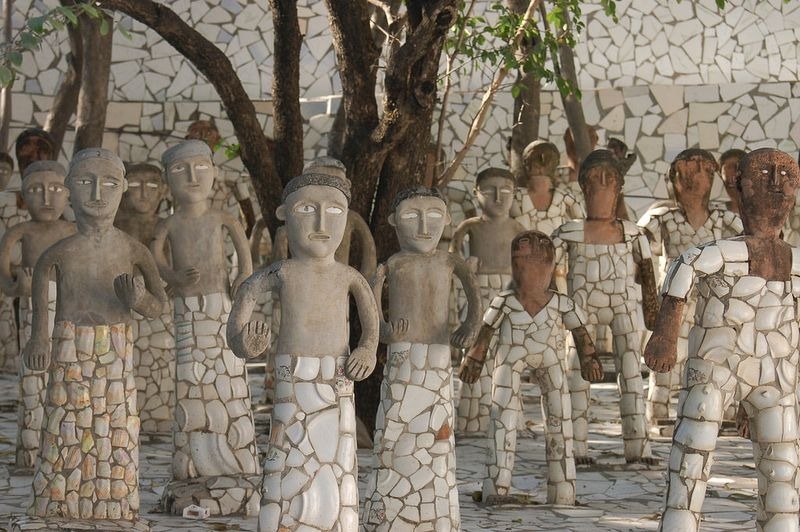
Photo credit: Ian Brown/Flickr

Photo credit: Carlos Zambrano/Flickr
Photo credit: Ramnath Bhat/Flickr
Sources: Wikipedia / citcochandigarh.com / The Wire
The difference between Green and Black Tea ….
Both black and green tea is harvested from an evergreen, tree-like shrub known as camellia sinensis. Most likely originating in China, the camellia sinensis is thought to have first been used to brew a medicinal elixir during the Shang Dynasty (1600 BC to 1046 BC). By the Qin Dynasty in the third century BC, it had become a relatively popular drink using only the leaves from this plant, rather than mixed with other things as seems to have been common when used medicinally.
As for the plant itself, camellia sinensis can grow as tall as 30 ft if left untended, but is generally kept significantly shorter, usually only 3-6 ft tall, to make it easier to harvest the buds and leaves. It is those that are then processed to become green or black tea, among other types.
The difference between these teas is achieved via different processing methods. Manufacturers create green tea by picking the leaves off the plant and then heating them immediately afterwards. This is commonly done by pan firing the leaves or steaming them. Sufficient heat stops the leaves from oxidizing, allowing them to maintain their green color.
Leaves that are going to be used for black tea are allowed to ferment, or oxidize, completely. The general process here is to roll, tear, or crush the leaves to help along the oxidation process (similar to why the inside of an apple turns brown when you expose it to air). The leaves are then dried out, sometimes in the Sun or otherwise using machines. As the leaves oxidize, they gradually turn from green to black. Other common types of tea include white and oolong. Oolong is initially generally processed in the same way as black tea, but isn’t allowed to oxidize for as long. Once the desired oxidation level has been reached, which varies quite a bit by type and manufacturer (some oolong tea is closer to green tea, while others is closer to black in oxidation levels), the leaves are fired similar to green tea to stop the oxidation process at that point.
White tea is made by picking the leaves and buds early in the year while the bud is still closed. From here, the leaves may be placed out to dry in the Sun or may be dried out in some other fashion, in either case attempting to minimize oxidation during this process.
Source…www.today i foundout.com
Natarajan
படித்து ரசித்த கவிதை ….” வருகிறது தேர்தல் ” !!!
வருகிறது தேர்தல்!
வருகிறது தேர்தல்
தயாராகுங்கள் ஏந்தல்களே!
வாக்குறுதிகளை
வக்கணையாய் கூறி
வாக்கு கேட்டு வரப் போகின்றனர்!
பாரீன் மாதிரி
ஆக்குவேன் என்பார் ஒருவர்…
‘சரக்கே’ கிடையாதென்பார் மற்றொருவர்…
வெற்றி பெற்றதும்
சரக்கை ஏற்றி
பாரீனுக்கே
பறந்து விடுவர்!
ஓட்டுப் போட
மெட்ரோ ரயிலில் கூட
மெனக்கெட்டு கூட்டி வருவர்…
ஓட்டு போட்டு முடிந்ததும்
பாசஞ்சர் ரயிலில் கூட
ஏற்றி விட மாட்டார்கள்!
பட்டொளி வீசி
பறந்த மூவர்ணக்கொடி
பிளக்ஸ் பேனர்களால்
மறைக்கப்படும்!
நேற்று வரை
நாயே பேயே என வசை பாடியவர்கள்
நாகரிகமாக
நடந்து கொள்வர்!
அழைக்காமலேயே
அலைபேசியில் பேசும் தலைவர்
வெற்றி பெற்றதும்
தொடர்பு எல்லைக்கு
வெளியே இருப்பார்!
பொதுத் தேர்வுக்கு
விழுந்து விழுந்து
படிக்கும் மாணவனுக்கும்
பொதுத் தேர்தலில்
விழுந்து விழுந்து
வாக்கு கேட்கும்
வேட்பாளருக்கும்
பெரிய வித்தியாசமில்லை!
மாணவன் வெற்றி பெற்றால், ‘காலேஜ்’
‘மாண்புமிகு’ வெற்றி பெற்றால், ‘எங்கேஜ்!’
நாம்
ராமாவரத்தை பார்த்திருக்கோம்…
கோபாலபுரத்தை பார்த்திருக்கோம்…
தைலாபுரத்தை பார்த்திருக்கோம்…
போயஸ் தோட்டத்தை பார்த்திருக்கோம்…நெல்லுக்கு ஆசைப்பட்டு
சொல்லுக்கு சீட்டெடுக்கும்
பரிதாபத்திற்குரிய
பொது ஜன கிளியை எவராவது
பார்த்திருக்கிறீர்களா?
மாற்றமே மானிட
தத்துவம் என்பதை அரசியல்வாதிகள்
கடன் வாங்குவது இருக்கட்டும்…
வாக்களித்த மக்களுக்கு
நன்றியோடு பணியாற்றுவோருக்கு
வாக்களிப்போம்!
உங்கள் ஓட்டுகள்
சட்டமன்றத்திற்கு
மாண்புமிகுகளை அல்ல
மனிதர்களை அனுப்பட்டும்!
பாலா சரவணன்,
சென்னை. in http://www.dinamalar.com
Natarajan
Message for the Day…” Offer your heart to God…and gladly undergo transformation under HIS hands…”

Offer your entire self, your life Unto Him; then your adoration will transform and transmute you so fast and so completely that you and He can be merged into One. He thinks, feels and acts as you do; you think, feel and act as He does. You will be transformed as a rock is transformed by the sculptor, into an idol, deserving the worship of generations of sincere men. In the process you will have to bear many a hammer stroke, many a chisel-wound, for He is the sculptor. He is but releasing you from petrification! Offer your heart to the Lord, and gladly suffer transformation at His hands. Do not defile time, or the physical sheath, or this life’s chance, using them for paltry ends. Your life is but one long pilgrimage which you entered when you were born, and may not end even when you die. Never forget that. Be pure, alert and humble as pilgrims ought to be.
The story of the World War II gunner who fell 22,000 feet without a parachute and lived…
Paratroopers make a big deal about jumping out of planes from 800 feet, but U.S. Army Air Force Staff Sgt. Alan Magee fell out of a plane at 22,000 feet without a parachute while the plane was on fire.
And he lived.

Magee was a ball turret gunner in a B-17 named “Snap! Crackle! Pop!” after the three mascots for Rice Krispies cereal. That plane, along with others from the 360th Squadron, was sent to bomb German torpedo stores in St. Nazaire, France on Jan. 3, 1943.
During the mission, the plane was shot by anti-aircraft guns and became a ball of flames. Magee climbed into the fuselage to get his chute and bail out, but it had been shredded by the flak. As Magee was trying to figure out a new plan, a second flak burst tore through the aircraft and then a fighter blasted it with machine gun fire.

Magee was knocked unconscious and thrown from the aircraft. When he woke up, he was falling through the air with nothing but a prayer.
Magee told God, “I don’t wish to die because I know nothing of life,” according to reports from the 303rd Bomb Group.
Magee, struggling with a shortage of oxygen and likely in shock from the events of the past few minutes, passed out again and God seemingly answered his prayer. The young noncommissioned officer fell into the town of St. Nazaire and through the glass roof of the train station. He was later found dangling on the steel girders that supported the ceiling.
The glass had slowed his fall and he regained consciousness as German soldiers took him to medical care. Magee’s right leg and ankle were broken, he had 28 wounds from shrapnel and glass, and his right arm was cut nearly the whole way off. He had also suffered numerous internal injuries.
“I owe the German military doctor who treated me a debt of gratitude,” Magee said. “He told me, ‘we are enemies, but I am first a doctor and I will do my best to save your arm.'”

French POWs at work at a farm in Westscheid bei Mennighüffen.
Magee was able to keep his arm and eventually made a full recovery. He spent most of the rest of the war as a POW.
In 1995, Magee was invited back to France as part of a ceremony sponsored by French citizens to thank Allied service members for their efforts in the war. Magee was able to see monuments to the crew of Snap! Crackle! Pop!, including the nose art which had been used as a Nazi trophy until after the war when a French man recovered it. It was restored in 1989.
Magee died in 2003.
Read the original article on We Are The Mighty. Copyright 2016. Follow We Are The Mighty on Twitter.
Source….www.businessinsider.com
Natarajan
Message for the Day…” Meaning of Sai baba…”

Consider the meaning of the name ‘Sai Baba’. ‘Sa’ means Divine; ‘ai’ or ‘ayi’ means mother, and ‘Baba’ means father. Your physical parents exhibit love with a dose of selfishness; but Sai, your Divine Mother and Father, showers affection or reprimands only to lead you towards victory in the struggle for self-realisation. Sai descended as Avatar to achieve the supreme task of uniting the entire mankind as one family through the bond of brotherhood, of affirming and illumining the Divine (Atmic) reality in every being. Divinity is the basis for the entire cosmos, and My mission is to instruct all to recognise the common divine heritage that binds one person to another, so that you can rid yourself of the animal, and rise to the Divine! I desire that you contemplate on this, derive joy and be inspired to observe the spiritual disciplines I laid down to progress toward the goal of realising Sai, who shines in your hearts.
Image of the Day….Smallest full Moon Of 2016….April 22 …

EarthSky Facebook friend Curtis Beaird in south Georgia captured the shot above.
Tonight – April 22, 2016 – it’s the farthest full moon, and smallest full moon, of the year. We’ve heard it called the micro-moon or mini-moon. This full moon comes less than one day after reaching lunar apogee, the moon’s farthest point in its monthly orbit. It lies some 30 thousand miles (50 thousand km) farther from Earth than 2016’s closest full moon – a supermoon – due on November 14.
Every year has a closest full moon, and a farthest full moon. The mini-moon often returns about one month and 18 days later with each passing year, meaning that, in 2017, the year’s smallest full moon will come on June 9.
In 2018, the year’s smallest full moon will fall on July 27; and in 2019, the smallest full moon will occur on September 14. The micro-moon or mini-moon frequently recurs in periods of 14 lunar months (14 returns to full moon).
The crest of the moon’s full phase comes on April 22, 2016 at precisely 5:24 Universal Time.
Although the full moon occurs at the same instant all around the world, our clocks read differently in various time zones. In the United States, the moon turns exactly full on April 22, at 1:24 a.m. EDT, 12:24 a.m. CDT, and on April 21 at 11:24 p.m. MDT and 10:24 p.m. PST.
So in the Americas, the full moon happens on the night of April 21-22, and may have already passed by the time you are reading this post.
Meanwhile, your calendar probably says that April 22 is the full moon.
No matter where you live worldwide, look for the moon to look plenty full on the night of April 22. As with any moon near the vicinity of full moon, it’ll light up the nighttime from early evening until dawn.
In North America, we often call the April full moon by the names of Pink Moon, Grass Moon, Egg Moon or Fish Moon.
But in recent years, we’ve also heard the term micro-moon to describe the year’s smallest full moon. It’s not a name (like Pink Moon) tied to skylore. It’s not bound to a particular month or season.
It’s just a modern term to describe the year’s smallest moon.

Day and night sides of Earth at the instant of the April 22, 2016 full moon (at 5:24 Universal Time). Image via Earth and Moon Viewer
Like most astronomers, we at EarthSky used to call the year’s smallest full moon an apogee full moon.
The terms mini-moon and micro-moon stem from popular culture. They roll off the tongue more easily than apogee full moon. As some indication of the appellation’s growing popularity, we’ve found that theNASA Astronomy Photo of the Day and timeanddate.org sites both like to call the year’s smallest full moon a micro-moon.
In many respects, the micro-moon is the antithesis of a supermoon. The micro-moon, or the full moon aligning with apogee, is the polar opposite of a full moon supermoon, the full moon coinciding with perigee.
Every month for the next seven months, the full moon will come closer and closer to Earth until the November 14 supermoon, closest full moon of the year.
That November full moon will be the year’s biggest and brightest moon, only 221,524 miles (356,509 km) away. That’s in contrast to the moon’s mean distance from Earth of about 384,400 kilometers (238,855 miles).
In fact, the November 14, 2016, supermoon will be closer to Earth than the moon has been thus far in the 21st century (2001-2100). The moon won’t come so close again until the full moon of November 25, 2034.
But it’s the December, 2052, full moon that’ll outdo them all. It’ll stage the closest and largestsupermoon of the 21st century (2001 to 2100).

The moon looks full for several days around full moon. William Vann submitted this shot in 2015.
Bottom line: The micro-moon or mini-moon – smallest full moon of 2016 – comes on April 22. It lies about 30,000 miles (50,000 km) farther away from Earth than the full moon supermoon of November 14, 2016.
Source….www.earthsky.org
Natarajan
 Take off with Natarajan