கதை கதையாம் காரணமாம்……!!!

முக்கடலும் சங்கமிக்கும் கன்னியாகுமரிக்குச் செல்லும் போதெல்லாம், பெரும்பாறை ஒன்றின் மீது குறைந்த விளக்கொளியின் பரவலில் கம்பீரமாய் எழுந்து நிற்கும் சுவாமி விவேகானந்தர் மண்டபத்தைப் பார்க்கும் போதெல்லாம் ‘எப்படி சாத்தியமானது?’ என்ற கேள்வி என்னுள் எழுந்து நிற்கும்.இன்று, கரைக்கும் மண்டபத்திற்குமான துாரம் குறைந்து விட்டது. கடலில் மூன்றில் ஒரு பகுதி நடந்து செல்லும் பாதையாகி விட்டது. மீதப்பகுதியை சிறிய கப்பல் போன்ற படகில் பாதுகாப்பு உபகரணங்கள் அணிந்து ஐந்து நிமிடத்திற்குள் கடந்து விடலாம். ஆனால் பயணம் செய்யும் அந்த சின்னப் பொழுதில், கடல் அலைகளின் எழுச்சியும், காற்றின் வீச்சும் நம்மைப் பயமுறுத்தத்தான் செய்கிறது.
ஆனால் 113 வருடங்களுக்கு முன்னால், அதிக ஆள் அரவமற்ற இந்தக் கடற்கரையில், இருள் கவிழும் பொழுதில், ஆரவாரத்துடன் அலைகள் எழுந்து குமுறும் கடலில், இக்கரையில் இருந்து அப்பால் உள்ள பாறைக்கு சுவாமி விவேகானந்தர் தன்னந்தனியாக நீந்திச் சென்றிருக்கிறார்!
வானமே கூரையாக அமைந்த அப்பாறை மீது மூன்று நாட்கள் தனிமையில் அமர்ந்து, தாகத்திற்கும் பசிக்கும் ஆதாரமின்றி, தன்னைப் பிழிந்த தவத்தால் ஞான வெளிச்சம் பெற்றிருக்கிறார்! மீண்டும் இக்கரைக்கு நீந்தி வந்திருக்கிறார். இது எப்படி சாத்தியமானது?
இதற்கான வீரமும் துணிச்சலும் அவருக்கு எப்படி கிடைத்தது?
கதைகள் தந்த வீரம்!
சுவாமி விவேகானந்தரின் பால்ய பருவம். நரேந்திரனாய் ஓடியாடி விளையாடிய சின்ன வயசு. நரேந்திரனுக்கு தாய் புவனேஸ்வரியிடம் கதை கேட்பதில் அதிக ஆர்வம். புராண, இதிகாச கதைகளையே தாய் அதிகம் கூறுவார். மகாபாரத பீமன், ராமாயண அனுமன் இருவரது பராக்கிரமங்களைக் கூறும்போது நரேந்திரன் அதிக ஆர்வமாகி விடுவான். திரும்பத் திரும்ப பீமனையும், அனுமனையும் அவனுக்குச் சொல்லியாக வேண்டும்.
பள்ளி வளாகத்தில் பிள்ளைகள் விளையாடிக் கொண்டிருப்பர். ஆனால் நரேந்திரனோ பெரிய மரத்தில் ஏறி, அதன் கிளையில் தலைகீழாகத் தொங்கிக் கொண்டிருப்பான். எச்சரிப்பவர்களிடம், “நான் அனுமனாகப் போகிறேன்” என்பான்.

வருங்காலத்தில் நீ என்னவாகப் போகிறாய்?” என்று யாராவது கேட்டால், “நான் பீமன் ஆகப்போகிறேன்! பயில்வானாகப் போகிறேன்!” என்று நெஞ்சை நிமிர்த்தியவாறு பதில் சொல்லி இருக்கிறான். தீரத்தோடு அவர் தனிமையில் குமரி கடலில் நீந்தியதற்கு காரணம், சின்ன வயதில் தாயிடம் கதை கேட்டு வளர்ந்த அனுபவம் வளர்த்த துணிச்சல்!
கதை சொல்லிகள்!
தாத்தா, பாட்டி, அப்பா, அம்மா, மூத்தோர் என வீடுகளில், வீட்டுத் திண்ணைகளில் அன்று நிறைய கதை சொல்லிகள் இருந்தனர். படிப்பு, விளையாட்டு என ஓடியாடி ஓய்ந்த பொழுதுகளில் குழந்தைகளை அவர்கள் கதை உலகத்திற்குள் அழைத்துச் சென்றனர்.
கதைகள் மூலம் குழந்தைகளுக்கு புராண, இதிகாசங்கள் அறிமுகமாயின. ராஜாக்களும், வீரர்களும் வீரம் தந்தனர். வள்ளல்களும், நல்லவர்களும் மனவிலாசம் தந்தனர். நீதிகளும், நல்ல விஷயங்களும் இளம் சிந்தை வயலில் விதைகளாயின.
அதுமட்டுமல்ல, மூத்த தலைமுறை மூலம்தான் வளரும் தலைமுறைக்கு ஊர்ப் பெருமைகளும், குடும்பப் பாரம்பரியமும், உறவின் உன்னதங்களும் போய்ச் சேர்ந்தது. ஆனால் இன்று வீடுகளில் கதை சொல்லிகள் இல்லை. முதியோர் இருந்தாலும் அவர்களோடு ஒட்ட, உறவாட பிள்ளைகளுக்கு நேரமில்லை. நேரமிருந்தால், தாத்தா பாட்டிகளும், பேரக் குழந்தைகளும் தொலைக்காட்சி முன் கிடக்கிறார்கள்.
முன்பெல்லாம் தொடக்க வகுப்புகளில் ஆசிரியர்கள் நிறைய கதை சொல்வார்கள். ஓவிய ஆசிரியர், தையல் ஆசிரியை வகுப்புகளில் கலையோடு கதைகளும் நிறைந்திருக்கும். ஆனால் இன்று எல்.கே.ஜி. படிக்கும் குழந்தையின் முதுகில் 10 கே.ஜி! படிப்பு, மதிப்பெண், ரேங்க் என்ற ஓட்டத்தில் வகுப்பறைகளிலும் கதைகள் காணாமல் போயின. இதில் பெரிய இழப்பு எதுவென்றால், கலை இலக்கியப் படைப்பாளிகள் குறைந்து வருவதுதான். கதை கேட்கும் போது கற்பனைத் திறன் அதிகரிக்கும். இந்தக் கற்பனைத் திறன்தான் படைப்பாற்றலை வளர்க்கும்.
பால்ய கதைகள்.  என் பால்ய வயதில் எங்கள் வீட்டுக்கு (கன்னியாகுமரி மாவட்டம், தெற்கு சூரன்குடி கிராமம்) ஒரு பாட்டி வருவார்.வீட்டு வாசலுக்கு வரும்போதே “வெத்தல தட்ட எடுத்துட்டு வாங்க மக்களே!” என்று அறிவிப்பு. பாட்டியின் குரல் சின்னப்பிள்ளைகளான எங்களைப் பரவசப்படுத்தும். காரணம், பாட்டி அற்புதமாகக் கதை சொல்வாள்.

வெற்றிலையை மென்றவாறு பாட்டி கதையை ஆரம்பிப்பாள். ”ஒரு ஊர்ல ஒரு மகாராசா இருந்தாரா! அந்த மகாராசாவுக்கு வடிவான ஒரு பொண்ணு… அந்தப் பொண்ணுக்கு கல்யாணம். மகாராசா வீட்டுக் கல்யாணமாச்சே! அதனால, ஏழு ஊருக்கு பந்தல் போட்டு, பெரிய விருந்து வைக்கணும். விருந்து சமைக்க விறகு சேகரிக்க ரெண்டாயிரம் மாட்டு வண்டிகளை மந்திரி அனுப்புனாரு. அந்த வண்டிக ரெண்டு ஊரு நீளத்துக்கு ஜல்ஜல்லுணு ஊர்வலமா போச்சு…” என்று பாட்டியின் கதை நீளும்.
அந்த பாட்டி காவிப் பற்கள் தெரிய வாய்விட்டுச் சிரிக்க… நாங்களும் ஓ.. என்று கத்தியவாறு சிரிக்க…. அங்கு மகிழ்ச்சி சூழும். இன்பம் நிறையும். ஒற்றுமையுணர்வு ஓங்கும்.
கற்பனை வளர்த்த கதை உலகம் பாட்டி சொன்னது வெறும் கதையா? இல்லை! கதை சொல்லியான அந்த பாட்டி, எங்கள் கைகளைப் பிடித்துக் கொண்டு ஒரு கற்பனை உலகத்துக்கு அழைத்துச் சென்றாள்.
‘ஜல் ஜல் என்ற மணி ஓசையுடன் இரண்டாயிரம் மாட்டு வண்டிகளின் அணிவகுப்பு’- எங்கள் கற்பனைக் காட்சியில் விரிந்தது. ‘வெள்ளை வெளேர்னு யானை போன்ற குச்சிவீட்டுப் பூனை’- என்று அவர் சொன்னது எங்கள் கற்பனைக்குள் எழுந்து வியப்பைத் தந்தது. கதையின் பூதங்கள் எங்கள் கற்பனையில் தோன்றி மிரட்டியது. இந்த கற்பனை உருவாக்கம்தான் கதை கேட்டல் ஏற்படுத்தும் மகத்துவம்.
இன்று டைனோசர், பூதம் எல்லாவற்றையும் கார்ட்டூன் சேனல்களில், திரைப்படங்களில் கிராபிக்சில் கொண்டு வந்து காட்டி, குழந்தைகள் கற்பனை செய்து பார்ப்பதற்கு வாய்ப்பு தராமல் செய்து
விடுகின்றனர்.கதை கேட்கும் போது குழந்தைகளிடம் ஏற்படும் கற்பனைச் சித்திரங்களும், மனம் உருவகிக்கும் காட்சிகளும் தான் பிற்காலத்தில் அவர்களை ஒரு ஓவியனாகவோ, கலைஞனாகவோ,
கவிஞனாகவோ, கதை ஆசிரியனாகவோ உருவாக்குகிறது. கதைகள் உருவாக்கும் படைப்பாற்றல், குழந்தைகளிடம் புதியன உருவாக்குவதற்கான சிந்தனைப் புலத்தை வளர்க்கிறது.
எனவே பெற்றோர்களே! பிள்ளைகளுக்கு நிறைய கதைகளைச் சொல்லுங்கள். தாத்தா, பாட்டிகளுடன் நேரம் செலவிட பிள்ளைகளை அனுமதியுங்கள். அவர்களிடம் கதைகள் கேட்கும் சுந்தரப் பொழுதுகளை தொலைகாட்சி உலகமும், ஆன்ட்ராய்டு உலகமும் அபகரித்துக் கொள்ளாமல் பார்த்துக் கொள்ளுங்கள். உங்கள் வீட்டில் ஒரு படைப்பாளி
உருவாகட்டும்

முனைவர்.மு.அப்துல் சமது,தமிழ்த்துறைப் பேராசிரியர்ஹாஜி கருத்த ராவுத்தர் ஹவுதியா கல்லூரி,உத்தமபாளையம்

Source…….www.dinamalar.com

Natarajan

Message for the Day……” The Present Precious Life is not meant for throwing away just like that …”

Sathya Sai Baba

Those who are agitated by doubts about what to accept and what to reject, those who are blinded by illusion, and those who cannot distinguish between darkness and light, death and immortality — all these should approach great people who can show the path to understand the eternal truth – the self-illumined basis of all creation. Then both this world and heaven will be merged in the same effulgence! For the sake of this realisation, one should have deep yearning and hard, disciplined practice. This human birth is the consequence of countless good deeds, and it should not be cast aside; the chance must be fully exploited. As the Kenopanishad says, “This present precious life should not be thrown away.” When there are so many chances of saving oneself, isn’t it a big loss to waste them all? For all those who are slaves of pride and animal traits, this awareness in time is most important. Delay is fruitless; it is as silly as starting to dig a well when the house catches fire.

Image of the Day….” Ancient Butterfly like Insect….”

Fossilized lacewing butterfly

A record etched in rock from 120 million years ago shows the fragile beauty of an ancient butterfly-like insect.

Fossilized Kalligrammatid lacewing (Oregramma illecebrosa). Image via James Di Loreto / Smithsonian

Here’s a fossil of a large butterfly-like insect known as a Kalligrammatid lacewing, which has been extinct for more than 120 million years. Scientists at the Smithsonian’s National Museum of Natural History used new fossil analysis techniques to learn that these ancient lacewings were surprisingly similar to modern butterflies, which did not appear on Earth for another 50 million years.

Read more via the Smithsonian.

Source…..www.earthsky.org

Natarajan

Parents Don’t Have to Worry About Their Child’s School Bus Anymore. All Thanks to This 15-Year-Old!

Parents are often worried about the safety of their children whenever they are going to or coming back from school. Why is the bus late? Did my child reach safely? Did my child get on the bus? But not anymore! A 15-year-old has developed a solution in the form of an app.

Getting irritated because your school bus is stuck in a traffic jam due to heavy rains is one thing. But to reach home late, find your parents worried, and develop an app so they won’t be stressed the next time – that’s called combining innovation with care. Arjun S. is a 15-year-old student of Class 10 in Velammal Vidhyashram School in Chennai. He has developed an app that can help parents track the position of their children’s school buses whenever they want.

“I got the idea after a cyclone hit Chennai in 2012. I reached home late one day and my parents were really scared because they had no way of finding out if I was safe. I thought that if there could be a way to track school buses easily, it would be so much better for parents and school authorities. I was learning more about building apps and the android programming language at that time, and decided to find a solution,” says Arjun.

The young boy’s love for technology led to the development of LOCATERA – an app to find out where exactly a school bus is located at any given time, and to know if a particular child is there in the bus or not.

track a school bus

“I have been using computers since the age of two. My dad had a system and I would stack up some pillows on the chair to reach the keyboard to use some basic electronics simulation software. My parents were always careful about giving me age-appropriate tools for using the system,” he says, talking about his interest in this field.

The first app developed by Arjun was called Ez School Bus Locator. He shared it with many schools, including his own, and collected the feedback from administrators and parents about their specific requirements. “I collected the information about the schools’ basic requirements and modified the app accordingly. LOCATERA is a modified version of Ez School Bus Locator, and it came two years after the first one. Unlike other solutions that require some kind of hardware installation, all this app needs is the presence of a phone inside the bus,” he adds.

LOCATERA is basically a tri-app solution, which means three apps working together. These include the attendant, admin, and parent apps.

1. LOCATERA attendant:

track a school bus

This app captures the location of the bus and shares it with parents and the school if required. The bus attendant can install and keep it on his/her phone. The attendant adds all students to the app by scanning their Quick Response (QR) Code-based ID cards, using bar code scanning, as and when the students board or get off the bus. Student activities are recorded on the Cloud – to be used by schools in case of emergencies.

2. LOCATERA admin:

track a school bus

The admin version has to be with the administrator of the school transport system so he/she can see all the buses together, locate the position of a particular bus, get information about it, and find out which students are present in the bus at any given time.

3. LOCATERA parent:

track a school bus

Parents have to get their mobile numbers verified before they get access to the app. Once they are in, they can find the location of the bus by clicking on the ‘Bus on Map’ option. Alternatively, they can tap on ‘Bus Location’ and ‘Distance & Time’ options to find out the exact address of the bus and how soon the child will reach home. To find out if the child is there in the bus or not, they just have to select the ‘Child in Bus’ option. Parents who don’t have android phones can give a missed call to the attendant’s phone whenever they want the information. The LOCATERA attendant looks into the bank of registered numbers to find out which parent has called. He/she then sends an SMS with information about the child and the bus location.

Arjun used Massachusetts Institute of Technology (MIT)’s programming tool called MIT App Inventor to develop LOCATERA. It is basically a programming language tool with a more graphical user interface, instead of codes.

Arjun submitted the app to ‘Google India Code to Learn Contest 2015’ and was declared the winner. He also won the MIT ‘App of the Month (Best Design)’ award in December 2012 for Ez School Bus Locator.

Among other awards, he also received the 2014 ‘National Child Award for Exceptional Achievements for Computer Technology’, which was initiated by the Ministry of Women and Child Development, Government of India.

track a school bus

“I would like to work in the field of computer science itself, and would like to go to IIT or MIT or something like that,” says Arjun, talking about his future plans.

He also started a company named LateraLogics in 2012, which has several products including some other apps that Arjun has developed over the past three years. Currently, only the demo version of LOCATERA is available on Play Store, for all three stakeholders. Those who want to use the complete version can fill out the LOCATERA Flexi Plan Enquiry Form to receive the pricing details for that particular school. Arjun keeps receiving constant feedback from the schools that are already using it.

As he is also preparing for his board exams, Arjun has a tough time juggling his studies and his passion. “But I somehow manage it,” he says.

track a school bus

Arjun at the award ceremony

He also likes to play the keyboard, and is a badminton enthusiast in his free time.

“We have been supporting Arjun from a very young age…He has always been passionate about technology. We gave him the right kinds of tools from the start and he has always been serious about what he does. He does a lot of research and discusses his ideas before finalising anything. We are also in touch with the state and Central government to see how the app can be implemented all over the country. The Ez School Bus Locator version is free of cost and it is being used in more than 10 countries right now. We think it can be used in India as well,” says Arjun’s father Santhosh Kumar.

The agreement for using the app for one academic year includes a one-time activation fee (per child, per year) and a monthly maintenance fee option (per month, per child). After a successful pilot project in his school, Arjun is having discussions with other schools for implementation the same. Trial runs have been scheduled for some schools in Tamil Nadu, Kerala, and other parts of the country as well.

The agreement for using the app for one academic year includes a one-time activation fee (per child, per year) and a monthly maintenance fee option (per month, per child). After a successful pilot project in his school, Arjun is having discussions with other schools for implementation the same. Trial runs have been scheduled for some schools in Tamil Nadu, Kerala, and other parts of the country as well.

“Look for problems around you and get inspired by them. You’ll see a lot of opportunities to make this world a better place using your own skills,” is Arjun’s advice to other youngsters like him.

Download the demo versions of the app here:
LOCATERA attendant
LOCATERA admin
LOCATERA parent

You can find other details about installing the app here.

Source…….Tanaya Singh in http://www.the betterindia.com

Natarajan

Who do we Light a Lamp in our Home ?

Being A Proud Hindu, I always had many Questions regarding day to day Rituals followed in our Religion. And One Such Question is Why Do We Light a Diya in our Home Temples ?? And here’s An Answer which I Found from many Elder People:

WHY DO WE LIGHT A DIYA ?

Light  symbolizes  knowledgeand  Darkness,  ignorance.

And The  Lord  is  the “Knowledge  Principle”  (Chaitanya)  who  is  the source,  the  enlivener  and  the  illuminator of all knowledge.

Hence light is worshiped as the Lord himself.

Knowledge  removes  ignorance  just  as  light  removes  darkness.  Also  knowledge  is a  lasting  inner  wealth  by  which  all  outer  achievement  can  be  accomplished. Hence  we light the lamp to bow down to knowledge as the greatest of all forms of wealth.

In  almost  every  Indian  home  a  lamp  is  lit  daily  before  the  altar  of  the  Lord.  In some houses it is lit at dawn, in some, twice a day – at dawn and dusk – and in a few it is maintained  continuously  (Akhanda  Deepa).  All  auspicious  functions  commence  with  the lighting of the lamp, which is often maintained right through the occasion.

Well, you might be thinking Why not light a bulb or tubelight?

Well, That too would remove darkness. But the traditional oil lamp  has a further spiritual significance. The oil or ghee in the lamp symbolizes our vaasanas or negative tendencies and the wick, the ego. When lit by spiritual knowledge, the vaasanas get slowly exhausted  and  the  ego  too  finally perishes.
Adding to this, The flame of a lamp always burns upwards. Similarly we should acquire such knowledge as to take us towards higher ideals.

While Lighting the Diya, Normally the followinghymn is prayed:

 DeepaJyoti ParaBrahma
Deepa Sarva Tamopahaha
Deepena Saadhyate Saram
Sandhyaa Deepo Namostute

Meaning:
I prostrate to the dawn/dusk lamp; whose light is the Knowledge Principle (the Supreme  Lord), which  removes the darkness of ignorance and by which all can be achieved in life.  


So This was it. Now you can Proudly Say that you know the Reason behind Lighting the Diya as well as Now you can Light a Diya with More Stronger belief….!! Share it if you think your Friends to need to know the reason for lighting a diya..!

Source……http://fullnfenil7.blogspot.in/

Natarajan

5 body language mistakes to avoid……

Did you know that nodding too much can make you seem spineless or sycophantic?

Read on to find out how you can perfect your body language.

Body language mistakesAre you questioning why certain things aren’t going your way even when you’re saying all the right things?

Maybe it’s not about your words at all. Maybe it’s something else.

In an interpersonal, normal interaction, our body talks a lot more than our mouth does.

It certainly doesn’t help that the message it puts across is vague and is perceived differently by different people.

You do not have to be saying something for your audience can easily read into it.

A simple action like flexing your fingers can speak a thousand words and give out messages that can either make or break the conversation.

Here are five body language mistakes we commit, but never notice.

#1. The lean

While making conversation, many of us get carried away and become unaware about our bodily movements.

The forward and backward lean is something that sneaks in and ruins our conversation without us even realising it.

Leaning slightly forward during a conversation signifies interest but a little more and you could be playing the risky terrain that is personal space.

The ideology of personal space varies across cultures and one must be mindful of maintaining a decent distance from the person they are conversing with.

Leaning backwards however screams blatant disinterest and disrespect.

It tells the opposite person that either you do not consider him worth listening to or are just going to counter him irrespective of what he says.

When the conversation is about your responsibilities, a backward lean could make you look laid back and uncaring.

To understand this little concept of leaning better, draw front and backward slanting lines on a piece of paper and concentrate on the emotions you counter while drawing each line.

#2. The limb cross

Crossing your limbs, be it your arms or ankles, is a statement your body is making.

This statement, however, is not a very positive one.

Crossing your arms during a conversation makes you look defensive and while answering questions, in fight mode

If you cross your arms during a seminar or a lecture, it gives off the ‘I don’t find you worth listening to’ vibe.

Crossing your ankles with your legs spread in front of you during a serious conversation is also a no-no. It makes you look disinterested and too relaxed.

#3. The excessive nod

It is a good practice to nod at people while listening to them as it shows you are interested in what they are talking and are paying attention.

Although sometimes, when we are bored, tired or genuinely do not wish to pay attention to the person talking, we nod too much to make up for it.

Now, you may not realize it, but the person you are talking to may find this constant nodding patronising and insulting.

This puts people off and gives of a very bad impression about you.

You can be assumed to be arrogant or too self-indulging, people won’t bother taking your exhaustion into account.

Also, nodding too much can make you seem spineless or sycophantic.

Next time when you are tired or disinterested to pay attention to the conversation, be mindful of how often you nod, you could also count to forty-five in your head before every nod.

#4. The constant eye-contact

What happens when you maintain constant eye-contact? You come off as creepy.

It is well known how important maintaining eye contact with your audience is, but if your audience is just one person, it is important to look away for a few seconds.

Looking at the person for too long will make them feel uncomfortable and make your conversation awkward.

Also remember to not look at the person’s mouth or forehead.

A safe area to look at is the triangle that the eyebrows and nose make.

Staring at the forehead intimidates the person while staring at the mouth seems inappropriate.

#5. The fidget mania

Everybody is familiar with this. Either you are guilty of it or have felt the irritation it causes.

Constant fidgeting is a sign of nervousness, insecurity and instability. It shows lack of confidence and trust.

During a conversation, fidgeting may also be perceived as a sign of dishonesty and deceit.

Constant shaking of your leg, twisting your fingers, tapping your fingers on a table or playing with a pen are some common blunders we sub-consciously commit and overlook.

In order to control your fidgeting, make sure your hands are relaxed by your side while standing and resting casually on your thighs while sitting.

Keep conscious of your legs and reduce wobbling. Also, no matter how anxious you feel, do not allow your hands to go anywhere near your face.

This is something many people do very often and don’t realise it.

Touching your face constantly doesn’t paint a very confident and reliable picture of you, so refrain from doing this.

With our usual mindless bodily actions creating space for unnecessary miscommunication, it is necessary to pay heed to the small blunders we commit.

How to use body language to your advantage

1. Exude power, spread your presence

Simply standing with your legs a little further apart and claiming more space through gestures, builds a powerful aura around you.

The more space you claim, more power you seem to command.

Since power helps calm, you will also do away with your nervousness.

2. Sit straight

Sitting straight will automatically make you look and feel attentive, confident and enthusiastic.

3. Gesture while talking

Usage of gestures (in a moderated amount) involves and invites your audience into the conversation.

It also gives you a more open and intelligent look.


Illustration: Dominic Xavier/Rediff.com

Source………www.rediff.com

Natarajan

Who is Amit Singhal? 10 facts about the IITian who redeveloped and ran Google Search for 15 years ….

Last night Amit Singhal announced that he was retiring from Google. Amit Singhal who? Well, those who keep an eye on Google know him fairly well. Although, he is not as well-known as Larry Page, Sergey Brin, and  Sundar Pichai, he is probably the single-most important person inside Google.

The reason why he is such a big deal in Google is because he runs the company’s core search operations. This means, if you use Google Search, whether on the web or on mobile, you use the ideas and features implemented, maintained and conceived by Singhal’s team. He is the man, who for the last 15 years, has kept Google the best damn search engine in the world.

Want to know more about him? Here you go:

1- Amit Singhal is so important to Google that when he retired last night, Danny Sullivan, a long-time Google watcher and founder of Search Engine Blog, compared it to Jony Ive leaving Apple. Now we all know how important Jony Ive is for Apple.

2- Amit Singhal was born in Jhansi. He still visits his family, friends and relatives in India.

3- According to Singhal, he spent “most of my boyhood in the foothills of the Himalayas”.

4- Singhal finished his BS in computer sciences from IIT Roorkee in 1989. He then went to the US.

5- In the US, Singhal studied computer science at University of Minnesota before completing his PhD in computer science from Cornell University.

6- At Cornell, Singhal studied with Prof Gerard Salton. Singhal describes him as “one of the founders of the field of IR (information retrieval).

7- Singhal worked at AT&T’s Bell Labs before he was persuaded to join Google by his friend Krishna Bharat. He joined Google in 2000. Incidentally, Bharat was the person behind Google News.

8- Singhal famously re-wrote the original Google algorithm that was created earlier by Larry Page. He reportedly changed it completely to suit the existing challenges. This apparently impressed Larry Page so much that Singhal was put in charge of Google’s secret sauce — its search algorithm — and was tasked to keep it fresh and relevant.

9- Singhal is a big fan of Star Trek universe and wants to build technologies, such as virtual assistant that understands voice commands, used in the USS Enterprise.

10- When mobile phones started becoming popular, Singhal conceived and developed the idea of “search without searching”. This formed the core of Google Now, a feature on Android phones that provides information to users even before they search for it.

Source……www.indiatoday.intoday.in
Natarajan

Message for the Day…..” Firm faith and pure Love are two essential tools for achieving anything in Life “….

For achieving anything in life two things are essential: firm faith and pure love. To experience pure, Divine love, you must be prepared to give up selfishness and self-interest. You must develop purity and steadfastness. With firm faith in the Divine, you must foster the love of God regardless of all obstacles and ordeals. You should never think that pleasure and pain are caused by some external forces; it is not so. They are the result of your own thoughts. There is no meaning in blaming others. If you develop love of God, that love will banish all sorrow and evil tendencies like attachment, anger and envy. One should pursue both spiritual education and secular studies. You have to realise that Nature is also a manifestation of God. Hence, Nature should not be ignored. Nature is the effect and God is the cause. Thus you should recognize the omnipresence of the Divine in the entire cosmos.

Sathya Sai Baba

How a school dropout built a Rs 60 crore business…? …An Inspiring Story !!!

From extreme poverty to building a company worth Rs 60 crore, Raja Nayak’s incredible rags-to-riches story is an inspiration.

Raja Nayak

At 17, Raja Nayak ran away from home.

Like millions before him, he wanted to escape the punishing life that poverty inflicts on its victims.

“I knew I had to earn money. I wanted to earn big money. That was my only focus then,” Raja Nayak, 54, tells me as we settle down in his plush new office in Bengaluru for the interview.

“I had realised as a young boy that it was very hard for my parents to send me and my four siblings to school. My father did not have a steady income and my mother had little to make ends meet often pawning whatever little valuables she had,” he says.

The penny dropped when Raja was loitering with his neighbourhood friends and was persuaded to watch a Hindi movie.

It was the 1978 film, ‘Trishul’, where a penniless Amitabh Bachchan eventually goes on to become a real estate baron.

Those three hours in the dark theatre ignited Raja’s mind and future path as it were.

“I was really taken up by the story. It felt so real to me. Suddenly, I believed that it was possible to make my dreams come true. I wanted to be a real estate baron too,” Raja says with a smile, quickly brushing off the source of his inspiration.

Riding on this belief, he escaped to Mumbai (Bombay then).

But it wasn’t going to be that easy, was it?

He returned home heartbroken, but his mind was constantly engaged in finding the right break.

Today, Raja has a total turnover of Rs 60 crore from his various enterprises that include MCS Logistics, a company he established in 1998 in international shipping and logistics, Akshay Enterprises that’s into corrugated packaging, Jala Beverages that manufactures packaged drinking water, Purple Haze that is in the wellness space with three beauty salon-and-spa centres in Bengaluru.

Nutri Planet (with three other directors and partners) that is working with Central Food Technological Research Institute (CFTRI) to bring products like energy bars and oil made out of Chia rice.

Besides these, he also runs schools and a college under the banner of Kalaniketan Educational Society for the underprivileged and disadvantaged sections of society.

Raja is also the President of the Karnataka chapter of Dalit Indian Chamber of Commerce and Industries (DICCI), where he says, they are inspiring the disadvantaged sections of society to dream big.

“We are making them aware of the opportunities available to make their dreams come true,” he says.

The first take: Small but sure

Son of Dalit migrants from a village in Karnataka, Raja was born in Bengaluru (Bangalore then) and spent the first 17 years of his life in the city without much exposure to the life outside.

Back then in the late 70s and 80s, Bangalore was a sleepy town. But I had this Punjabi friend, Deepak (who is no more), who had seen many more places than I because his father had a transferable government job. We lived in the same locality and I would end up spending most of my time with him.”

Raja gave up studies while he was in first pre-university course (PUC), and with Deepak as his partner, decided to sell shirts on the footpath.

“I had seen people selling wares on the footpath and some traders had even offered us money to sell it for them. We realized if they could make a good business out of this, why not us?” recalls Raja, who was quick to grasp this as an exciting opportunity.

Between them, the two friends collected Rs 10,000 and set out for Tiruppur in Tamil Nadu, a major garment and textile hub.

“My mother would sometimes hide some money in kitchen containers, and because I was her favourite she gave it to me.”

In Tiruppur, they bought export reject surplus shirts for Rs 50 each. They bundled them in a state road transport bus and came back to Bangalore, setting up ‘shop’ on the footpath outside the Bosch office.

“We had seen hawkers outside their gate before and thought it would be a good place to start, more so because it was near our neighbourhood,” says Raja.

It was a perfect plan. Most of the shirts that they had bought were either shades of blue or white.

The male employees of Bosch have a blue shirt as their uniform.

During the hour-long lunch break, Raja and his friend had sold all the shirts at Rs 100 each, making a tidy profit of Rs 5000.

“I had never seen so much money in my life. I was ecstatic,” Raja tells me, reliving that fantastic moment from his past.

Intoxicated by this early success, the two friends reinvested the amount and included more items to sell, going from one place to another to procure them.

“It was like we had wheels on our feet. This was just the beginning. We were not resting till we had made lots of money,” he says smiling.

They would buy cotton hosiery items and inner wear in kilos and set up stalls at large exhibitions employing a few boys to manage them. Whatever was left over, they would hawk them on footpaths.

In three years, they had set up a well-oiled business.

The two friends diversified into Kolhapuri chappals and footwear.

“Till now, no one had asked me which caste I belonged to. Most often people associate cobblers with the Dalit community, and it was here that I would be asked about my caste,” says Raja, replying to my earlier question if his caste ever came in the way of his business.

The bold scene: Take risks

According to Raja, “In all our businesses, we never lost any money.”

However, his friend had to move out of Bangalore, leaving Raja to continue the business on his own.

Around 1991, in the post liberalisation era, Raja started a corrugated packaging business, Akshay Enterprises, with another partner who had the knowhow of this market.

He says, “Wherever there was an opportunity, I encashed it.”

Real estate was also booming around this time, and Raja invested in property, making and reinvesting neat sums along the way.

So you see the pattern? He wanted to make money like everyone else, but what separated him from others was that instead of just wishing or whining, he kept his ear to the ground for any opportunity and never shied away from hard work.

“Like many people, I have also faced hurdles, but fortunately, the risks I took in business paid off,” says Raja.

It is in his personal associations and interactions that, he says, he was cheated by many people but refuses to elaborate.

“I often say this to people and students when I am invited to address them. Do not take my life as an example. It was all luck.”

But seriously, was it just luck?

If so, may be then fortune favours the brave. Because as Raja believes, taking risks is important if you want your dreams to come true.

“My neighbours and friends who I grew up with are still where they were — either employed in some company as clerks or as labour. Sometimes they come to me asking for money which I give. But those days, their condition was better than mine. Their father had a job, they went to school. I could not. But today, I share the dais with the VIPs of India. It is not only because of money. It is because of all the hard work and status I have built over the past 35 years,” he says, emphasising how the risks he took paid off.

The silent, angry young man Raja claims that he never faced discrimination based on his caste. Perhaps, he is being politically correct.

But sometimes silence speaks more than words.

Consider this — In the same lane where Raja and his family lived in Bengaluru in a house smaller than his new office where we are meeting (it is the latest Purple Haze outlet which was inaugurated earlier in the morning), Raja went on to build a four-storey building that houses his office on the top floor and his school below.

The school was started because not only was he unable to complete his education, but his sister was also denied admission.

“When I had some money, I rented a small house, hired a few teachers and started a nursery school for underprivileged children,” he informs me.

Clearly, the soft-spoken, suave entrepreneur I am talking to was an angry young man once.

There’s also this prejudice in society about not eating or drinking water from a low caste person.

So Raja decided to venture into the food business.

Though the eatery he started has shut down, the bottled drinking water venture, Jala Beverages, is doing well in the market.

The romantic interlude

The other driving force behind Raja’s multiple business ventures was his life partner, his wife Anita. “I kept diversifying because I knew there was someone to look after these businesses,” he says.

Anita came to Raja’s school looking for a job when she was around 16.

She is also a school dropout from a poor Dalit home. Her father was an autorickshaw driver.

Anita started helping around the school and later learned the administrative ropes.

“We actually eloped and got married in a temple. The only witness was one of the school staff,” reveals Raja, adding, that till today they do not have a formal marriage certificate.

A happy end

A lot has been written and debated about the suicide of a promising Dalit student in Hyderabad University recently, but stories like Raja’s give hope to the millions who feel oppressed because of a discriminating society like ours.

“I did not climb up using any reservation provisions. Nor have my children studied under any reservation quota (he has three sons). I put them in my school because I believe you do not need a fancy building to learn better. For me, a good school was where good English was taught.”

Raja says that it is not concessions, but connections that he seeks as a Dalit.


“Unfortunately, people from my community are only after government jobs. They do not look at self-employment favourably. At DICCI, we are trying to make them aware of the opportunities available to them. We want to have job creators rather than job seekers,” he says.

Though it took Raja a lot more than three hours to turn his life into a miracle that he witnessed on the silver screen as a teenager, he still has one big dream. “I want to be in the Rs 100-crore club. There are some companies there. Toh unse bhi milenge (I shall rub shoulders with them too).”

Yeah, that’s a great leveler.

For as Raja says, when it comes to business only money talks.

Source……….Dipti Nair Mumbai  in www. rediff.com

Natarajan

The Mystery of the Margate Shell Grotto….!!!

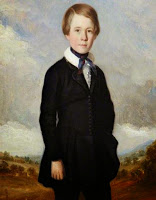
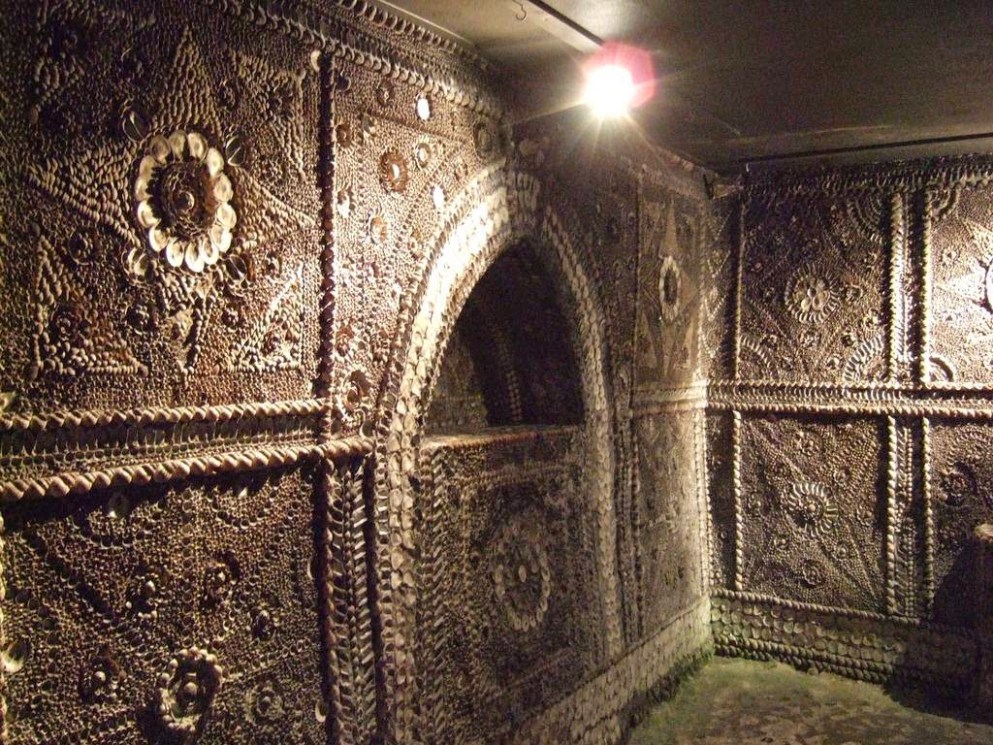
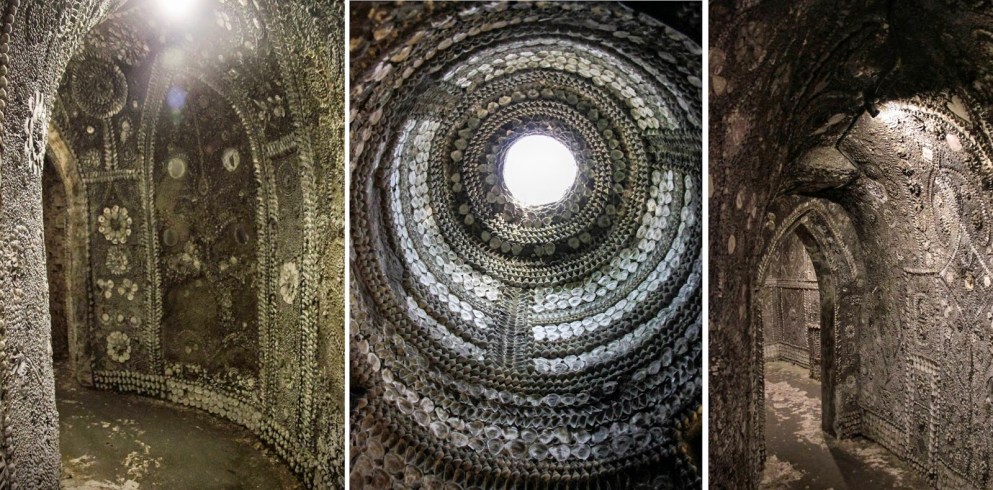
In 1835 a labourer was digging a field just outside the English seaside town of Margate.  His work was interrupted when he thrust his spade in to the soil and it simply vanished in to the ground.  The master of the nearby Dane House School, James Newlove, was made aware of this strange disappearance.  He volunteered his young son, Joshua, for the task of being lowered, candle in hand, in to the void via a length of rope

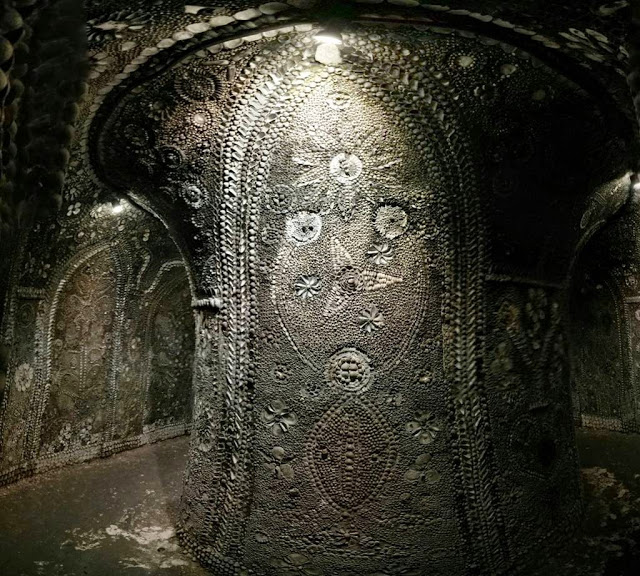
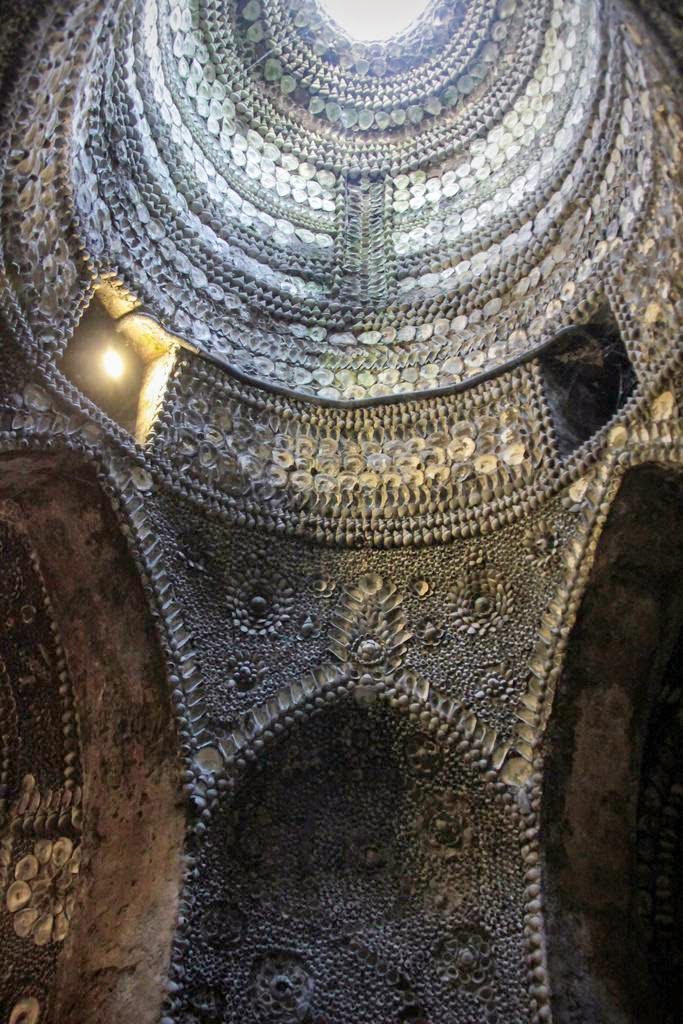
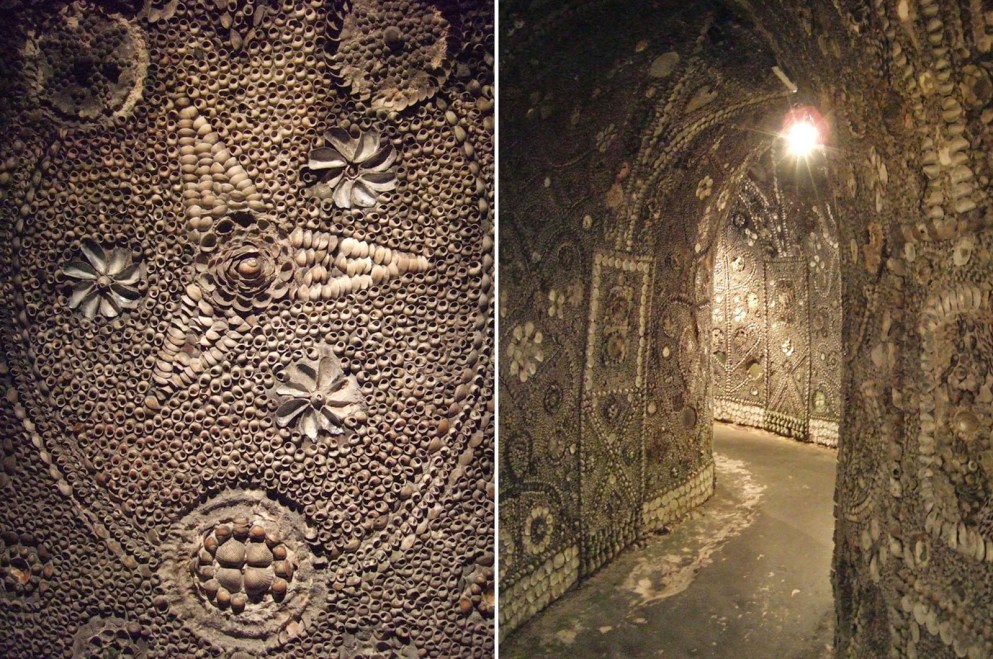
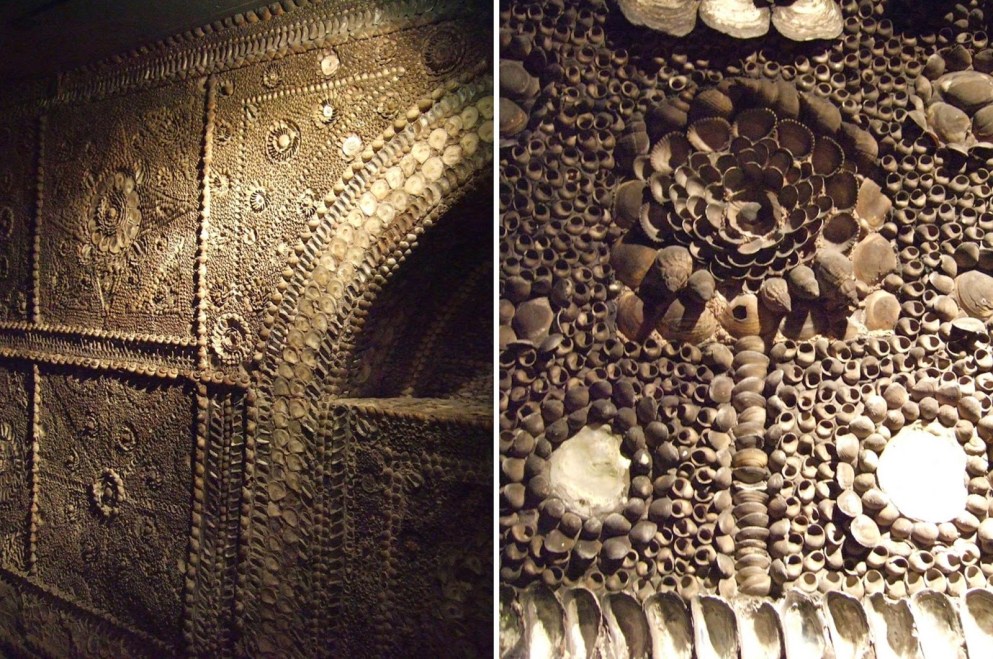
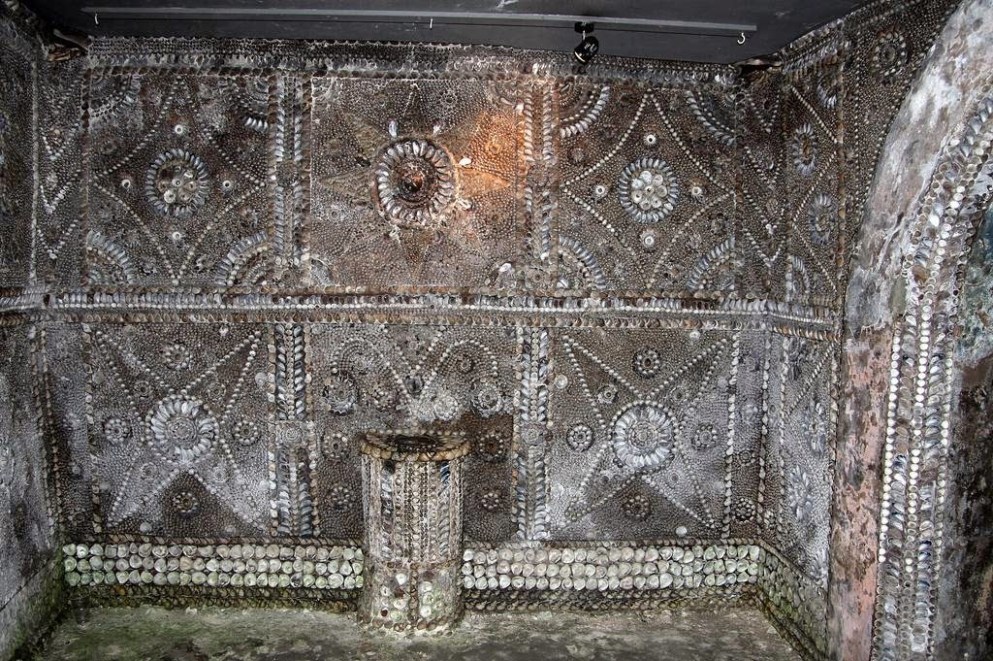
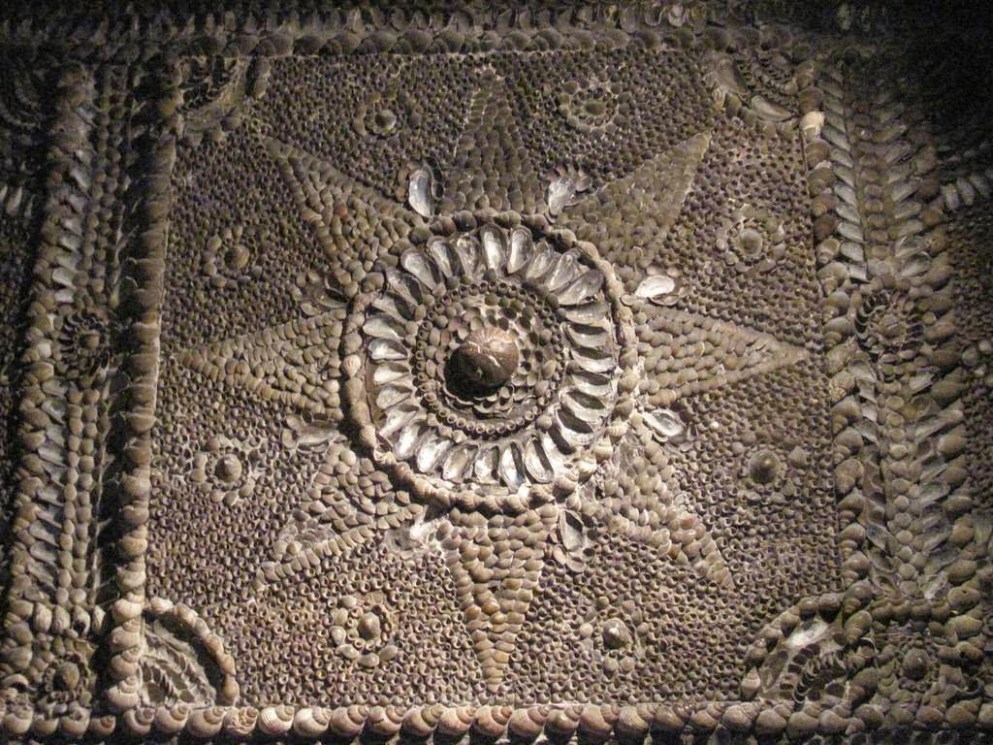
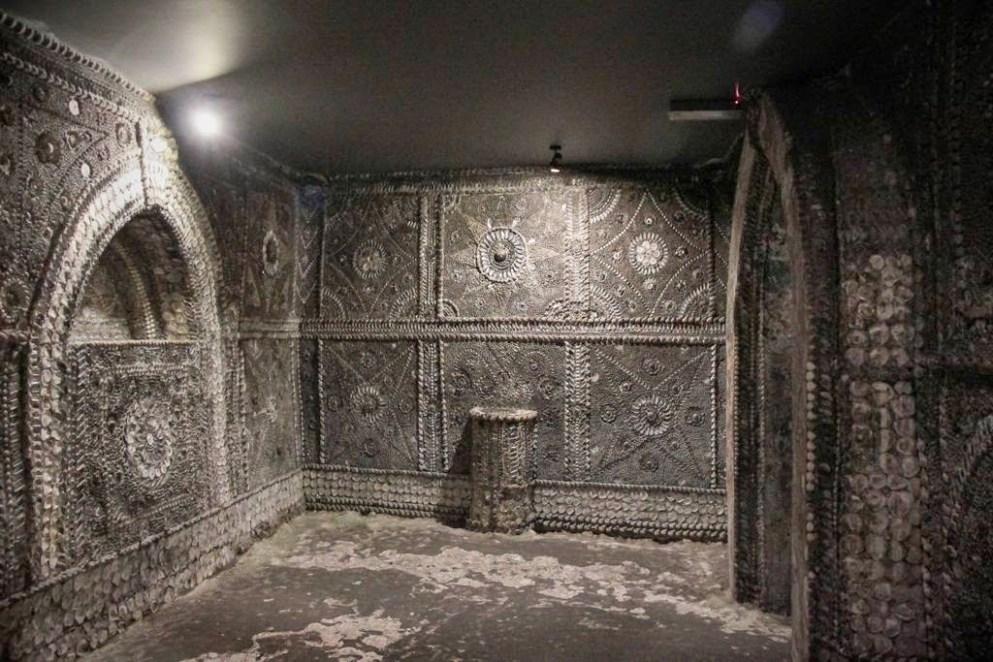
Regardless of our modern sensibilities about the health and safety of children, when Joshua was pulled back to the surface his wide-eyed tale astonished everyone. He told of a magical temple adorned in shells, hundreds, thousands… millions of them.  All told, 4.6 million.

Image Credit DeadManJones

Image Credit Krondol
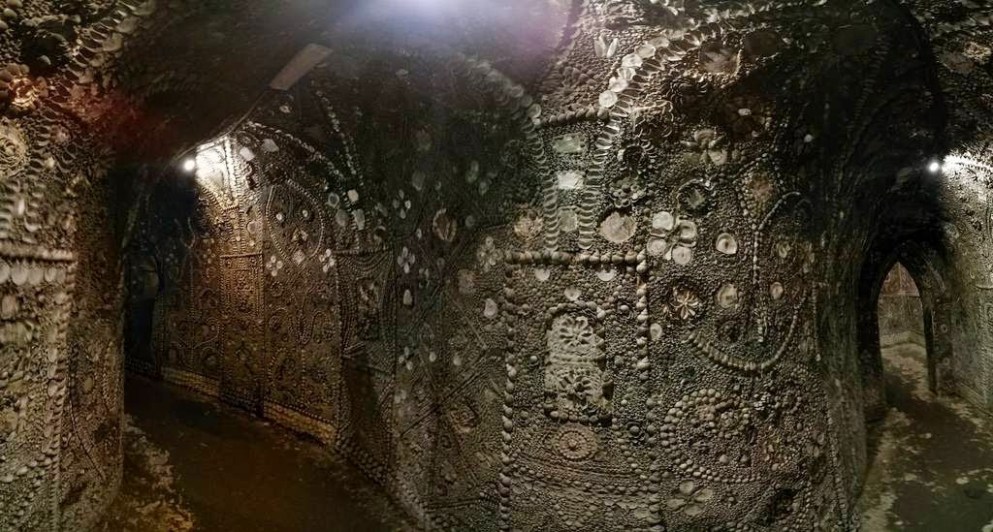
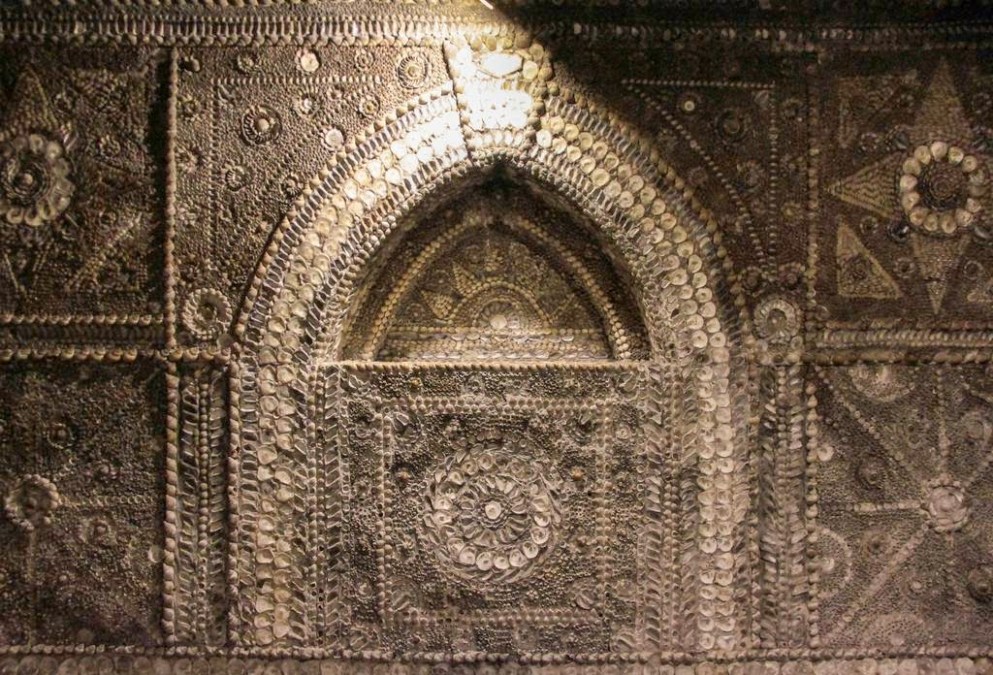
Joshua’s tale was nowhere near as tall as people may have at first imagined.  When the hole was widened enough for adults to enter they too witnessed the wondrous contents of the winding subterranean passageway, complete with an altar chamber and rotunda.  Newlove senior, a canny schoolmaster if ever there was one, was first to consider the financial benefits such a discovery might reap.  He hurriedly purchased the land above the mysterious chamber and began to adapt it so that visitors might enter – for a small charge of course. In 1837, just two years after its discovery, the grotto opened to a curious public.  Yet to this day debate rages (in a very English way, of course, involving polite discussion over tea and cucumber sandwiches) about it origins.

Image Credit Ben Sutherland
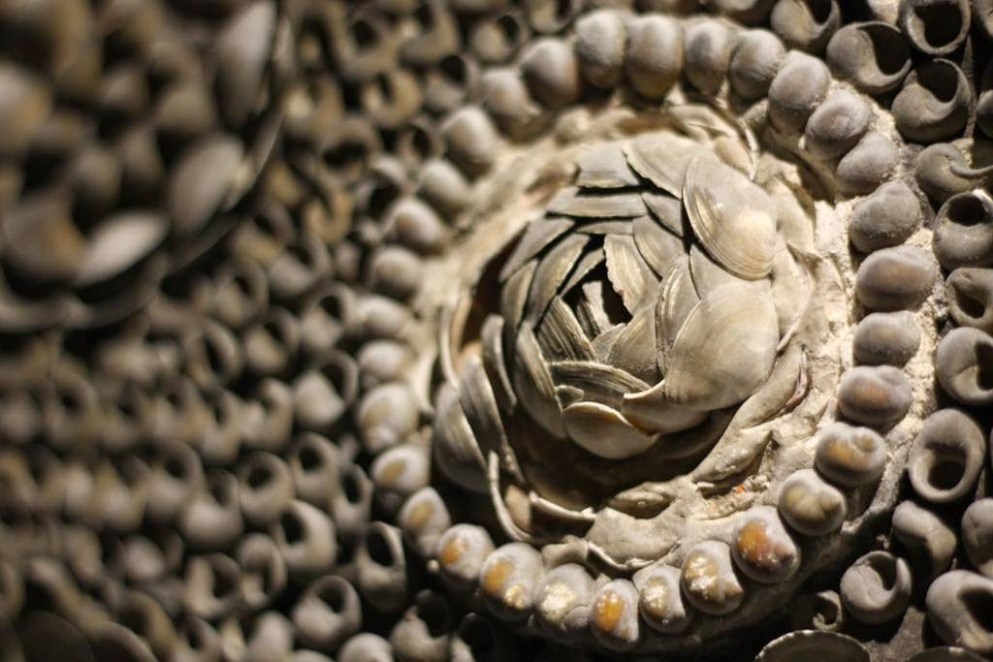
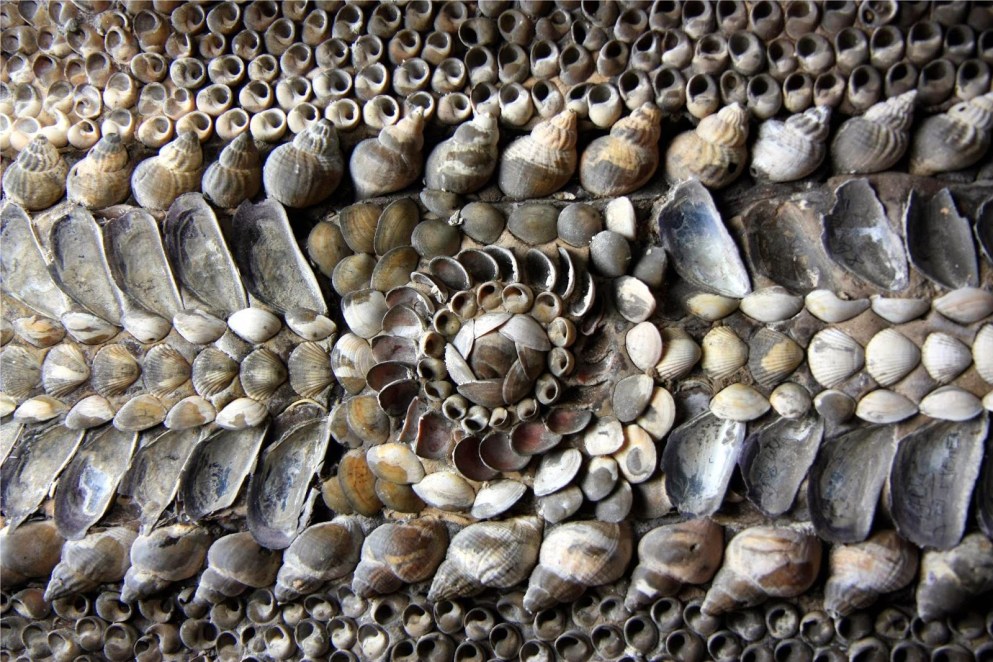
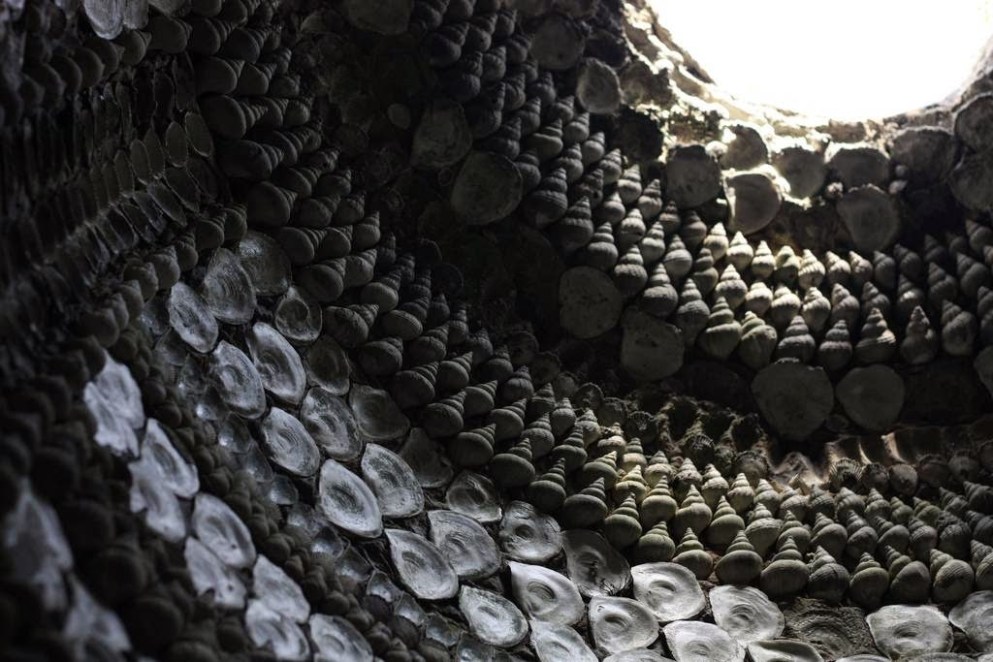
How it came to be originally built remains unexplained.  However, the 2000 square feet of mosaics, created from mussel, cockle, whelk and oyster shells have provoked a multitude of explanations none of which have been confirmed with any total surety.

Image Credut Ben Sutherland
Shell grottoes of this type were extremely popular in the Europe of the 1700s. Many suppose that this was the result of a local bigwig embarking on the Grand Tour and returning with a desire to recreate a highlight of his or her European expedition.  Yet although this is not without the realms of possibility, the land above the grotto never formed part of any large estate, which is where you would expect such an extravagance to be positioned – close enough to the big house to easily chaperone curious guests to its confines. These visitors would be impressed both by the owner’s wealth and aesthetics because, frankly, this kind of thing was built to do both.

Image Credit Kotomi

Image Credit Simon Lee
Moreover, had the grotto been built in the 1700s then there would have been some vestigial local memory (or legend) of its construction.  In order to get millions of shells in to this underground passage many local people would have to have been involved in their transport.  Yet the discovery in 1835 was a surprise to all – no one stepped forward with any explanation.

Image Credit Ben Sutherland
It has been suggested that the grotto was a smuggler’s cave – almost all the shells are British and so it could have been a hideaway made by locals for stolen and contraband goods.  Yet this idea doesn’t hold much water either. Although near to the sea, the waves remain stubbornly a number of miles away and there are no tunnels from coast to ‘cave’. Plus with a distinct lack of an escape route any smuggler would have been mad to hide their booty here – not to mention the fact that they would have had to spend more of their time decorating the place than doing any actual smuggling. So, it’s a no to that theory as well.

Image Credit Krondol

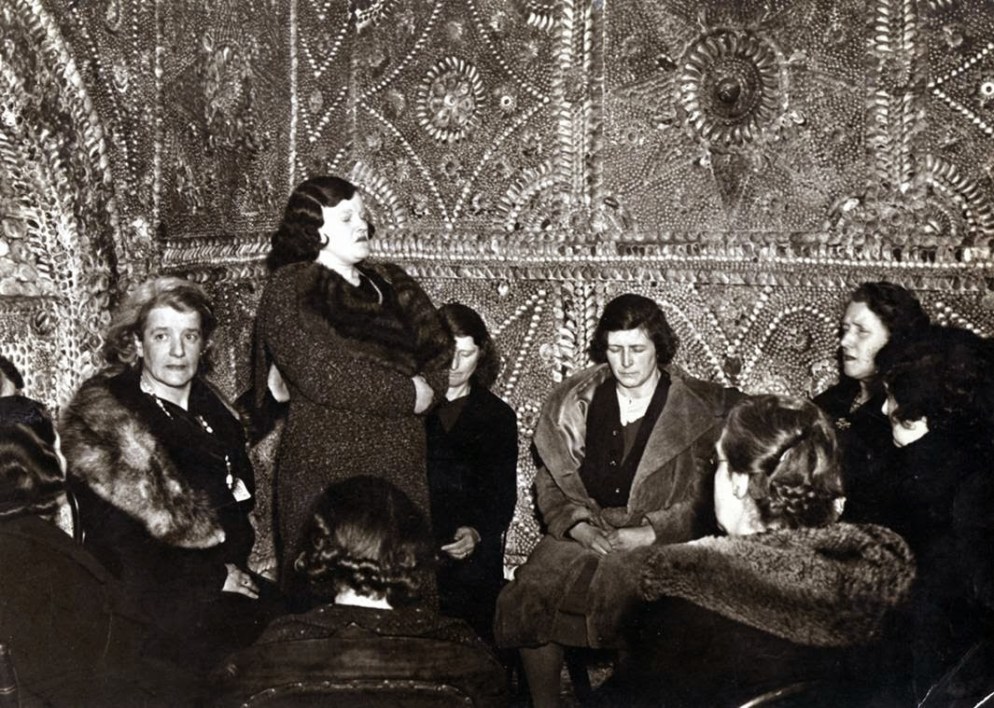
Could it be a Roman temple?  A remnant of dark-age rituals?  A prehistoric astronomical calendar? Make up a theory and it could well be feasible – and many have.  There have even been séances held in the grotto to try and contact the spirits of the builders, such as the one from the 1930s above.

Image Credit John C Bullas

Image Credit Feribrulu
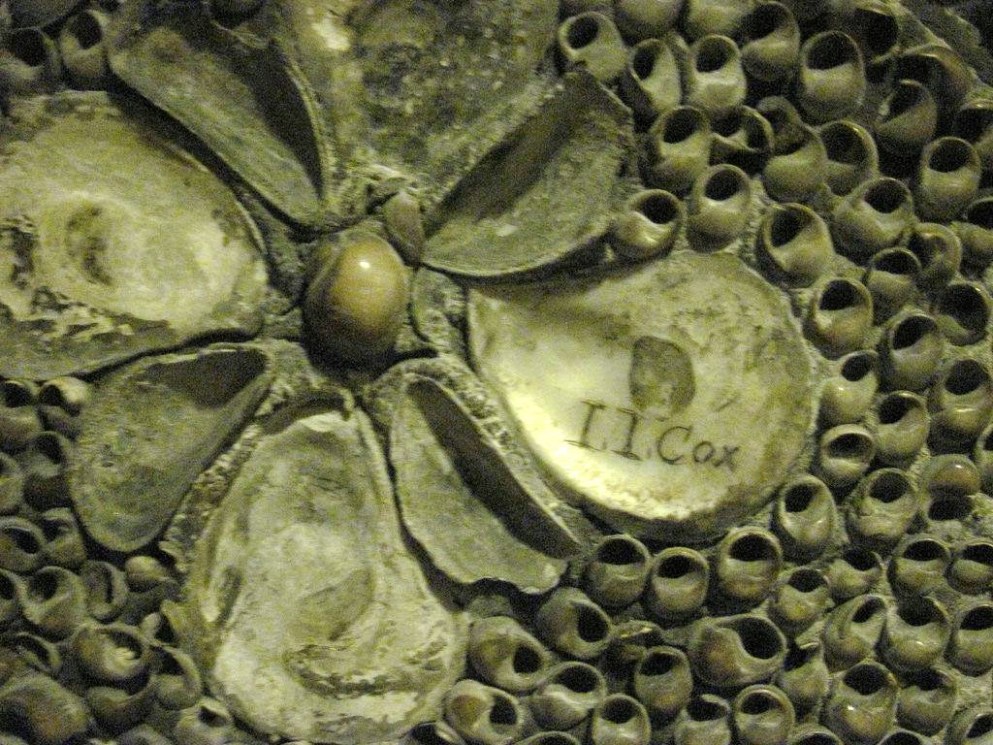
A number of the shells have been vandalised over the years by visitors.  Even though this is difficult to condone it adds an extra layer of history to the place.

Image Credit Kotomi

 
Image Credit Mr Moss
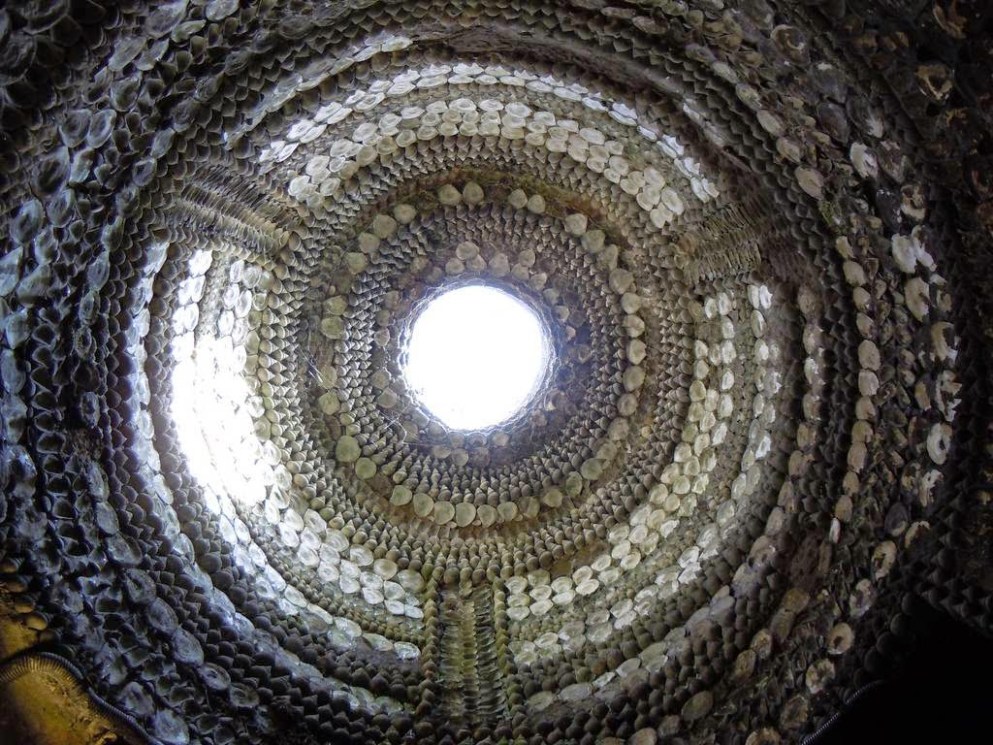
The latest research which took place in 2006 points towards an explanation which might please Indiana Jones fans.  Mick Twyman of the Margate Historical Society put forward the suggestion that the grotto was built by the Knights Templar or their associates sometime in the middle 1100s.  He has suggested this after a painstaking measurement of angles inside the grotto (a temple now, perhaps?) and the way that the sunlight is projected in to the inside of the dome.   The altar chamber certainly looks the part of an early temple for masonic rituals. Yet this kind of theory, unlike its scientific namesake, isn’t proof – just conjecture however sensible and enlightened.

Image Credit Simon Lee
Why not get the shells carbon-dated?  This is certainly a possibility for the current owner (the grotto has always been in private hands although recent restoration work has been done in partnership with English Heritage, the charity that looks after the National Heritage Collection of the country).  However, this has been advised against for a number of reasons.  First and foremost quite a number of shell samples would be needed to ensure that dating caught the earliest shells and not just those used in previous (unknown) restoration work over the centuries.  Secondly it’s expensive and money needs to be more urgently spent on conservation rather than speculative investigation, however scientific and potentially illuminating.

Image Credit Feribrilu

Image Credit Kotomi
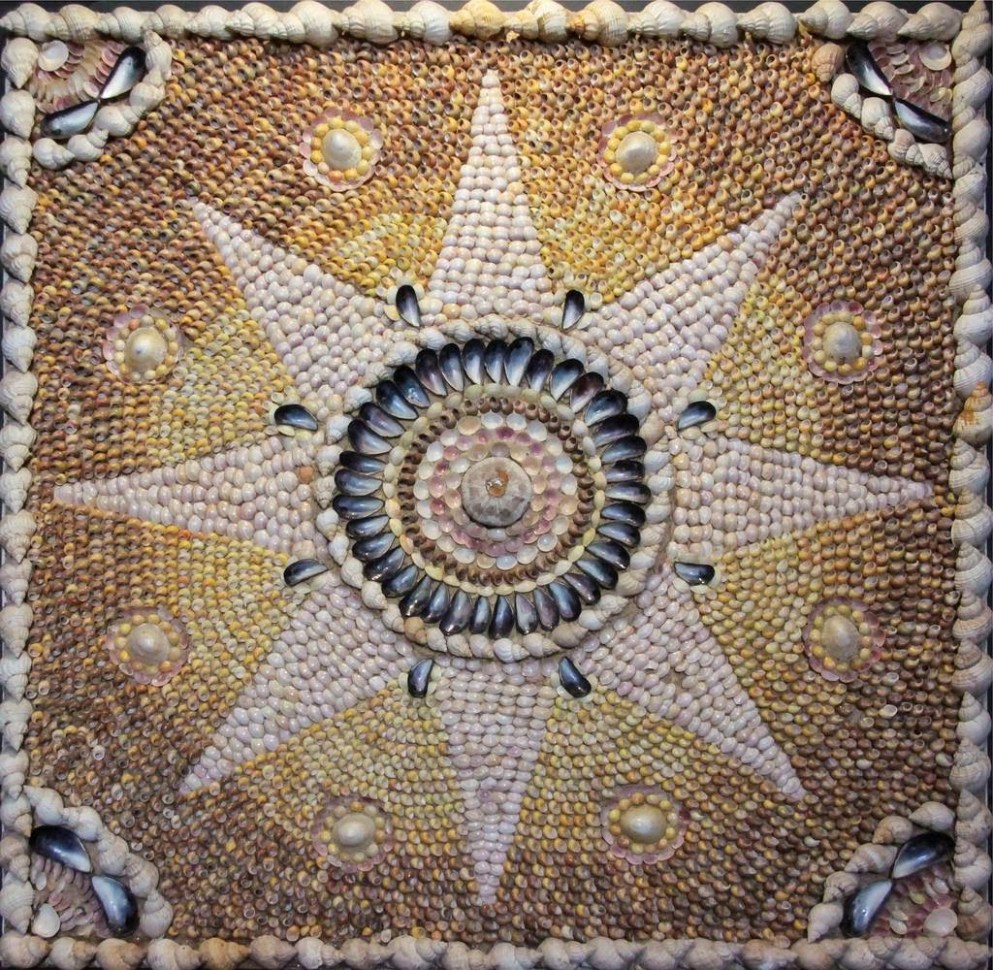
How did the shells look before the decades of gas-lit exhibition and when water damage had not bleached them? A modern recreation of a panel from the grotto shows how it must have dazzled visitors in its heyday.

Image Credit Kotomi
Yet, perhaps it is best to leave well alone in terms of a definitive origin story.  After all, even a secure dating of the oldest shells in the grotto would only establish their age – it would hardly go any further in discovering who built the grotto and why.  Sometimes it’s simply best to allow imagination to flourish and allow visitors to create their own history for this amazing place.

If you want to visit the Margate Shell Grotto, please check out its website for opening times.

Source…….www.kuriositas.com
The picture of the c1835 schoolboy is by William McTaggart
First Image Credit DeadManJones


Natarajan