Image of the Day…Full Moon Day Today !!!

Full moonrise by Mohamed Laaifat Photographies in Normandy, France.Full moonrise, above, by Mohamed Laaifat Photographies in Normandy, France.

Tonight, the moon is full. This full moon falls on January 5, 2015 at 4:53 Universal Time. Although the moon turns full at the same instant worldwide, the clock time – and possibly the date – differs by time zone. For the mainland United States, the moon reaches the crest of its full phase on this Sunday evening on January 4 at 11:53 p.m. EST, 10:53 p.m. CST, 9:53 p.m. MST or 8:53 p.m. PST.

The January 2015 full moon is the first full moon after the December 21 solstice. In North America, we often this full moon the Wolf Moon, Old Moon or Moon After Yule.

Astronomically speaking, the moon is full at the moment that it’s most opposite the sun in its orbit (180o from the sun in celestial or ecliptic longitude). For general reference, however, we can say the moon is full all night tonight, lighting up the nighttime from dusk until dawn.

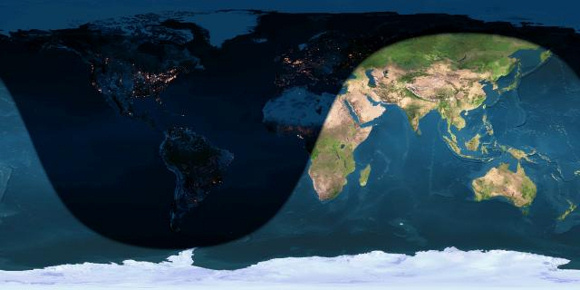
Day and night sides of Earth at the instant of the January 2015 full moon (2015 January 5, at 4:53 UTC) Image credit: Earthview

Elsewhere around the world, the moon reaches the crest of its full phase at different times on the clock. Looking at the worldwide map above, you can see that the full moon comes at midnight in South America and northeastern North America, at sunrise in Africa and the Middle East and at noon in eastern Asia. All these places will see a full-looking moon lighting up the sky tonight from dusk until dawn.

But to see the moon at the instant of full moon, the moon has to be above your horizon on the nighttime side of the world.

In both the Northern and Southern Hemispheres, the January sun – unlike the January full moon – rises south of due east and sets south of due west. In the Northern Hemisphere, these far-southern risings and settings of the sun give us the short days of winter. South of the equator, the same far-southern sunrises and sunsets bring long summer days. Meanwhile, the full moon lies opposite the sun, mirroring the sun’s place in front of the backdrop stars for six months hence.

And that’s why tonight’s moon – like the sun in summer – will follow a high path across the sky as seen from the northern part of the globe – and a low path as seen from the southern.

This January full moon rises north of due east around sunset, climbs highest in the sky around midnight and sets north of due west around sunrise.

Bottom line: Watch the full moon shine from sundown to sunup on the night of January 4, 2015.

SOURCE::: http://www.earthsky.org

Natarajan

” சில சுவாரஸ்யமான தகவல்கள் உங்களுக்காக…”

வாழ்க்கையில் நமக்குத் தெரிந்த சில விஷயங்களை நாம் மறந்து விடுவதுண்டு. அதனை நினைவு படுத்தும் வகையில்தான் இந்த கட்டுரை உங்களுக்காக.

நாம் செய்ய மறந்த, செய்யாத, கவனிக்காத விஷயங்களை இங்கே பட்டியலிட்டுள்ளோம்.

நாம் சிரிப்பதால் நமக்கு மன அழுத்தத்தை ஏற்படுத்தும் ஹார்மோன்களின் உற்பத்தி குறைகிறது. அதே சமயம், நமது உடலில் உள்ள நோய் எதிர்ப்புச் சக்திகளின் பலம் கூடுகிறது.

6 வயதாகும் ஒரு குழந்தை சராசரியாக ஒரு நாளைக்கு 300 முறை சிரிக்குமாம். ஆனால் நம்மைப் போன்ற பெரியவர்கள் ஒரு நாளைக்கு 15 முதல் 100  முறை தான் சிரிக்கிறோமாம். சிலர் அது கூட சிரிக்கிறார்களா என்று தெரியவில்லை.

ஒவ்வொரு முறை நாம் தும்மும் போதும், நம் மூளையில் உள்ள ஒரு செல் உயிரிழக்கிறது.

நமது இடது நுரையீரல், வலது நுரையீரலை விட சிரியதாக அமைந்திருக்கும். அதற்குக் காரணம், இடது பக்கம், இதயத்துக்கு இடம் விடுவதற்காக.

மனிதனின் இறப்புக்குப் பிறகும், தலைமுடியும், நகமும் வளரும்.

உடல் முழுவதும் ரத்தம் பாய்ந்தாலும், உடலில் ரத்தம் பாயாத பகுதி ஒன்று உள்ளது. அதுதான் நமது கண்ணில் உள்ள விழிப்படலமான கார்னியா. இதற்கு தேவையான ஆக்ஸிஜனை நேரடியாக காற்றில் இருந்தே பெற்றுக் கொள்கிறது.

நமது உடலில் ஏதேனும் சிறிய காயம் ஏற்பட்டால் அந்த இடத்தில் முன்பு எல்லாம் நமது எச்சிலைத் தடவுவார்கள். உண்மையிலேயே, நமது எச்சிலுக்கு காயத்தில் இருக்கும் பாக்டீரியாக்களை அழிக்கவும், தொற்றுகள் ஏற்படாமல் தடுக்கவும் சக்தி உள்ளது.

நாம் சிரிக்கும் போது முகத்தில் உள்ள 14 தசைகள் வேலை செய்கின்றன. முகம் சுளிக்கும் போது 43 தசைகள் வேலை செய்கின்றன. எனவே எப்போதும் சிரித்துக் கொண்டிருப்போம்.

உடலில் ஏற்படும் வலிகளை நம் நரம்புகள் மூளைக்குக் கொண்டு செல்வதால் தான் நம்மால் வலியை உணர முடிகிறது. ஆனால் மூளையில் ஏற்படும் பிரச்னைகளை மூளையால் உணர முடியாது. மூளைக்கு ஏற்படும் வலியை மூளைக்கு சொல்லும் ஒரு விஷயம் இல்லவே இல்லை. அதனால் மூளையில் ஏற்படும் ஒரு பாதிப்பினால் நமக்கு உடனடியாக வலி ஏற்படுவதில்லை. மூளையில் ஏற்படும் காயங்கள் அல்லது பாதிப்பு எப்போது மூளையின் திசு, நரம்பு அல்லது ரத்த நாளங்களுக்கு பரவுகிறதோ அப்போதுதான் நமக்கு தாங்க முடியாத தலைவலி ஏற்படுகிறது.

மூளை என்பது 80% தண்ணீரைக் கொண்டதாகும். எனவே தண்ணீர் உடலை விட மூளைக்கு மிக அதிகமாகத் தேவைப்படும். எனவே உங்கள் உடலை தாகம் எடுக்கும் அளவுக்கு வைக்காமல் எப்போதும் தண்ணீர் அருந்திக் கொண்டே இருங்கள்.

உண்ணும் உணவுகளை செரிக்க சுரக்கப்படும் சுரப்பிகளில் இருந்து நமது குடல் பகுதியைக் காப்பதற்காக 3அல்லது நான்கு நாட்களுக்கு ஒரு முறை குடலின் உட்பகுதியில் புதிய லேயர் உருவாகும்.

இதயத்தைப் பொருத்தவரை ஆண்களுக்கும், பெண்களுக்கும் பல வேறுபாடுகள் உள்ளதாகவே இருக்கிறது. ஆண்களை விட பெண்களின் இதயம் அதிக முறை துடிக்கிறது. மாரடைப்பு போன்ற நோய்களின் போது பெண்களுக்கும், ஆண்களுக்கும் ஒரே முறையான சிகிச்சை பலனளிப்பதில்லை.

நாம் வயிற்றில் உள்ள பல முக்கிய உறுப்புகளை எடுத்து விட்டும் வாழ முடியும் அளவுக்கு விஞ்ஞானம் வளர்ந்து விட்டது. அதாவது, வயிற்றில் உள்ள மண்ணீரல், 75 சதவீத கல்லீரல், 80 சதவீத பெருங்குடல், ஒரு சிறுநீரகம், ஒரு நுரையீரல் என ஏதேனும் பிரச்னை ஏற்பட்டு எடுத்து விட்டாலும் ஒரு மனிதன் வாழ முடியும் என்ற அளவுக்கு வந்து விட்டோம்.

ஆனால், இயற்கையோடு பொருந்திய வாழ்க்கை முறையே சுகாதாரமான, ஆரோக்கியமான வாழ்க்கைக்கு அடிப்படை என்பதை உணர்ந்து செயல்படுவோம்..

SOURCE::: http://www.dinamani.com

Natarajan

Jan 4 2015

” சொல்லத் தோணுது….வாய்கள் பேசாது… காதுகள் கேட்காது!…

சென்னை, தியாகராய நகரில் உள்ள ரெங்கநாதன் தெரு...

சென்னை, தியாகராய நகரில் உள்ள ரெங்கநாதன் தெரு…

முன்பெல்லாம் பண்டிகைக் காலங் களில் மட்டும்தான் நகரங்கள் மக்கள் நெருக்கடியில் திணறி மூழ்கும். இப்போது ஒரு குறிப்பிட்ட நாளில்தான் புத்தாடை, தங்க நகை கள் வாங்குவது என்றில்லாமல், நினைத்த நாளில் வாங்கி விடுகிறபடி வாழ்க்கைமுறை மாறிவிட்டது. கிராமத் துக்கும் நகரத்துக்குமான இடைவெளி குறையக் குறைய எல்லாத் தேவை களுக்குமே சிறு நகரத்துக்கும் பெரு நகரத்துக்கும் தேடிப் போவது வழக்க மாகிவிட்டது.

நகரங்களில் இப்போதே இவ்வளவு போக்குவரத்து நெருக்கடி என்றால், மிச்ச காலத்தும் என்ன ஆகப் போகி றதோ தெரியவில்லை. இரண்டு சக்கர வாகனங்கள் இல்லாத வீடுகளே இல்லை என்பது மாறிப் போய், நான்கு சக்கர வாகனங்கள் இல்லாத வீடுகளே இல்லை என்கிற நிலைமை உருவாகிக் கொண்டிருக்கிறது. அத் துடன், ஒன்றுக்கு இரண்டு வாகனங்கள் பெரும்பாலான வீடுகளில் பயன்படுத்தத் தொடங்கிவிட்டார்கள். ஆனால் அதை நிறுத்தி வைக்கவோ, ஓட்டிச் செல் லவோதான் இடமில்லை.

100 அடி சாலைகளை 60 அடிகளா கவும், 60 அடி சாலைகளை 40 அடி சாலைகளாகவும் மாற்றுவதில் உலகத்திலேயே நம்மவர்களை யாரும் மிஞ்ச முடியாது. சாலைகளில் நடந்து செல்வதற்கு என்று தனிப் பாதைகள் வேண்டும் என்பதை, இன்னும் எவ்வளவு காலத்துக்குத்தான் நாம் உணராமல் இருக்கப் போகிறோம்?

சாலைகளில் நான் அதிகமாக கவனிப்பது நடந்து செல்லும் மக் களைத்தான். உயிரைக் கையில் பிடித்துக் கொண்டுதான் இவர்கள் நடக்க வேண்டியிருக்கிறது. நடந்து செல்பவர்களை ஏளனமாகப் பார்ப்பதும், பயந்து பயந்து அவசர அவசரமாகக் சாலையைக் கடப்பவர்களை வசை மொழியில் திட்டுவதும் நம் ஊரில்தான் பார்க்க முடியும். அதிலும் வேகமாக நடக்க இயலாதவர்கள், சிறுவர்கள், முதியவர்கள் என இவர்களுக்கெல்லாம் சாலையைக் கடந்து போகக்கூடிய நேரத்தை ஒதுக்கி நாம் முன்னுரிமைத் தருவதில்லை.

விதியை உருவாக்கக் காரணமாக இருப்பவர்களும் நாம்தான். அதை மீறும்போது ஏற்படும் விளைவுகளைக் கண்டு குற்றம் சொல்பவர்களும் நாம் தான். மக்கள் குடியேறுவதற்கு முன் பாகவே, நகரங்கள் உருவாக்கப் படும்போதே… அடிப்படைத் தேவை களையும், நெடுங்காலத் தேவைகளை யும், தொலைநோக்கில் உணர்ந்து திட்டங் களை வரைபவர்கள் வெளிநாட்டினர். அதனால் நடந்து செல்பவர்கள், மிதிவண்டியில் செல்பவர்கள், பெரிய வாகனங்களில் செல்பவர்கள் என ஒவ்வொன்றுக்கும் தனித்தனிப் பாதை அமைக்கவும், இது குடியிருப்புப் பகுதி, இது வணிக வளாகப் பகுதி என ஒவ்வொன்றையும் முறையாக தனித் தனியாக உருவாக்கவும் அவர்கள் பழகி யிருக்கிறார்கள். இதனால் யாருக்கும் நேரம் விரையமில்லை; விபத்துகள் இல்லை; விரைவாகச் செல்வதால் வெளியேறும் எரிபொருள் மாசுவின் பாதிப்பும் குறைவாக இருக்கிறது. எரிபொருளும் மிச்சமாகிறது.

வெள்ளைக்காரனிடம் இருந்து ஆங்கிலத்தைக் கற்றுக் கொண்டு பெருமைப்பட்டுக் கொள்ளும் நாம், அவனிடம் உள்ள நல்ல பழக்கங்களைப் பின்பற்ற மறுக்கிறோம். மக்கள் குடி யேறிய பின்தான் இங்கு எல்லாத் திட்டங்களும் செயல்படுத்தப்படுகிறது. ஒவ்வொரு நாளும் நகரங்களுக்கு நிரந்தரமாகக் குடியேறுபவர்கள் எவ் வளவு பேர்? அவசர அலுவல்கள் காரணமாக நகரத்துக்கு வந்துபோகிறவர் கள் எவ்வளவு பேர்… எனக் கணக் கெடுத்தால், அதிர்ச்சிதான் நேரிடும்!

சிக்கல்கள் உருவாவதற்கு முன்னே இம்மக்களுக்கானத் தேவைகளை அறிந்து திட்டங்கள் தீட்டி, உருவாக்கித் தருவதற்குப் பெயர்தான் அரசாங்கம்! வணிக வளாகப் பகுதிகளாக இருந் தவை, மேலும் மேலும் அடுக்கடுக் கானக் கட்டிடங்களாக அதன் ஆபத் தைப் பற்றி கவலைப்படாமல் உயர்ந்து கொண்டே போவதும், குடியிருப்புப் பகுதிகள் அதன் காரணமாக வணிக வளாகப் பகுதிகளாக மாறிக்கொண்டே போவதும் இனி நிற்கப் போவதில்லை.

30 ஆண்டுகளுக்கு முன்பு நான் திரைப்படக் கல்லூரிப் படிப்பை முடித்து, சென்னை தியாகராய நகர் பகுதியில்தான் 10 ஆண்டு காலம் தங்கியிருந்தேன். அப்போது இருந்த அந்தச் சாலைகளின் அகலங்களும் தெருக்களின் அகலங்களும் அப் படியே இருக்கின்றன. ஆனால், மக்கள் தொகை நெருக்கடியும் கட்டிடங்களின் எண்ணிக்கையும் 100 மடங்கு உயர்ந் திருக்கிறது. இதைவிடக் கூடுதலான எண்ணிக்கையில் அரசுப் பேருந்து களும், 100 மடங்கு வாகனங்களும் அந்த சாலைகளில் சென்று கொண்டிருக் கின்றன. இந்த அளவுக்கு இங்கே நெருக்கடி உருவாக காரணம், அந்த இடம் முழுக்கவும் வணிகப் பகுதிகளாக மாறிக்கொண்டே இருப்பதுதான்.

இன்று நேரம் என்பது ஒவ்வொரு வருக்கும் மிக முக்கியமானதாகிவிட்டது. தியாகராய நகரைக் கடக்காமல் சென்னையின் பிற பகுதிகளை அடைய முடியாது. இதே போல்தான் சென்னை நகரம் மட்டுமல்ல; இந்திய நகரங்களின் அனைத்துப் பகுதிகளும் மாறிக்கொண்டு வருகின்றன.

அதுவும் பண்டிகைக் காலங்கள் என்றால் போக்குவரத்தே முடங்கிவிடு கிறது. விபத்து என ஒன்று ஏற்பட்டால் தான் நடவடிக்கைகளும், திட்டங்கள் தீட்டுவதும் இங்கே நடைபெறுகிறது. அதைகூட நீதிமன்றம் செல்லாமல் பெற முடிவதில்லை. ஒருமுறை அங் கிருக்கின்ற கடைகளுக்கு இதுதொடர் பான அதிகாரிகள் சென்று பாருங்கள். ஒரு குண்டுமணி போட்டால்கூட கீழே விழாதபடி காலையிலிருந்து இரவு வரைக்கும் மக்கள் வெள்ளம் திணறிக்கொண்டேயிருக்கிறது. இந்த மக்களெல்லாம் எங்கிருந்து வருகிறார்கள்? எதில் வருகிறார்கள்? வாகனங்களை எங்கே நிறுத்துகிறார்கள்? அவர்களுக்கான அடிப்படை வசதிகள் இருக்கின்றதா… என கண்காணித்து செய்து தருபவர்கள் யார்?

இப்பகுதிகளில் கும்பகோணம் போன்ற தீ விபத்தோ, சென்னை மவுலிவாக்கம் 11 மாடிக் கட்டிடம் போன்ற கட்டிட விபத்தோ ஏற்படாது என யாராவது உறுதியாக சொல்லிவிட முடியுமா? அவ்வாறு நிகழாது என ஒருவேளை யாராவது சொன்னால்… நீங்கள் அதனை ஏற்றுக்கொள்கிறீர்களா? என்றைக்காவது அதுபோன்ற ஒரு விபத்து ஏற்பட்டால், எவ்வாறு அம்மக் களைக் காப்பாற்றுவீர்கள்?

ரெங்கநாதன் தெரு போன்ற தெருக்களில் தீயணைப்பு வண்டி நினைத்த மாத்திரத்தில் சென்று பாதிப்புக்கு உள்ளாகுபவர்களைக் காப்பாற்றிவிட முடியுமா? சென்று சேர்வதற்குள் தீ விபத்து ஒரு கடையோடு நின்றுவிடுமா?

ஏகப்பட்ட காவல்துறையினரை நிறுத்தி நகைத் திருட்டு, துணித் திருட்டு செய்பவர்களைத்தான் நம்மால் பிடிக்க முடியும். நகரத்தின் தொலை நோக்கு வளர்ச்சியைக் கருத்தில் கொண்டு… எந்தெந்த வணிகப் பகுதி கள் போக்குவரத்துக்கும், சுற்றுச் சூழலைப் பாதுகாப்பதற்கும், மக்க ளின் பாதுகாப்புக்கும் தடையாக இருக் கின்றதோ, அவற்றை இப்போதே கணக்கெடுத்து அகற்றி இடம் மாற்று வதுதானே சரியானதாக இருக்கும். இந்த நகைகளையும், பாத்திரங்களையும், துணிகளையும் எங்கு வைத்தும் விற்கலாமே!

அயல்நாடுகளில் இருப்பது போல ஒவ்வொரு பொருளுக்கும் ஒரு விற்பனை பகுதியை உருவாக்கி, அவர் களுக்கான வசதிகளை ஏற்படுத்தித் தந்து, இவைகளை இடம் மாற்று வது பற்றி முடிவெடுக்க வேண்டிய நெருக்கடியான காலகட்டம் இது.

சாலைகளை விரிவுபடுத்தி போக்கு வரத்து நெரிசலை சீராக்காமல், வருகின்ற எல்லா வெளிநாட்டு கார் கம்பெனிகளுக்கும் அனுமதி கொடுத்துக் கொண்டேயிருப்பதும் எந்த வகையில் சரியானது?

மக்கள் கேட்டால்தான் செய்வோம் என பொறுப்பில் இருப்பவர்கள் நினைக்கலாம். இந்த மக்கள் எந்தக் காலத்திலும் எதையும் வாய்த் திறந்து கேட்கவே மாட்டார்கள் என்பது எல்லோருக்குமேத் தெரியும். இருந்தும் எனக்கு சொல்லத் தோணுது!

– இன்னும் சொல்லத் தோணும்
எண்ணங்களைத் தெரிவிக்க: thankartamil@gmailcom. 

SOURCE:::: தங்கர் பச்சான்  IN tamil.thehindu.com

Natarajan

Jan 4 2015

The Art Of Simply Being… or ” சும்மா இருத்தல்…” !!!

“Summa Iruttal” or the Art of Simply Being

by V.S. Krishnan
I told my friend that I was planning to visit US. His response was quick. “If you want a happy living in US, you should possess the three ‘C’s: car; credit card; and cell phone”, he said. “Make sure that you possess at least some of these ‘essential ingredients’; otherwise, you would find your stay there very miserable,” he added.

I could not afford any of these, but still I decided to go ahead with my visit. On a fine evening, I landed at Dallas Airport without any of these ‘essentials’. What I carried was some personal belongings, a packet of ‘Nenthran chips’ for my son and family and a book of verses.

It is the book that I carry wherever I go. It is the book that keeps me engaged wherever I am, gives me joy at no extra cost, serves as a guide, as a set of prayer and as a source of immense inspiration. It is the Kandar Anubhuti, the immortal verses composed by Arunagirinathar some 600 years ago, relevant at all time and at all places.

Tiruppugazh are songs addressed to Muruga as prayers for the fulfillment of various aspirations of devotees. They hail the glory of Muruga and highlight His various infinite qualities in beautiful poems. They show the way to reach the Lotus Feet of Muruga. They show how we can free ourselves from various bonds and attachments and reach a state beyond all opposites like attachment and aversions, like and dislike, knowledge and ignorance.

The Vel Virutham underlines the importance of Muruga’s weapon, Vel. Kandar Alangaram adores Muruga in magnificent verses and describes the Lord’s power, valour and beauty. The Vel Vakuppu and Seerpadha Vakuppu uplift us from the consequence of karma. But Kandar Anubhuti is different from all these.

Kandar Anubhutispeaks of Arunagiri’s own experience of having felt the presence of Muruga and having received the advice direct from Muruga. ThroughKandar Anubhuti, Arunagirinathar shares his experience of having received the advice from Muruga. (summa iru sol ara enralume ammaporulonrum arinthilane). He says “Having heard the words of advice, summa iru, I kept wondering what eternal words of truth they are”.
Arunagirinathar says that as a result of this advice, he was elevated to the state of enlightenment. “Oh Muruga, because of your grace, I went through a new experience of speechlessness.” (Nesa Muruga ninathu anbu arulal… pesa anubhuti piranthathuve — 28).

The expression summa iru (‘simply be!’) is not to be interpreted to convey a state of idleness or inactivity. It does not mean that one has to cease all his activities and remain quiet. In the modern world, one has to shoulder many responsibilities at different levels and carry out various duties. In the midst of various activities one performs, one should set apart some time to remain quiet, without allowing the mind to wander all over. He would then experience almost the same kind of happiness that he experienced during the deep sleep (sushupti) state.

During the deep-sleep state, the mind is still and quiet but the level of consciousness is low whereas during the state of ‘summa iru’, the mind is still and quiet and the level of consciousness is also high. This is the state of ‘Turiya’ which Arunagirinathar explained in his song Suruti Mudi Monam rendered at Palani. No effort is need to attain this state. What you need to do is to remain silent, free from the influence of body or mind. No effort is needed to undertake this simple sadhana because you are only trying to be what you naturally are, free from thoughts, free from senses and free from ego.

Almost three hundred years later, another great saint appeared in this holy land to emphasize the importance of remaining quiet and still by ceasing all mental activities. He was Thayumanavar who occupied a great position in the royal court of King Vijaya Ranga Chokkanatha but renounced it all just to fulfill his spiritual quest.

Thayumanavar spent most of the time in the company of a great saint, Arul Nandi Sivachariar who came in the lineage of Thirumular. As Sivachariyar remained silent most of the time, he came to be known as Mauna Guru. Thayumanavar sought the blessings of Mauna Guru and asked to be his disciple. The saint then told him that the time for his initiation had not come and he should wait for an opportune moment. However, when the guru, preparing for a long pilgrimage, was about to depart, Thayumanavar could not bear his separation. The guru then advised him that the essence of all sadhanas is to ‘remain still’ (summa iru).

Thayumanavar adhered to this advice sincerely and he experienced a state of peace and happiness. He always remembered the words of his guru: “As you remain quiet, without thoughts, you are transcended to a state where, without the difference of ‘you’ and ‘me’, the ‘I-I’ (Self) alone remains.”

Thayumanavar expressed his experience thus: It is my ardent wish to remain quiet without any word being spoken. (“Sollum porulum atru summa irupatharkke, allum pakalum enakku asai, paraparame”) In another song he said: You made me sit quiet. Can there be a greater happiness than this?” (“Soothu onrum inri ennai summa irukkavaithai, ithu onrum pothatho inbam paraparme.”)

Ramana MaharshiThen, almost three hundred years later, another divine sage appeared before us to underline the importance of silence. He was Sri Ramana Maharshi, who was considered as the manifestation of divine guru Dakshinamurti. Most of the time, Maharshi observed silence.

According to Maharshi, speech is only the function of the mind, whereas silence is the source and origin of all thoughts and speeches. If speech is effective, silence which is the origin and source of all thoughts must be more powerful. “Silence speaks volumes. It is unceasing eloquence,” he said.

Words that give expression to thoughts arising from mind are always coloured by ego. Truth can never be explained in words. The truth is beyond words and beyond expression. It can only be experienced through silence. Silence has the power to silence the mind. When the mind is still, it stops generating thoughts and creates the ideal ground for communication.

When a person remains thoughtless and speechless, he understands the other by means of the universal language of silence. Emerson said that the “soul understands another soul by its own power without the need of any word”. Silence conveys a message eloquently and is understood by one who too knows the value of silence. It is the words which obstruct the silent communication.

Paul BruntonPaul Brunton, a British national, was highly successful in his journalistic career. Yet, he could not find peace within. He went on a searching mission to find the right saint who could answer his questions. Ultimately he found himself sitting cross-legged before Sri Ramana Maharshi. In fact, he had prepared a list of questions to be raised. He never knew that this meeting could change the course of his life.

As Maharshi intensely looked at his eyes, Brunton felt total silence pervading all over and they conversed without any word, without any language or expression. Later, Brunton himself explained the meeting of the two souls thus: “One by one, the questions I prepared dropped away and I knew that a steady river of quietness flowing near me and a great peace penetrating the inner reaches of me.”

In his book A Search in Secret India, he said: “There is a materialistic serenity and a spiritual serenity. The first comes from the possession of money, property, position, or affection. The other comes from no outward possessions but from inward ones. The first can be shattered at a single blow; the other remains solid forever.”

True to his conviction, Bhagavan, who was also known as Mauna Swamigal, mostly remained in silence and communicated in silence. Aspirants came to Bhagavan with various doubts in their mind but sitting before the saint in silence, all their doubts got cleared. Sitting before Bhagavan, the questions that bothered them lost their relevance. It was evident that the state of silence has transcended them from the mundane world of materialism to the divine world of spiritualism. Remaining in silence, it seemed that the whole world became still or non-existent.

When the world itself has disappeared, there were no issues, no problems and no solutions. Remaining in silence, they got their message loud and clear that there was nothing to know other than the ‘Self’. Having received the grace of Maharshi, they returned with a sense of fulfillment. Maharshi said, “When we abide in the stillness of silence and remain in the present (now), all thoughts go away and the mind subsides in its source. With the mind ceasing to function, the image of the world also disappears. By practicing this sadhana, frequently and consistently, the awareness of the Self (aham sphurti) alone remains.”

In his immortal verses, Aksharamana Malai, Bhagavan says: “Oh, Arunachala! You wanted to convey to me the message of silence and you wanted to convey it in the language of silence. Is it to emphasize the importance of silence, that you too remained quiet, without uttering any word? (Sollathu soli nee sollara nillenru summa irunthai arunachala….36).

Ramalinga AdigalarThere were many saints like Sri Ramalinga Adigalar who said that remaining quiet and still (summa iruttal) is the simplest method by which one can achieve the highest end of realisation. We thus find that sages appeared in this land continuously to remind us to practice this simple sadhana which ensures peace of mind and happiness.

So long as I hold the key to eternal happiness, I realise that there is no point in going after ‘c’ objects which provide momentary happiness. So, whenever I get spare time, I either open the Kandar Anubhuti orAkshara Mana Malai, remain quiet and find peace and bliss within.

SOURCE ::: murugan bhakthi.org

Natarajan


Image of the Day… New Year’s Comet Love Joy !!!

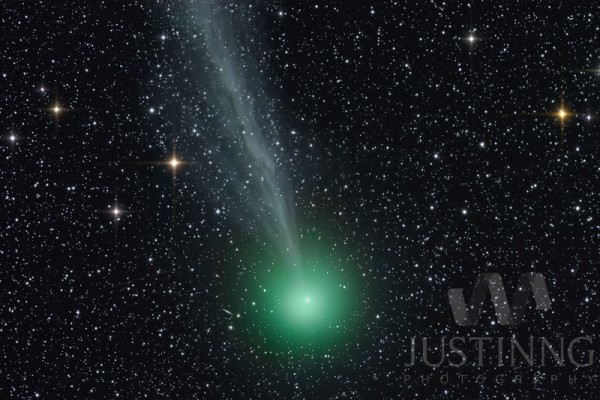
New Year’s Comet Lovejoy

Wow! Comet Lovejoy is really living up to its name! A wonderful December 29 photo from Justin Ng of Singapore and a link below to how you can see the comet.

Comet Lovejoy on December 29, 2014 by Justin Ng from Singapore.   Visit Justin Ng's website.

Have you seen Comet Lovejoy yet? Although telescopes and binoculars are still the best way to find and view the comet, it’s now barely within the limit for visibility with the unaided eye under exceptional viewing conditions. Justin Ng of Singapore took this fine photo. He wrote:

I would like to suggest an image of Comet Lovejoy that I’ve just taken on 29 December 2014 at around 12.30 AM SGT. This is a LRGB image with a total exposure time of 12 minutes. A spiral galaxy, NGC1886, is also visible in the image, located on the left of the comet’s coma.

SOURCE::: http://www.earthsky.org

Natarajan

Image of the day….Late December night sky over the Irish island of Achill.

Conor Ledwith took this photo. He wrote:

Photo credit: Conor Ledwith

Photo credit: Conor Ledwith Photography


Hi folks, a selfie taken last night at Achill Island, Mayo. Slievemore is the mountain in front of me.

Achill Island in County Mayo is the largest island off the coast of Ireland. It’s situated off Ireland’s west coast. The mountain Slievemore is at the north end of the island.

Thanks for sharing, Conor! See more photos by Conor Ledwith Photography

SOURCE:::: http://www.earthsky.org

Natarajan

Long Distance Conveyor Belts….

Employed in nearly all kinds of industries, conveyor belts provide an excellent mean for moving cargo and materials from one place to another. In the mining industry, they are particularly useful because they allow mineral ores to be transported over rough terrain or difficult-to-access areas, and offer a cost-effective and reliable way of moving a constant stream of material that would otherwise have to be trucked from one location to the next. The high levels of productivity and low operating costs involved have led to a widespread adoption of belt conveyor systems. And because mines are typically located in remote areas, these conveyor belts stretches tens of kilometers. In fact, the mining industry owns some of the longest conveyor belts in the world designed to transport mineral ores from the mines to the refineries or ports or stockpile centers.

longest conveyor-belt-4

The world’s longest conveyor belt at 98km. Photo credit

The world’s longest conveyor belt is located in the Western Sahara. It is 98 km long and transports phosphate rocks from the mines of Bou Craa to the port city of El-Aaiun. From there, cargo vessels transport the phosphates to various countries, where they are utilized in fertilizer production. The belt is visible as a straight line in satellite photos, and at some places, easily recognizable by a white strip of phosphates that lay strewn across the dusty brown desert by the action of strong Saharan winds. This conveyor belt that connects Bou Craa with El Aaiún, can carry 2,000 metric tons of rock per hour.

longest conveyor-belt-1

Photo credit

longest conveyor-belt-2

A fair amount of phosphate is lost to the wind. Photo credit

longest conveyor-belt-5

Photo credit

In the state of Meghalaya in India lies the world’s longest single-belt international conveyor. It is about 17 km long and conveys limestone and shale at 960 tons/hour, from a quarry in India to a cement factory at Chhatak Bangladesh. The belt is 7 km long in India and 10 km long in Bangladesh. The entire conveyor has been put on trestles.

longest conveyor-belt-6

Photo credit

SOURCE::::www.amusingplanet.com

Natarajan

AirAsia Crash: Flying Into a Thunderstorm is the Biggest ” No No” in Commercial Aviation …

First thing’s first, we need to trundle out the boring but critical post-crash disclaimer: It is a bad idea to speculate too broadly on the how-and-why so soon after an air disaster.

AirAsia Clouds

Almost always the initial hunches and theories end up totally off-base or at best incomplete. We live in an age when people want and expect instant answers, but that just isn’t possible with plane crashes.

It often takes months or even years before a cause is nailed down. In some cases we never learn for sure what happened.

That said, a seeming red flag in Sunday’s AirAsia disappearance is the weather. Could the Airbus A320, flying from the busy Indonesian city of Surabaya to Singapore, have wandered inadvertently into a violent thunderstorm and suffered some kind of catastrophic malfunction or structural failure? It’s possible.

I’ll point out that flying into thunderstorms is about the biggest no-no in all of commercial aviation. The crew had asked for a weather-related altitude change shortly before the disappearance, a request that was denied by air traffic control — presumably because of traffic constraints. This isn’t terribly unusual; pilots ask for altitude changes and route deviations all the time, and not always are they granted. However, that does not mean the AirAsia crew had no choice but to plow headlong into a storm. Worst-case, the crew always reserves the right to do what it needs to do, with or without permission. I cannot imagine the pilots willingly flew into what, on the radar screen, would have been a bright red splotch of potentially dangerous airspace. Perhaps a patch of weather that the pilots presumed would be manageable turned out to be otherwise? We don’t know.

Some are drawing comparisons between this incident and the 2009 Air France tragedy. They occurred under somewhat similar circumstances, and the media is eager to link these recent incidents together and wring some scary significance out of them. Some commentators have noted, for instance, that both planes were built by Airbus. I understand the temptation here, but this is extremely premature, and it’s unlikely that the aircraft model played a significant role. Remember that basically half of all the commercial jetliners in the sky are Airbus models.

An even bigger red herring is the fact that the pilots made no distress call. Several news outlets have brought this up. Effectively it means nothing. Communicating with air traffic control is pretty far down the task hierarchy when dealing with an emergency. The pilots’ priority is to control the airplane and deal with whatever malfunction or urgency is at hand. Talking to ATC comes later, if it’s practical.

So, the year appears to be closing on a tragic note. That’s a shame, seeing that 2013 was the safest year in the history of modern commercial aviation. Not to sound flip, but we can’t expect every year to be the safest, and it’s important to look at the broader context. This year will be something of a correction, but over the past ten or fifteen years the rate of fatal accidents, per miles flown, has been steadily falling. The International Civil Aviation Organization (ICAO) reports that for every million flights, the chance of a crash is one-sixth what it was in 1980, even with more than double the number of planes in the air.

Whenever people bring up the less-than-stellar accident record for 2014, I remind them of how bad things used to be. In 1985, 27 — twenty seven! — serious aviation accidents killed almost 2,500 people. That included the JAL crash outside Tokyo with 520 fatalities; the Arrow Air disaster in Newfoundland that killed 240 American servicemen, and the Air-India bombing over the North Atlantic with 329 dead. Two of history’s ten worst disasters happened within two months of each other! That’s a bad year.

Headquartered in Kuala-Lumpur, Malaysia, AirAsia is the largest low-fares airline in Asia, and one of the biggest in the world. It operates about 70 aircraft, all of them A320s, on routes around Indonesia, Thailand, Malaysia and beyond. (AirAsia X is the airline’s long-haul affiliate, and operates the larger A330.) I flew AirAsia between Bangkok and Phuket a few years ago. For what it’s worth, except for a delay on the outbound leg, its operation struck me as no more or less professional than that of any other major airline.

Asia, by the way, is now the world’s biggest and busiest air travel market, having surpassed both North America and Europe.

This article originally appeared at AskThePilot.com.

SOURCE::::

http://www.businessinsider .com

Natarajan
Read more: http://www.askthepilot.com/airasia-flight-missing/#ixzz3NQpTxsKx

Image of the Day…. View of Alps from Space …

View of the Alps From Space

Expedition 42 Flight Engineer Samantha Cristoforetti of the European Space Agency (ESA) took this photograph of the Alps from the International Space Station, andposted it to social media on Tuesday, Dec. 23, 2014. She wrote, “I’m biased, but aren’t the Alps from space spectacular? What a foggy day on the Po plane, though! #Italy”

Image Credit: NASA/ESA/Samantha Cristoforetti 

SOURCE:::: http://www.nasa.gov

Natarajan

Suspension Bridge over Peaks

Source: IB Times

The Peak Walk bridge opened last week with a ceremony and press conference at Glacier 3000’s Restaurant Botta. And it was erected very quickly: construction began this past September. Yet the bridge’s chief engineer, Bernhard Seiler, ensured that the bridge was built to withstand the harsh winds and heavy snowfall that often frequent the area. Costing 1.8 million Swiss francs (around 1.87 million USD), Peak Walk by Tissot will remain open year-round, and is free for all visitors.

Swiss Alps Suspension Bridge

Source: Daily Mail

Peak Walk by Tissot

Source: Daily Mail

Surprisingly enough, Peak Walk bridge is only Switzerland’s second highest suspension bridge; the Titlis Cliff Walk suspension bridge, which is similarly located in the Swiss Alps, stands 10,000 feet above sea level. Suspension bridges without vertical suspenders (like the Peak Walk bridge) are often used in mountainous parts of the world due to their simple structure.

Suspension Bridge from Afar

Source: GSTAAD

Glacier 3000 Suspension Bridge

Source: Glacier 3000

Looking Back at Peak Bridge

Source: watson

SOURCE:::: http://www.all that is interesting .com

Natarajan