Source….http://www.rediff.com
Natarajan
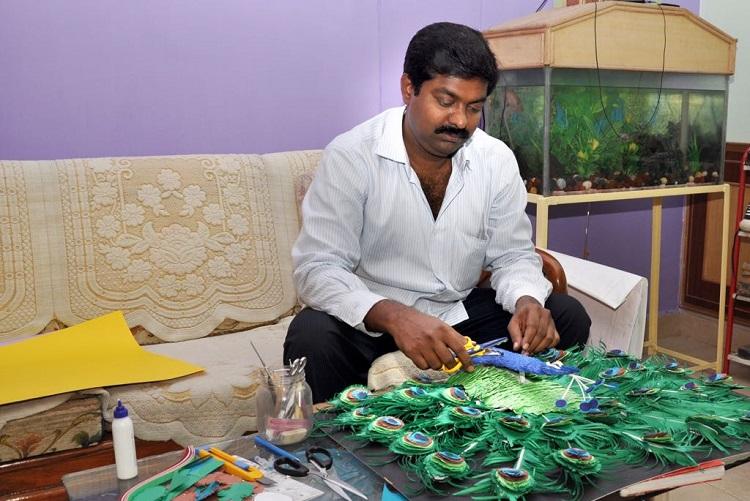
The word sculptor usually brings to mind a man busy chiselling away on metal or plaster, but Moka Satish Kumar, a Visakhapatnam-based artist, plans to change that perception.
Completely self-taught, Satish began with small subjects like birds and insects before gradually moving on to exotic sculptures.
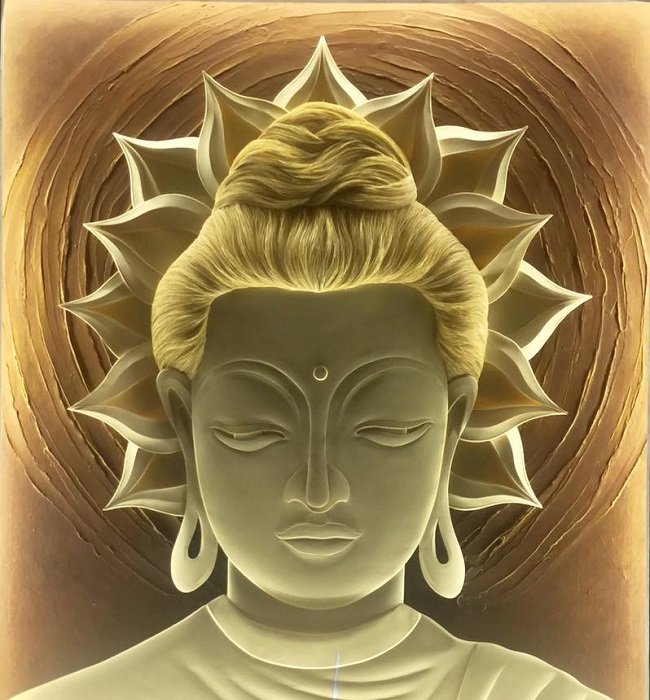
A paper sculptor, Satish is gaining recognition for intricate sculptures carved by him using nothing but paper.
Born, raised and educated in Visakhapatnam, Satish has been sculpting these three-dimensional sculptures for close to 12 years now.
“I come from a commerce background and have no formal training in the arts field. It all started when I began observing paper collages. I was drawn to the subtle way in which light and dark colour paper are assembled to create an image,” says Satish, who used to work in the private sector.
“However, with sculptures, it’s far more realistic as the effect of a shadow is created by the subject itself,” he adds.
Since Satish is completely self-taught, he began with small subjects like birds and insects before gradually moving on to some exotic sculptures. Here are a few examples.


The outline of the art is first drawn on the paper before Satish cuts them out and gets to work. The sculptures are made using a combination of cutting, folding and embossing techniques.
“Embossing is nothing but adding an extra layer on top of a paper to give it a certain finish and 3D effect. For example, the finish you find on wedding cards is from preset designs, which are pressed onto the card,” Satish explains.
“However, I do it manually to ensure that the final product is smooth. The paper should also be handled with care as it is generally a delicate thing,” he adds.
Meticulous effort
Making a sculpture is not easy work, as even a basic 2×2 feet portrait can take up to 250 hours, says Satish.
“The sculptures are also expensive for the same reason. Only those who put in the hard work will understand. No corrections can be made to the art work… even a minor mistake means that the sculptor has to start over again,” Satish says.
While paper sculpting is relatively more common in western countries, very few Indians indulge in the art form. Therefore, Satish has also opened an institute and is presently teaching three students in his workshop.
“I also need labour. I can’t mass produce these sculptures, so I’m working on teaching it to more people. I also plan to approach the Andhra Pradesh government with my work,” he says.
Source…Nitin.B. in http://www.the news minute.com
Natarajan

Many housing estates throughout London are surrounded by black steel and mesh railings with peculiar notches around the edges. Although at first glance they appear to be some quirky architectural design, the notches have a purpose—or rather, had a purpose. These steel railings originally functioned as stretchers used to carry the wounded during the Second World War. The curves or the notches you see were the legs upon which the stretchers were laid on the ground. After the war was over many of these stretchers were repurposed to replace fencing that were lost in the war.
Photo credit: www.stretcherrailings.comIn the months leading up to the war in 1939, the UK government produced more than 600,000 stretchers at plants located in Hertfordshire and the West Midlands. The stretchers had a steel frame supporting a wire mesh; steel was chosen so that the stretchers could be easily cleaned and disinfected from germs, dirt and blood. The two notches on either end of the poles allowed the stretchers to be rested on the ground but still be picked up quickly and easily. Unfortunately, the stretchers were terribly uncomfortable and many volunteers from the Civil Defence Service, who were carried on these stretchers, complained of the hardness and discomfort.
After the war, the UK was left with a huge stockpile of stretchers that needed to be put to use, or recycled. As it happened, many estates in Britain’s cities had lost their perimeter fencing as these were removed and melted down to manufacture ammunition, tanks and other weaponry for the war. Then someone had this bright idea of welding together these stretchers and creating fences out of them.
These so-called “stretcher fences” can be found at many localities around London such as Peckham, Brixton, Deptford, Oval and East London. The metal structures were also used in other cities such as Leeds and also in Scotland, but they are most prominent in south and east London.
Many of the surviving railings today are in poor condition. Others were removed by local authorities due to increasing degradation. The newly formed Stretcher Railing Society believes that these railings are an important part of Britain’s heritage and needs to be preserved. As starters, they have began cataloguing the locations of these railings. You can check them out on their website.
Source…..http://www.amusingplanet.com
Natarajan
A humble son of a farmer who studied in local government run schools, in Tamil medium, is the new head of India’s premier space agency.
Dr K Sivan was born in Sarakkalvilai in Kanyakumari district in 1957. His father was a farmer, and Dr Sivan is the first graduate in the family.
By all accounts, his is an unusual story.
A young Sivan studied in government schools in his native village till the 5th standard, and completed his schooling in neighbouring Valankumaravilai, all in Tamil medium. Later, he graduated from the S T Hindu College in Nagercoil.
He then graduated from the Madras Institute of Technology in aeronautical engineering in 1980 and completed his master’s in aerospace engineering from the Indian Institute of Science, Bangalore, in 1982.
That year he joined ISRO on its Polar Satellite Launch Vehicle project, towards which he contributed in mission planning, design, integration and analysis. He has held various responsibilities during his stint in ISRO, finally going on to head India’s space agency.
At ISRO, he completed his PhD in aerospace engineering from IIT-Bombay, in 2006.
Dr Sivan, who takes over from Dr A S Kiran Kumar on Monday, January 15, for a three-year term, is only the second rocket scientist after G Madhavan Nair to head ISRO.

MAGE: Dr Sivan’s family home in Sarakkalvilai village. He comes here regularly to attend family functions and for the Bhadrakali Amman puja. Photograph: A Ganesh Nadar/Rediff.com
Sarakkalvilai falls on the outskirts of Nagercoil, which is the headquarters of Kanyakumari district, Tamil Nadu. All of a sudden this small village has become the centre of attraction for people near and far, thanks to its famous son.
“Take the next right and it is at the end of the road,” says a villager, and as you reach the house you realise it is as unpretentious as the man who grew up there.
Dr Sivan’s sister-in-law Saraswathi lives in the family house with her daughter. “My eldest daughter got married five months ago and Sivan had come for the function,” she says, her eyes glowing with happiness.
Since the announcement about his appointment, people have been coming in droves to congratulate her, and her face beams with pride.
“I was married 30 years ago into this family and at that time he was already working for ISRO in Thiruvananthapuram. He used to live in a lodge then. He comes home for festivals and family functions,” says Saraswathi.
The conversation is interrupted when former Tamil Nadu Congress president Kumari Ananthan lands up with a dozen supporters to congratulate her.
One of the men who comes along with Ananthan hands her a book with the message, “Please give it to him when he comes next.” Another hands her a monthly magazine.
“He comes here every year for the Badrakali Amman puja which takes place in April-May,” adds his sister-in-law.
“He comes with his family, offers prayers and leaves the same day. He always comes for all family functions. When he is with the family he is always smiling and joking. He never calls, but his wife calls regularly and keeps in touch with us,” Sarawathi says.
“He was a class topper from school to college,” says Dr Sivan’s uncle who lives in the house opposite.
“He was a brilliant student and never went for tuitions or private classes. His father used to pluck mangoes and young Sivan used to go to the market to sell it. He was a helpful child,” the uncle adds.
The school Dr Sivan studied at is also opposite the family house. The retired PT master there recalls him clearly. “He was five years my junior in school, I remember him as a very quiet boy.”

“I too was five years his junior,” another villager pipes in. “You know the final exams used to come during harvest time. His father used to be in the field while Sivan sat on the lower branch of a tree with his books, studying, keeping one eye on the harvest, and run if his father called. He was always studying.”
“When Sivan and I were in school we had a very good headmaster,” the villager adds. “That headmaster planted many trees in the school compound and made every class in charge of a few trees. In the morning, when we came to school, the first thing we did was to water the trees and only after that did we attend school.”
“Kanyakumari is basically an agricultural district,” an elderly villager points out. “Apart from coir, there was no industry here. We all survived on farming. It’s rich fertile soil and there is plenty of water. Paddy, bananas, coconuts, mangoes, rubber is grown here.”
“Sivan was exceptional,” the elderly gent adds, “while he helped his father in the field he continued studying every free moment.”
“As there was only a primary school here we went to nearby Valankumaravilai for our SSC (Class 10). Those days there was no 12th standard. As there was no bus facility we walked.”
A colleague from ISRO, who retired a decade ago and did not want to be named for this feature, recalls, “He (Sivan) would go home only to sleep. He is extremely hard-working and totally focused on his work. He was not only the first graduate from his family, he was also the first graduate from his village.”

“He is a disciplined taskmaster,” says D Karthikesan, former director of the ISRO Propulsion Complex in Mahindragiri, Tamil Nadu.
“He likes to keep everything on schedule and works with a deadline,” adds Karthikesan. “If he thinks there is a problem somewhere he will go and talk to the people actually working on the project, and never limit himself to seniors in the organisation.”
“Though he is a hard taskmaster,” the former ISRO scientist points out, “he is also extremely generous and always looks after the welfare of the people working under him. So people work hard for him.”
“He is a bold decision-maker,” says Karthikesan. “Where others may hesitate wondering if it would work or not, he will say it will work and will do it.”
“Though he followed the schedule strictly,” adds Karthikesan, “he also made sure that all parameters are met at every stage. Whether it is quality or safety, he made sure every parameter was up to the mark before proceeding, and yet kept a tight schedule.”
Dr Sivan has two sons. The elder one has finished his BTech, the younger son is in college.
The school Dr Sivan studied in was built over 60 years ago. “We need to pull it down and build another,” says a villager. A government-run school, the land was given free by Dr Sivan’s uncle.
The village still does not have a bus service, a fact the villagers highlighted to Kumari Ananthan, the Congress politician. Nor does it have a middle, high or higher secondary school.
K Sivan’s ascent bears an uncanny resemblance to another ISRO scientist who was born in a fishing village in Ramanathapuram, also in Tamil Nadu.
That scientist, of course, went on to become the most beloved President this Republic has had.
Source….A.Ganesh Nadar in http://www.rediff.com
Natarajan
தஞ்சாவூரில் தயாரிக்கப்படும் தலையாட்டி பொம்மைக்கும், தஞ்சை பெரிய கோவிலுக்கும் என்ன சம்பந்தம் இருக்க முடியும் என்று தானே நினைக்கிறீர்கள்…
இந்த சாதாரண தலையாட்டி பொம்மைக்குள் தான், மிகப் பெரிய தத்துவத்தையே ஒளித்து வைத்துள்ளனர், நம் முன்னோர்.
கொட்டாங்கச்சி எனப்படும் தேங்காய் சிரட்டையில் பாதியை எடுத்து, அதில், களி மண்ணை அடைத்து, தலையாட்டி பொம்மைகள் செய்யப்படுகிறது. அந்தப் பொம்மையை தரையில் வைத்து, எந்த பக்கம் சாய்த்தாலும், அது, ஆடி ஆடி கடைசியாக நேராக நின்று விடும்.
சமீபத்தில், தஞ்சை பெரிய கோவில் வளாகத்தில், தண்ணீர் பற்றாக்குறை காரணமாக, ‘போர்’ போடுவதற்காக, ஆழ்துளை கிணறு தோண்டியுள்ளனர். அப்போது, களிமண்ணோ, செம்மண்ணோ வரவில்லை; வேறு ஒரு வகை மணல் வெளிப்பட்டிருக்கிறது.
அது, காட்டாறுகளில் காணப்படக் கூடிய மணல். சாதாரண ஆற்று மணலுக்கும், காட்டாறு மணலுக்கும் வித்தியாசம் உண்டு. சாதாரண ஆற்று மணலை விட, காட்டாறுகளில் காணப்படும் மணலில், பாறைத் துகள்கள் அதிகம் காணப்படும். மேலும், சாதாரண மணலை காட்டிலும் கடினமானது. கோவிலை கட்டுவதற்கு முன், அந்த மணலை அடியில் நிரப்பியுள்ளனர்.
இத்தகவலை அறிந்த, தஞ்சை பெரிய கோவில் மீட்புக் குழுவினரின் முயற்சியால், போர் போடும் வேலை உடனடியாக தடுத்து நிறுத்தப்பட்டது.
ஏனென்றால், ஆயிரம் ஆண்டுகளாக இந்த பூமியில் ஏற்படும் அழுத்தங்களையும், நிலநடுக்கங்களையும் தாங்கி, நான்குபுறமும் அகழிகளால் சூழப்பட்டு, கம்பீரமாக காட்சியளிக்கும் இந்த உலக அதிசயத்தின் அஸ்திவாரமே அந்த மணல் தான்!
இவ்ளோ பெரிய கோவிலுக்கு, மணலை கொண்டு அஸ்திவாரம் அமைக்க, சோழ தேச பொறியாளர்கள் என்ன முட்டாள்களா!
கோவிலின் அதி அற்புத தத்துவமும், சோழர்களின் அறிவின் உச்சமும் அங்குதான் வெளிப்படுகிறது.
அகழிகளால் சூழப்பட்டுள்ள தீவு போன்ற அமைப்பில், காட்டாற்று மணலால் கோவிலுக்கு அஸ்திவாரம் அமைக்கப்பட்டுள்ளது. தலையாட்டி பொம்மையை சாய்த்தால், எப்படி கீழே உள்ள கனமான அடிப்பரப்பில் ஆடி ஆடி நேராக நின்று விடுகிறதோ, அதேபோல், பெரிய கோவிலும் எத்தகைய பூகம்பம் வந்து அசைய நேரிட்டாலும், அசைந்து, தானாகவே சம நிலைக்கு வந்து விடும்.
சோழ தேச பொறியாளர்களின் அறிவிற்கு, உலகில் வேறு எவரும் ஈடாகார் என்பதற்கு இது ஒன்றே சான்று!

Source….Pushpa in http://www.dinamalar.com dated 7th Jan 2018
Natarajan
I went to Kolkata with an upset tummy and returned with an upset husband. He had been very cheerful while we boarded the flight and the plane began to taxi. The air hostess started her routine, giving seat belt instructions and survival tips if the plane decided to take a dip into the ocean. My husband took a dip into his book when I asked him, “Where’s your briefcase?” I just remembered it wasn’t part of the hand luggage we had shoved into the overhead compartment.
He answered airily, “We checked it in,” and returned to his reading when what I said next made him forget his book for a long time. And that was some achievement. “We didn’t,” I persisted. “It was your carry-on baggage. Remember you left it unlocked because it would be with you?”
He turned ashen, clapped a hand to his mouth and jerked forward, straining his fastened seat belt and crashing back into his seat. “Oh no! I’ve left it behind! Where?” As he tried to figure that out, the plane accelerated and took off leaving his briefcase behind in Kolkata. “At the security check!” My husband exclaimed, looking aghast as he recalled his memory lapse.
He had forgotten to take it after the security check, having been pleased to collect his sling bag into which he had deposited his wallet, phone, pens and a notebook with a spiral spine, all guaranteed to beep if on his person. In fact, at the security check on our way to Kolkata, his pocket had behaved so much like an impromptu orchestra that on the return he had hit upon the idea of emptying his pockets into his shoulder bag before it was screened and, cock-a-hoop with its success, had completely forgotten his briefcase.
“What next?,” I asked. “No point informing the crew; no plane is going back for a briefcase unless it contained state secrets. And what’s in it?”
We racked our brains to recall the contents. Luckily my husband had emptied the case to accommodate the last minute shopping of the previous evening. So it didn’t have any important documents or cards. But it contained new silk saris, dress material, T shirts and a few knick knacks.
“So if we don’t recover it, we only lose these,” said my husband, looking relieved. “The saris!,” I cried in anguish.
During the flight we discussed the next course of action. I believed we would recover the case since my husband had chosen the best place in the airport to leave something behind – at the security check. Then I recalled that any abandoned piece of baggage is viewed with suspicion. “What if they immerse the case in water? Or something else?,” I was alarmed. “The saris!,” I cried out again. “They’ll be ruined.”
“Can you think only of saris?,” my husband snapped. The tension was getting to him. “One of them is your gift to me, that’s why,” I said and that mollified him.
We had more than five hours in Chennai before boarding the flight to Thiruvananthapuram. Earlier we had wondered how we would spend the time, but my husband’s ingenious briefcase plot took care of that. We explored the length and breadth of the airport putting in a few kilometres of brisk walking-cum hops, skips and jumps before learning what to do.
The airport manager, seeing my husband’s anxious face, reassured him, “Don’t look so worried, sir, you’ll get it back. Such things happen all the time.”
“‘Really?” Now my husband beamed, grateful he didn’t hold exclusive copyright for losing baggage.
The Lost and Found Department at Kolkata airport whom we called were close-lipped about the whereabouts of the briefcase but gave instructions on the procedure to follow in Thiruvananthapuram.
Once home, we revived our letter-writing skills what with the never-ending letters and e-mails we had to send to various addresses, describing the briefcase and its contents, all with scanned copies of the boarding pass and ID proof attached.
We also had endless calls to make and everyone wanted details. I was most relieved we had decent items inside the case and lauded my husband’s uncanny foresight that had made him remove his innerwear from it.
Lost and found
After many twists and turns in the plot in the next few days that would have done Jeffrey Archer proud, the briefcase, decorated all over with the Lost Property number, returned home. Bringing it in, my husband declared he wouldn’t leave the corporation limits again. Ignoring his loaded statement, I asked anxiously, “Are the saris intact?”
A fortnightly column by the city-based writer, academic and author of the Butterfingers series. She can be contacted at khyrubutter@yahoo.com
Source….Khyrunnisa . A
Natarajan
Tucked away in a remote forest of birch and pine in the heart of Siberia, 3,000 km away from Moscow, at a place where winters are six months long with temperatures dropping to minus 40 degree Celsius and summers are swaddled with mosquitos, is a city built for scientists and researchers. This frozen wasteland is more suited for polar bears than scientific endeavors, but Nikita Khrushchev felt the distance from Moscow was necessary so that the country’s sharpest scientific minds could work together on fundamental research away from the prying eyes of bureaucracy. This is Akademgorodok, or “Academic Town”—the Soviet Union’s answer to America’s Silicon Valley. 
The Academpark Technopark at Akademgorodok. Photo credit: gelio.livejournal.com
Akademgorodok is situated in the middle of a forest 30 km south of Novosibirsk city. It is one of several Akademgorodoks built between the late 1950s and mid-1970s in Siberia; the Akademgorodok outside Novosibirsk is the most successful one. Located within Akademgorodok is Novosibirsk State University, 35 research institutes, a medical academy, apartment buildings and houses, and a variety of community amenities including stores, hotels, hospitals, restaurants and cafes, cinemas, clubs and libraries. Less than two kilometer away is an artificial beach created by dumping hundreds of tons of sand along the edge of the Ob reservoir.
At its peak, Akademgorodok was home to 65,000 scientists and their families. It was a privilege to live there, and many scholars in the 60s escaped to the frozen hinterland as a sort of voluntary exile in order to be far from the totalitarian rule of the Soviet capital, and lured by the promise of new housing and professional advancement.
Residents enjoyed great levels of freedom and indulged in activities unheard of in any other corner of the Soviet empire. They discussed the foundations of Marxist theory and about economic reforms, read books, listen to poets and singers not approved by the regime. Scientific research in areas dismissed as dangerous pseudoscience in Moscow, such as cybernetics and genetics, flourished.
Living standards in Akademgorodok were also higher than in the rest of the country. Shops were stocked with subsidized foodstuffs not easily obtainable elsewhere, and apartments were well-furnished. Those who obtained a doctorate were given a special food delivery service, which provided them a wider selection of groceries than the general population could avail. Members of the Academy of Sciences had access to even higher level of services and were allotted single-family residences rather than apartments.
But the utopian vision of no bureaucratic interference proved impossible in the Soviet Union. Freedoms got severely curtailed in the 1970s during the rule of Leonid Brezhnev. Then when the Soviet Union collapsed in the 1990s, many of the former communist nation’s best minds fled to the west. But economic reforms brought about by the end of communism saw the beginning of private investment and venture funding in Akademgorodok. From USD 10 million in 1997, this rose to USD 1 billion by 2015. There are some 300 companies operating at Akademgorodok today dabbling on everything from nano-ceramics to motion graphics for the American entertainment industry. Its current population stands at over 100,000.
While the figures pale in comparison to that of other countries and even elsewhere in Russia—Skolkovo, an emerging tech hub on the outskirts of Moscow, for example, has over 1,100 startups generating over USD 1 billion in revenue alone at the end of 2014—Akademgorodok will remain as Russia’s original Silicon Valley.
Photo credit: gelio.livejournal.com
Source….Kaushik in http://www.amusingplanet.com
Natarajan
The passage of time can make even the most steadfast of facts to no longer be true. For instance, it was once believed that doctors didn’t need to wash their hands before surgery, but it’s now known that doing so is imperative in order to prevent infection. Take a look at 8 supposed facts that aren’t really true:
1. THEN: America won its independence on July 4, 1776.
NOW: America didn’t officially gain independence until 1783.
2. THEN: George Washington’s teeth were made of wood.
NOW: His teeth were actually human teeth from his slaves. Some were made from ivory.
A set of dentures worn by George Washington are kept at the Mount Vernon plantation house museum. They’re fashioned out of ivory and human teeth, with the human teeth being purchased from slaves that sold them to dentists to make some money in the 18th Century. Apparently Washington paid just one-third of the going rate for the teeth. It’s likely that Washington had his dentures implanted into his jaw.
3. THEN: Pluto is a planet.
NOW: Pluto isn’t a planet.
4. THEN: Diamond is the hardest substance.
NOW: Ultra-hard nano-twinned cubic boron nitride is the hardest substance.
It’s been known that there are two substances that are harder than diamond since 2009. These substances, known as wurtzite boron nitride and lonsdaleite, are 18% and 58% better at resisting indentation than diamond respectively. The only problem is that they’re both quite unstable and rare elements. Yet another substance that’s even harder than the aforementioned two was discovered by researchers in 2013. Called ultra-hard nano-twinned cubic boron nitride, it essentially consists of boron nitride particles that have been reorganized into the shape of a layered onion
5. THEN: Witches in Salem were burned at the stake.
NOW: They were actually hanged.
The notorious Salem Witch Trials are widely believed to have involved suspected witches being burned at the stake, but it never actually happened – they were hanged instead. When the Trials were taking place, the US state of New England still followed English law, which dictated that witchcraft was punishable by hanging as opposed to burning at the stake. The confusion arises from the European church calling witchcraft heresy, an offense which was punishable by burning at the stake.
6. THEN: Israelite slaves built the pyramids.
NOW: Egyptian workers built the pyramids themselves.
7. THEN: Folding a piece of paper more than seven times is mathematically impossible.
NOW: The record stands at 13 folds.
8. THEN: The Great Wall of China is the only man-made structure visible from space.
NOW: Many man-made places are actually visible from space.
This so-called “fact” gets regurgitated to third-graders the world over, but there’s actually nothing factual about it at all. In 2003, a Chinese astronaut shattered the myth by confirming that the Great Wall of China wasn’t actually visible from space. In contrast, the lights of large cities, major roadways, bridges, and airports can be seen from space.
Source….www.ba-bamail.com
Natarajan
 Take off with Natarajan