Two guys wearing jetpacks fly alongside an Airbus A380….!!!


We’ve already seen ex-fighter pilot Yves Rossy — a.k.a. Jetman — fly his jet-propelled wing in formation with another pilot, and we’ve seen him whizz around Dubai’s Burj Khalifa.

His latest stunt, however, again performed with parachuter Vince Reffet, is perhaps the most impressive so far. The two pilots fly their jetpacks in formation with an Emirates-owned Airbus A380.

In the stunt, once again available in 4K resolution, the pilots whir incredibly close to the airplane as it flies above the Dubai skyline. The airplane’s size — the A380 is the world’s largest passenger airliner, some 238 feet long — gives a great sense of scale, showing how incredibly small the pilots’ jetpacks really are.

Filming the video was no easy feat either; every little detail had to be carefully planned, with a team of videographers recording the stunt from another, smaller plane. Check out the “making of” video below.

Source…… STAN SCHROEDER…..www.mashable.com

Natarajan


His Father Died. The Next Morning, He Went On To Save Delhi From The Jaws Of Defeat…..23e

Date: December 18, 2006
Match: Delhi vs Karnataka
Tournament: Ranji Trophy Group ‘A’ Match
Venue: Feroz Shah Kotla, Delhi

This is one story that has been etched in Ferozeshah Kotla’s history and will be narrated for years to come. It is the tale of an 18-year-old teenager, who loved cricket. An act, which stunned not just his teammates but also his opposition.

13332

This is the story of Virat Kohli.


Day 1:

The year was 2006 and Karnataka scored 446 in their first innings at Feroz Shah Kotla.


Day 2:

It was a cold and difficult day for the Delhi Ranji team. They lost 5 wickets chasing Karnataka’s mammoth first innings total. With half of the side back in the hut on the 2nd day itself, it was an uphill task for Kohli and Co. to save the match. The 18-year-old walked out and along with wicketkeeper Puneet Bisht helped reach Delhi 103 at the end of the day’s play, without losing another wicket. Kohli stood solid and unbeaten at 40, but Delhi still needed to go a long way with the last recognized pair in the middle.

That night, his world turned upside down. His father, Prem Kohli, just 54-years-old, passed away.

1

Day 3:

Kohli faced an awful choice – whether to cremate his father or to go and finish his innings for Delhi. The news of Prem Kohli’s demise had already travelled throughout the Delhi dressing room. Chetanya Nanda was informed that Kohli won’t come to bat and he was asked to pad up. But, his teammates, opposition and even the match officials were shocked to see Virat Kohli arriving in the dressing room in full cricketing gear. He chose to go in and bat.

He played for 281 minutes and faced 238 balls. When he was declared out after scoring a match-saving 90, just before lunch though the bat had brushed the pad as replays showed, his team was clearly out of trouble, with only 36 runs needed to avoid the follow-on.

Second-Test-Virat-Kohli-ton-ensures-draw-for-India-New-Zealand-win-the-series-1-0

At around 12, he watched the replay of his dismissal in the dressing room, quietly removed his pads and went straight to attend the funeral. From 14-4 (top order back to the pavilion), Delhi had managed to save the match and the man who lost his father the night before, was responsible for Delhi’s turnaround.

He knew that his father was gone. But he surely knew Delhi needed him and match could be saved. He just wanted to fulfil his father’s dreams, knowing that some part of his life would never be the same. This shows how big a team man he is.

His father was cremated later that evening and the rest is history. Kohli transformed from an 18-year-old teenager into a mature adult overnight.


Mithun Manhas, the skipper of Delhi Ranji team was all praise for the youngster’s determination:

We asked him what made him come here. And we also told him that if he decided to go back and be with his family, the entire team would support him. He decided to play. That is an act of great commitment to the team and his innings turned out to be crucial.”


Chetan Chauhan, the then Delhi coach, was amazed at his dedication:

“He was barely 18 and he had lost his father at 4 am. I spoke to Virat and his brother and was told that he was in the mental shape to actually go out and bat. Hats off to his attitude and determination. It’s unfortunate that he missed out on a hundred but what matters today is that how he played, not how much he made.”


He never looked back. What followed was sheer beauty.

Virat-Kohli-Cute-Smile

In his Ranji debut season, putting aside his personal tragedy and saving his team from the jaws of defeat certainly proves his mental strength. Only a person with remarkable passion and love for what he or she is doing can go ahead and do something so so…remarkable.

For him, life is cricket. India comes above everything.
Happy Birthday, Virat Kohli. You are a synonym of dedication. 🎂

Source…..Shuvro Ghoshal  in http://www.storypick.com

Natarajan

Meet Harjit Sajjan, An Indian-Origin Who Will Be Canada’s New Defence Minister….

We told you about this monumental move – Punjab being listed as the third language in the Parliament of Canada and that a new cabinet will be unveiled.

Canadian Prime Minister Justin Trudeau announced his new cabinet. And now, Canada’s new Defence Minister will be Indian origin Harjit Sajjan.

He is one of the 20 Punjabi speaking members elected to the latest Canadian cabinet.

Here are a few things that you probably didn’t know about him:

1. He hails from a small village of Bombeli, which is located in Hoshiarpur District of Punjab. He shifted to Canada because of his father, who left for Canada when he was young.

2. He has been living in Vancouver South since he was 5 years old.

3. He served in the gang squad of the Vancouver Police Department for 11 years.

4. After that, he became Lieutenant-Colonel in the Canadian Armed Force. As demanded by this post, he went to Afghanistan 3 times. Among many other recognitions, he was awarded Meritorious Service Medal and the Order of Military Merit.
He was known for his bravery. Canadian Brigadier General, David Fraser praised him for his diligence, bravery, and unwavering determination.

He took to Twitter to announce about his new ‘post’. His jubilance was quite noticeable.

Other than Harjit Singh Sajjan, there are three other Indian-origin Sikh ministers in the newly formed cabinet.

Amarjeet Sohi:  Minister of Infrastructure and Communities

Navdeep Bains: Minister of Innovation, Science and Economic Development

Bardish Chagger:  Minister for Small Business and Tourism

Also, Canada’s Prime Minister has shown that he’s a staunch believer of gender equality by appointing the equal number of men and women in his cabinet.

This is definitely a big step for Canada and also for India. We congratulate them for this feat

News Source: Times Of India

Cover Image Source

Source….Aparajita Mishra in http://www.storypick.com

Natarajan


Mysore Gets India’s First Visually -Handicapped Friendly Railway Station …

Mysuru Railway Station has become the first railway station in India to be visually impaired friendly.

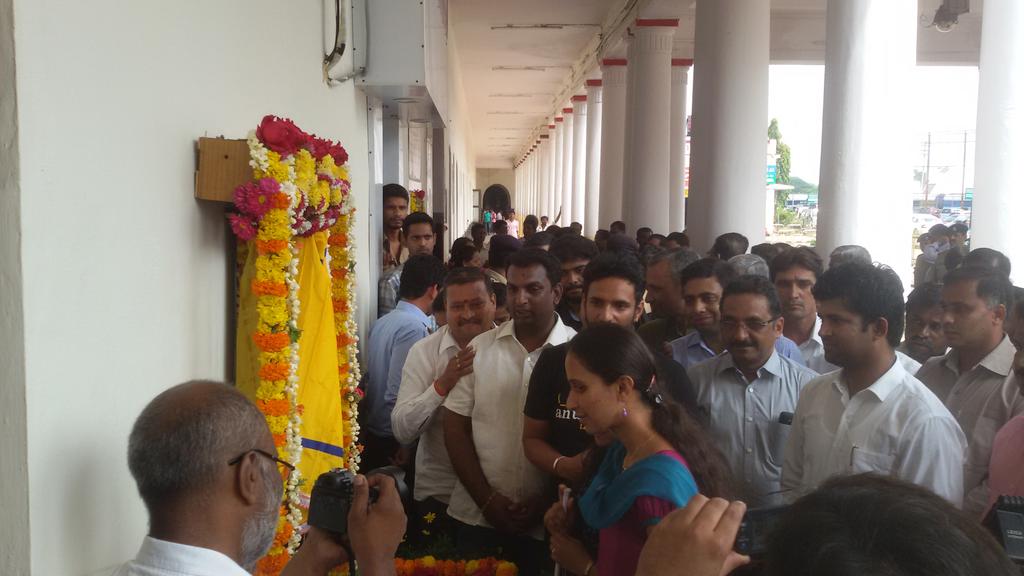
With the aim of helping visually impaired passengers travel independently, features like tactile maps and train schedules in Braille were unveiled at the station.

mysuru1

Source: Twitter

Anuprayaas, a non-government organization working for the welfare of visually challenged persons, along with south-western railway officials, started working on this project about a month ago. The first phase was inaugurated on November 3, and two more phases are being planned. The installations at the station include the following:

  • Tactile maps to give people an idea about the physical layout of the station. It is basically a map with raised surfaces that describes the distance and location of the entrance, platforms, counters, washrooms etc. The map informs people where they are, which side to turn and how many steps to take to reach a help desk.
  • Train itinerary sign board that provides train names their schedules in Braille. These are fixed signboards and do not provide real time information like electronic boards.
  • 400 metallic Braille signs have been installed at about ten places on each platform. Placed along the railing of the staircase leading to various platforms, they provide directions and platform information.
  • Restaurants, canteens and food plazas in the railways station will not have Braille menu cards too.

27-year-old Pancham Cajla is the founder of Anuprayaas, and he started working on this project along with five of his friends. Mysuru MP, Pratap Simha, inaugurated the facility.

“As a part of the railway department, I went to organizations and met blind people. We asked them about what they would expect from a blind-friendly railway station,” Arun Kumar Singh, Telecom engineer with the South-Western Railways who helped in the execution of the project, told The News Minute.

During the testing period, the NGO brought many visually impaired people to check the features. Until people became aware of this facility, volunteers from the NGO will help the passengers. Anuprayaas is planning to go digital, improve the tactile maps, and introduce more disabled friendly battery cars in the second phase.

Embedded image permalink

Sowmya visually challenged girl inaugurating tactile map of mysuru station with all utilities & train time table

https://twitter.com/DrmMys

Source…. Tanaya Singh ….www.the better india .com

Natarajan

This Kerala Man Built an Aircraft. He Now Wants a Job….

This Kerala Man Built an Aircraft. He Now Wants a Job

Saji Thomas has studied only till class 7 and has always been hooked on to electrical gadgets and their repairs

THIRUVANANTHAPURAM:  After five years of painstaking efforts, Saji Thomas has built a small aircraft – all on his own – but now this 45-year-old from Kerala, who is speech and hearing challenged, yearns for a full-time job.

His wife Maria said that they have been married for 14 years and since then, all that she saw was her husband busy tinkering with small motors and machines she didn’t have a clue about.

“Initially I tried my best to dissuade him to get work as an electrician, but when I found all my efforts were in vain, I decided to support him in all his endeavours. Today the entire village (near Thodupuzha in Idukki district) is steadfastly behind him as he built a twin-seater ultralight aircraft, which has been filmed by the Discovery Channel,” Maria told IANS.

Mr Saji has studied only till class 7 and has always been hooked on to electrical gadgets and their repairs.

“The first thing he built was the frame of an helicopter. He got in touch with (former prime minister) Rajiv Gandhi, seeking money to buy an engine for it. It did not materialise because Rajiv Gandhi was assassinated (In May 1991). Then his interest shifted to building an aircraft and after five years of hard work, he fitted the small aircraft with the engine of a two-wheeler. Later it was given to a college nearby and they still use it to teach their students,” the proud wife said.

She said he then began work on this now successful two-seater and sourced all the materials from Bangalore.

“After a marathon five years of work, last year in April, it was taken to a private airline academy in Ambasamudram near Madurai. Since this aircraft has no licence nor does Saji have a licence to fly aircraft, he could fly it for a few minutes there. Later the chief instructor, a retired air force officer, also flew it for a few minutes. The aircraft flew only at a height of 20 feet as the rules are very strict,” added Maria.

Today the couple, who has a 13-year-old son Joshua, is still hoping for the government support.

“We see the present programme of Discovery Channel which has filmed his efforts as an eye-opener and it is expected to be aired soon. Our only wish is my husband gets a stable monthly job as by now he has sold a portion of our land to complete this aircraft. We live in a small two-room home built with the help of the local village council in 2001,” Maria said.

In all, Saji has spent Rs.25 lakh for his expensive hobby in the past more than 15 years.

Source….www.ndtv.com
Natarajan

THAT TIME A COMMERCIAL AIRCRAFT RAN OUT OF FUEL MID-FLIGHT- THE GIMLI GLIDER….

On July 23, 1983, in the small town of Gimli, Manitoba, Captain Robert Pearson and Co-Pilot Maurice Quintal expertly glided a 100-ton Boeing 767 carrying 69 people to a safe landing without engines, air brakes or flaps, and minimal control of the aircraft.

Bad Math

The flight plan for Canada 143 that day began with a short jaunt from Montreal, Quebec to Ottawa, Ontario. Right from the beginning, the crew realized the plane had a faulty fuel control: “A computer known as the Fuel Quantity Information System Process manages the entire fuel loading process. . . . But the FQIS was not working properly on Flight 143.”

With FQIS out-of-order, the ground maintenance crew had to calculate the amount of fuel needed, in a process called “dipping the tanks.”

Wisely taking all precautions, the flight crew also checked the maintenance crew’s fuel calculations, three times in fact, and each time, the calculations matched.

After reaching Ottawa, and preparing for the 2,800 kilometer trip to Edmonton, Alberta, Pearson apparently sensed something was off and asked that the plane be “re-dipped.”  The ground refuelers stated that the tanks had 11,430 liters of fuel.  When Pearson and Quintal crunched the numbers, they came up with approximately 20,400 kilos of fuel on board, which all seemed correct.  The truth is, though, they only had about 9,144 kilos.

The problem was that the original ground crew, and the flight crew (twice!), had forgotten that the new airliner used the metric system (as Canada was in the process of switching to the metric system, so the new planes purchased by Air Canada were being calibrated in metric units); as a result, they had all erroneously used the figure 1.77 lbs/liter for their specific gravity factor in the calculations, but what they should have used was 0.8 kg/liter.

Bottom line, this meant that the plane was filled with only about half of the fuel it needed to make the trip.

Oh No!

Shortly after dinner:

The first warning light came on. Flight 143 was . . . at 41,000 feet and 469 knots at the time . . . . ‘At that point . . . We believed we had a failed fuel pump in the left wing, and switched it off. . . . . When a second fuel pressure warning light came on, Pearson felt it was too much of a coincidence and made a decision to divert to Winnipeg.


Just minutes later, another pressure gauge “lit up,” and they lost their left engine. Two minutes after that: “The EICAS issued a sharp bong – indicating the complete and total loss of both engines. . . . ‘It’s a sound that Bob and I had never heard before.’ . . . . Starved of fuel, both . . . engines had flamed out. Pearson’s response, recorded on the cockpit voice recorder, was ‘Oh fuck.’”

After a quick perusal of the manuals, which had no procedures for a loss of both engines, the pilots quickly realized their only hope was to somehow glide the plane to a safe landing. Luckily for the passengers aboard, while he’d never tried gliding a Boeing 767, Pearson was an extremely experienced glider pilot.

Of course, while a Boeing 767 is perfectly capable of gliding to some extent, even fully loaded, many of the systems within the plane were not designed to run without the engines. Thus, a byproduct of the engines dying was the loss of many of the systems and instruments on the plane due to lack of electricity, leaving them with only basic instruments.

One of the many key things that shut off was the radar transponder, meaning that traffic controllers on the ground at Winnipeg’s airport had to use a ruler placed on the radar screen to determine the distance traveled by the aircraft in a given time, which could then be combined with the rate of descent to figure out how far the plane could go.

If the loss of many of the instruments wasn’t bad enough, most critical of all was the loss of hydraulic pressure. Without it, the pilots would have no control at all.  Because of this, the Boeing 767 is equipped with a “ram air turbine” which is automatically deployed in cases like this, providing a very small amount of hydraulic pressure- the faster the plane is going, the better this hydraulic pump would work as the turbine spun faster.  Of course, as the plane slows for a landing, hydraulic pressure drops, and so does the pilot’s ability to control the plane.  But that’s a problem for later.

At this point, the plane was losing altitude at a rate of approximately 2,000 feet/minute, but at least the pilots could still control it.

Because of the sink rate, the pilots and controllers after crunching the numbers all agreed the plane would never make it to Winnipeg, but:

An abandoned Royal Canadian Air Force Base . . . was 12 miles away . . . Quintal was familiar with it because he’d been stationed there in the service. Unknown to him and the controllers . . . Runway 32L . . . had become inactive and . . . a steel guard rail had been installed down most of the southeastern portion. . . . This was the runway Pearson would ultimately try and land on…

A Forward Slip

Upon approaching the runway at the old Gimli base, Pearson and Quintal realized they were too high. They then performed a common maneuver in small aircraft called a forward slip, which is to bank into the wind, then apply opposite rudder to keep the plane flying straight, rather than turning; this results in the plane descending more rapidly without increasing airspeed. While commonly done in personal aircraft, this is a very rare maneuver for commercial craft.

Although somewhat risky, this was the pilots’ only option since the flaps and dive-brakes required power from the now-inoperable engines. While all pilots are well familiar with this maneuver (in fact it’s generally required before you can go on your first solo flight in personal aircraft), Pearson had a wealth of experienceperforming the forward slip maneuver, thanks to not only frequently piloting gliders, but also years of experience towing them: “After releasing the glider, I would have this long tow line hanging under the plane, and I had to be careful not to snag it on the farmer’s fence as I approached the runway. So I would stay high until I cleared the fence, and then did a steep slip to make the runway.”

The Landing

The lack of hydraulic pressure had another downside, they couldn’t control the landing gear.  Thus, they performed another atypical procedure of a “gravity drop” of the wheels.  As a result, as the nose gear was dropping into the wind, it didn’t lock in place.

Another problem was that, unknown to the pilots, the abandoned runway had been converted to a recreational center, including auto and go-cart racing. In one of the many weird coincidence of the day, July 23, 1983, was the “Family Day” for the Winnipeg Sports Car Club: “Go-cart races were being held on one portion of runway 32L and just past the dragstrip another portion of the runway served as the final straightaway for a road course. Around the edges of the straightaway were cars, campers, kids and families in abundance…”

In what must have been a surreal moment for all of them: “Trees and golfers were visible out the starboard side passengers’ windows as the 767 hurtled toward the threshold at 180 knots, 30-50 knots faster than normal . . . . A passenger reportedly said, ‘Christ, I can almost see what clubs they are using…’”

Quintal did not realize the people were present on the runway until the point of no return, so he didn’t say anything. Pearson simply hadn’t noticed.  Pearson’s obliviousness to the potential human tragedy wasn’t negligence on his part, rather, in order to land the plane: “His attention was totally concentrated on the airspeed indicator [and operating the plane. In fact,] he never even saw 32R, focusing instead on airspeed, attitude, and his plane’s relationship to the threshold of 32L.”

The plane had also become increasingly difficult to control as its speed decreased and the turbine providing the hydraulic pressure slowed its spinning.

Nevertheless, they managed to glide in safely and as the plane touched down: “Spectators, racers, and kids on bicycles fled the runway. The gigantic Boeing was about to become a 132 ton, silver bulldozer. One member of the . . . Club reportedly was walking down the dragstrip, five gallon can full of hi-octane fuel in hand, when he looked up and saw the 767 headed right for him.”

Pearson laid heavily on the wheel brakes directly after touching down and: “Two tires blew out. The nose gear . . . collapsed . . . the nose . . . slammed against the tarmac, bounced [and threw a] three hundred foot shower of sparks. The right engine nacelle struck the ground . . . . The 767 came to a stop . . . less than a hundred feet from spectators, barbecues and campers…”

Although some people were hurt exiting the plane, due to the now contorted angle of its emergency exits, none of the 61 passengers, 8 flight crew or people on the ground suffered any serious injury.

Source….www.today i foundout.com

Natarajan

WHY STANDING IN ONE PLACE MAKES YOUR LEGS MORE SORE THAN WALKING…?

Why does standing in one place for a long time make my legs and feet sorer than walking the same amount of time?

Working retail, waiting tables, standing in line at the amusement park or just shopping with mom, anyone who’s ever been stuck on their feet for a long time more or less standing still knows that it’s much more tiring than walking the equivalent amount of time.  But why?

First, when you stand, your legs aren’t resting, even beyond just supporting your weight. Instead, your body sways very slightly. To keep you upright, a few muscles, particularly those in your calves, are constantly working, making very small adjustments that you probably aren’t consciously aware of. On the other hand, when you walk, the burden is distributed across more muscle groups. Muscles swinging the arms help propel them, core muscles keep you stable, butt muscles complete your stride, and the legs of both the calves and the thighs are employed.

Second, when you’re standing still, each foot and leg supports about half of the body’s weight, but neither ever gets a rest. On the other hand, when walking, each time a foot is raised the muscles formerly helping to balance you get a little break as does the bottom of your foot. While only a small break each instance, this totals to about half the time being in more or less a resting state other than the muscles required to lift your foot off the ground.

Walking

Third, when you stand, the blood and lymph fluids pool in your feet, calves and ankles, because your heart cannot efficiently pump the blood all the way up from your feet by itself. This is why if you stand in one place for long periods, you might notice that your feet and lower legs swell a little.

Because the heart isn’t up to performing this task efficiently, it relies in part on muscle contractions that occur when you walk and move about. As David J Tibbs in Varicose Veins and Related Disorders, states,

Only the peripheral pumping mechanism (musculovenous pumping) can cause full venous flow against gravity. This forceful pumping action is brought about when multiple veins are compressed by contraction of surrounding skeletal muscle. The valves direct the blood heartwards and prevent it from falling back again. Thus, by this simple arrangement, the harder the muscles work, the more vigorously is the massive flow of blood generated by this activity returned towards the heart.

Thus, when you stand in one place, your muscles are receiving less oxygen and other such things they need to operate at peak efficiency compared to when you walk around.


Fourth, when you stand, the entire load of your body rests on the same place – the underside of your feet, and particularly on the balls and heels. Beyond one side getting the aforementioned break about half the time, when you walk, different parts of your feet bear the load at different times.

Fifth, standing is sometimes much more boring than walking, particularly if you are at work with nothing mentally engaging to do (or watching your mom shop…). With nothing to occupy your mind, it can wander to how tired you are and how much your feet hurt. On the other hand, when walking, your brain will be more occupied since you must constantly assess the situation and avoid obstacles. Thus, standing may also seem even more tiring because you are just more aware of how your legs and feet are feeling.

Sixth, if you walk fast enough (or jog), your body will release neurochemicals that make you feel better, including adrenaline that pumps the heart faster, providing more oxygen to the muscles and brain, as well as endorphins that improve mood.

Bonus Facts:

  • In addition to those muscles mentioned, walking also works out the muscles around the pelvis, including the external abductors and internal adductors, belly muscles in the front and spinal muscles in the rear.
  • As with standing, anytime a person remains upright, venous pooling will occur; in some situations, such as when a construction worker remains suspended in a “fall harness” (the device that saves his life after a fall) but is unable to move his legs significantly, the pooling of blood can reach a critical level. As more blood pools in the legs (which aren’t moving enough to send it back up to the heart), the heart rate increases at first, and then will slow significantly. Without sufficient blood to bring fresh oxygen to the brain, the victim first loses consciousness, and if left in that condition, renal failure and even death can occur. (See: Suspension Trauma)
  • The average U.S. adult walks about 5,900 steps each day. Health experts recommend this be raised to at least 7,000 – the amount the average Japanese person gets in a day.
  • Interestingly, in a 2004 study of American Amish, it was shown that women got in more than 14,000 steps each day, and men more than 18,000. If only they had Fitbits to have the data to brag with;-)
  • Australians average almost 9,700 steps each day, and the Swiss get just a bit less than that.
  • The idea that “10,000 steps each day” is required for optimum health comes from an early Japanese pedometer from the 1960s called manpo-kei (“10,000 steps meter”). That said, the Centers for Disease Control does not recommend any particular number of steps, and instead suggests adults get 150 minutes of moderate activity each week.

Source….www.today i foundout.com

Natarajan

Looking Back: International Space Station at the Start of Expedition 1….

International Space Station in December 2000 with modules and solar arrays visible

On Nov. 2, 2000, the Expedition 1 crew — Commander William M. (Bill) Shepherd of NASA and Flight Engineer Sergei Krikalev and Soyuz Commander Yuri Gidzenko of Roscosmos — arrived at the International Space Station, marking the start of an uninterrupted human presence on the orbiting laboratory. Their Soyuz capsule made contact with the aft docking port of the station’s Zvezda Service Module at 3:21 a.m. CST while the two spacecraft were flying over the central portion of Kazakhstan. A little over one hour later at 4:23 a.m., the hatch leading into the Zvezda’s living quarters was opened, signifying the start of human occupancy of the international complex. Gidzenko and Krikalev floated into Zvezda first, at the request of the commander. Once inside the station, the crew members continued the work begun by space shuttle crews and ground controllers to bring the station to life.

Fifteen years later, 45 crewed expeditions (so far) — more than 220 people from 17 countries — have visited the station, constructed over more than 115 space flights conducted on five different types of launch vehicles. The station now measures 357 feet end-to-end and provides more livable room than a conventional six bedroom house. 22 scientific investigations were conducted during Expedition 1, while a total of 191 scientific investigations will be conducted during Expeditions 45 and 46. To date, more than 1,200 scientific results publications have been produced based on over 1,760 research investigations on the orbiting laboratory.

This Dec. 2, 2000, photograph shows the configuration of the space station at the start of Expedition 1 including the Zarya Control Module, Unity Node, Zvezda Service Module and Z1-Truss. It was taken by STS-97 crewmembers aboard shuttle Endeavour during approach to dock with the station on a mission to deliver and connect the first set of U.S.-provided solar arrays, prepare a docking port for arrival of the U.S. Laboratory Destiny and perform additional station assembly tasks. The Expedition 1 crew spent four months living and working on the station and returned to Earth aboard shuttle Discoveryon March 21, 2001.

Image Credit: NASA

Source…www.nasa.gov

Potholes Could Soon Be a Thing of the Past….Thanks to Thermocol….!!!

Potholes on the streets of almost all cities in India don’t just make our rides uncomfortable, but also cause fatal accidents. According to the Road Accident Report (2014) published by the Road Transport and Highways Ministry, 6,672 people lost their lives due to potholes and badly designed speed breakers last year.

However, if the ministry goes ahead with its latest proposal of using thermocol fill in place of soil as the base for construction, pothole complaints can soon be resolved.

Photo Credit: Flickr

In a meeting headed by Union Minister Nitin Gadkari last month, the ministry asked some consultancy firms to submit cost analysis report of the use of Geofoam for construction on highways, in comparison with the conventional soil fills. An expert committee was constituted earlier this year to recommend new materials for construction of highways.

Geofoam is primarily used to provide lightweight void fill on highways, during road constructions, for building embankments, parking lots constructions, etc. It is basically expanded polystyrene (EPS) or extruded polystyrene (XPS) manufactured into large lightweight blocks. Polystyrene is one of the most widely used plastics around the world. And EPS is a rigid closed-cell foam structure made of pre-expanded polystyrene beads. It is widely used for manufacturing daily utility goods like plates, boxes, bowls, packaging material, etc. XPS also consists of closed cells, and it provides higher stiffness to materials it is used in, like craft and architectural models.

Countries like Europe, Japan, and the US have been using Geofoam for road construction. In India, the Border Road Organization has been using it for constructing roads on difficult terrains. Geofoam requires less manpower as it is all about lifting the sheets and placing them at the required spot. It is approximately 1% the weight of soil and less than 10% the weight of other lightweight fill alternatives. Because of being so light, Geofoam also reduces the weight applied on the underlying soil or solid structure. It can also be easily cut and shaped as per the requirement giving engineers the freedom to be more specific about the design. Additionally, it is very durable and does not break down. So the material does not spread to the surrounding soil thereby keeping a check on pollution.

Keeping these advantages in mind, the ministry has issued an order that project reports for all future road construction projects should consider alternative design combinations. With the use of thermocol, a brand of Geofoam, the cost of road repairs can be reduced by 30 percent, and the time required can also be significantly decreased.


“The best part is that Geofoam is 100 times lighter than the soil and does not expand or contract with changing temperatures like extreme winter or heat. It does not get washed away by floods or landslides. We are using large amounts of healthy soil for road construction, which could be avoided if we use Geofoam,” a senior ministry official told The Indian Express. –

Source…….Tanaya Singh…www.the betterindia.com

natarajan

” I had a 5-hour layover at the No. 2 airport in the world, and it was an absolute joy”…A Transit Pax Experience at Incheon International Airport !!!

Incheon

A layover at Incheon International Airport is something you can actually look forward to.

On a recent vacation in Vietnam, I was dreading the flight back to New York — mainly because I wanted to spend more time hiking in the mountain villages and sipping killer iced coffee, but also because I had a five-hour layover on my 22-hour return trip.

Lucky for me, I had a fantastic economy class experience on Korean Air, and my early morning layover was scheduled for Incheon International Airport in South Korea.

Located 30 miles west of the country’s capital city of Seoul, Incheon ranks second on Business Insider’s 2015 list of the best airports in the world. However, I’d done zero research ahead of my arrival in South Korea, so I was unaware of Incheon International’s stellar ranking.

Determined to stretch my legs before the 13-hour flight to New York, I spent my layover walking around and checking out all the airport had to offer for weary travelers like myself.

5:30 a.m. — Welcome to Korea

5:30 a.m. — Welcome to Korea!

I landed in South Korea after a four-hour flight from Hanoi. The overnight flight combined with the time difference between cities left me awfully drowsy.

After connecting to the airport’s free WiFi, I emailed my parents to let them know I was still alive and then groggily followed these super helpful screens through a security check to the international transfer section.

5:50 a.m. — I arrive at the nicest airport gate I’ve ever seen.

5:50 a.m. — I arrive at the nicest airport gate I've ever seen.

At this early, quiet hour, a few signs and directories told me that things would start to come alive at 7:00 a.m, so I headed to the gate for my 10:05 a.m. flight to JFK.

Once there, I was stunned.

Where was the ratty, blue-gray carpet specked with pastry crumbs? Who had replaced the ambiguously stained, maximized-for-lower-back-pain plastic seating with these sleek, comfortable chairs? Why do these hardwood floors looks so clean and spanking new?

I had an hour to kill so I decided to charge up at the gate.

I had an hour to kill so I decided to charge up at the gate.

These charging stations were great for a couple of reasons. Firstly, they had a few different wattage and plug options, which is really helpful for international travelers. And the outlets were spaced to allow for bulky converters, because there’s nothing more frustrating than a perfectly available outlet being covered by the corner of someone else’s plug.

Lastly, the stations are conveniently located in the seating areas, eliminating the need to sit on the floor next to a wall outlet while your kindle charges. Being able to sit at the main gate and keep eyes on your valuables in the charging station (as well as your luggage) is key.

6:20 a.m. — Then I took a bathroom break in the cleanest public restroom ever.

6:20 a.m. — Then I took a bathroom break in the cleanest public restroom ever.

Airport bathrooms are a necessary evil. Get in, get out, and try to forget it ever happened. If you’re lucky, you won’t have to perform the ballet of “trying not to slip on the ever-present mop water covering the entire floor.”

The Incheon experience is a completely different story. The ladies restroom in my terminal was incredibly clean and absolutely beautiful. Stall doors and walls skirted the floor to provide total privacy. The sinks and mirrors were pristine.

There was also a separate mirror and counter for grooming.

7:00 a.m. — Time to explore!

7:00 a.m. — Time to explore!

I grabbed my giant backpack from the gate, filled it with my fully charged devices, and headed toward the terminal.

Interactive directories were common throughout my walk. The airport has a lot to offer and it was really helpful to see it all laid out on these giant LED boards. The search feature — which lets you search for restaurants, shopping, and more — is an extra touch that really en chanced the airport experience.

7:10 a.m. — I ducked into a Korea Traditional Cultural Experience Center to see what I could learn.

7:10 a.m. — I ducked into a Korea Traditional Cultural Experience Center to see what I could learn.

These centers are scattered around the airport’s terminals. They offer authentic souvenirs, interactive activities, and a stage area designated for cultural performances.

Walking through the exhibits and learning about the country’s history was much more enjoyable than wasting an hour wandering an electronics store or duty free shop.

The center’s interactive arts and craft station made me forget I was in an airport.

The center's interactive arts and craft station made me forget I was in an airport.

The best part of the Korea Traditional Cultural Experience Center was its interactive arts and crafts station.

I presented my boarding pass and a woman dressed in traditional Korean garb showed me to a chair and explained the country’s love of painted wood. She then gave me a wooden key chain with a design drawn on it, handed me some paints and brushes, and told me to take as long as I needed.

I spent about 40 minutes working on my keychain and chatting with other passengers. This was easily the best half-hour I’ve ever spent in an airport, mostly because I forgot I was in one.

Here’s my finished craft project. My apartment keys were instantly more cultured.

Here's my finished craft project. My apartment keys were instantly more cultured.

In case you aren’t into DIY accessories, there’s always Cartier.

In case you aren't into DIY accessories, there's always Cartier.

All airports have shops, but Incheon is lined with high-end luxury boutiques. I passed Cartier, Louis Vuitton, Omega, Tory Burch, Tiffany & Co., and Prada in my terminal alone.

7:50 a.m. — To my surprise and delight, the posh Rest & Relax lounge is open to everyone.

7:50 a.m. — To my surprise and delight, the posh Rest & Relax lounge is open to everyone.

I’m familiar with travel lounges. My dad travels a lot for work and sometimes our family uses his corporate card to hang out in the nicer lounges with big comfy chairs and snacks.

But Incheon’s Rest & Relax lounge is free and open to the entire airport population. With a play area for kids, recliner-filled nap area, café, and shower room, waiting in the lounge is way better than wasting away at the gate.

Inside the lounge, these full-body massage chairs can be enjoyed at no charge.

Inside the lounge, these full-body massage chairs can be enjoyed at no charge.

This chair was intense to say the least. All the buttons on the control panel were removed except one. I pressed the button and the chair tipped back into a near horizontal position with my knees slightly bent.

This massage hurt. The back rotors pounded on my shoulder blades and the leg rotors squeezed my calves to the point of discomfort. It lasted around 15 minutes, which is pretty generous for free use. There was no one else around and I definitely could have stayed longer, but I opted out of a second massage due to the pain of the first one.

However, about seven or eight minutes afterward, I felt great, not to mention better prepared to sit on a plane for 13 hours.

I didn’t take advantage of the lounge showers, but I did take a look around.

I didn't take advantage of the lounge showers, but I did take a look around.

The facility was incredibly clean, with towels and shampoo available. If I had a longer layover or hadn’t showered right before the first leg of my trip, I would have absolutely felt comfortable using this airport shower.

And that’s saying something — I was raised by a mother who brought her own sheets to hotels.

The lounge also houses a colorful play area for kids between the ages of 3 and 8.

The lounge also houses a colorful play area for kids between the ages of 3 and 8.

This sizeable play area includes a small ball pit and mats where kids can sit and play. While there’s always an ick factor associated with play areas (thanks, McDonald’s), the overall cleanliness of the airport led me to think that the kids zone would be properly cared for as well.

It looked awesome and the kids inside appeared thrilled.

Time for more free stuff in the swanky Rest & Relax lounge.

Time for more free stuff in the swanky Rest & Relax lounge.

You can check your bags at this desk and pick them up once you’ve had a nap or done some shopping. It’s a nice alternative to sleeping with one eye open with your carry-on in the seat next to you.

Passengers can also rent books, blankets, and even PC tablets.

8:20 a.m. — These reclining lounge chairs helped me log 45 minutes of uninterrupted sleep before my flight.

8:20 a.m. — These reclining lounge chairs helped me log 45 minutes of uninterrupted sleep before my flight.

Nap rooms in the Rest & Relax area promise comfortable chaise lounges that fully recline. The rooms are kept nice and dark so you can get proper shut-eye.

This was a big deal for me, as I’m not one of those people who can sleep anywhere. The low lighting helped me actually fall asleep for a solid 45-minute nap.

9:15 a.m. — I learn that Korean Dunkin’ Donuts is way better than the American version.

9:15 a.m. — I learn that Korean Dunkin' Donuts is way better than the American version.

Heading back to the gate for my 9:35 a.m. boarding time, I caught sight of the familiar neon orange and pink Dunkin’ Donuts logo.

But this was a Korean Dunkin’ Donuts, and the pastry options were like none I’d ever seen. I saw signs for glutinous rice sticks, honey butter New York pies (similar to a Cronut), something called an “olive chewisty” that resembled a donut hole, and “unpretty cheese fritters,” which sound like cheese fritters with low self esteem.

Until next time, South Korea.

Until next time, South Korea.

I waited for about 20 minutes at the gate and got in line to board around 9:40 a.m. Takeoff was on time, pretty much.

Sitting on the plane I was surprised at how much I enjoyed my layover, and I felt relaxed and ready for the journey ahead.

I was seriously impressed by Incheon International Airport. In fact, if I find myself traveling through this part of the world again, I might choose my flight based on whether it stops in South Korea.

Source….

Natarajan