health wise


” வாக்குண்டாம் நல்ல மனமுண்டாம் …”

நவராத்ரிக்கு முந்தின வாரம். பெரியவாளை தர்ஶனம் பண்ண ஒரு தம்பதிகள், தங்கள் ஐந்து வயதுக் குழந்தையோடு வந்து நமஸ்காரம் பண்ணினார்கள்.
“பெரியவாகிட்ட ஒரு ப்ரார்த்தனை… கொழந்தைக்கு விஜயதஸமியன்னிக்கி அக்ஷராப்யாஸம் பண்ணணும்… நவராத்ரி டைம்-ங்கறதால ஆத்தை விட்டு வரது கொஞ்சம் கஷ்டம்… கொழந்தை நன்னா படிச்சு, நன்னா வரணும்…. அதுக்கு பெரியவா அனுக்ரஹம் பண்ணணும்…”
பெரியவா தன் முன்னால் அப்பா, அம்மாவைப் போலவே கை கூப்பிக் கொண்டு, அம்மாவையும், தன்னையும் மாறி மாறிப் பார்த்துக் கொண்டு நிற்கும் குழந்தையை கடாக்ஷித்தார்…
“பெரியவாளோட திருவாக்கால, கொழந்தைக்கு எதாவுது வார்த்தை சொல்லித் தரணும்….”
“இங்க வா……”
‘ஸரஸ்வதி’ அழைத்தாள்!
“நா…..சொல்றதை திருப்பி சொல்றியா?…”
“சொல்றேன்..உம்மாச்சி தாத்தா!…”
“சொல்லு….வாக்குண்டாம்!…..”
“வாகுந்தாம்…..”
“நல்ல மனமுண்டாம்”
“நல்ல மனமுந்தாம்”
“மாமலராள் ….”
“மாமலரால் ..”
“நோக்குண்டாம்….”
“நோக்குந்தாம்..”
“மேனி…”
“மேனி..”
“நுடங்காது….”
“நுங்காது…”
“பூக்கொண்டு…”
“பூக்கொந்து…”
“துப்பார்….”
“துப்பார்….”
“திருமேனி……”
“தியுமேனி….”
“தும்பிக்கையான் பாதம்”
“தும்பிக்கியான் பாதம்”
“தப்பாமல்…”
“தப்பாமல்”
“சார்வார் தமக்கு….”
“சார்வார் தமக்கு….”
குழந்தைக்கு கொள்ளை ஸந்தோஷம்! உம்மாச்சித் தாத்தா சொன்னதை, தான் அப்படியே ‘கரெக்டாக’ சொல்லிய பெருமை!
“வாக்குண்டாம், நல்ல மனமுண்டாம்,
மாமலராள் நோக்குண்டாம், மேனி நுடங்காது….
பூக்கொண்டு துப்பார் திருமேனி
தும்பிக்கையான் பாதம்
தப்பாமற் சார்வார் தமக்கு!…..”
மாமலராள் நோக்குண்டாம், மேனி நுடங்காது….
பூக்கொண்டு துப்பார் திருமேனி
தும்பிக்கையான் பாதம்
தப்பாமற் சார்வார் தமக்கு!…..”
“….ஒனக்கு ஔவைப்பாட்டி தெரியுமா?…”
“தெரியும் தாத்தா!…”
“இது….ஔவைப்பாட்டி பாடினது….தெரியுமோ? தெனோமும் சொல்லு….நன்னா படிப்பே!…”
“செரி…தாத்தா!…”
வாய்க்கு கல்கண்டும், ஞானக்கல்கண்டு மலையிலிருந்து உண்மையான நல்லறிவுக்கு கல்கண்டும், குழந்தைக்கு கிடைத்தது!
அப்போது அங்கே சில தமிழ் அறிஞர்களும் இருந்தார்கள். பெரியவா, ஸமஸ்க்ருதத்தை மட்டுந்தான் போஷிப்பார்; ஆதரிப்பார்; என்ற தவறான கருத்து அப்போது பரவியிருந்ததால், இந்த பெற்றோர் வந்து அக்ஷராப்யாஸம் செய்து வைக்க வேண்டி, பெரியவாளிடம் ப்ரார்த்தனை செய்ததும், அங்கிருந்த தமிழ் அறிஞர்கள் எதிர்பார்த்தது…..
“மூஷிக வாஹன மோதகஹஸ்தா…..” என்ற ஸம்ஸ்க்ருத ஸ்லோகத்தைத்தான்! ஆனால், அத்தனை மொழிகளுக்கும் ஆதார ஶக்தியான ‘ஸரஸ்வதி’க்கு மொழி பேதம் ஏது?
“வாக்குண்டாம்…..” என்று பெரியவா ஆரம்பித்ததும், அவர்களுக்கு ஆஸ்சர்யம்! ஸந்தோஷம்!
“பெரியவா கொழந்தைக்கு மட்டும் உபதேஸிக்கல……எங்க எல்லாருக்குந்தான் இந்த அருமையான உபதேஸம்! இனிமே எங்க வீடுகள்ளயும், வாக்குண்டாம்-தான் மொதல் பாடம் !…”
உண்மைதான்! இன்றைய கல்வியறிவு “வாக்குண்டாம்……” ஸ்லோகத்தில் சொல்லிய ஏதாவது ஒன்றையாவது குழந்தைகளுக்கும், பெரியவர்களுக்கும் தந்திருக்கிறதா? என்று மூளையை குடைந்து குடைந்து யோஜித்தாலும், “இல்லை” என்றுதான் ஸத்யமான பதிலாக வரும். இது பெரியவா நம் அத்தனை பேருக்குமே அனுக்ரஹித்த அக்ஷராப்யாஸம்!
இந்த புது வர்ஷத்தில், நல்ல, உயர்ந்த ஸத்யமான வார்த்தைகள், நல்ல தர்மங்களை எடுத்துக் கொண்டு கடைப்பிடிக்கும் தாராள மனது, இந்த ரெண்டையும் அனுக்ரஹிக்க “ஜகத்குரு” காட்டிய விக்னேஶ்வர மூர்த்தியின் பாதங்களை பணிவோம். குழந்தைகள் இதை தினமும் சொல்லி வந்தாலே, மனஸும் ஶுத்தமாகும், அதனால் வாக்கும் ஶுத்தமாகும், தெளிந்த நல்லறிவும் உண்டாகும்.
Source…input from a friend of mine
Natarajan
Message for the Day…” One should see his own faults and not repeat them again …”
What is important is not the acquisition of argumentativeness but the acquisition of single-mindedness, equanimity, and freedom from likes and dislikes. Why does one undertake these spiritual disciplines, this chanting, meditation, devotional singing, etc.? Isn’t it for acquiring single-mindedness and one-pointedness? Once that one-pointedness has been earned, human effort becomes unnecessary; the inner significance of life gets revealed. So those eager to become spiritual aspirants, should not yield to arguments and counterarguments. They should not be enticed by the wiles of bad feeling. They should see their own faults and not repeat them again. They should guard and protect the one-pointedness they have acquired, with their eyes fixed on the goal they are after, dismissing as trash whatever difficulties, defeats, and disturbances they encounter on their path. They must dwell on subjects that would give enthusiasm and joy, and not waste valuable time building up doubts regarding all things, big and small.

Germany Opens Bicycle Superhighway…..
Intercity travelling by bicycles is about to become a reality in Europe, as Germany opens the first ever superhighway for bicycle-only traffic. The Autobahn is not yet ready —just the first five kilometer of the bicycle highway has opened to the public, but when it’s done it will span over 100 kilometers and connect 10 western cities including Duisburg, Bochum and Hamm and four universities. The highway will run largely along disused railroad tracks in the crumbling Ruhr industrial region, and is hoped to benefit almost two million people who live within two kilometers of the route. These people will be able to use sections of the highway for their daily commutes, avoiding urban traffic jams and air pollution. The new track is predicted to take 50,000 cars off the roads every day.

Photo credit: PATRIK STOLLARZ/AFP/Getty Images
Bicycle highways are taking shape elsewhere around Europe too, such as in the Netherlands and Denmark, where the idea was first pioneered. The banking centre of Frankfurt is working on a 30-kilometer path south to Darmstadt, while the Bavarian capital of Munich is plotting a 15-kilometer route into its northern suburbs. Nuremberg is already studying the possibility of a track linking four cities. In the capital Berlin, the city administration in early December gave the green light to a feasibility study on connecting the city centre with the southwestern suburb of Zehlendorf.
Germany is already familiar with bicycle lanes, but unlike the ageing single-lane bike paths, where tree roots often create irregular speed bumps, or a lane can abruptly end in a busy intersection, the new superhighways will be a luxurious four meters wide, have overtaking lanes and cross roads via overpasses and underpasses. The paths will be lit and cleared of snow in winter.
Martin Toennes of the development group RVR, is trying to raise 180 million euros ($196 million) so that the entire 100-kilometre route could be completed. Aside from that, he will have to come up with money for maintenance, lighting and snow clearance. “Without (state) support, the project would have no chance,” Toennes observed.
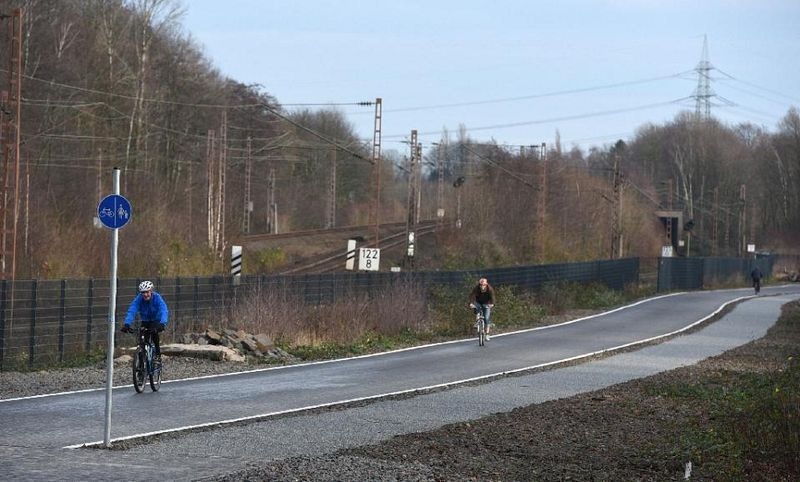
Photo credit: PATRIK STOLLARZ/AFP/Getty Images

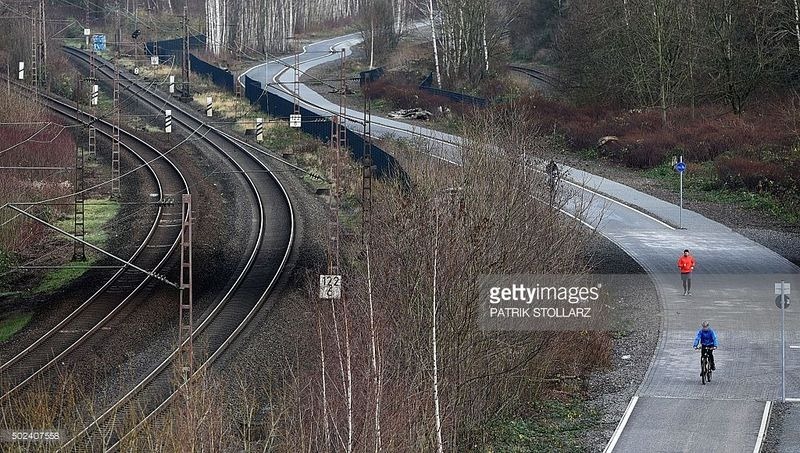
Photo credit: PATRIK STOLLARZ/AFP/Getty Images
Source….www.amusing planet.com
Natarajan
Message for the Day….” For a true devotee, every day is a festival. Consider every minute, every day as new and live in joy.”
 |
|
|
|
” யார் மூட்டை தூக்கி …” ?

(முன்பு நாம் எல்லோரும் ஒரு விதத்தில் மூட்டை தூக்கிகளாக இருந்ததால்தான் இந்த வியாதிகள் வந்திருக்கின்றன. நாம் செய்கிற ஒவ்வொரு தப்புக் காரியமுமாகச் சேர்ந்து மூட்டையாகி விடுகிறது. இந்தப் பிறப்புக்கு முன்னால் இன்னொரு பிறப்பில் தப்புக் கள் செதோம். அதனால்தான் இப்போது இந்த உடம்பு என்கிற மூட்டை வந்திருக்கிறது. இதில் பழைய தப்புகளின் வாசனையும் இருக்கிறது. அதனால்தான் ஆசை, கோபம் எல்லாம் நமக்கு இருக்கின்றன.
அது போவதற்காகத்தான் குழந்தையாக இருக்கும்போது பள்ளிக் கூடத்துக்குப் போகிறோம். அறியாமை என்கிற வியாதி, படிப்பு என்கிற மருந் தினால் போகிறது. )
கல்கியில் வந்த அருள் வாக்கு.
உங்கள் வீடு ஒரு குடும்பம். இதற்கு அப்பாவும் அம்மாவும் தலைவர்கள். உங்கள் குடும்பத்துக்கு நடுவில் பள்ளிக்கூடம் என்கிற ஒரு குடும்பம் இருக்கிறது. உங்களுடன் படிக்கிறவர்களெல்லாம் உங்கள் குடும்பத்தில் உடன் வாழ்கிற சகோதரர்கள் மாதிரி. இந்தப் பள்ளிக் குடும்பத்தின் தலைவர் உபாத்தியாயர் ‘வாத்தியார்’ என்கிற ஆசிரியர். அவரையும் ஓர் அப்பா அம்மாவாக நீங்கள் மதித்து வணங்க வேண்டும்.
பள்ளிக் காலத்தில் உங்கள் கடமை படிப்பது ஒன்றுதான். உங்களுடைய கவனம் முழுவதும் படிப்பதிலேயே இருக்க வேண்டும். மற்ற விஷயங்களிலெல்லாம் நீங்கள் ஈடுபட இது சமயம் அல்ல. வேறு எத்தனையோ நல்ல விஷயங்கள் இருந்தாலும்கூட அவற்றையும் நீங்கள் படிப்பு முடிந்த பின்தான் கவனித்து ஈடுபடலாம். ‘இப்போதே எனக்கு அவற்றில் ஈடுபடச் சிறிது சக்தியும், புத்தியும் இருக்கிறதே; எனவே உலகத்துக்கு நல்லது செய்கிற அந்தச் சமாசாரங்களில் இப்போதே பிரவேசிப்பேன்’ என்று போகக்கூடாது.
சின்ன வயசில் உங்கள் உள்ளத்துக்குப் போதிய சக்தி ஏற்படுகிற முன்பே, படிப்பு தவிர மற்ற விஷயங்களை மேற்கொண்டால், உள்ளத்துக்கு வியாதிதான் உண்டாகும்.
ஏற்கெனவே நம் உள்ளத்தில் ஆசை, கோபம் முதலிய பல வியாதிகள் இருக்கின்றன. முன்பு நாம் எல்லோரும் ஒரு விதத்தில் மூட்டை தூக்கிகளாக இருந்ததால்தான் இந்த வியாதிகள் வந்திருக்கின்றன. நாம் செகிற ஒவ்வொரு தப்புக் காரியமுமாகச் சேர்ந்து மூட்டையாகி விடுகிறது. இந்தப் பிறப்புக்கு முன்னால் இன்னொரு பிறப்பில் தப்புக் கள் செதோம். அதனால்தான் இப்போது இந்த உடம்பு என்கிற மூட்டை வந்திருக்கிறது. இதில் பழைய தப்புகளின் வாசனையும் இருக்கிறது. அதனால்தான் ஆசை, கோபம் எல்லாம் நமக்கு இருக்கின்றன. அது போவதற்காகத்தான் குழந்தையாக இருக்கும்போது பள்ளிக் கூடத்துக்குப் போகிறோம். அறியாமை என்கிற வியாதி, படிப்பு என்கிற மருந் தினால் போகிறது. அதோடு நம் கெட்ட குணங்களும் போக வேண்டும்.
இதற்குப் படிப்பு மட்டும் போதாது. பணிவு வேண்டும். பணிந்து கிடந்தால் கெட்ட குணங்கள் ஓடிப் போகும். தா, தந்தை, ஆசிரியர், தெவம் ஆகியவர்களிடம் பக்தியோடு, படிப்பில் கவனம் செலுத்தி வந்தால் அறிவும் வரும், குணமும் வளரும்.
Read more: http://periva.proboards.com/thread/10842/#ixzz3vxxbQliu
source……www.periva.proboards.com
Natarajan
Message for the Day….” Remember the name of God Every minute….”

|
Look at the blossoms in the garden! When the gardener plucks the flowers, the buds exult that tomorrow is their turn to be gathered into the gardener’s hands, and their faces are full of joy when they unfold in that hope. Do they feel any sadness? Do their faces droop? Are they any the less bright? No. The moment they know that the next day is their turn, they make themselves ready with great gusto and excitement. In the same way, you must be ready on the path of spiritual practice! Enthusiastically remember the name of the Lord every minute, without worrying and feeling sad that your turn is tomorrow or because someone died today. For people who transformed themselves into spiritual aspirants, their mind (manas)is Mathura, the birthplace of Lord Krishna), their heart is Dwaraka (Lord Krishna’s playground), and their body is Kashi (holiest land of Lord Shiva). |
WHY DOES THE NEW YEAR BEGIN ON JANUARY FIRST IN MANY COUNTRIES…?
Because Julius Caesar said so.
Early Roman Calendar
Since long before Caesar’s time, date keeping was dicey. In fact, the 355-day Roman calendar that immediately preceded Caesar’s Julian, worked on a four year cycle where every other year, an additional month was inserted between February (Februarius), the last month of that calendar year, and March (Martius), the first month of the year; this was done in order to catch the calendar up with the Earth’s orbit of the Sun. That additional month, called the Mensis intercalaris, brought in the missing 22 or 23 days, and to even things up, took another five days from February in the years it was present.
Since the calendar had been designed to ensure the proper observance of religious dates, priests, calledpontifices, were responsible for declaring when theinterclaris month should begin and end. Since these priests were also involved with politics, they sometimes:

Misused their power by intercalating days or not intercalating them, merely in order to lengthen or shorten some magistrate’s year of office, or to increase the gains of some government contractor, or to inflict loss upon him.
By the time Caesar came around, the Roman calendar was in shambles, and in 46 BC, Julius Caesar commanded that it be changed.
Julian Calendar
The Julian calendar’s beginnings were as crazy as the old Roman calendar at its worst:
In order to wipe out the consequences of past neglect, it was necessary that the year 46 BC (called by Macrobius the annus confusionis) should extend to 445 days. The normal number of 355 days had already been increased by the addition of the ordinary 23 days, inserted after Feb. 23. As many as 67 days, divided into two menses intercalares . . . were now interposed between November and December. . . . This year thus consisted of 15 months.
After this “year of confusion,” the new calendar really started. Intercalation was abolished, and each year was increased to 365 days, with a leap year added every fourth year (quarto quoque anno) to February. The months of the calendar after Caesar’s shake-up followed the old Roman calendar closely and most are familiar to us even today: Ianuarius, Februarius, Martius, Aprilis, Maius, Iunius, Guintilis, Sextilis, September, October, November and December.
Along with these changes, Caesar set the New Year to January 1. Why? Since 153 BC, January 1 was the day new consuls in Rome took office and Romans had commonly used the name of the two consuls to identify a specific year in question. Thus, by officially making January 1 start the New Year, it simply lined up with the consular year.
As to why the consular year started on January 1 instead of the original Roman Calendar New Year’s day of March 1, this isn’t known. That said, there are references that seem to imply that January 1 may have begun marking the New Year as early as 189 BC, which precedes when the consular year started beginning on that day.
One proposed reason for this switch is that January is thought by most to have been named after the god of transitions and beginnings, Janus, during the reign of the second King of Rome, Numa Pompilius, who lived from 753-673 BC. Thus, it was naturally enough for the Romans to eventually decide to make the switch. However, whether this is the reason or not is very much up for debate.
Gregorian Calendar
Although the Julian Calendar was relatively accurate, its use of 365.25 days in a calendar year, as opposed to the precise 365.2425 days, over centuries, created a discrepancy in the calendar. In fact, by the time Pope Gregory XIII (1572-1585) became the Bishop of Rome, the Julian calendar had lost 10 days.
It was this discrepancy that brought about the reformed calendar. Actually beginning 20 years before the calendar took effect with the Council of Trent in 1563, church leaders wanted to restore the spring equinox to the date it was when the First Council of Nicaea was convened in 325 (by 1563, the equinox was falling on March 11, rather than March 21).
As simple as making a Papal decree, Gregory issued the Inter gravissimas on February 24, 1582, and nearly eight months later, the last day of the Julian calendar, October 4, 1582, was followed by the first day of the Gregorian calendar, October 15, 1582. Voila!
Today, the Gregorian calendar is the unofficial calendar of the United States and the United Nations, as well as most countries in the world.
New Year’s Day
Since before even Caesar’s time, people celebrated the New Year. In ancient Babylon, this began after the spring equinox in March, and part of the celebration including subjecting the king to ritual humiliation. In fact, “if royal tears were shed, it was seen as a sign that Marduk [a god] was satisfied and had symbolically extended the king’s rule.”
After he was murdered by a small group of his “friends” (“Et tu, Brute?”), the Roman Senate made Caesar a god on January 1, 42 BC, a date which coincided with the time-honored practice of making offerings to Janus in the hope of having good fortune throughout the year.
Throughout the Middle Ages in Europe, January 1st’s New Year’s celebrations were discouraged, as they were seen by church leaders as a pagan practice. Instead, other days were often used as a substitute varying from nation to nation. This changed when the Gregorian calendar was instituted and, at least in the Catholic nations, January 1 once again became the official New Year, and it slowly spread from there with the Gregorian calendar.
Bonus Facts:
- As mentioned, many protestant nations ignored the Gregorian calendar for some time. England stuck to the Julian Calendar until 1751 before finally making the switch. Orthodox countries took even longer to accept the change in calendars. Russia, for one did not convert to the Gregorian calendar until after the Russian Revolution in 1917. The funny thing was, in 1908, the Russian Olympic team arrived 12 days late to the London Olympics because of it.
- Under the Gregorian calendar we do not have a leap year every four years, since to properly align the calendar with the Earth’s orbit, an additional day is required in only 97 out of 400 years. So, leap years are calculated as follows:
Every year that is exactly divisible by four is a leap year, except for years that are exactly divisible by 100, but these centurial years are leap years if they are exactly divisible by 400. For example, the years 1700, 1800 and 1900 are not leap years, but the year 2000 is.
source….www.today i foundout.com
Natarajan
Magic Bank Account…!!!
This is really worth reading. I hope you enjoy it.
An interesting perspective – One never might have really looked at it this way –
THE MAGIC BANK ACCOUNT
Imagine that you had won the following *PRIZE* in a contest: Each morning your bank would deposit $86,400 in your private account for your use. However, this prize has rules:
The set of rules:
1. Everything that you didn’t spend during each day would be taken away from you.
2. You may not simply transfer money into some other account.
3. You may only spend it.
4. Each morning upon awakening, the bank opens your account with another $86,400 for that day.
5. The bank can end the game without warning; at any time it can say,“Game Over!”. It can close the account and you will not receive a new one.
What would you personally do?
You would buy anything and everything you wanted right? Not only for yourself, but for all the people you love and care for. Even for people you don’t know, because you couldn’t possibly spend it all on yourself, right?
You would try to spend every penny, and use it all, because you knew it would be replenished in the morning, right?
ACTUALLY, This GAME is REAL …
Shocked ??? YES!
Each of us is already a winner of this *PRIZE*. We just can’t seem to see it.
The PRIZE is *TIME*
1. Each morning we awake to receive 86,400 seconds
as a gift of life.
2. And when we go to sleep at night, any remaining time is Not credited to us.
3. What we haven’t used up that day is forever lost.
4. Yesterday is forever gone.
5. Each morning the account is refilled, but the bank can dissolve your account at any time WITHOUT WARNING…
SO, what will YOU do with your 86,400 seconds?
Those seconds are worth so much more than the same amount in dollars. Think about it and remember to enjoy every second of your life, because time races by so much quicker than you think.
So take care of yourself, be happy, love deeply and enjoy life!
Here’s wishing you a wonderful and beautiful day. Start “spending”….
“DON’T COMPLAIN ABOUT GROWING OLD…!”
SOME PEOPLE DON’T GET THE PRIVILEGE.!
Source….Input from a friend of mine
natarajan
The young Indians who are shooting for the Moon….
The atmosphere at the sparkling new Axiom Research Labs facility is informal and collegial.
This is not surprising, since most of Axiom’s 80-strong workforce is just out of college.
It’s also geeky. Equations, diagrams and Star Wars references are scribbled across the many whiteboards scattered around the open-plan office, a stone’s throw from the Bengaluru-Hyderabad highway.
That’s to be expected since almost everyone on campus has a science/engineering background. It’s driven: people walk quickly, conversations are brief and pointed.

The lunar rover that will traverse across the moon’s surface. Photograph: Team Indus/ Facebook
But there’s also a sense of collective excitement and plain old-fashioned fun.
People seem to enjoy themselves. The young men and women here all opted out of safe jobs and decided to shoot for the moon instead — literally.
This makes Axiom a rarity in the aerospace business. Its flagship is Team Indus.
Some time before December 31, 2017, Team Indus aims to land a vehicle on the moon.
A rover will roll out from the lander and travel at least 500 metres “along an interesting path in a deliberate manner” across the moon’s surface. That rover will then establish a data link with Earth and transmit two HDTV video broadcasts of at least eight minutes each, covering the moon landing and movement.
The mission must also receive and retransmit other data to Earth and perform a few other tasks.
That lander and rover must be designed by Team Indus. No more than 10 per cent of the necessary financing for the moon mission can come from government sources. If Team Indus pulls this off, it will fulfil the terms of the Google Lunar XPrize, or GLX, and it would be eligible to win a share of $30 million.

A prototype rover being tested on uneven surface similar to the one’s on the moon to better gauge the vehicle’s mobility. Photograph: Team Indus/ Facebook
Team Indus is the only Indian outfit out of 20-odd competitors. It has already won a milestone award of $1 million for its lunar lander design. If Team Indus does become the first team to fulfil all mission requirements, it could win $20 million. If it’s the second team, it could win $5 million.
Nobody has ever put together a privately funded lunar lander and rover and sent it to the moon.
The prize has been hanging fire now since 2007 with the deadline being extended multiple times.
But nobody on the Axiom campus — not even the guards from the security agency — seems to have the slightest doubt that Team Indus can do this.
That certainty filters down right from the top. The company has the chutzpah to declare that its “selenographic address” (“which will be functional sometime after 2015”) is Lunar Zone: Sinus Medii (0.50N Selenographic latitude, 1.50W Selenographic longitude).
For non-geeks, it means that the landing site has already been chosen.
Indeed, the facility includes a mockup of the landing spot where the local terrain has been recreated, complete with “lunar dust”, to test the rover’s performance.

The lunar rover is everything that NASA can build and more. Photograph: Team Indus/ Facebook
It started as a madcap project back in 2010. Rahul Narayan, a 40-something entrepreneur and Indian Institute of Technology-Delhi graduate wondered if the terms of GLX could be met. He talked to many of his pals who had similar backgrounds. Every one of them was captivated by the dream of going to the moon.
They persuaded GLX to accept a late entry and put together a company.
In 2011, Narayan says, they crossed an inflection point and realised the dream could become reality.
Team Indus made a presentation to K Kasturirangan, the retired chief of the Indian Space Research Organisation, or ISRO. He approved of some of the concepts in that presentation, and disagreed with others. But he thought it was possible and he promised to put in a word where it counted.
In fact, Kasturirangan was pretty enthusiastic and said that Team Indus embodied “the spirit of modern India and a flavour of its future”. A little later, Team Indus met APJ Abdul Kalam who was also extremely encouraging. Various doors started opening at that point.
The first tranches of cash were raised by the founders coming up with some money from their personal accounts.
The first employees recruited themselves. Some college students landed up, asking to be allowed to intern with the company that was then situated in Noida. They told their friends and juniors, and a pipeline was created.

Several lunar rovers that are being tested by the teams. Photograph: Team Indus/ Facebook
Dhruv Batra is one of the old-buddy network Narayan tapped. He manages project delivery. He made alternative arrangements to run his Delhi-centric business and moved to Bengaluru when Team Indus shifted out of Noida.
Ramnath Babu, who now heads the structures team for Team Indus, was based in Mumbai from where he was running his business. He moved, first to Noida and then to Bengaluru, cajoling his brother to take over his business so that he could get involved in the mission.
Babu and Batra say that absolutely everybody has stretched selflessly to help Team Indus. Equipment that they thought would take six months to fabricate was delivered in 100 days. Teams at the Space Applications Centre, Ahmedabad, and at the National Aerospace Lab, Bengaluru, worked overtime to test equipment for Team Indus.
Sheelika Ravishankar, who handles HR and other soft functions, says she originally pitched in part-time just to help set things up.
Part-time turned into full-time and she jokes that despite being the only person in Team Indus without a science/tech background, she has ended up interviewing people for the most arcane engineering functions. Ravishankar says there’s been a steady stream of boys (and a few girls) wanting to first intern and then work when they graduate.

The base of the lunar module that will land on the moon. Photograph: Team Indus/ Facebook
Most of the younger members of Team Indus went to topnotch engineering colleges. They could have gone on to do much safer (and boring) things.
Instead, these 24-year-olds spend weekends working because they really like what they’re doing.
Vishesh Vatsal practically dances with delight as he draws a squiggly flight path to explain how the landing will take place. Suranjan Mallick turns into a muffled voice under the mock-up of the lander as he explains how the paired rockets will be vectored to ensure changes in flight directions. Guruditya Sinha waves his arms in three directions as he shows how the telemetry and telecommand system will work.
There is pride alongside the passion. Everybody is well aware that Team Indus represents India. They know that winning the GLX would be seen as another big achievement for India in space.
That passion and pride may be infectious but it also needs direction. This is where the third management layer comes in. In demographic terms, Team Indus is unusual. There are the 25-year-olds who form the bulk of the project team. There are a few people in their 40s — the founders.

The rover being tested for mobility and durability. Photograph: Team Indus/ Facebook
Up above everyone, in terms of age and experience, there is the panel of technical advisers. All of them are retired ISRO personnel. PS Nair and NC Bhat worked on the Aryabhatta Project, which launched India’s first satellite way back in 1975. RV Perumal, P Natarajan and RK Sharma are the other veterans with wide ranging expertise.
Incidentally, the internal designations draw on the Star Wars universe. The founders are Jedi Masters. The tech advisers are Jedi Commanders. There are also Troopers and Skywalkers and presumably, padawans.
The unusual dynamic works brilliantly. The ISRO veterans quickly rule out approaches that are unlikely to work. They understand processes and they know how to test equipment, for instance. They are completely familiar with the Indian space ecosystem.

The Team Indus logo adorns one of their instruments. Photograph: Team Indus/ Facebook
At the same time, the veterans seem to enjoy the fresh approach of the youngsters they interact with. For their part, the youngsters (and the founders) are all praise for the “sirs” and their ability to find rapid solutions as well as do the meticulous work of testing everything.
ISRO encouraged the creation of a space-industrial complex because it tendered out to private vendors.
Although Team Indus cannot take government financing, it is relying heavily on that ecosystem to fabricate its designs and to test.
Team Indus has hired testing facilities at the Space Applications Centre and National Aerospace Laboratories.
The lander will launch on ISRO’s trusty PSLV (Polar Satellite Launch Vehicle). Again, this is where the technical advisors have come in handy — they know everybody and have ensured complete compatibility.
Everything will be designed by Team Indus and components sourced from everywhere will finally be put together at the Axiom facility.
There are three formal partners: L&T’s heavy engineering division is helping put the lander and rover together, while Sasken Communications and Tata Communications are aiding with the communications and control systems.

An artist’s recreation of the lunar lander’s opening on the moon’s surface. Photograph: Team Indus/ Facebook
There are multiple vendors: at least 120 from all over the world. The lander’s engines and rockets, for instance, may come from Japan. The solar panels may be sourced from America and the battery could be British.
The lander, which will have the rover stored inside it, will be fitted on top of a PSLV rocket that will launch the lander into earth-orbit.
The lander will then use its own engine to match orbits with the moon. It could take nine swings or even more to rendezvous. Once that is done, it will use its eight auxiliary rockets to make course corrections and land at the designated spot.
After the lander is securely down, a panel will open and the rover will roll out. The rover will then start moving around (very slowly) and recording video.
The lander will relay that video to Earth. Everything will be monitored from the earth stations.

A prototype of the lunar capsule on display. Photograph: Team Indus/ Facebook
The engineering problems are formidable. The entire landing sequence has to be pre-programmed and autonomous.
There is a lag of almost four seconds when relaying signals to the moon and back. Unlike Chandrayaan, the lander must remain in working condition because it has to relay signals. Redundancy must be built in because component failure could otherwise jeopardise the whole mission.
The equipment within the lander must be protected, not only from the physical shocks of takeoff and landing but also from the heat generated by its rockets. On the moon, internal temperatures must be controlled, though the external temperature will vary a lot.
Before getting to the moon, the lander will pass through the Van Allen radiation belt.
All the delicate electronic equipment must be radiation-hardened to keep it from getting fried. There will be periods of eclipse, when solar panels will be ineffective. The solar panels must open correctly and be properly oriented.

The young brains seen at work on the lunar module. Photograph: Team Indus/ Facebook
Narayan guesses it could take over $30 million for the mission. Axiom has raised money several times. It started with the founders pitching in.
There was a funding round in March 2015 with investors like Nandan Nilekani and Ajai Chowdhry coming in. Another round of funding is currently in progress. There is talk of a possible round of crowd-sourced corporate funding.
There are two other concurrent projects, which should eventually pay their way.
One is satellite bus development, which involves figuring out spacecraft designs that can effectively launch multiple satellites. The other is the development of high altitude long endurance drones.
Eventually, Axiom might become a profitable aerospace company that earns its bread and butter from drones and satellite buses. But GLX will be a hard act to beat — in the public imagination at least.
Source….www.rediff.com
natarajan
 Take off with Natarajan