Message For the Day… ” Awareness of the Unity in Divinity is the Need of the Hour…”

Birds, beasts and trees do service to man, without anticipating any recompense, but human beings seek help from their kind, from their parents, preceptors and even God, offering in return only insult and injury. They parade their loyalty to Truth, Right Conduct, Peace and Nonviolence – virtues arising from self-less love; but it is only for exhibition and not for experience. They long to recede respect and affection from others but are reluctant to treat others in the same manner. Their full concern is centered on the body-mind complex, ignoring the fact even a hundred-year long life has to end in the cemetery. In order to free oneself from the ego, people must learn to recognize the one Divinity that temporarily wears different forms and names to distract by apparent multiplicity. Removal of this mistaken view and attainment of the awareness of the unity in Divinity – this is the true purpose of education.  

Sathya Sai Baba


” So …. how was the day …” !!!

Adult Truths

1. Sometimes I’ll look down at my watch 3 consecutive times and still not know what time it is.

2. Nothing sucks more than that moment during an argument when you realize you’re wrong.

3. I totally take back all those times I didn’t want to nap when I was younger.

4. There is great need for a sarcasm font.

5. How on earth are you supposed to fold a fitted sheet?

6. Was learning cursive really necessary? Why isn’t it being taught today?

7. MapQuest really needs to start their directions on #5. I’m pretty sure I know how to get out of my neighborhood.

8. Obituaries would be a lot more interesting if they told you how the person died.

9. I can’t remember the last time I wasn’t at least kind-of tired.

10. Bad decisions make good stories.

11. You never know when it will strike, but there comes a moment when you know that you just aren’t going to do anything productive for the rest of the day.

12. Can we all just agree to ignore whatever comes after Blu-ray? I don’t want to have to restart my collection… again.

13. I’m always slightly terrified when I exit out of Word and it asks me if I want to save any changes to my ten-page technical report that I swear I did not make any changes to.

14. I keep some people’s phone numbers in my phone just so I know not to answer when they call.

15. I think the freezer deserves a light as well.

16. I disagree with Kay Jewelers. I would bet on any given Friday or Saturday night, more kisses begin with Miller Light than Kay.

17. I wish Google Maps had an “Avoid Ghetto” routing option.

18. I have a hard time deciphering the fine line between boredom and hunger.

19. How many times is it appropriate to say “What?” before you just nod and smile because you still didn’t hear or understand a word they said?

20. I love the sense of camaraderie when an entire line of cars team up to prevent a jerk from cutting in at the front. Stay strong, brothers and sisters!

21. Shirts get dirty. Underwear gets dirty. Pants? Pants never get dirty, and you can wear them forever.

22. Even under ideal conditions people have trouble locating their car keys in a pocket, finding their cell phone, and Pinning the Tail on the Donkey – but I’d bet everyone can find and push the snooze button from 3 feet away, in about 1.7 seconds, eyes closed, first time, every time.

23. The first testicular guard, the “Cup,” was used in Hockey in 1874 and the first helmet was used in 1974. That means it only took 100 years for men to realize that their brain is also important. (Ladies…..Quit Laughing!)

Life just gets better as you get older doesn’t it?

Mistakes always happen! Learn from the mistakes of others. You can’t live long enough to make them all yourself.

…so how was your day?

SOURCE:::: https://yougottobekidding.wordpress.com

Natarajan

Feb 2 2015

” These Women Made us Proud on Republic Day…”

These Women made us proud on Republic Day

Lt Haobam Bella DeviWomen officers came from different parts of this vast country to give us some of the proudest moments at this Republic Day.

Archana Masih/Rediff.com speaks to Lieutenant Haobam Bella Devi and Captain Divya Ajith, young Army officers who stole the show on Rajpath.

Under a rainy sky, just as the grand celebration of Republic Day began on Rajpath, Lieutenant Haobam Bella Devi, a 24-year-old Indian Army officer from Manipur stood near the saluting dais.

Like most Indians, she had never unfurled the Indian flag before — and here she was entrusted with that responsibility in front of the whole nation on the nation’s grandest day.

Image: Lieutenant Haobam Bella Devi unfurls the flag on Republic Day.

In the run-up to Republic Day, she and another officer had practiced the procedure. When the big moment arrived, the only thing she had ears for was the command from the commanding officer of the President’s Bodyguard.

Just as he finished giving the crisp command, Lieutenant Bella, tugged at the rope to unfurl the flag and gave it a smart salute. The rose petals wrapped within the flag lay around, while in the distance she could hear the roar of the 21-gun salute.

“There is a whole procedure and ceremony as far as the flag is concerned. How it is put up, how it is tied, how it goes up, how it is folded. I learnt everything about it,” says the officer, who was commissioned a year-and-a-half ago and is currently posted in Amritsar.

The only child of retired army officer Colonel H G Singh, the lieutenant grew up in cantonments around the country, staying in Manipur when her father was away on field postings.

“There are not many lady officers from the North-East and girls get motivated when they see me. I tell them the Army is not a profession, but a way of life,” says the lieutenant who arrived in Delhi on January 4 for Republic Day preparations.

“I hope more and more girls join the armed forces. It gives you the opportunity to grow professionally and personally.”

The Army’s marching contingent was invited for tea by the Army Chief, General Dalbir Singh, on Republic Day, while there is a ‘Bada Khana’ — a meal shared by the officers and men — on January 31.

Lt. Bella

Image: Lieutenant Bella, an officer from Manipur, seen here second from left, is a second generation Army officer.

At the tea he hosted, the Army Chief, General Dalbir Singh, not only congratulated his officers, but also gave out commendations.

One of them to receive the honour was Captain Divya Ajith, 25, the officer who led the Indian Army’s contingent of women officers. An instructor at the Officers Training Academy in Chennai, she was awarded the sword of honour as the best cadet when she graduated from the academy in 2010.

The others who received the Chief’s commendation were the contingent’s drill instructors.

“The drill instructors were a major part of how well we did,” says Captain Divya. “One important thing is that our motivation comes from them. They are the people who train us, even when we were tired, they ensured that we practiced till the time we were perfect.”

Not new to the Republic Day parade, the captain had previously represented the National Cadet Corps as a school girl at the event. Her mother, a housewife, had watched her at that parade and had hoped that one day her daughter would march down Rajpath as an officer.

When the captain commanded the contingent to a rousing reception from the audience, her mother was there once again. Her dream had finally come true.

Image: Captain Divya Ajith from Chennai received the Army Chief’s commendation for commanding the parade. Photograph: PTI.

The marching contingent comprised officers from Jammu and Kashmir to Tamil Nadu. Training began in Chennai in early December where they would march 7 to 8 kilometers every day.

Early in the mornings, practice was held at the city’s main highway where 12 files could be accommodated and which provided a longer stretch. Later in the day, marching practice took place at the drill square at the OTA.

“Selection as contingent commander was purely on how you fared at drill. The drill instructor, adjutant selected around 10 people, which was later reduced to 3 with reserves,” says Captain Divya, the first person in her family to join the Army.

Since the Republic Day parade, she has been inundated with congratulatory messages. Some of the best messages have come from her teachers at Chennai’s Good Shepherd School. Now that she has a home posting, she hopes to pay them a visit soon.

In the four years that she has been in the Army, the captain has served in Anantnag, J&K, and MHOW before being posted to Chennai six months ago. “Anantnag was a very good exposure for me. It was a field posting. I had counter intelligence duties there,” says the officer whose father is a painting contractor.

“I feel if young girls want to pursue a career in the Army,” she says, “they already have a desire to do something different. They should stick to it and be determined to achieve what they want.”

SOURCE:::: http://www.rediff.com

Natarajan

Feb 1 2015

JAN 30… 1826… Day on which Construction of This Suspension Bridge was Completed…

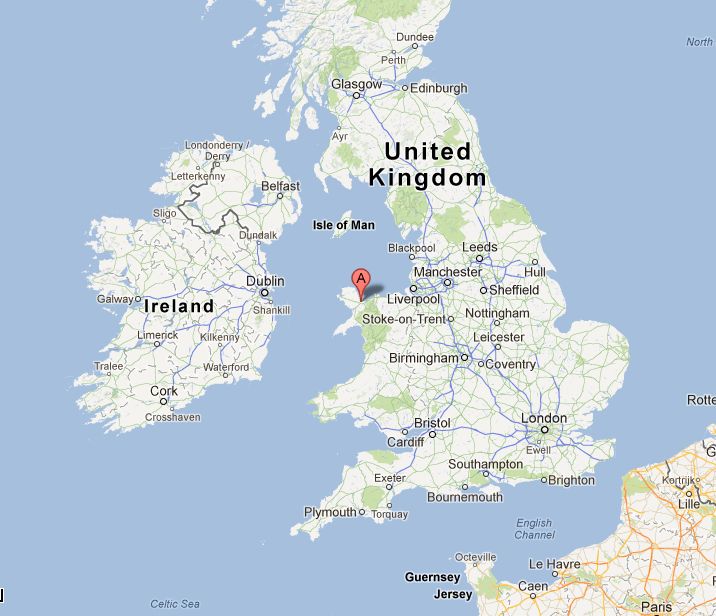
January 30, 1826. Workers completed construction of the first modern suspension bridge on this date. It was the Menai Bridge between Wales on the island of Great Britain and the smaller island of Anglesey, to the west. According to local reports about the bridge from nearly 200 years ago, travel in the strait between Wales and Anglesey was hazardous, due to shifting currents and unpredictable weather patterns. But the island of Anglesey had the Atlantic Ocean and Irish Sea to its west, and, especially after Ireland joined the United Kingdom in 1800, people increasingly wanted to use Anglesey as a jumping off point to reach the Emerald Isle by ferry boat.

A Scottish civil engineer, architect and stonemason named Thomas Telford designed the Menai Bridge. It’s a suspension bridge, with its deck (load-bearing portion) hung below suspension cables on vertical suspenders. Examples of this type of bridge were built in 15th century Tibet and Bhutan, but the Menai Bridge was heralded as the first modernsuspension bridge in the world.

The Menai Bridge reportedly stands 100 feet (about 30 meters) above the waters. It’s tall enough to allow sailing ships to pass underneath. It spans 579 feet (about 175 meters) from the Wales coast to the coast of Anglesey, and it’s supported by 16 large chains.

The chains has been changed out over the years to allow heavier truck traffic to pass through.

The Menai Bridge is still in use today.

Bottom line: On January 30, 1826, workers completed the Menai Bridge between Wales and Anglesey, the first modern suspension bridge in the world.

SOURCE::::  www.earthskynews.org

Natarajan

Message For the Day…” Once you evolve yourself to a higher state Everything will look smooth , small and even…’

If you stand at the same level as the ocean and look at it, it will appear as a vast sheet of water. On the other hand, if you look at the same ocean from a height, it will appear like a lake. Similarly, since the rishis(sages) were on a higher level in spiritual knowledge and away from the world, they could recognise this vast world as a very small and insignificant entity. When at a lower level, one thinks that the world is big, important and manifold. The diversity and the differences will be seen more clearly. But when one evolves to a higher state, everything will look smooth, small and even. When we have a narrow vision, our country, our people, our languages will all appear as full of problems and differences. If you can go to a high place and look at the world, it will appear in one unified aspect and all the people and all languages will appear as one.

Sathya Sai Baba

Message For the Day…” Never Break the Vow of Truth …”

The Gita advises everyone to adopt ‘inoffensive speech, which is truthful, pleasant and beneficial.’ During the practice of the Sadhana of truth, at times, it may become necessary to reveal an unpleasant truth. At those moments, you must soften and sweeten its impact by consciously charging it with love, sympathy, and understanding. Help ever hurt never – that is the maxim. Revere truth as your very breath. Your promises are sacred bonds. Never break the vow of truth. The only obstruction to practicing truth anyone will face, is selfishness. Give up selfishness, adhere to truth and selfless love, let your heart be attuned to truth and the mind saturated with love. The triple purity – speech free from the pollution of falsehood, mind free from the taint of passionate desire or hatred, and the body free from the poison of violence – must be taken up by everyone as ideals and lived in accordance with.

Sathya Sai Baba

” Coconut Fights Fat !!!…” Read More on Natural Sources of Medicines….

Natural Remedies From Around the World

Natural remedies are the healthiest way to treat your ailments, but where do they come from? Here are 15 common natural remedies from around the world that you may or may not have heard of. This is necessary information for any health buff!   

Coconuts Fight Fat – Sri Lanka 

natural remedies

You may have heard that coconut oil is a great way to slim your waist. Well the people of Sri Lanka figured this one out way before the rest of the world. It is reported that the average Sri Lankan eats about 116 coconuts per year, and they are half as likely as the average American to pack on the pounds. The reason is that coconut oil is packed with medium-chain fatty acids (MCFAs) that stimulate the liver to burn fat 50 percent faster than normal. Try having about two tablespoons of coconut oil daily (in your cooking) and you could shed up to three pounds a month!

Yoga Treats Insomnia – Austria 

natural remedies

Although yoga is practiced all over the world, in Austria it is used solely as a stress-buster and quick treatment for insomnia. Austrians like to go all out and go on yoga retreats and holidays for up to a week, but according to research from the University of Pennsylvania, practicing yoga for just 20 minutes a day could get rid of your insomnia. The research also found that practicing yoga is just as effective, if not more, than taking a sleeping pill and it also will rid you of anxiety, stress and depression.

Ginger Controls Triglycerides – Indonesia 

Indonesia is the world’s largest grower and consumer of ginger and ginger products, with locals using it in their cooking, teas, candies and breads. Their tradition has long pointed to ginger as an effective treatment for the heart, and there are studies to back them up. Triglycerides are fats that clog your arteries, and according to Stanford researchers, a daily dose of ginger could cut the production of these fats by 27 percent. Ginger is also twice as effective as aspirin at preventing blood clots and preventing inflammation.natural remedies

Turmeric Steadies Blood Sugar – India 


natural remedies

Turmeric is a flavorful yellow spice used in rice and meat dishes and even deserts, but it also has outstanding medicinal properties. Indians use turmeric to treat high blood sugar levels, a practice that has been scientifically confirmed by research at Gujarat University. They confirmed that the  active ingredient in turmeric, called curcumin, switches on the genes that keep blood glucose levels stable. The compound can also help the pancreas make insulin when it is low. In order to see the benefits of turmeric, start taking about half a teaspoon daily either directly or in your cooking.


Mushrooms Fight Cholesterol – Japan  

natural remedies

Mushrooms are a popular food and medicine in Japan, with the average Japanese woman consuming about 8 pounds of mushrooms a year. According to research from Penn State University, adding about a half a cup of mushrooms to your daily diet could cut cholesterol levels by nearly 30 percent. This is because mushrooms are packed with antioxidants that prevent the liver’s production of artery-clogging fats


Mustard Baths Calm Muscle Pain – England 

natural remedies Ever heard of a mustard bath? While it may sound like a hoax, mustard baths are used heavily in England to quell tight and achy muscles. Mustard has healing plant compounds that draw out toxins through the pores to improve circulation, relax tight muscles and speed the healing of damaged tissue.

For your own mustard bath, mix 2 cups of Epsom salts, 1/4 cup baking soda, 1/4 cup dry mustard in a jar. Pour only 1/4 of this mixture into a warm bath, mix the water before getting in, soak for 20 minutes and rinse.


Chamomile Tea Beats Off Bloating – Germany 

natural remedies

What began as a simple German folk remedy has now been proven as a scientifically effective method for fighting off bloating. A study conducted at Stanford University found that sipping two cups of chamomile tea daily could help ease bloating and belly pain within just 24 hours. This is because chamomile calms the adrenals and the production of a stress hormone called cortisol that can interfere with digestion and produces painful gas and belly spasms. Not only does chamomile tea soothe the stomach, it also causes the brain to produce more enkephalins, or painkilling hormones that will help fight off depression and negative thoughts.


Garlic Fights Off Viruses – Russia 

natural remedies

While garlic is used the world over to add flavor to food, in Russia they use this herb to get rid of colds, the flu or any other viral infection. It has recently been proven that this pungent natural medicine is seriously effective. At the University of Florida in Gainesville, it was shown that adding one clove of garlic to your daily diet could cut your risk of viral infections by almost 43 percent! This is because garlic is full of allicin, an immunity boosting sulfur compound that fights off the growth and spread of germs.


Acupuncture to Treat Headaches – China 

natural remedies

Acupuncture has been used for centuries in Eastern and Chinese medicine, but now more than 80 million Chinese use this therapy to treat chronic headaches. At Taiwan’s Kaohsiung  Medical University it was found that daily acupuncture treatments work much better than prescription muscle relaxants. This is because acupuncture prompts the release of powerful painkilling hormones called endorphins and relaxes the scalp muscles to soothe the overactive pain nerves.


Coffee Gets Rid of Depression – Finland 

natural remedies

This cold Scandinavian country is actually the world’s largest consumer of coffee, drinking on average about 1,640 cups per year. Indeed, coffee was originally sold in pharmacies in Finland in the 18th century has a treatment for depression. Now research from Harvard backs up coffee’s use as an anti-depressant, finding that drinking 2 cups a day of caffeinated coffee could reduce your risk of depression by 34 percent, and if you drink 3 cups, by 42 percent. The mix of caffeine and antioxidants in coffee stimulates the brain to produce more powerful antidepressant hormones like serotonin and dopamine


Coriander Rids of Food Poisoning – Egypt   

natural remedies

One of the world’s oldest spices and a popular Egyptian remedy for stomach pain, new research proves the powerful effects of this ancient spice. The research suggests that coriander seeds can speed up recovery from full-blown intestinal infections by destroying dangerous bacteria like E. coli and Salmonella. This is because coriander punches holes in the bacteria’s’ protective outer membranes, effectively destroying them for good.

Next time you are having tummy troubles, try adding 1 teaspoon of ground coriander to one cup of boiling water. Drink up to three cups of this mixture daily until the bug is gone.

Honey Treats Sinus Infections – New Zealand 

natural remedies

Unpasteurized honey is one of the top treatments used in New Zealand to treat sinus and throat infections. According to research at the University of Illinois and the University of Amsterdam, the natural antibiotics and enzymes in unpasteurized honey can destroy nearly 100 percent of bacteria and viruses on contact! This includes the bugs that cause painful sinus and throat infections.

For an effective remedy, mix two tablespoons of unpasteurized honey into your coffee or tea to prevent painful infections. Use darker honeys like buckwheat or wildflower for the best results.


Aloe Vera to Treat Skin Rash – Mexico 

natural remedies

Where the sun is hot and always shining, aloe vera is used to treat rashes and other skin problems. Researchers at the University of Texas found that aloe vera reduce redness, speeds healing, increases the skin’s moisture levels and strengthens resistance to irritants. They also discovered that aloe vera not only treats the current outbreak, but prevents further outbreaks in the same area. Other research from Malmo University Hospital in Sweden found that aloe vera cream can treat psoriasis in 83 percent of cases.


Kefir Treats Irritable Bowel Syndrome – Russia 

natural remedies

Irritable bowel syndrome is an uncomfortable and serious condition in which the bowels do not perform as they should. However in Russia they use a tart and tangy yogurt called kefir to treat the condition with healthy probiotic bacteria and yeast. Kefir is an effective treatment for IBS because it contains five time more healthy, intestine-soothing probiotics than most regular yogurts. In a study conducted by the University of Madrid, it was found that having just a half-cup serving of kefir daily could trigger a ten-fold increase of healing probiotic bacteria in the digestive tract.


Arnica to Prevent Bruises – Greece  

natural remedies

A herb that grows in the mountainous regions of Greece, arnica has been a go-to remedy since ancient times for nasty bruising and closed wounds. It has become the most popular homeopathic remedy worldwide due to its power of healing and treating the most serious of bruises. This is because arnica is a plant rich in compounds that reduce swelling by as much as 30 percent, improves circulation in damaged tissues, boosts the flow of nutrients and flushes out the blood from the wound. You and find arnica gel at your local health store or in some pharmacies. This is definitely a tube to have in your medicine cabinet!


SOURCE::::www.ba-bamail.com

Natarajan

Jan 30 2015


” How One Man Turned A Village into an Alchohol and Tobacco Free Zone … ” ?

Meet the man who has literally transformed the fate of a village by making it alcohol and tobacco free, by providing better employment and education and even increasing the marriage age of girls. What’s more, you’ll be truly surprised to know how Nagabhushana managed to do it all.

Tucked in the folds of Krishnagiri forests in Tamil Nadu and forgotten at the state’s borders with Karnataka, lies this tribal village – Noorundumalai. Even in its relative anonymity, Noorundumalai has some claim to distinction.

This village is alcohol and tobacco free since 2002. There are literally no shops here that sell cigarettes or liquor. In fact, the local cigarette shop owner, Sivanna, quit smoking and shut shop fourteen years ago!

Nagabhushna's intervention has enabled villagers to opt for better livelihood options.

He says there were no takers for cigarettes in his village and he couldn’t quite resist good from happening.

Two decades ago, 23 year old Nagabushana, born into a tribal family in Noorundumalai, came back to the village after completing his masters in social work. He came back with a mind that was churned hard by his traveling experiences across the length and breadth of India.

He got to witness the human struggles in some of the most backward of villages of India. Once when he was travelling through Odisha, he saw how the men of a village went out to collect dungs of animals that their women could wash and strain, and look for rice particles in them that the families could eat. He didn’t need a bigger thrust than this distressing scene to commit himself to a life of service. And he came back, to begin it all at his own village.

There were a million things that Nagabushana wanted to change in Noorundumalai. One big problem that grappled the village was alcoholism. Men of all ages were under its spell. It was not just spoiling their health but also ridding the families of a chance to rise above poverty.

Nagabushana wanted to bell this big unruly cat as the first step towards bringing change in his village. When he told his friends about his idea, they dismissed him and told him he was insane to have even thought of this. It was sensitive and even dangerous to attempt a fight against alcoholism in Tamil Nadu.

And Nagabushana was all of 23, barely employed with a salary of just Rs. 1600. It would be perilous for Nagabushana, thought his friends. But when he told his mother about his intent, she stood by his decision; the only person who encouraged him and showed courage to begin this work for change.

Nagabushana started addressing the problem with subtlety. He took up the topic of quitting alcohol in informal talks with the villagers and advised them on alcohol restraint as a solution to their health problems.

He started teaching children for free in the local school, for whom be soon became a hero. His involvement in various social and development issues of the villages brought him admiration and acceptance in the village.

He started by teaching in schools and later on expanded his activities to a larger group.

Slowly and steadily, he strengthened his campaign towards ending the menace of inebriation. In a few years, he had the youth of the village stand alongside him by starting an association of Tobacco and Alcohol Free Rural Youth. This group took along teetotallers and encouraged others to look beyond alcohol and tobacco. Fascinatingly, these youngsters worked like a peer pressure group among the villagers who made it ‘cool’ to be free of alcohol.

While Nagabushana was preparing Noorundumalai for total alcohol prohibition, there were factions who were losing out on their business of locally brewed liquor. They spewed death threats on Nagabushana and tried to hinder his efforts in many ways. But he stood unbridled by these deterrents and steered the village to being declared alcohol and tobacco free in 2002.

For this extraordinary feat, Nagabushana gained support not just from the villages, but from the local authorities and the government as well. The district collector of Krishnagiri, Santhosh Babu, generously supported the anti-liquor campaign and the development of the village by offering funds towards its school, roads and other infrastructure.

Soon the village was abuzz with a different spirit – of employment and development.

Namanam provides rehabilitation to alcohol addicts.

Now there was a bigger challenge – how do you sustain the change? You could get carried away by achieving a milestone, but it wouldn’t take long for the vices to make a comeback. The energy had to be kept alive. Nagabushana then decided to start a de-addiction and rehabilitation center, at Urigam, 6 kms away from Noorundumalai. The center was named Namanam, and it supported villagers in and around Noorundumalai. Namanam gradually became the epicentre of transformation for these villages.

To sustain itself, Namanam made a foray into business and produced commercial products using locally available resources like tamarind, aloe-vera and many other herbal products. The individuals who sought rehab were given jobs at the factory. They soon had an engaging time that would make their rehab route fast and fulfilling.

In the last ten years, over 1,000 youngsters have found a new direction for their lives through Namanam.

Self-development, employment, healthcare – all these found a place in this beautiful campus that stands alongside the gurgling Kaveri. Several college students from Bangalore visit and camp at Namanam for a transformational experience. Nagabushan makes sure that the children who visit Namanam take an oath that they will never fall prey to alcohol or smoking.

From fighting alcoholism to employment to health to women empowerment, one by one, Nagabushan is moving the mountains of Noorundumalai. Noorundumalai now has a respectable school, a changed face from its dilapidated condition. The girls of the village, who used to be married off at the age of 12, are now standing up for themselves and their education. Over the years the marriage age has come up to 17 but there is still a long way to go. Nagabushana is working hard for a change in this scene. He has now set up a factory at Noorundumalai to produce sanitary napkins for the women of the village, who are the ones employed at the factory, making the 100% cotton napkins and leading a feminine hygiene revolution among themselves.

Now, for a little surprise element – Nagabushan managed to bring about all these changes in the villages through twenty years of hard work while he held a full time job in Bangalore!

Now Noorundumalai village has seen a lot of positive changes.

He always held a job so that he could invest in Namanam’s initiatives. Many times he found himself unable to pay the school fees of his children, but neither Nagabushana nor his family ever wanted to give up the cause they stood for. He currently works as the Deputy General Manager of HR at Robert Bosch, Bangalore – definitely not an easy corporate job.

After a fully engrossing work week, he cranks his car on Saturday mornings to travel the 100 kilometer distance to Namanam. The village awaits his arrival with his family. Updates, new initiatives, new plans – all get discussed and worked upon during the weekend. While he drives back to Bangalore, the show goes on at Namanam with his mother, brother and several youngsters managing it all.

– See more at: http://www.thebetterindia.com/18554/one-man-turned-village-alcohol-tobacco-free-zone/#sthash.P19Dvrig.dpuf

SOURCE:::: http://www.the betterindia.com

Natarajan

Jan 28 2015

The Village That got its First Fridge …

A fridge pulled by a bicycle

Three-quarters of the world’s homes have a fridge – an appliance that can revolutionise a family’s life. A tailor in one Indian village has just become the first person in his community to own one – something he has dreamed of for 10 years.

Santosh Chowdhury is pacing up and down speaking into his mobile phone.

“How much longer? It’s left past the auto-rickshaw stand, yes that’s right,” he shouts, and then continues his nervous pacing.

It’s a big day for him and indeed for the village of Rameshwarpur, just outside Calcutta in north-east India.

Santosh has bought a new fridge – not just his first but also the first in the entire community of 200 people. “Owning a fridge is quite rare in a village like ours,” he says.

The world is getting wealthier – but with the gap between rich and poor feeling bigger than ever, the BBC is investigating the winners and losers of this richer world in 2015.

The lack of fridges in Rameshwarpur reflects the situation across the whole of India. Only one in four of the country’s homes has one. That compares to an average of 99% of households in developed countries.

But change can be rapid when linked to an emerging middle class. In 2004, 24% of households in China owned a fridge. Ten years later this had shot up to 88%.

“Ours is the first generation to own a fridge in my family,” says Santosh. “No one in my father’s and grandfather’s time had ever seen one.”

Rameshwarpur has a distinctly rural feel. People bathe in a pond in the middle of the village, children fly kites in the dusty lanes. The homes are little more than simple huts, made of mud and brick. But the village has electricity and many houses have televisions.

Santosh at his sewing machine

Santosh works as a tailor. He lives in a modest, two-room hut which doubles as his home and workplace. “I don’t have a regular job as such,” he says. “Sometimes I also work part-time in a factory. I make about three to four dollars a day.”

Life is quite hard, especially for his wife Sushoma.

She cooks lunch, stirring a pot of rice on a wood fire outside their hut. It’s something she does every day because they have no way of storing leftovers. So Santosh has to go the market early each morning to shop for groceries.

He’s always wanted to make life easier for his wife and has been dreaming of buying a fridge for 10 years. “Owning one will be so convenient,” he says. “You don’t have to buy vegetables every day, you can store food – especially in the summer.”

So he’s been saving hard, putting away a bit of money every month for a purchase that costs more than a month’s salary. “I don’t make that much money, that’s why it’s taken me so long. But now I have enough,” he says, smiling.

At one of Calcutta’s high street stores, about 15km from his home, Santosh had several models to choose from. Peering inside, he ran his fingers along the side of a bright red model.

“It was quite confusing. It was my first time you know. I couldn’t figure out which one to get,” he says shyly. “My wife wanted a red one. I wanted one that will consume the least power. We need to keep our bills down.”

Finally, the deal was struck. Santosh got a discount because it was the final week of the winter sales. The price was 11,000 rupees (£120) – but more importantly, he was able to pay in instalments, having paid just under half the money up front.

“No one pays cash any more like they used to,” says store manager Pintoo Mazumdar. “Everyone can get a loan from the bank or the store – all you need is a bank statement and ID. That’s why so many lower income people can afford to buy a fridge these days.”

Santosh’s fridge finally arrives on the back of a cycle rickshaw. He walks along next to it with a broad smile. Many of the villagers come out on to the lane as well, craning their necks to get a better look.

“Careful, careful,” he cries out as a couple of them help carry the fridge into his house.

Then it’s time for a religious ceremony.

His wife applies a dab of vermillion to the fridge, to keep away evil spirits, and then blows on a conch shell to seek divine blessings and welcome the fridge into their home. The fridge has pride of place – next to Santosh’s sewing machine and their tiny television set.


Sushoma blowing into a conch

They simply cannot stop smiling.

“We’ve dreamt of this moment for so long,” says his wife Sushoma. “Some of our neighbours have already asked us if they, too, can store some food in our fridge. “And I can’t wait to drink cold water in the summer.”

As Santosh shows off his fridge everyone crowds around, excited. “Imagine, they won’t have to shop for fresh vegetables everyday,” says one woman. “I’m thinking of getting one too,” another man says.

It’s a special moment for the Chowdhurys. This acquisition could potentially transform their lives. “I can focus on finding more work and not worry about buying food for the family,” Santosh says. “My wife will get more free time and perhaps she can give me a hand as well.”

With those words, he opens his fridge and places the first contents inside – tomatoes, an aubergine, eggs and some milk.

SOURCE::::  http://www.bbc.com

Natarajan

Jan 28 2015