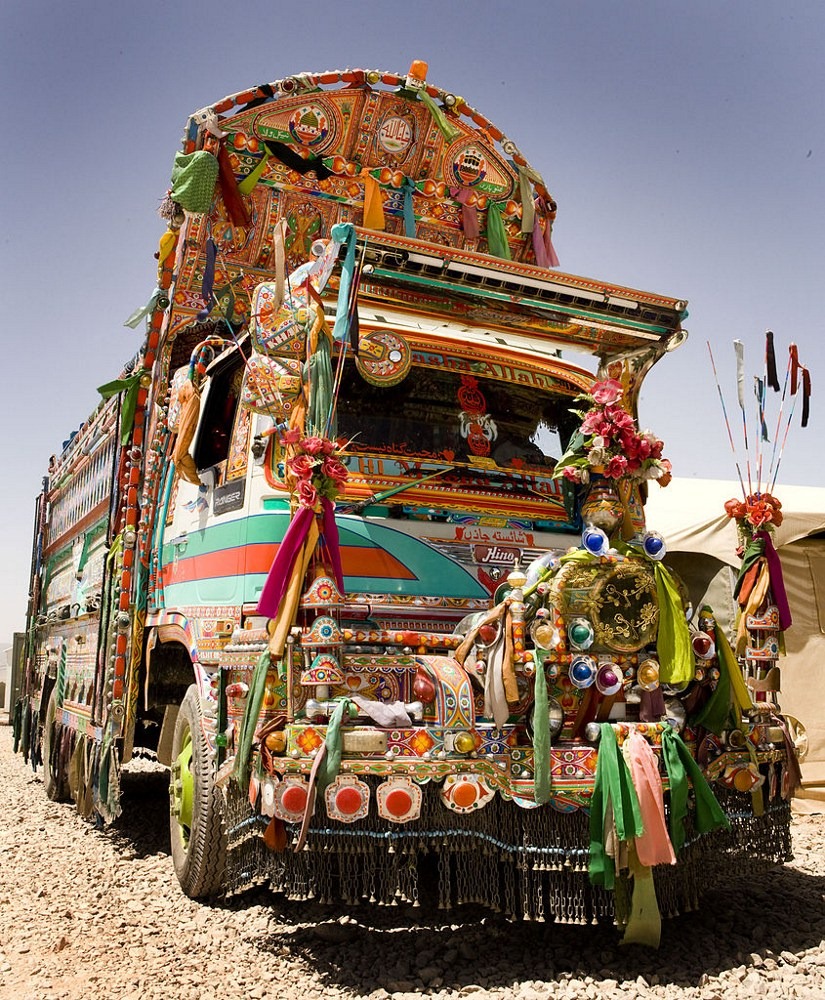
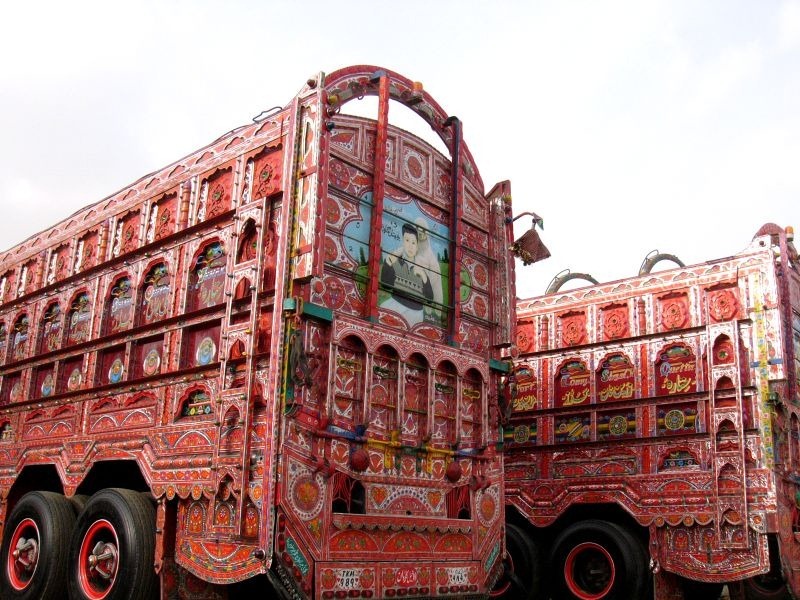
காஞ்சி வரதராஜப் பெருமாள் கோயிலின் ஆதி மூர்த்தம் எங்கே இருக்கிறார் தெரியுமா? – அத்தி வரதரின் திருக்கதை!

காஞ்சிபுரம் வரதராஜப் பெருமாள் கோயில் திருக்குளத்தில் வாசம் செய்யும் அத்தி வரதரைப் பற்றி ஒரு தகவல் வாட்ஸ்ஆப்பில் பரவி வருகிறது. அடுத்த வருடம் ஜூலை மாதம் 15-ம் தேதி திருக்குளத்தில் வாசம் செய்யும் அத்தி வரதர், வெளியே எழுந்தருளி பக்தர்களுக்குத் திருக்காட்சி தரவிருக்கிறார் என்பதுதான் அந்தத் தகவல். காஞ்சிபுரம் வரதராஜப் பெருமாளின் ஆதி மூர்த்தம்தான் அத்தி வரதர். தற்போது நாம் கருவறையில் தரிசிப்பது வரதராஜப் பெருமாள் என்று சொல்லப்பட்டாலும், உண்மையில் அவர் பழைய சீவரம் பகுதியிலிருந்து கொண்டுவரப்பட்ட தேவராஜப் பெருமாள்தான். இந்தக் கோயிலின் ஆதி மூர்த்தியான அத்தி வரதர் பிரம்ம தேவரால் உருவாக்கப்பட்டவர். அவர்தான் திருக்குளத்தில் வாசம் செய்வதுடன், 40 வருடங்களுக்கு ஒருமுறை வெளியில் எழுந்தருளி பக்தர்களுக்குக் காட்சி தருகிறார். அத்தி வரதரின் புராண வரலாற்றை இங்கே தெரிந்துகொள்ளலாமே…

திருவரங்கம், திருப்பதிக்கு எல்லாம் முந்தைய புராணச் சிறப்பு கொண்டது காஞ்சி வரதராஜப் பெருமாள் கோயில் தலவரலாறு. ஆதியில் சிருஷ்டியை மேற்கொண்ட பிரம்மதேவர், தனது காரியம் செவ்வனே நடைபெற காஞ்சியில் ஒரு யாகம் செய்தார். தன்னை அழைக்காமல் யாகம் செய்த பிரம்மதேவரிடம் கோபம் கொண்ட சரஸ்வதி தேவி, யாகத்துக்கு வரவில்லை. சரஸ்வதி தேவி இல்லாமல் பிரம்மதேவரால் யாகத்தைப் பூர்த்தி செய்ய முடியாது. எனவே, பிரம்ம தேவர் சரஸ்வதி தேவிக்குப் பதிலாக காயத்ரி, சாவித்திரி ஆகியோரின் துணையுடன் யாகத்தைத் தொடங்கினார். சினம் கொண்ட சரஸ்வதி தேவி, பிரம்மதேவரின் யாகசாலையை அழிக்க வேகவதி ஆறாக மாறி வெள்ளப்பெருக்கெடுத்து வந்தாள். பிரம்மதேவரின் யாகத்தைக் காக்கத் திருவுள்ளம் கொண்ட திருமால், நதிக்கு நடுவில் சயனக் கோலம் கொண்டார். வெட்கிய சரஸ்வதி தேவி தன் பாதையை மாற்றிக்கொண்டாள். பிரம்மதேவரின் யாகமும் நிறைவு பெற்றது. தனக்காக வந்து யாகத்தைக் காத்த பெருமாளின் கருணையை எண்ணி நெகிழ்ந்த பிரம்மதேவர், பெருமாளைப் பணிந்து தொழுதார். தேவர்களும் பெருமாளை வணங்கி வரங்களைக் கேட்டனர். அவர்கள் விரும்பிய எல்லா வரங்களையும் கொடுத்ததால், பெருமாள், `வரதர்’ என்ற திருப்பெயர் கொண்டார்.
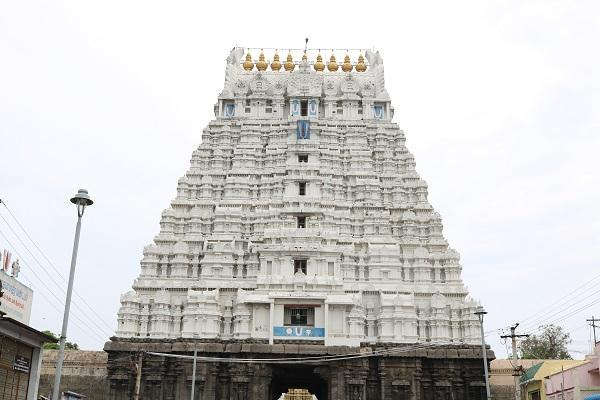
ஒரு சித்திரை மாதம் திருவோண நட்சத்திரத்தில் பெருமாள் தேவர்கள் அனைவருக்கும் புண்ணியகோடி விமானத்தில் சங்கு, சக்கரம், கதை தாங்கிய திருக்கோலத்தில் காட்சி தந்தார். எனவே, அதே நாளில் பிரம்ம தேவர், தனக்கு தரிசனம் தந்த பெருமாளின் திருவடிவத்தை அத்தி மரத்தில் வடித்து வழிபட்டார். இப்படித்தான் அத்தி வரதர் மண்ணுலகில் எழுந்தருளினார். பிரம்மதேவரால் உருவான அத்திமர வரதராஜரை தேவலோக யானையான ஐராவதம் தனது முதுகில் சுமந்தது. பின்னர் ஐராவதம் சிறு குன்றாக உருமாறி அத்தி (யானை)கிரி, வேழமலை என்று பெயர் பெற்றது. அத்திகிரியில் எழுந்தருளிய பெருமாள் ஞானியர்களுக்கும் தேவர்களுக்கும் வேண்டும் வரங்களை வேண்டியபடியே அருள்புரிந்து வந்தார்.

பின்னர் ஒருமுறை பிரம்மதேவர் அத்தி வரதரை முன்னிருத்தி ஒரு யாகம் செய்தார். யாகத் தீயின் காரணமாக அத்தி வரதர் பின்னப்பட்டுவிட்டார். பிரம்மதேவர் பதறிப் போனார். வேறு எந்த வடிவத்திலும் பெருமாளை உருவாக்க முடியாத சூழலில், பிரம்மா திருமாலை வேண்டினார். அவருடைய ஆலோசனையின்படி, அத்தி வரதரை, கோயிலிலுள்ள நூற்றுக் கால் மண்டபத்துக்கு வடக்கிலுள்ள இரண்டு திருக்குளங்களில் தென் திசையிலுள்ள நீராழி மண்டபத்துக்குக் கீழே உள்ள மற்றொரு மண்டபத்தில் வெள்ளிப் பேழையில் சயனக் கோலத்தில் வைத்தார். யாகத்தீயில் உஷ்ணமான பெருமான், கலியுகம் முழுக்க இந்த அமிர்தசரஸ் எனும் ஆனந்த புஷ்கரணி திருக்குளத்தில் குளிர்ந்த நிலையில் இருப்பார் என்றும், இதனால் எந்தக் காலத்திலும் இந்தத் திருக்குளம் வற்றாது என்றும் பிரம்மதேவருக்குச் சொல்லப்பட்டது. அத்தி வரதர் திருக்குளத்துக்கு அடியே சென்றதும், பழைய சீவரம் என்ற ஊரில் இருந்த தேவராஜப் பெருமாள் அத்திகிரிக்கு அருள வந்தார்.
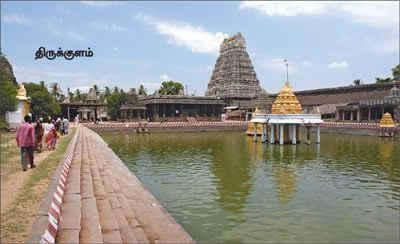


ஆதியில் தோன்றிய அத்தி வரதர் நீருக்கடியே அறிதுயிலில் இருக்கிறார். பிரம்மதேவருக்குப் பெருமாள் கட்டளையிட்டபடி, 40 ஆண்டுகளுக்கு ஒருமுறை குளத்து நீரை எல்லாம் இறைத்து விட்டு பெருமாள் மேலே எழுந்தருளுவார். சயன மற்றும் நின்ற கோலமாக 48 நாள்கள் பக்தர்களுக்கு வரதர் சேவை சாதிப்பார். 40 ஆண்டுகளுக்கு ஒருமுறையே இவரைத் தரிசிக்க முடியும் என்பதால் அப்போது பக்தர்கள் கூட்டம் அலைமோதும். வாழ்வில் ஒருமுறையேனும் இவரை தரிசிப்பது மோட்சத்தை அளிக்கும் என்பார்கள். இரண்டாவது முறை யாரேனும் தரிசித்தால் வைகுந்த பதவி பெறுவார்கள் என்பதும் ஐதீகம். மூன்று முறை தரிசித்த மகா பாக்கியவான்களும் சிலருண்டு. 1939 மற்றும் 1979-ம் ஆண்டுகளில் வெளியான அத்தி வரதர் அடுத்த ஆண்டு வெளிப்பட இருக்கிறார்.


40 வருடங்களுக்கு ஒருமுறை வெளியே எழுந்தருளி பக்தர்களுக்குச் சேவை சாதிக்கும் அத்தி வரதர், அடுத்த வருடம் ஜூலை மாதம் 15-ம் தேதி வெளியே வரப்போகிறார்  என்று தற்போது வாட்ஸ் அப்பில் பரவி வரும் தகவல் பற்றி கோயில் நிர்வாகத்திடம் கேட்டோம். “2019-ம் வருடம் வைகாசி மாதம் நடைபெறும் பிரம்மோற்சவத்தின்போதுதான் அத்தி வரதரை வெளியில் எழுந்தருளச் செய்யும் நாள்கள் குறித்து முடிவு செய்யப்படும். மற்றபடி தற்போது வெளிவரும் தகவல்கள் வதந்திதான்” என்று கூறினார்கள்.

நாளும் கிழமையும் எதுவாக இருந்தால் என்ன? அடுத்த வருடம் அத்தி வரதர் நமக்கெல்லாம் அருள்புரிவதற்காக திருக்குளத்திலிருந்து வெளியே எழுந்தருளவேண்டும்; நாம் கண்கள் குளிரக் குளிர அவரை தரிசித்து அருள்பெறவேண்டும் என்பதே பக்தர்கள் அனைவரின் விருப்பமுமாகும்.

Source…. Mu.HariKamaraj  in .www.vikatan.com

Natarajan
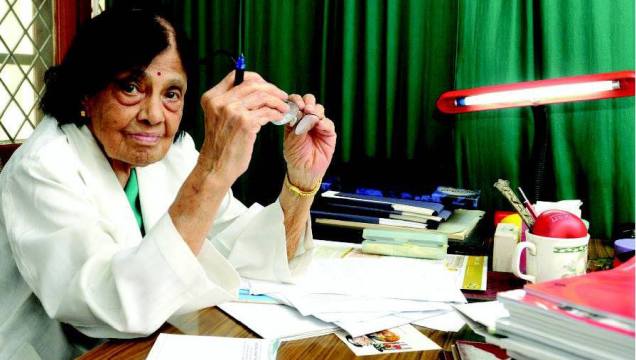


A Woman of Many Firsts: Meet India’s First And Oldest Cardiologist!…


Stent, heart bypass surgery, heart attack…all of us have heard these painful terms amongst our loved ones at one time or another. But these were uncommon a generation ago.

So, what happened? How did we reach here?

In an attempt to understand the status of heart disease in India, Priyamvada Chugh reached out to India’s first and oldest cardiologist.

Meet Dr Sivaramakrishna Iyer Padmavati, who turns 101 this month, and still goes to the National Heart Institute in Delhi every day,which she founded in 1977.

Dr Padmavati is India’s first and oldest cardiologist. Photo

Born in 1917, Dr Padmavati fled with her family from Burma to Coimbatore in 1941 during World War II. With the passion to make a difference, she studied medicine at Johns Hopkins Hospital and Harvard Medical College in the USA with cardiology pioneers Dr Helen Taussig and Dr Paul Dudley White, respectively.

While returning to India in 1952 was a personal decision, it was the turning point for cardiology in India.

She has been the face behind several firsts:

  • The establishment of the first cardiac clinic and cath lab at the Lady Hardinge Medical College, Delhi.
  • The initiation of India’s first Doctorate of Medicine in Cardiology.
  • Setting up cardiology departments at the prestigious Maulana Azad Medical College, GB Pant Hospital, etc.
  • Founding the All India Heart Foundation, Delhi.

The list goes on. She accomplished all this in an era when cardiology was an unknown territory for most Indians, let alone for a woman.

To this Dr Padmavati says, “I pursued cardiology because there were very few courses available to women when I went to college, unlike today.” She was honoured with the Padma Bhushan in 1967 and the Padma Vibhushan in 1992 for her contributions to the field.

Having witnessed drastic changes in the incidence of heart disease in India over the last century, she says “Things were different earlier. Physical activity and a healthy diet were the norms. Now, times have changed.”

Burgers, fast food, and buttered paranthas, with eight hours of sitting in front of a computer, aren’t making things any better. As we move towards a machine-driven lifestyle characterised by increasing levels of stress, we invariably embrace unhealthy nutritional habits where heart diseases will only be on the rise.

Diseases of the heart have become the biggest killers of the modern times. According to reports from the World Health Organisation (WHO), heart diseases kill 17 million people around the world every year, and this figure is expected to rise to 23 million by 2030. The numbers are as horrific in India where 32% of all adult deaths are due to heart diseases.

Worryingly, heart disease in Indian youth is increasing rapidly, with 50% of all heart attacks occurring under 50 years of age and 25% occurring under 40 years of age.

So, what causes heart disease? Dr Padmavati answers, “The biggest reasons for heart disease are obesity, hypertension, diabetes and tobacco abuse.” High level of blood cholesterol is a common sign among obese people. Being a bad fat, cholesterol tends to get deposited in blood vessels, making them thinner and causing an increase in blood pressure, which weakens the heart.

Similarly, high salt intake also leads to increased blood pressure and eventually heart failure. Guidelines from the WHO recommend getting no more than 2.3 g of sodium a day, which is just one teaspoon of salt! As Indians, we are consuming almost twice that amount per day!

Another red flag for heart disease is high blood sugar, which gets converted to fat by the liver, raising the risk of heart disease. The American Heart Association suggests that we should consume less than 36 g of sugar per day, which is equivalent to just a single serving of a Rasgulla!

Can you imagine how many times the daily requirement of salt and sugar you have already consumed today? Studies show that exercising as little as 30 minutes every day decreases the risk of heart disease by up to 30%.

Limiting the intake of sugar and salt and increasing physical activity is the only way forward.

Another recommended strategy to strengthen our heart is by having at least 500 g of antioxidant-rich fresh fruits and vegetables such as tomatoes, pomegranates, spinach, grapes, etc. daily.

Several campaigns across the globe have been fighting these risk factors to reduce the incidence of heart disease. For instance, the Daily Mile Scheme, initiated in Scotland, is ensuring 15 minutes of morning run for school students across Europe. Norway has hiked the tax on sugar by 83% at the start of 2018, with products like candies and chocolates being taxed at almost $5 per kilo. In Finland, low-salt food options in the supermarket carry a “better choice” logo, and high salt foods have a mandatory warning sign.

In India, we neither have a sugar tax, nor a policy on salt consumption. So, for us Indians who worship food and love after-meal naps, it is time that we adopt something like Namak Cheeni Kam aur Exercize Zyada, karo apne Heart se ye Vaada (cut down your intake of sugar and salt and increase your exercise, make this promise for your heart).

Source….Health Heroes – This article is part of a series to celebrate some of India’s most amazing doctors and to understand the incredible work they are doing.  http://www.the betterindia.com

Natarajan


The Meteorite That Crashed Into A Car…..


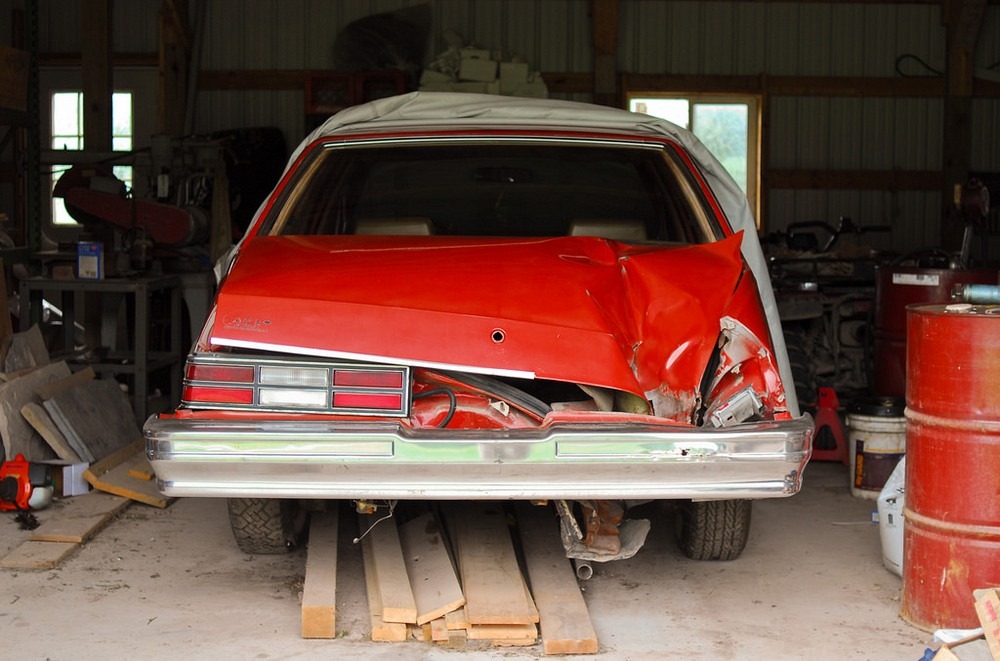
The Peekskill meteorite car sitting at a collector’s garage in Peekskill. Photo credit: Ryan Thompson/Flickr 


On October 9, 1992, a brilliant fireball flashed across the evening sky over eastern United States startling thousands of spectators attending the weekly high school football matches being played across the East Coast. The fireball, that witnesses described as being brighter than the full moon, was travelling almost horizontally and heading northeast. In just forty seconds, the meteorite had crossed four states travelling 700 kilometers through the atmosphere. The intense heat and friction broke the space rock into more than 70 pieces, several of which were large and fast enough to produce their own glowing trails. A considerably weighty chunk of the meteorite, about the size of a bowling ball, eventually touched ground at Peekskill, New York, with a loud boom.

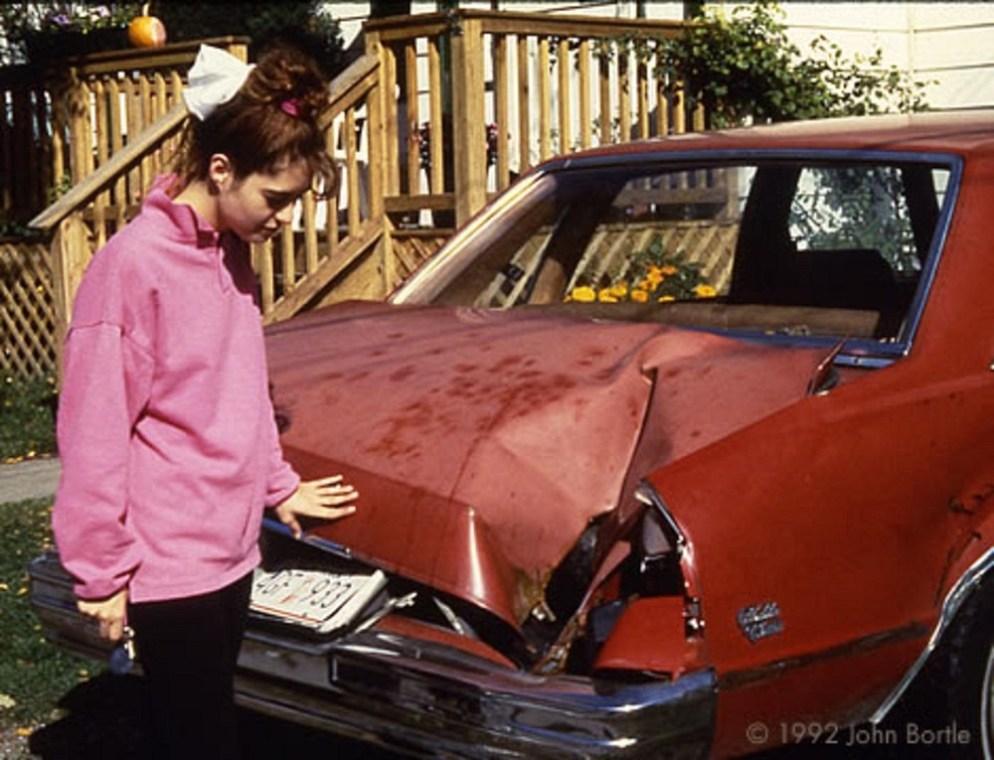
17-year-old high-school student Michelle Knapp was watching television in her parents’ living room when she heard a thunderous crash outside. Knapp ran outside to investigate the noise. There she found, standing on the driveway, her 1980 Chevy Malibu. The Malibu’s trunk was twisted and battered with a hole through it. A sizeable rock over 12 kilograms in weight lay under the car, embedded in the asphalt. It was still smoking and smelled of rotten eggs. The rock had narrowly missed the fuel tank.

Understandably, Michelle was not happy; she had recently bought the car for $400 and now it was totaled. Michelle did what anybody else would have done—she called the cops and reported an act of vandalism. It was a neighbor who reasoned that vandals can’t throw rocks through cars and surmised that the rock was from outer space. The suspicion proved correct when the very next day, a curator from the American Museum of Natural History in New York City confirmed that the object was indeed a meteorite, the same one that streaked across the northeastern sky distracting coaches and parents from their kid,s football games.

Michelle Knapp in the driveway with her Malibu taken only days after the historic impact. Photo credit: John Bortle

It was this impeccable timing of the Peekskill meteorite that made it one of the most witnessed and most recorded meteorite events in history. Dozens of spectators to the high school football games had brought camcorders with them, and when the meteorite flashed over their heads many of these cameras turned skywards, towards the brief but more exciting event. As many as 16 different observers from various locations recorded the event on tape—a record that was not broken until 2013 when a meteor exploded over Russia. The sixteen videos of the fireball taken from multiple perspectives made it possible for scientists to determine the exact trajectory of the meteorite. Indeed, Peekskill is one of the few meteorites whose orbit is precisely known.

As for the car, Michelle spent no time securing a deal with a renowned meteorite collector for an amount that was nearly two orders of magnitude more than what Michelle had paid. Since then, the car has been on display in numerous cities throughout the world, including Paris, Tokyo, Munich and more.

Source……Kaushik in http://www.amusing planet .com

Natarajan


The Pigeons who took Photos ….

At the turn of the last century, when aviation was still in its infancy, a German named Julius Neubronner submitted a patent for a new invention—a miniature camera that could be strapped to the breast of a pigeon so that the bird could take flight and snap pictures from the air.

Julius Neubronner was an apothecary who employed pigeons to deliver medications to a sanatorium located near his hometown Kronberg, near Frankfurt. An apothecary is one who makes medicines. A pharmacist is a more modern word, but in many German speaking countries, such as Germany, Austria and Switzerland, pharmacies are still called apothecaries.                                                                                                                                   


Apothecary was Julius Neubronner’s family profession. His father was an apothecary, and so was his grandfather. In those days, homing pigeons were used extensively to carry messages and small supplies. It was Julius’s father’s idea to use pigeons to receive prescriptions from the sanatorium and send out medicinal supplies in a hurry—a practice that continued for more than half a century until the sanatorium closed.

One day, Neubronner let out a pigeon on an urgent errand but it didn’t return. When several days passed and there was still no sign of the bird, Neubronner assumed the pigeon was lost, or it got caught and killed by predators. A month later, the lost messenger showed up unexpectedly at Neubronner’s place. The bird appeared well fed, which got Neubronner into thinking. Where had he gone? Who had fed him?

Neubronner decided that he would start tracking his pigeons’ future travels.


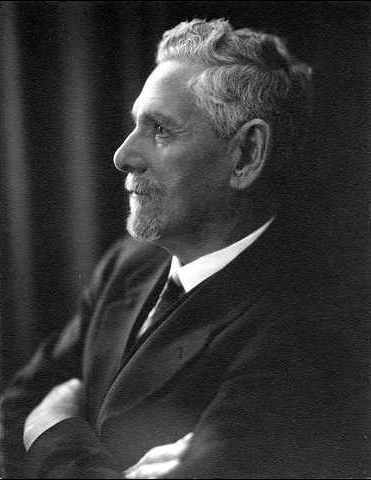
Julius Neubronner with one of his pigeons.

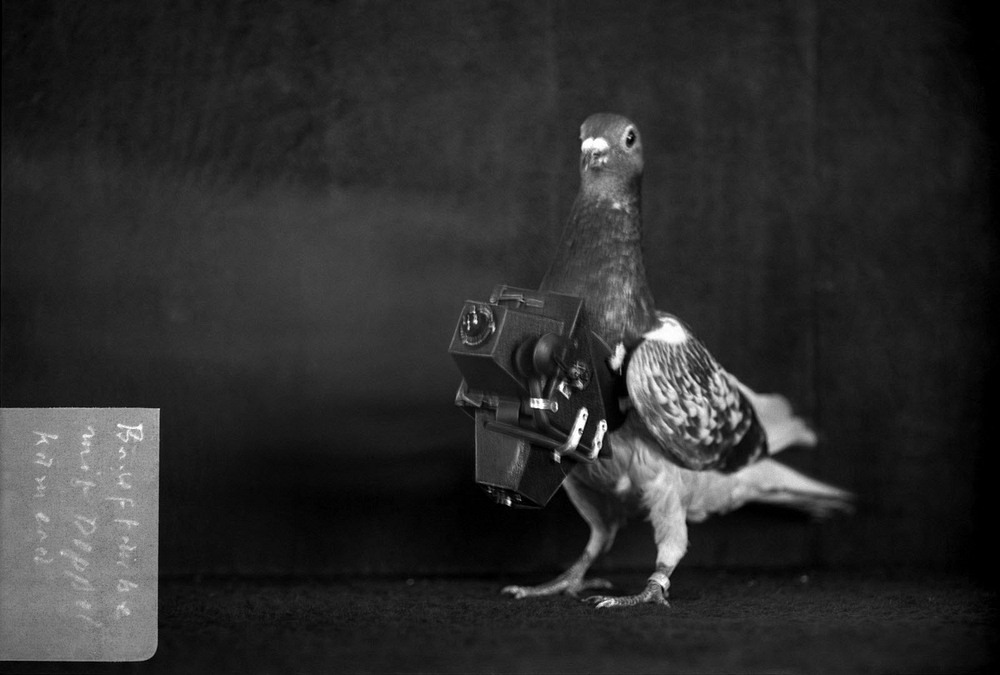
Being a passionate do-it-yourself amateur photographer, it didn’t take long for Neubronner to fashion a miniature wooden camera which he fitted to the pigeon’s breast by means of a harness and an aluminum cuirass. A pneumatic system in the camera opened the shutter at predetermined intervals and the roll of film, which moved along with the shutter, took as many as thirty exposures in a single flight. The entire rig weighed no more than 75 grams—the maximum load the pigeons were trained to carry.

The pictures turned out so good that Neubronner started making different models. One system, for instance, was fitted with two lenses pointing in opposite directions. Another one took stereoscopic images. Eventually, Neubronner applied for a patent, but the patent office threw out his application citing that such a device was impossible as they believed a pigeon could not carry the weight of a camera. But when Neubronner presented photographs taken by his pigeons, the patent was granted in 1908.


Aerial photograph of Frankfurt.

Neubronner exhibited his photographs in several international photographic exhibition gaining him accolades. In one such exhibition in Dresden, spectators watched as the camera-equipped carrier pigeons arrived at the venue, and the photos were immediately developed and turned into postcards which they could purchase.

The technology was soon adapted for use during the First World War, despite the availability of surveillance aircraft then. Pigeons drew less attention, could photograph enemy locations from a lower height, and were visibly indifferent to explosions on a battlefield.

Neubronner’s avian technology saw use in the Second World War too. The German army developed a pigeon camera capable of taking 200 exposures per flight. The French too claimed they had cameras for pigeons and a method to deploy them behind enemy lines by trained dogs. Around this time, Swiss clockmaker Christian Adrian Michel perfected a panoramic camera and an improved mechanism to control the shutter. Pigeon photography was in use as late as the 1970s, when the CIA developed a battery-powered pigeon camera, though the details of the camera’s use are still classified.

Today, aerial photography has been replaced by aircrafts, satellites, and more recently, by affordable drones. But the legacy of Julius Neubronner’s pigeon photography lives on in these images which are among the very early photos taken of Earth from above.

Bonus fact: So what happened to Neubronner’s pigeon who stayed away from the owner for a month and returned fattened up? It had flown away to Wiesbaden, some twenty kilometers away, and was taken care of by a restaurant chef.


Source…..Kaushik in http://www.amusingplanet .com

Natarajan


The Theater That Shakespeare Stole ….!!!

On a cold, snowy December night in 1598, about a dozen men armed with swords, daggers and axes quietly broke into a recently vacated theater in Shoreditch, located just outside the city of London. With the aid of what modest light their lanterns could throw, the men worked tirelessly all throughout the night, dismantling the theater beam by beam and nail by nail, and loading the stripped timber onto wagons. By the time the darkness of the night gave way to the first light of dawn, the theater was gone.

The vandals in question were the Lord Chamberlain’s Men, the theatrical troupe to which William Shakespeare belonged. For the past several years, the Chamberlain’s Men had been playing at Shoreditch’s Theatre. This theater, built in 1576, was the second permanent theater ever built in England, and the first successful one to be built for the sole purpose of theatrical productions.


Shakespeare’s Globe theater in London. Photo credit: Diego Delso/Wikimedia

The Lord Chamberlain’s Men was founded in 1594, and within a short period of time it became one of the leading theatrical companies in London. Shoreditch’s Theatre was their home, and over the years, the Chamberlain’s Men played many of Shakespeare’s most famous plays on this stage.

In 1596 the lease for the property on which the Theatre was built expired, and the Chamberlain’s Men tried hard to negotiate an extension with the stubborn owner, Giles Allen. Not only Allen refused to renew the lease, he threatened to take possession of the theater as well. The dispute dragged on for two years, during which time the company performed at the nearby Curtain playhouse. It was at Curtain Theatre that Shakespeare debuted what is arguably his most famous play, Romeo and Juliet.


The Theatre of Shoreditch, the one that Shakespeare’s men dismantled.

When it became clear that Giles Allen wasn’t going to give back the land, the Chamberlain’s Men leased a new plot by the Thames, and on 28 December 1598, while Allen was celebrating Christmas at his country home, the men stole into the Theatre and carefully tore it down. A talented carpenter named Peter Street, who would later build another historic London theater named Fortune Playhouse, recycled the old pieces of wood into an astonishing new theatre—the Globe, capable of holding up to 3,000 spectators.

The romanticized version of the story holds that the Theatre was dismantled during the course of a single night, but historians believe the job could not have been completed in such a short time. Also, there is no proof that Shakespeare was present during the night, although he most certainly would have been following the proceedings closely, for he did have a tremendous interest in having this job done right.

Initially the timber was stored in a warehouse near Bridewell, until the following spring, when the materials were ferried over the Thames and used to construct the much larger Globe.


Reconstruction of the Globe theatre based on archeological and documentary evidence.

The Globe was up and running by early 1599, and for the next 14 years it presented many of Shakespeare’s greatest plays. In 1613, during a performance of Henry VIII, a misfired stage cannon ignited the thatched roof and the theatre burned to the ground. Although the theatre was quickly rebuilt, Shakespeare probably never wrote for the second Globe. Eventually, like all the other theaters in London, the Globe was closed down by the Puritans in 1642.

A modern reconstruction of the Globe, named “Shakespeare’s Globe”, now stands on the Thames approximately 750 feet from the site of the original theater. It was built in 1997, based on an approximation of the original design, but with only half the capacity.

The new theater was designed to be as authentic as possible to Shakespeare’s 16th century theater. The structure is made of timber alone without any steel support, and it is the only building in London with a thatched roof, since that material was banned after the Great Fire of 1666. Seats are simple benches, although spectators can request cushions during shows. No spotlights, microphones or any kind of modern audio equipment are used. All music is performed live, most often on period instruments, just like it was in the 16th century. Only recently, the Globe began experimenting with lighting and sound rig.

Source….. Kaushik in http://www.amusingplanet.com

Natarajan


At the age of 7 , He is the youngest to scale the Mountain Kilimanjaro …

He just wanted to see some snow. But he got much more than that.
Samanyu, all of 7, scaled Africa’s loftiest peak and proved that no dream is impossible.
And that age is just a number.
Rediff.com‘s Divya Nair speaks to the mini mountaineer.


IMAGE: Samanyu Pothuraju at Uhuru peak, Mount Kilimanjaro in Tanzania.
All photographs: Kind courtesy Samanyu Pothuraju/Boots and Crampons

On April 2, 2018, when Samanyu Pothuraju, 7, from Hyderabad, was woken up at 3 am by his expedition leader Bharat Taminneni, he didn’t want to wake up.

He begged, “It’s too cold outside. I don’t want to go. Please let me sleep.”

It was the very last leg of their ascent to the summit of Mount Kilimanjaro so Bharat would not give in.

Recalls Lavanya Krishna, Samanyu’s mother, “Finally, Bharat told him that if he reached the summit, his favourite (Telugu film) hero Pawan Kalyan would (surely want to) meet him.”

Mention of Pawan Kalyan did the magic.

Samanyu woke up with a start.

Eight odd hours later that day, at 11.52 am, to be precise, little Samanyu made it to the top of Uhuru, the highest point of Mount Kilimanjaro, Tanzania. And clinched a world record.

At 7, Samanyu is the youngest person in history to scale this peak, 5,895 metres above sea level.

But the Class 3 student, who “loves karate, computers and math,” did not have the faintest idea about the significance of his journey.

“I was wearing a thick jacket and gloves. My legs were paining, but I was happy,” Samanyu tells Rediff.com from Hyderabad.

Last year he was one of the youngest to reach the Mount Everest base camp in Nepal.

What inspired him to go to Africa?

Mount Everest actually.

Says Lavanya, who accompanied Samanyu till Kilimanjaro’s second base camp and not beyond, “When we reached the base camp of Mount Everest, some months ago, he (Samanyu) was disappointed that he couldn’t see much snow.”

“When I told him about Kilimanjaro, he asked me if there would be snow and if he could touch it. I said yes. He said he wanted to go and see the snow.”

For Lavanya, a bank employee who quit her job to take care of her children (Samanyu’s elder sister is 13), sending her seven year old to the top of Kilimanjaro wasn’t an emotional decision.

It was about letting Samanyu have his dream.

She consulted Raji Thammineni of Boots and Crampons, a Hyderabad-based adventure logistics company, to find out how safe the journey was.

“Raji is a friend and she advised I first send Samanyu to a training camp to see if he was fit to go.”

Samanyu passed the camp last year with with flying colours.

“He could climb 50 steps up and down with ease, trek to mountains and even made it to the Everest base camp in October 2017,” says Lavanya.

In November, Samanyu signed up with Boots and Crampons to prepare to scale Kilimanjaro, Africa’s highest mountain.

In addition to his training, Lavanya helped her son get mountain ready by showing him a video of the terrain daily.

“He saw how people climbed it in different situations — rain, sun, snow, etc.”

Samanyu was keen to see snow. But he also wanted to see East Africa’s famous blue monkeys.”

“He saw three blue monkeys,” Lavanya says.

Lavanya and Samanyu flew to Tanzania on March 27.

“It was supposed to be summer. When we reached it was raining and snowing. My head was paining on reaching the second base camp, so I was asked to rest,” says Lavanya.

The next climb, from the second base camp to the last camp, took approximately 10 hours.

The final stretch from the last camp to the summit was equally long. But Samanyu finished it like a pro, says Lavanya.

‘It required meticulous planning to achieve this mission. We took all the care and precautions to keep the child safe and help him realise (the importance) of his mission to the summit of one of the most challenging mountains in the world,’ Bharat and Raji posted on Facebook about Samanyu’s achievement.

‘Master Samanyu fought bravely with different terrains — rainforest, moorland-rocky landscape, Alpine desert and crater rim — before summiting this wonder of the world. We are extremely proud to support Master Samanyu’s achievement which brought laurels to our country,’ the post added.

The sacrifices

To prepare for Africa, Samanyu had to wake up early and religiously maintain a schedule so he could balance school, extracurricular activities and mountaineering.

“He’d wake up at 5 am and go for his karate classes followed by cycling. After school, he’d train for mountaineering,” says Lavanya.

Samanyu had to follow a strict diet. Not too much sugar. No ice cream.

“I had to eat canned food,” Samanyu tells Rediff.com. “It was tasty though.”

“After we climbed down, they gave me ice cream. I was very happy.”

What’s next

His next challenge?

“I want to do the 10 peaks challenge in Australia.”

Turns out none of this has affected his academic performance: Samanyu, who studies at the Bolton School in Hyderabad, scored over 95 per cent in his last examination.           

IMAGE: Samanyu holds up a printout with Telangana Chief Minister K Chandrashekhar Rao’s image at Uhuru peak, Kilimanjaro.

Lavanya and Krishna spent Rs 15 lakhs funding their son’s expedition, but they feel helping Samanyu attain his dreams was their most important mission.

Here’s their message to parents: “Never stop your child from dreaming big. You can guide her /him on what is right and wrong. But support their dreams as much as you can.”

Samanyu is now waiting to meet Pawan Kalyan, as promised. His parents have tweeted the Telugu superstar about their son’s wish to meet him.

Hey, Pawan, if you are reading this feature, please do give lil’ Samanyu a call.

http://www.rediff.com

Natarajan


Anna Creek… A Cattle Station in Australia…Bigger than Israel !!!

In Australia, cattle stations—which is the equivalent of an American ranch—tend to be unimaginably large, so large that some of them are bigger than some European and African countries.

Take Anna Creek Station, a well known cattle station in South Australia, near Simpson Desert between Coober Pedy and Lake Eyre. This station covers nearly 24,000 square kilometers. By comparison, Israel is barely 21,000 square kilometers, and the biggest ranch in America is just over 3,300 square kilometers. In fact, there might be close to a hundred cattle stations in Australia that are bigger than the biggest American ranch.


Australia’s cattle stations are huge in size because of the continent’s climate. Most stations are located in the north and the central regions of the Australian Outback, where the climate is so dry and the vegetation so sparse that a large amount of country is needed to support enough cattle to make a living. Even a cattle station as large as Anna Creek Station normally runs about 17,000 animals during a good season.

The Anna Creek Station was bought by Sir Sidney Kidman, Australia’s so-called “cattle king”, who owned large areas of land across Australia during his lifetime. Kidman was thirteen when he ran away from his Adelaide home in 1870 with only 5 shillings in pocket and a one-eyed horse that he had bought with his savings. His teen years, Kidman worked as a drover, stockman and livestock trader, and made money supplying services to new mining towns springing up in outback. Eventually he had saved enough to buy his own station.


Sir Sidney Kidman

Kidman began gobbling up one estate after another until he was the biggest landholder in the world by World War I. At one point, the size of Kidman’s properties exceeded the size of the entire United Kingdom. His family still owns more than 10 million hectares, or about three-quarters the size of England. With a herd of 185,000 cattle, S. Kidman & Co is one of Australia’s largest beef producers.

There are at least nineteen cattle stations in Australia whose size exceeds 10,000 hectares. Four of them exceeds 15,000 hectares. These cattle stations are so large and the grazing area so spread out that it takes weeks to round up all cattle during the mustering season. Back in the old days, cowboys used to ride out in horses gathering up cattle. Today light aircraft is used for spotting animals which are rounded up by stockmen on trail bikes.

Because of the remoteness and size of Australian cattle stations, life is very isolated. The next human settlement is often a day’s drive away. So these stations function like small towns with schoolroom for the kids of the owners and workers, a small general store to supply essentials and possibly an entertainment or bar area. Electricity is typically provided by generators or solar cells. Internet and television is provided by satellite.

Anna Creek Station is currently owned by Williams Cattle Company, after it acquired the property from S. Kidman & Co in 2016.

Bonus fact: The name “Kidman” and “Australia” may remind you of actress Nicole Kidman. The connection is more than a coincidence—Nicole Kidman is actually a descendant of Sir Sidney Kidman.

Photo credit: Planettrekker/Flickr

Source ::::: Kaushik in http://www.amusingplanet.com

Natarajan


\


The jingle Trucks of Pakistan …

A typical Pakistani truck driver spends more time with his truck than he does with his wife. Which explains why he wants his 10-ton six-wheeler to look like a new bride.

These trucks plying across Pakistan’s national highways and the neighboring country of Afghanistan are distinctively ostentatious. The entire trucks, from top to bottom, are a riot of colors. Lavishly painted panels containing a mosaic of birds, flowers, landscapes, saints, and actresses in hyper-saturated color palette adorn the exterior, while plastic flowers, draped beads, mirrors, ribbons and velvet grace the interior. The cabin is crowned by a custom built wooden prow wrapped in more kitschy artwork, while a string of metal bells dangle from the chassis all round the periphery. When the truck is in motion, these bells clang against each other like a new bride’s ghungroo. This is where the nickname “jingle trucks” come from—coined by US troops deployed in Afghanistan.


Photo credit: ISAF Public Affairs/Flickr

And it isn’t just trucks alone. Passenger buses, water tankers, transport vans, rickshaws, and even vendors’ pushcarts are psychedelically decorated with eye-popping colors. It’s like a rolling folk art, “a national gallery without walls, a free-form, kaleidoscopic exhibition in perpetual motion,” as Richard Covington puts it.

The tradition of decorating trucks began sometime in the 1920s with the introduction of the long-distance Bedfords—a British-built truck with rounded cab and seven-feet high paneled sides that was to become the country’s most prestigious and dependable truck for more than half a century. Originally trucks were painted with each company’s logo so that illiterate people could recognize who owned the trucks. Gradually, these logos became more fanciful, flamboyant and competitive. By the 1950s, stylized murals and frescoes had begun to replace them. It was only in the 1960s, as the country’s economy boomed, the decorations became increasingly sophisticated to reflect the growing wealth of the drivers and the rise of a new urban class.

Pimping out a truck this way cost truck owners a small fortune. It isn’t unheard of for a driver to spend the equivalent of a year’s worth, or more, of profits on truck decorations. According to a 2005 article, a basic painting and body job costs a minimum of $2500, equivalent to two years of the average truck driver’s salary. Some spend upwards of $10,000 outfitting their rigs. Unbelievably, many truckers will return to the workshop every three or four years for a full vehicle makeover.

“Truckers don’t even spend so much money on their own houses,” marvels Durriya Kazi, head of the department of visual studies at the University of Karachi. “I remember one driver who told me that he put his life and livelihood into the truck. If he didn’t honor it with the proper paint job, he would feel he was being ungrateful.”

A well-decorated truck also gives customers the impression that it is well taken care of and will, therefore, be a dependable way to transport goods.

Truck painting is also a big business. In Karachi city alone, more than 50,000 people are engaged in this unregulated yet lucrative industry. Family-run workshops comprising of apprentices and highly trained artisans, and small shops selling all manners of outlandish ornaments and accessories crowd around truck yards.

Over the years, however, the business has changed. Now instead of meticulously hand painting each truck, mass produced stickers and adornments are used.

“Truck decoration is not stagnating; it is dead,” laments R M Naeem, an assistant professor at the National College of Arts, Lahore. “This is because truck painters treat their work as a source of livelihood. They do not have the time or the luxury to innovate; they repeat the same old patterns, images and icons over and over again.”

However, thanks to artists like Haider Ali, who gave a Ford van a jingle-truck-style makeover a couple of years ago in a parking lot in Pasadena, California, and other painters, it’s unlikely that this quintessentially Pakistani craft is going to die out any time soon


Source……..Kaushik in  http://www.amusingplanet.com

Natarajan


The Hindi-Speaking Aussie who loves India …

Charles ‘Biharilal’ Thomson, is an Australian who speaks fluent Hindi learnt on the streets, trains and buses of India’s hinterland.
Biharilal tells Rediff.com‘s Archana Masih how India has bewitched him.


Photograph: Kind courtesy Charles Thomson/Facebook

Biharilal Thomson is a white Australian who speaks Hindi better than many Indians.

The first time he saw a non-white person was as a 10 year old. His mother had invited an Indian yogi from Bihar into their home in Australia and asked her son to share his room with the sadhu for a few weeks.

“I had only seen white Australians till then, not even native Aboriginals — and here was an Indian in a langoti in my room!” he exclaims in good humour, sitting in a film producer’s home in suburban Mumbai, wearing a kurta-pajama and a yellow stole.

In the two hour conversation, he only speaks Hindi, a language he learnt in the streets, trains and buses of Bihar where he had arrived at age 13 in December 1974.

He loved his new home on the banks of the Ganga so much that he did not return to Australia for the next 11 years. Accounts of his experiences in India’s rural underbelly in the 1970s-1980s, include encounters with dacoits on horseback on at least two railway journeys.

“I saw real sadhus, I saw real dacoits — and I thought I had reached an amazing place,” says Biharilal with a grin. His life experiences, he says are so unbelievable that he sometimes thinks it is like a film.

It also reveals an India of another time — one that was simpler, wilder, unfamiliar and distant from what it is today.

“India was friendly with the Soviet Union, and I came across Indians who were desperate to emigrate to the USA, Canada or UK — not to the USSR.”

“The other thing that was common was cycles. Only the DM (district magistrate) and SP (superintendent of police) had cars — and in the trains people sometimes travelled with their own cooks!”

After going back to Australia in 1985, he returned to formally work in India in 2011.

India has seen a giant leap ahead since, and he has spent nearly 16 years here, but one question posed to him that hasn’t changed over the years is — “Why did you come to India?”

“This is what I am routinely asked, especially by the youth. They ask ‘Why have you come here when we want to settle abroad?’,” says Biharilal, who applied for Indian citizenship in 2014 and hopes to hold an Indian passport soon.

“The other thing I am amazed with is this craze for English. Even if I speak to those who know Hindi in Hindi, they reply in English!”

“Why?”

His fluency in Hindi has fetched him invites to Hindi events by the Indian high commission in Australia, to symposia at Savitribai Phule Pune university and Delhi’s Hansraj College. He has anchored a few film festivals and done some acting roles.

It has also brought him an FM radio show that he hopes to receive a confirmation for by April.

“In independent India it will be the first time that an angrez will do a radio show in Hindi,” he says enthusiastically.

Not wanting to be boxed into roles of the typical gora speaking tooti-phooti Hindi, he refers to the accomplished actor Tom Alter.

“He is an asli Hindustani, I’m nakli, but because earlier directors made him speak broken Hindi like an angrez, people thought he was English.”

“People didn’t know he was Indian, a Padma Shri, who spoke fluent Hindi and Urdu.”

Biharilal works at Josh Talks, a media company that invites guests to share inspirational stories. His focus is on all regional languages and tier-2 cities.

He has also done a few acting roles in Hindi and Marathi television serials, and recently appeared in an airline commercial for Scoot, a budget airline owned by Singapore Airlines.

There are quirky benefits to a white man speaking Hindi too — like the number of wedding invitations he receives. Many wedding organisers in the Delhi area send him invitations only to have a foreigner on display!

“I get so many invitations for chief guest. In the marriage season, I’ll be booked,” he laughs.

“People want a gora who speaks Hindi to show at their weddings.”

The move from Australia to India may have been a continental shift, but for Charles ‘Biharilal’ Thompson, it was like coming home.

It was a life introduced to him by his mother, a ballerina and an early convert to yoga, who came to learn at the Bihar School of Yoga in Munger in 1972.

“At that time only 1% of the world travelled by aeroplane,” says Biharilal, who is often recognised as ‘Biharilal Autowale Babu’ after a show on Zee TV where he covered the 2017 Delhi municipal election in a colourful autorickshaw.

He also covered the UP assembly election last year for WION, Zee’s English news channel.

“We used to fly to the Gold Coast to visit my grandparents every year. I made my father promise that he would send me to India instead, if I stood 1st or 2nd in school.”

He stood 2nd and travelled to Calcutta, he says, taking a train to Jamalpur and then a bus to Munger.

“I was shocked to see the poverty in Calcutta, but hearing ‘garam chai‘ by tea vendors in the train was like music,” he remembers.

Eight weeks later, his father returned to take him home.

“I told him I wanted to stay for one more year,” he says over a cup of tea.

“But I stayed for 11.”

blob:https://ishare.rediff.com/d8239350-f845-46f6-86e1-762bd67d53b5

He has now spent 16 years in India — first at the Bihar School of Yoga in Munger, then working in a financial tech start up Eko India, and currently in the entertainment industry.

At the famed yoga school in Munger, he says he learnt yoga and managed the library. He helped in the institute’s office work which would take him to Patna and Delhi.

It was on one these travels that he found himself in the middle of a dacoity.

He had bought a third class ticket and boarded a train from Jamalpur to Patna in Bihar. The TT saw his ticket and upgraded him to first class. Along the way, dacoits came riding alongside the train, detached the first class compartment and started looting passengers.

When they reached his coupe, he held out his hands, and said, “Ruko, ruko! (stop, stop!)”

The dacoits stopped.

“I was a young boy and did not know very good Hindi at that time, so I just managed to ask a dacoit if he had any videshifriend?”

The dacoit said ‘No’ and Biharilal told him that he would be his friend.

“He smiled and did not take anything from me.”

Caught in another dacoity on a railway platform — this time on a dark railway platform surrounded by crop fields — his saffron clothes came to his rescue.

“When they came to me, I just sprang up and started chanting Bum, Bum Bole-Bum, Bum Bole and they said, ‘Yeh toh Ganga jal wala aadmi hai‘ and let me go,” he chuckles.

India was very different then, he says. Yoga institutes were very austere and drew only the most committed.

He remembers the first function he organised which had a generator as backup for electricity failure. When the lights went off and the generator was switched on — the crowd left the sammelan and rushed to get a first glimpse of a generator at the back.

At fifty-seven, Biharilal has seen the arc of India’s history from Indira Gandhi’s Emergency to her assassination to the post liberalisation. He has travelled widely, even taken his mother to the Kumbh Mela.

In between, he returned to Australia and ran a Thai vegetarian restaurant but kept coming back to India.

“I started coming back in the late 80s, but visas were very difficult. Till the Modi Sarkar came, getting a visa to India was not easy. Sushma Swaraj is doing a good job,” he says.

In 2009, a startup started by Biharis, Eko India, offered him a job and he moved to India.

But it was a chance encounter with an Indian student at a Sydney swimming pool that opened the door to acting.

Shashank Ketkar, now a popular television actor, had got talking to him by the pool hearing his Hindi and came to eat at his Thai restaurant.

Few years later, Biharilal would visit him on the sets of his show whenever he was in Mumbai. His kurta-pajama style of dressing and fluency in Hindi caught the eyes of the director and led to small roles. He also got to play an angrez in a Marathi film Shashank Ketkar was acting in.

“I went to Kohlapur and shot a scene where I was seated on a horse in 40 degrees heat. I loved it. I thought I had become Shah Rukh Khan!”

He has also acted in a Hindi suspense thriller that will release this year.

Every day, he receives a large number of messages on Facebook and makes it a point to at least say ‘Ram, Ram’ or ‘Namaste’ to them.

“I feel the whole of Hindustan is made for me. Yeh kamal ka desh hai, yaha aapko sab kuch mil jayega (this is a great country, there is nothing you can’t find here),” he says, adjusting the famous Australian Akubra hat he is wearing and steps into the hot Mumbai sun.

Archana Masih / Rediff.com

Source…..www.rediff.com

Natarajan

A Tribute to a Genius – Stephen Hawking…

Stephen Hawking, the world-renowned theoretical physicist and cosmologist, has passed away at the age of 76, leaving a scientific legacy behind him that will undoubtedly be remembered for many centuries to come.

Stephen Hawking

Hawking was born on January 8th, 1942 in Oxford, the United Kingdom to two Oxford University graduates, Frank and Isobel. He had two younger sisters, Philippa and Mary, as well as an adopted brother named Edward.

The family moved to St. Alban’s, Hertfordshire, where they were considered to be both highly intelligent and somewhat eccentric by the locals. They lived frugally in a large, messy house and got around in a converted London taxi cab.

Following his primary and secondary school education, Hawking began his university education as an undergraduate at University College, Oxford in 1959. He was just 17 years old. Although the world only pictures him as a man confined to a wheelchair due to debilitating motor neuron disease that he was diagnosed with aged just 22, Hawking actually gained a reputation as being something of a daredevil during his university years.

He was the coxswain of a rowing crew at the University College Boat Club, and became notorious for steering his crew on risky courses, inevitably leading to a string of damaged rowing boats. He left University College with a Bachelor of Arts in natural science in 1962 prior to starting to work on his doctorate.

Stephen Hawking

His diagnosis with a rare form of motor neuron disease occurred at that time, and it led to him becoming deeply depressed. Nevertheless, he was encouraged to continue his studies by his supervisor, Dennis William Sciama, and was eventually able to demonstrate that Einstein’s general theory of relativity implies space and time would have a beginning in the Big Bang and end in black holes.

During his graduate years at Cambridge, Hawking fell in love with his first wife, Jane Wilde, with whom he had three children. The marriage would end some 30 years later after the marriage succumbed to the pressures of Hawking’s fame, ideological differences and the difficulties surrounding caring for him in light of his disability.

Despite beginning to use crutches in the early 1960s, he long fought off having to use a wheelchair, but when he finally couldn’t do so any longer, he gained notoriety for wild driving on the streets of Cambridge. He also used to run over students’ toes intentionally and would even spin himself on the dancefloor at college parties.

Together with Roger Penrose, Hawking had his first major breakthrough in 1970. They were able to use mathematics to show that a singularity, a region of infinite curvature in space-time, was the point from which the big bang emanated.

Stephen Hawking

After he realized that he was wrong in his argument about black holes being able to radiate, Hawking was in a Cambridge pub with his students when he suddenly turned up his voice synthesizer to full volume and bellowed that he was conceding defeat. Anyone who studied under his tuition or knew him personally knew him for his wicked sense of humor.

Hawking was elected to the Royal Society in 1974 aged just 32 after the series of radical discoveries he made during his early career, and would become the Lucasian professor of mathematics at Cambridge. The latter is often thought as the UK’s most distinguished academic chair and was once held by Isaac Newton.

His 1988 book, A Brief History of Time, catapulted Hawking to international stardom. It sold over 10 million copies and was translated into no less than 40 different languages. It was around that time that his marriage would begin to break down, but he would go on to remarry in the mid-1990s.

During his lifetime, he won the Albert Einstein Award, the Wolf Prize, the Copley Medal and the Fundamental Physics Prize, however, the Nobel Prize for Physics eluded him. He also returned to the White House (he had also visited during the Clinton administration) to receive the Presidential Medal of Freedom from Barack Obama.

Stephen Hawking

His life has also been immortalized on screen, not least thanks to the multiple award-winning movie, the Theory of Everything. He also lent his voice and know-how to various documentaries over the years.

Perhaps it’s not surprising to know that Hawking was not a religious man, and dismissed the comforts of religious belief. With that being said, he had once told an interviewee that he wasn’t afraid of death, but he added that he wasn’t in any hurry to die due to how much work he had left to do. The great cosmologist is survived by his three children from his first marriage, together with his three grandchildren.

Watch Stephen Hawking being interviewed by Charlie Rose:

Source……..www.ba-ba mail.com

natarajan