Tipu Sultan’s Mechanical Tiger…

The sun is the hottest when the clock strikes one in the small town of Seringapatam, not far from the city of Mysore, in present day Karnataka, a state in India. Colonel Arthur Wellesley, who was leading two army units of the British East India Company, knew that the defenders of the fortress of Seringapatam would be taking a break for refreshment at this hour. That’s when he planned to strike.

The date was May 4, 1799—the final day of the final confrontation between the British East India Company and the Kingdom of Mysore led by the strong and assertive Tipu Sultan. At the scheduled hour, seventy-six men dashed across the four-feet-deep river Cauvery and in only sixteen minutes had scaled the ramparts and stormed into the fort. The defenders, taken by surprise, were quickly subdued and in two hours the fort had fallen completely. Later, in a choked tunnel-like passage in the interior of the fort, the

bullet riddled body of Tipu Sultan, “the Tiger of Mysore” was found.


Photo credit: Victoria and Albert Museum

The victorious troops then proceeded to raid the royal treasury and over the next few weeks systematically emptied it, sharing the loot among the British army. Some time later, a curious object was discovered in the music room of the palace. It was a large wooden musical automata depicting a tiger mauling a man in European clothing. The man, which is nearly life-size, lies on his back while the tiger sinks its teeth into his neck. There is a crank protruding from the side of the tiger. When it’s turned, a hidden mechanism causes the man’s arm to go up and down, while a set of bellows inside causes the animal to growl and the man to emit distressing cries of agony. A flap on the tiger’s body can be opened to reveal a small organ and a keyboard capable of playing 18 notes.

Tipu Sultan’s mechanical tiger—known as Tipu’s Tiger— was a clear representation of his hostility towards the British—a feeling that he shared with his father, Hyder Ali, since his childhood. Hyder Ali regarded the British as their sworn enemy as they prevented Hyder from expanding his kingdom, and Tipu grew up with violently anti-British feelings. In 1792, when Tipu Sultan was forced to concede half of Mysore’s territories along with a large financial tribute to the British after the defeat at the Third Anglo-Mysore War, he had this machine built.

Tipu Sultan’s personal emblem was the tiger. The tiger motif was visible throughout his palace—on his throne, on his weapons and armor; the tiger stripe motif was painted on walls and used in uniforms; he even kept live tigers in his palace. Even his nickname that he adopted for himself was “the Tiger of Mysore”. Tipu’s Tiger, hence, was a symbolic representation of his desire to triumph over the British. It’s believed that the Sultan had frequently amused himself by playing with the instrument’s crank and hearing the distressing cries of the victim.

Understandably, the British were not amused. When they discovered the “contrived machine”, the Governor General of the East India Company wrote a memorandum calling it a “memorial of the arrogance and barbarous cruelty of Tipu Sultan” and “another proof of the deep hate, and extreme loathing” the Sultan had towards the English.

For a while, Tipu’s Tiger was displayed in the reading-room of the East India Company Museum and Library in London where it became very popular, especially since anybody could walk up to the machine and hand-crank it to hear the wailing and the grunting. The handle couldn’t take the abuse for long and it broke a few years later, to the great relief of the students using the reading-room in which the tiger was displayed.

In 1880, the tiger was acquired by the Victoria and Albert Museum in London. Since then, it has been one of the most popular exhibits in the museum and a “must-see”, although it’s too fragile now and cannot be operated. During the Second World War, the roof above the museum came crashing down and broke the tiger into several hundred pieces. After the war, the tiger was carefully pieced together, but it no longer works.

In recent times, Tipu’s Tiger has formed an essential part of museum exhibitions exploring the subject of Indian resistance to British rule, as well as British prejudice and imperial aggression. Tipu’s Tiger appears in various forms of memorabilia in the museum shops as postcards, model kits and stuffed toys.

Source ….Kaushik in http://www.amusingplanet.com

Natarajan

The village that gave India its new ISRO chief…..DR.Sivan

A humble son of a farmer who studied in local government run schools, in Tamil medium, is the new head of India’s premier space agency.

Dr K Sivan was born in Sarakkalvilai in Kanyakumari district in 1957. His father was a farmer, and Dr Sivan is the first graduate in the family.

By all accounts, his is an unusual story.

A young Sivan studied in government schools in his native village till the 5th standard, and completed his schooling in neighbouring Valankumaravilai, all in Tamil medium. Later, he graduated from the S T Hindu College in Nagercoil.

He then graduated from the Madras Institute of Technology in aeronautical engineering in 1980 and completed his master’s in aerospace engineering from the Indian Institute of Science, Bangalore, in 1982.

That year he joined ISRO on its Polar Satellite Launch Vehicle project, towards which he contributed in mission planning, design, integration and analysis. He has held various responsibilities during his stint in ISRO, finally going on to head India’s space agency.

At ISRO, he completed his PhD in aerospace engineering from IIT-Bombay, in 2006.

Dr Sivan, who takes over from Dr A S Kiran Kumar on Monday, January 15, for a three-year term, is only the second rocket scientist after G Madhavan Nair to head ISRO.

MAGE: Dr Sivan’s family home in Sarakkalvilai village. He comes here regularly to attend family functions and for the Bhadrakali Amman puja. Photograph: A Ganesh Nadar/Rediff.com

Sarakkalvilai falls on the outskirts of Nagercoil, which is the headquarters of Kanyakumari district, Tamil Nadu. All of a sudden this small village has become the centre of attraction for people near and far, thanks to its famous son.

“Take the next right and it is at the end of the road,” says a villager, and as you reach the house you realise it is as unpretentious as the man who grew up there.

Dr Sivan’s sister-in-law Saraswathi lives in the family house with her daughter. “My eldest daughter got married five months ago and Sivan had come for the function,” she says, her eyes glowing with happiness.

Since the announcement about his appointment, people have been coming in droves to congratulate her, and her face beams with pride.

“I was married 30 years ago into this family and at that time he was already working for ISRO in Thiruvananthapuram. He used to live in a lodge then. He comes home for festivals and family functions,” says Saraswathi.

The conversation is interrupted when former Tamil Nadu Congress president Kumari Ananthan lands up with a dozen supporters to congratulate her.

One of the men who comes along with Ananthan hands her a book with the message, “Please give it to him when he comes next.” Another hands her a monthly magazine.

“He comes here every year for the Badrakali Amman puja which takes place in April-May,” adds his sister-in-law.

“He comes with his family, offers prayers and leaves the same day. He always comes for all family functions. When he is with the family he is always smiling and joking. He never calls, but his wife calls regularly and keeps in touch with us,” Sarawathi says.

“He was a class topper from school to college,” says Dr Sivan’s uncle who lives in the house opposite.

“He was a brilliant student and never went for tuitions or private classes. His father used to pluck mangoes and young Sivan used to go to the market to sell it. He was a helpful child,” the uncle adds.

The school Dr Sivan studied at is also opposite the family house. The retired PT master there recalls him clearly. “He was five years my junior in school, I remember him as a very quiet boy.”

“I too was five years his junior,” another villager pipes in. “You know the final exams used to come during harvest time. His father used to be in the field while Sivan sat on the lower branch of a tree with his books, studying, keeping one eye on the harvest, and run if his father called. He was always studying.”

“When Sivan and I were in school we had a very good headmaster,” the villager adds. “That headmaster planted many trees in the school compound and made every class in charge of a few trees. In the morning, when we came to school, the first thing we did was to water the trees and only after that did we attend school.”

“Kanyakumari is basically an agricultural district,” an elderly villager points out. “Apart from coir, there was no industry here. We all survived on farming. It’s rich fertile soil and there is plenty of water. Paddy, bananas, coconuts, mangoes, rubber is grown here.”

“Sivan was exceptional,” the elderly gent adds, “while he helped his father in the field he continued studying every free moment.”

“As there was only a primary school here we went to nearby Valankumaravilai for our SSC (Class 10). Those days there was no 12th standard. As there was no bus facility we walked.”

A colleague from ISRO, who retired a decade ago and did not want to be named for this feature, recalls, “He (Sivan) would go home only to sleep. He is extremely hard-working and totally focused on his work. He was not only the first graduate from his family, he was also the first graduate from his village.”

FILE PHOTO::: New Delhi: Renowned scientist K. Sivan has been appointed as the new Chairman of ISRO, by the Appointments Committee of the Cabinet on Wednesday, January 10, 2017. PTI Photo **                                                

“He is a disciplined taskmaster,” says D Karthikesan, former director of the ISRO Propulsion Complex in Mahindragiri, Tamil Nadu.

“He likes to keep everything on schedule and works with a deadline,” adds Karthikesan. “If he thinks there is a problem somewhere he will go and talk to the people actually working on the project, and never limit himself to seniors in the organisation.”

“Though he is a hard taskmaster,” the former ISRO scientist points out, “he is also extremely generous and always looks after the welfare of the people working under him. So people work hard for him.”

“He is a bold decision-maker,” says Karthikesan. “Where others may hesitate wondering if it would work or not, he will say it will work and will do it.”

“Though he followed the schedule strictly,” adds Karthikesan, “he also made sure that all parameters are met at every stage. Whether it is quality or safety, he made sure every parameter was up to the mark before proceeding, and yet kept a tight schedule.”

Dr Sivan has two sons. The elder one has finished his BTech, the younger son is in college.

The school Dr Sivan studied in was built over 60 years ago. “We need to pull it down and build another,” says a villager. A government-run school, the land was given free by Dr Sivan’s uncle.

The village still does not have a bus service, a fact the villagers highlighted to Kumari Ananthan, the Congress politician. Nor does it have a middle, high or higher secondary school.

K Sivan’s ascent bears an uncanny resemblance to another ISRO scientist who was born in a fishing village in Ramanathapuram, also in Tamil Nadu.

That scientist, of course, went on to become the most beloved President this Republic has had.

Source….A.Ganesh Nadar in http://www.rediff.com

Natarajan

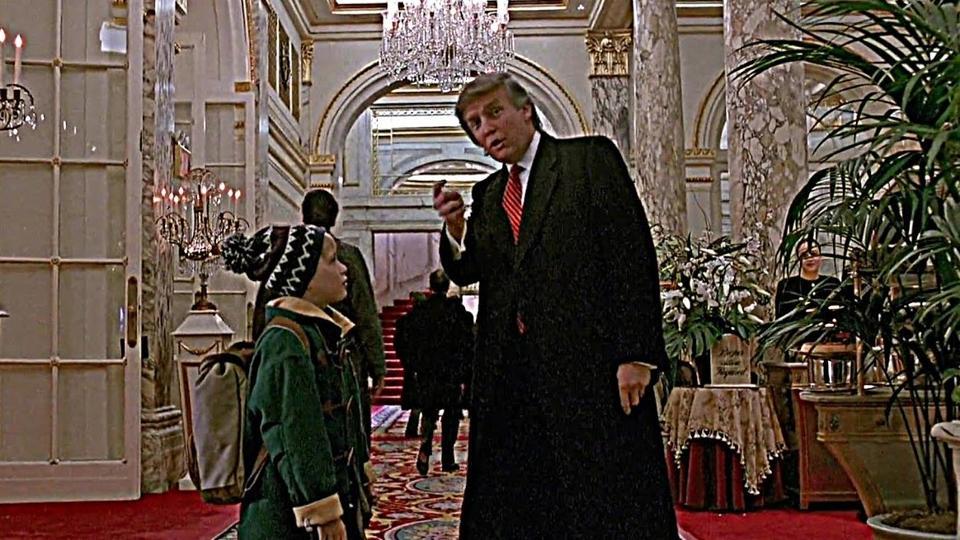
When Donald Trump demanded a role in Home Alone 2 in exchange of a shoot in his hotel !!!!!!

In an interview, Matt Damon mentioned how President Trump would only let the crew of the film on his properties if they wrote him a part in it. That’s how he featured in Home

Alone 2: Lost in New York. Donald Trump and Macauley Culkin in a scene from Home Alone 2: Lost in New York.

Back in 1992, Donald Trump played a six-second cameo role in the adventure/comedy movie Home Alone 2: Lost in New York. And now, Hollywood actor Matt Damon has spilled the truth behind the “apparent” cameo appearance.

Damon revealed the deal that Trump made to the filmmakers in exchange for the use of his Manhattan hotel for the shoot.

In an interview with The Hollywood Reporter, the 46-year-actor told that President Trump will only let the crew of the film on his properties if they write him a part in the movie.

He said, “The deal was that if you wanted to shoot in one of his buildings, you had to write him in a part.”

Adding, “[Director] Martin Brest had to write something in Scent of a Woman, and the whole crew was in on it.”

“You have to waste an hour of your day with a bullshit shot: Donald Trump walks in and Al Pacino’s like, ‘Hello, Mr. Trump!’ You had to call him by name and then he exits,” noted Damon.

“You waste a little time so that you can get the permit, and then you can cut the scene out. But I guess in Home Alone 2 they left it in,” he explained.

The Downsizing star also revealed that he has never met Trump in person and he clearly isn’t a fan of him.

Damon is currently promoting his new movie Suburbicon at the Venice Film Festival alongside Hollywood actors George Clooney and Julianne Moore.

Source…www.hindustantimes.com

Natarajan


Akademgorodok: Siberia’s Silicon Valley….

Tucked away in a remote forest of birch and pine in the heart of Siberia, 3,000 km away from Moscow, at a place where winters are six months long with temperatures dropping to minus 40 degree Celsius and summers are swaddled with mosquitos, is a city built for scientists and researchers. This frozen wasteland is more suited for polar bears than scientific endeavors, but Nikita Khrushchev felt the distance from Moscow was necessary so that the country’s sharpest scientific minds could work together on fundamental research away from the prying eyes of bureaucracy. This is Akademgorodok, or “Academic Town”—the Soviet Union’s answer to America’s Silicon Valley.                                                   

The Academpark Technopark at Akademgorodok. Photo credit: gelio.livejournal.com

Akademgorodok is situated in the middle of a forest 30 km south of Novosibirsk city. It is one of several Akademgorodoks built between the late 1950s and mid-1970s in Siberia; the Akademgorodok outside Novosibirsk is the most successful one. Located within Akademgorodok is Novosibirsk State University, 35 research institutes, a medical academy, apartment buildings and houses, and a variety of community amenities including stores, hotels, hospitals, restaurants and cafes, cinemas, clubs and libraries. Less than two kilometer away is an artificial beach created by dumping hundreds of tons of sand along the edge of the Ob reservoir.

At its peak, Akademgorodok was home to 65,000 scientists and their families. It was a privilege to live there, and many scholars in the 60s escaped to the frozen hinterland as a sort of voluntary exile in order to be far from the totalitarian rule of the Soviet capital, and lured by the promise of new housing and professional advancement.

Residents enjoyed great levels of freedom and indulged in activities unheard of in any other corner of the Soviet empire. They discussed the foundations of Marxist theory and about economic reforms, read books, listen to poets and singers not approved by the regime. Scientific research in areas dismissed as dangerous pseudoscience in Moscow, such as cybernetics and genetics, flourished.


Living standards in Akademgorodok were also higher than in the rest of the country. Shops were stocked with subsidized foodstuffs not easily obtainable elsewhere, and apartments were well-furnished. Those who obtained a doctorate were given a special food delivery service, which provided them a wider selection of groceries than the general population could avail. Members of the Academy of Sciences had access to even higher level of services and were allotted single-family residences rather than apartments.

But the utopian vision of no bureaucratic interference proved impossible in the Soviet Union. Freedoms got severely curtailed in the 1970s during the rule of Leonid Brezhnev. Then when the Soviet Union collapsed in the 1990s, many of the former communist nation’s best minds fled to the west. But economic reforms brought about by the end of communism saw the beginning of private investment and venture funding in Akademgorodok. From USD 10 million in 1997, this rose to USD 1 billion by 2015. There are some 300 companies operating at Akademgorodok today dabbling on everything from nano-ceramics to motion graphics for the American entertainment industry. Its current population stands at over 100,000.

While the figures pale in comparison to that of other countries and even elsewhere in Russia—Skolkovo, an emerging tech hub on the outskirts of Moscow, for example, has over 1,100 startups generating over USD 1 billion in revenue alone at the end of 2014—Akademgorodok will remain as Russia’s original Silicon Valley.

Photo credit: gelio.livejournal.com

Source….Kaushik in http://www.amusingplanet.com

Natarajan


வீண் செலவு இல்லாத ஒரு திருமணம் …! Waste less Destination Wedding Plan …


1.. என் ஆதரவு ” டெஸ்டினேஷன் வெட்டிங் பிளானுக்கு “
2. பழக்கம் வழக்கம் என்று சொல்லி லட்சம் பல செலவு செய்து தங்கள் பகட்டு , பணம்
   செல்வாக்கு என்ன என்று ஊருக்கு காட்டும் வழக்கமான திருமணத்தில் மணமகனும்
   மணமகளும் வெறும் காட்சி பொம்மைகளே ! அக்னி சாட்சியாக நடக்கவிருக்கும்
   மண நாளுக்கு முந்தைய தினமே இந்த இரண்டு ” பொம்மைகளை ” வைத்து அவர்
   பெற்றோர்  நடத்தும் “பொம்மலாட்டம்” அவர் செல்வாக்கை வெளிச்சம் போட்டுக்
   காட்டும் ஒரு விளம்பர படம் ! ஆதலால் , என் வாக்கு “வேஸ்ட் லெஸ்  டெஸ்டினேஷன்
   வெட்டிங் பிளானுக்கு ” மட்டுமே !
3. இன்றைய திருமணத்தில் தவிர்க்கப் பட வேண்டிய குறைகள் சில ..
   1. ஆடம்பர திருமண அழைப்பிதழ்
   2. ஆடம்பர ஆடை  அணிகலன்கள்
   3. ஆடம்பர விருந்து
   4. பகட்டு மேடை அலங்காரம் , மின் விளக்கு அலங்காரம்
   5. மெல்லிசை நிகழ்ச்சி  என்னும் பெயரில் திருமண மண்டபமே அதிரும்
      அதிர்வலைகள் !
   6.வாழ்த்து கூற விரும்பும் விருந்தினர் வரிசையில் காத்திருக்க வேண்டிய கட்டாயம் ..
     வயது முதிர்ந்த தம்பதியரும் வரிசையில் நிற்கும் அவலம் !
   பின்பற்றப் பட வேண்டிய நிறைகள் சில …
   1. மங்கள  இசை
   2. மென்மையான மண மாலைகள்
   3. வேத மந்திர  உச்சாடனம் … அவரவர்  மதம், குல வழக்கம்  மனதில் கொண்டு
   4. ஹோமம் , அக்னி சாட்சி …அவரவர்  மதம் , குல வழக்கப் படி
   5. அவரவர் குடும்ப பெரியவர் மற்றும் முக்கிய உறவினர் முன்னிலை …
   6. எளிய சிறப்பு உடை …எளிமையான குடும்ப விருந்து …
4.  வரவேற்பு , இரவு விருந்து  என்னும் பெயரில் வீணடிக்கப்படும் வறட்டு ஜம்ப செலவு
    பணத்தை , “வருங்கால சேமிப்பு வைப்பு நிதியாக ” மாற்றி மணமக்களுக்கு திருமண
    பரிசாக கொடுக்கலாமே !
5. என்னுடைய புதிய ” டெஸ்டினேஷன் வெட்டிங் ” மற்றும் ” வேஸ்ட் லெஸ் வெட்டிங் “
   திட்டம் .
   1. மணமகன் , மணமகள் வழியில் நீண்ட  திருமண வாழ்க்கை  ..பொன் விழா
      வைர விழா கண்ட முதிய அனுபவம் மிகுந்த தம்பதியர் இல்லத்தில்
      நடக்க வேண்டும் ஒரு ” டெஸ்டினேஷன் வெட்டிங் ” .
   2. இலட்சிய தம்பதியர் முன்னிலையில் அவர்கள் ஆசியுடன் நடக்கும்
      ஒரு திருமணம் புது மண தம்பதிக்கு தாங்களும்  அந்த
      லட்சிய தம்பதி போல வாழ்க்கை நடத்திக் காட்ட வேண்டும் என்னும்
      ஆசை விதையை அவர் மனதில் விதைக்கும் .
   3. இல்லத்தில் நடக்கும் இனிய மண விழா என்பதால் முக்கிய உறவுகள்
      தவிர மற்றவருக்கு இணைய தள நேரலை மூலம் திருமண நிகழ்வு
      மகிழ்ச்சியுடன் பகிர்ந்து கொள்ளப் படும் .
    4. திருமண வாழ்த்து சொல்ல விரும்பும் மற்ற சுற்றமும் , நட்பும்
       திருமண இணைய தளத்தில் தங்கள் மகிழ்ச்சி மற்றும் வாழ்த்துக்கள்
      பதிவு செய்வர் .
    5. திருமண பரிசு கொடுக்க விரும்பும் அன்பர்கள் திருமண இணைய
       தளத்தில் அறிவிக்கப் பட்டு உள்ள  மணமக்களின் வங்கி கணக்கில்
       செலுத்த அன்பு வேண்டுகோள் … பரிசு காசோலையும் அனுப்பும் வசதி !
    6. பரிசு விபரமும் திருமண இணைய தளத்தில் பதிவு செய்யப் பட்டு விடும் .
    7. வாழ்த்துக்கும் , பரிசுக்கும் நன்றி இணைய தளத்திலோ அல்லது
       அவரவர் மின் அஞ்சல் மூலமாகவோ  தெரிவிக்கப்படும் .
    8. இனிய மண நாள் நிகழ்வு புகைப் படங்கள் தொகுப்பு  மற்றும்
       ஒளிநாடா (வீடியோ ) திருமண இணைய தளத்திலேயே பதிவேற்றப்பட்டு
       வேண்டும் சமயம் பார்த்து மகிழவும்  மற்றும் சுற்றம் நட்புடன்  பகிர்ந்து
       கொள்ளவும் வழி வகுக்கும் .
    9. இந்த மாதிரி ” டெஸ்டினேஷன் மற்றும் வேஸ்ட் லெஸ் வெட்டிங் ” மணமக்களின்
       சந்ததியருக்கும் ஒரு நல்ல முன் மாதிரி ஆகும் !
    10. ஒரு நல்ல ஆரம்பம் …அதுவே அந்த குடும்பத்தின் பழக்கமாகவும்
        வழக்கமாகவும் மாறிட இது ஒரு நல்ல வாய்ப்பு !
The above input sent by me to the Tamil Daily Dinamani  in response to a Contest announced by them a fortnight back  has secure Second Prize in the contest.
Source …www.dinamani.com dated 27th Dec 2017
Natarajan

வரலாறு பேசும் அரிய புகைப்படத்தை விட்டு சென்ற விண்வெளி வீரர்!

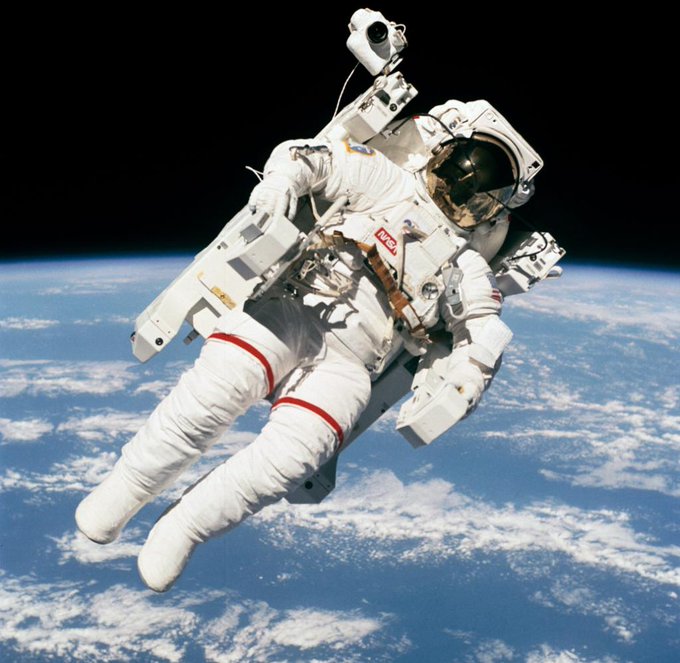
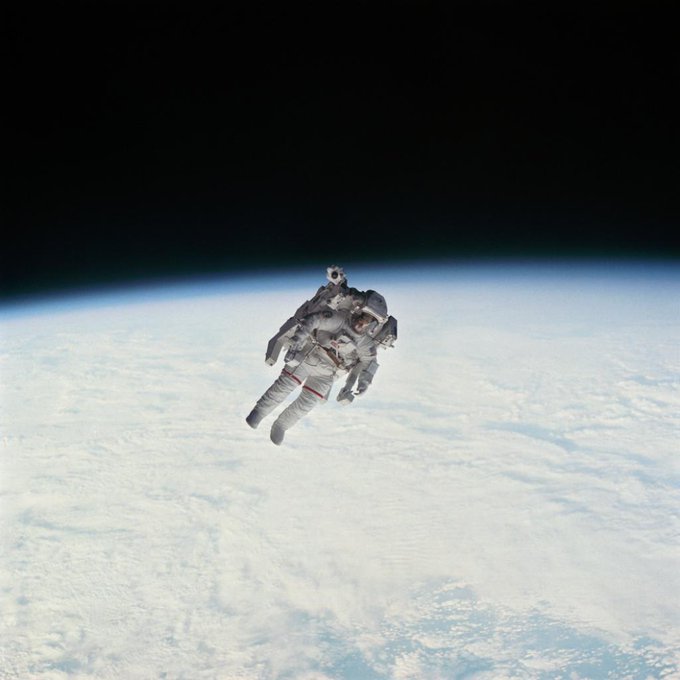
மந்தாரமான கறுப்பு நிற திரை… கீழே பிரகாசமாக படர்ந்திருக்கும்  நீல நிறம். குட்டியாகத் தெரியும் பொம்மை போன்ற உருவம்.. ஏதோ கிராபிக்ஸ் காட்சி போன்று தோன்றலாம். ஆனால் இது விண்வெளியில் பதிவான உண்மை காட்சி. கீழே படர்ந்திருக்கும் நீல நிறம்தான் நாம் வாழும் பூமி. கறுப்பு திரை விண்வெளி. குட்டி பொம்மை போன்று மிதந்து கொண்டிருப்பவர் விண்வெளி வீரர் புரூஸ் மெக்கண்டில்ஸ் (Bruce McCandless).                                                                                                                             


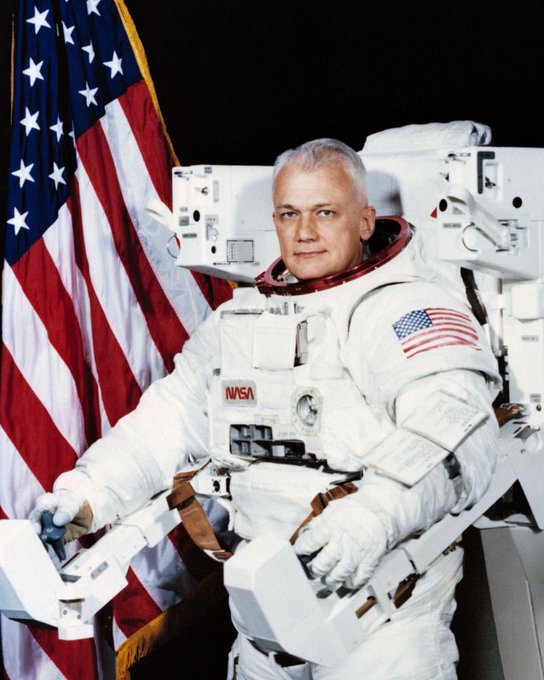
இந்த புகைப்படம் 1984ம் ஆண்டு பதிவானது. எந்த பிடிமானமும் இல்லாமல் சுதந்திரமாக (untethered with nothing) விண்வெளியில் வலம் வந்த முதல் வீரர் என்னும் பெருமைப்பெற்றவர்  புரூஸ் மெக்கண்டில்ஸ். இவர் தனது 80 வயதில் கடந்த 21ம் தேதி காலமானார். அவரை பெருமைப்படுத்தும் விதமான அவரின் சாதனை நிமிடங்களை நாசா வெளியிட்டு வருகிறது. அவரின் இந்த புகைப்படம் விண்வெளி வரலாற்று பக்கங்களில் சிறந்த பக்கமாக விளங்கும் என்று புகழாரம் சூட்டியுள்ளது நாசா!

View image on TwitterView image on TwitterView image on Twitter

We’re saddened by the loss of retired astronaut Bruce McCandless II. Most known for being the 1st human to free-float on a shuttle spacewalk, he also served as the Apollo 11 moonwalkers’ link to mission control and helped launch @NASAHubblehttps://www.nasa.gov/astronautprofiles/mccandless 

Source….www.vikatan.com

Natarajan